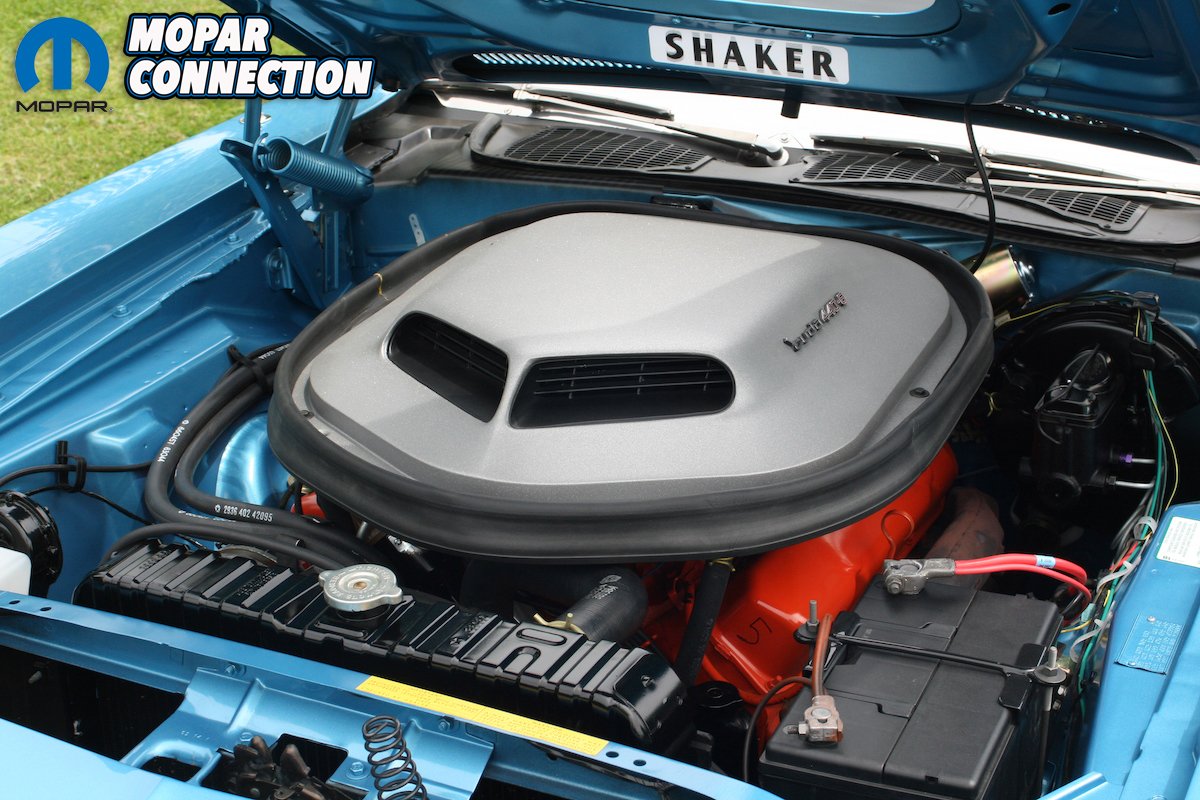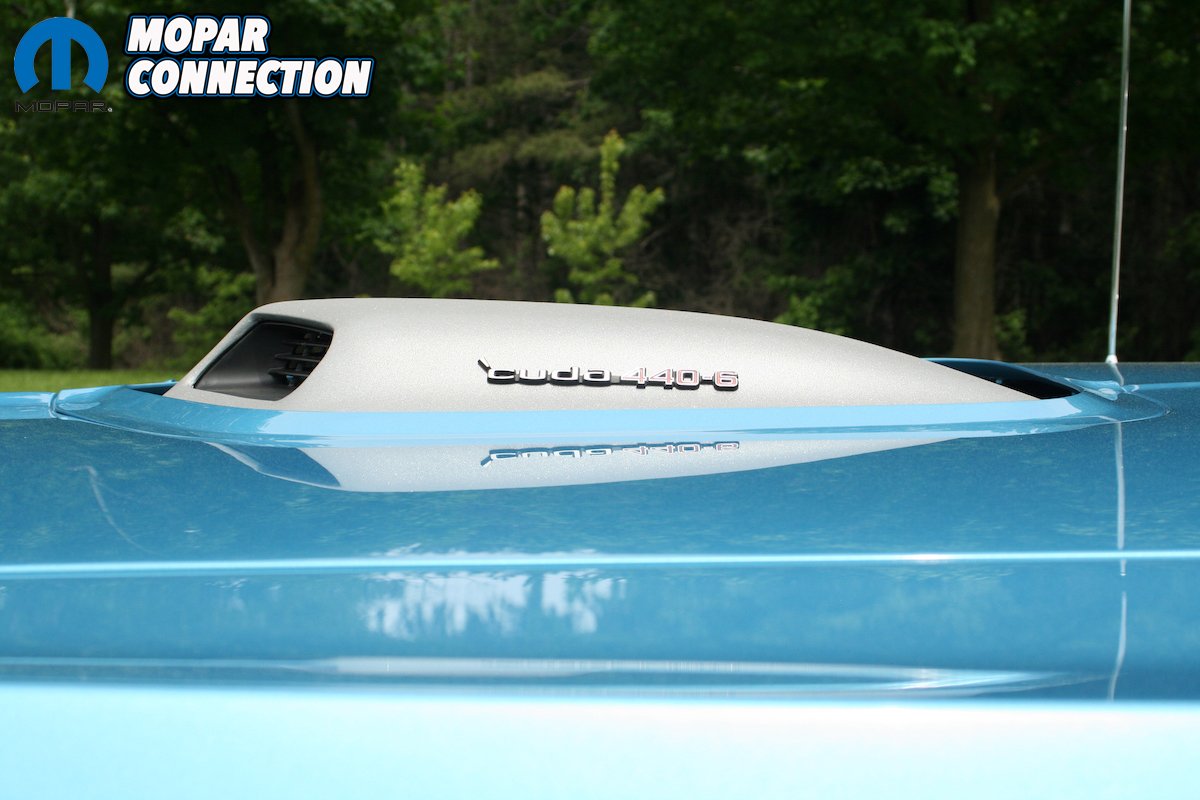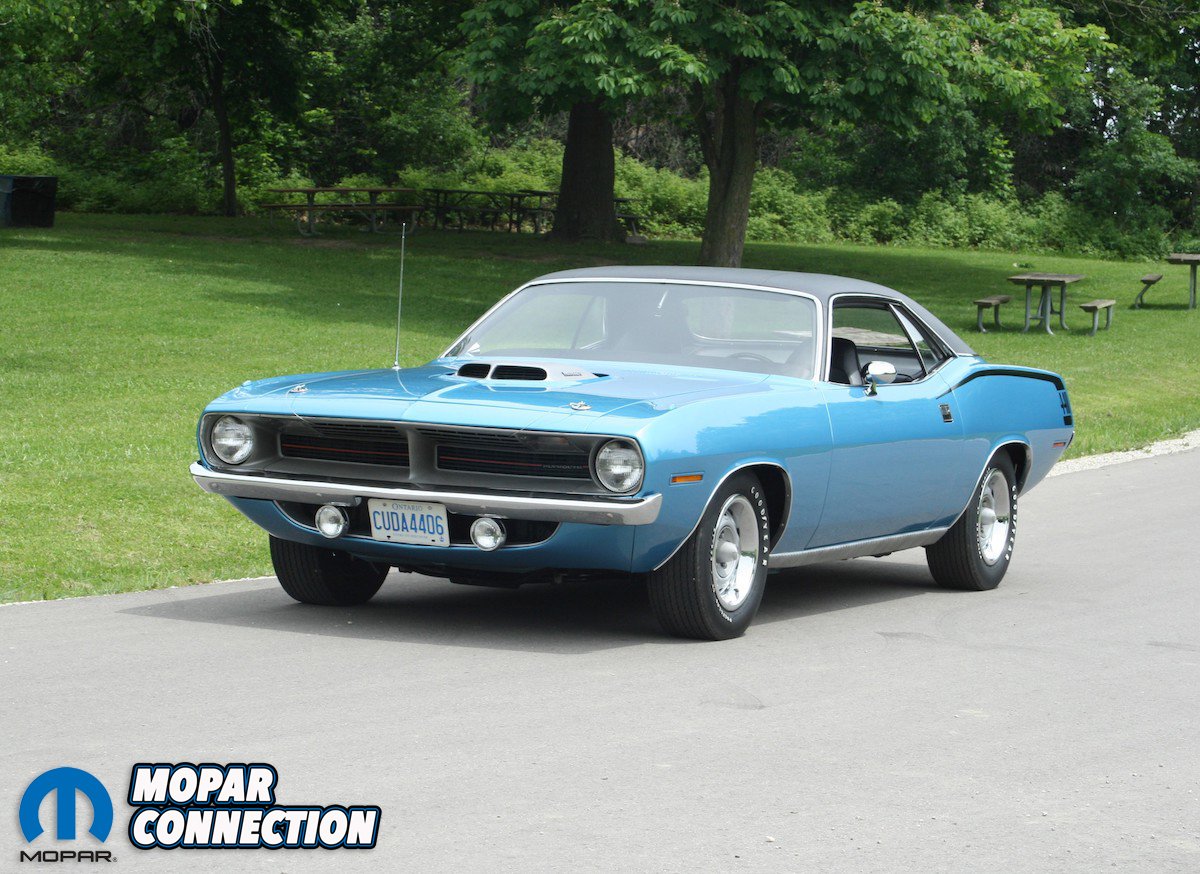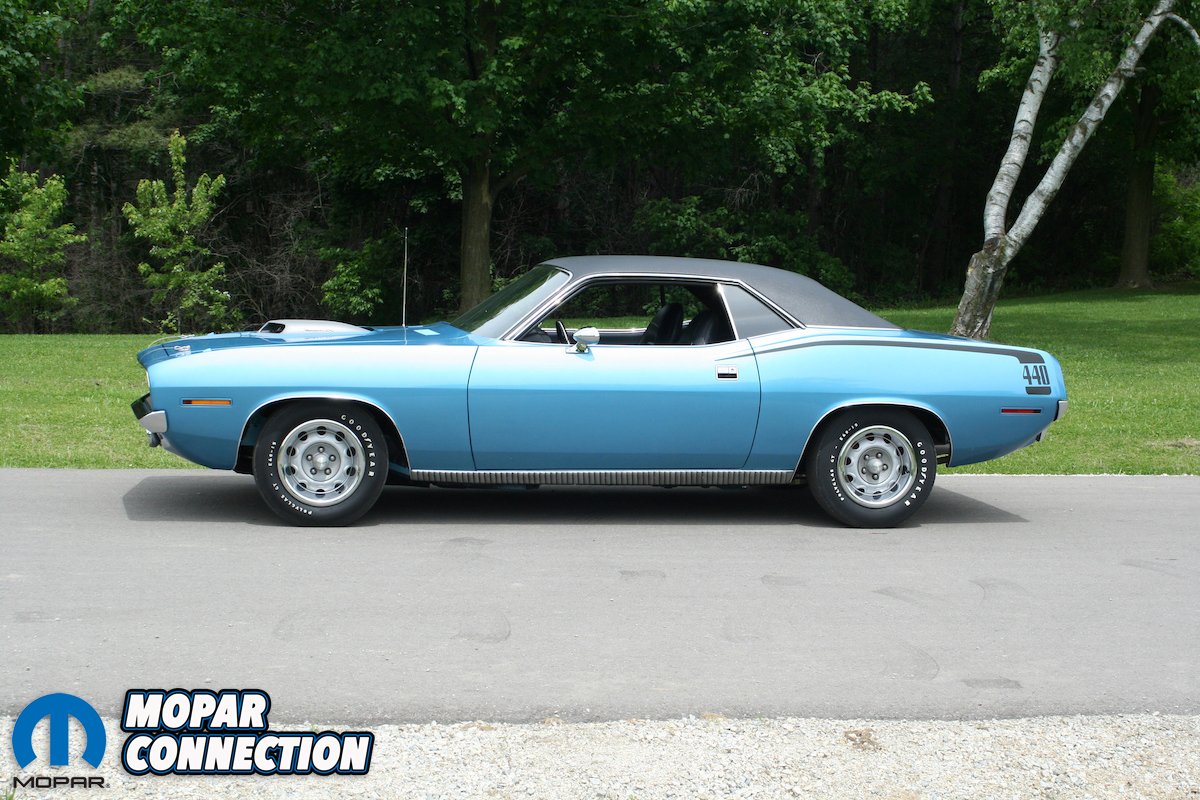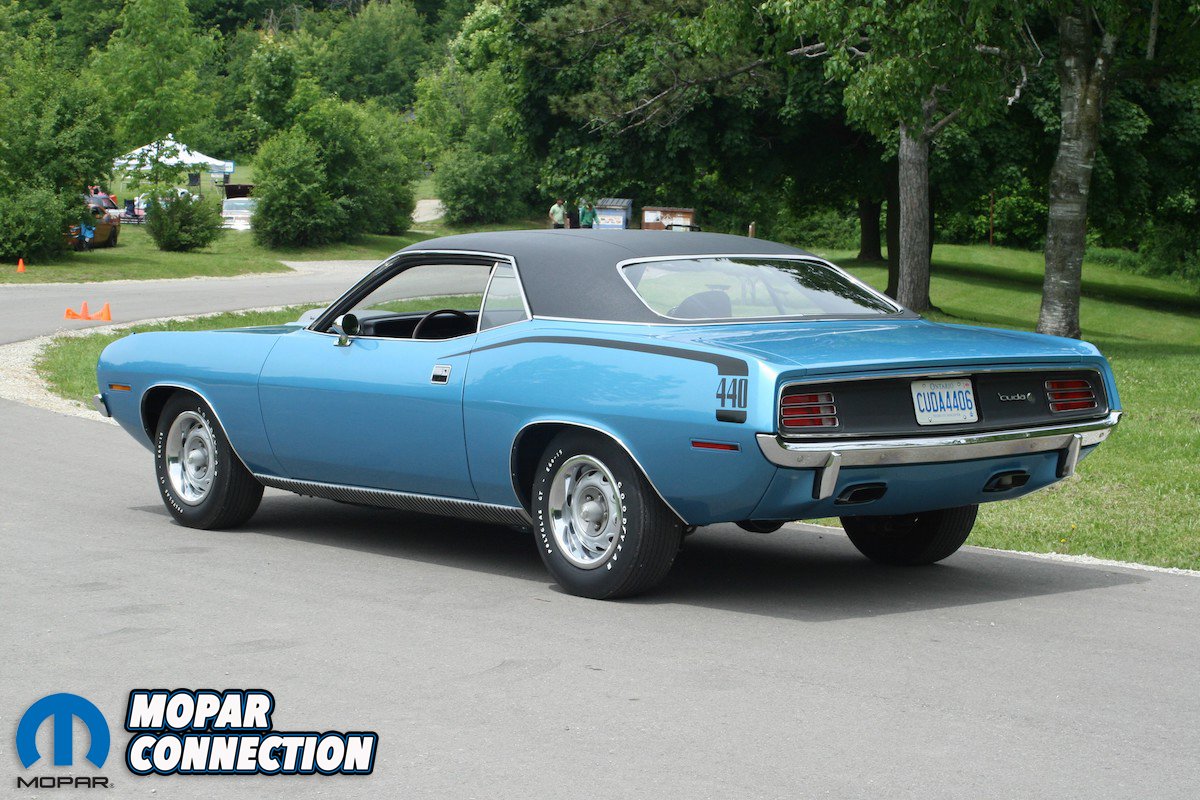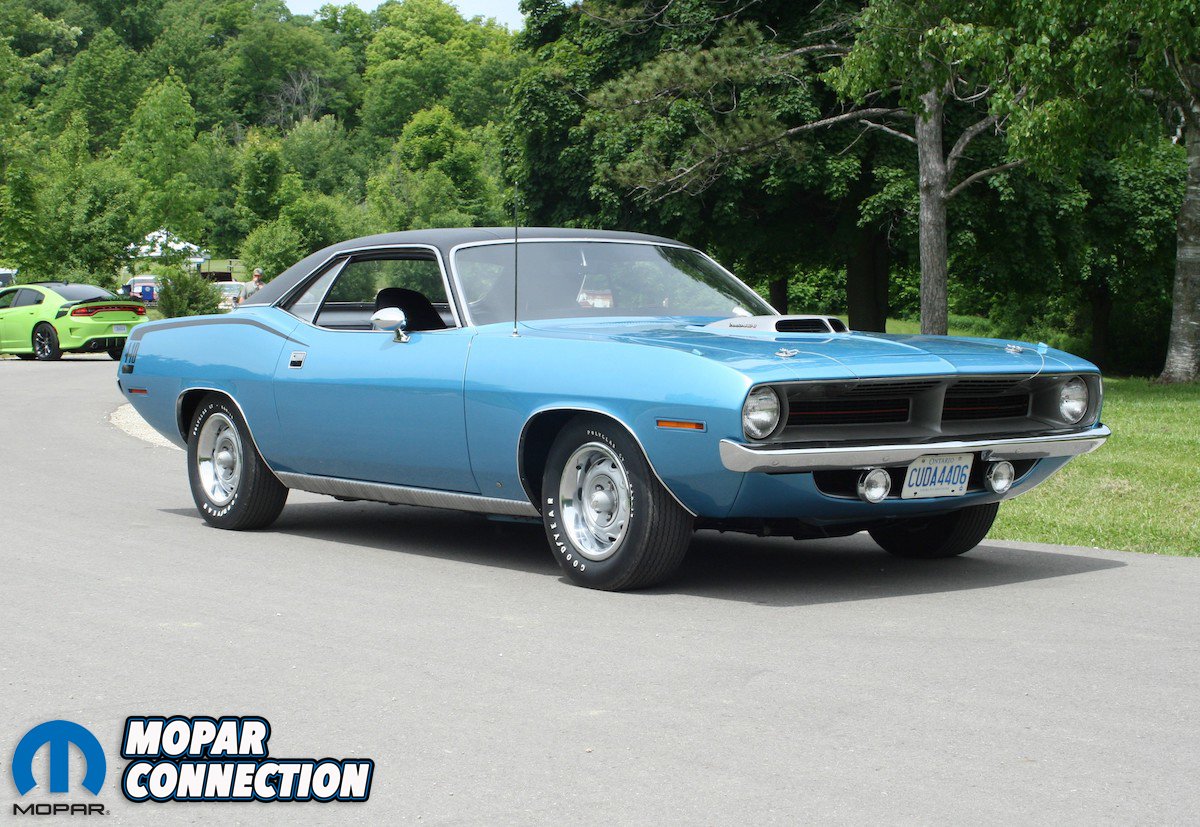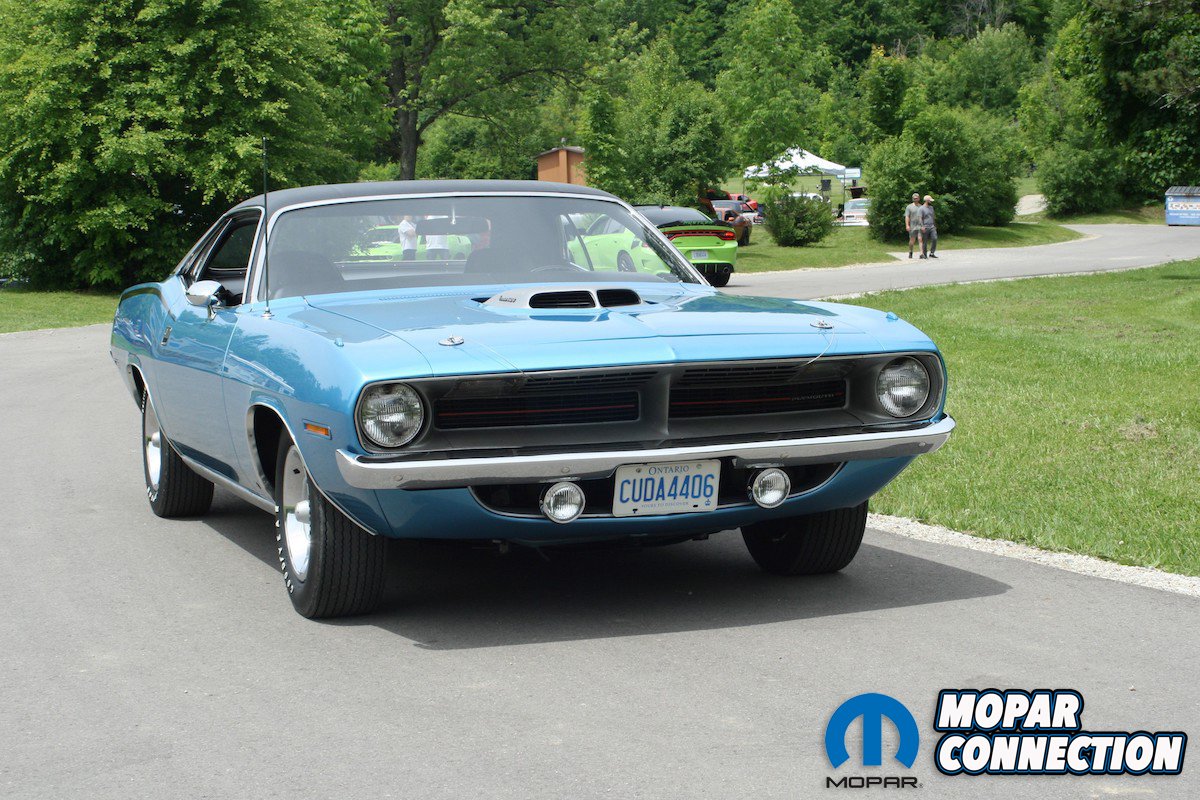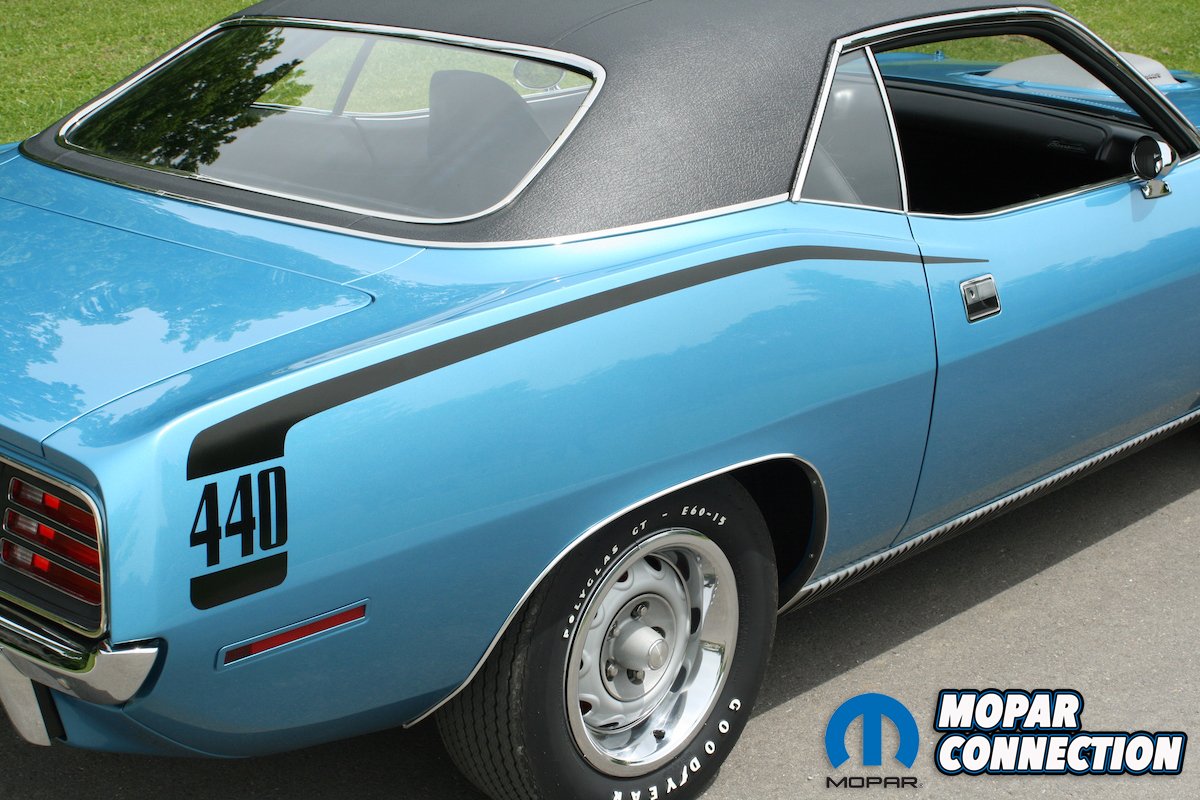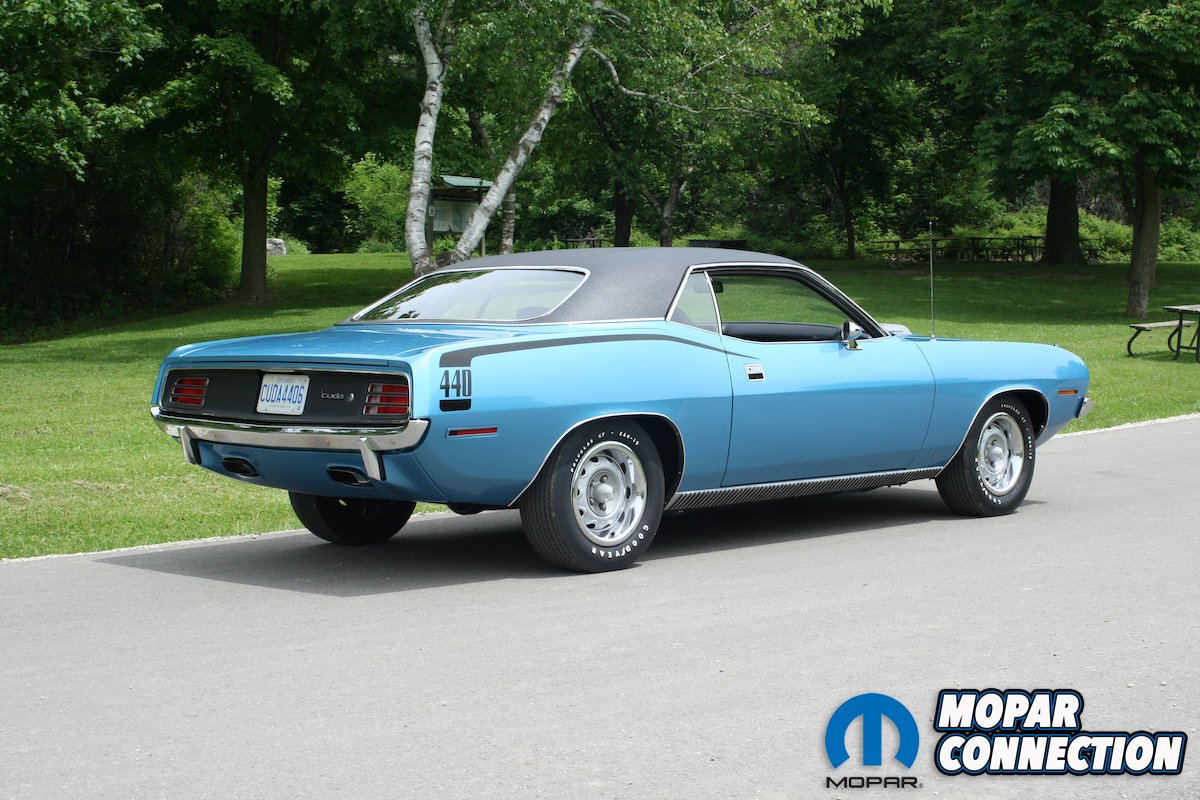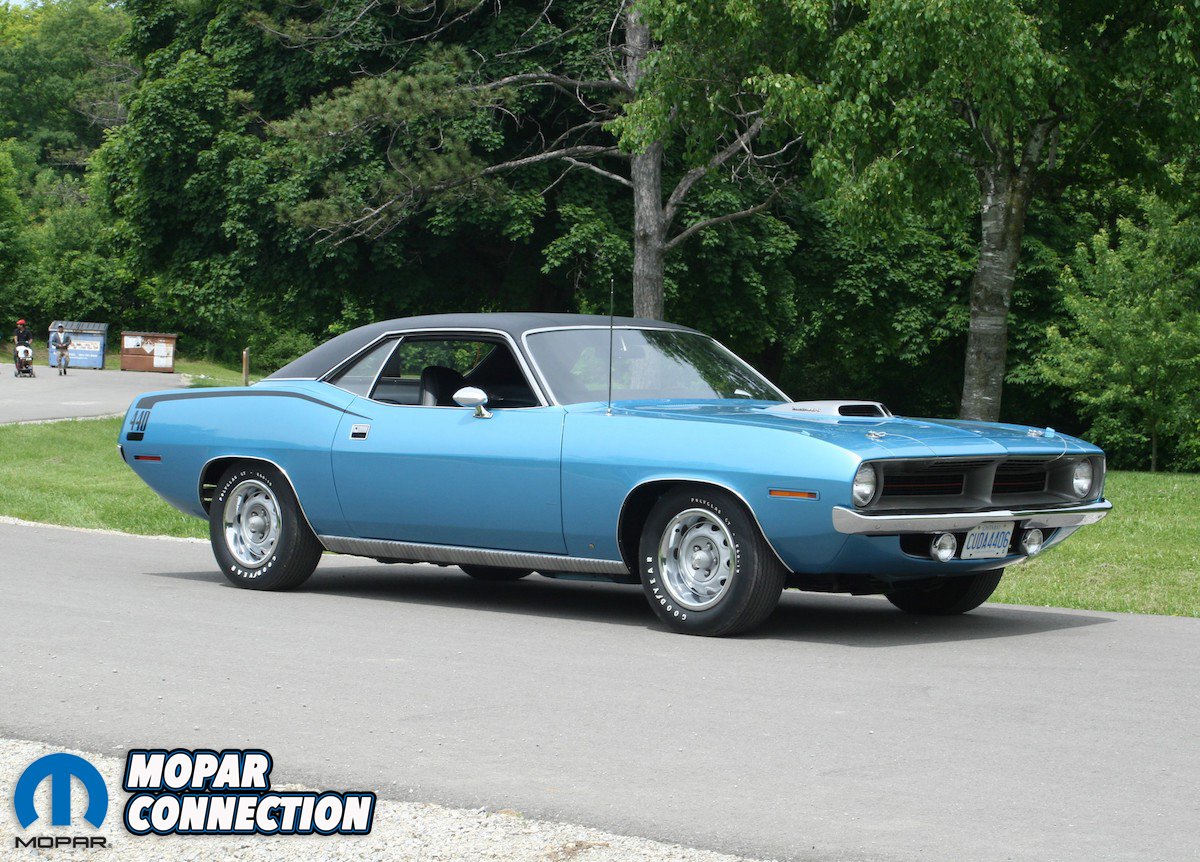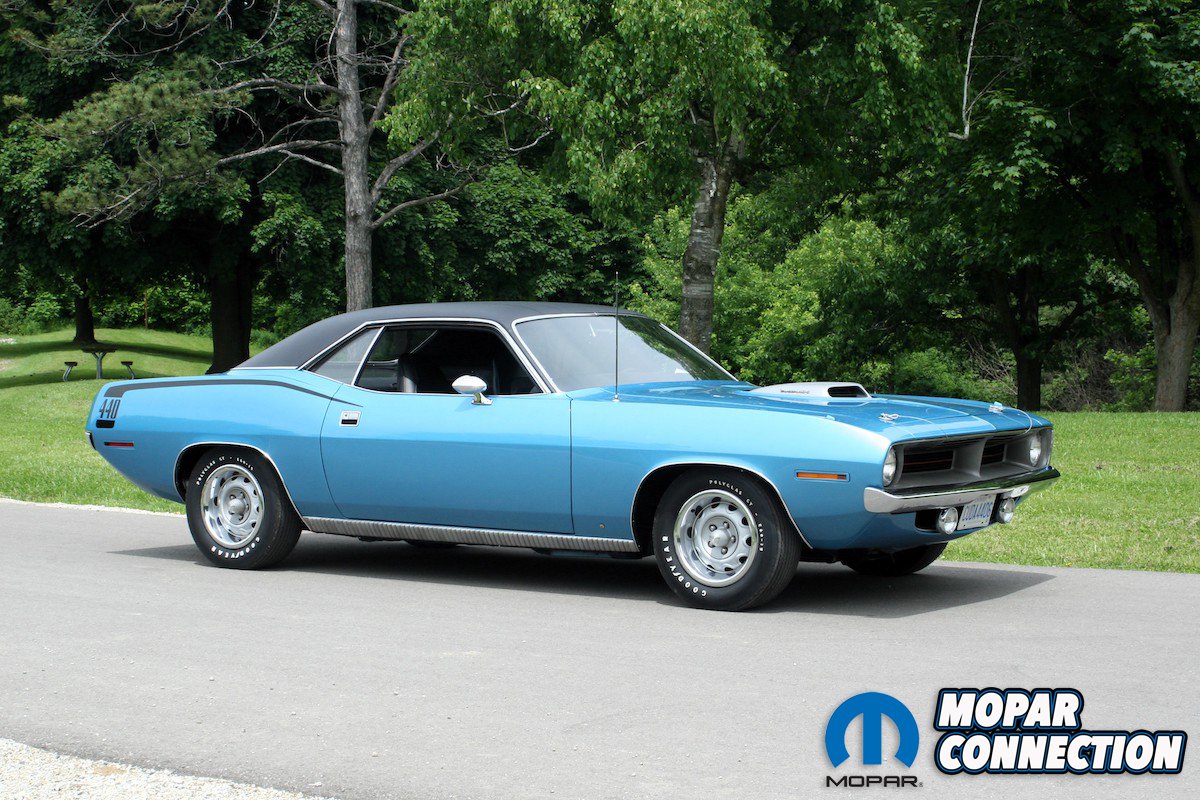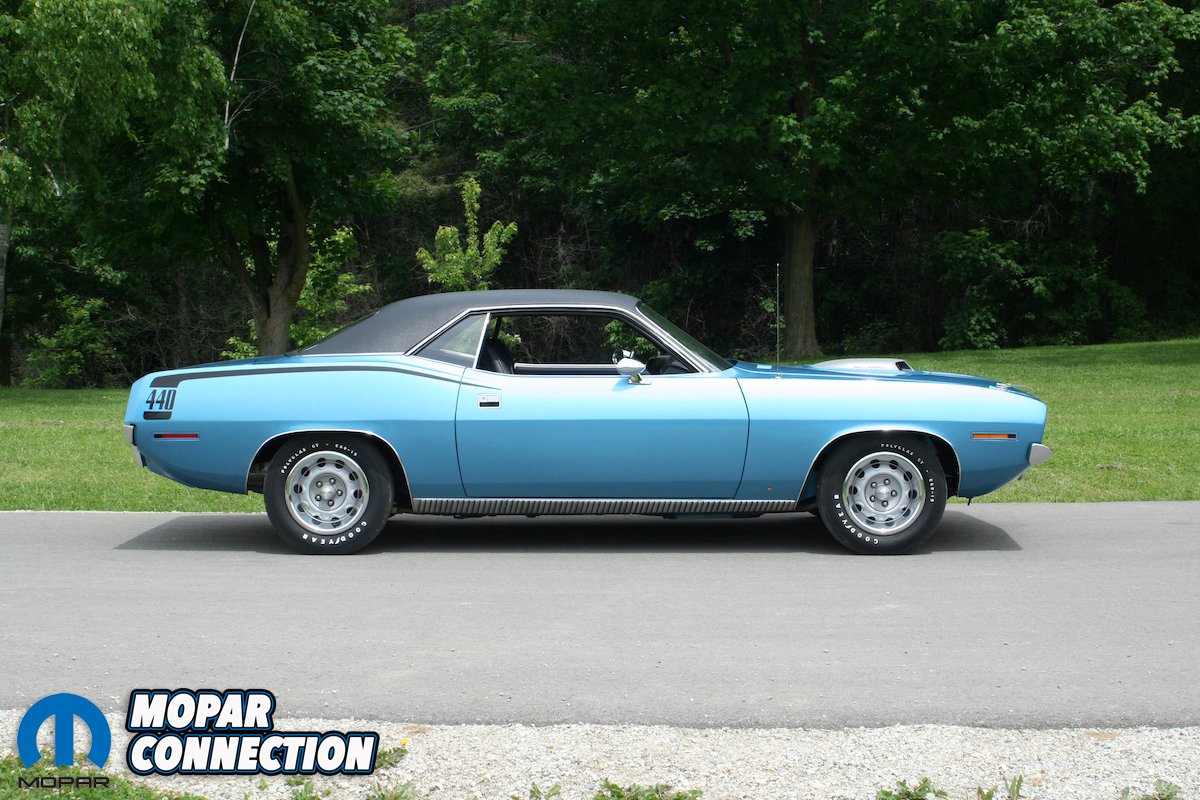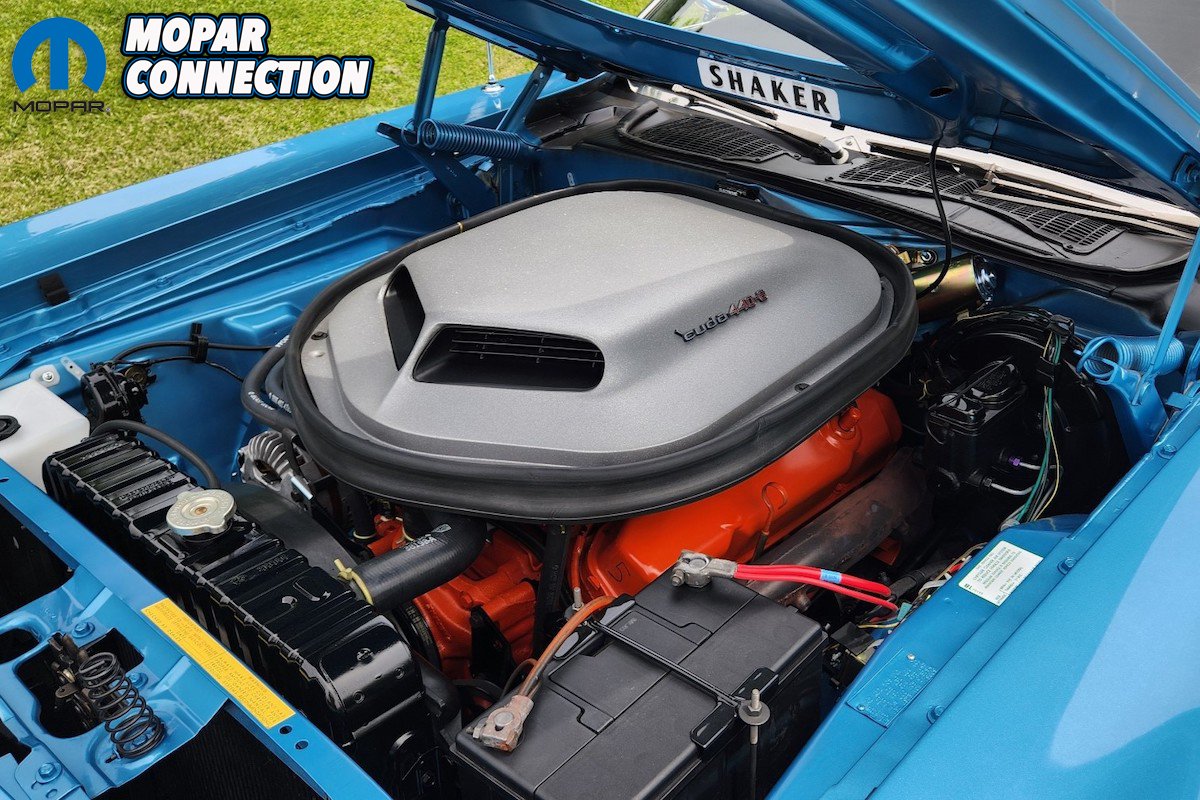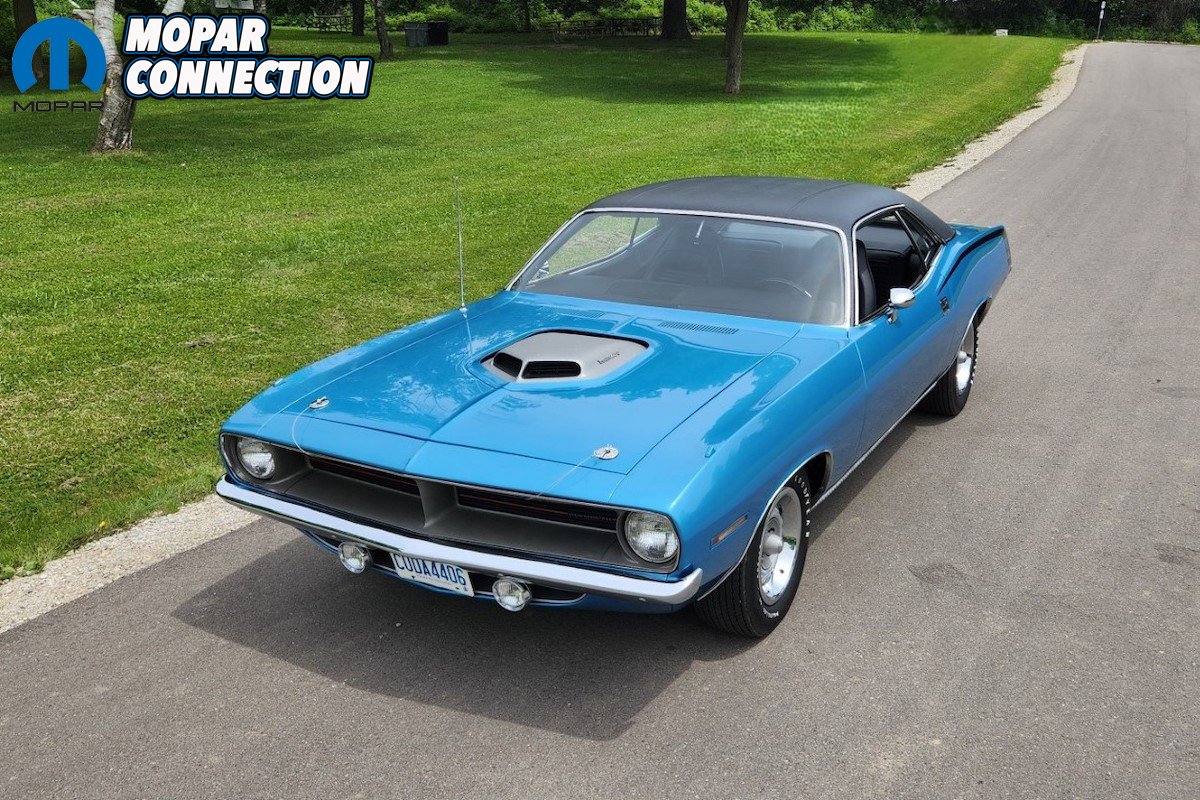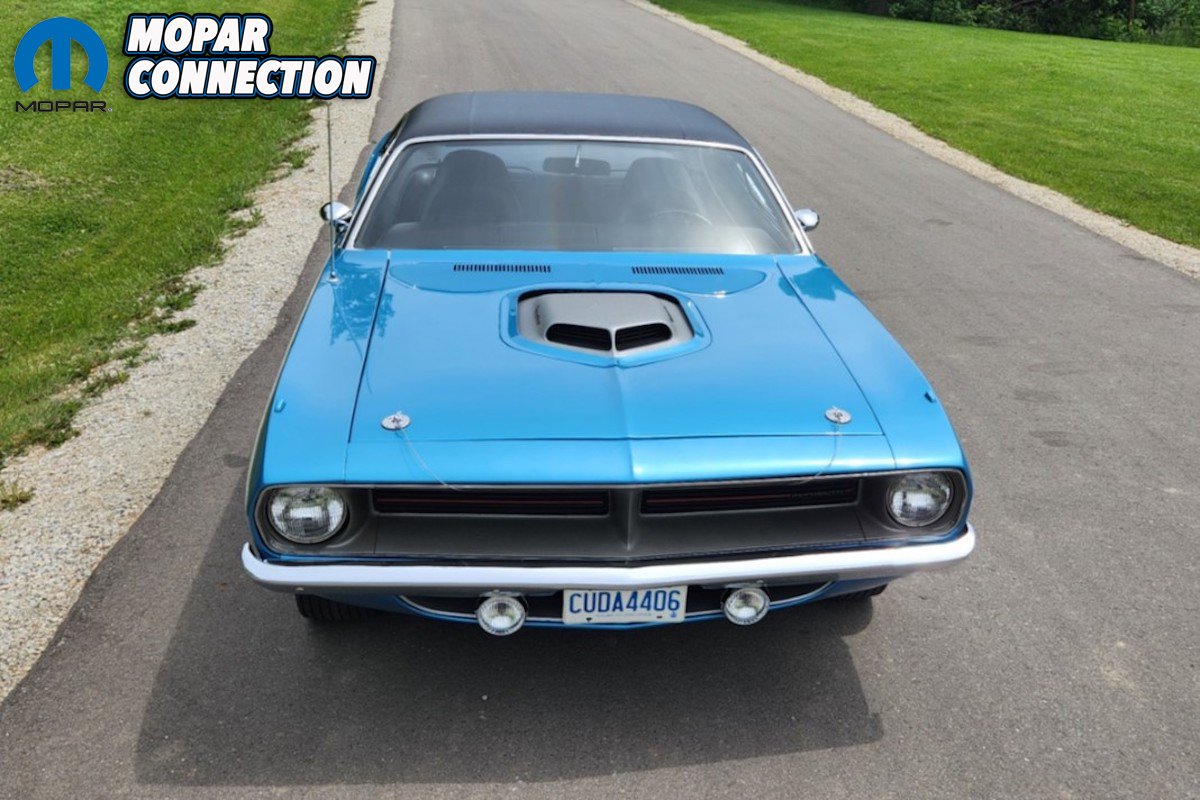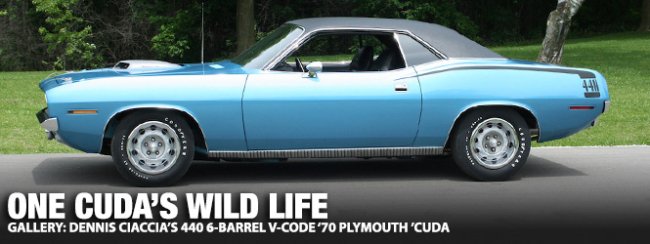
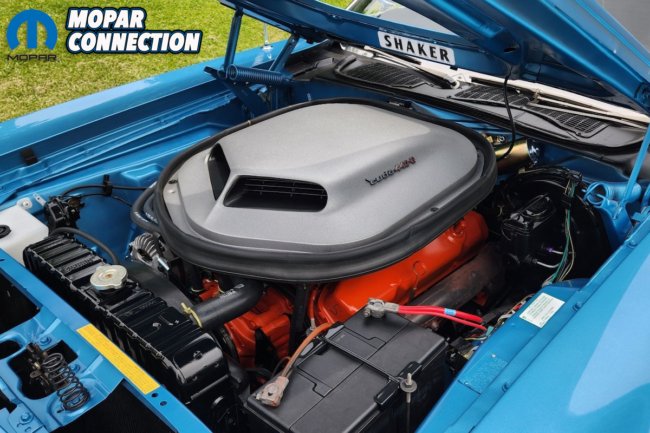
The 1970 Plymouth ‘Cuda represented the third generation of the Plymouth Barracuda and was a total redesign from its predecessors. John Eric Herlitz was the designer behind the 1970 Plymouth Barracuda, which showcased an extended hood, short deck lids, and a slanted windshield to enhance its sporty image. Additionally, the specialty and performance models featured the unique option of a “shaker” hood.
The 1970 Barracuda, a more compact and wider version of the B platform (Charger, Road Runner), was available in three trims: the base Barracuda, the luxurious Barracuda Gran Coupe, and the high-performance ‘Cuda. The new E-body provided a choice of nine engines and three transmission types across the models, including a 3-speed manual, a 4-speed manual, and a 3-speed automatic.
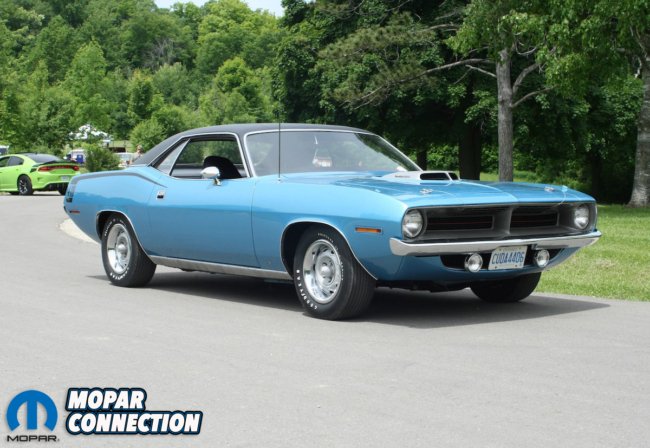
The Plymouth ‘Cuda was part of the Rapid Transit System, Plymouth’s answer to the Dodge Scat Pack club. This series provided performance aficionados with a variety of vehicles at different price levels, each outfitted with powerful engines and performance-oriented features. The lineup featured the Plymouth Duster 340, Plymouth Road Runner, Plymouth GTX, and the renowned Plymouth ‘Cuda.
The redesign of the Barracuda marked a significant transformation, as the E-body Barracuda finally discarded its ‘economy car’ image. However, it encountered challenges with changing insurance and emission standards that shifted the consumer landscape. High insurance premiums and escalating fuel costs discouraged potential buyers, hindering the ‘Cuda from attaining the success it deserved.
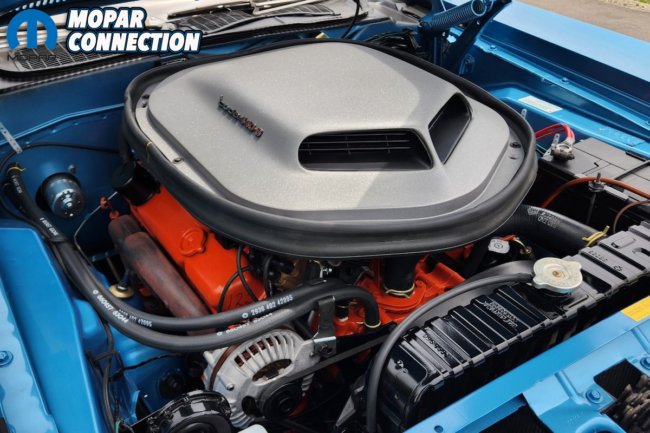
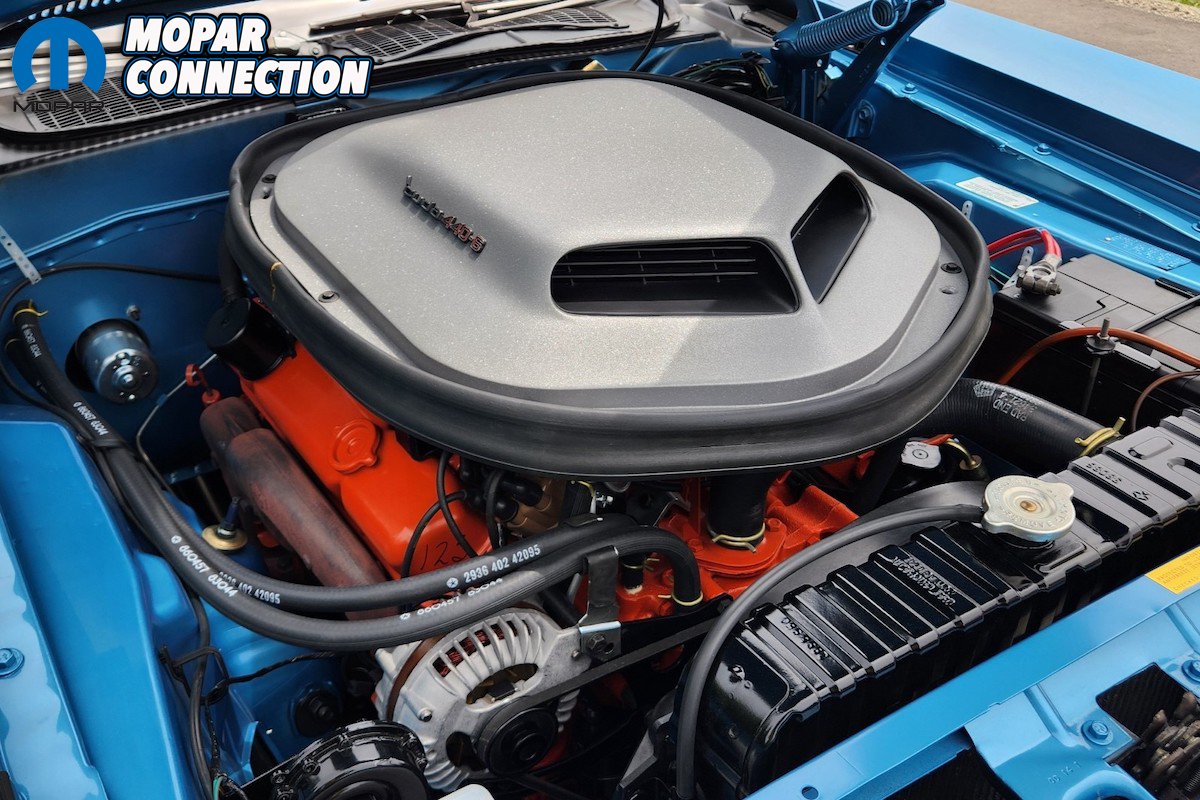
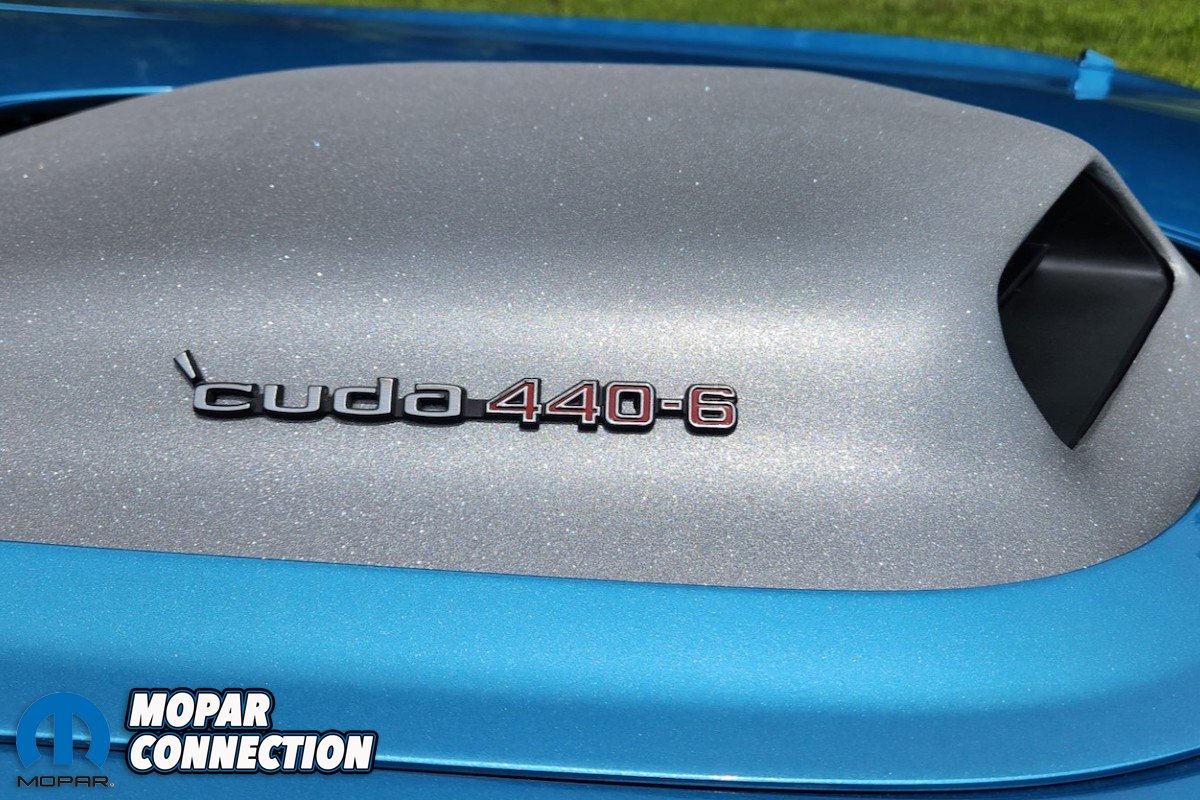
The most sought-after cars debuted in the prime years of 1970 and 1971; however, our focus is on the 1970 models at present. This ‘Cuda is a “V” code model, which means it was outfitted with a 440 cubic inch engine featuring a 6-barrel carburetor made up of three 2-barrel carburetors. As one of the most formidable engines available, second only to the 425 horsepower Hemi engine; the 440 “V” code boasts approximately 390 horsepower.
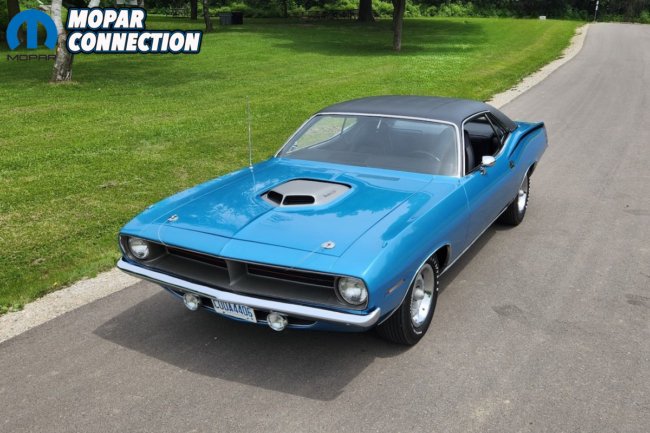
Vehicles equipped with the 440 and Hemi engines were outfitted with enhanced suspension components and structural reinforcements to effectively transfer their power to the road. The other cool option, as mentioned before, was the “Shaker” hood, or as the Plymouth brochure calls it, “the I.Q.E.C.A.G., which means the Incredible Quivering Exposed Cold Air Grabber! The “Shaker” hood scoop that quivers.” Some other options were the Elastomeric bumper and the famous “Pistol Grip” shifter, to name a few.
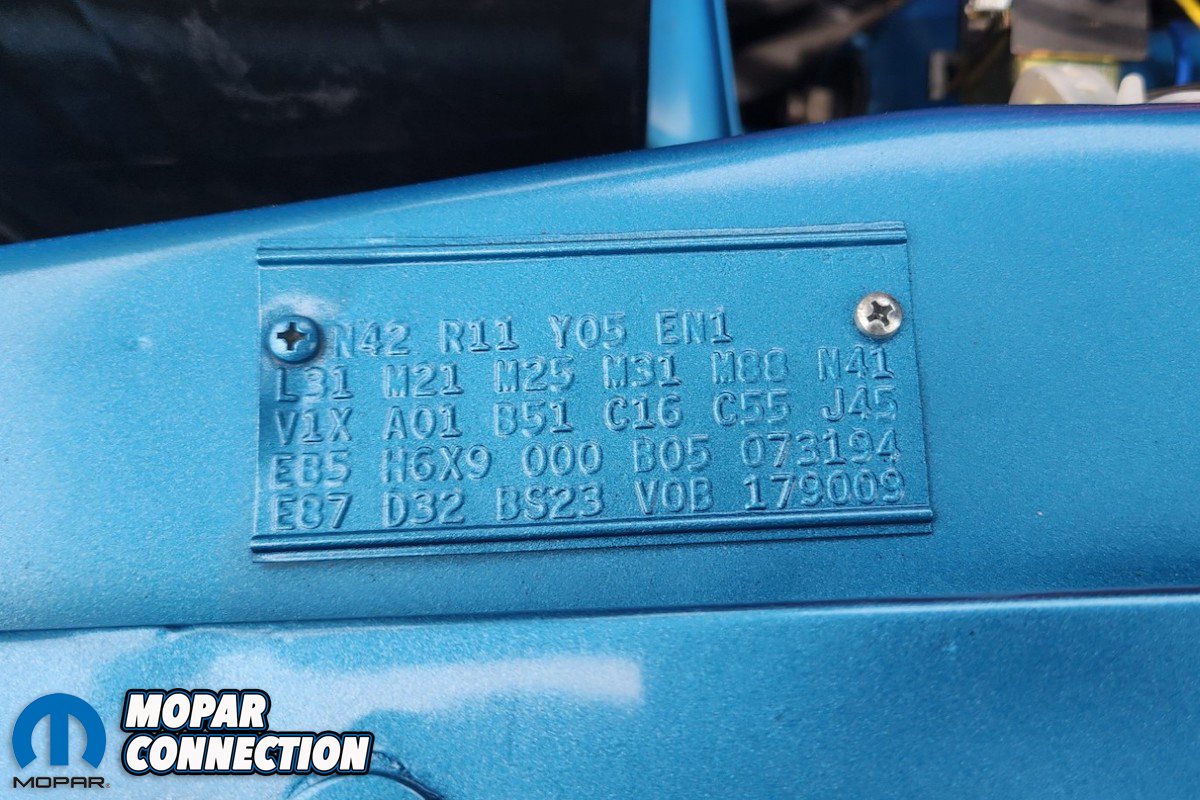
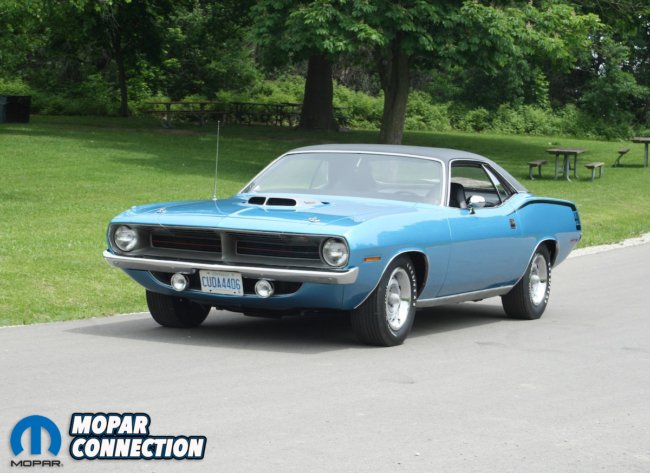
The ‘Cuda in question was produced on November 5, 1969, at the Hamtramck facility in Detroit, Michigan. It featured a B5 Blue Fire Metallic finish, a hue that was applied to roughly 4,610 Plymouth Barracuda and ‘Cuda models, representing about 9.2% of that year’s production. This particular ‘Cuda is one of the 1,755 “V” codes manufactured in 1970 and is one of the 853 models equipped with an automatic transmission. The other 902 were 4-speed manuals.
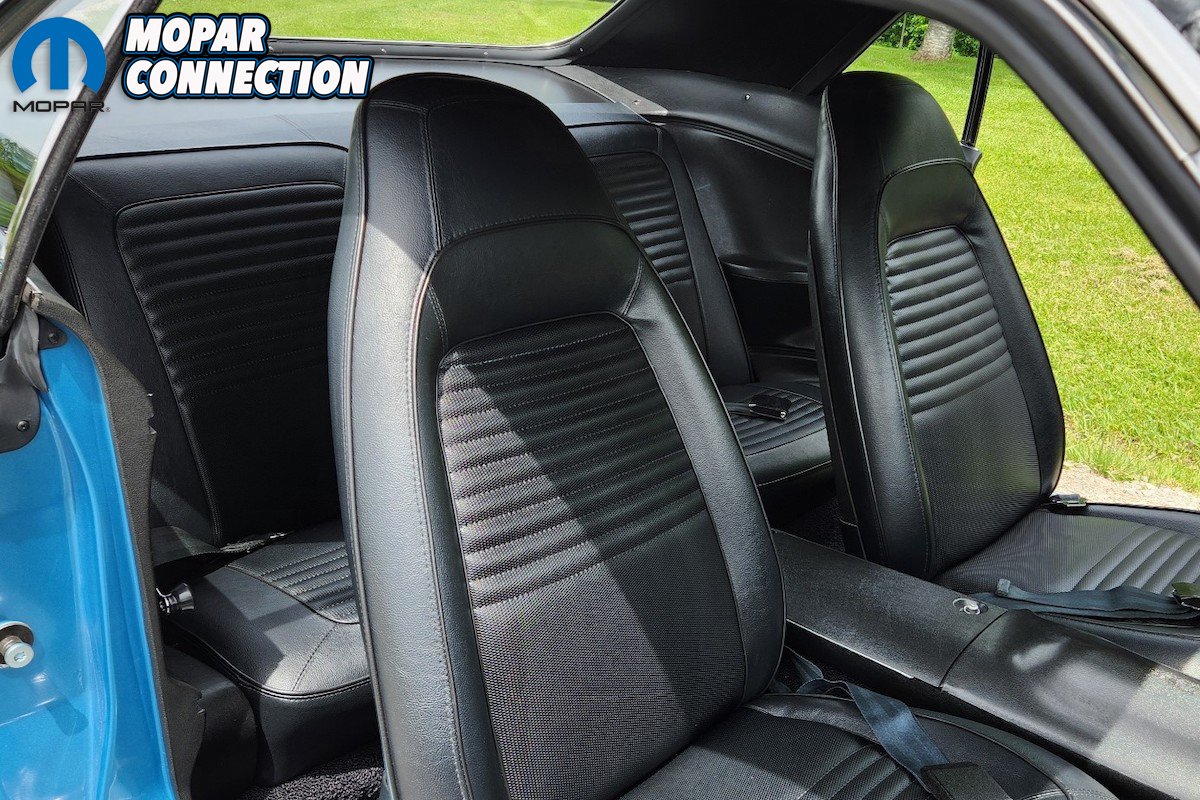
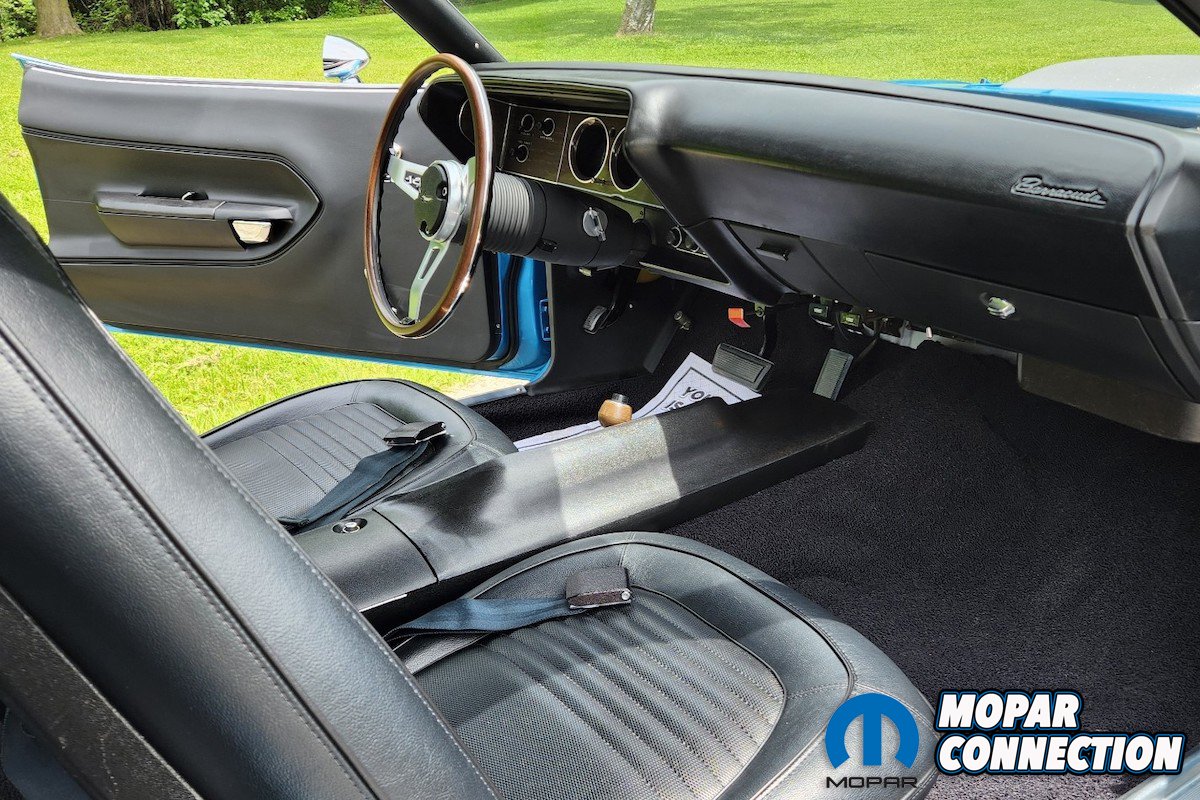
The vehicle underwent inspection and certification by Mopar authority Galen Govier and is listed in Galen’s registry as #157 in the VIN sequence. It is one of only three known “V” code 1970 ‘Cudas in B5 Blue to exist. How cool is that? As the ‘Cuda progressed along the assembly line, it received a lighting package, power-assisted brakes, a console with bucket seats, hood tie-down pins, fender-mounted turn signals, roof drip rail moldings, wide sill moldings, a hockey stripe on the quarter panels, a dual exhaust with chrome tips, and an AM Music Master radio with a vinyl roof, all in accordance with U.S. specifications.
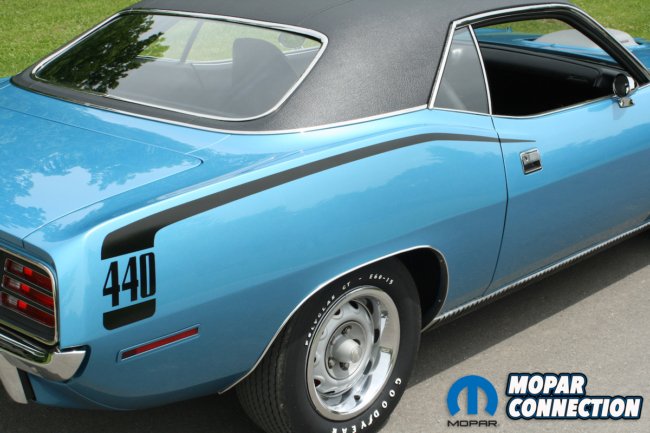
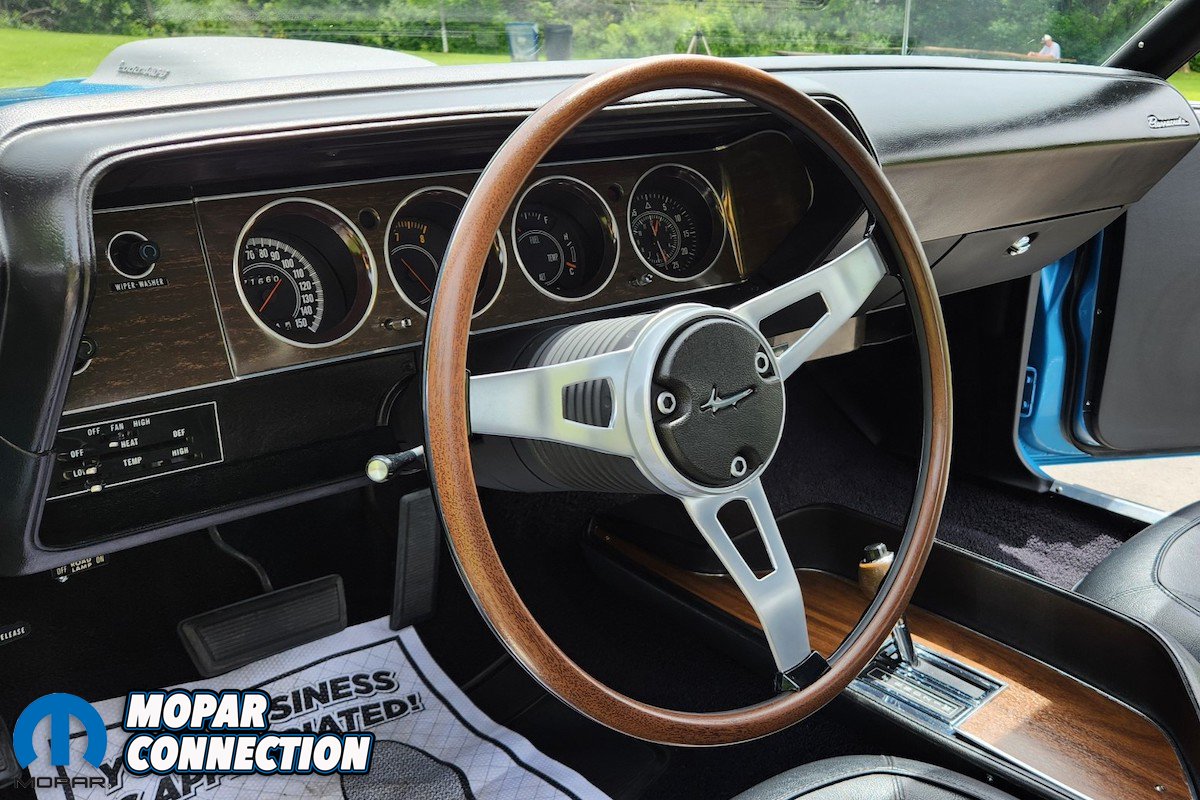
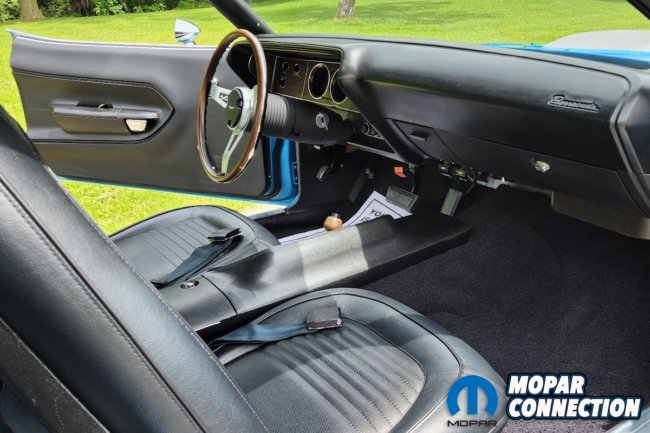
This vehicle is equipped with both front and rear sway bars and an instrument cluster featuring a 150-mph speedometer, tachometer, oil pressure gauge, clock, and trip odometer. The standard instrument cluster was replaced with a Rallye cluster during restoration. Additionally, the ‘Cuda boasts driving lights and sport mirrors finished in chrome.
Dennis Ciaccia, a dedicated Mopar enthusiast, owns this car. His passion for Mopar was inherited by his son Matt, who also embraced the Mopar lifestyle. At the age of 16, Dennis bought his first Mopar, a 1973 Dodge Challenger, which he still possesses. Although he dreamt of owning a Hemi ‘Cuda, its skyrocketing prices made it unattainable. Consequently, he considered the next best option: a 440 6-barrel “V” code.
This car has a sorted history, raising several questions. The fender tag indicates it was built to U.S. specifications, suggesting it should have been sold in the U.S. However, the paperwork indicates that the car was sold in Ottawa, Ontario. It’s unclear whether the car was imported into Canada or if it was sold and then came to the dealer in Ottawa.
The Plymouth ‘Cuda, after a few years away, made its return to the U.S. It was previously owned by a mobster who possessed about 100 of these collector vehicles, all of which were seized by the IRS. The individual in question is probably David Nicoll, known for acquiring an extensive array of vintage muscle cars, including Plymouth ‘Cudas, via his company, Biodiagnostic Laboratory Services, LLC. His collection, commonly known as “The Blood Money Collection,” was confiscated and subsequently sold at auction by the IRS.
B-5 Bill (a nickname), a criminal lawyer from Toronto, Ontario, purchased the car at an auction in New Jersey. Dennis acquired it from him in August 2010. “It was ‘number 2,'” Dennis remarks. “A reliable driver with a solid structure and attractive appearance, but it had some issues that I needed to address to elevate it to my standard of quality.”
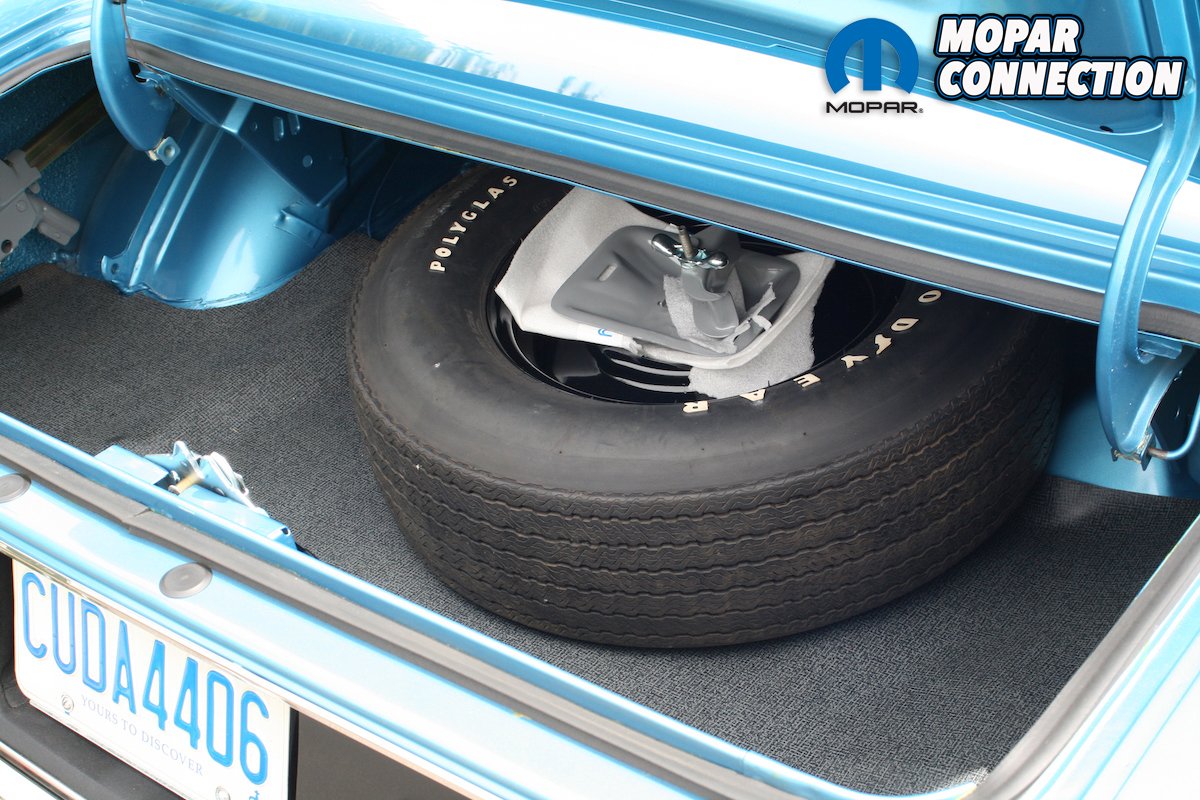
The ‘Cuda had a minor hole on the driver’s side, but upon inspection, it turned out that the trunk floor originated from a 1973 Plymouth, differing from the 1970 model’s floor. Body filler was discovered in several areas of the vehicle. So, in January of 2013, Dennis with his sons Matt, Daniel and Anthony began to tear down the car. Ultimately, it resulted in a total restoration.
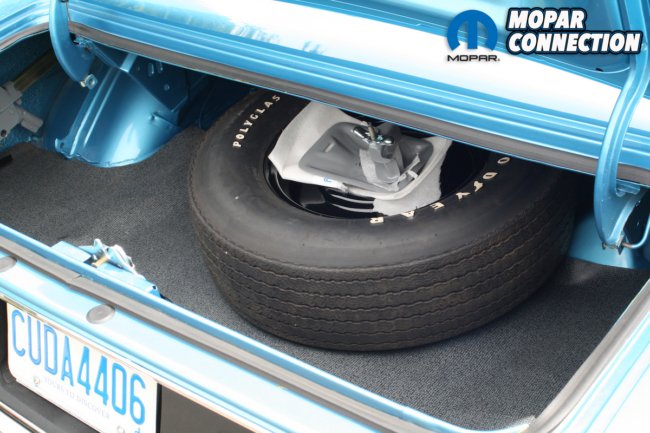
Dennis opted for an acid dip to thoroughly clean his car; a process that proved to be quite stressful as it damaged the roof panel when the body was lifted by the roof. Although the operator apologized, the incident necessitated the replacement of the roof panel. Consequently, Dennis also replaced the trunk floor panel with one from the correct year and the left quarter panel.
The process was slow going because of trying to find new old stock panels to replace those. Jeff Cabot was the man that started the metal work, and he did an amazing job. Years went by, and the car slowly got closer and closer to being finished. After the metal work was finally completed, the task went to an autobody shop owned by Dave Brighten to paint the beautiful B5, which looks amazing.
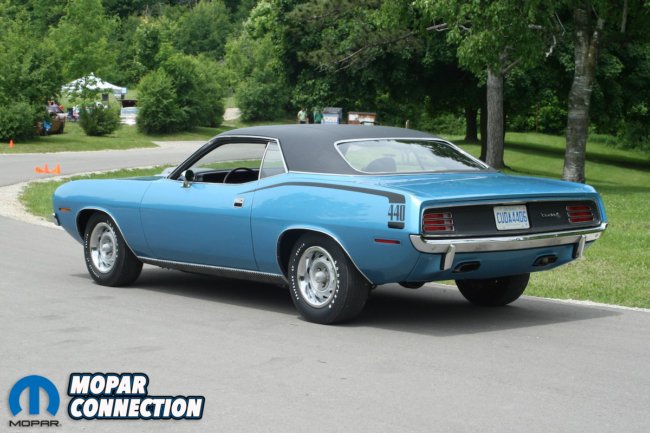
Once the body was painted, the process of putting it all together began. Mauro Brocca completed a majority of the restoration along with Dennis’ own shop. They rebuilt every part and refinished parts to look new. Everything, and I mean everything, was done correctly, even down to the nuts and bolts. The car was restored with all original and NOS parts. It is because of that level of detail that it took them 10 years to achieve the desired outcome. The Plymouth boasts a complete numbers match for the engine, transmission, and all other components. The VIN number on the dash, the fender tag, and the broadcast sheet all correspond to the car’s body numbers.
The sole alteration Dennis made to the car was the installation of a “Shaker” hood, replacing the original. He also transitioned from the standard cluster to a Rallye dash. Beyond these modifications, the car retained its original equipment. It’s understandable why Dennis opted for the “Shaker” hood; its iconic status is undeniable.
The car’s restoration concluded in February 2023 and come spring; it graced multiple car shows. The restoration was so impeccable that the car clinched first-place awards at every event it entered. Its excellence was further acknowledged when it was chosen for the muscle car category at the prestigious Cobble Beach Concours d’Elegance, where it triumphed once again, winning first place in its class. Matt shared his elation, stating, “It was an incredible honor to receive such recognition.”
This ‘Cuda was highlighted in the advertisement for the Cobble Beach Concours d’Elegance, which is situated near Owen Sound, Ontario, Canada—an honor in itself. The car has also been invited to appear at the MCACN show in Chicago in 2025. Dennis mentioned that he spent many years searching for, discovering, sandblasting, and restoring numerous parts of the car, working alongside his son Matt. “All the hard work and effort paid off with the final result. We completed the project, and it turned out beautifully!”