Last year, after purchasing Project Rara Hemious Birdicus, a state paperwork delay from March to September held the Road Runner off the road. In hindsight, it gave us valuable time to complete necessary repairs and updates and enabled us to avoid the worst of the summer heat during the initial shake-down.
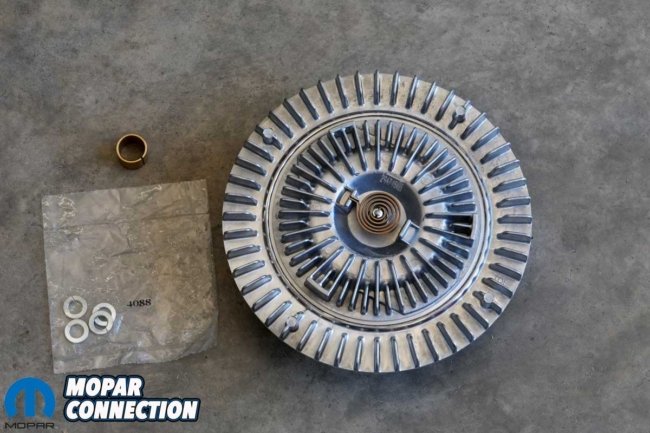
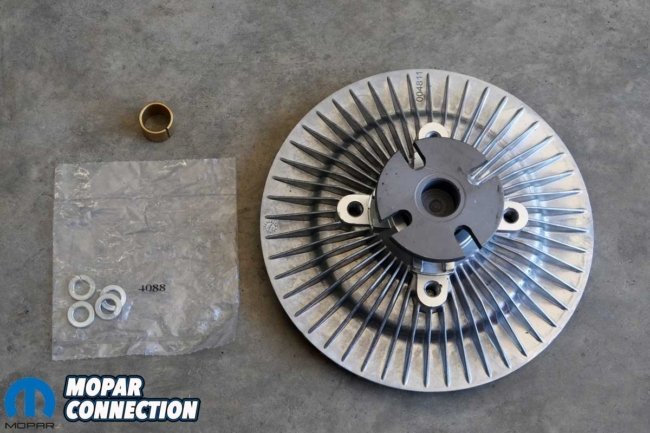
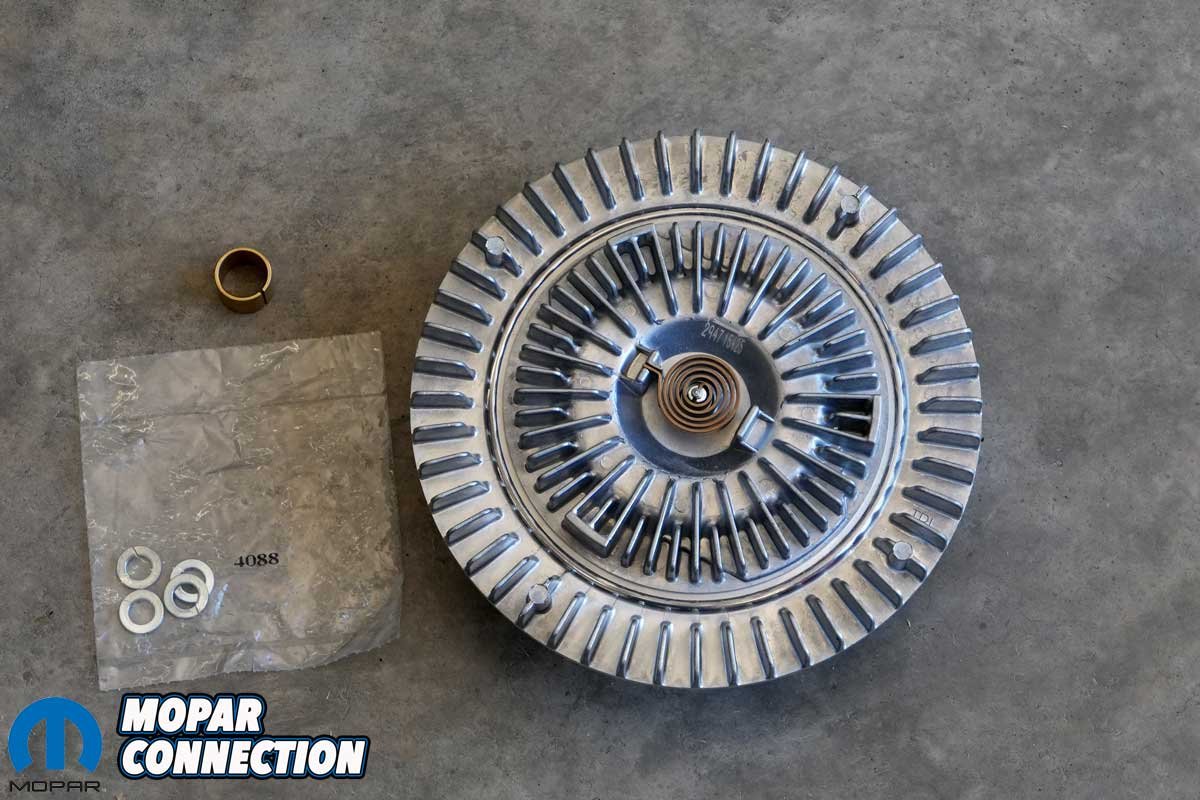
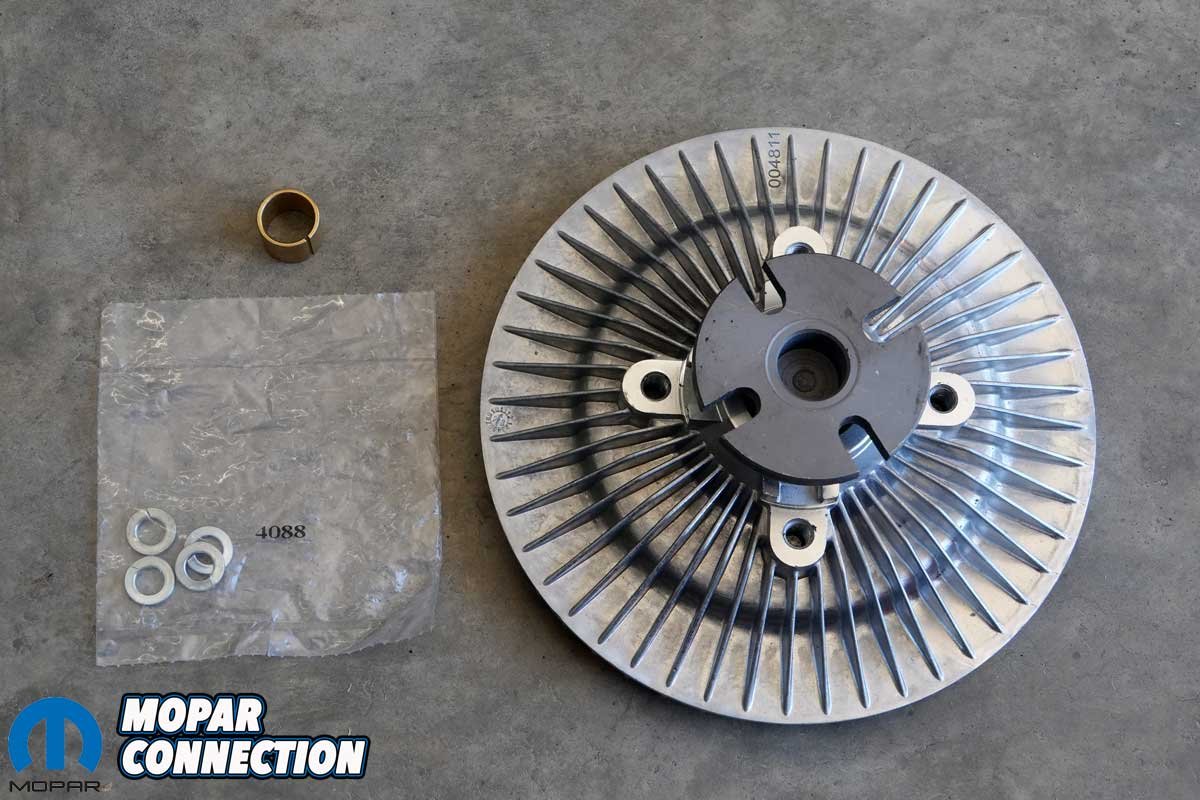
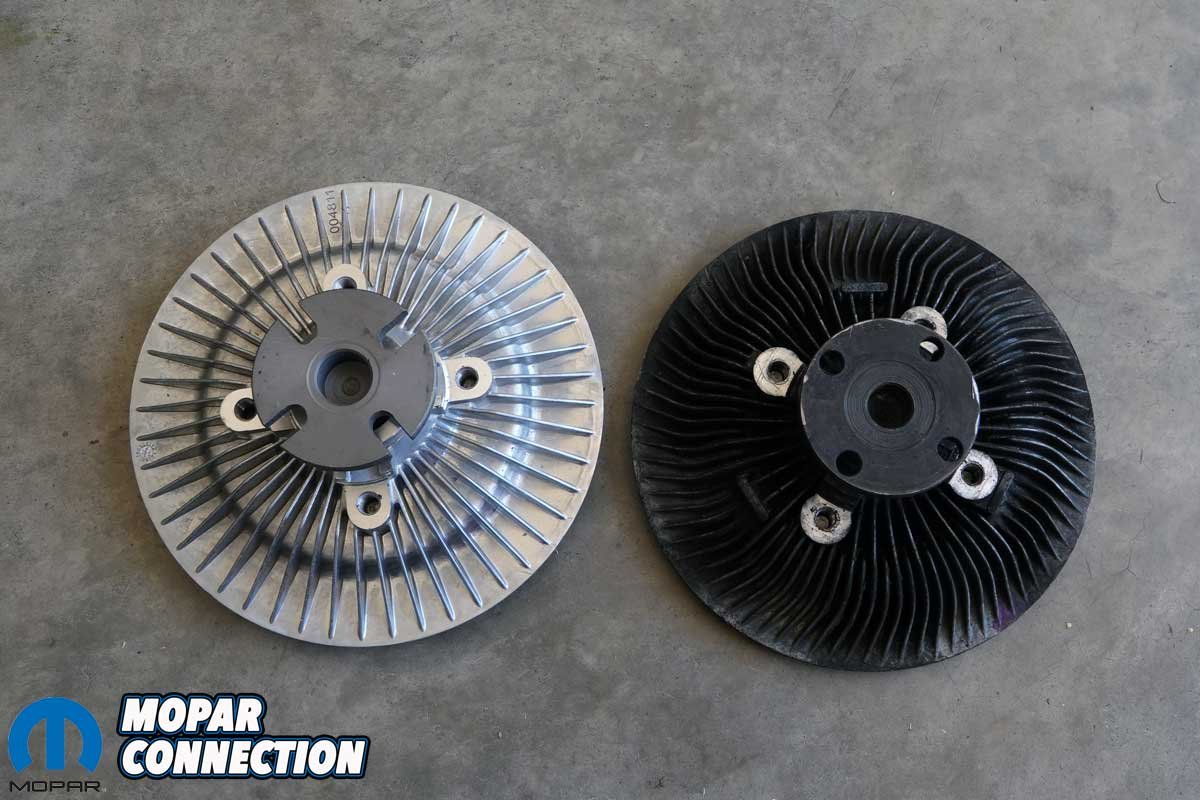
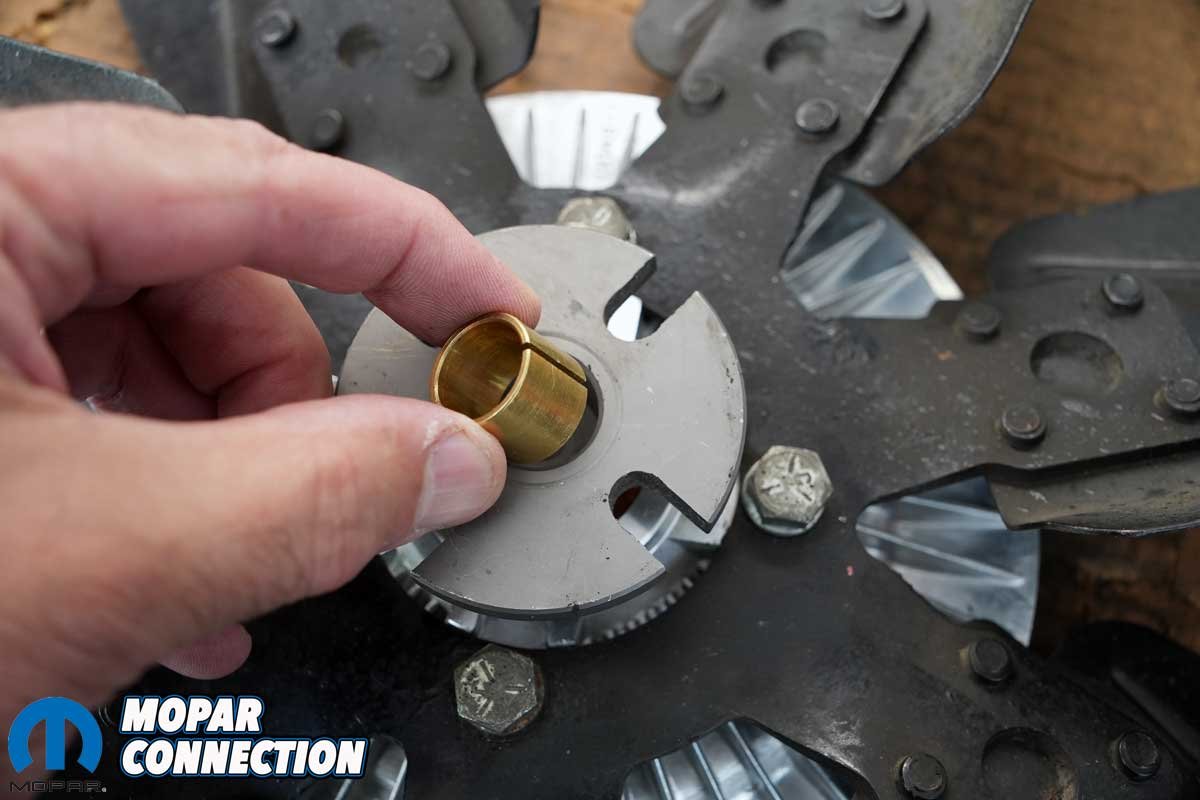
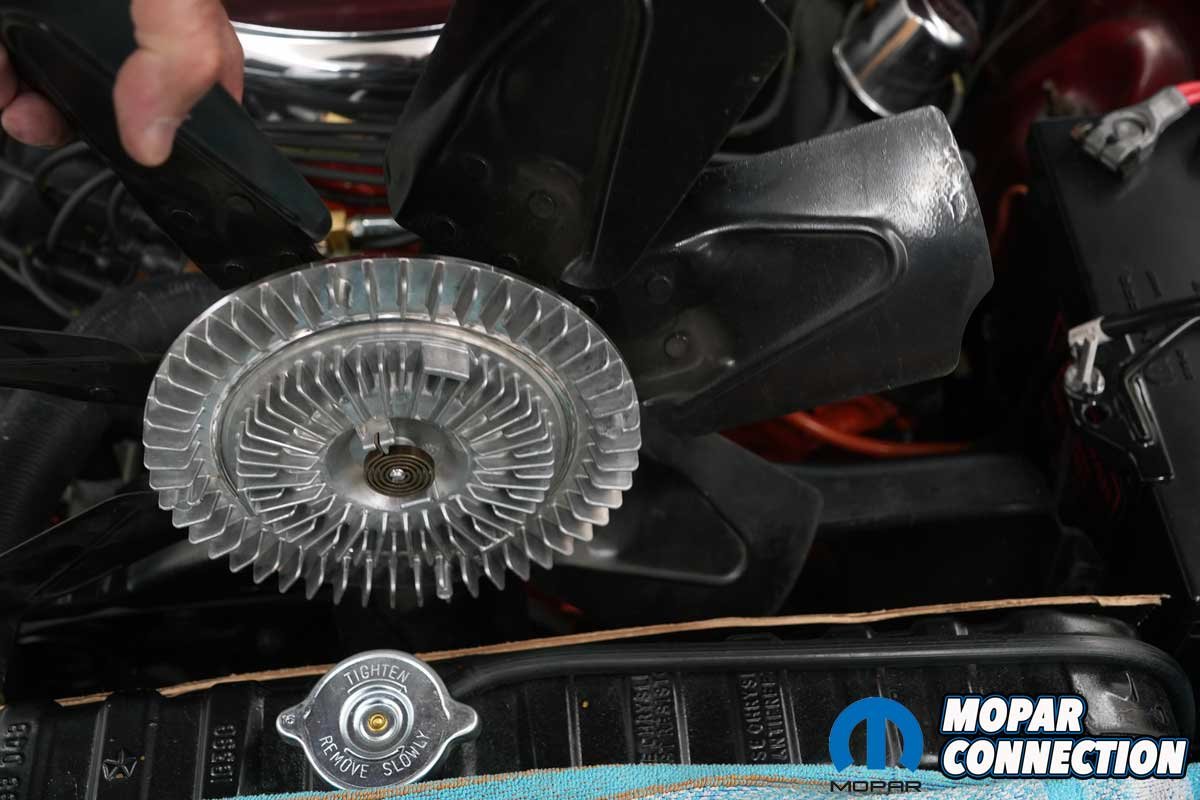
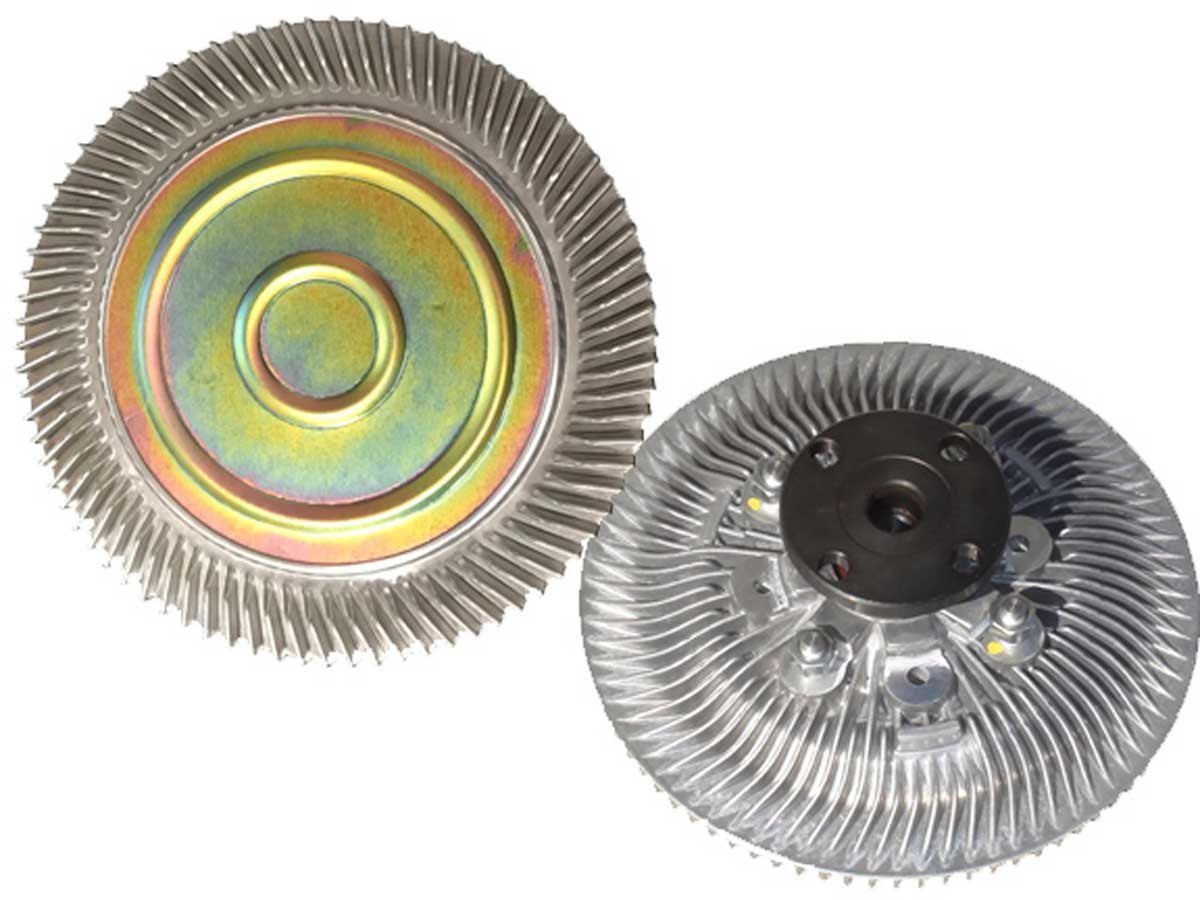
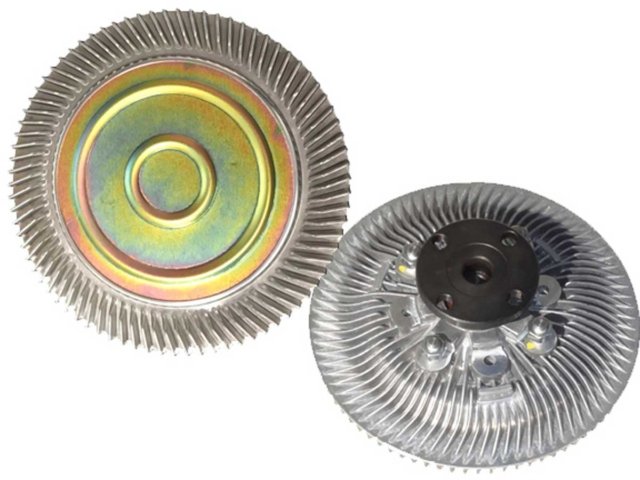
Above Left: The Hayden 2947 cooling fan clutch is a thermal (thermostatic) design. While it differs from the original factory unit, it serves as a suitable temporary replacement while the original clutch is being rebuilt. Above Right: The fan clutch does not include mounting studs or bolts. We used four coarse-thread bolts from our parts supply for installation. The kit also included a brass adapter sleeve, which was required to match the clutch to the water pump shaft diameter.
This year, the plan was to run the full summer season, but we discovered the fan clutch had developed noticeable looseness and wobble. While it was still maintaining engine cooling, the risk of failure was too high to ignore. A malfunction at speed could have caused significant damage to the original shroud, radiator, water pump, or hood.
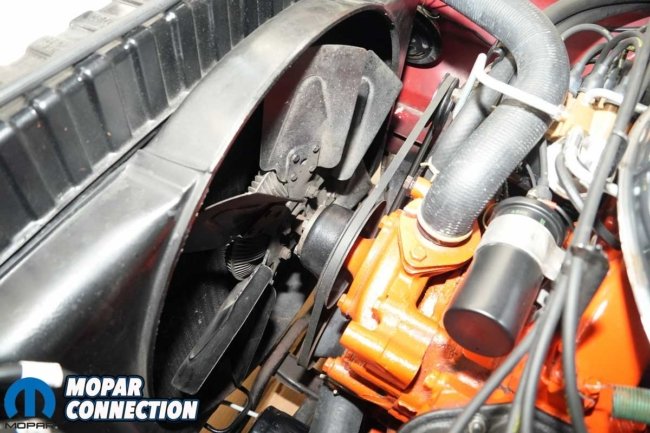
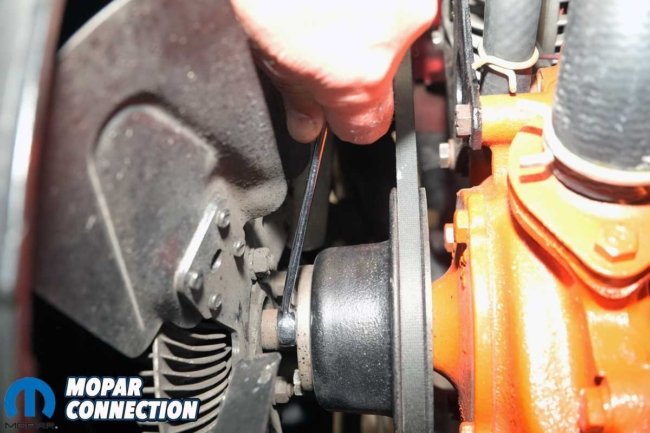
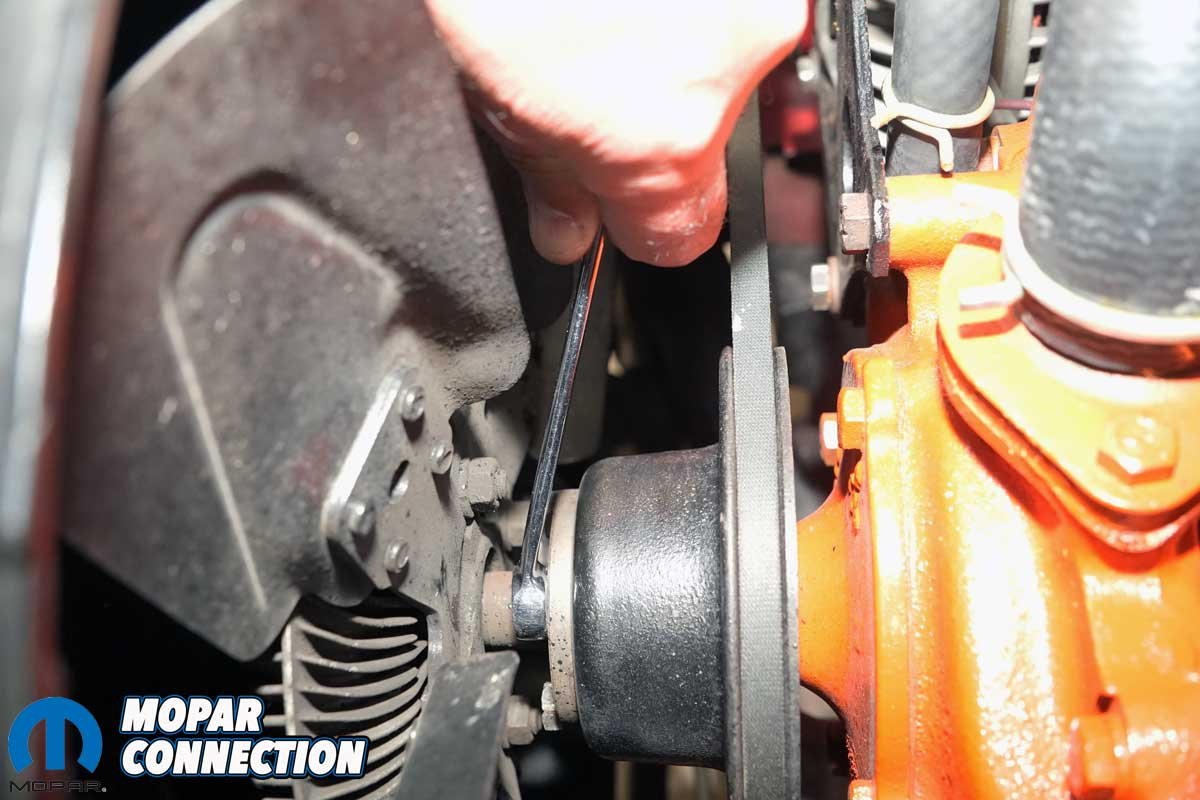
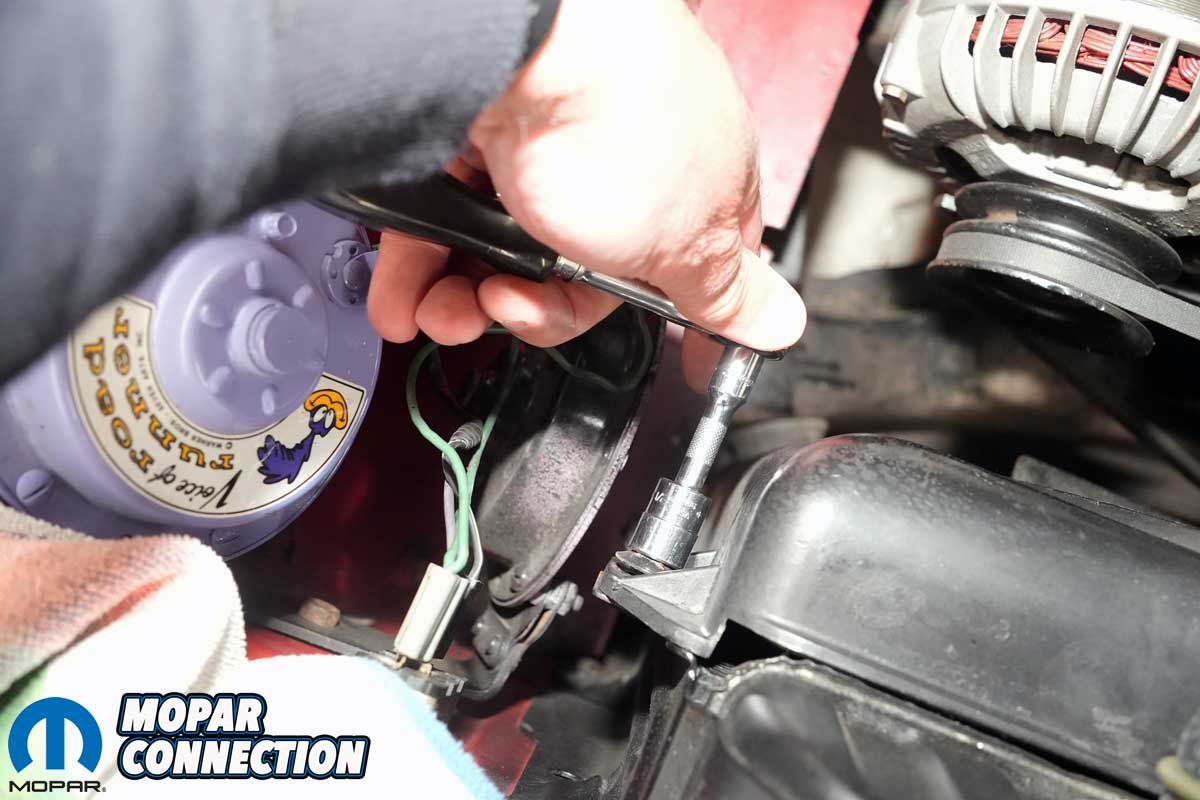
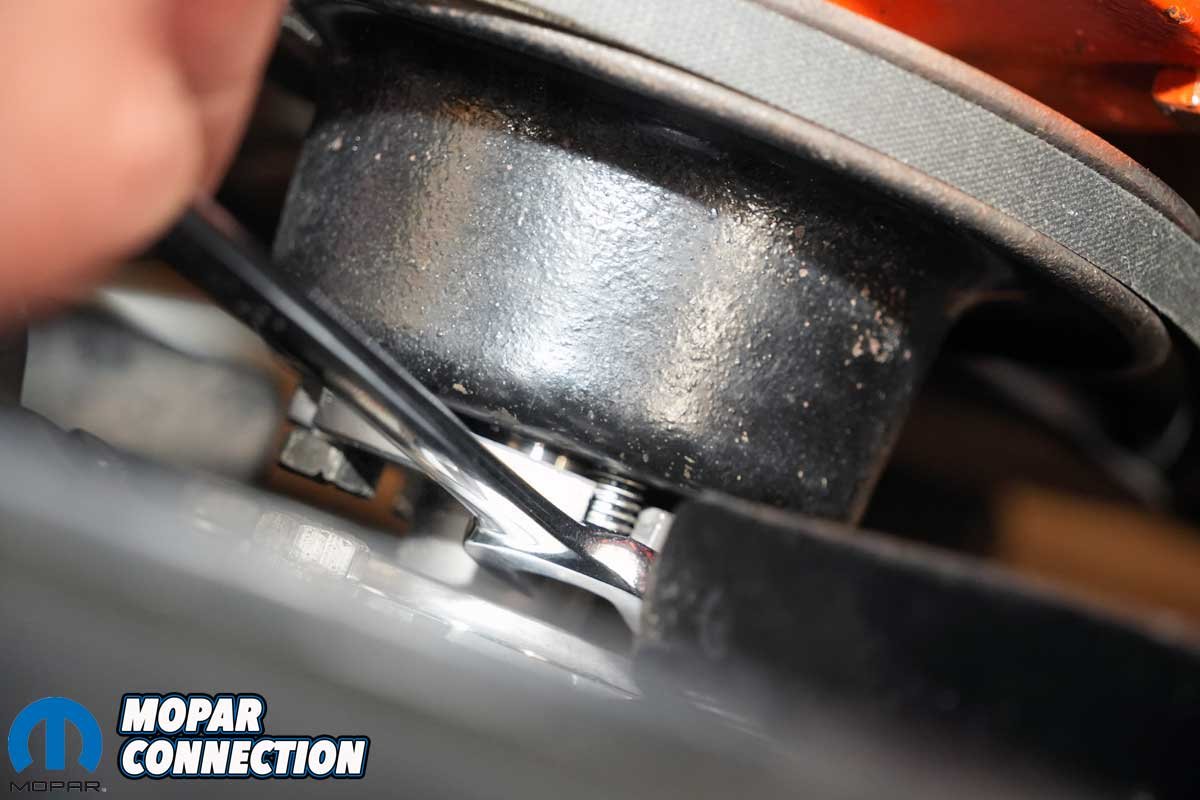
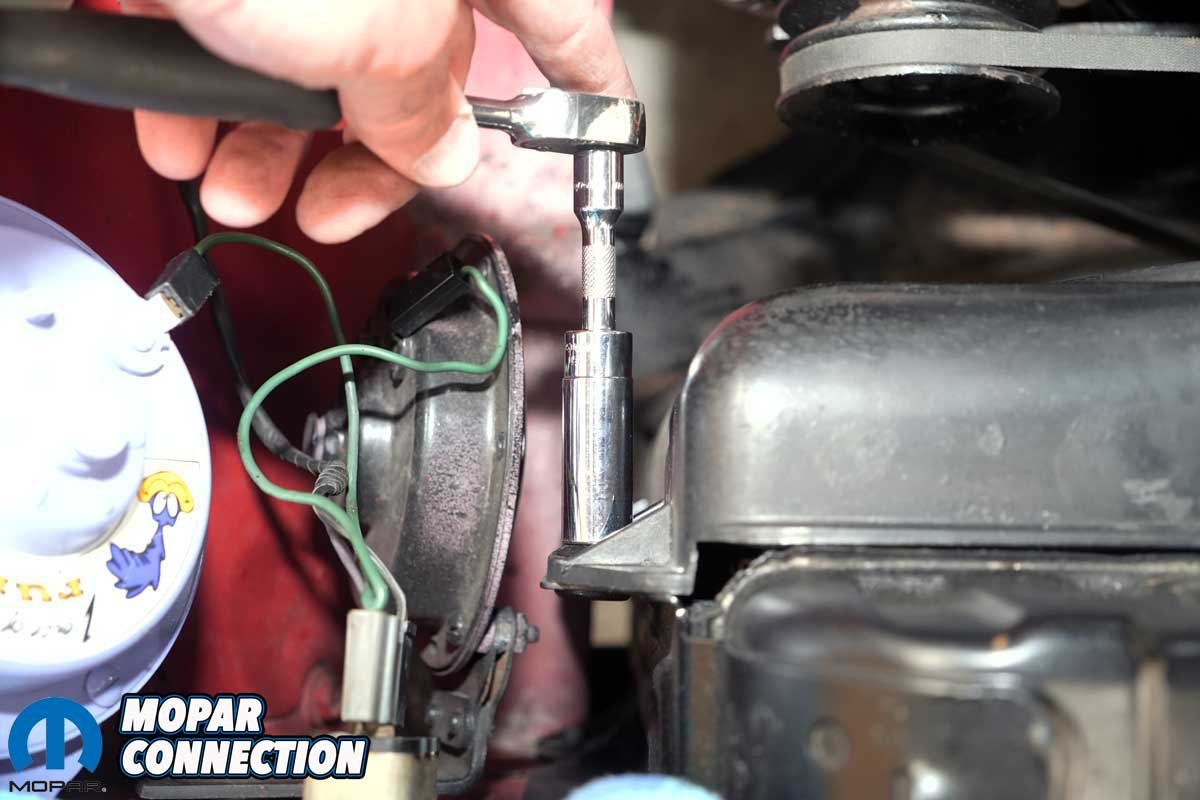
Above Left: The original fan clutch had developed a noticeable wobble, so we decided to replace it before it could cause damage to the water pump, fan, or other related components. Above Right: We began the process by loosening the four fasteners that secure the fan clutch hub to the water pump shaft, which protrudes through the center of the water pump pulley.
We decided to address it now rather than risk a much larger catastrophe later, even though it meant additional downtime. After researching options, we found several suppliers offering a “concours version” of the original 2806070 clutch fan drive, including units with correct part-number stamping. However, even with the part number stampings, the date codes markings were limited or completely absent.
After reviewing photos and a video of one candidate unit, it ultimately did not meet our measures, with non-factory-style mounting hardware and multiple fan-mounting provisions that did not match the original configuration. We kept it as an option but continued the search for a more accurate replacement.
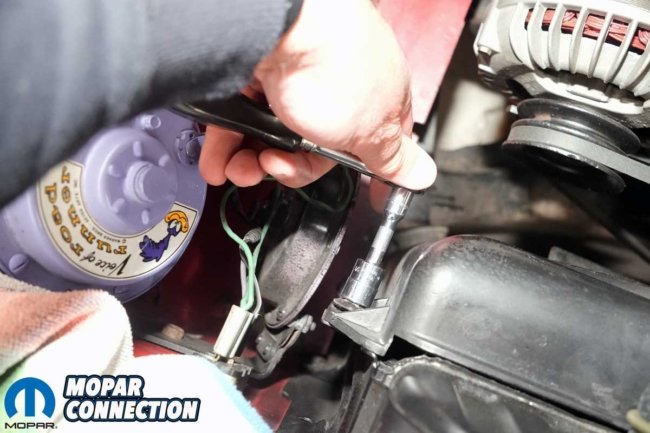
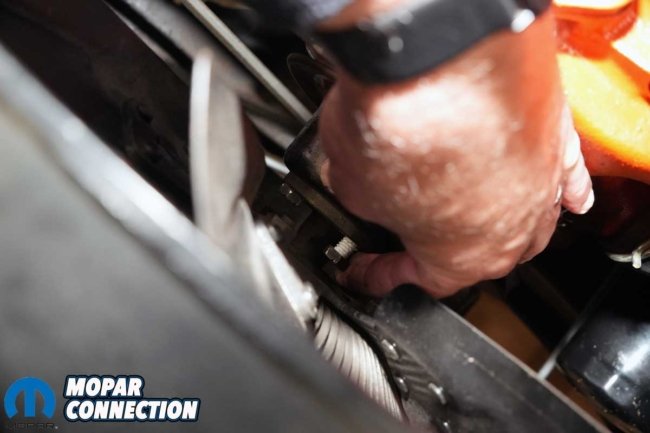
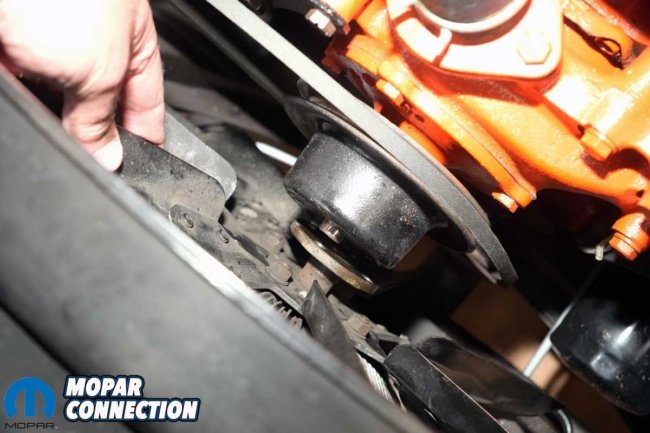
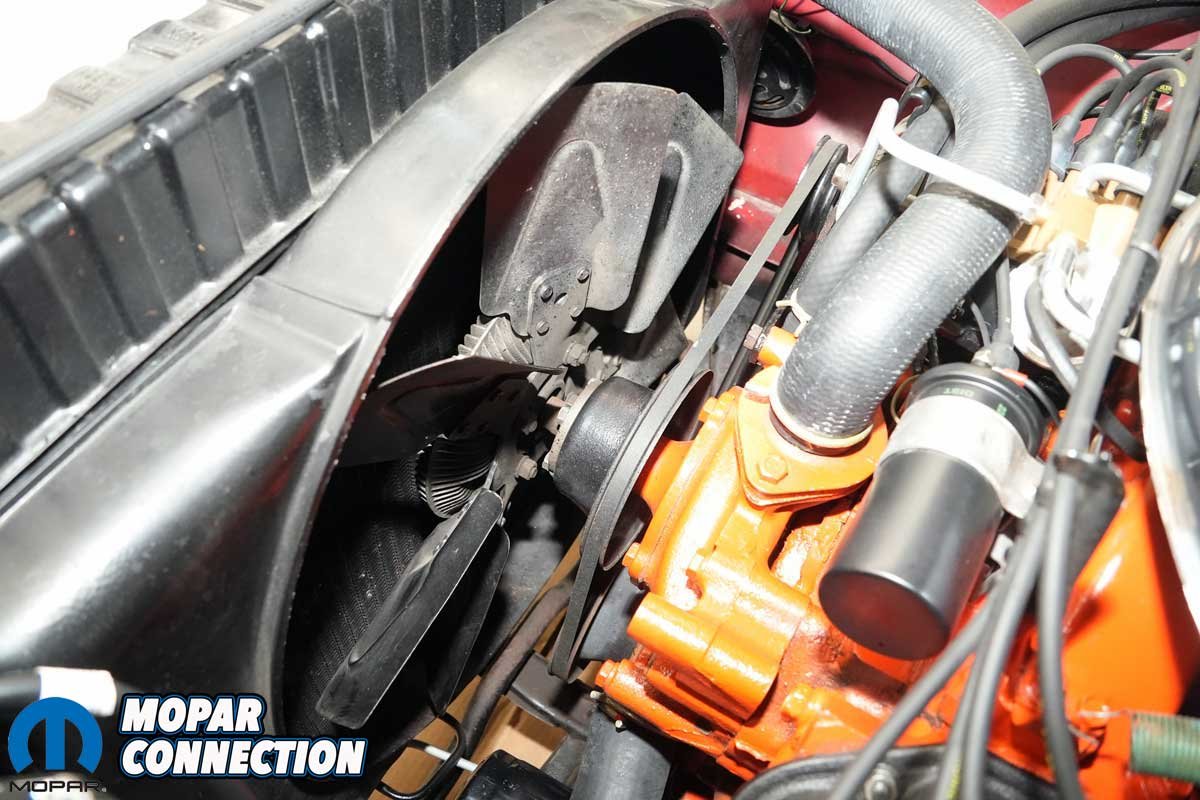
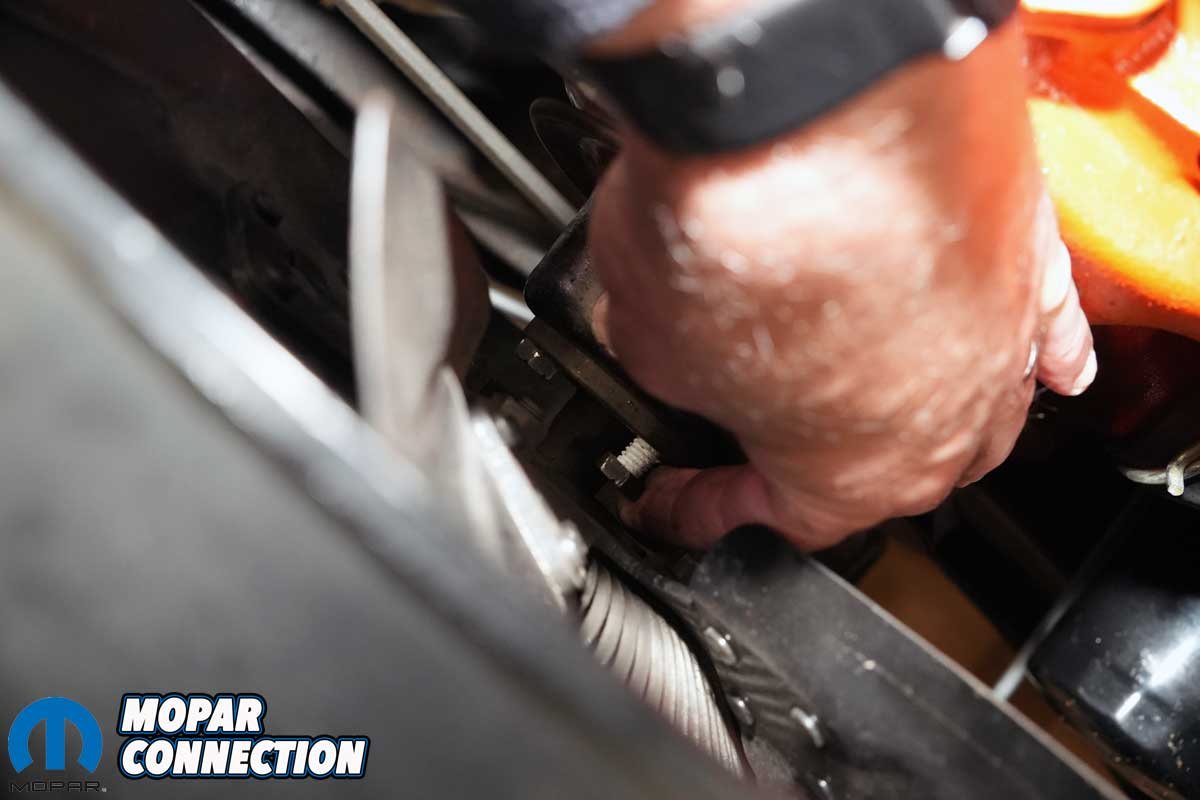
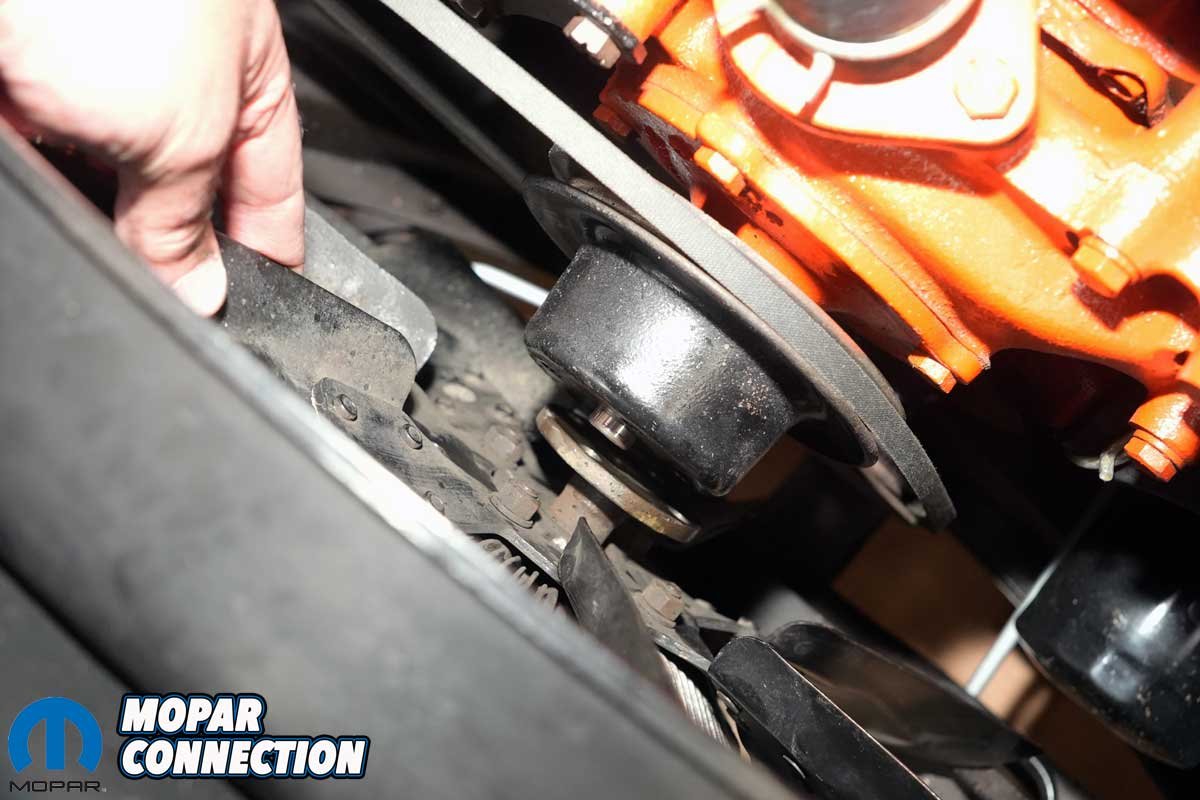
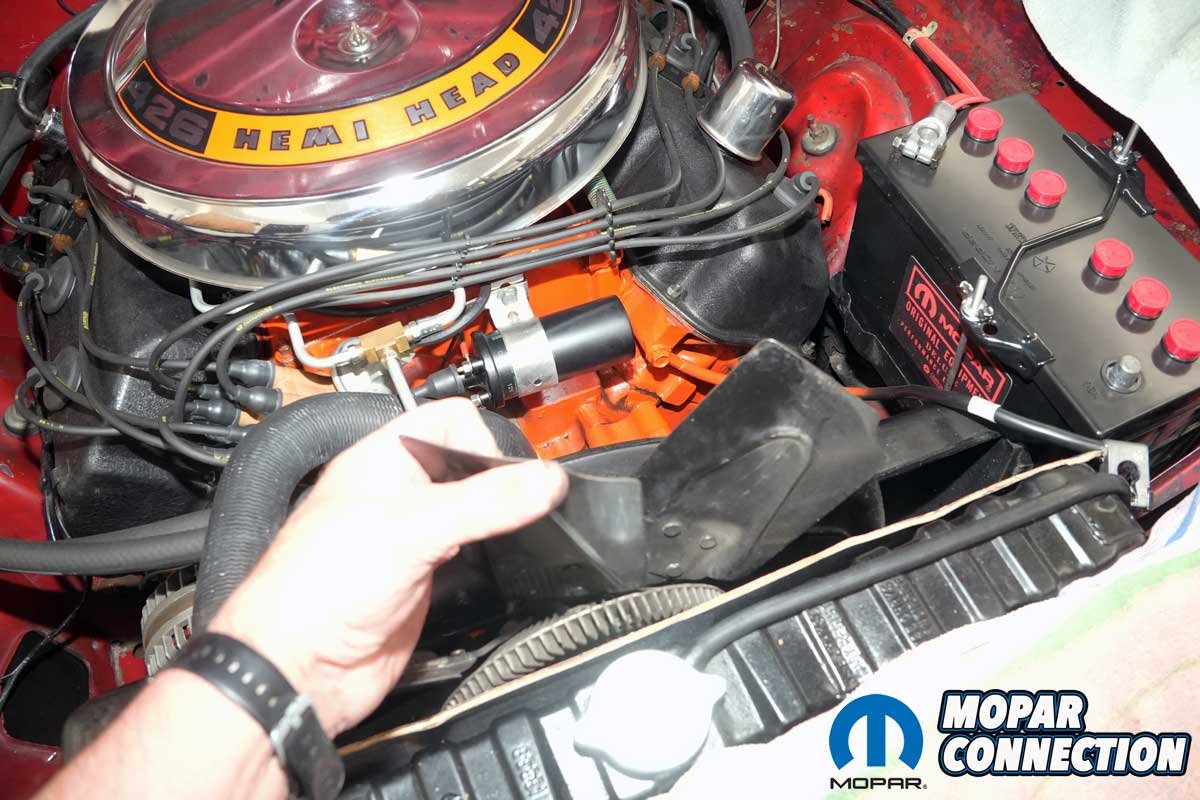
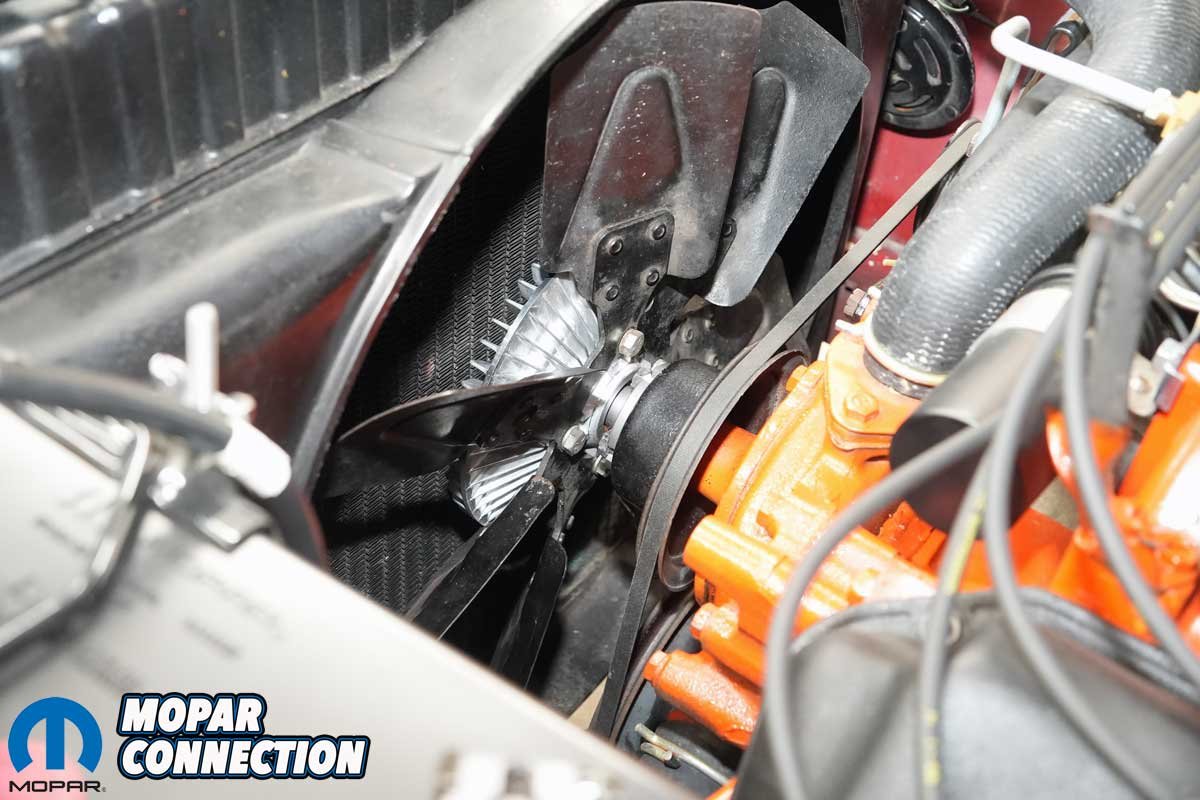
Above Left: The factory fan shroud was secured by five retaining nuts. We removed all five but left the shroud resting on the mounting studs for the time being. We slipped in a piece of cardboard between the shroud and the radiator surface. Above Center: With the fan belt loosened, we expected the clutch assembly to slide off the water pump shaft with a little persuasion. Unfortunately, it refused to budge. To gain better leverage, we temporarily reinstalled one fastener and continued working on the fan clutch to loosen it. Above Right: After about 15 minutes of careful maneuvering, twisting, and persuasion, the clutch finally broke free from the water pump shaft and could be removed from the engine compartment.
During a deeper search, we found Russ Guajardo at RG FABRICATION LLC dba Kirkconnell Corvettes, a company that restores factory-original engine cooling fan clutches. Do not be concerned about the Corvette reference in the business name, as Russ has extensive experience with Chrysler fan clutches, including our 2806070 unit. He can rebuild our clutch, which he suspects has a worn bearing, as well as repair aluminum clutch fins as needed, re-plate the exterior, and correctly stamp the clutch face with the proper part number and date in the correct font.
We determined this would be the best path forward. With the original clutch in hand, a rebuild would return it to a serviceable, original form. However, Kirkconnell Corvettes currently has a 10- to 12-week backlog for clutch repairs. While that period was acceptable with us, it would mean missing the summer cruising season, again.
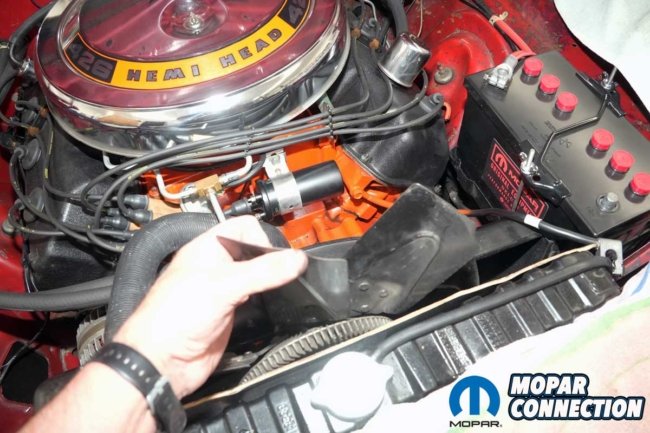
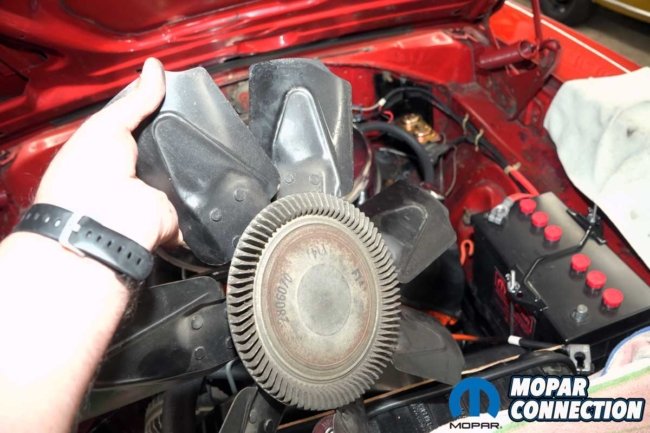
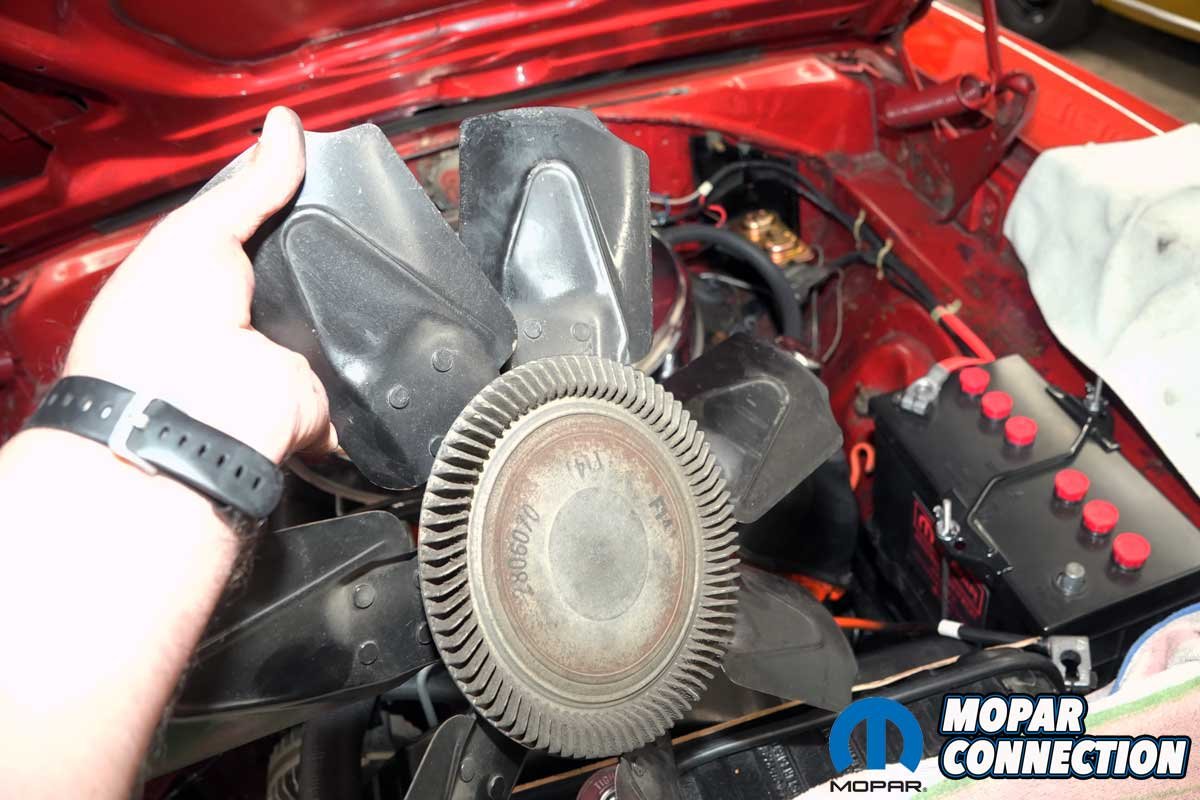
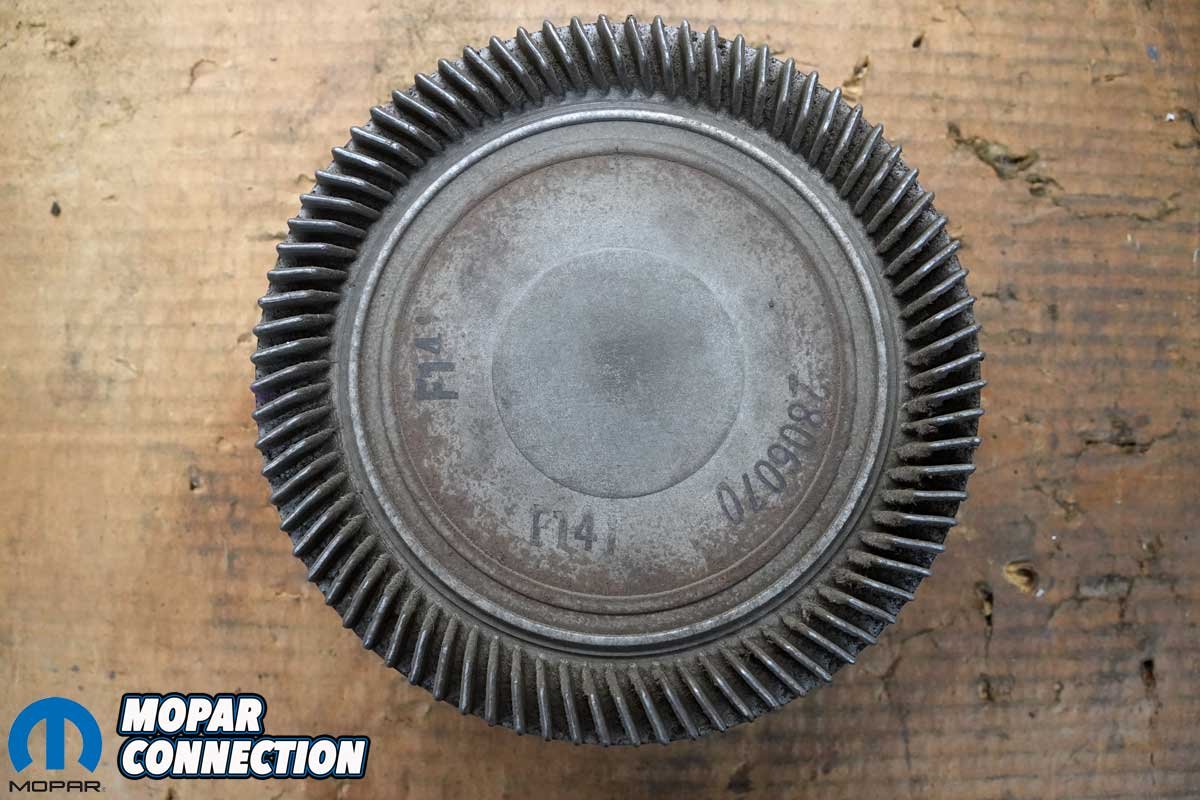
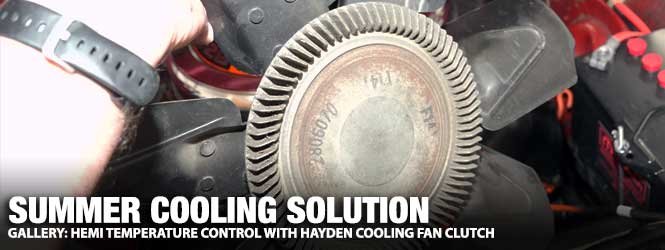
Above Left: With the shroud pushed rearward, we carefully maneuvered the fan and clutch assembly out through the gap between the shroud and the radiator, which had been protected with a piece of cardboard to prevent accidental damage. Above Right: The original fan clutch still carried the correct factory part number, one of the main reasons we chose to have it rebuilt rather than replaced. Several additional stampings were also present on the housing, though their exact meaning still required further investigation.
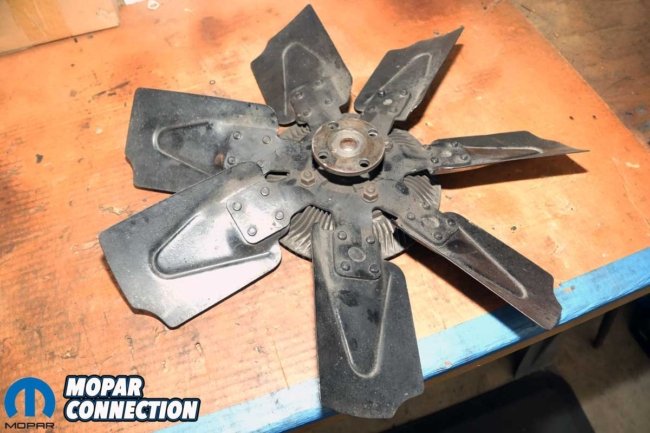
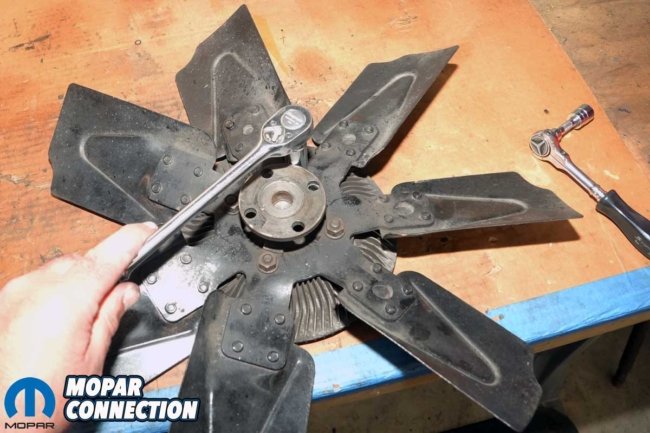
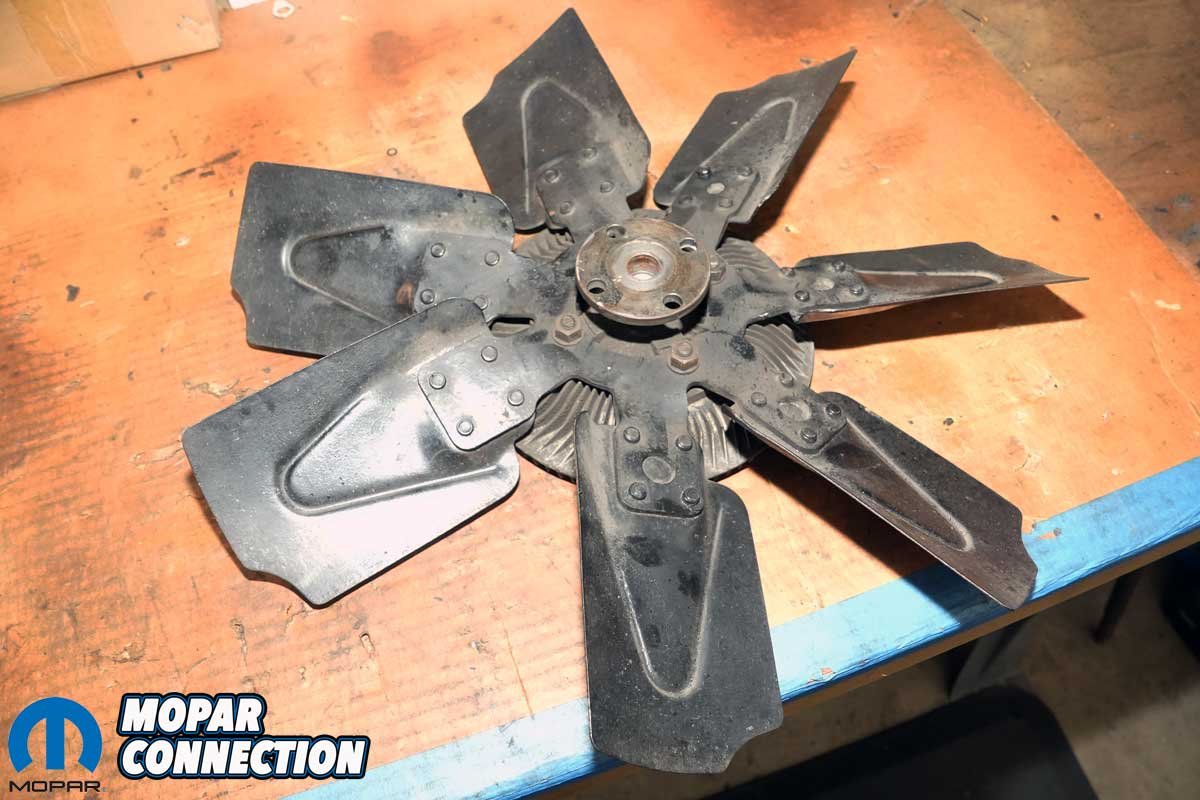
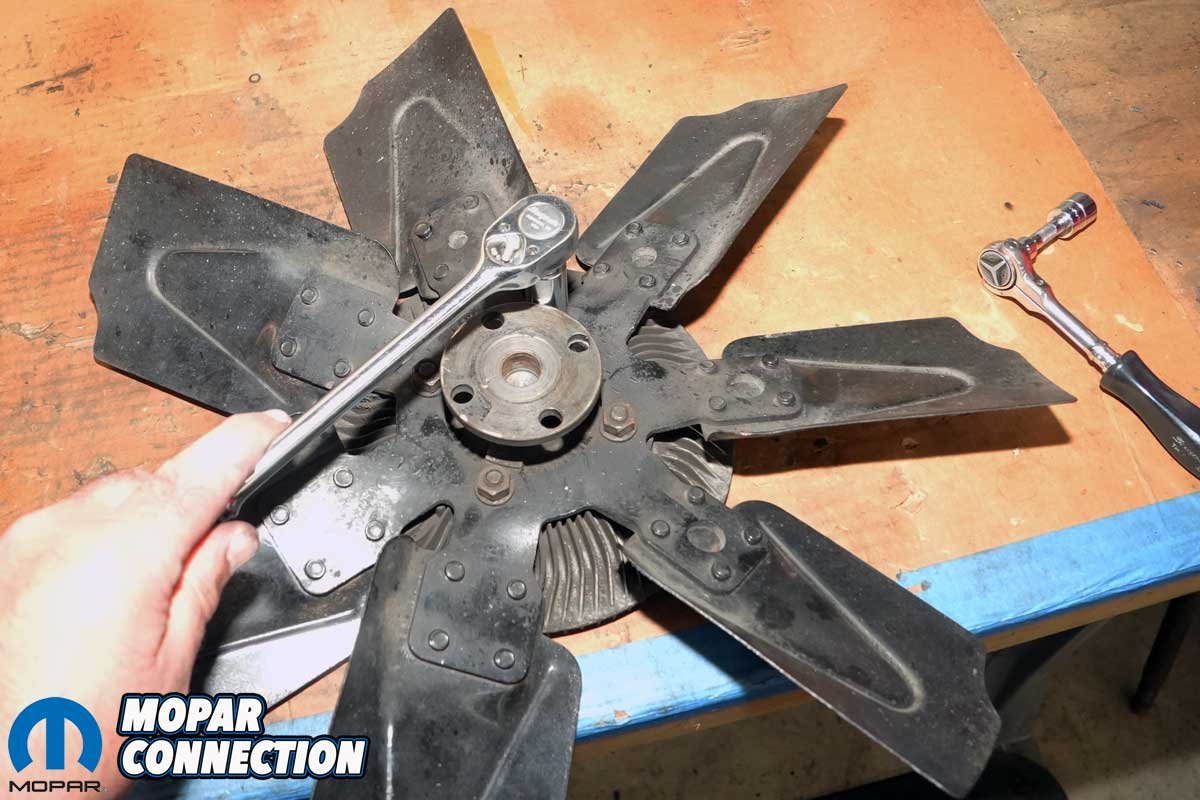
Above Left: The cooling fan is attached to the clutch assembly by four nuts threaded onto four fine-thread mounting studs. Above Right: Removing the fan was straightforward. We simply unthreaded the four retaining nuts and separated the fan from the clutch assembly.
Because we still wanted to drive the Road Runner this summer, we continued searching for a cost-effective temporary cooling fan clutch to install for the season and remove once the original returned from Kirkconnell Corvettes. Through Summit Racing, we found that a short-shaft Hayden clutch (part number HDA-2947) would be a suitable fit for the Hemi. It is not concours correct, but it serves the functional purpose. The Hayden clutch uses a thermal (thermostatic) control system rather than a factory-style purely viscous coupling (non-thermal).
Both thermal and non-thermal fan clutches use silicone fluid to transfer power to the cooling fan. The difference is how they control fan engagement.
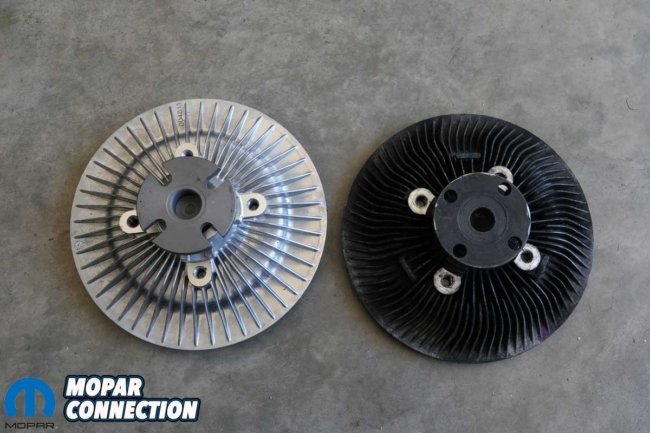
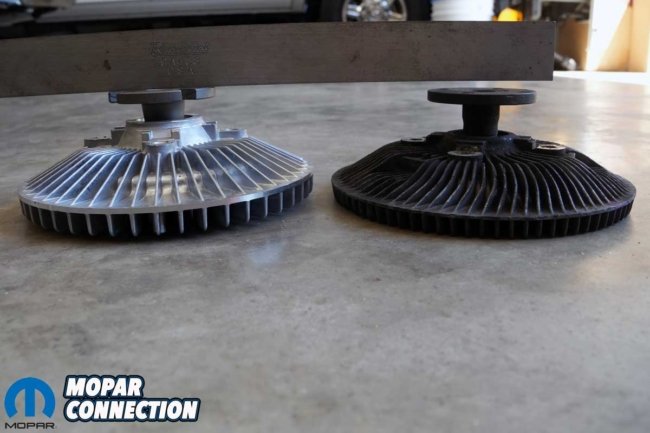
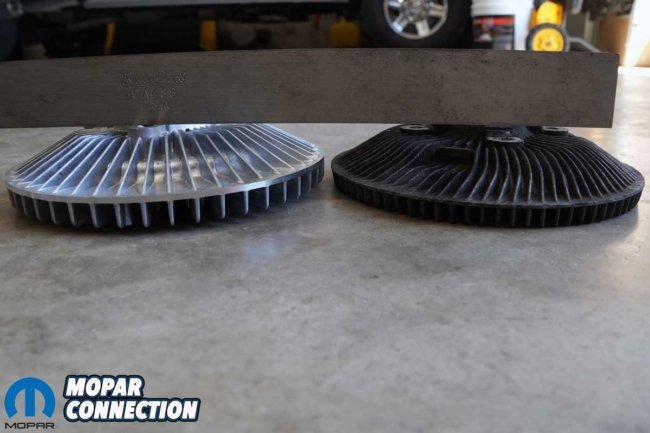
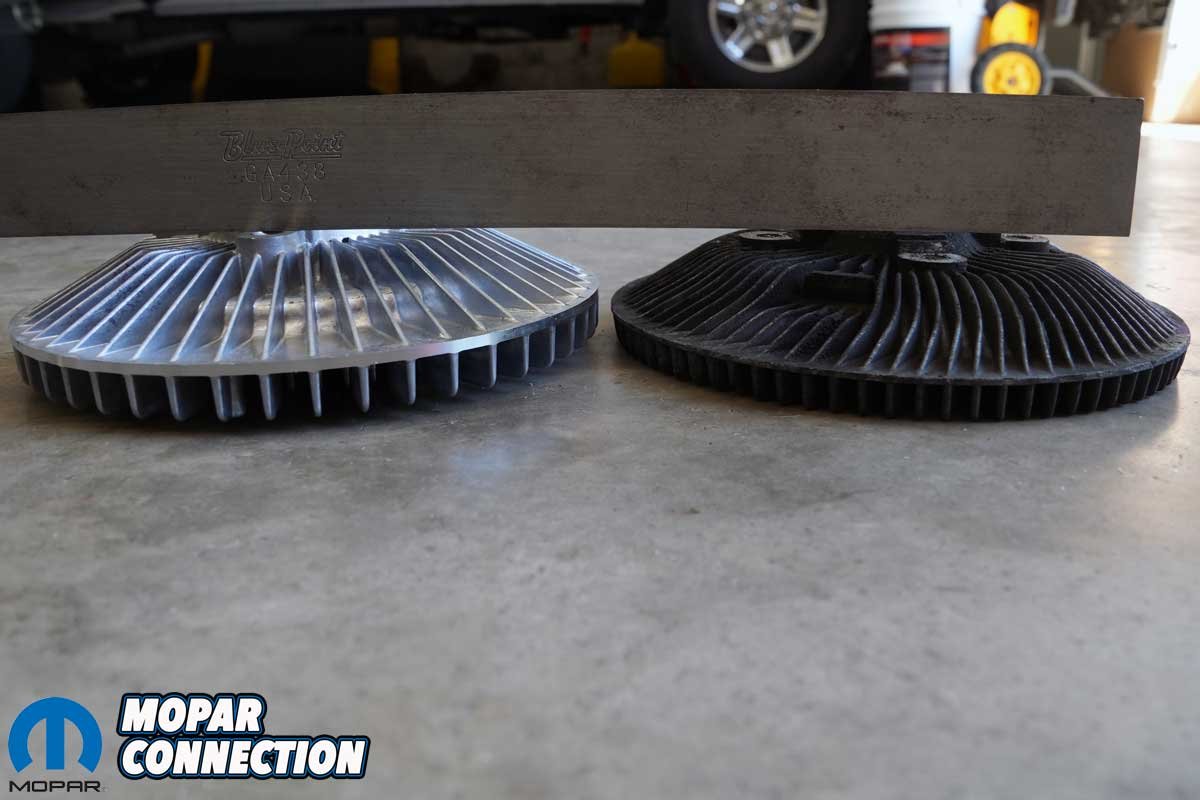
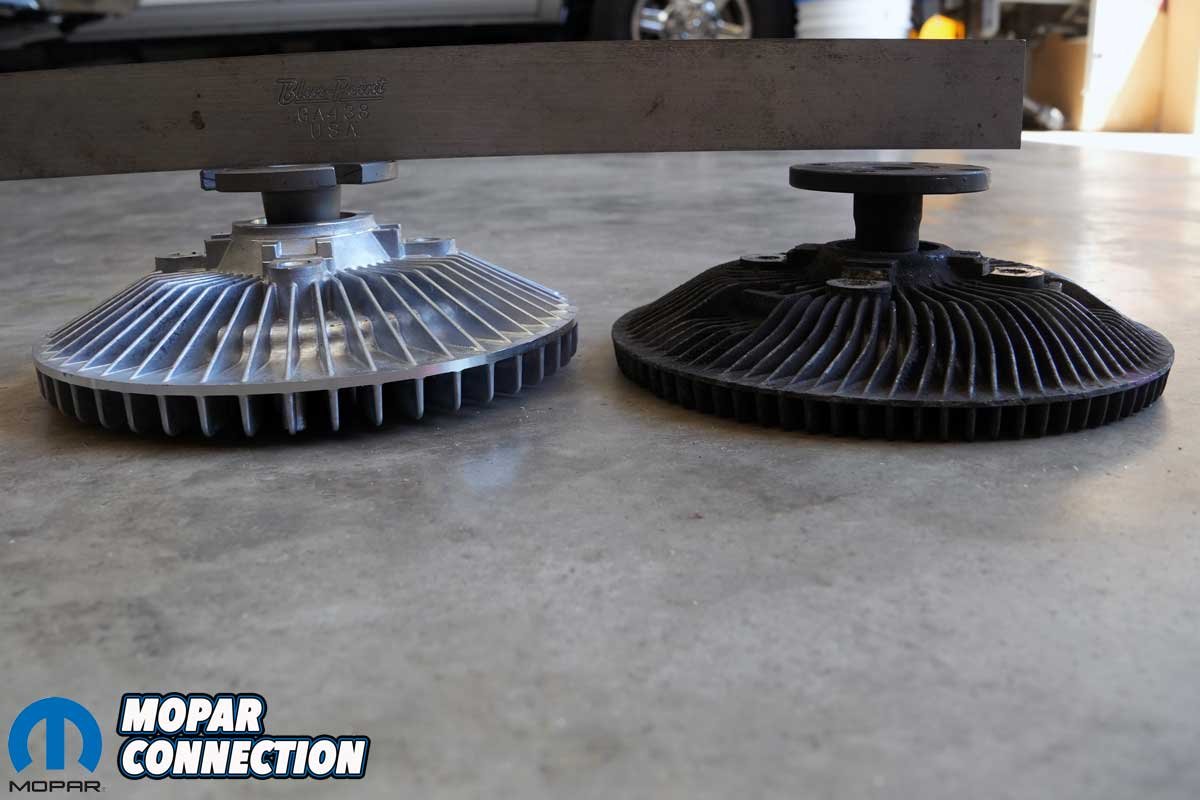
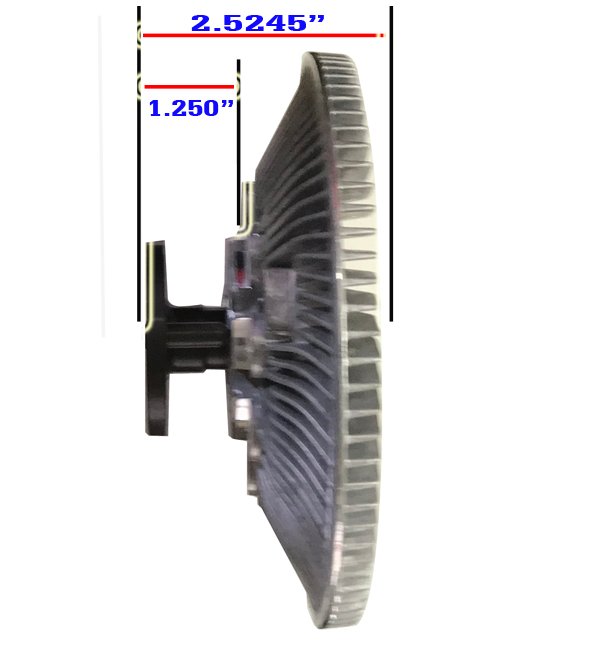
Above Left: The Hayden replacement clutch (left) closely resembles the original unit in overall appearance, but it is not concours correct when compared to the factory component. Above Center: The Hayden unit measures approximately 0.2 inches longer than the original clutch. This slight difference could position the fan assembly marginally closer to the radiator once installed. Above Right: The Hayden housing is also noticeably thicker than the original design, which offsets the fan slightly closer to the engine side. Considering the dimensional differences, we expect the fan to end up very close to its original operating position once installed.
A non-thermal clutch provides a fixed amount of coupling, causing the fan to spin at a predetermined percentage of engine speed regardless of cooling demand. It is simple, reliable, and common on many muscle cars of the 1960s, including the Road Runner.

A thermal clutch adds a thermostatic spring that reacts to radiator outlet air temperature. As cooling demand increases, the clutch engages more firmly, increasing fan speed. When cooling demand drops, it slips more, reducing horsepower loss and noise.
In short, both are viscous fan clutches. The non-thermal design operates at a fixed level, while the thermal design automatically adjusts fan engagement to match cooling needs. The thermal clutch is the more efficient and sophisticated of the two.
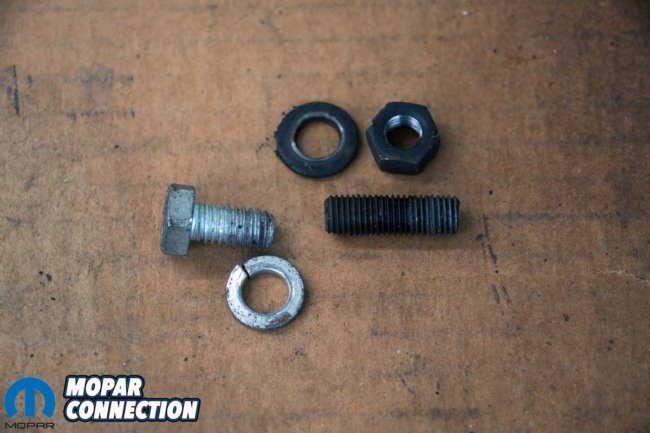
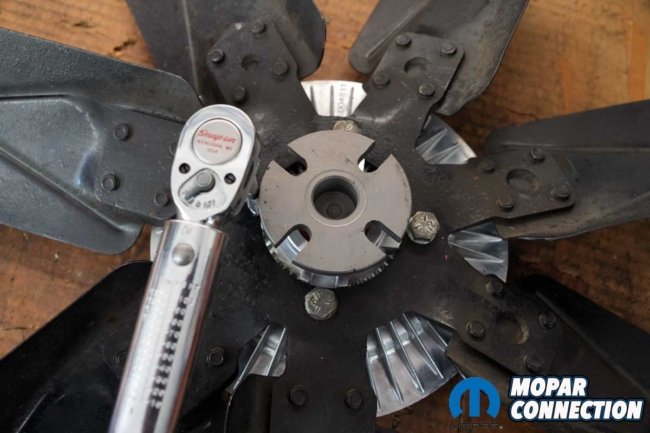
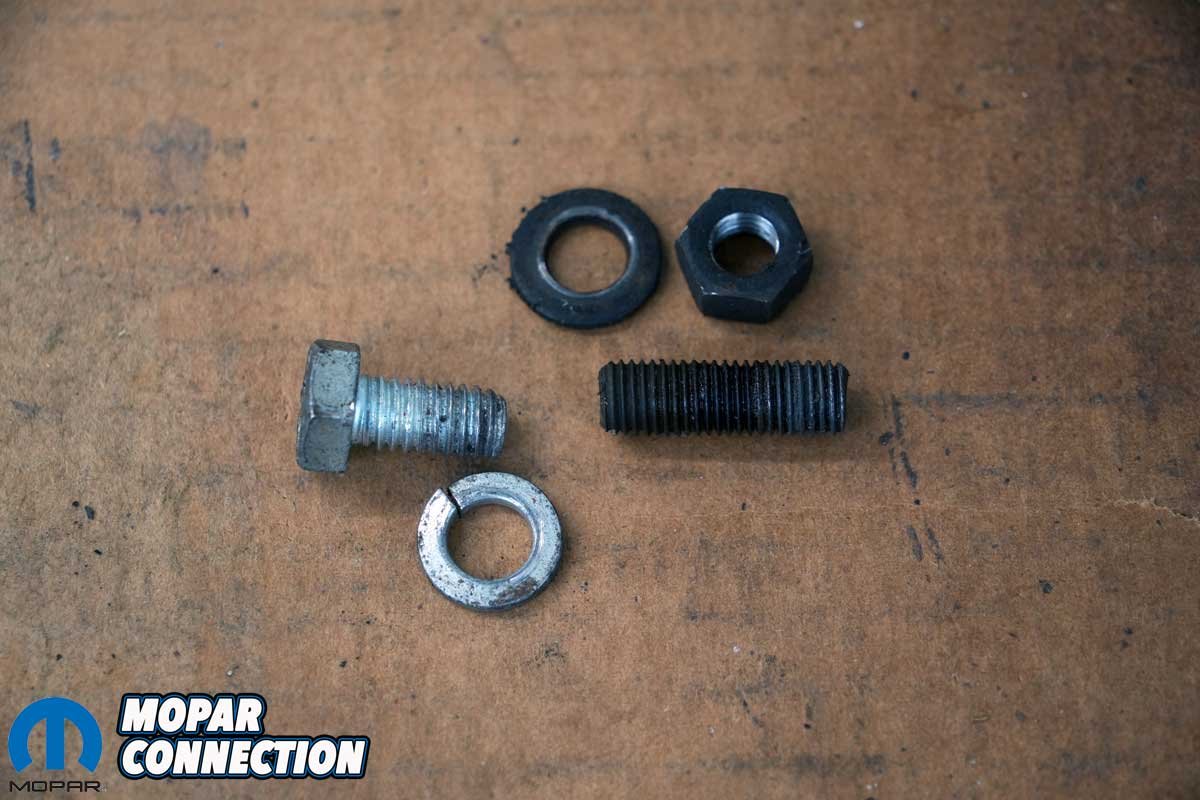
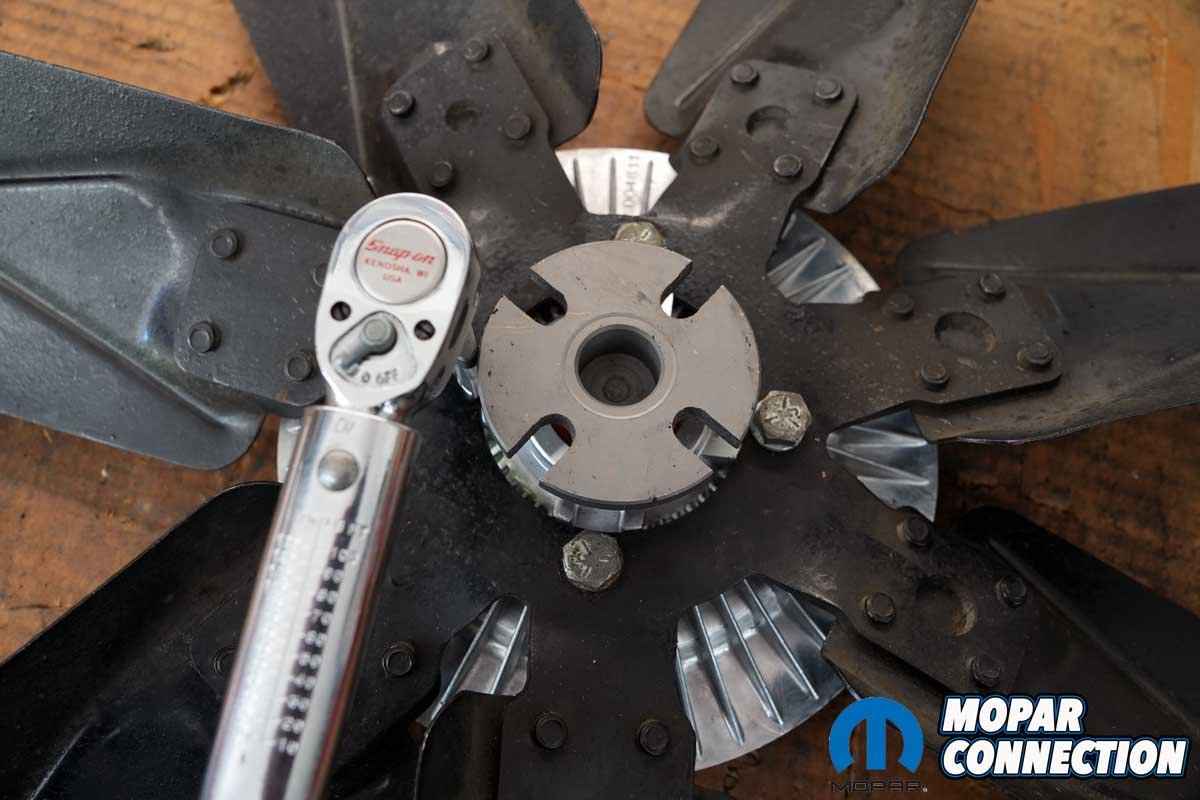
Above Left: Because the Hayden fan clutch did not include mounting hardware and required coarse-thread fasteners, we sourced four suitable bolts and washers (left) to secure the fan to the assembly. Above Right: With the fan properly seated on the clutch housing, each of the four mounting bolts was tightened evenly to 22 ft-lbs to ensure a secure and balanced installation.
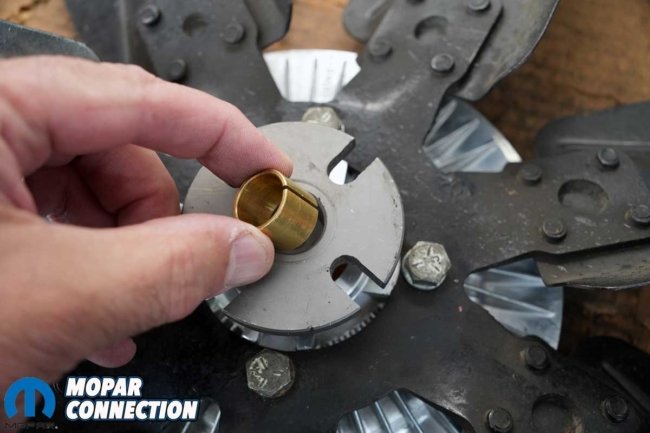
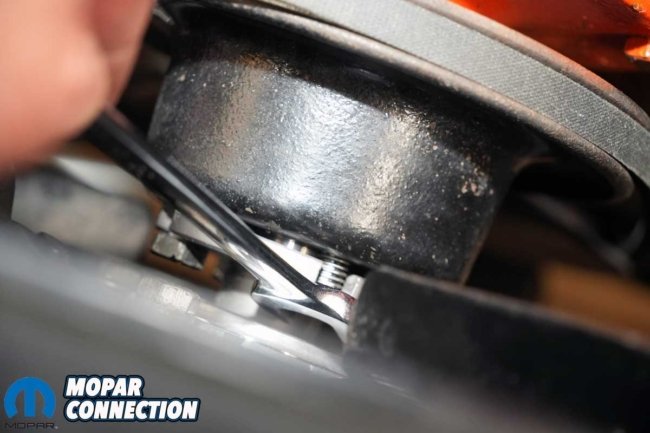
Above Left: Our application required the use of the supplied bushing, which we installed on the shaft to achieve proper fitment. Above Right: We then reused the factory hardware to secure the assembly back onto the water pump.
The removal of the fan clutch was straightforward. We loosened the four bolts securing the clutch assembly to the water pump pulley. After disconnecting the negative battery cable, we loosened the alternator tension and removed the belt from the water pump pulley.
We then unthreaded the five fasteners securing the fan shroud to the radiator. With the fasteners removed but the shroud still in place, we slid cardboard between the shroud and the radiator core to prevent the fan from contacting the radiator during removal.
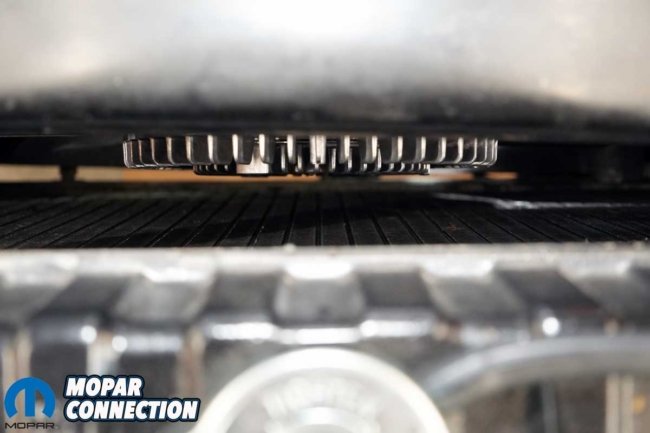
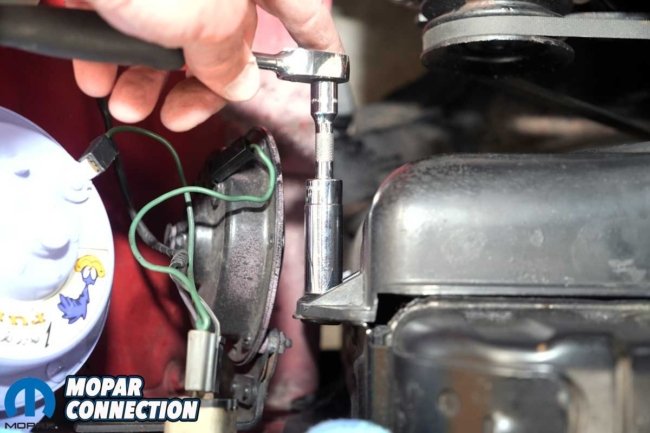
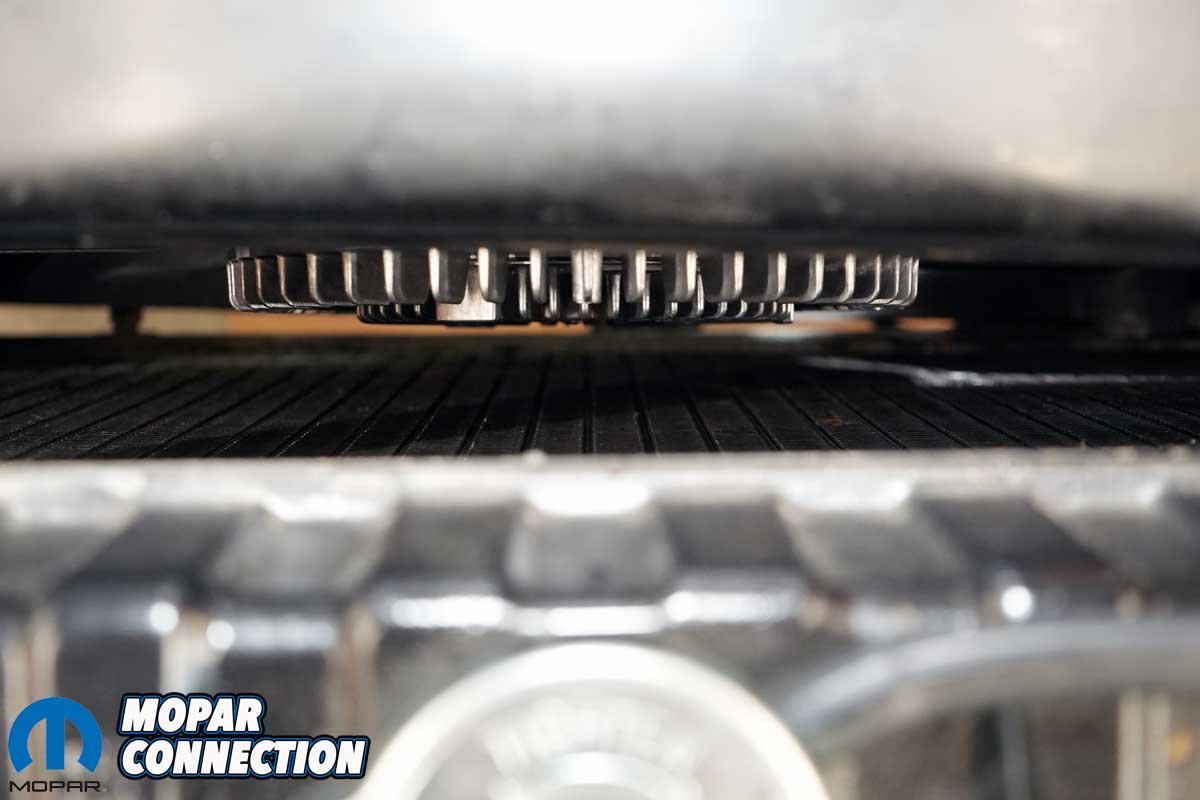
Above Left: The clearance between the Hayden clutch housing and the radiator core proved to be more than adequate, leaving no concern about the fan contacting the factory radiator during operation. Above Right: With final fitment confirmed, we reinstalled the fan shroud and secured it using the original factory retaining nuts.
To remove the fan assembly, we unthreaded the four clutch bolts and anticipated the clutch shaft to slide off the water pump shaft. However, it remained stuck. Because both the clutch and water pump pulley are believed to be original components, we avoided excessive force or prying.
We applied penetrating oil, temporarily reinstalled one bolt loosely to stabilize the assembly, and gently tapped the clutch shaft and pulley with a brass drift and hammer. After several minutes of careful work, the clutch broke free. From there, we pushed the shroud rearward toward the engine, removed the final clutch bolt, and carefully maneuvered the fan forward and out between the radiator and shroud.
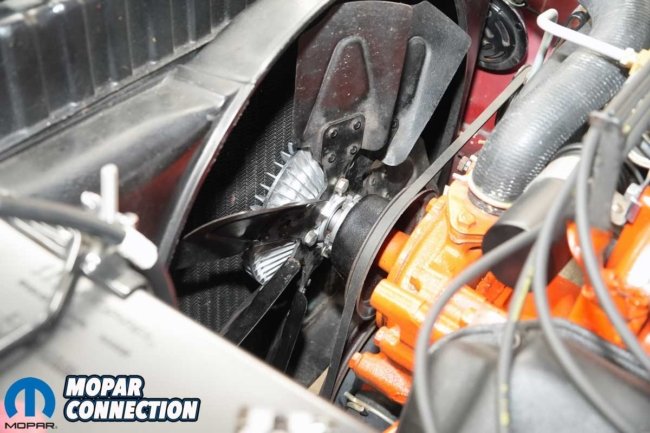
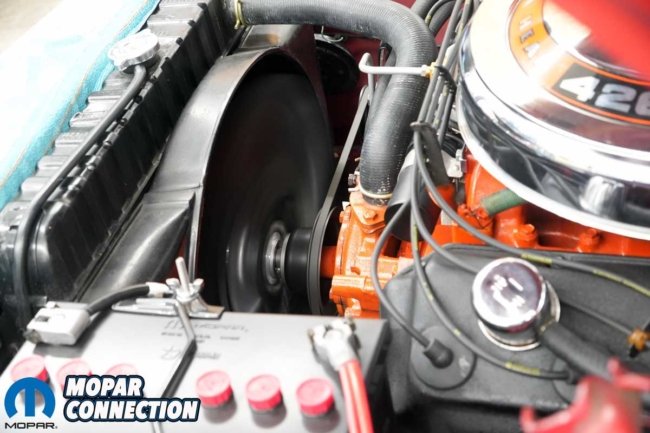
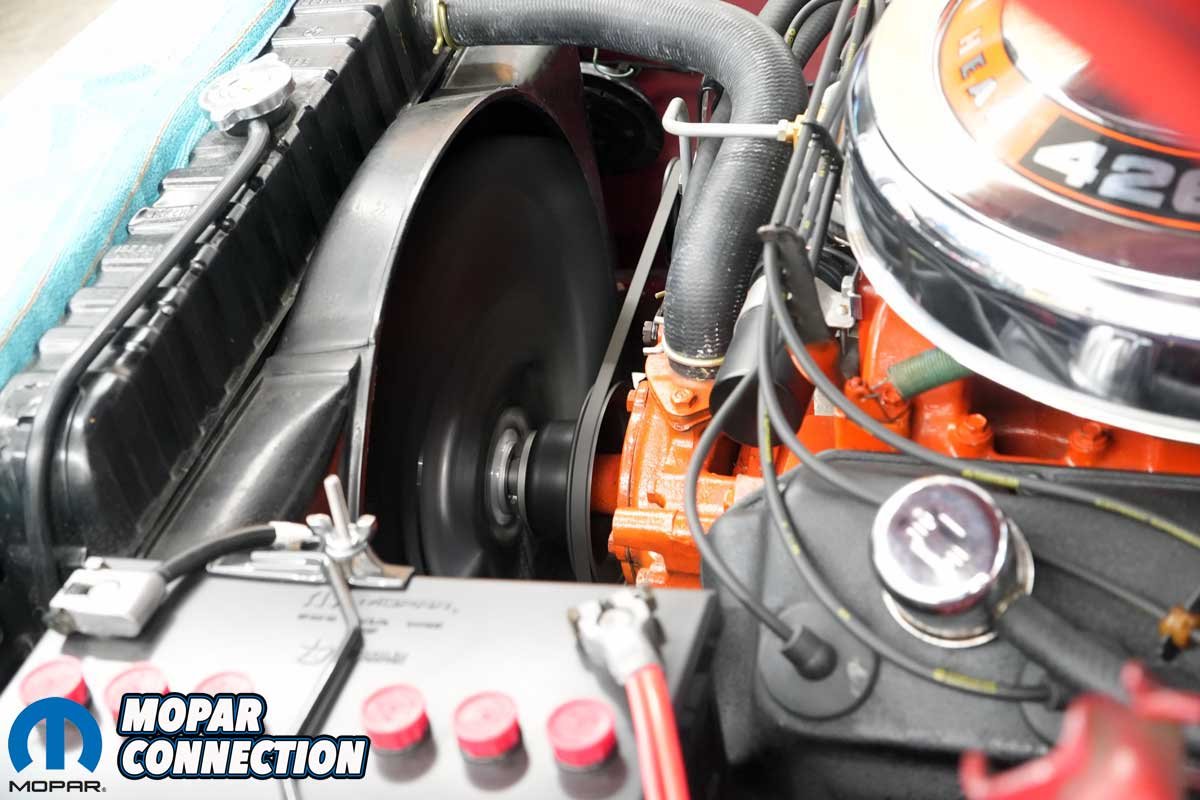
Above Left: Once installed, we verified clearance around the radiator and shroud by checking each fan blade individually. We also confirmed blade depth within the shroud, finding each blade positioned roughly 50/50 in and out, which is very close to factory placement. Above Right: With the drive belt properly tensioned, we started the Hemi. The cooling system immediately operated as expected, with everything running smoothly and within normal parameters.
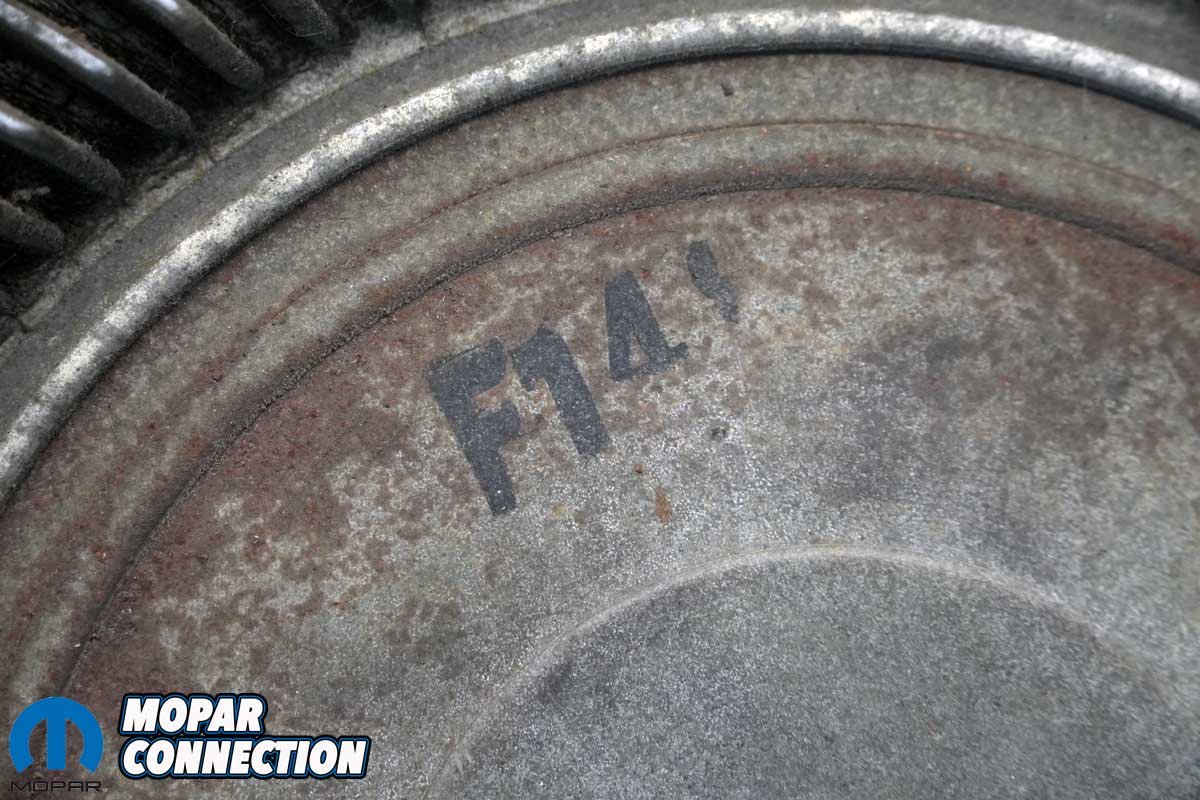
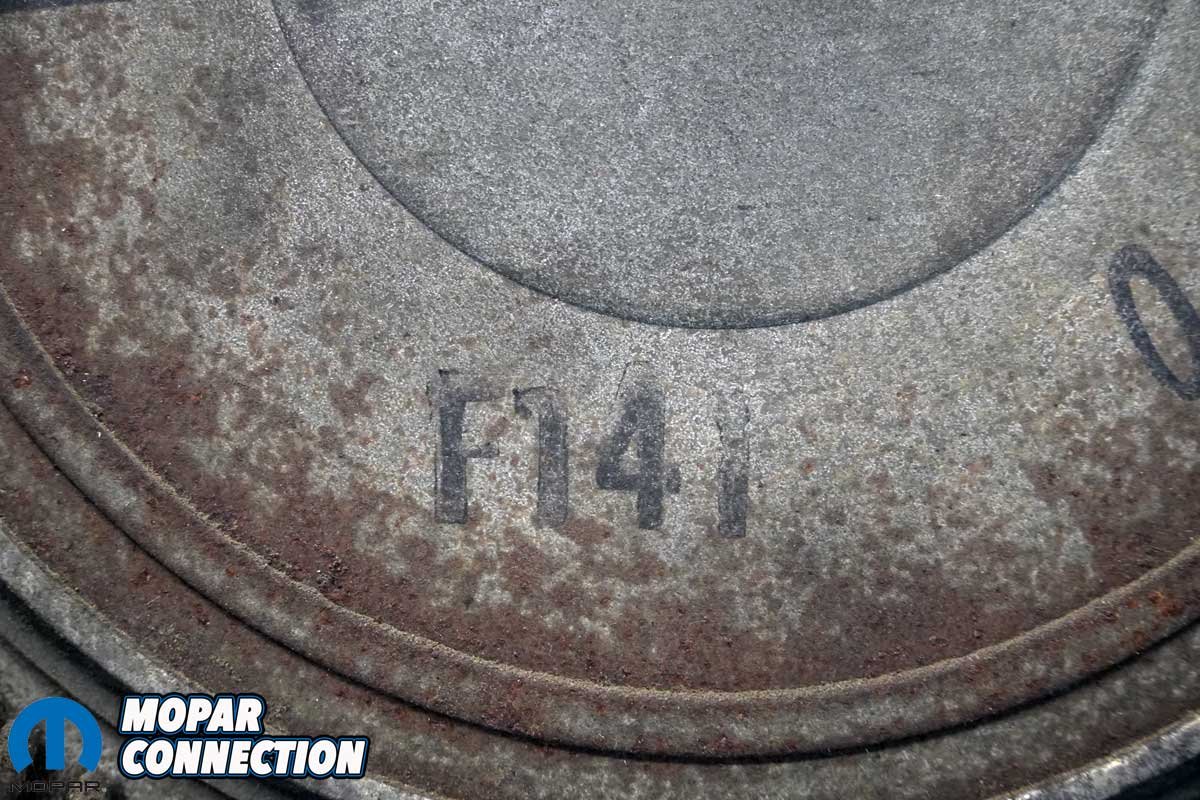
Although we confirmed the correct water pump earlier using a mirror to verify the part number, additional markings became visible once it was on the bench. It showed a partially and fully stamped “F14I” code, which decodes as F = June, 14 = day, I = 1968. As suspected, this confirmed it as the original clutch.
We removed the fan from the clutch by unthreading the four nuts from the fine-thread studs and transferred it to the new Hayden unit. The new clutch uses coarse-thread mounting points, so we secured the fan with four bolts, understanding this is a temporary, non-concours setup.
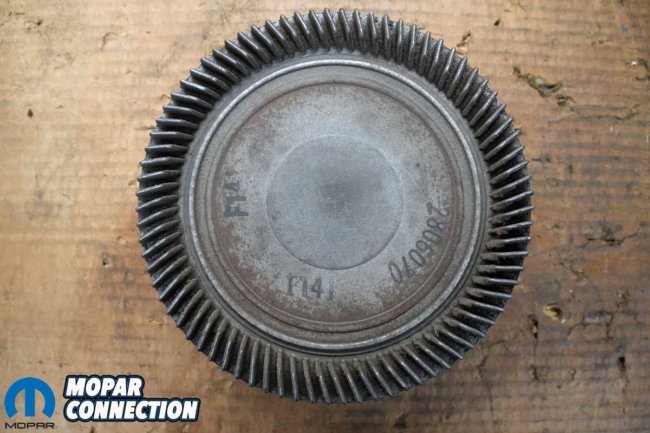
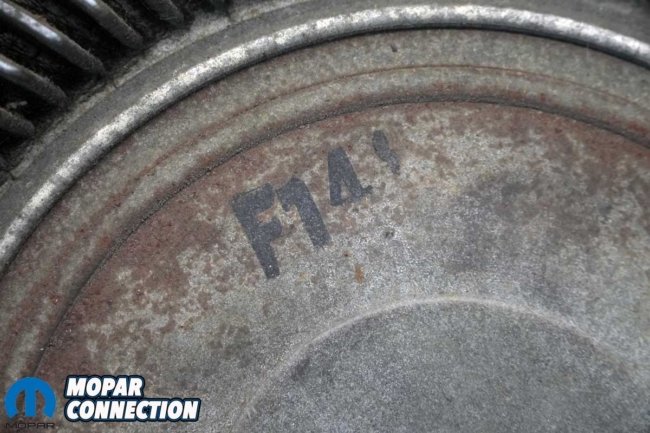
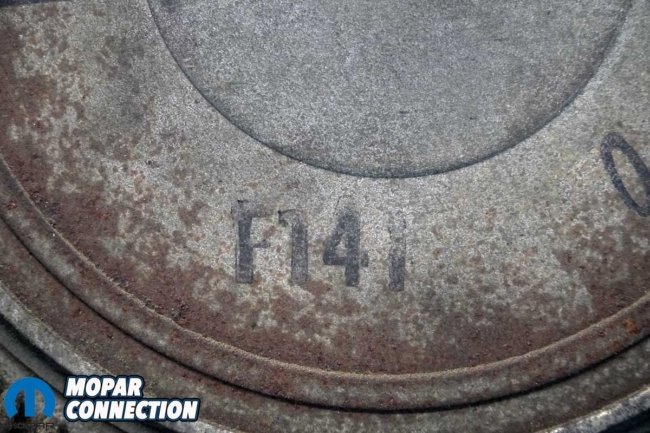
Above: We were confident we had the correct clutch based on part number 2806070, but we could not immediately confirm it as the original unit. Additional stampings on the housing were difficult to interpret at first. After further research, we identified the markings as F14I, which decodes as June 14, 1968. Since the Road Runner was built around 6/26/68, the clutch date aligns closely with the car’s production period, suggesting it is likely the original.
The dimensional difference between the factory clutch (2.56 inches) and the Hayden unit (2.70 inches) was minimal. Still, it moves the assembly negligibly closer to the radiator, while Hayden’s thicker housing places the fan marginally farther out of the shroud. Based on clearance checks, the fan should remain within an acceptable range.
Installation was the reverse of removal. With the belt still off, we verified clearance between the clutch housing and radiator core and confirmed adequate spacing. The fan sat roughly centered in the shroud, with approximately a 50/50 in/out position. We spun the fan by hand to confirm no interference, and everything cleared properly.
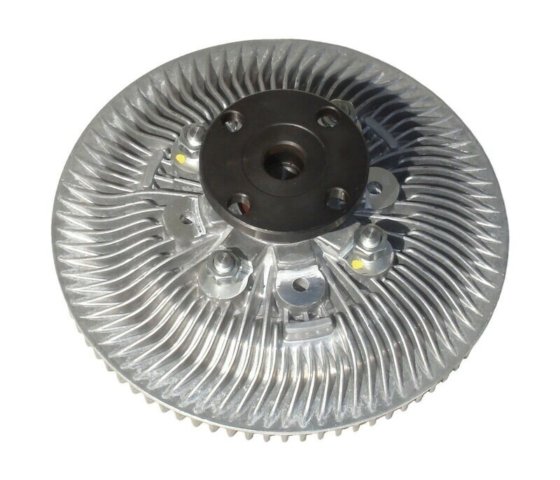
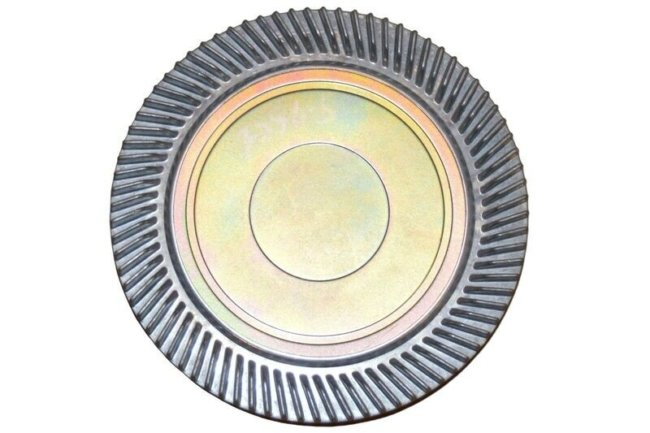
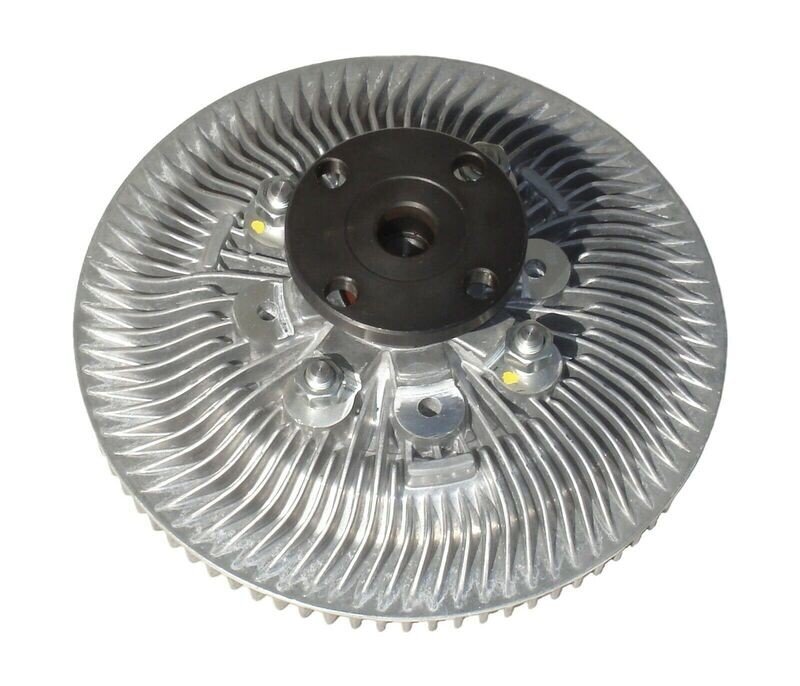
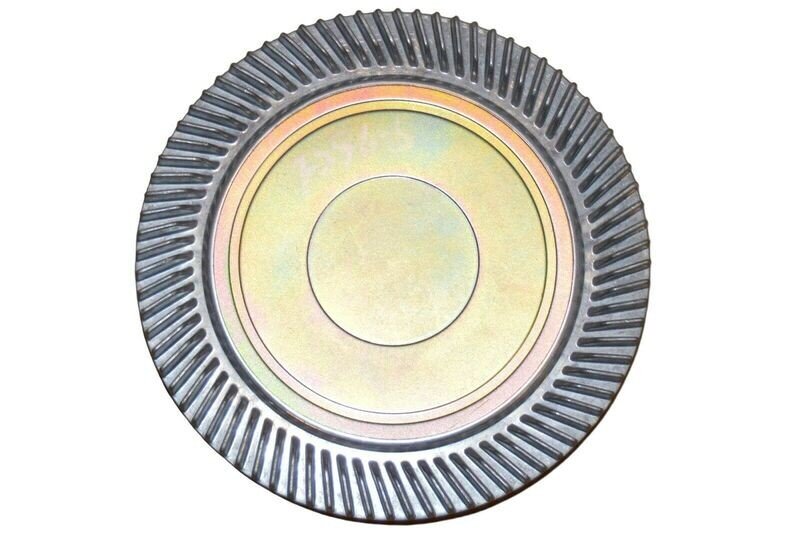
Above: We considered replacing our clutch with an advertised concours correct clutch, but it had multiple fan mounting points. Each mounting point has coarse-threaded holes, rather than fine-threads. The front side of the clutch is correct appearing, and some sources offer the correct part number stamping and some date codes.
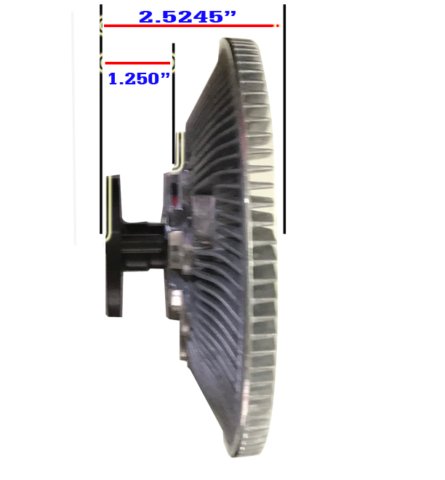
Above: Another concours-correct advertised clutch had the proper overall depth, but the front face of the unit was not correct for our application. In addition, it featured multiple fan mounting provisions, both of which were incorrect when compared to the original design.
After reinstalling the belt and reconnecting the battery, we pumped the gas pedal once, set the choke, and started the engine. The Hemi fired normally and all systems operated as expected. Under driving conditions, coolant temperature rose slightly higher than with the original non-thermal clutch but stabilized quickly once the thermostatic system engaged.
With that, the Road Runner is ready for the summer. With a fully functional temporary solution in place and the original clutch out for rebuilding, Project Rara Hemious Birdicus is back in service and set for cruising season.