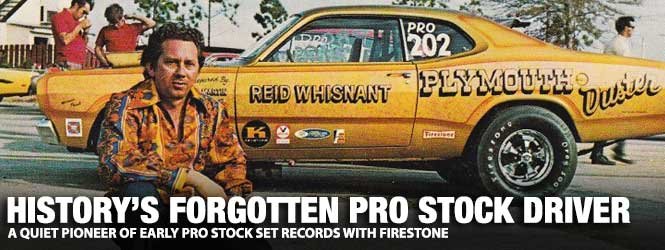
When NHRA Pro Stock materialized at the dawn of the 1970s, it enticed some of the most ingenious and committed racers in the country. While household names like Sox & Martin, Landy, and Jenkins dominated headlines, others quietly helped shape the class from the ground up.
Among them was Reid Whisnant, a southeastern racer whose mechanical skill, determination, and gold Plymouth Duster made him a respected figure during Pro Stock’s formative years.
Whisnant’s racing roots traced back to the 1960s, when he began competing in Super Stock classes at regional drag strips in the southeast. Racing in his early twenties, he quickly developed a reputation as a serious competitor who comprehended both the driving and engineering sides of the sport.
At a time when racers often built what they raced, Whisnant thrived in an environment that rewarded ingenuity as much as bravery.
That foundation positioned him perfectly for the arrival of NHRA Pro Stock in 1970, a new normally aspirated engine, factory appearing class that demanded precision, creativity, and relentless development. Whisnant stepped into the class at its inception, piloting a striking gold 426 HEMI-powered Plymouth Duster.
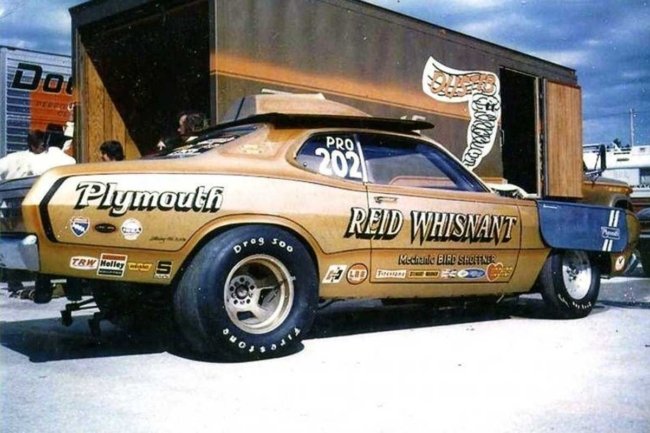
Above: The Duster continued to evolve to keep up with the competition. Additionally, the cost to race Pro Stock continued to escalate. Based on the three stickers on the quarter panel, Whisnant raced AHRA, NHRA, and IHRA. He was a busy man. Note that the transporter technology had improved to enclosed boxes on a D500 chassis. (Photographer unknown)
Initially prepared under the guidance of the legendary Sox & Martin operation, the car debuted at major events, placing Whisnant among the early adopters who defined what Pro Stock racing would become.
In 1971, Whisnant competed in the Sox & Martin customer-car program, running the Pro Stock schedule and finishing strongly on the Eastern circuit and in the NHRA Division II standings. While national event victories proved elusive, his consistency and competitiveness earned respect within the pits, particularly among racers who recognized how difficult the rapidly evolving class had become.
The following year marked a turning point. In 1972, Whisnant ended his formal relationship with Sox & Martin and established his own operation, Atlanta Race Cars, in Georgia. With a dedicated crew and an independent mindset, he continued developing his Duster, refining the combination at a pace that kept him competitive with the era’s biggest names.
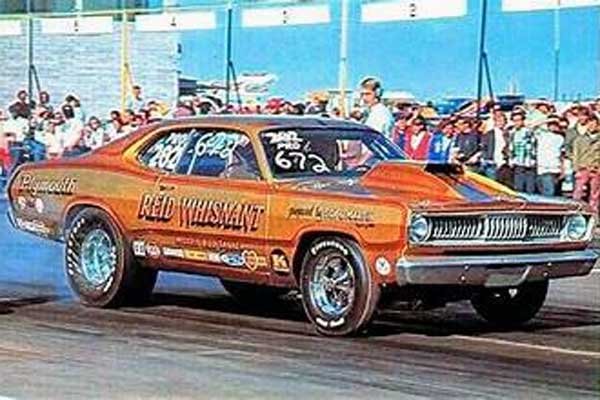
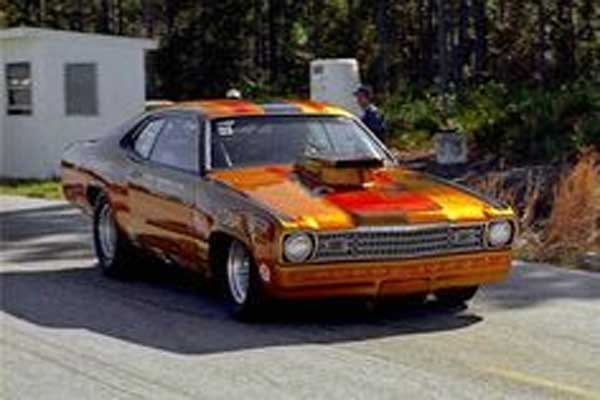
Above Left: Whisnant was initially associated with Sox & Martin. Thus, the car took on the appearance of a Sox & Martin car, with the name on the door, the mechanic’s name lettered on the door as well, Plymouth written on the rear flanks, and Keystone wheels. Above Right: Whisnant left the Sox & Martin umbrella in 1972. By 1974, his cars had a distinct appearance, similar in color to the early Duster, but with his own style. By this time, a tube chassis had replaced the unibody construction. (Photographer unknown)
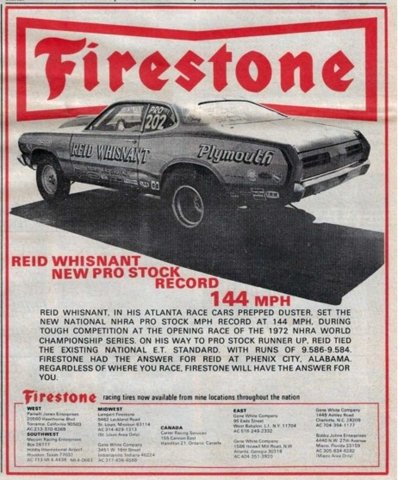
That season proved to be the high point of his career. Whisnant captured the NHRA Division II Pro Stock Championship and the Eastern Division title, outscoring rivals that included Bill “Grumpy” Jenkins, one of the most formidable figures in Pro Stock history. As represented in the National Dragster on April 21, 1972, and in a Firestone advertisement, he set a Pro Stock speed record of 144.60 mph at Blaney Drag Strip, highlighting both the effectiveness of his program and his skill behind the wheel.
Despite his divisional dominance, Whisnant never claimed an NHRA national Pro Stock event win, a distinction that ultimately kept him off the sport’s official national winner lists. In the ultra-competitive early 1970s, however, consistency and regional success often told a fuller story than trophies alone. Whisnant remained a fixture at major events through the mid-1970s, continuing to evolve with the class as technology advanced and budgets ballooned.
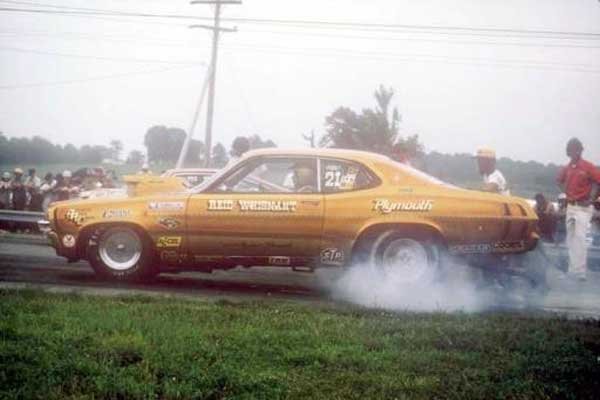
Above: The 1974 Duster design was lower and had the wheels moved forward slightly to improve traction and stability. By this time, a Lenco had replaced the four-speed shifter, and leaf links, ladder bars, or a four-link rear suspension was implemented to help plant the Firestone slicks. (Photographer unknown)
He remained active into the mid-1980s, campaigning additional machinery, including a Dodge Charger 2.2, then switching to Chevrolet with a Camaro and later a Beretta, all with a 500 CID engines, at select national events. As Pro Stock transitioned into a far more specialized and expensive category, Whisnant gradually stepped away from top-level competition. However, the exact end of his racing career is not precisely documented.
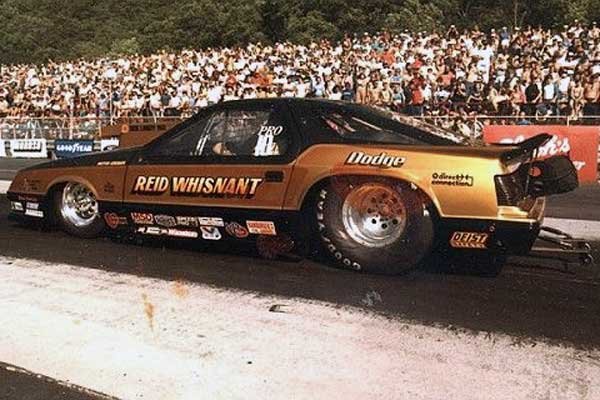
Above: Whisnant transitioned to the 500 CID era of Pro Stock with a Dodge Charger. His most notable effort at the national level was knocking Frank Iaconio’s Camaro out of the season-ending NHRA World Finals, thus ending Iaconio’s chances of winning the championship in 1983. (Photographer unknown)
Whisnant did have a spectacular moment at the 1983 NHRA World Finals at Orange County International Raceway, where he put points leader Frank Iaconio’s Camaro on the trailer. Iaconio, the number one qualifier holding a slim points lead over Lee Shepard in the Reher-Morrison Camaro and Bob Glidden’s Ford Thunderbird, faced off against the number sixteen qualifier, Whisnant, in round one.
Whisnant nailed the tree, leaving Iaconio in a position to catch up from the start. To make matters worse, Whisnant recorded a 7.62 elapsed time, which was two tenths quicker than his qualifying time, and even 0.03 seconds quicker than Iaconio’s qualifying time. The loss for Iaconio ended his chances of winning the NHRA championship.
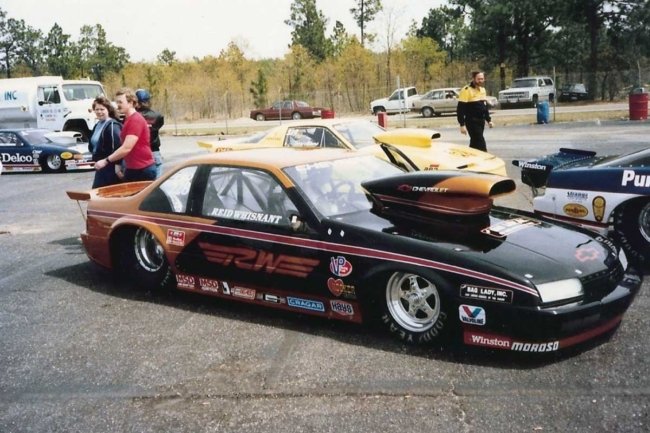
Above: As his career was coming to an end, Whisnant switched from Mopar to Chevrolet. First, he campaigned a Camaro before moving to a Beretta. The change to a new manufacturer was not enough for Whisnant to earn a win at the national level. (Photographer unknown)
Reid Whisnant passed away in December 2005 following complications from hip surgery. While he never earned the national celebrity of some contemporaries, his impact on early Pro Stock remains unmistakable. He defined a generation of racers who bridged the gap between Super Stock and professional drag racing, relying on craftsmanship, persistence, and ingenuity rather than corporate backing.
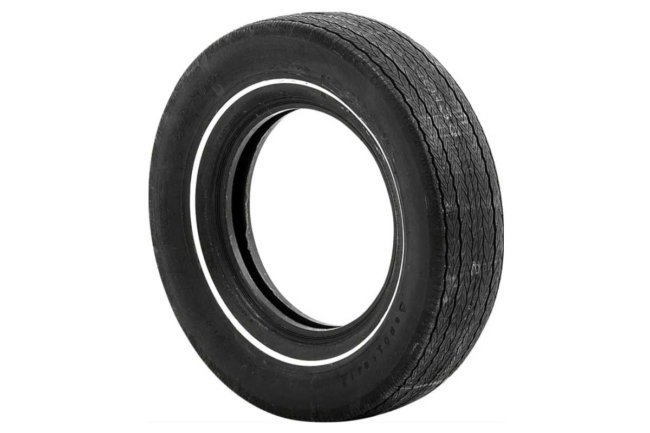
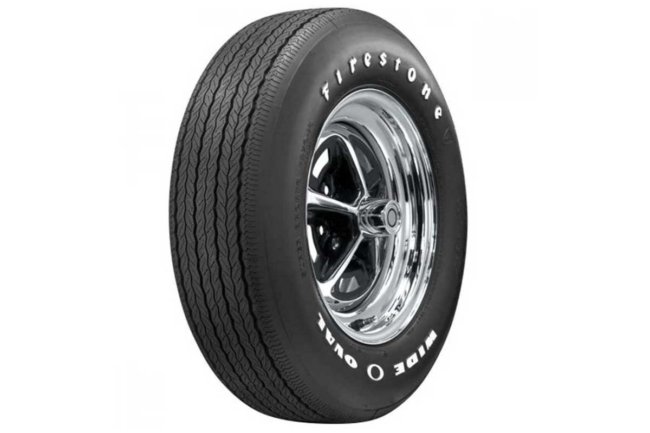
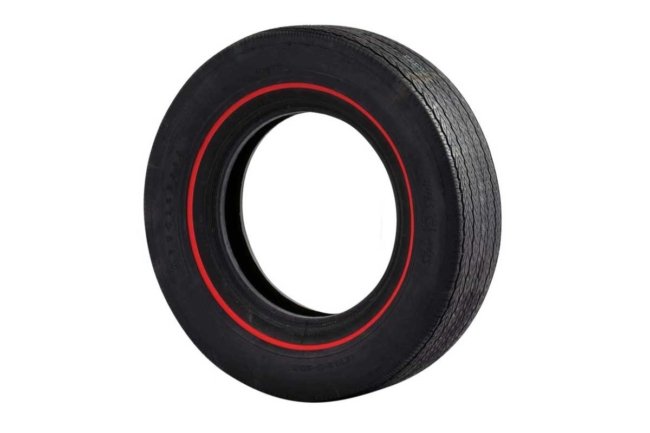
Above: Classic Industries offers several Firestone tire options with a pinstripe whitewall (left), a raised white letter Wide Oval (center), and a red-line style tire (right). Most of the tires are bias-ply. However, some have a bias-ply appearance while being radial construction.
Today, Whisnant is remembered as a Pro Stock pioneer, a racer who helped represent the class during its most experimental and exciting years. His Plymouth Duster, now restored, continues to appear at nostalgia drag racing events, serving as a tangible reminder of a time when Pro Stock was still being written, one pass at a time.
If you are in the market for a set of Firestone tires, Classic Industries is an excellent place to start. They offer a wide range of period-correct options, including raised white letter, red line, and pinstripe whitewall designs. Classic Industries representatives can also help you choose between bias-ply and radial construction to suit your driving needs.
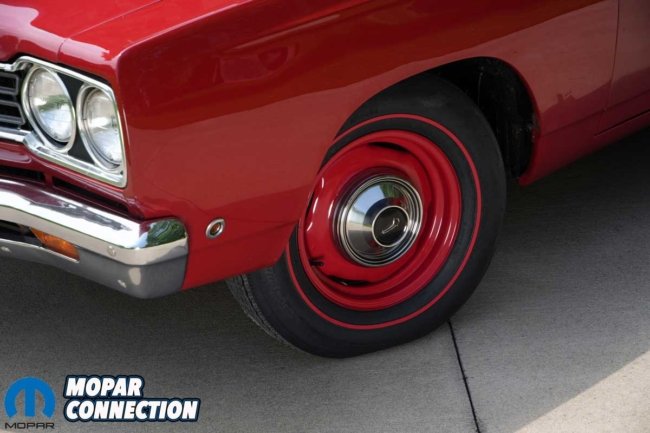
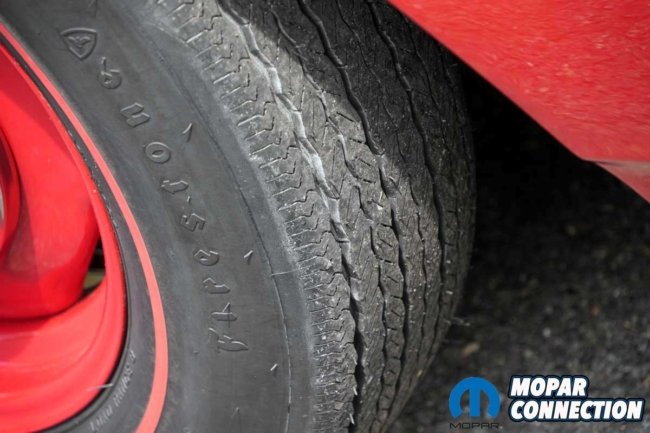
Above: Our project car, Rara Hemious Birdicus, rides on a beautiful set of Firestone bias-ply appearing red line radials. The tires have all the benefits of a radial, but the classic look of a period-correct bias-ply tire.
While these Firestone tires may not be built to chase top MPH numbers, they deliver the right combination of ride quality, authenticity, and classic style to keep your car cruising smoothly and looking the part.