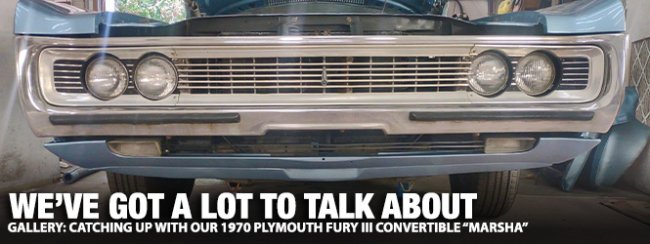
We owe you an apology. If you’ve been following Project Marsha here on Mopar Connection Magazine, you’ve likely noticed the timeline hasn’t exactly made sense. The last time we left Marsha in print, she was well on her way through the paint and body process at All Classics Restoration.
Yet, over on our YouTube channel, her journey had already passed through suspension upgrades, salvage yard rescues, and structural restoration work long before that point. Simply put, the car never stopped progressing—we just failed to keep pace documenting it here.
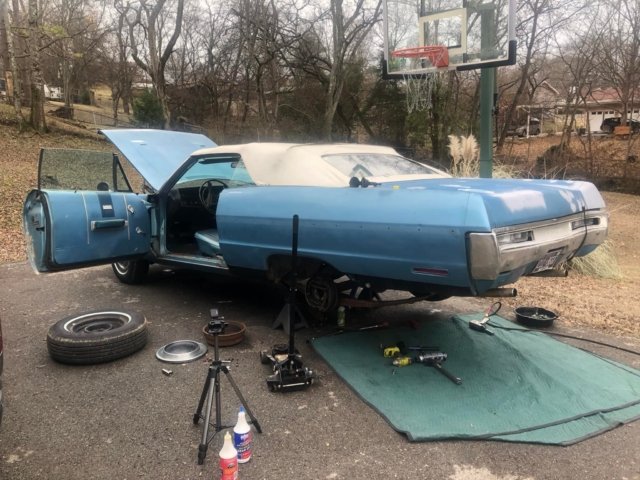
To correct that, we need to step backward back to early 2023. Back to when Marsha was still wearing her age honestly, before fresh paint hid the decades she had endured.
Returning to All Classics Restoration
The first thing you notice when walking into Dave Chamberlain’s shop at All Classics Restoration isn’t the cars. It isn’t the tools. It isn’t even the unmistakable smell of metal, primer, and decades of accumulated craftsmanship. It’s the calm.
There’s no chaos here. No frantic motion. No sense of urgency born from deadlines or pressure. Instead, there’s a steady, deliberate pace that reflects the nature of the work itself. Restoration, when done properly, isn’t rushed. It unfolds methodically, one decision at a time.
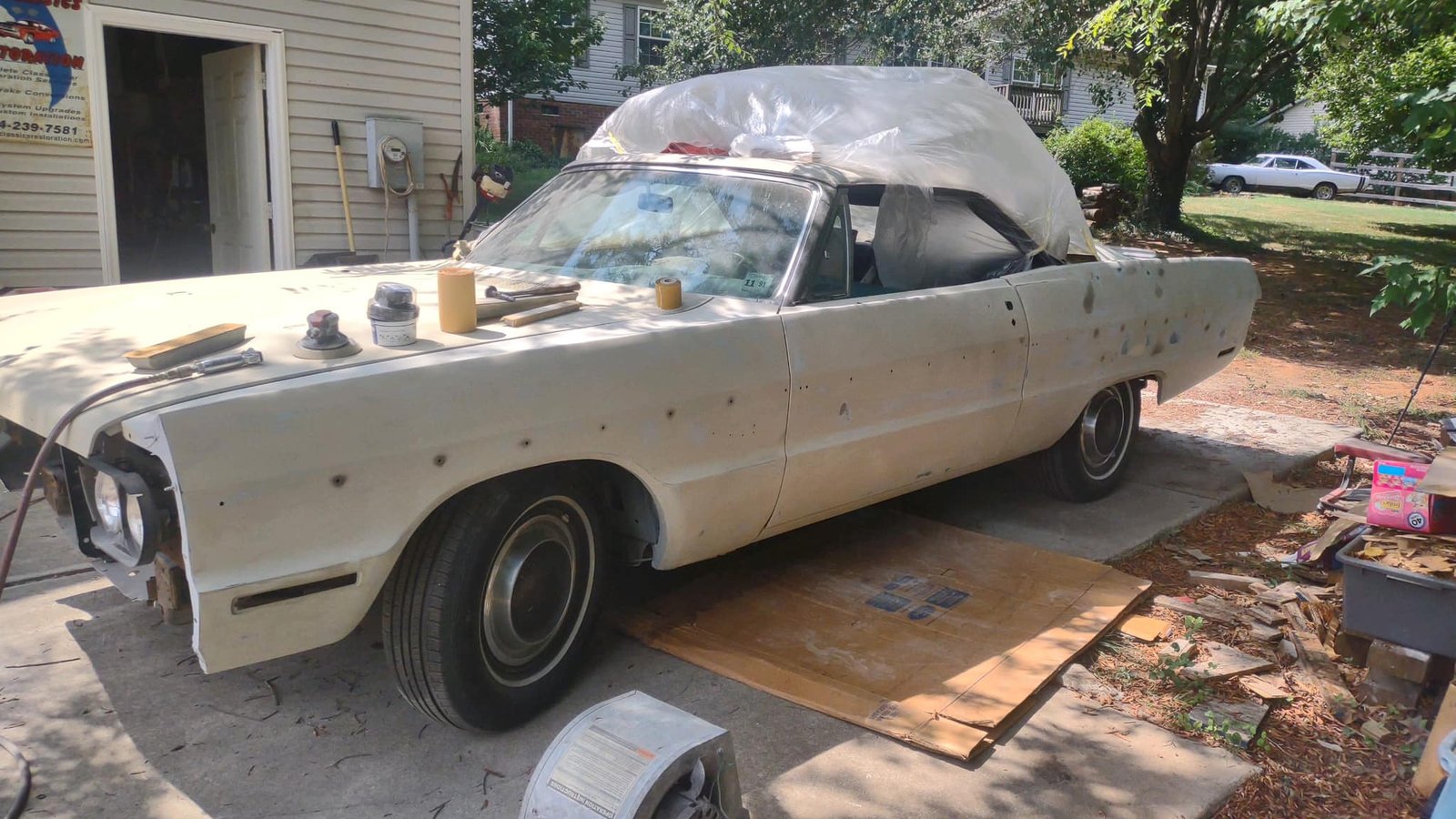
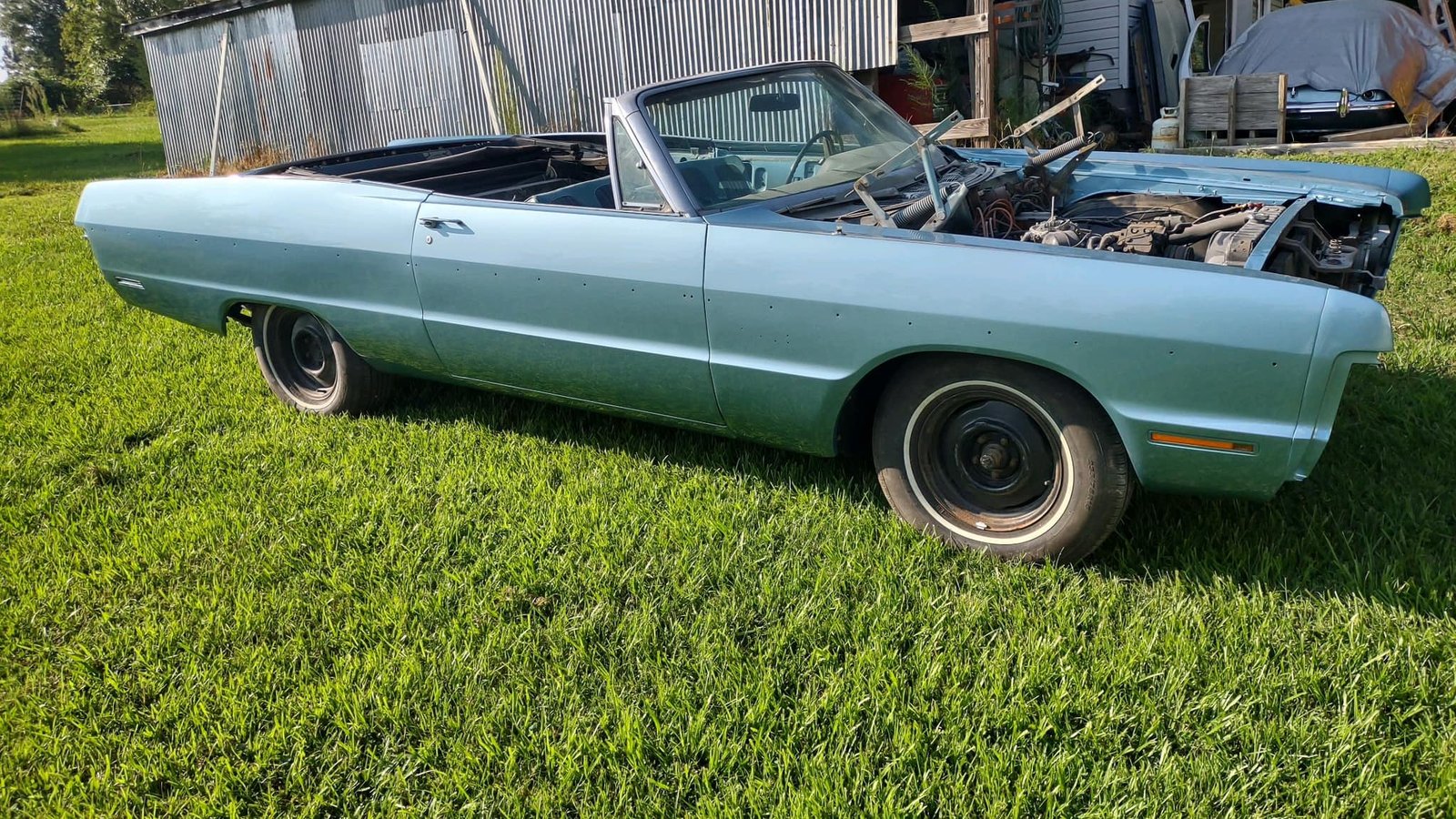
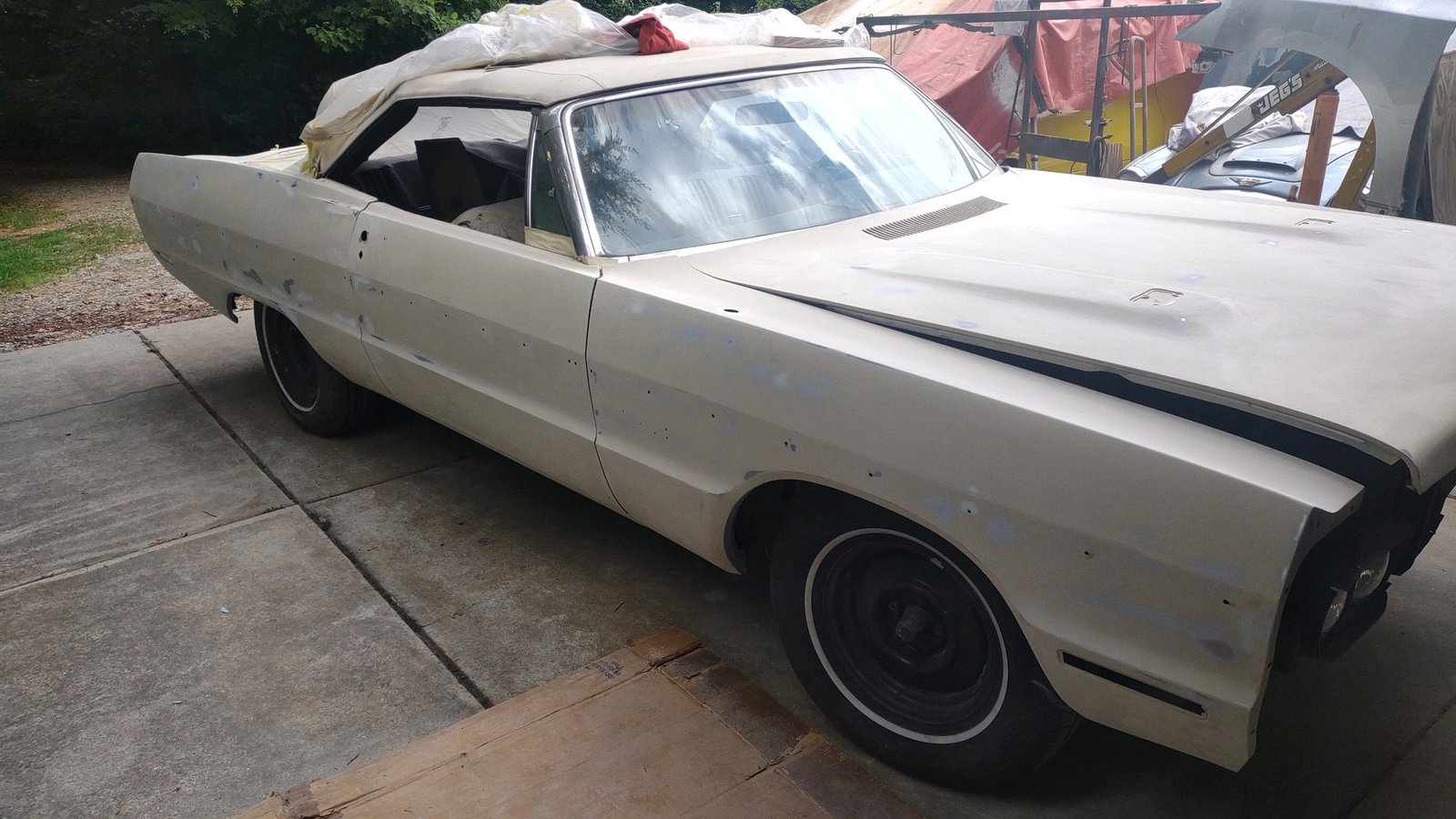
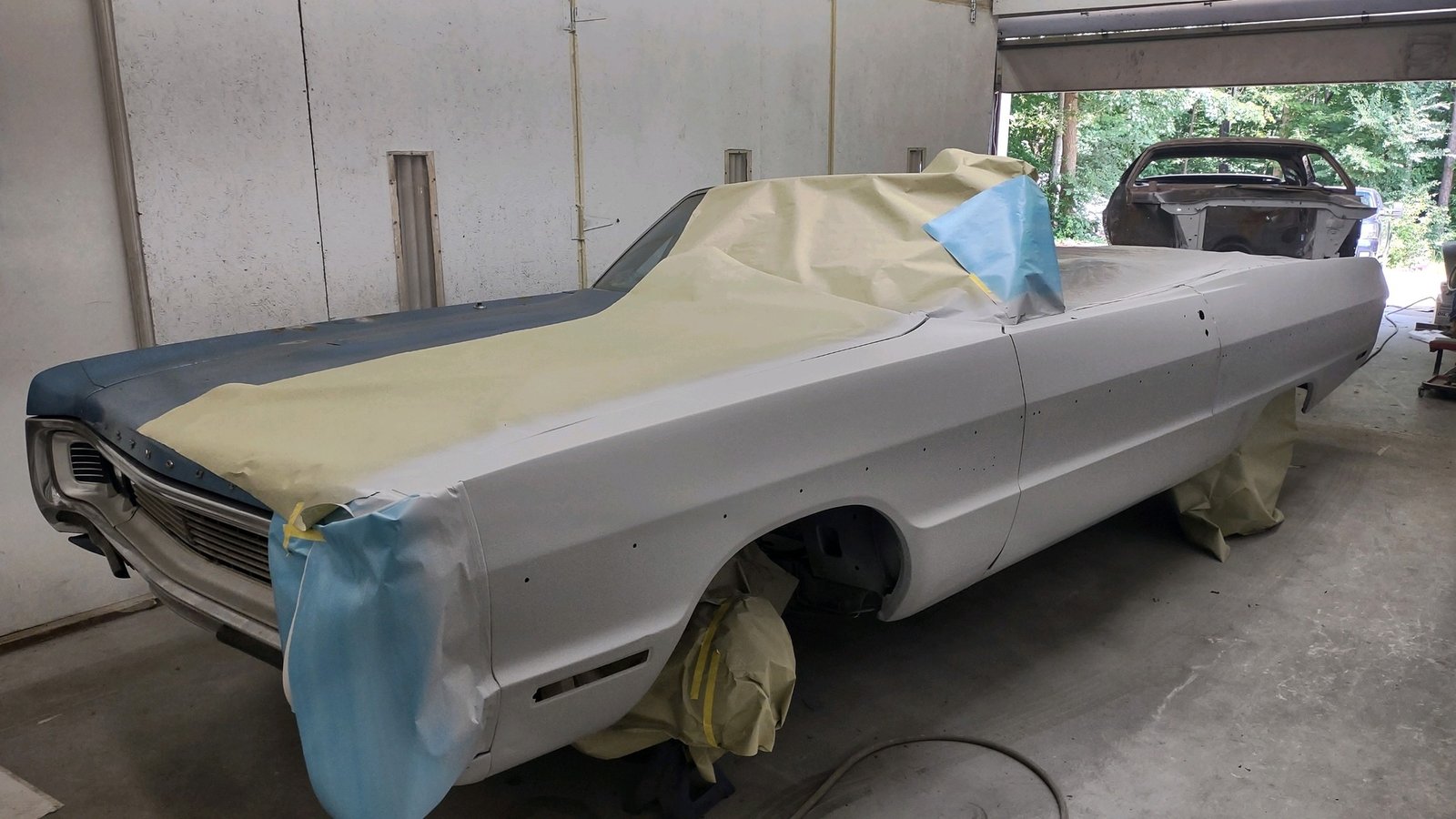
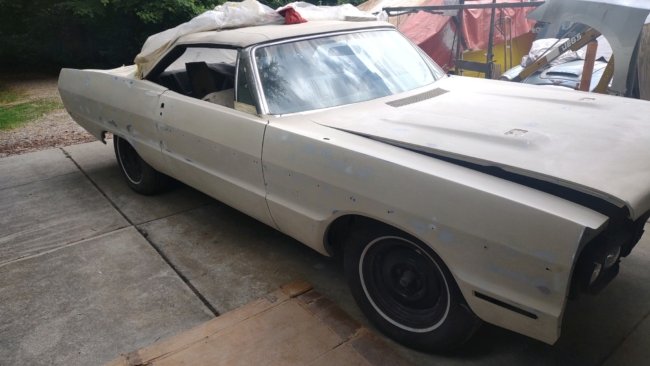
Her trim had been removed, exposing the full honesty of her condition. Without chrome and stainless to catch the light and distract the eye, the Fury’s long slab sides revealed everything time had done to her. Minor imperfections that once hid in plain sight now stood out clearly. Areas of corrosion, subtle distortions, and the accumulated fatigue of fifty-plus years were no longer masked.
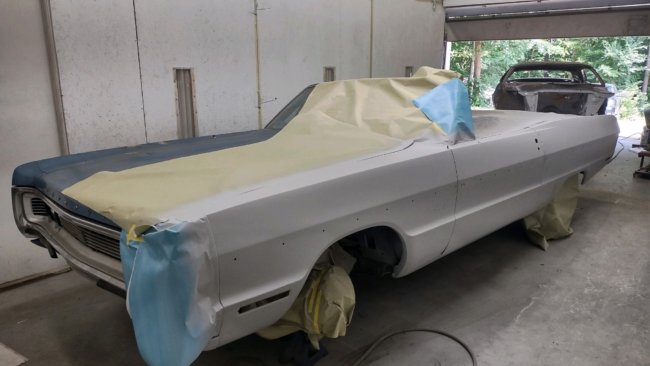
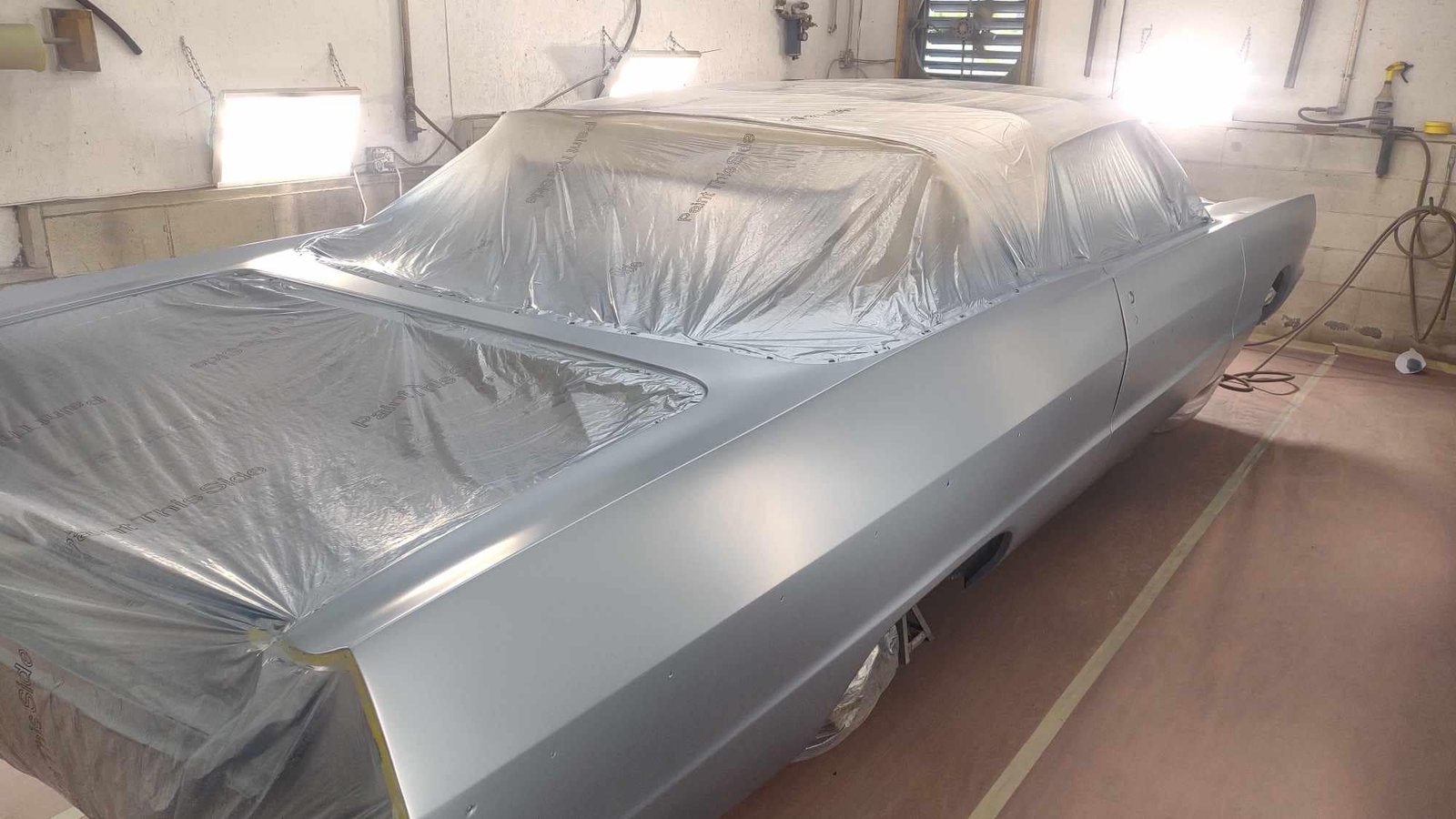
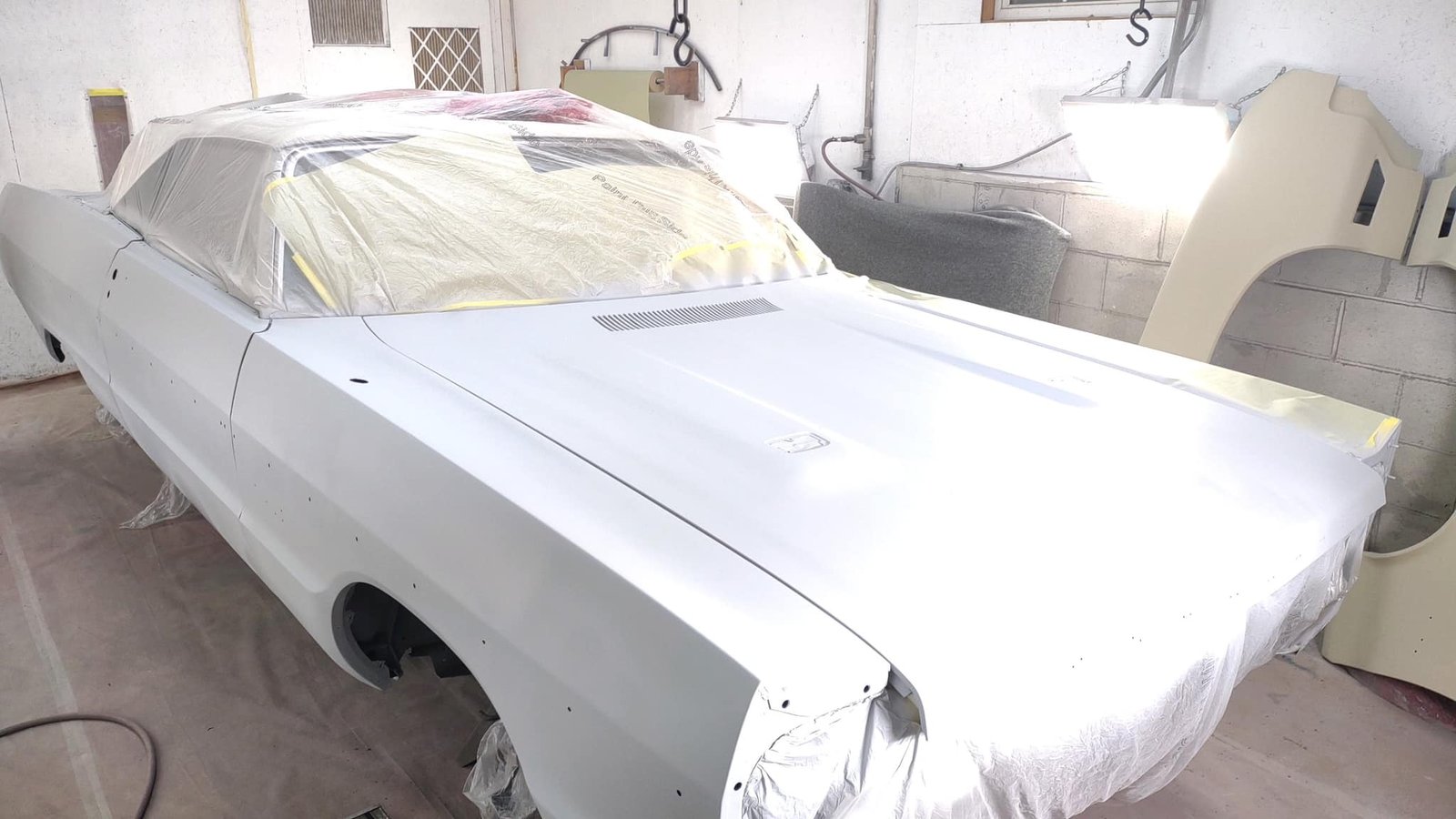
Above: As a bit of a demonstration of Dave’s abilities, he blocked and straightened one side of Marsha prior to the Holley MoParty in 2023.
Dave Chamberlain approached the car slowly, his eyes scanning across each panel with the quiet focus that only comes from experience. He didn’t react emotionally to what he saw. He evaluated it. Where others might have seen problems, Dave saw solutions waiting to be applied.
He began along the rear quarters, pointing out areas where corrosion had taken hold. Some sections, he explained, could be repaired through careful metalwork. Others would require replacement. His decisions weren’t driven by convenience—they were driven by permanence. Repair what could be saved. Replace what couldn’t. Preserve the car’s integrity at every step.
Convertibles, Dave noted, present their own unique challenges. Without the structural reinforcement of a fixed roof, the body absorbs stresses differently over time. Subtle flex becomes cumulative. Areas that might remain pristine on a hardtop often show fatigue on an open car. Marsha, like most convertibles of her era, bore those marks.
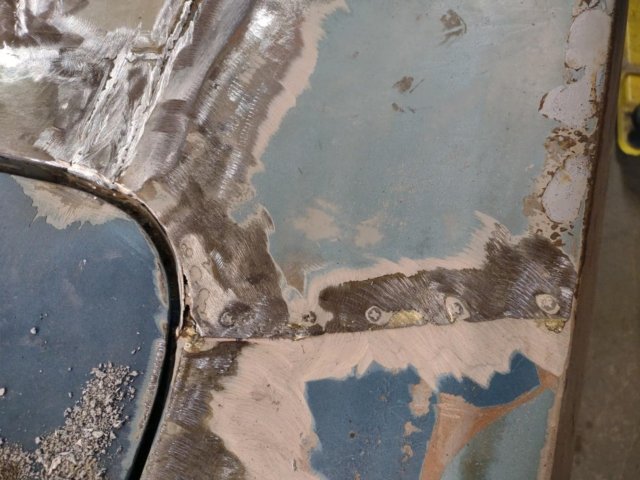
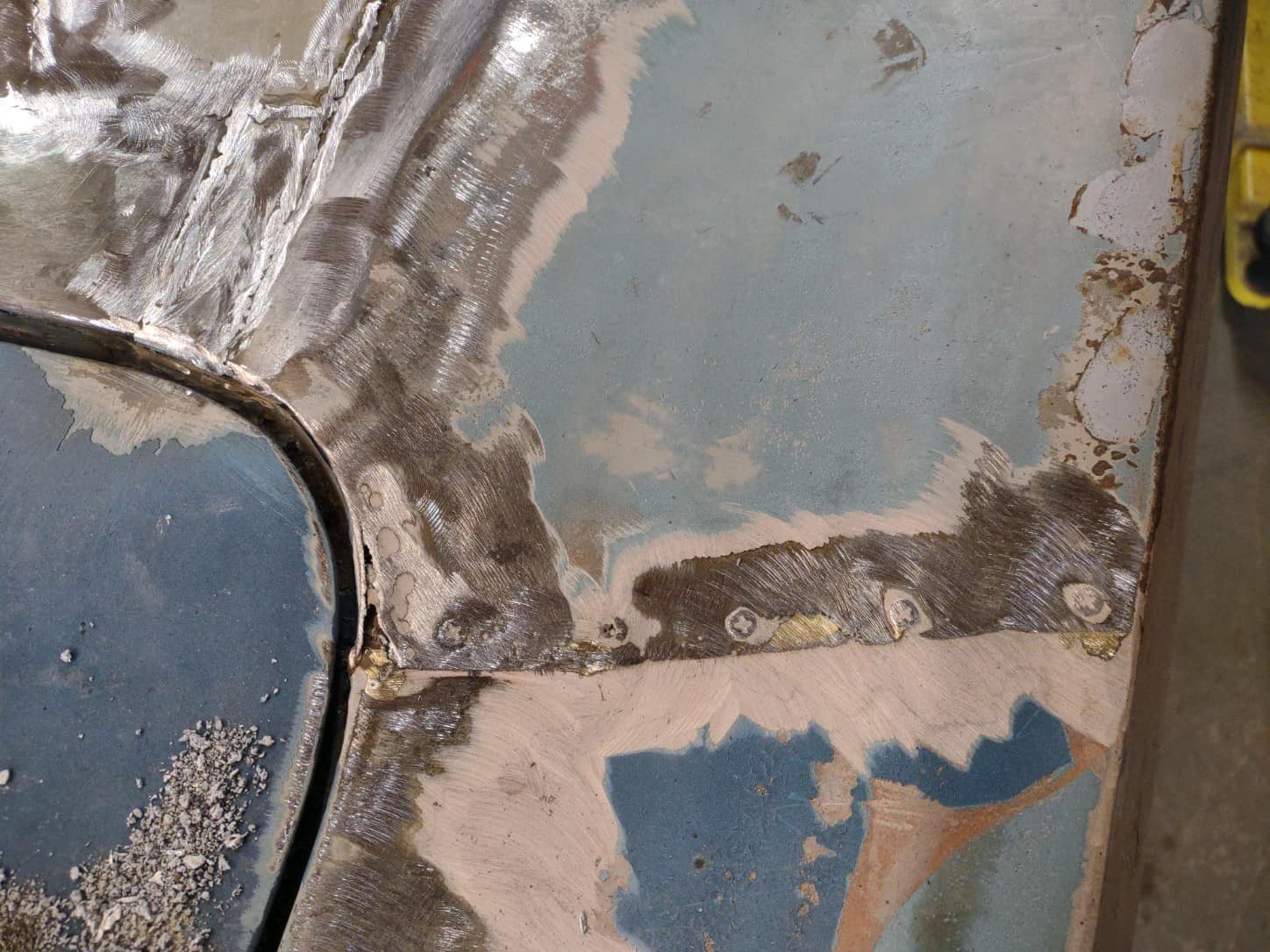
Above: Yes, you’re looking at a second quarter panel screwed into and on top of the original damaged quarter. Clearly, Marsha had made one too many visits to Mr. Scheib over the years.
But what mattered most was what she didn’t have: She didn’t have catastrophic structural damage. She hadn’t suffered collision trauma that compromised her fundamental geometry (well…I mean, sorta). Her bones were solid. And that made all the difference.
Standing there, looking at her in that stripped, vulnerable state, it was easy to understand both how far she had come and how far she still needed to go. The process ahead wouldn’t be quick. It wouldn’t be easy. But it would be done correctly.
Before Dave moved deeper into the bodywork, however, there was another area that deserved attention first—one that would immediately change how Marsha felt from behind the wheel: her suspension.
Correcting Fifty Years of Steering Wear
Before Dave ever picked up a sanding block or began cutting into rusted sheet metal, he wanted to address something more fundamental—how Marsha behaved on the road.
Driving her prior to this point had revealed the kind of symptoms common to unrestored C-body Mopars. The steering wasn’t unsafe, but it wasn’t precise either. At highway speeds, the car required constant, subtle corrections. The wheel never quite settled into a confident center. There was always the faint sense that the car was negotiating with the road rather than commanding it.
This wasn’t the result of a single failed component. It was the cumulative effect of half a century of wear distributed throughout the steering linkage and suspension geometry.
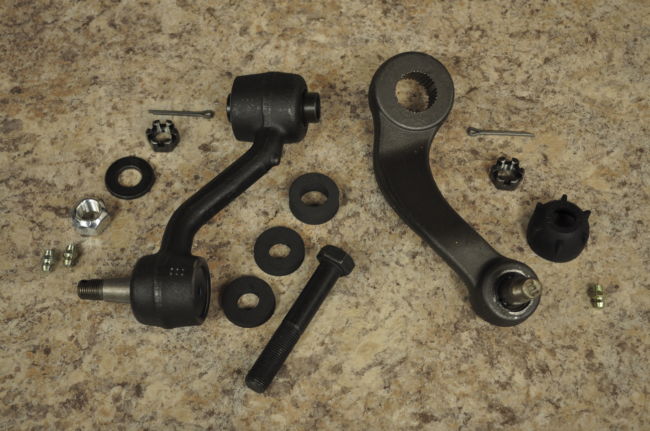
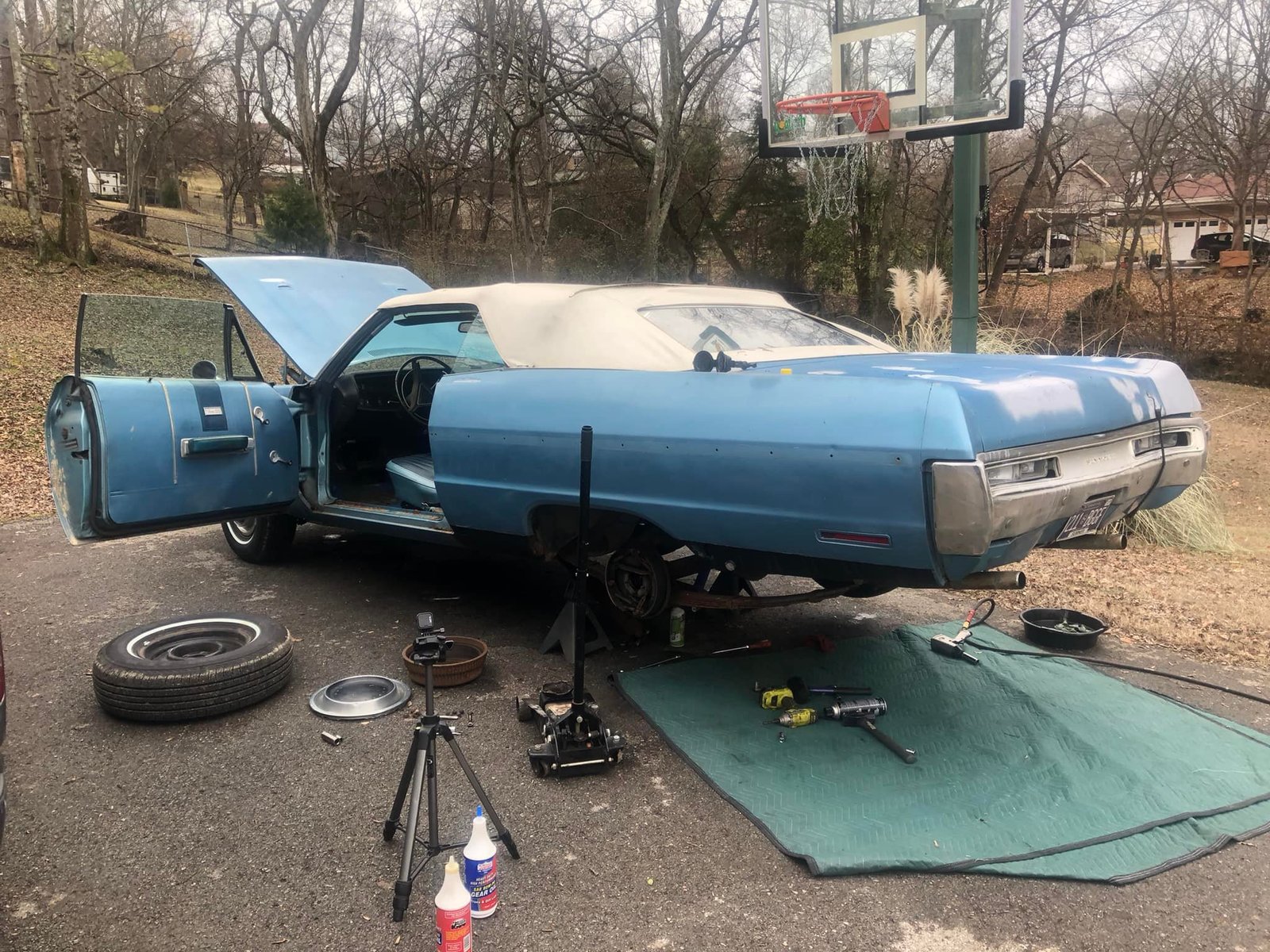
Dave began by raising the front of the car and supporting it securely. With the wheels off, the extent of the wear became easier to see. Grasping the steering linkage, he gently manipulated each component, observing its response. Even small movements revealed looseness that would have been impossible to detect from behind the wheel alone.
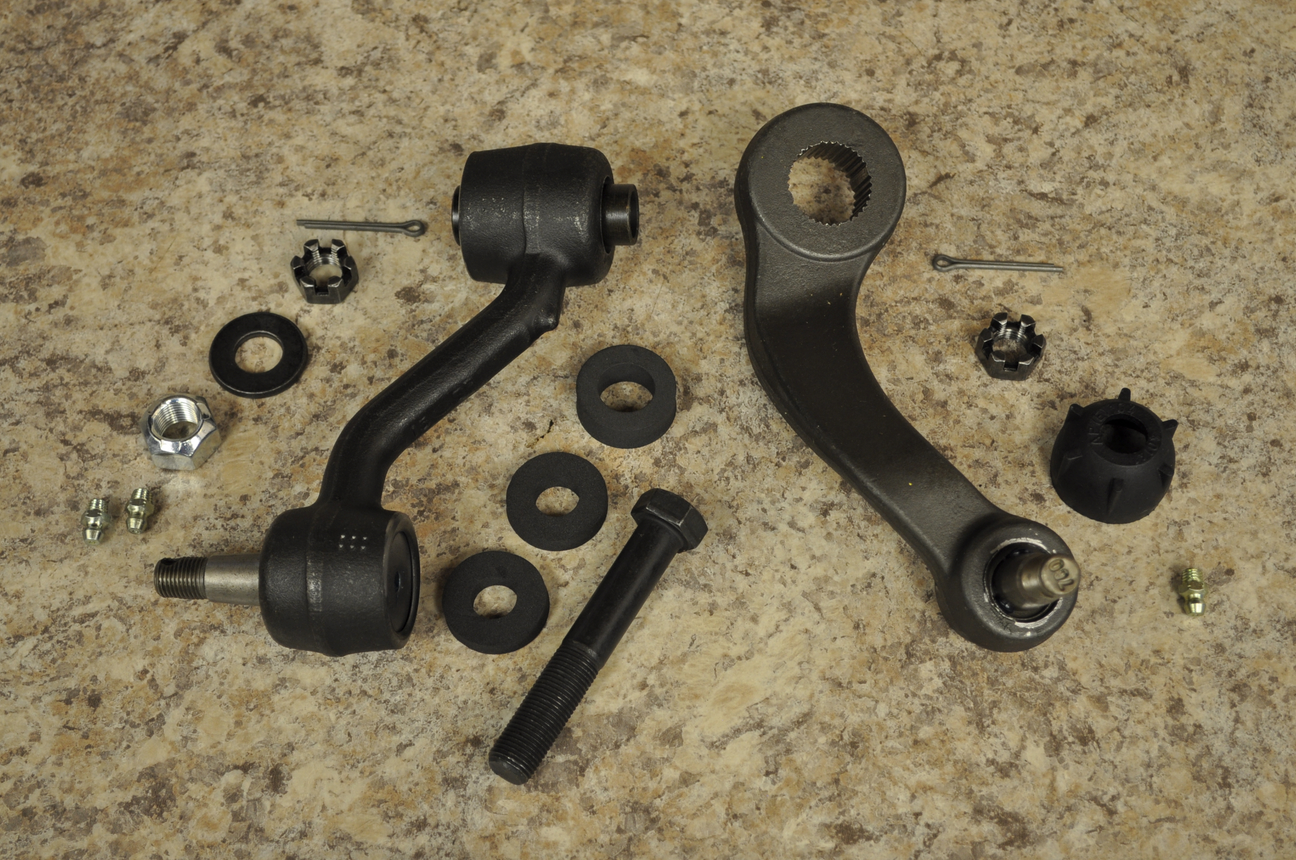
The idler arm was among the first components removed. Visually, it appeared intact. There were no cracks or obvious signs of failure. But once separated from the center link, its wear became unmistakable. The internal tolerances had opened just enough to allow deflection under load. That deflection translated directly into steering vagueness.
In its place, we installed Firm Feel’s heavy-duty idler arm (Part #IAC1). Its construction was immediately reassuring. Where the original component had loosened gradually over time, the Firm Feel unit restored precise geometry and eliminated unwanted movement at that critical pivot point.
Next came the Pitman arm (Part #PAC1), the mechanical bridge between the steering box and the center link. This component transfers every steering input from the driver’s hands to the front wheels. Even minor wear here compounds throughout the system. The Firm Feel replacement restored tight, predictable motion transfer, ensuring that steering inputs would translate directly into directional change.
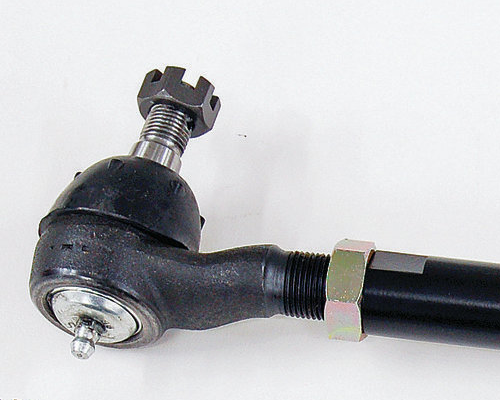
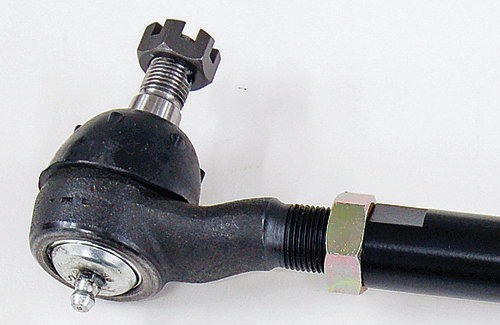
The tie rods told a similar story. Marsha’s originals had served faithfully for decades, but their internal wear allowed subtle deflection under load. That deflection, though small in isolation, accumulated across the system. Firm Feel’s tie rod kit (Part #TRK110), constructed from seamless heavy-wall tubing, eliminated that flex entirely. The difference wasn’t dramatic visually—but mechanically, it restored integrity to the steering linkage.
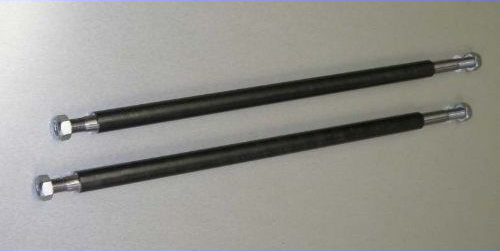
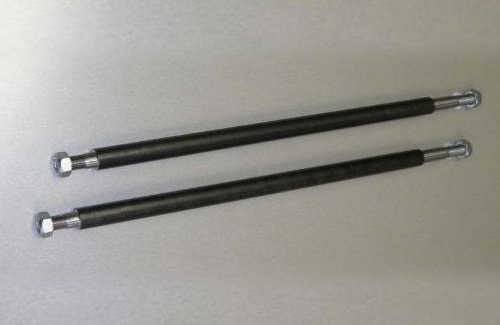
The strut rods (Part #SRC) were next. These components stabilize the lower control arms during braking and acceleration, preserving suspension geometry under dynamic load. Marsha’s originals showed the fatigue of age. The Firm Feel replacements restored rigidity and ensured that suspension forces would be managed correctly.
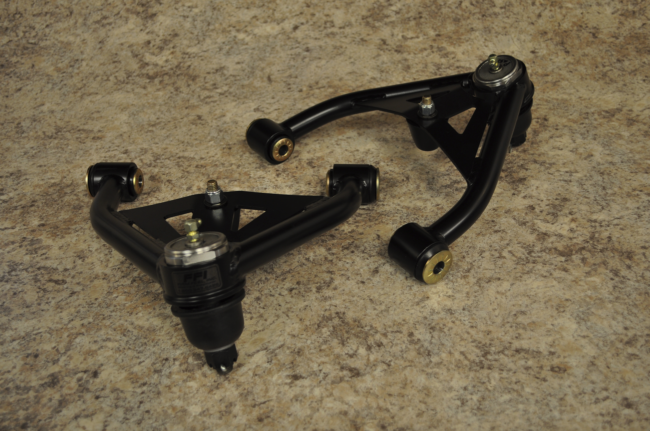
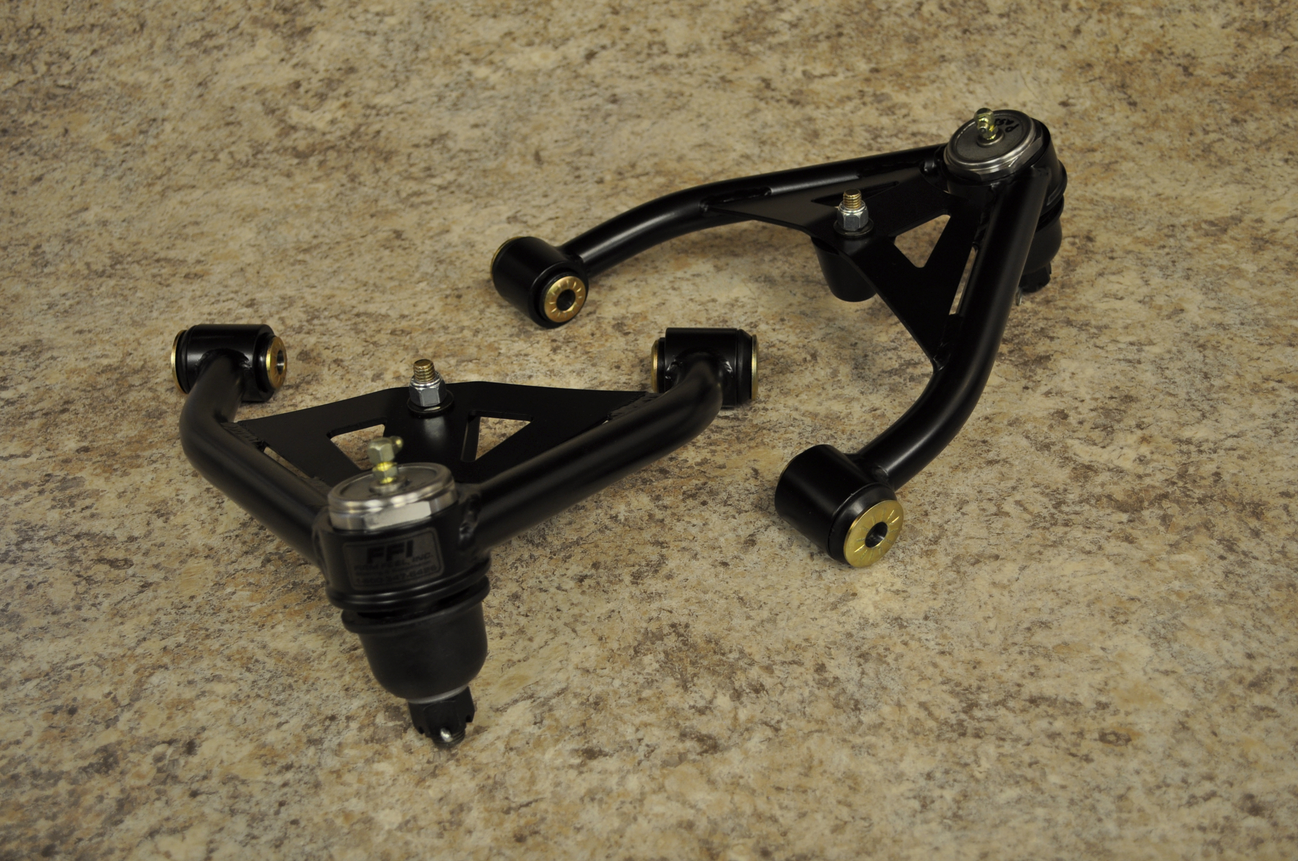
Finally, the tubular upper control arms were installed. Their revised geometry introduced additional positive caster, a subtle but significant improvement. Increased caster improves straight-line stability and enhances steering return-to-center characteristics. It’s the kind of refinement that transforms how a car feels at speed without altering its fundamental character.
As each new component was installed, Marsha’s suspension system gradually returned to proper mechanical integrity. Nothing about the process felt like modification. It felt like restoration in its purest form—correcting the slow, invisible drift that time imposes on every mechanical system.
By the time the work was complete, the difference wasn’t yet visible. But it was waiting to be felt.
Feeling the Difference From Behind the Wheel
There’s a moment that comes after any suspension work where the tools are put away, the car is lowered back onto its wheels, and everything looks exactly as it did before. This was one of those moments.
Visually, nothing had changed. Marsha still sat with the same long, confident stance she always had. There were no obvious signs that anything underneath had been altered. But the real test of suspension work isn’t what you see—it’s what you feel.
Before installing the Firm Feel components, driving Marsha required constant attention. At lower speeds, the looseness in the steering was subtle but present. On the highway, it became more apparent. The car never quite settled into a straight, stable path. Instead, it wandered gently, requiring continuous micro-corrections at the wheel. It wasn’t dramatic. It wasn’t alarming. But it was always there.
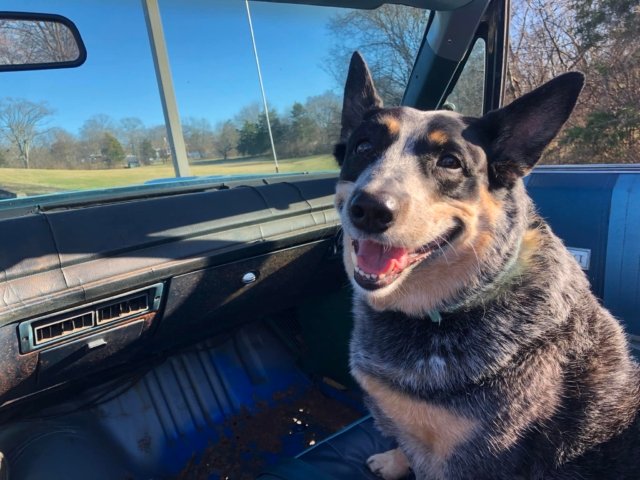
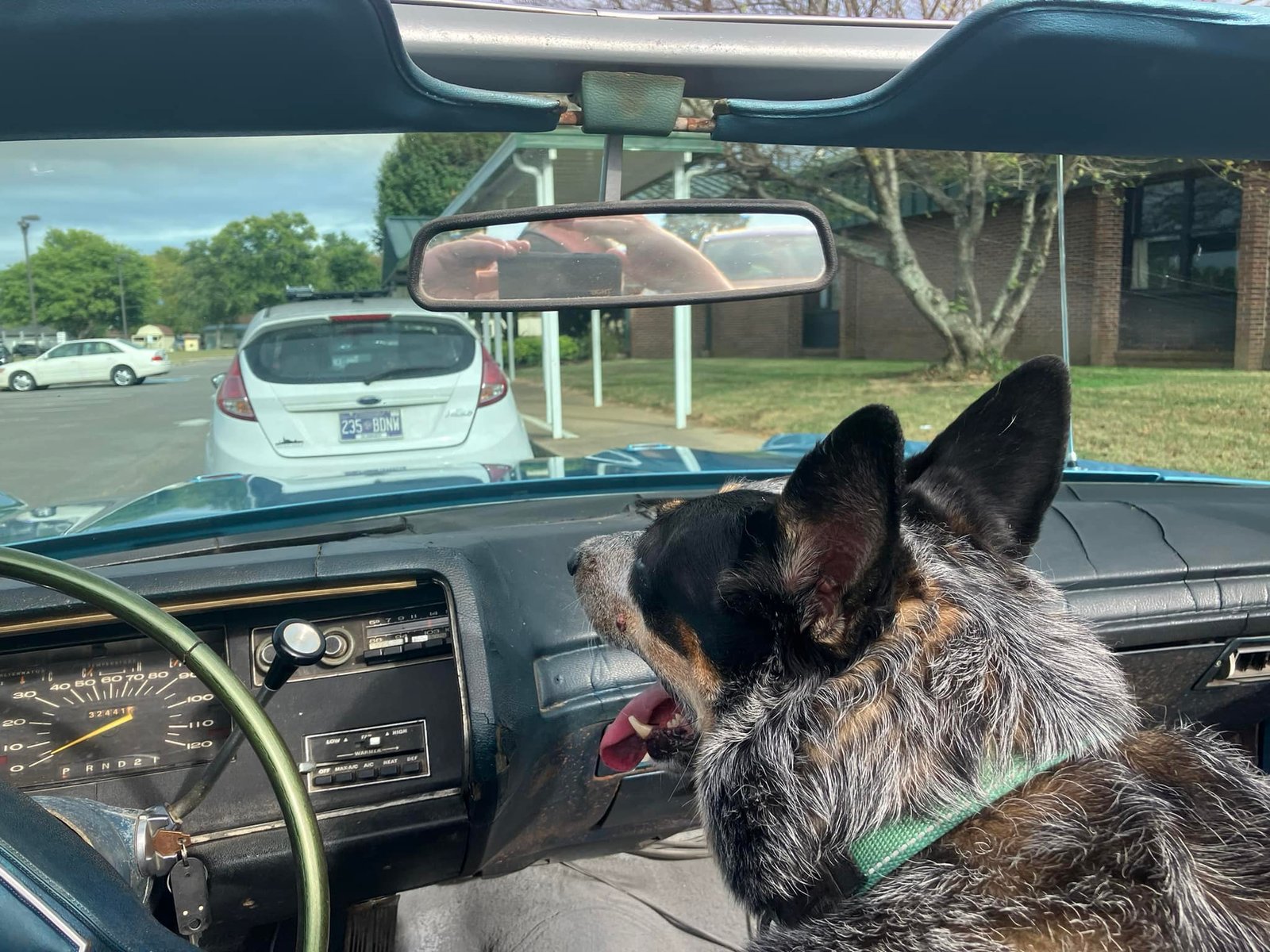
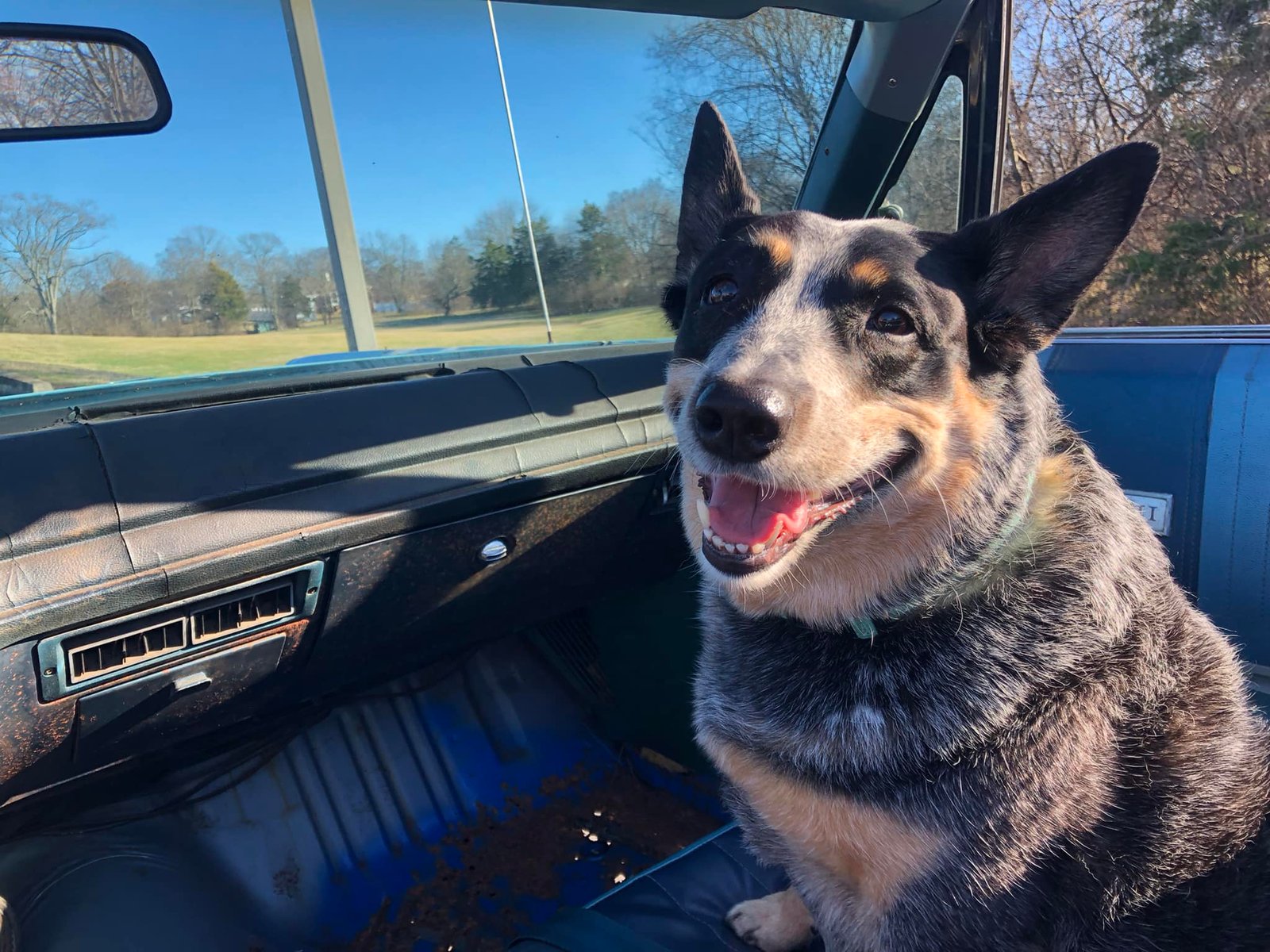
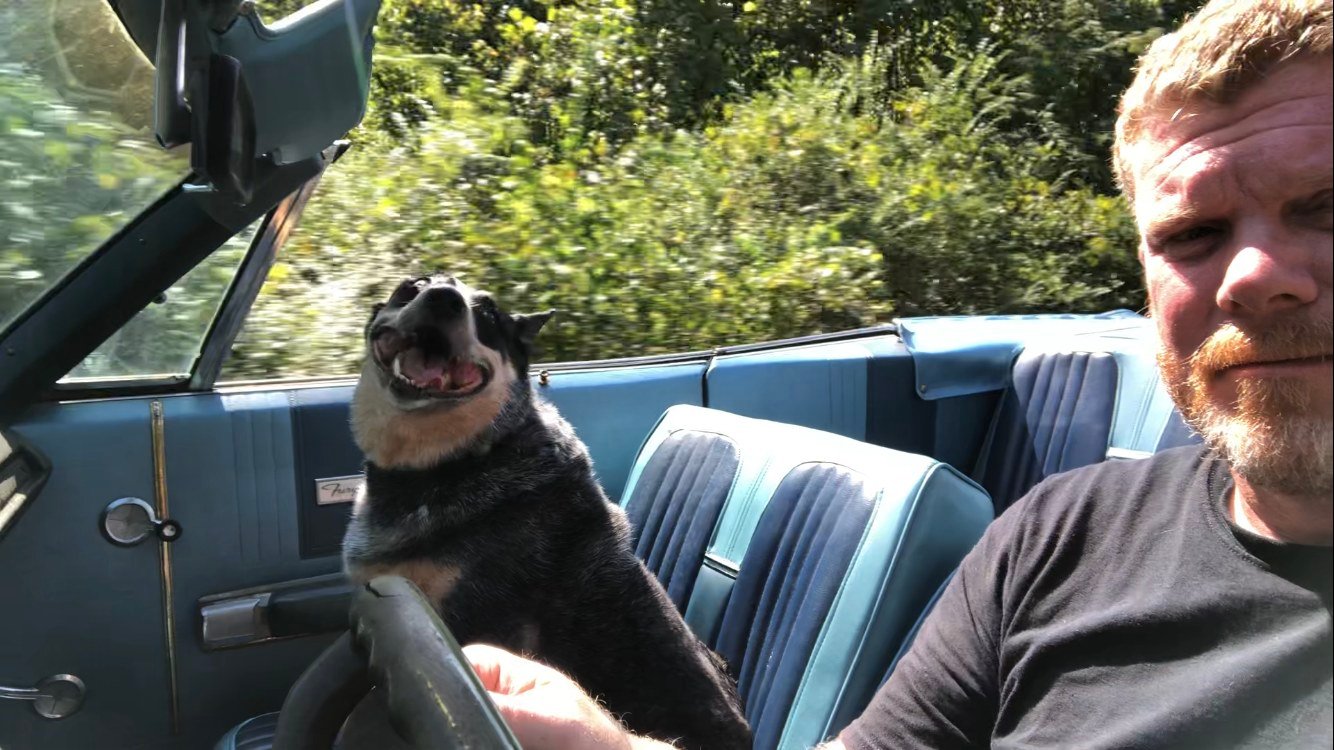
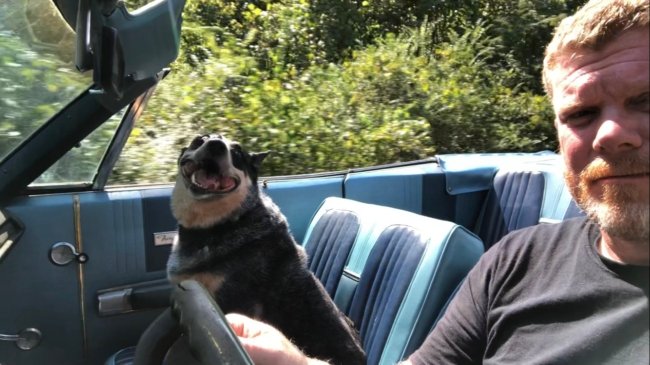
Above: Ruca, our shop dog and frisbee aficionado had taken a liking to Marsha unlike any other project car we’ve had before. Even when moving the Fury around the driveway, Ruca insisted on riding along.
Pulling out onto the road after the installation, the difference revealed itself almost immediately.
The first thing you noticed was the steering’s willingness to respond. Where before there had been hesitation, there was now immediacy. Inputs at the wheel produced direct, predictable reactions from the front end. The vague, delayed sensation that had defined Marsha’s steering was gone.
As speed increased, the transformation became even more apparent. The car tracked straight without effort. The constant corrections that had once been necessary simply weren’t needed anymore. Marsha no longer felt like she was negotiating her path down the road. She held it confidently.
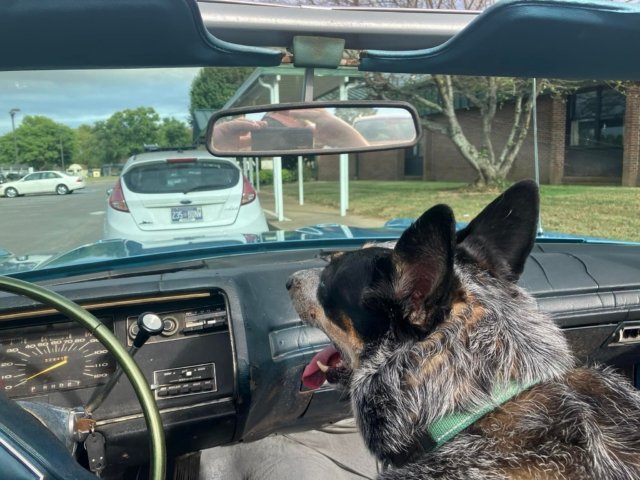
Above: You really thought I was kidding about this dog loving this car, didn’t you? My phone is full of pics like this.
Perhaps most importantly, nothing about her character had been lost. She still rode like a proper C-body Mopar—smooth, composed, and comfortable. The ride wasn’t harsher. It wasn’t aggressive. It was simply more precise.
It’s difficult to overstate how much confidence that precision restores. Driving an old car often involves accepting certain compromises. You learn to accommodate their quirks, to anticipate their behavior. But now, Marsha no longer asked for accommodation. She behaved pretty much as she should have all along.
The changes Dave had made weren’t dramatic in appearance. They weren’t visible to anyone standing beside the car. But from behind the wheel, they transformed the experience entirely. For the first time since we’d owned her, Marsha drove not like a survivor of fifty years—but like a car ready for fifty more.
Finding What Time Tried to Take Away
While the suspension upgrades restored how Marsha drove, Dave’s evaluation of the body made it clear that restoring how she looked—and how she endured structurally—would require something equally important: solid original sheet metal.
One component, in particular, stood out immediately: the trunk lid.
From the outside, Marsha’s original trunk lid didn’t appear catastrophic. Its paint had aged, and there were visible signs of wear, but it wasn’t until Dave examined it closely that the real problem became apparent.
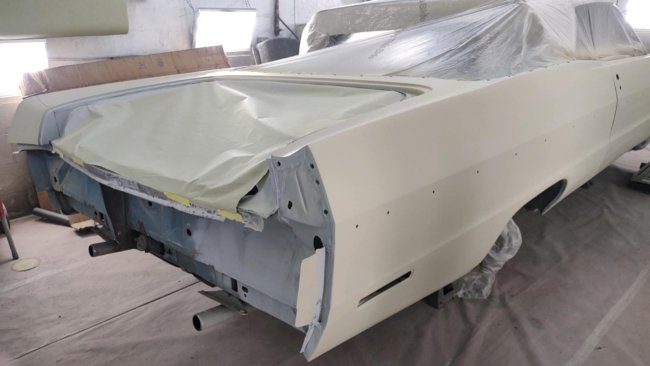
Years of moisture had found their way inside the panel, settling into its internal structure where it quietly did its damage. The outer skin only told part of the story. Beneath it, corrosion had begun to compromise the integrity of the lid itself.
Repair was technically possible. Given enough time, enough cutting, and enough fabrication, nearly anything can be saved. But Dave wasn’t interested in saving parts for the sake of saying they’d been saved. He was interested in restoring the car correctly.
That meant finding a better foundation. And that meant going to Billy West’s salvage yard.
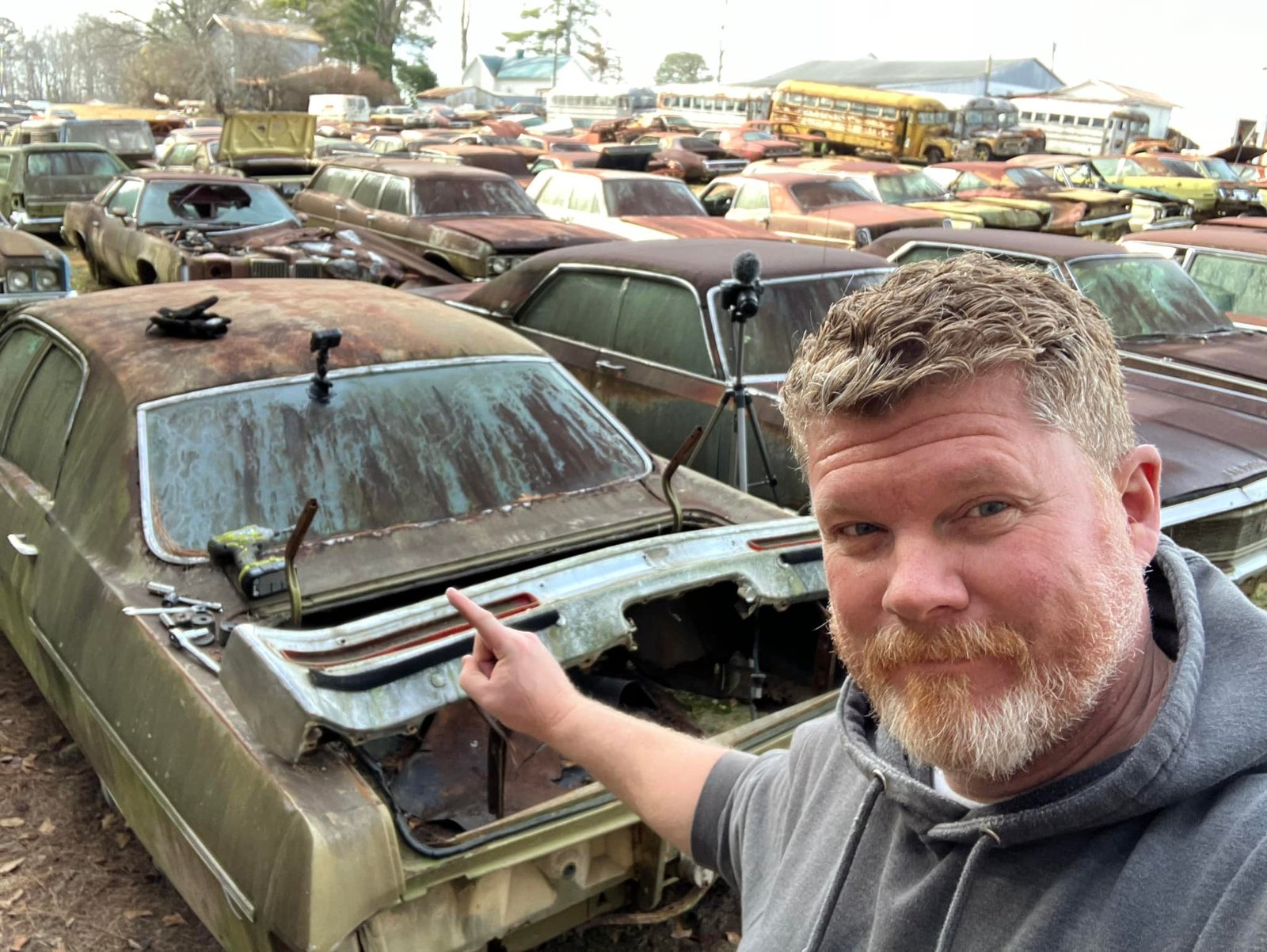
Billy’s yard is the kind of place that feels increasingly rare. It isn’t organized in the modern sense. There are no polished showrooms or climate-controlled storage buildings. Instead, rows of Mopars sit exposed to the elements, quietly waiting. Some are beyond saving. Others exist now only to preserve the parts needed to keep cars like Marsha alive.
Walking through the yard, each car told its own story. Some had been stripped long ago. Others remained largely intact, their faded paint and weathered interiors hinting at lives lived decades earlier.
We weren’t looking for perfection. We were looking for integrity. Eventually, we found it.
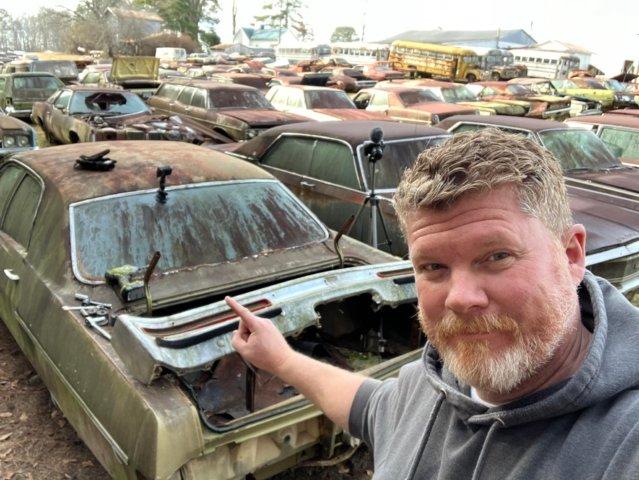
The donor car’s trunk lid immediately stood apart from Marsha’s original. Its surface showed the expected signs of age, but its structure remained solid. Dave ran his hand along its inner bracing, inspecting the areas most vulnerable to hidden corrosion. What he found was exactly what we’d hoped for—a panel that had survived intact.
This trunk lid hadn’t escaped time entirely. But it hadn’t been consumed by it either. It was sound.
Removing it required care. Even in a salvage yard, preserving a good panel demands patience. Fasteners that hadn’t moved in decades resisted at first, but eventually gave way. As the lid was lifted free, it became immediately clear how much stronger it was than the one Marsha had been carrying.
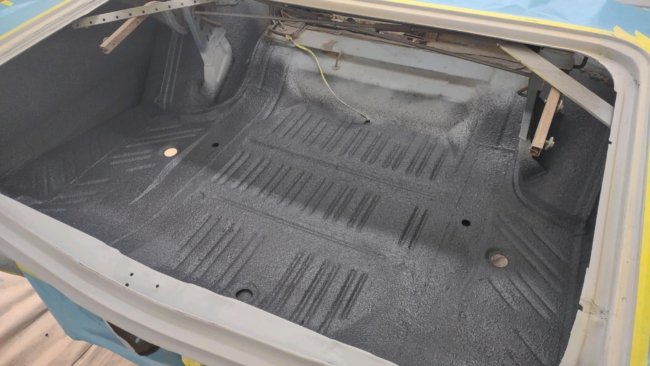
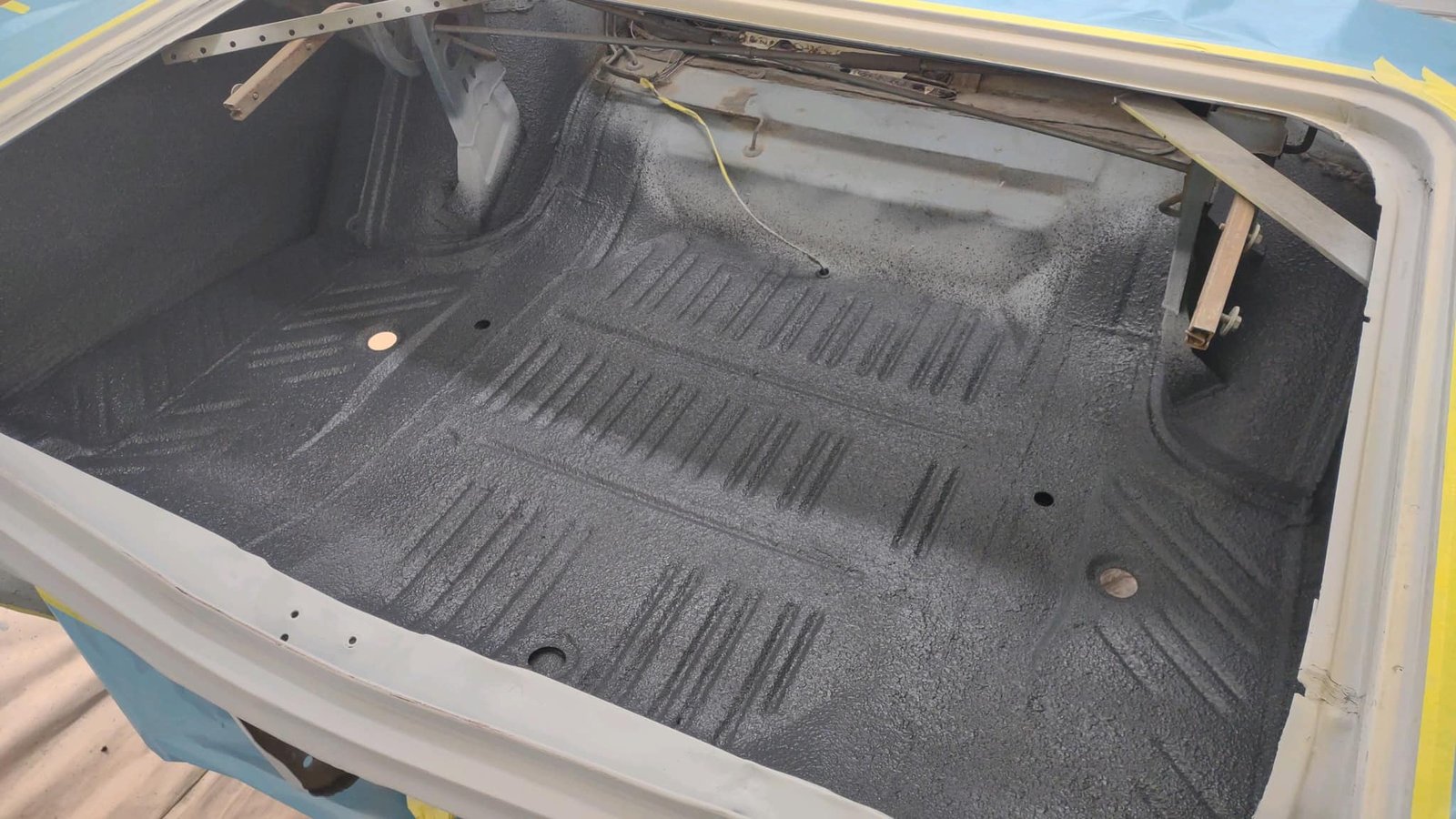
Above: With the trunk lid replaced, Dave went about finalizing the trunk itself – including applying Lizard Skin textured surface. This coating serves for rust prevention, noise and vibration deadening, and a non-slip surface to keep cargo from sliding around.
While continuing through the yard, we found something else Marsha needed just as badly—a rear tail light trim panel in far better condition than her original. Years of exposure had dulled and pitted Marsha’s trim beyond practical restoration. Chrome plating can restore appearance, but it cannot restore material that has already been lost to corrosion.
The replacement trim piece, though aged, retained its integrity. Its surfaces remained straight. Its structure remained intact. It represented not just a visual improvement, but the preservation of original detail that defines the character of these cars. Finding parts like these isn’t about convenience. It’s about continuity.
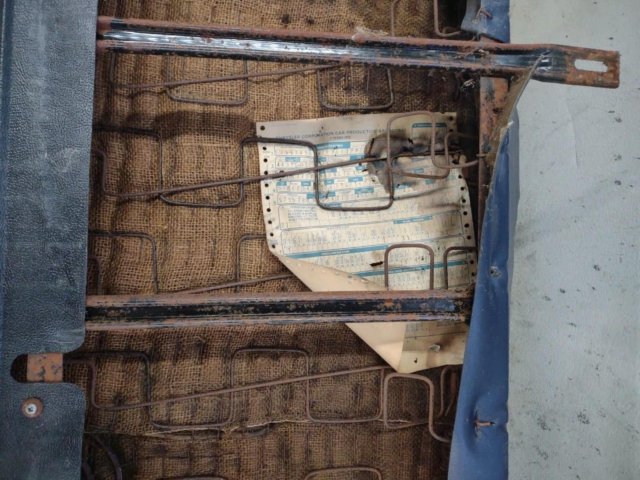
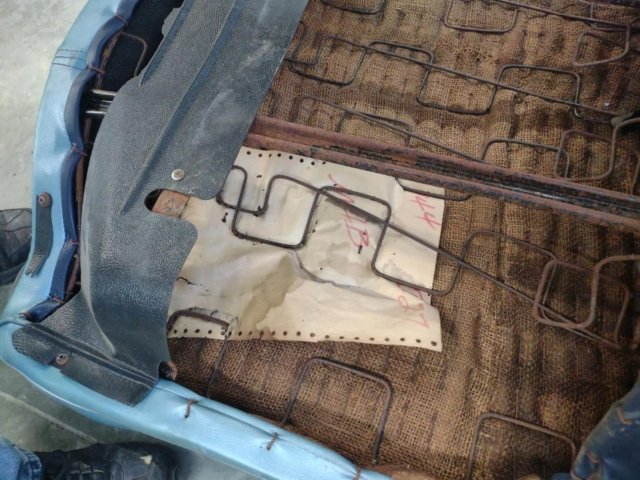
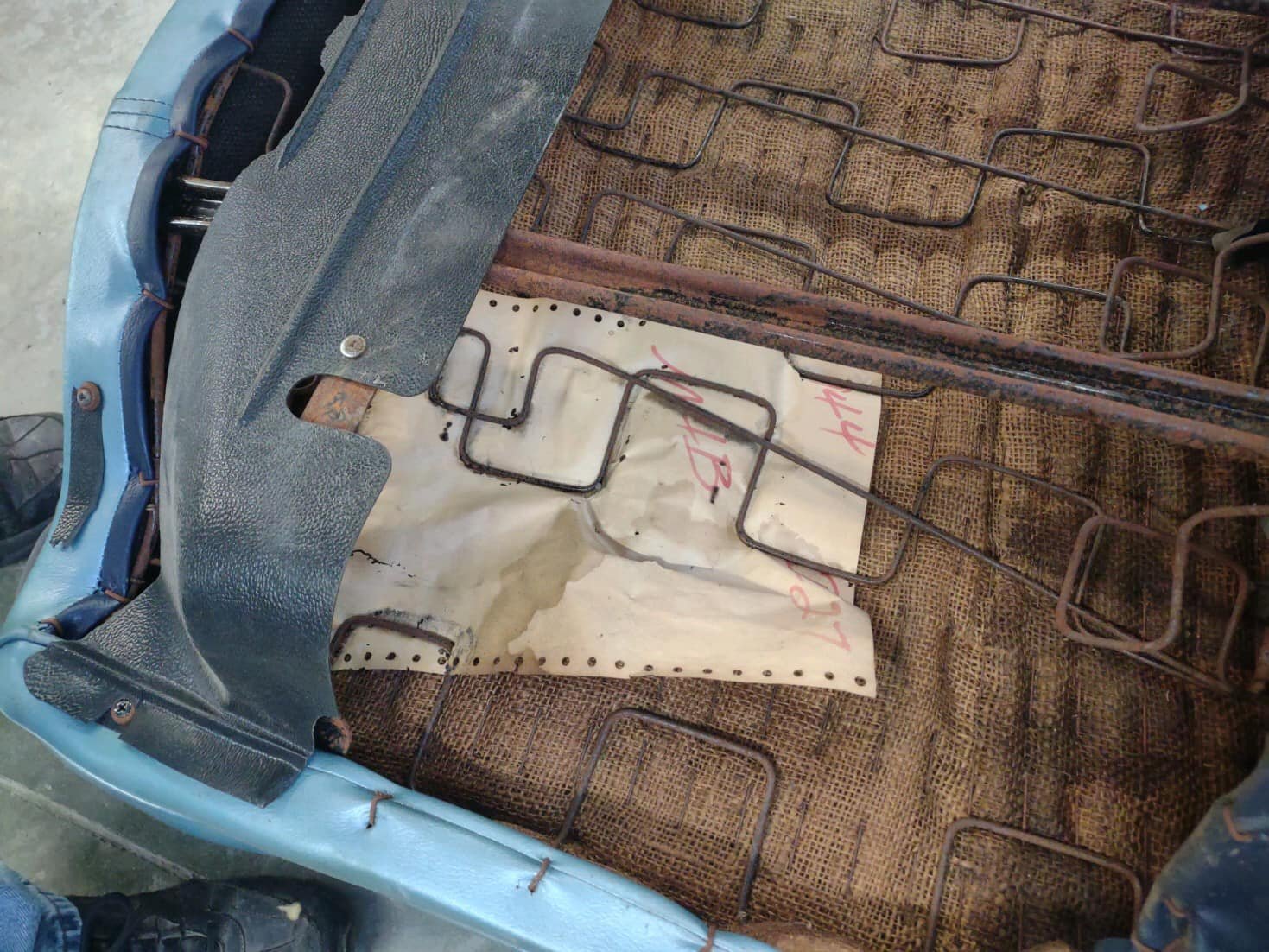
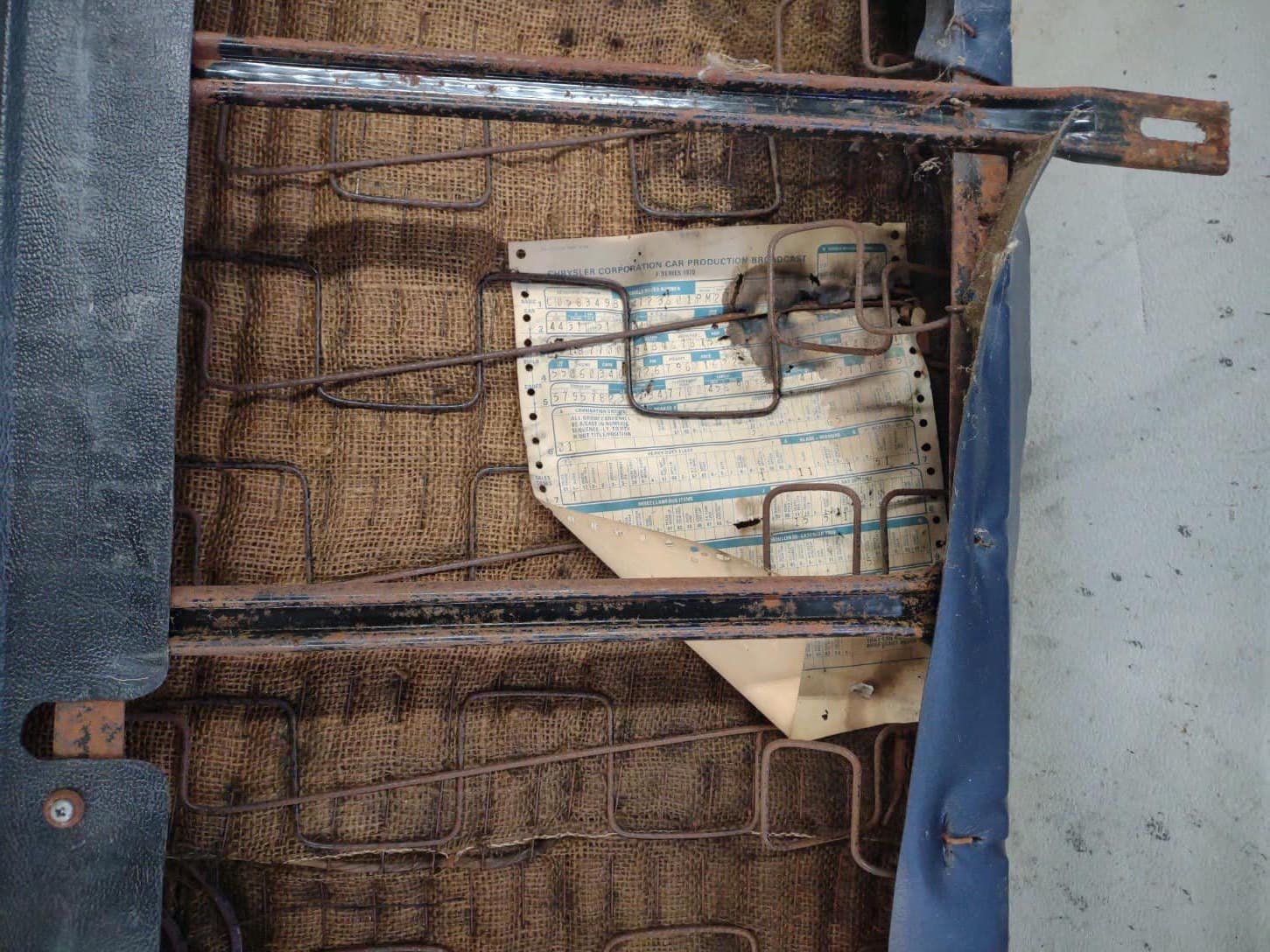
Above: Dave managed to find the surprisingly-intact build sheet behind the rear bench. Although we’d be changing much of her powertrain, we knew exactly what she came with from the factory.
Every original Mopar component preserved and reused carries forward a piece of the car’s identity. Reproduction parts can replicate appearance, but they can never replicate history.
As we loaded the trunk lid and trim panel for transport, it was impossible not to reflect on the strange continuity of it all. One car, long since beyond saving, was now ensuring the survival of another.
Marsha’s restoration wasn’t just about replacing what had been lost. It was about preserving what remained—and giving her the foundation she needed to endure for decades to come.
The Long Road Between Then and Now
With Marsha’s suspension restored and solid original sheet metal in hand, Dave turned his full attention to the painstaking work of bringing her body back to life.
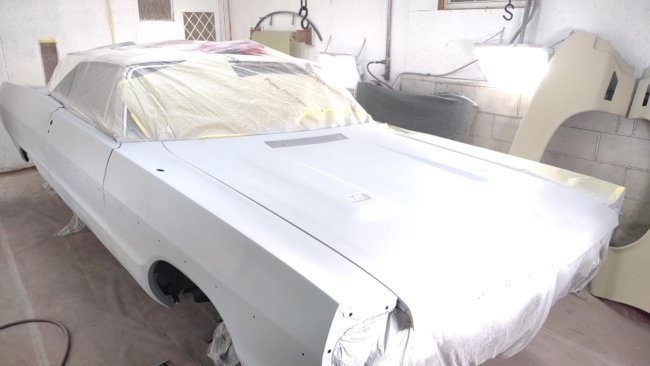
This is the phase of restoration that rarely makes for exciting updates. There are no dramatic before-and-after reveals. No single moment where everything suddenly looks finished. Instead, progress happens slowly, almost invisibly. Rust is carefully cut away. Replacement panels are fitted, aligned, and welded. Surfaces are straightened, filled, blocked, and straightened again.
It is meticulous work. And it takes time. Weeks turned into months. Months quietly became the better part of a year.
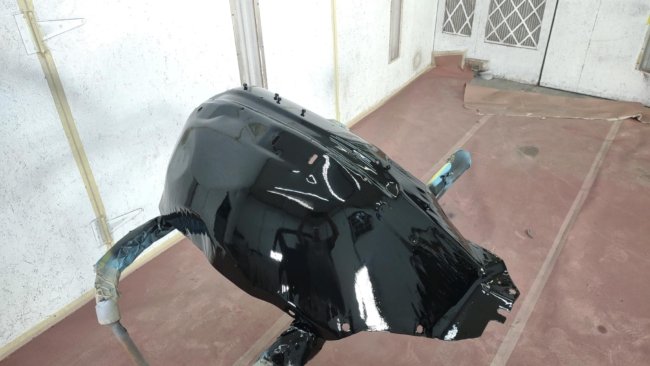
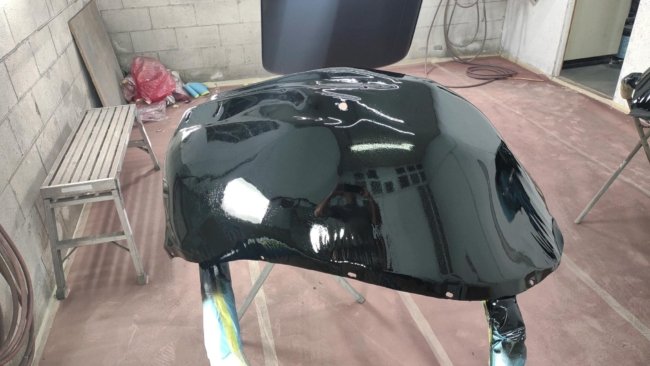
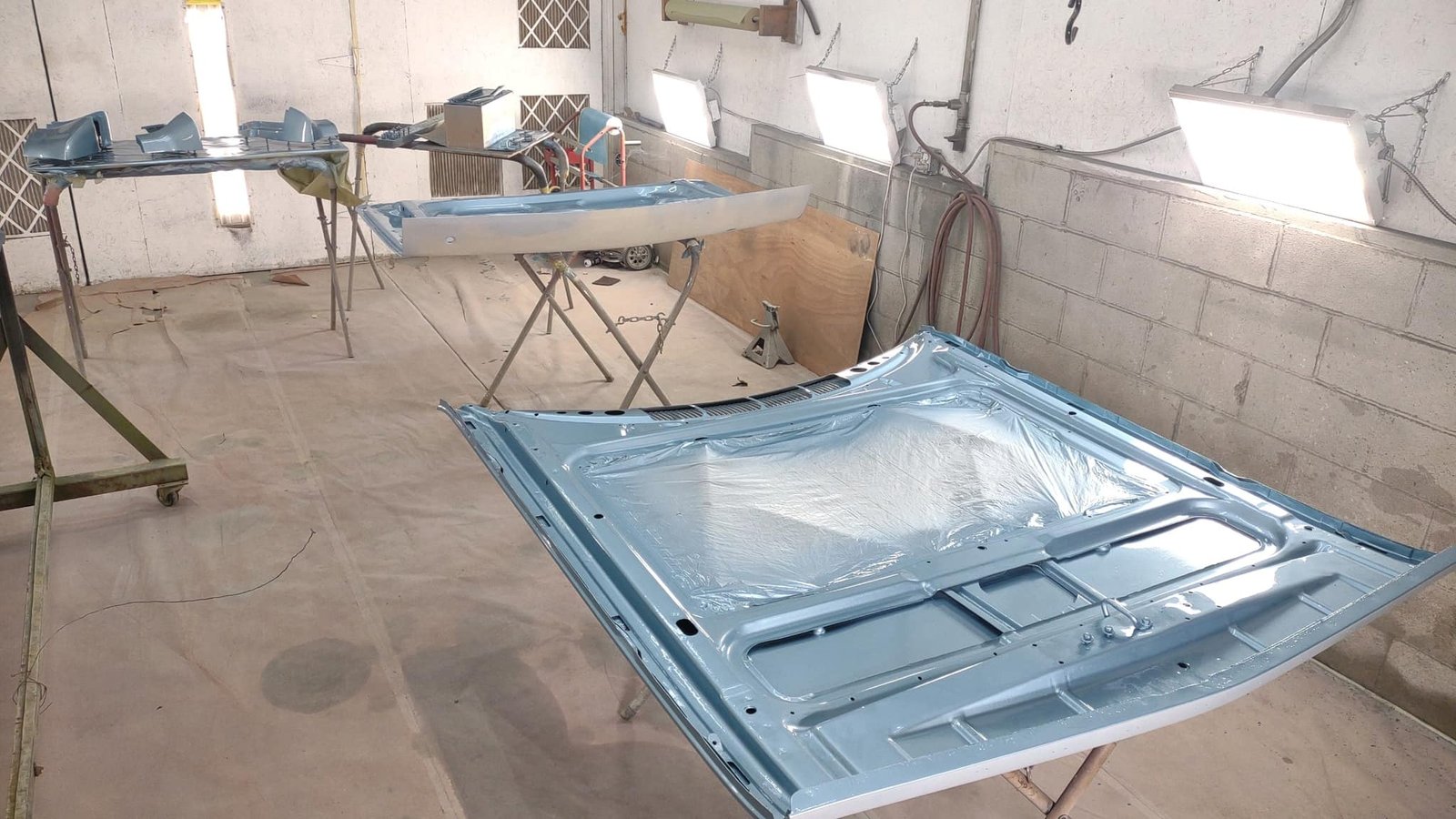
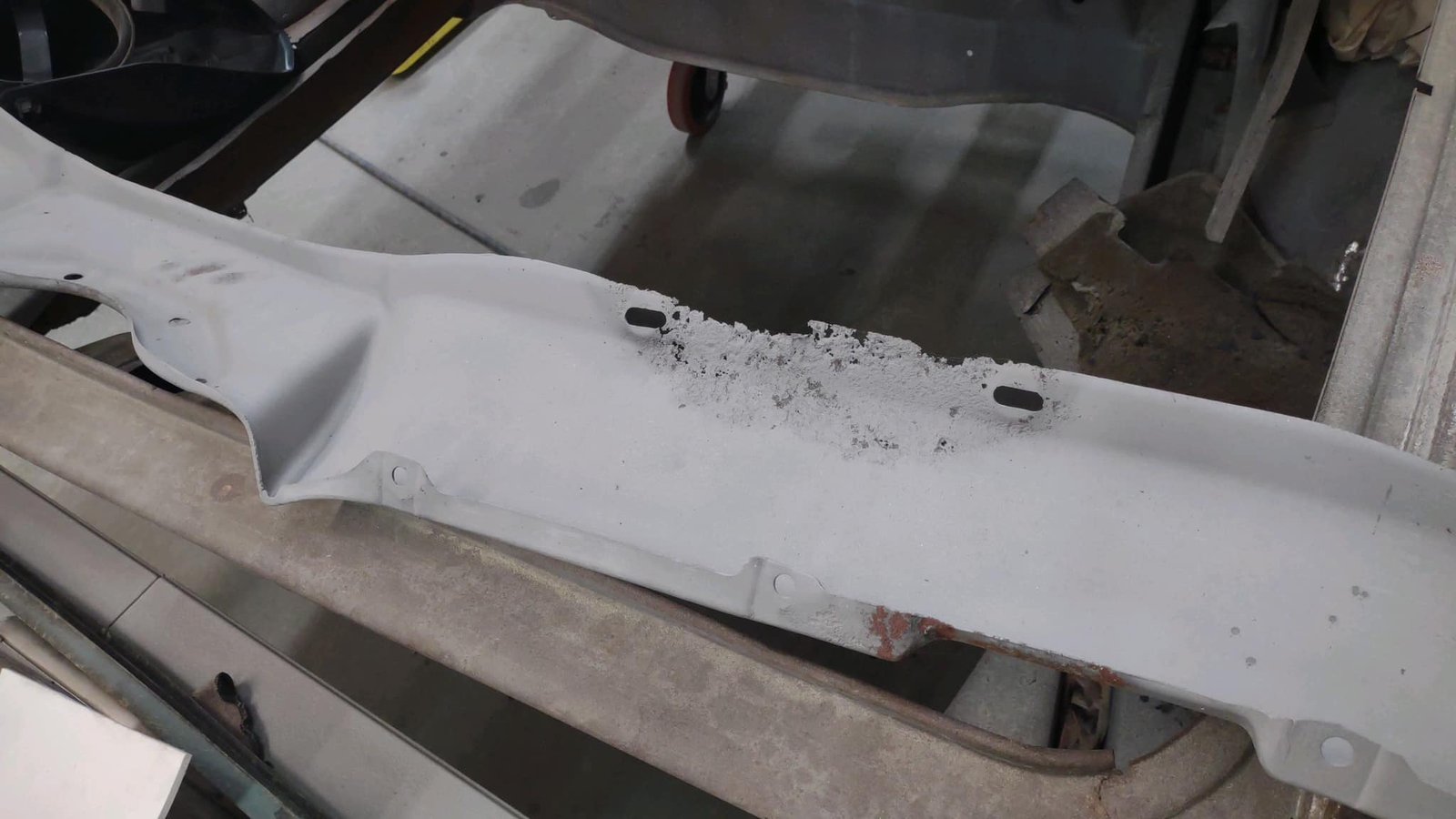
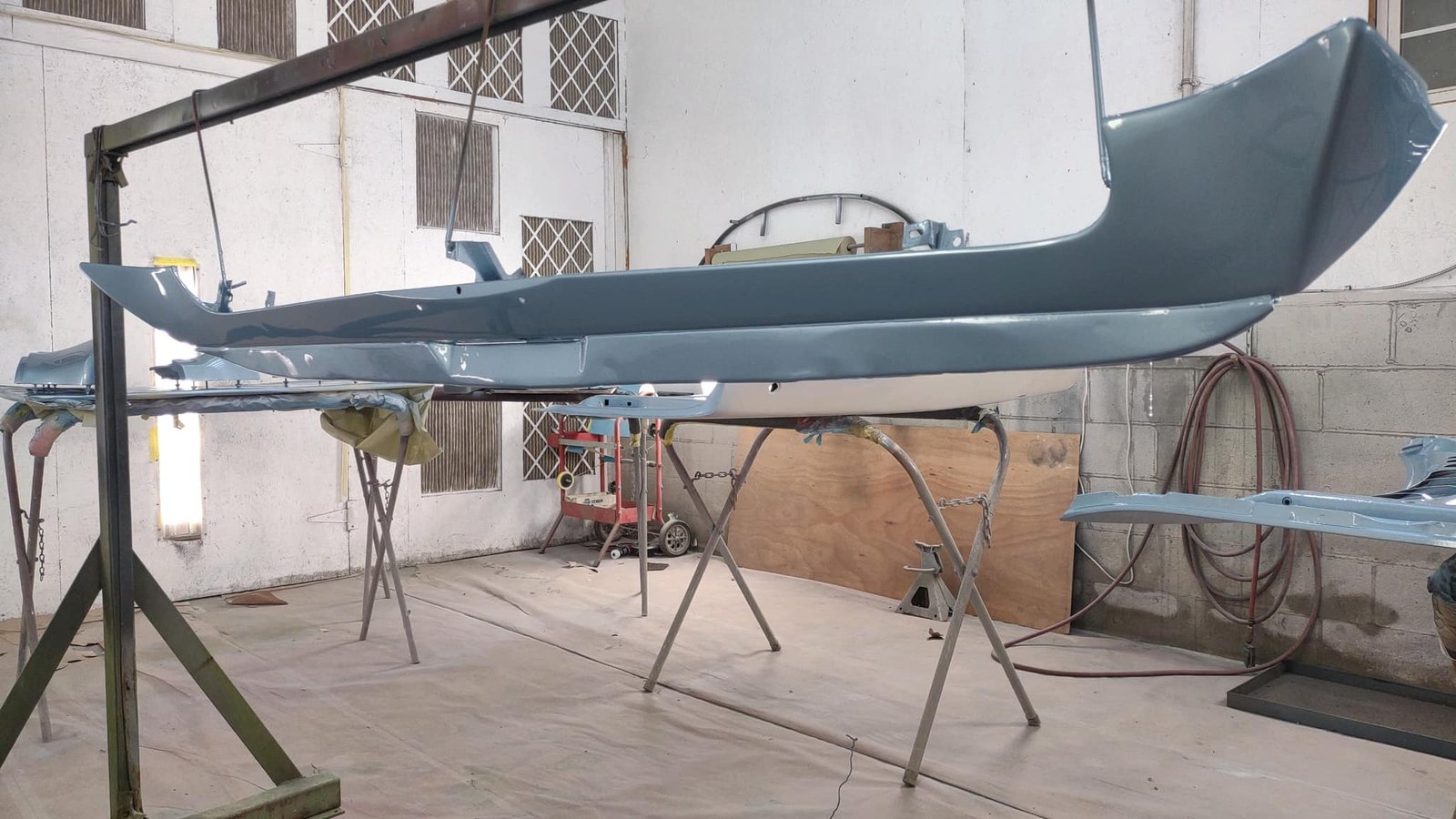
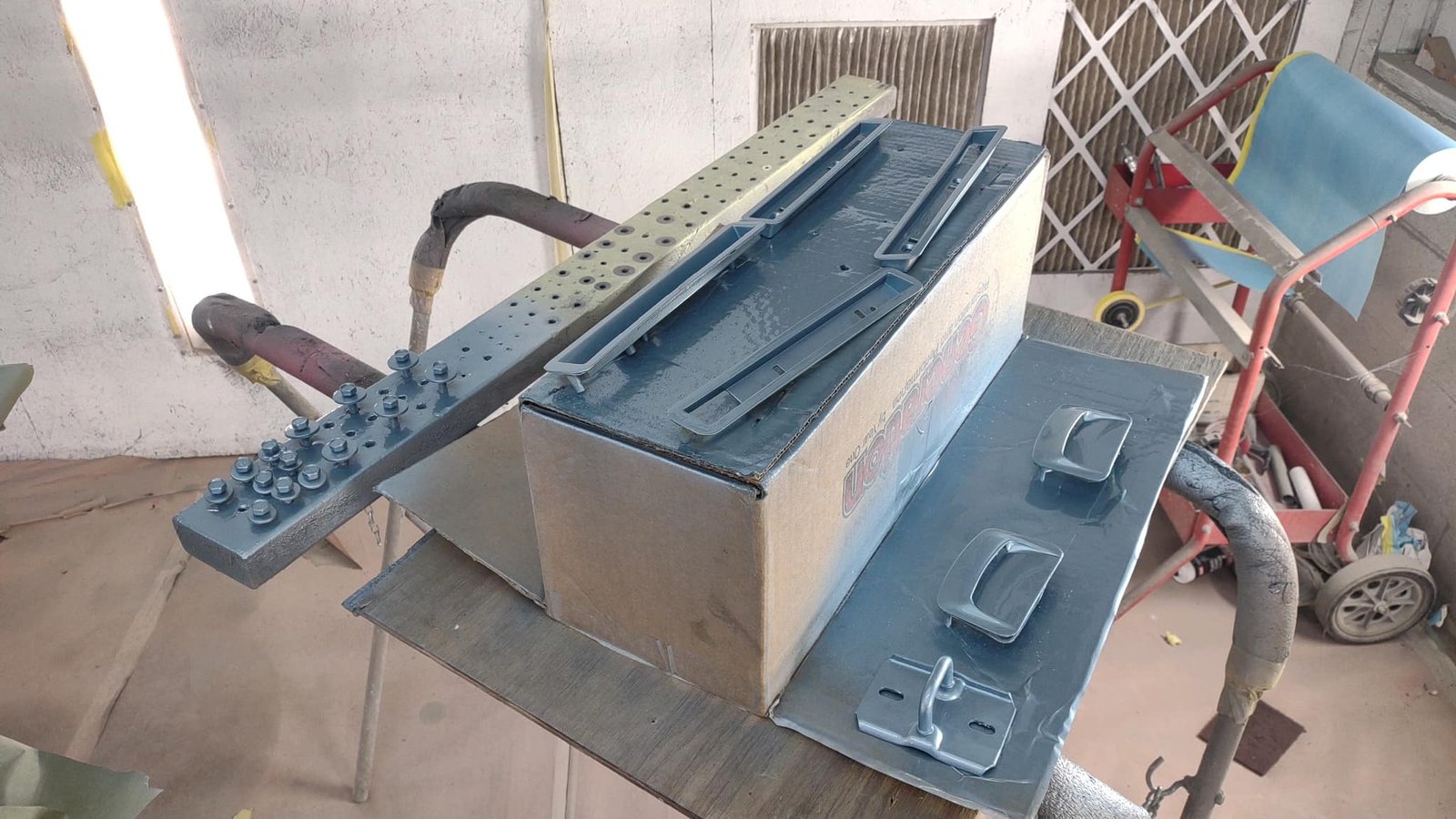
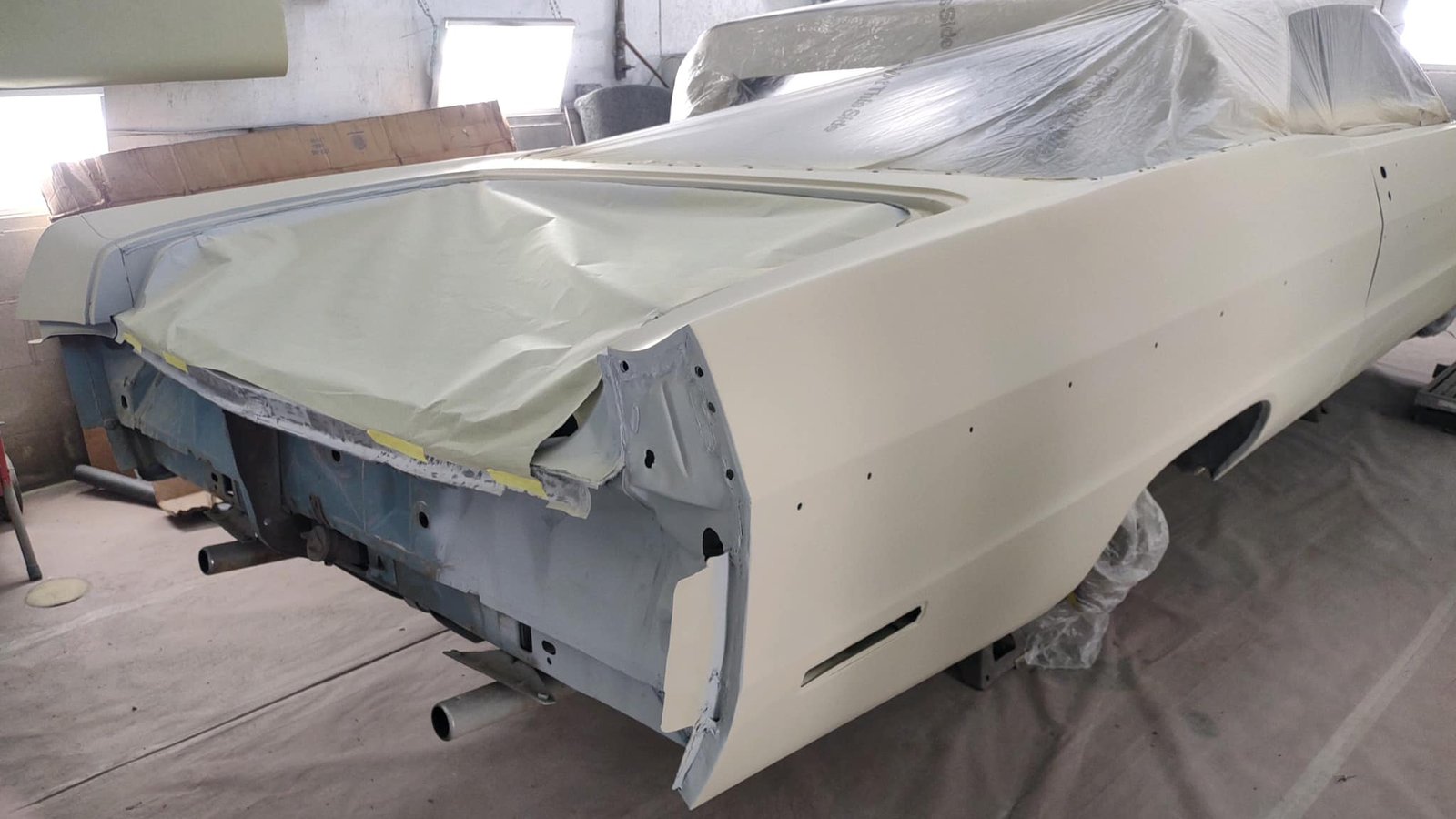
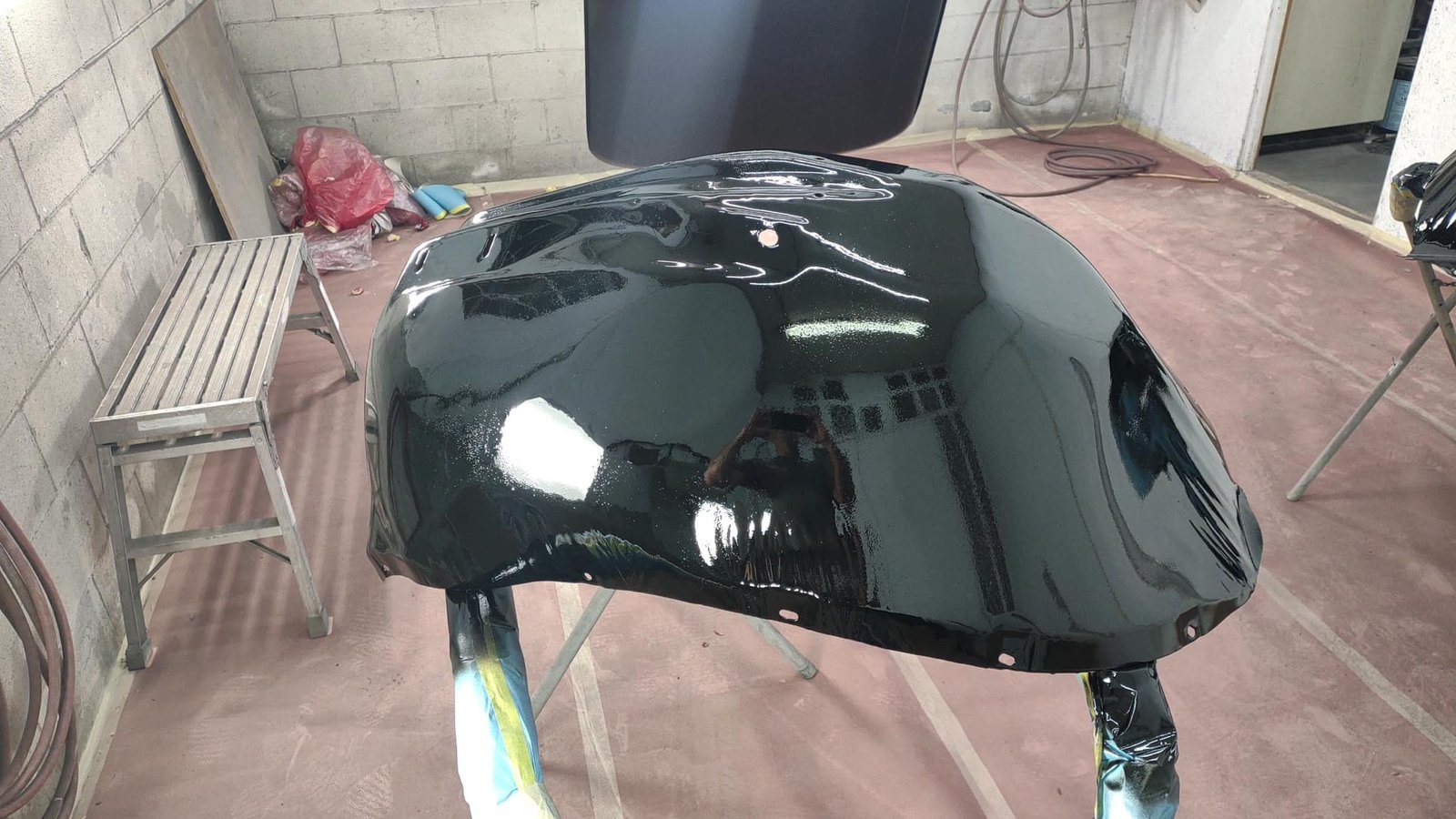
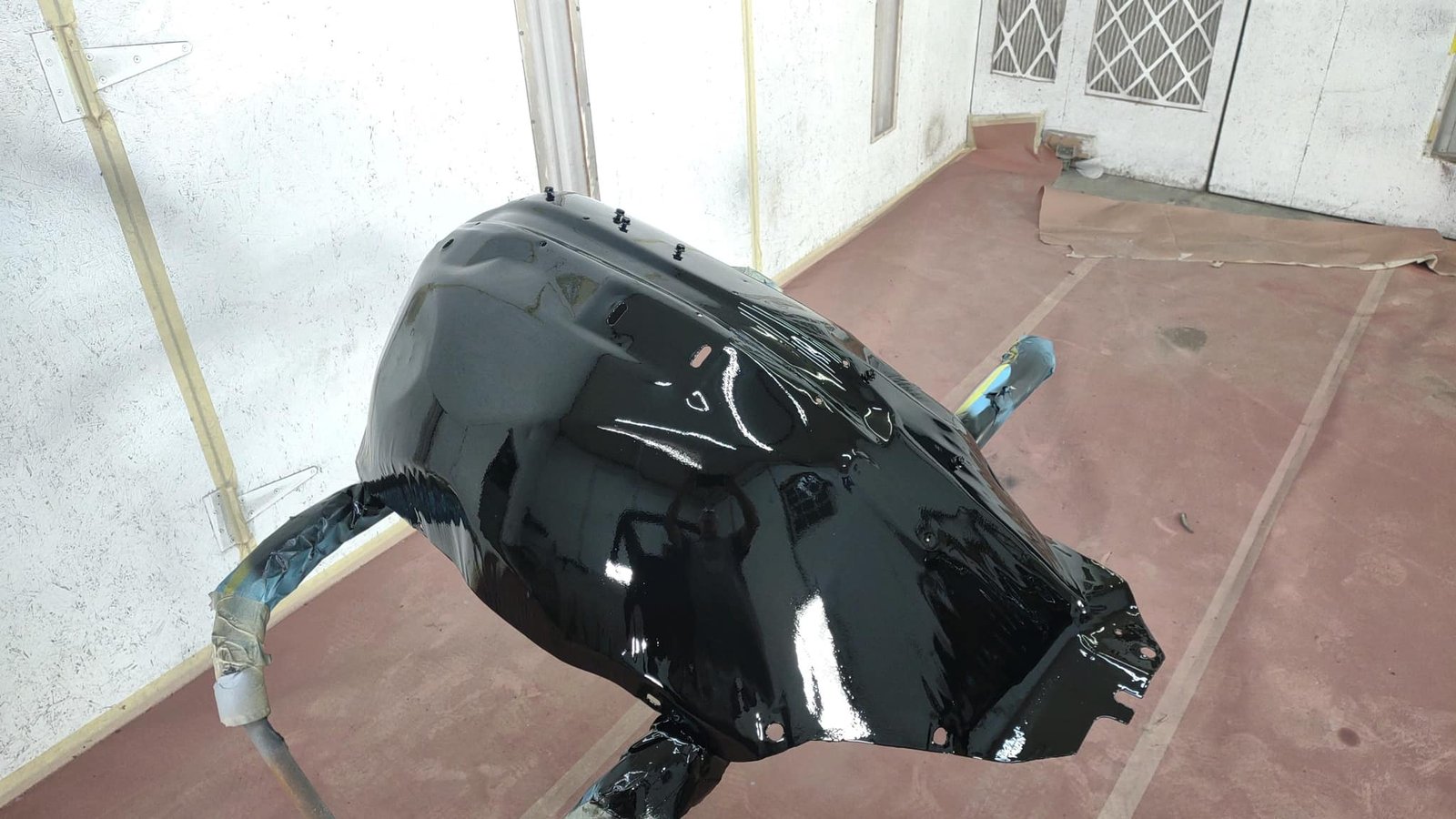
Above: Unlike her unibody siblings, C-bodies are much like F-body Camaros and Firebirds; meaning that the front frame rails can be completely removed from the rest of the body – including the inner fenderwells. Dave laid down several coats of semigloss black after applying Lizard Skin to the undersides.
During that time, Dave moved steadily forward, restoring Marsha’s body the right way. Every repair was made with permanence in mind. Every surface was refined until it met his standards—not simply acceptable, but correct.
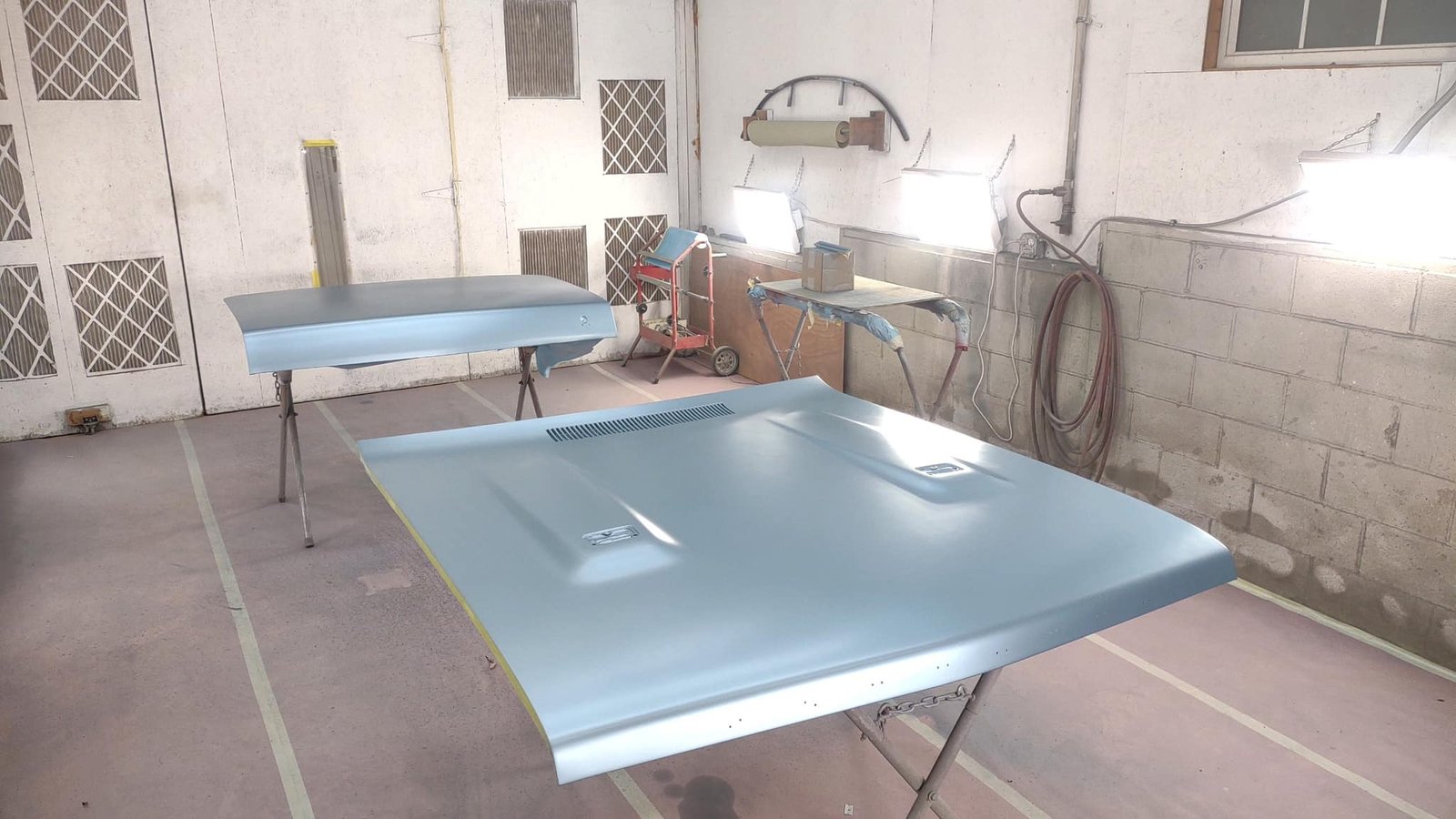
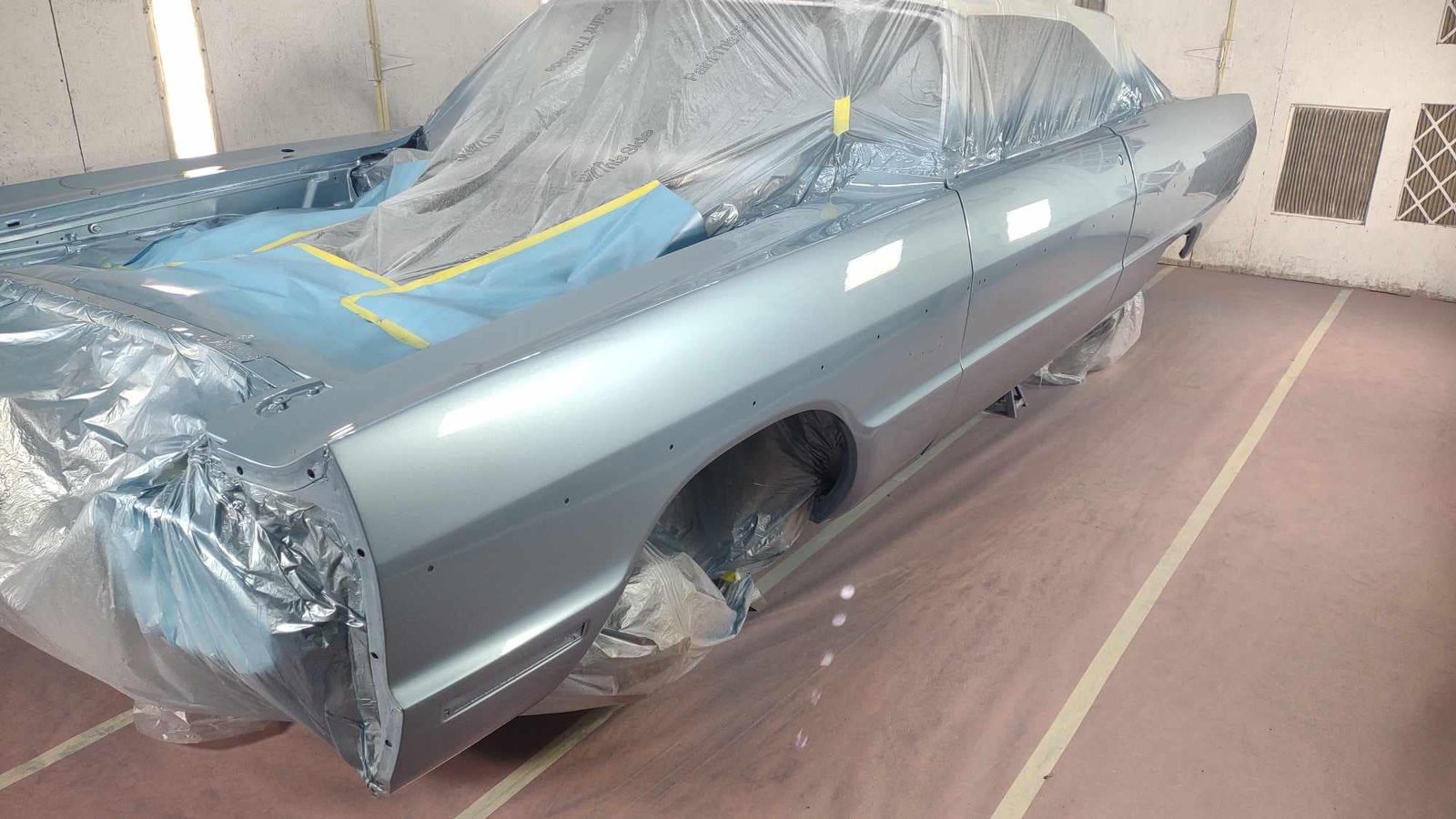
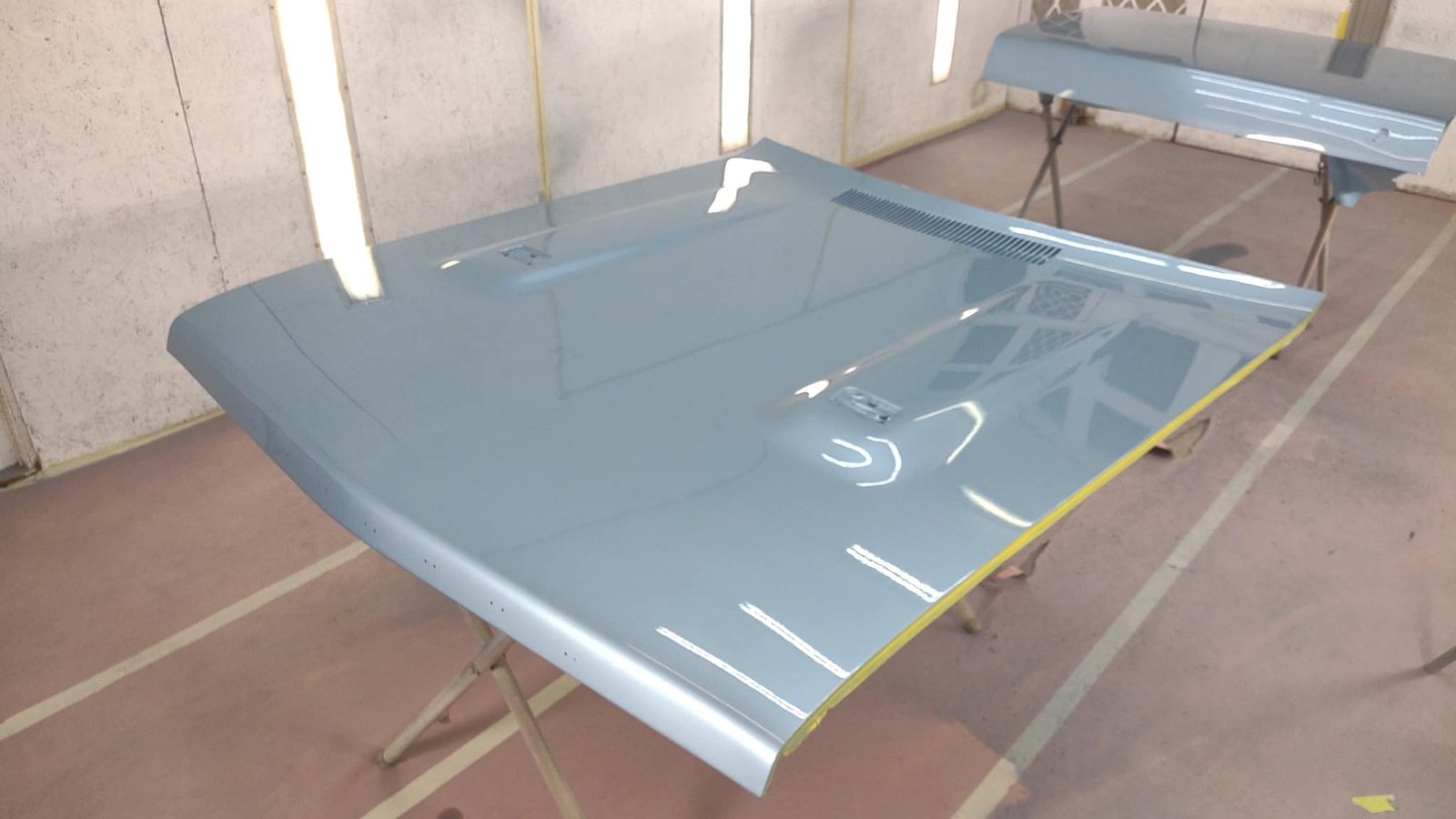
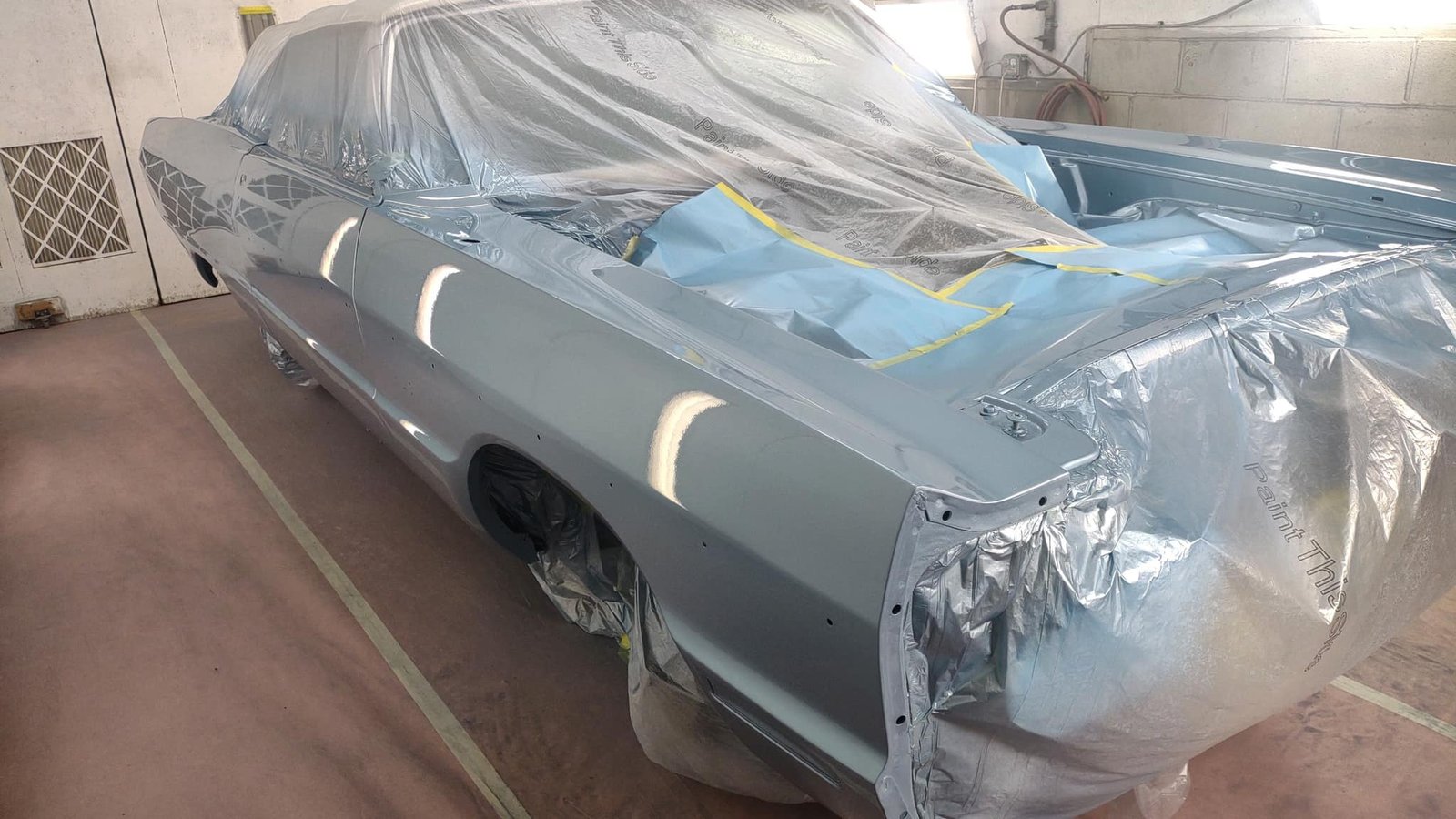
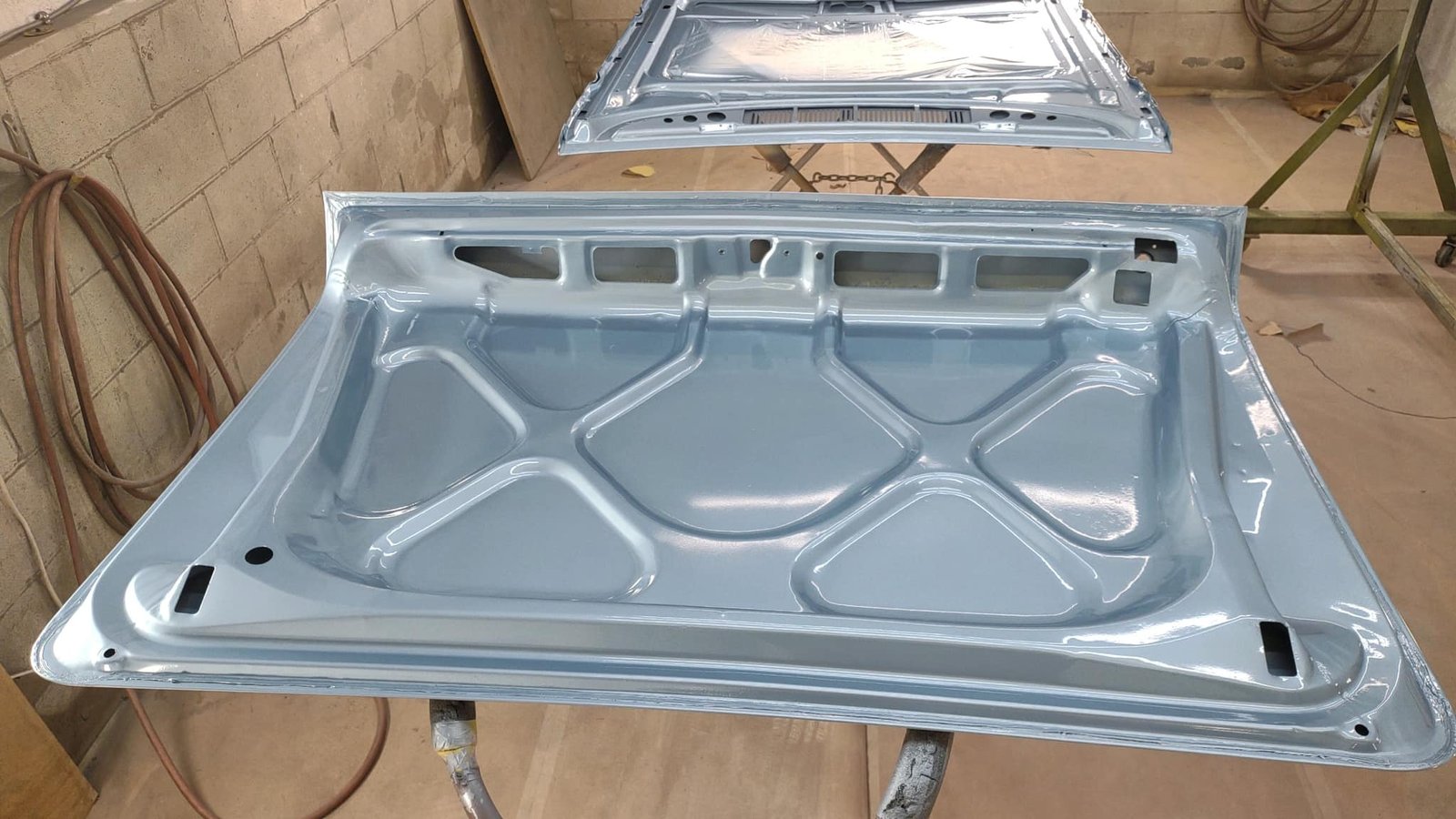
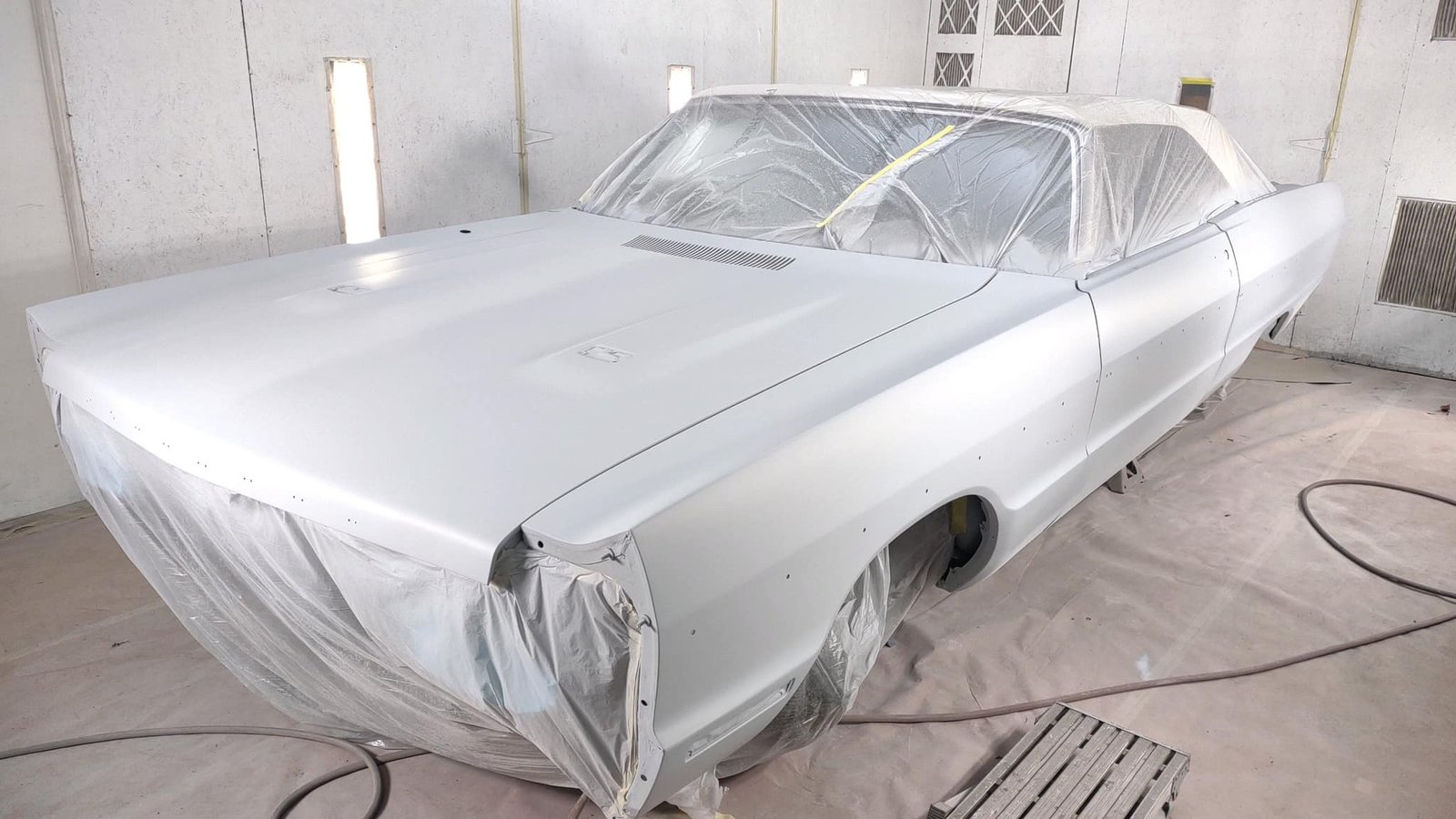
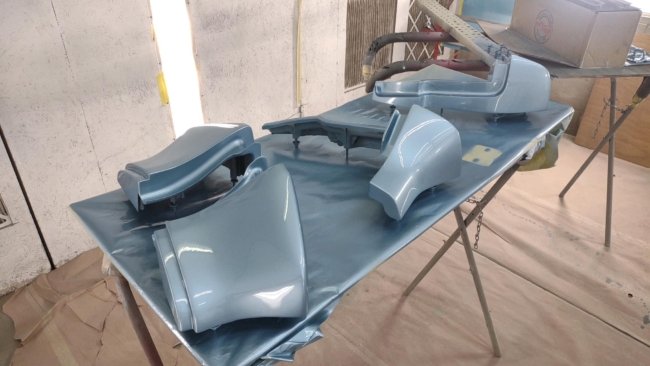
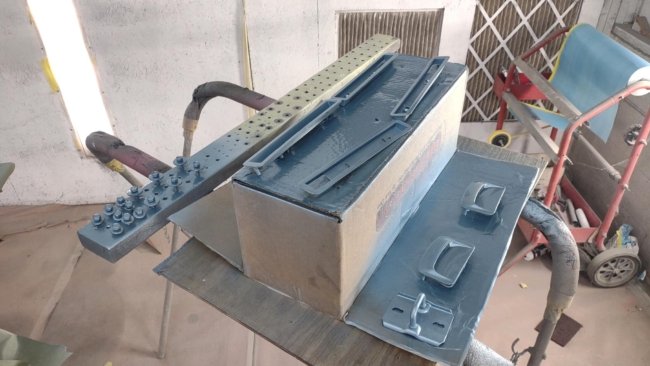
Eventually, the bodywork gave way to the final stages of preparation. Primer sealed the repaired surfaces. Block sanding refined the panels until they were laser-straight. And at last, paint returned to the Fury’s long, sweeping form.
For those of us watching from afar, much of this transformation happened quietly. Marsha disappeared into Dave’s shop as a project and, over time, became something else entirely.
She became whole again. The next time we saw her in person wasn’t in the shop. It was at Holley MoParty 2024.
Dave had personally trailered Marsha to Bowling Green, delivering her directly to our booth. Seeing her there, sitting under the open sky among thousands of other Mopars, was almost surreal. The same car that had once wandered uncertainly down the road, wearing the accumulated fatigue of five decades, now stood straight, confident, and restored.
The Firm Feel suspension upgrades we’d installed early on were now invisible beneath her finished exterior—but their effect remained. The solid trunk lid and tail light trim panel sourced from Billy West’s yard blended seamlessly into the car’s restored form. Every decision made along the way had contributed to this moment.
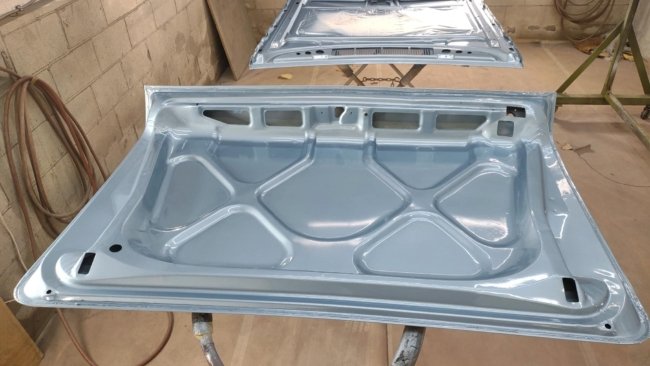
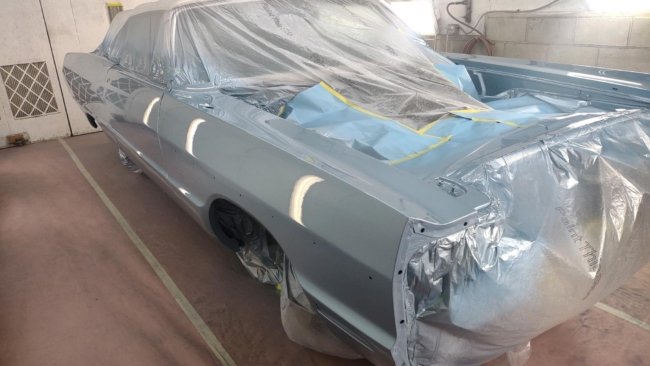
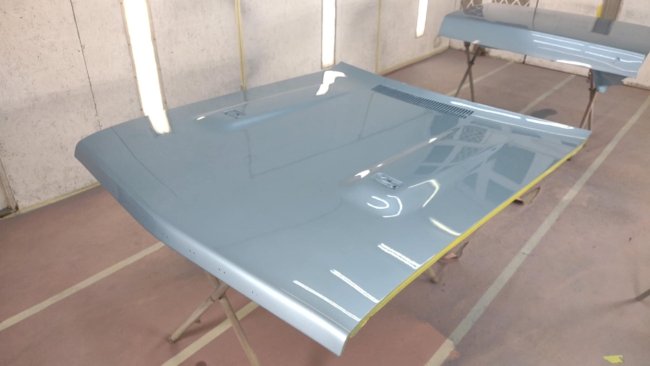
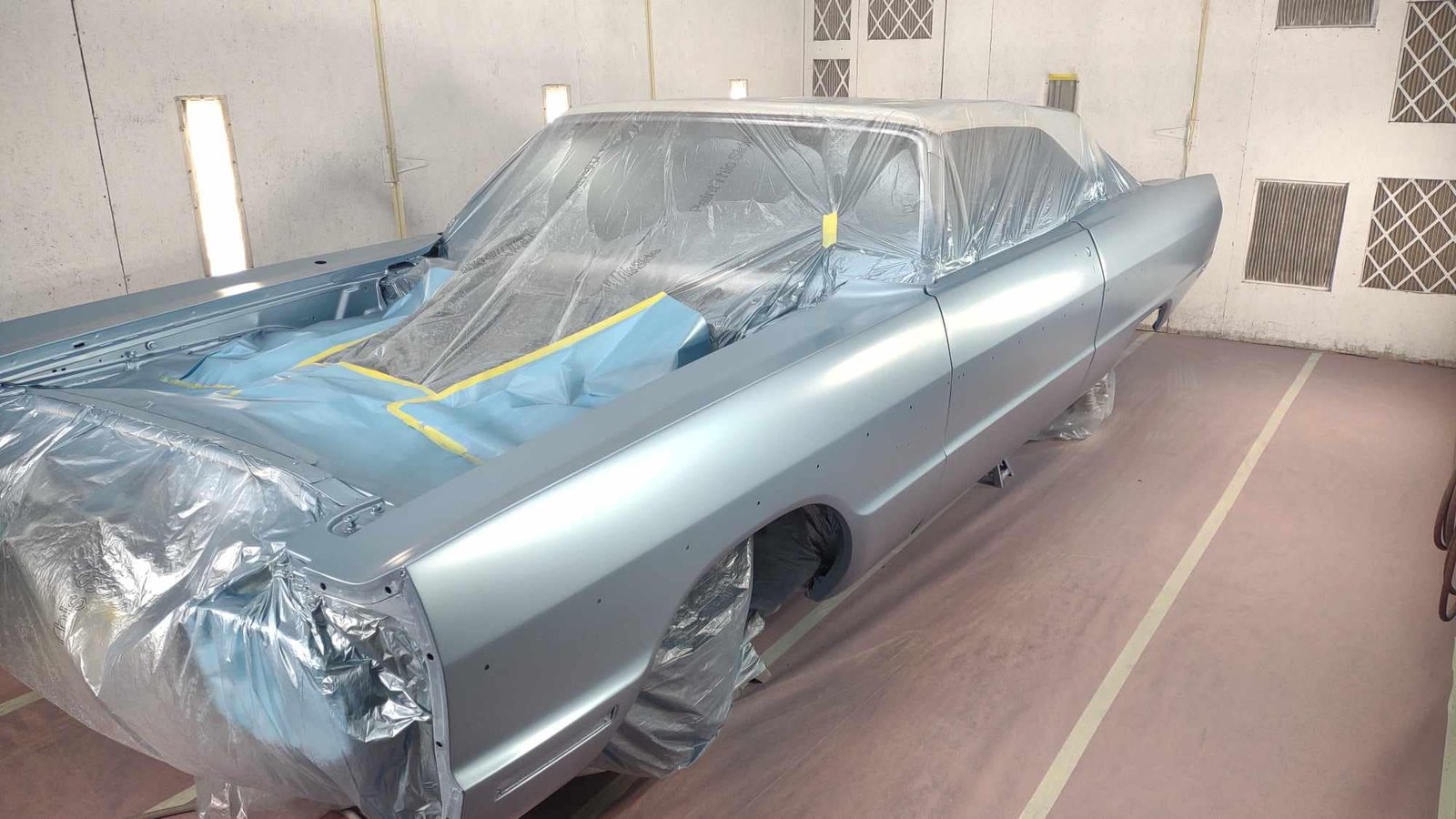
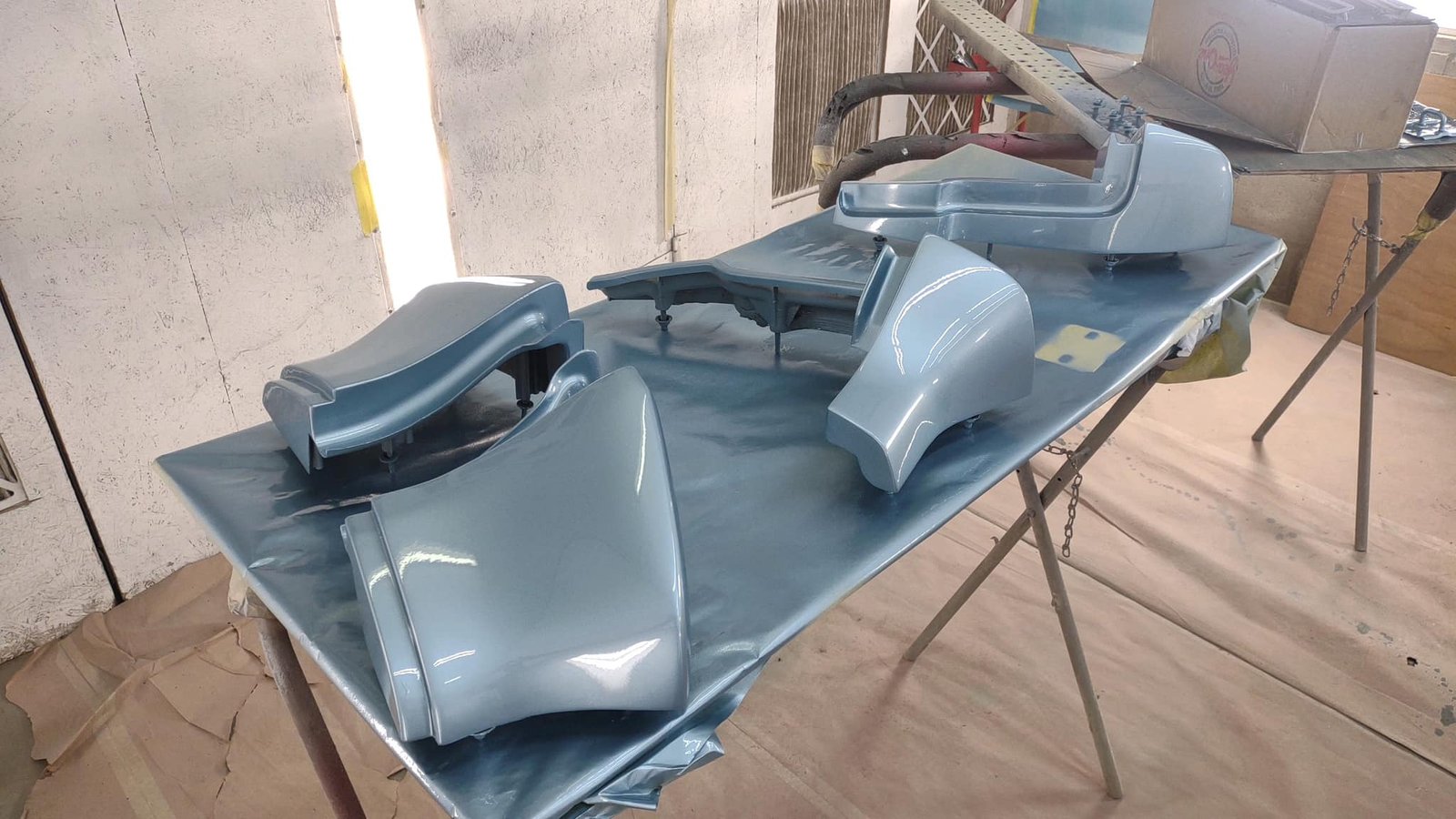
Above: In the light of Dave’s booth, the factory B3 Ice Blue Metallic looks far, far more “silvery” than in the daylight.
Her restoration wasn’t about making her something she had never been. It was about returning her to what she always was—a full-size Plymouth convertible built to carry its driver forward with confidence and grace.
Standing there beside her at MoParty, it was impossible not to reflect on the long path that had brought her back. The worn suspension components. The salvage yard discoveries. The months of careful metalwork. Each step had been necessary. Each decision had been deliberate.
And now, finally, Marsha had caught up with her own story.
The magazine may have fallen behind documenting her journey—but thanks to Dave’s craftsmanship and a handful of carefully chosen parts, Marsha herself never stopped moving forward.
She was ready for the road again. And this time, she would travel it on her own terms.