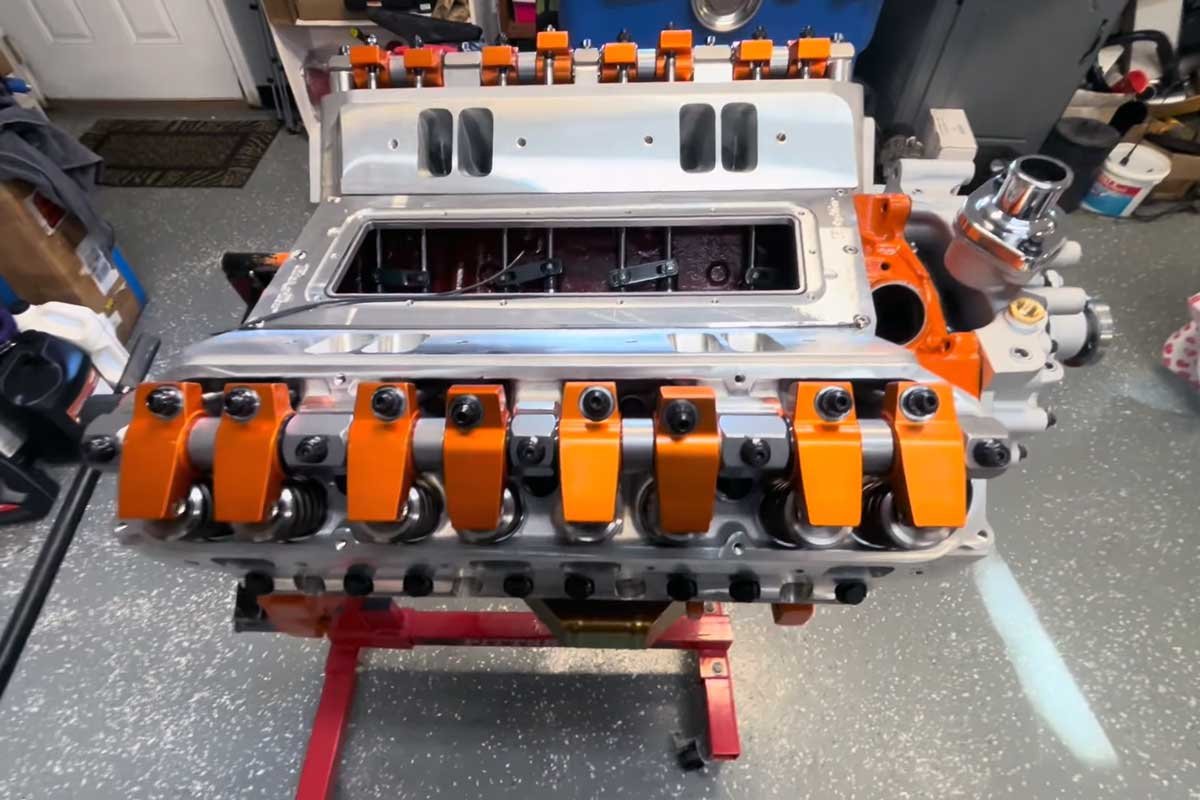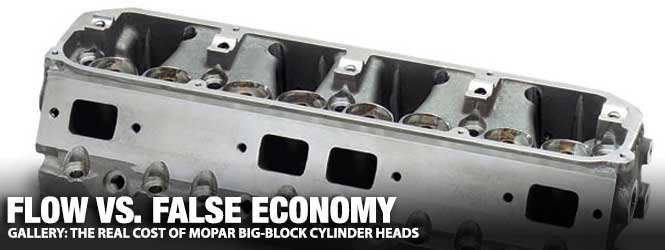
In every Mopar big-block build, there comes a point when the discussion stops being about parts and becomes about architecture. Once the engine’s intended purpose is defined, cylinder head preference becomes one of the earliest and most influential decisions in the entire combination. It is not a late-stage accessory choice. It is a structural decision that defines how the engine will behave as a system under load, temperature, and sustained rpm.
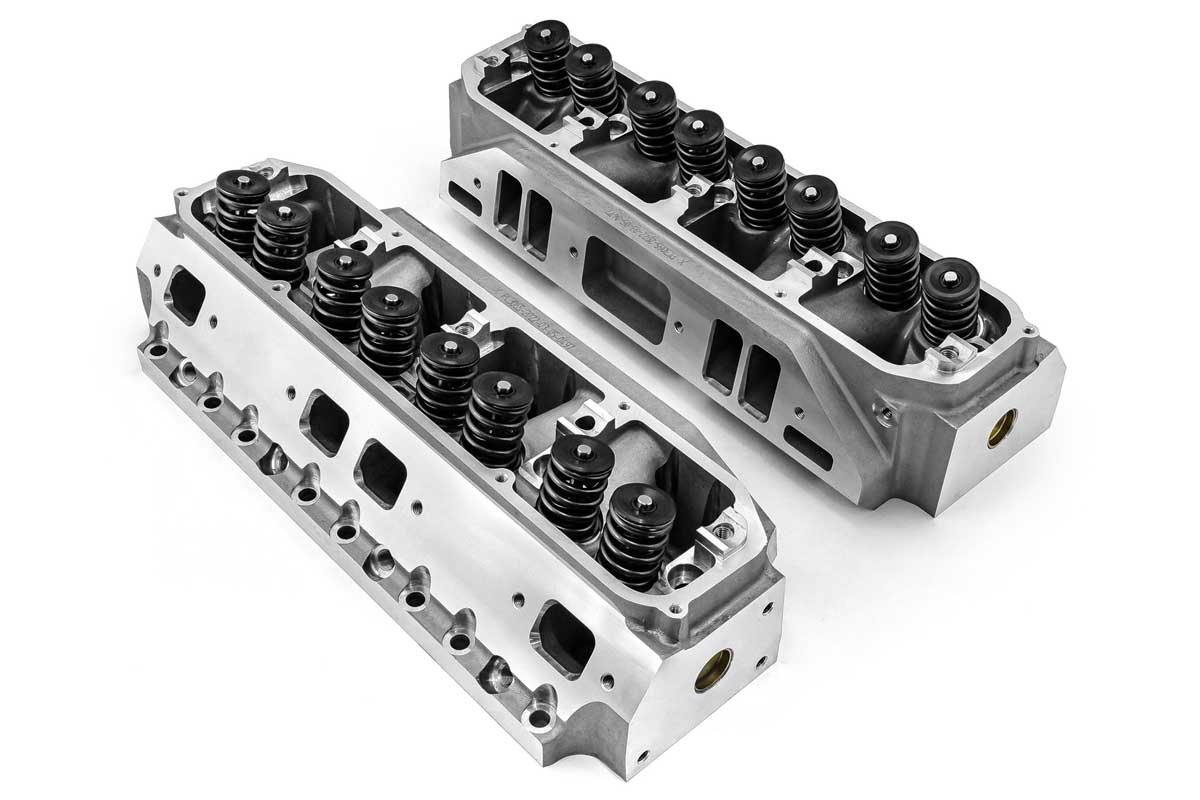
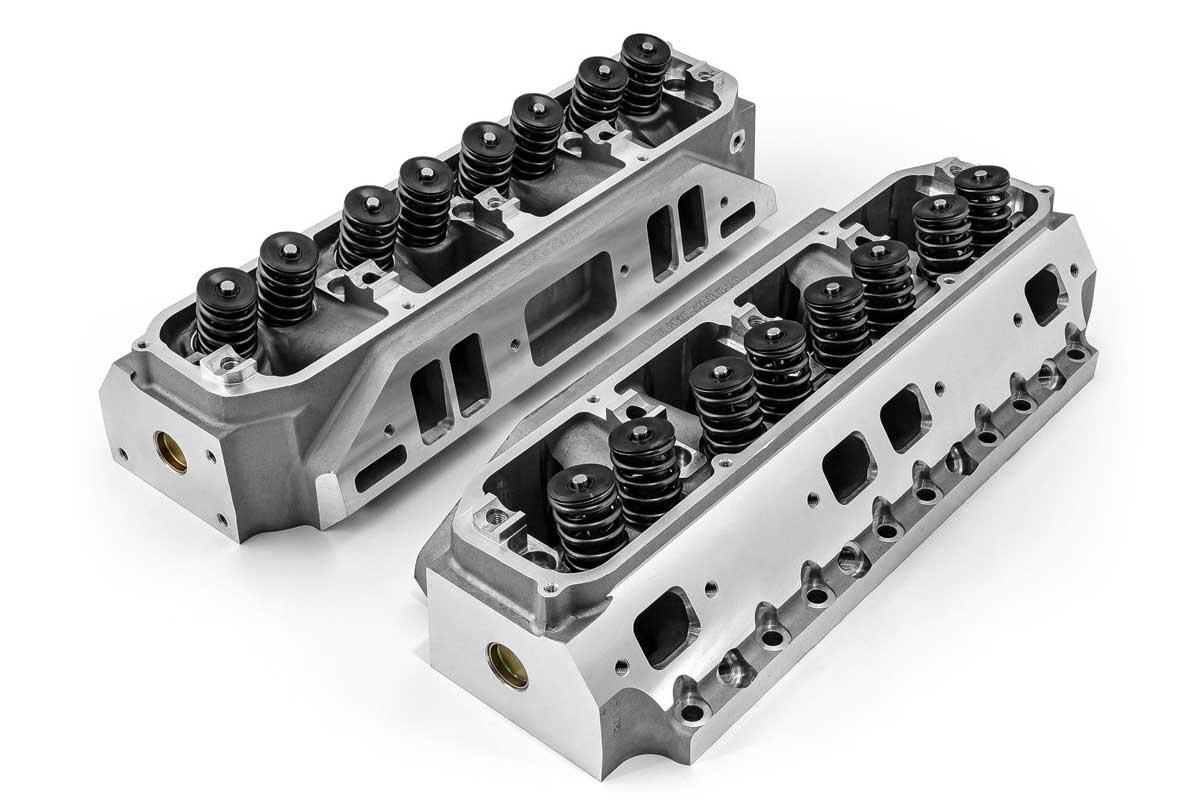
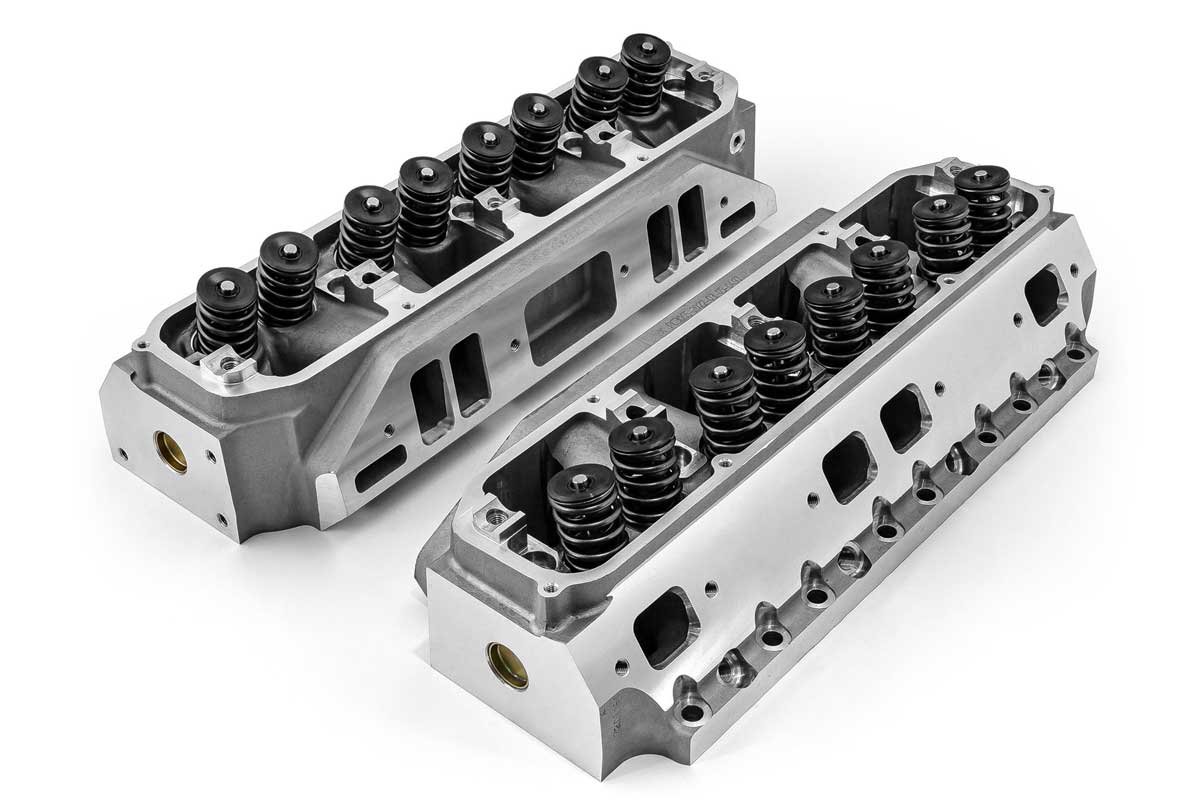
Above: The aftermarket aluminum cylinder head landscape spans everything from mild, stock-replacement castings to all-out race-ready pieces. Some are engineered to deliver strong, usable torque for street performance, while others are built to support high-rpm airflow and peak horsepower in serious drag race applications.
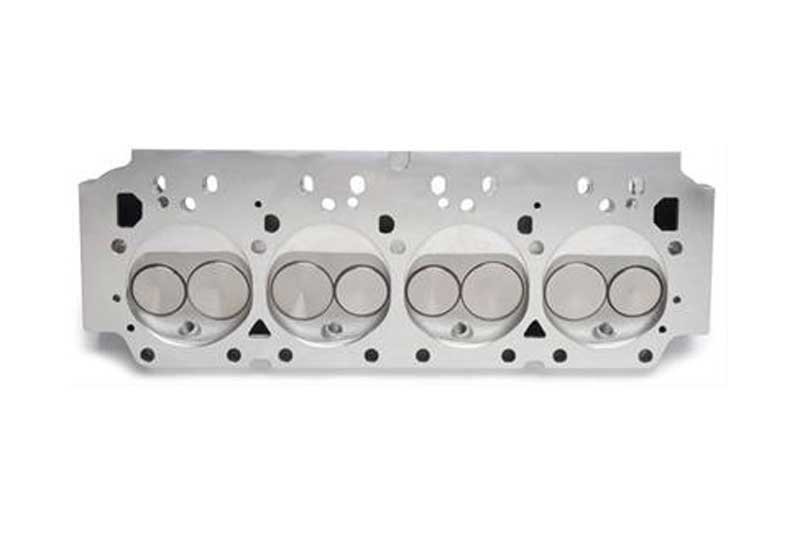
Cylinder heads do far more than increase airflow. They establish the foundation of engine behavior. Chamber volume directly influences compression ratio. Port shape, cubic centimeter volume, and cfm influence camshaft selection and operating efficiency. Valve size and placement determine how effectively the engine moves air across its usable rpm range. Even fuel requirement and detonation sensitivity are established long before the short block is assembled or the engine ever turns over.
The compression ratio itself is not an independent starting point. It is a calculated outcome of chamber volume, piston design, gasket thickness, and deck height. When the cylinder head changes, the entire combination shifts with it. What appears to be a single-component decision is actually a recalibration of multiple interacting systems that define how the engine will perform in real conditions, not just on paper.
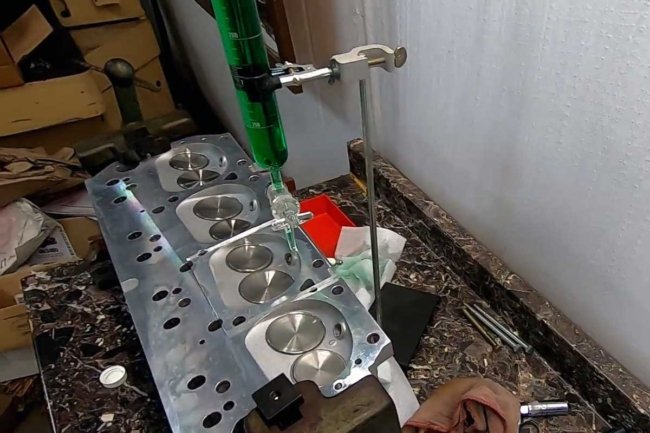
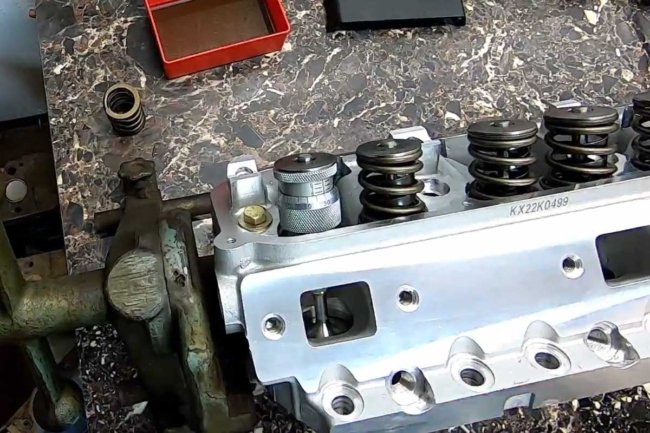
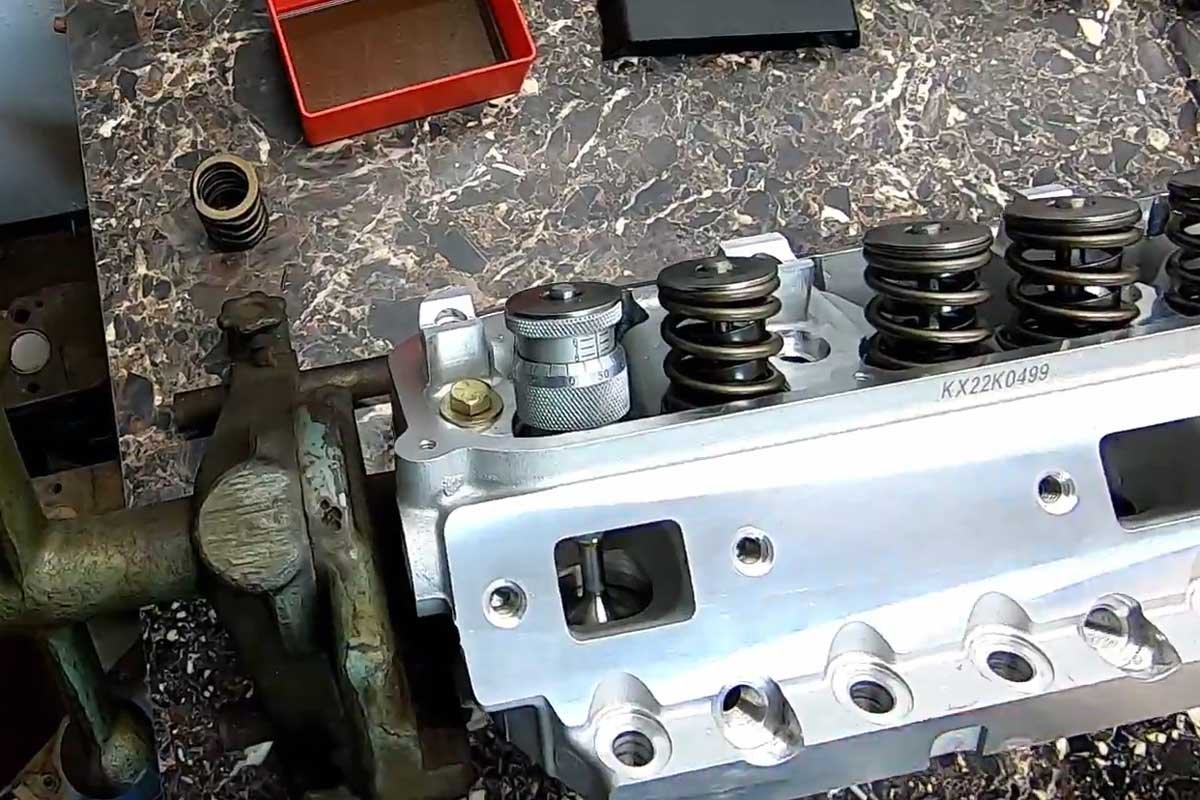
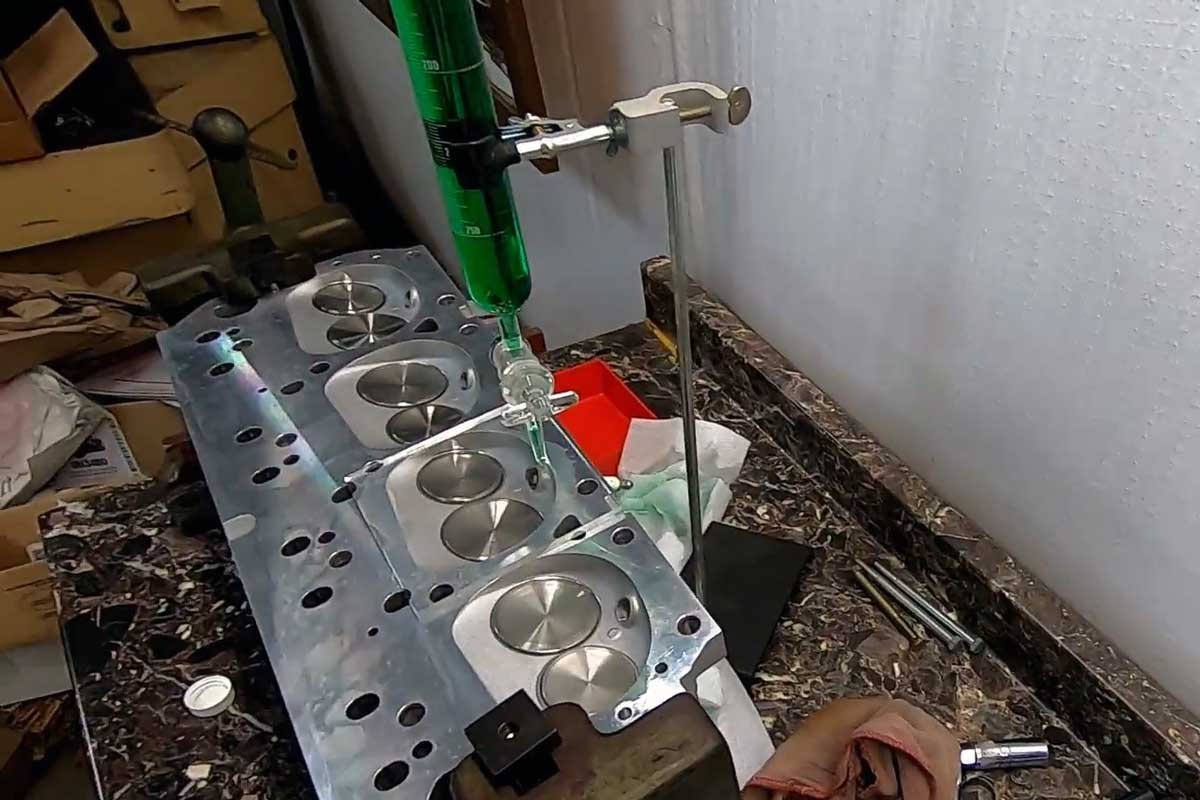
Above Left: While it is always good practice to verify combustion chamber volume, it becomes critical with lower-cost cylinder heads, where machining tolerances can vary significantly from one casting to the next. CC’ing the chambers ensures consistency and helps avoid unwanted compression ratio surprises. Above Right: In many cases, the supplied valve springs are a compromise and may not match the requirements of the chosen camshaft. Upgrading to the correct spring package is often necessary. At a minimum, installed height and seat pressure should be carefully checked to ensure proper valvetrain control and reliability. (Photos JustMoparJoe)
For Chrysler RB engines, this relationship is especially significant. The aftermarket now spans everything from budget-oriented offshore castings to highly engineered contemporary designs that extend well beyond factory iron architecture. The real question is no longer what a cylinder head costs at the counter, but what it costs once it is fully corrected, assembled, and merged into a running engine combination that is stable, repeatable, and tuned for use.
To keep comparisons grounded in real-world applications rather than isolated claims, a standardized evaluation combination is used. All cylinder heads are assessed within an RB wedge engine in the 470 to 512 cubic inch range using a hydraulic roller camshaft intended for street and strip use.
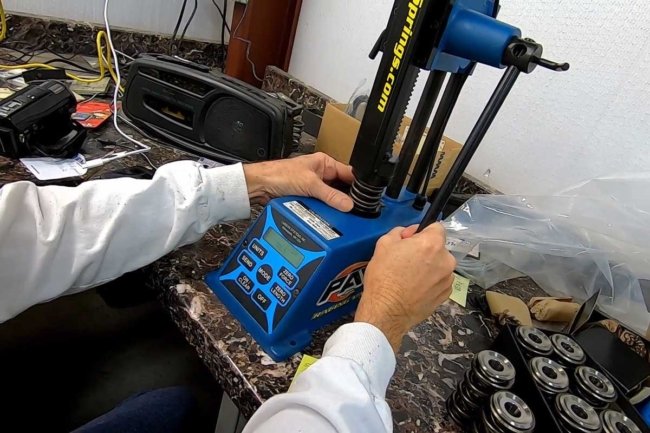
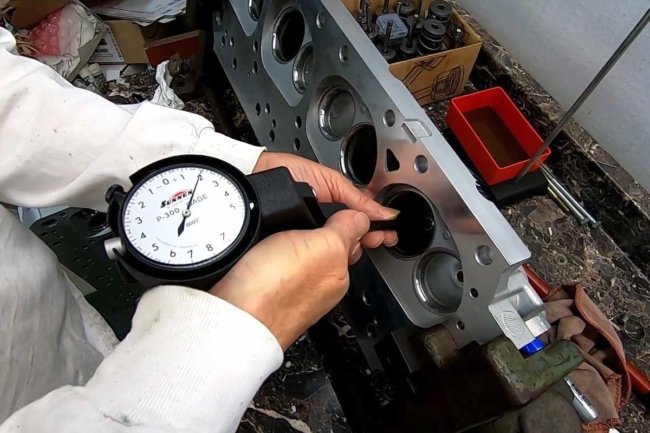
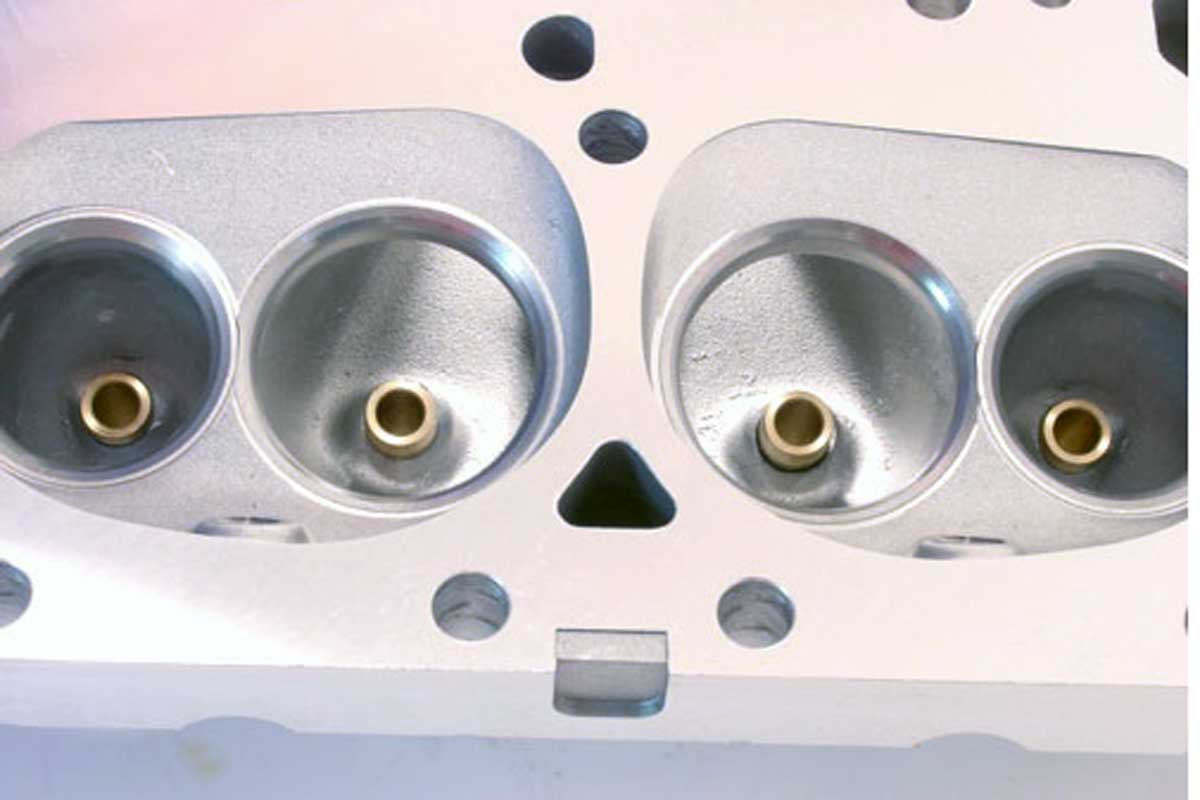
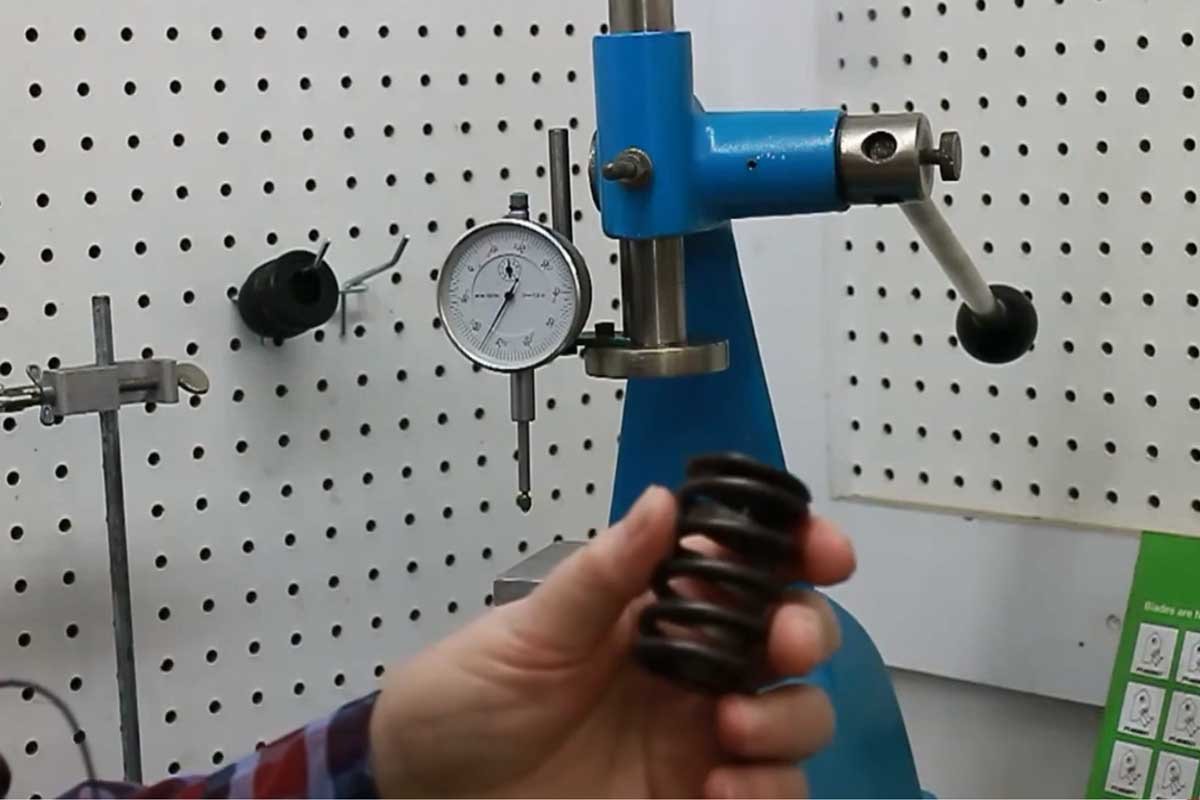
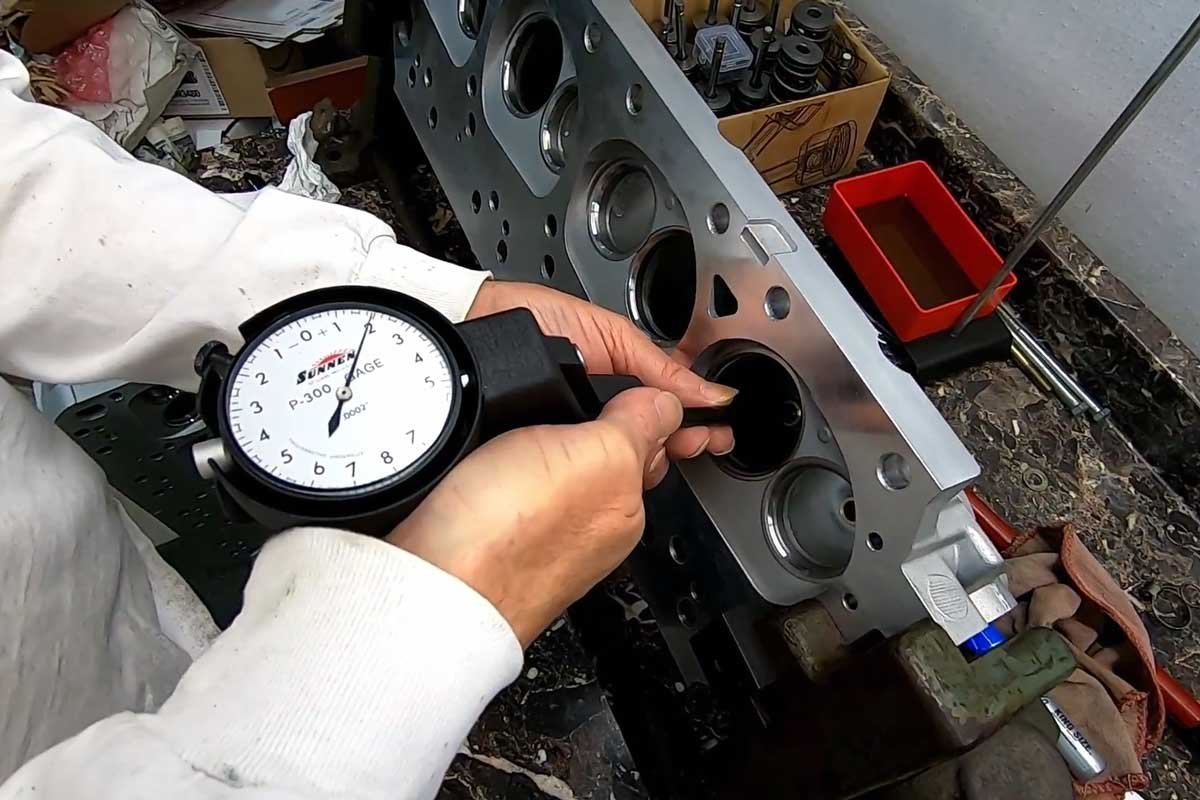
Above Left: If the supplied valve springs are intended for use with the chosen camshaft, they should be tested on a calibrated spring tester to verify seat and open pressures. Any spring that fails to meet the required specifications must be replaced to ensure proper valvetrain stability and durability. Above Right: The valve guides should be carefully inspected for damage, misalignment, or machining defects. Any irregularities must be corrected, as guide condition plays a critical role in valve sealing, oil control, and long-term reliability. (Photos JustMoparJoe)
The combination assumes pump gasoline-friendly compression ratios, typical street intake systems, and full-length headers. These measures remove displacement bias and allow each head to be evaluated based on system behavior rather than peak airflow figures or marketing specifications. Within this framework, cylinder heads are evaluated as components of a complete engine system rather than standalone products. Their value is determined not only by their airflow capability, but also by how reliably they integrate into a complete combination.
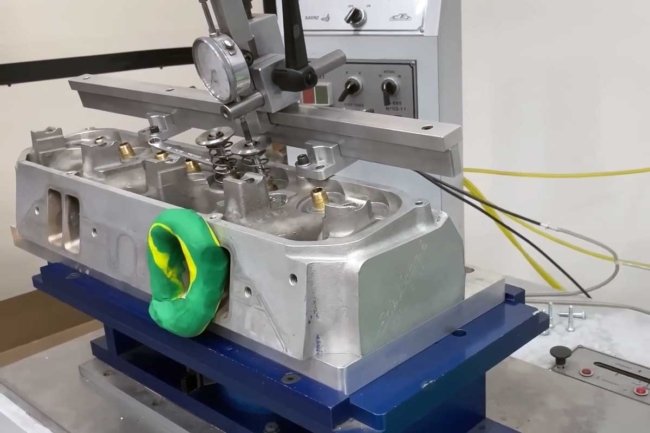
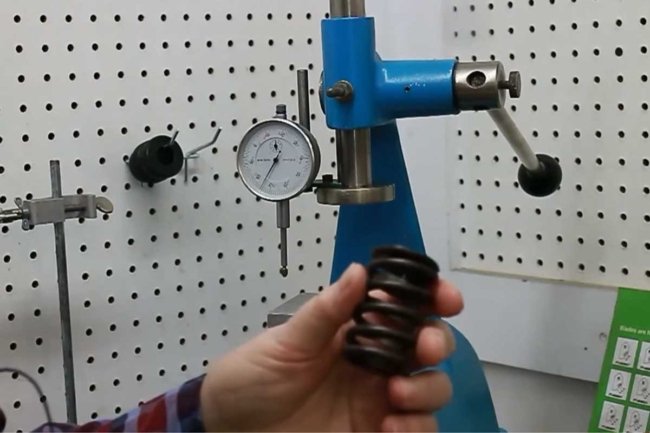
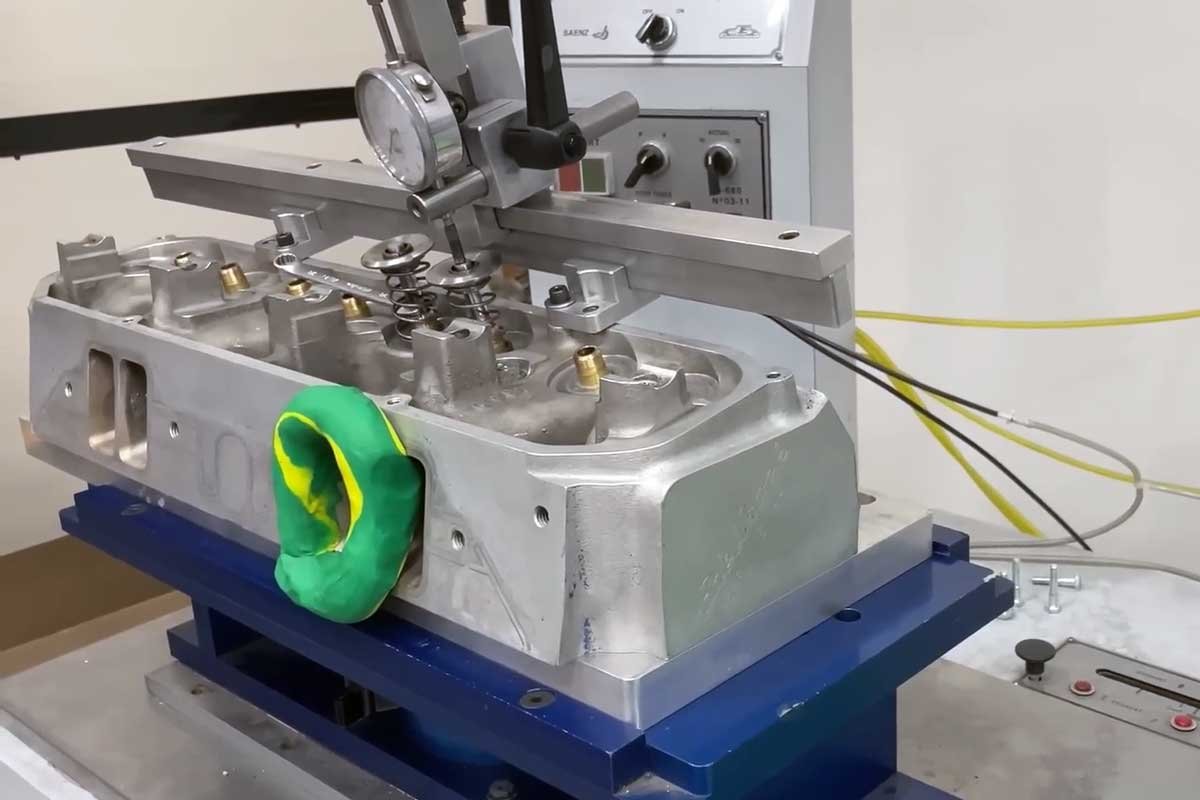
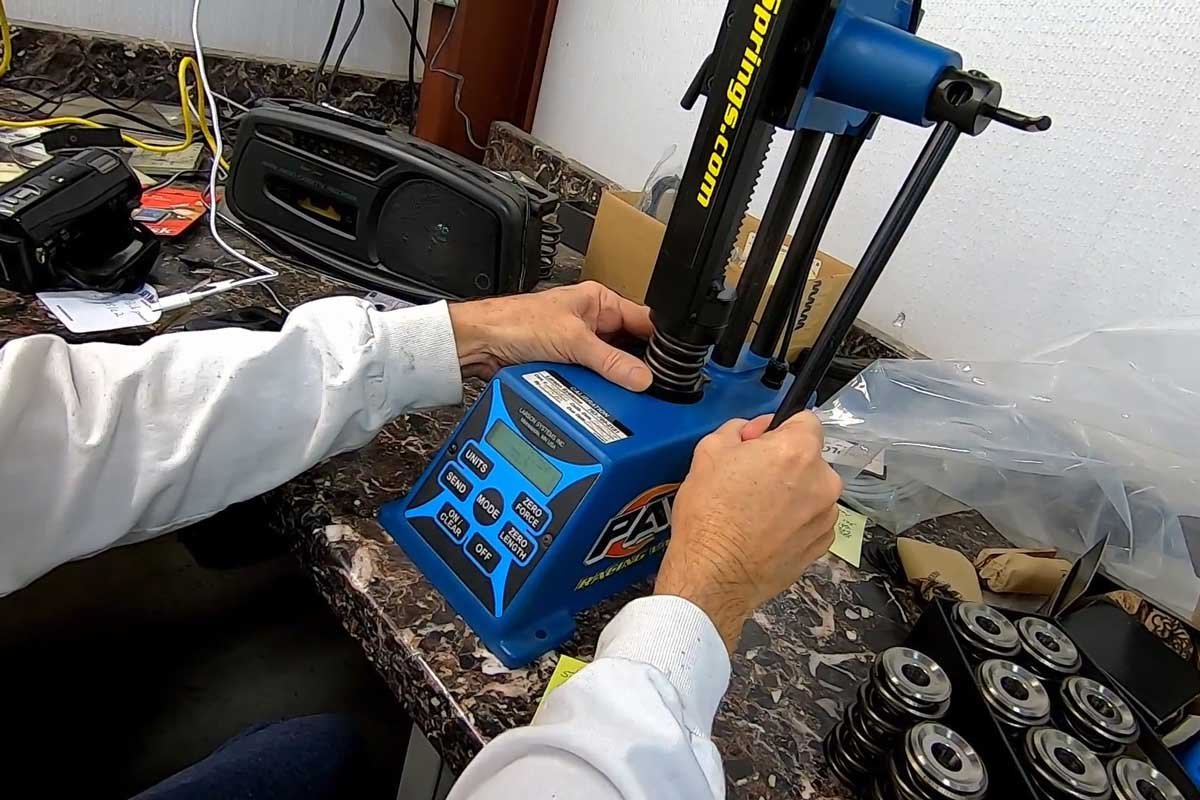
Above Left: Depending on the seriousness of the engine build and the depth of one’s pockets, the heads can be checked for their flow characteristics, measured in CFM. (Photo Eric Weingartner) Above Right: If the springs are being replaced, the new springs need to be checked for proper pressure seated and open. If they do not meet the proper pressures, shims must be added. (Photo David Vizard)
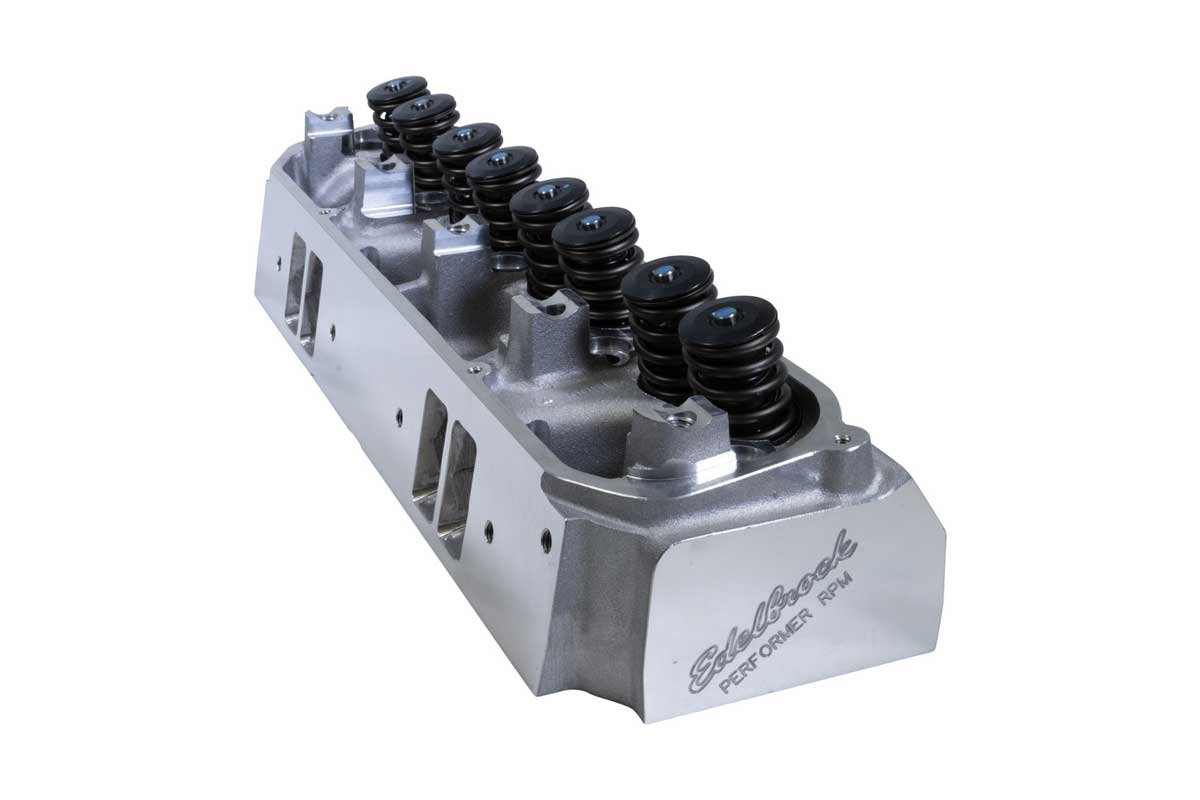
Manufacturing origin plays a meaningful role in how much correction a cylinder head may require before installation. Some heads are cast, machined, and assembled in the United States in controlled production environments, including offerings from Edelbrock, Indy Cylinder Head, and Trick Flow.
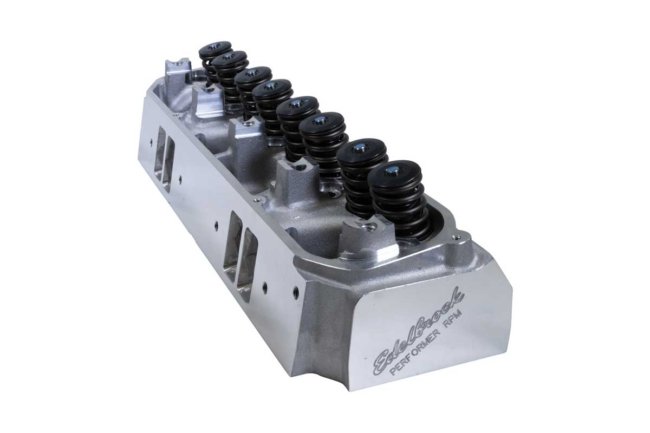
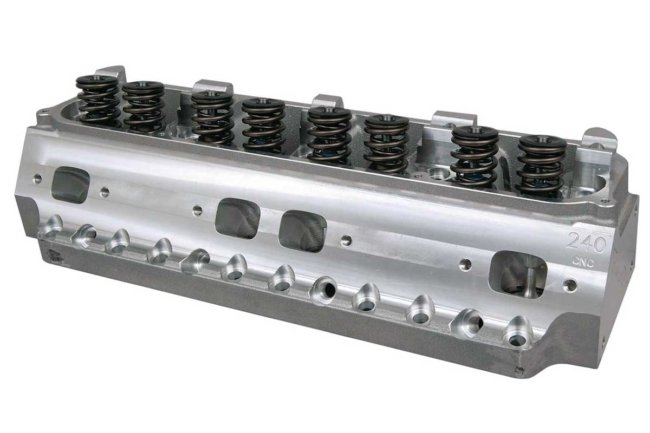
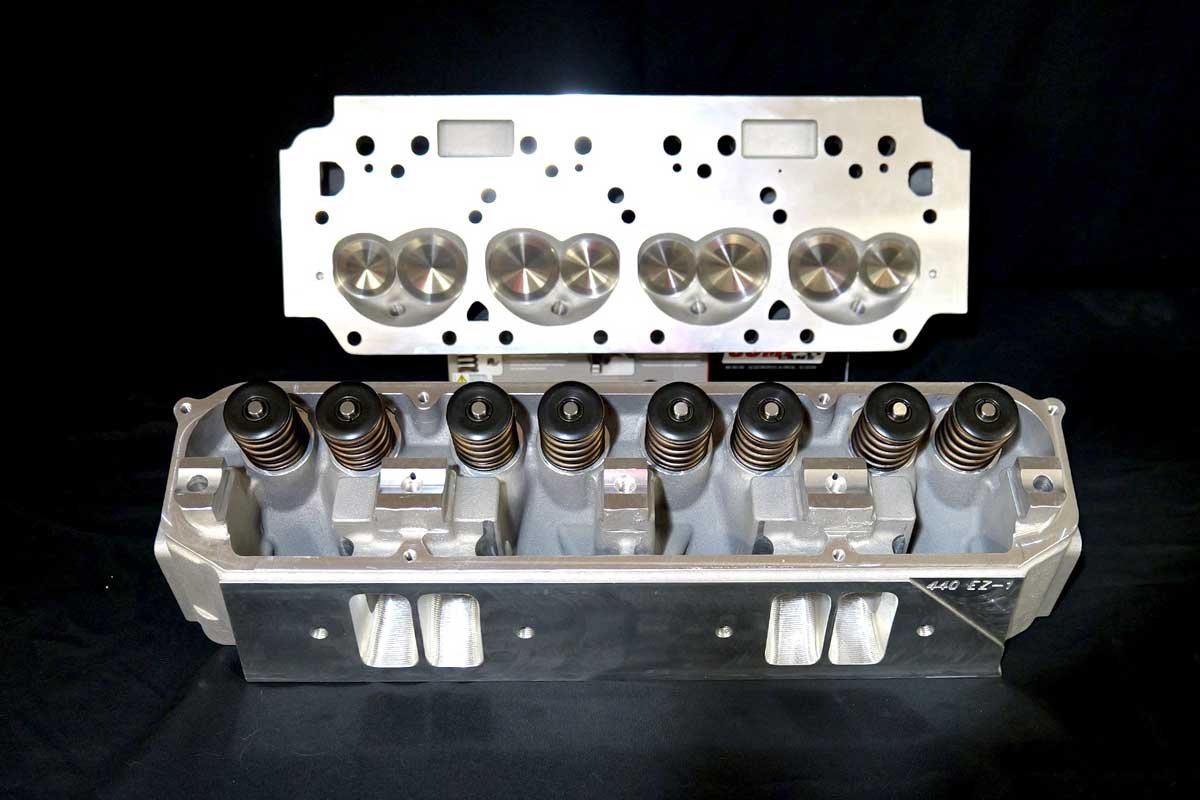
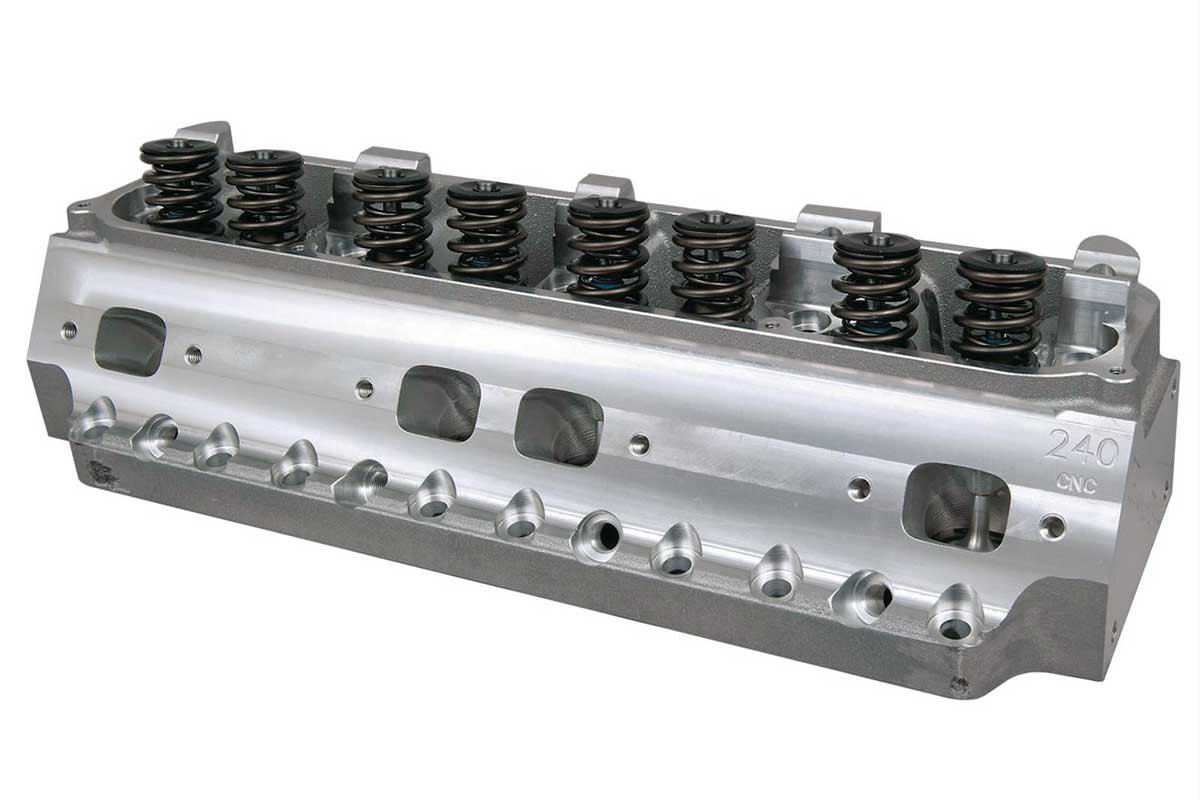
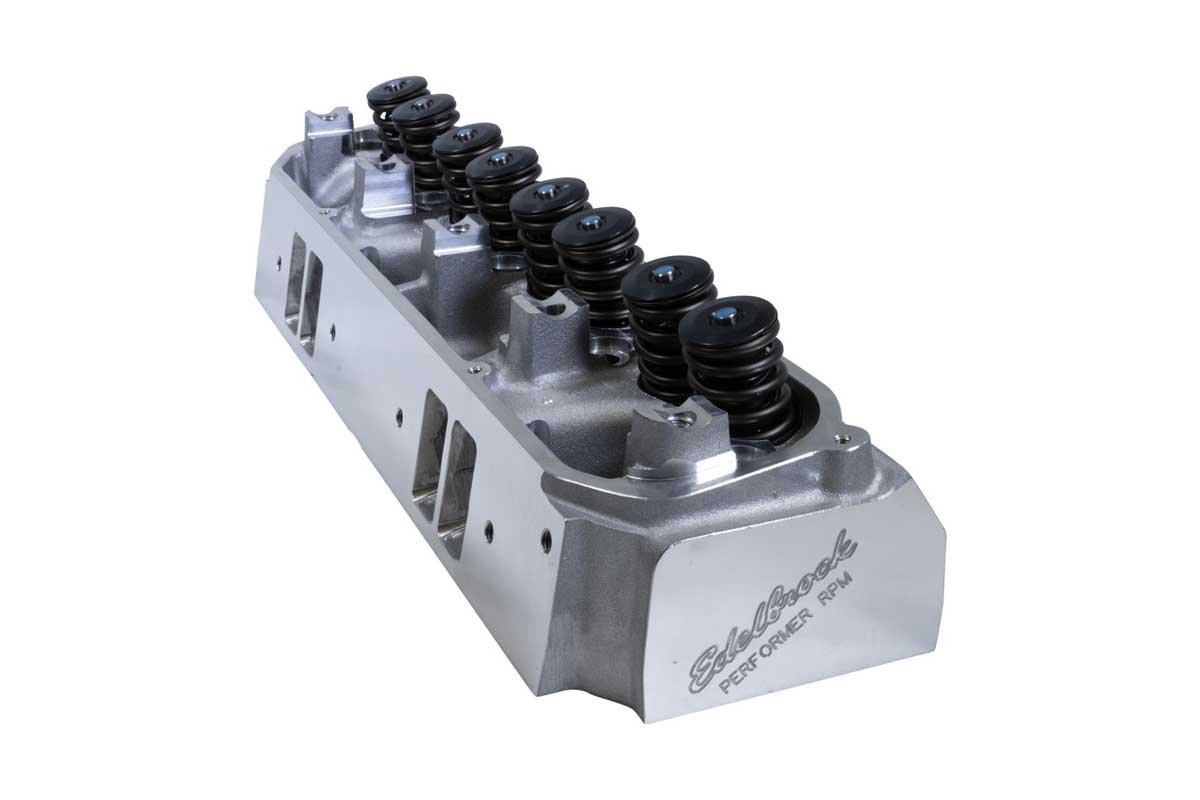
Above: Three of the five cylinder heads evaluated are fully developed, cast, machined, and assembled in the United States: The Edelbrock Performer RPM (left), the Trick Flow 240 (center), and the Indy EZ-1 (right). These heads reflect a complete domestic production process, often associated with tighter quality control, consistent machining, and proven performance on both street and strip applications.
Others, such as the 440Source, use diverse sourcing models, combining offshore castings (China) with domestic machining and assembly. Products such as Speedmaster are commonly associated with offshore casting production (China), with final preparation and finishing levels varying depending on production batch and distribution channel (predominantly China). These disparities do not define performance on their own, but they do affect the level of verification typically required before installation.
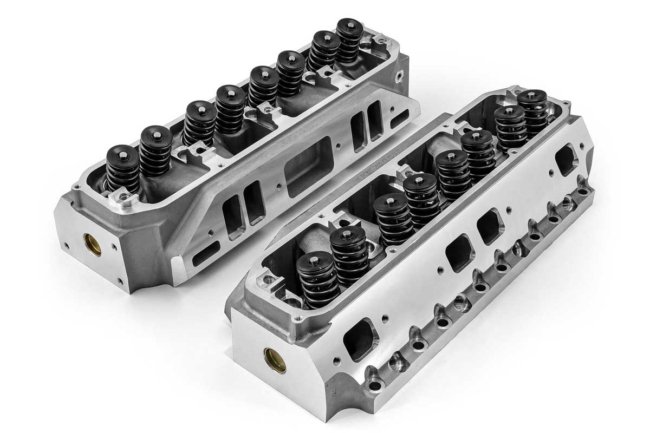
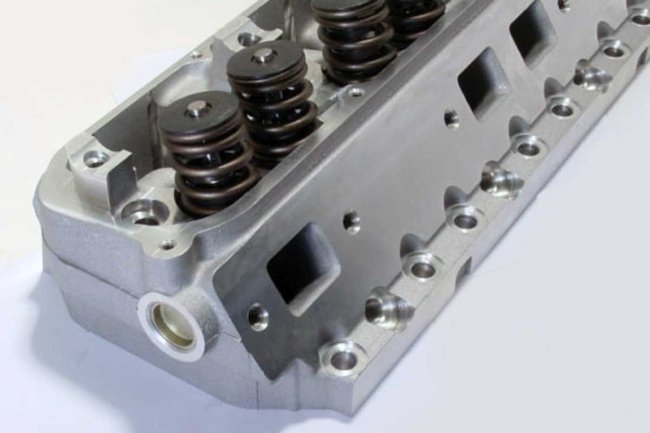
Above Left: The Speedmaster cylinder heads are cast overseas in China, with machining and assembly handled across multiple facilities, though the bulk of final processing is completed in China. Above Right: The 440Source Stealth heads are also cast in China, then finish-machined and assembled in the United States, combining offshore casting with domestic final processing. While offshore casting can help reduce cost, it may introduce greater variability in material consistency and machining precision, making thorough inspection and verification especially important compared to a fully U.S.-produced head.
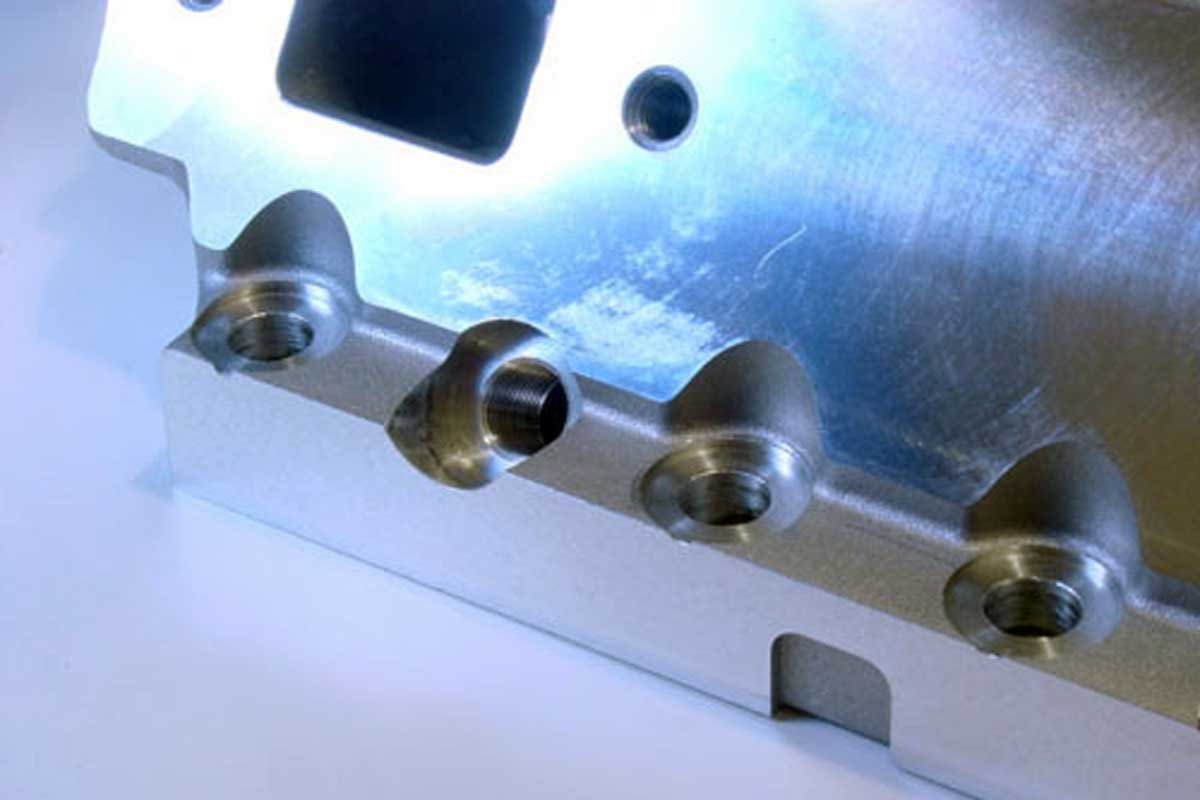
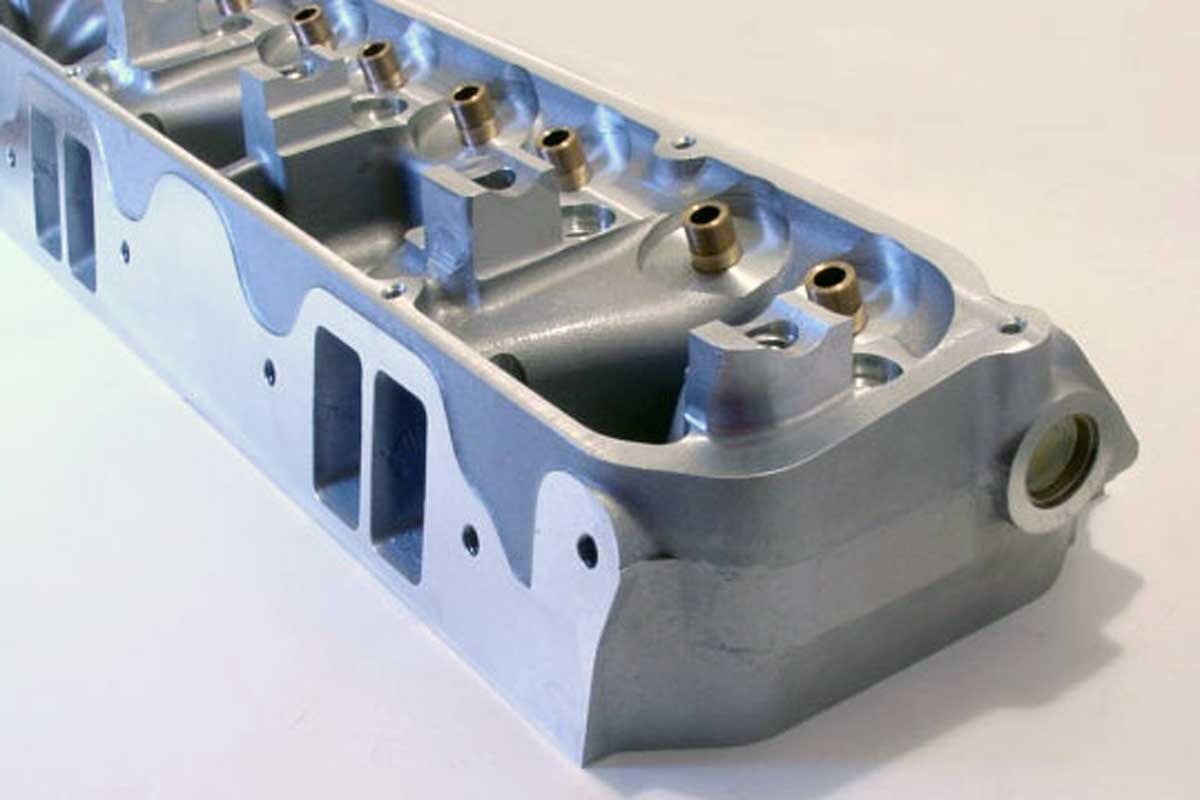
On paper, the cylinder head market often seems to reward lower initial cost. In practice, that assumption becomes less reliable once components are assessed as precision assemblies rather than catalog parts. A cylinder head is not a finished product at the time of purchase. It is a semi-finished assembly that must be validated before service in a high-load, high-temperature environment.
When production tolerances vary, responsibility shifts to valve seat exactness, guide fitment, spring stability, and valvetrain geometry verification. These are not optional upgrades. They are required steps to ensure durability, sealing integrity, and repeatable performance under load.

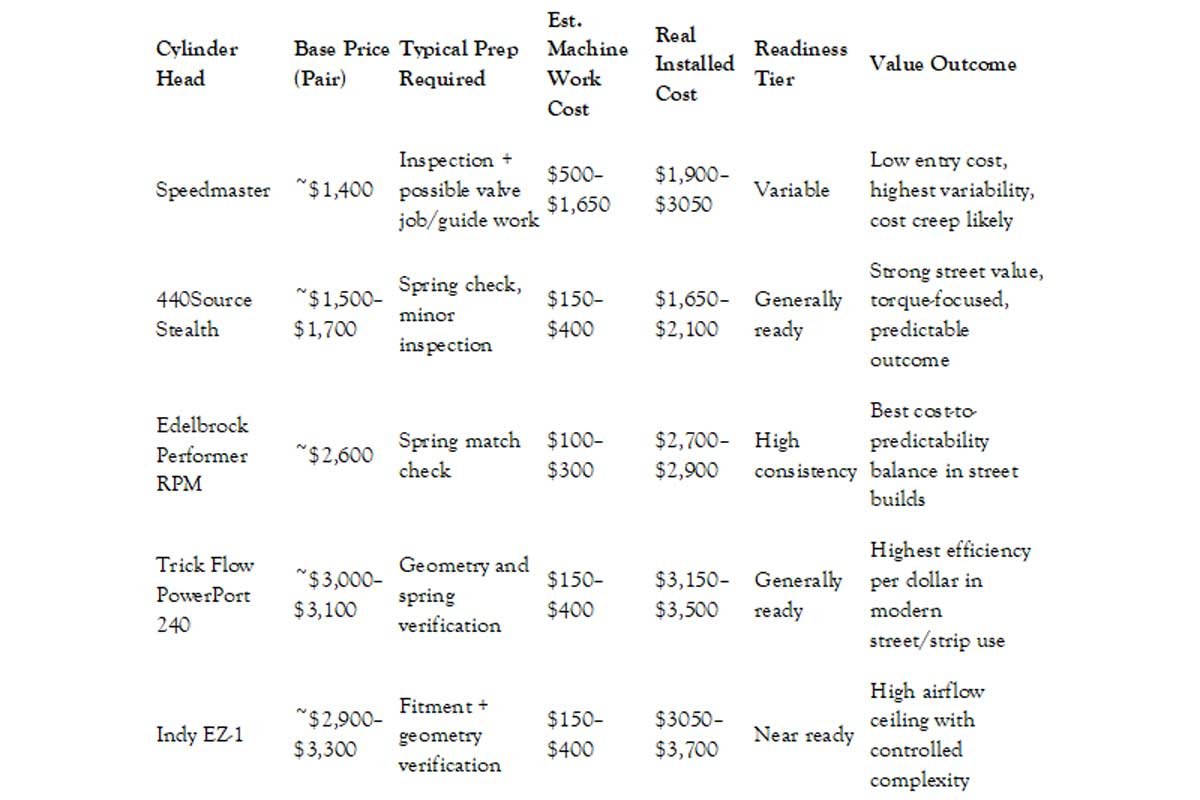
A typical performance valve job on a V8 cylinder head can range from roughly $300 to $600 per head, depending on seat condition, material, and required correction. Valve guide repair or replacement may cost roughly $120 to $300 per set, depending on labor and parts selection.
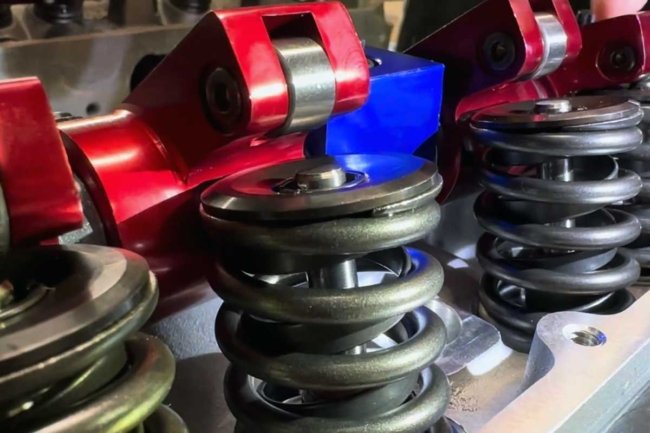
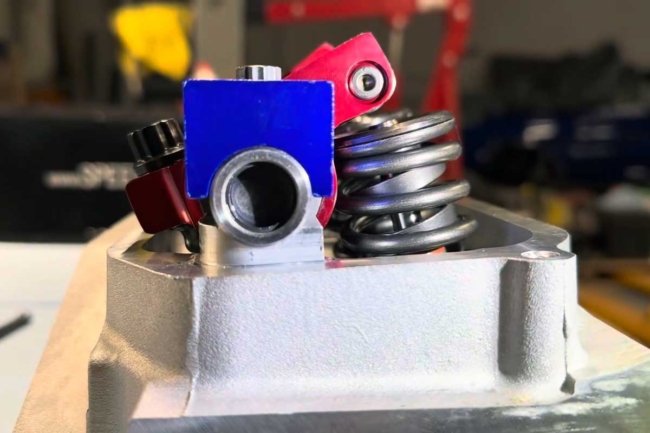
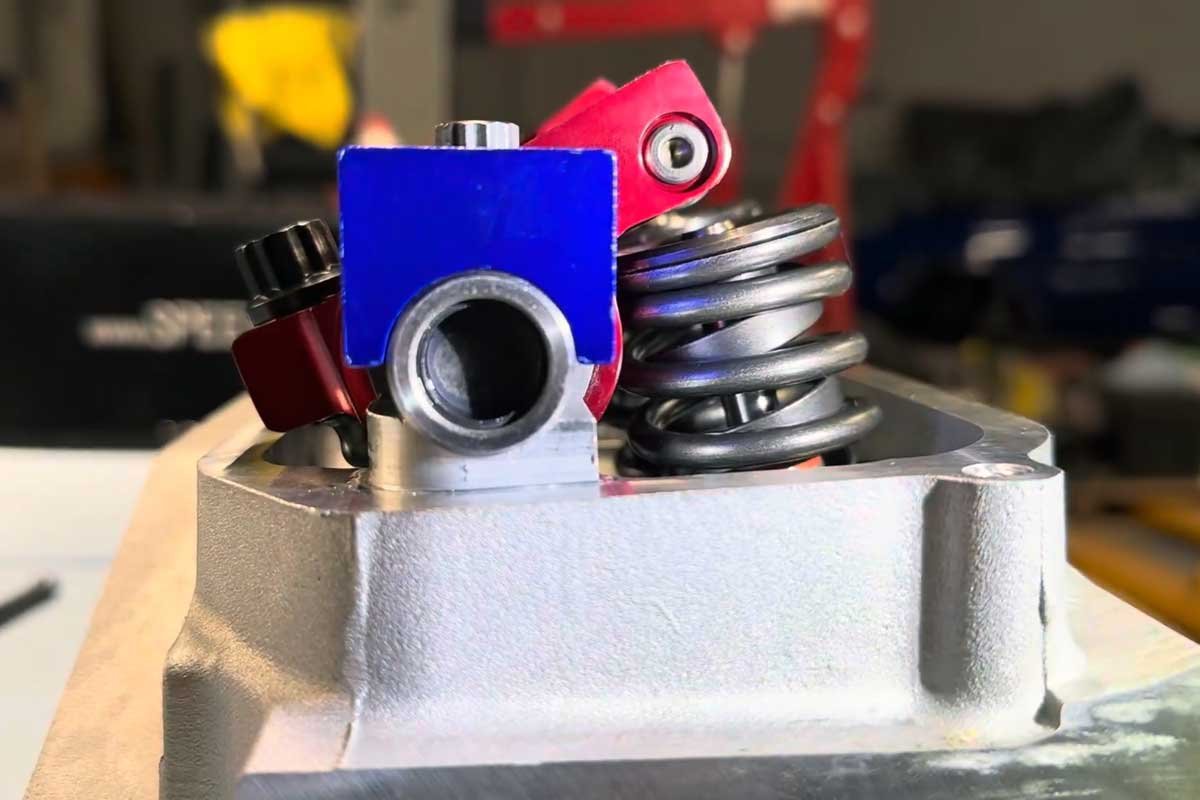
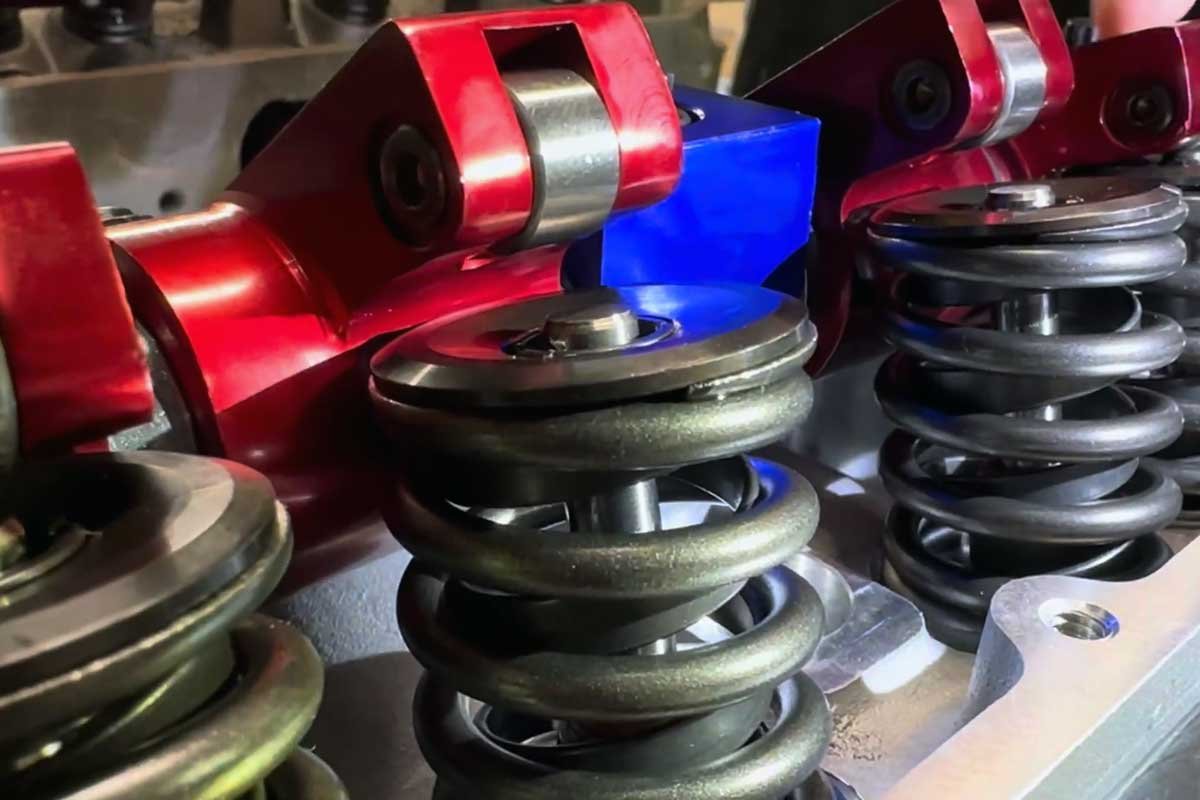
Above: A lower price point does not guarantee comparable quality to a higher-end cylinder head. This Speedmaster casting exhibits significant flaws, including interference between the rocker arms and the spring/retainer assembly. In some instances, the gap between the valve stem tip and the roller rocker is excessive, approaching 1/4 inch, indicating serious geometry and machining issues. Without extensive corrective machining and additional expense, heads in this condition are effectively unusable. (Photos Amici Garage)
Seat replacement or more expansive correction can add another two hundred to five hundred dollars per head. Valve finishing, surfacing, and setup labor add additional costs per valve, depending on condition and specification requirements.
Once these corrections are combined, a low-cost initial casting can move significantly closer to, or in some cases overlap with, the installed cost of a higher-quality production head that required minimal correction. The apparent savings at purchase can diminish once the component is brought to a usable and reliable standard.
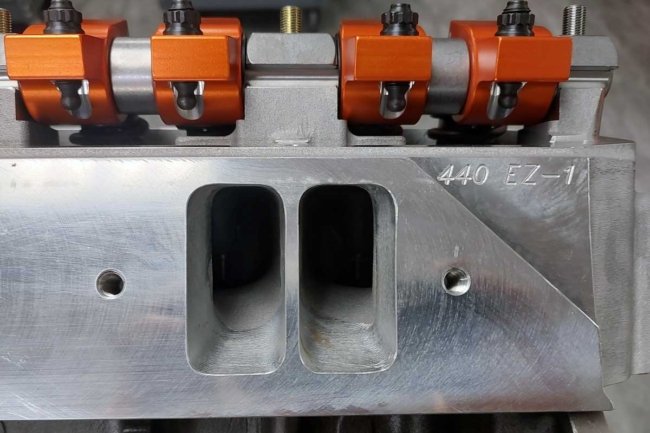
Above: Additional cost considerations often extend well beyond the initial purchase price. Factors such as the need for specific rocker arms, revised oiling systems or shaft modifications, dedicated intake manifolds, or head-specific exhaust headers can quickly add up. Each specialized component increases complexity and drives up the total investment, turning what appears to be a budget-friendly option into a far more expensive proposition.
The more important distinction is not only cost, but predictability. Budget-oriented castings can introduce variability between individual sets. One may require only examination and light correction, while another requires full machine work before safe operation. That variability introduces uncertainty into both build timing and final cost. In engine development and fabrication, that uncertainty itself is a measurable disadvantage because it affects scheduling, tuning, and repeatability.
Higher quality production heads reduce that uncertainty by shifting more of the correction process into controlled manufacturing. The outcome is not only improved finish quality, but decreased variation between castings and a more predictable path to final assembly. In realistic terms, this translates to less machine shop time, fewer corrective decisions, and a more stable build process from assembly to tuning.
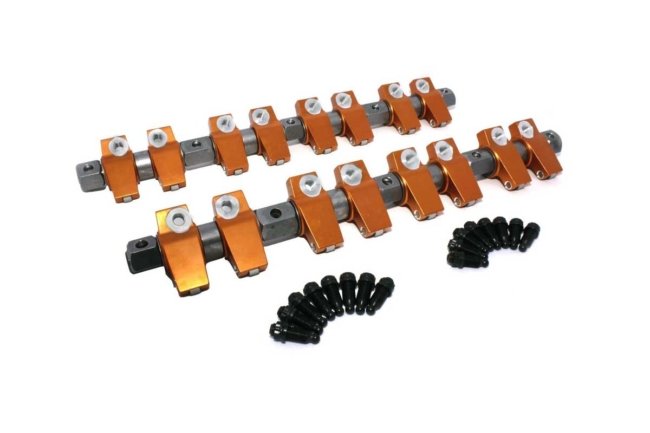
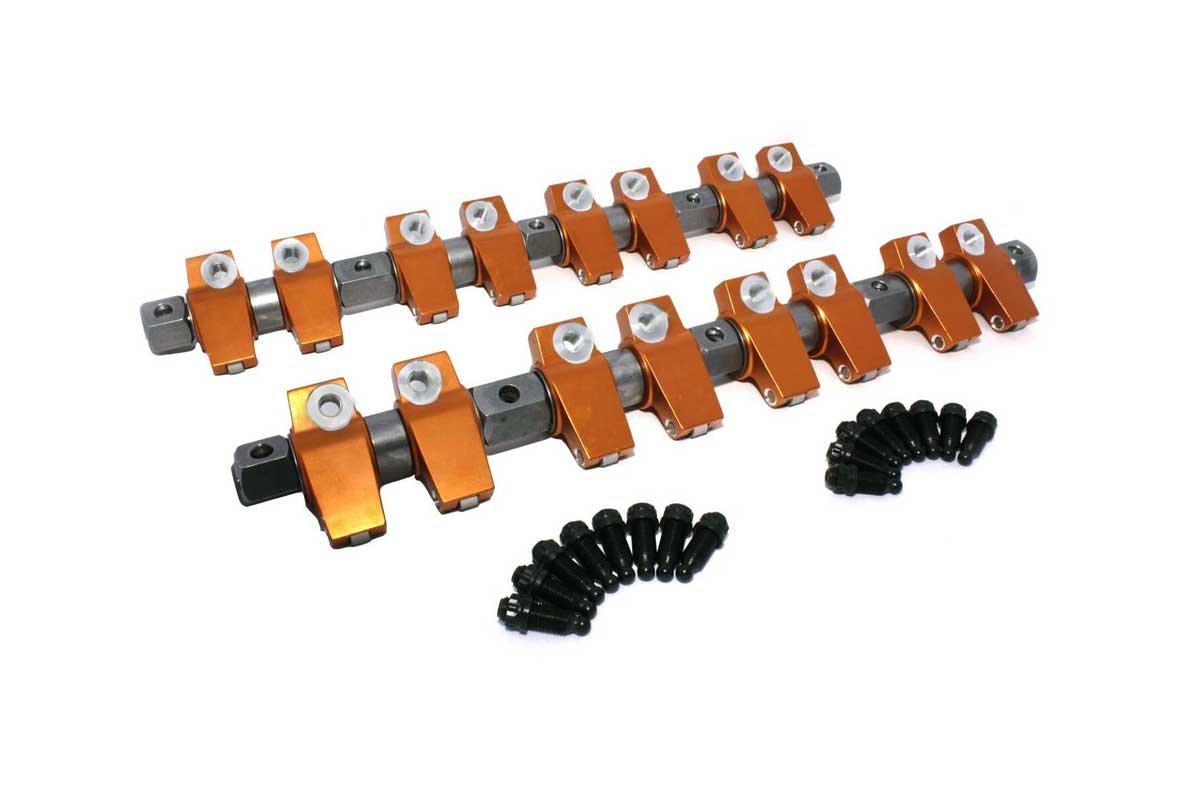
Above: The valvetrain, including rocker arms, shafts, and pushrods, must be carefully evaluated to ensure proper geometry with the selected cylinder head. Pushrod length, rocker sweep across the valve tip, and shaft alignment all need to be verified. Incorrect geometry can lead to poor performance, accelerated wear, and component failure, ultimately resulting in costly repairs or replacement.
Within the standardized RB combination, cylinder heads separate less by advertised claims and more by system demeanor under matched conditions.
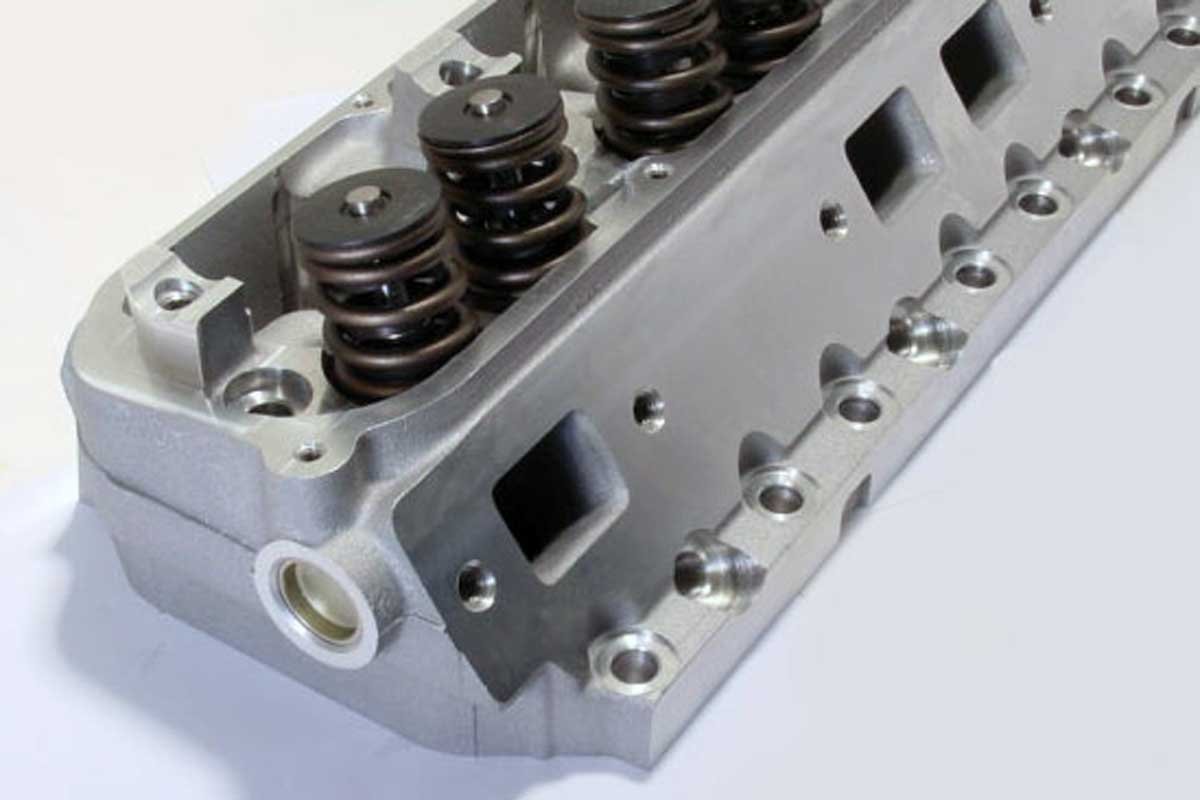
The Speedmaster heads represent the lowest entry cost into aluminum big-block performance. These heads often advertise strong airflow potential for their price range, but real-world consistency can vary depending on production batch and distribution. Some sets require only inspection and spring verification, while others require full correction before installation.
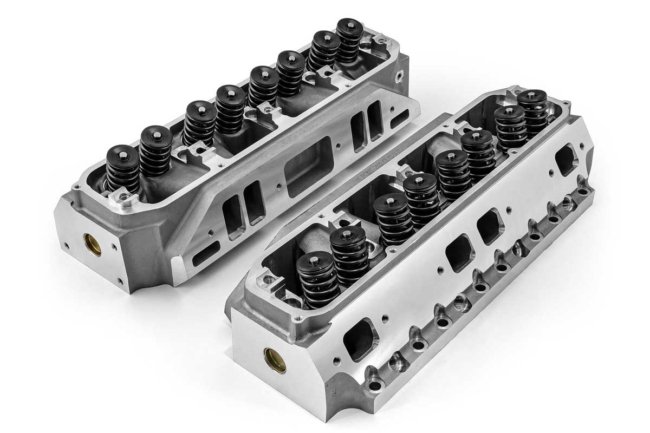
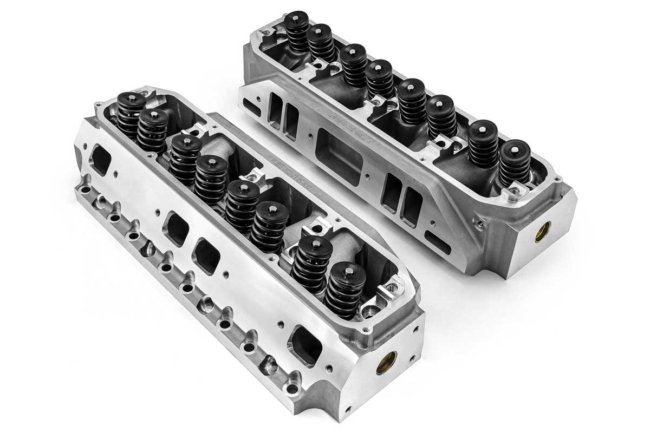
Above: The Speedmaster cylinder head is a budget-oriented aluminum big-block Mopar casting aimed at street and mild performance use. With 265cc intake runners and 74cc chambers, it improves airflow over stock but prioritizes cost over maximum performance. Produced overseas, it can exhibit variability in machining and fitment. Careful inspection and possible rework are often required before serious use.
In practice, they serve as raw castings that must be evaluated individually before being considered ready-to-run components. Their performance potential exists, but it depends on the quality and consistency of their preparation and machining.
The 440Source Stealth head follows a distinct design strategy. It retains factory-based port architecture while enhancing material quality and offering sensible airflow gains over stock iron heads. The emphasis is on air velocity and low to midrange torque production rather than peak airflow numbers.
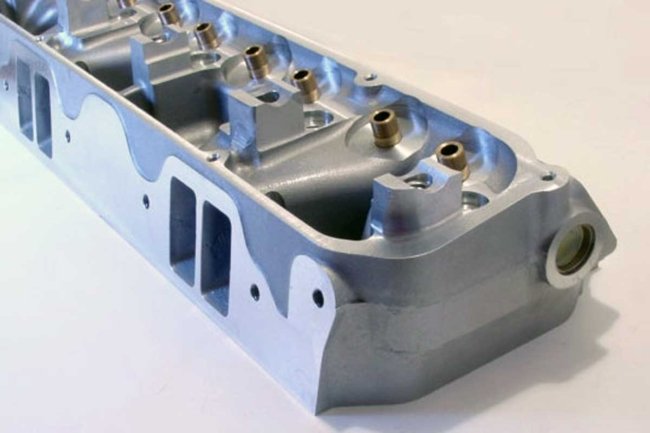
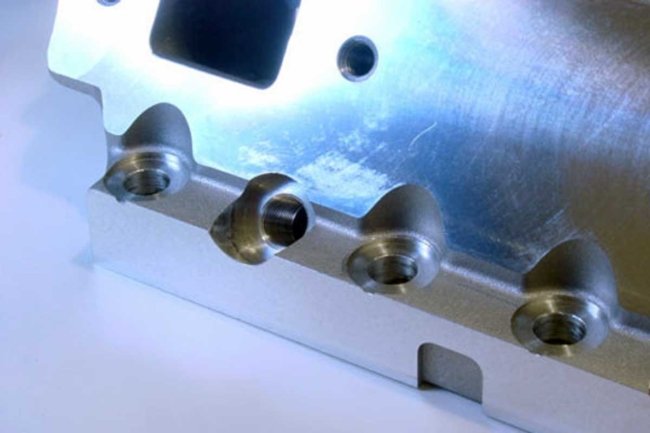
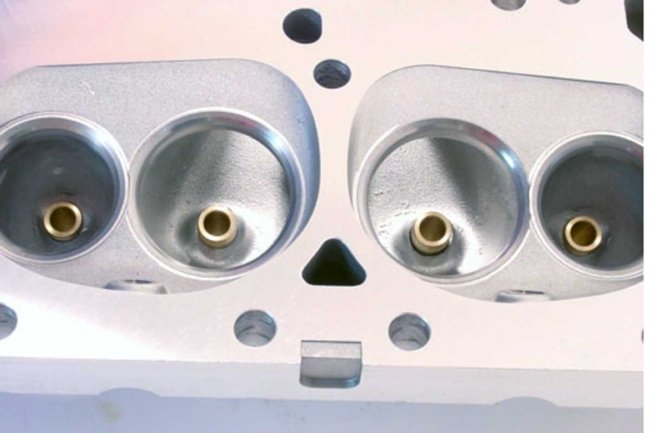
Above: The 440Source Stealth cylinder head brings an affordable performance option to the big-block Mopar market, combining a Chinese casting with final machining and assembly completed in the United States. Designed for street and strip applications, it offers improved airflow over stock iron heads while maintaining compatibility with common aftermarket components. The hybrid production approach helps control cost, but careful inspection of valve job quality, guide clearance, and spring setup is still recommended prior to installation.
In typical street combinations, these heads typically require inspection-level preparation and valvetrain verification rather than full corrective machining, making them a practical option for traditional RB street builds focused on drivability.
The Edelbrock Performer RPM head serves as a long-established production benchmark. It is domestically manufactured and assembled under controlled production standards that yield uniform casting quality across sets.
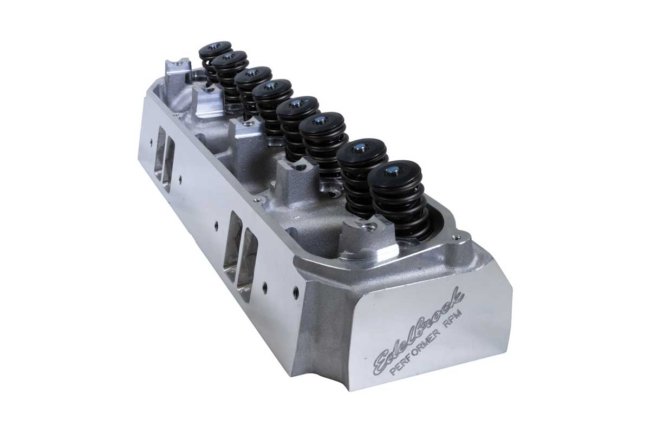
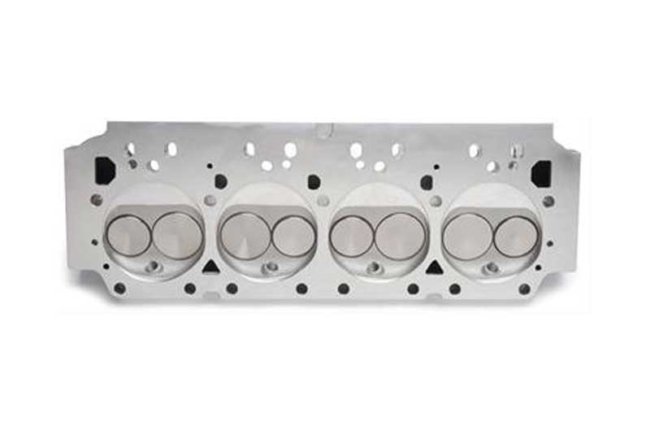
Above: The Edelbrock Performer RPM head is a fully U.S.-designed, cast, machined, and assembled aluminum performance head built for big-block Mopar street and strip applications. Engineered with a strong emphasis on balanced airflow and torque production, it delivers a proven bolt-on upgrade over factory iron castings. With quality aluminum construction, optimized port design, and consistent machining tolerances, it remains a benchmark choice for dependable, all-around performance builds.
Airflow behavior is predictable, and installation typically requires only spring matching and valvetrain geometry validation. While not the highest airflow design in the group, its strength lies in repeatability and straightforward integration into widely used street combinations.
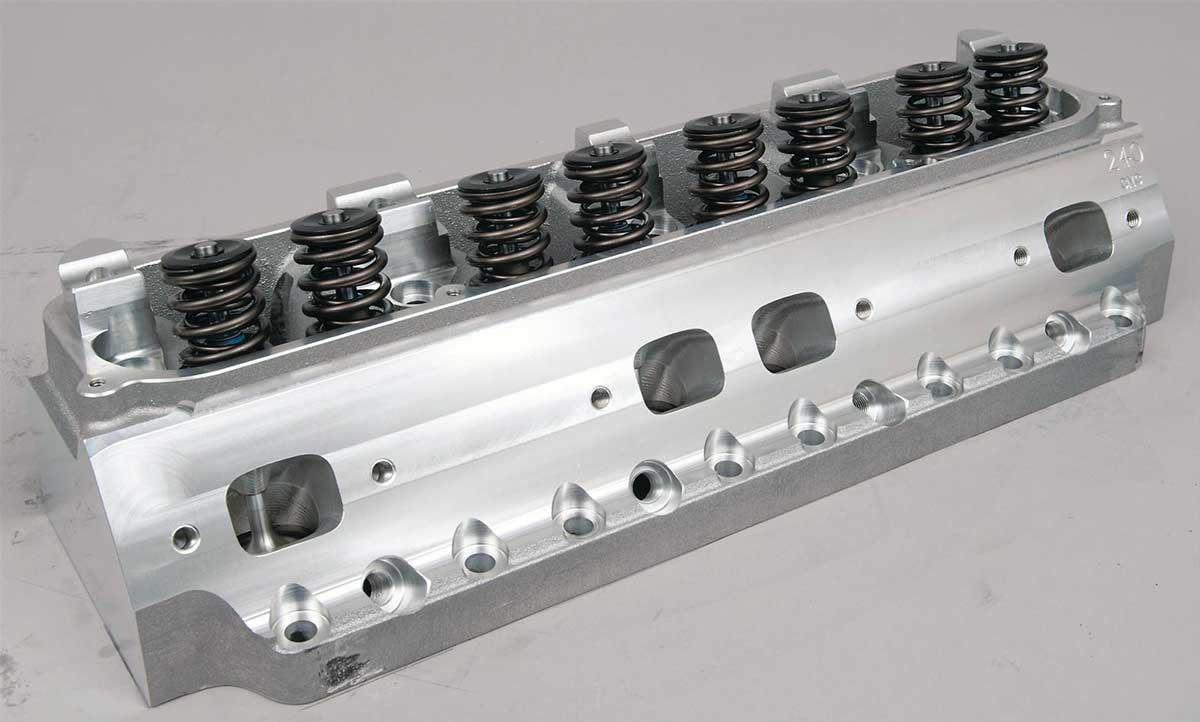
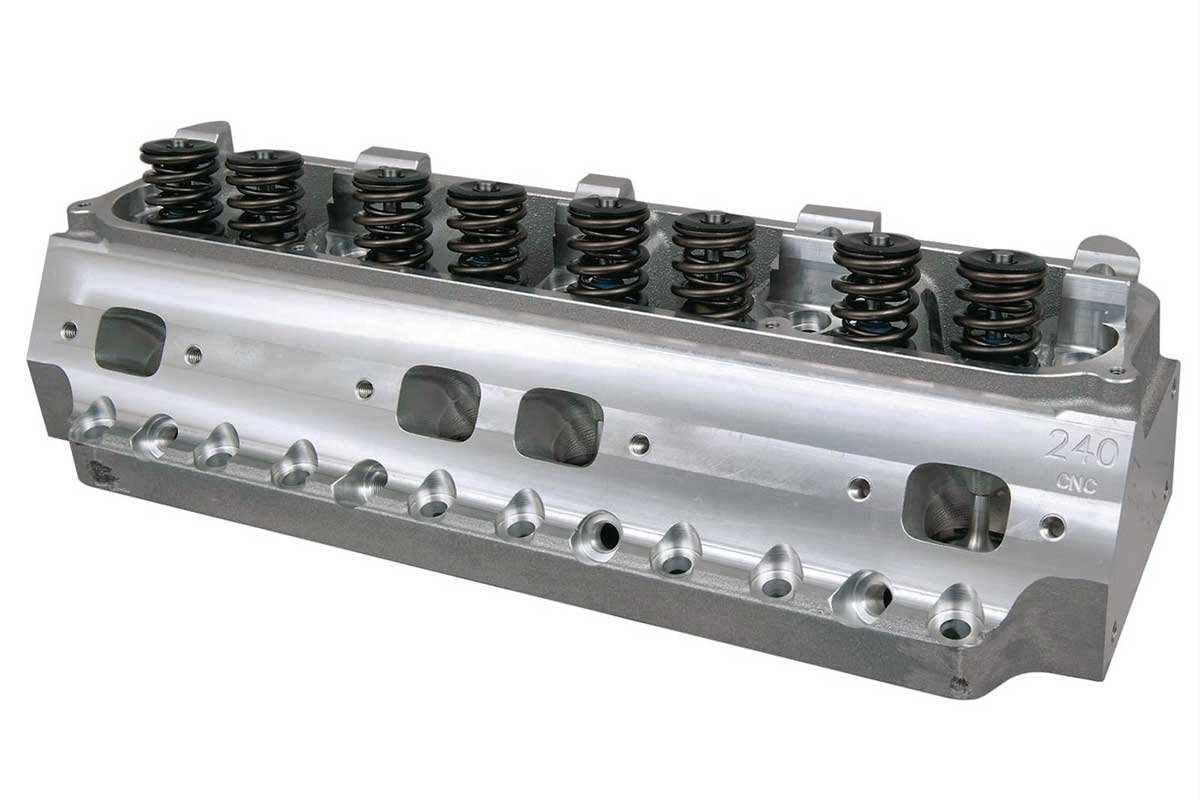
The Trick Flow PowerPort 240 head represents a modern airflow-focused design that is not constrained by factory port geometry. In well-matched 470 to 512 cubic inch street and strip combinations, the heads are commonly associated with high horsepower builds under pump gasoline conditions when properly configured. This figure represents typical recorded combinations rather than a guaranteed output. Preparation is generally limited to standard valvetrain geometry checks and setup verification, given its consistent production quality.
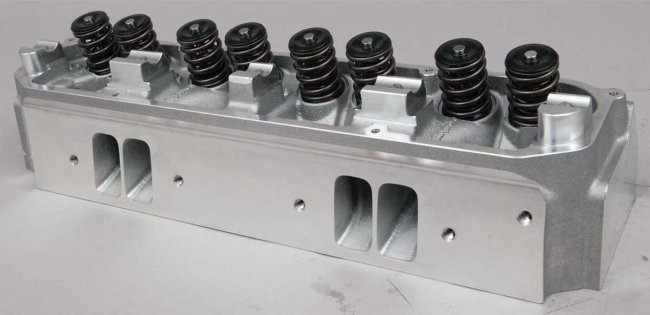
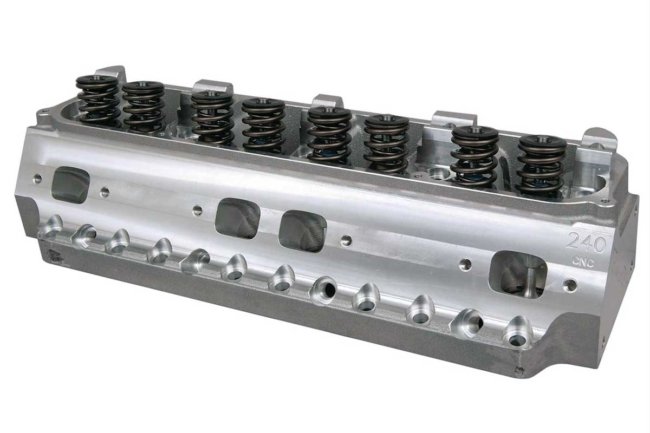
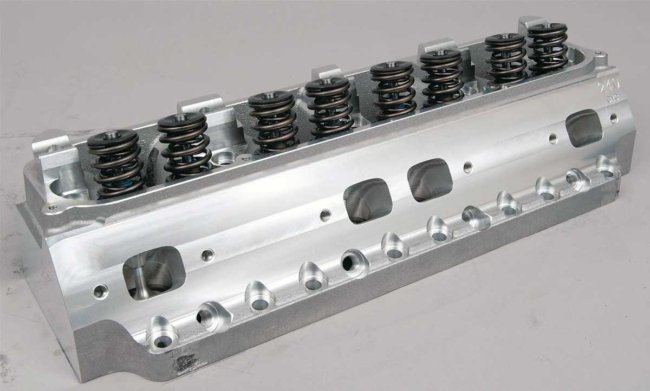
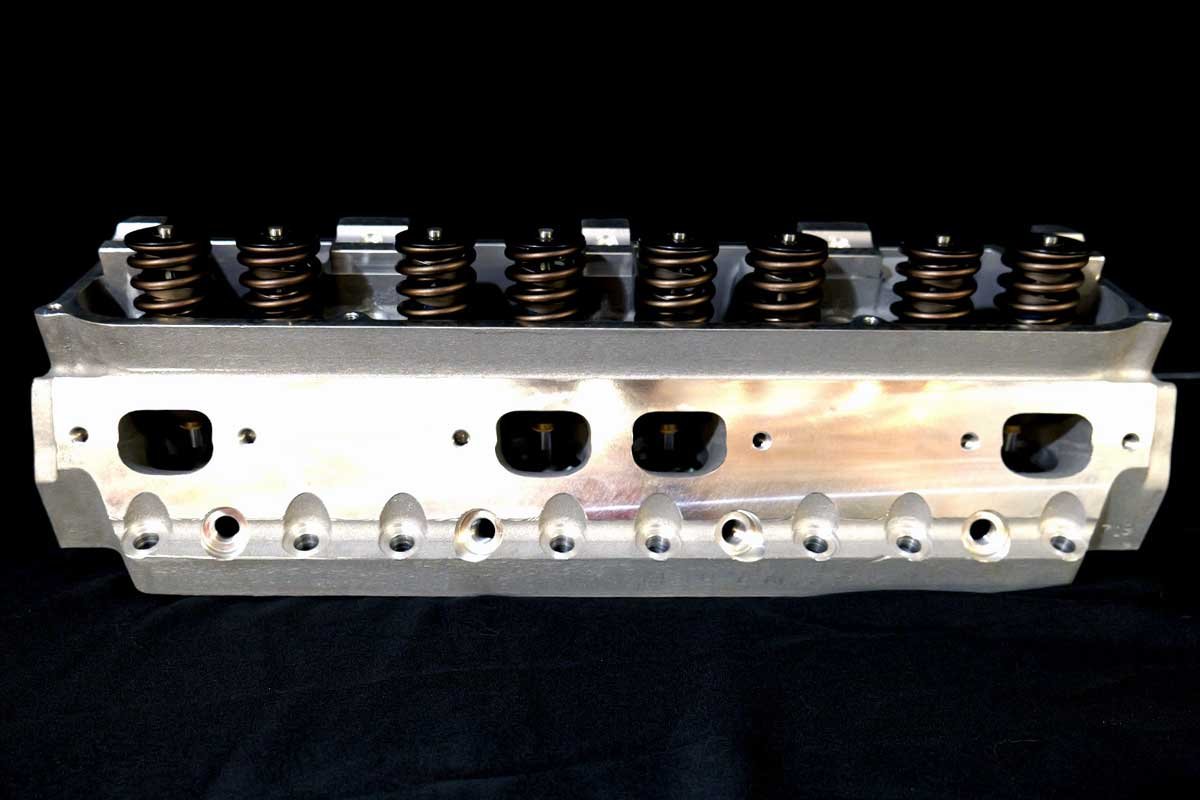
Above: The Trick Flow 240 cylinder head is a purpose-built aluminum performance casting designed for big-block Mopar street and strip applications. Featuring a 240cc intake runner profile, it emphasizes strong midrange torque with the airflow capability to support serious high-rpm horsepower. Precision CNC port work, modern combustion chamber design, and consistent quality control make it a standout option for builders seeking repeatable performance and out-of-the-box efficiency.
To illustrate context, comparable displacement combinations using hydraulic roller camshafts, matched induction systems, and appropriate compression ratios often show outputs of 600 to 650 horsepower on engine dyno combinations when all supporting systems are aligned. The cylinder head is a major contributor to that result, but not the sole determining factor.
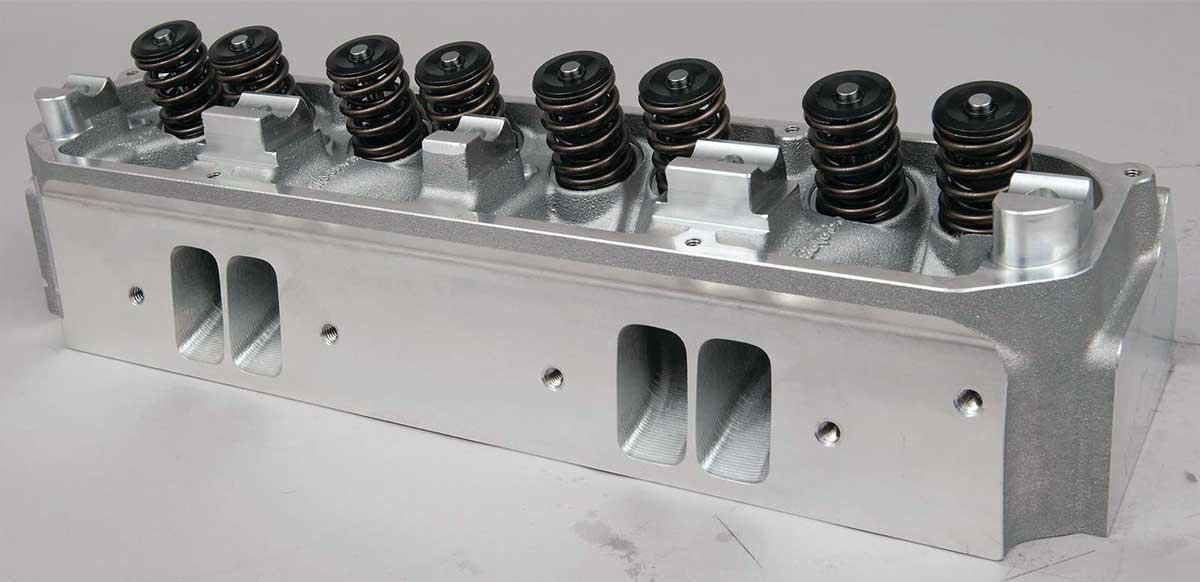
The Indy EZ-1 head represents a high-flow street and strip option designed to extend performance capability while maintaining street usability. It is produced and assembled in the United States under Indy Cylinder Head’s manufacturing strategy, which contributes to tighter control over casting and machining consistency compared to mixed-sourcing alternatives.
Within the same standardized engine combination, it is generally used in builds that achieve output ranges similar to those of other modern aluminum heads when camshaft selection, compression ratio, and induction efficiency are properly matched. Installation typically requires geometry verification, confirmation of intake compatibility, and header clearance checks. Its defining characteristic is airflow headroom without requiring a full race-only architecture.
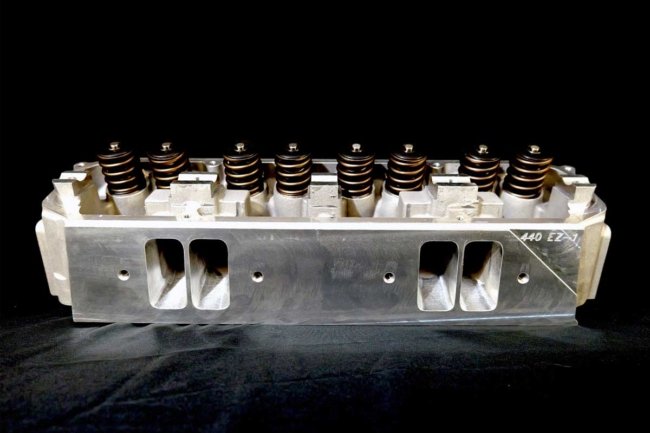
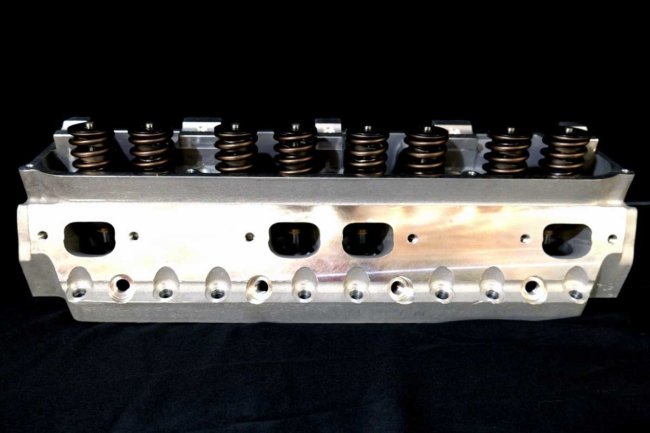
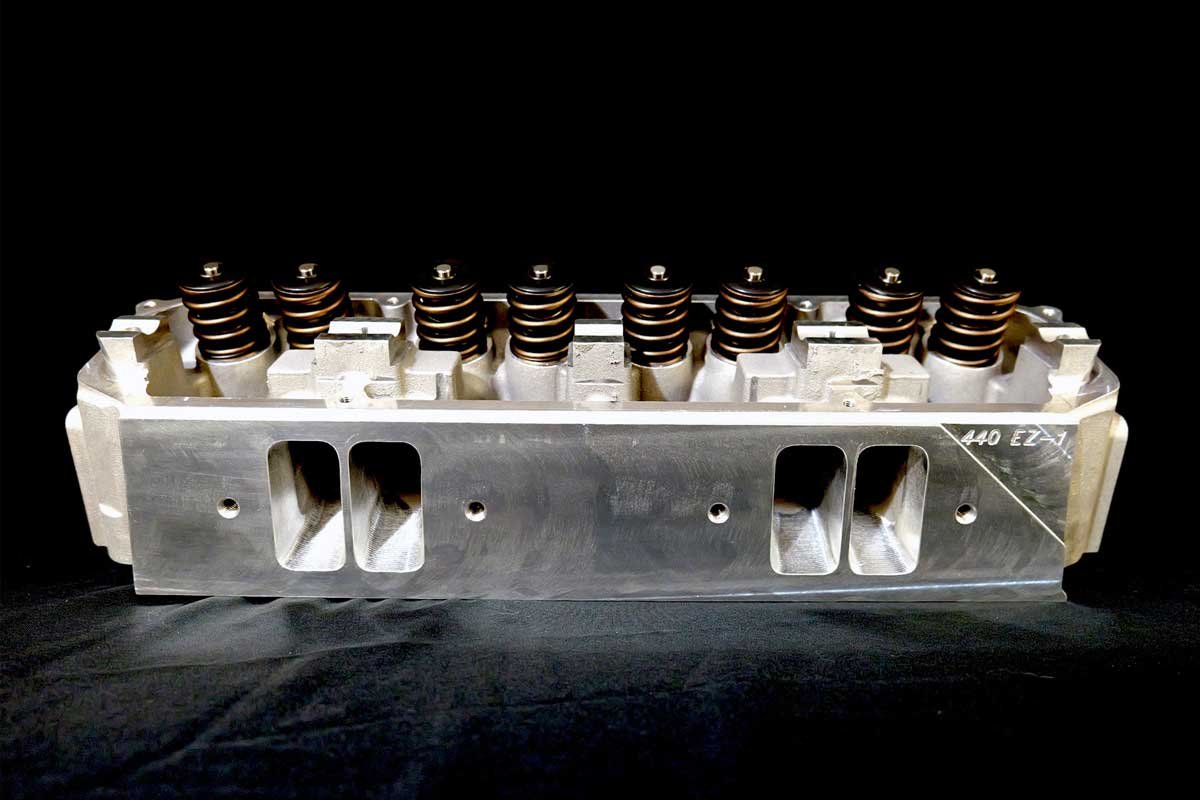
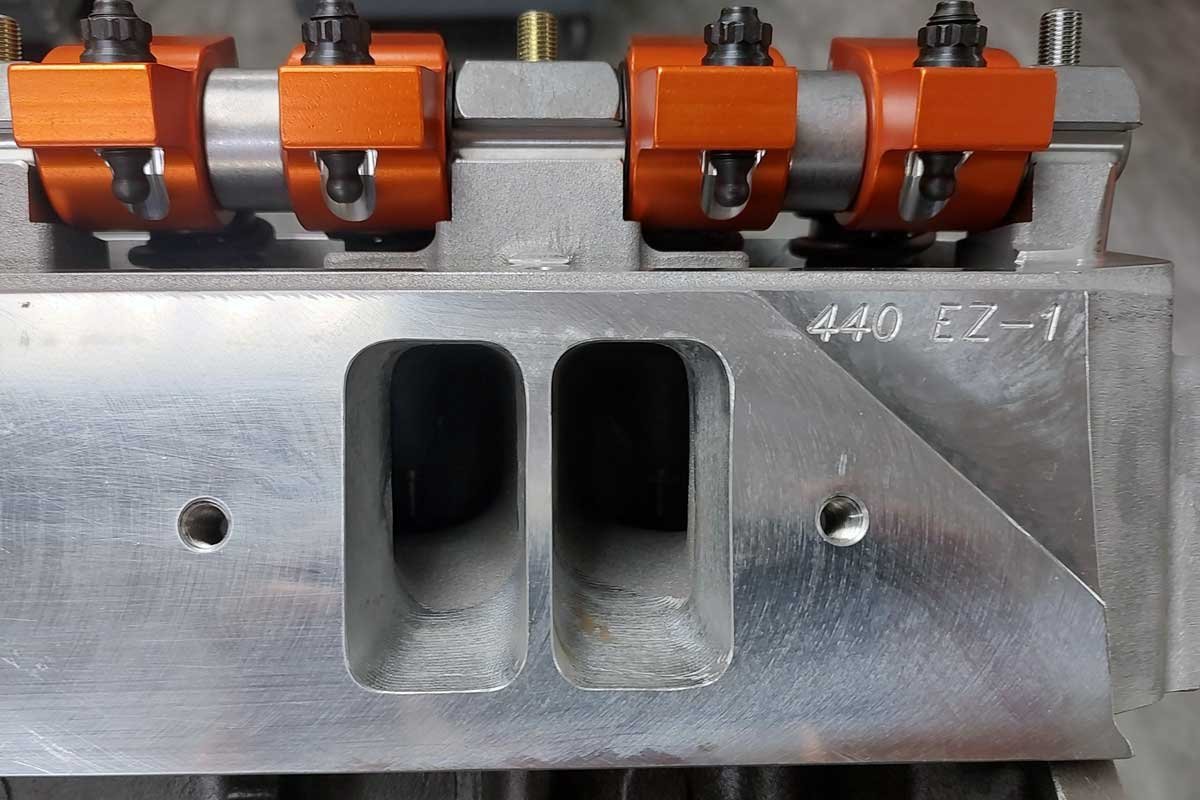
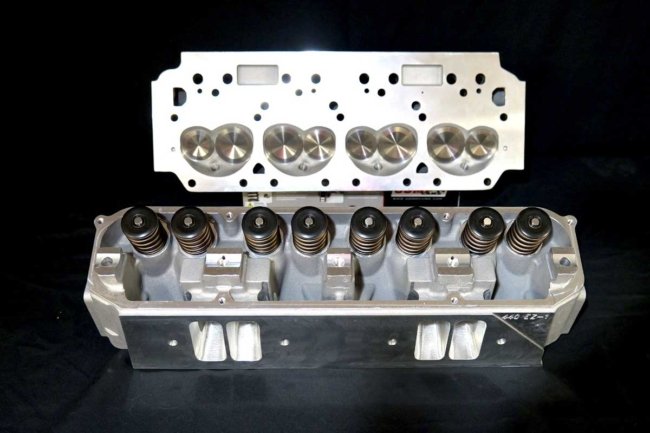
Above: The Indy Cylinder Heads EZ-1 is a fully developed aluminum big-block Mopar cylinder head designed for serious street performance with OEM-style compatibility. Built with the exhaust port in the stock location, it allows the use of factory-style headers and rocker systems while delivering improved airflow over stock castings. With a focus on drivability, torque, and ease of installation, the EZ-1 blends performance gains with traditional big-block Mopar packaging.
When all heads are assessed within the same engine combination, differences shift from ranking to system behavior. Some designs prioritize consistency and predictable outcomes across multiple builds. Others prioritize airflow potential but require more careful setup to achieve stable, repeatable results. Some emphasize torque production and street drivability, while others emphasize upper-rpm efficiency and peak output.
Inside that framework, horsepower is not an isolated specification but the result of a complete system alignment. Cylinder heads contribute significantly to that outcome, but they do not operate independently of camshaft profile, compression ratio, induction efficiency, exhaust design, and tuning accuracy.
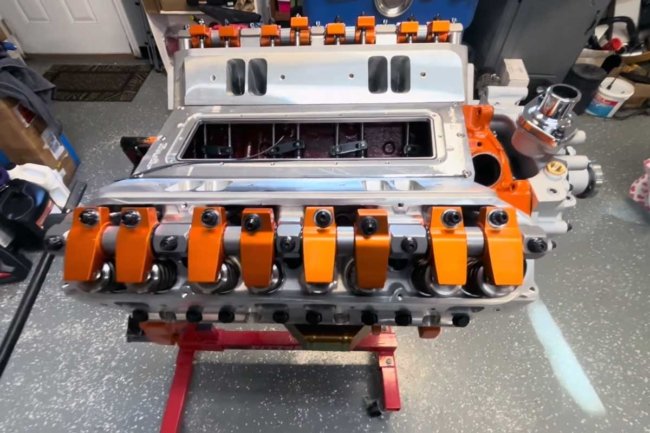
Above: Building an engine often follows the same philosophy as the classic Fram oil filter commercials from the 1970s and early 1980s: “You can pay me now… or you can pay me later.” Investing in higher-quality components upfront helps avoid the hidden costs, rework, and failures that frequently come with starting from lower-grade parts that require correction down the road. (Photo JustMoparJoe)
Once installed cost, correction requirements, and setup intricacy are included, the separation between budget and premium cylinder heads becomes less linear than the purchase price alone suggests. The real distinction is not what is paid at the counter, but how much additional time, machining, and verification is required to achieve a stable, repeatable, and correctly functioning combination.
Cylinder head selection is not a last-minute decision in an engine build. It defines the compression ratio, camshaft strategy, airflow capacity, and, ultimately, how the engine behaves under real operating conditions. When viewed strictly in terms of purchase price, the market appears divided into inexpensive and expensive options. When viewed through installed reality, that division becomes less precise and more dependent on system integration.
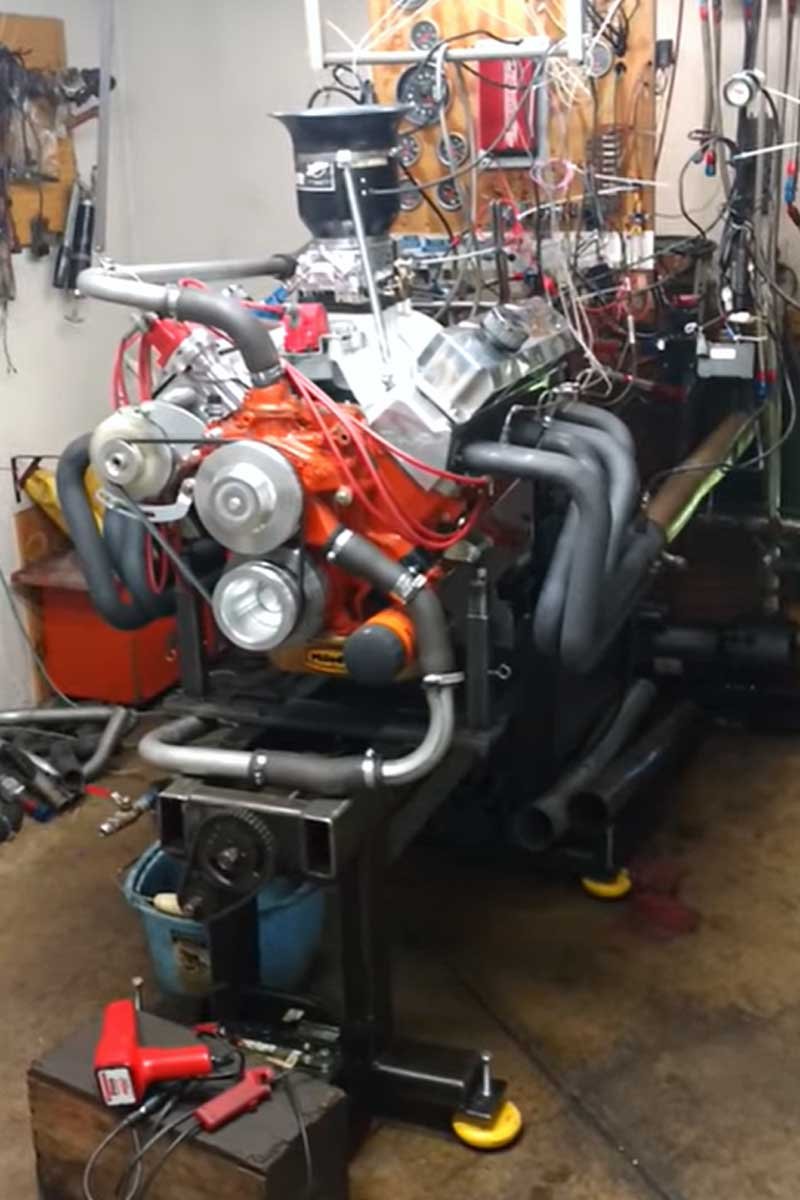
Above: On the dyno, every dollar spent, or saved, shows up in the data. The dyno does not lie. If inferior parts are used without proper correction before assembly, the performance numbers will reflect it immediately. Worse yet, at high RPM, the engine may make its own point in dramatic fashion, ending in a high-speed engine disassembly inside the dyno cell. (Photo Joe Berklich)
For traditional street combinations, the 440Source Stealth and Edelbrock Performer RPM heads offer predictable results with straightforward installation requirements. For modern airflow efficiency, Trick Flow provides a strong, balanced baseline with uniform behavior in widely used combinations. For higher output street and strip applications, the Indy EZ-1 delivers extended capability with controlled complexity and strong integration potential.
Across all options, the conclusion remains consistent. The least expensive cylinder head is not always the least expensive way to build an engine. The true cost is defined not by purchase price, but by the total effort required to make the combination correct, stable, and repeatable over time.
TRUE COST TO RUN (Installed Reality Comparison)