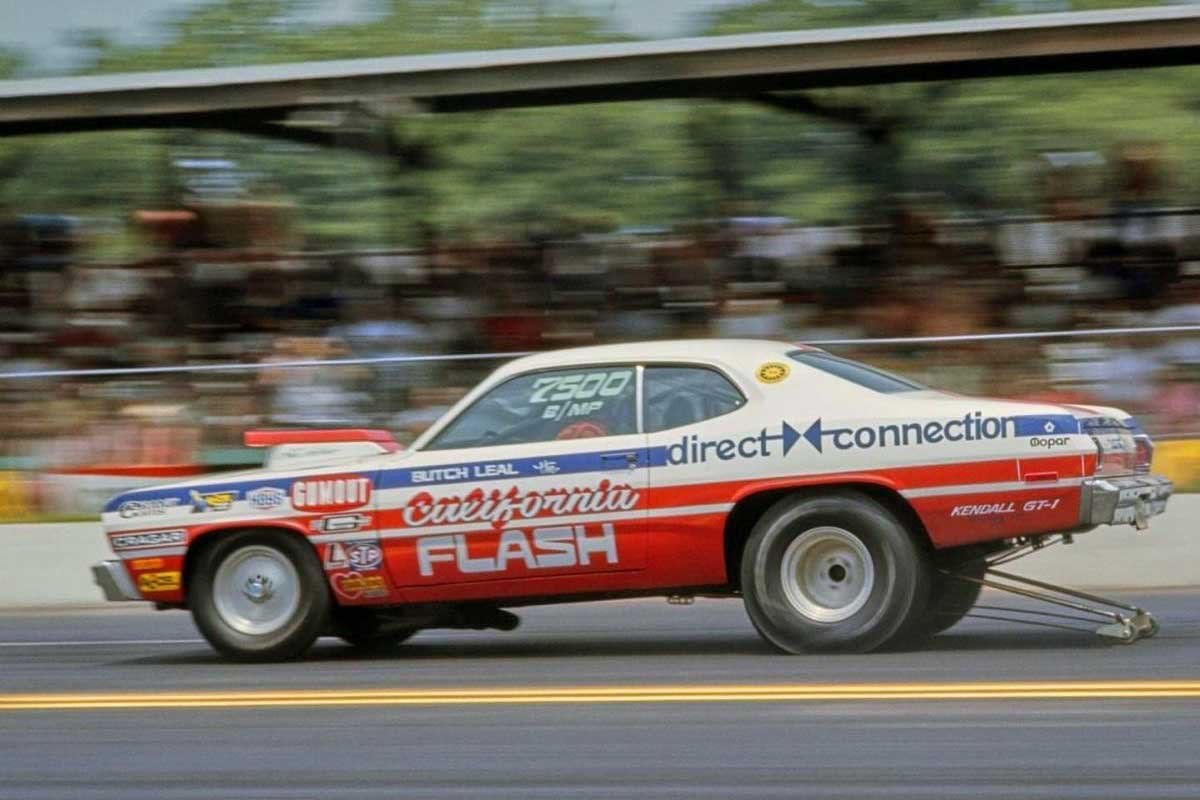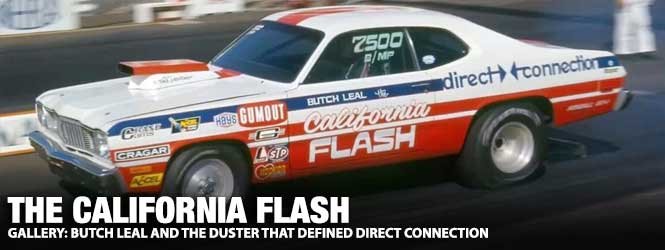
While many drag cars of the 1970s earned winnings and trophies, few represented Chrysler’s performance identity as completely as Butch Leal’s 1975 Plymouth Duster. What began as a competitive NHRA B/Modified Production effort soon became something larger: a rolling symbol of Chrysler’s new performance philosophy and the centerpiece of the growing Direct Connection movement.
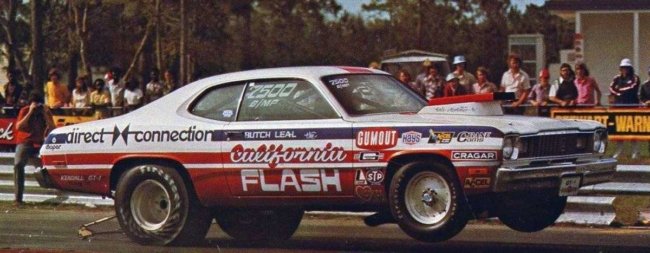
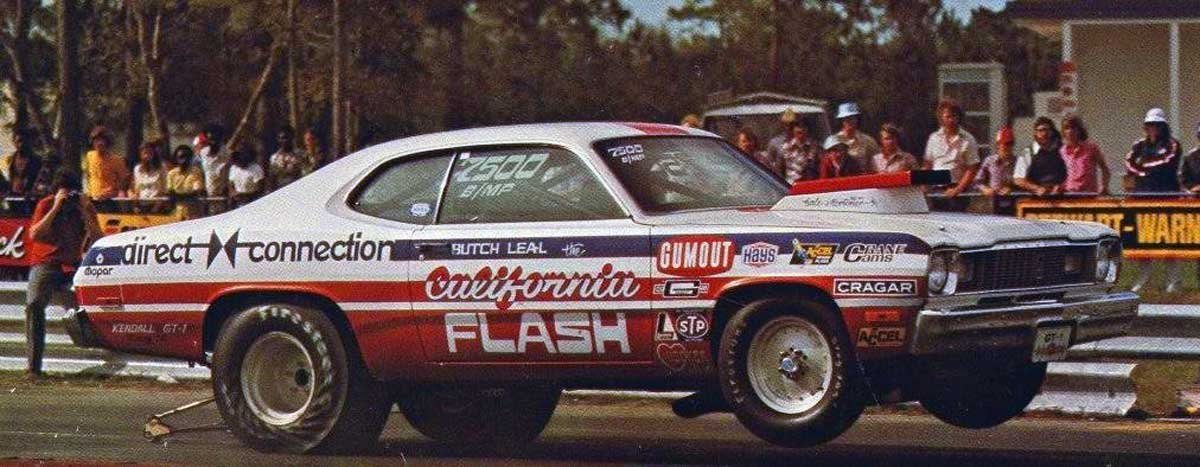
Above: In 1975, Leal “dropped back” to the Sportsman ranks running in B/Modified Production after running as a professional in Pro Stock since the class’s inception in 1970. The NHRA had factored the Pro Stock Hemis to the point where they were no longer competitive. Leal, with the assistance of Direct Connection, flourished with his Modified Production Hemi-equipped Duster. (Photographer unknown)
During the mid-1970s, Chrysler racers faced an increasingly difficult battle in NHRA Pro Stock competition. The once-dominant Hemi combinations were struggling against changing rules (adding weight to the Hemi cars), rising racing costs, and evolving competition. Rather than remain locked in a costly uphill fight, Leal shifted his attention to Modified Production racing, where lighter cars, experimental tuning, and chassis innovation still rewarded racer ingenuity.
At nearly the same time, Chrysler was reinventing how it connected with performance enthusiasts. The company introduced Direct Connection, a factory-backed performance parts program developed to place racing technology directly into the hands of non-factory sponsored Mopar racers and enthusiasts. Through dealership parts departments, racers could purchase specialized speed equipment, tuning components, and technical information previously reserved for factory-supported teams.
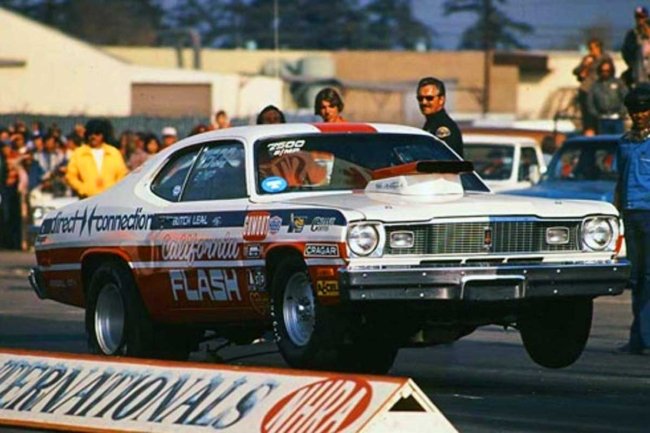
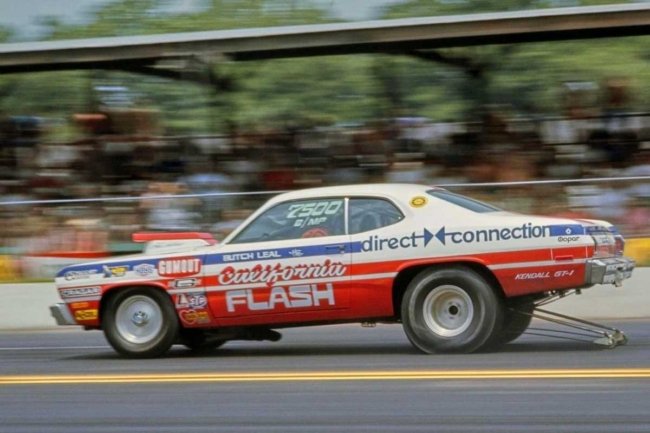
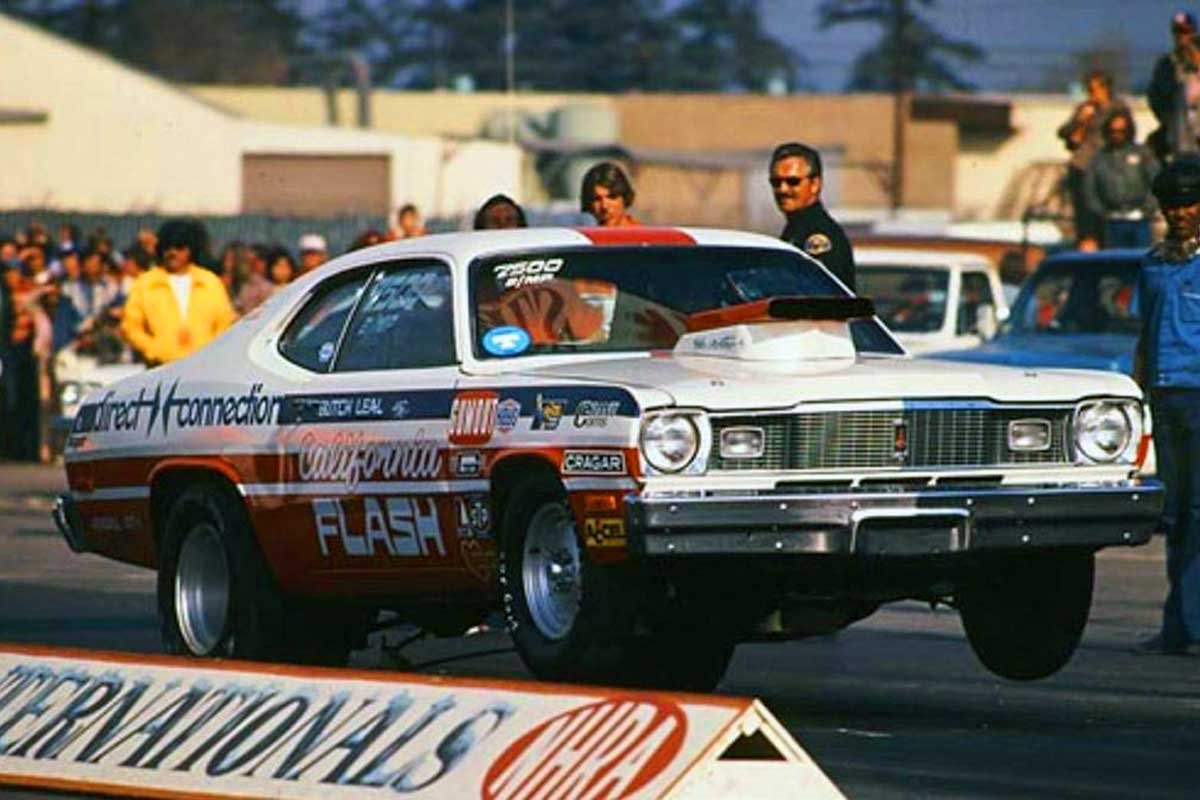
Above: The Duster was built in just ten days at Ron Butler’s shop, where Leal and his five-person crew applied much of the technology and experience they had developed in Pro Stock competition. Under Modified Production rules, the de-stroked Hemi was not required to carry the same weight penalty, allowing the combination to perform far more effectively. With Butch Leal behind the wheel, the car’s success only accelerated. (Photographers unknown)
Already acknowledged as one of drag racing’s most esteemed Hemi tuners and drivers, he maintained credibility with serious racers while staying relatable to weekend supporters. Chrysler saw in Leal the ideal representative for its new performance endeavor, and the partnership quickly produced one of the most recognizable Mopar race cars of the decade.
Beneath the Duster’s bold graphics was a purpose-built competition machine. Its power came from a 396-cubic-inch de-stroked version of Chrysler’s legendary 426 Hemi, reportedly created from parts tied to Leal’s earlier Pro Stock program. The combination proved brutally effective, regularly propelling the Duster into the 9.60-second zone in quarter-mile competition.
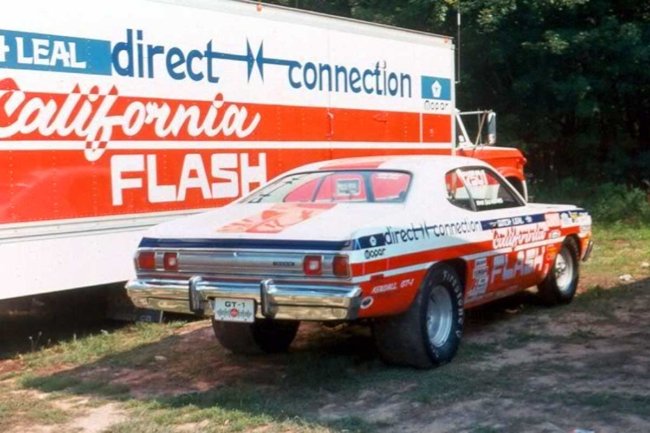
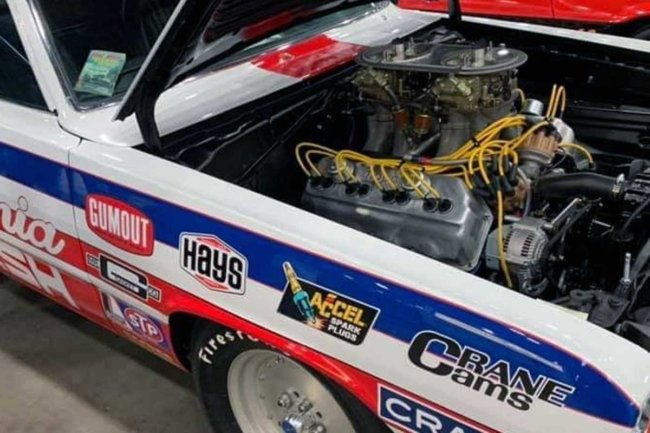
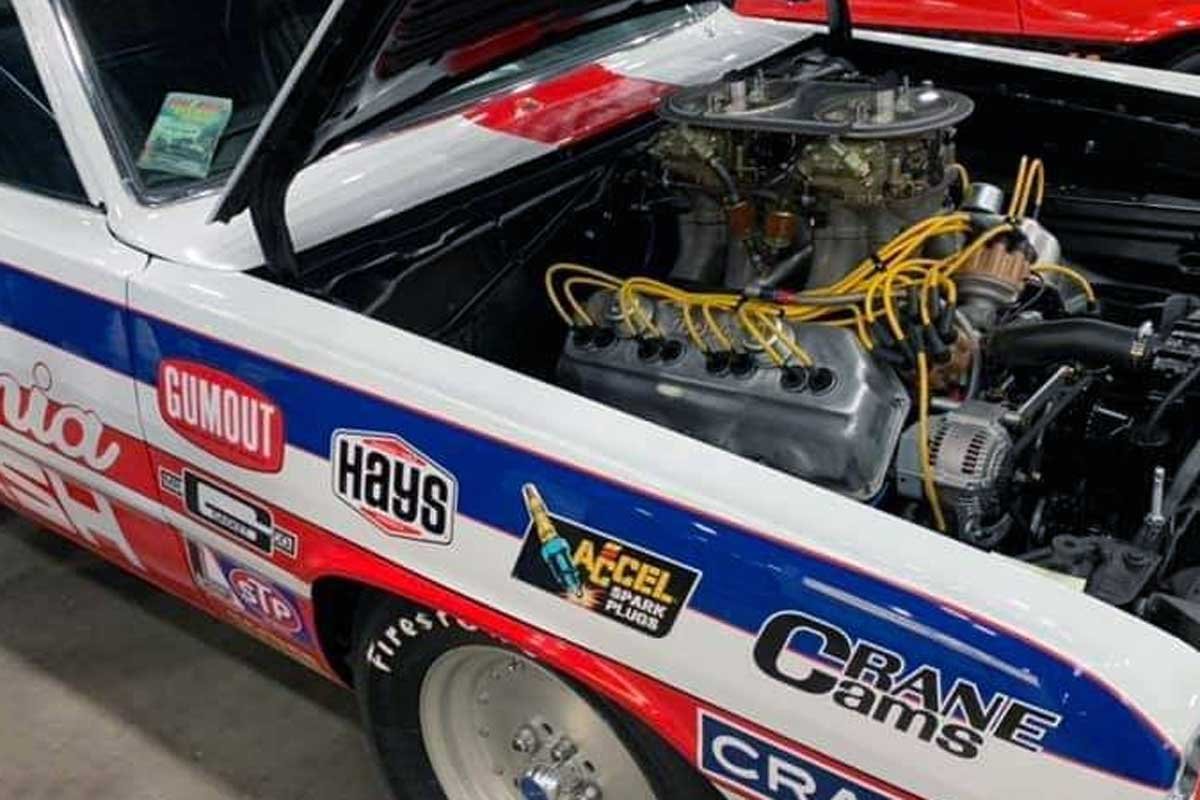
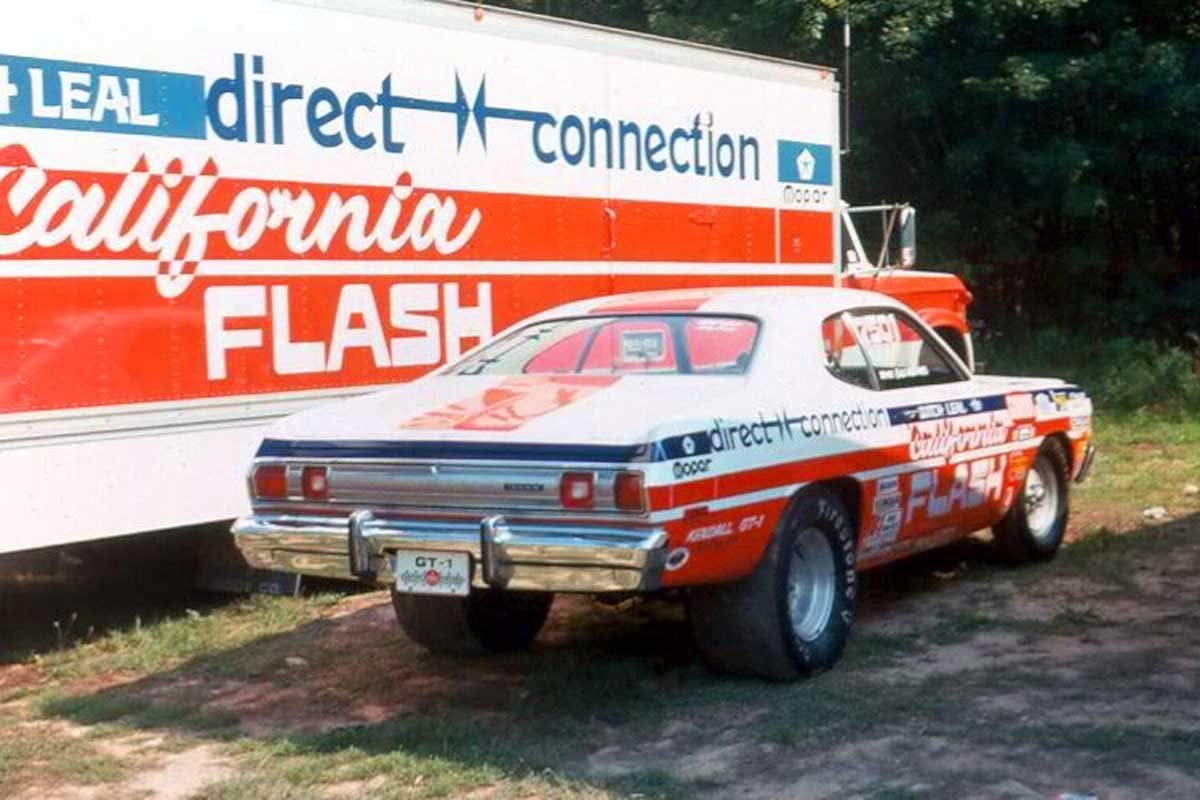
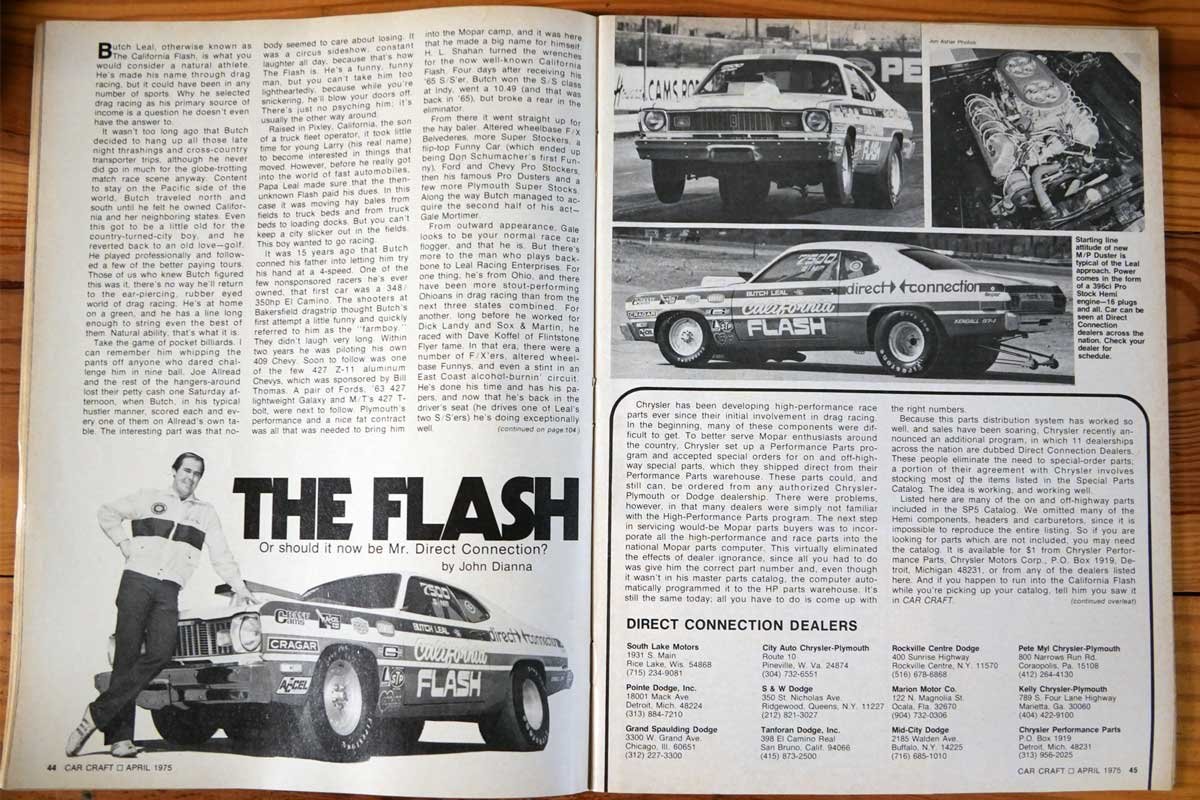
Above Left: Even at rest, the Duster projected pure speed. Its bold red, white, and blue paint scheme marked a departure from Leal’s earlier red-and-white race cars, giving the machine a fresh, modern appearance that aligned perfectly with Direct Connection’s new high-performance image. The updated graphics helped transform the Duster into one of the most recognizable Mopars of the era. (Photographer unknown) Above Right: Power came from a 396-cubic-inch de-stroked 426 Hemi fitted with exotic Pro Stock-style eight-plug cylinder heads and dual ACCEL distributors. The ignition system also utilized a crank trigger setup, delivering the precise spark control needed to maximize performance at high rpm. (Photographer unknown)
The ignition system alone revealed how advanced the car truly was. Twin ACCEL distributors fired all sixteen spark plugs through a crank-trigger setup, a highly sophisticated arrangement for the period and one seldom seen outside elite professional drag racing programs.
Leal later explained that the Direct Connection Duster was assembled in only ten days at Ron Butler’s shop by a five-person crew working under intense pressure to satisfy Chrysler’s promotional schedule. The timeline became so compressed that when the car was delivered for catalog and magazine photography sessions, the engine and transmission had not yet been installed. Through careful camera angles and staging, the missing drivetrain remained hidden, and most enthusiasts never realized the famous images featured an unfinished race car.

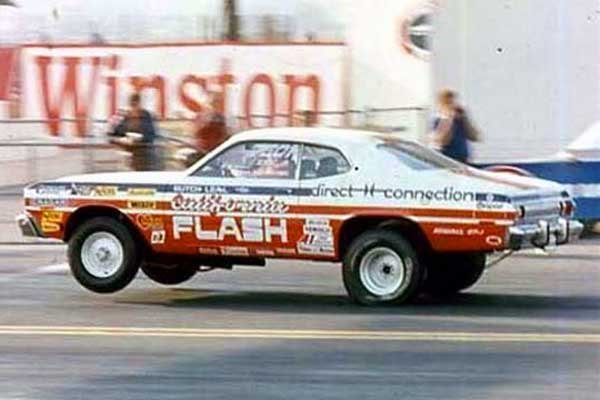
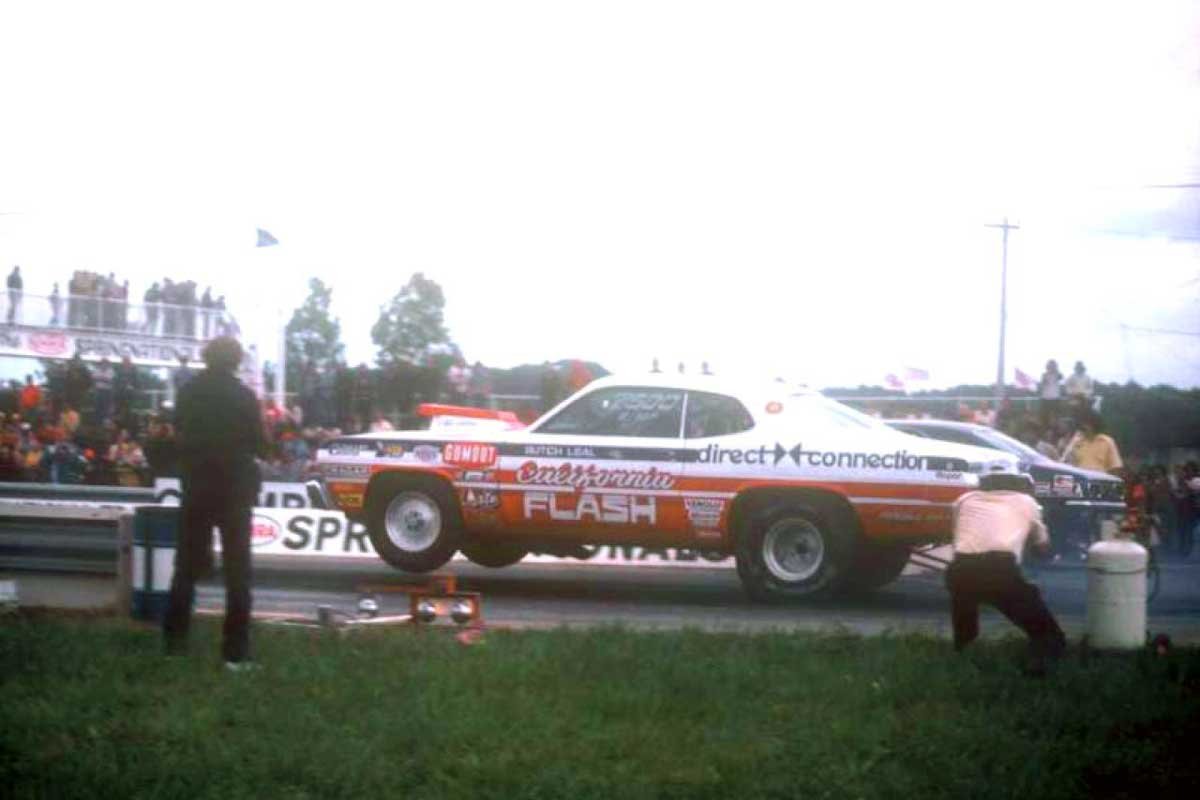
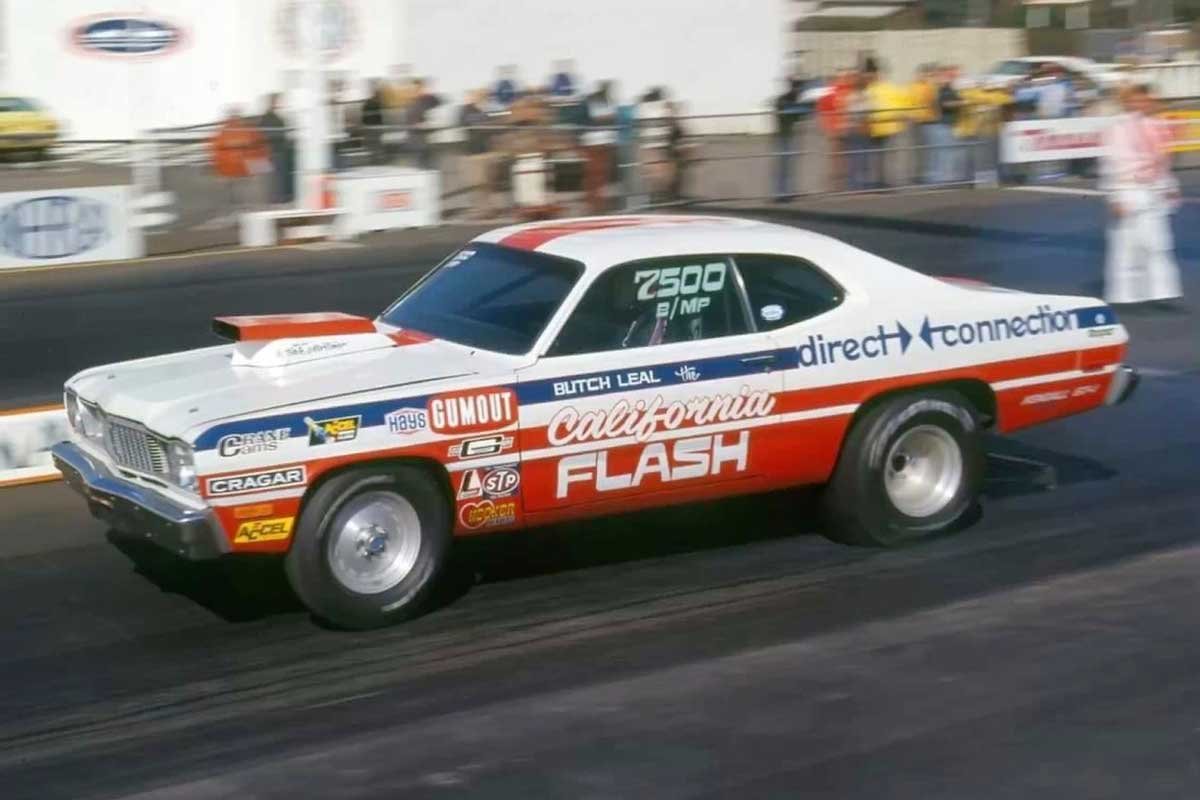
Above: This image appears to show a different configuration of the car. Notably, the wheelie bars are absent, suggesting a setup where the Super Stock rear springs are effectively controlling chassis rise on launch. The sponsorship decal placement also differs from other known photos, indicating it may have been taken at a different time or event. The competition number on the side window is difficult to discern, making definitive confirmation of the car’s identity challenging. (Photographer unknown)
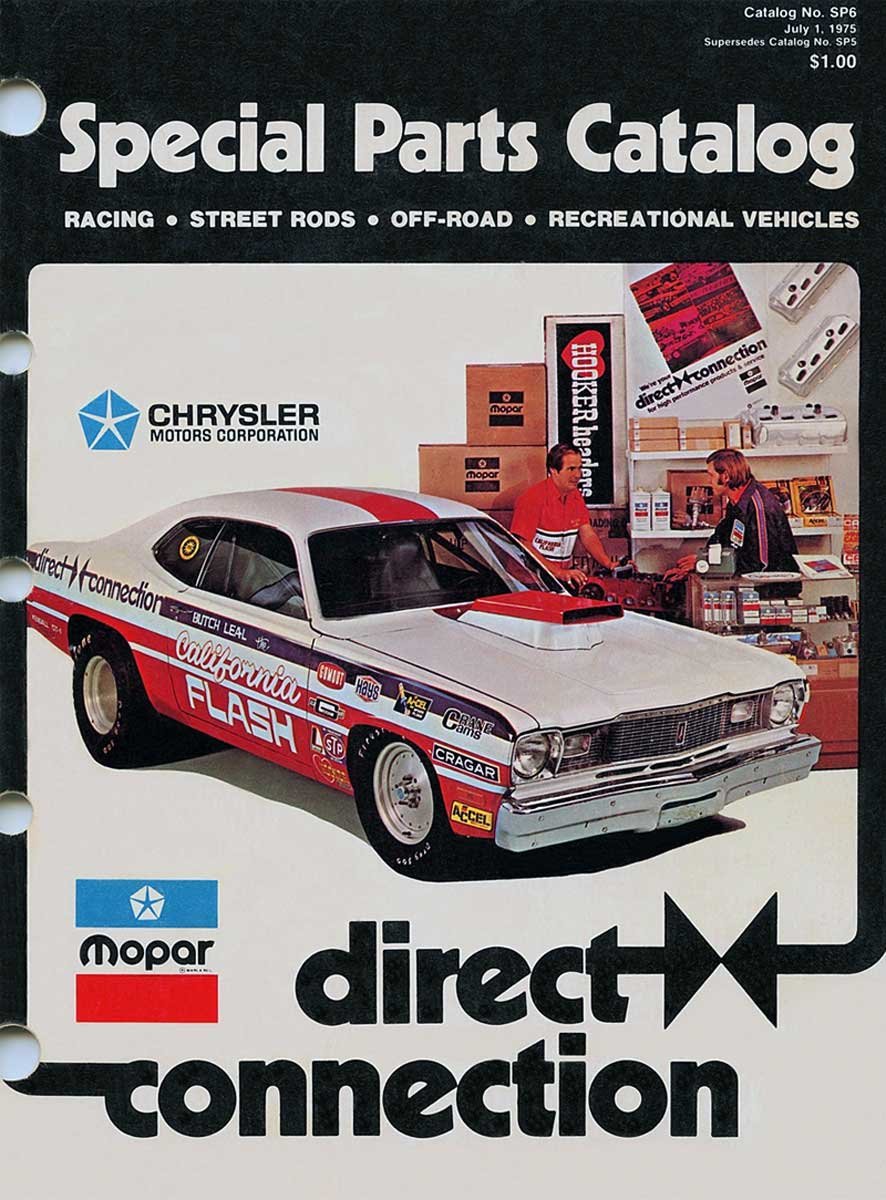
The car appeared prominently on the cover of Chrysler’s July 1, 1975, Direct Connection Special Parts catalog, helping cement its place in Mopar history. It also became a regular feature in enthusiast publications and dealership promotions nationwide. Leal oftentimes appeared at technical seminars and performance clinics, merging the roles of racer, tuner, and instructor as he explained engine combinations, suspension tuning, and race preparation to grassroots enthusiasts.
Visually, the Duster maintained Leal’s famous “California Flash” styling, highlighted by aggressive red, white, and blue graphics, which varied slightly from his earlier Hemi race cars. Chrysler reportedly assisted in refining the final appearance, ensuring the car projected the contemporary, hard-edged image the company wanted associated with the new Direct Connection brand.
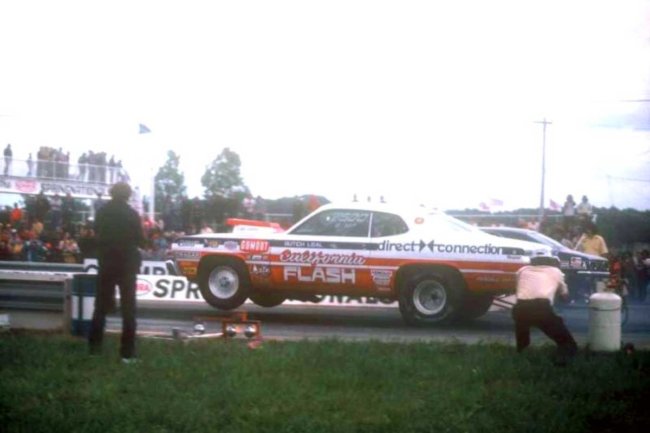
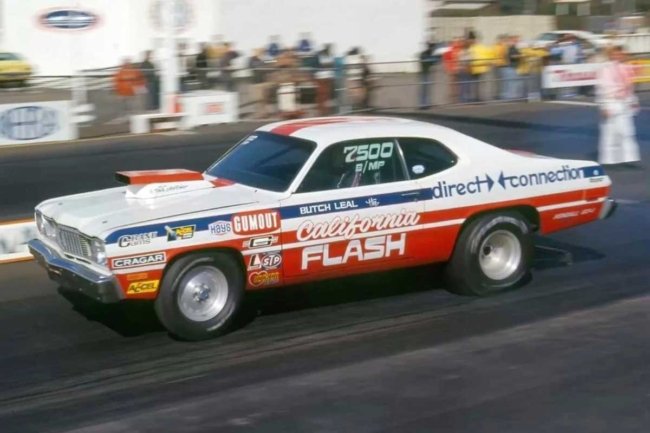
Above: Although Leal did not win in 1975, the Duster became the foundation for his dominance in Modified Eliminator in 1976, where he won class at the NHRA Winter Classic, Winternationals, and Gatornationals. Those results firmly established his reputation in the division, and he was named to the 1976 Car Craft magazine All-Star drag racing team as Modified Driver of the Year. (Photographers unknown)
During the 1960s, factory racing programs mostly centered around manufacturer-backed teams battling for national headlines. By the mid-1970s, Direct Connection shifted its focus to empowering individual racers and enthusiasts. Chrysler was no longer simply highlighting race winners; it was selling devotees the tools, parts, and knowledge needed to build competitive cars themselves.
Instead of merely “Win on Sunday, sell on Monday,” Direct Connection promoted a more personal connection between factory engineering and grassroots racers: Race on Sunday, buy the same parts at your Dodge dealer on Monday.
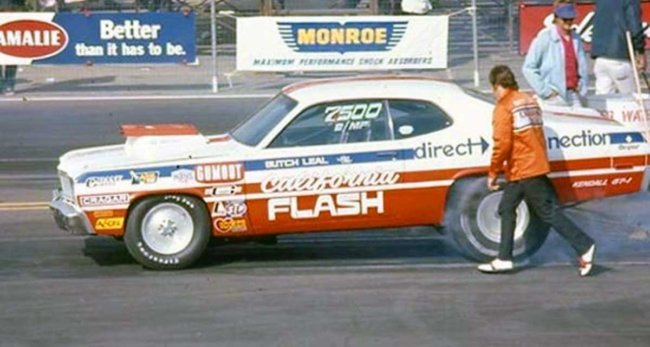
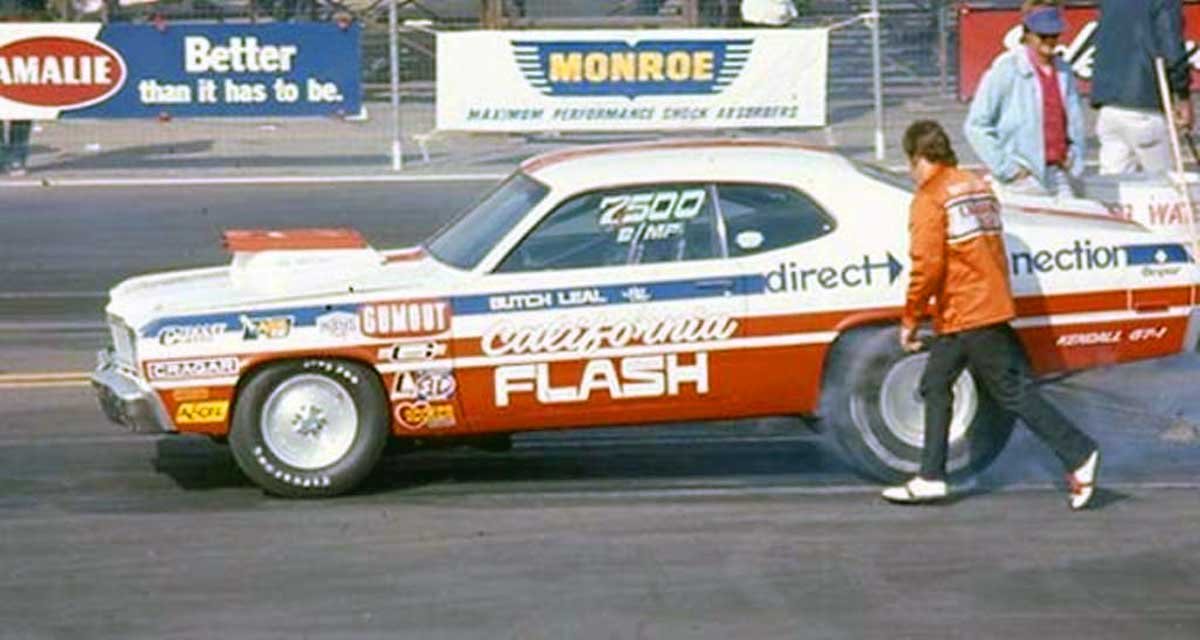
Above: Leal’s B/Modified Duster was a rule-constrained, factory-rooted class car built for competitive consistency within NHRA’s production-based framework, while his earlier Pro Stock Dusters were no-compromise, purpose-built heads-up machines engineered for maximum elapsed time and outright performance under the constantly evolving Pro Stock rules. During burnout procedures, it was once common for crew members to steady the car by holding it in place, a practice NHRA later prohibited for safety reasons. (Photographer unknown)
For many Mopar enthusiasts, the image of Butch Leal’s Duster on the Special Parts catalog cover became inseparable from Direct Connection itself. The car ultimately transcended its role as a successful drag racer and became the defining visual symbol of Chrysler performance during one of the most transformative periods in Mopar history.
Founded in 1972, Mancini Racing became one of the most recognized names in Mopar performance during drag racing’s golden era. The company was formed through a partnership between Ray and Danny Angelelli, and renowned NHRA Super Stock racer Ron Mancini, whose success on the track brought instant credibility to the operation.
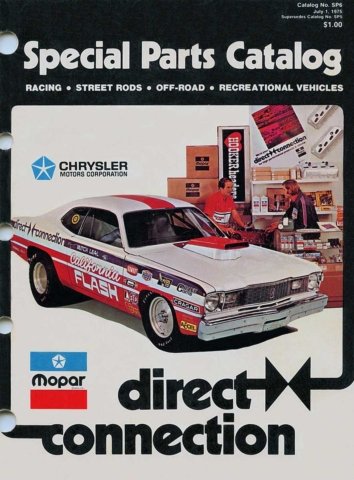
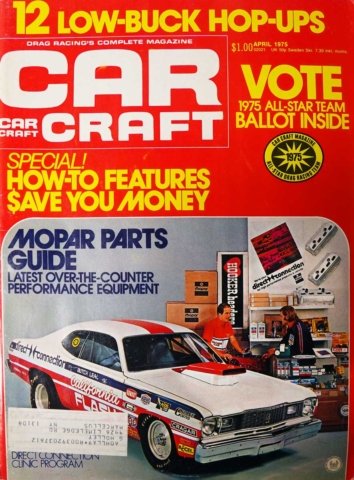
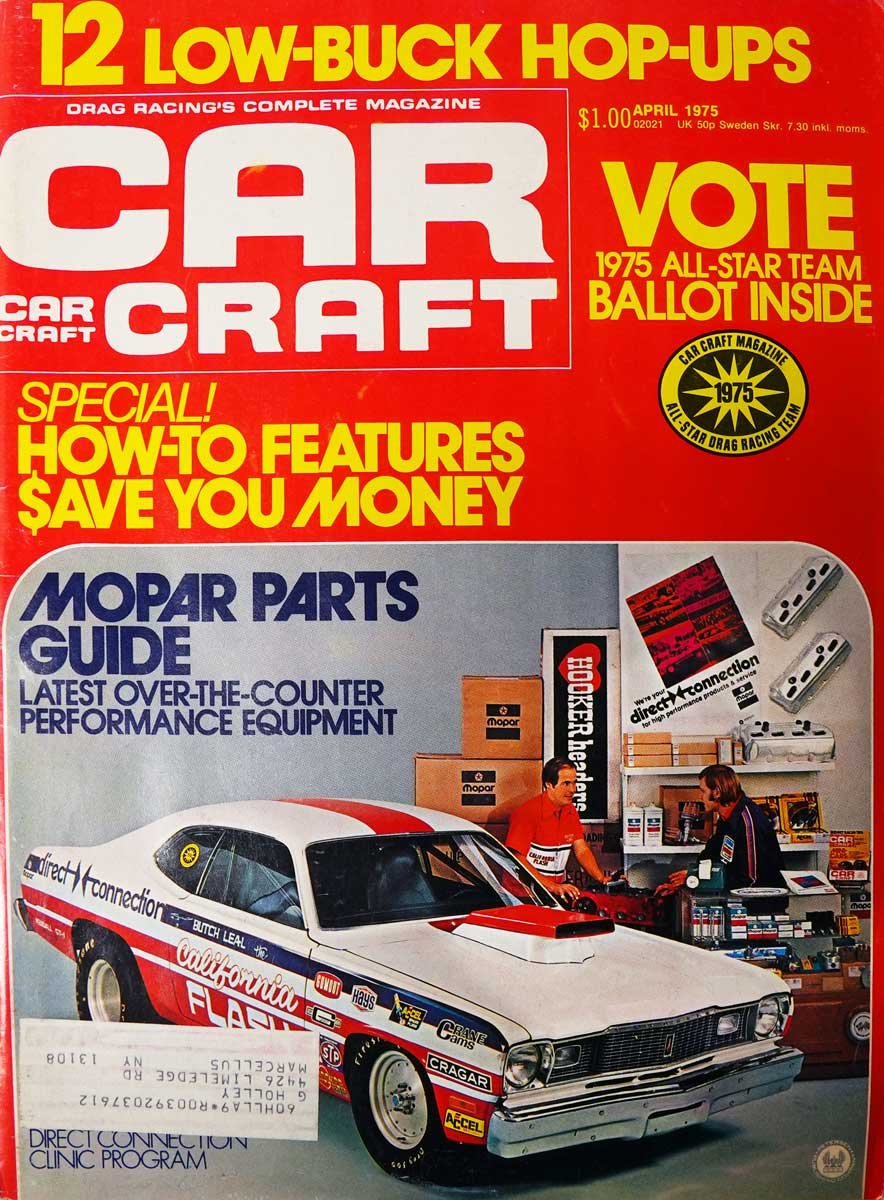
Above: Leal’s Duster appeared in the 1975 Direct Connection Special Parts Catalog, gaining even wider recognition when Car Craft magazine featured it on the April 1975 cover. At the time, both the catalog and the magazine sold for $1 each. (Author’s collection)
By combining racing experience with strong business leadership, Mancini Racing quickly established itself as a trusted source for Chrysler performance parts. It became the first Mopar Direct Connection warehouse distributor and is still operating today. Over the years, the company earned a lasting reputation among racers, restorers, and Mopar enthusiasts nationwide.
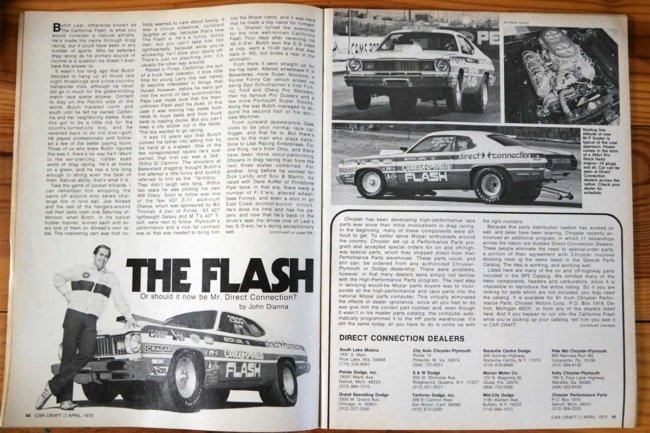
Above: The late-great John Dianna penned the Car Craft magazine article about Leal’s new Duster. Additionally, the article included several pages of Mopar part numbers of products carried by the Direct Connection dealers. Interestingly, Dianna ran a 1973 E/Modified Production Duster running a de-stroked 340, which reportedly buzzed to 8,600 rpm. (Photographer John Dianna)
Today, Mancini Racing continues to serve the Mopar community with a broad selection of performance parts, from drivetrain and transmission components to chassis and racing equipment, while remaining connected to its drag racing roots. Built on a foundation of competition experience and performance innovation, the company has become an enduring part of both Mopar history and American drag racing culture.