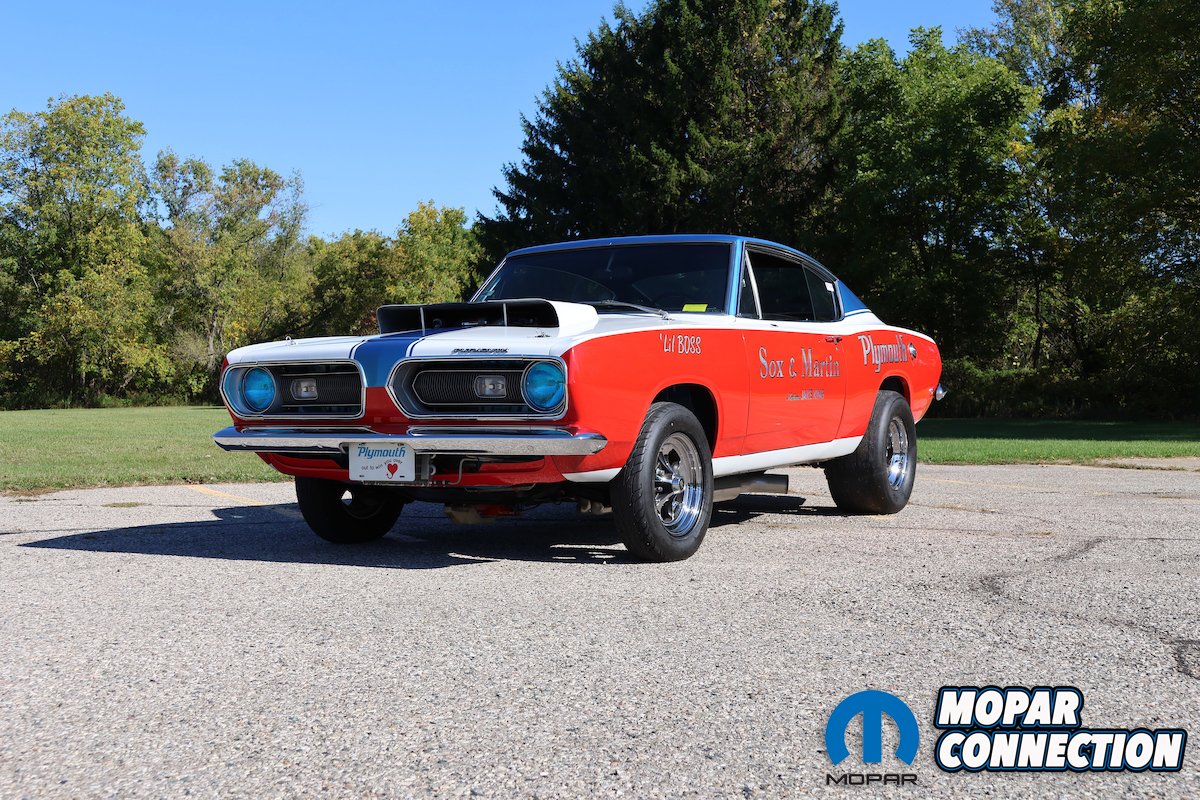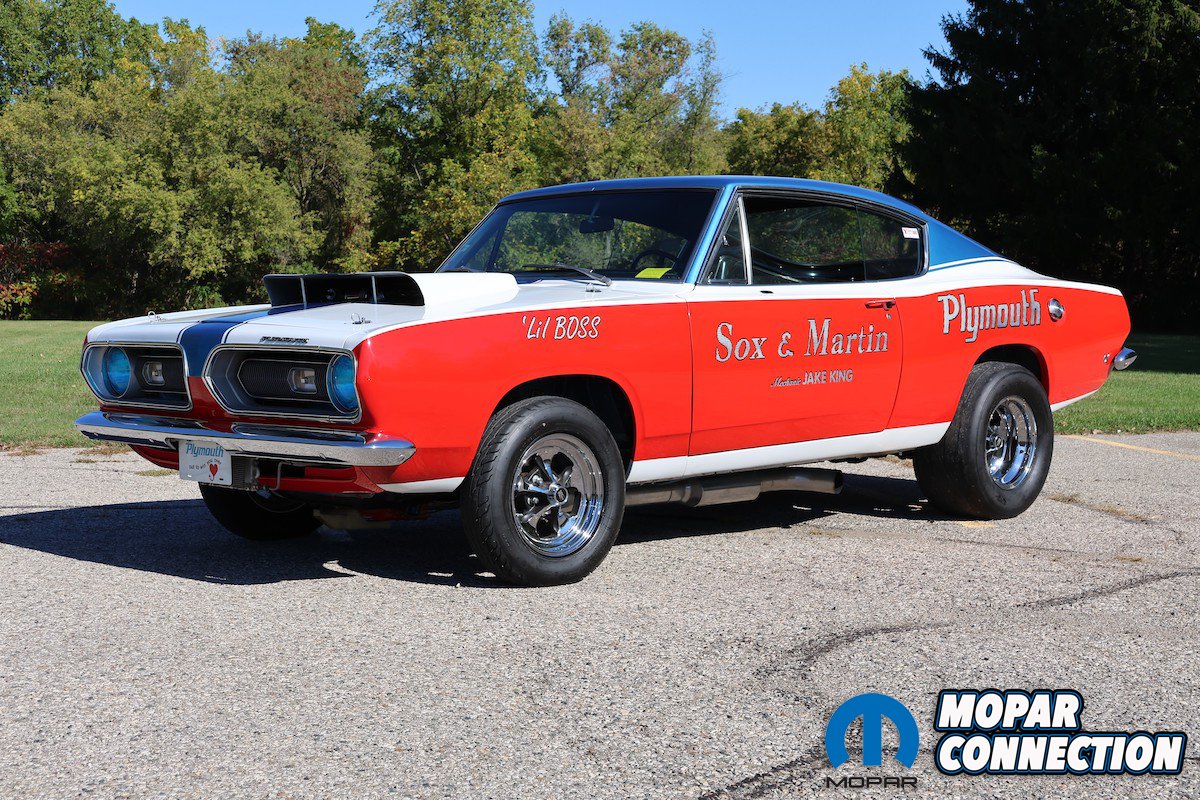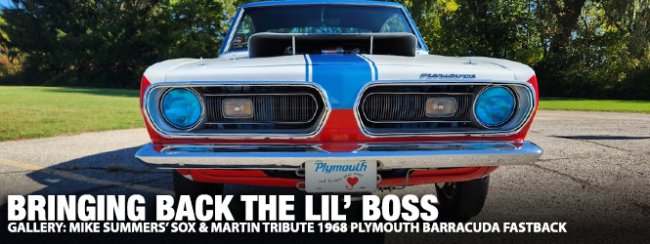
In 1968, Plymouth produced fifty special Barracudas under the B029 designation, purpose-built for Super Stock drag racing. Each was equipped with the formidable 426 HEMI engine as part of a factory high-performance package, destined for elite teams such as Sox & Martin and Don Grotheer.
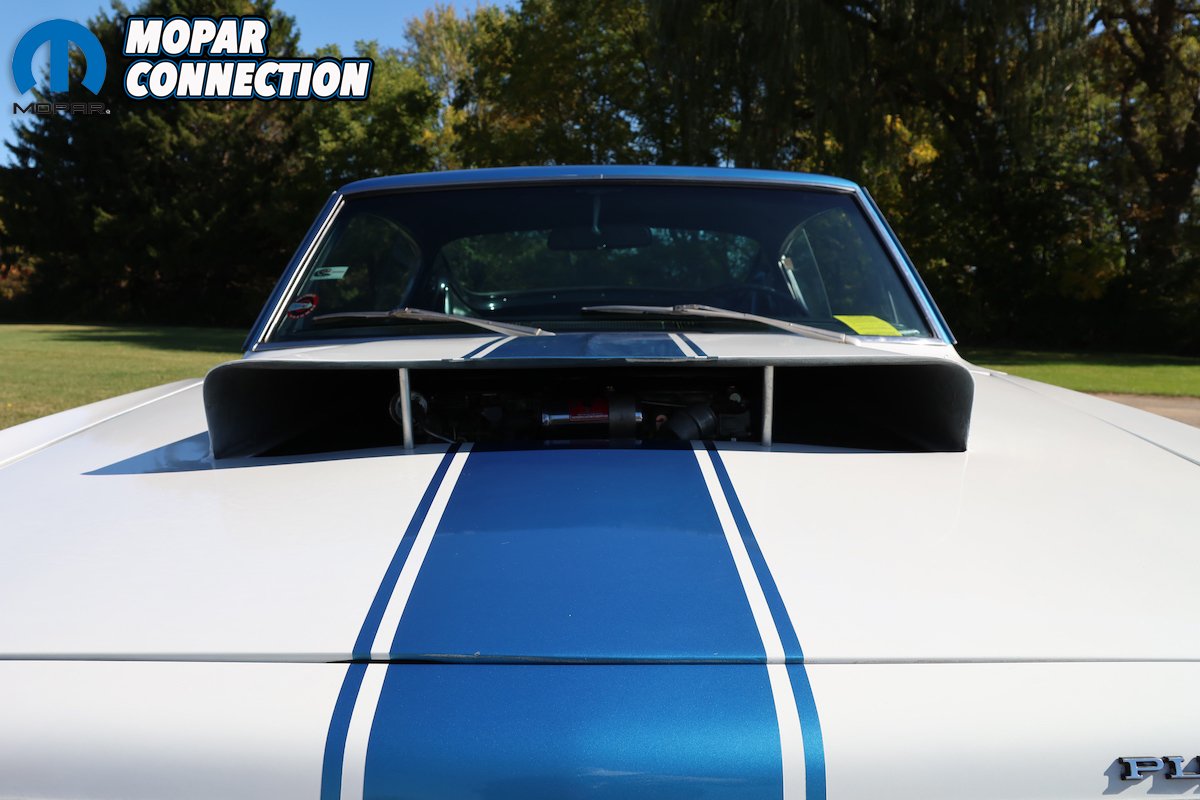
Assembly took place at Chrysler’s Hamtramck plant in Michigan, where the cars were built alongside the HEMI Darts before being shipped to Hurst Performance for final preparation. While they retained their steel bodies, nearly every component was optimized for weight reduction. Lightweight Chemcor side glass, fiberglass front fenders, a fiberglass hood with functional scoop, and simple bucket seats replaced heavier stock pieces.
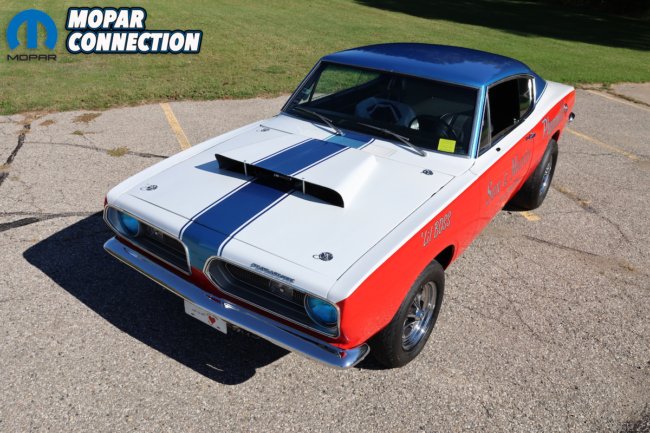
Street comforts such as rear seats, sound deadener, and insulation were omitted entirely. Each car carried a factory-issued decal warning that it was not intended for public roads, a fitting reminder, as these machines could storm the quarter mile in the mid-tens back in 1968. Finished in gray primer, they wore black-painted fiberglass front panels and that signature hood scoop feeding the voracious 426 HEMI beneath.
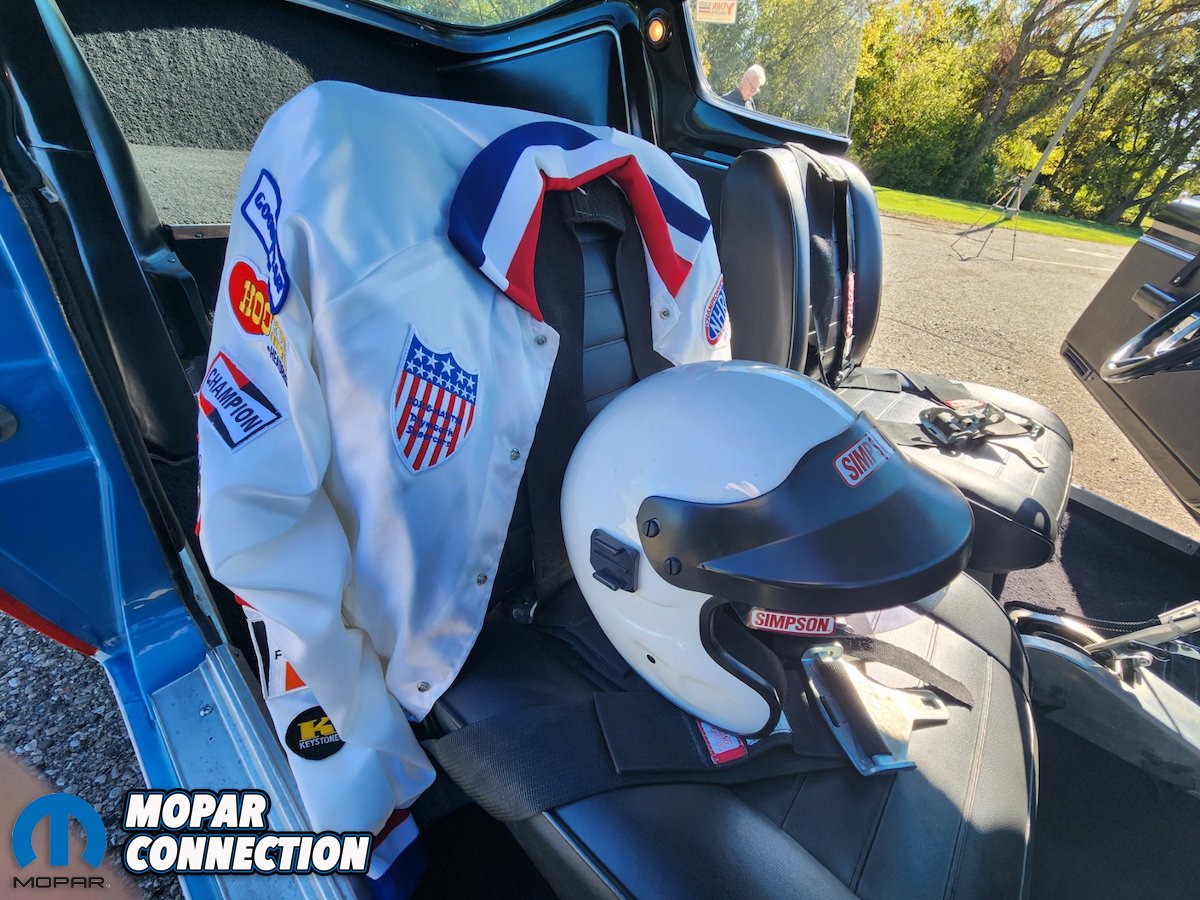
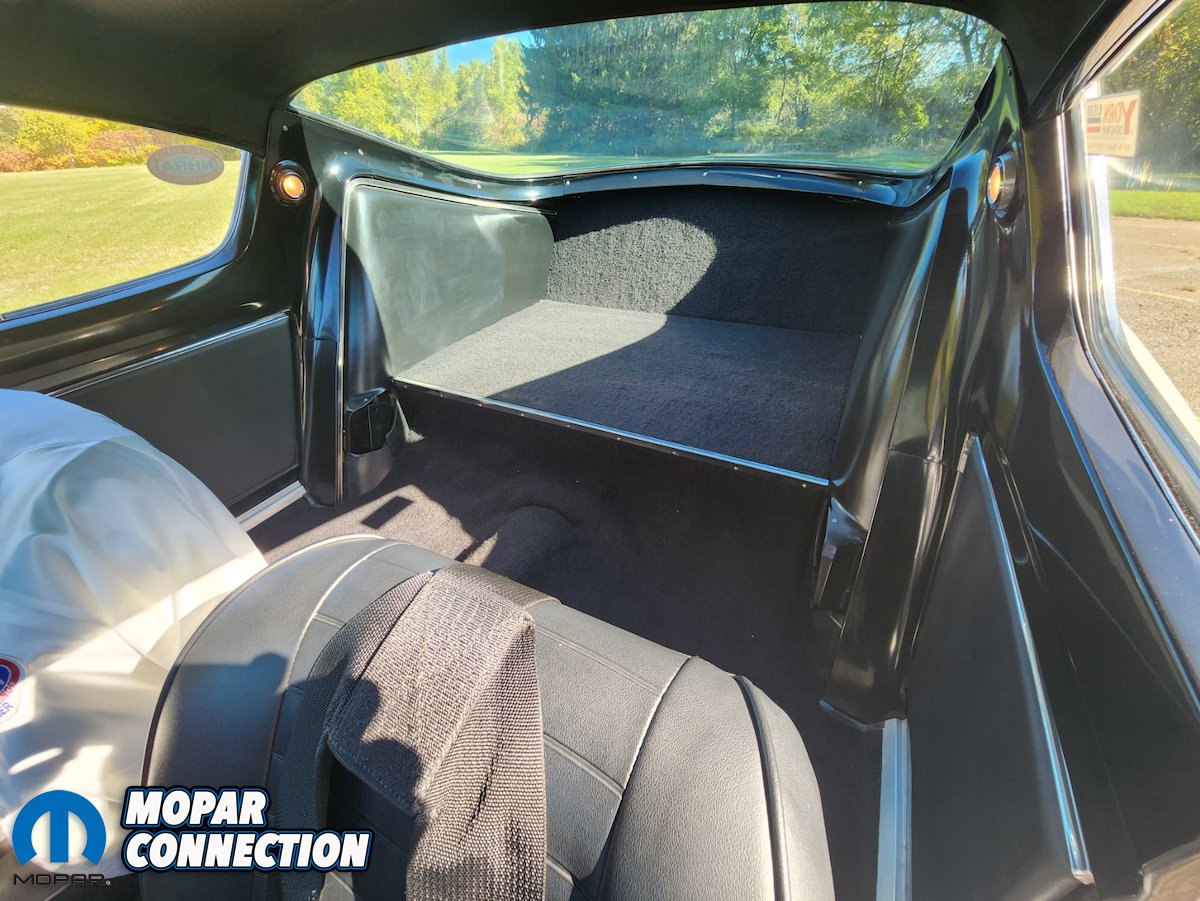
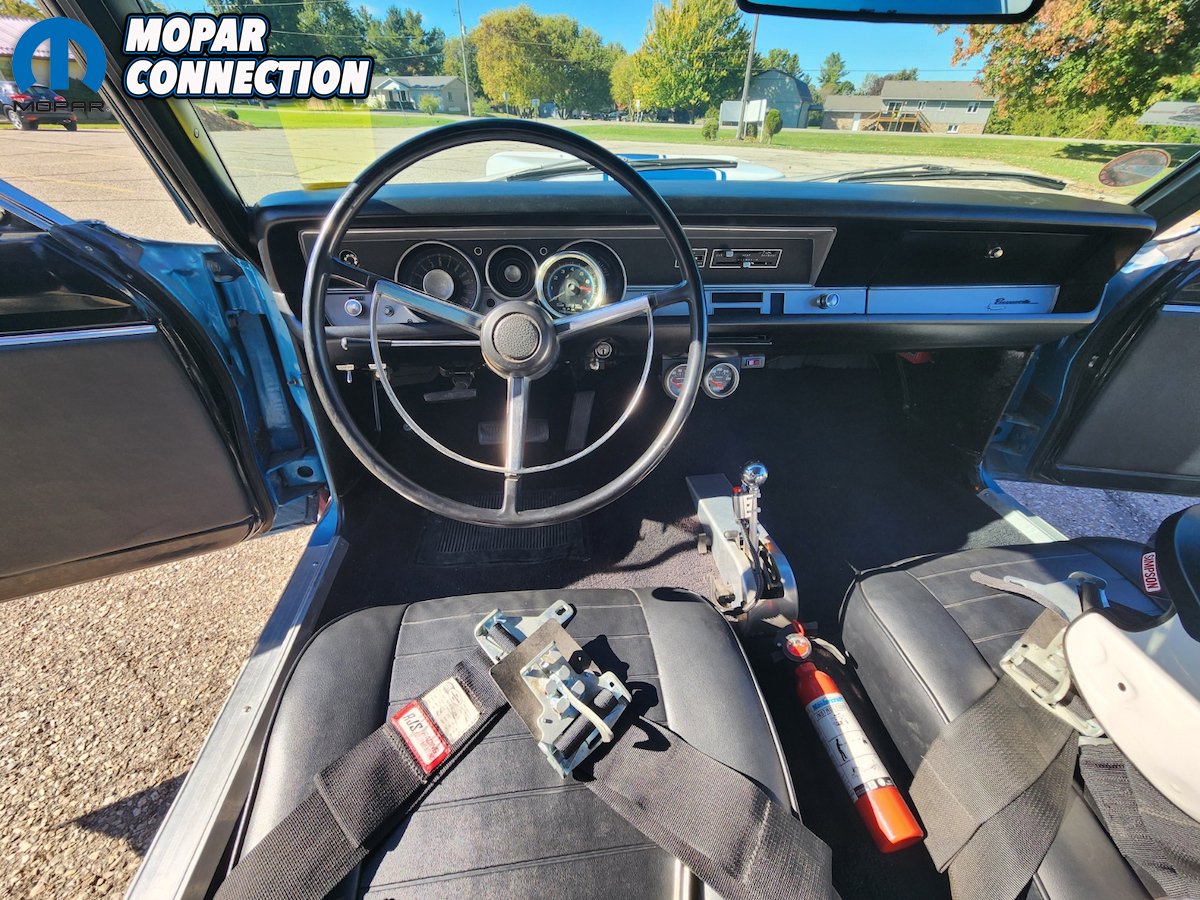
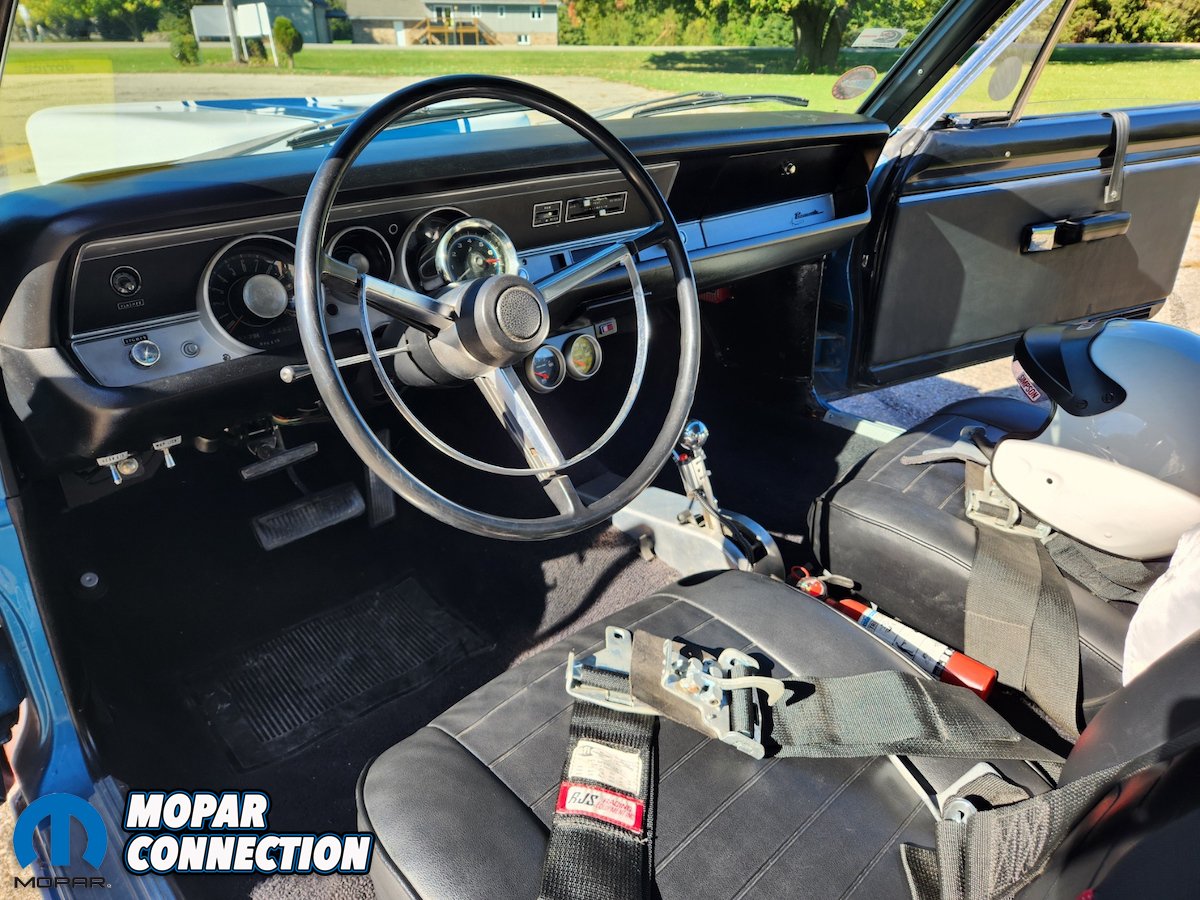
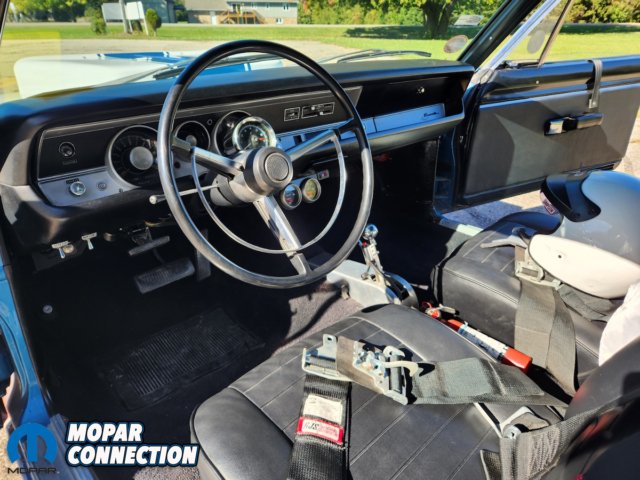
Inside, the cars were strictly utilitarian. The interiors were trimmed in standard black upholstery, with the heater and radio deleted. Lightweight A-100 van bucket seats replaced the stock units, while the rear seat was removed entirely and substituted with a simple cardboard panel. Lightweight glass was installed, and a compact 135-amp battery was relocated to the trunk for better weight distribution.
Underneath, chassis changes were minimally limited to Super Stock rear springs and heavy-duty shock absorbers. The steel wheels were painted black to complete the purposeful look. Power came from the 426 cid Super Stock internals and operated through a Hurst Competition Plus shifter. The result was a factory-built weapon ready to dominate the drag strip.
The 1968 B029 HEMI Barracudas marked a turning point in factory-backed drag racing. Plymouth’s commitment to building purpose-built competition cars set a new standard for manufacturer involvement in the sport. These lightweight, stripped-down machines proved that Detroit could deliver race-ready performance straight from the assembly line. Their success on the strip, especially under teams like Sox & Martin, helped cement the HEMI’s reputation as the ultimate muscle engine and paved the way for future factory drag programs from Chrysler, including the celebrated HEMI Darts and later Super Stock packages that carried the Mopar banner deep into the 1970s.
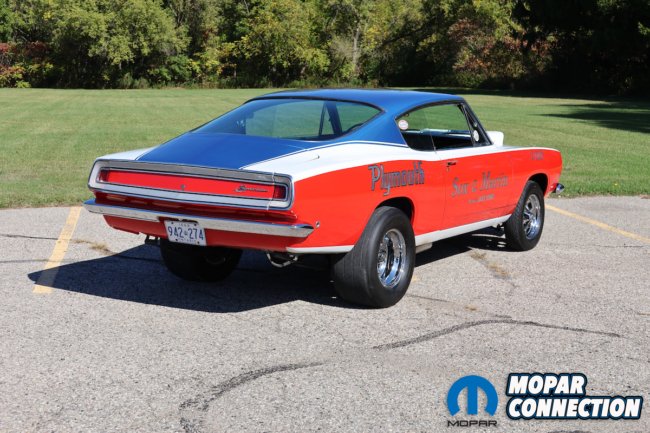
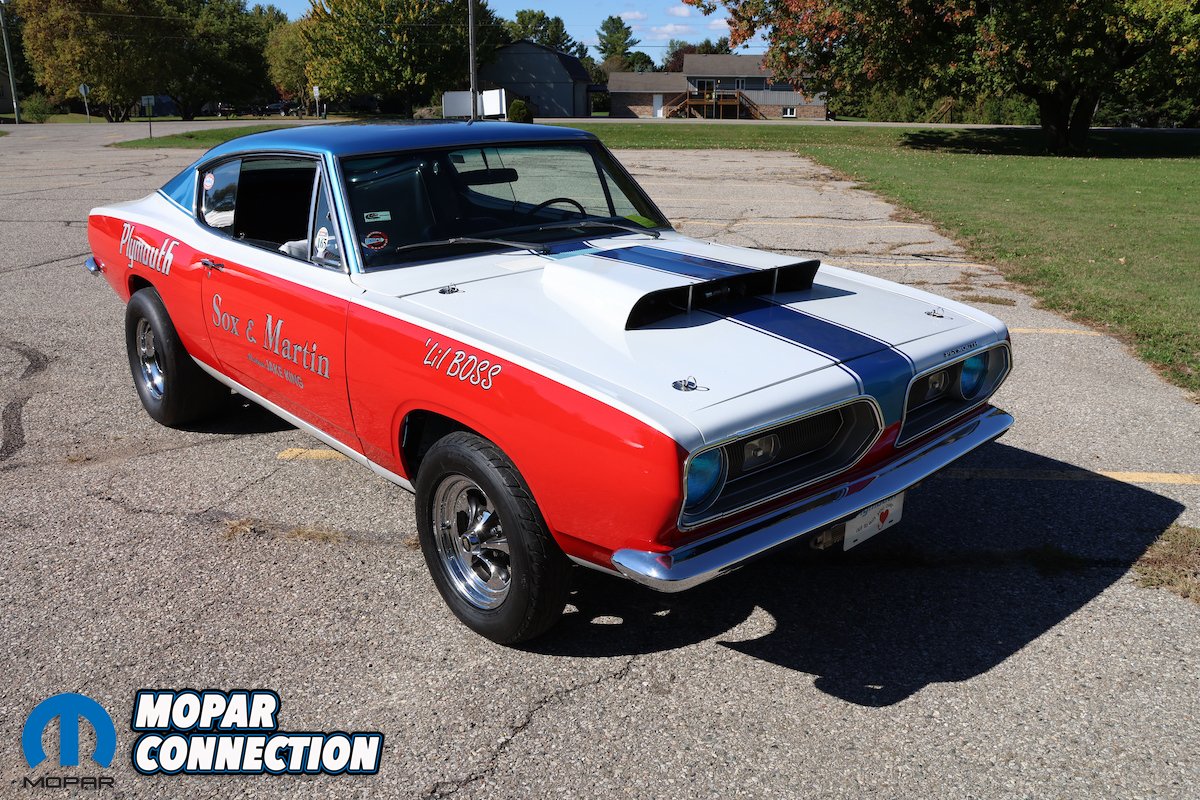
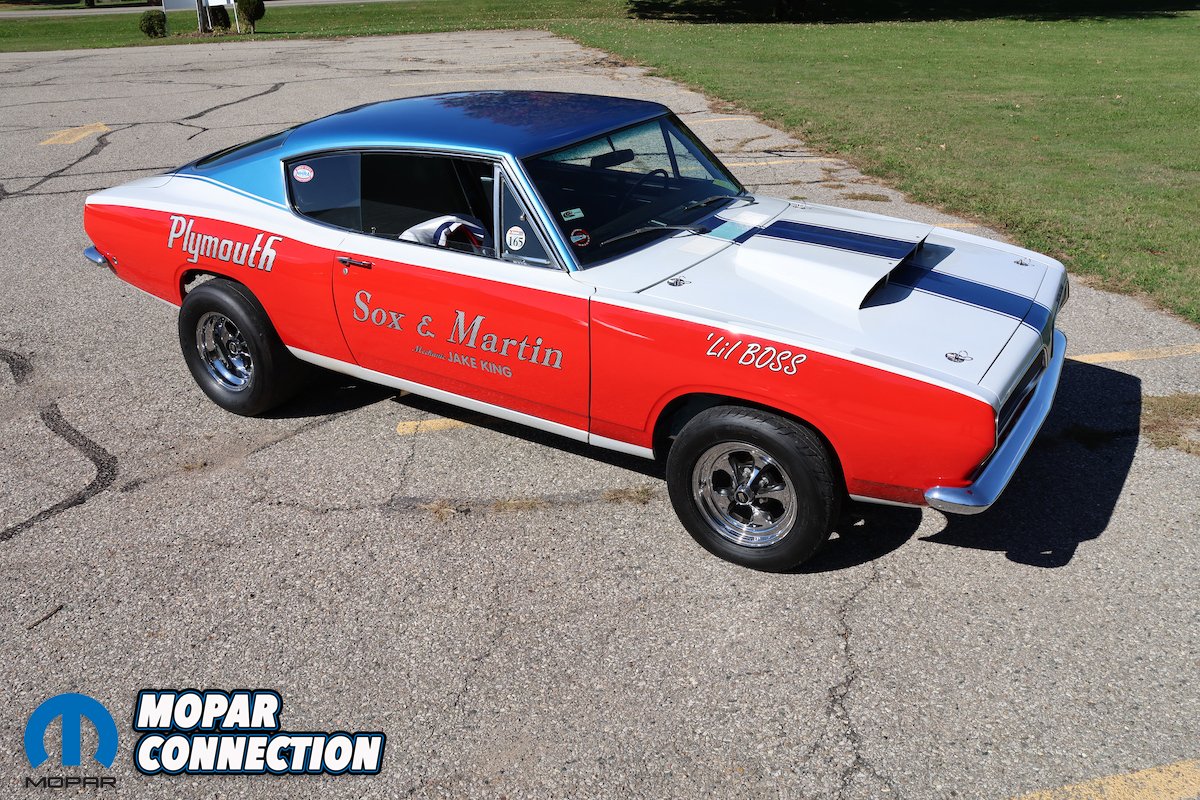
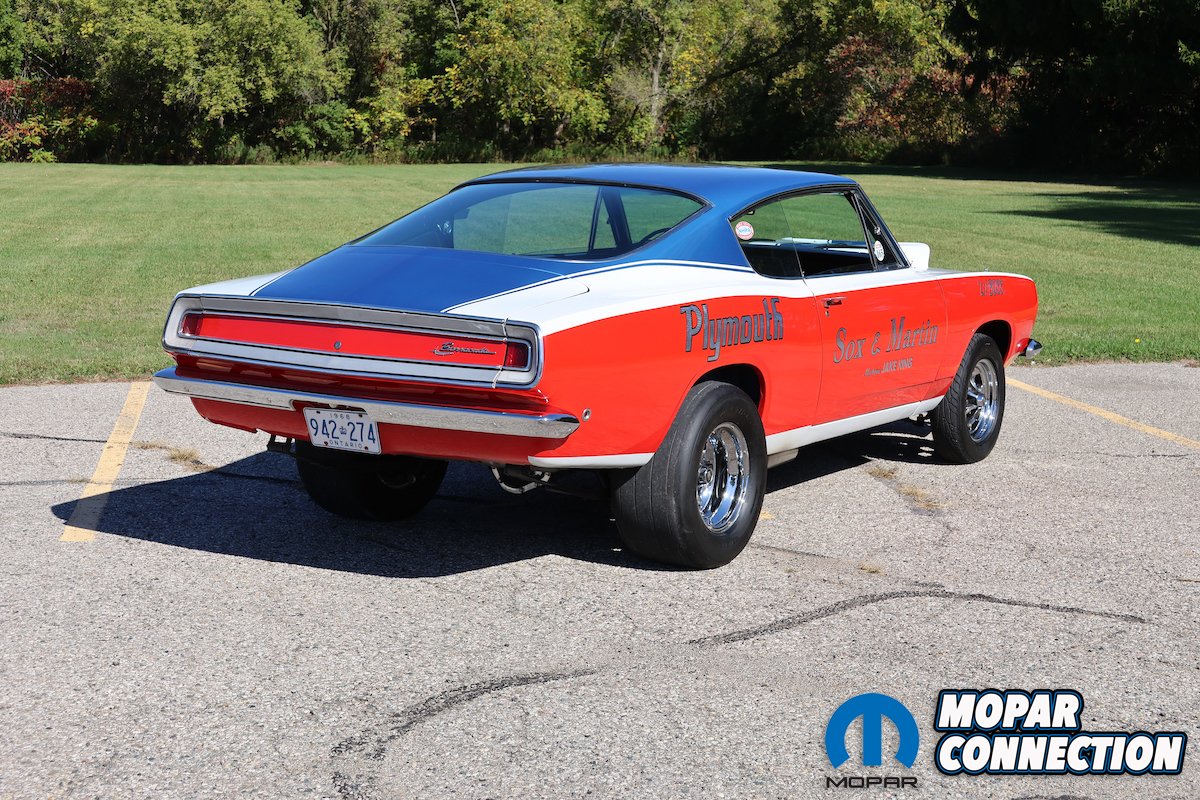
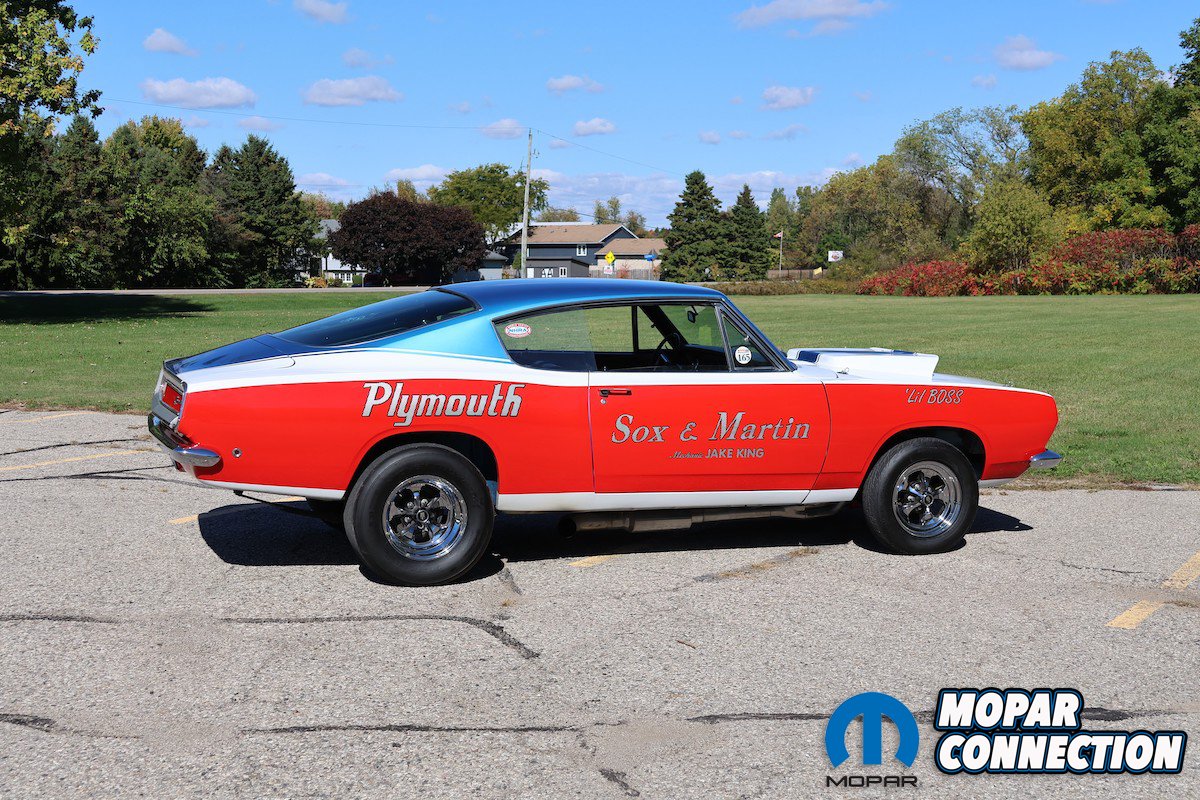
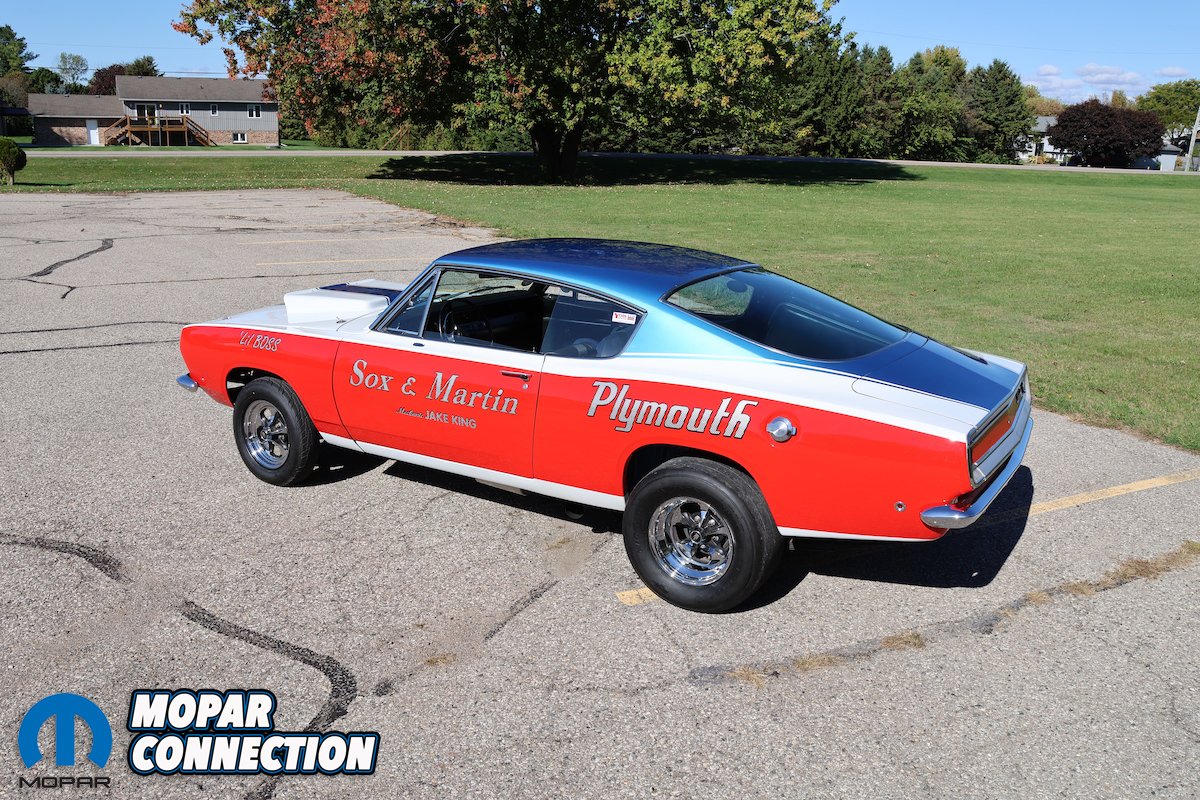
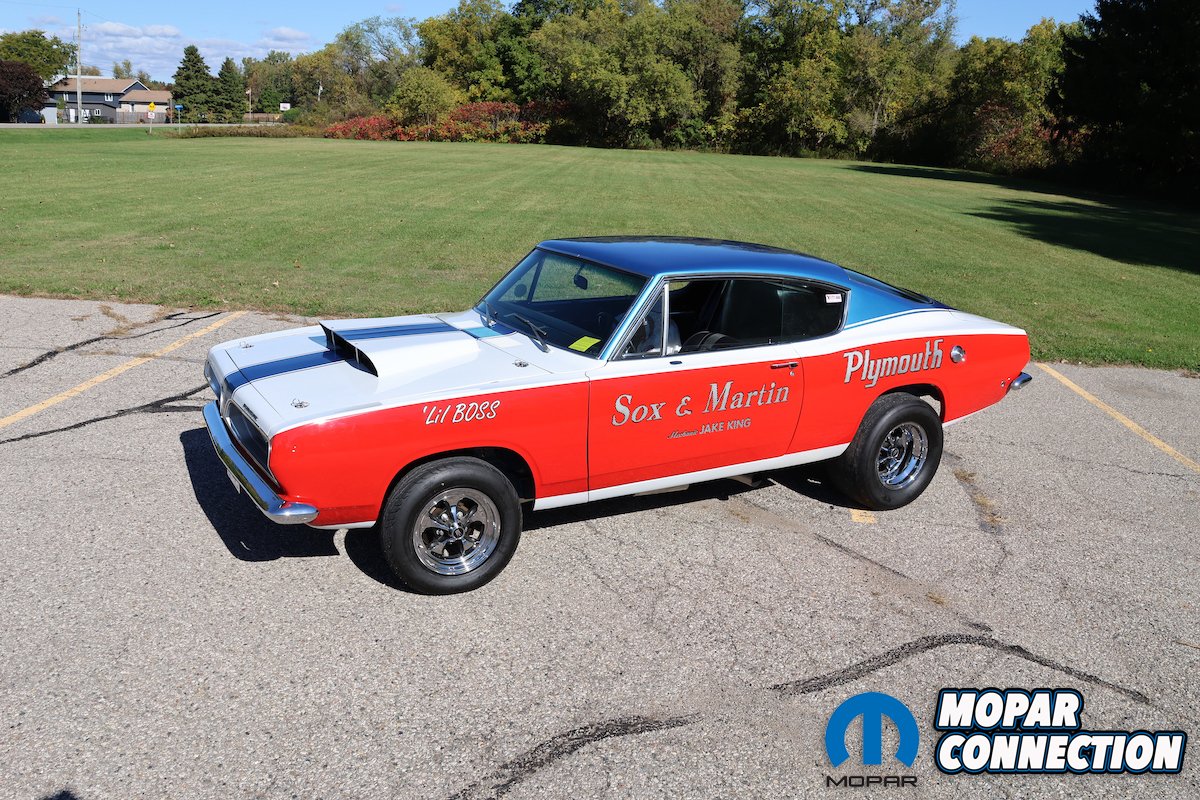
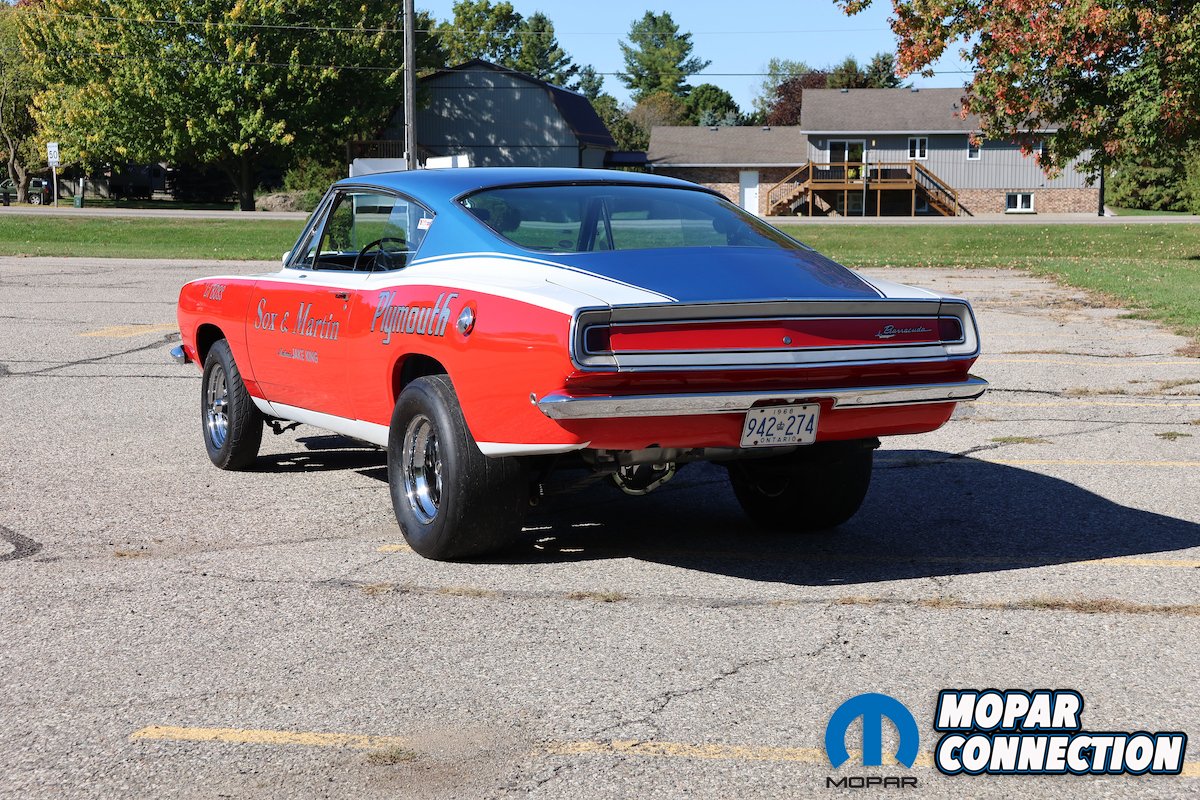
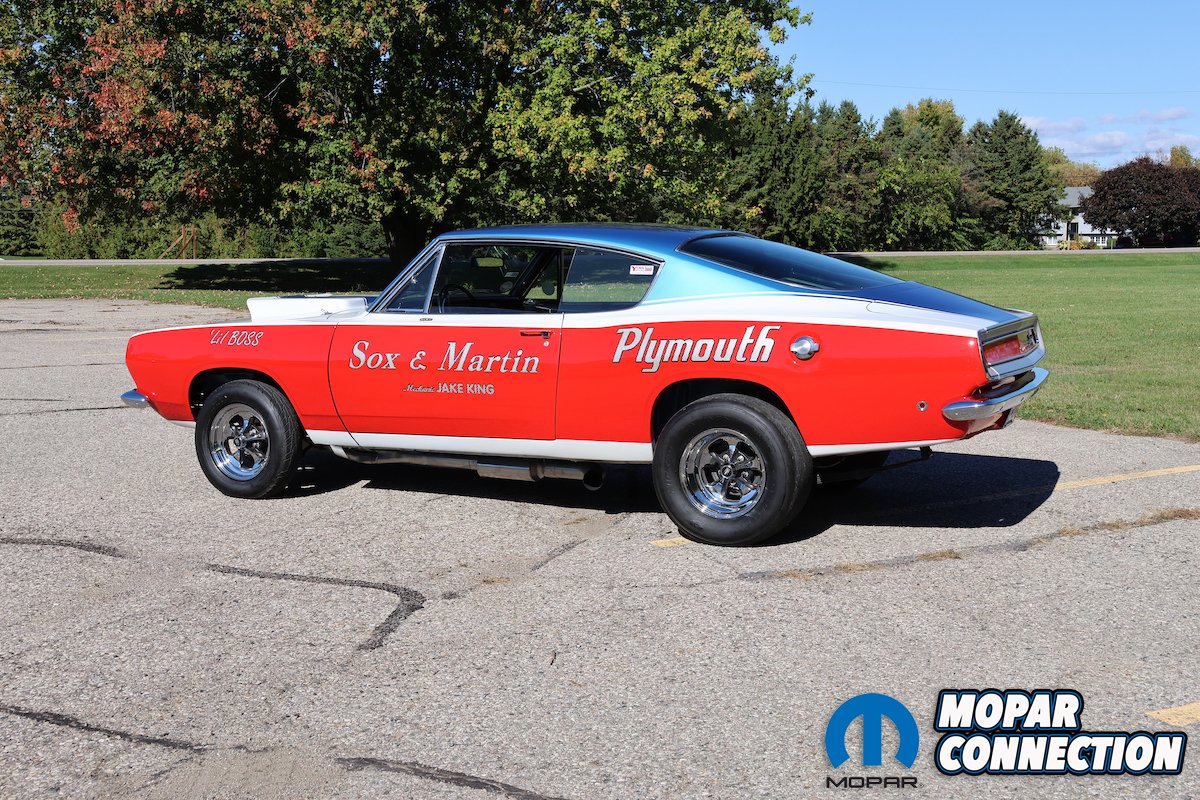
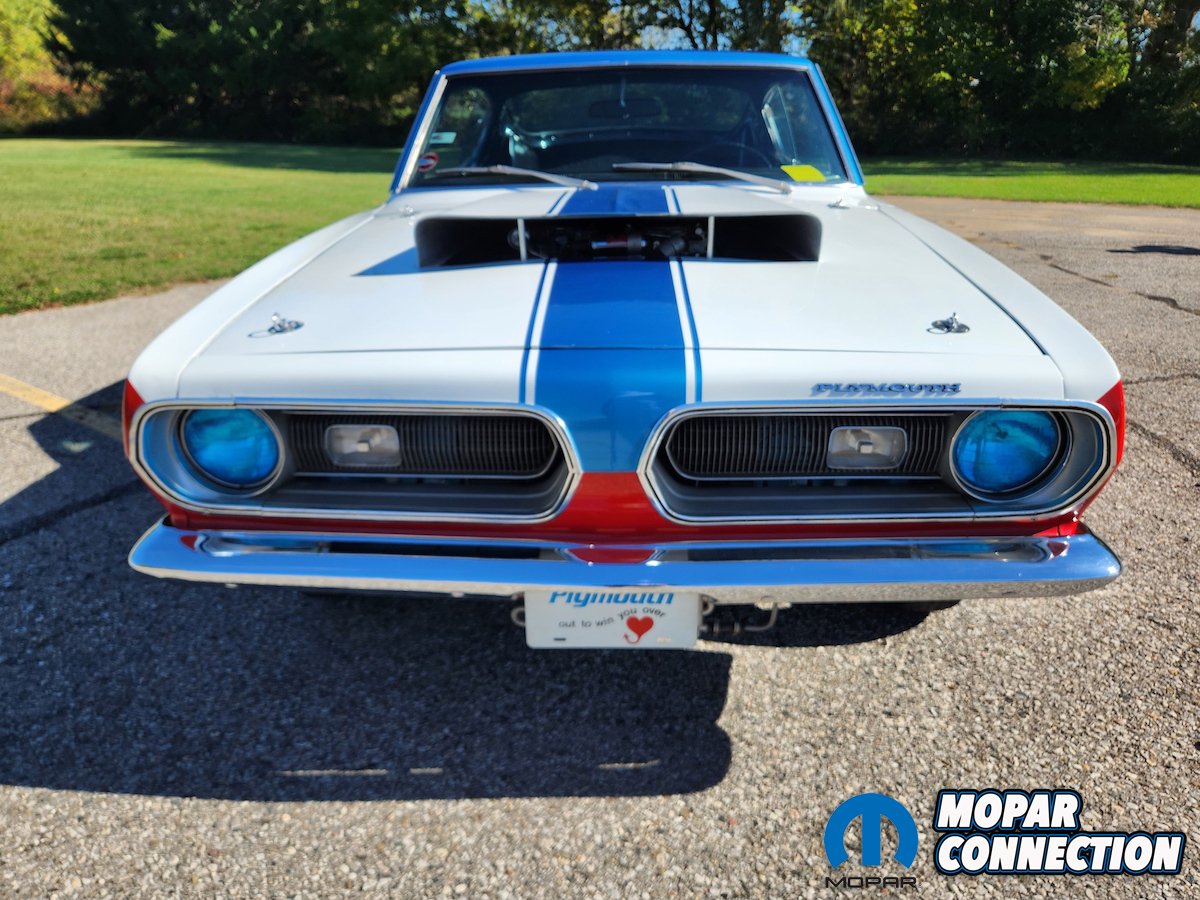
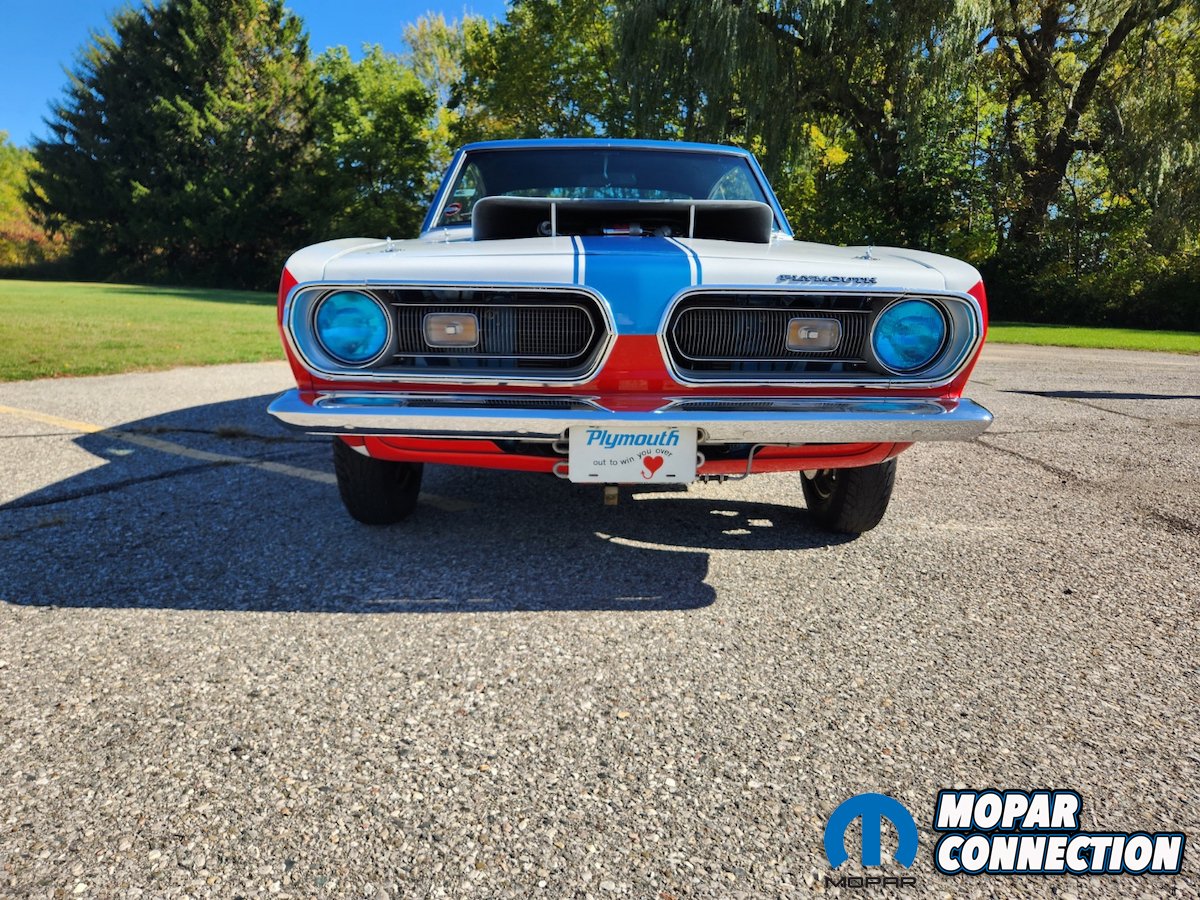
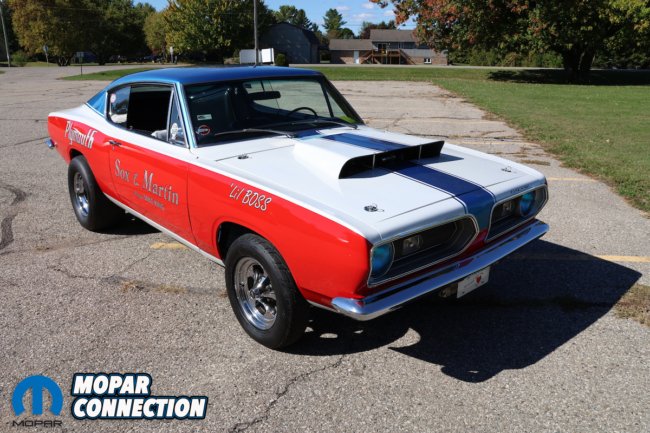
This Barracuda stands as a striking tribute to Plymouth’s legendary B029 HEMI Super Stock program, finished in the iconic Sox & Martin red, white, and blue paint scheme. The story begins in 2002, when Mike Lehti, an automotive designer at Chrysler’s Windsor, Ontario, studio, set out to build his own homage to the factory drag racers that defined Mopar’s golden era. If the name sounds familiar, it should: Lehti was also part of the elite design team behind the Aston Martin One‑77 supercar, a project that showcased his ability to blend artistry and engineering at the highest level. His Barracuda reflects that same balance—race-bred authenticity fused with designer precision.
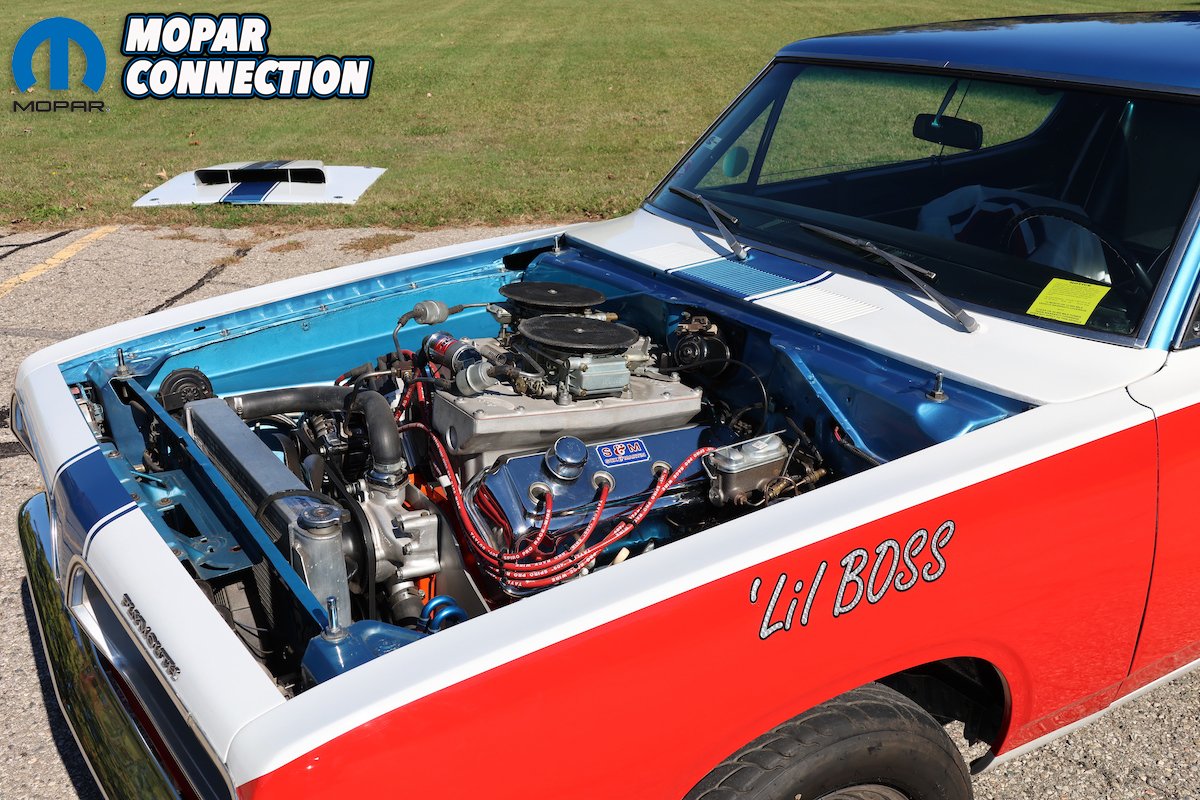
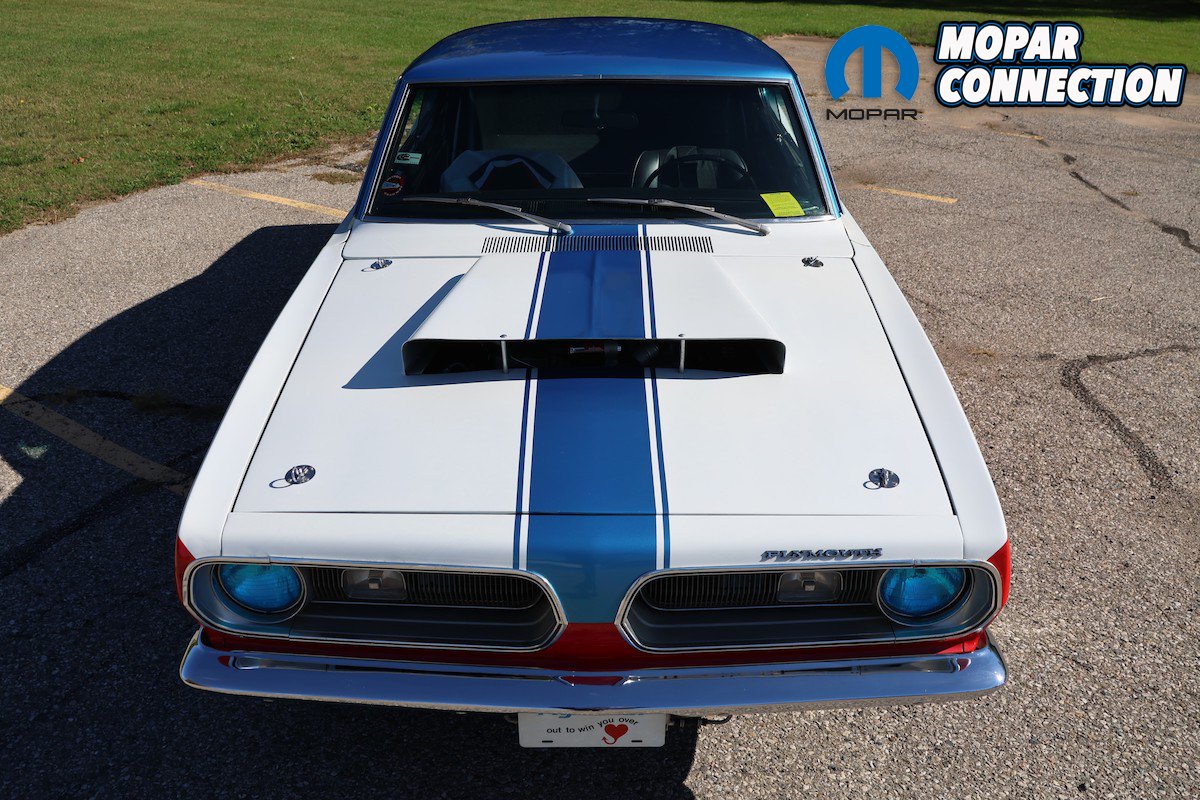
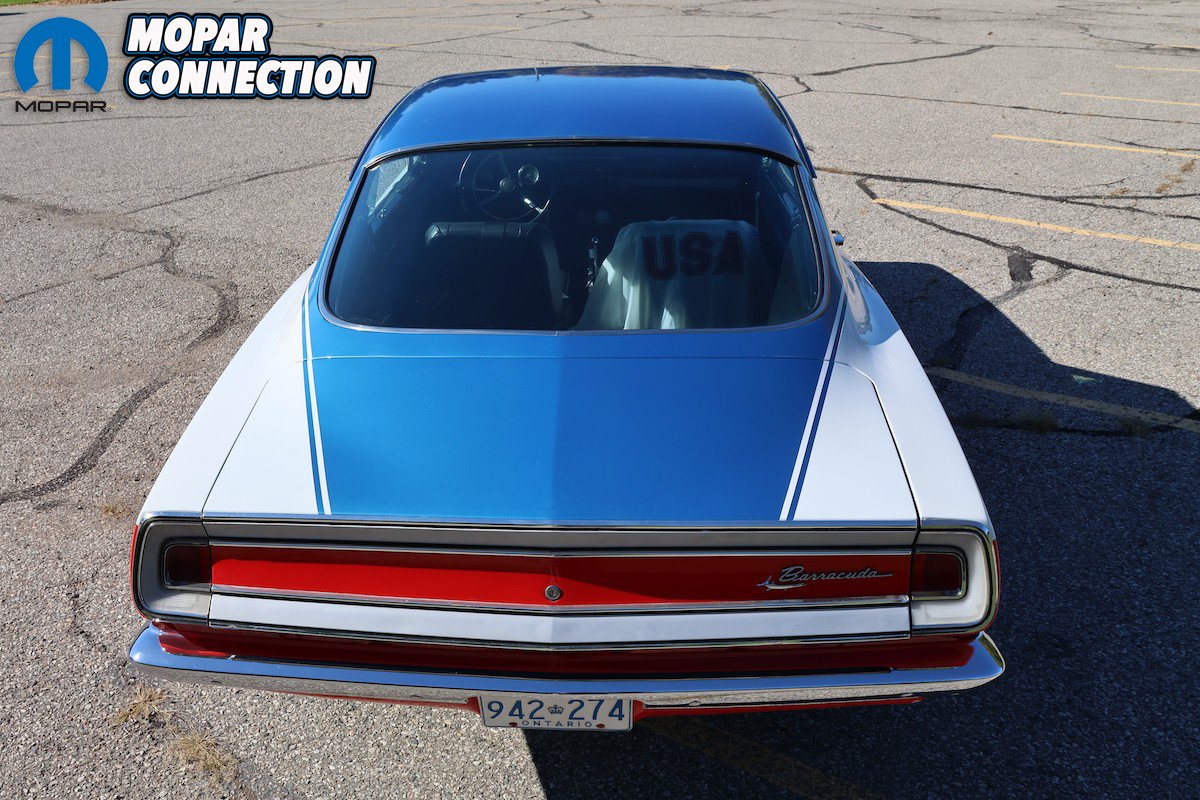
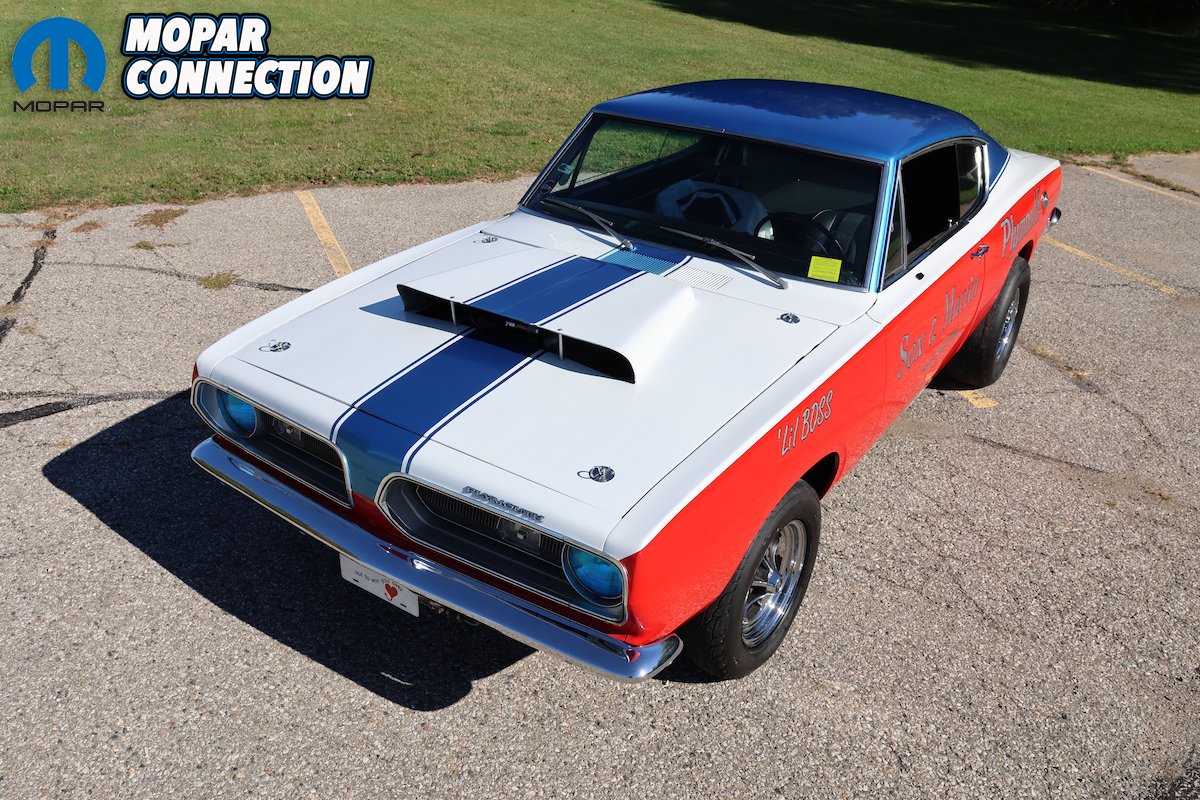
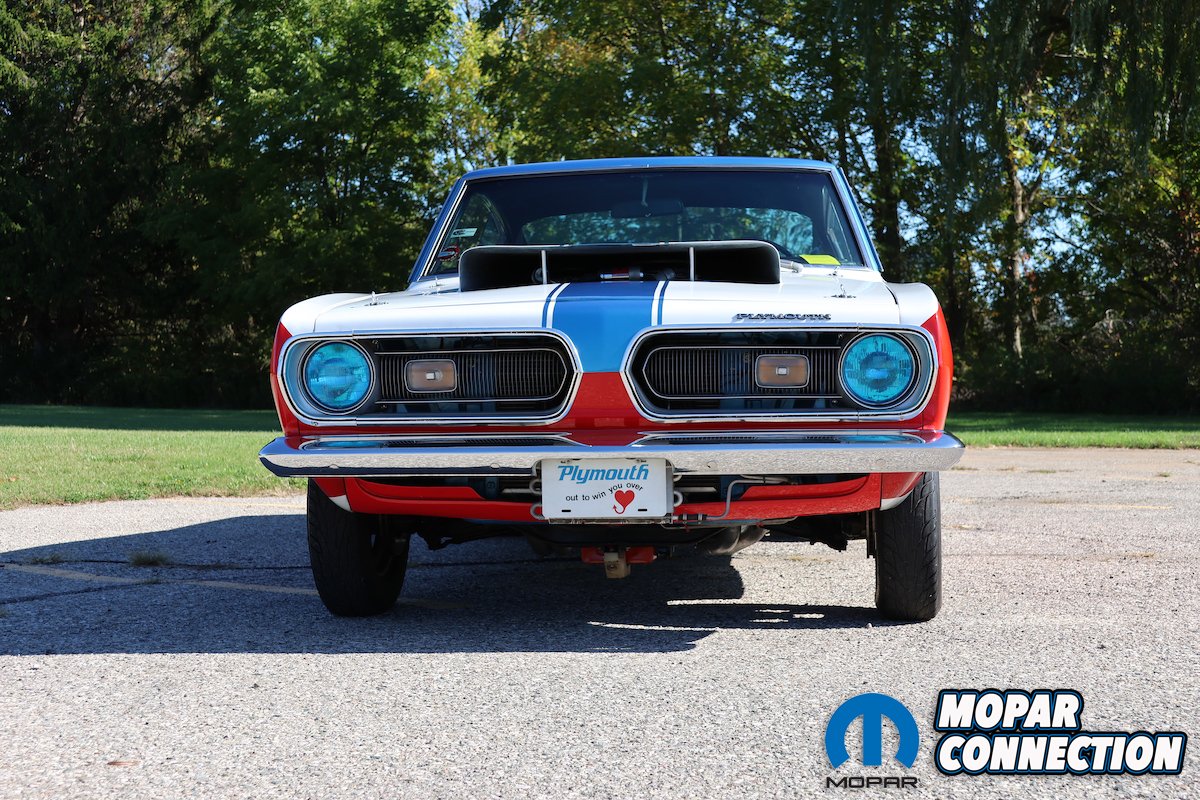
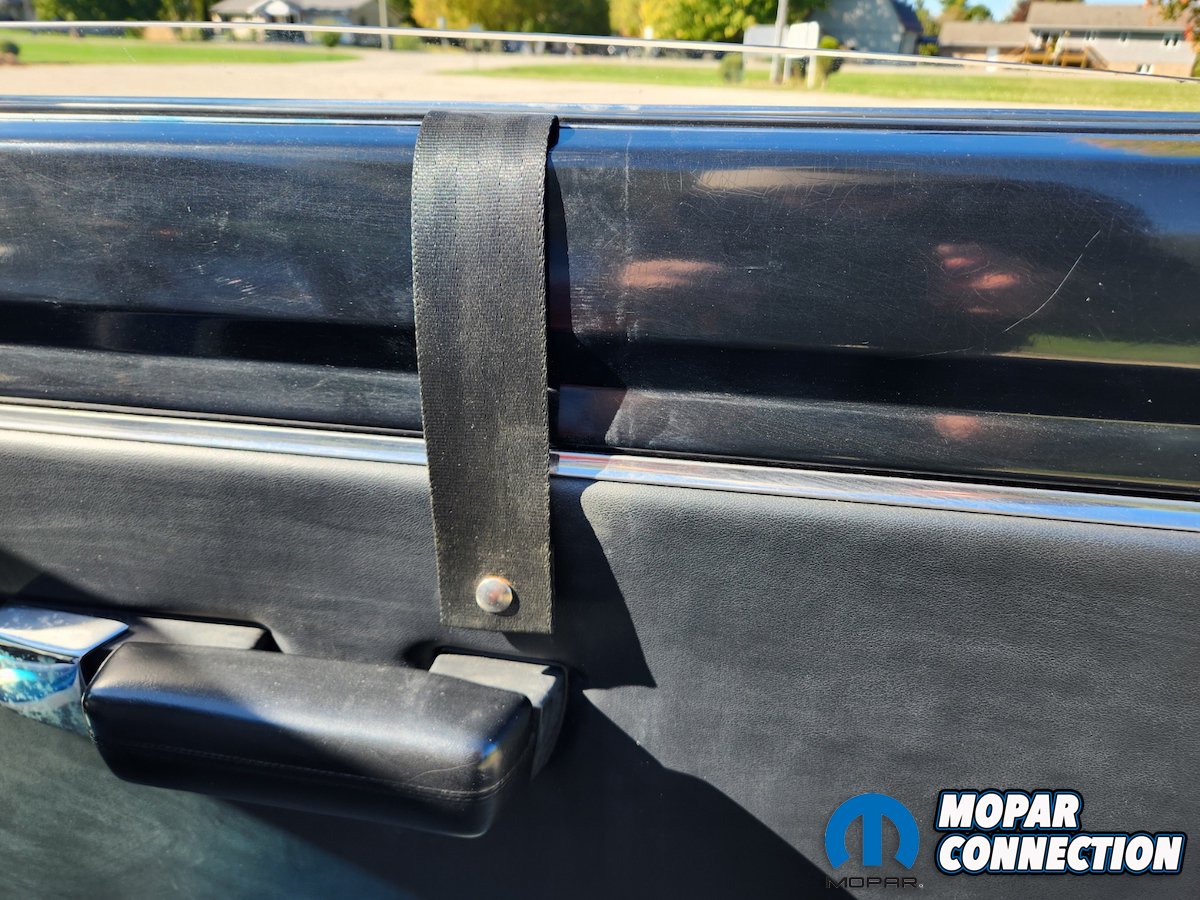
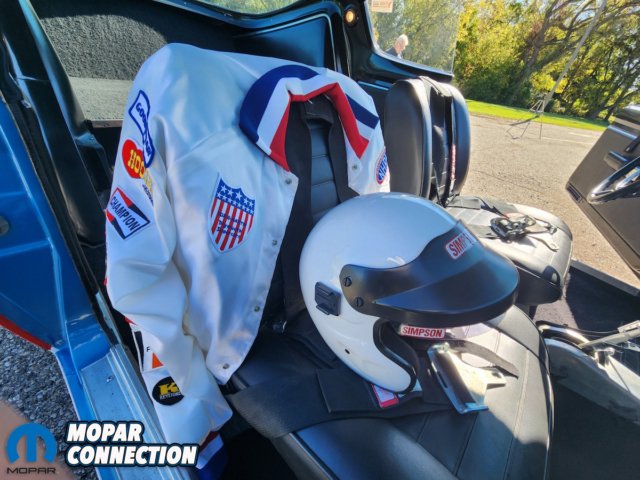
The foundation for the build was a 1968 Plymouth Barracuda equipped with replacement lightweight fiberglass front fenders and a fiberglass hood featuring the iconic HEMI hood scoop. To replicate the original B029 Super Stock configuration, all sound deadening and insulation were removed, along with the radio, heater, and side mirror. Inside, the factory seats were replaced with van-style bucket seats, and simple strap pulls were used to operate the manual windows, faithfully capturing the stripped-down, race-ready spirit of the original factory drag cars.
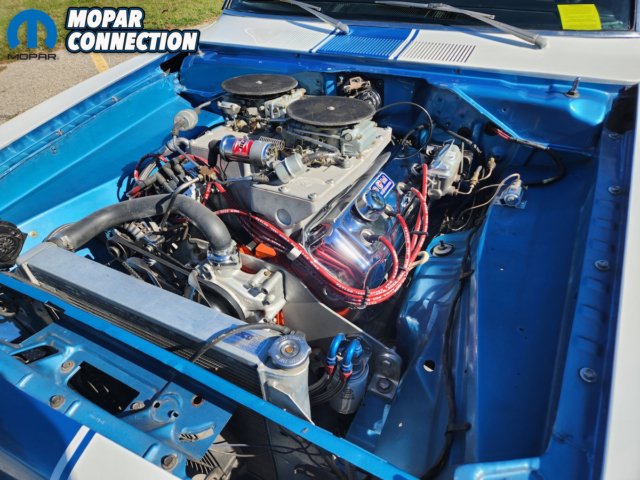
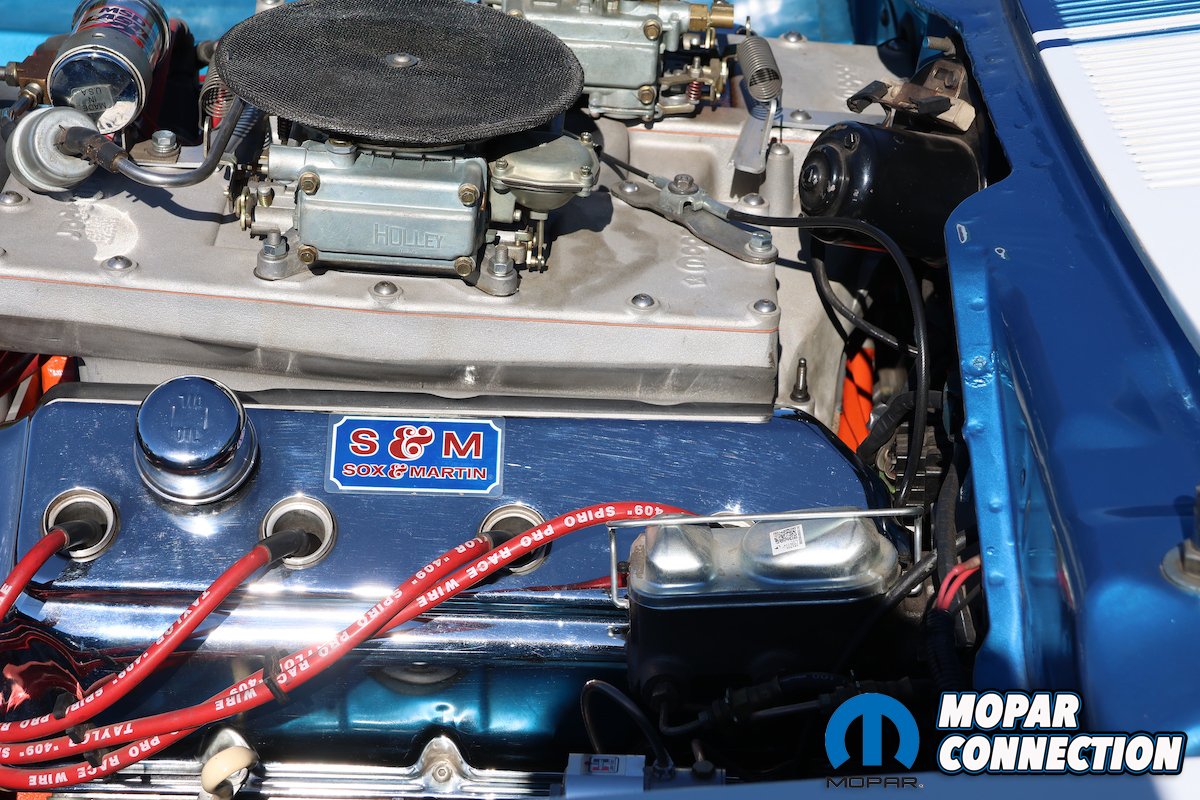
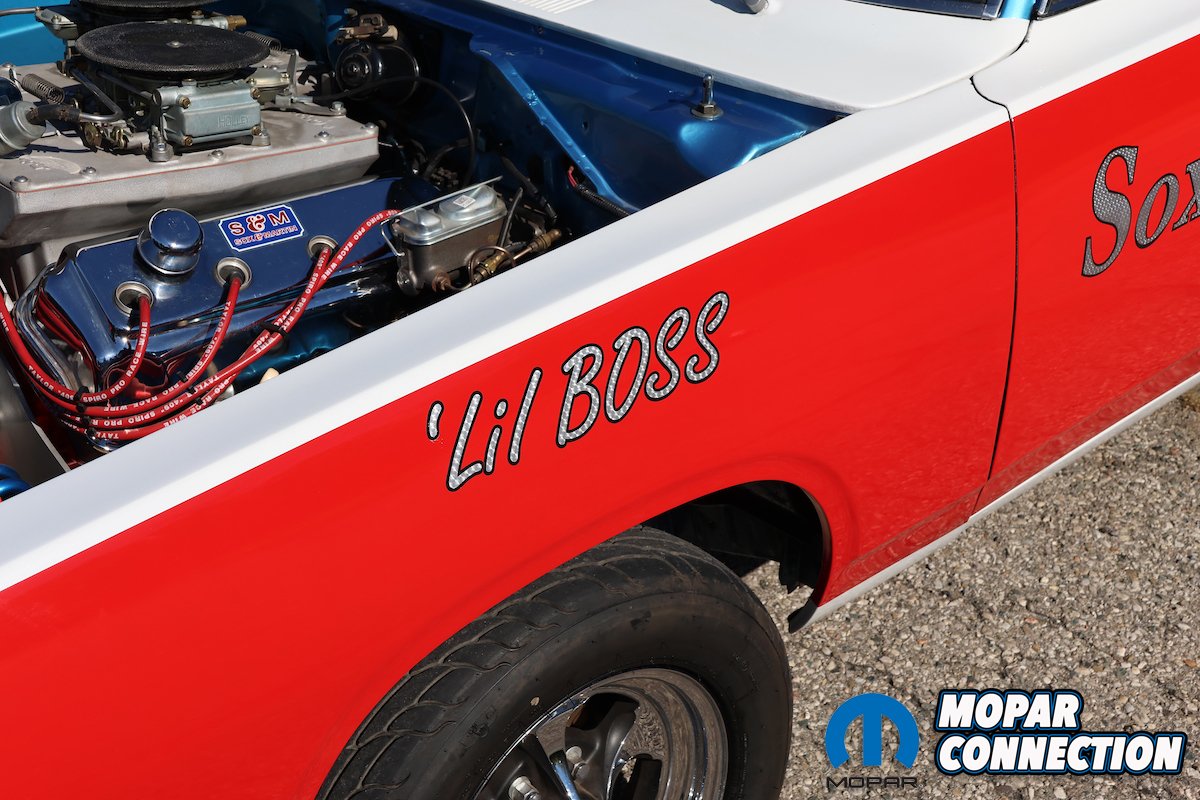
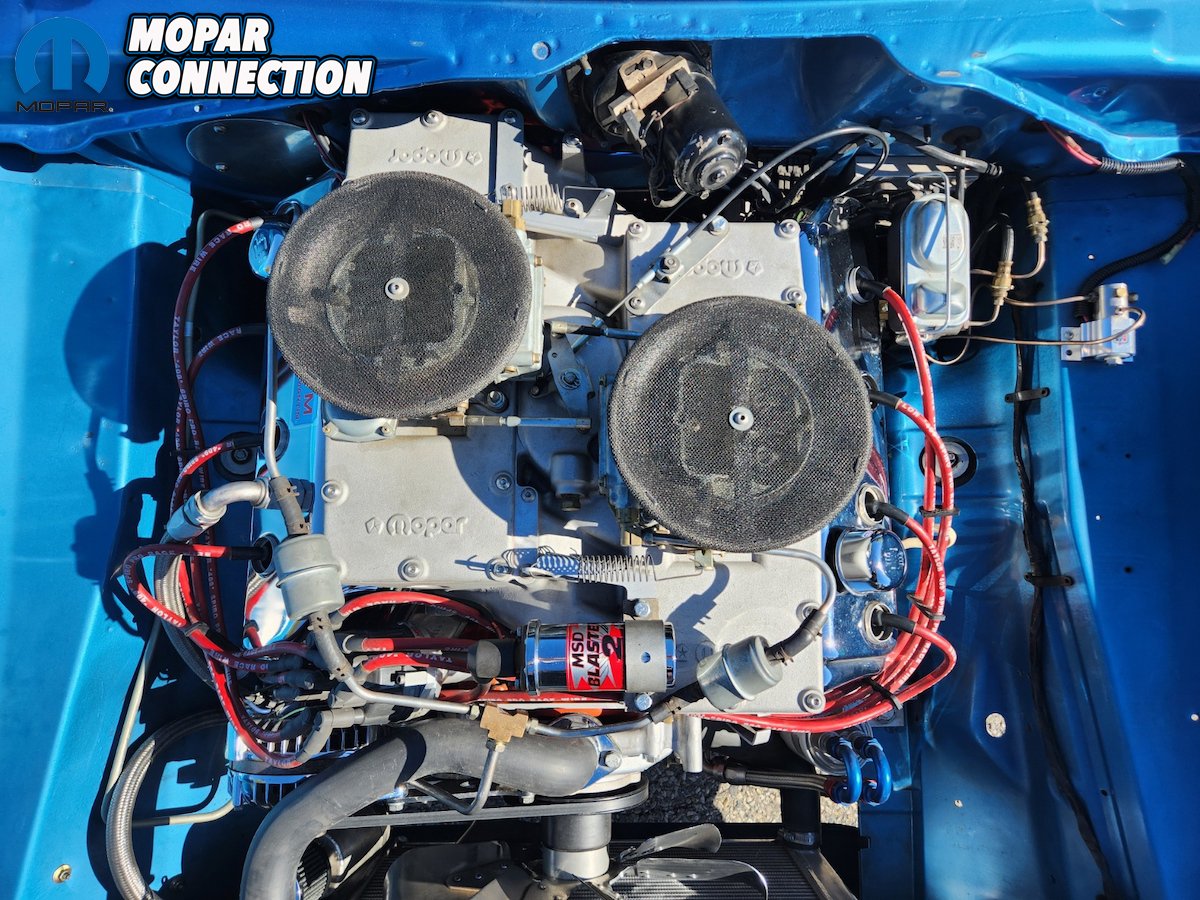
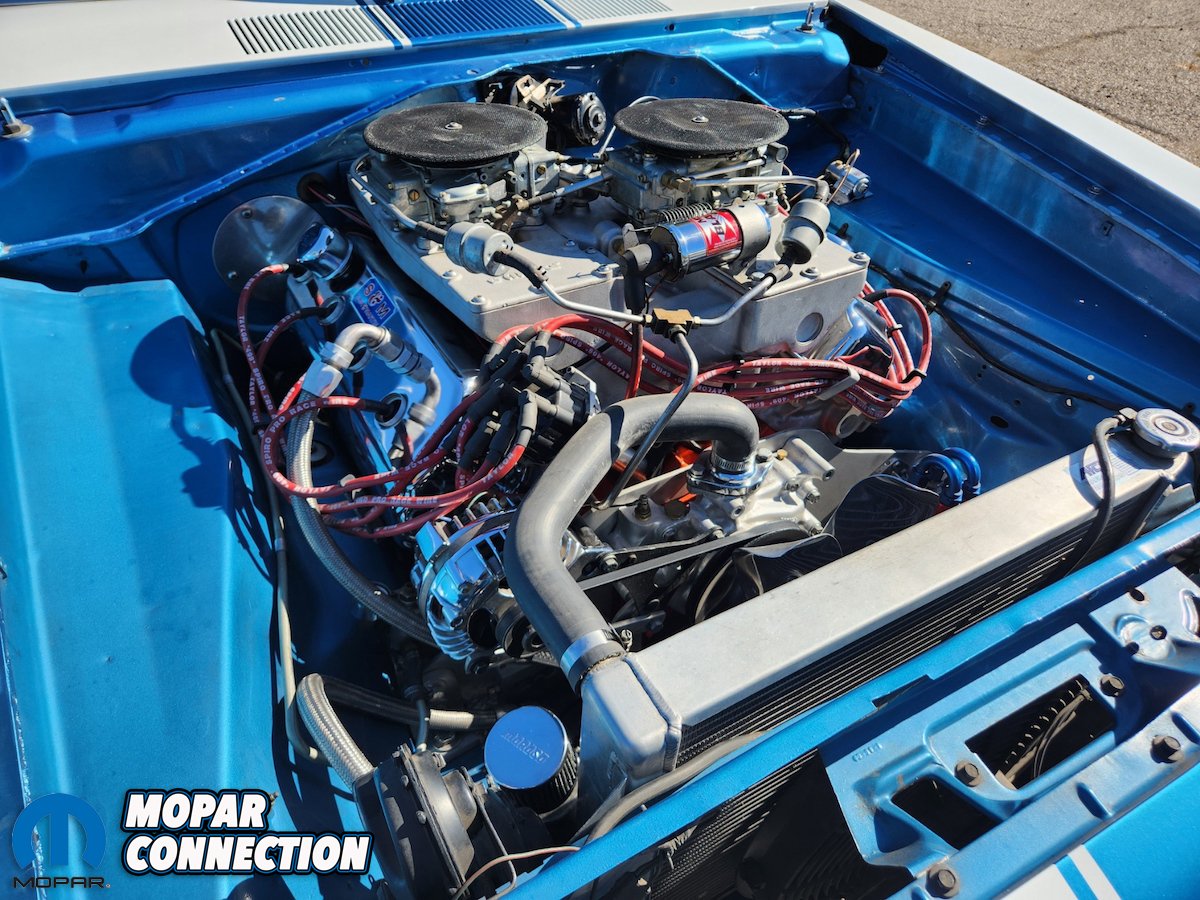
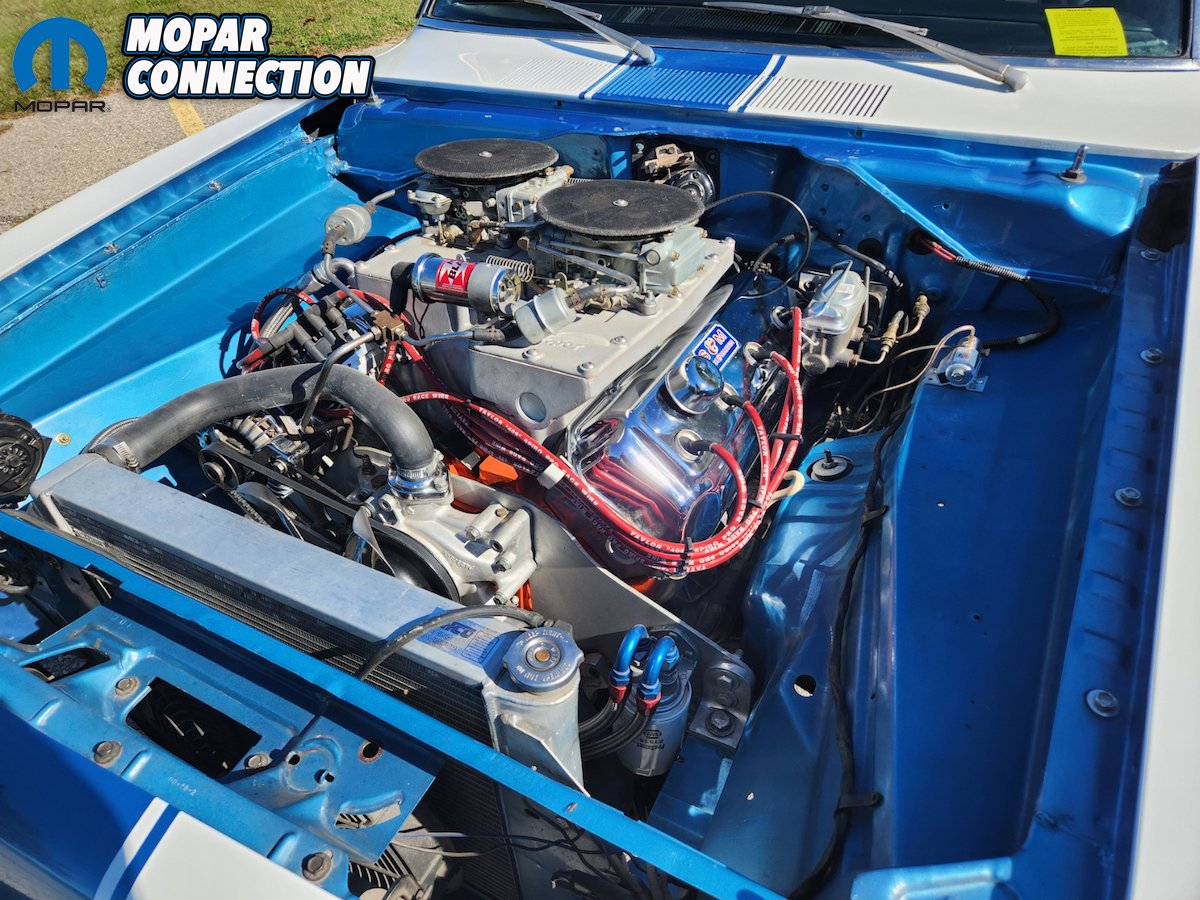
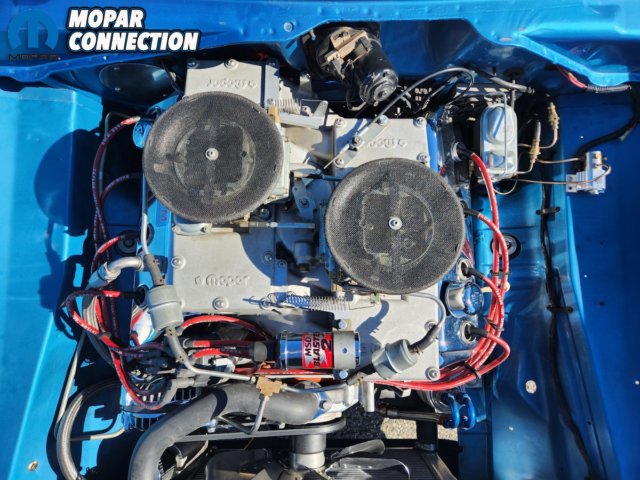
Powering the tribute is not a 426 Hemi but a 572 Hemi stroker block, a modern powerhouse built in the spirit of the original. It features a Super Stock aluminum cross-ram intake topped with twin Holley 600 cfm carburetors that feed the beast with precision. Inside, an Isky racing cam works with EDM solid lifters, delivering valve ratios of 1.57:1 intake and 1.52:1 exhaust. The compression ratio sits at 10.1:1, allowing the engine to run confidently on 93-octane pump gas while producing the kind of raw, responsive power worthy of its heritage.
Exhaust gases exit through 2¼-inch tubes that merge into 4-inch collectors before flowing into a full 4-inch dual exhaust system, a setup with enough bark to wake the dead in the next county.

An AFCO aluminum radiator paired with an electric fan keeps this beast running cool, a crucial upgrade given the tight confines of the Barracuda’s engine bay. With space at a premium, efficient cooling isn’t just an advantage; it’s a necessity.
Power is channeled through a Mancini-built A727 TorqueFlite transmission, featuring a manual reverse valve body and a 3,500 rpm stall converter for crisp, controlled launches. Out back, a Dana 60 rear axle with a spool setup and 4.56:1 gears translates the HEMI’s brute force directly to the pavement—an uncompromising drivetrain engineered for straight-line domination.
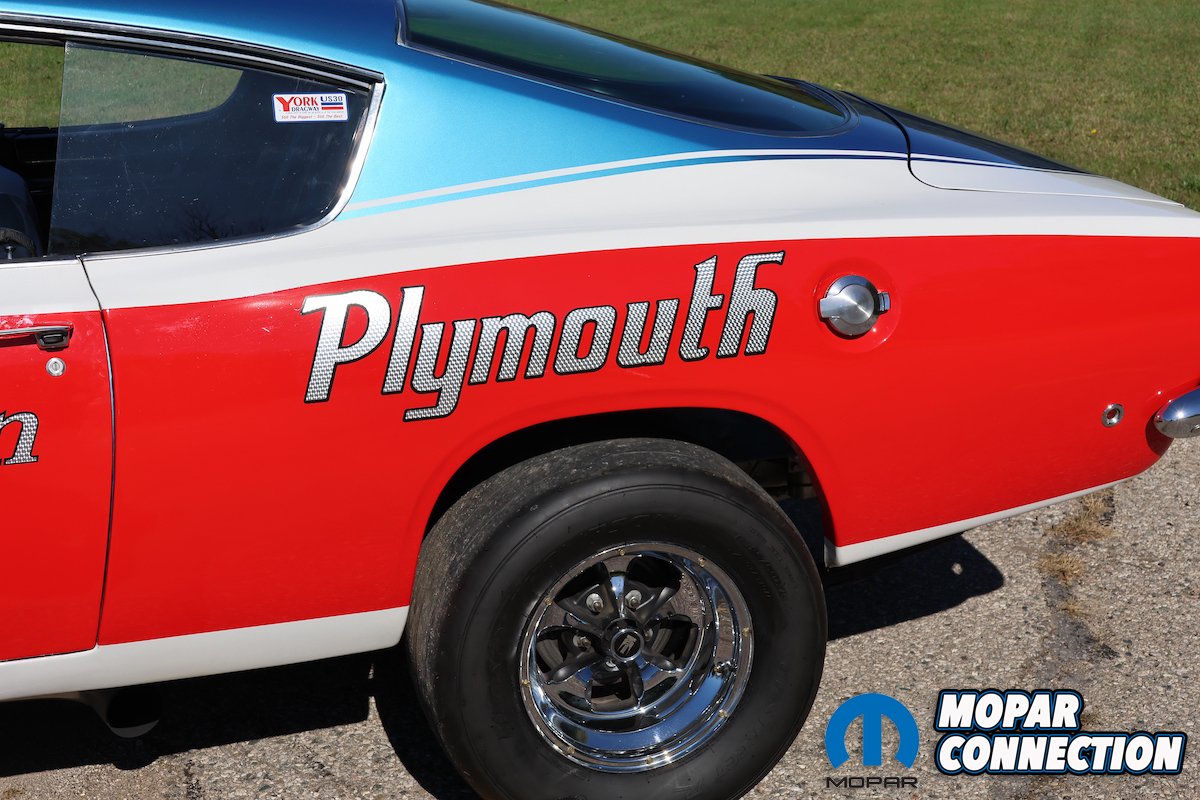
The Barracuda rides on Keystone mag wheels, wrapped in Mickey Thompson LT Sportsman S/R tires sized 26×6.00×15 up front and 325/50R15 Mickey Thompson ET Street tires in the rear, giving it the perfect stance for both show and strip.
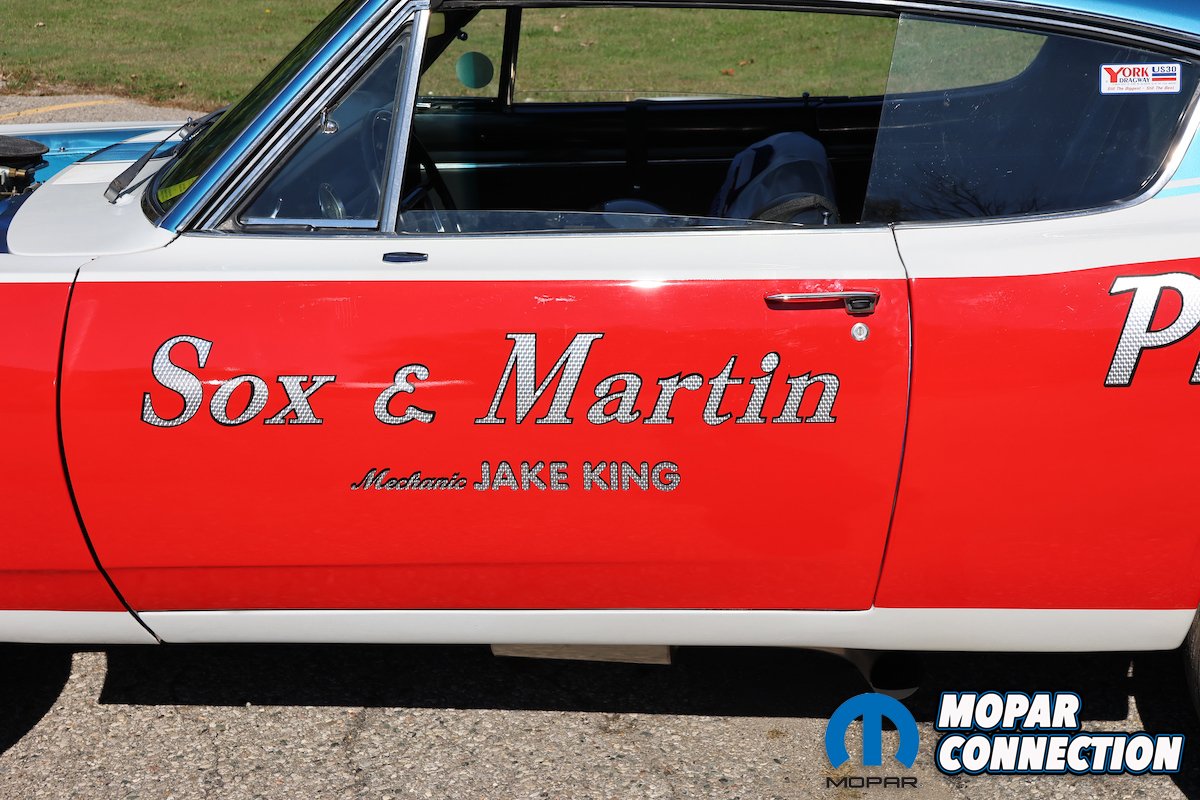
The car wears the legendary Sox & Martin paint scheme—one of the most recognizable liveries in drag racing history, representing one of the sport’s most celebrated teams. Driven by the incomparable Ronnie Sox, the Barracuda became a symbol of Mopar dominance. During the 1968 NHRA season, Sox & Martin captured more than a dozen major event victories, including the Springnationals, Winternationals, and U.S. Nationals, where Sox’s lightning-fast four-speed shifts earned him a place among drag racing’s immortals.
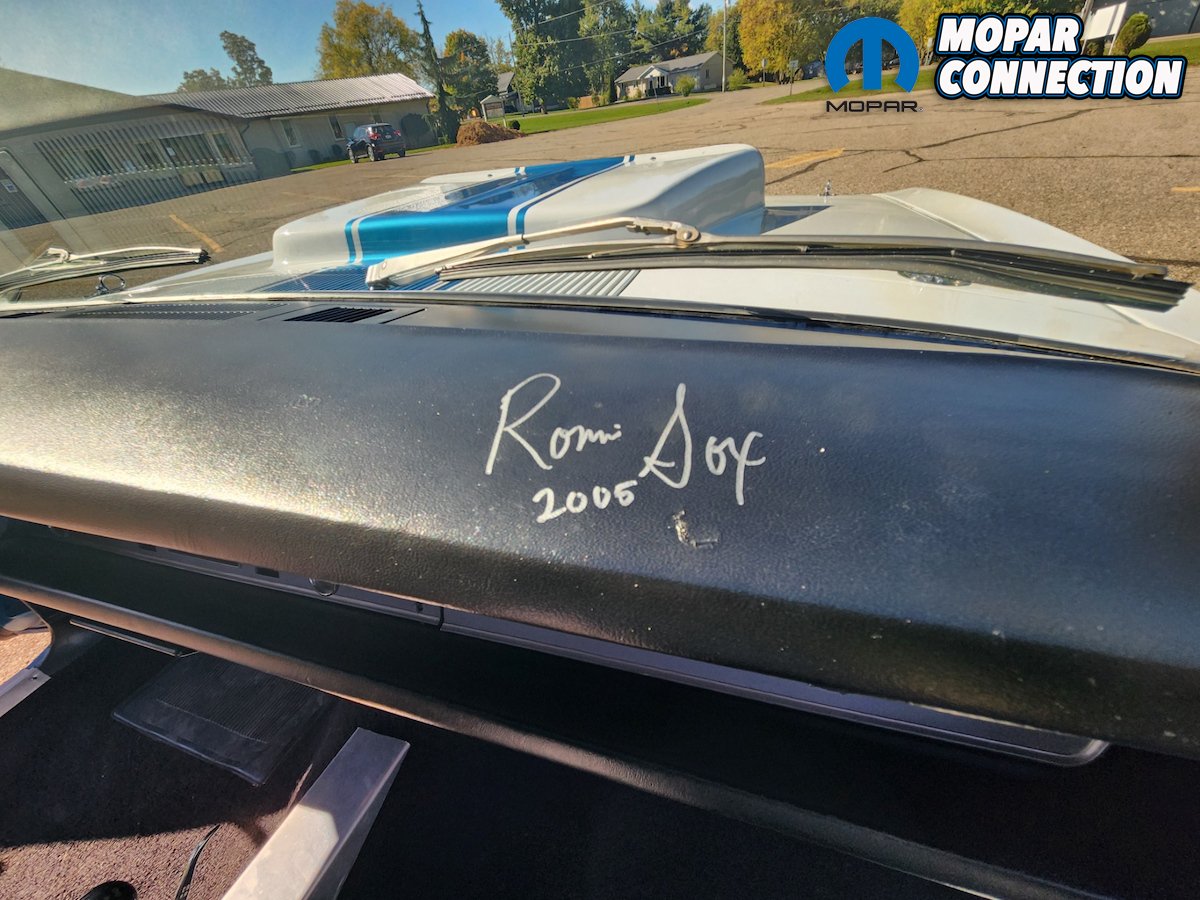
The Barracuda later appeared at the 4th Annual York US 30 Muscle Car Madness show, held July 8–9. There, this striking tribute to Ronnie Sox drew plenty of attention, and fittingly, Ronnie himself signed the dashboard, adding a personal touch to the car’s story. Sadly, the legendary driver would lose his battle with cancer the following year, in 2006, making that autograph a lasting reminder of his legacy and influence on Mopar history.
The Sox & Martin Barracuda later made the trip to the Mopars at the Red Barn show in Michigan, where it captured first place in its class. The win was a fitting recognition of the car’s craftsmanship and its faithful tribute to one of Mopar’s most celebrated racing partnerships.
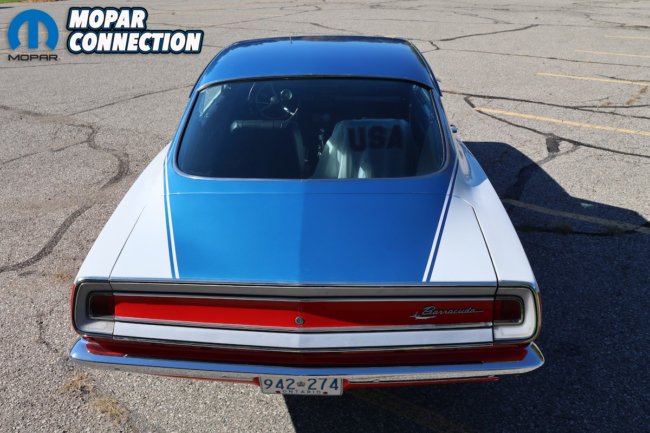
The Barracuda eventually changed hands when Mike Lehti traded it for a Dodge Viper at a small Chrysler dealership in the farming community of Aylmer, Ontario. In September 2005, the dealership proudly showcased the car as a promotional centerpiece—its vivid colors and racing heritage drew attention and celebrated Mopar’s enduring performance legacy.
When the dealership eventually closed, its inventory was sold at auction—including the Sox & Martin Barracuda, which was still registered under the dealership’s name. The car crossed the auction block and, in 2014, found a new home with Mike Summers. Since acquiring it, Mike has thoroughly enjoyed owning and showing the Barracuda, preserving its legacy as both a tribute to Mopar’s racing heritage and a piece of living history.
The Barracuda sat untouched for nearly nine years, and when Mike Summers finally began driving it, he discovered several mechanical issues that had developed during its long dormancy. Determined to restore the car’s performance, he entrusted the HEMI engine to Mick Kraushaar of Tillsonburg, Ontario, who completed a full rebuild in 2023—bringing the powerhouse back to life and ensuring the Barracuda once again ran as strong as it looked.
More than half a century later, the spirit of the Sox & Martin Barracuda still burns bright. Its unmistakable red, white, and blue paint scheme stands as a tribute to one of drag racing’s most dominant teams and to the golden era of factory-backed muscle. For enthusiasts like Mike Summers, preserving and celebrating this legacy isn’t just about horsepower—it’s about honoring a time when skill, innovation, and determination defined the sport. The 1968 Barracuda remains a rolling reminder of when Chrysler’s engineering met human precision and history was written a quarter mile at a time.