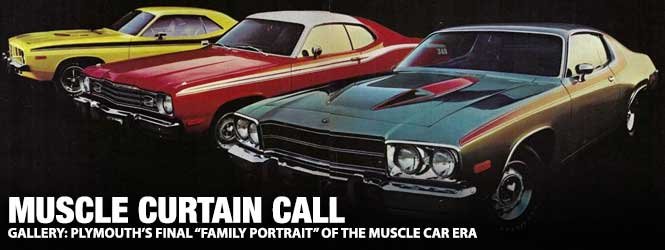
In 1973, Plymouth unintentionally assembled what many enthusiasts now regard as the final “family portrait” of the muscle car era. The advertisement featured three legendary names together: the Duster 340, the ‘Cuda, and the Road Runner. Looking at it today, it almost feels like Plymouth was saying goodbye, even if that was not the company’s intent.
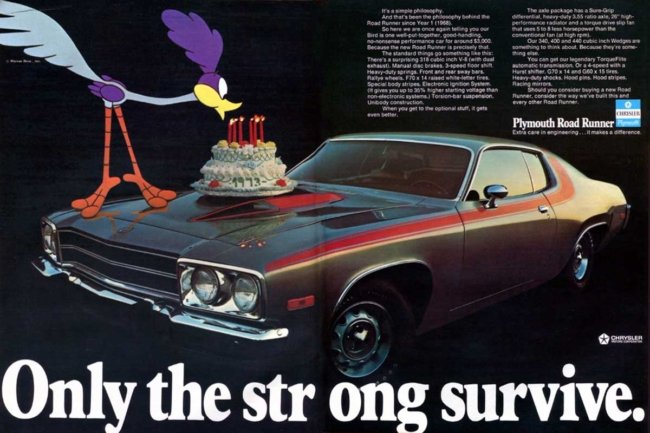
Above: The 1973 Plymouth Road Runner marked the closing chapter of the high-compression muscle car era, as emissions controls, lower compression ratios, and rising insurance costs had already begun to soften its performance compared to earlier years. Even so, it retained the classic Road Runner identity, combining bold styling with budget-friendly performance for enthusiasts who valued attitude and heritage as much as raw horsepower.
By 1973, the horsepower war that had defined the late 1960s had largely come to an end. The industry had changed almost overnight. Rising insurance premiums penalized buyers of high-performance cars. Federal emissions regulations caused engineers to lower compression ratios and tame aggressive camshafts. To make matters worse, the first oil crisis would hit later in the year, unleaded gasoline was on the horizon, and catalytic converters were only a year away. The carefree days of ordering a 426 Hemi or a 440 Six-Barrel were already history.
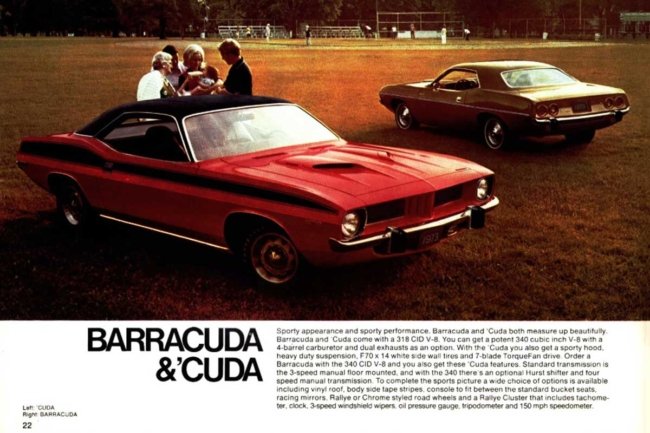
Above: The 1973 Plymouth ‘Cuda carried forward the E-body’s aggressive stance and street presence, but horsepower was noticeably reduced due to the drop in compression ratio across the engine lineup. Even so, it still delivered strong visual impact and retained enough performance and attitude to remain one of the last recognizable expressions of Mopar muscle from the era.
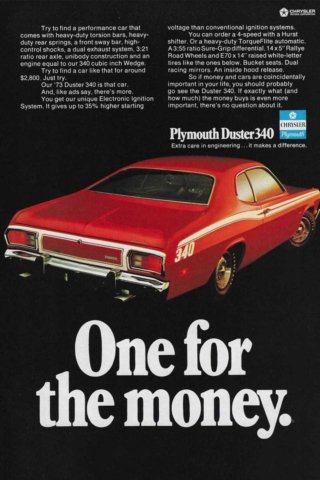
Yet Plymouth still had three performance cars in its showroom. The compact Duster 340 represented affordable performance. It was not flashy, but its relatively light weight and small-block V8 still delivered respectable acceleration. Although the 340 had lost compression and horsepower compared to its 1970 predecessor, it remained one of the best-balanced performance cars Detroit offered.
The ‘Cuda, once the terror of Woodward Avenue and drag strips across America, had been softened by changing regulations. The legendary Hemi and 440 Six Barrel were gone after 1971. Buyers could still order a 340-powered ‘Cuda, but the car had become more of a stylish personal sports coupe than an all-out street fighter. Ironically, a year later, 1974, would be the final full production year for the ‘Cuda before the E-body disappeared.
The Road Runner continued to carry Plymouth’s performance banner. It still wore the famous cartoon decals and “beep-beep” horn, but beneath the skin, it had evolved into more of a sporty intermediate than the bare-bones muscle car introduced in 1968.
The performance engine choices centered around the 400 and 440, but these were lower-compression versions designed to survive tightening emissions standards rather than dominate stoplight races. By 1976, the Road Runner would be a sticker package on the Volare.
Seen together in that advertisement, the three cars represented different chapters of the same story. The Duster was the future of affordable performance. The Road Runner was trying to preserve the muscle car tradition. The ‘Cuda was closing in on its final bow.
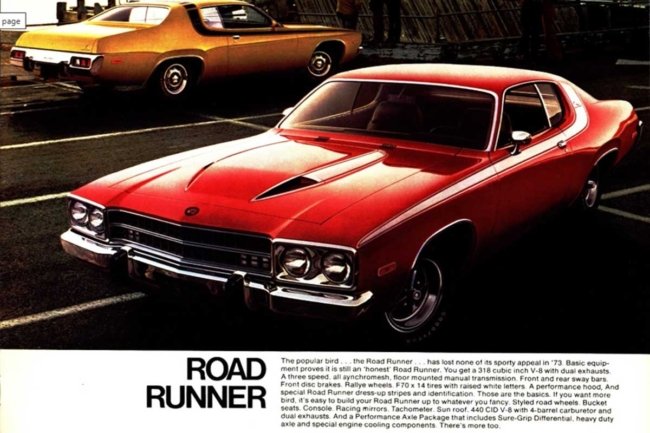
Above: The Plymouth Road Runner represented a shift in which the nameplate mattered as much as performance, carrying forward its reputation in a more restrained yet still recognizable form. It remained a straightforward, driver-focused machine that leaned on low-end torque and solid street manners rather than the high-compression horsepower figures of earlier years.
What makes the advertisement fascinating today is what Plymouth did not say. There were no quarter-mile times. No challenges to Chevrolet, Ford, or Pontiac. No bold horsepower claims splashed across the page. Marketing had shifted from brute performance to style, individuality, and image. It reflected the reality of 1973: buyers were no longer choosing cars based solely on how quickly they could cover 1,320 feet.

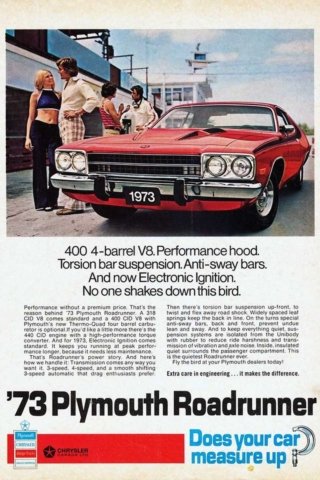
So, was the muscle car flame finally out? Not entirely. It was no longer the roaring bonfire that had illuminated the streets between 1968 and 1971. Instead, it had become a glowing bed of coals. The spirit remained, but government regulations, insurance companies, rising fuel costs, and changing consumer priorities had reduced the fire to embers.
Those embers never completely died. Enthusiasts continued to race, modify, and preserve these cars throughout the 1970s and 1980s. Companies like Mopar kept performance alive through Direct Connection parts.
Grassroots drag racing continued every weekend. Owners changed camshafts, installed headers, and scoured junkyards for better cylinder heads. The culture prevailed even when factory horsepower declined.
When Dodge revived the Hemi in the early 2000s and later unleashed the Hellcat and Demon, many called it a muscle car renaissance. But perhaps “renaissance” is not quite the right word. A renaissance implies something died and was reborn. The muscle car never truly died. It simply waited.
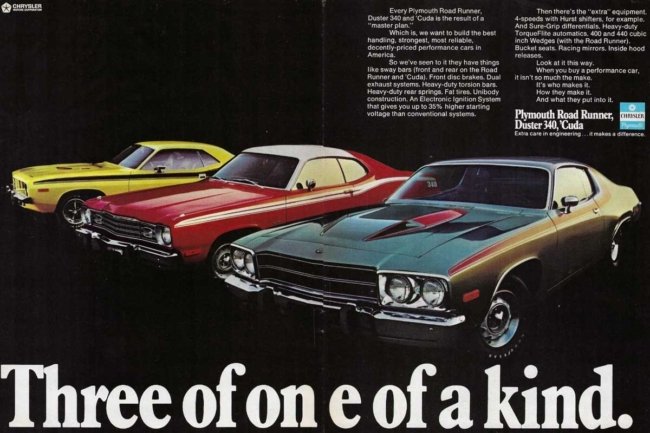
Above: Plymouth’s 1973 “Three of One of a Kind” advertisement brought together the Plymouth Duster 340, the Plymouth ‘Cuda, and the Plymouth Road Runner in a single lineup that showcased the brand’s unified push of performance across compact, intermediate, and pony-car segments. Although the trio would remain for another model year, today, the ad reads like a closing statement for the muscle car era, capturing three very different expressions of Plymouth performance just as the market was shifting away from its peak horsepower years.
That 1973 Plymouth advertisement captured the moment the first factory performance era faded into history. The Duster 340, the ‘Cuda, and the Road Runner stood together one last time; not as the kings of Detroit, but as proud survivors of an era that had changed forever.
Today, enthusiasts see something the original advertising executives probably never imagined. What was once just another showroom promotion has become a historical snapshot; the last time Plymouth’s three great performance nameplates shared the stage before the curtain fell on the first golden age of American muscle.