Rob Blancher grew up in a dyed-in-the-wool Chevy household. His brother still carries the torch, owning two Chevy Novas—one a street car, the other a dedicated racer. With that kind of upbringing, Rob naturally became a GM loyalist.
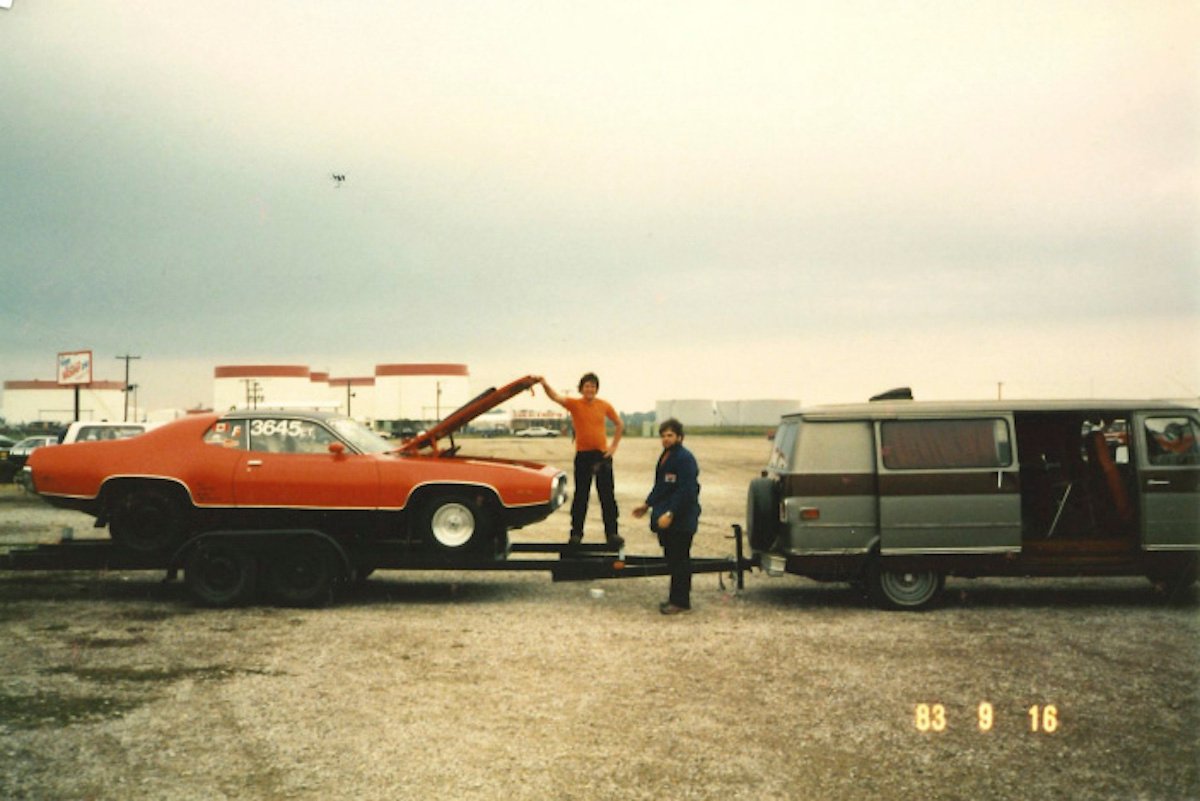
That stayed true until the day a friend decided he wanted to try his hand at drag racing. Carey Hunt had picked up a 1972 Plymouth Satellite with racing in mind, but he was green as grass when it came to the sport—no experience, no real understanding of what it took to be competitive.
Seeing a friend in over his head, Rob stepped in. He took on driving duties, wrenching duties, and whatever else was needed to get the Satellite down the track. It was the beginning of a Mopar chapter he never expected.
Rob did not have much Mopar experience when he first got involved, so the whole venture was unfamiliar territory. But Rob has never been one to back away from a challenge. He dug in, learned quickly, and focused on squeezing every ounce of performance out of the Satellite.
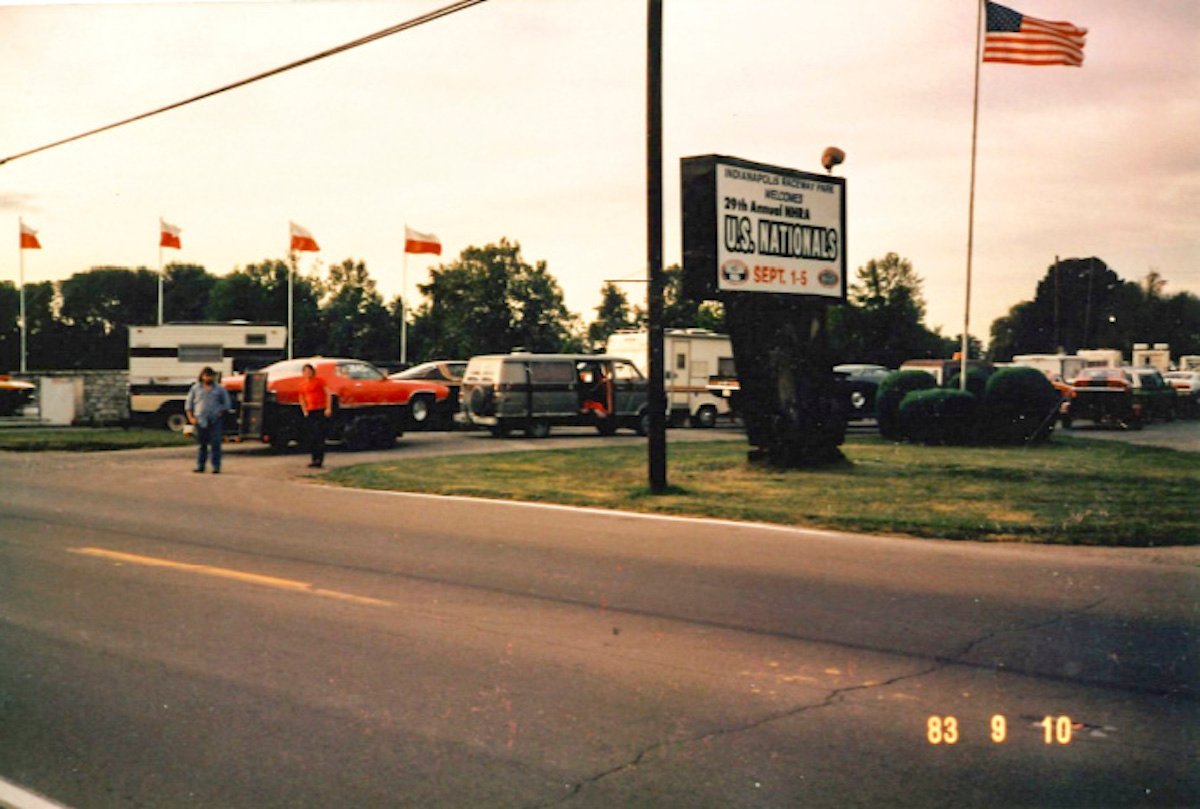
Their hard work paid off in a big way. The pair captured the 1983 Street Class Track Championship at St. Thomas Dragway, proving that determination can outrun inexperience. As points leaders, the track even covered their entry to compete at the NHRA Division 3 Bracket Nationals at Indianapolis Raceway—a remarkable step up for two friends who started out just trying something new.
Rob’s Mopar education came fast and unexpectedly—and before long, it reshaped his loyalties. During those early racing years, he developed a genuine appreciation for the Chrysler brand, especially the lively, lightweight A‑bodies. Affordable, competitive, and easy to coax into quicker times, they were the go-to choice for grassroots drag racers. Naturally, Rob wanted one of his own.
He eventually landed a 1974 Dodge Dart Sport, equipped with a 318 CID two‑barrel and an automatic. It served double duty: weekday transportation and weekend experiment. Rob tinkered constantly, seeing just how much extra punch he could squeeze from the small block. For a time, the Dart Sport was exactly what he needed—fun, reliable, and responsive to every tweak.
Cars come and go, though, and the Dart eventually gave way to other Mopars. Over the years, Rob cycled through a handful of Chrysler products, from multiple Ramchargers to a 1966 Dodge Coronet. Each one added another chapter to a Mopar story he never expected to write back when he was a Chevy kid.
About twenty years ago, Rob felt the itch to bring another vintage machine into his life. He had a short list of possibilities—each one rooted in his growing affection for Mopar heritage. On his radar were a mid-’50s two-door Dodge, an early-’50s Plymouth, a Dodge two-door wagon, or another Dodge Dart Sport like the one he had owned years earlier.
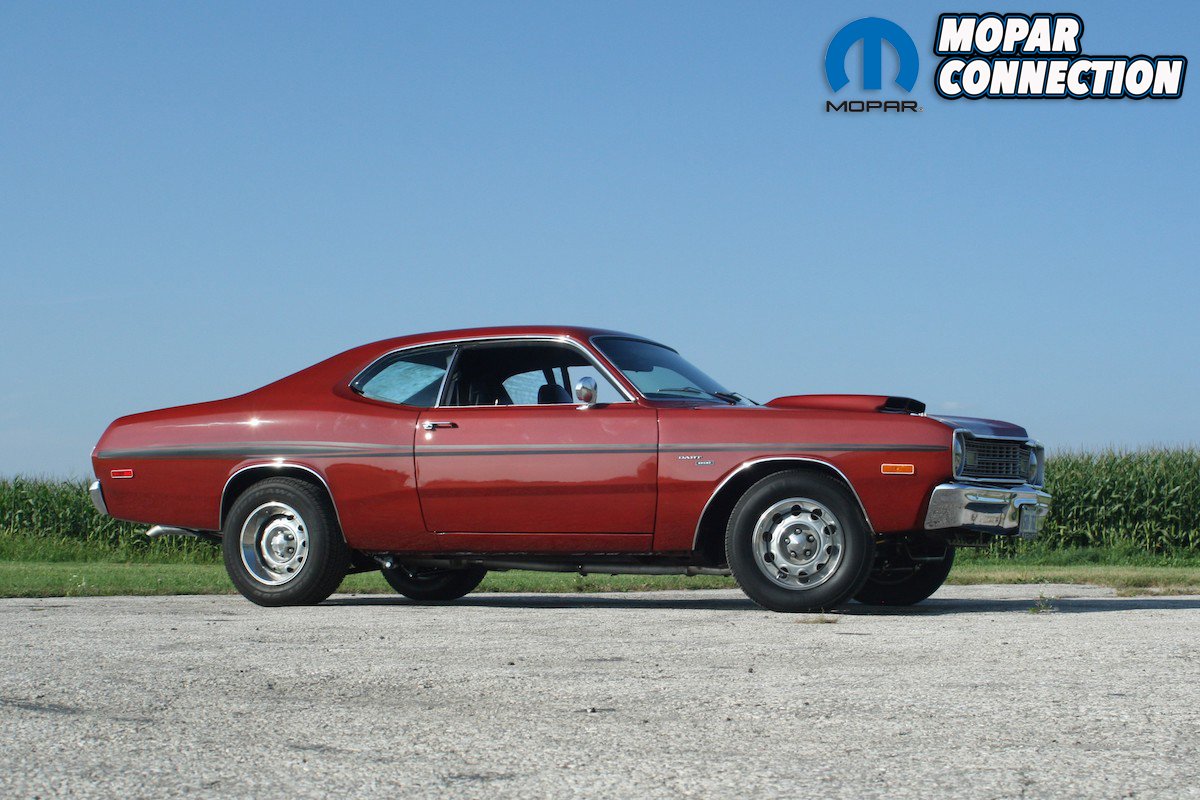
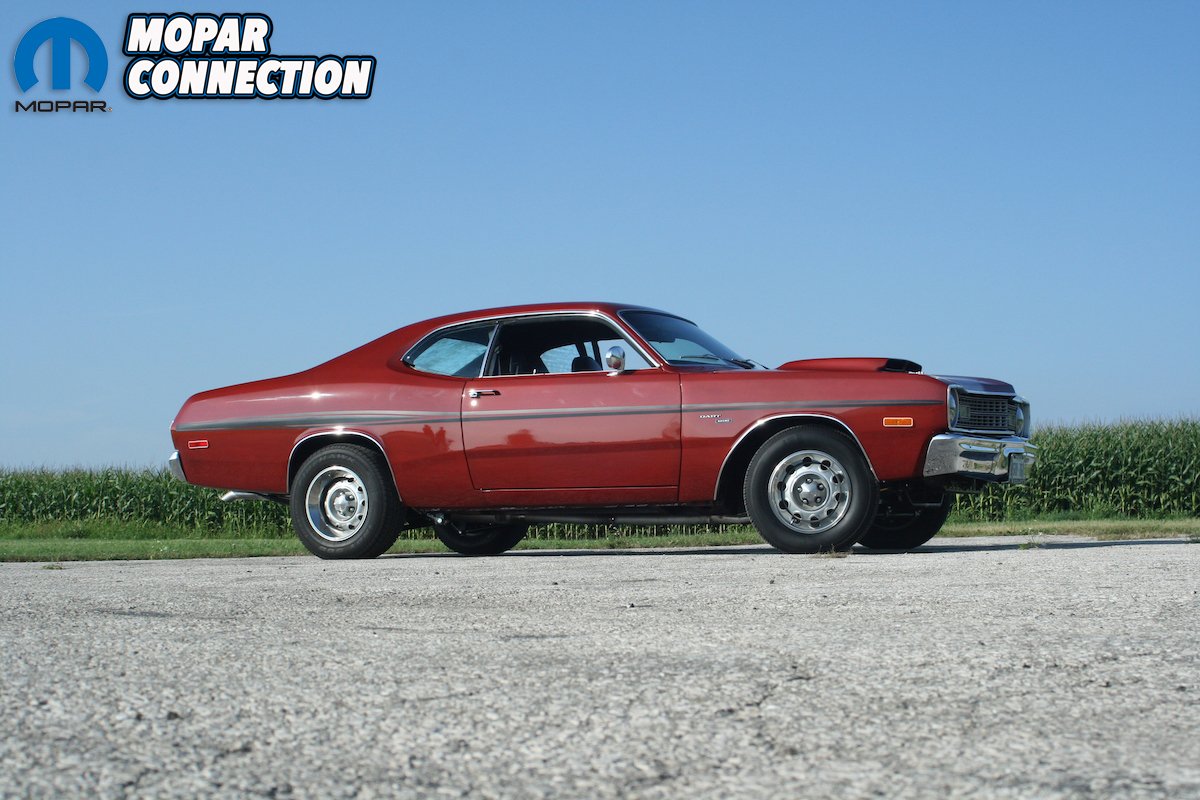
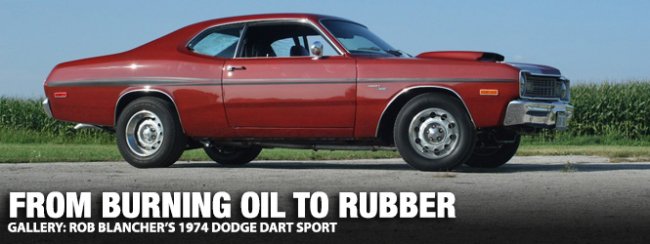
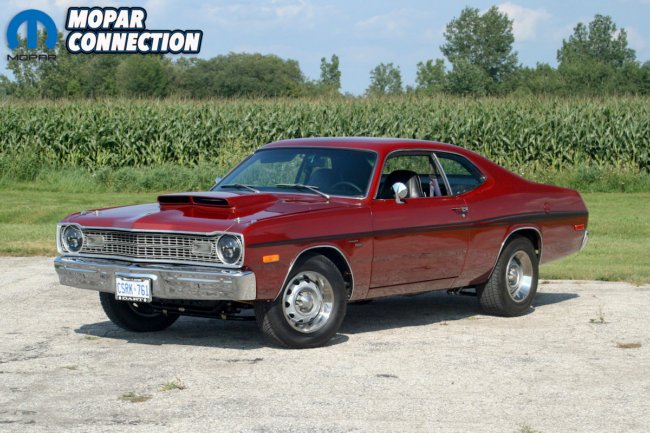
While browsing online one day, a familiar shape caught his eye: a 1974 Dodge Dart Sport listed on eBay. He reached out to the seller, worked out a deal, and bought the car for $2,000. What he brought home was a St. Louis–built Dart, one of 23,225 produced that year with the 150-horsepower 318 CID engine. This particular example was equipped with a three‑speed manual—an uncommon and appealing detail.
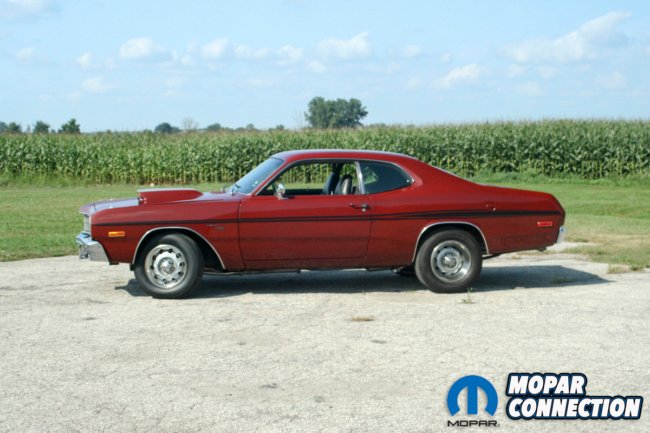
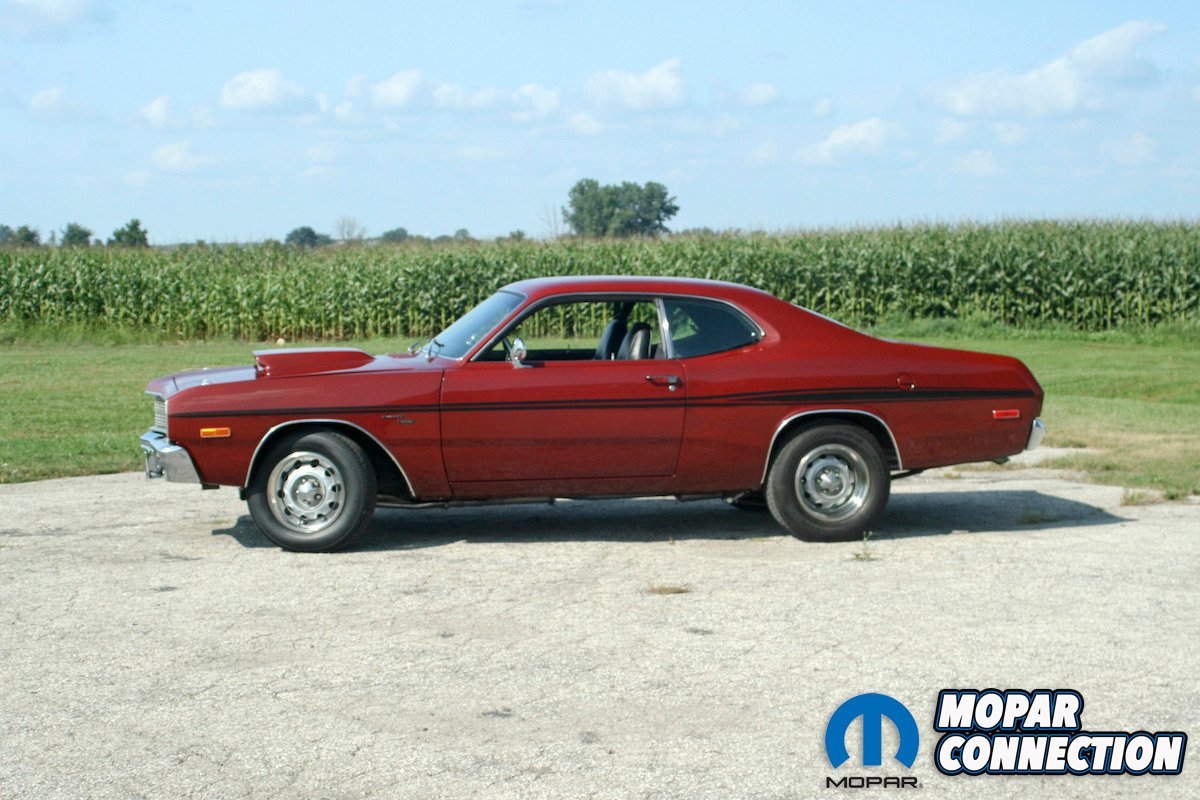
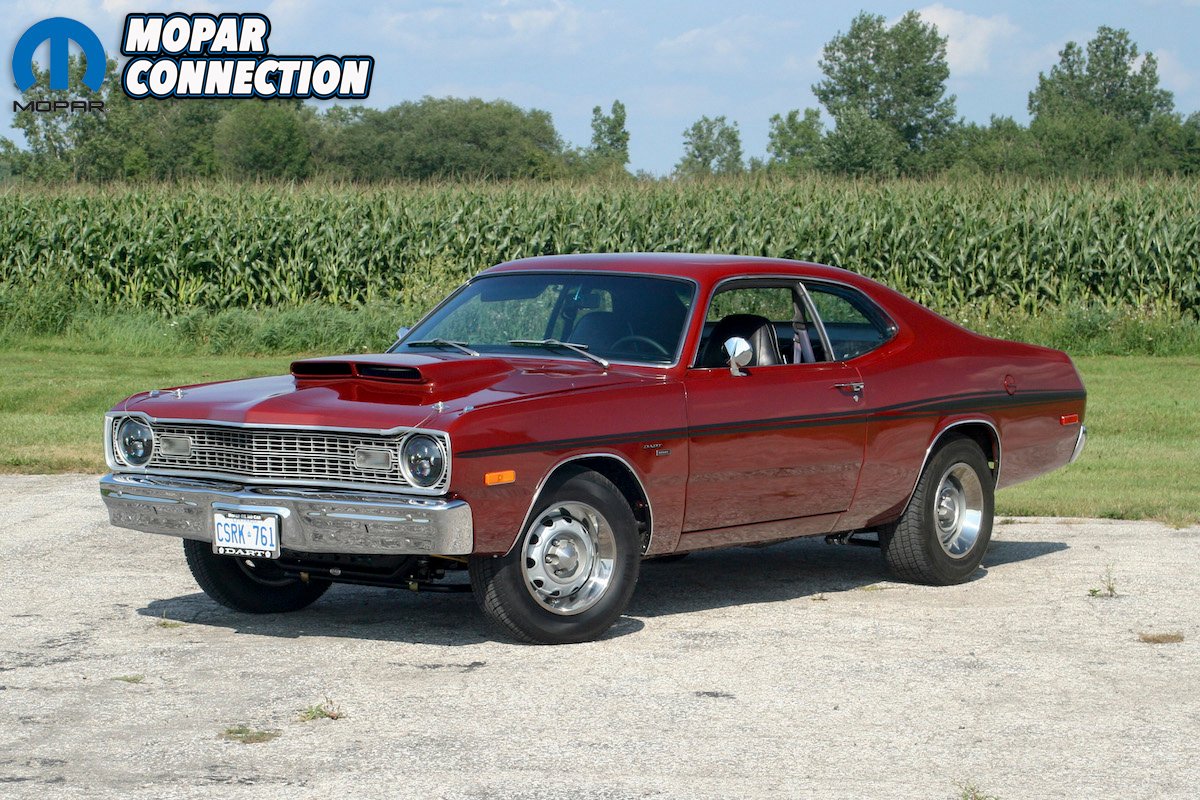
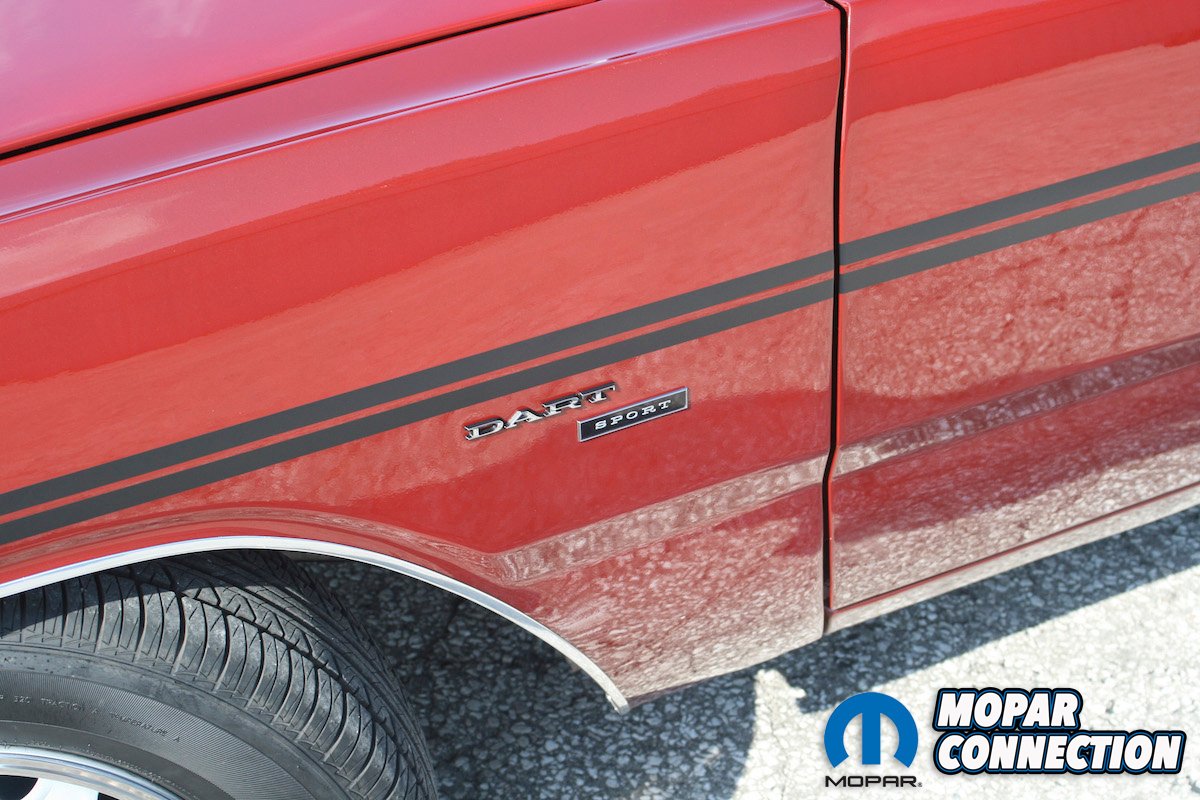
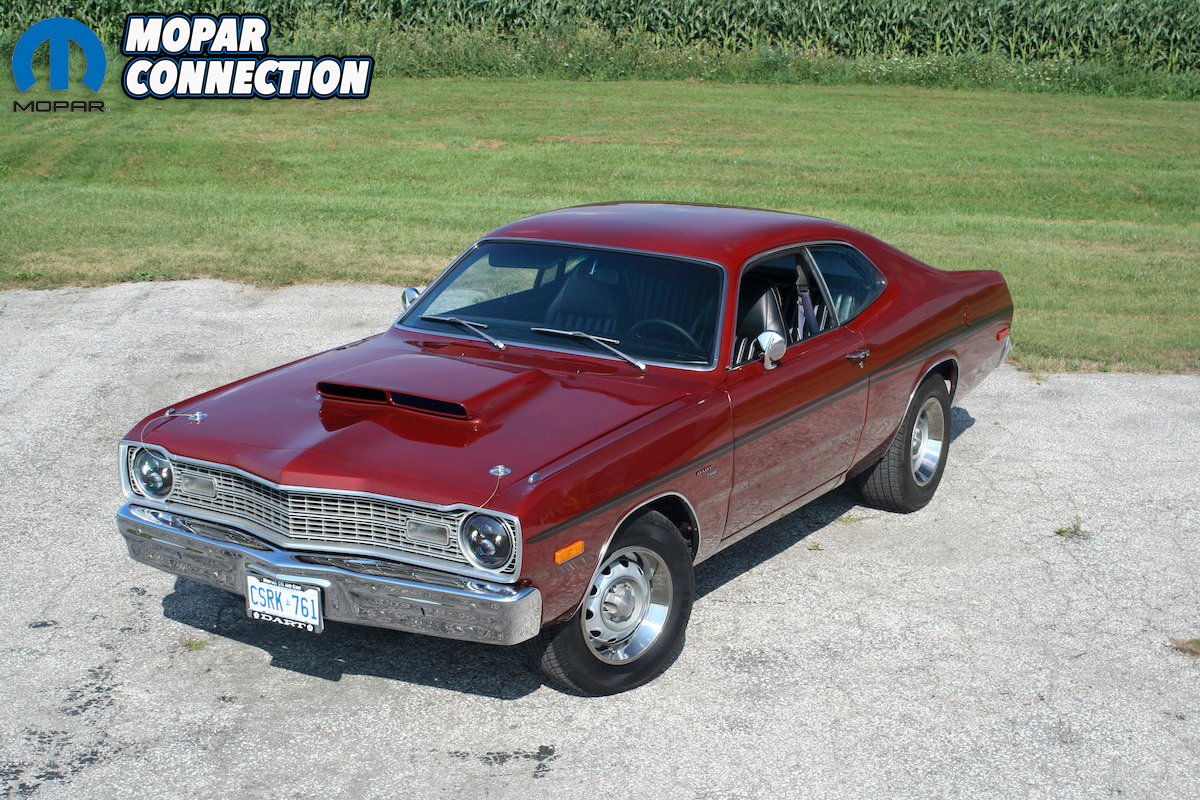
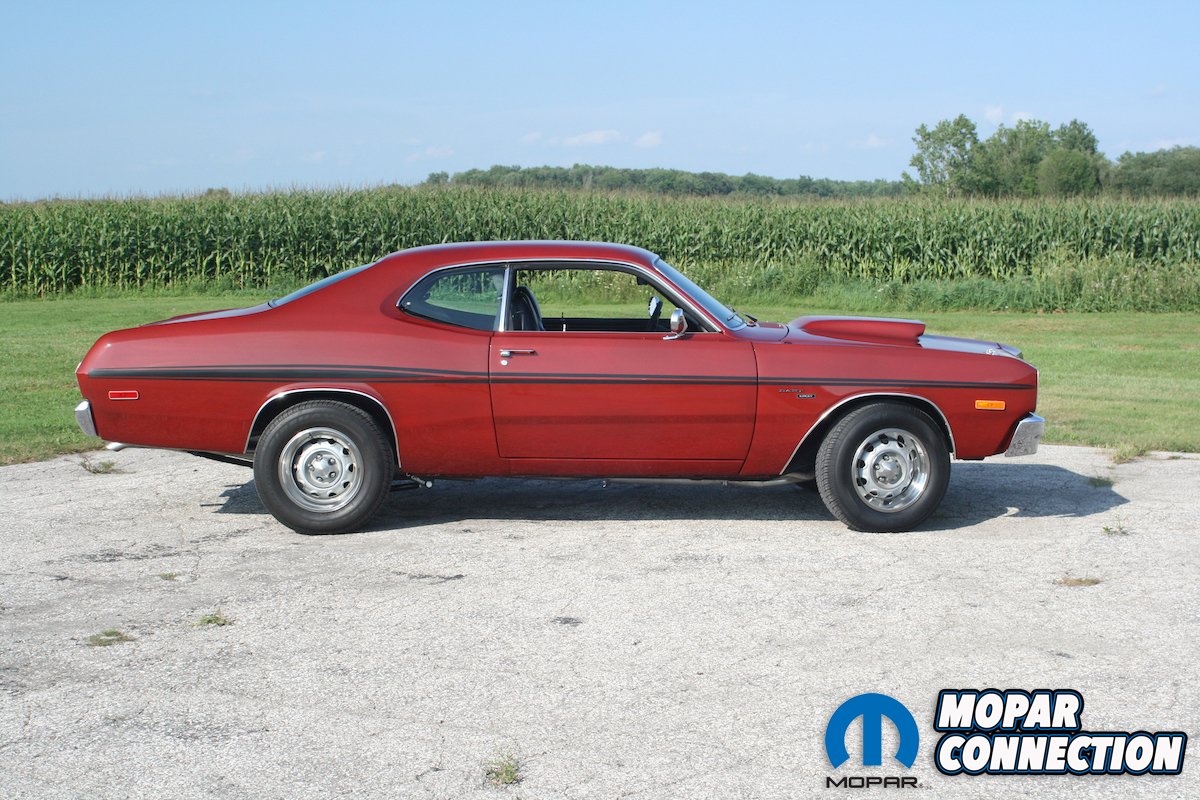
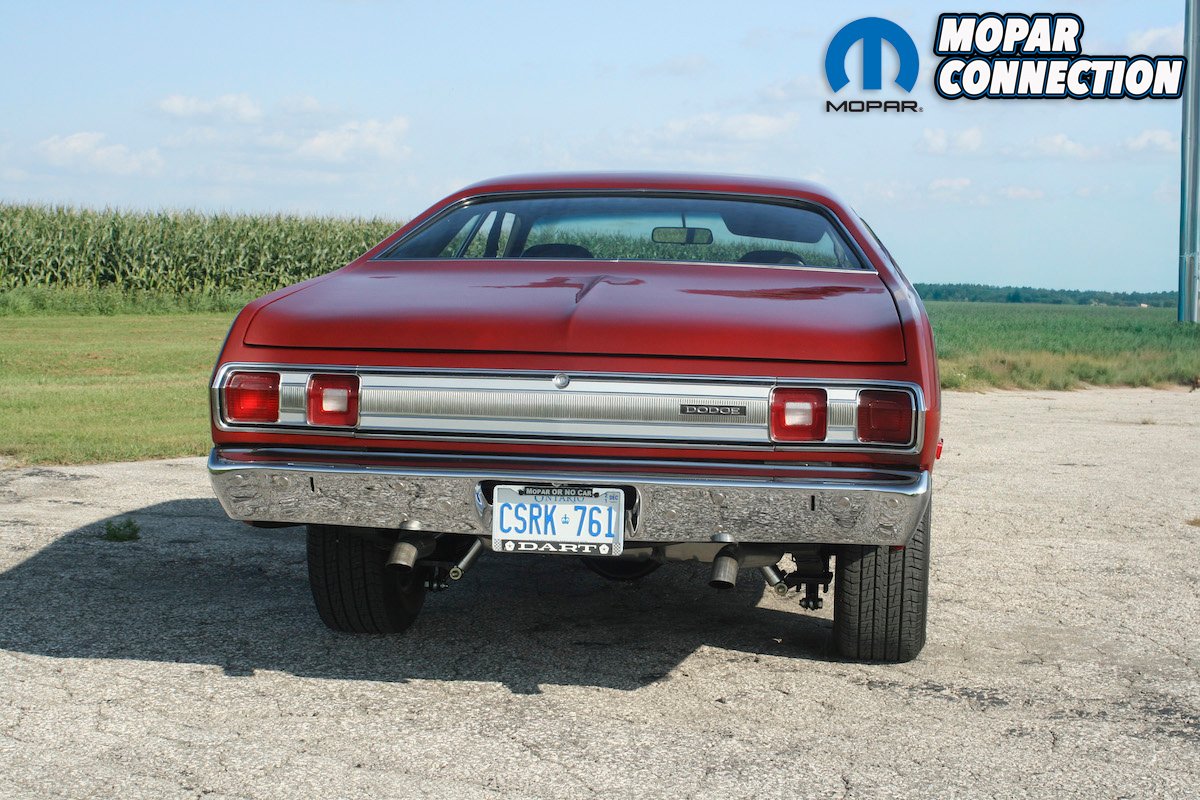
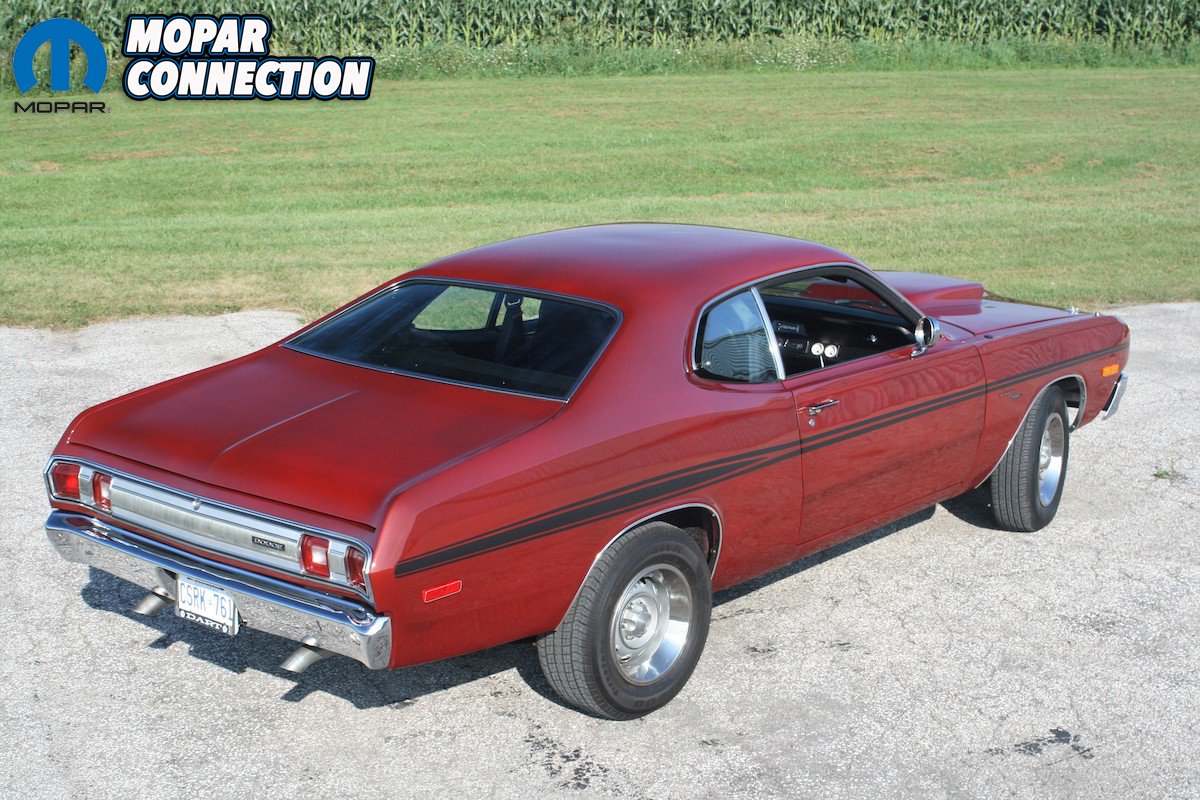
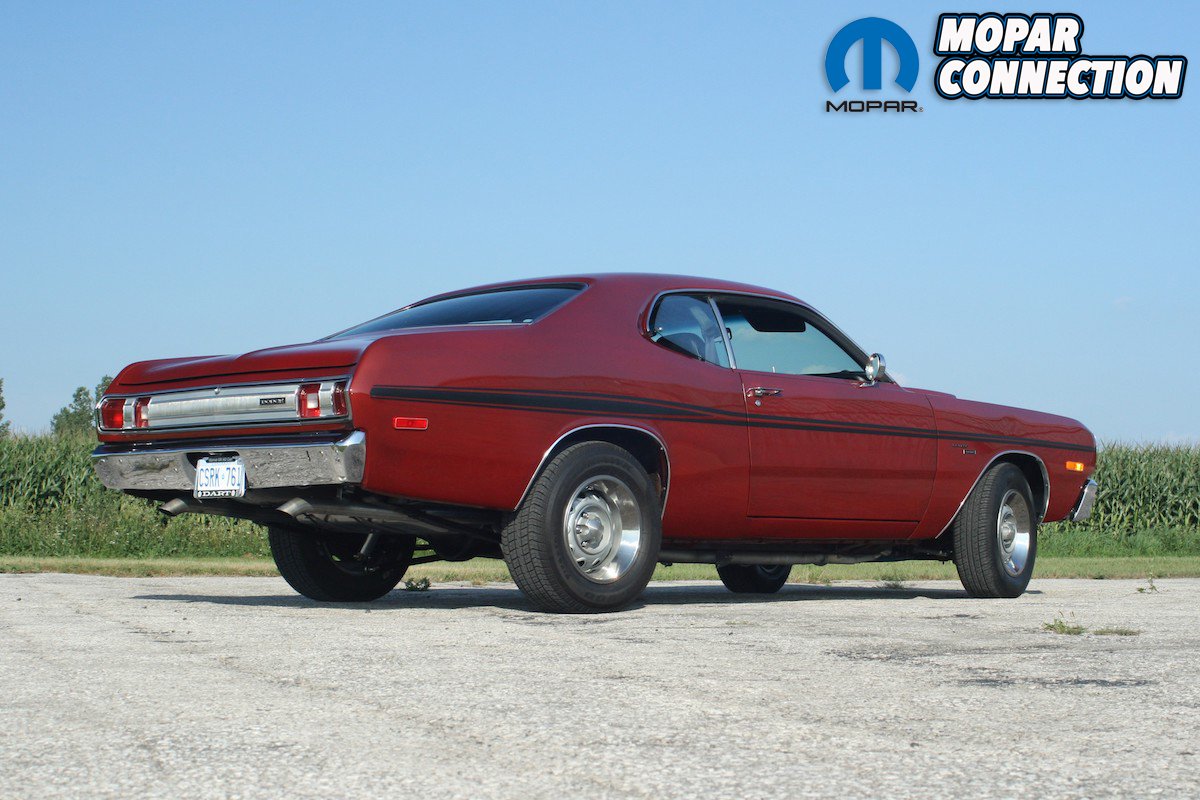
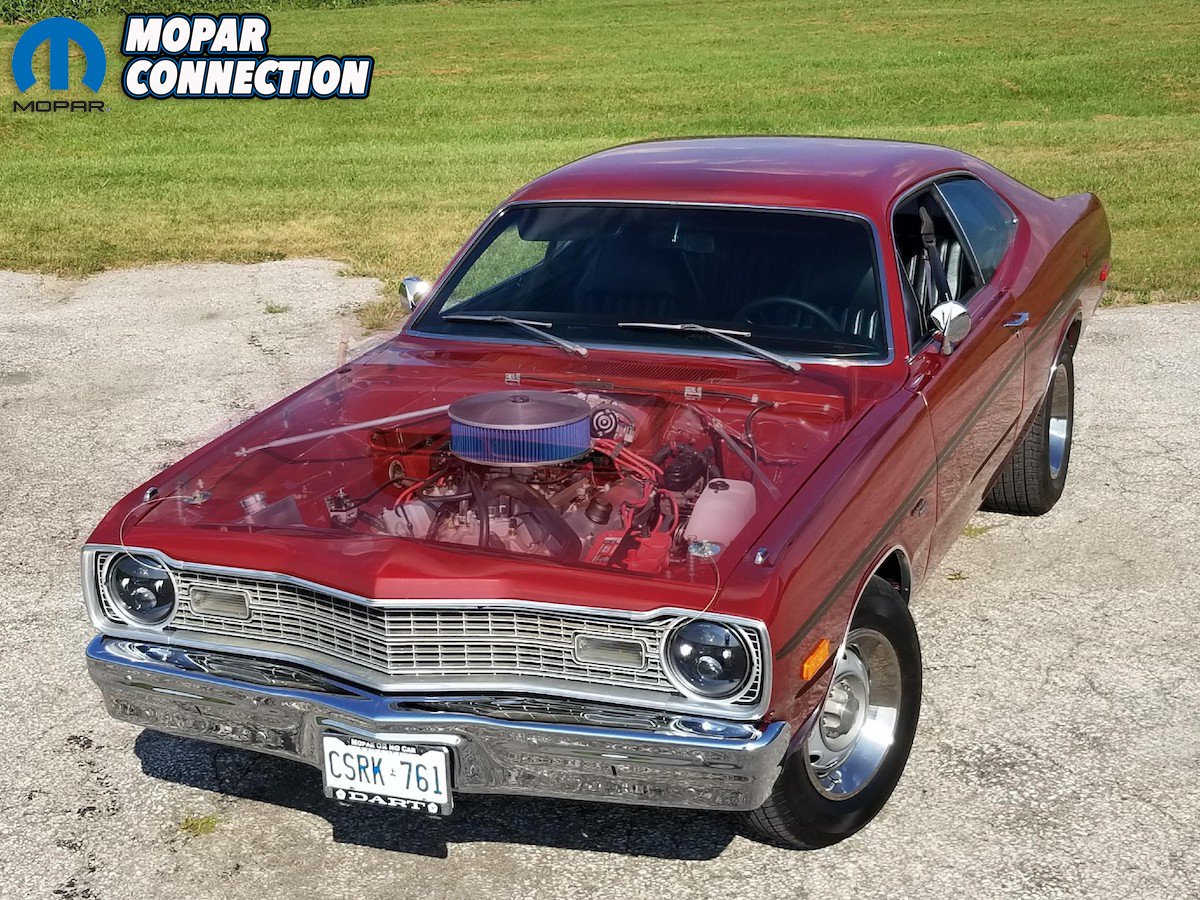
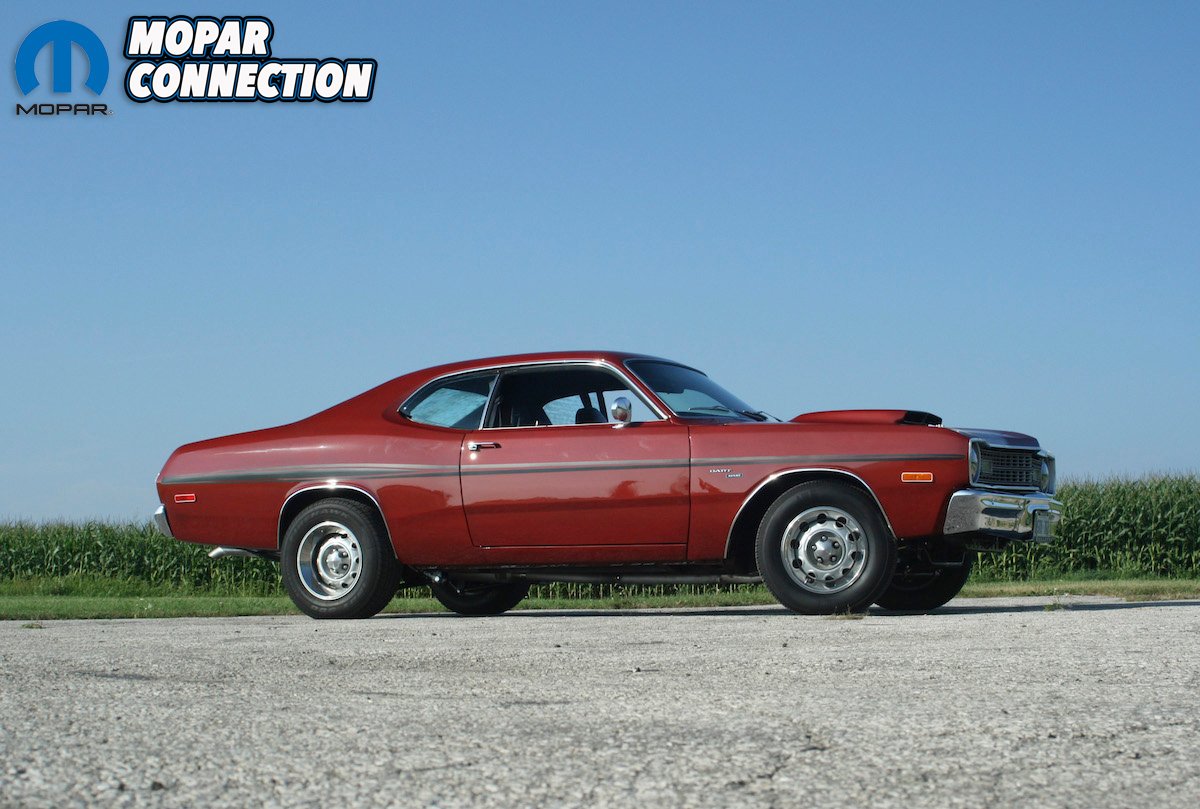
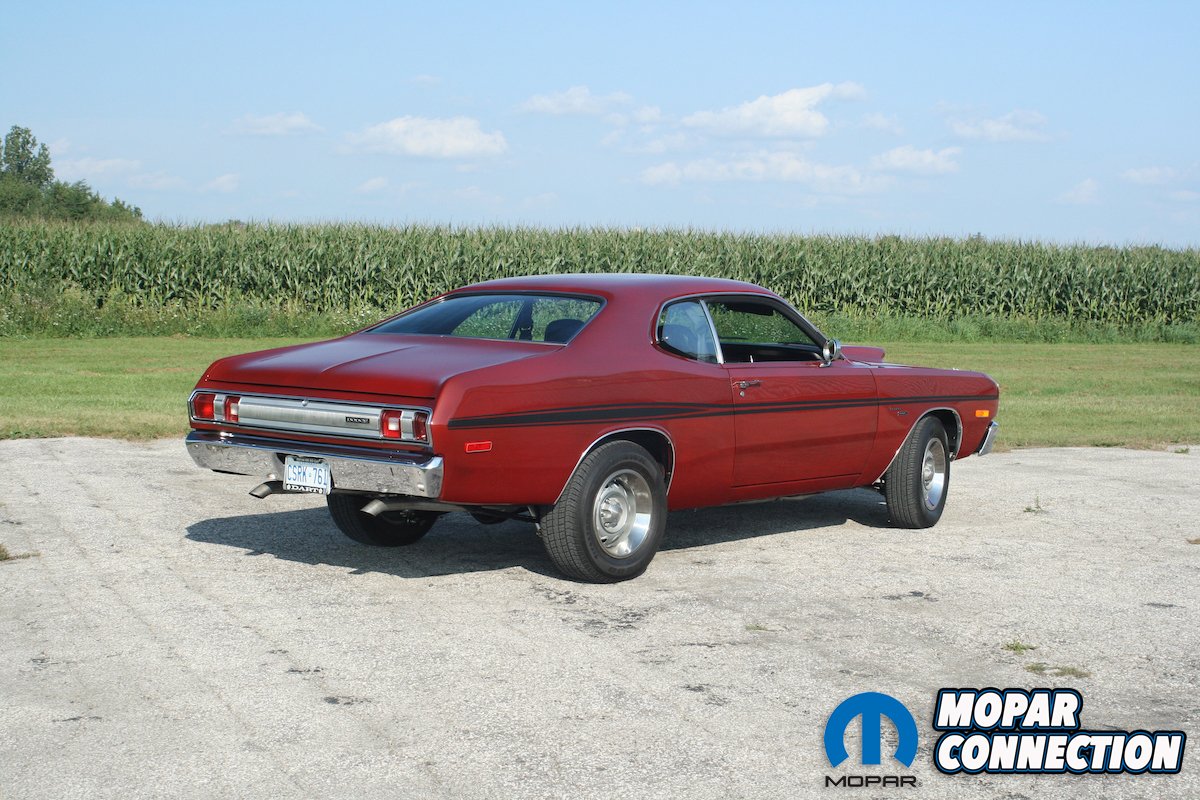
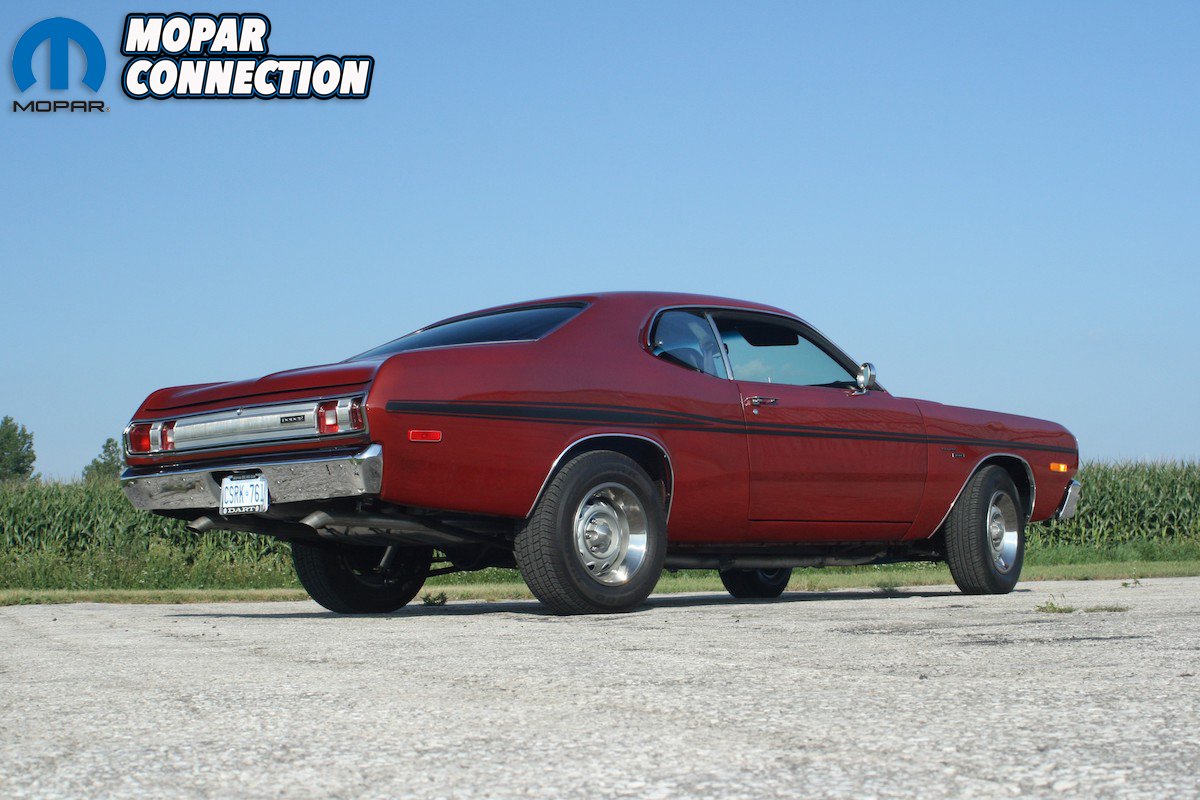
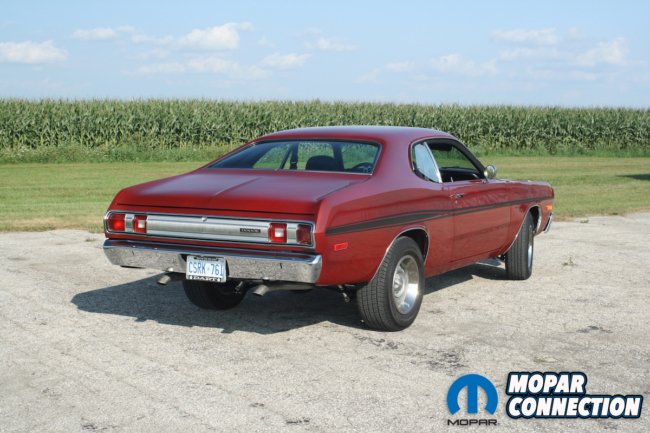
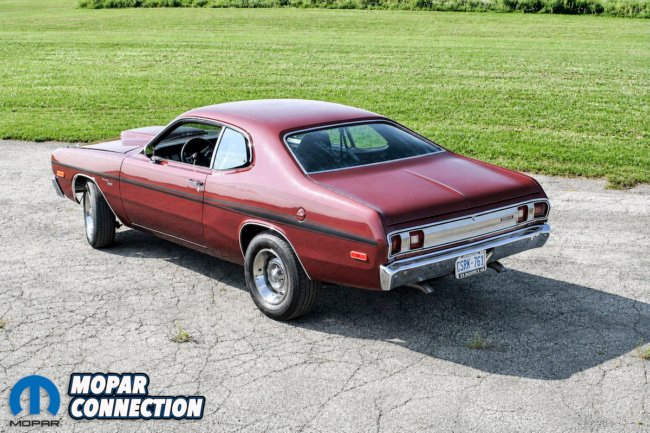
Finished in E7 Burnished Red Metallic with a crisp white stripe, the Dart also featured beige bucket seats and the optional Hang-Ten rear folding seat, a quirky and desirable touch from Chrysler’s era of surf-inspired styling.
It was exactly the kind of car Rob had been hoping to find, and it marked the beginning of yet another chapter in his long-running Mopar story.
The Dart was in the state of Wyoming. Rob said, “I flew out to Wyoming in December of 2006 with the intention of taking 3 days to drive 1,600 miles (about half the width of the United States) back home to Canada.” Rob admits, “It’s not the dumbest thing I have ever done to try this in December, but probably in the top ten.”
The seller was very honest and mentioned that the Dart did burn oil, but he did not know how badly because he had never driven it enough to use a full tank of gas since he first purchased the car. With that information in hand, Rob headed home.
Once Rob hit the road, the seller’s warning proved all too accurate—the Dart definitely burned oil. In fact, it devoured 52 quarts on the trip home. “I had to pour in a quart every 50 miles and swap out the #6 spark plug every 200,” Rob says. The diagnosis was obvious: a broken oil ring.
Even so, with patience, persistence, and a trunk full of oil jugs, Rob coaxed the Dart all the way back to Canada.
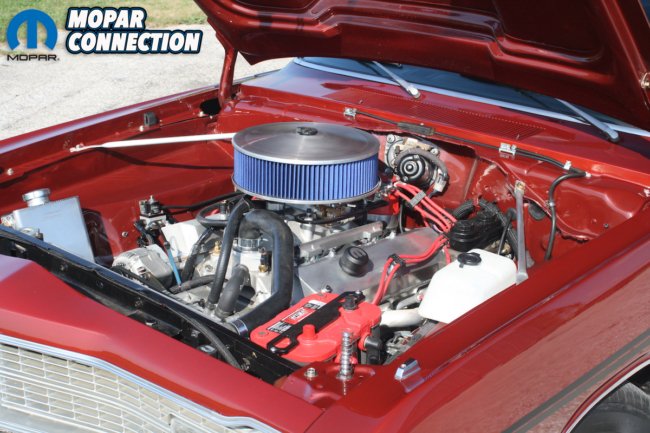
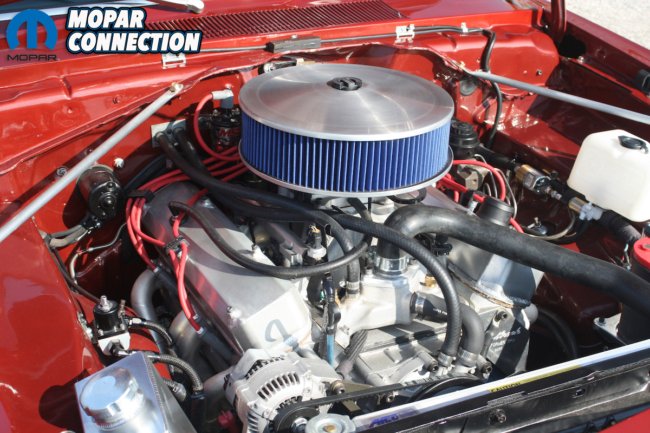
Rob ran the Dart exactly as is for one summer while he pieced together a mild 360‑cid small block topped with cast-iron heads. The build was a classic street‑strip fare: an Edelbrock Performer intake, a 700 cfm Edelbrock carb, a 14-inch chrome air cleaner, and a set of painted M/T valve covers.
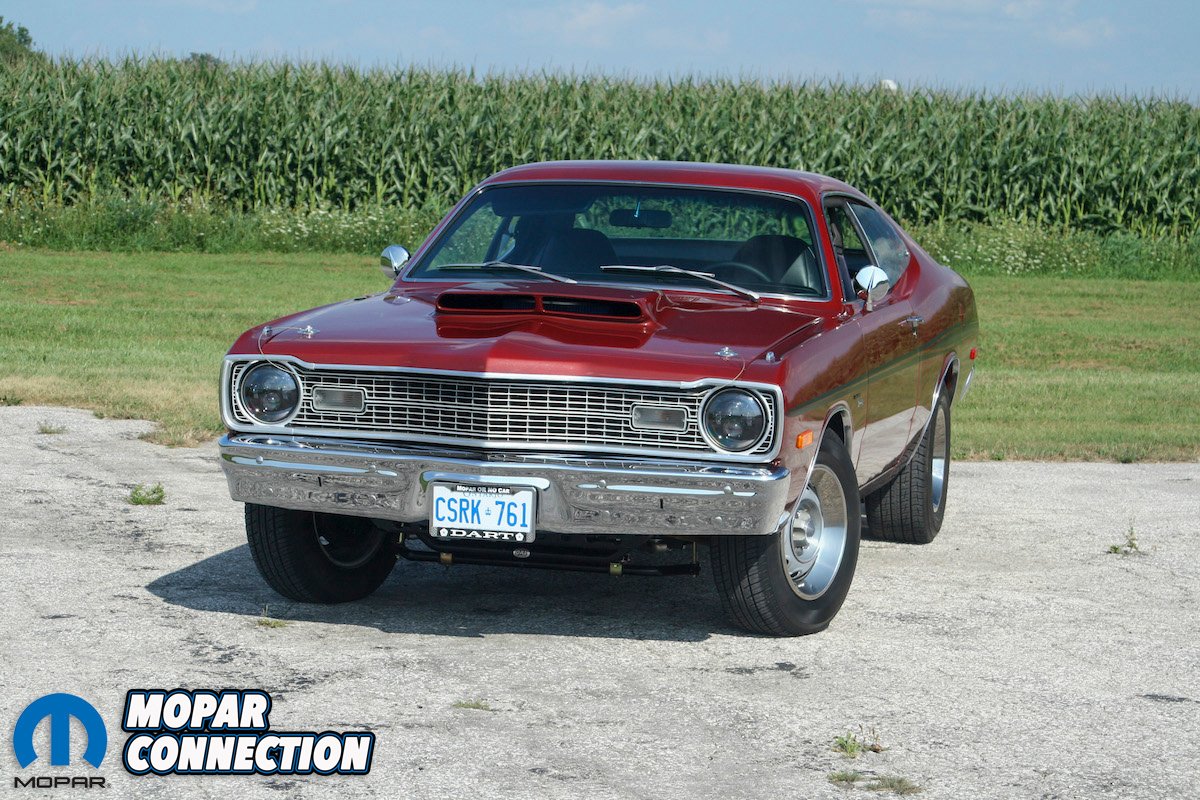
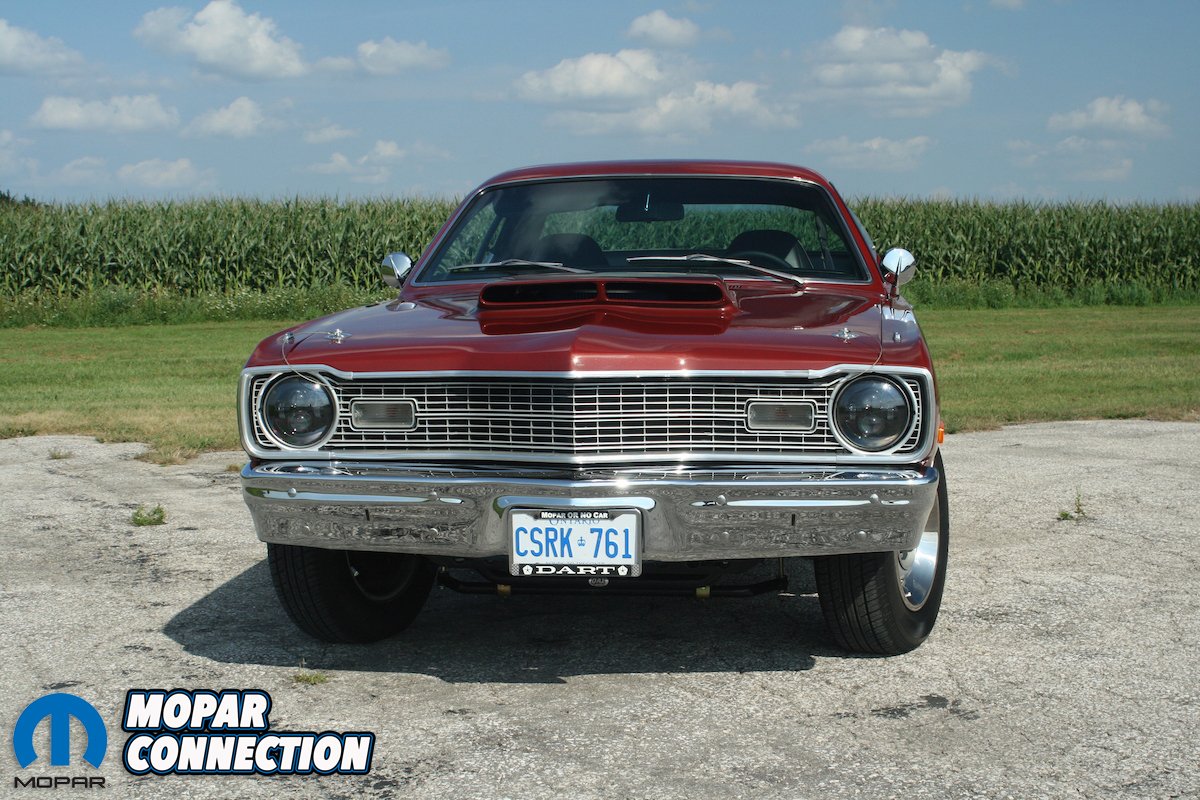
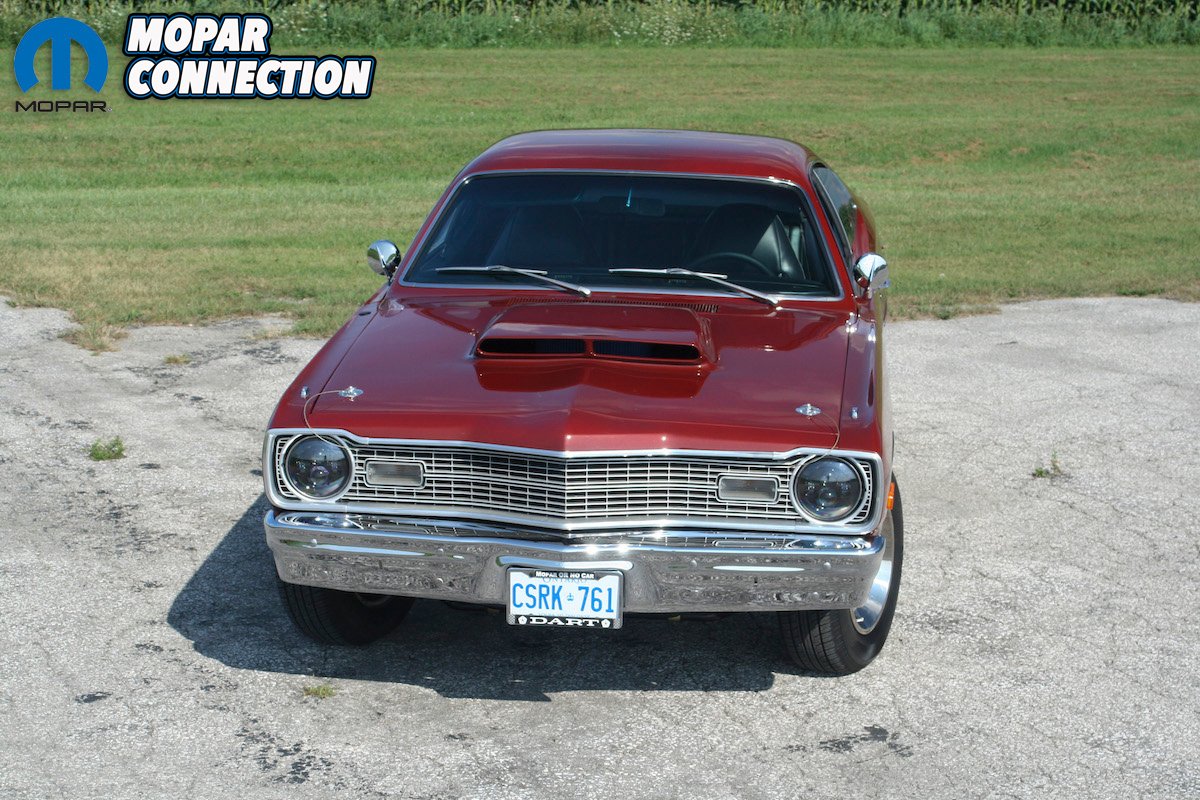
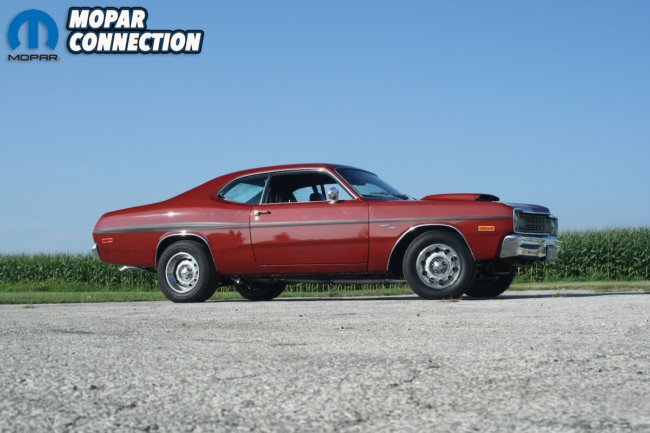
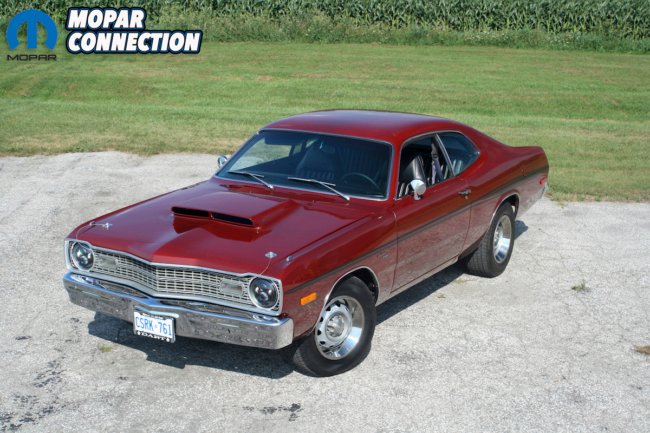
Once the 360 was ready, Rob dropped it in and paired it with an A833 four speed and a Hurst shifter—an instant upgrade in both attitude and drivability. He replaced the stock hood with an AAR Fiberglass Six-Pack hood, giving the Dart a more aggressive profile. To fix the car’s “crab walk” stance, he swapped the factory 8¾ rear end for a 1968 B-body 8¾ unit fitted with 3.23 gears.
After enjoying the car for a while, Rob decided it was time for fresh paint and a few modifications. In 2011, he parked the Dart and began taking it apart, starting what would become a ten-year project before the car was finally back together.
The Dart’s transformation began with a full strip‑down to bare metal. Every small rust spot and dent was addressed, and the body was massaged back into shape—thanks in large part to Dave Robbins, who helped Rob get the panels straight as an arrow.
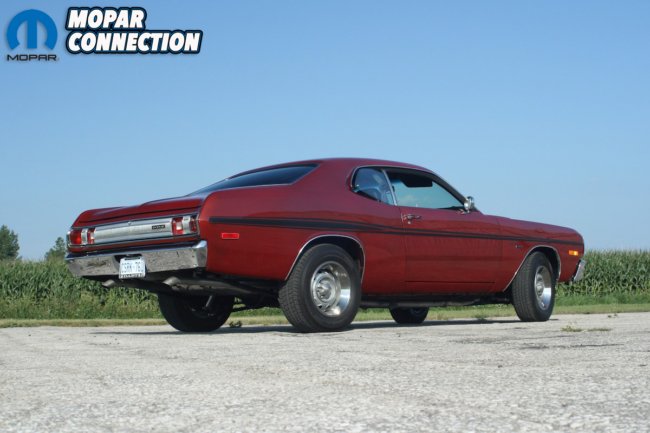
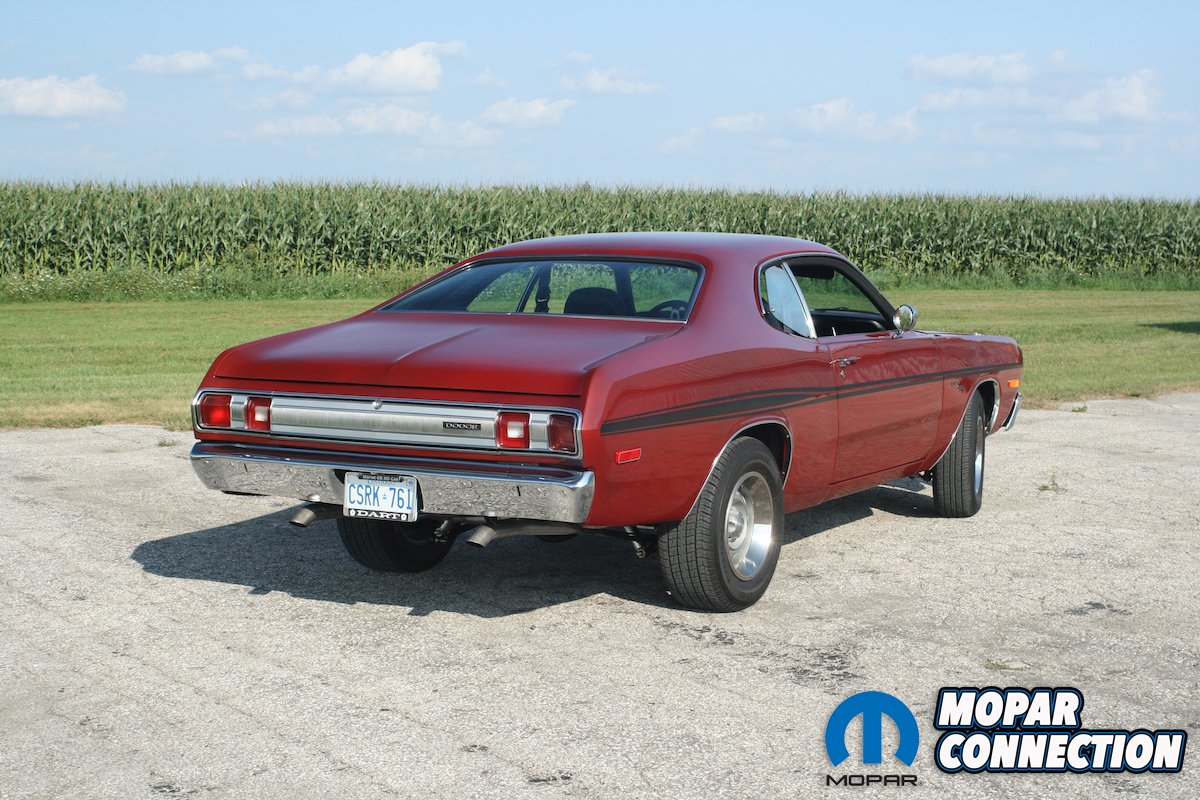
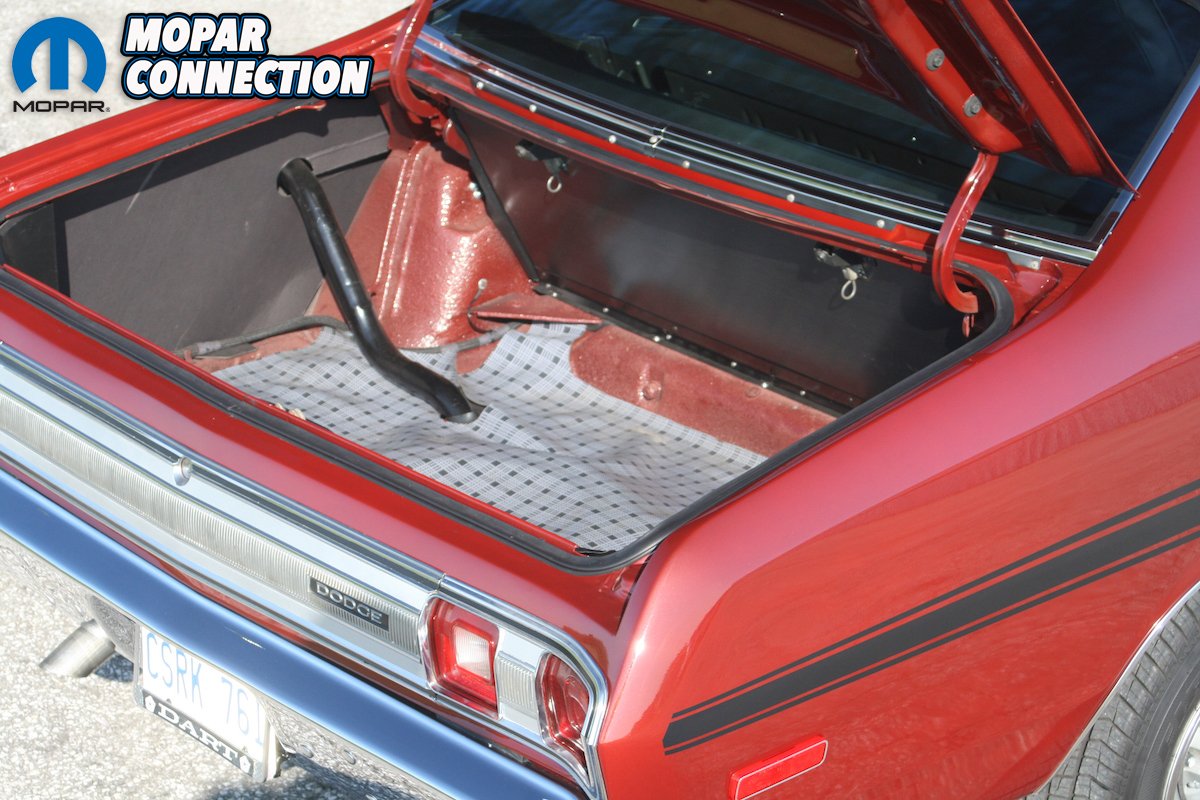
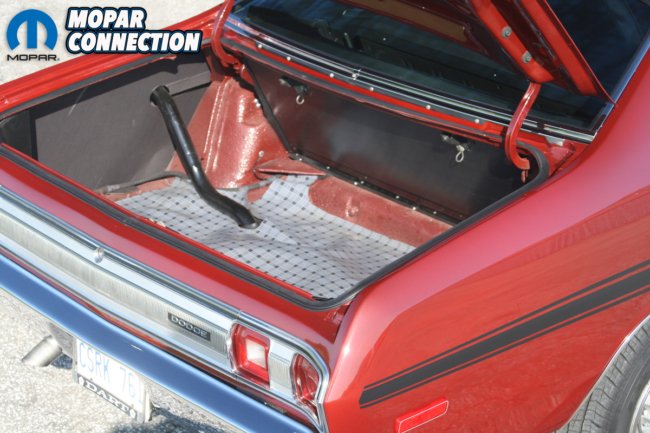
To quiet things inside, Rob coated the interior and trunk sheet metal with Lizard Skin sound deadener and heat-shielding material. Once the prep work was complete, every panel was sprayed in base‑coat/clear‑coat using the original GE7 Burnished Red Metallic. Painting duties went to Rob’s good friend, Dwayne Froats, whose work was nothing short of exceptional.
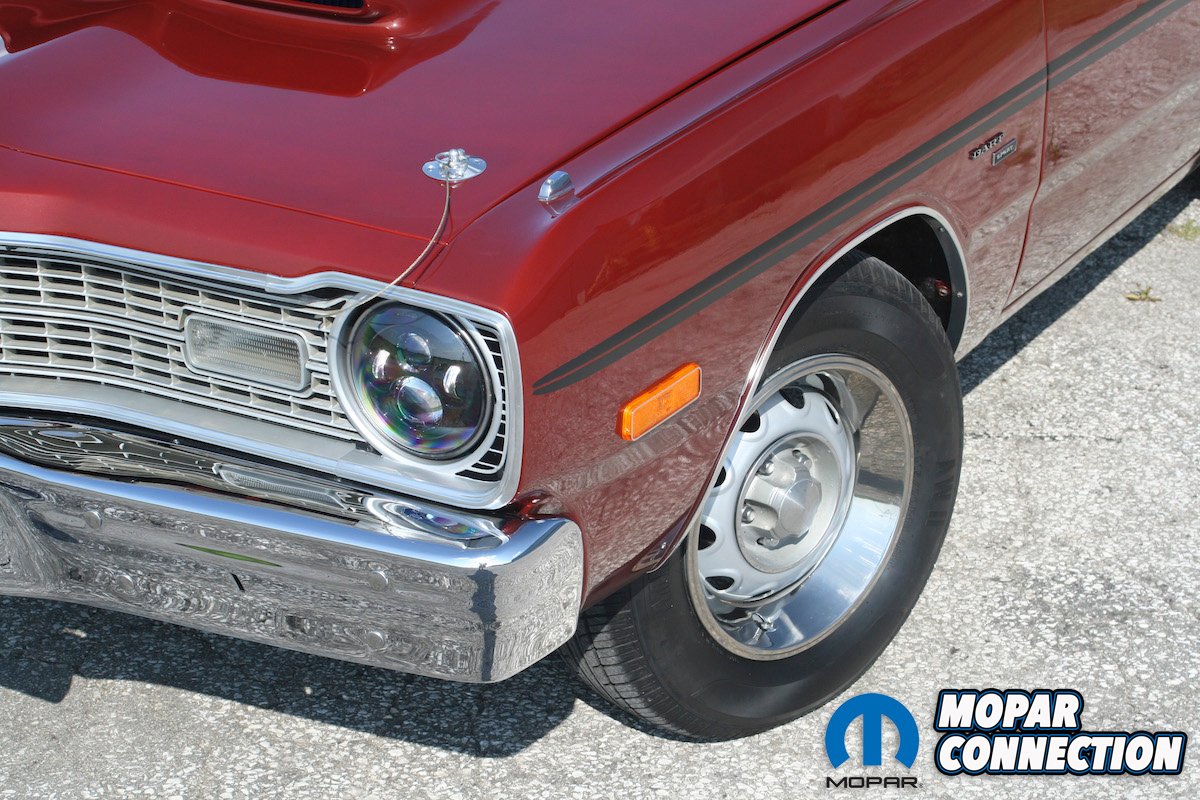
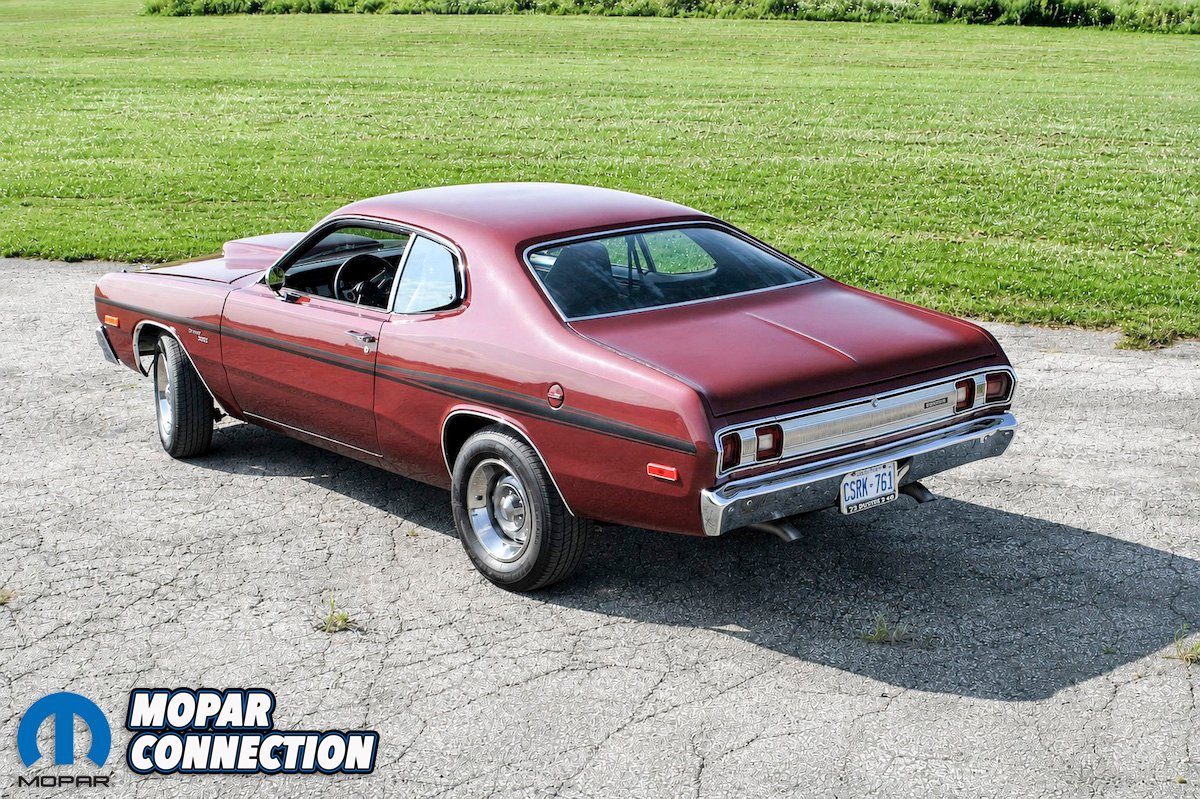
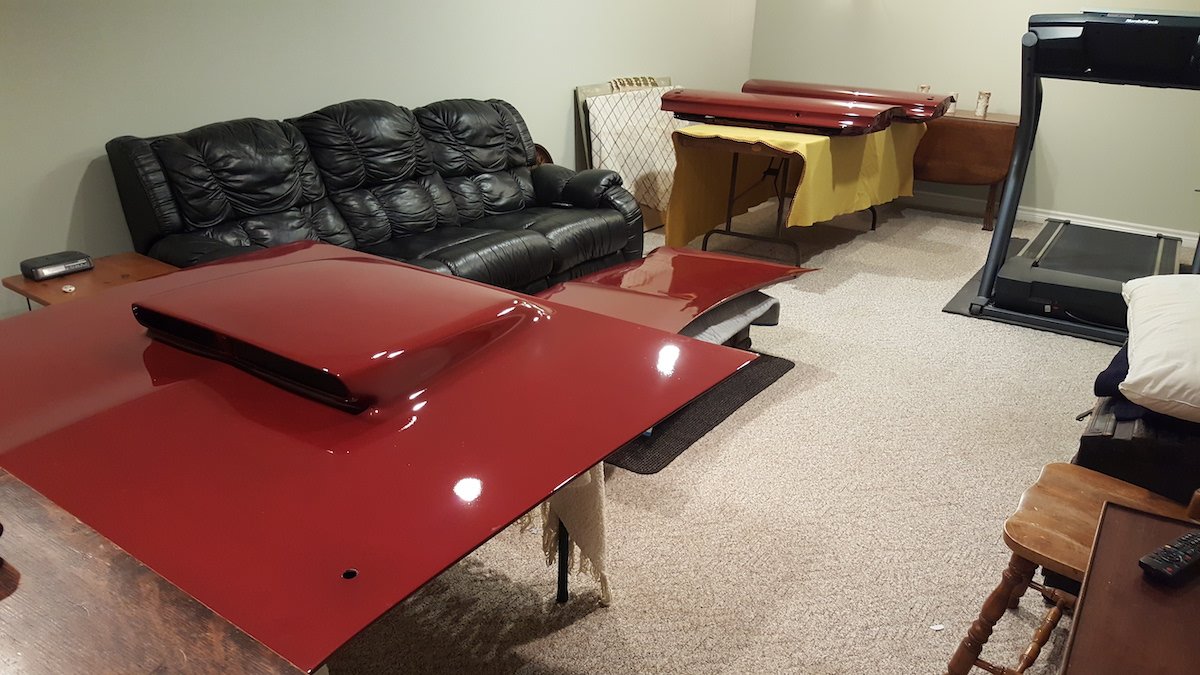
While the car waited to be reassembled, Rob’s wife Sandra graciously allowed the freshly finished panels to be stored in the spare bedroom and rec room—safe from dust, kids, and curious pets. When it came time for final touches, Rob opted for flat black center stripes instead of the factory white Sport stripes the car originally wore.
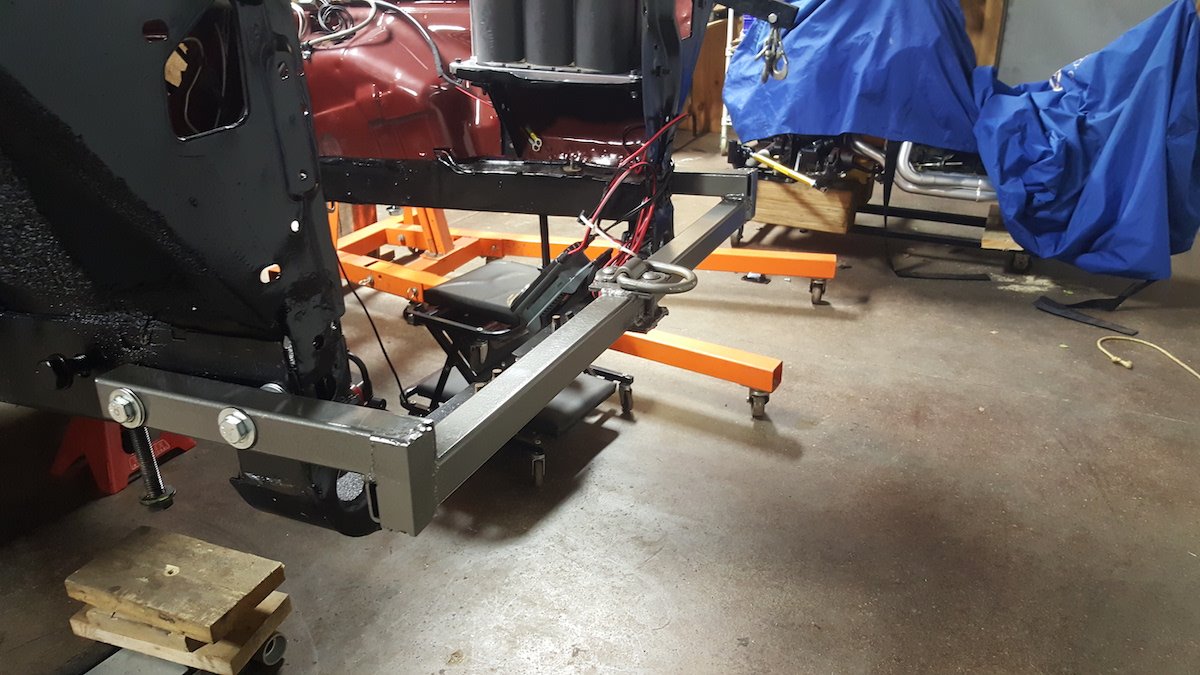
During the bodywork phase, Rob took the opportunity to strengthen the Dart’s foundation. He added stiffening components to the subframe and unibody, giving the car a more rigid structure and improving overall durability.
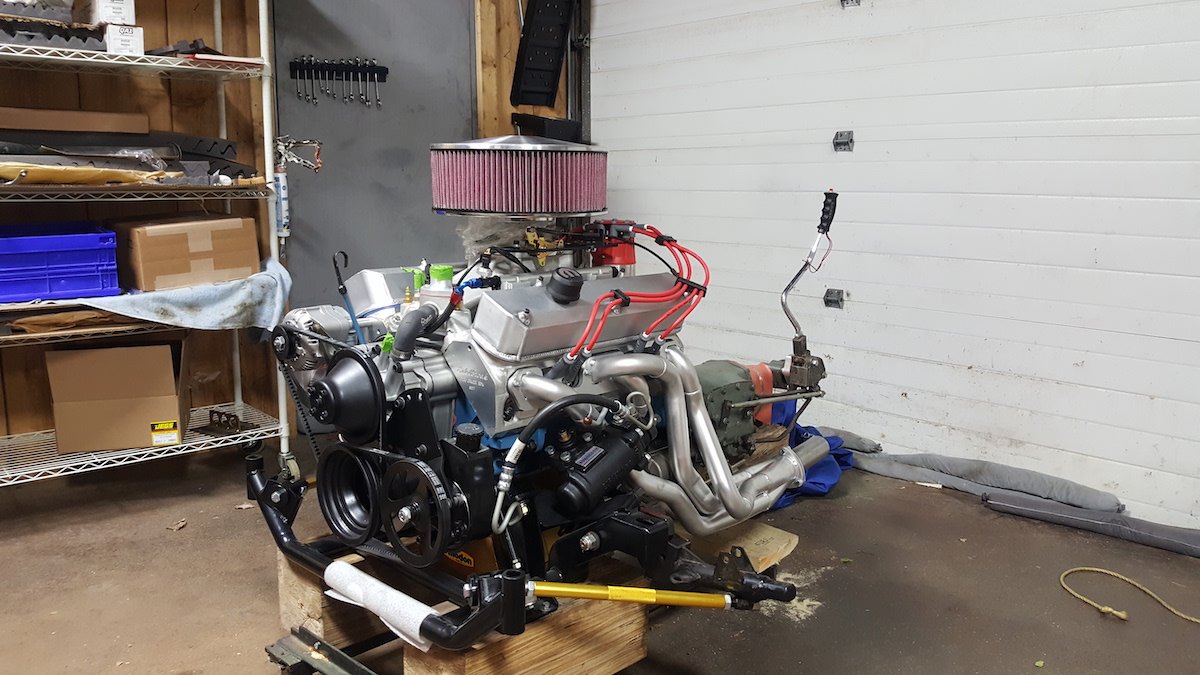
Up front, he upgraded to a QA1 tubular suspension and K-member kit—a major leap forward in both geometry and handling. The tubular design not only sharpened steering feel and cornering capability but also improved exhaust clearance and shaved roughly 150 pounds off the car. A Borgeson power steering box and pump were paired with the new setup, and adjustable shocks were installed at all four corners to fine‑tune the ride.
Out back, the Dart received Calvert Racing Cal-Tracs, ensuring the leaf springs stayed firmly planted during hard launches. It was a thoughtful blend of modern performance upgrades and classic Mopar character, all aimed at making the Dart feel tighter, stronger, and far more capable than it ever did from the factory.
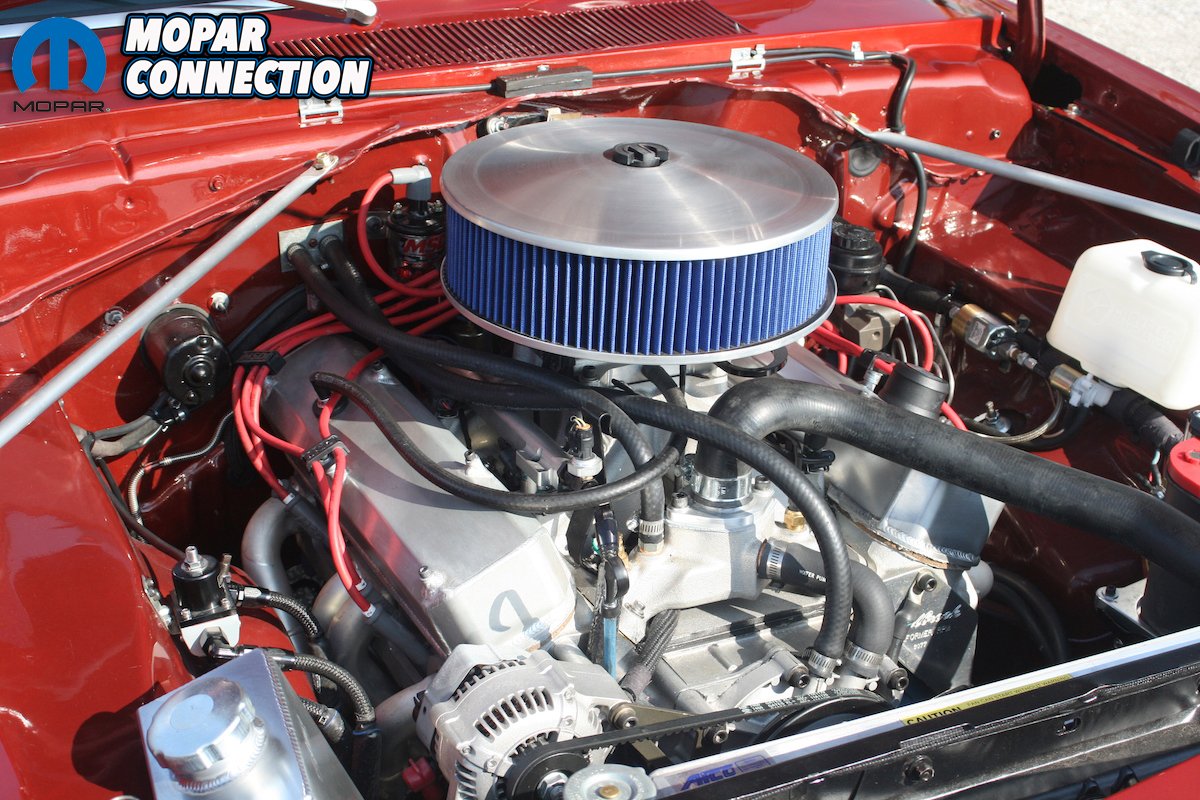
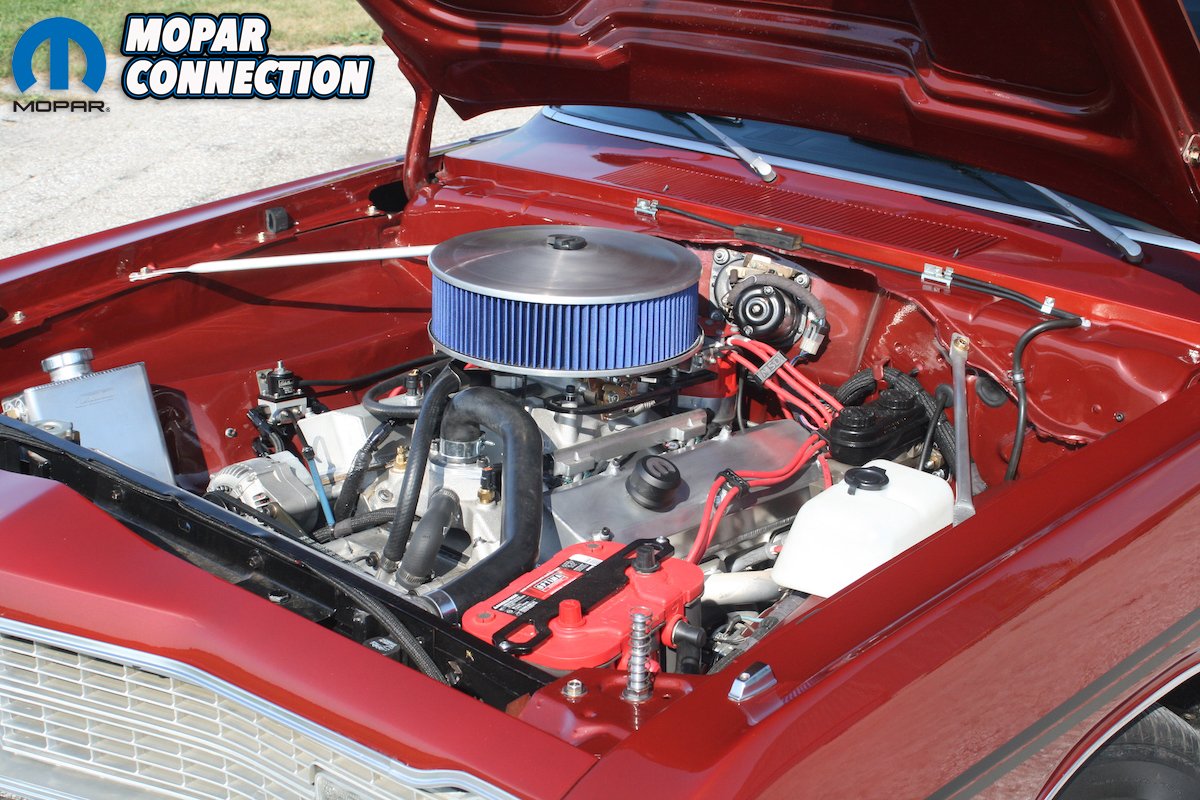
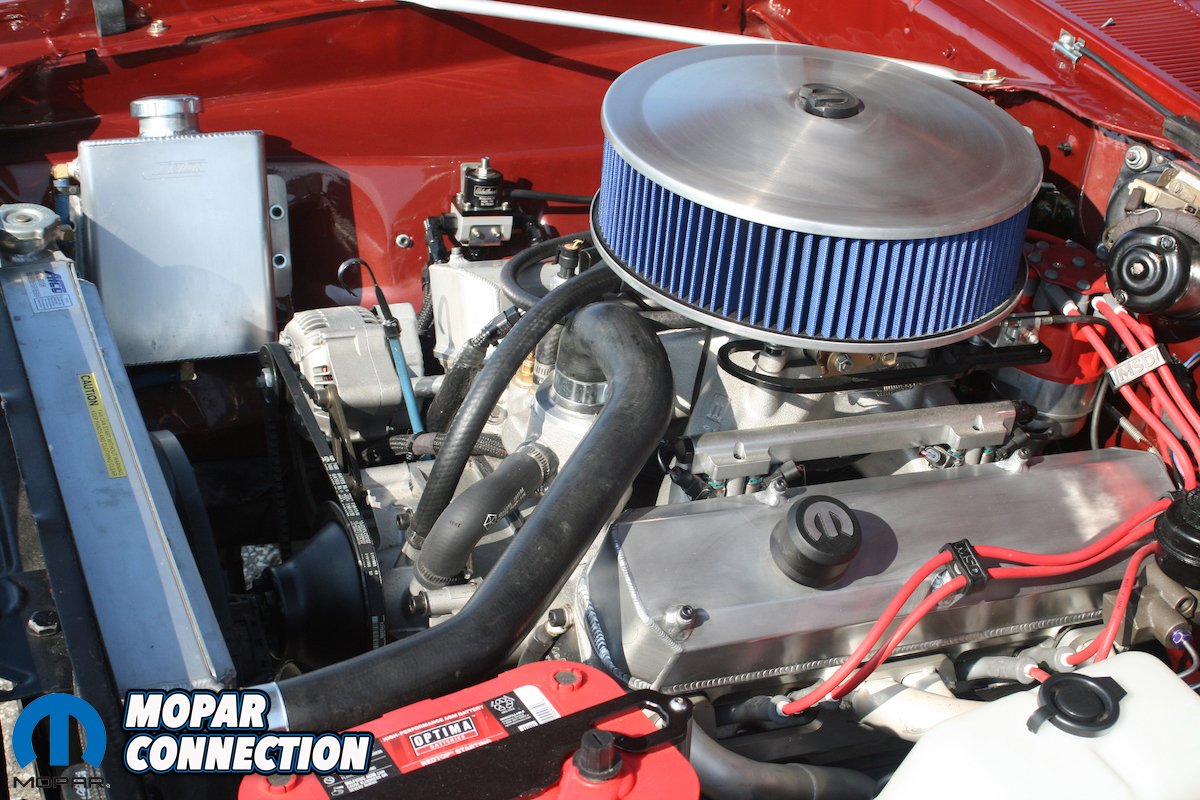
The 360, bored .030 over, is topped with Edelbrock heads massaged by Hughes Performance Engines. A Comp cam and 1.6 roller rockers help push compression up to a healthy 10:1. Fuel delivery comes courtesy of an Edelbrock Pro Flo 4 multi‑port injection system, fed by a Holley Sniper tank with an internal pump and custom stainless lines finished with AN-style fittings.
To clean up the engine bay, Rob added aluminum valve covers and a matching air cleaner. The exhaust system blends TTI headers and tailpipes with a custom Jeg’s X‑pipe featuring cutouts, all finishing through Flowmaster 50 Series mufflers. The result is a soundtrack that’s smooth when you want it to be—and unmistakably “I mean business” when you don’t.

Rob has the original front disc and rear drum brakes from the factory to slow things down when needed. Rob plans to upgrade the brakes with a Wilwood system down the road. The car rides on Wheel Vintiques’ Rallye rims, with Dayton 215/70R15 tires mounted on 15×6 rims in the front and Firestone 255/60R15 tires mounted on 15×8 rims in the rear.
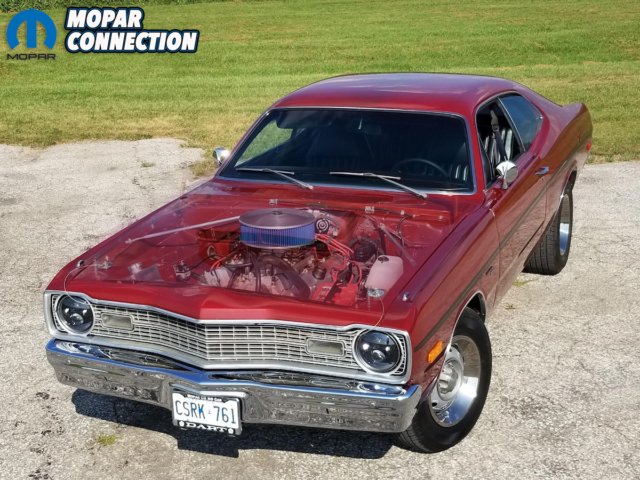
The Afco Racing radiator keeps things from overheating, and the electric fan is controlled by an Edelbrock EFI module. The rad overflow is aluminum to match the valve covers and the air cleaner. The rear gears were changed from 3.23 to 4.10 in the rear end.
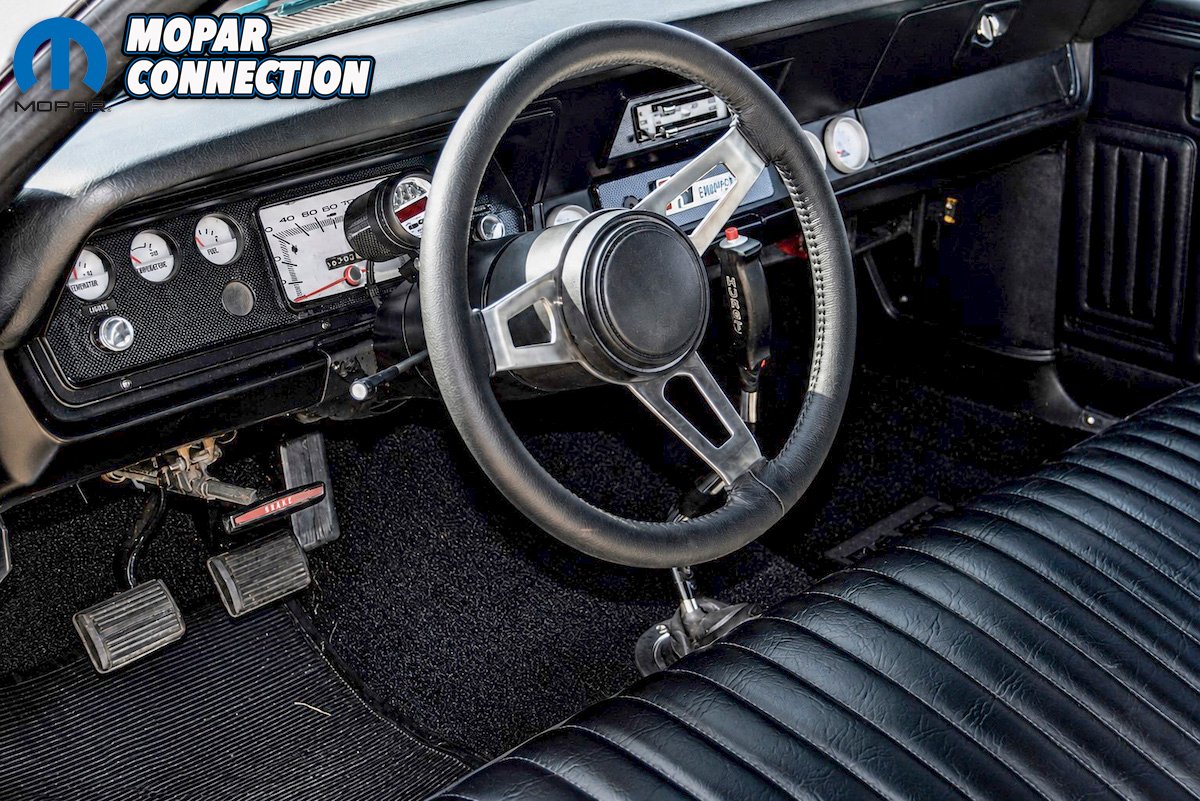
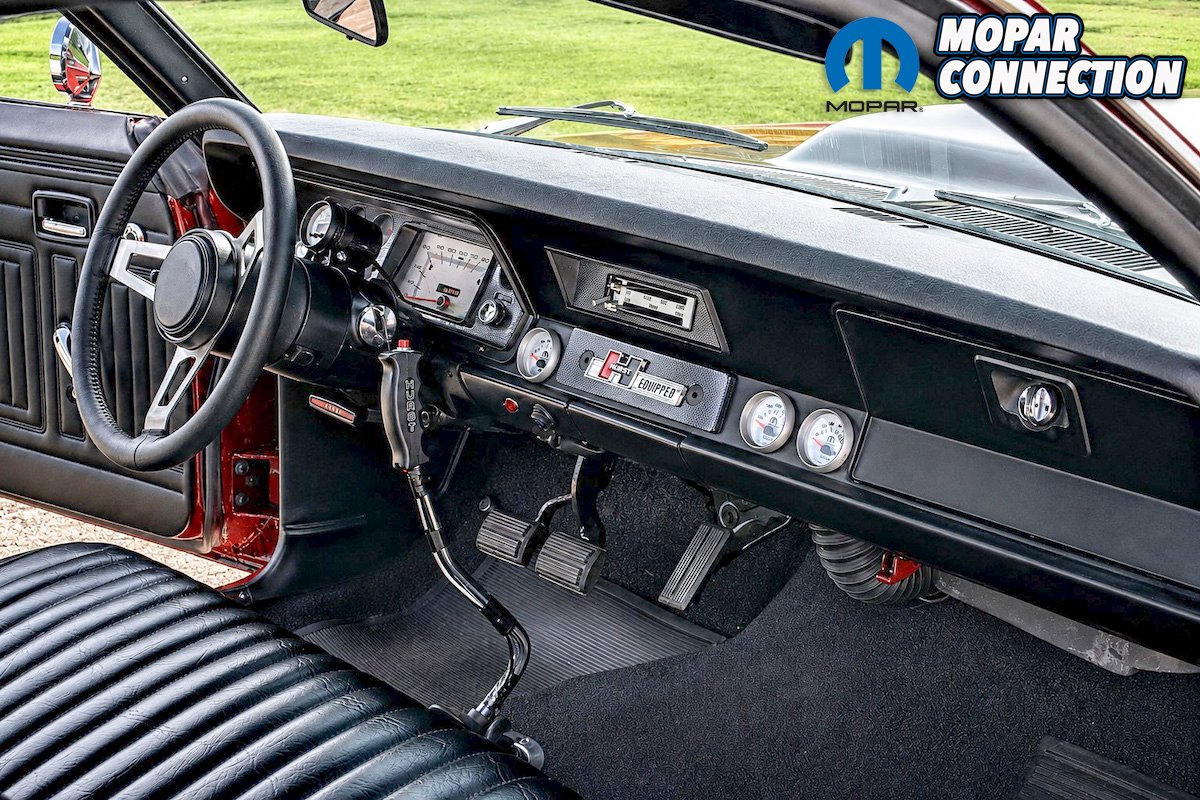
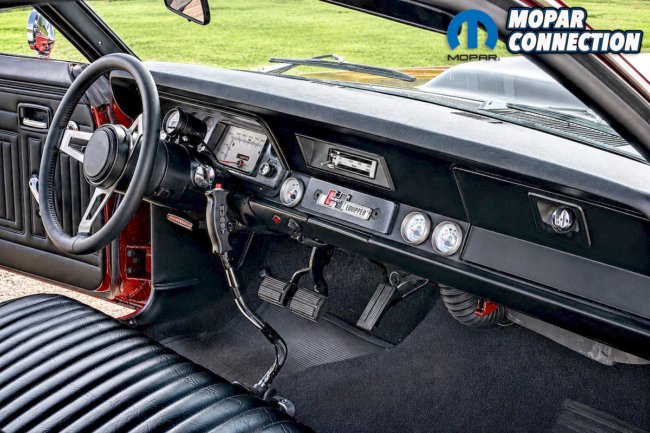
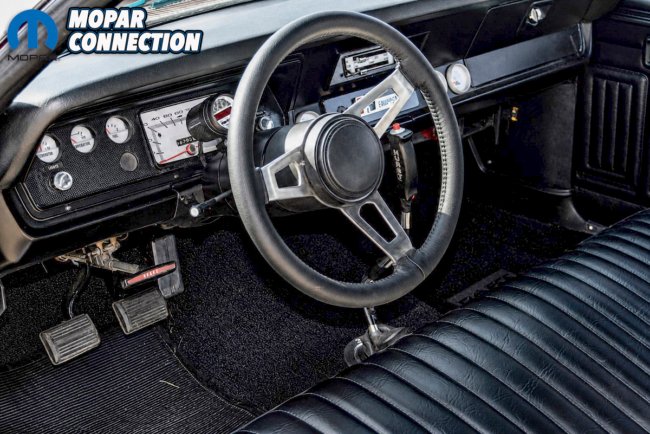
With the bodywork complete, Rob turned his attention to the interior. Most of the work he tackled himself, but he brought in a professional to swap the original beige seat covers for new Legendary black upholstery. Fresh trim panels, a new headliner, carpet, and a replacement dash pad tied the cabin together in its new color scheme.
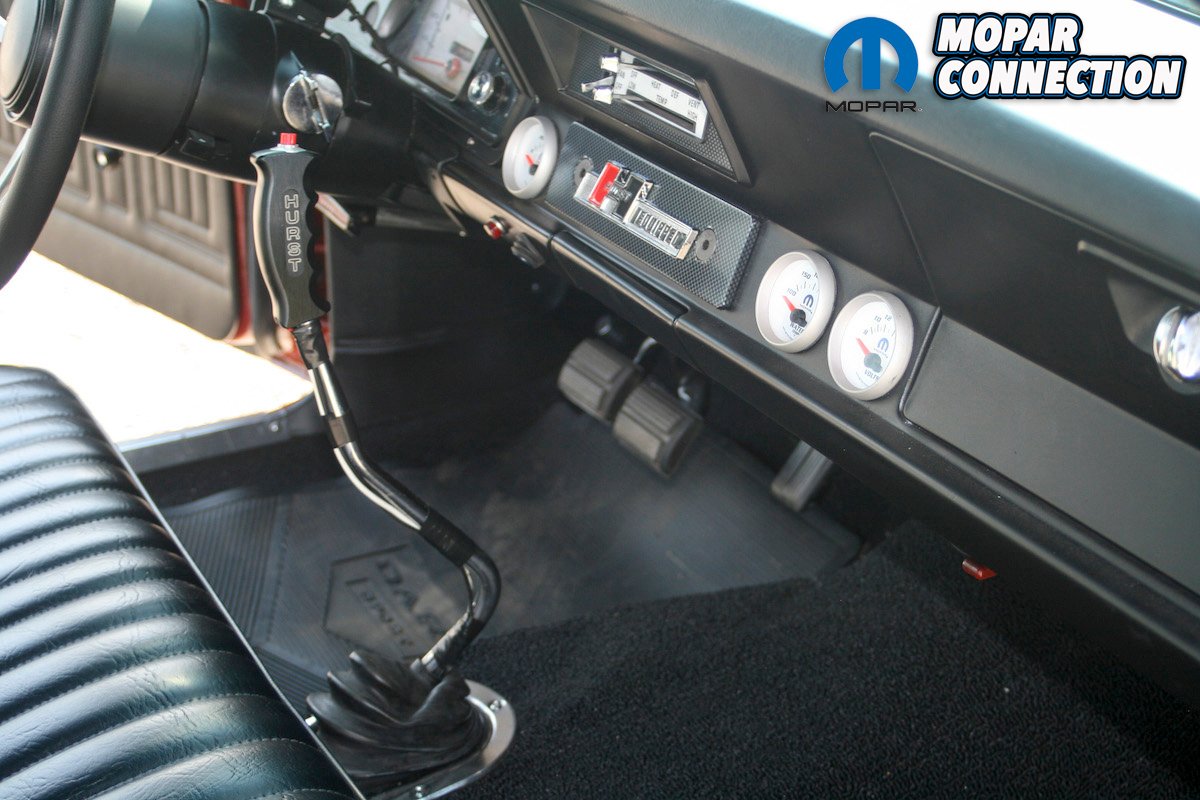
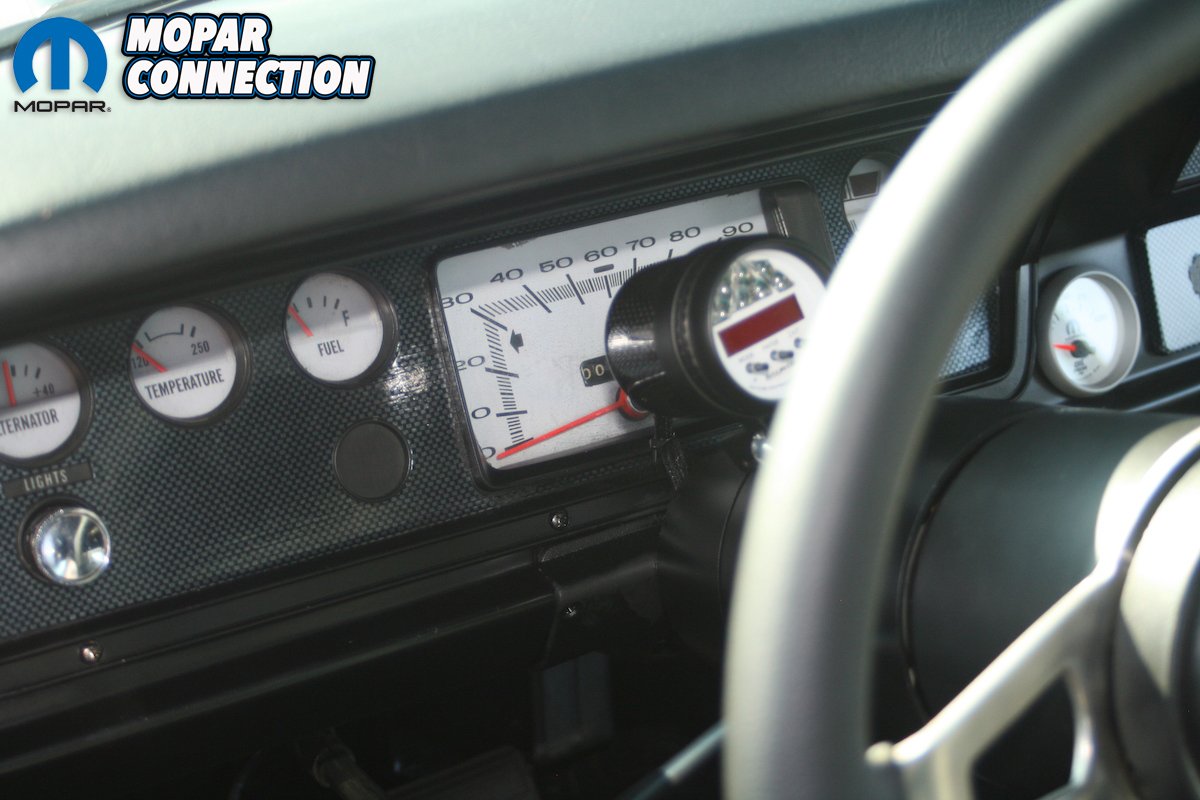
A custom-made American Auto Wire harness replaced the aging factory wiring, and a full set of white‑faced Auto Meter gauges took over monitoring duties. The white speedometer is flanked on the left by matching alternator, temperature, and fuel gauges, while a coordinating tach sits on the steering column.
To the right of the wheel, oil pressure, water temperature, and voltage gauges complete the cluster. A radio‑delete plate covers the original radio opening, and a carbon-fiber-finished instrument panel adds a modern, performance-oriented touch.
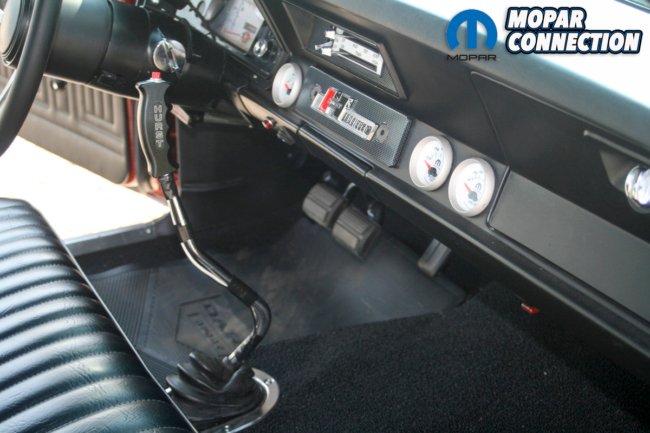
For shifting, Rob chose a black Hurst pistol-grip shifter—perfectly at home in the Dart’s cockpit. The steering wheel was upgraded to a Tuff Wheel, giving the interior a factory-muscle vibe.
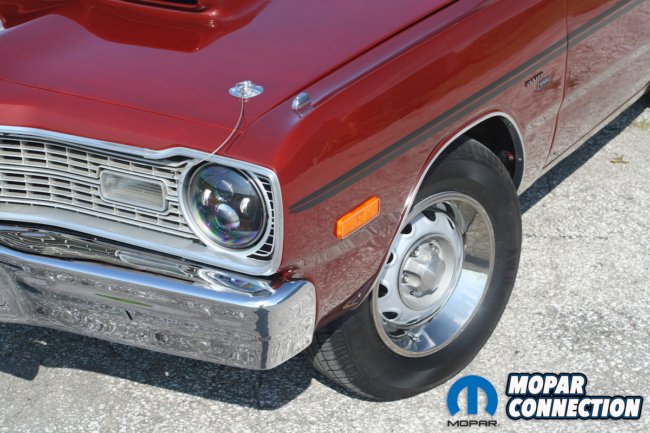
Rob also modernized the lighting, custom-fitted aftermarket Jeep LED headlights into the original buckets. The result is a subtle but unmistakable hint that this Dart has far more going on than meets the eye.
Even though Rob did much of the work himself, he did have help from family and friends. There is no doubt that this would not be possible without his wife, Sandra. He also would like to thank his friends Mark Brooks, John and Steve Price, and Mike Boyd for helping him out with his Dart Sport. You know the saying, “It takes a village to raise a child, but awesome friends to build a killer Mopar.”
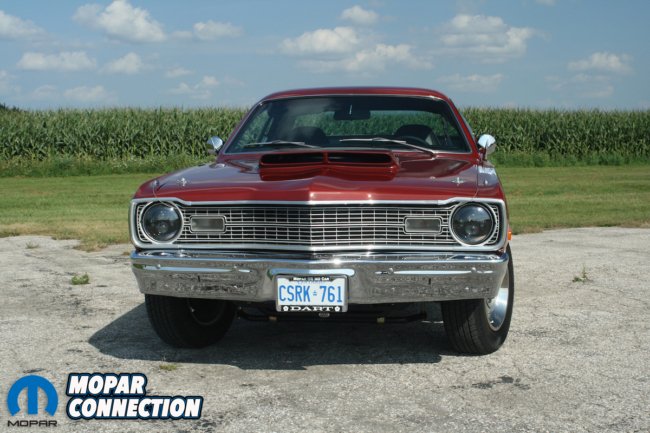
Rob loves driving the Dart and plans to take it to St. Thomas Drag Strip, uncap the exhaust, swap on the rear tires, and see what it can do. He has always viewed the Dart Sport as “the unloved stepsibling of the Demon.” After just two years, Chrysler dropped the Demon name, likely due to public criticism and concerns about a possible boycott in the Bible Belt.
The change may have been a smart move: once renamed the Dart Sport, production climbed to nearly 80,000 units. Still, it never matched the sales success of the Plymouth Duster. And if you ever meet Rob, do not call his Dart a Duster, unless you want to bring the “Demon” out of him.