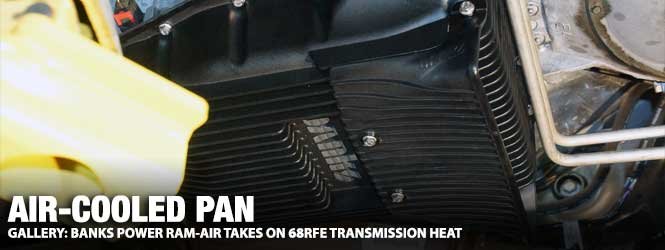
Heat is the enemy of nearly every automatic transmission. Add the increased workload truck transmissions can experience from heavy payloads and trailer towing, then factor in engine performance upgrades and larger wheels and tires, and it is easy to see how transmission temperatures can climb beyond what is ideal for long-term reliability.
While we have not experienced any overheating problems with the 68RFE in our 2012 Ram 2500 Cummins, that does not mean the transmission is immune to heat-related problems.
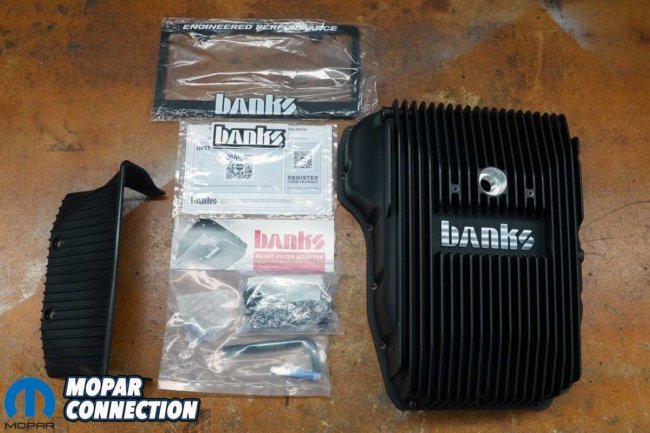
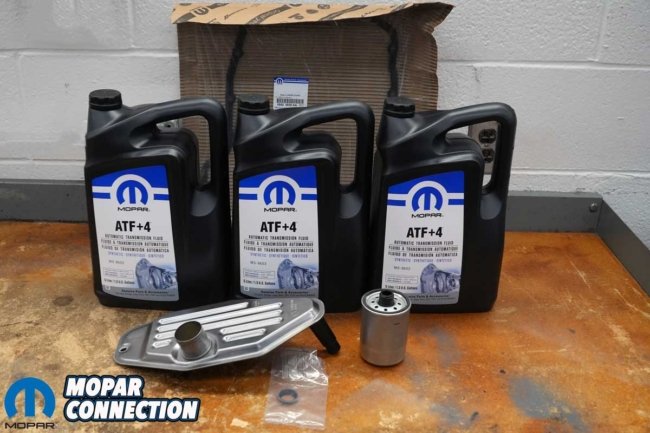
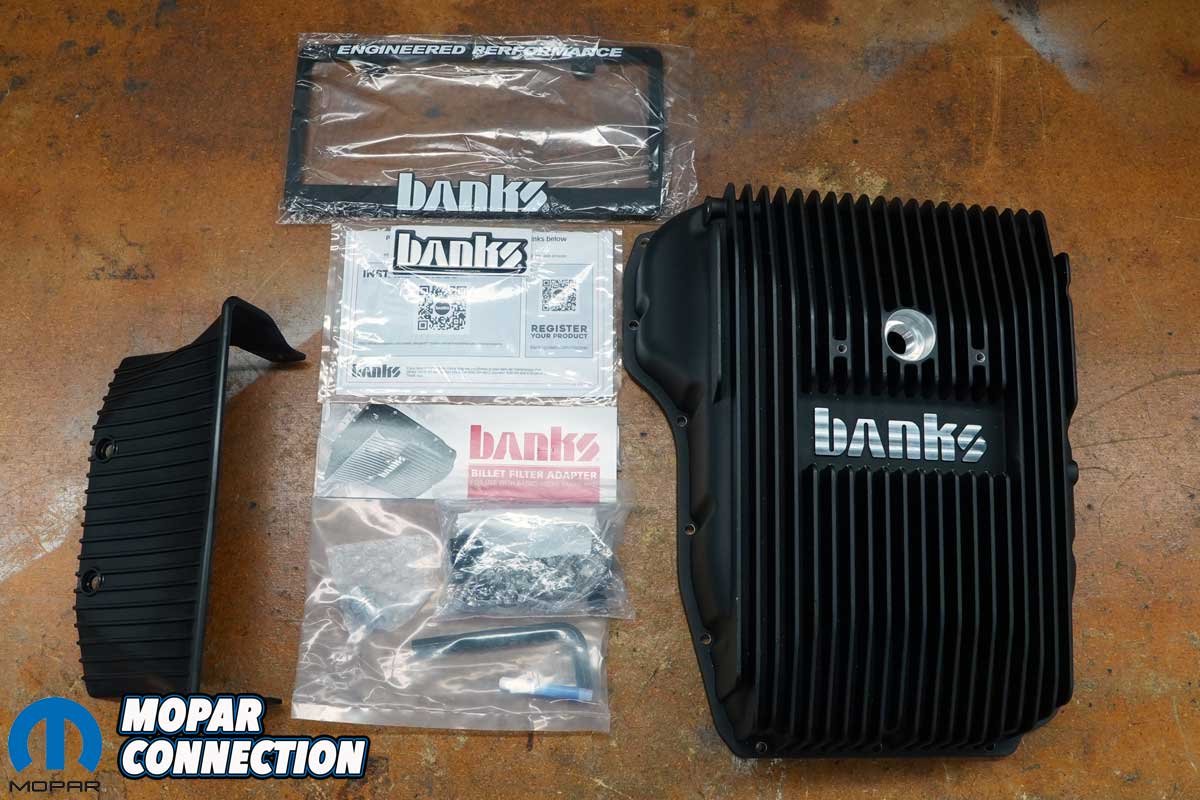
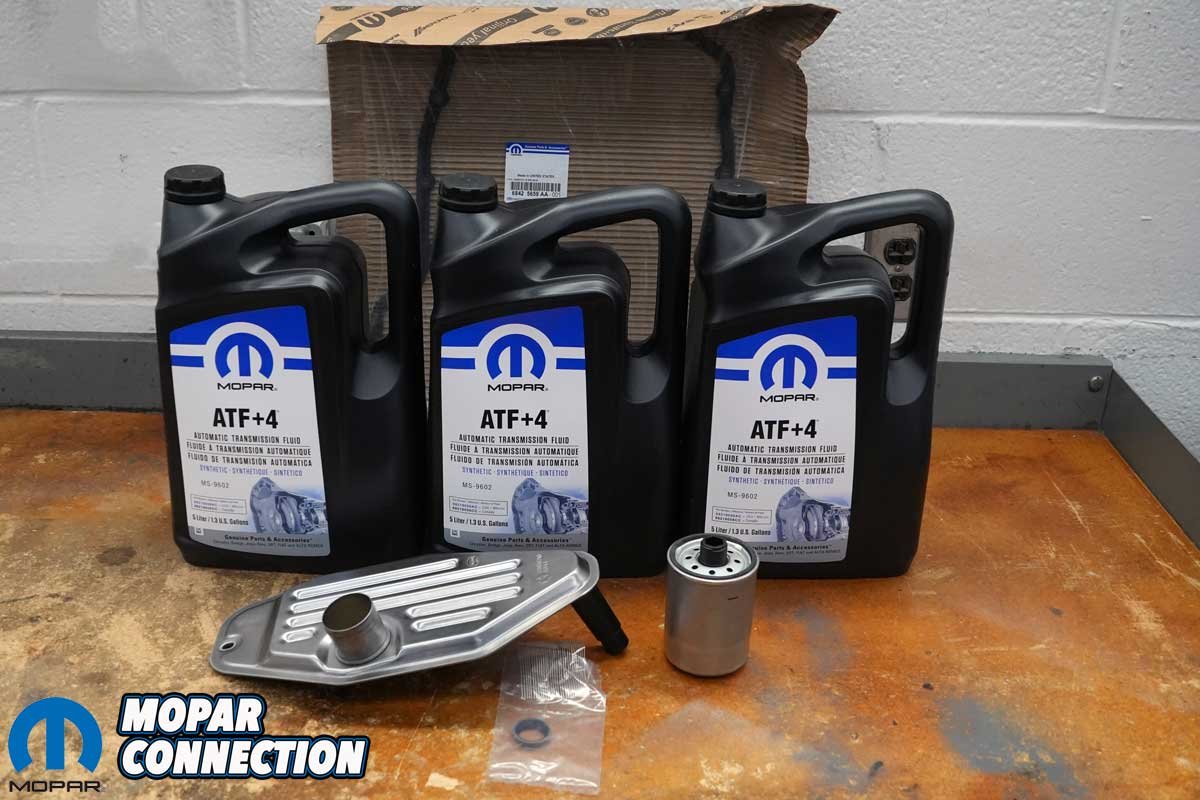
Above Left: The Banks Power Ram-Air transmission pan kit includes everything you need to upgrade to a higher-capacity pan with cooling fins and an integrated air scoop. The pan holds approximately three additional quarts of fluid, while 22 external fins, 20 internal fins, and the unique air scoop work together to help reduce transmission fluid temperature. Above Right: To complete the 68RFE transmission fluid change, we needed two filters, a new pan gasket, a filter seal, and 15 liters of ATF+4 transmission fluid. The additional fluid was necessary to accommodate the increased capacity of the Banks Power pan and ensure the transmission was properly filled.
Banks Power has introduced a new transmission pan created to help address these concerns. With enhanced heat management in mind, the pan provides another line of defense against elevated transmission temperatures, something that can be especially valuable for trucks that regularly tow, haul, or have been modified for increased performance.
The Banks Ram-Air Transmission Pan (part no. 35170-B) is an aftermarket replacement for the Chrysler 68RFE six-speed automatic used behind the 6.7L Cummins in 2007.5–2024 Ram 2500 and 3500 trucks.


Above Left: Our 2012 Ram 2500 is equipped with a Cummins diesel and a 68RFE transmission. This is the truck’s first transmission fluid and filter change. After 14 years, the Ram has accumulated only 18,220 miles, but it regularly tows a 30-foot enclosed trailer and a ’69 Dodge Dart. Above Right: The transmission typically operates between 130 and 145°F when the truck is unloaded and not towing. On the trip immediately before the transmission service, the fluid temperature reached 138°F.
It does not fit trucks equipped with the Aisin transmission. One easy way to identify a 68RFE-equipped truck is by the transmission dipstick location. According to Banks, the 68RFE dipstick is located on the passenger side of the engine bay.
A conventional aftermarket transmission pan generally improves cooling in two ways: it boosts fluid capacity and adds more aluminum surface area, often through cooling fins. But Banks takes that idea a step further with the Ram-Air pan.
The pan includes a forward-facing scoop beneath the truck. As the truck moves down the road, the scoop catches incoming air and directs it across the pan’s external cooling fins. Rather than relying entirely on passive heat dissipation, the design uses the truck’s motion to provide additional airflow across the pan and its cooling fins. That is what sets the Banks pan apart from a typical deep aluminum 68RFE pan.
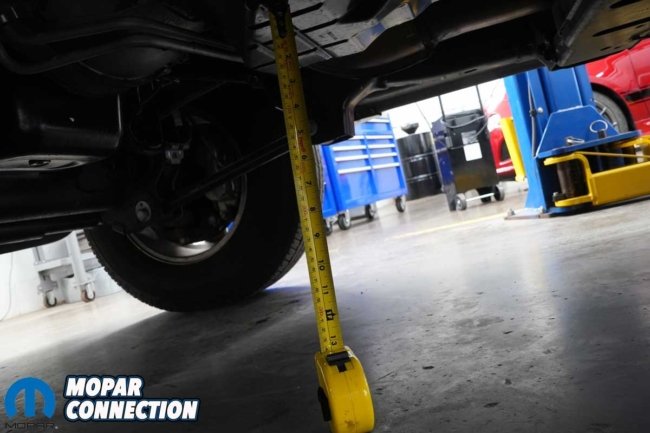

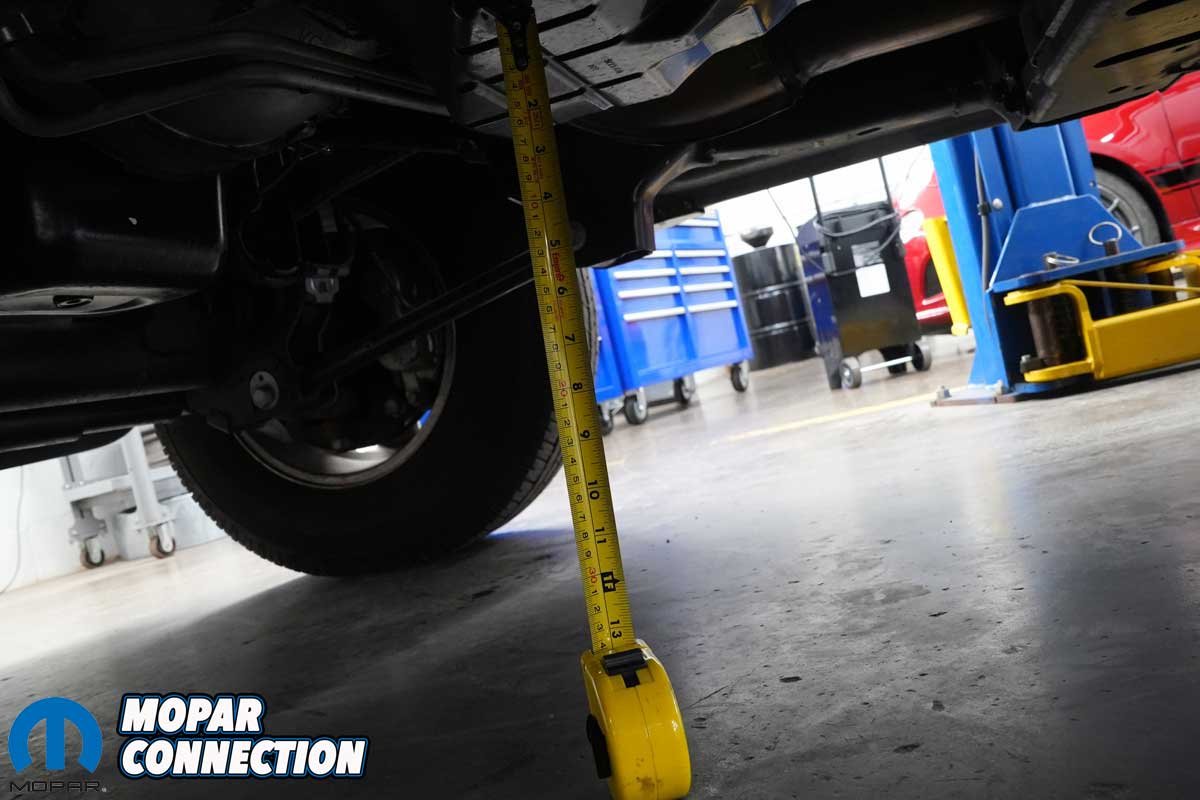
Above Left: The factory transmission pan provided 16 3/8 inches of ground clearance, an important measurement to consider when installing the deeper Banks Power pan. Above Right: We had access to a vehicle hoist, so we used it for the installation. The pan swap can be performed with the truck on the ground, but having the truck on a lift provides considerably better access to the transmission and makes the job easier and cleaner.
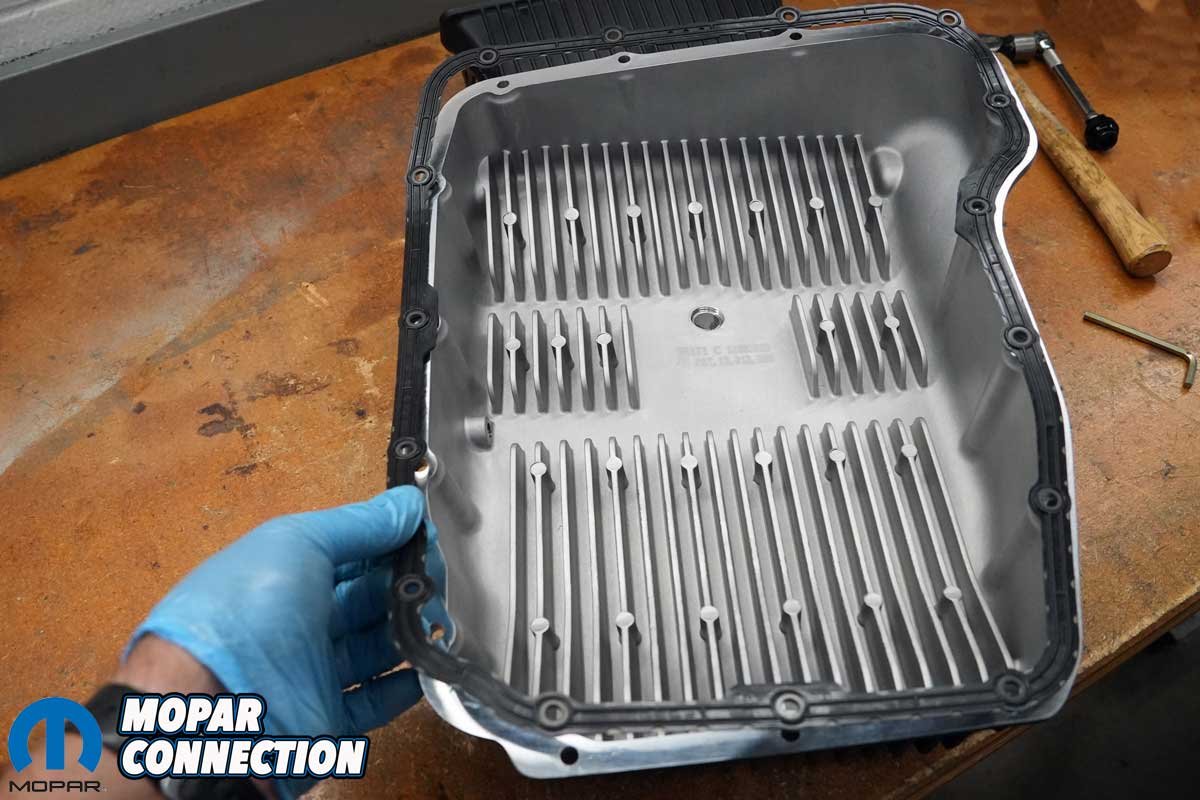
The pan features 20 internal fins and 22 deep-cut external cooling fins. The internal and external fin structures are designed to increase the surface area available to transfer heat from the ATF, through the aluminum pan, and into the surrounding air.
The internal fins increase the surface area exposed to the ATF, while the external fins provide more surface area to release that heat. Add the airflow generated by the Ram-Air scoop, and the pan has significantly more heat-transfer capability than the factory stamped-steel pan.
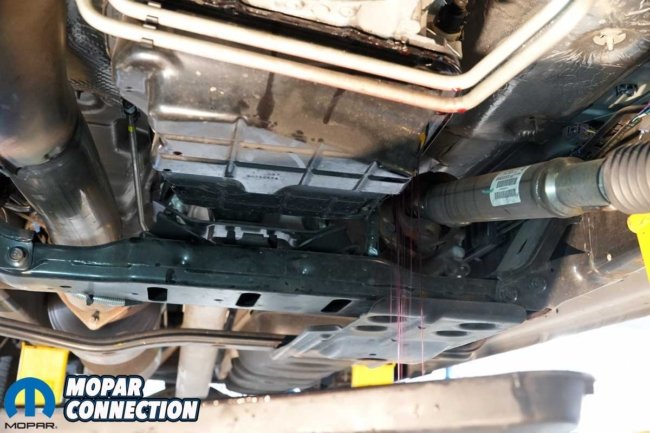
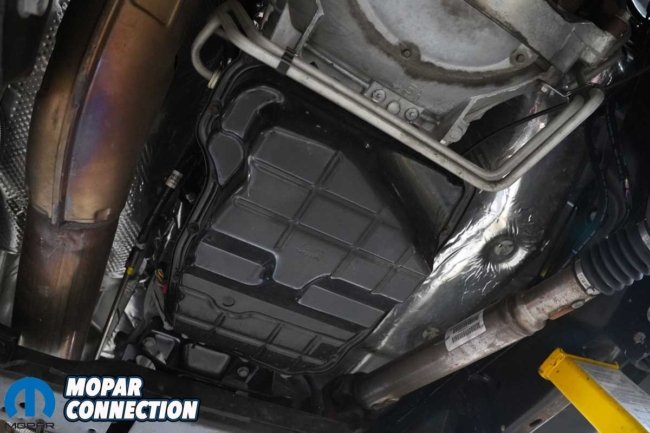
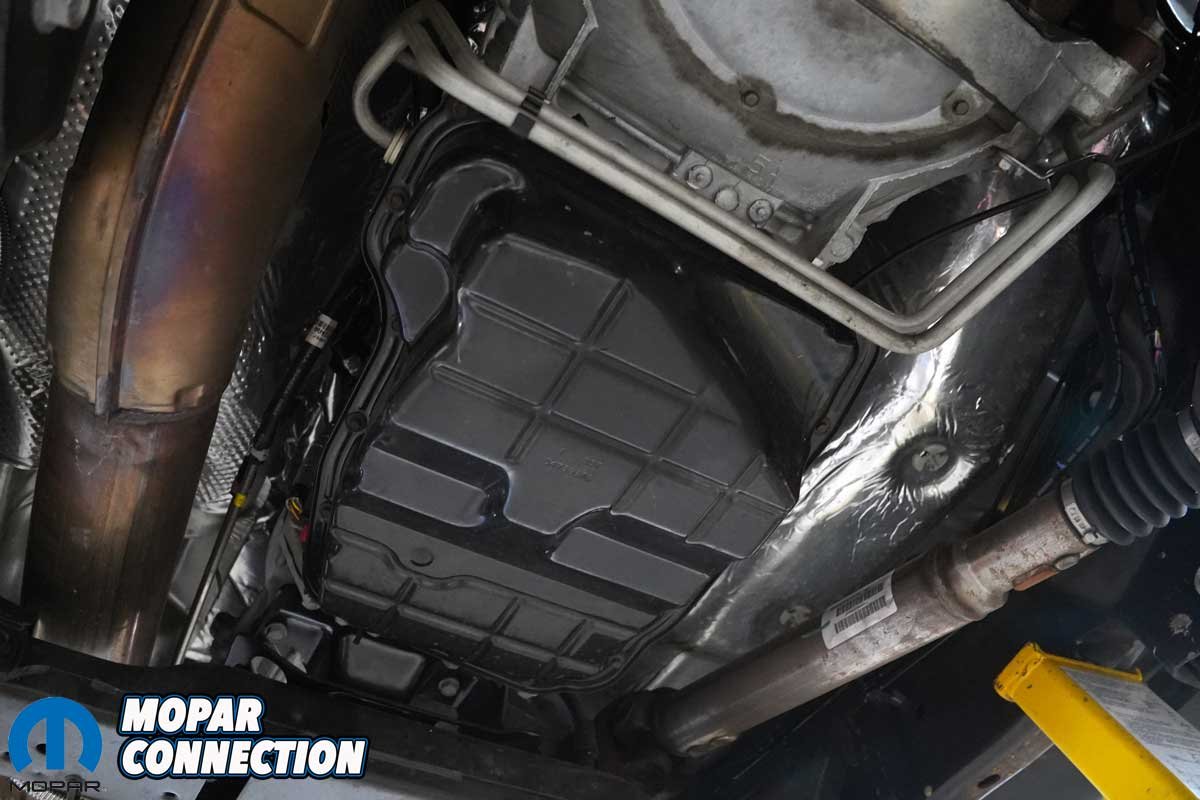
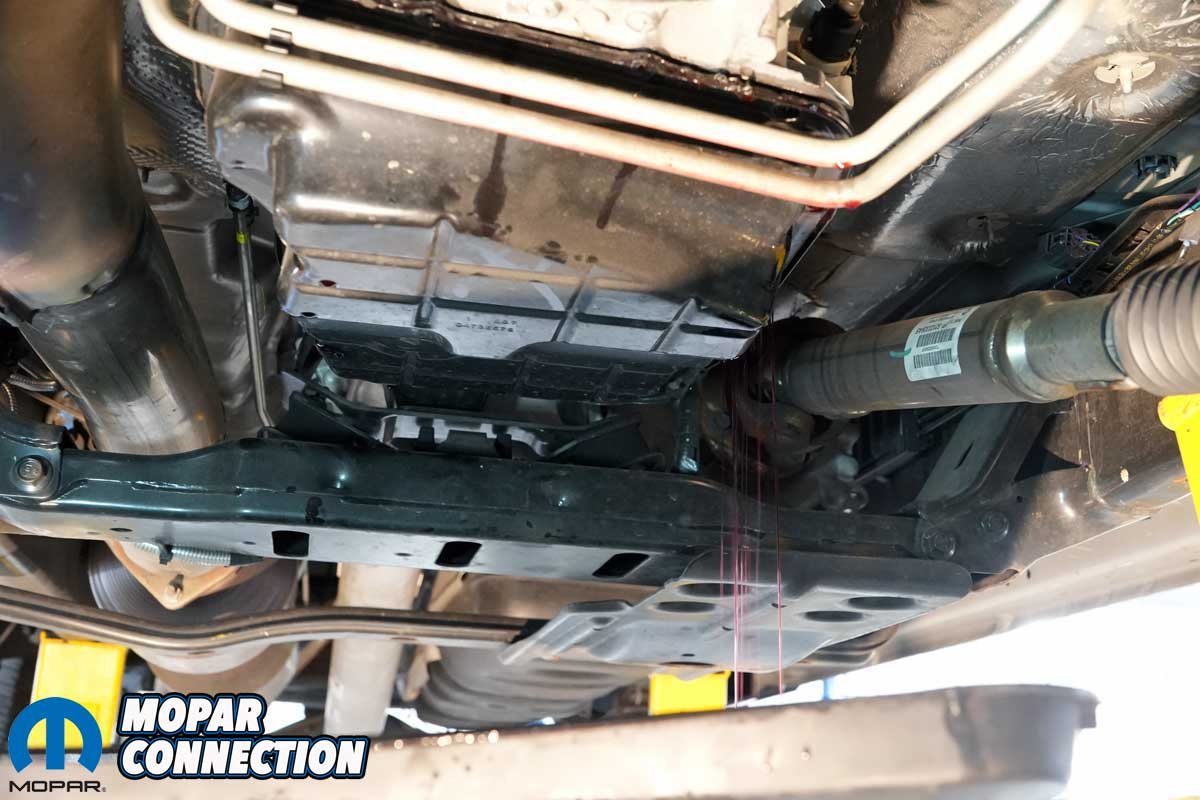
Above Left: The transmission had never been serviced, and because we are the truck’s original owners, everything remained in its original, factory-installed condition. This gave us a clean baseline for the service and the installation of the Banks Power Ram-Air pan. Above Right: When removing fluid from a factory transmission pan, the process almost always starts the same way: loosen the pan, tip it slightly, and watch the fluid spill over the edge and flow neatly into the drain pan.
The Banks pan also boosts transmission fluid capacity by roughly three quarts over the stock pan. That extra capacity provides two primary benefits. First, the larger volume gives the transmission greater thermal mass. Second, more ATF provides additional fluid volume to absorb heat before the temperature rises as quickly.
Consider a 68RFE pulling a heavy trailer up a long grade. Under those conditions, the transmission can generate heat faster than the cooling system can immediately reject it.
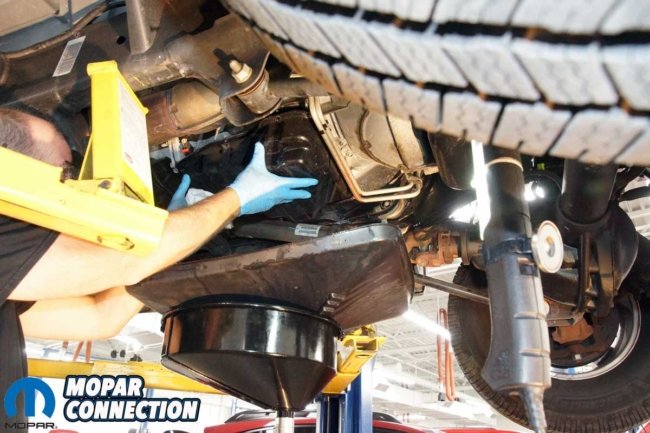
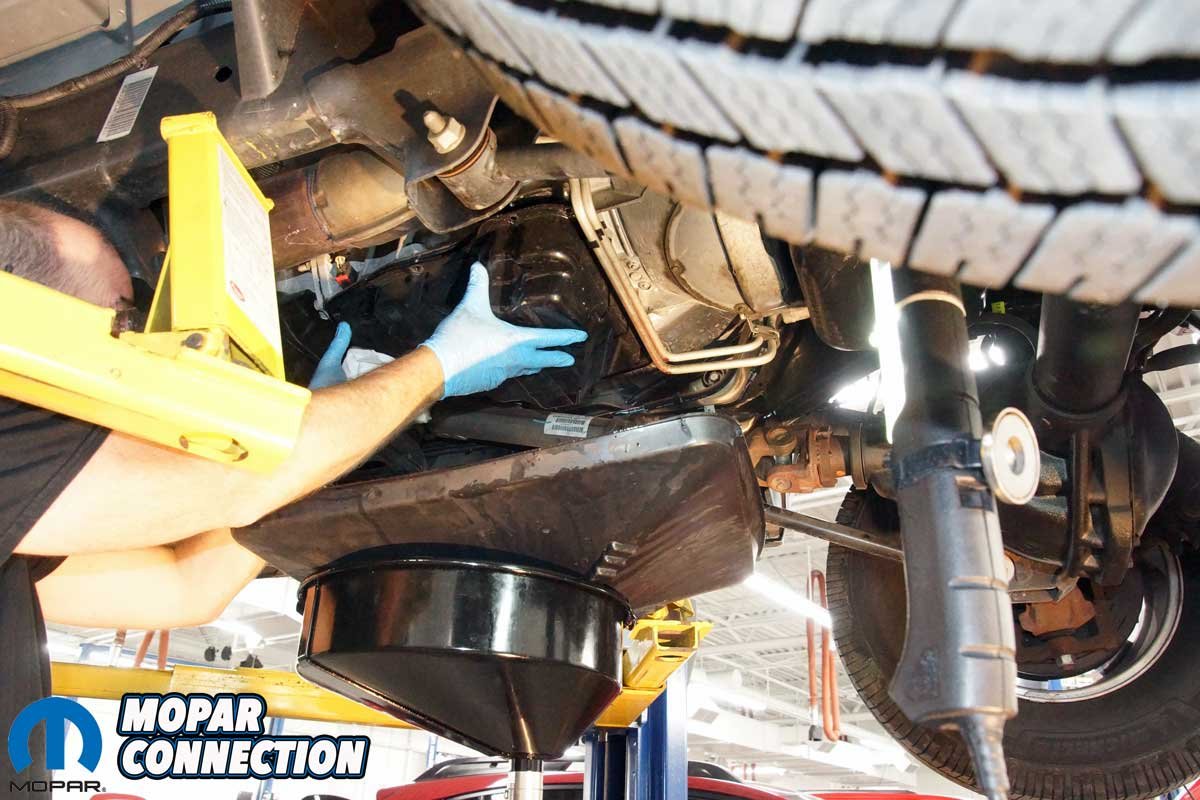
Above: With all the fasteners removed, we supported the pan and tilted it slightly toward the rear to drain the fluid. As we lowered the pan, we worked its front lip around the transmission fluid lines. As expected, not all of the fluid made it into the drain pan, and some found its way onto the shop floor.
Adding more fluid does not eliminate the heat being generated, but it takes longer for the additional volume of ATF to become heat soaked. Simply put, the extra capacity gives the transmission more thermal reserve and can help delay the point at which fluid temperatures begin to climb excessively.
The Banks pan is constructed from A380 aluminum using a die-casting process, with CNC-machined surfaces. Banks highlights the benefits of die-cast construction over traditional sand casting, including a smoother, less porous finished surface.
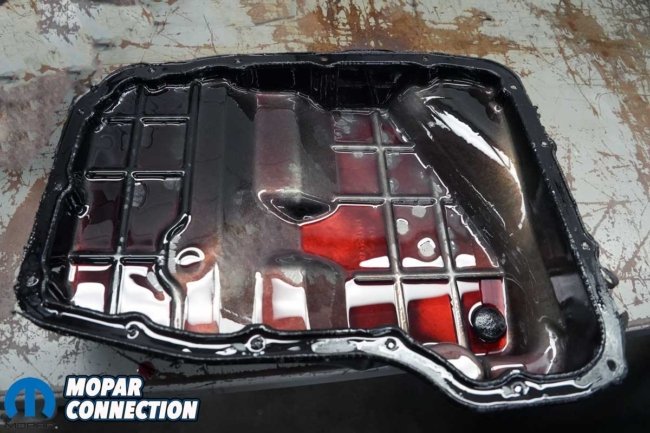
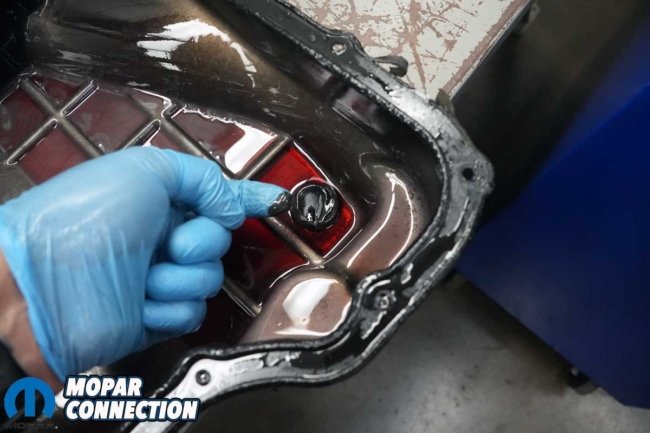
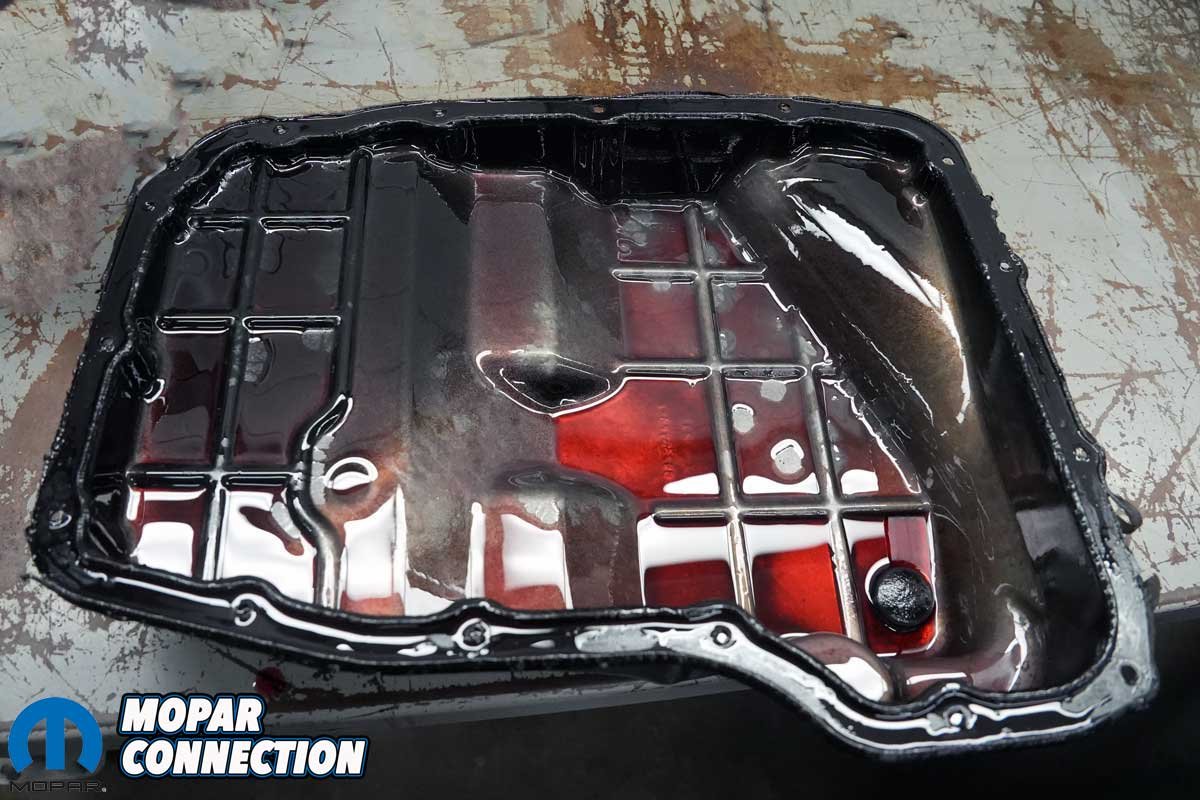
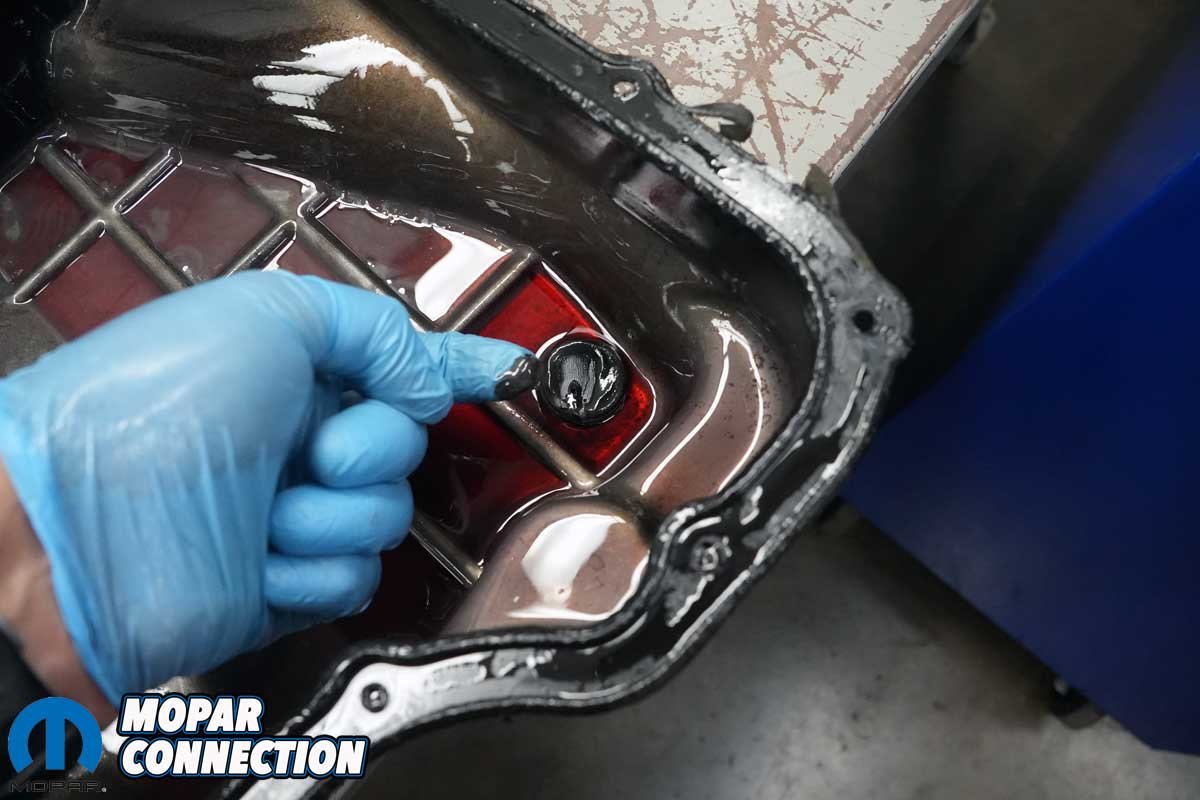
Above Left: The 14-year-old transmission fluid looked surprisingly good. It remained clean, with no visible metal or debris in the bottom of the pan. We were also surprised to find that the factory pan was sealed with RTV rather than a conventional gasket. Above Right: The magnet had a light coating of fine metallic “fluff,” but nothing that appeared excessive for a transmission with only 18,220 miles of service.
There are also several practical features built into the design:
• Magnetic drain plug to capture ferrous debris and allow the pan to drain fully
• 1/8-inch NPT port for an auxiliary transmission temperature sensor
• Billet filter adapter
• Increased fluid capacity
• Internal and external cooling fins
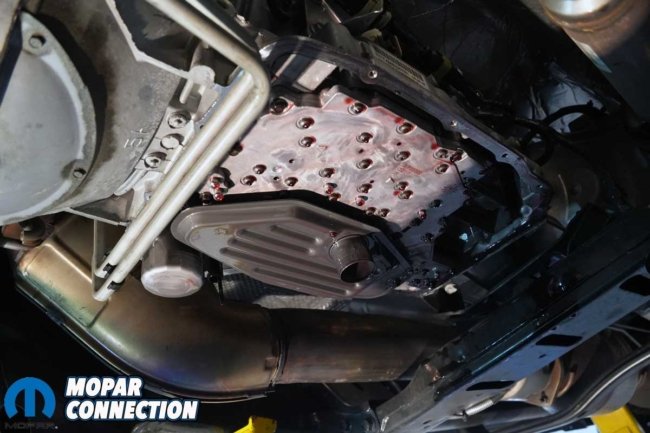
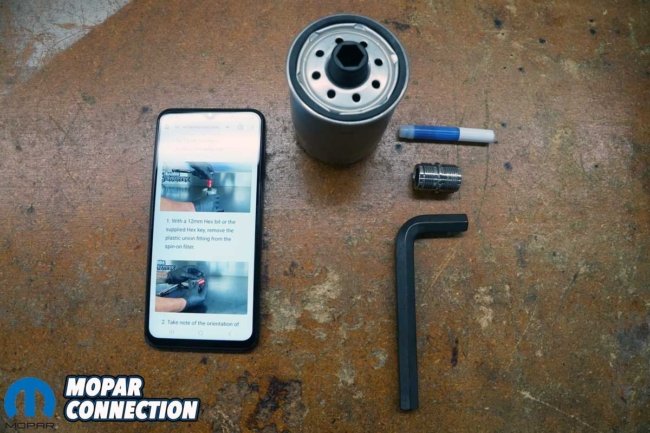
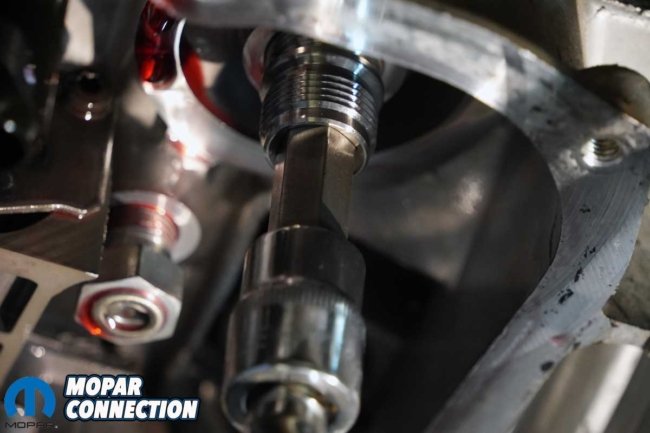
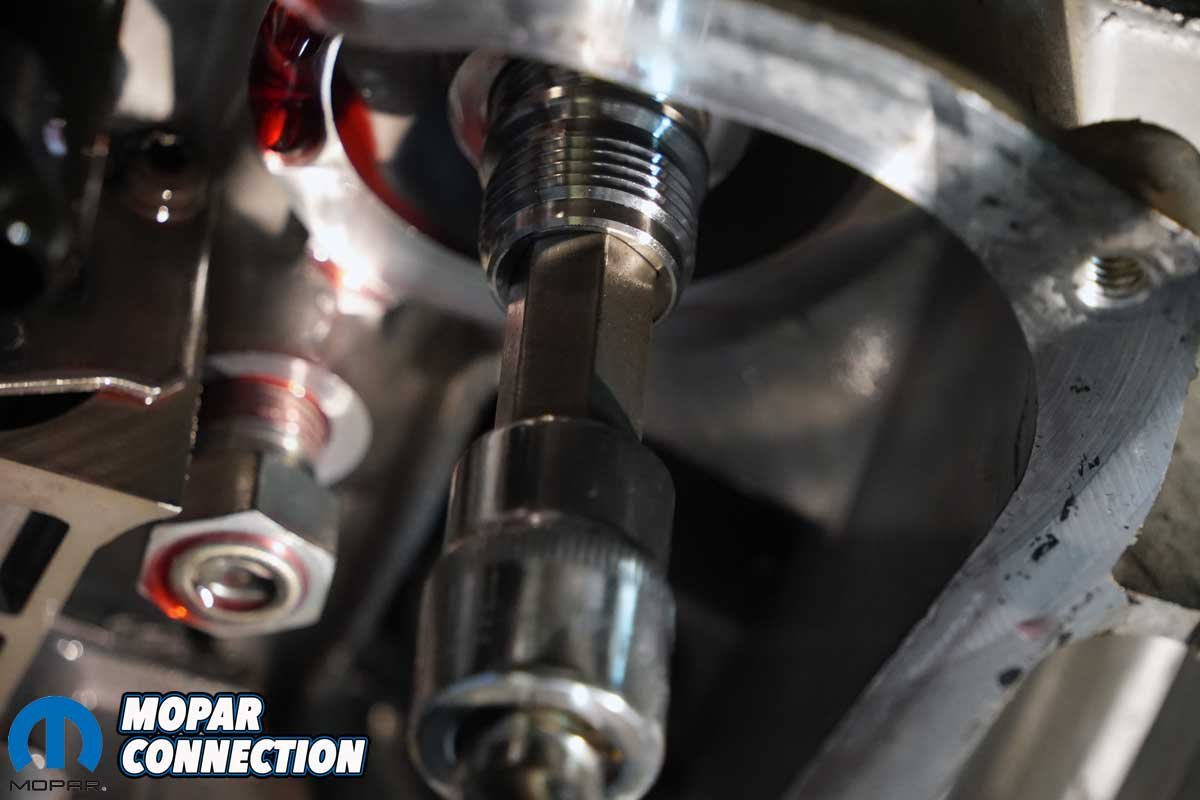
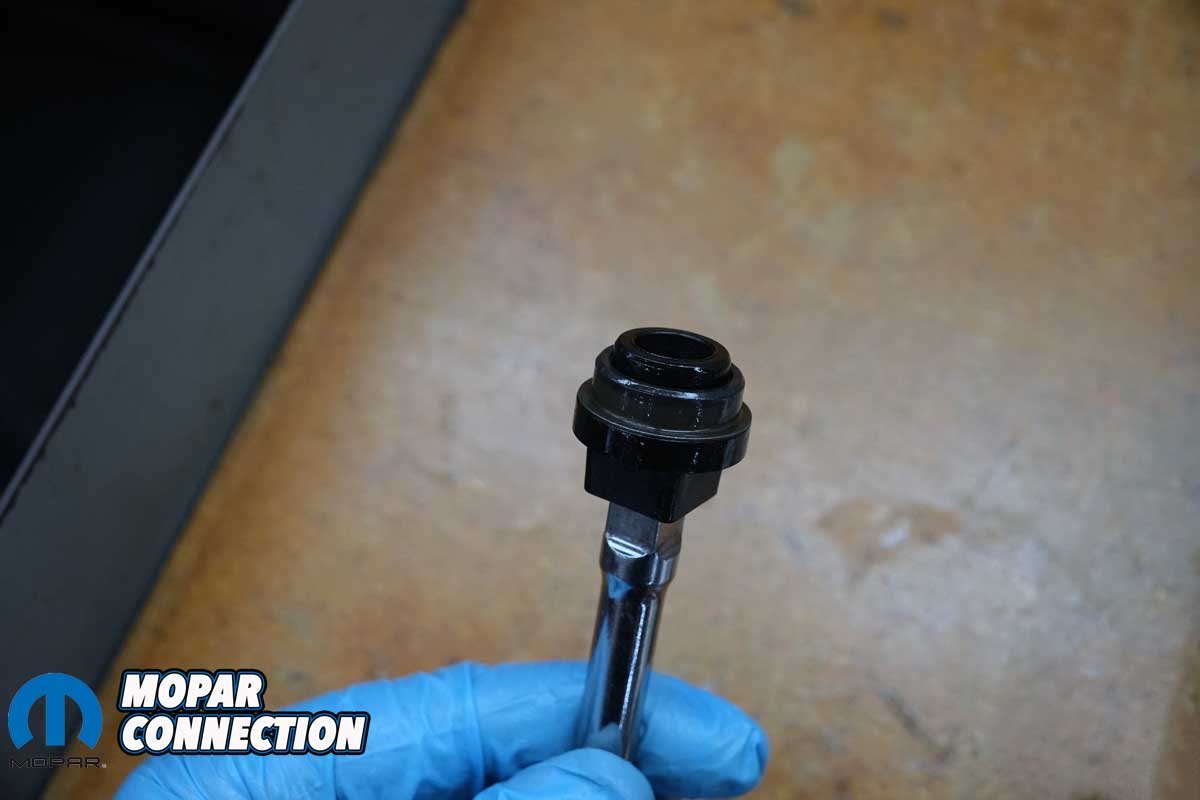
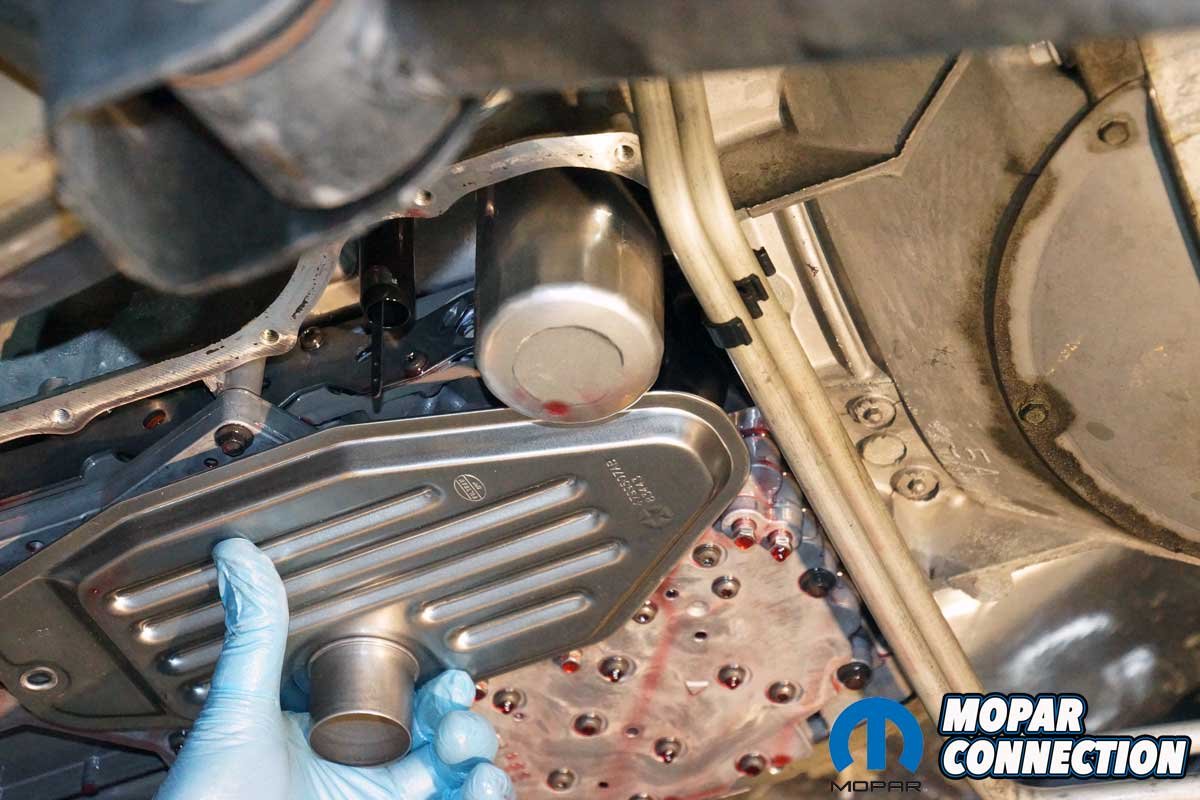
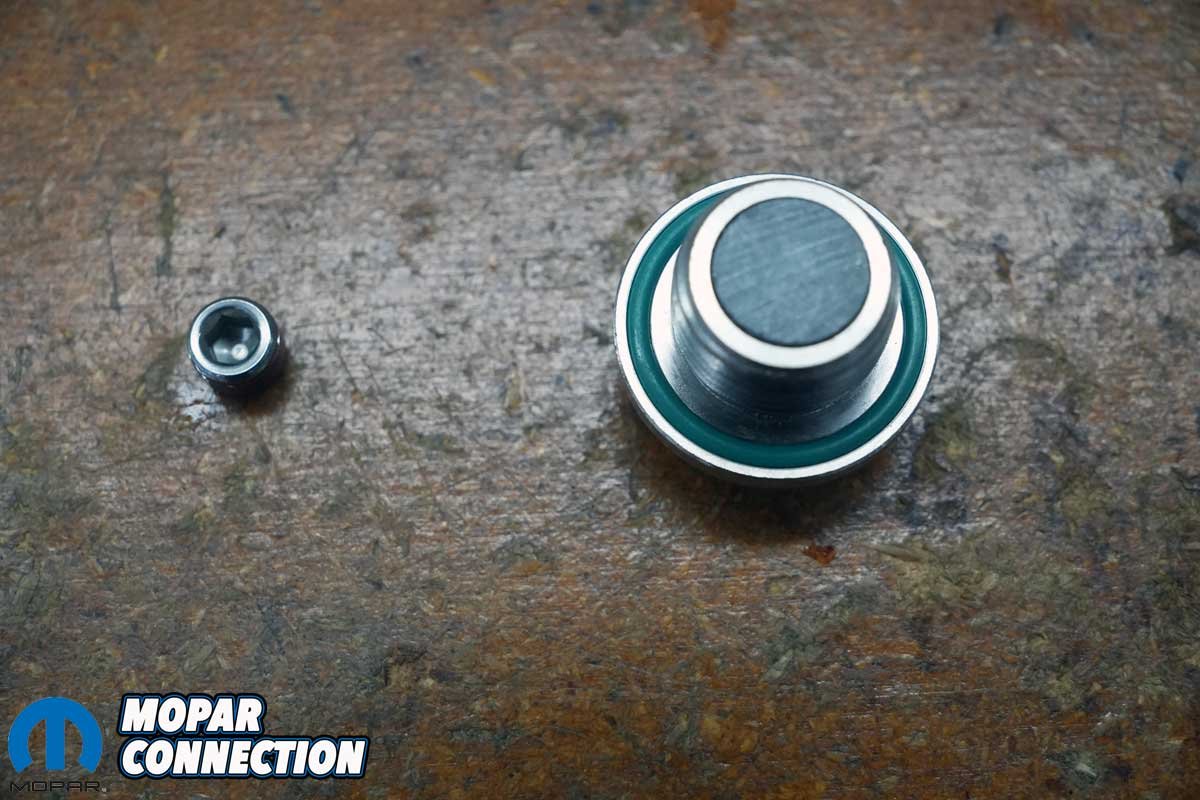
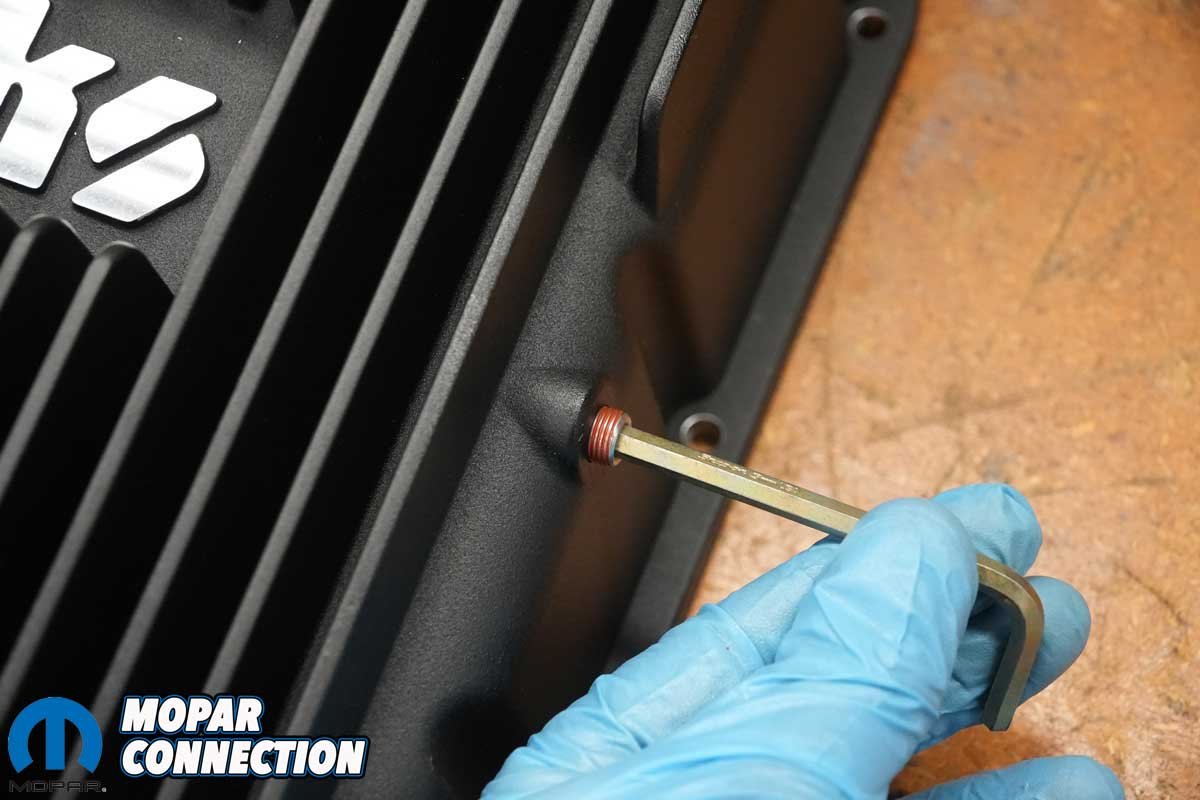
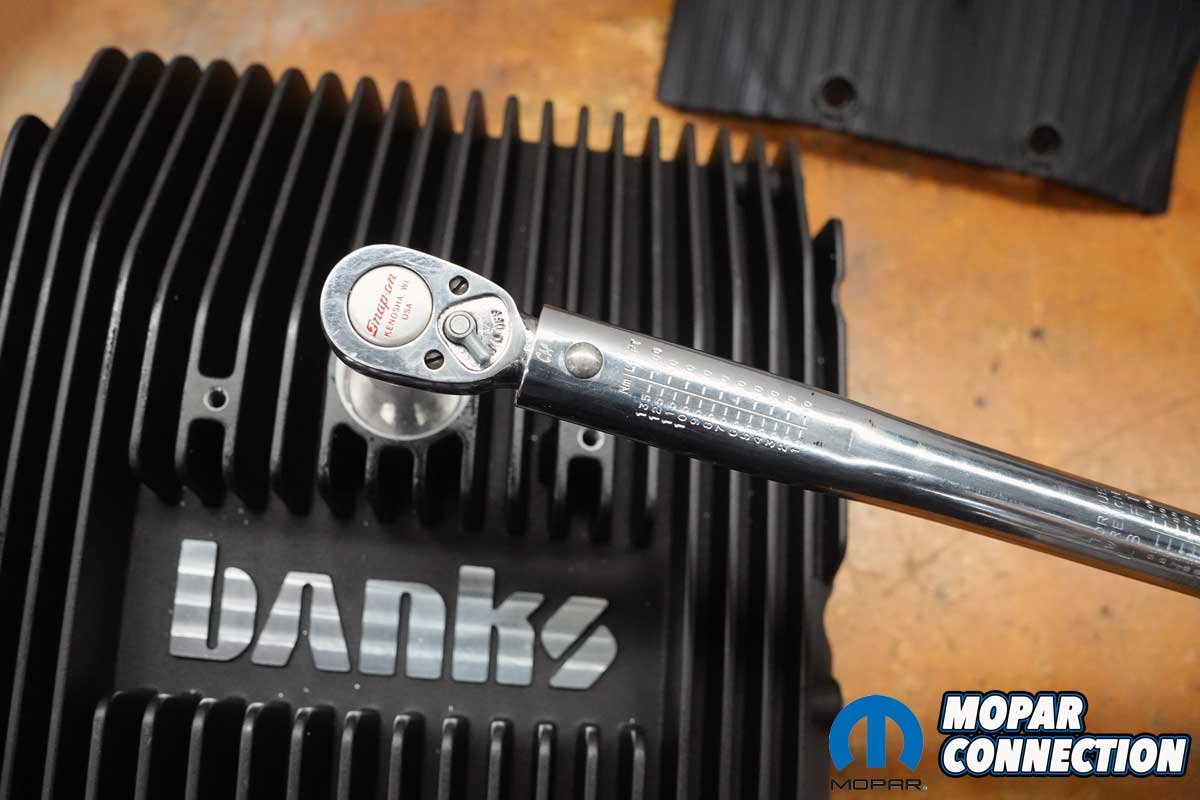
Above Left: Once the pan was removed, we had two filters to service. One was slipped into a grommet with a fastener at its opposite end, and the other was a spin on design. There are two designs of the flat filter, so get the one for your application (2WD or 4WD). Above Center: The factory spin-on filter uses a plastic spud to thread it into place. The Banks kit replaces this plastic component with a billet spud adapter, so we must remove the original spud from the new filter before installation. Banks provides the necessary hardware and components to complete the conversion. Removing the plastic spud proved surprisingly difficult, but with some persistence, we got it out without damaging the filter. Above Left: We installed the billet spud adapter using the supplied threadlocker. The kit includes a 12mm Allen wrench for installation, but we used a 12mm socket with a torque wrench to tighten the adapter to the specified 10 ft-lbs.
Of those features, the temperature-sensor provision is particularly interesting if you want to monitor what is happening inside the transmission rather than simply installing the pan and assuming it is doing its job. The 1/8-inch NPT port lets you install an auxiliary temperature sensor directly in the pan.
The goal of the pan is not just to make the transmission run cooler for the sake of a lower gauge temperature. The real goal is to manage heat before it becomes a problem and, ultimately, give the 68RFE a better chance at long-term reliability.
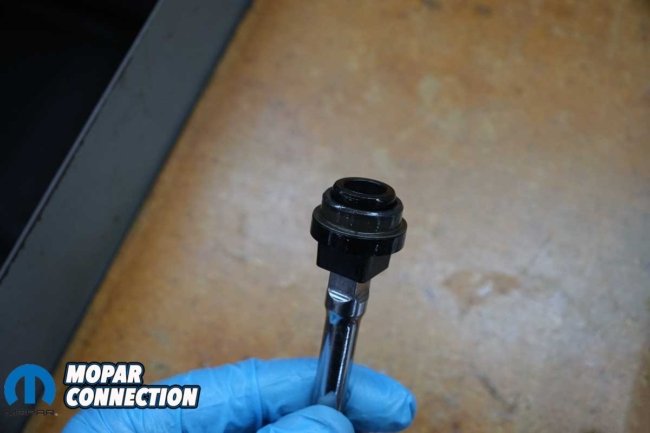
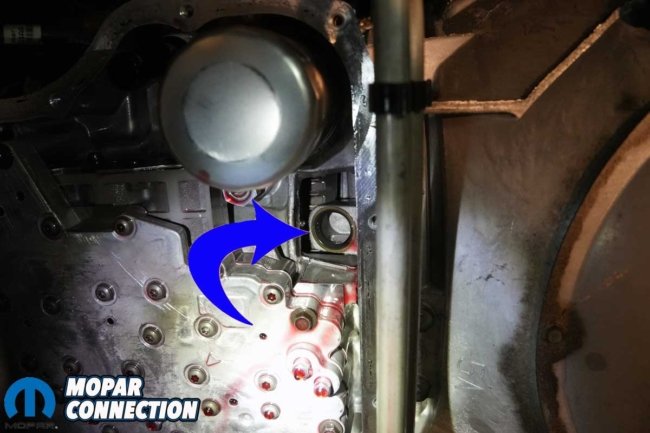
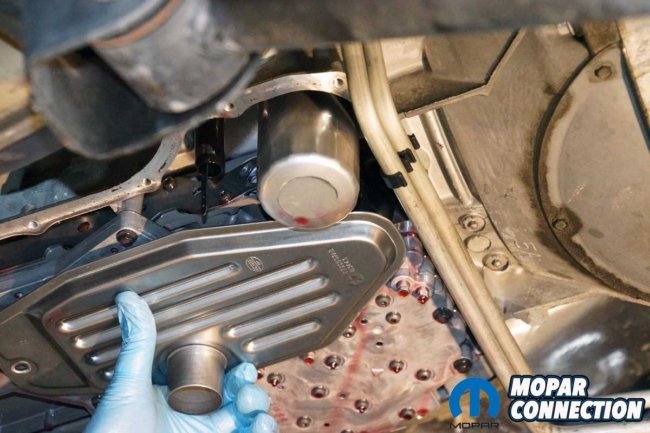
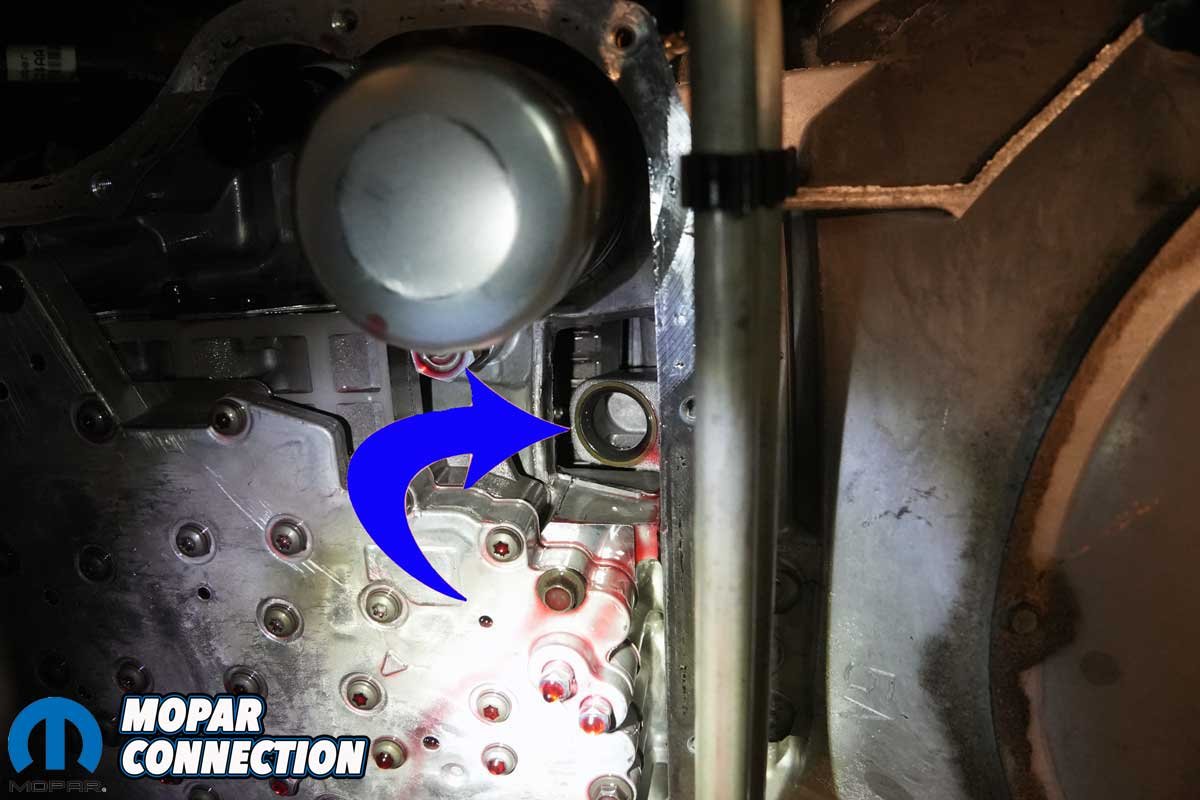
Above Left: To remove the slip-in flat filter, we unthreaded the filter’s fastener and pulled the filter from the transmission. We used a slide hammer to pull the filter’s grommet from the transmission. Banks includes a seal-driving tool designed to install the replacement grommet, which attaches to a 3/8-inch drive extension for easy and controlled installation. Above Center: The driver tool supports the grommet during installation and prevents direct impact. With a few light taps, we had the new grommet properly seated in the transmission (blue arrow). Above Right: We snapped the new filter into the grommet and secured it with the single fastener. With the filter properly seated and secured, the filter portion of the service was complete.
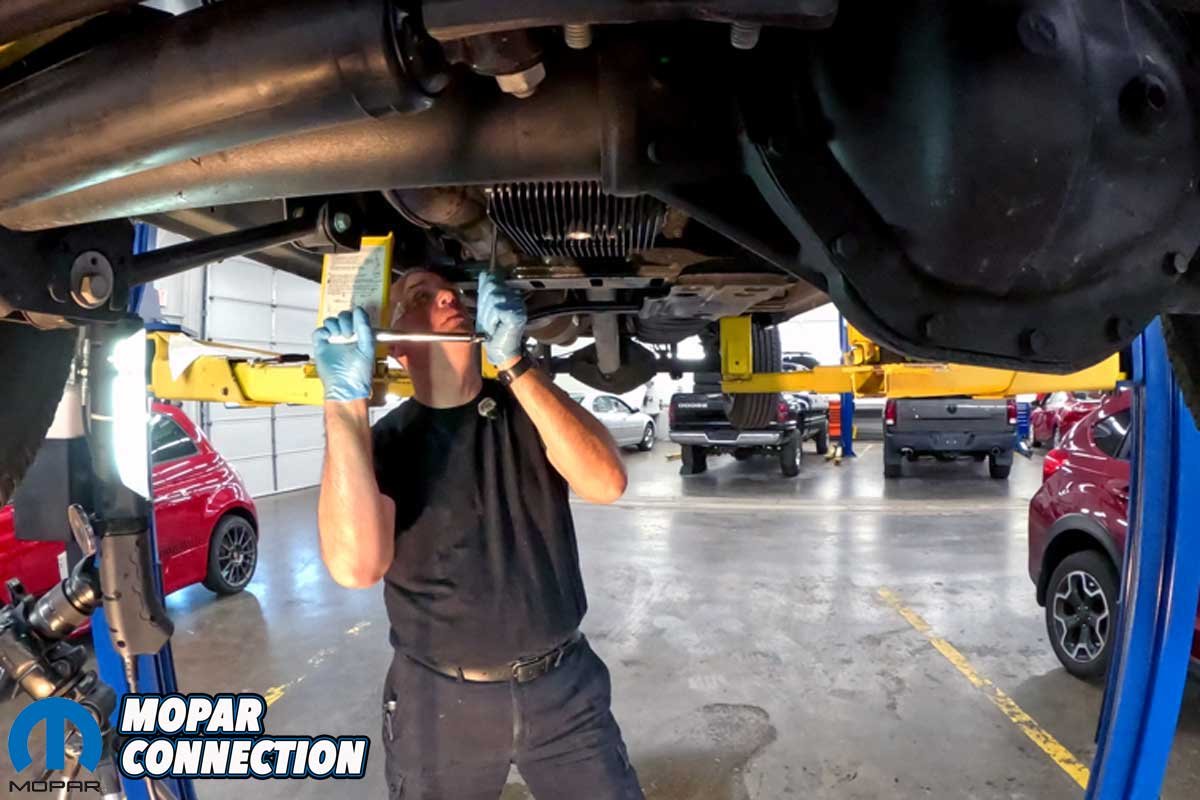
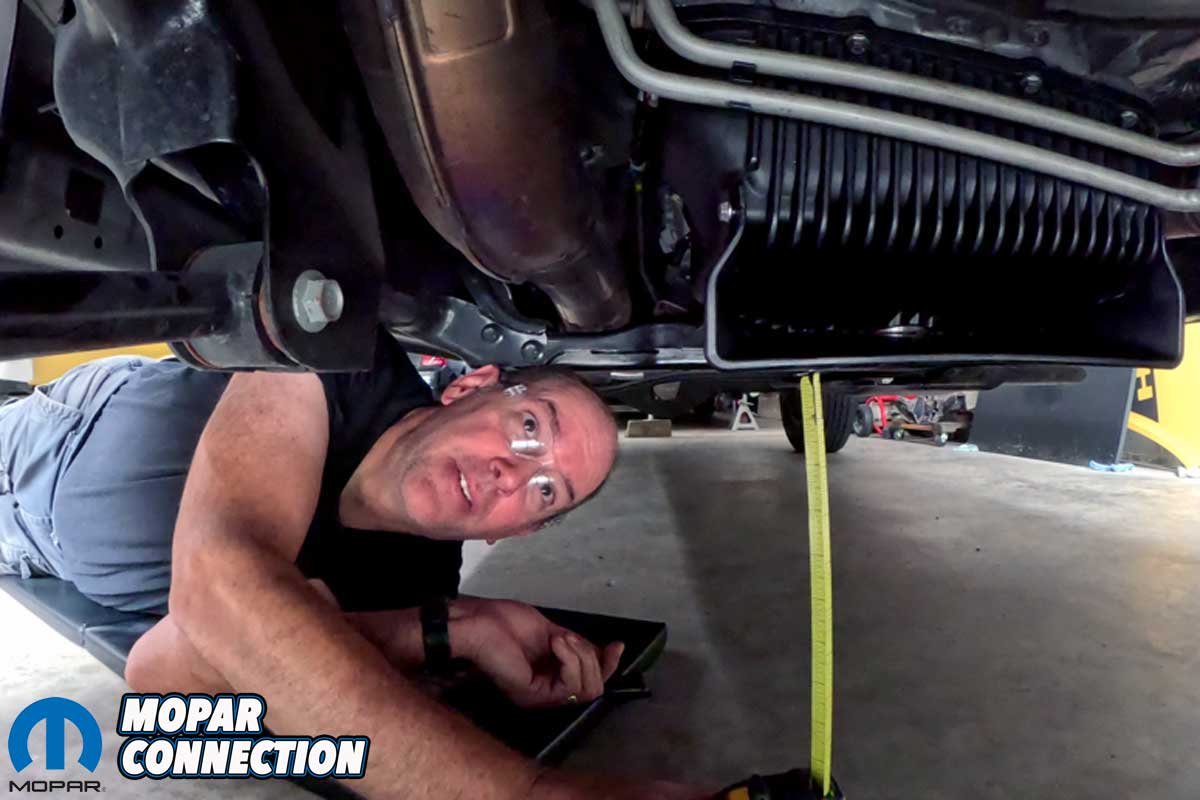
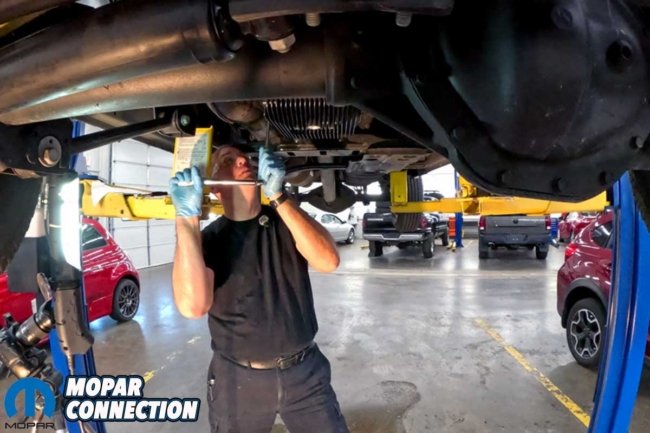
We could have done the pan swap with the truck on the ground, but we had access to a vehicle lift, which made the job easier. Before we raised the truck, we made a ground clearance measurement and had a clearance of 16 3/8” at the lowest point of the stock pan to the ground.
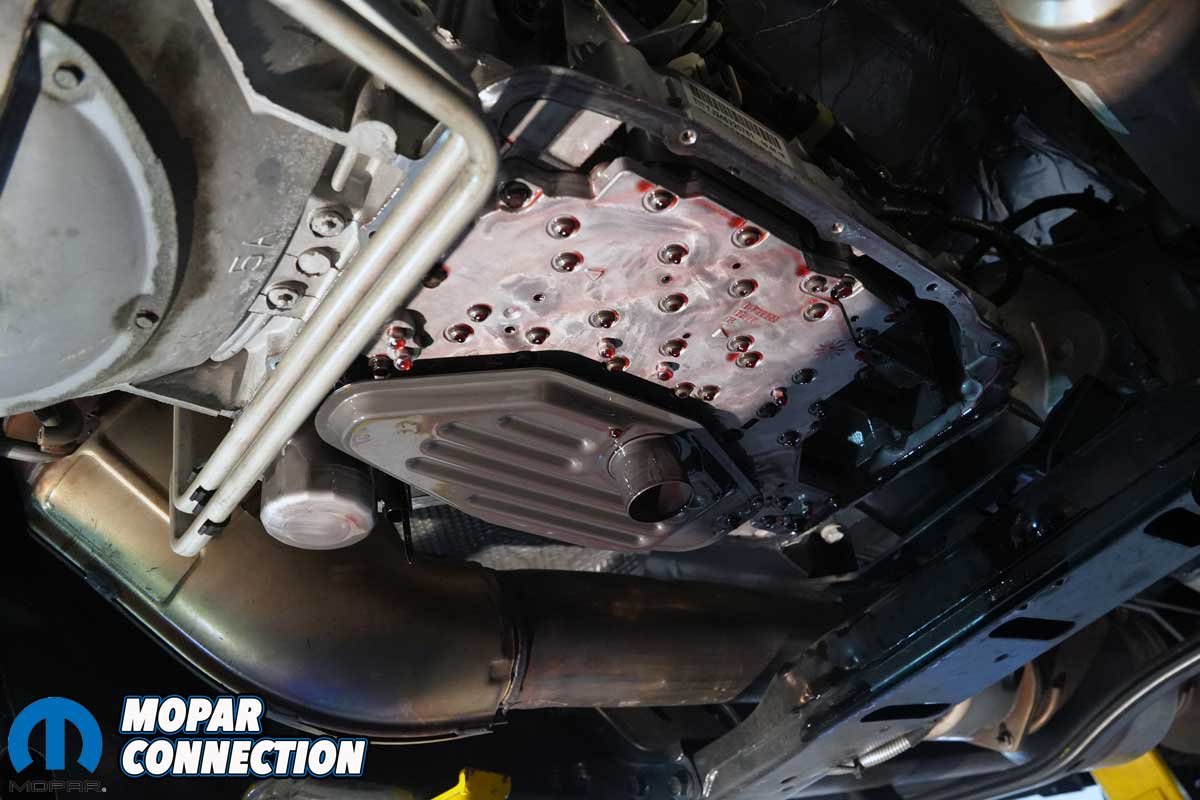
We removed a series of 8mm headed bolts around the pan’s perimeter, leaving a few loose to hold the pan. To our surprise, the pan had RTV and a thin paper gasket rather than the expected pan gasket. Since the transmission fluid had never been changed and we have owned the truck since new, this was presumably the factory-installed gasket.
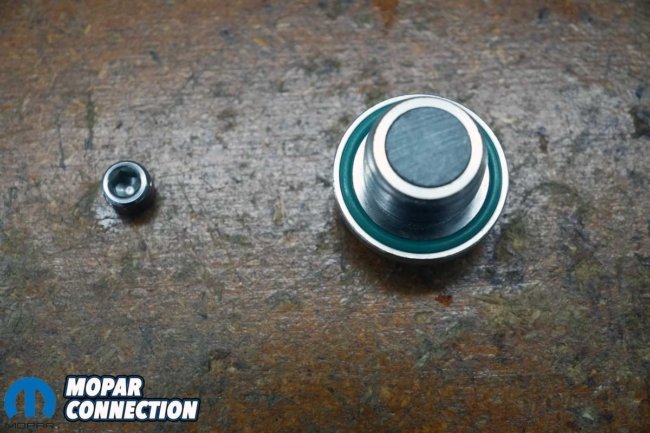
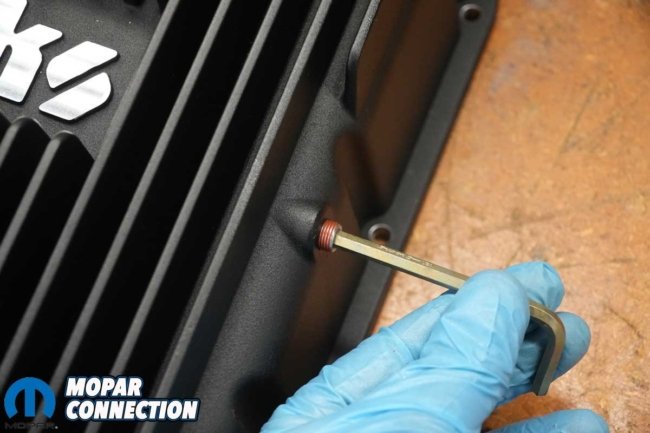
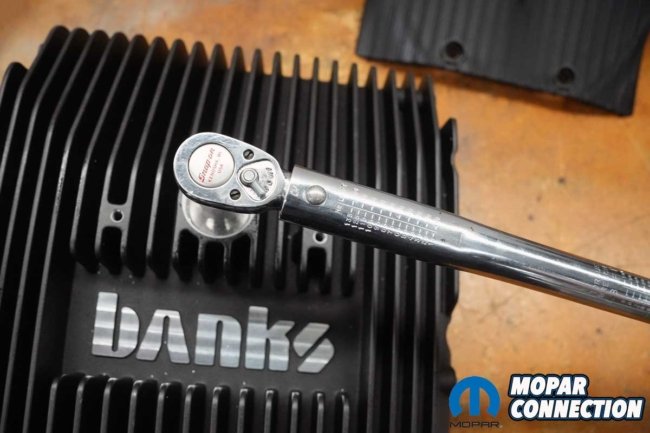
Above Left: The Banks Power Ram-Air transmission pan came with an 1/8-inch Allen plug that was installed because we elected to not install an aftermarket temperature fluid gauge. More importantly, the pan has a magnetic drain plug. This is a bonus as it will allow us the opportunity to drain the pan before removing it. Above Center: The NPT threads do not require Teflon tape to seal the plug to the pan. The plug comes with threadlocker already applied, so installation was as simple as threading it into the pan and tightening it to the specified torque. Above Right: The Banks Power transmission pan drain plug was installed and torqued to 15 ft-lbs.
After lightly prying the pan loose, fluid poured into our drain pan. We removed the remaining bolts and lowered the pan. The front of the pan caught on the transmission lines at the bell housing, so we had to tip the pan back to remove it. As expected, some of that fluid found its way onto the transmission crossmember and the floor.
With the pan off, we had access to the two filters. We removed a T25 screw and detached the first filter. The second filter was a screw-on. With a pair of channel locks, we loosened and unthreaded the filter.
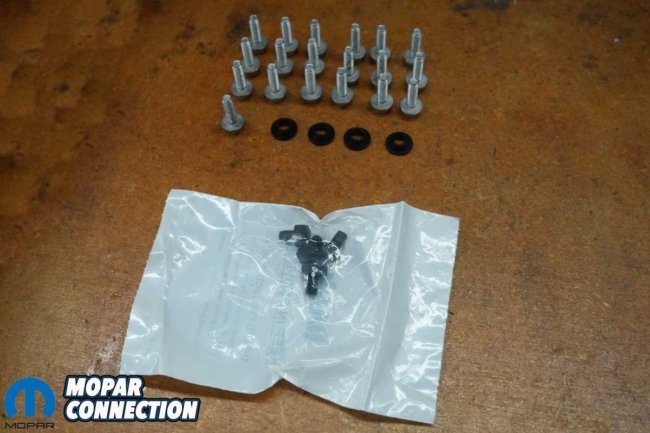
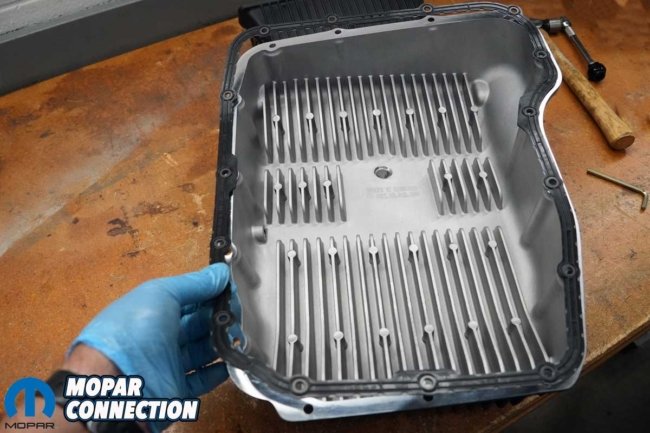
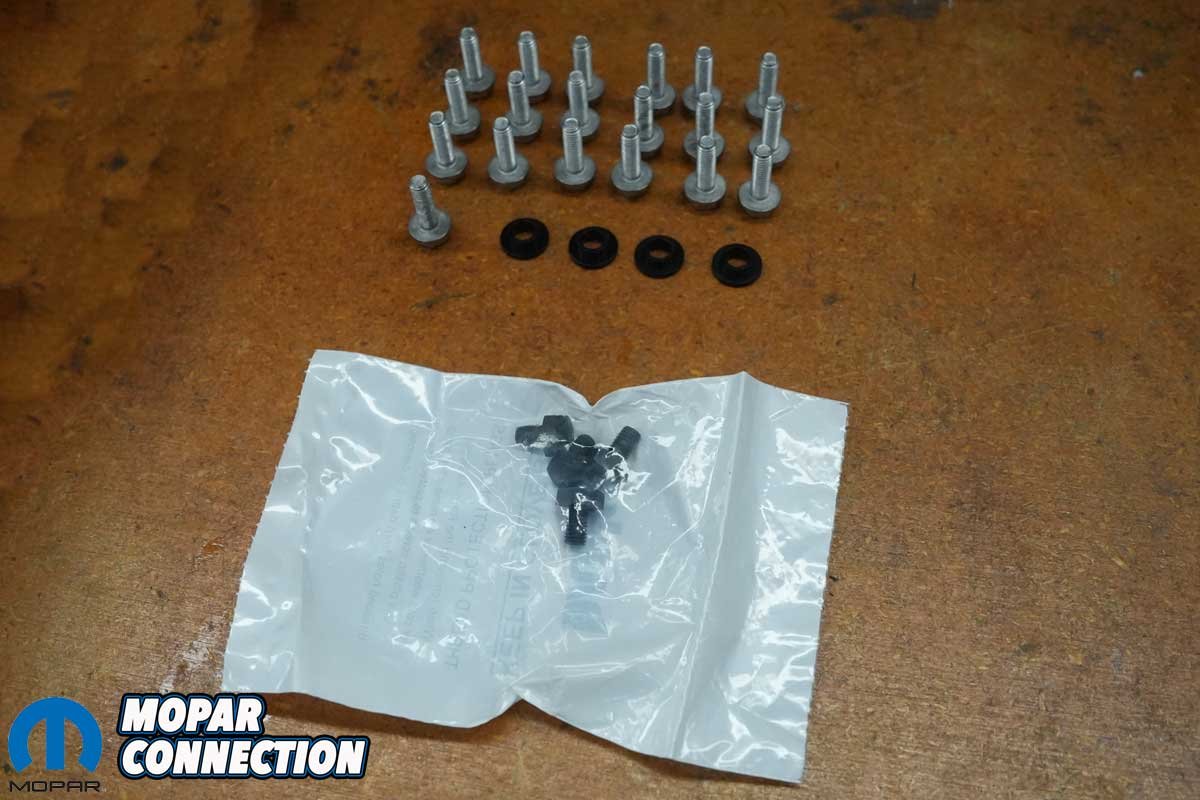
Above Left: The kit includes all the hardware necessary to install the transmission pan, along with the fasteners required to secure the Ram-Air scoop. Alignment washers ensure the scoop is properly positioned during installation. The kit also includes four thread-in plugs to protect the pan mounting holes if you remove the Ram-Air scoop later. Above Right: The factory transmission pan gasket fits the Banks Power transmission pan flawlessly. We prefer a conventional gasket over RTV to seal the pan, as it makes future service cleaner and simplifies removal and reinstallation.
The kit came with a billet adapter to install where the screw-on filter spud spun into the transmission. The kit included a 12mm Allen wrench and threadlocker. We applied a few drops of threadlocker to the adapter and installed it. We used a 12mm socket and torqued the adapter to 10 ft-lbs.
We had to remove the plastic spud from the new filter. Removing it proved to be more difficult than expected. The Allen wrench supplied with the kit was a little loose, so it slipped instead of turning the spud. We ended up lightly clamping the filter in a vise by the crimp closest to the spud and using a pipe wrench to free the plastic spud. To install the filter, we filled it with oil, lubricated the seal, and threaded it onto the billet adapter.
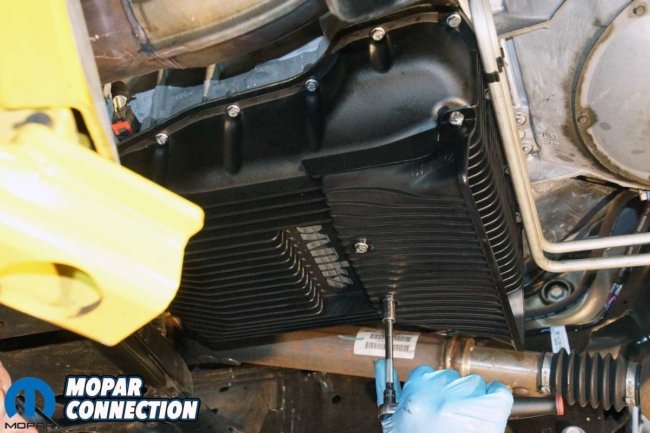
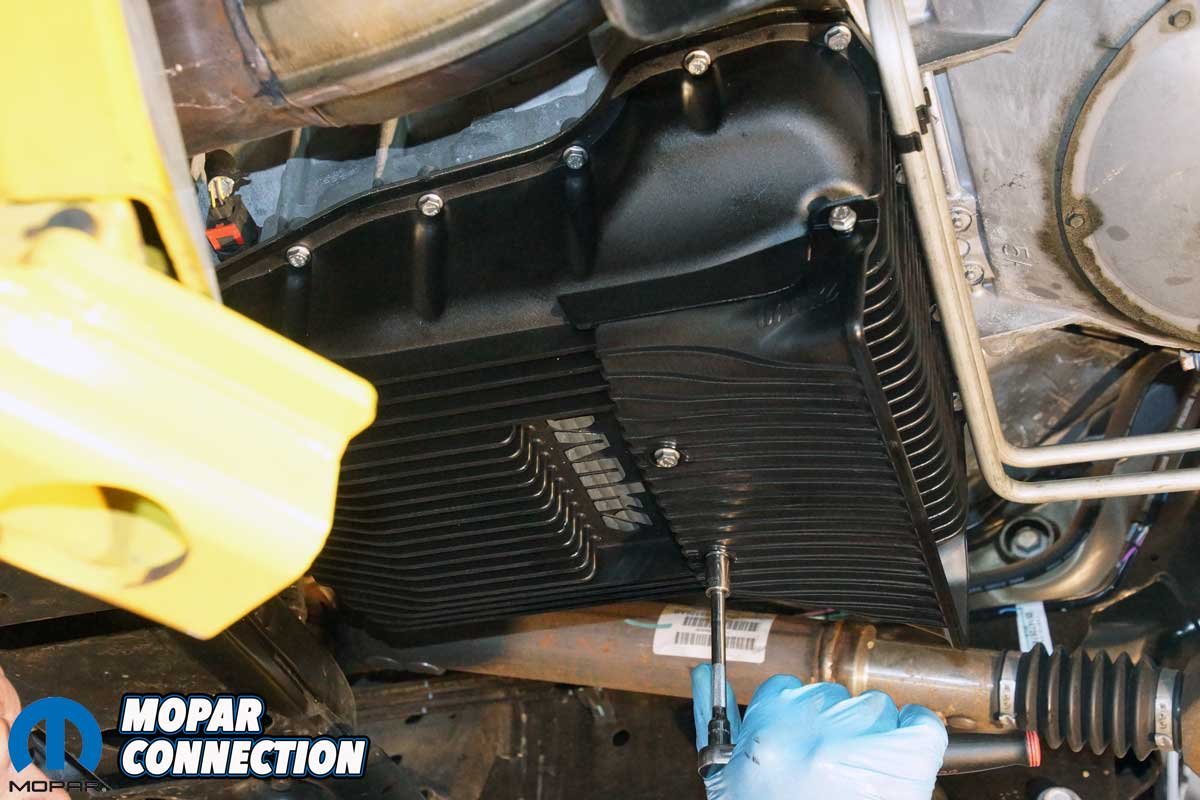
Above Left: We positioned the pan and gasket against the transmission and used the longer fasteners supplied with the Banks kit to secure it. Once all of the fasteners were installed, we tightened them evenly and torqued each one to the specified 65 in-lbs. Above Right: Our final installation step was mounting the Ram-Air scoop to the transmission pan. We used the four supplied bolts and four alignment washers to fasten the scoop securely to the pan.
After installing the filters, we cleaned the gasket surface and prepared the pan for installation. We installed and torqued the drain plug to 15 ft-lbs. and installed the NPT plug for the temperature probe. To ensure a good seal, we installed a new gasket on the pan. We secured the pan to the transmission with 10mm headed bolts. Each was torqued to 65 in-lbs.
The last step of the pan installation was mounting the Ram-Air scoop. We installed the four plastic locating washers and the same bolts used for the pan gasket. The scoop came with four plastic plugs to insert into each threaded hole if the scoop was removed for serious off-roading or extreme winter weather where ground clearance was at a minimum.
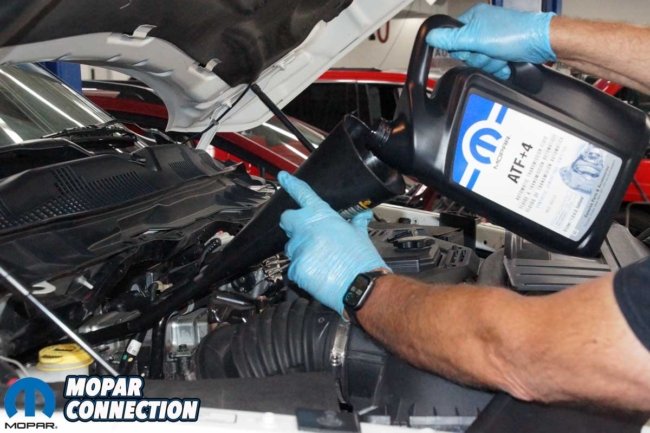

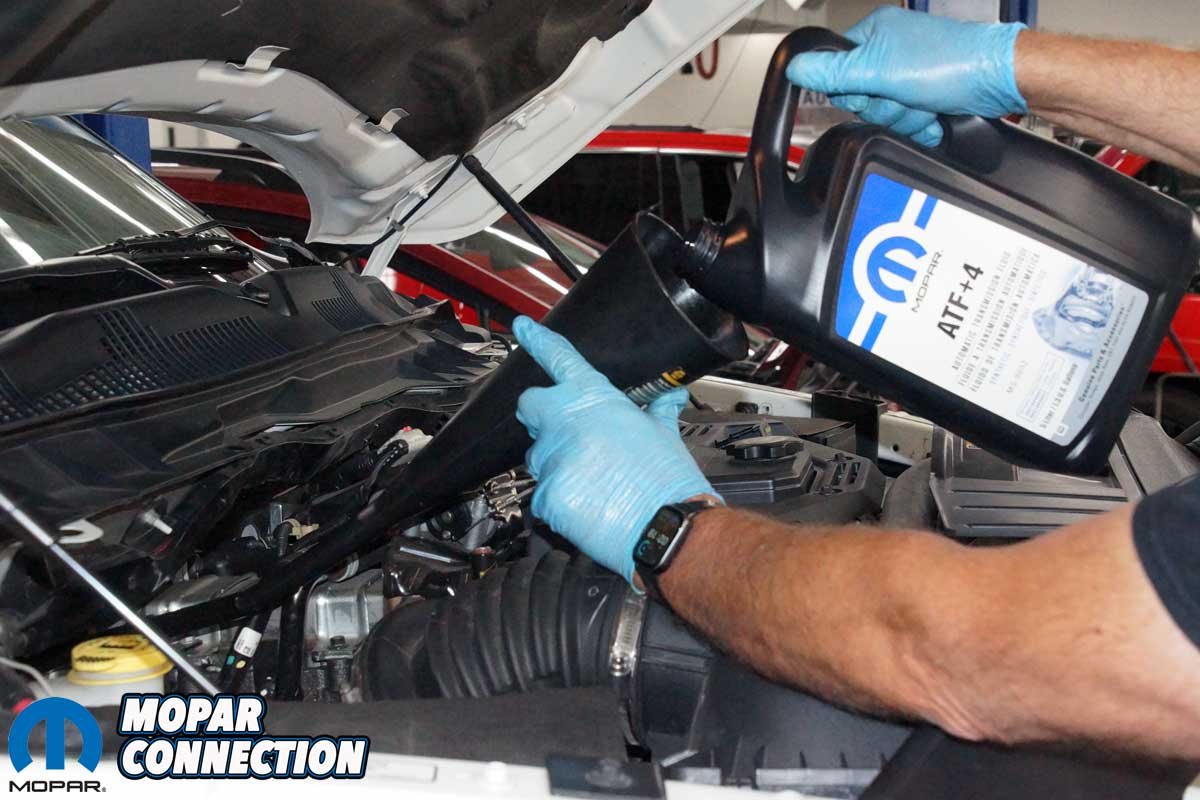
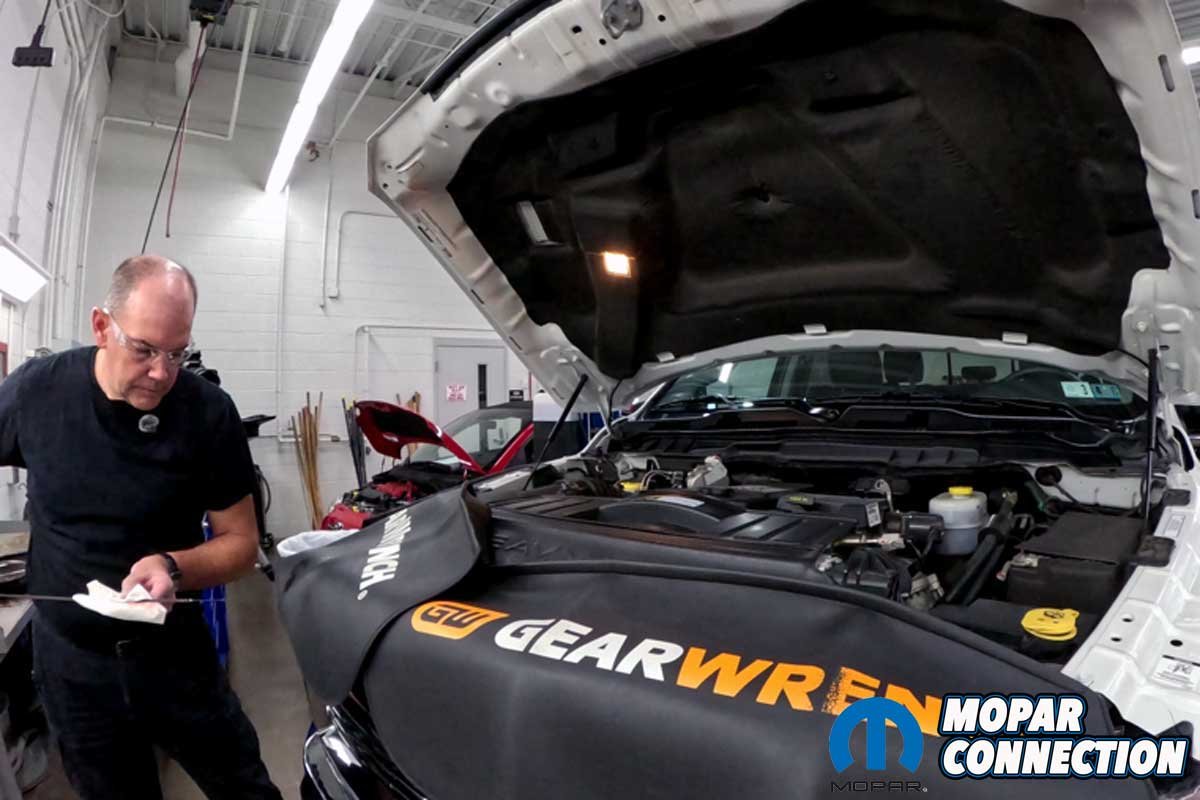
Above Left: We added 12 quarts of Mopar ATF+4 transmission fluid, approximately three quarts more than the factory fill specification. The additional capacity was necessary to account for the deeper Banks Power transmission pan. Above Right: Once the engine was warmed to operating temperature, we moved the transmission selector through each gear position, pausing for several seconds in each detent before returning it to Park. We repeated that series multiple times. After confirming the fluid level was correct, we took the truck out for a test drive to verify the transmission was operating properly.
To finish the job, we added 12 quarts of ATF+4, started the engine, and ran the transmission through the selector positions to circulate the fluid through the transmission and valve body. We checked the fluid level and before a test drive, we measured the ground clearance with the new Ram-Air scoop on the pan. Our ground clearance had dropped to 13-inches, a reduction of 3 3/8-inches from the stock pan.
The truck operated in the same fashion it always has. The transmission temperature remained similar to the drive prior to the pan change. On our truck, under the conditions of our test drive, the Banks pan did not produce a dramatic reduction in transmission temperature. The transmission operated exactly as it had before the installation.
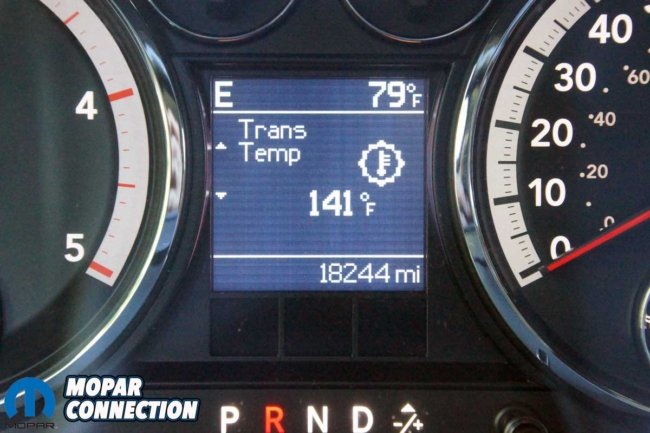

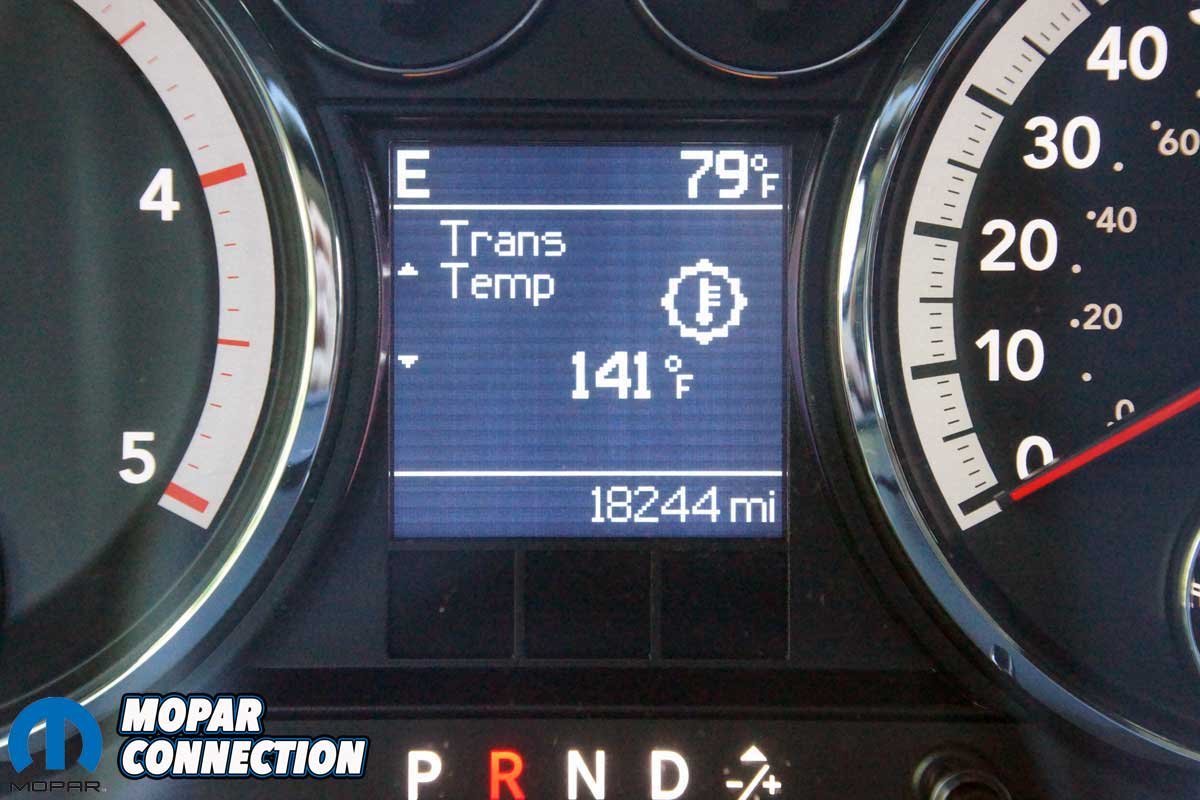
Above Left: Our test drive covered 24 miles, and the transmission fluid temperature was nearly equal to what we recorded with the factory pan. The 68RFE reached 141°F, compared with 138°F with the factory pan under similar conditions. With the truck lightly loaded and not towing, the Banks pan did not produce a measurable temperature reduction, suggesting that its cooling advantage may become more apparent under heavier loads or while towing. Above Right: We measured the ground clearance with the Banks Ram-Air pan and scoop installed and found it had decreased to 13 inches. That represents a 3 3/8-inch reduction compared with the 16 3/8 inches of clearance provided by the factory pan.
If the stock transmission is already maintaining acceptable temperatures, as ours does under minimal payload, the Banks pan may offer little practical benefit. However, light towing can add heat, and occasional light loads generally do not place the 68RFE under severe thermal stress. Under those conditions, the benefit of the additional cooling capacity may be limited.
Conversely, heavy towing and payload, engine performance modifications, or oversized tires can place greater thermal demands on the 68RFE. Under those conditions, the additional fluid capacity, heat-transfer area, and forced airflow provided by the Banks pan become more relevant. Ultimately, the value of the pan depends on how the truck is used and whether the additional cooling capacity is needed.

Above: Loaded up and ready to roll, the Banks Ram-Air pan had an opportunity to prove its worth under the conditions for which it was designed. With the Cummins working hard under load, transmission fluid temperatures ran approximately 5° to 10°F cooler than usual. We tend to be easy on the truck, so transmission temperatures rarely exceed 160°F, making the temperature reduction noticeable even under our typical towing conditions.
When we put the Cummins to work, it easily handled towing a 30-foot trailer with a ’69 Dart inside. The transmission temperature just touched 150°F, several degrees cooler than the transmission normally runs while towing. We are fairly easy on the truck when accelerating, so we do not generate tremendous amounts of heat, but a 5°F to 10°F reduction in fluid temperature is still a worthwhile improvement.
For more information about the Banks Power Ram-Air scoop pan or any other products, contact the Banks reps or drop by online.