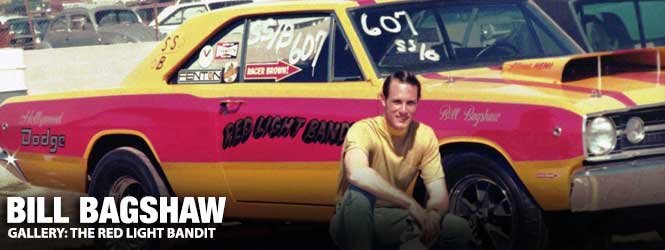
There was a time when a drag racer could become well-known without a massive corporate operation, a multimillion-dollar transporter, or a social-media following. A fast car, a talented driver, a competitive streak, and a memorable name could be enough. Bill Bagshaw had all four.
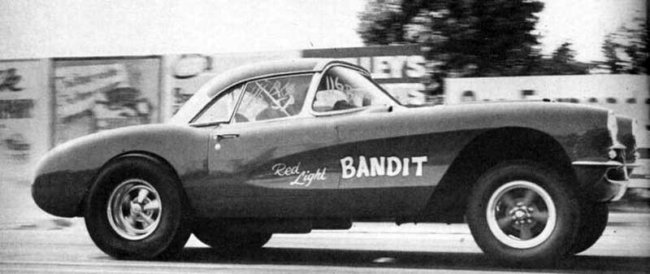
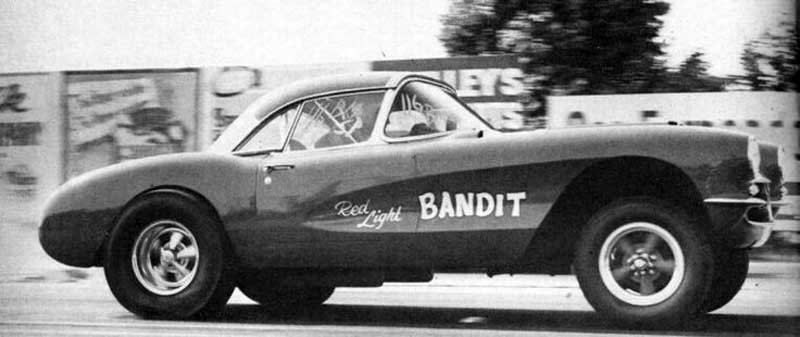
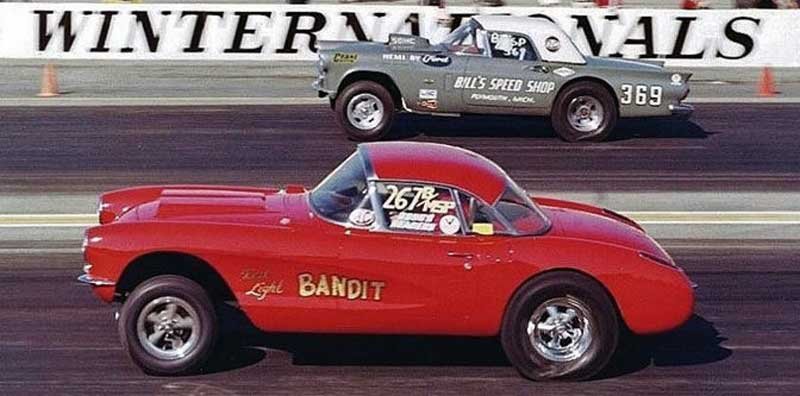
Above: Bill Bagshaw began his drag racing career behind the wheel of a series of Chevrolets. He started during the classic gasser era, when cars wore a nose-high stance that helped transfer weight to the rear tires for improved traction at launch.
Known throughout the West Coast drag-racing scene as the Red Light Bandit, Bagshaw became one of the best-known Mopar competitors of the late 1960s and early 1970s. His career spanned the transition from Super Stock to the newly created Pro Stock category, and he drove some of Chrysler’s most significant factory race cars.
Bagshaw’s interest in drag racing began in high school after he attended the 1959 Pomona drag races. His early race cars were Chevrolets, including a 1963 fuel-injected Corvette. Bagshaw developed its fuel-injected 327 into a serious competition engine, eventually setting an A/Sports Production record of 12.17 seconds at 116.73 mph and winning his class at the 1963 NHRA Winternationals.
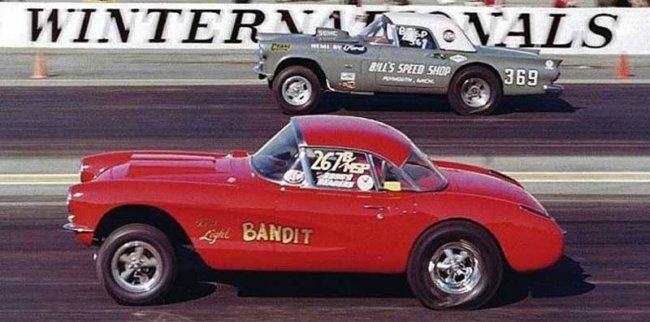
Above: Bagshaw campaigned his ’57 Corvette in B/Modified Sports Production. It was during this period that he adopted the nickname “Red Light Bandit,” a name that followed him throughout his driving career until he retired from competition in 1976. (Photographer Unknown)
After stepping away from racing for much of 1964 and 1965 to finish college and marry his sweetheart, Carol, Bagshaw returned to competition in 1966 with a 1939 Willys gasser powered by a blown 377-cubic-inch small-block. The Willys was not quite to his liking, so he moved to a 1957 Corvette, installing the detuned Willys engine and campaigning the car in Modified Sports Production.
During this period, Bagshaw adopted the Red Light Bandit name. The name came from Caryl Chessman, a California criminal who reportedly used a red light to make motorists believe he was a police officer. Bagshaw turned the unusual name into a racing identity that would follow him for the rest of his career.
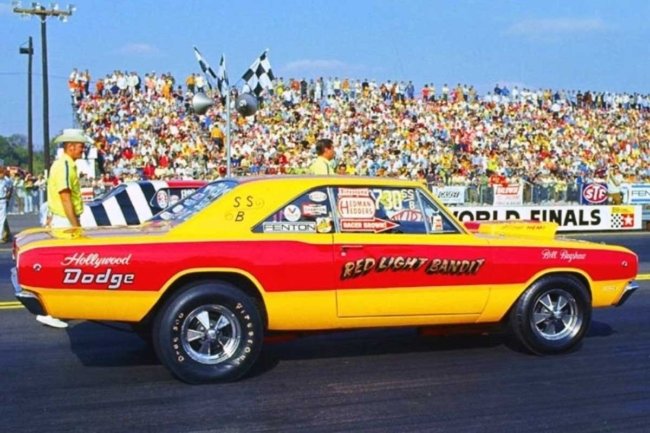
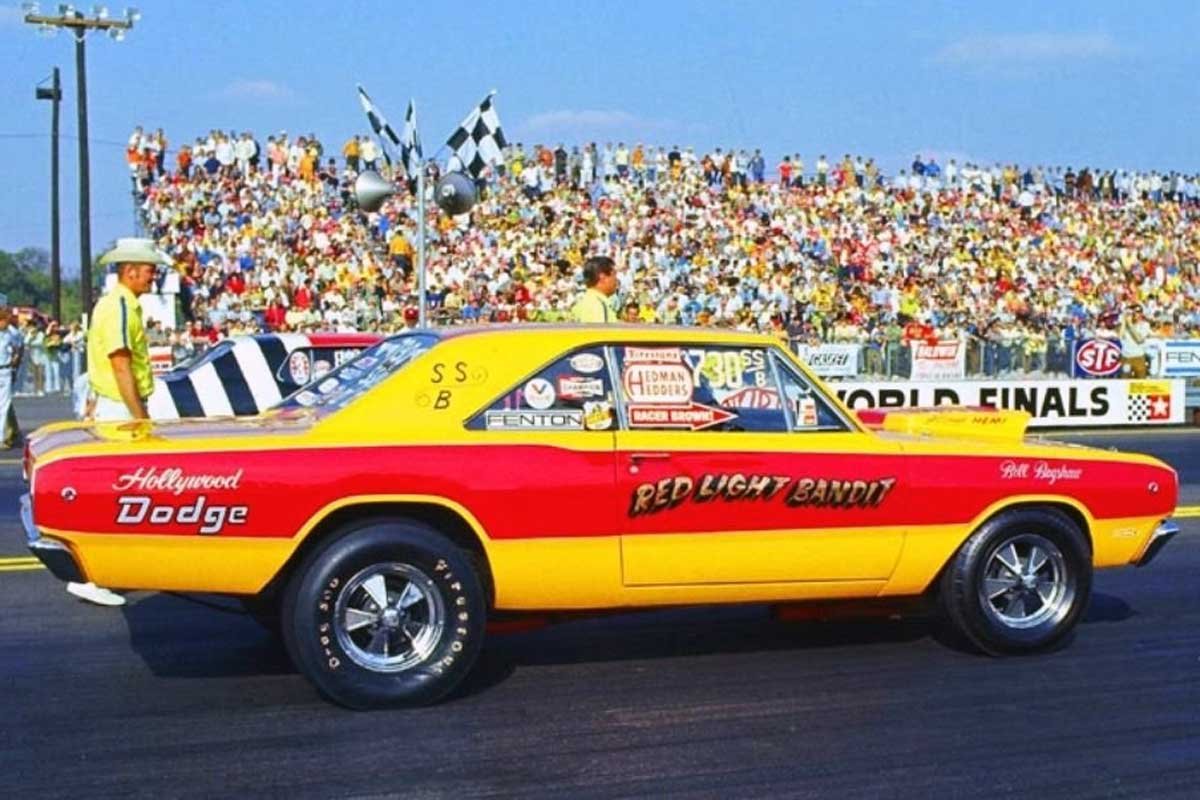
Above: Bagshaw caught the attention of Chrysler executives, earning the opportunity to campaign a 1968 LO23 Dart. Chrysler had installed its 426 Hemi, originally developed for the larger B-body cars, into the much lighter A-body. The purpose-built combination was designed to dominate NHRA Super Stock B competition, not to serve as a street car. (Photographer Unknown)
By 1967, Bagshaw’s driving prowess had begun attracting attention beyond the West Coast. Hot Rod writer Eric Dahlquist, impressed by Bagshaw’s talent and using his Chrysler connections, helped put him in line for one of the new-for-1968 426 Hemi-powered A-body race cars. Bagshaw met with Chrysler’s Dick Maxwell, received the nod, and soon found himself behind the wheel of one of the factory’s new Hemi Darts.
The LO23 cars were not ordinary Darts with a Hemi installed by a dealer. Chrysler built them specifically for competition, incorporating lightweight components, specialized driveline equipment, and factory engineering intended to make them competitive under NHRA Super Stock rules.
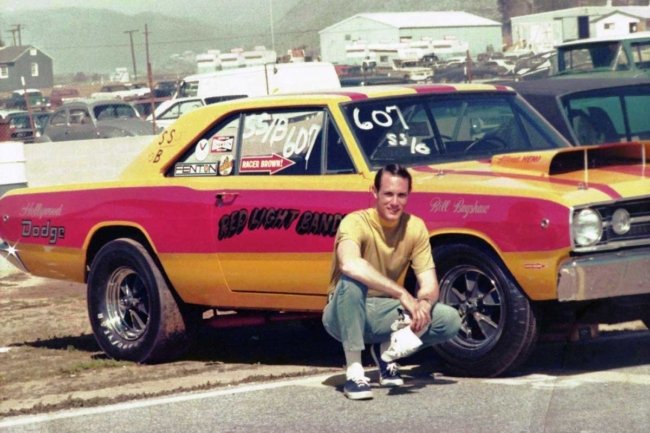
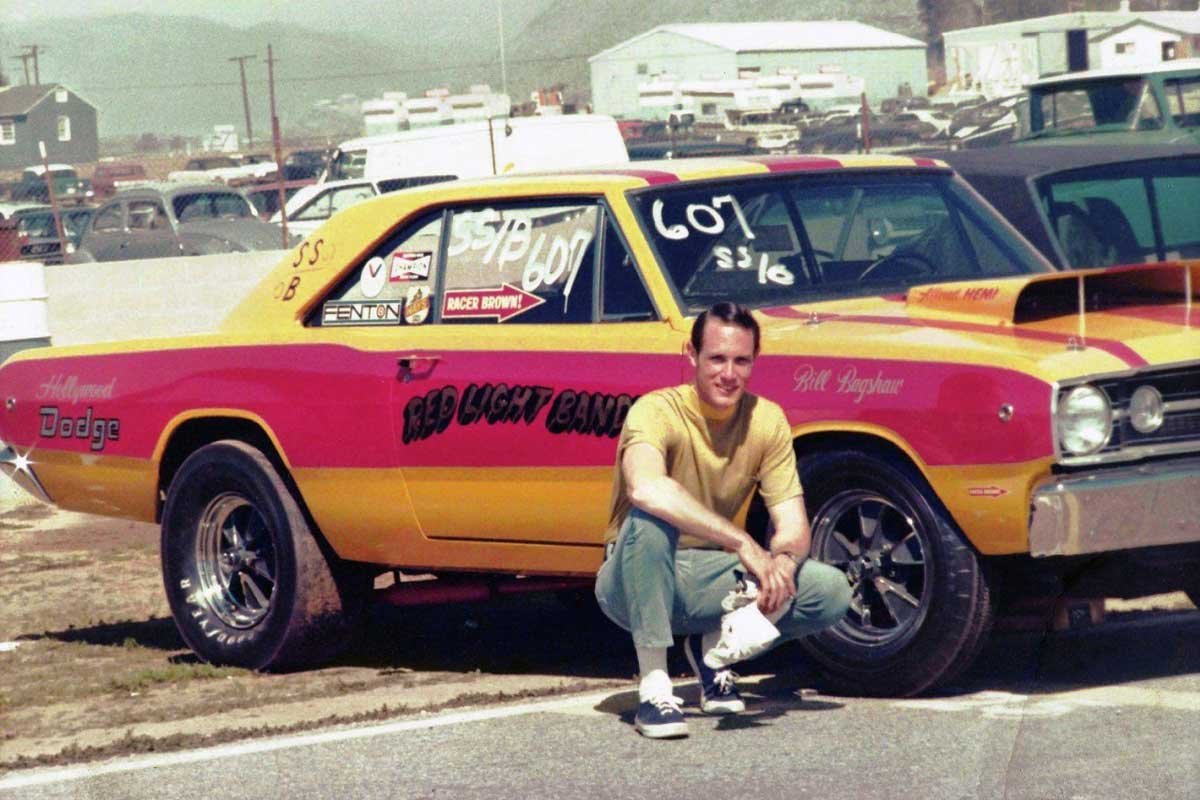
Above: Chrysler gave Bagshaw a potent Dart, and his driving talent did the rest. Concentrating primarily on the West Coast, he enjoyed tremendous success in 1968 and 1969. In 1970, the Dart was converted to Pro Stock trim for NHRA’s new heads-up class. (Photographer Unknown)
After picking up the Dart in Detroit, Bagshaw took it back to the West Coast and prepared it with engine builder Joe Allread. The 426 Hemi was blueprinted, and the car was painted USC cardinal and gold by Hollywood Dodge.
The Dart made its racing debut at the 1968 NHRA Division 7 Points meet at Carlsbad Raceway. Bagshaw ran faster than the existing SS/B record, then finished runner-up in the eliminator. The car won the Super Stock eliminator at Irwindale and finished runner-up at Orange County and Lions. It also established the NHRA SS/B mph record at 133.72 mph.
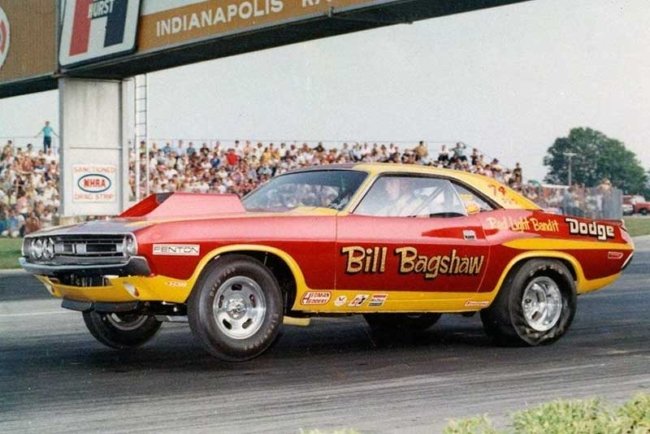
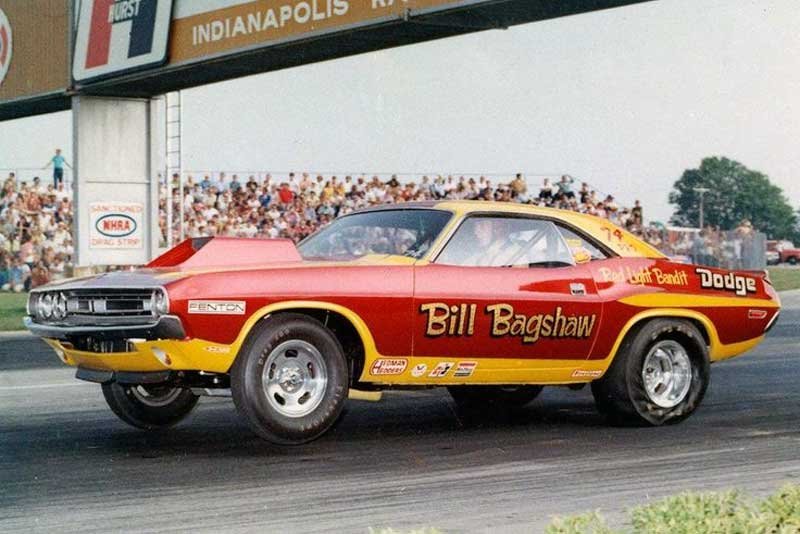
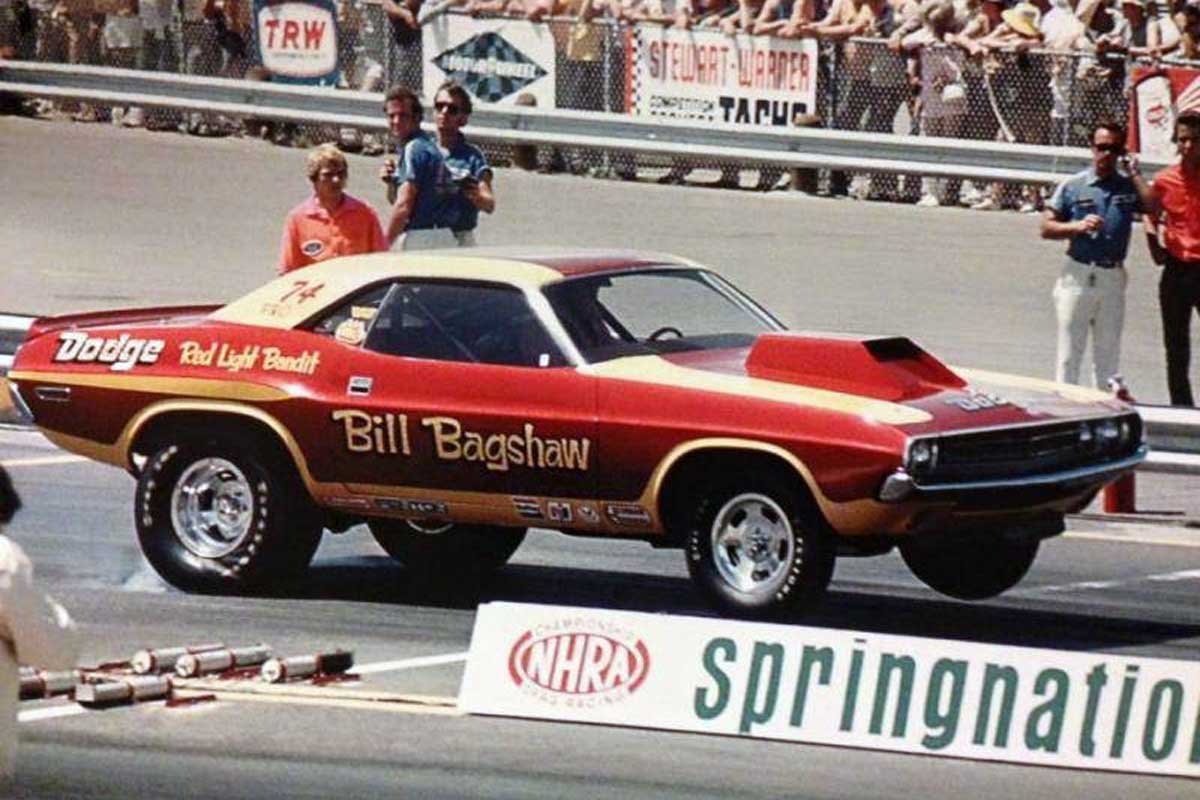
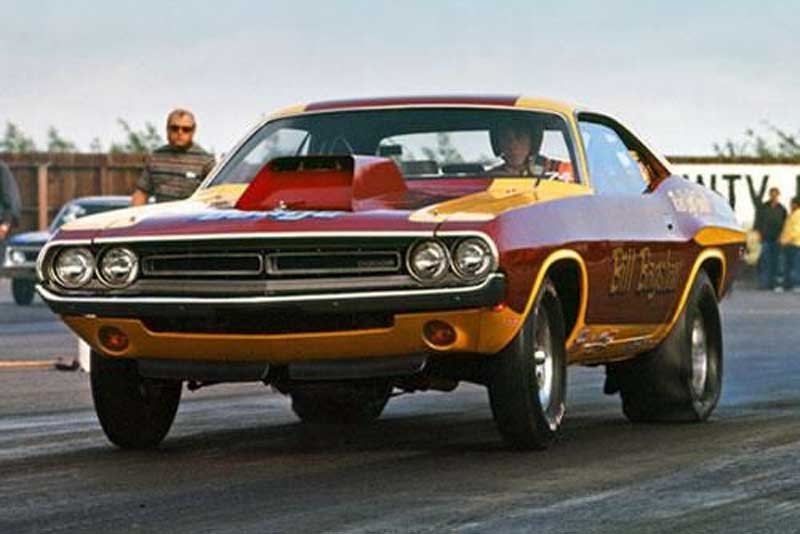
Above: As the ’68 Dart began to show its age, Chrysler replaced it with a ’70 Challenger. Cutting-edge for the new Pro Stock eliminator, the Challenger carried the same now-famous USC colors as Bagshaw’s Dart, along with the “Red Light Bandit” banner that had become synonymous with the car and its driver. (Photographer Unknown)
The 1969 season was even stronger. Bagshaw won at Irwindale, captured the Super Stock Eliminator at the NHRA Division 7 Points meet, and won the Heads-Up Super Stock race at Lions.
At Carlsbad, he ran 10.47 seconds at 134.73 mph, setting the NHRA SS/B record. Later that year at Bonneville Raceway, Bagshaw won both the Super Stock Bonanza and the Super Stock Eliminator.
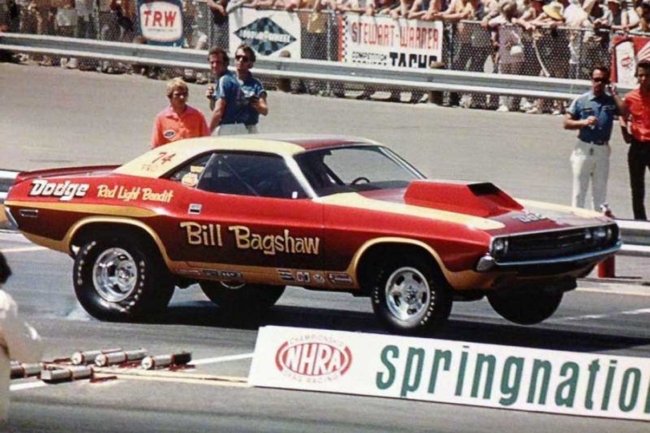
Above: The Challenger quickly established itself as a force in the new Pro Stock class. Bagshaw dominated the West Coast circuit in 1970, winning NHRA points races in three western divisions and capturing the NHRA Division 7 Pro Stock championship. The Red Light Bandit Challenger also earned Best Engineered Car honors at the 1970 U.S. Nationals, cementing its place among the pioneering machines of early Pro Stock. (Photographer Unknown)
Then NHRA changed the game. Following the 1969 U.S. Nationals, NHRA created Pro Stock, a new heads-up category that allowed greater mechanical freedom while retaining production-car bodies. Bagshaw converted his Hemi Dart for the new class and was competing in Pro Stock by early 1970.
At the 1970 March Meet, Bagshaw reached the Pro Stock final before losing to Dick Landy. He went on to win Pro Stock at Fremont, capture the NHRA Division 7 WCS Points meet, establish a 139.10-mph Pro Stock speed record, and win events at Orange County Raceway and Lions. By the end of the season, he had earned the 1970 NHRA Division 7 Pro Stock championship.
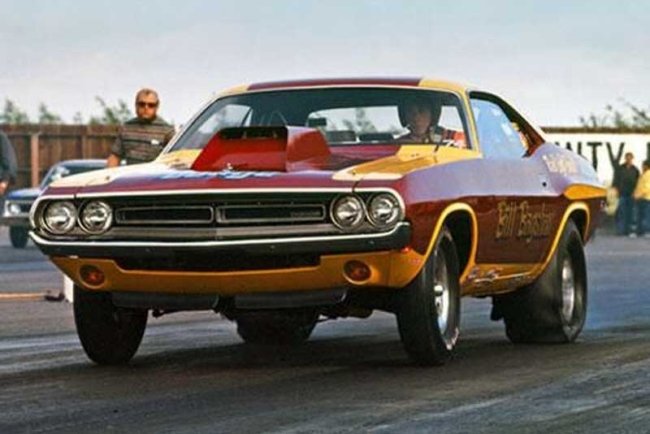
Above: The Red Light Bandit Challenger remained a formidable Pro Stocker in 1971. Bagshaw consistently qualified low and was considered one of the top West Coast performers. Running in the nine-second range at approximately 140 mph, the Challenger continued to collect victories while competing against an increasingly competitive Pro Stock field. (Photographer Unknown)
Bagshaw’s Dart also qualified for the first NHRA Pro Stock Winternationals with a 10.26-second pass. The old Super Stock car was now competing in a category that would eventually become one of drag racing’s most sophisticated forms of competition.
The Dart’s competitive life was ending, however. In 1970, Chrysler provided Bagshaw with a lightweight 1970 Challenger body and a new Hemi Challenger that could be used for parts and measurements. Working with fabricator Ron Butler, Bagshaw built the next Red Light Bandit.
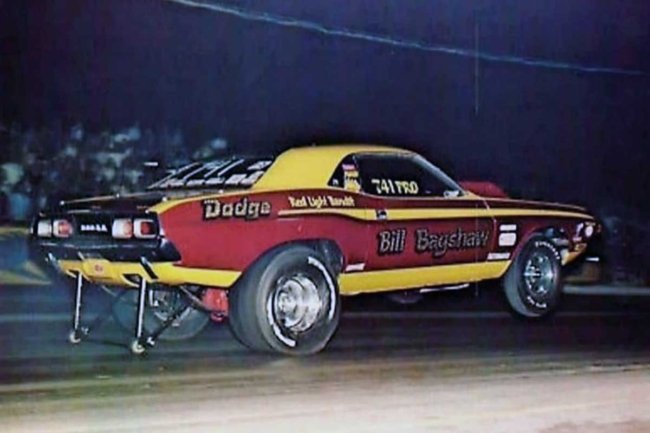
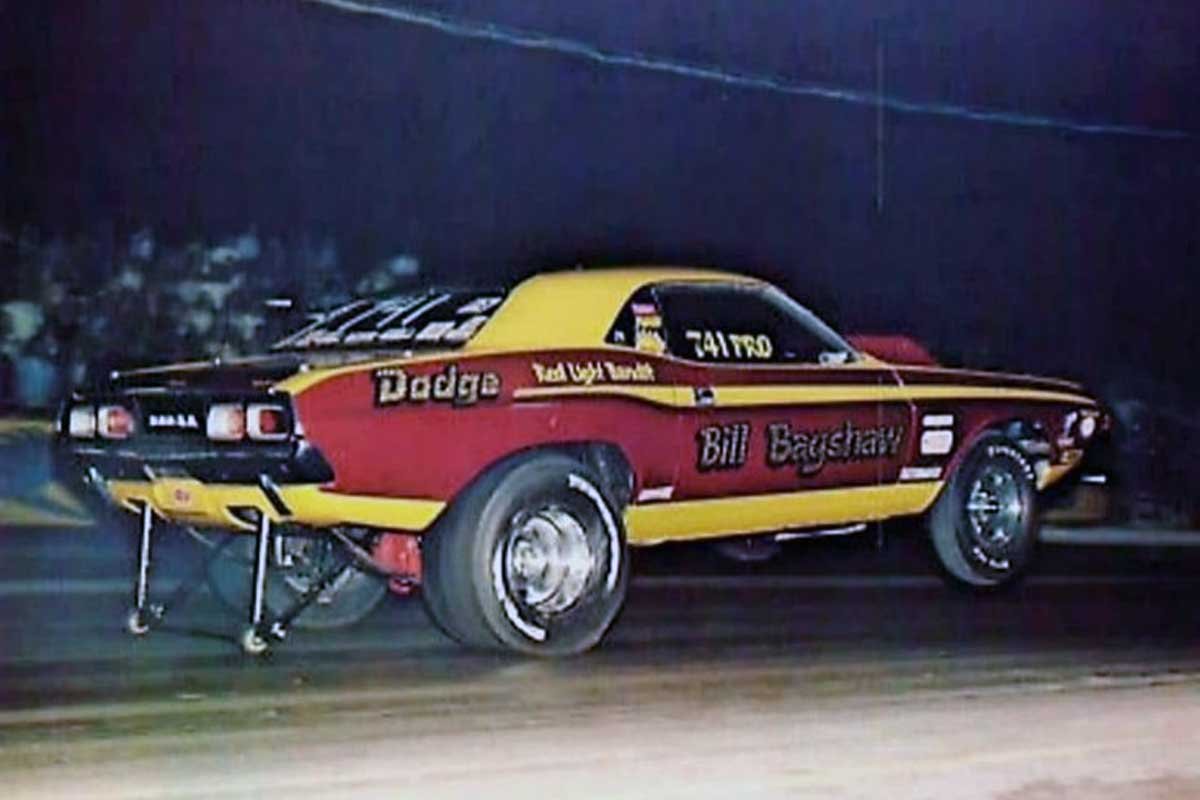
Above: By 1972, Bagshaw’s Red Light Bandit Challenger had evolved well beyond the car that debuted two years earlier. Ron Butler updated the chassis to a tube-frame design as Pro Stock technology advanced. Although the Challenger was an aging design, Bagshaw kept it competitive through 1973, ultimately winning at Irwindale with a 9.20-second, 147-mph pass before it was replaced. (Photographer Unknown)
The Challenger reflected Pro Stock’s rapid growth. By 1972, rule changes permitted small-block engines and tube-chassis cars, pushing the category further away from its production-car origins. Bagshaw’s Challenger remained competitive with a Butler-built tube frame, and in its final race with Bagshaw in 1973, it won at Irwindale with a 9.20-second, 147-mph run.

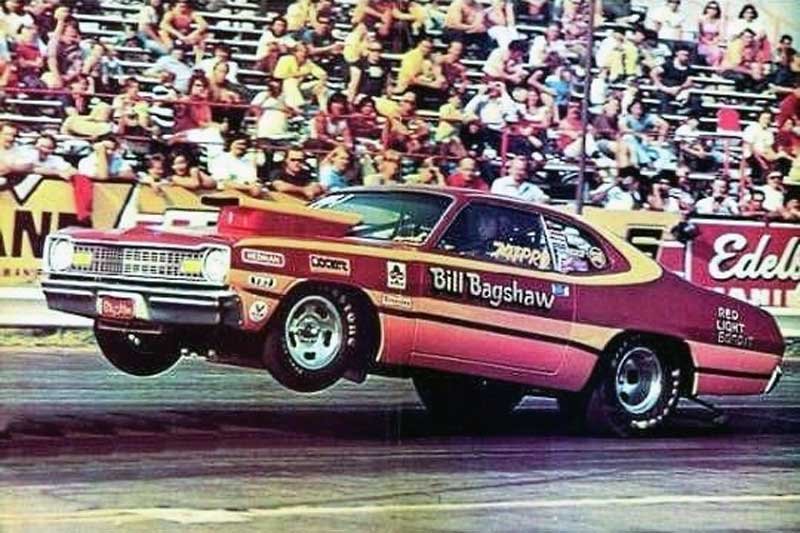
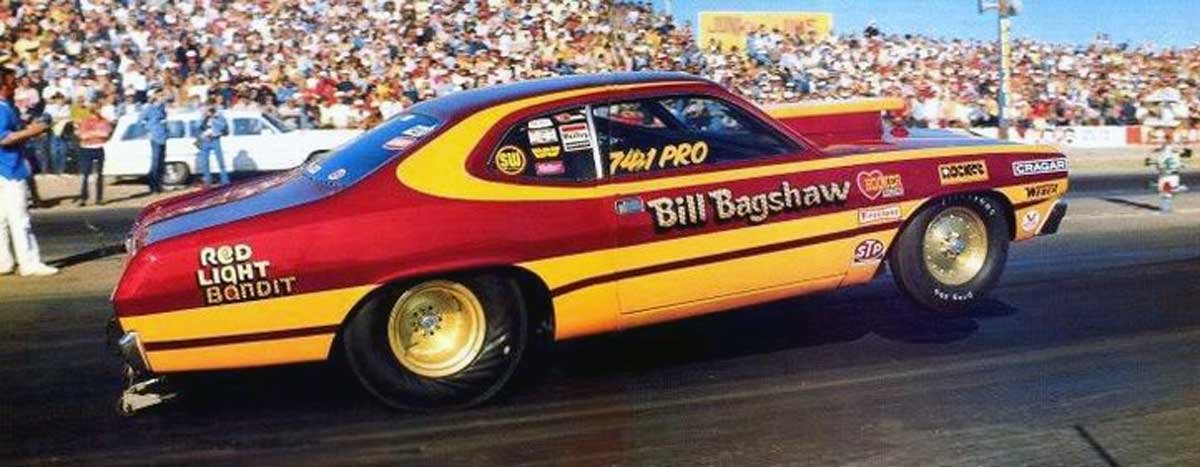
Bagshaw’s next car was a 1973 Dodge Dart Sport, built by Ron Butler. Compared with the original LO23 Dart and the Challenger, it was a much more sophisticated race car, using a four-link rear suspension, coil-overs, rack steering, and a removable front clip. It still looked like a Dodge Dart Sport, but underneath was a purpose-built competition machine.
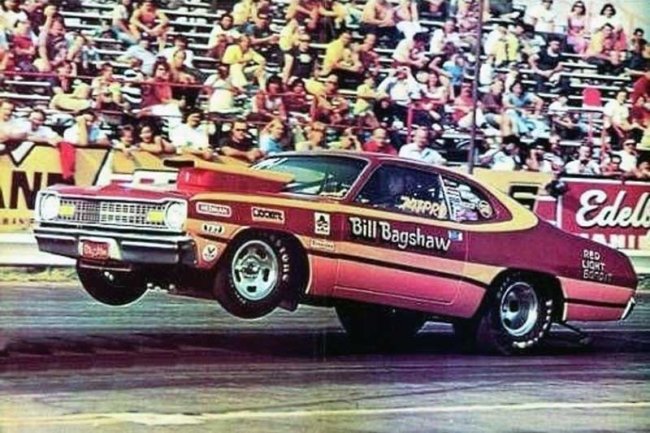
Above: The Red Light Bandit entered a new era with this 1973 Dodge Dart Sport, built by Ron Butler to replace the aging Challenger. The new car featured a four-link rear suspension, coil-over shocks, rack-and-pinion steering, and a completely removable front clip. It was an instant winner. Bagshaw entered 14 races with the Dart in 1974 and won 11, making it one of the era’s most successful independent Pro Stockers. (Photographer Unknown)
The results were impressive. In 1974, Bagshaw reportedly won 11 of the 14 races he entered and led the AHRA Pro Stock points standings. The Dart Sport had quickly become one of the most successful cars of his career, but a series of setbacks would soon bring the run to an end.
Late in 1974, Bagshaw was involved in a serious crash at St. Louis that severely damaged the Dart Sport. He rebuilt the car and returned to competition in 1976, determined to continue racing.
His comeback, however, was short-lived. During a run at Irwindale, a front tire went flat and the Dart rolled repeatedly, destroying the car. Bagshaw escaped the crash without injury, but the wreck marked the end of his professional driving career. After nearly two decades behind the wheel, the Red Light Bandit decided it was time to retire.
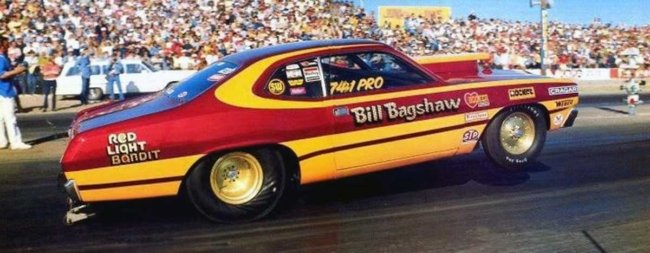
Above: As speeds increased and Pro Stock technology continued to evolve, Bagshaw suffered two serious accidents with the Dart Sport. The first came during the 1974 season at St. Louis, where a crash severely damaged the car and injured Bagshaw, forcing him out of competition for the remainder of the season. He spent 1975 rebuilding the Dart and returned to competition in 1976. His comeback was short-lived. A failed front tire at Irwindale sent the Dart rolling repeatedly and destroyed the car. Bagshaw escaped the second crash uninjured, but the accident marked the end of his driving career. The Red Light Bandit hung up his helmet for good. (Photographer Unknown)
His career began with Chevrolet-powered Corvettes and ended after he competed through the birth and early development of Pro Stock. In between, he drove factory Hemi Super Stockers, won NHRA and AHRA events, set records, and helped show what the new Pro Stock category could become.
Bagshaw may not have achieved the national recognition of racers such as Ronnie Sox, Dick Landy, Herb McCandless, or Bob Glidden. Still, his career followed one of the most important transitions in drag racing history.
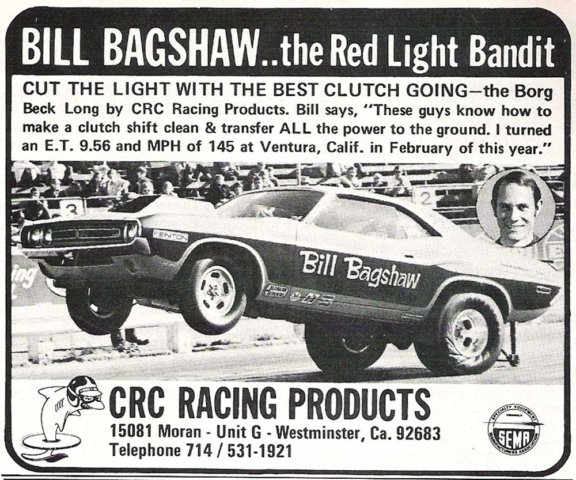
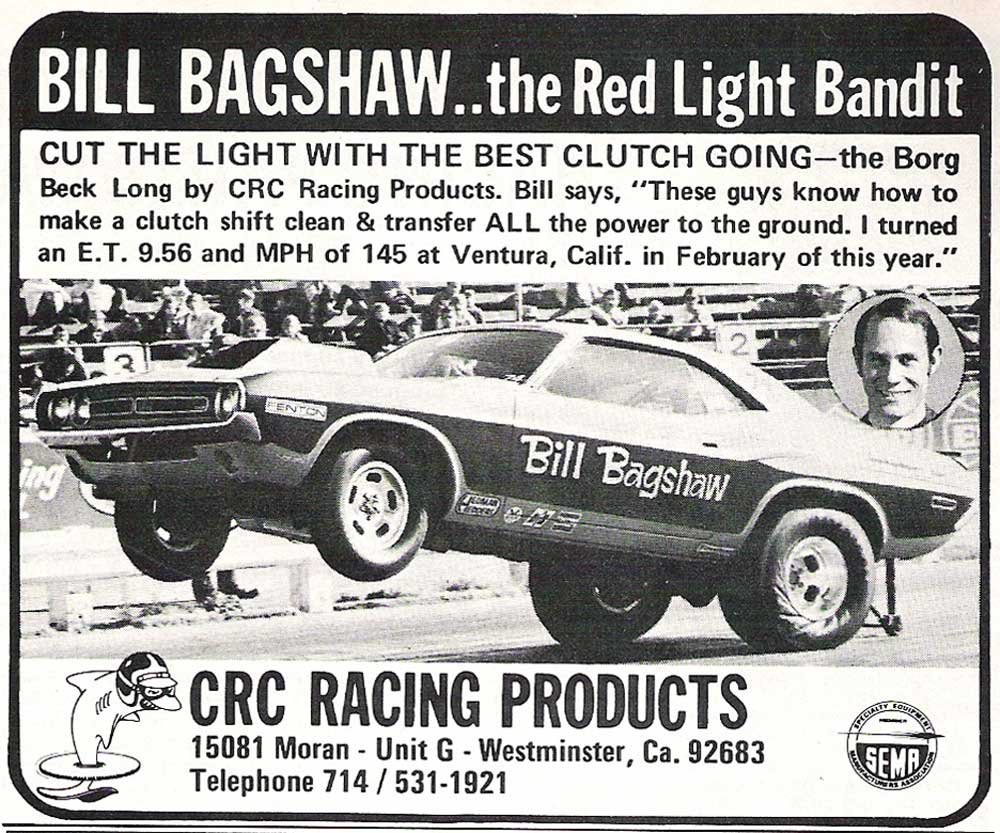
Above: Bagshaw received some valuable exposure when CRC Racing Products featured him in an advertisement in the July 1972 issue of Popular Hot Rodding magazine. As an independent racer, Bagshaw lacked the deep resources of factory-backed teams, making sponsorship support, advertising dollars, and donated products especially important to keeping the Red Light Bandit program on the track.
The 1968 LO23 Dart represented the peak of the factory Super Stock era. The later Dart Sport represented the future of Pro Stock. Bill Bagshaw was there for both.
The cars changed. The technology evolved. The rules changed. Through it all, the Red Light Bandit kept showing up at the starting line.