I, like many of you, grew up reading car magazines. My father subscribed to AutoWeek for nearly two decades because he loved reading about modern sports cars – Porsches and Corvettes often fell victim to his big block Chevy-powered ’72 DeTomaso Pantera – and my older brother had inherited several boxes of both relatively recent and significantly dated back issues of Hot Rod, Car Craft and Popular Hot Rodding. Certainly, there was a few copies of Street Rodder and Super Chevy mixed in there given his interests at the time.
These worn and feathered magazines were my gateway into the world of home-built hot rodding; my general education courses walked novices like myself through basics like troubleshooting carburetor jetting and shift linkage; measuring wheel backspacing; and chasing exhaust leaks. Authors and editors like Cam Benty, Jeff Smith and Mark Ehlen were my earliest professors; and I devoured their every word – even if I wouldn’t put most of their instructions to practice years later. Their tutorials on driveway engineering never left me – at least in the larger brushstrokes.
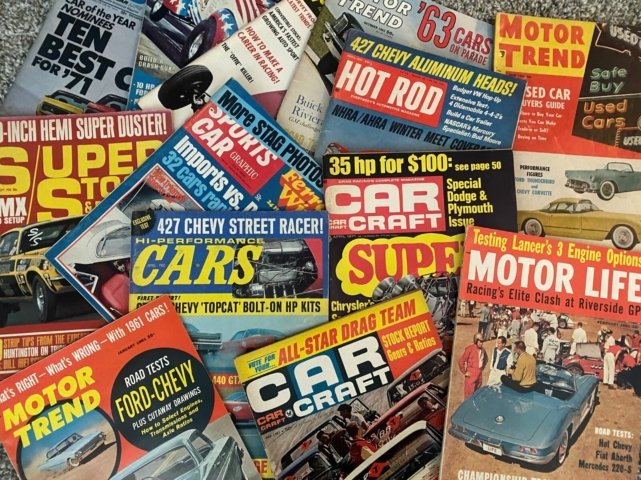
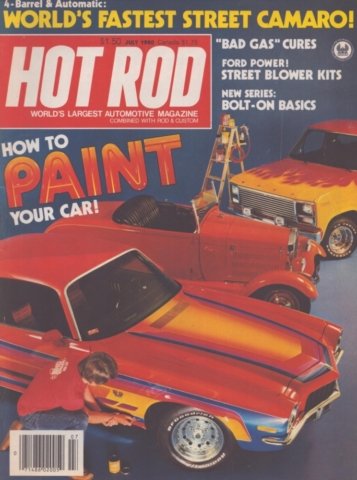
But something that was equally present among the home garage how-to’s were the many “paint and body issues.” How many copies of Popular Hot Rodding or Car Craft depicted two-car garages being converted into makeshift paint booths? How many covers of Hot Rod were dedicated to “How to Paint at Home” or “How to Pinstripe Your Car”? These issues celebrated painting, layering graphics and customizing the hue of your hot rod year-after-year. Even my own father, like so many high schoolers during the 1950’s, saw custom paintwork as much of a sign of a hot rod as a hopped-up engine.
Heck, being able to paint-match and blend-in paint was as much of an indicator a well-rounded car guy as much as building one’s own engine…that is, until only very recently. Suddenly, there’s a chasm-sized divide between today’s hot rodders and “paint and body guys.” Weirdly, the ability (and will) to sand, grind, and patch rusty spots (and doing so without resorting to using expansion foam or packing it full of fiberglass filler over scraps of chicken wire) is looked at as high level wizardry.
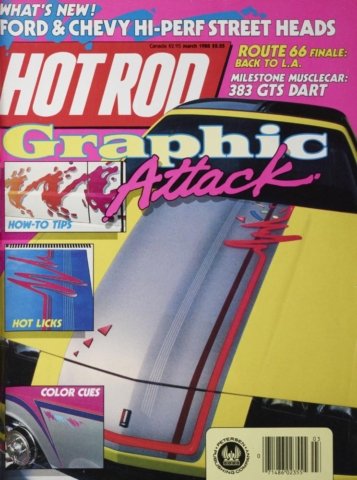
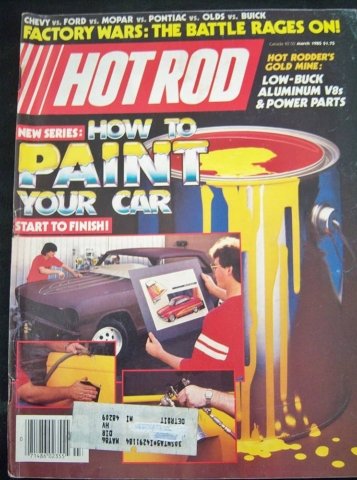
So what is it about paint and bodywork that sends so many fleeing in horror? How can any ol’ car enthusiast feel so confident in building a 500-horsepower engine with basic tools but writhe in terror when it comes to block sanding, masking and painting their patchwork-looking ride in an even coat of primer? “It’s just about being patient,” former MCM Tech Editor Mike Wilkins reminded me. Mike has dozens of show-stopping restorations and paint jobs under his belt, and even repaired a portion of Project Marsha’s passenger-side fender that had been creased last year.
“Metal has memory. It’ll want to come back into shape – at least, for the most part,” Mike taught. “The hard part is prep. Getting the panels smooth and even. Keeping the lines sharp. That takes time. It’s not impossible, but it just takes time.” His ’70 Plymouth Hemi ‘Cuda “Comeback ‘Cuda” fools most folks into thinking its a real-deal factory Hemi 4-speed convertible until they realize that such a machine would be worth millions and wouldn’t likely be found in a regional club’s Mopar show. Skills take years of practice and Mike’s skills are pretty well honed.
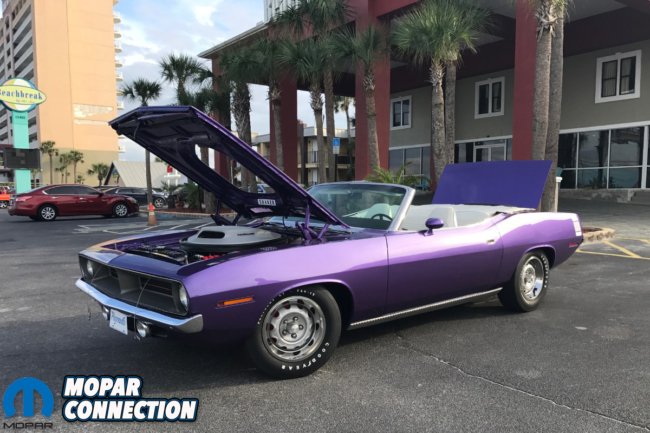
Above: Fmr. Mopar Connection Magazine Technical Editor, Mike Wilkins’ ’70 Plymouth Hemi ‘Cuda convertible “Comeback ‘Cuda” is close enough to factory correct in appearance that it’s fooled less-informed enthusiasts into believing its a true multi-million dollar E-body.
So what caused this generational break between well-round car guys and today’s car guys who skitter from a sanding block like cockroaches when the lights come on? Personally, I blame one single person: David Freiburger. While ratty rides and roachy rods predate David’s tenure at Petersen Publishing by half a century, it’s his two-part effort as Editorial Director of the enthusiast publications (Mopar Muscle, Corvette Fever, High Performance Pontiac, Vette, and of course, Hot Rod and Car Craft) that killed the once mandated multi-annual “paint and body” issues.
How do I know? Because I was there. David was my boss’ boss. I took a handful of phone conversations with David while at Mopar Muscle Magazine, and for the most part, we got along. But David hated the numbers-matching, super meticulous restoration stuff that keep a lot of these mags moving – especially for the Corvette and Mopar guys. He almost outlawed articles that included grease pen markings, paint dabs, or replating metal. “Nobody cares about that stuff,” he’d howl. And to a 25-year-old me, he was right. But to the reader with an original ’69 LT-1 T-top 4-speed Stingray, it was a betrayal.
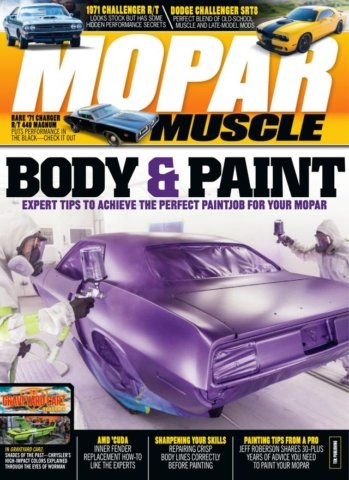
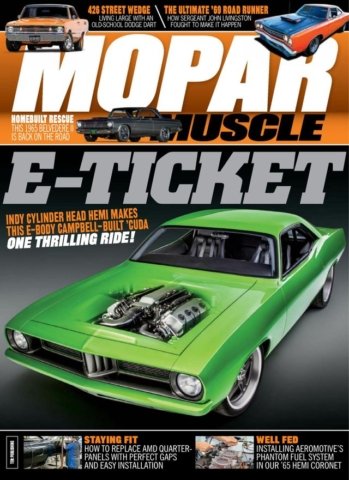
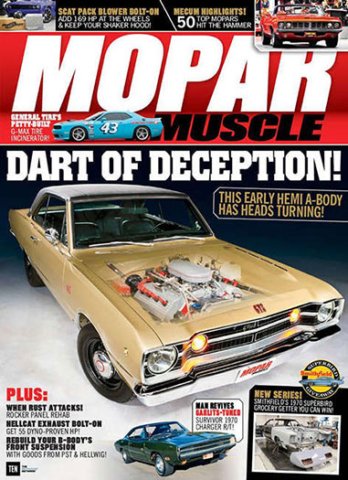
Above: These final issues of Mopar Muscle were free of Freiburger’s oversight as he was deep into “Roadkill” production. Rather, Mopar Muscle was able to return towards being a well-rounded title under Bob Mehlhoff’s direction prior to its closure in 2019.
In its stead, David assigned this army of magazine editors with new marching orders: Push ratty. Push patina. What the hell was patina? In 2004, the only people who had heard of patina were featured on “Antiques Roadshow.” Simultaneously, Hot Rod Deluxe and the “rat rod” movement was in full swing. “Rust” became a dirty word. Instead, we were commanded to call it “oxidation,” “weathering” and of course, “patina.” And guess what? People ate it up. Suddenly, their shitboxes were cool. Patches of unfinished body filler, cancerous rust and Swiss cheese floors patched with scrap were all the rage.
And why not? Appealing to the lowest common denominator is a true route to success. Tabloid TV shows, drive-thru fast food, doom scrolling 30-second video clips for hours… It’s all junk food. “Roadkill” becoming the world’s most popular car show helped push this mindset further. And the show’s most iconic car, the “General Mayhem” ’69 Dodge Charger was its pinnacle. A clapped-out B-body assembled from a mix-match of donor parts and garbage fabrication became a hero. Why take the time to build something nice when you can drive a rattletrap right now?

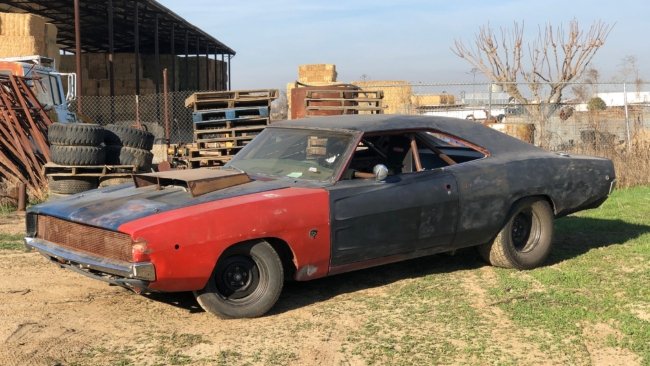
Above: “Roadkill’s” most iconic beater is Freiburger’s battered ’68 Dodge Charger “General Mayhem” powered by a low-compression 440 extracted from a motorhome. Made from a handful of other Charger’s parts, Mayhem embodies the “rat muscle” trend.
I’m sure that sounds mean or embittered, but even David’s T-shirts exemplify his philosophy, “Don’t Get It Right. Just Get it Running.” But here’s the rub: most everything he owns doesn’t run, and he says so himself. His own cars are plagued with wiring, plumbing, interior, or basic mechanical issues. Why? Because he couldn’t take the time to do it right the first time. This isn’t simply a commentary about painting your cars. It’s a reflection on what years of advocating immediate satisfaction over slow burning, dedicated focus has given our hobby.
Recently, I was on the phone with David Swearinger of Rust Bucket Restos. I few years ago, I sold Dave my ’70 Super Bee “ZomBEE”, which he recently traded to Mike Finnegan for his “Dumpster Fire” Daytona clone; a car which I had unsuccessfully offered to buy. When pressed what his plans with the Daytona were, Dave was pretty clear that he was going to “make it sound” but leave it looking the way it is rather than straighten the body and give it a nice coat of paint and full interior; which made me sad. He defended, “I like the ratty look. It’s going to be huge for my [YouTube] channel.”
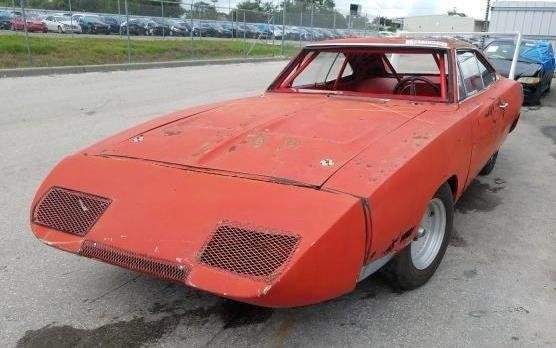
I’m positive it will, and I wish him all of the success in the world, but I have to ask why do people like it? I don’t think it’s a natural response to look at a beat-to-hell car and say, “Oooh, that’s beautiful.” Rather, I believe its a response to 20-plus-years of media conditioning telling you that ratty is cool. Why are so many second generation Chargers – even today – being made into “General Lee” clones? The show has been off of the air since February 1985 for goodness’ sake. They’ve been conditioned into thinking it’s cool.
So regardless if you who think the patina craze sucks or it’s super cool, just know that it exists because one dude was given unfettered control of the largest automotive media machine for nearly 25 years. David Freiburger hated the factory-correct stuff, and snuffed out all of the paint and body special issues; and instead, he – backed by tens of millions of dollars in advertising revenue – pushed two generations car guys into hastily half-assing their cars with sloppy, get-er-done results instead of mastering a new skill.
–Kevin