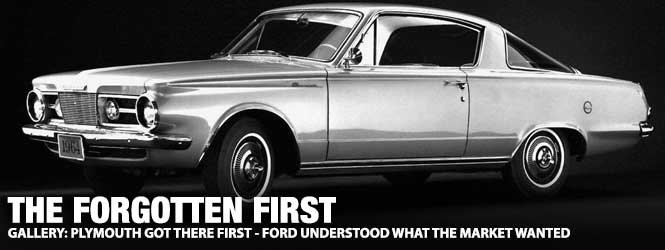
On April 1, 1964, Plymouth introduced a car that would eventually become one of the most overlooked pioneers of the American pony-car era. It was called the Barracuda, and it arrived sixteen days before Ford officially introduced the Mustang to the public.
Both manufacturers had identified an emerging opportunity. American buyers, particularly younger customers, were becoming interested in smaller automobiles that offered more than basic transportation. They wanted styling, performance, individuality, and an affordable price.
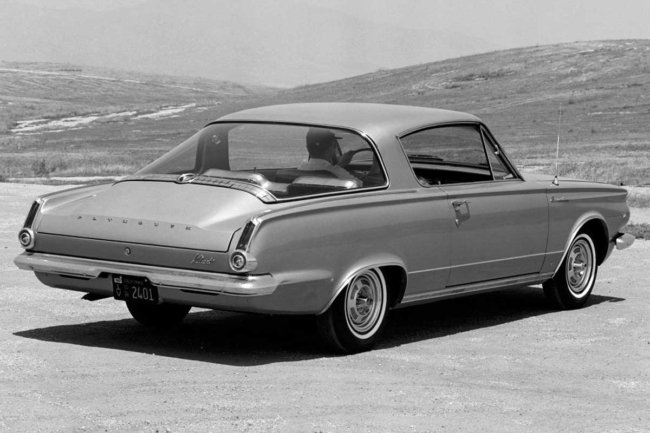
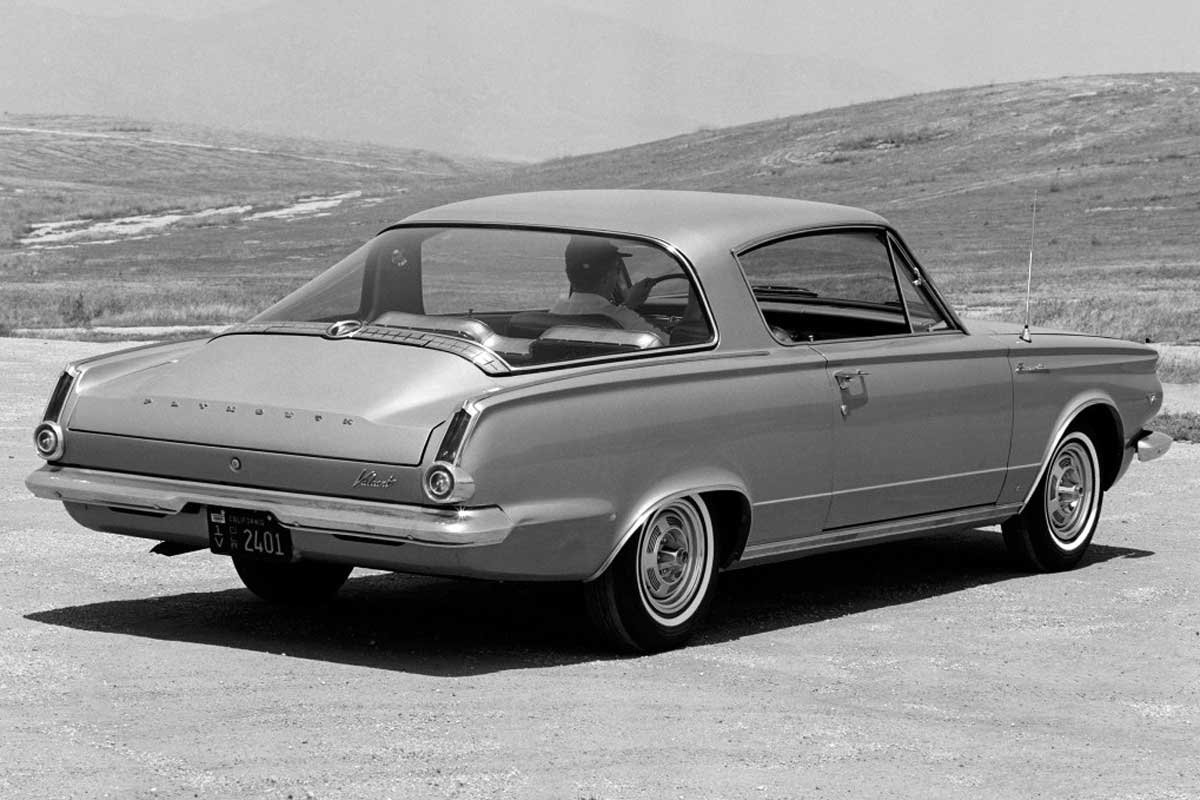
Above: The Barracuda beat the Mustang to market by 16 days, but its Valiant underpinnings were difficult to disguise. Despite its distinctive fastback roofline, the Barracuda retained much of the Valiant’s conservative, almost stodgy appearance, doing little to suggest the performance potential beneath its skin. The Valiant nameplate even remained on the rear deck. Then there was the enormous wraparound rear window, a distinctive styling feature that proved to be a love-it-or-hate-it addition. (Photographer unknown)
Both companies also recognized that developing an entirely new automobile would be expensive. Ford had its Falcon, and Plymouth had its Valiant. Each provided an established mechanical foundation upon which a new vehicle could be developed.
However, the similarities between the two development programs ended in some important places.
A Concept Waiting for an Opportunity
The Barracuda was not simply a last-minute reaction to the Mustang. The idea of a Valiant-based fastback had been developed as early as the summer of 1962. Designer Dave Cummins reportedly sketched the concept, which combined the existing Valiant two-door body with a dramatically sloping rear roofline.
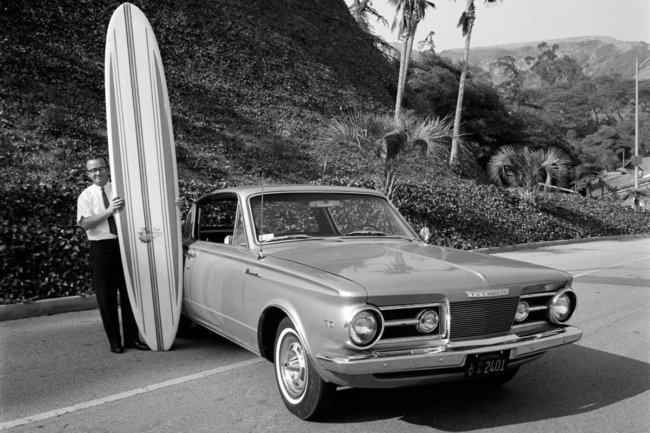
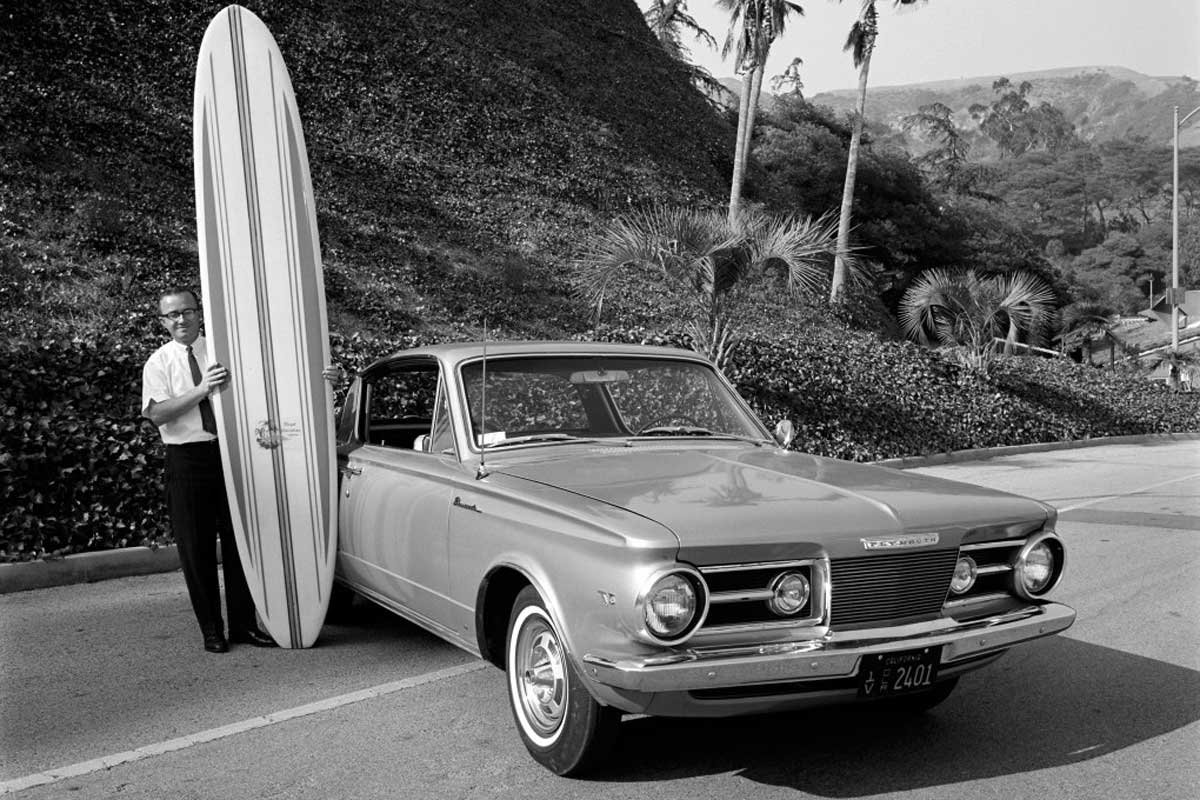
Above: Plymouth’s strategy was to target younger buyers with the Barracuda, but this advertisement may have missed its intended audience. The middle-aged man, looking more like an engineer or accountant than a young automotive enthusiast, seems an unlikely representative of the emerging youth market, even with a surfboard tucked under his arm. (Photographer unknown)
The proposal was shelved, but Chrysler reconsidered it after learning that Ford had approved development of its own sporty compact. The timing was important. Rather than initiate an entirely new vehicle-development program, Plymouth could revive an existing design concept and move it toward production using an established platform.
The resulting Barracuda kept the Valiant’s 106-inch wheelbase, much of its front sheet metal, its basic chassis architecture, and its available powertrains. The most noteworthy changes were behind the windshield.
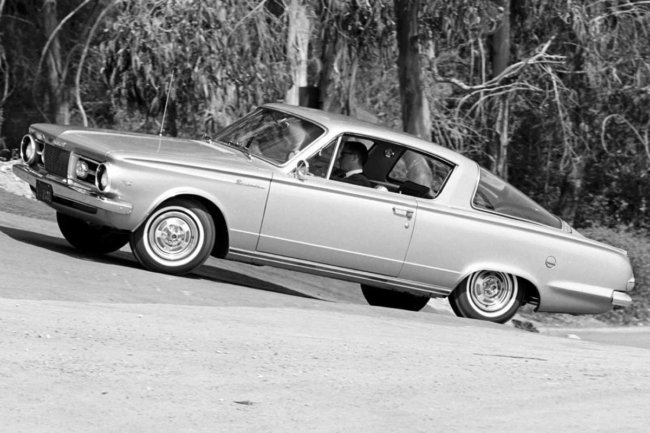
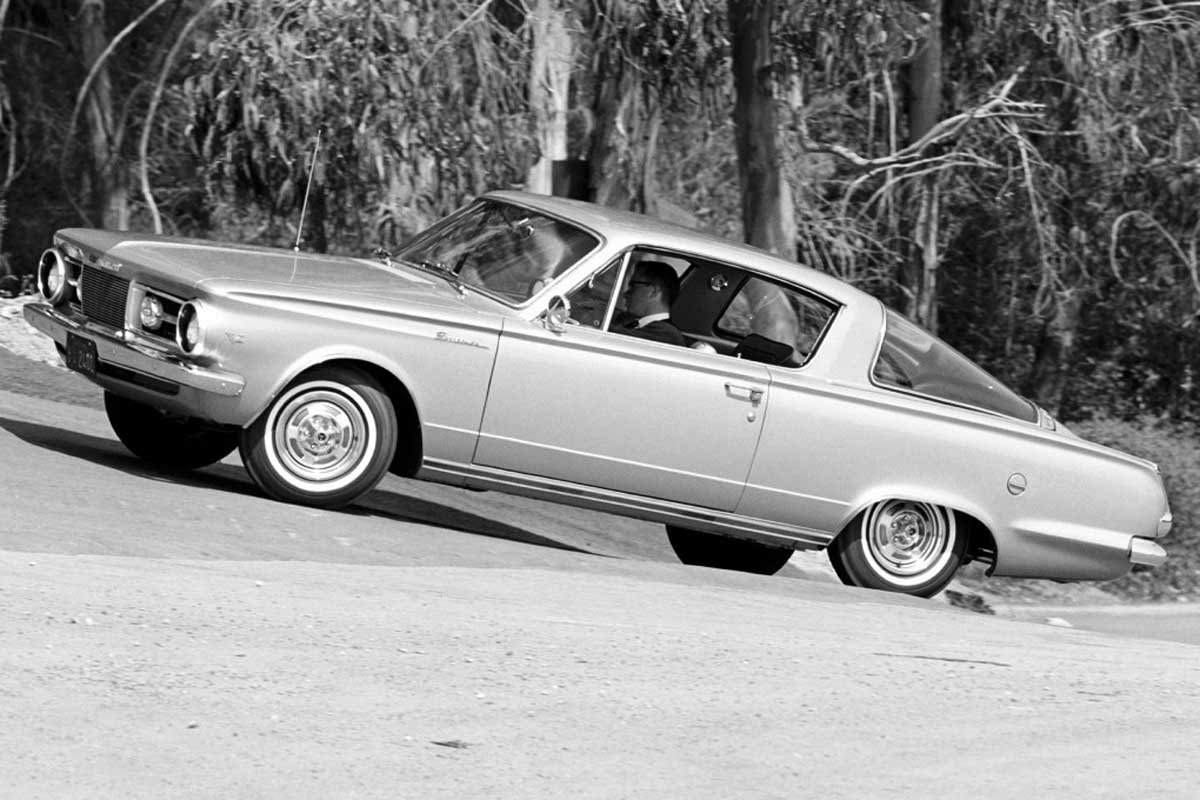
Above: The Barracuda retained much of the utilitarian, traditional character of its Valiant heritage, despite its distinctive fastback styling. Ford took a different approach with the Mustang, transforming the Falcon underpinnings with all-new sheet metal, an upscale interior, and an unmistakably youthful attitude. The difference resonated with buyers, and the youth market embraced the Mustang. (Photographer unknown)
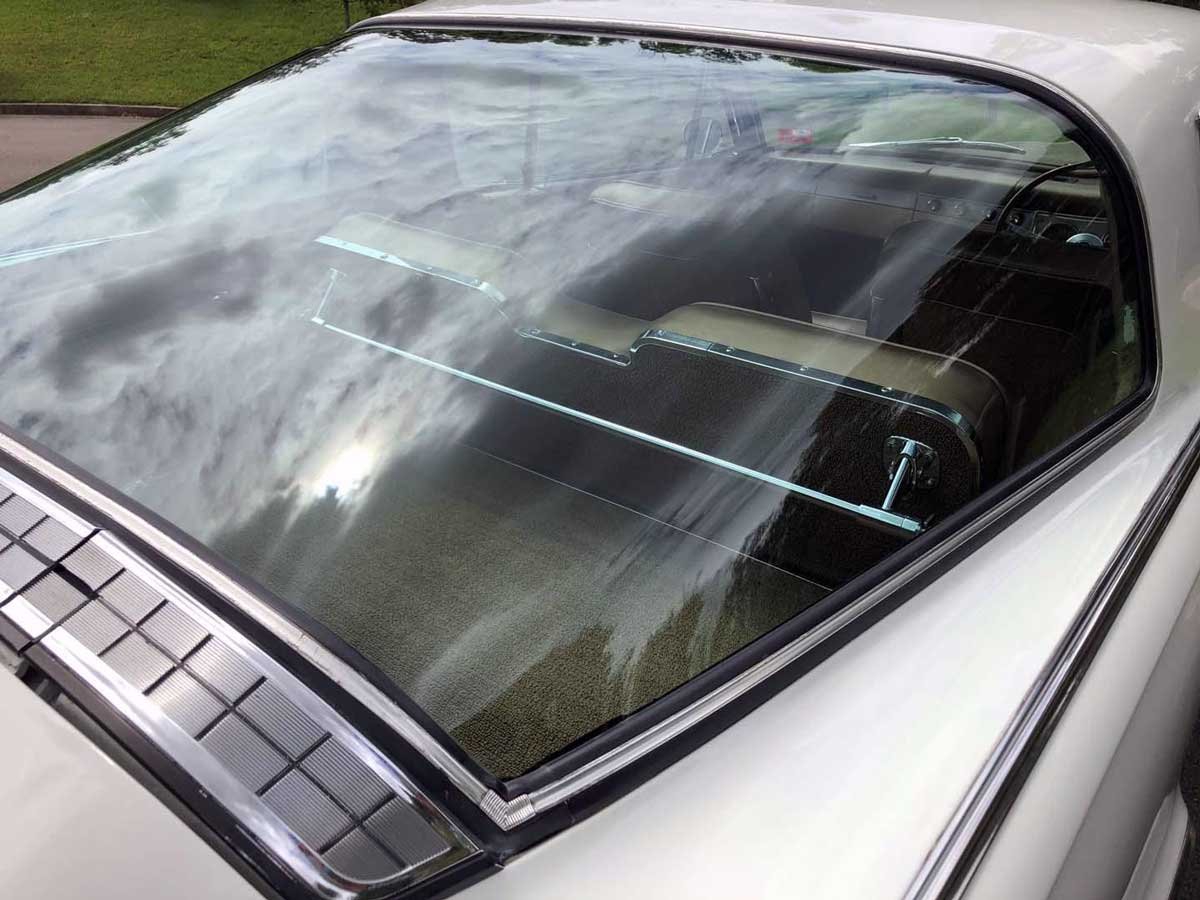
The fastback roof, distinctive rear quarter panels, and enormous wraparound rear window gave the car an appearance unlike anything else in the Plymouth showroom. The rear glass was particularly ambitious. At approximately 14.4 square feet, it was promoted as the largest single piece of automotive glass used in a production automobile at the time.
The design also provided practical advantages. A folding rear seat and generous cargo area gave the Barracuda some of the utility of a small station wagon. Plymouth had found a way to introduce something visually distinctive without engineering an entirely new automobile.
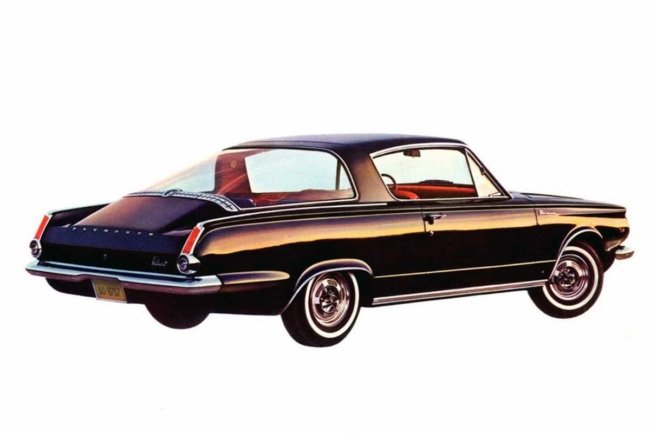
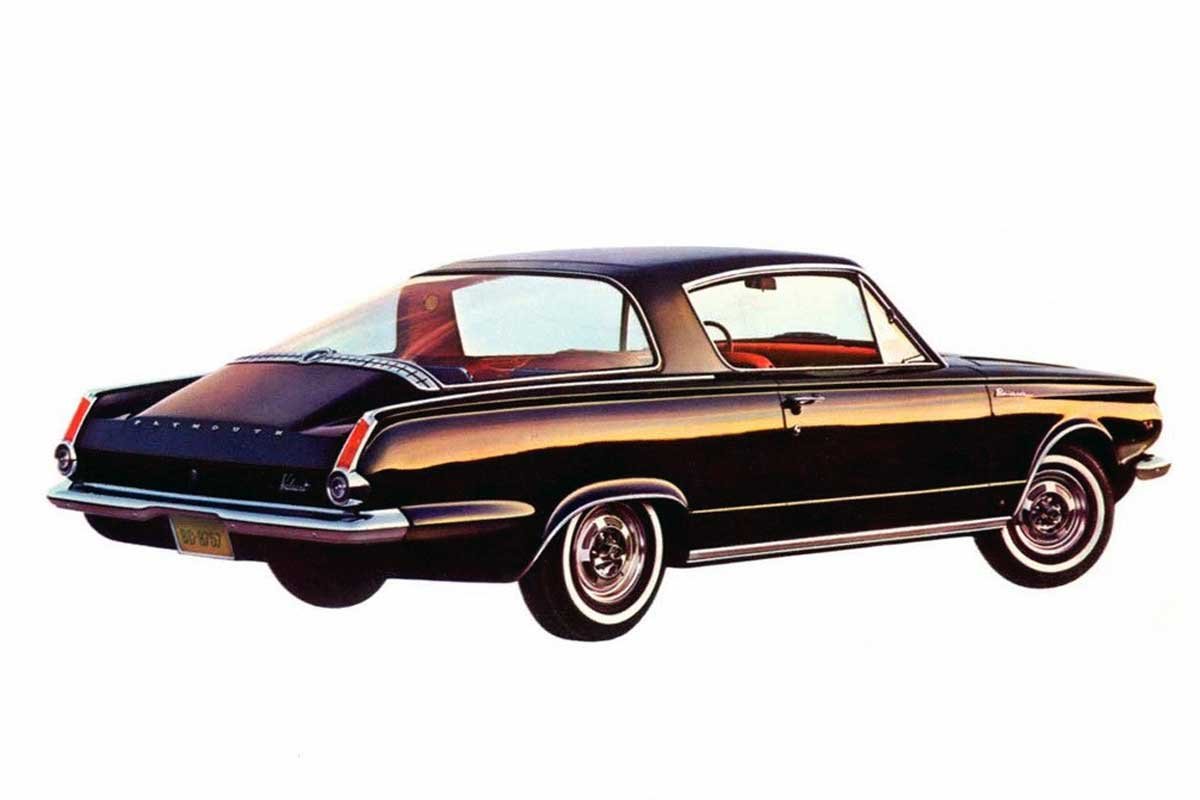
Above: The Barracuda was an attractive automobile, and its development was not a knee-jerk reaction to the Mustang; the original concept for a fastback Valiant dates back to 1962, well before the Mustang’s introduction. However, when Chrysler management learned that Ford was developing a smaller car aimed at younger buyers, the dormant design concept quickly moved to the forefront. (Photographer/illustrator unknown)
The Decision to Retain the Valiant Identity
Using the Valiant platform made sense from a manufacturing standpoint. Chrysler already had the tooling, production facilities, chassis components, and powertrain combinations necessary to build the car. The financial advantages were considerable.
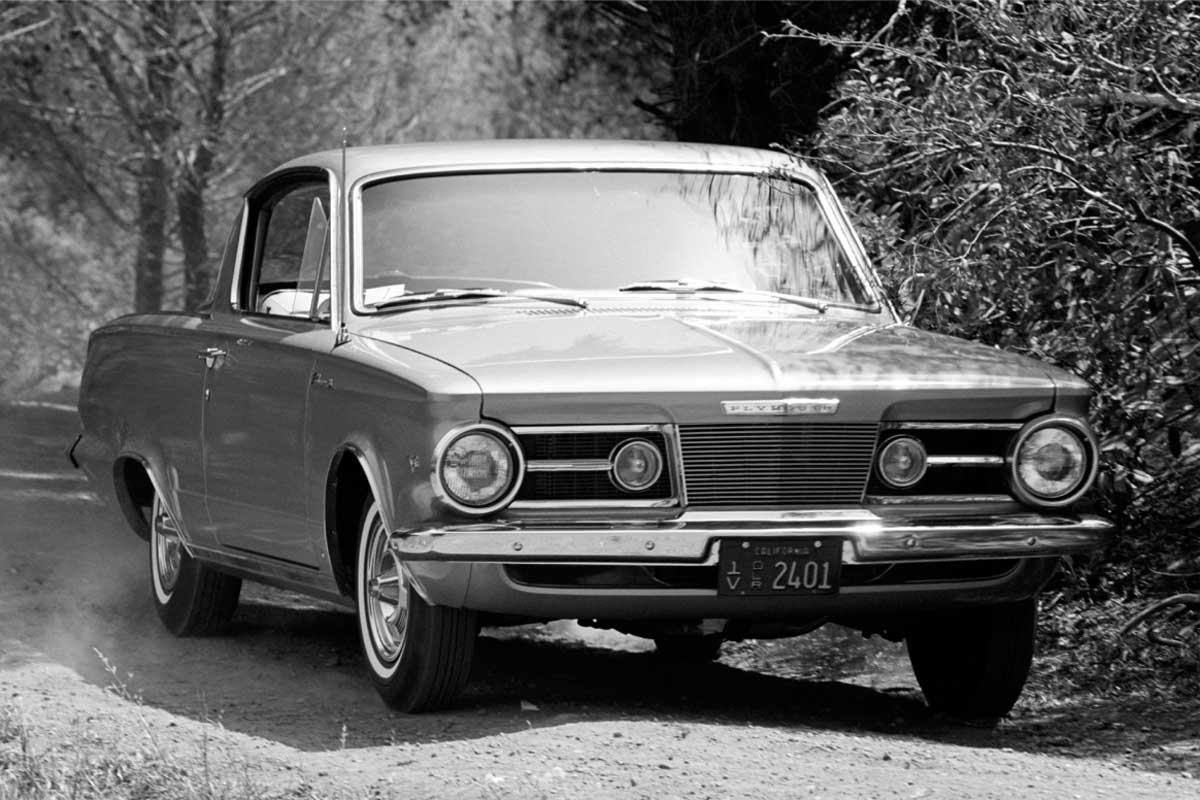
However, Plymouth also retained much of the Valiant’s visual identity. The Barracuda front-end appearance was familiar, the interior was largely Valiant-derived, and the original car even carried Valiant identification on its rear deck.
This was not an accidental consequence of inadequate styling ability. It was a product-planning decision. A particularly revealing contemporary discussion appeared in the May 1964 issue of Car and Driver. During its evaluation of the new Barracuda, the magazine questioned Chrysler’s decision to offer so little additional performance equipment.
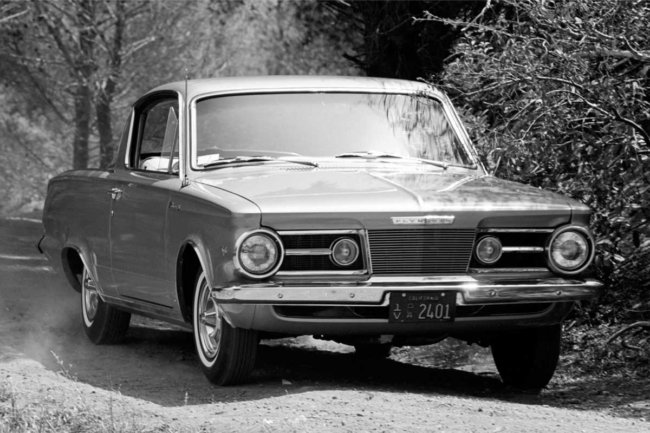
Above: From the front, the Barracuda was nearly indistinguishable from the Valiant, retaining virtually all of its sheet metal. While economical for Plymouth, the shared styling carried over the Valiant’s cautious, middle-aged image, hardly the impression needed to attract younger performance-minded buyers. (Photographer unknown)
The magazine suggested that the car needed to be more than a standard Valiant with a special body. Chrysler’s response was revealing. The company explained that the Barracuda was meant to appeal to a broader audience, including station wagon owners who wanted something sportier and even part of the Chevrolet Corvette market.
In other words, Plymouth did not necessarily envision the Barracuda as a direct competitor to a dedicated sports car. It saw an opportunity to sell a more stylish, versatile automobile to buyers who wanted something different.
That philosophy helps explain why the original Barracuda was not initially equipped with the extensive performance options that enthusiasts might have expected. Plymouth believed it was selling a distinctive personal car, not necessarily a specialized performance machine.
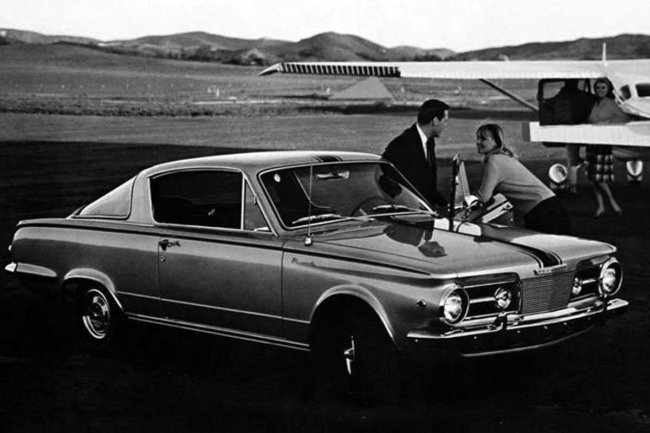
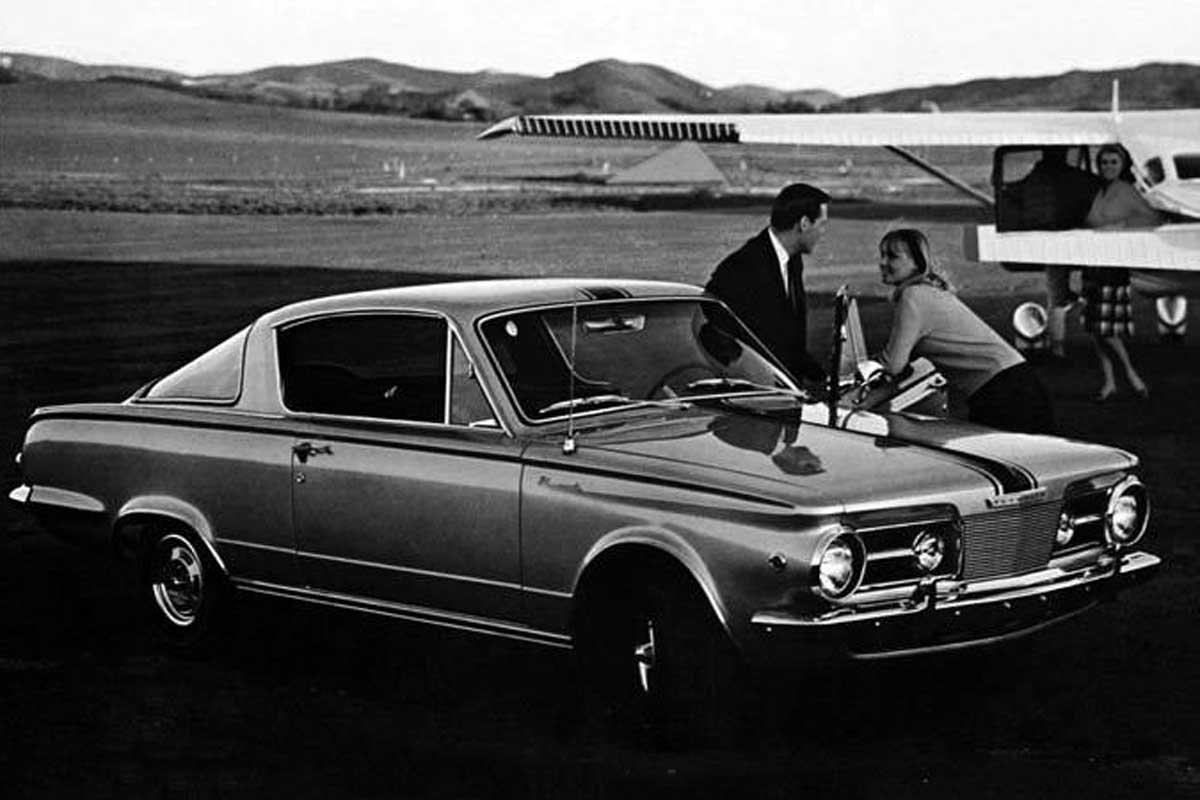
Above: Plymouth’s original Barracuda promotional photography placed the car in a distinctly upscale, leisure-oriented setting, suggesting a sophisticated, recreational lifestyle. However, the moderate Valiant-derived styling still made it difficult to convey the youthful, sporty image Plymouth hoped to establish. (Photographer unknown)
Ford Took a Different Approach
Ford’s development program was equally cost-conscious, but its product-planning philosophy was different. Lee Iacocca and his team recognized that the sporty-compact market was an opportunity to attract younger buyers, conquest sales, and customers who might otherwise purchase a Chevrolet Corvair Monza.
An original Ford management document, the December 1962 Special Falcon Program presentation, is particularly interesting.
Ford identified four essential characteristics for its new automobile:
• Four-passenger capacity.
• Six- and eight-cylinder engine availability.
• Attractive styling and a unique appearance.
• A low purchase price.
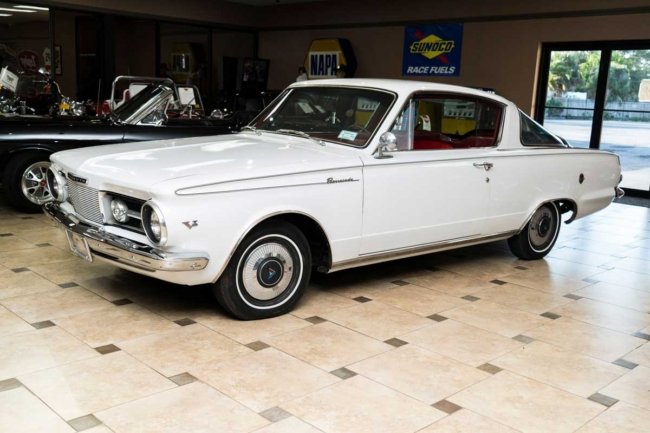
Above: Early Barracudas had developed a respectable following among enthusiasts, and 1965 proved to be the model’s strongest sales year, with 64,596 units produced. By comparison, Ford sold 559,451 Mustangs that same year, more than the total production of Barracudas from 1964 through 1974. Mustang sales peaked in 1966 at an impressive 607,568 units. (Photo: AmericanMuscleCarz.com)
The Mustang used existing Falcon mechanical components, but Ford authorized a new body and distinctive exterior proportions. The result was a car that shared its mechanical foundation with an economy compact but looked almost nothing like one. The long hood, short rear deck, low profile, and wide stance established an entirely different visual identity.
Ford also committed to two body styles at introduction: a hardtop and a convertible. The fastback would follow for 1965. This was a significant distinction. Plymouth initially offered only the fastback Barracuda, while Ford gave customers more choices from the beginning.
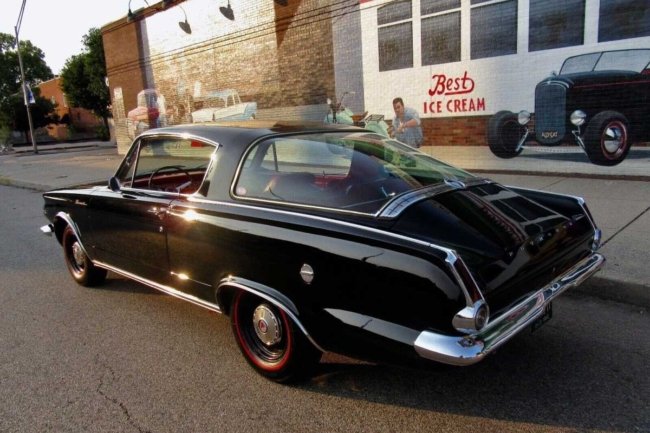
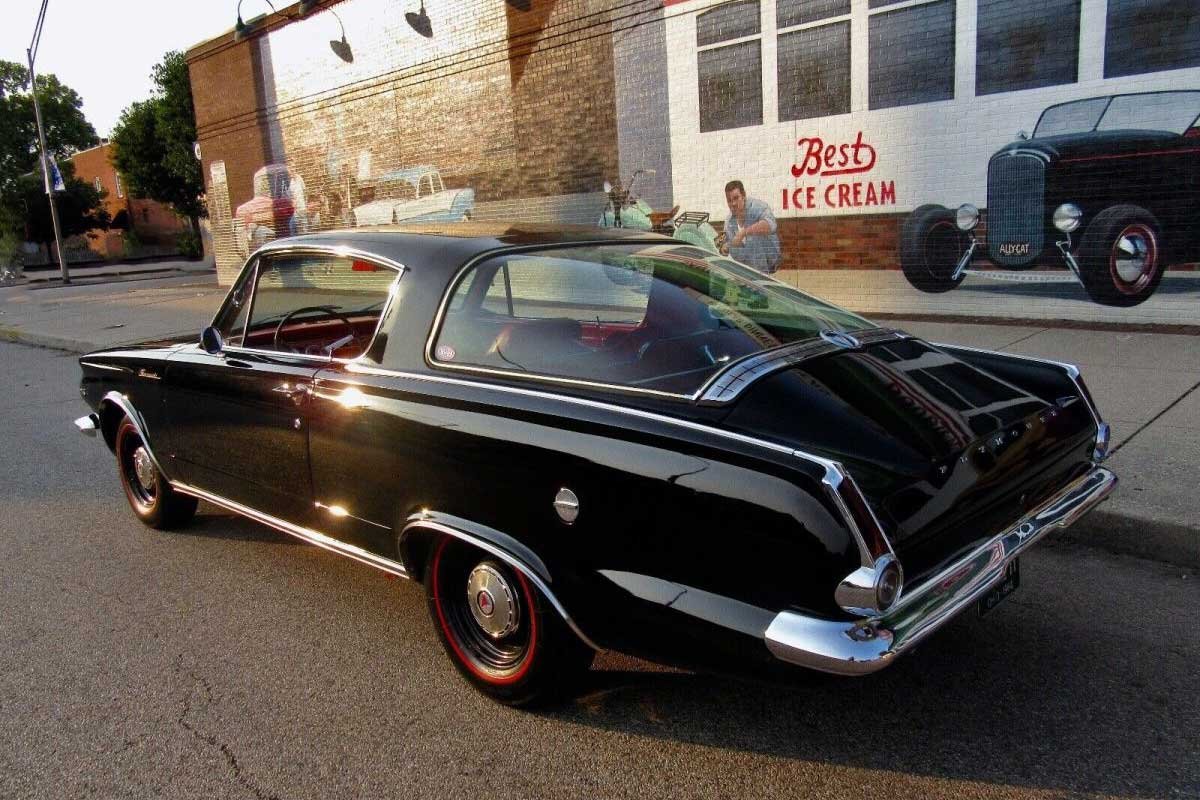
Above: With the right wheel-and-tire combination, the Barracuda could take on a decidedly more aggressive appearance. Redline tires and later-style dog-dish hubcaps give this example a particularly purposeful, almost sinister look. Add the Formula S suspension and performance upgrades, and the lightweight Barracuda was more than just a stylish compact. It was a genuinely quick little car. (Photo: SMClassicCars.com)
Ford’s development documentation also demonstrates how carefully the program was managed. The approved styling followed an 18-month development schedule, and the company emphasized using existing mechanical components to contain costs.
Ford was not simply building a Falcon with different sheet metal. It was creating a new product identity around proven mechanical hardware.
The Barracuda’s Performance Potential
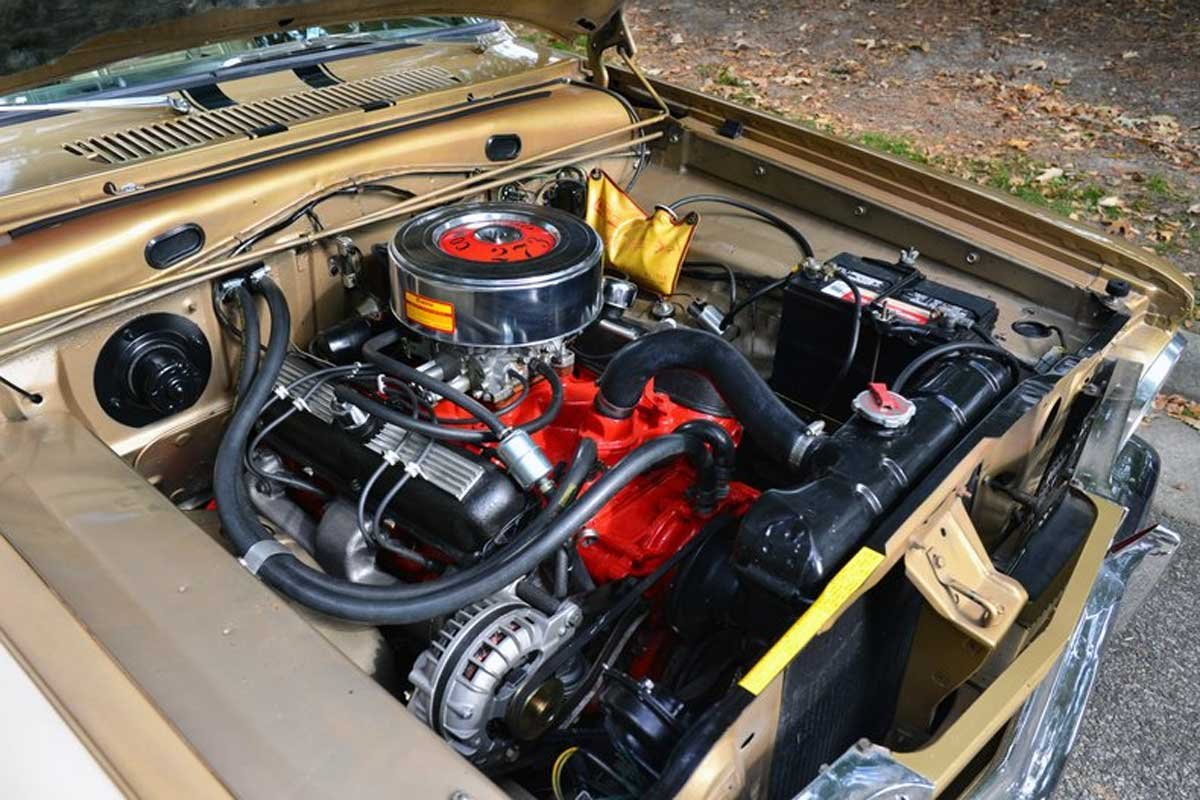
Plymouth eventually demonstrated that the Barracuda could be much more than a stylish compact. For 1965, the 273-cubic-inch LA small-block received the Commando treatment. With a four-barrel carburetor, higher compression, and a more aggressive camshaft, it produced a factory-rated 235 horsepower.
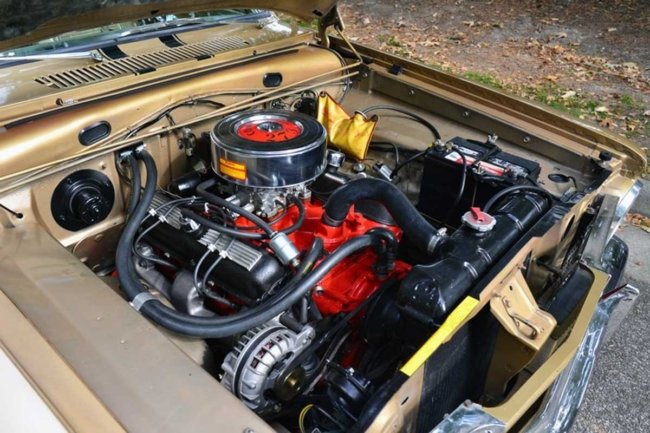
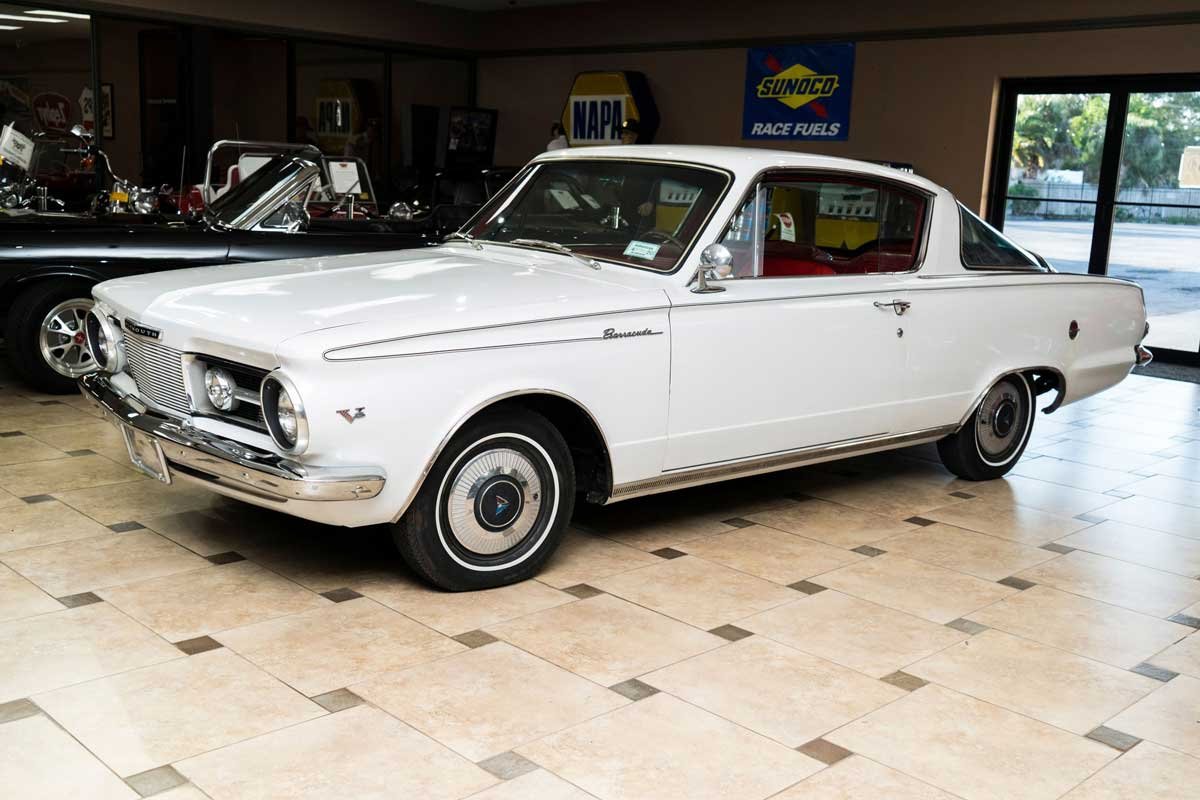
Above: The Barracuda’s performance potential was not limited to its lightweight A-body chassis. The available 1965 273 Commando V8, topped with a four-barrel carburetor, gave the little Plymouth respectable muscle and made the Formula S package a compelling performance combination. (Photo: GAAClassicCars.com)
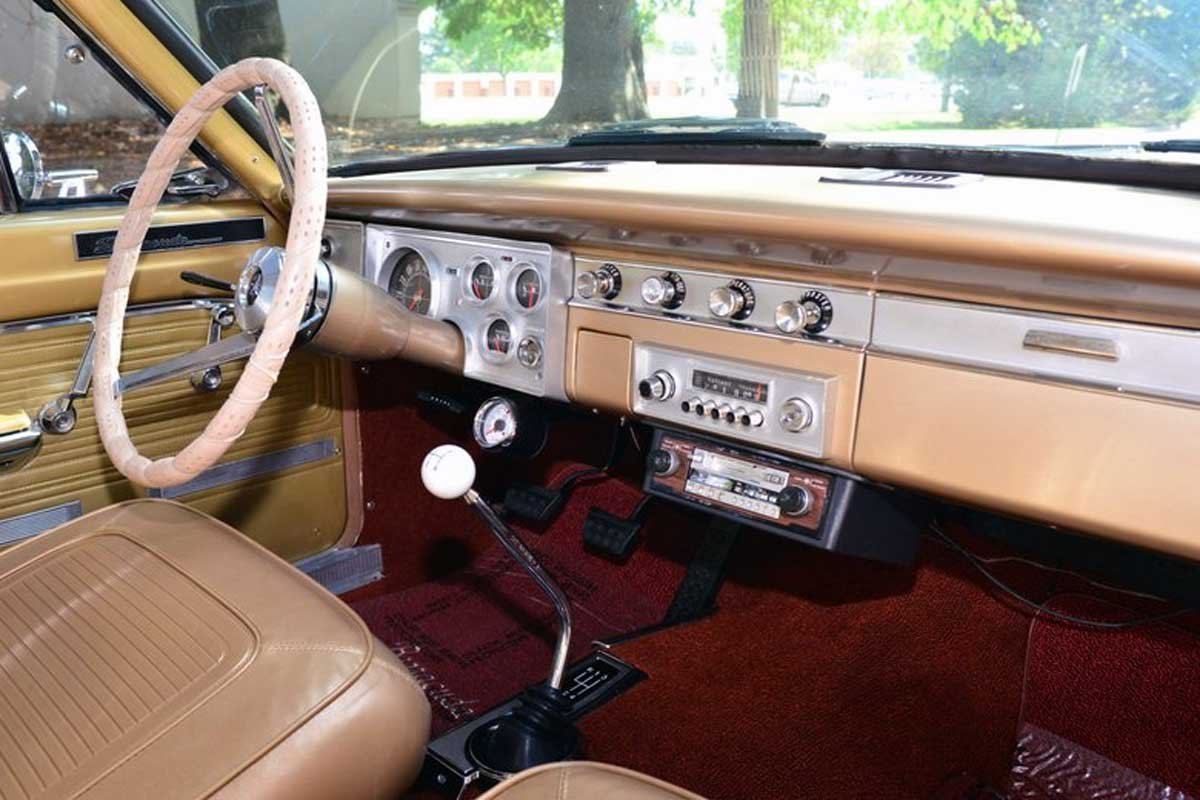
The Formula S package added suspension improvements, larger wheels and tires, and performance-oriented equipment. This was a legitimate performance automobile. Its lightweight A-body platform, relatively compact dimensions, and available four-speed transmission made it an interesting alternative to the Mustang.
The Barracuda’s mechanical credentials were never really its greatest weakness. Its problem was that Ford had already established a much stronger connection between its new automobile and the aspirations of the buying public.

The Importance of Perception
The Mustang’s success was not simply a matter of horsepower, handling, or engineering. Ford understood that buyers wanted an automobile that made them feel they were purchasing something special. They did not necessarily want a dressed-up Falcon.
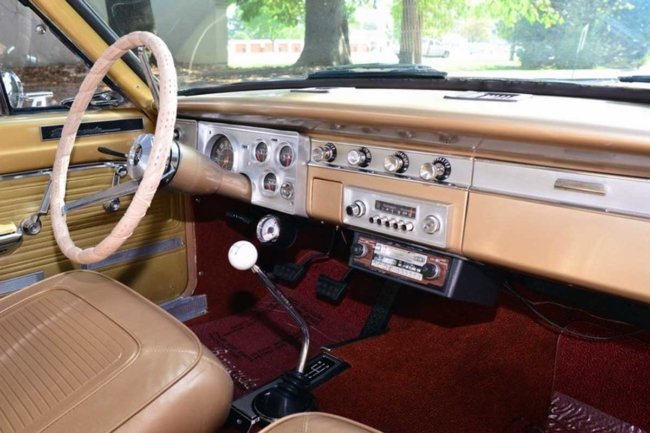
Above: Bucket seats and a floor-shifted four-speed transmission gave the 1965 Formula S a decidedly sportier character than the standard Barracuda. With its 273 Commando V8 and performance-oriented equipment, it was a legitimate little performer. Even so, Plymouth could not match the momentum of Ford’s Mustang. This car captured the public’s imagination and gave an entirely new automotive category its enduring name: the pony car. (Photo: GAAClassicCars.com)
The Mustang had its own name, styling identity, interior personality, and extensive list of options. It could be an economical six-cylinder coupe, a well-equipped V8 hardtop, or a convertible.
Plymouth’s original Barracuda offered much of the same mechanical versatility, but it did not achieve the same separation from its economy-car origins. The difference was especially apparent when the two cars sat side by side at a dealership.
The Mustang looked like a completely new automobile. From the front, the Barracuda still looked like a Valiant. That distinction may seem superficial to an enthusiast evaluating the mechanical merits of the two cars, but it was enormously important in the marketplace.
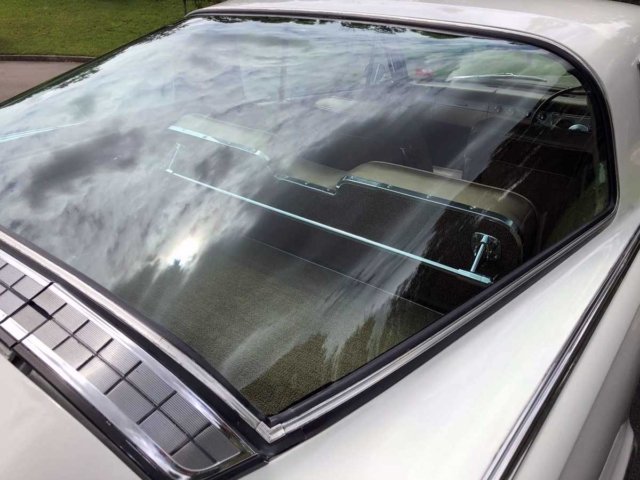
Above: One of the Barracuda’s most distinctive features was its enormous 14.4-square-foot wraparound rear window, developed with Pittsburgh Plate Glass and advertised as the largest single piece of automotive glass in production at the time. The expansive glass defined the fastback styling while providing excellent rearward visibility. Combined with a folding rear seat and nearly seven feet of cargo space, it gave the sporty Barracuda surprising versatility. (Photo: JustCars.com.au)
A lesson Chrysler Eventually Learned
Plymouth addressed many of these shortcomings with the 1967 Barracuda. The second-generation car received a longer 108-inch wheelbase, substantially different exterior sheet metal, and three body configurations: fastback, notchback, and convertible.
It was finally a more independent car, though it still shared the A-body architecture with the Valiant and Dodge Dart. By then, however, Ford had established the Mustang, Chevrolet was preparing the Camaro, and the pony-car market had become considerably more competitive.
The original Barracuda had been first, but being first was not enough.
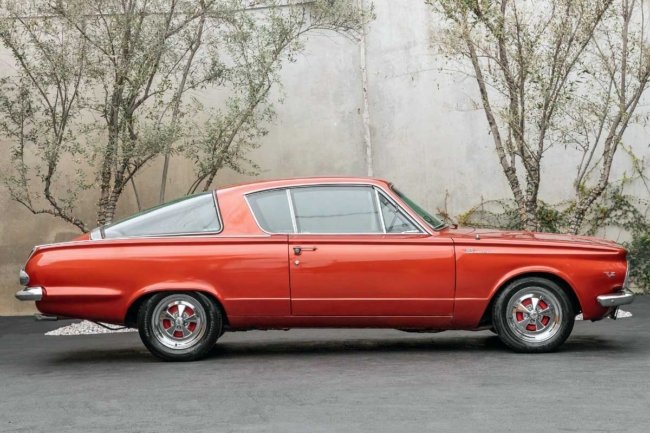
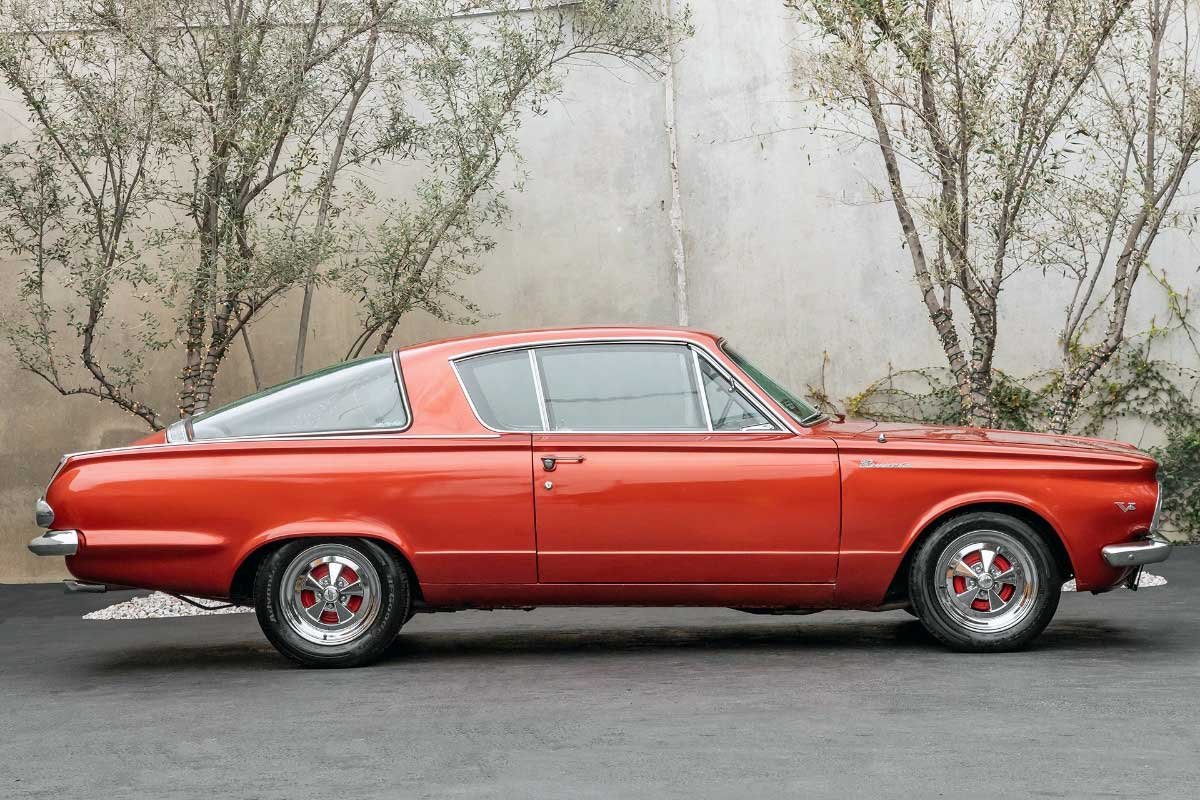
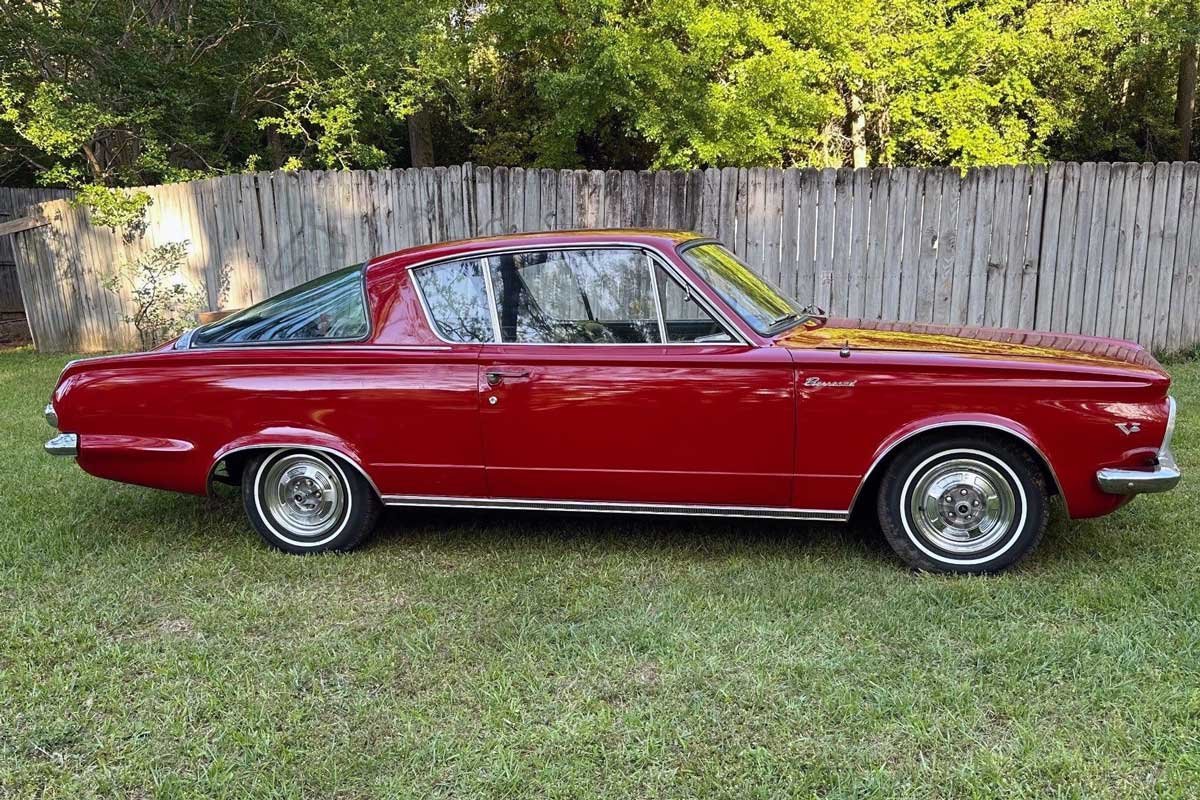
Above: With the right wheel and tire combination and a vibrant paint color, the Barracuda could be an exceptionally attractive automobile. A few tasteful modifications completely changed its personality, transforming what began as a Valiant-based compact into a stylish boulevard cruiser with plenty of visual appeal. (Photo: beverlyhillcarclub)
The Final Assessment
Looking back, the Barracuda represents an interesting example of the difference between recognizing a market opportunity and understanding how to capitalize on it. Plymouth recognized the opportunity early. It had a workable design concept, an existing platform, a new small-block V8, and the manufacturing capability to get the car into production.
Retaining so much of the Valiant was economically sensible. It cut development costs and let Plymouth respond quickly to Ford’s upcoming automobile. But Ford made a different decision.
It used an existing platform to create a car with an entirely new identity. That distinction ultimately mattered more than the sixteen-day head start Plymouth enjoyed. Chrysler had the first pony car. Ford created the pony-car phenomenon.
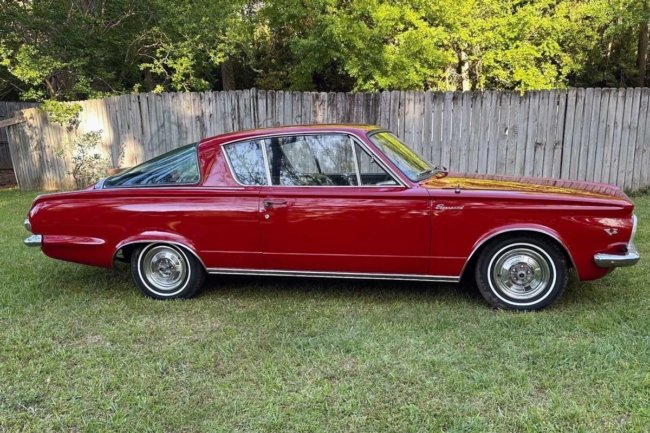
Above: The pony car era can trace its roots to Plymouth’s effort to attract younger buyers with a sportier, more stylish version of the Valiant. The Barracuda may have retained much of its economy-car heritage, but it was Plymouth’s first step toward an entirely new segment of the American automobile market. (Photo: BarnFinds.com)
Perhaps the greatest irony is that Plymouth had already shown it understood the concept’s styling potential in 1962. It simply lacked the corporate commitment to take that idea as far as Ford was willing to take its own.
The Barracuda was not a bad idea that failed. It was a good idea, initially executed with a more conservative product strategy than the market ultimately rewarded.