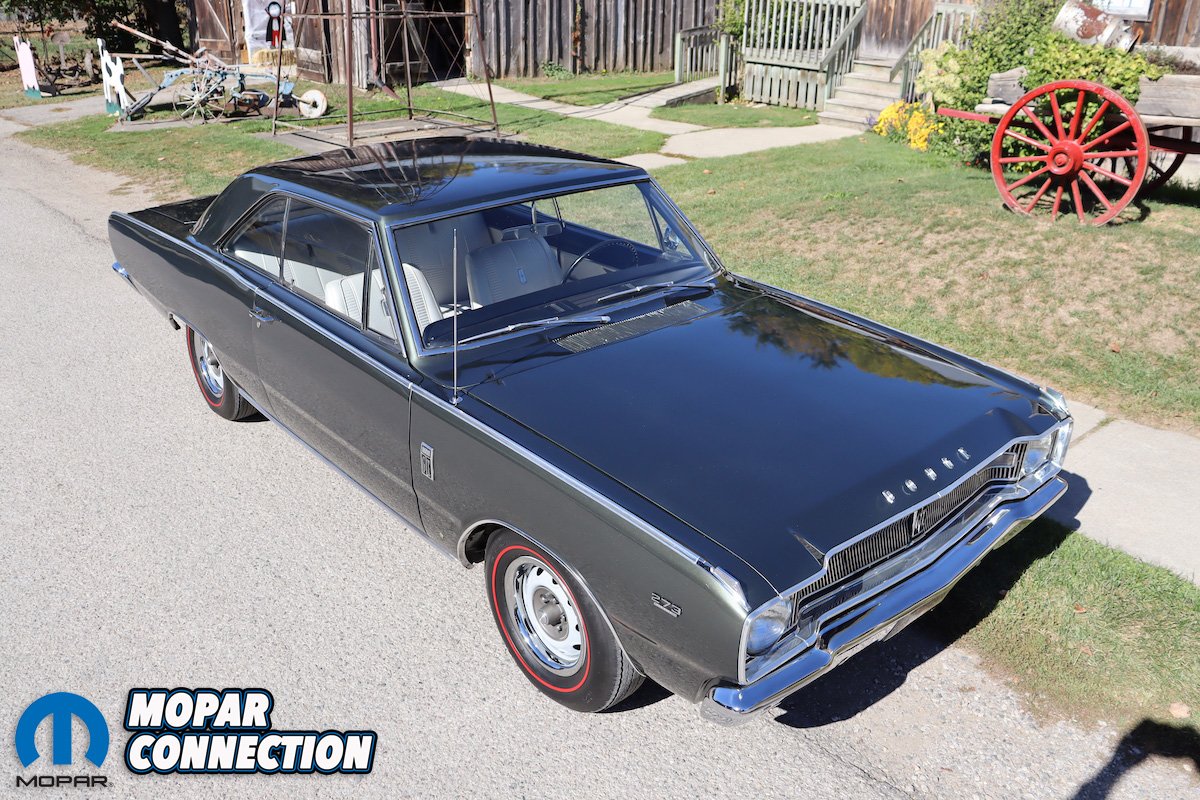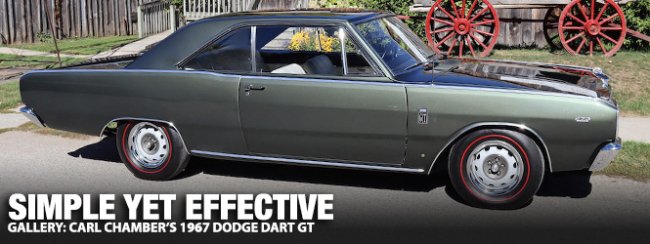
When Dodge rolled out the 1967 Dart, it was clear the compact had grown up. The all-new sheet metal gave it a crisp, modern profile and a sportier stance that quickly caught the eye of buyers looking for something both practical and spirited. Beneath that fresh skin, engineers widened the track to accommodate a broader range of engines—from the thrifty Slant Six to the lively 273-cubic-inch V8, with more powerplants soon joining the lineup.
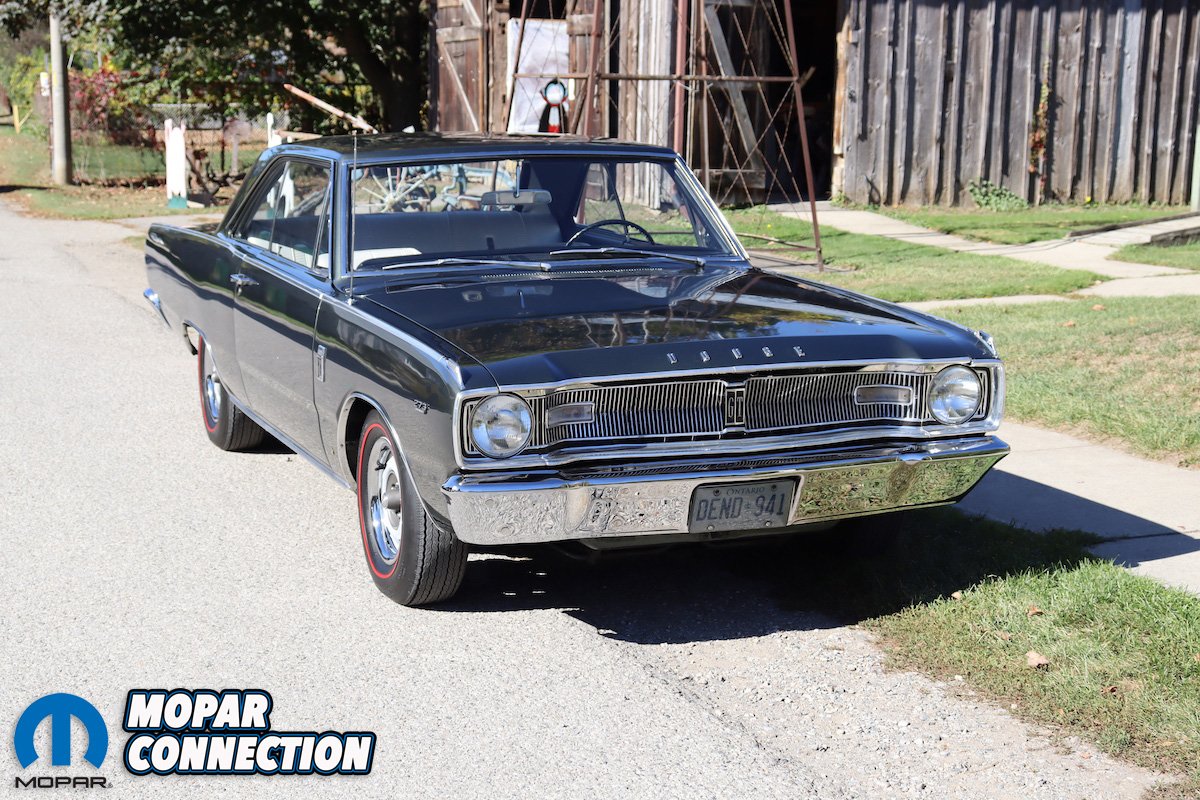
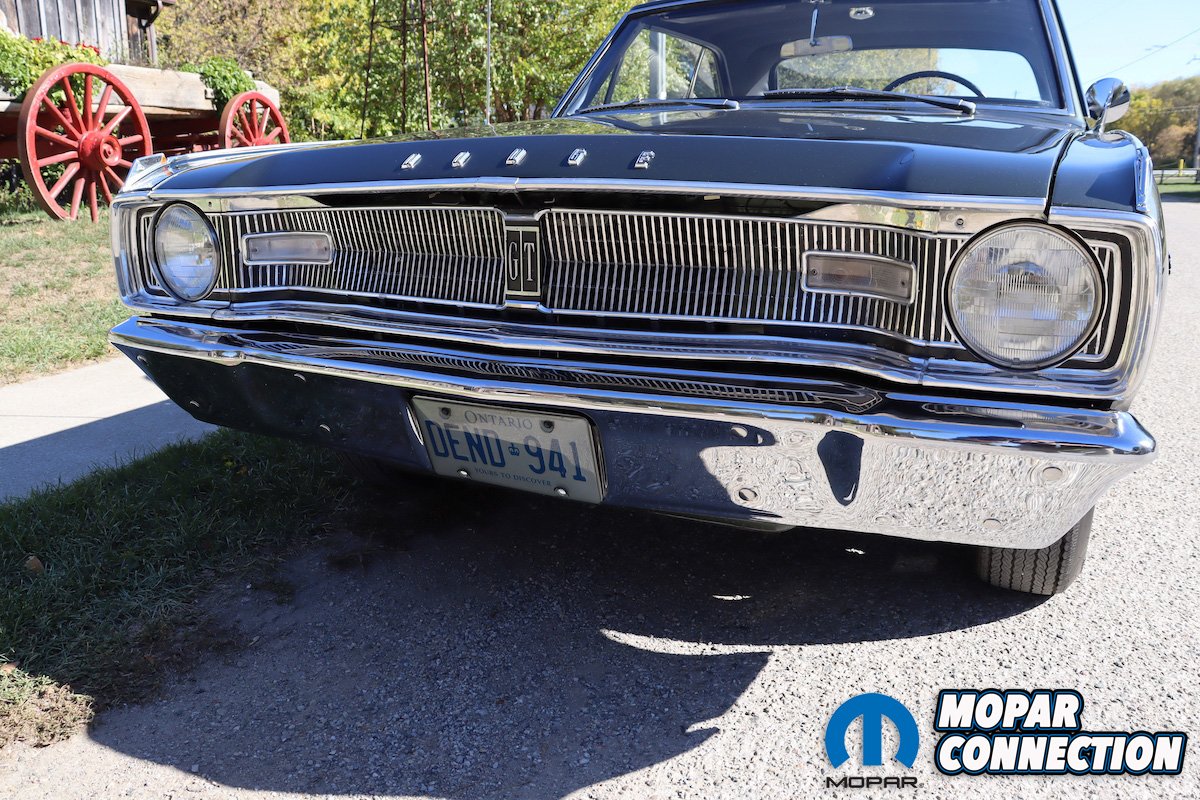
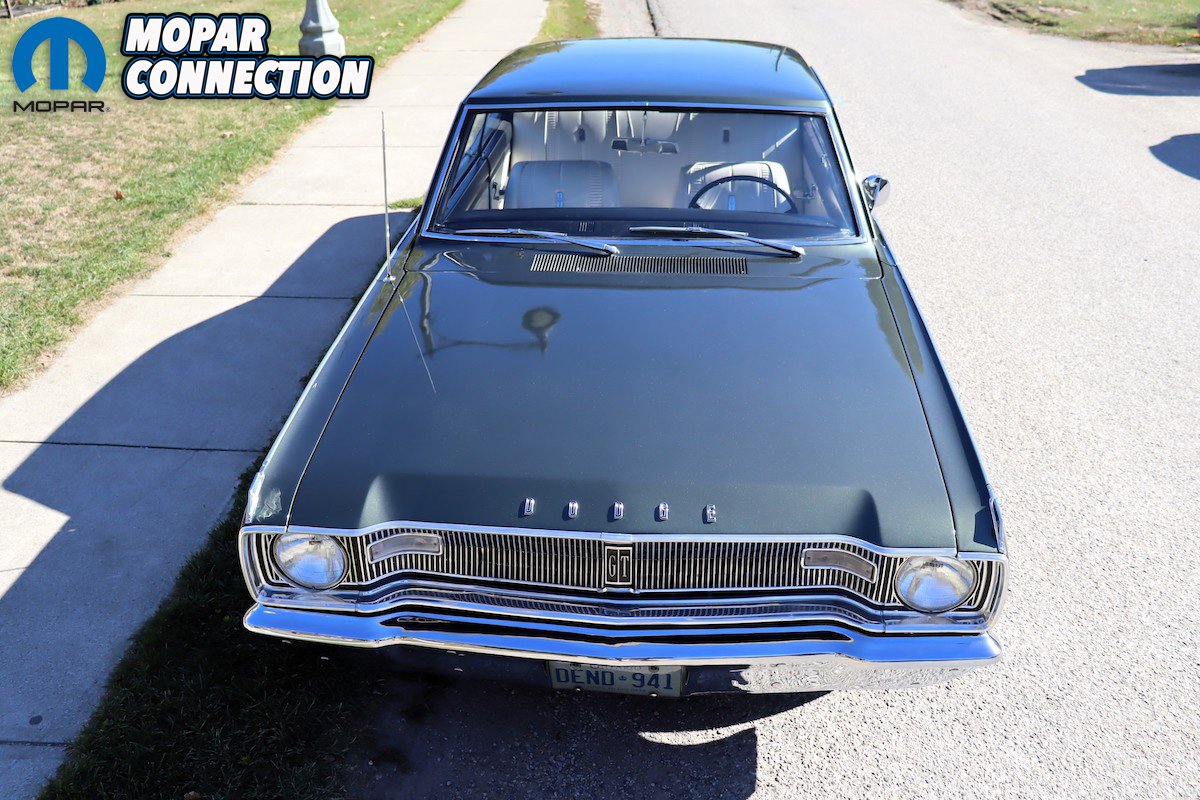
The 1967 Dart signaled Dodge’s move toward cleaner, more angular styling. Compact practicality met muscle-car confidence in a design that looked ready to move even while standing still. A newly integrated grille and headlamp bezels lent the front end a unified, purposeful expression, replacing the busier look of earlier models.
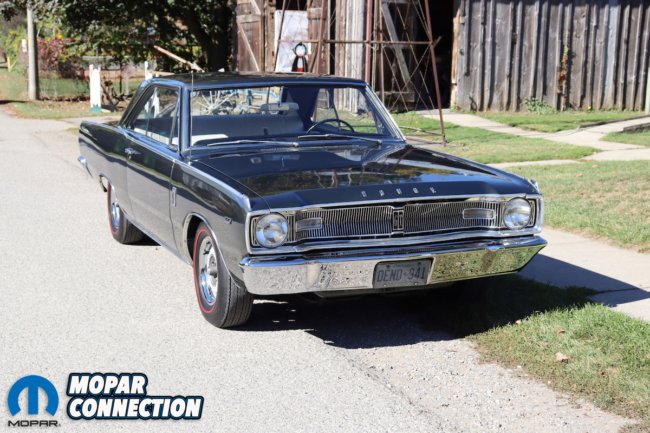
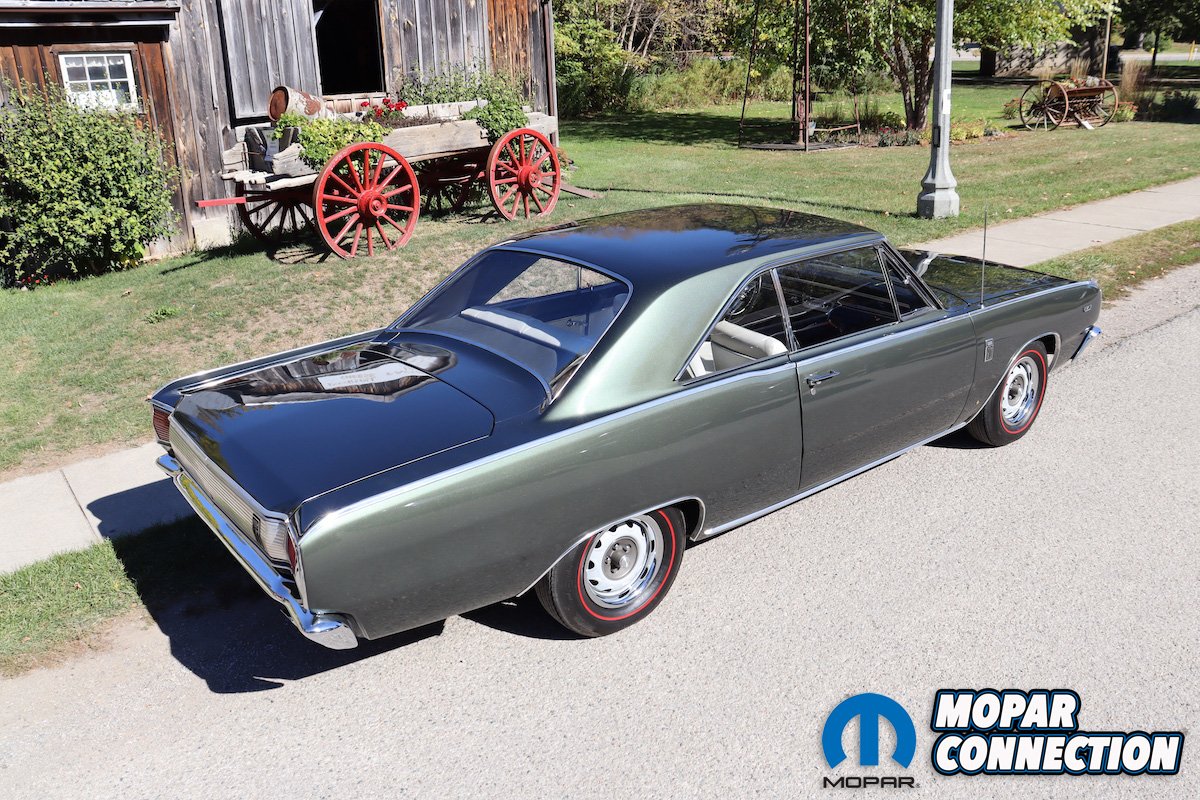
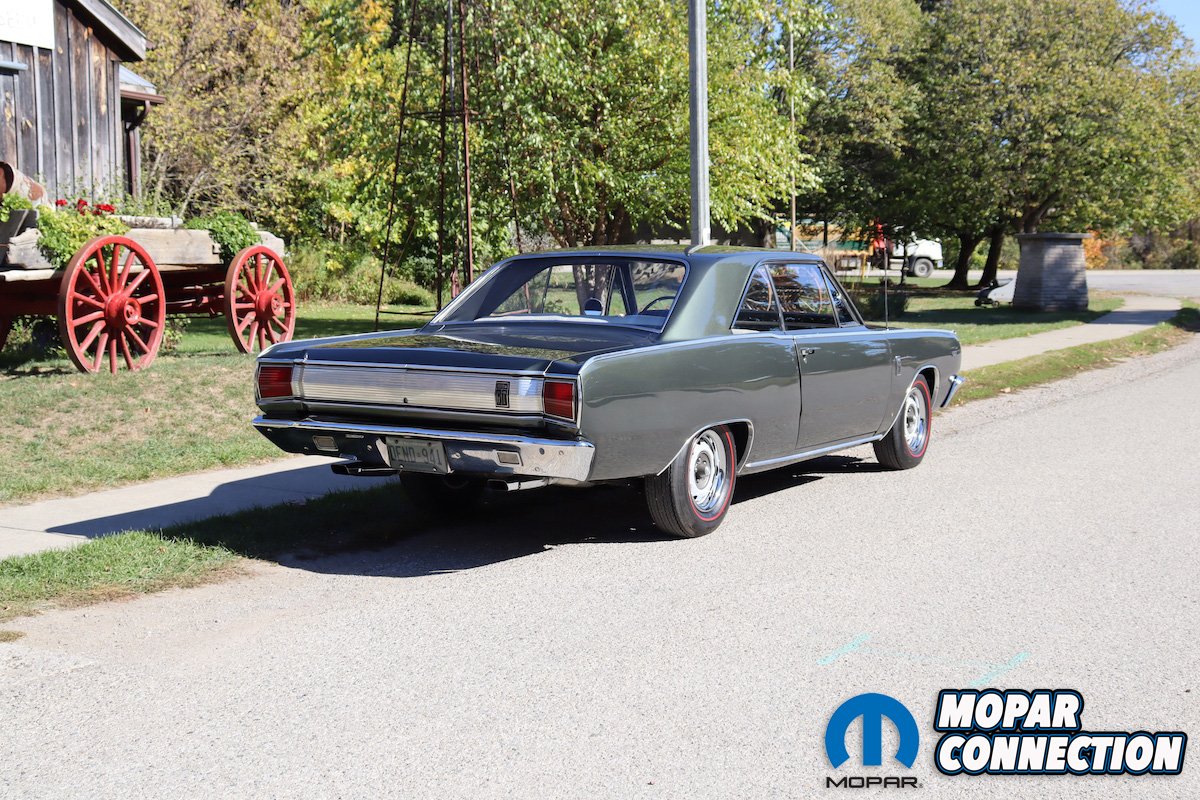
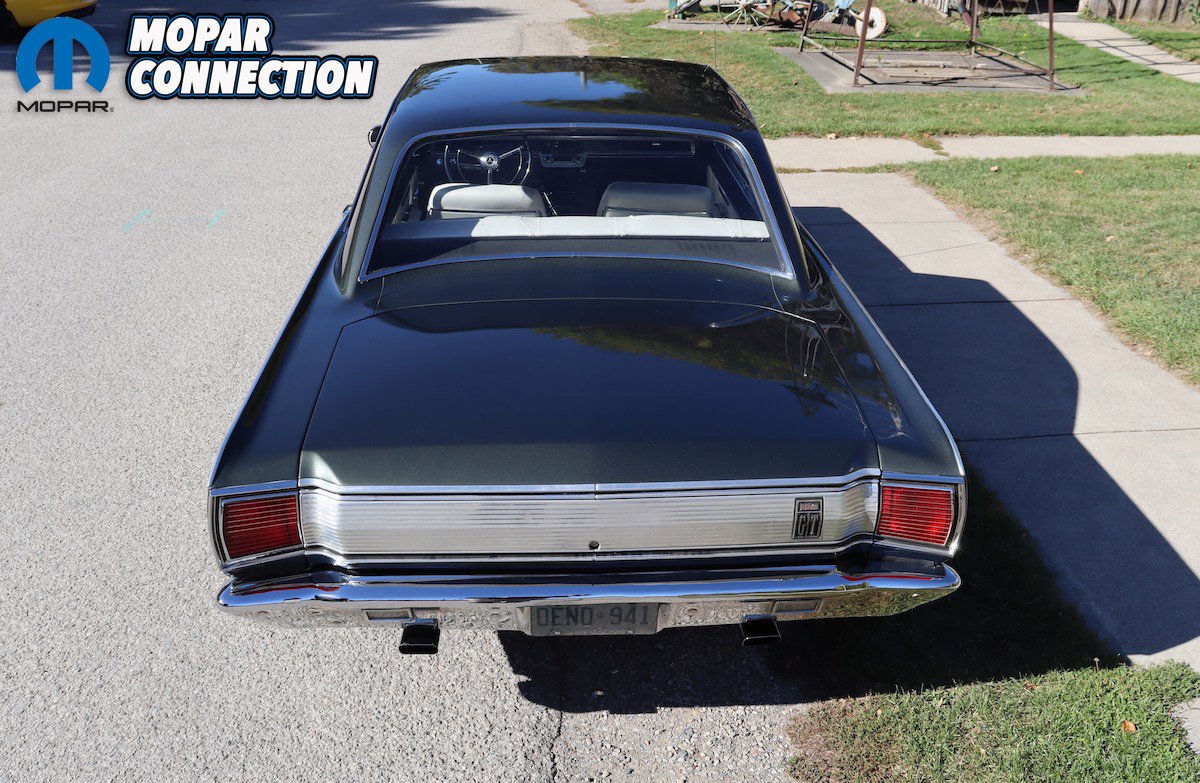
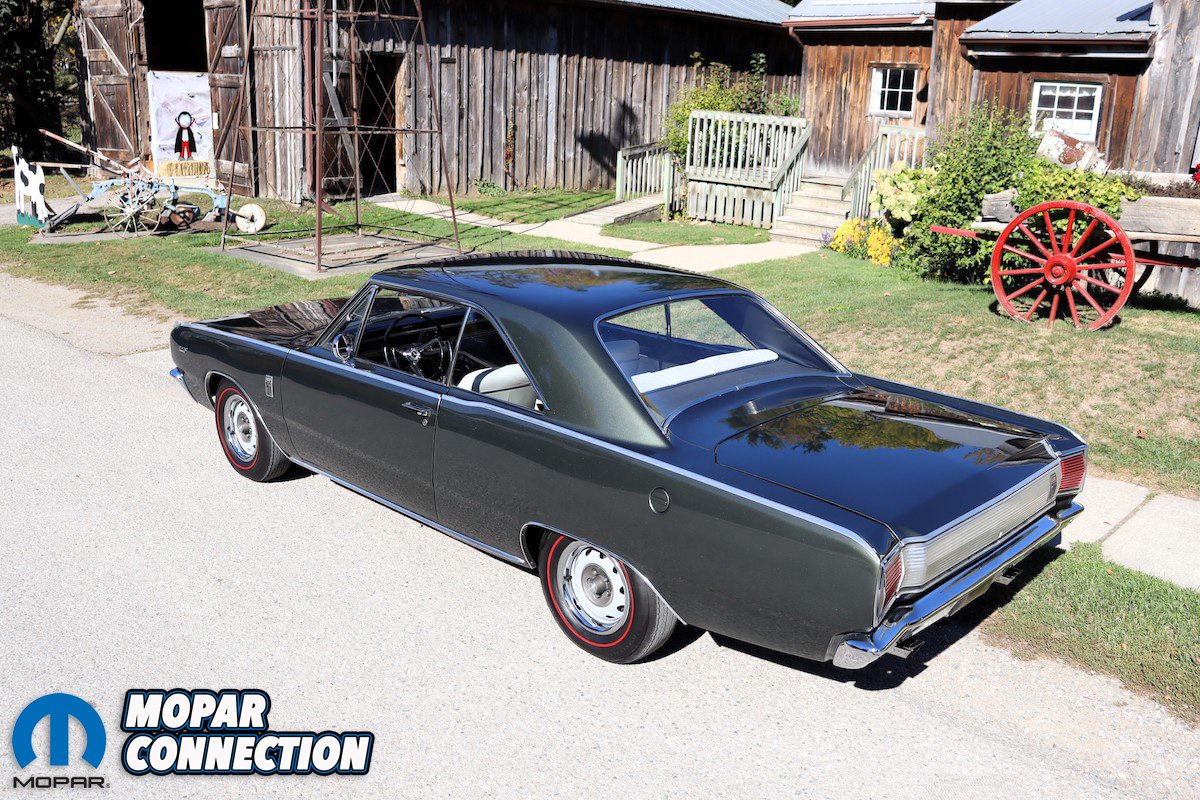
Subtle character lines swept along the sides, hinting at motion and length, while squared-off rear quarters gave the car a planted, stable presence. At the back, a compound-curved rear window added distinction to the greenhouse, and curved side glass—appearing for the first time on a Dodge compact—completed the Dart’s refined new silhouette.
The 1967 Dart lineup offered something for nearly every buyer. The base Dart came as a two or four-door sedan, powered by the standard 170-cubic-inch Slant Six producing 115 horsepower, with an optional 225-cubic-inch Slant Six rated at 145 horsepower for added performance. The mid-range Dart 270 expanded the choices with two-door hardtop, four-door sedan, offering the same six-cylinder engines plus the available 273-cubic-inch V8.
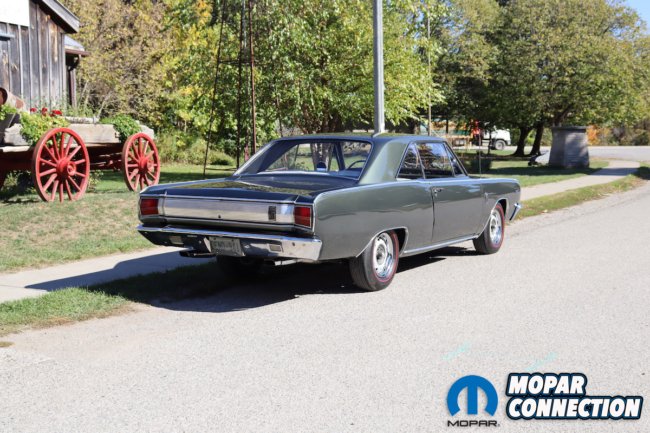
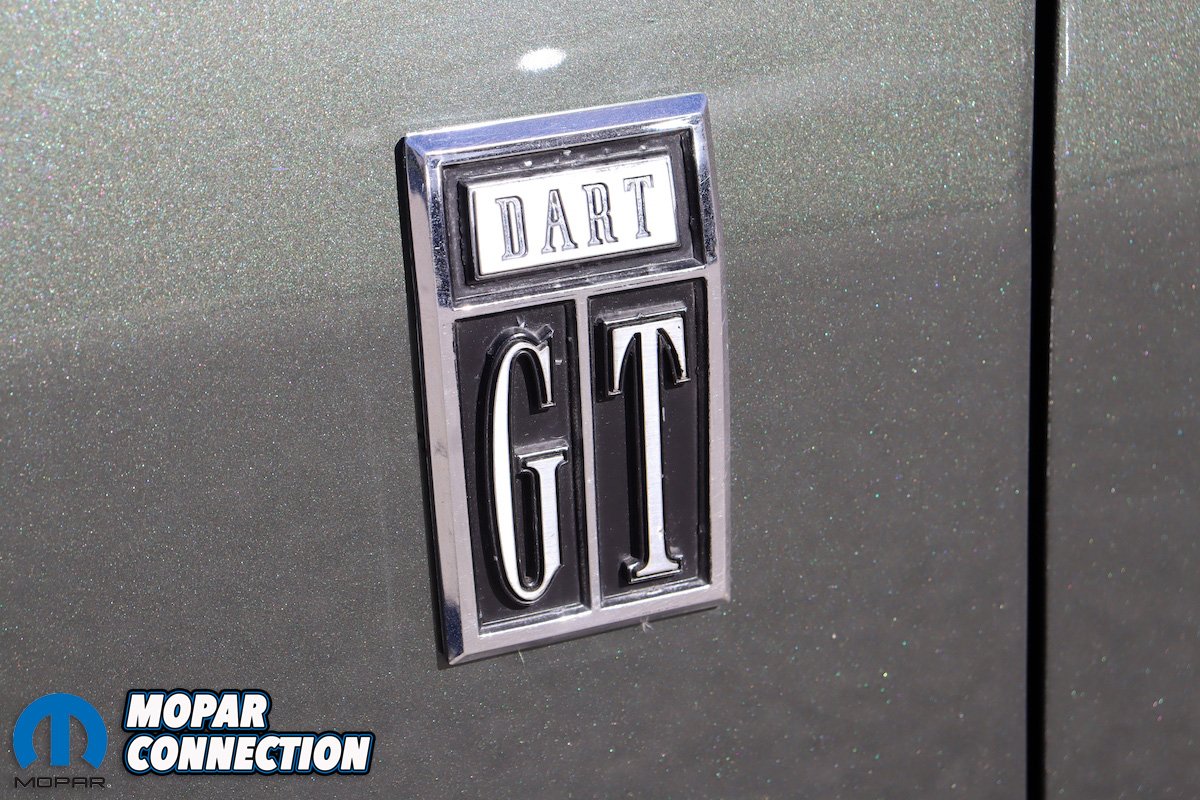
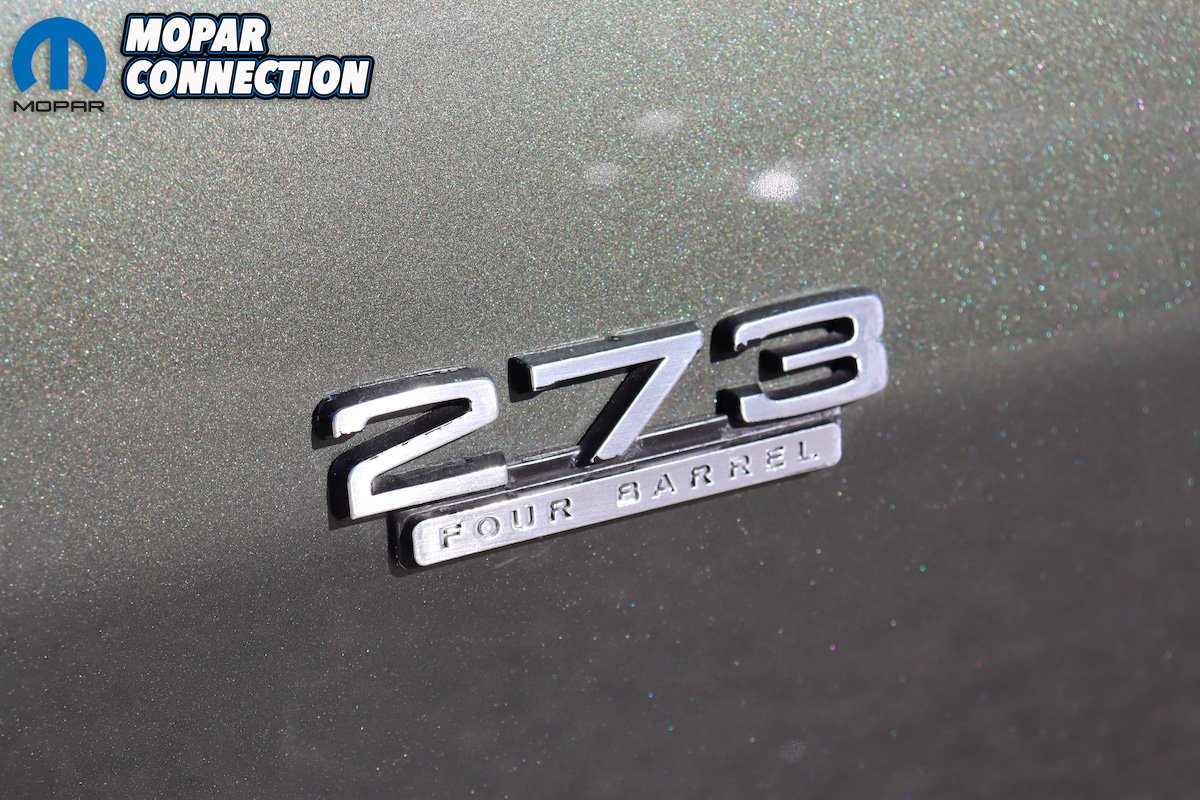
At the top of the range, the sporty Dart GT was offered as a two-door hardtop or convertible, equipped with either the 225 Slant Six or the 273 V8. Stepping up to the 273 transformed the car’s character—rated at 180 horsepower in standard form and 235 horsepower with the optional high-performance “Commando” package, featuring a four-barrel carburetor and dual exhausts. Later in the model year, Dodge stuffed a 383 CID engine manufacturing 280 horsepower into a Dart as the GTS model.
Across the 1967 Dart lineup, buyers could select from several transmission options to suit their driving style. The standard three-speed manual provided a straightforward, engaging experience, while the optional four-speed manual added a sportier edge—especially when paired with the 273 V8 or 383 V8. For those who preferred effortless cruising, Chrysler’s dependable three-speed TorqueFlite automatic delivered smooth, reliable performance and became a favorite among Dart owners.
For 1967, Dodge produced approximately 154,500 Darts in total. Of these, about 50,900 were six-cylinder models, with figures rounded to the nearest hundred. The V8-powered Dart represented a smaller share, accounting for roughly 2,200 units. The Dart 270 made a major contribution to overall output, with around 49,700 six-cylinder versions and 13,500 equipped with the 273 V8.
The sporty Dart GT added another 16,600 six-cylinder cars and 21,600 V8s, underscoring strong buyer interest in performance-oriented models. Production records don’t specify how many were convertibles versus hardtops, nor do they detail which 273 V8 variants were built. Only 457 Dart GTS models left the factory that year, making them exceptionally rare.

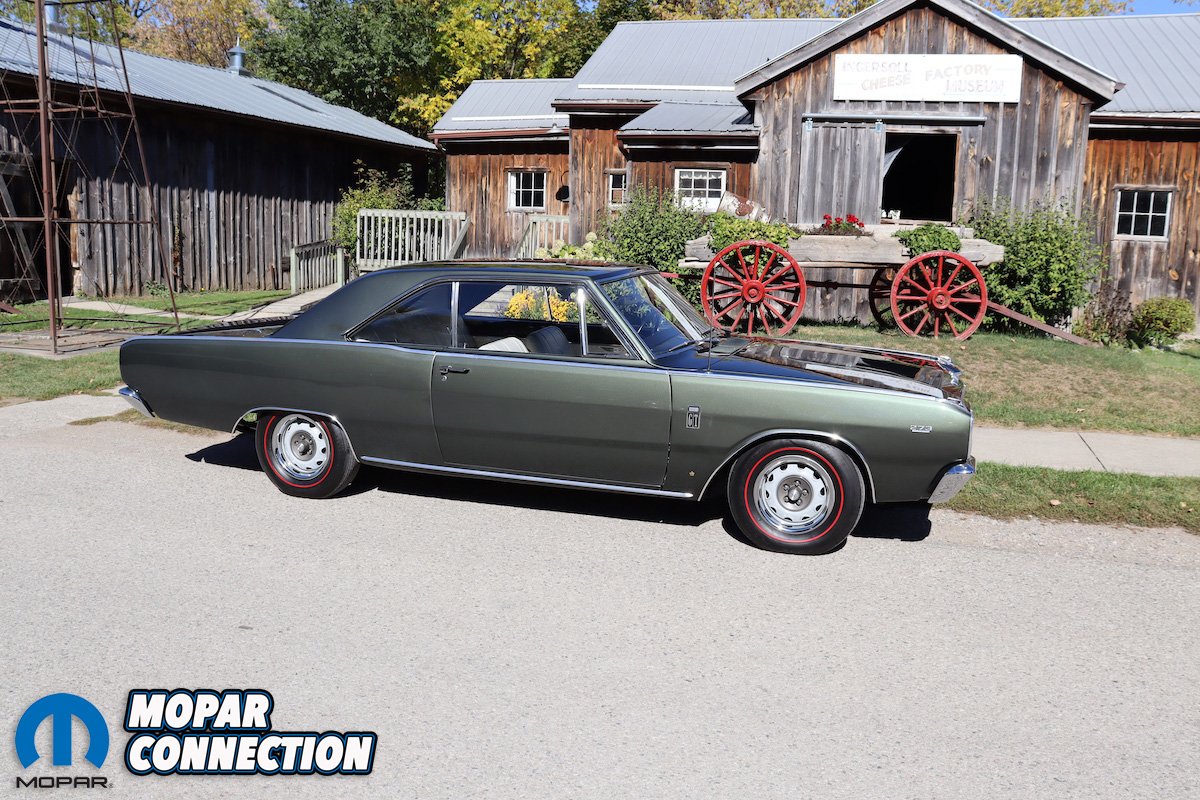
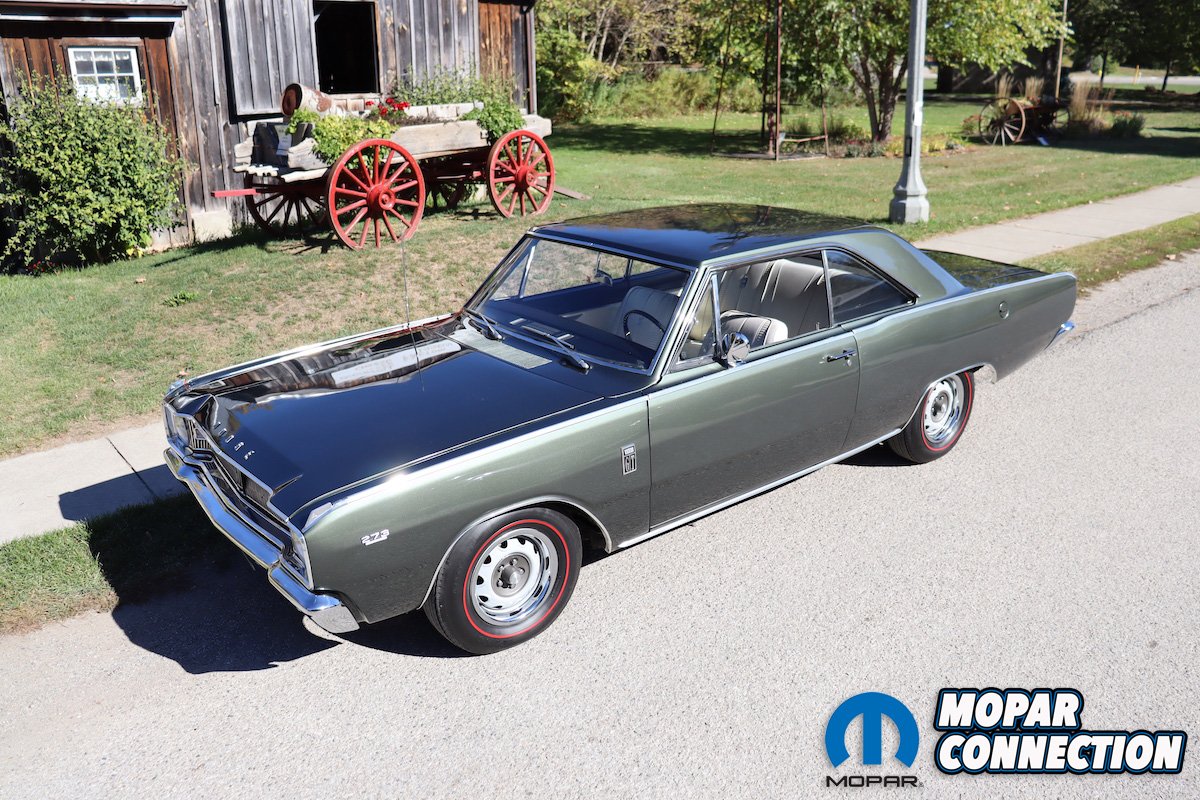
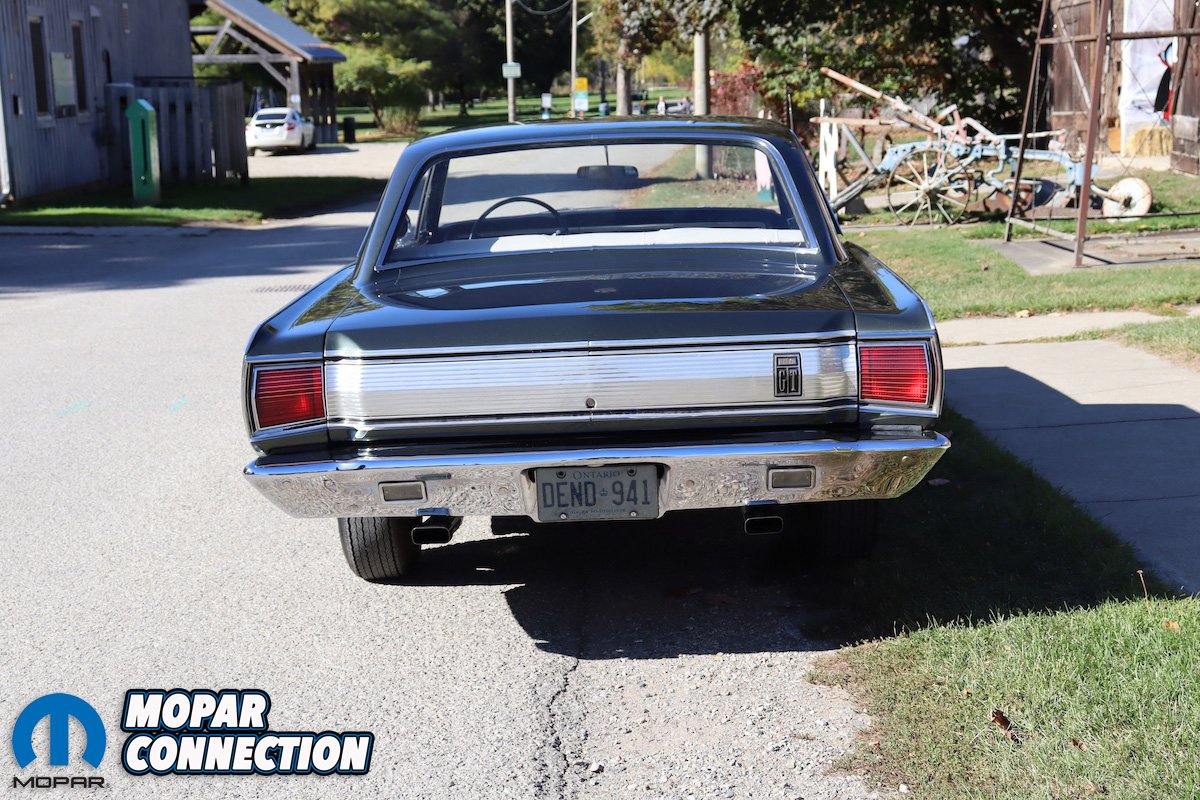
The car featured here is a 1967 Dodge Dart GT—one of just 21,600 produced that year. It was assembled at Dodge’s Los Angeles, California plant and came equipped with a 273-cubic-inch V8 engine topped by a four-barrel Carter carburetor rated at 700 cfm. Power was delivered through a four-speed manual transmission, and the car rode on D70x14 redline tires.
The rear axle carried a 3.23 ratio, and the Dart left the factory finished in striking gold metallic paint. Braking was handled by front discs and rear drums, completing a well-balanced performance package for this sporty compact.
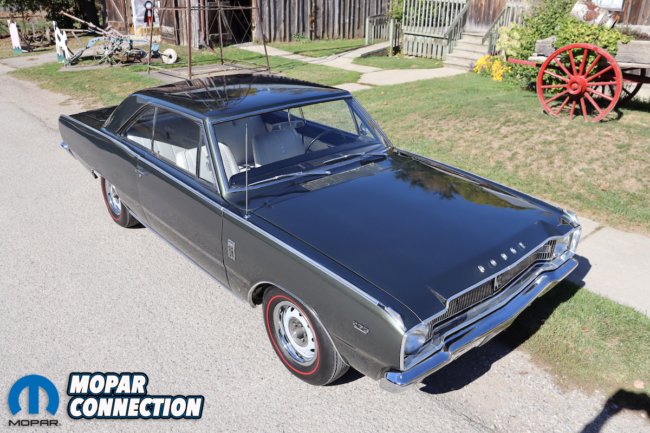
At some point, the car was imported into Canada, where it passed through three different owners. The history of its previous U.S. owners remains unknown. In Canada, it was first owned by Mr. William, then sold to D. Vallance before being purchased by Carl Chambers.
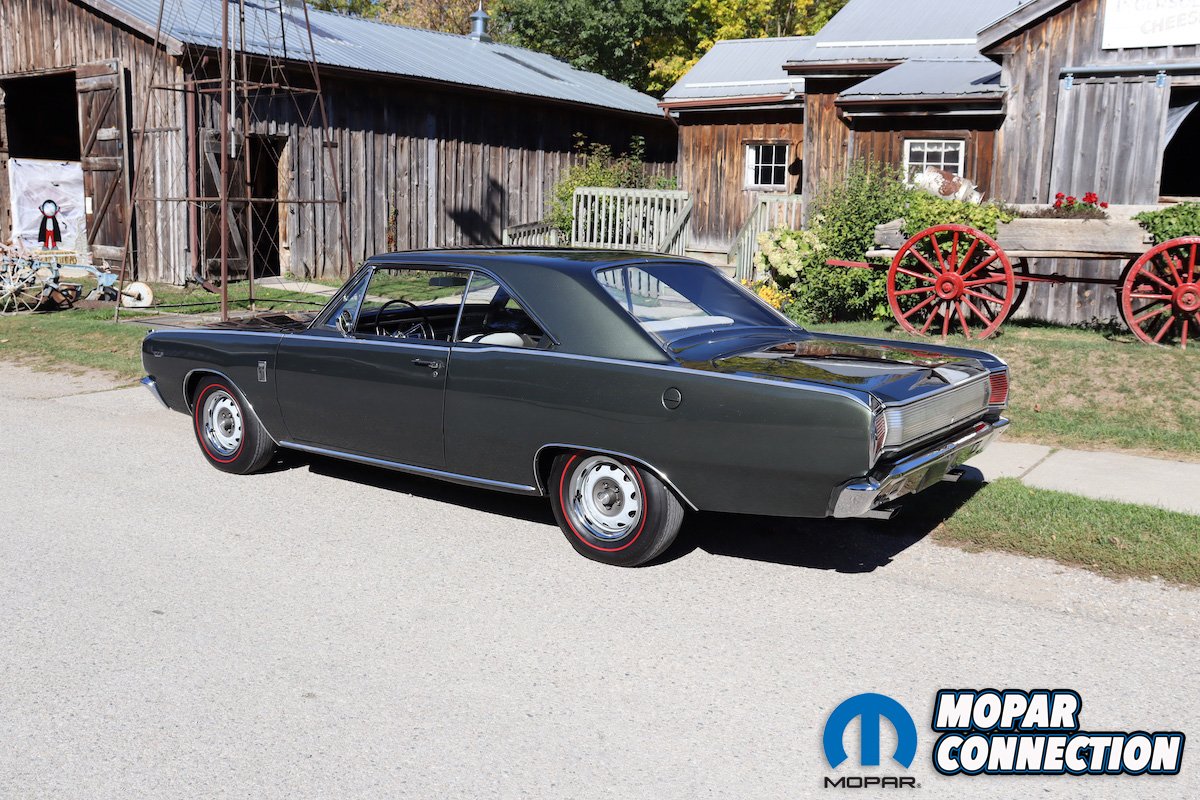
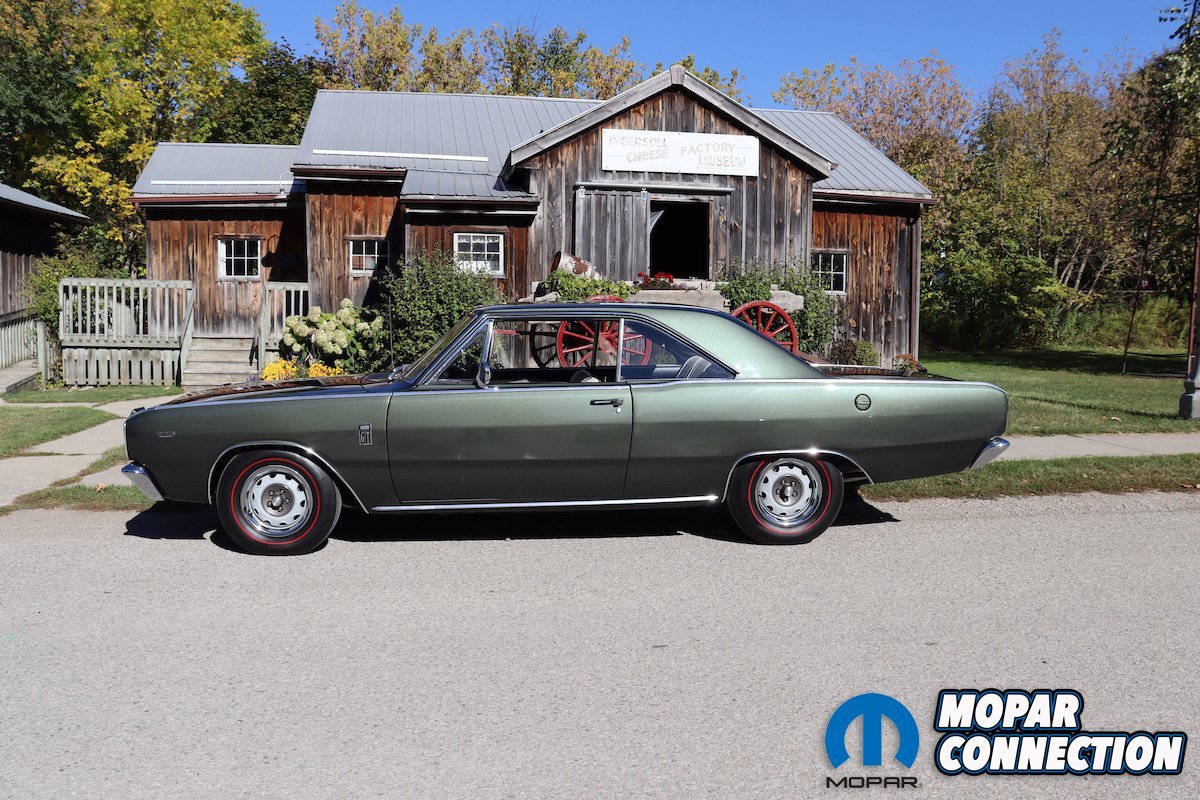
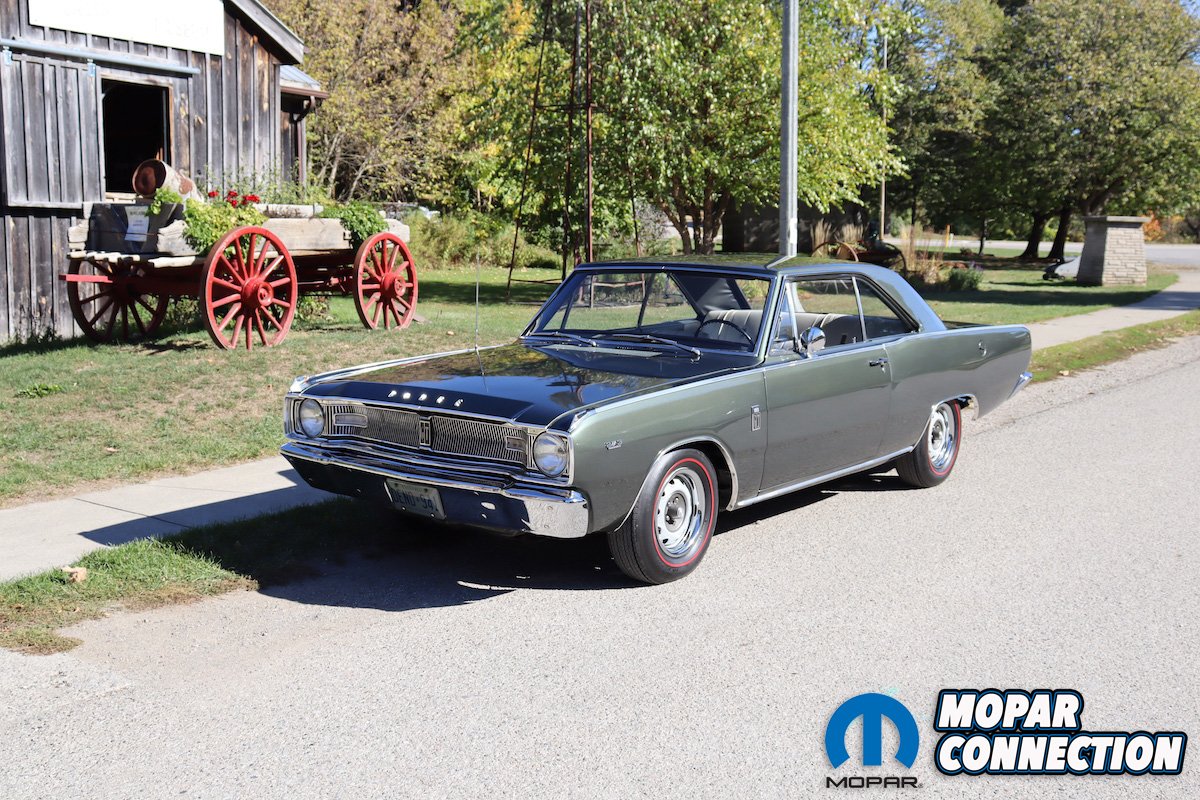
The Dart was fully restored before Carl purchased it, with only one notable change made during the process. The original gold paint was replaced by a deep, rich green that beautifully highlights the car’s crisp lines, while the white interior provides a striking contrast and looks exceptional. Aside from that color change, the car remains true to its stock configuration as it was built on November 22, 1966.
Carl said, “I’ve always dreamed of owning a beautiful classic car. When I saw this Dart advertised, I just had to go and see it.” So, Carl and his wife made a short drive to Stratford, Ontario. When they arrived at the garage, the Dart was up on a lift, giving them a perfect view of the underside. Carl was immediately impressed by how clean and solid everything looked—the condition alone was remarkable.
Once the Dart was lowered from the lift, its condition exceeded every expectation. Carl and his wife took it out for a test drive, and the car performed like new—tight, responsive, and full of life. That drive sealed the deal; Carl was smitten. After a day and night of deliberation, he returned to make the purchase official. It was the perfect scenario: with limited garage space, a full restoration wasn’t practical, but this beautifully finished classic meant he could start enjoying the car immediately.
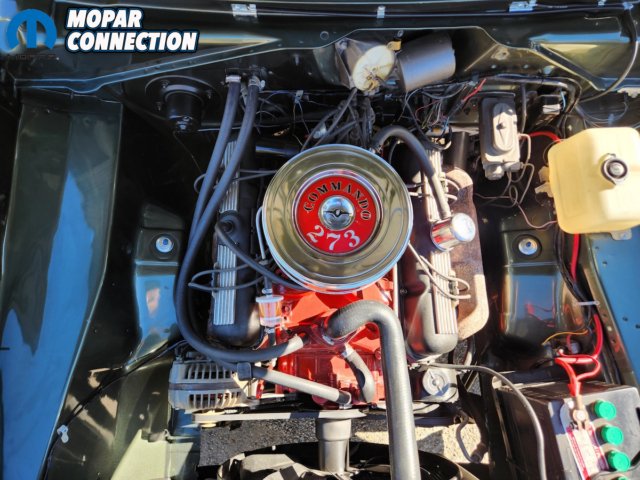
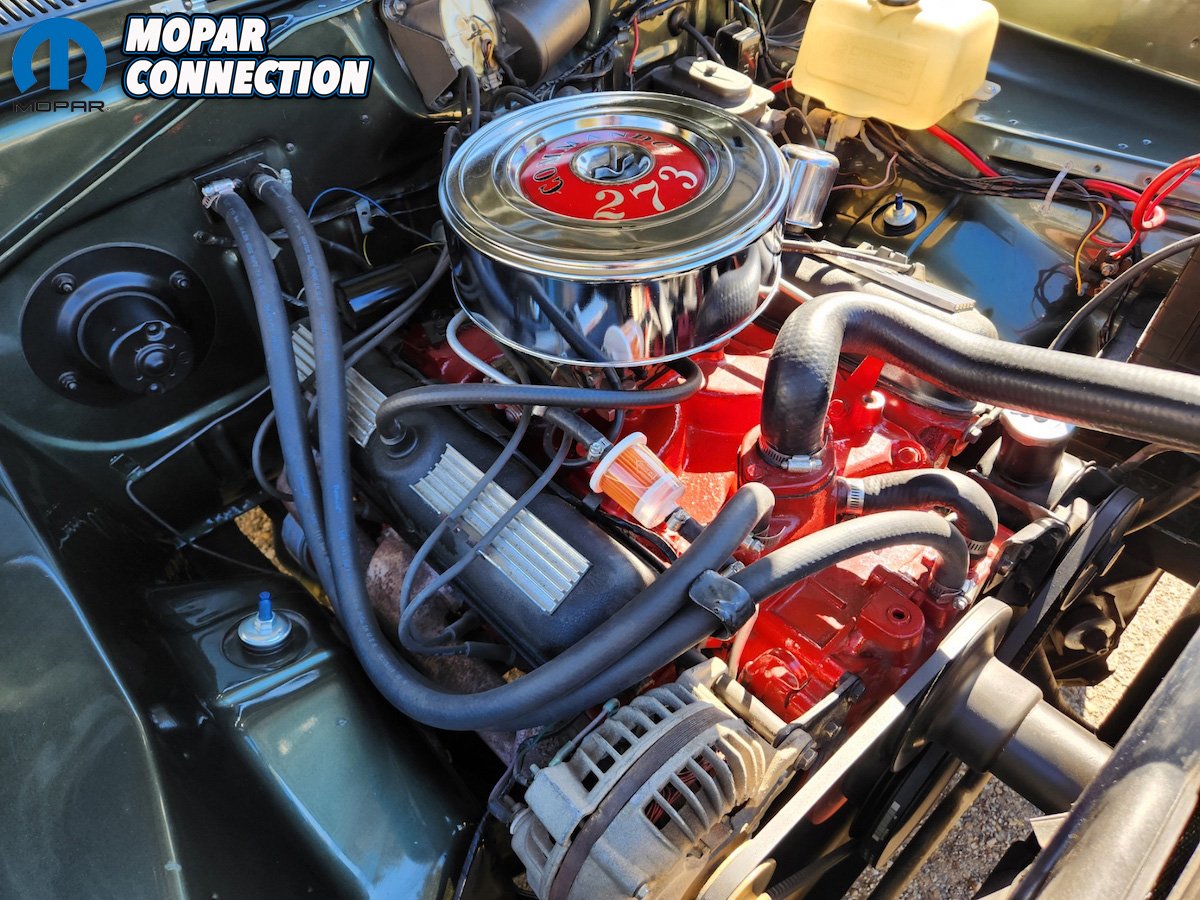
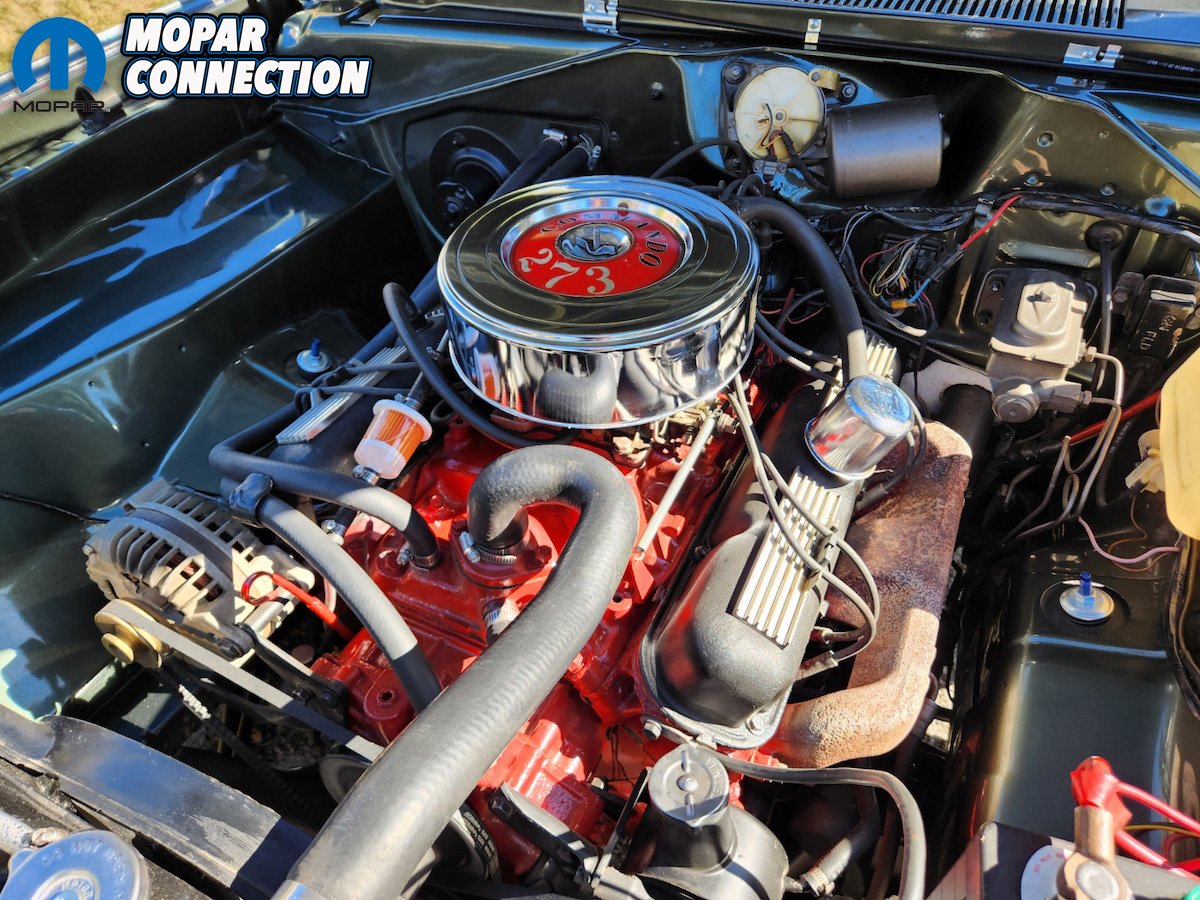
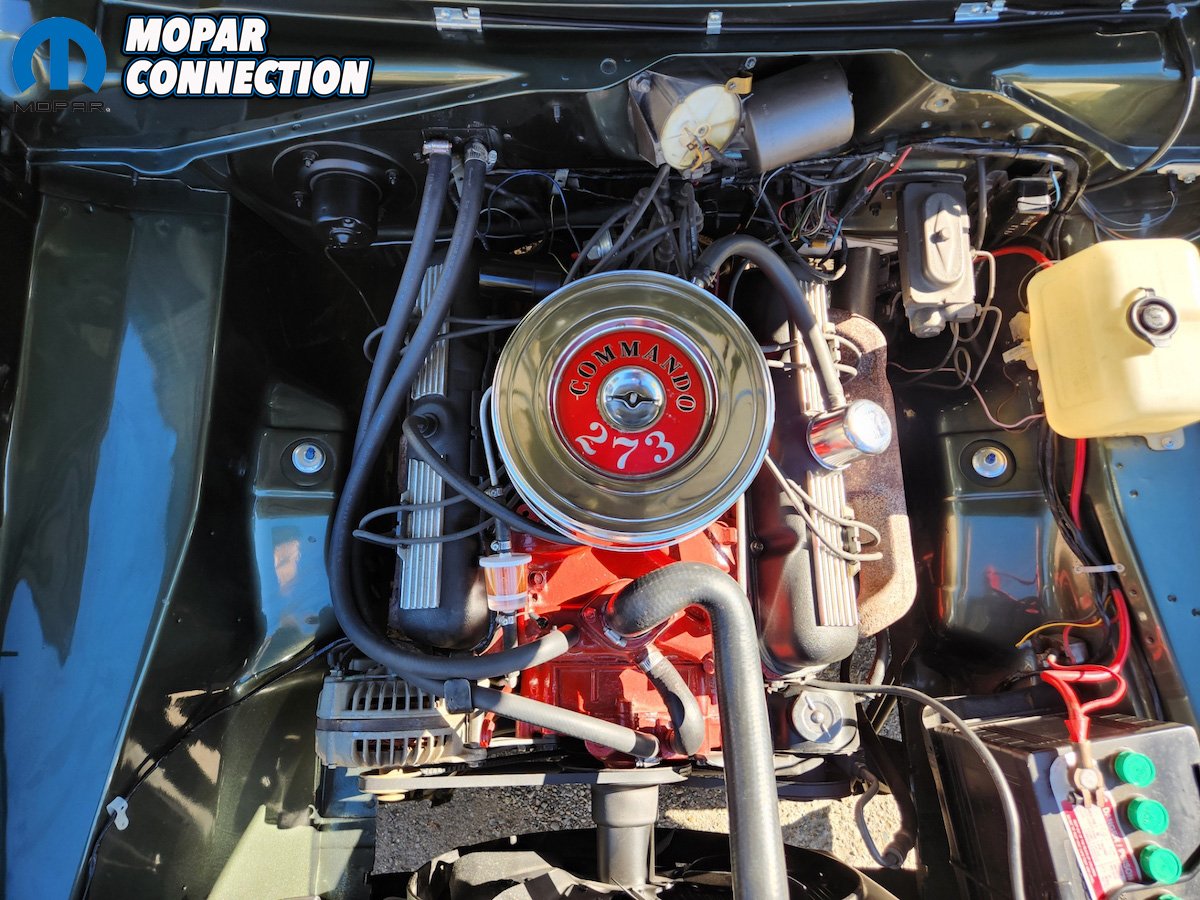
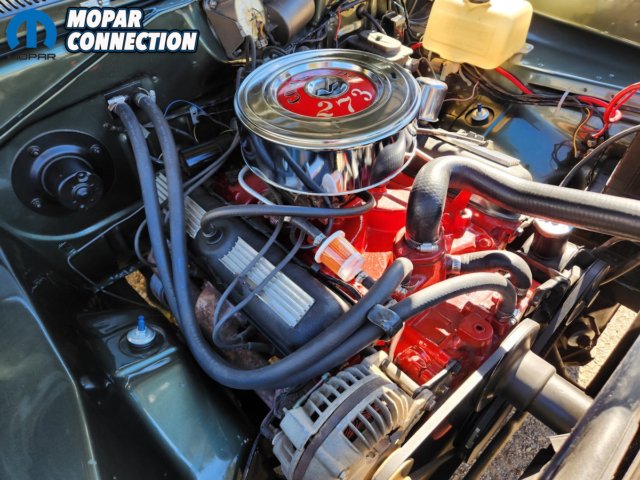
Under the hood, this Dart retains its original 273-cubic-inch V8, crowned by a gleaming chrome air cleaner proudly stamped with its displacement. The engine wears period-correct red paint, with the valve covers detailed to perfection—a testament to careful craftsmanship. Beneath the air cleaner sits a factory 500-cfm Carter carburetor feeding the small-block with precision. Cooling remains true to factory form, with the stock radiator and mechanical fan completing the authentic setup.
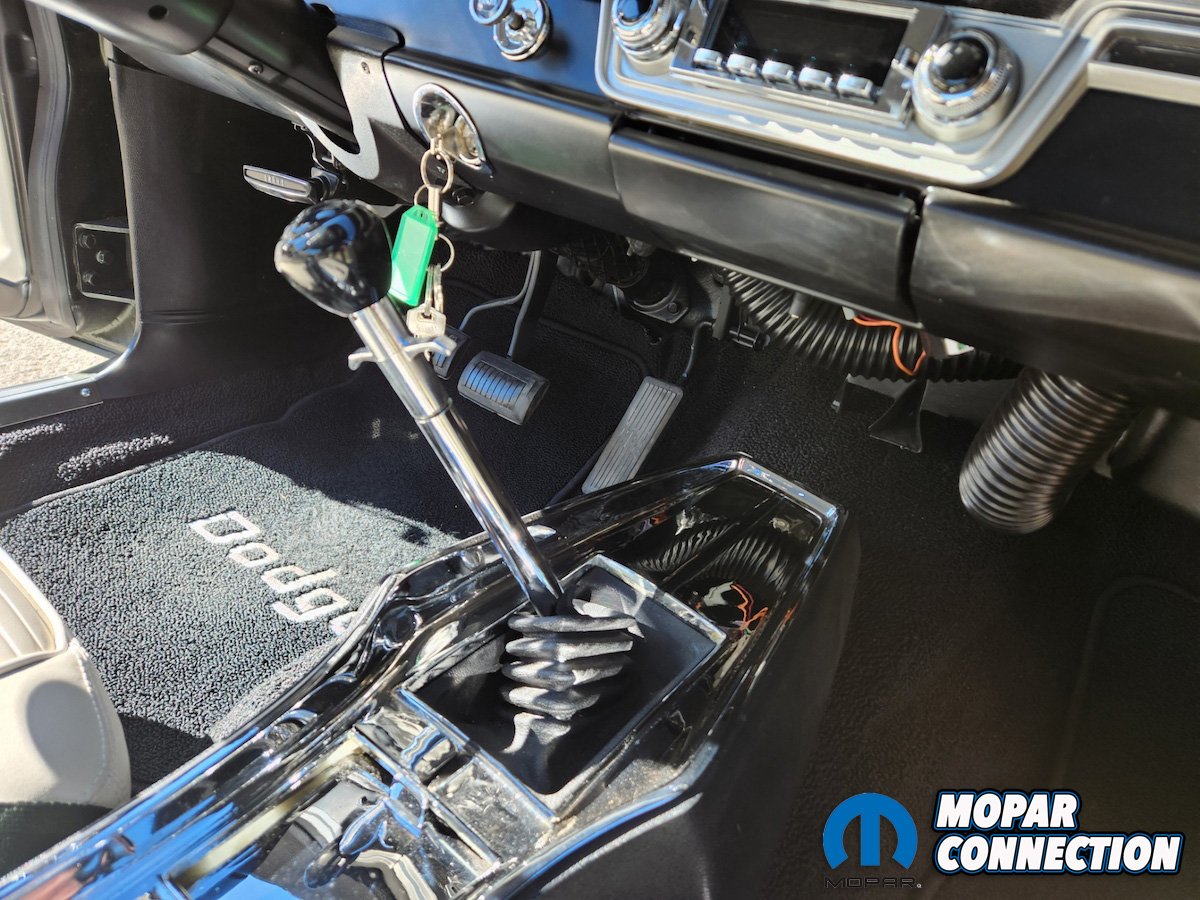
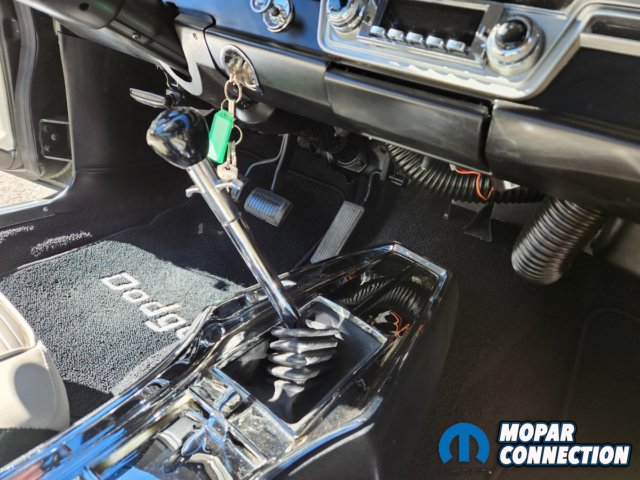
The Dart retains its factory A-833 four-speed manual transmission, delivering crisp, confident shifts that perfectly suit its sporty character. Power flows to a Chrysler 8¾-inch rear axle equipped with a 3.23:1 gear ratio — a well-balanced combination for both lively acceleration and smooth highway cruising.
It rides on Firestone FR70-14 Super Wide Oval Sport tires with classic redlines, mounted on Chrysler Rallye rims that complete its authentic late-’60s muscle car stance. Braking is handled by front discs and rear drums, maintaining the car’s original configuration while providing reliable stopping power.
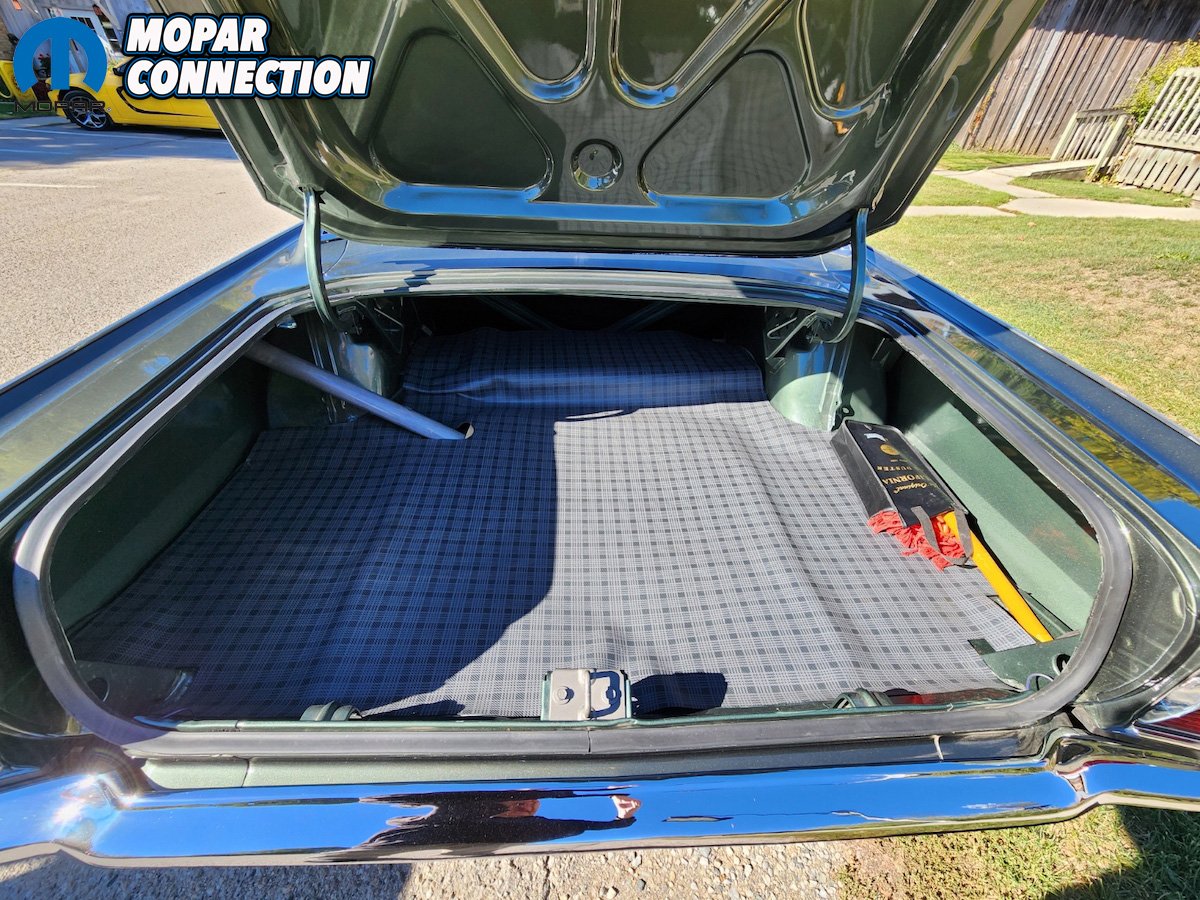
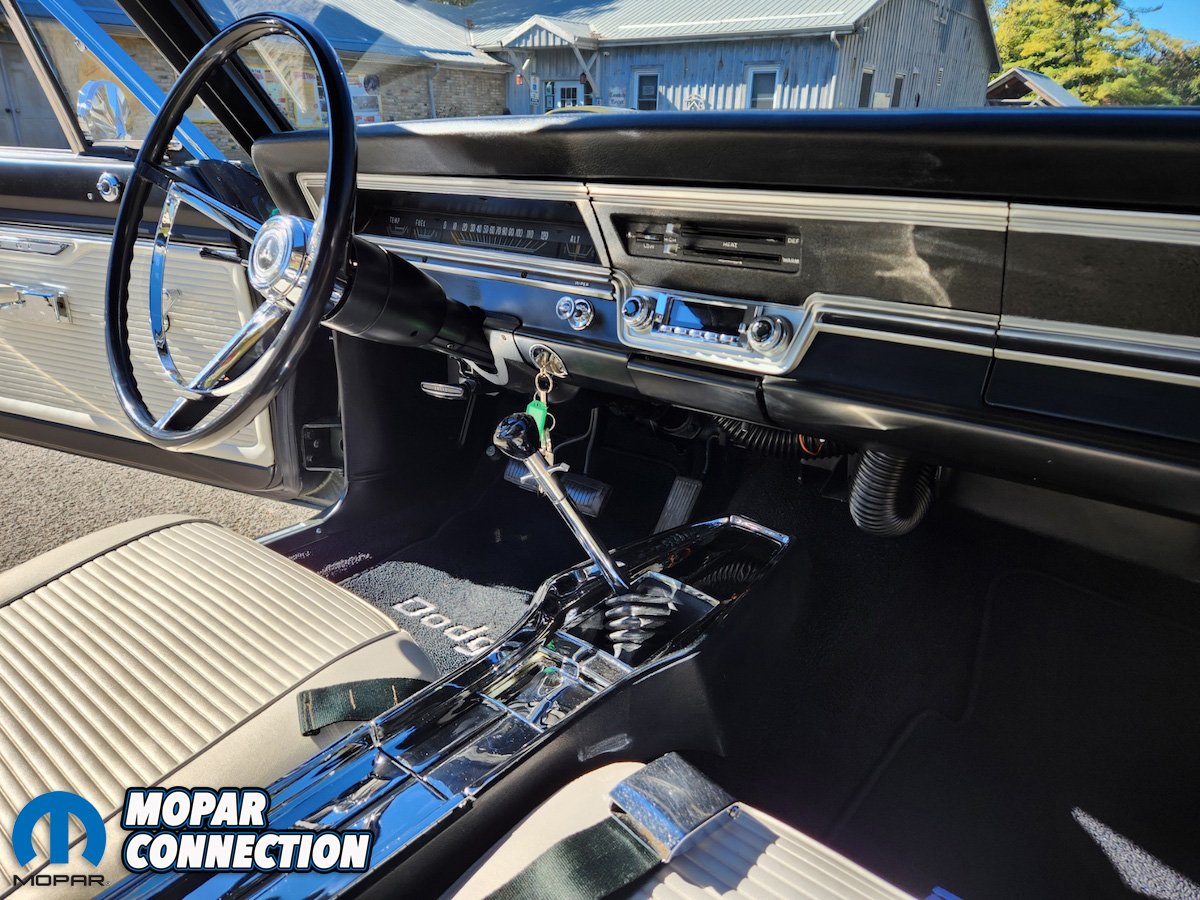
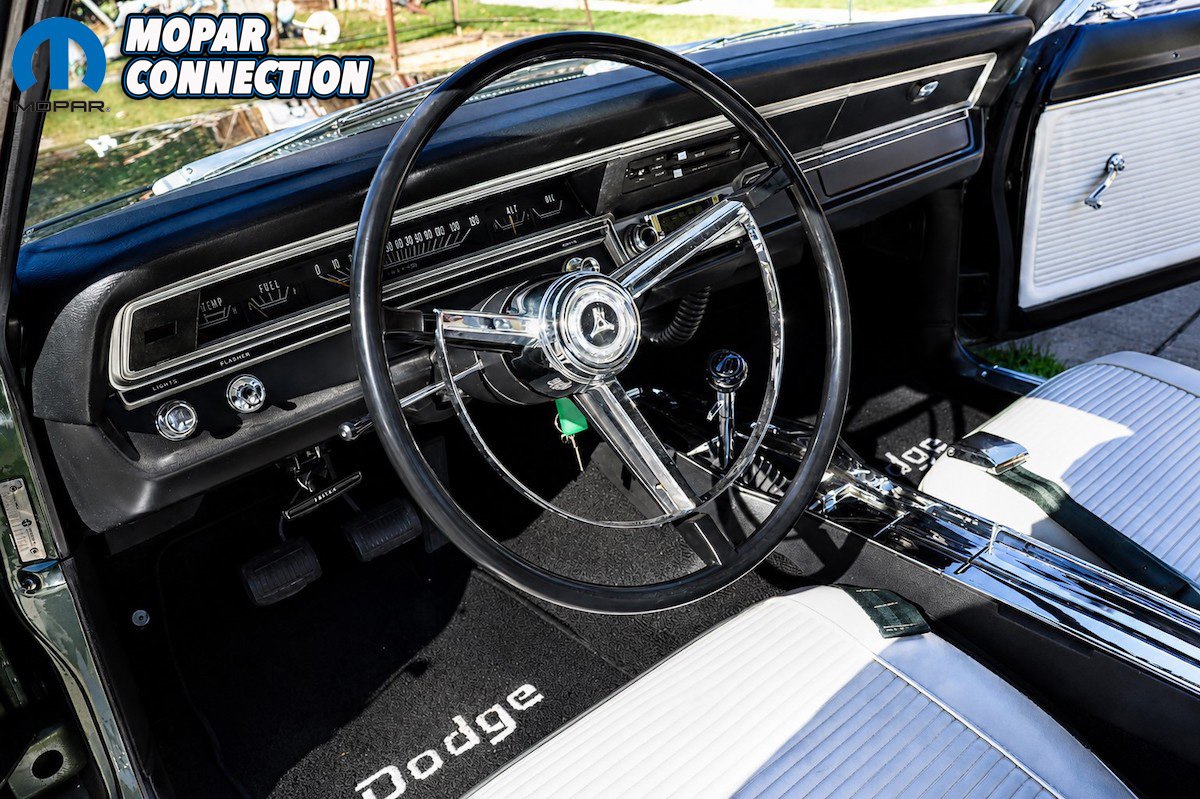
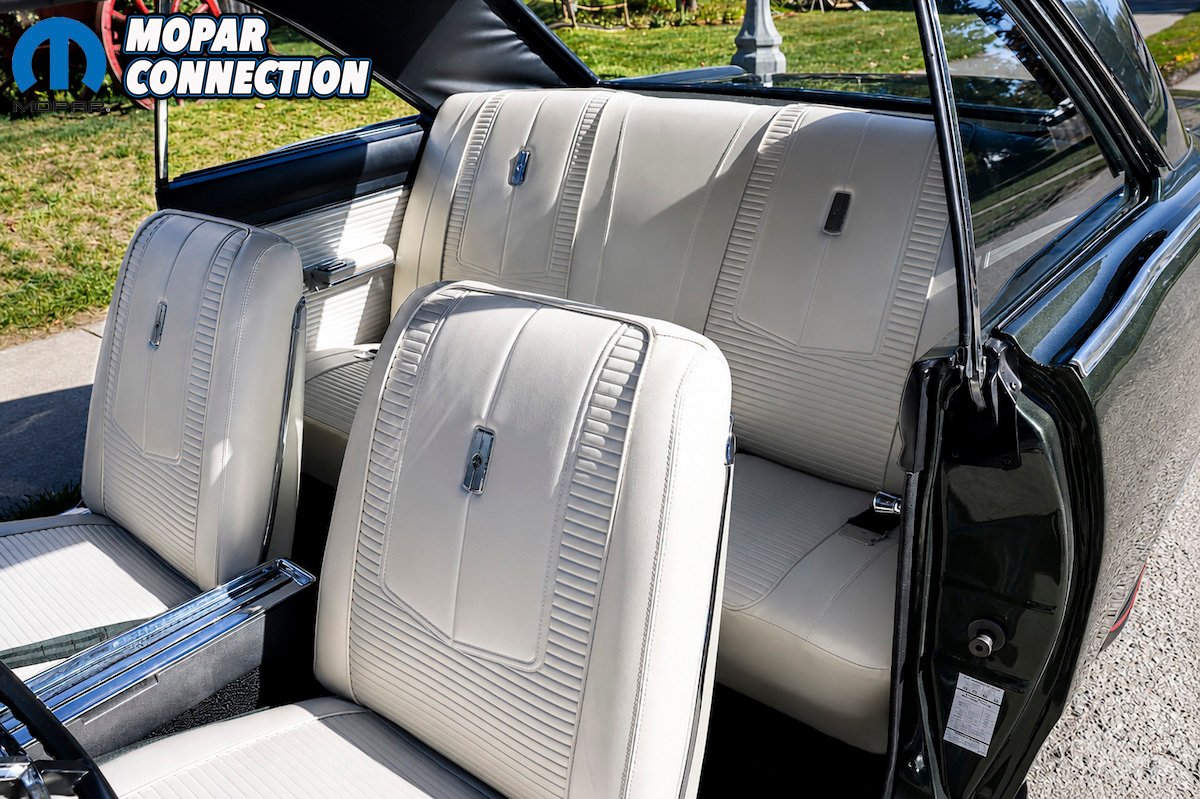
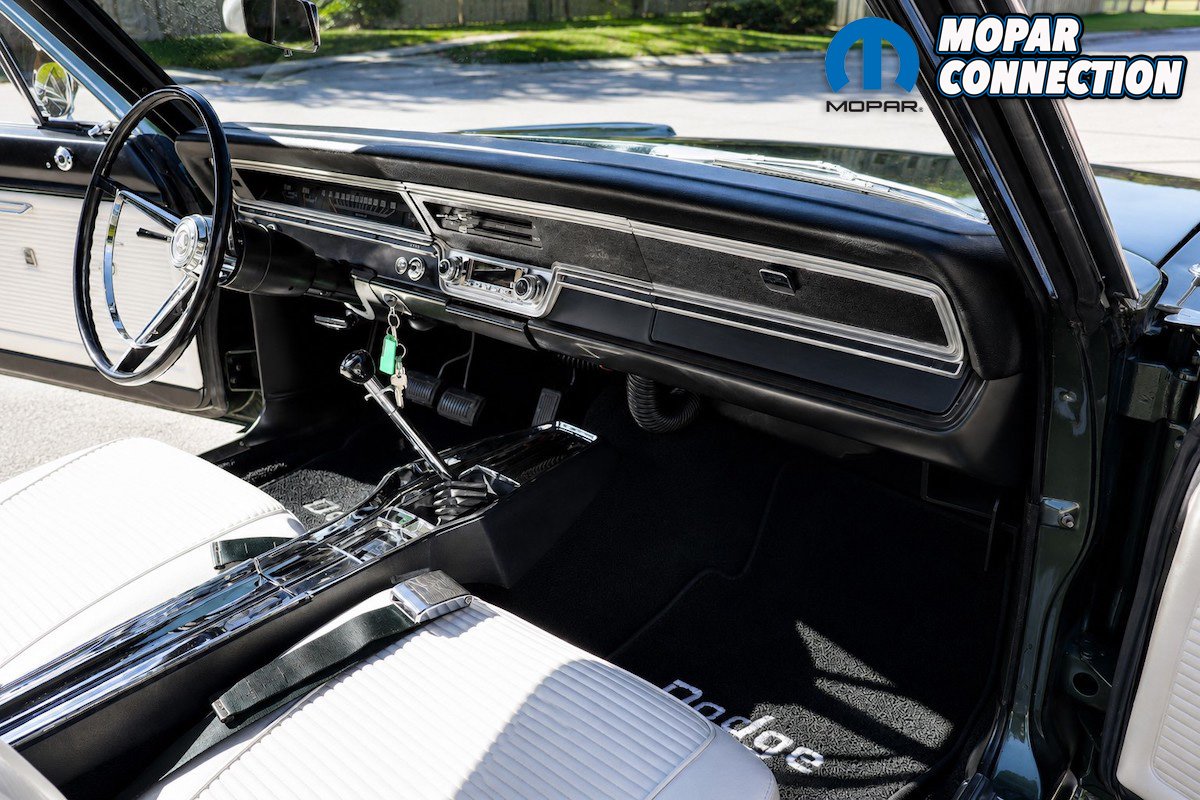
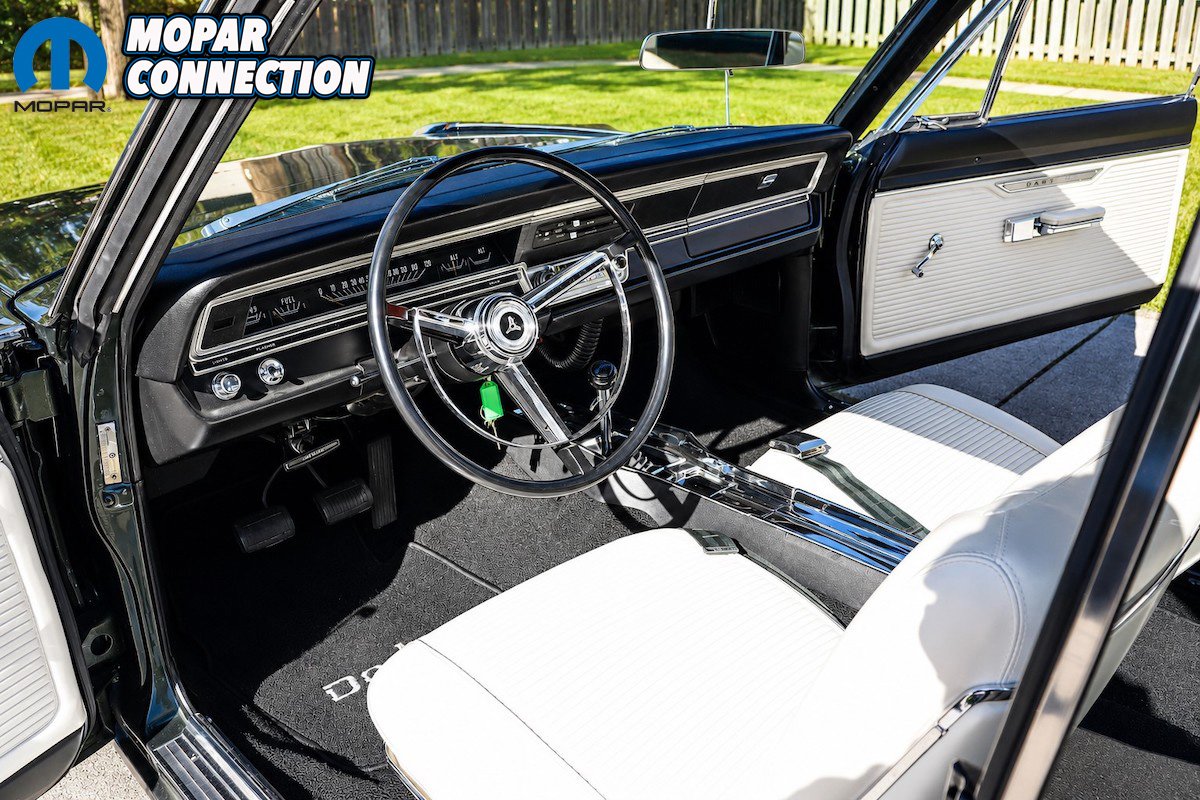
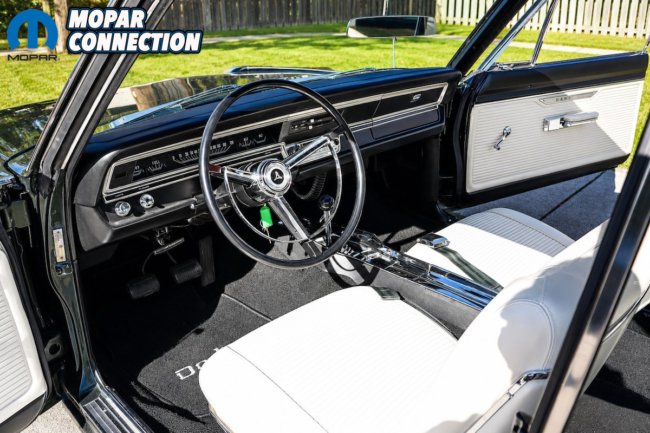
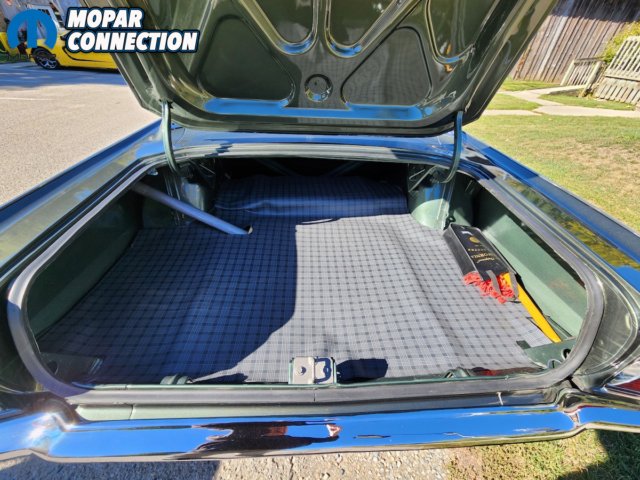
The interior remains true to how the Dart originally rolled off the line, featuring crisp white bucket seats paired with black door trim and a floor console. The seats, sourced from Legendary, elevate the cabin’s premium feel and give it that factory-fresh look. For Carl, slipping behind the wheel must feel like stepping into a brand-new car. The gauges and dashboard have been restored to perfection, complemented by an aftermarket radio for when music is in order. Even the trunk retains its authentic factory liner, completing the car’s meticulous restoration inside and out.
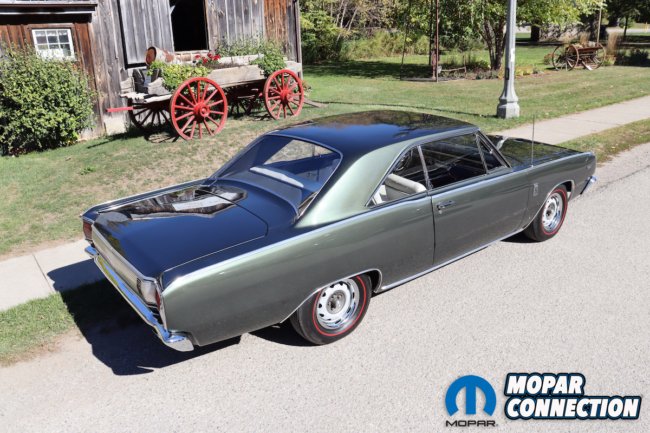
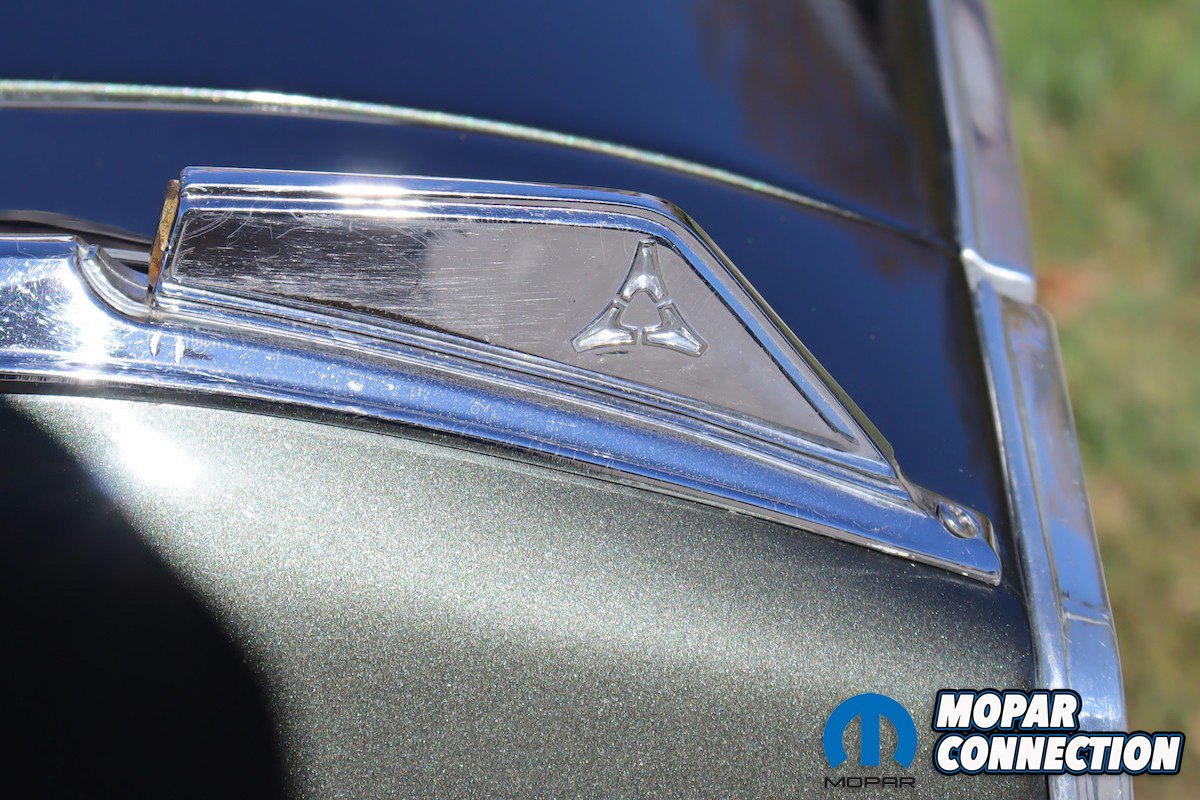
The deep green paint glows under the sun, perfectly accented by the chrome fender-mounted turn signals bearing the Fratzog emblem — the official name for Dodge’s three delta-shaped forms arranged in an equilateral triangle, a design that evokes a sleek, aerospace-inspired theme. The rest of the chrome trim shines just as beautifully, complementing the car’s flawless finish and underscoring its timeless appeal.
This Dart has been faithfully restored to the way it rolled off the assembly line, with no modifications to distract from its originality. It presents beautifully, and Carl and his wife enjoy taking it to car shows where it always draws plenty of attention — thanks in large part to its outstanding condition. Carl notes, “So many people have said it’s a very rare car, and being a manual transmission makes it even rarer.” For him, that four-speed simply makes the Dart more fun to drive.