The Dodge Super Bee debuted in 1968 as Dodge’s entry into the booming market for budget-friendly, high‑performance muscle cars. Built on the rugged B‑body platform that inspired its name, the Super Bee was engineered as a direct challenger to Plymouth’s Road Runner. It was simple, aggressive, and built to dominate the streets. By 1970, the model had taken a noticeable leap forward in both styling and performance, cementing its place among the most memorable machines of the muscle‑car era.
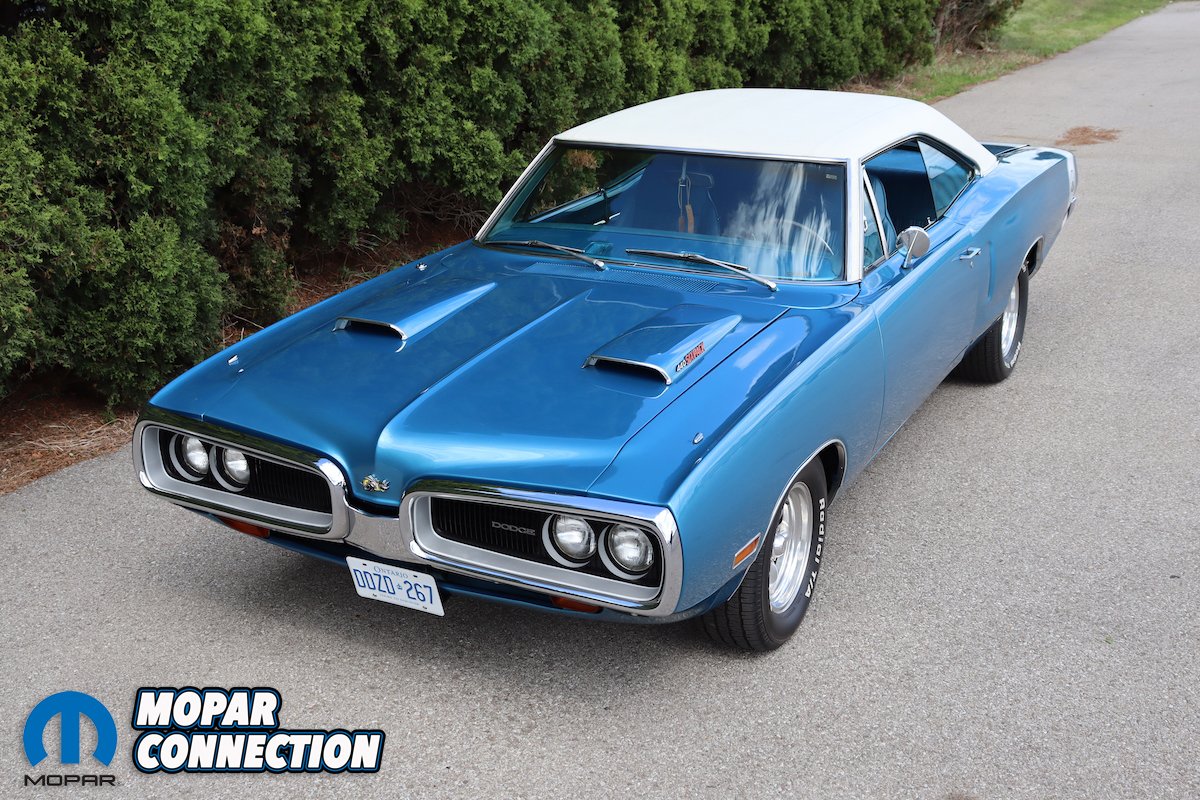
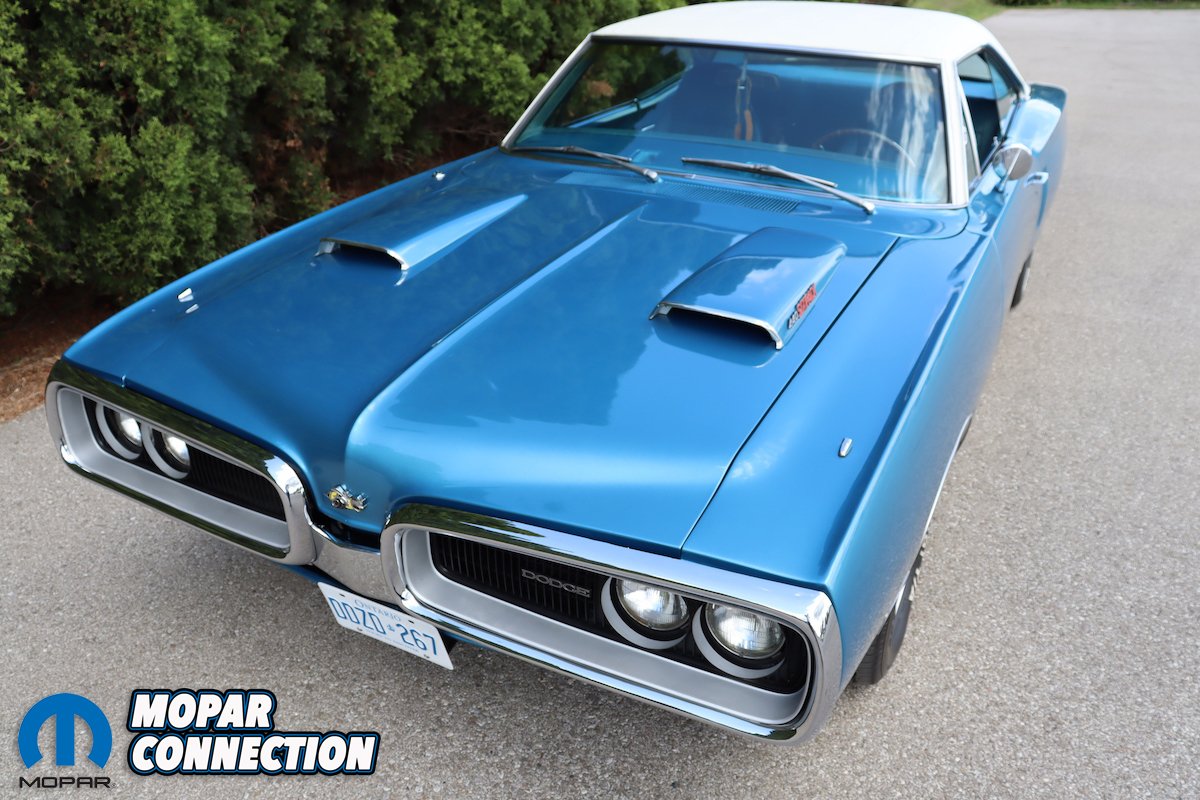
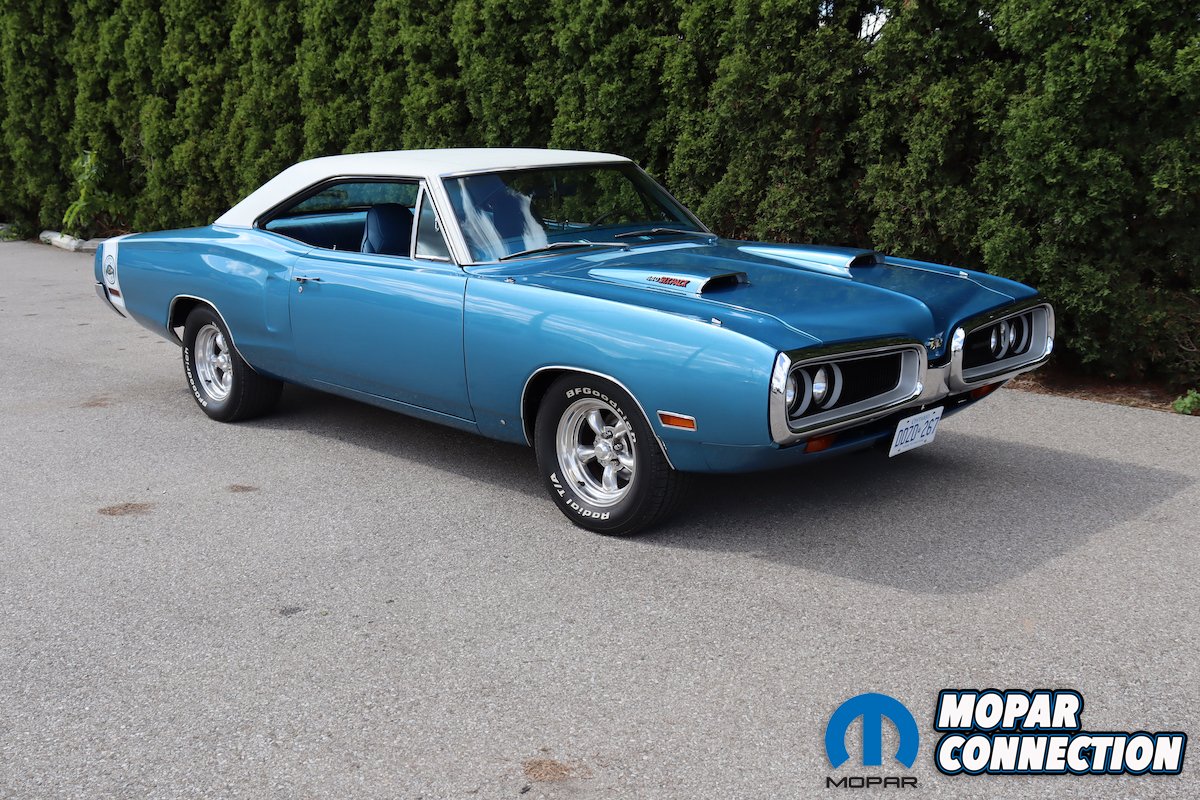
The 1970 Dodge Super Bee arrived with a striking new look that instantly separated it from earlier models. Up front, the car wore its distinctive “bumblebee wings” split grille—better known as the “twin loop.” This controversial design gave the Super Bee one of the most aggressive faces of the era. Bold Super Bee graphics amplified its presence, making sure this machine turned heads whether cruising Main Street or staging at the drag strip.
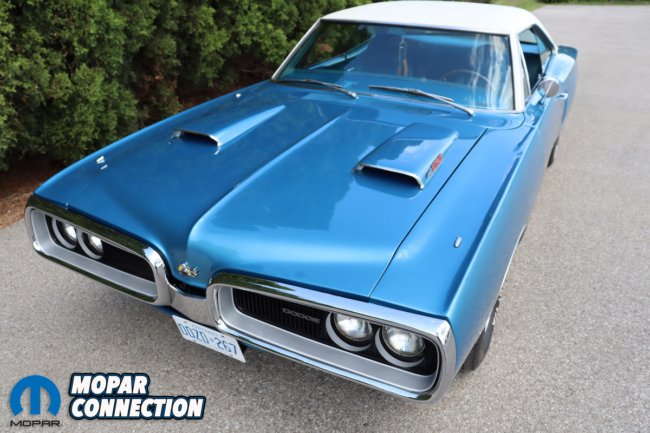
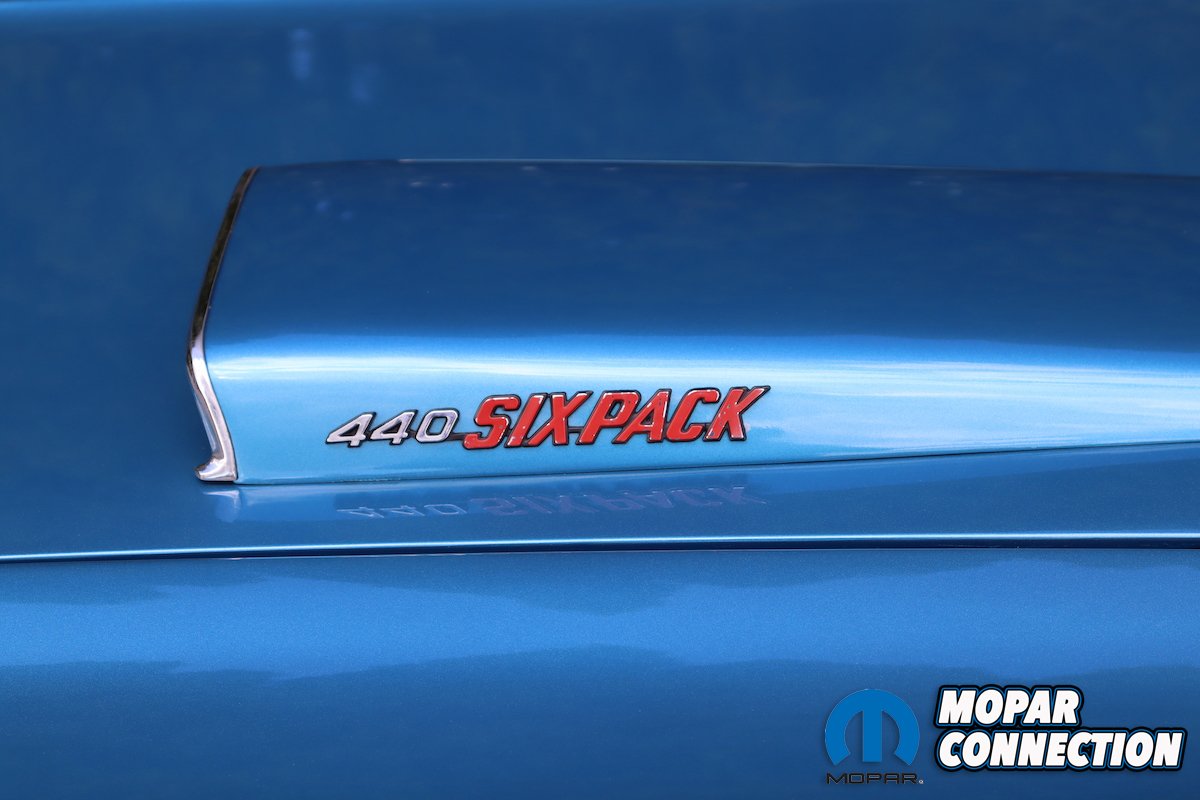
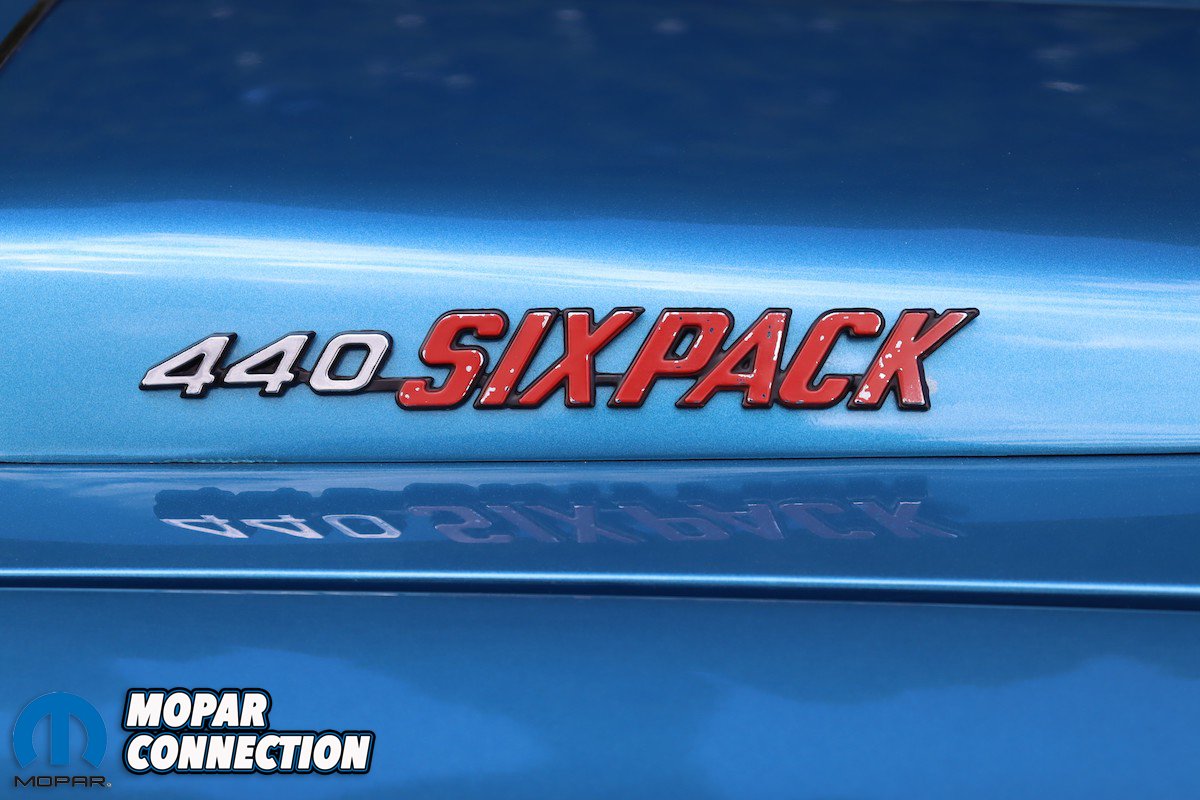
What truly cemented the 1970 Super Bee’s reputation was the hardware lurking under its hood. Buyers could choose from a lineup of serious powerplants, starting with the stout 383 V8 (335 hp) and climbing to the ferocious 440 Six-Pack (390 hp) or the legendary 426 Hemi (425 hp). With performance figures capable of launching the car from 0–60 in just a few heartbeats, the Super Bee delivered raw, exhilarating speed at a price far lower than many of its high‑end muscle‑car rivals.
Owners of the 1970 Super Bee enjoyed a machine equally at home cruising Main Street as it was devouring the quarter mile. Its sturdy chassis, heavy-duty suspension, and wild high-impact paint colors such as “Plum Crazy” and “Go Mango” made it a magnet for young drivers and weekend racers alike. At local drag strips, the Super Bee quickly became a familiar sight, its throaty exhaust note and bold stripes leaving a lasting impression long after it thundered past.
Dodge built 15,506 Super Bees for 1970, with 10,507 of those being the WM23 Hardtop. Of the hardtops, 5,737 were equipped with the 383 and 3‑speed automatic, while 3,383 carried the 383 with a 4‑speed, and just 284 left the factory with the 383 and 3‑speed manual. For buyers who stepped up to the 440 Six-Pack, 473 chose the automatic and 599 opted for the 4‑speed. The Hemi Hardtops were extremely scarce—11 automatics and 21 4-speeds.
The WM21 coupe accounted for 3,630 units. Among these, 1,710 were built with the 383 automatics, 1,336 with the 383 4‑speed, and 385 with the 383 3‑speed manual. Six-Pack coupes totaled 87 automatics and 109 4‑speeds, while the rarest of the rare—Hemi coupes—saw just four produced, all with 4‑speed manuals.
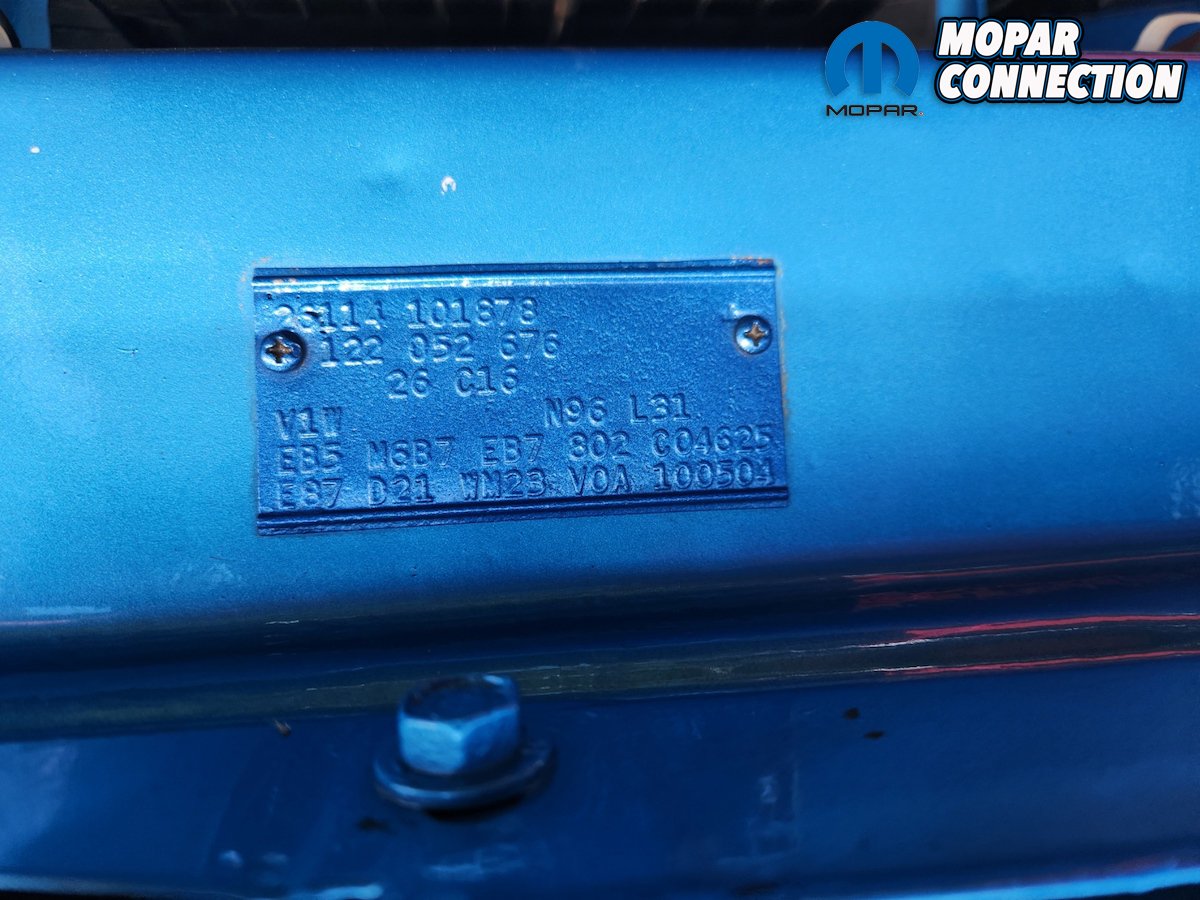
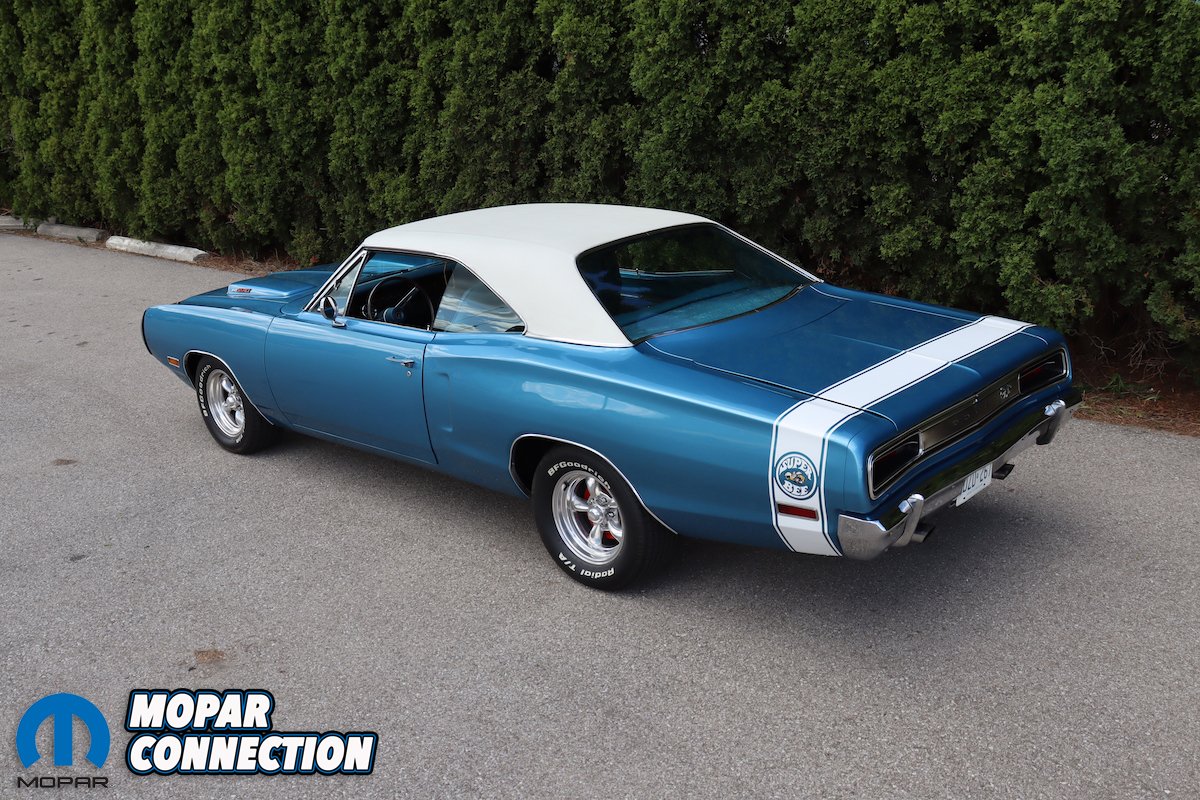
This 1970 Dodge Super Bee belongs to Jay and Deborah Moffatt, and it’s a standout example of the hardtop model equipped with the legendary 440 Six-Pack and the A833 four‑speed transmission. Power is sent through a Dana 60 rear axle fitted with a 3.55 Sure-Grip positraction differential.
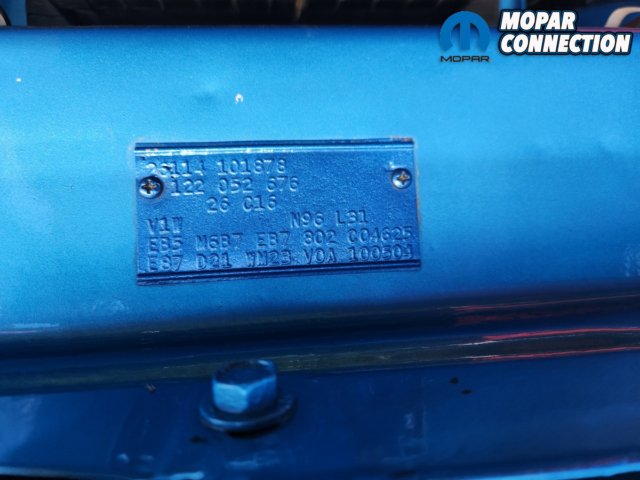
Built at the Lynch Road assembly plant in Detroit, this car rolled off the line on August 2, 1969. It’s also exceptionally rare on Canadian soil. Only a very small number of 1970 Super Bees were imported into Canada, likely fewer than a dozen, and this car is one of them. Over the years, it has even been rumored to have served as a Dodge showcase vehicle on the new-model circuit, adding another layer of intrigue to its history. More than once people have recognized this car as a show car.
Jay moved to Southern Ontario after his battle with cancer, and like many lifelong car guys, he carried a quiet dream of owning a true Mopar muscle car. It may have taken him 66 years to finally get there, but the timing only made the moment sweeter. A devoted Richard Petty fan, Jay grew up captivated by NASCAR and the sight of those wild Mopars thundering around the oval. To him, a Super Bee wasn’t just a classic; it was the closest thing you could drive to a street‑legal stock car, a piece of that racing heritage brought to life on everyday roads.
This car came from a dealer in Winnipeg, Manitoba, and was sold to Jay. We do not have any background information other than that it is a Canadian car. We are positive that the car has had a protected life as to the condition of the car itself. At one point it was repainted with the original color of B5 blue with reproduction decals.
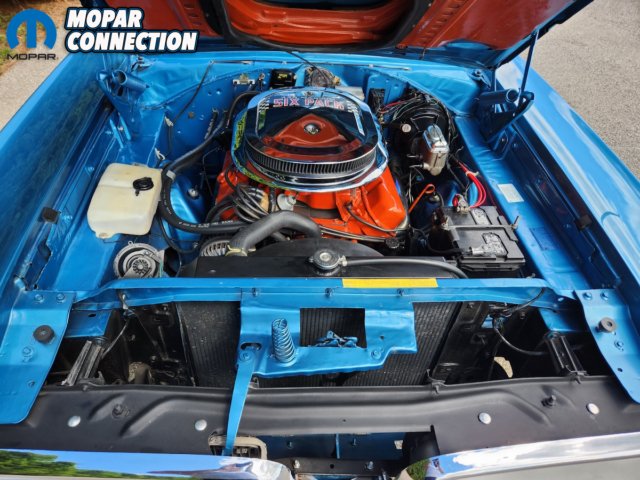
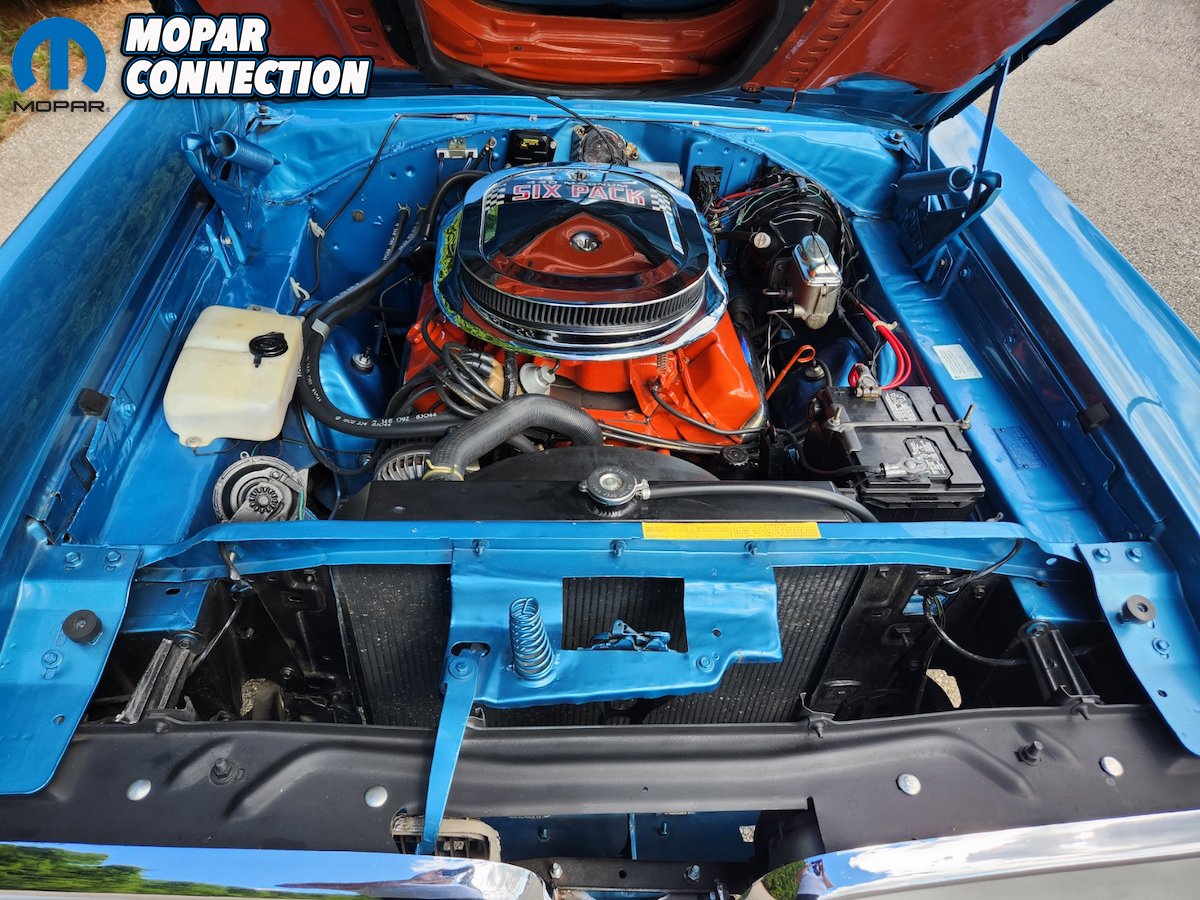
This car has a Six-Pack carburetor setup using a trio of Holley 2300-series carburetors delivering a combined 1,350 cfm of airflow. The setup consisted of a 350 cfm center carburetor responsible for normal driving, flanked by two 500 cfm vacuum-operated outboard carbs that opened under heavy throttle. All three were mounted on an aluminum Edelbrock intake, and original list‑number Holley units are highly sought after today due to their model‑specific calibration and rarity. This triple‑carb arrangement gave the Six-Pack its explosive mid‑range punch and remains one of the most iconic induction systems of the muscle‑car era.

The Six-Pack package brought far more to the table than just extra carburation. The big 440 was supported by heavy‑duty cooling components engineered to keep temperatures stable during hard, repeated runs. Dodge matched that power with upgraded brakes to rein in the added speed and backed the whole setup with the bulletproof Dana 60 rear axle—an unmistakable signal that this machine was built for serious performance. This particular car also carried the rugged 18‑spline driveshaft, 10‑inch rear drum brakes, and front disc brakes, rounding out a drivetrain designed to take real punishment.
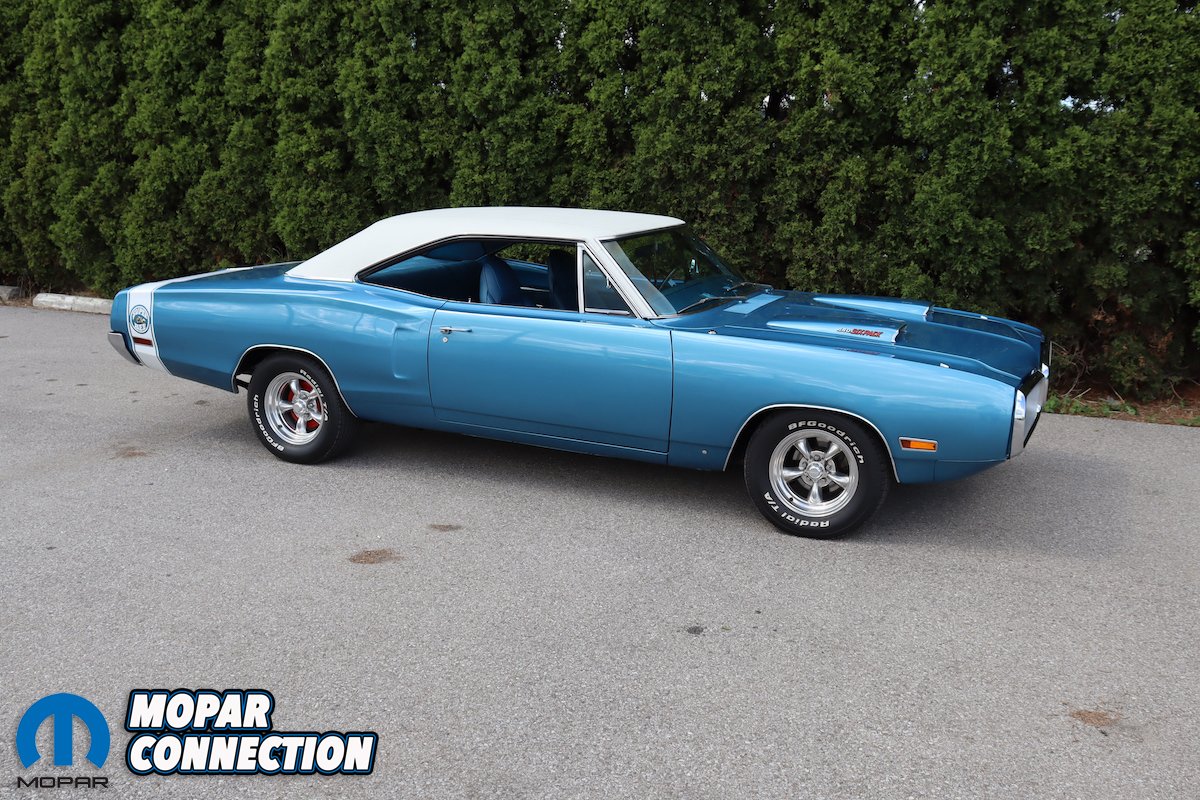
The Super Bee sports a classic chrome air cleaner, preserving that unmistakable factory‑fresh look under the hood. The only real departure from stock is a set of Hedman headers, added simply to help the big block breathe a little easier. The engine itself is a non‑matching‑numbers block, swapped earlier in the car’s life but chosen carefully to maintain the car’s authenticity and stay as true as possible to its original configuration.
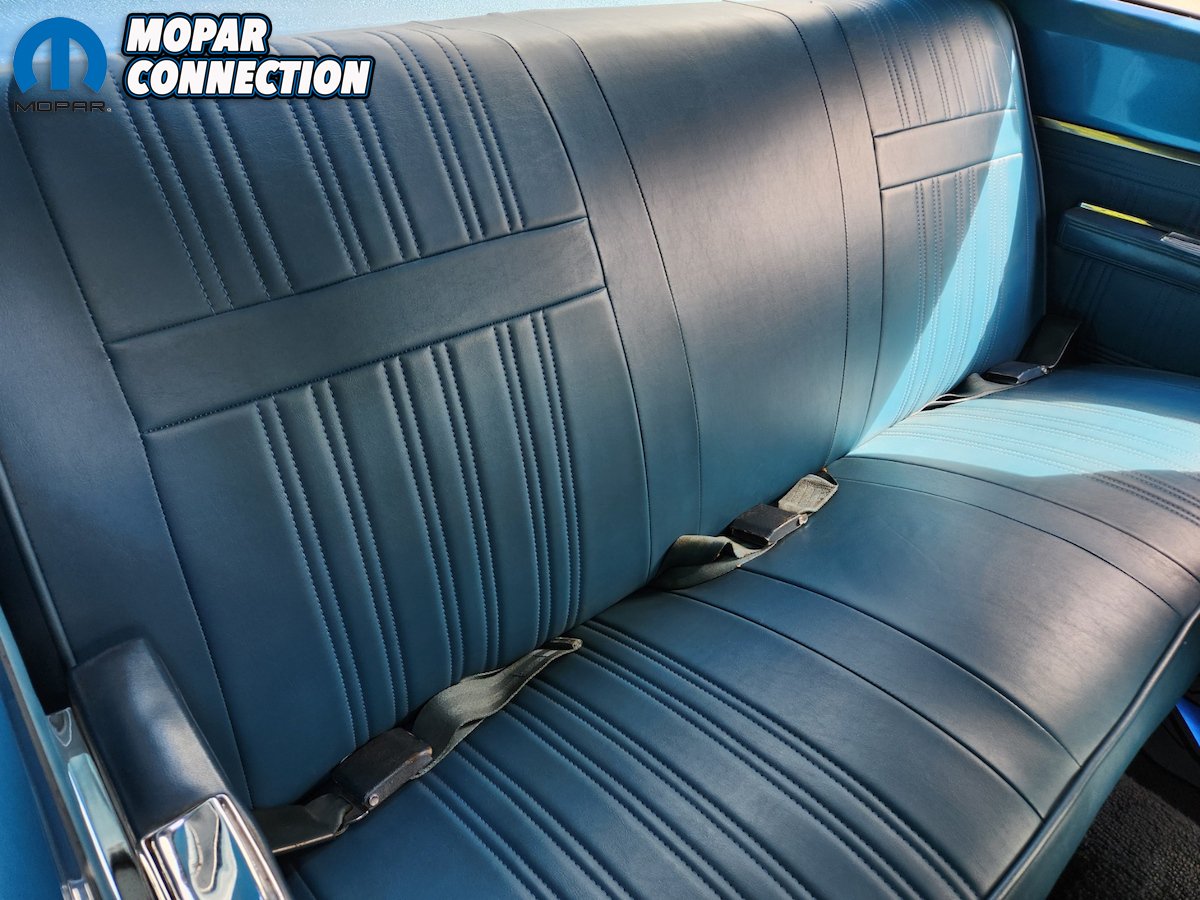
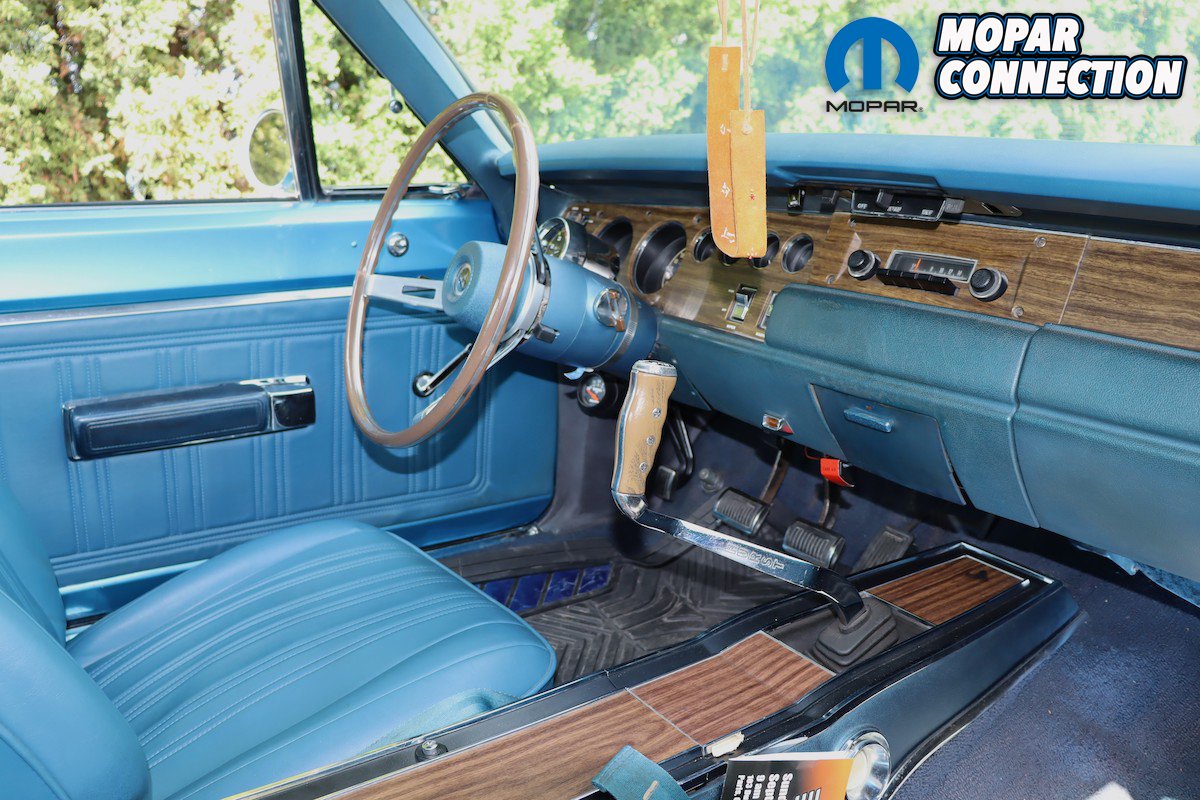
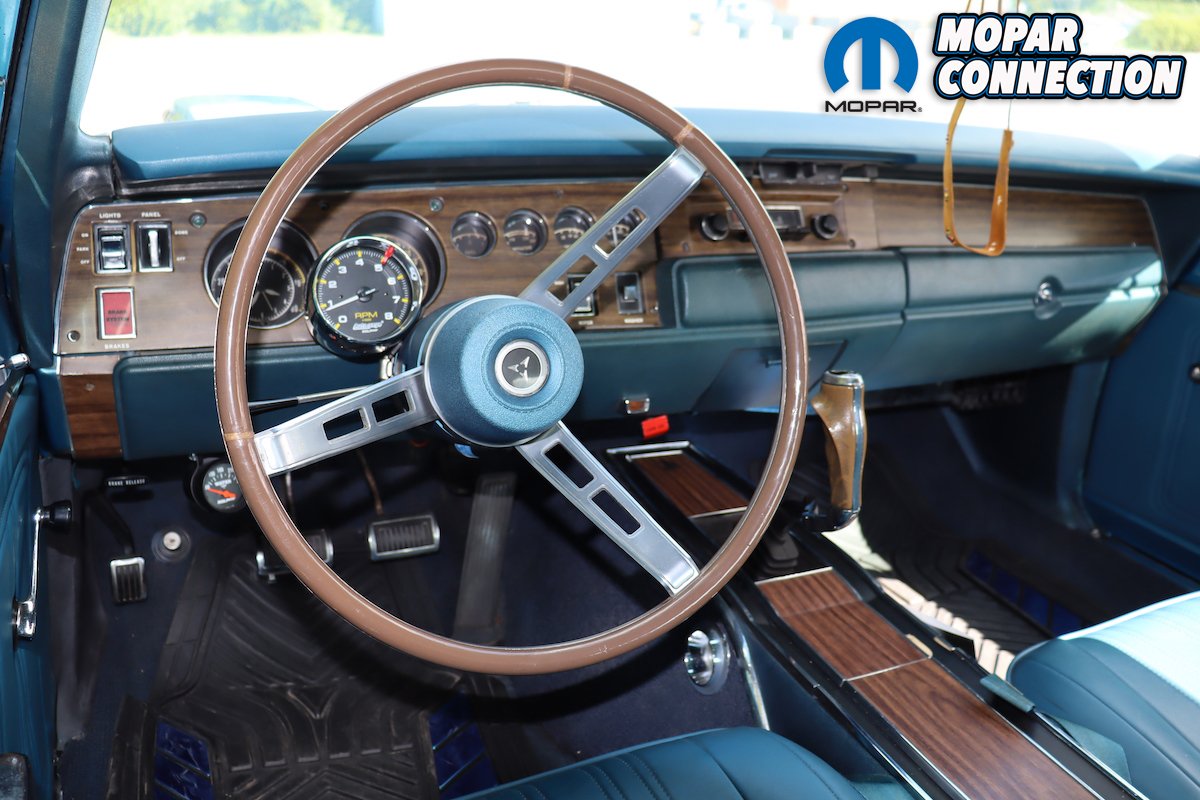
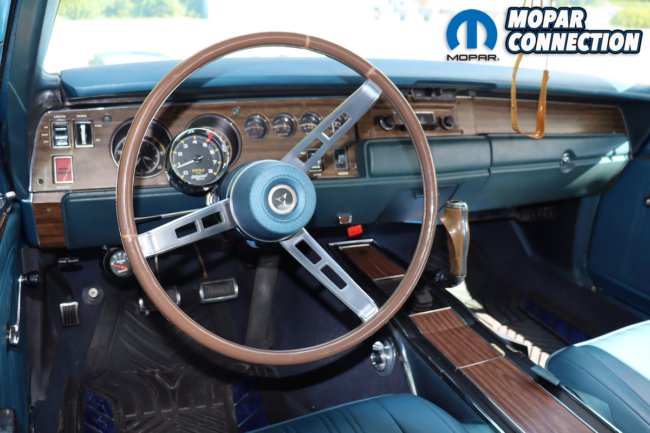
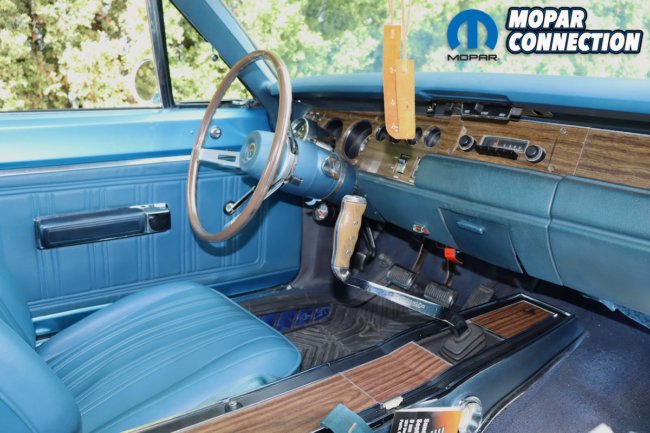
Inside, the car is equipped with the factory‑installed Hurst Performance pistol‑grip shifter, one of the most iconic pieces of hardware ever fitted to a Mopar and a perfect match for the car’s no‑nonsense attitude. Believe it or not, the interior of this car is all original, with even the factory label on the seatbelts. There is an aftermarket water temperature gauge under the dash that is more accurate.
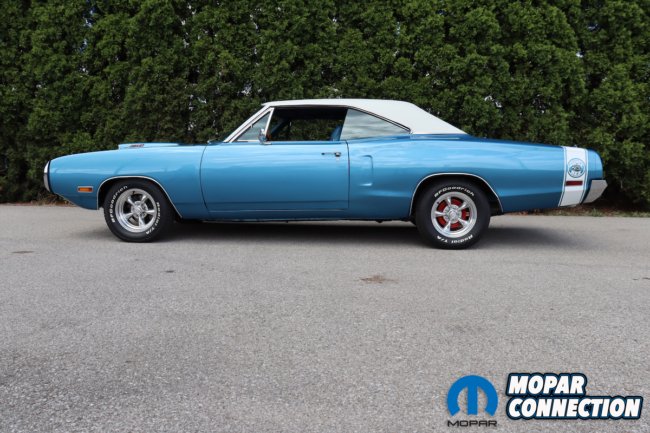
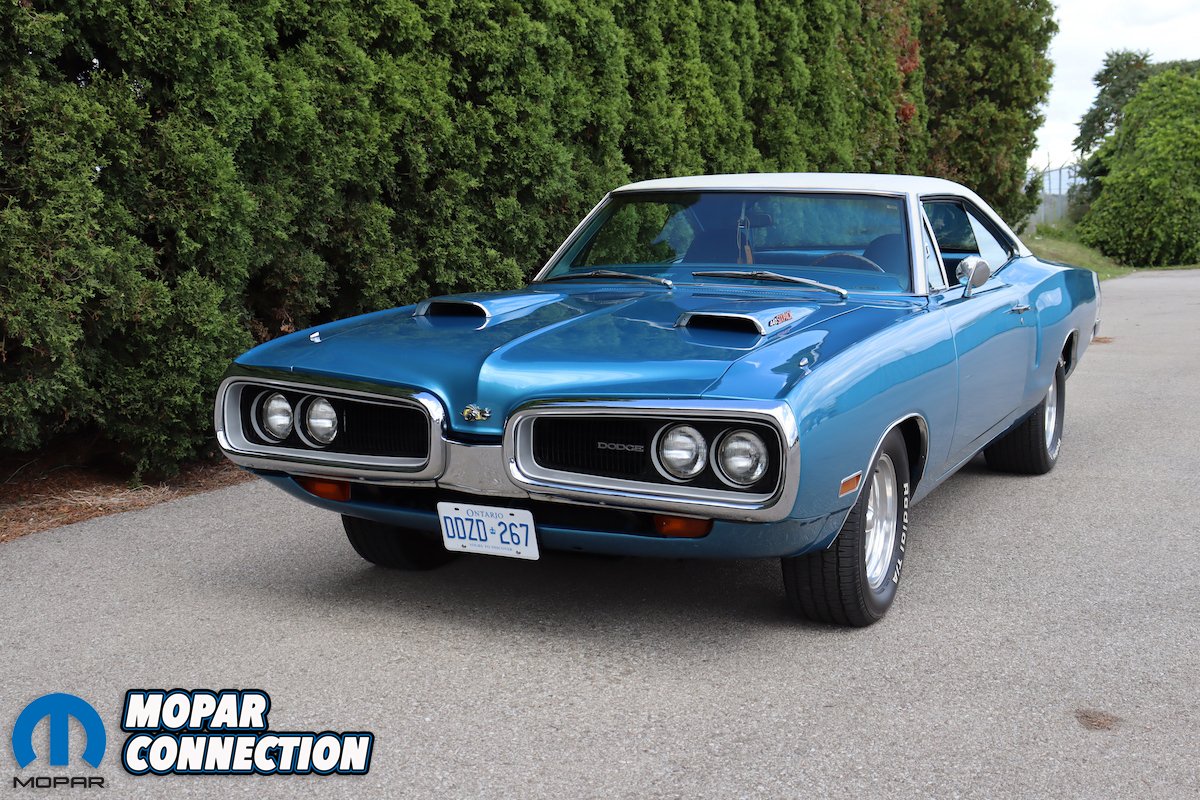
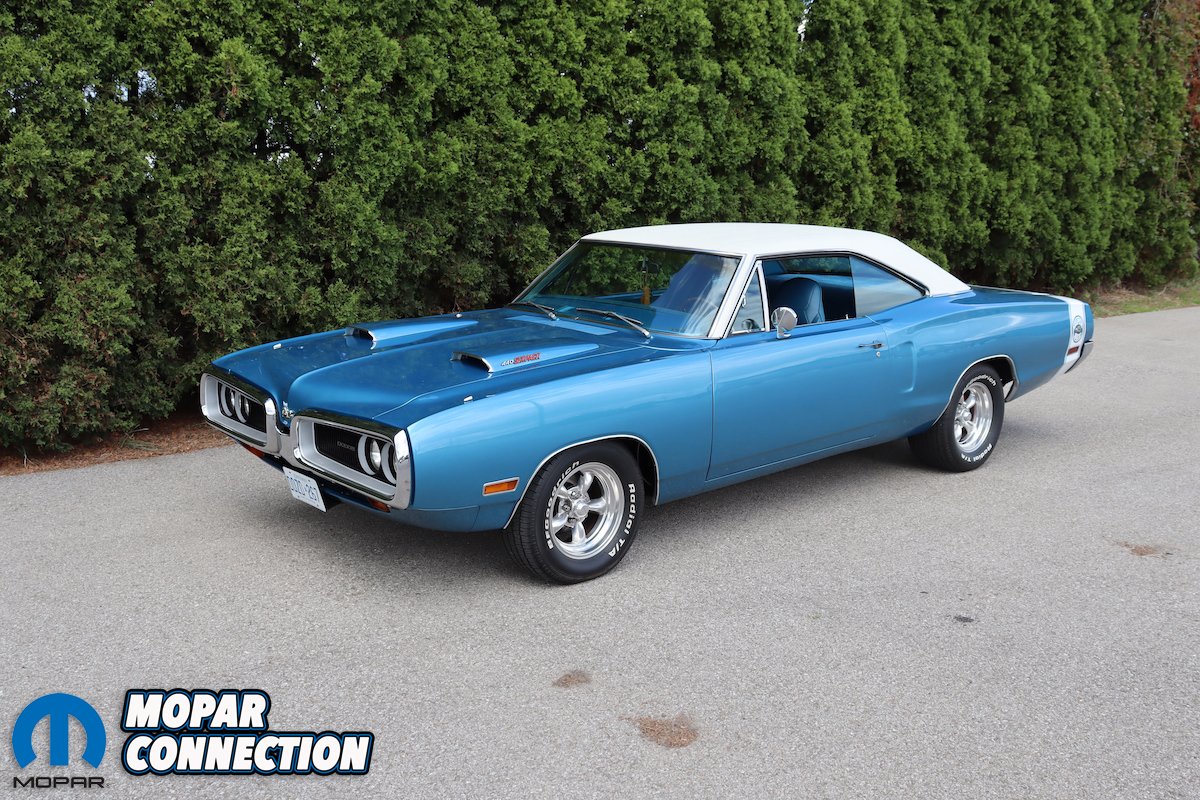
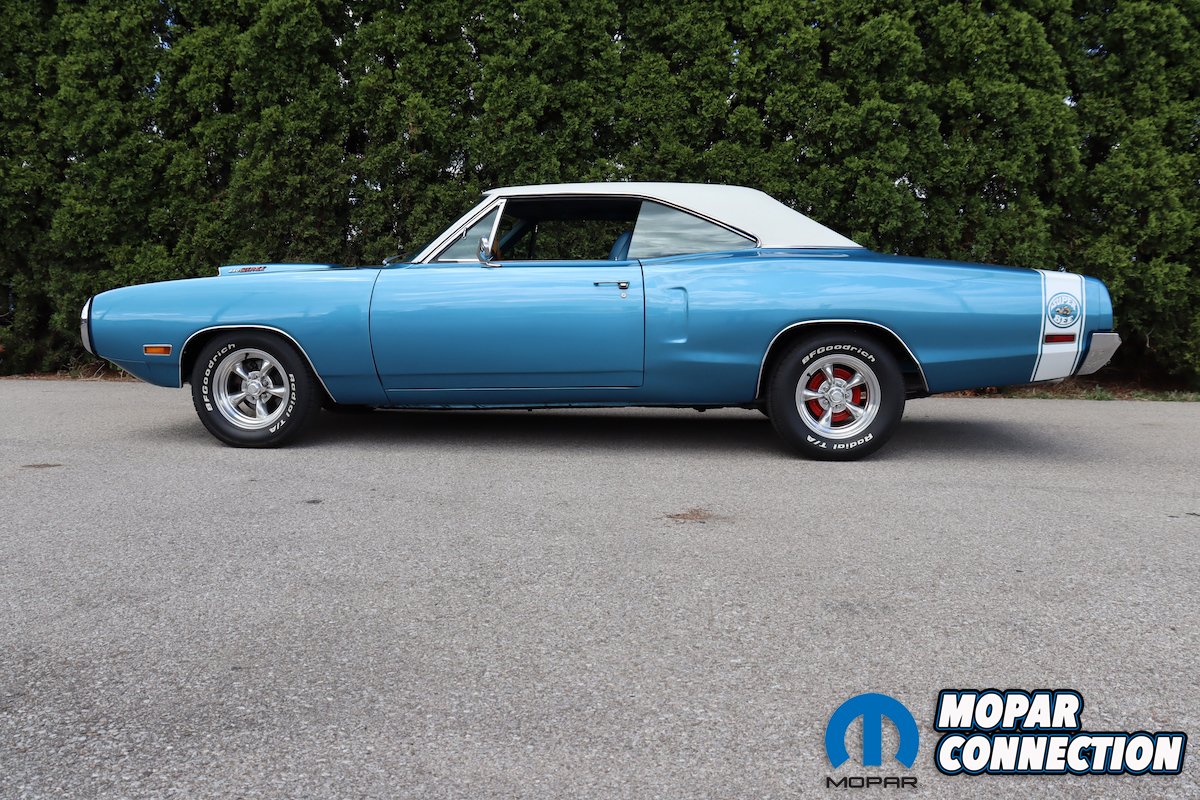
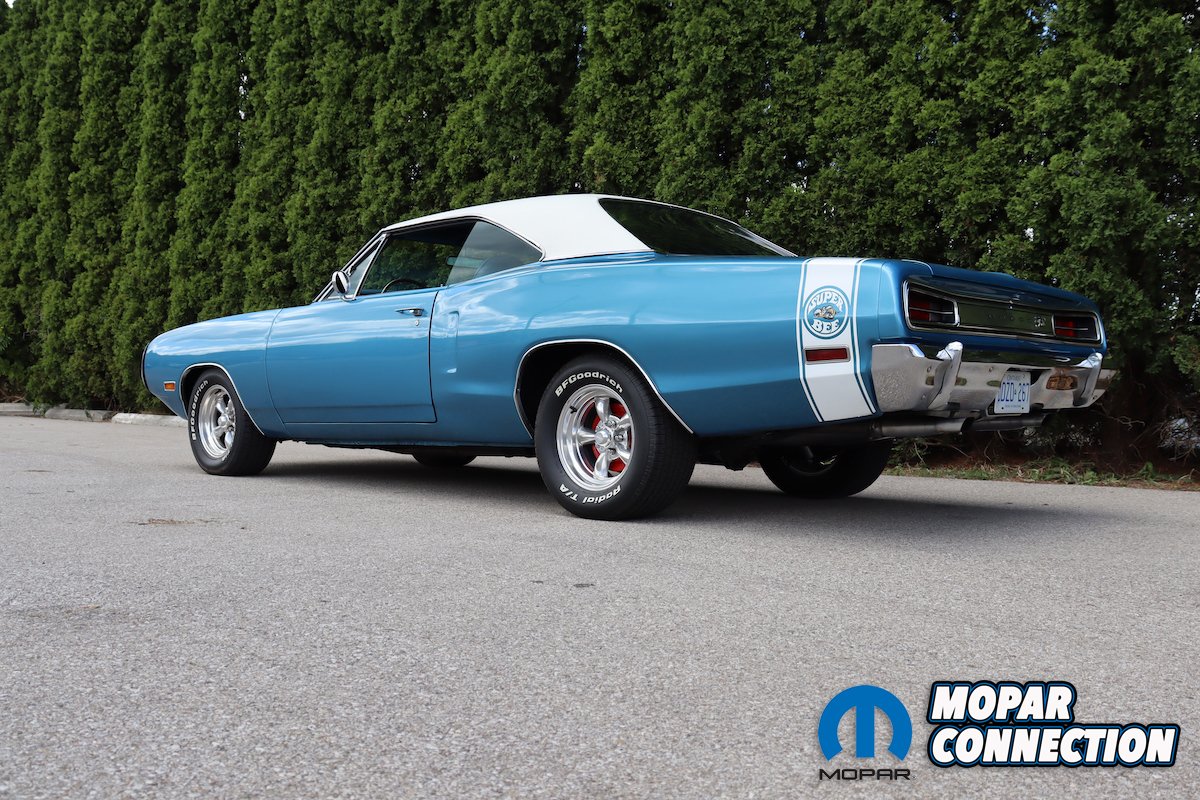
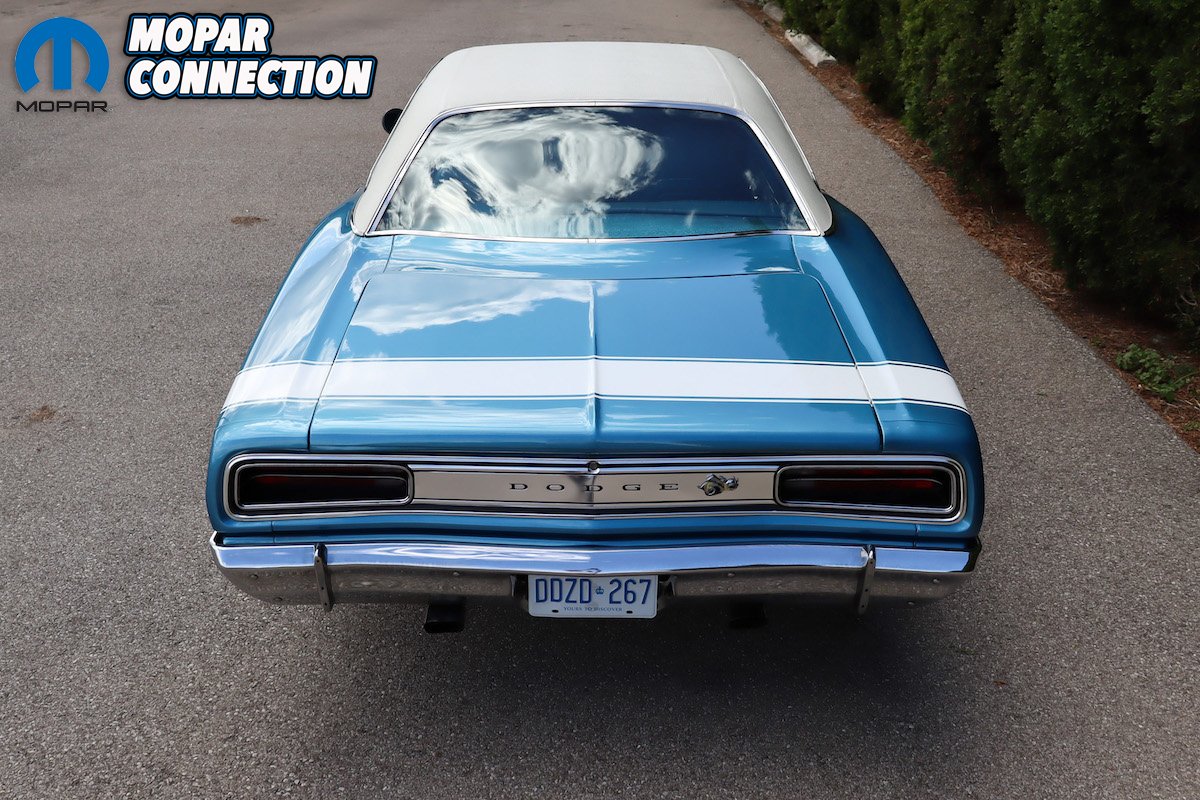
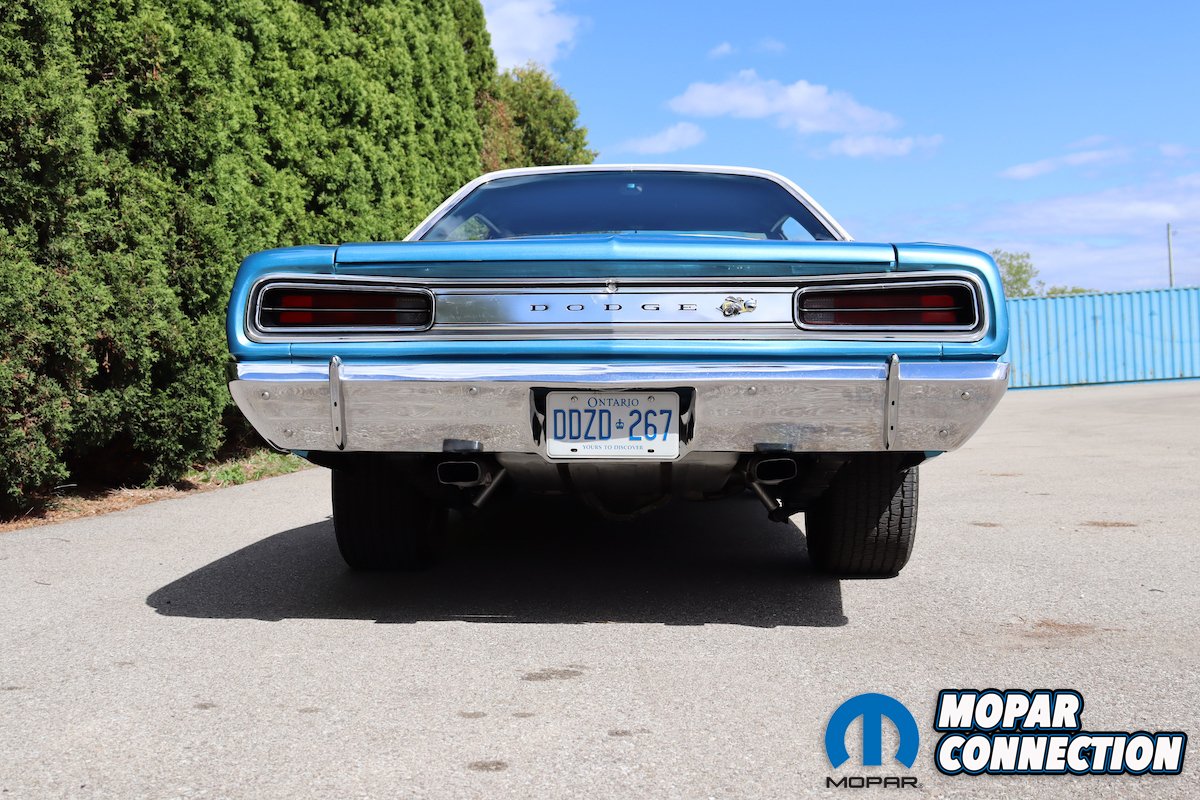
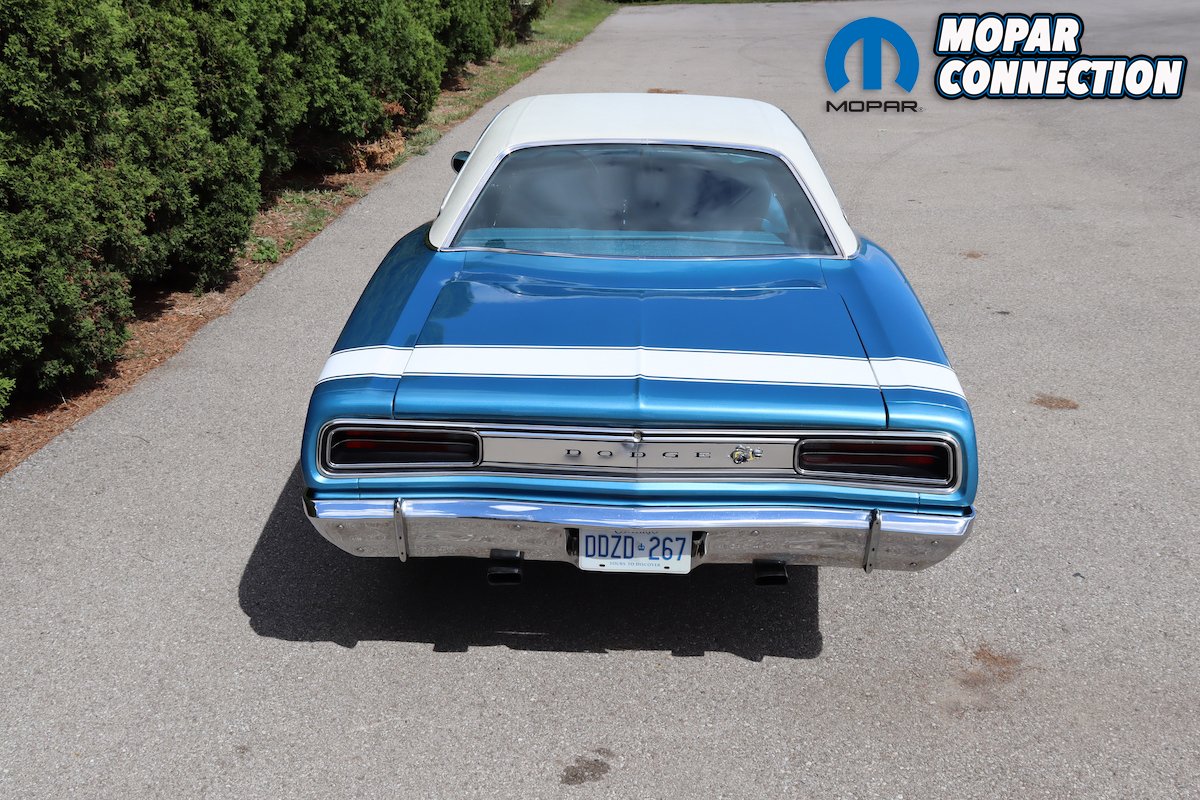
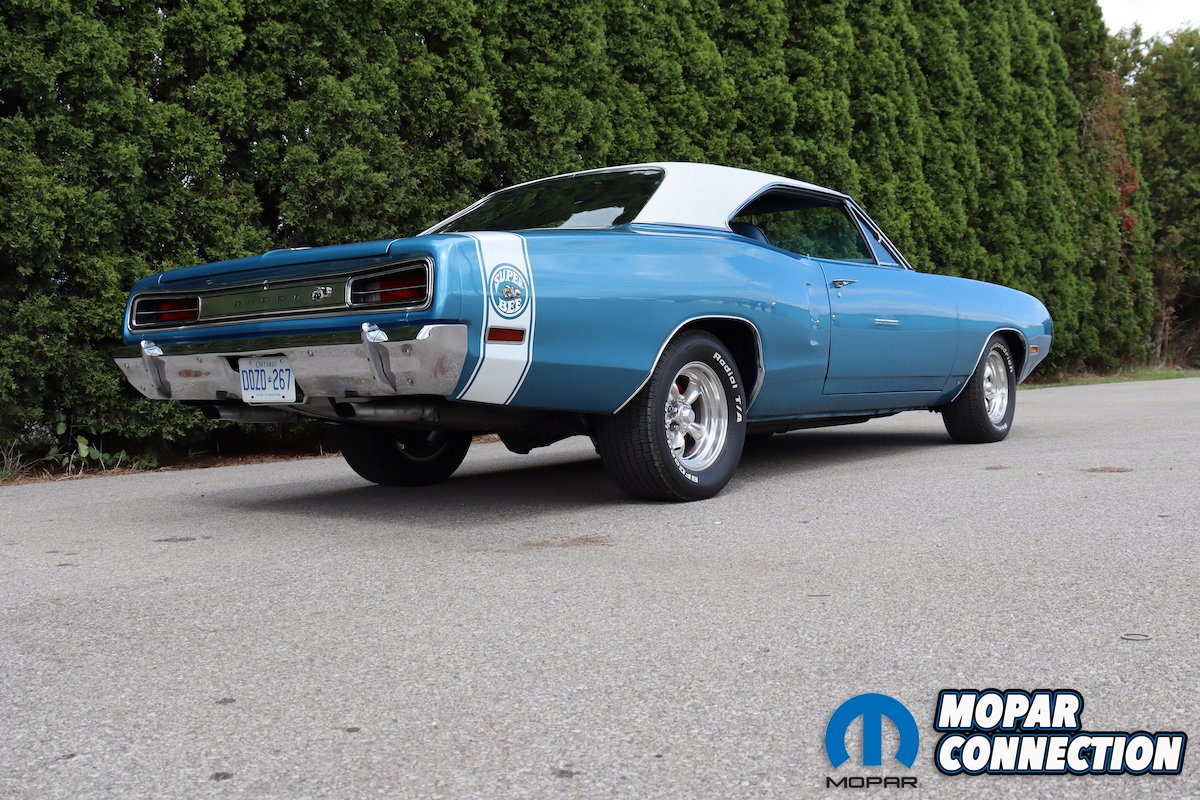
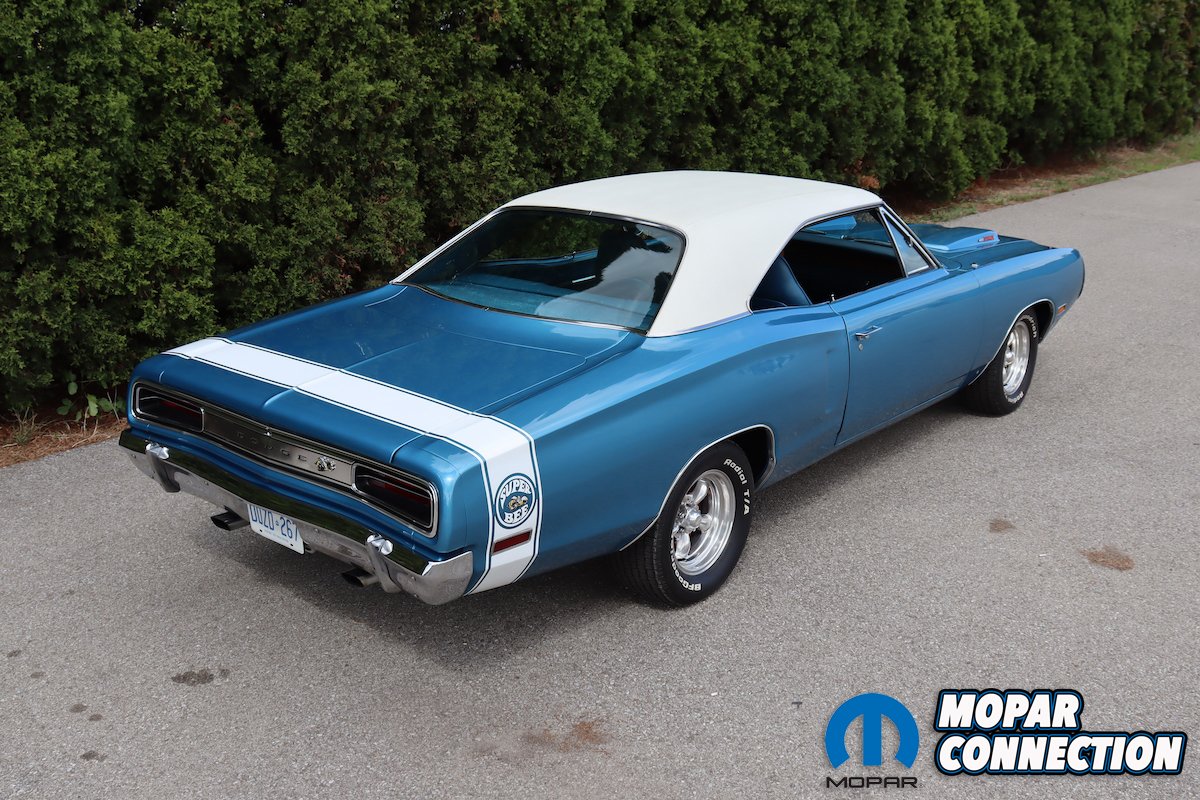
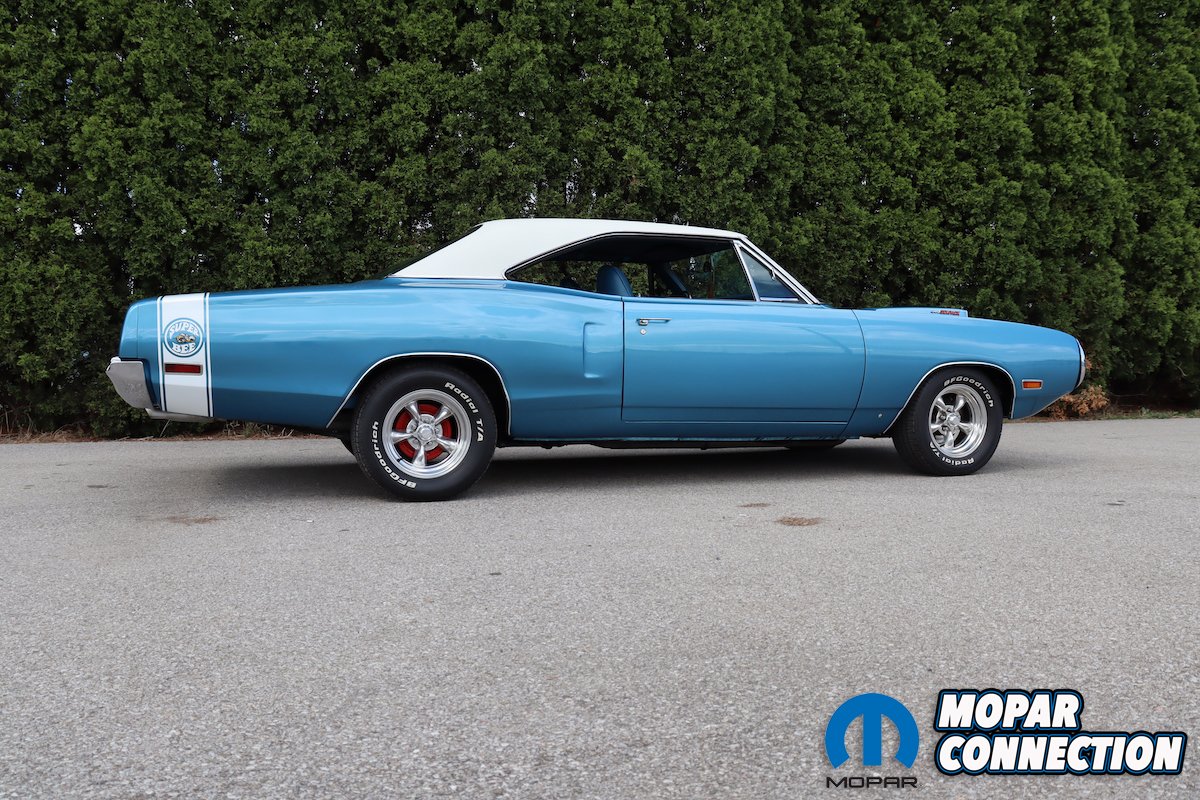
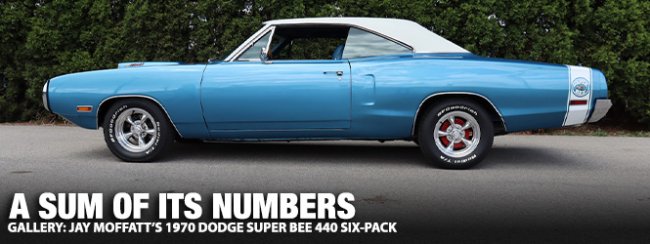
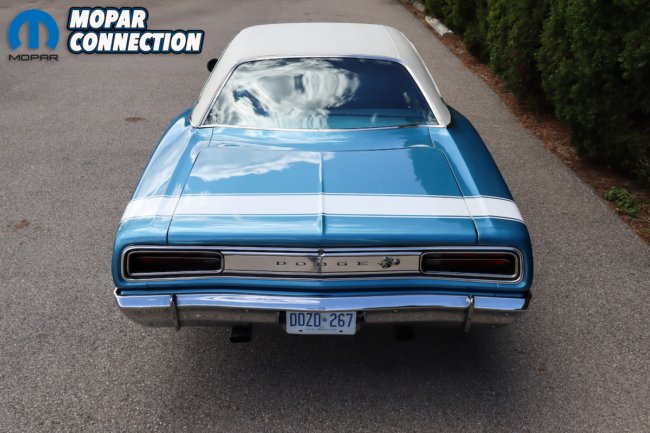
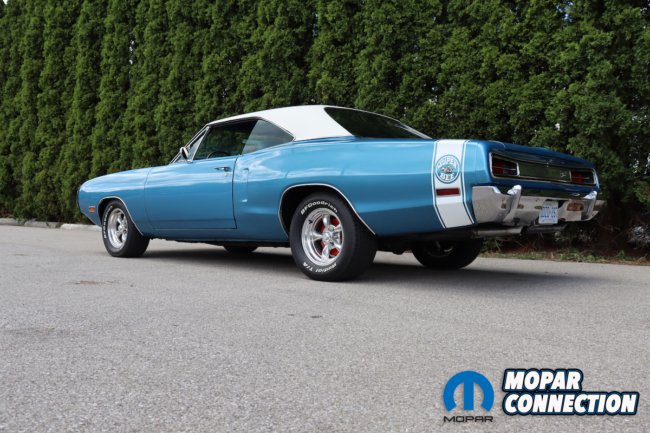
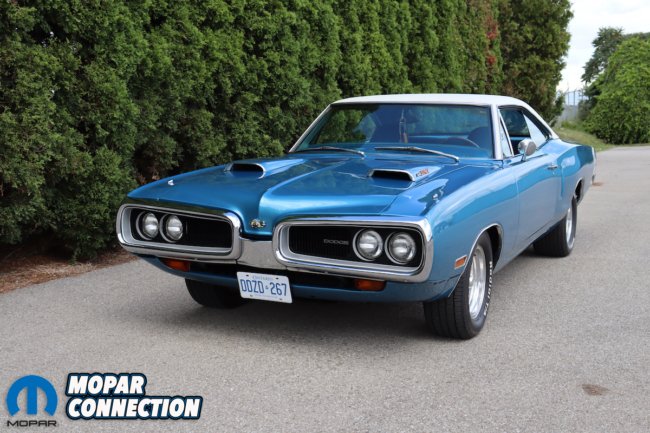
Visually, this Super Bee stands out in a crowd thanks to its white vinyl roof, a striking contrast against the vibrant B5 Blue bodywork that really makes the car pop. Completing the look is the bold white bumblebee stripe, proudly carrying the Super Bee decal and tying together the unmistakable identity of Dodge’s street‑fighting muscle machine. The Bee also has the fender-mounted turn signals.
The Bee carries a classic day‑two look, thanks to the swap from its original 14‑inch Rallye wheels to a set of aftermarket rollers. It now rides on American Racing Torque Thrust rims wrapped in B.F. Goodrich Radial T/A’s, with massive 295/50R15s filling out the rear and 245/60R15s up front. The stance, the rubber, and the wheels give the car a tougher, more purposeful presence without straying from its period‑correct attitude.
The 1970 Dodge Super Bee has always stood out as one of the purest expressions of Detroit’s muscle-car bravado—loud, unapologetic, and built with a kind of mechanical honesty that’s hard to find today. But every great car carries a story, and some stories run deeper than steel, horsepower, or production numbers.
Jay’s Super Bee is one of those rare machines where the history under the hood mirrors the history of the man behind the wheel. The car survived decades of changing owners, weathered paint, worn parts, and the slow grind of time—yet it never lost its identity. And Jay, after facing down cancer with the same grit and determination that defines every true Mopar loyalist, emerged a survivor in his own right.
That’s what gives this Super Bee its real presence. It’s not just the rumble of the 440 Six-Pack or the stance of those Torque Thrusts—it’s the shared resilience. When Jay fires it up and the exhaust cracks through the air, it’s more than nostalgia. It’s a celebration. A reminder that some things, and some people, refuse to fade quietly into the background.
In a world where many classics are restored to perfection but stripped of their soul, Jay’s Super Bee stands proudly as both a survivor and a storyteller. Man and machine, each with their own scars, each with their own victories, and both still very much alive. And that, more than anything, is what keeps the legend of the Super Bee buzzing long after the engine cools.