1972 became a defining moment in the muscle‑car era. New federal emissions standards, combined with skyrocketing insurance premiums for high‑performance models, reshaped the entire landscape. Overnight, the big‑horsepower machines that had dominated the late ’60s were forced to retreat, and manufacturers had to rethink what a performance car could be. The change impacted not only Plymouth but also signified the start of a new, more measured era for the entire industry.
Sadly, E-body cars entered the muscle car scene a bit too late, allowing only two years for them to make their mark. However, this was on the verge of changing, as big block engines were becoming a thing of the past. The legendary 426 Hemi, 440, and 383 cubic inch engines were gone along with iconic shaker hoods.
In 1972, the Barracuda and ‘Cuda were available exclusively with either the 318 cubic inch engine or a lower compression 340 cubic inch engine, causing a drop of 35 horsepower from the previous year. The E-body Plymouths had a selection of transmission options that included a 3-speed manual, an optional 4-speed manual, or a TorqueFlite automatic depending on engine choice.
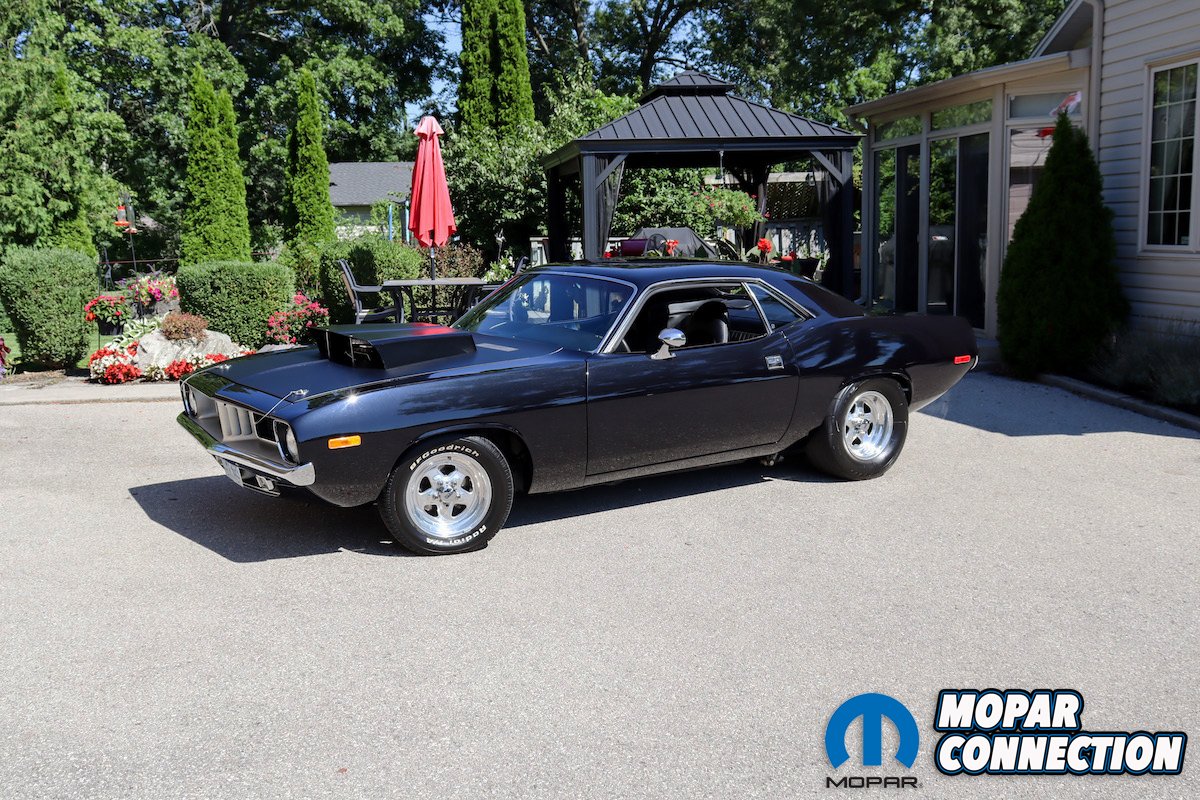
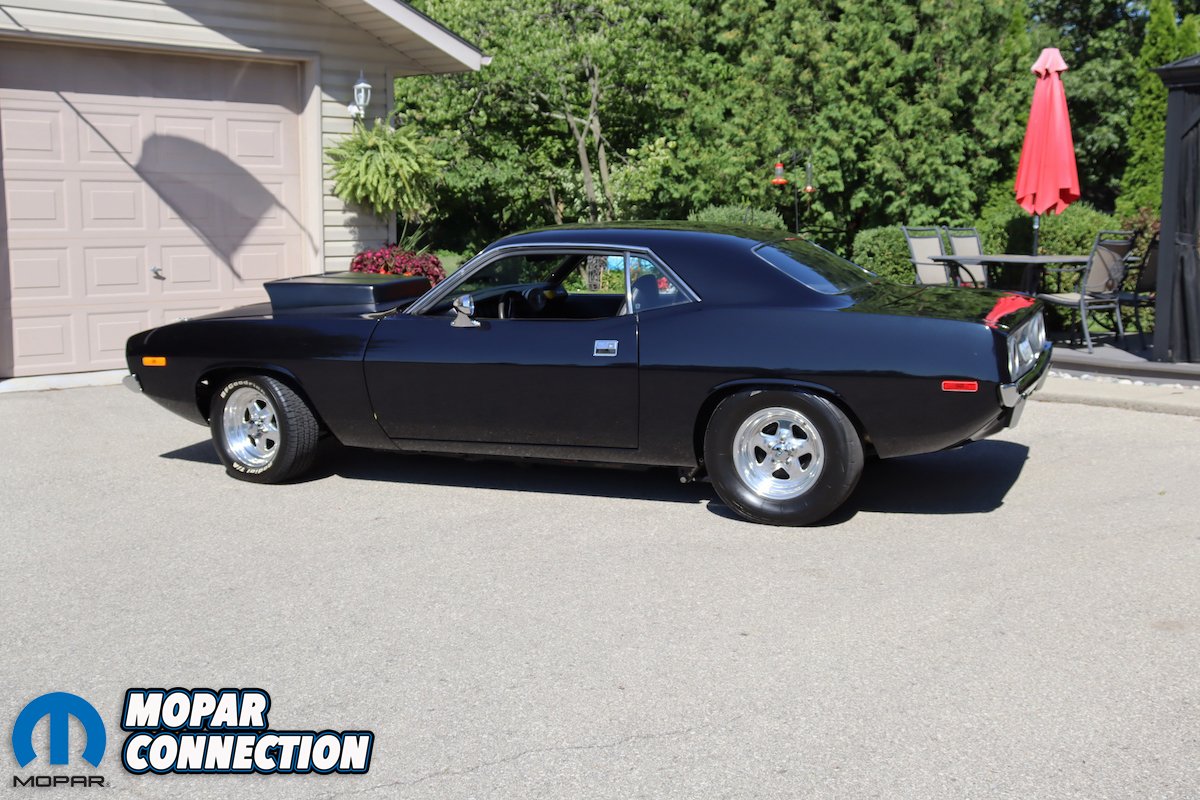
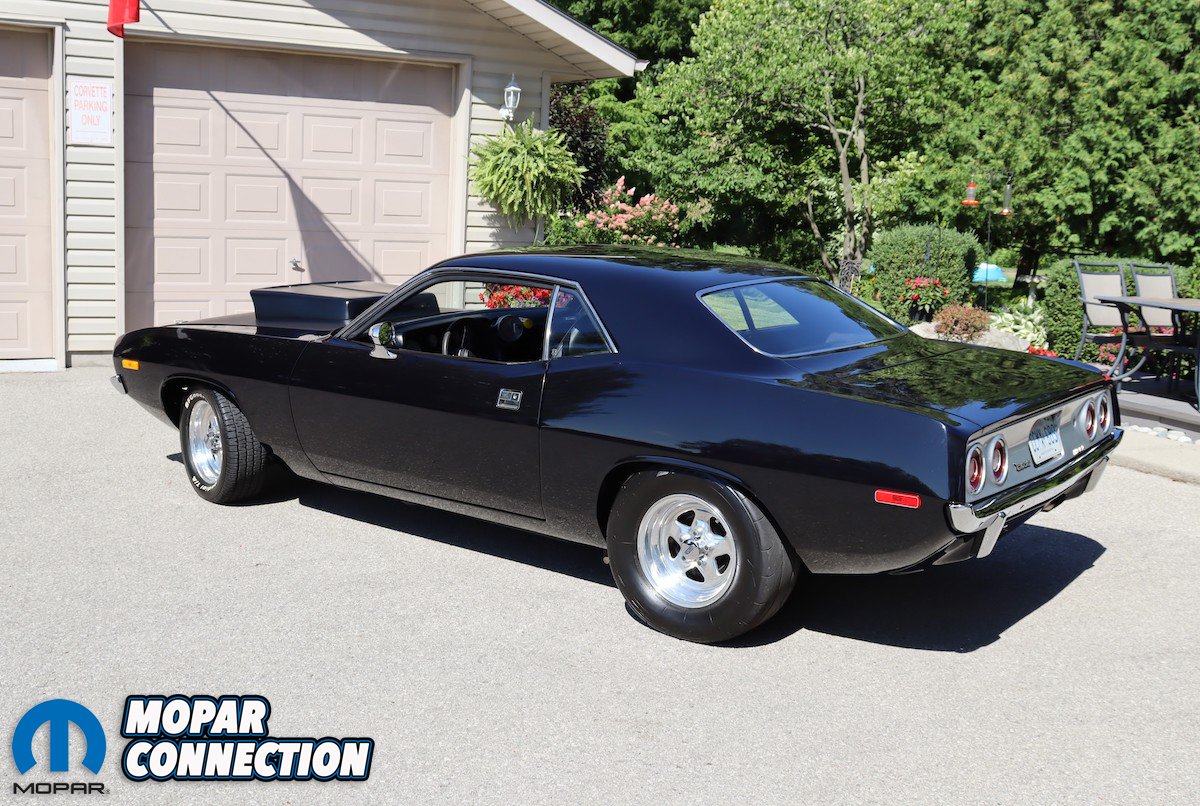
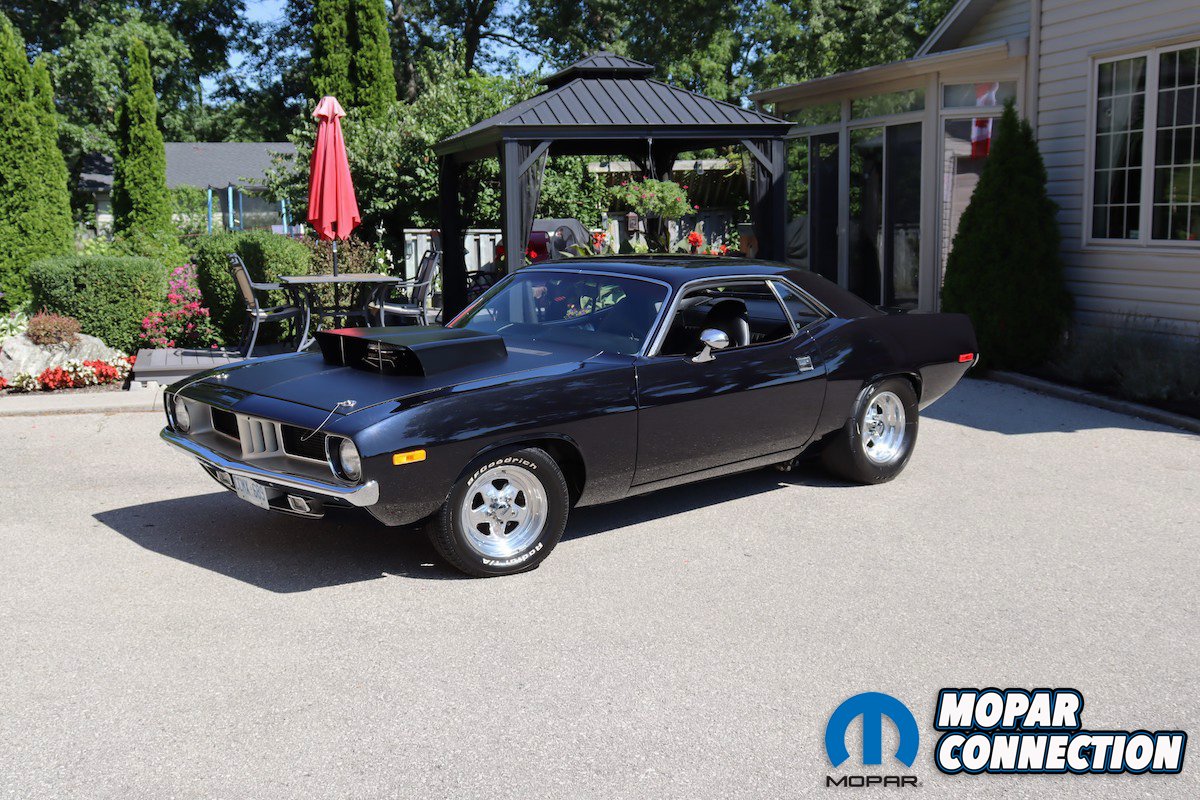
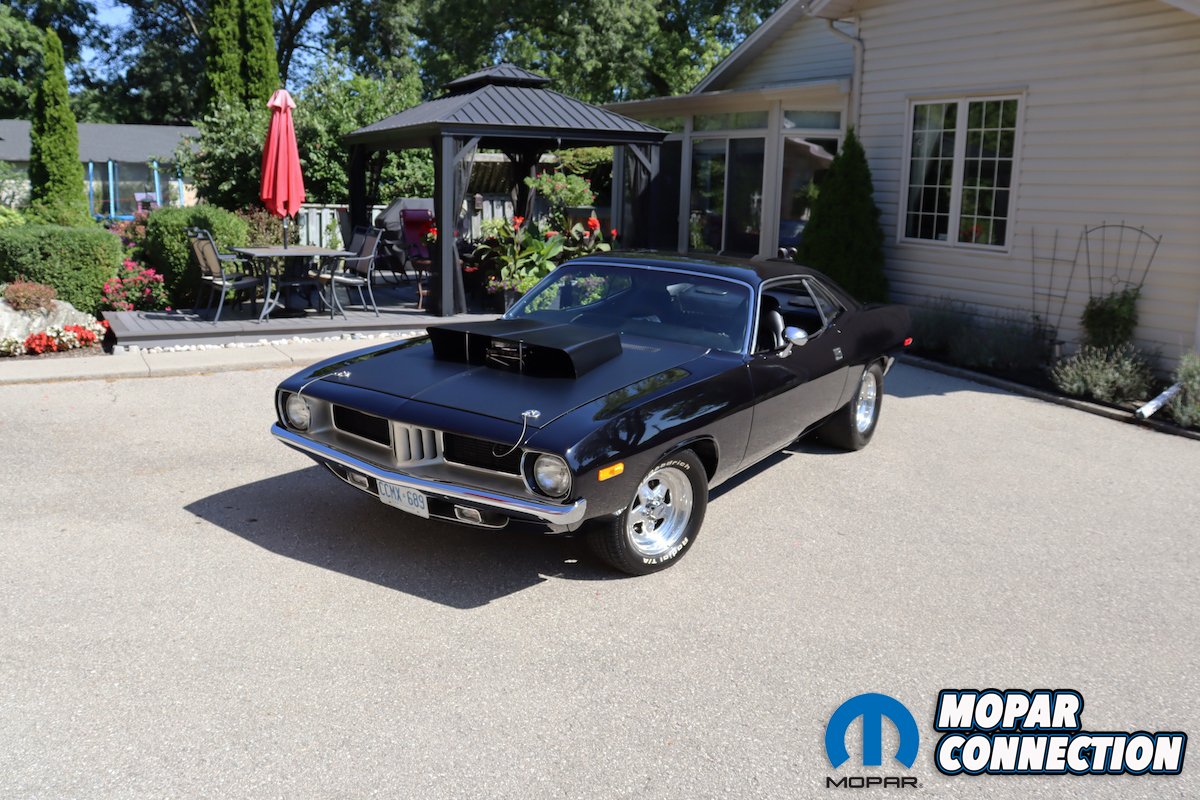
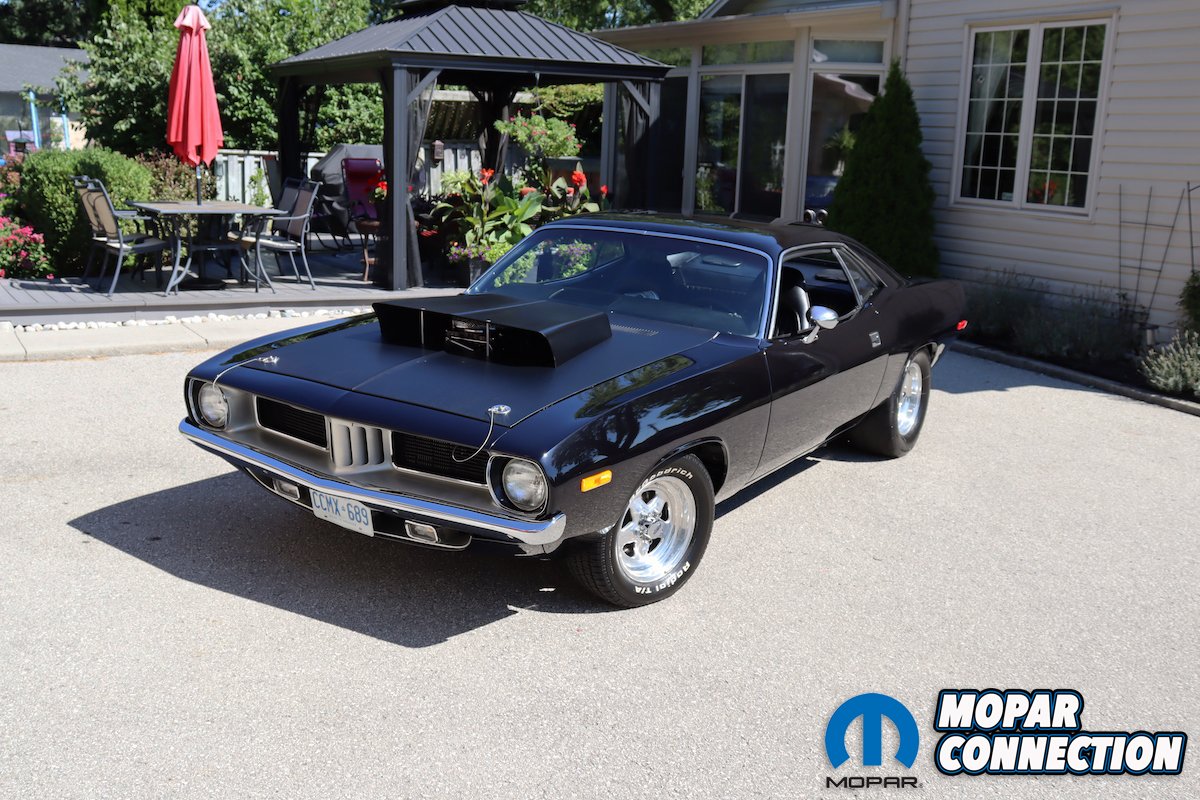
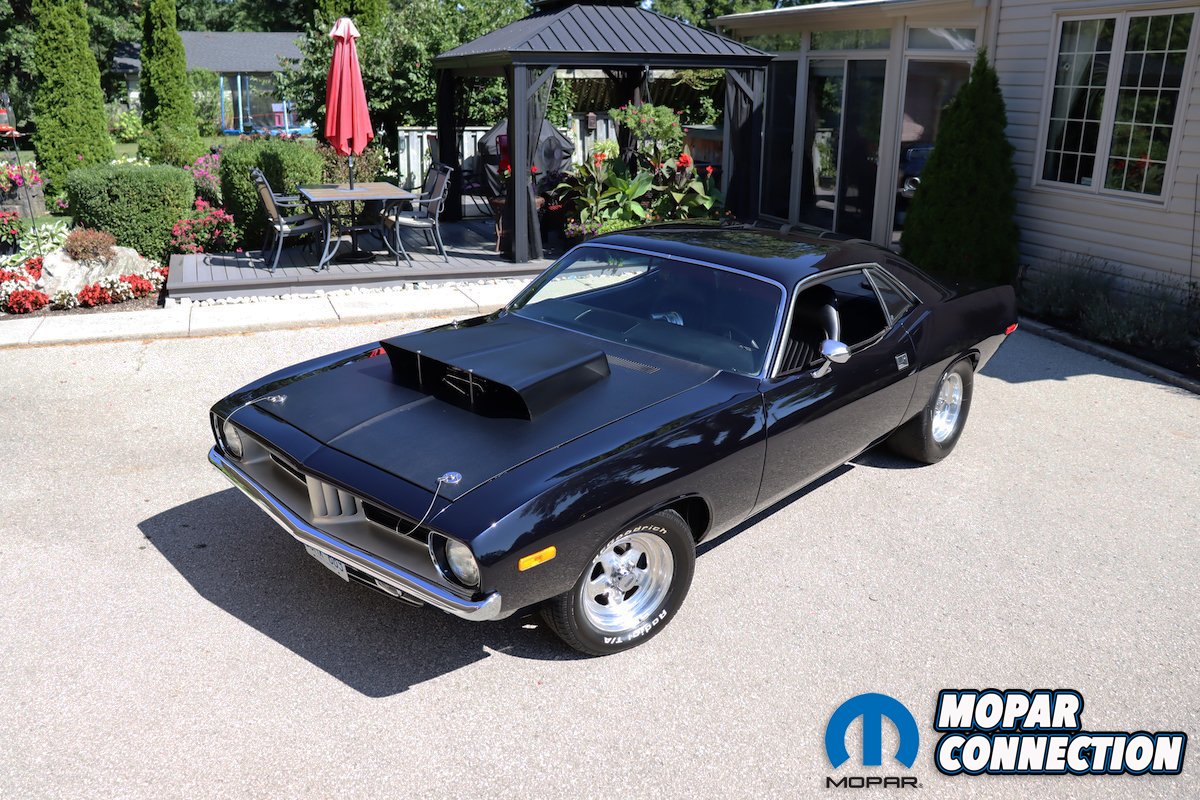
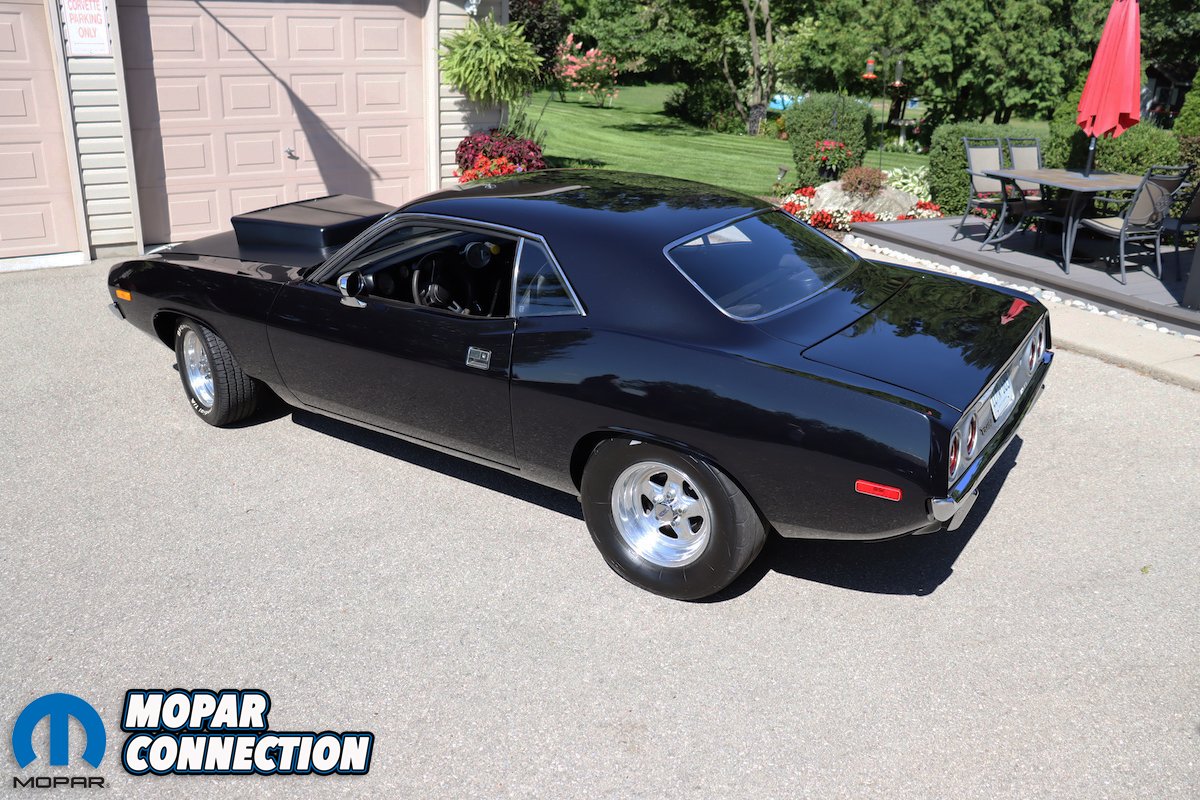
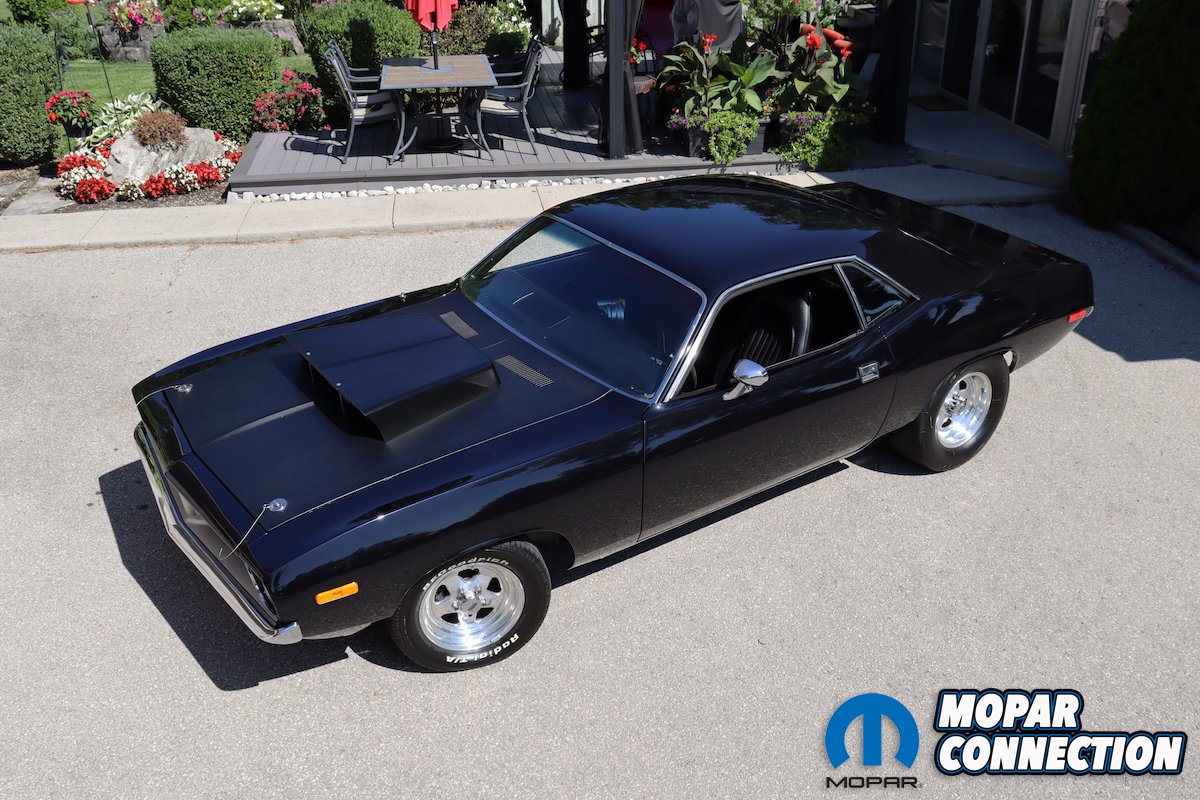
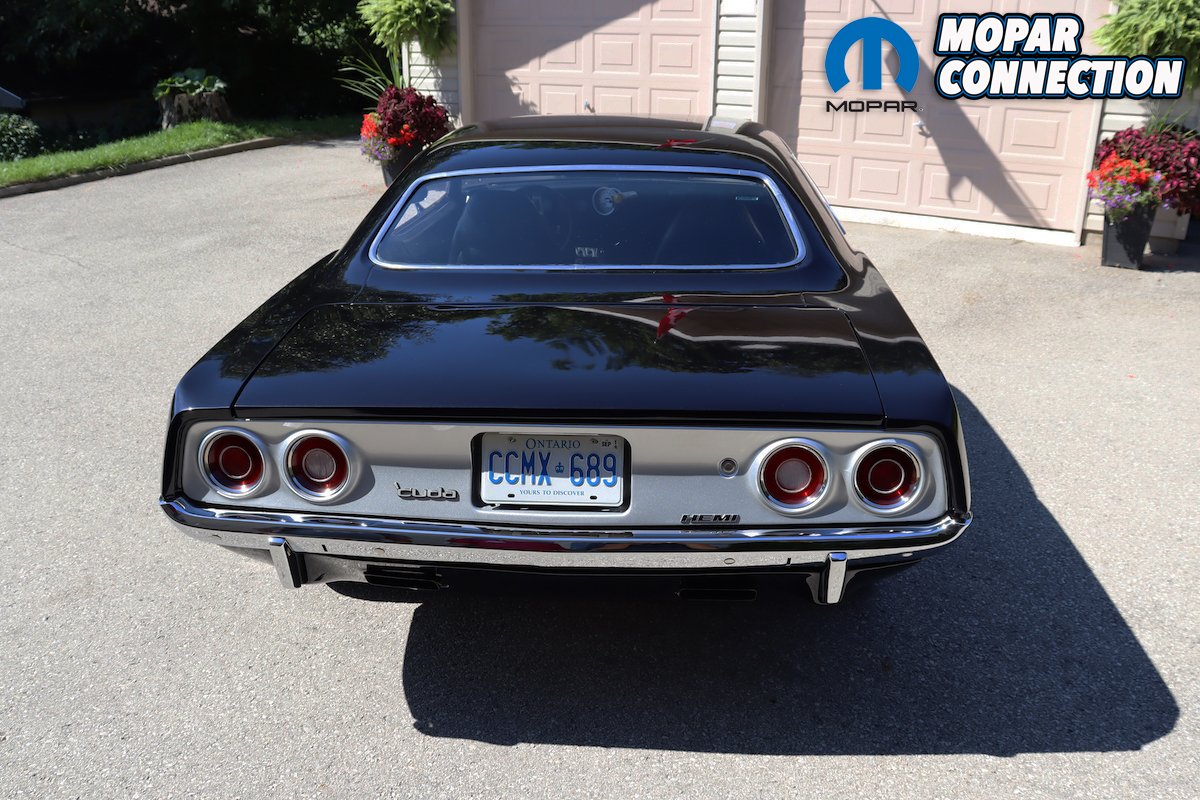
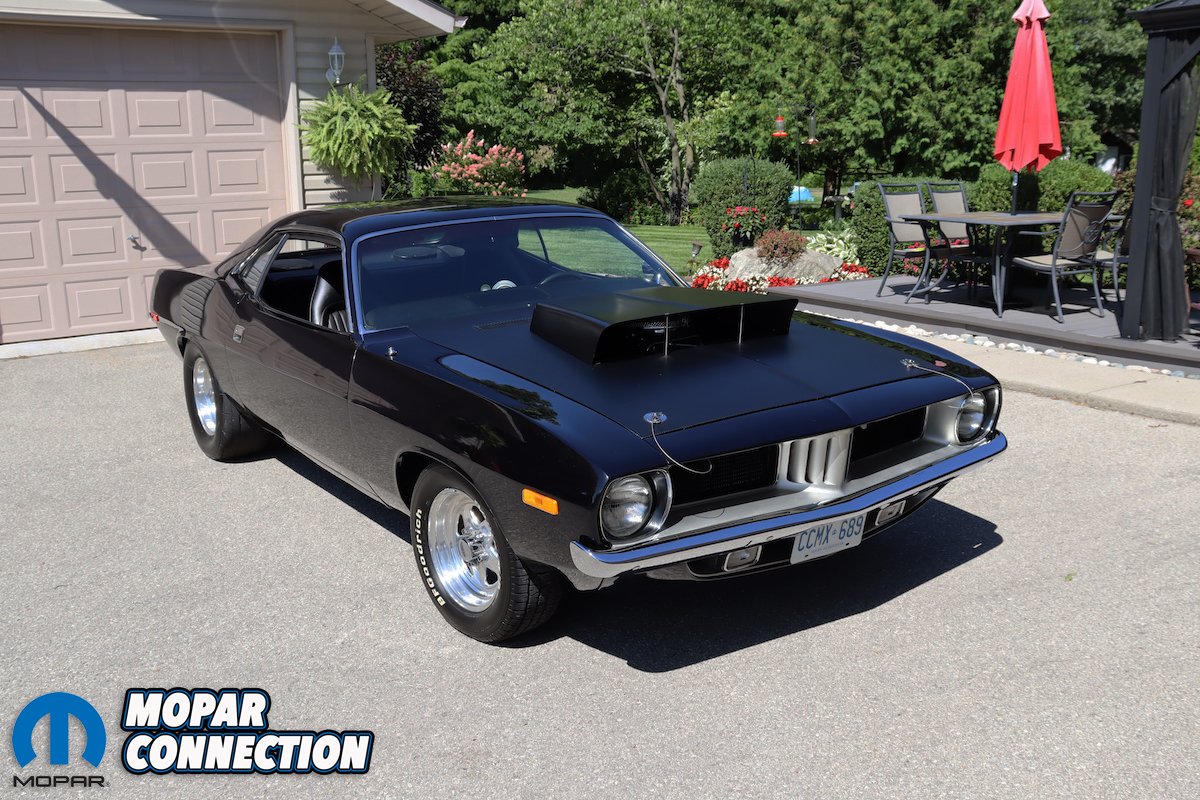
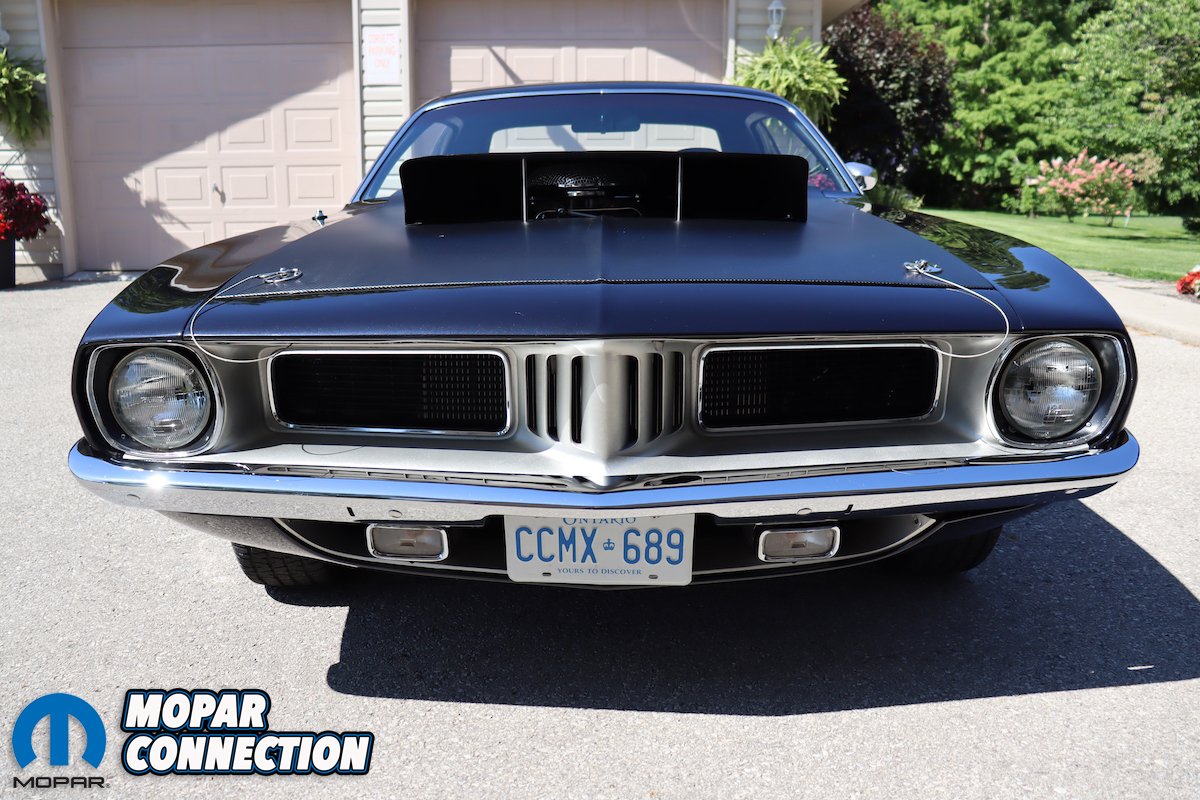
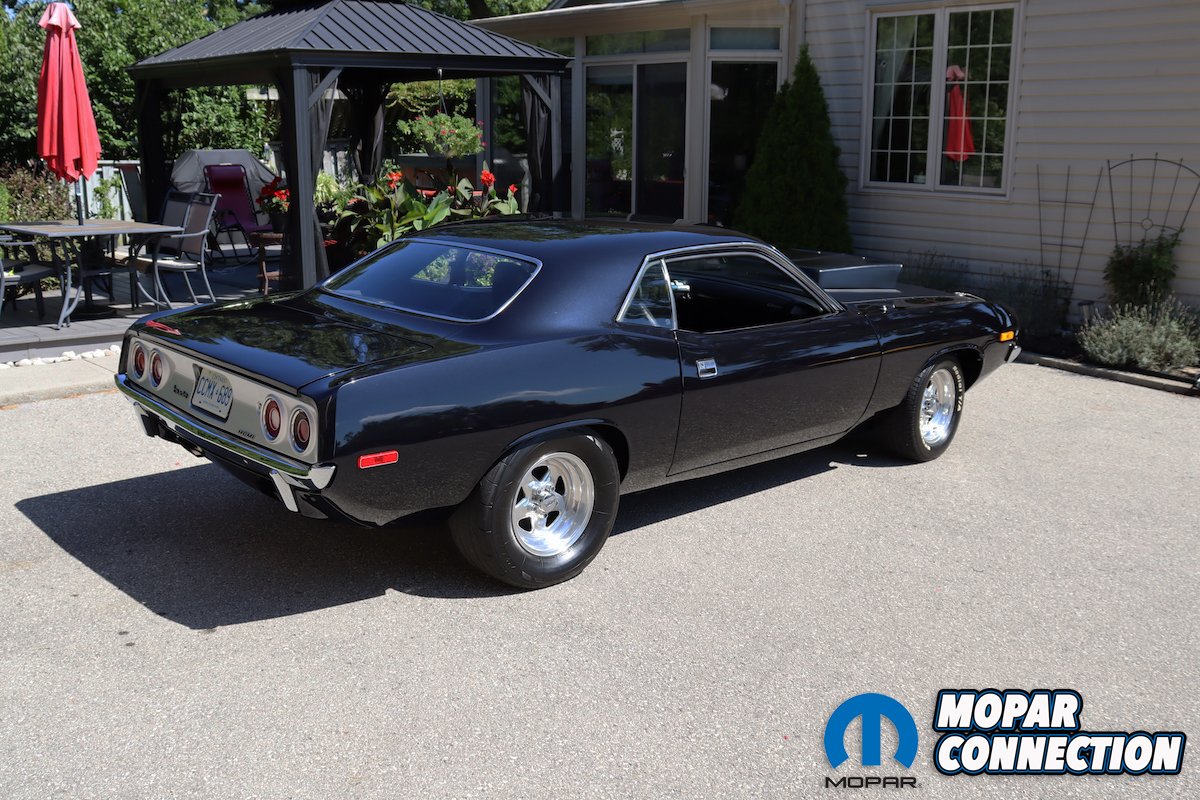
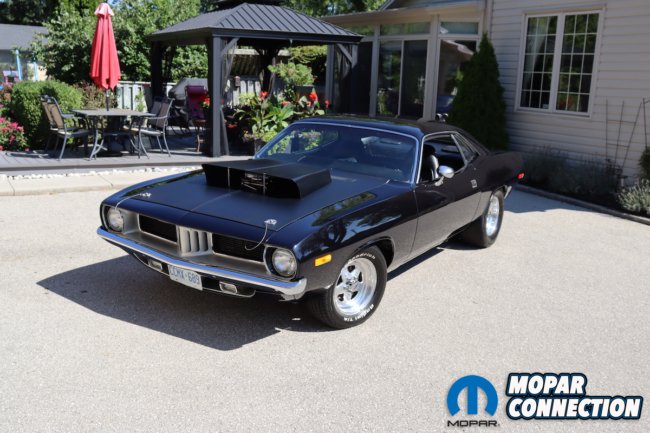
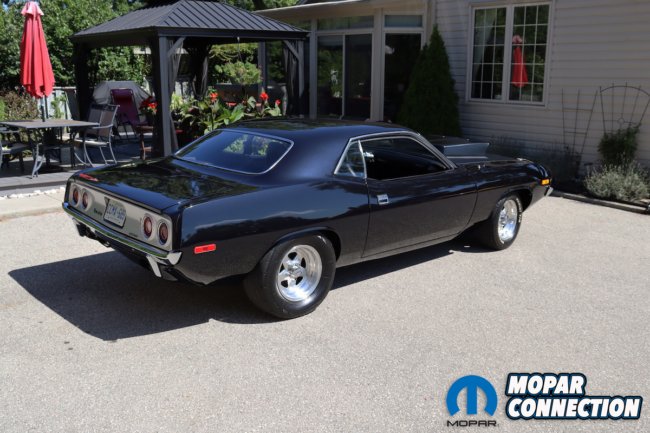
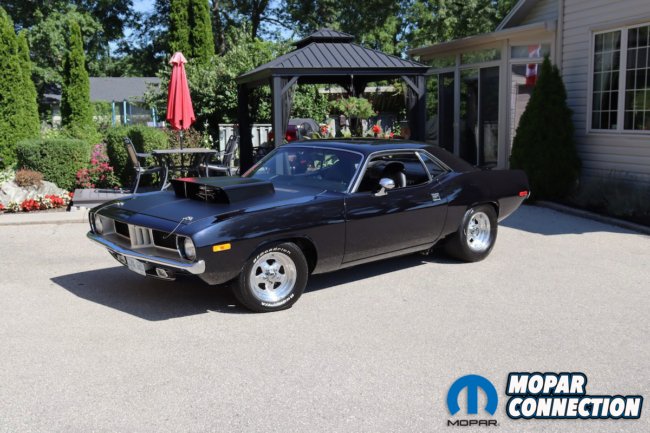
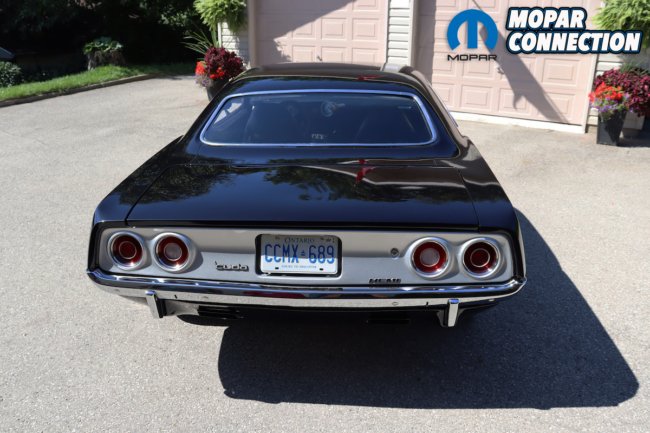
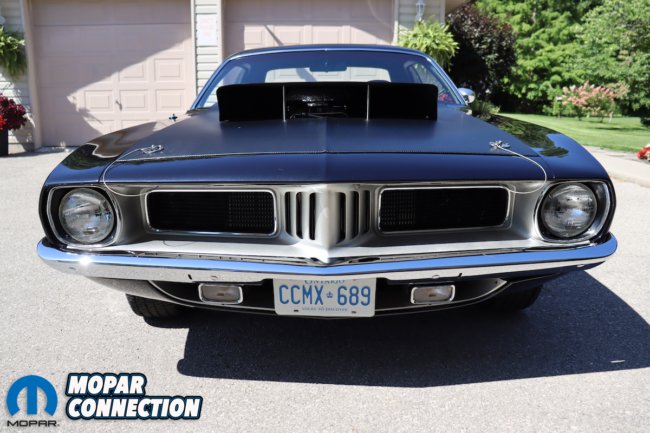
Milt Antonick is credited for the fresh new design of the 1972 ‘Cuda. The exterior of the ‘Cuda remained largely unchanged, with only minimal updates. For 1972, the ‘Cuda featured single headlights reminiscent of the 1970 model year instead of the quad lights that the 1971 model featured. The fender gills were removed, going back to the simple 1970 look. The taillights were upgraded to larger dual round units, replacing the previous horizontal blind style. Other minor exterior updates included new optional striping, though both billboard and hockey stripe designs were omitted.
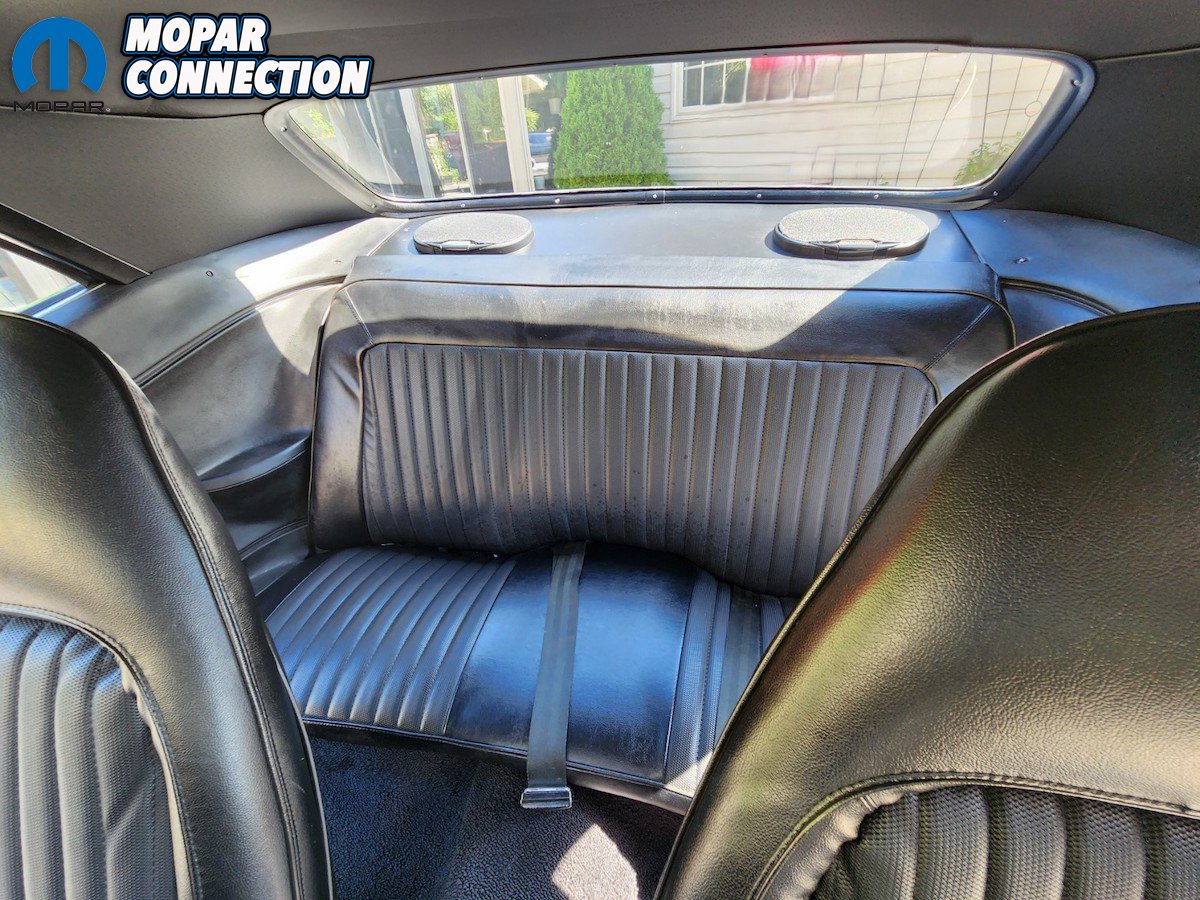
Inside, the car retained a similar layout, but Plymouth proudly highlighted that the standard bucket seats were designed to provide enhanced comfort and better grip compared to earlier models.
In 1972, the standard equipment list became shorter, yet a variety of options remained available. Customers could choose from 13 standard colors and 2 high-impact colors. The total production reached 18,490 units, with V8 engines accounting for 11,025 units with automatic transmissions and 6,645 units with manual transmissions. All Barracuda and ‘Cuda models were manufactured at the Hamtramck plant in Detroit.
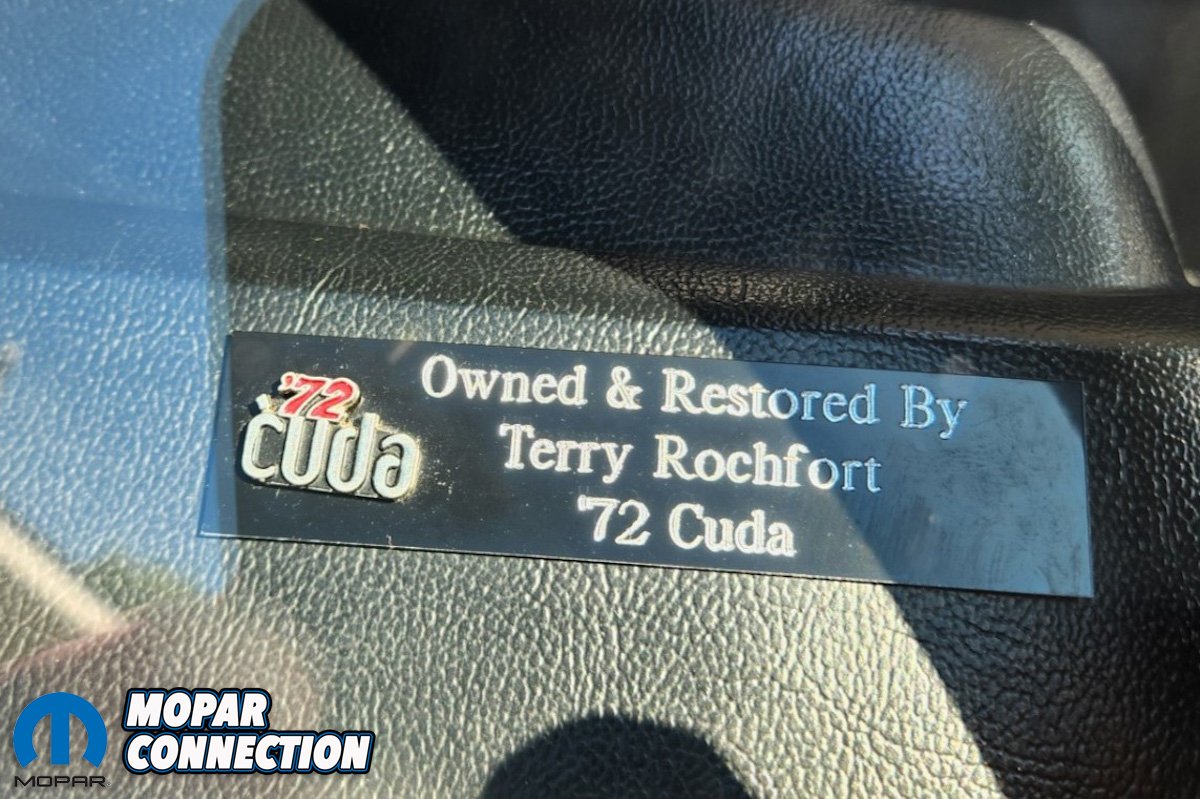
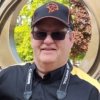
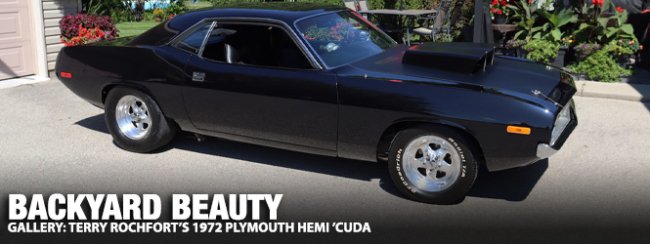
This car that we are featuring is owned by Terry Rochfort, a car enthusiast by all means. As a young man he had always indulged in amateur drag racing and had a 1969 Dart Swinger 340 with a 4-speed. “I love the Mopar scene, especially the modified Eliminator and Pro Stock,” Terry states.
Terry sold his Dart back in 1979 and has always regretted it. Luckily, Terry had restored a 1965 big-block Chevy Corvette that he has always wanted and owned since 1997. Despite that, he has always wanted a Hemi car. As Terry put it, “That is my ultimate want!”
In 2014, Terry started searching for a Mopar project in anticipation of his retirement in July 2015. He initially had his sights set on finding another Dart or a Plymouth Road Runner. As he searched, it became clear that there were no Darts or Road Runners available that met his standards for restoration and fit within his preferred budget. Terry even checked out the E-bodies and found the prices for E-body ‘Cudas and Challengers were just astronomical.
One day he came across a 1972 ‘Cuda on the internet for a reasonable price. So, without hesitation, he went to North York, Ontario, to check it out. He found that the frame rails were solid. The car was from North Carolina, so it was not exposed to the harsh winter as found in the northern part of the country.
The original 340 engine and automatic transmission had disappeared, replaced by a 440 cubic inch engine paired with a 4-speed transmission. Terry’s first step was to bring everything to life and assess the engine’s condition. No matter what he discovered, Terry planned to rebuild the engine, noting, “It’s always beneficial to know what you’re working with.”
It was not long before he discovered an engine vibration due to poor machining of the crankshaft. Someone tried to balance it but went in the wrong direction. The transmission was fine, but Terry rebuilt it anyway.
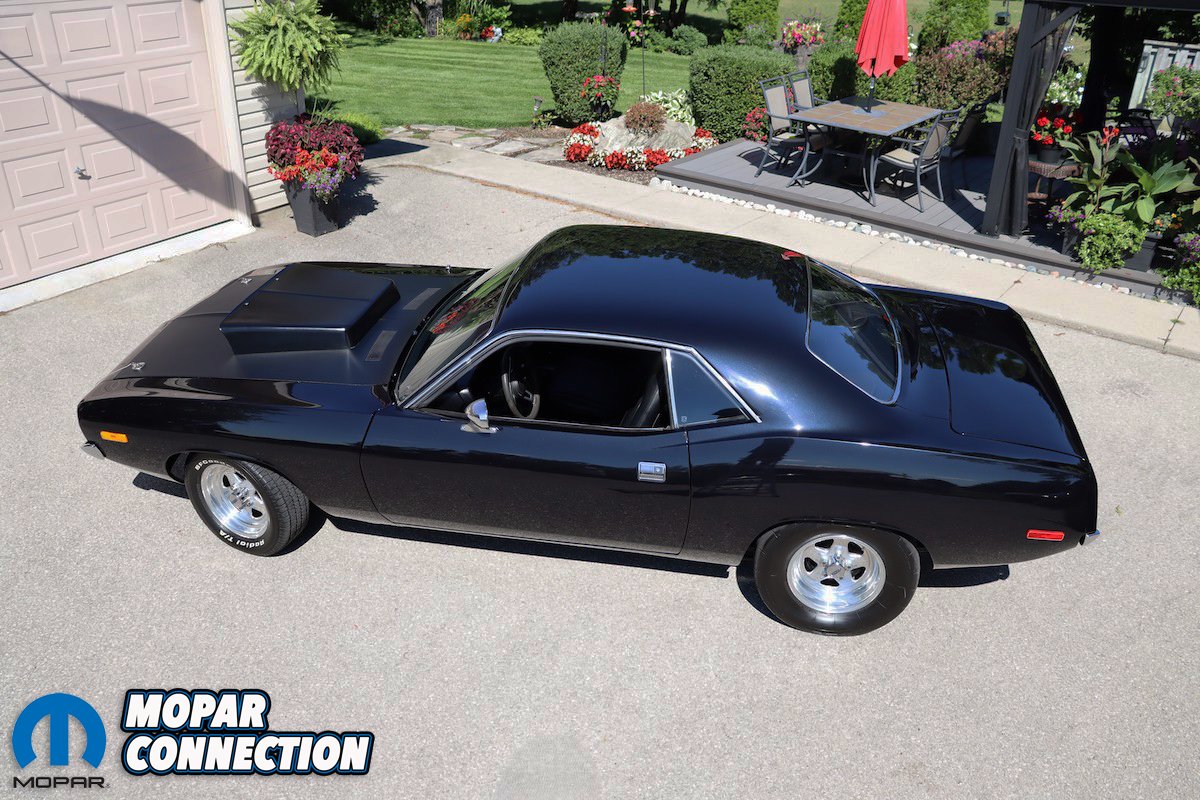
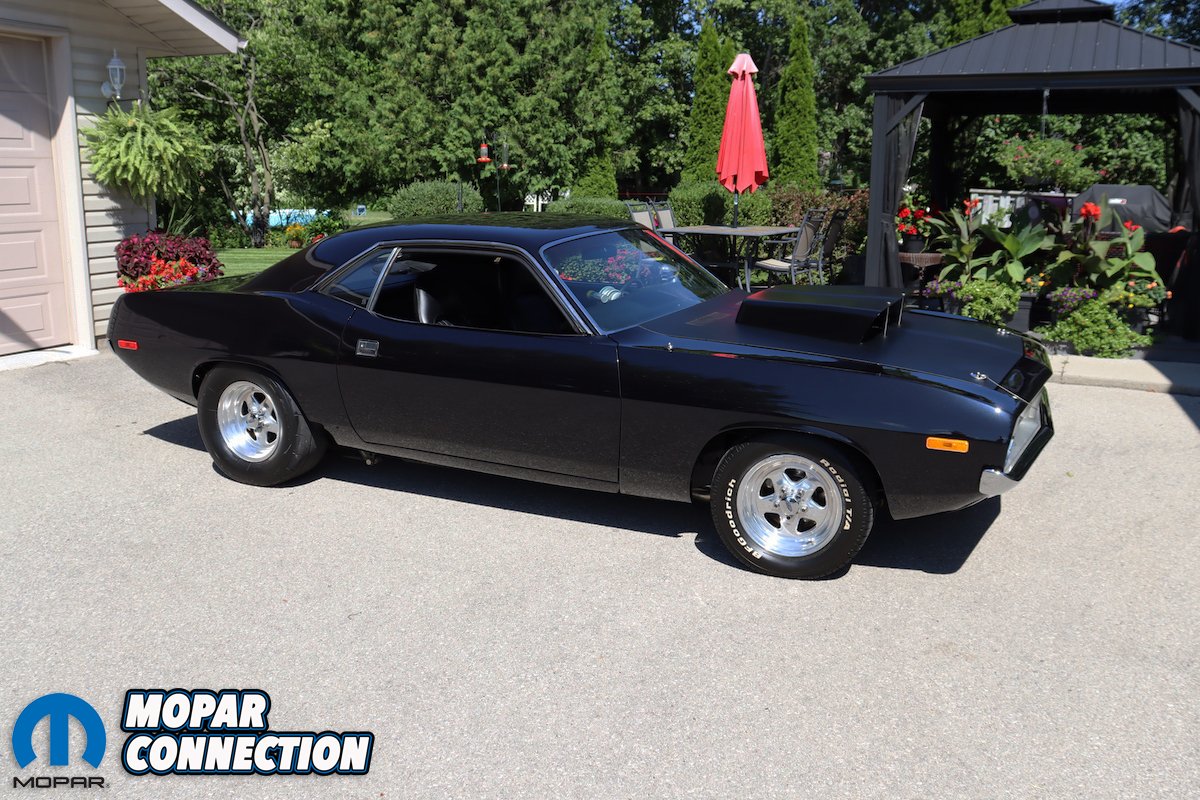
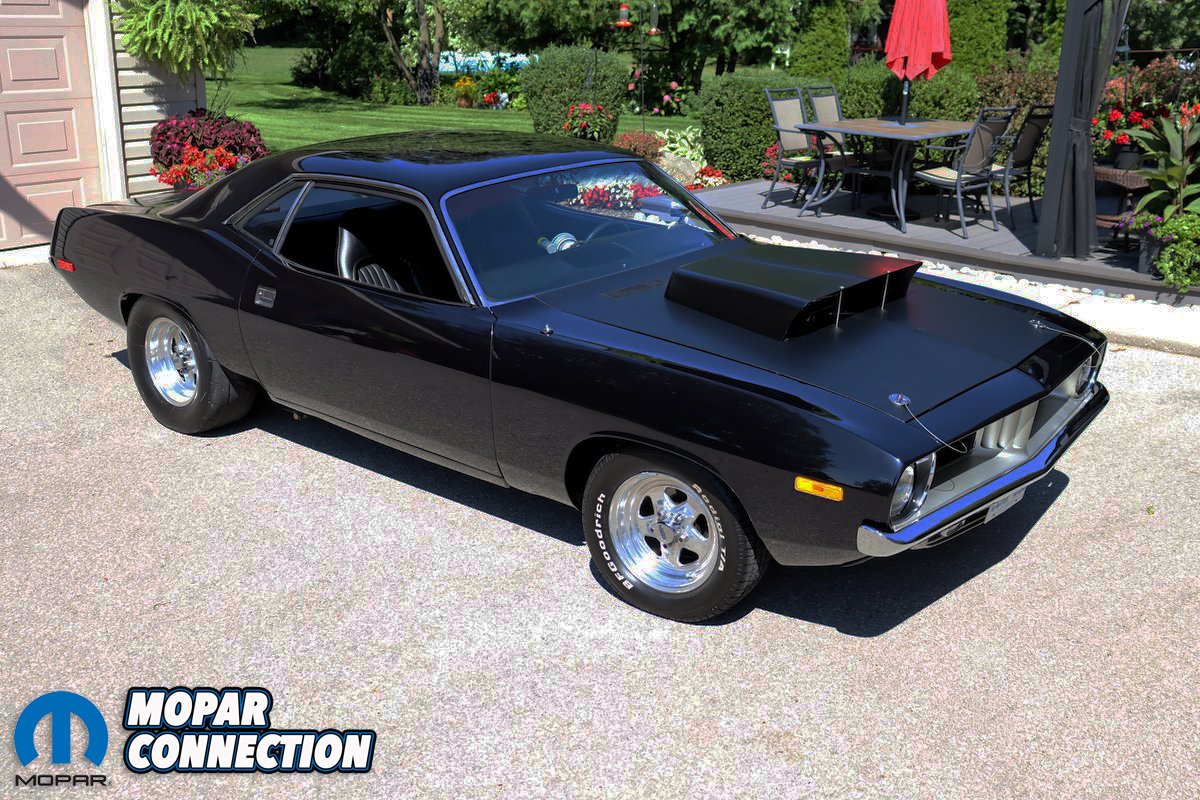
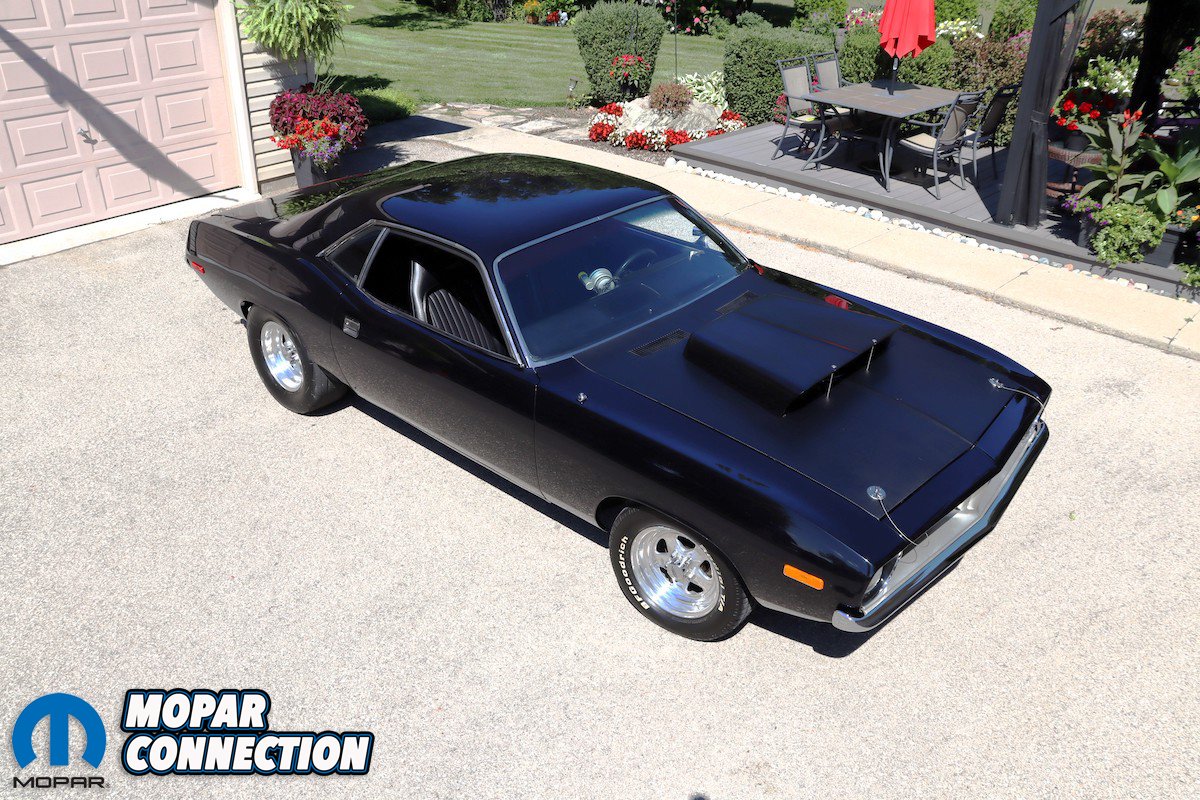
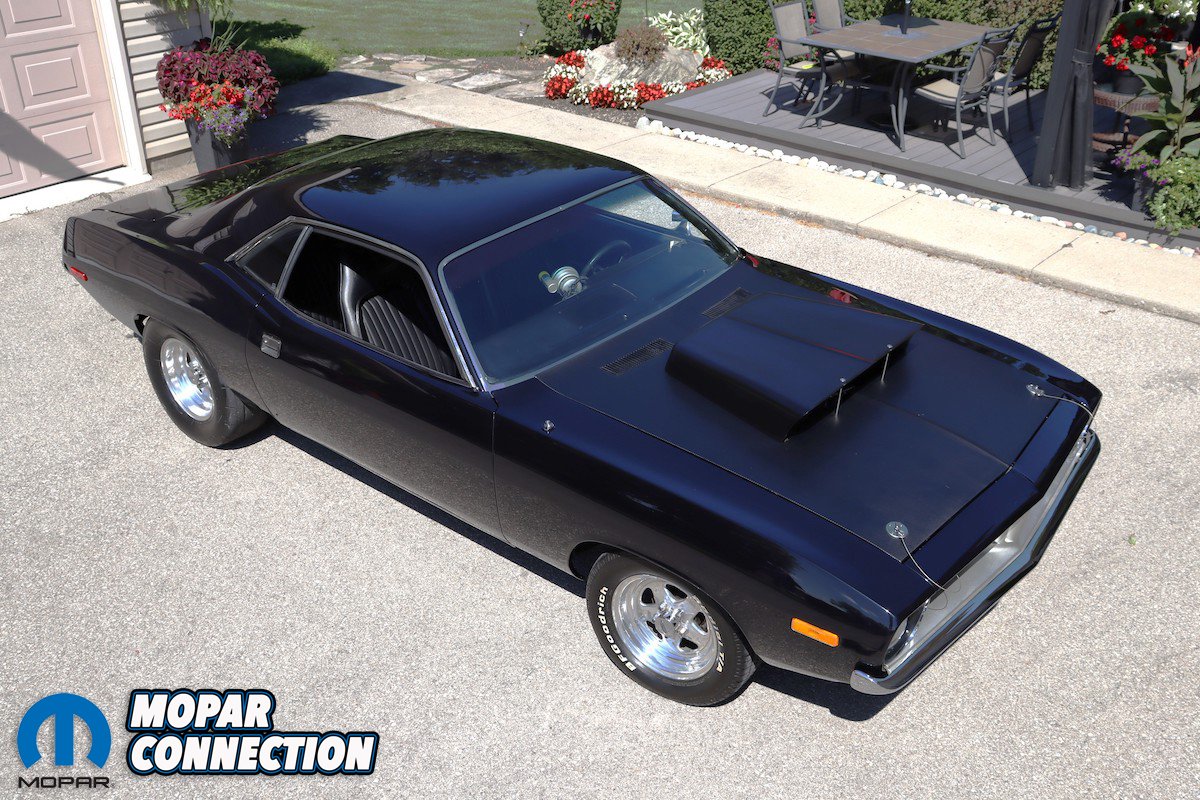
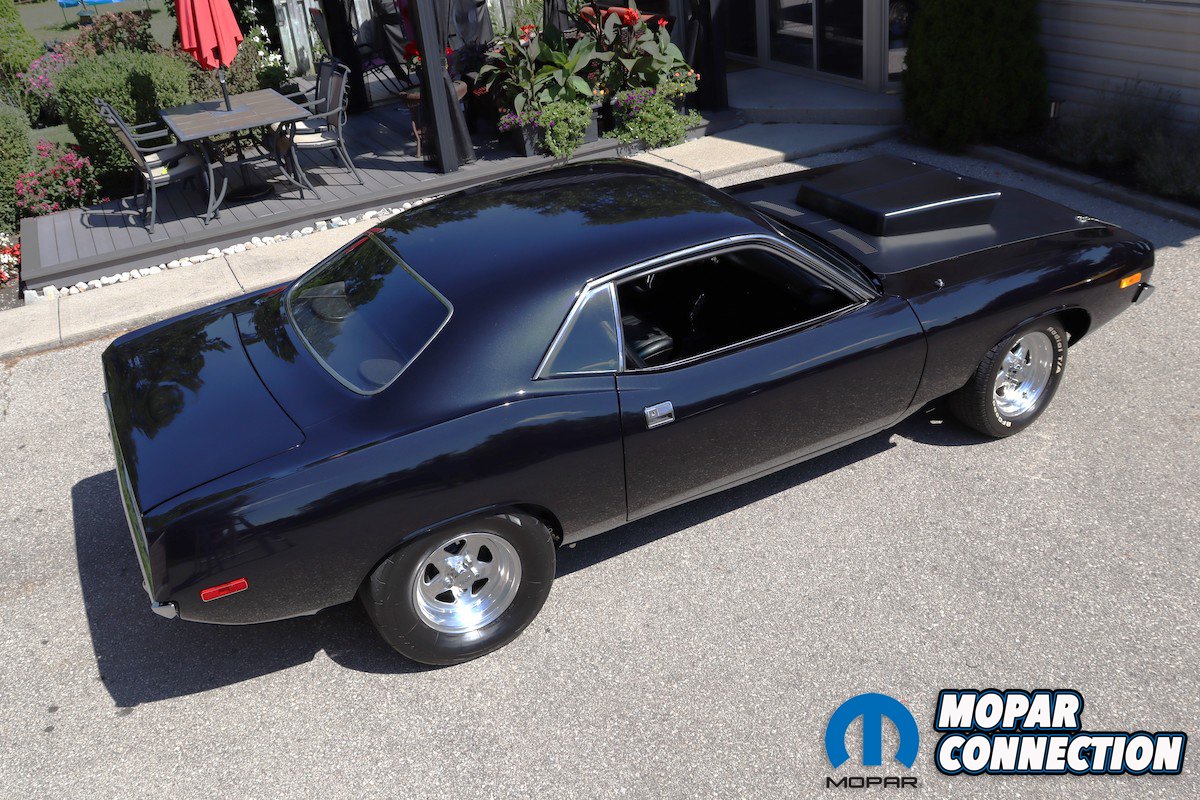
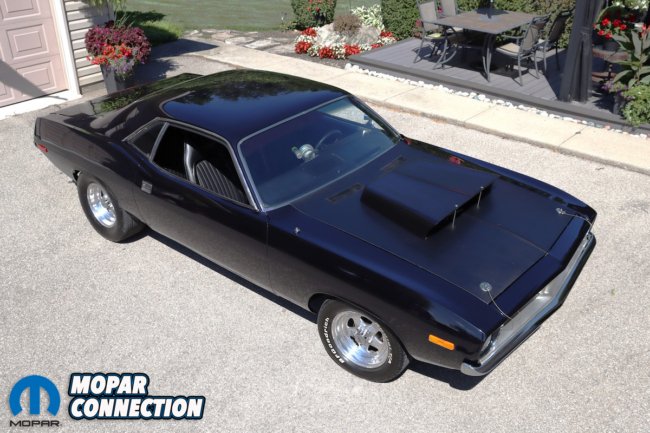
The body was sent out to have both rear quarter panels replaced as well as the passenger floor and trunk pan with AMD parts. The rear lower valence was also replaced due to damage they found, and new bumpers were again supplied by AMD. The work was completed by Wayne Shouldice in Cambridge, Ontario, who painted the car Deep Black Pearl, which is a VW color. The hood would receive a Hemi scoop with a carbon vinyl finish.
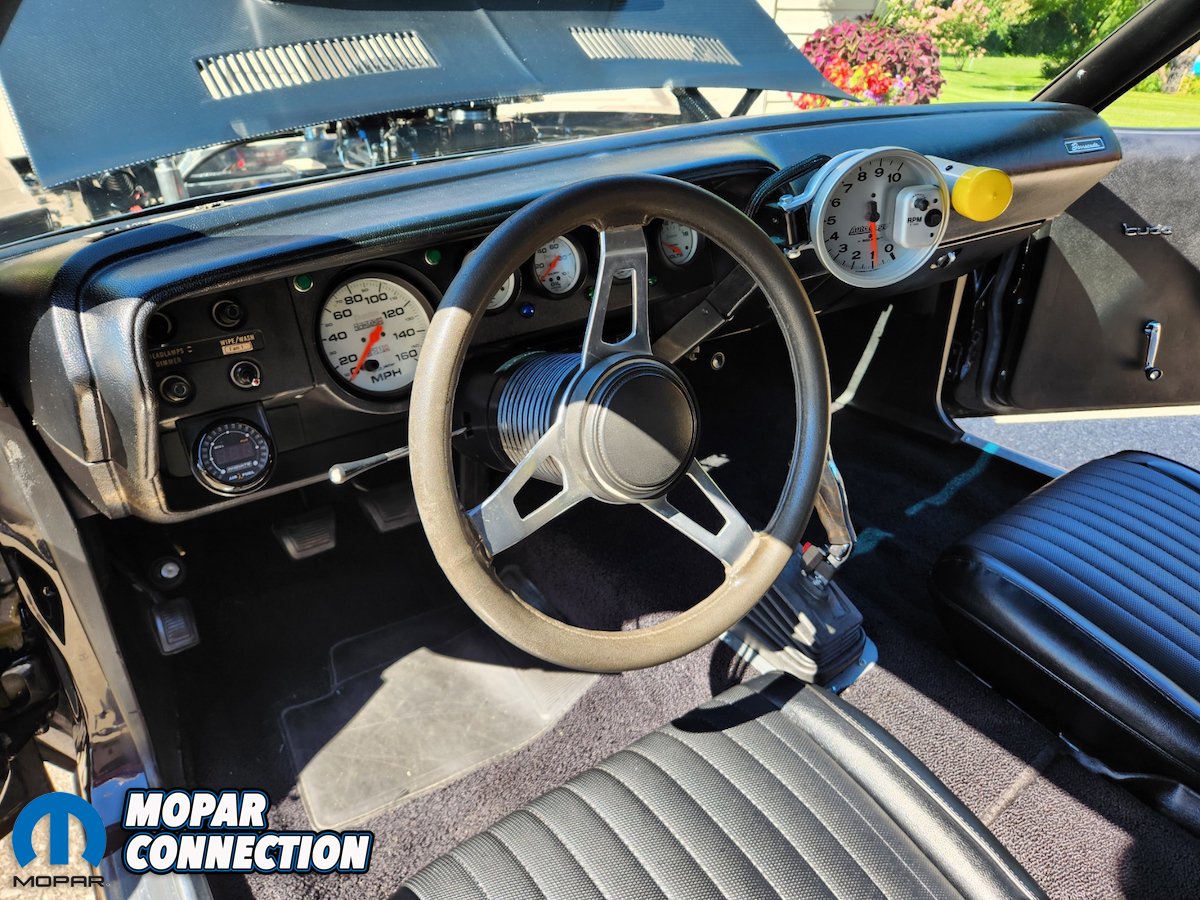
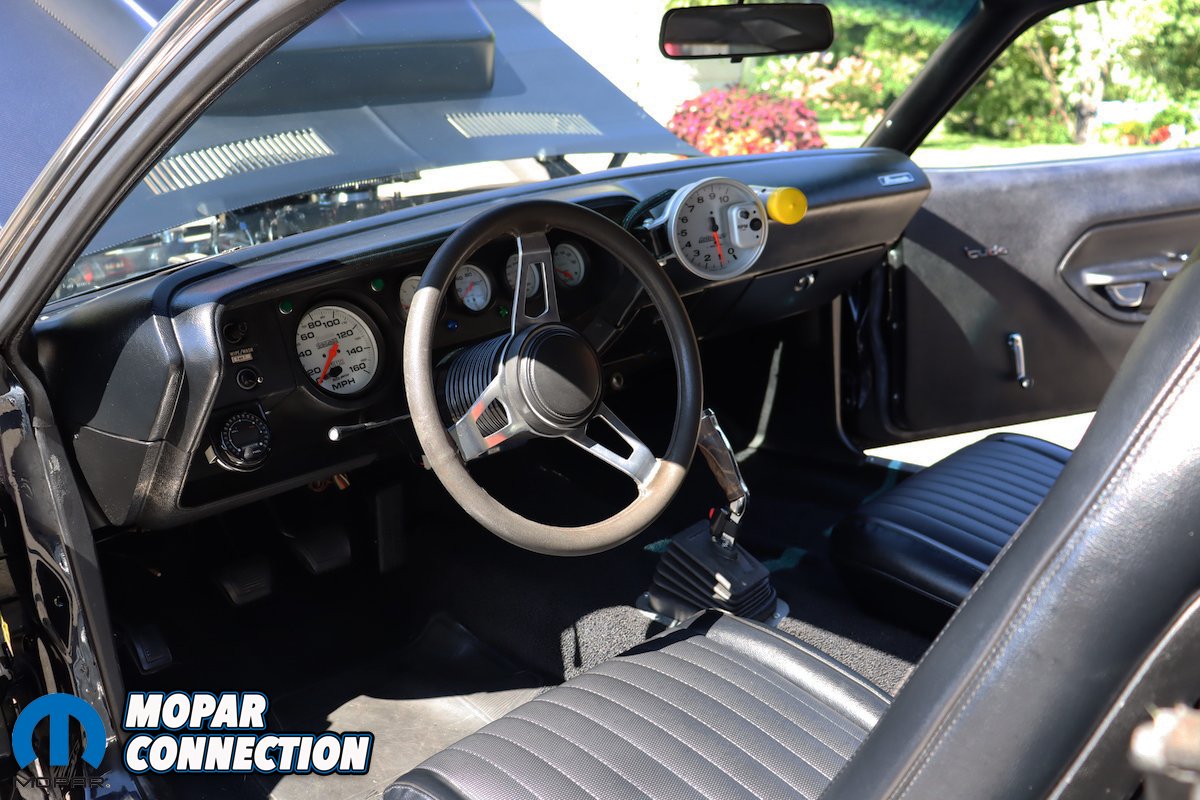
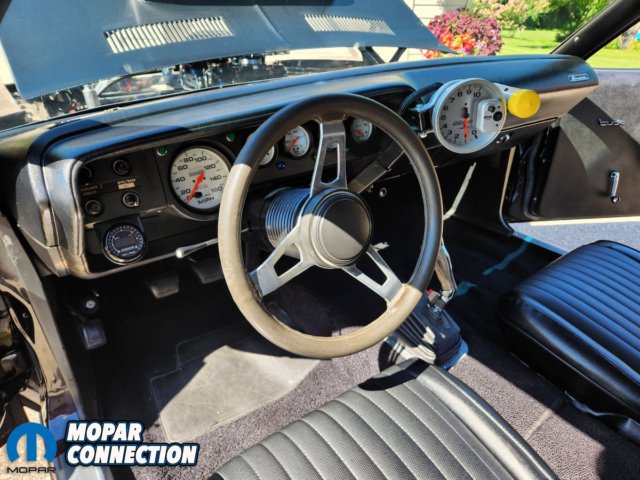
When the car returned to Terry’s shop, he started on the interior. He removed the dash and wiring, only to discover the wiring was in poor condition, with aluminum foil in the fuse box that had caused the wires to melt. Additionally, the ‘Cuda lacked a Rallye dashboard, meaning there was no designated spot for the oil pressure gauge.
Terry replaced the instrumentation with Auto Meter gauges with a white-face speedometer, fuel, oil pressure, temperature, and voltage gauges with the tachometer to the right side of the dashboard pod. Terry replaced the wiring on the car with a kit from American Autowire.
Terry positioned the vehicle on his lift and fully disassembled both the front and rear suspension systems. He sandblasted and painted the usable components and replaced the bushings, tie rods, and ball joints, as well as any other worn parts.

The car was equipped with factory undercoating that helped preserve the frame rails. Terry painstakingly removed the undercoating using a heat gun and scraper, followed by sanding, and then painted the underside of the car. Yes, just a relaxing afternoon scraping undercoating, the perfect job for anyone who thinks fun involves sweat, frustration, and questioning all their life choices.
During this period, Terry’s friend Bob Besner discovered a Hemi engine for sale in Saskatoon, Saskatchewan. Bob struck an amazing deal for Terry and arranged for the engine to be shipped to Toronto, Ontario. All that was left to do was pick up the crate motor.
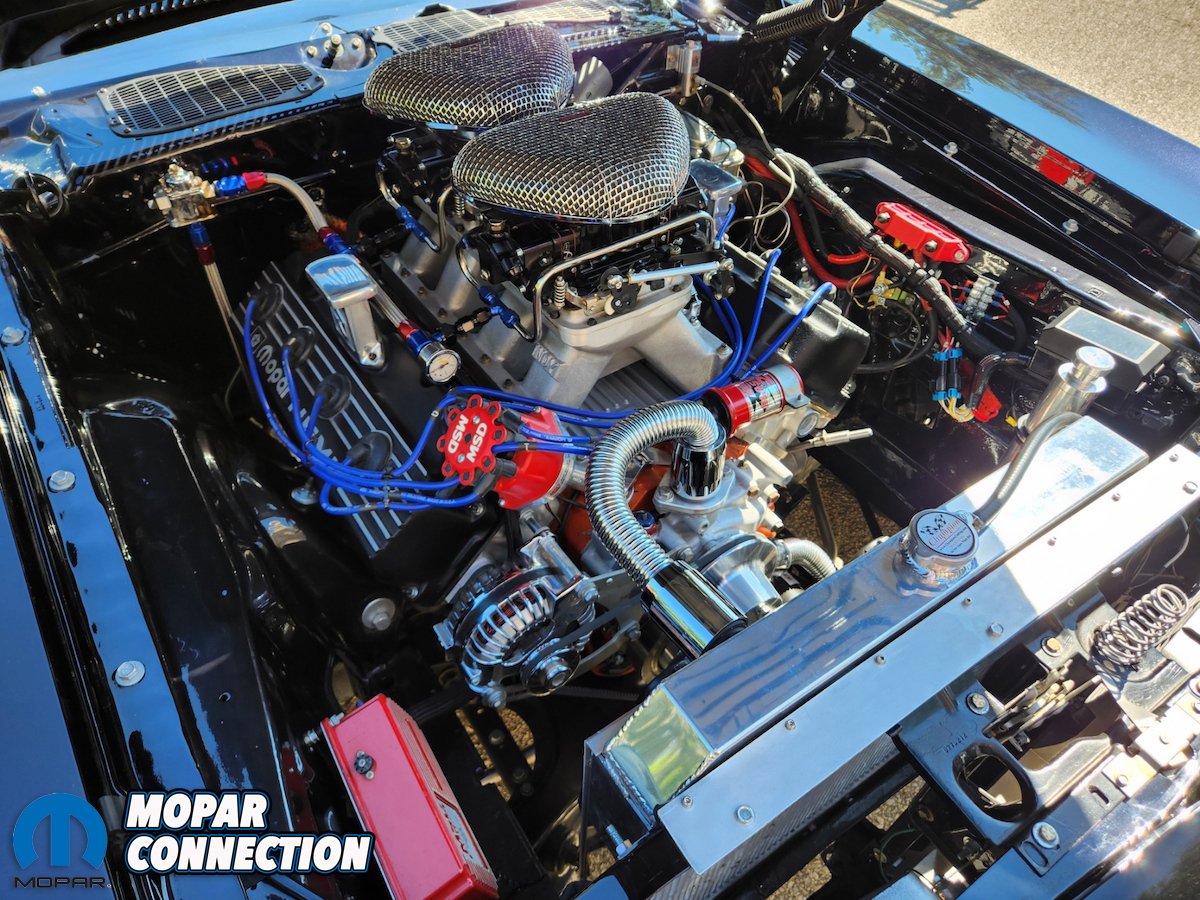
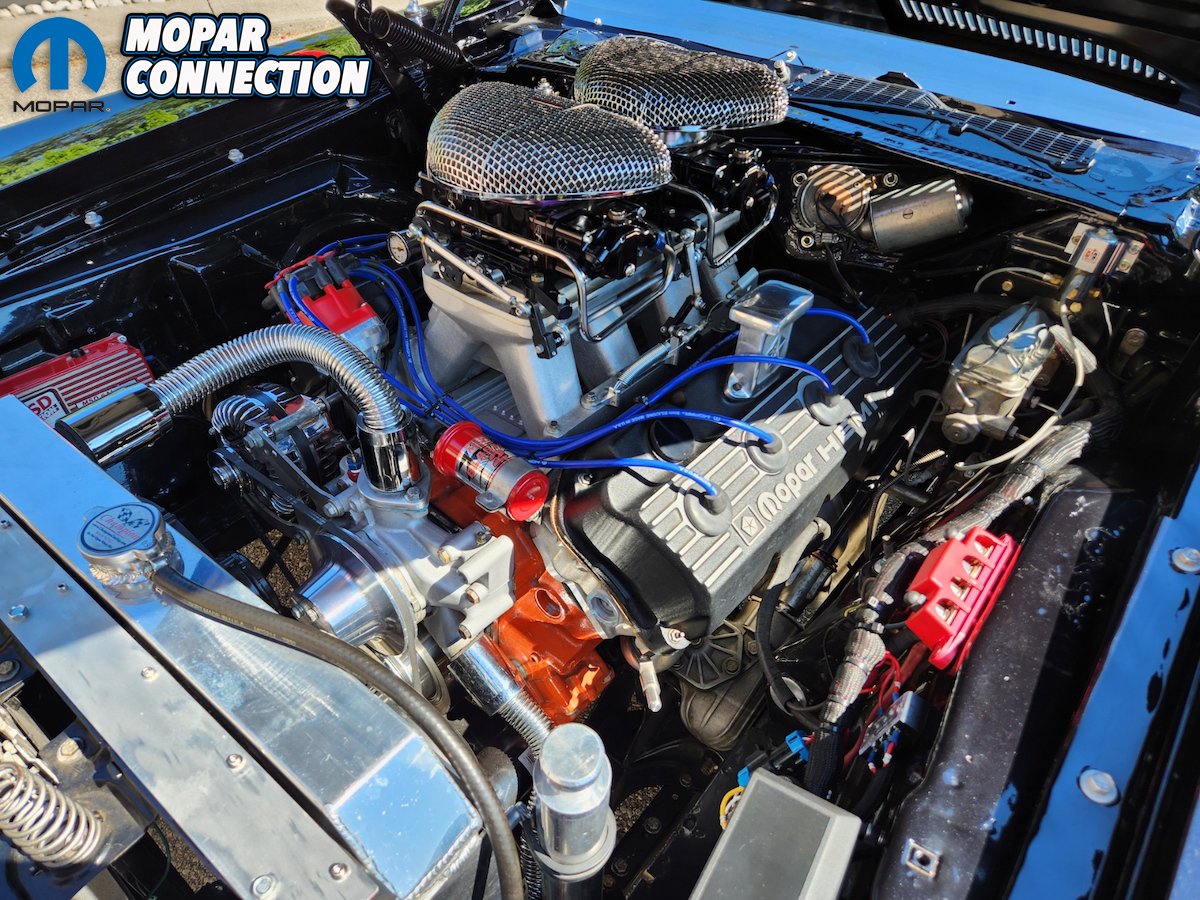
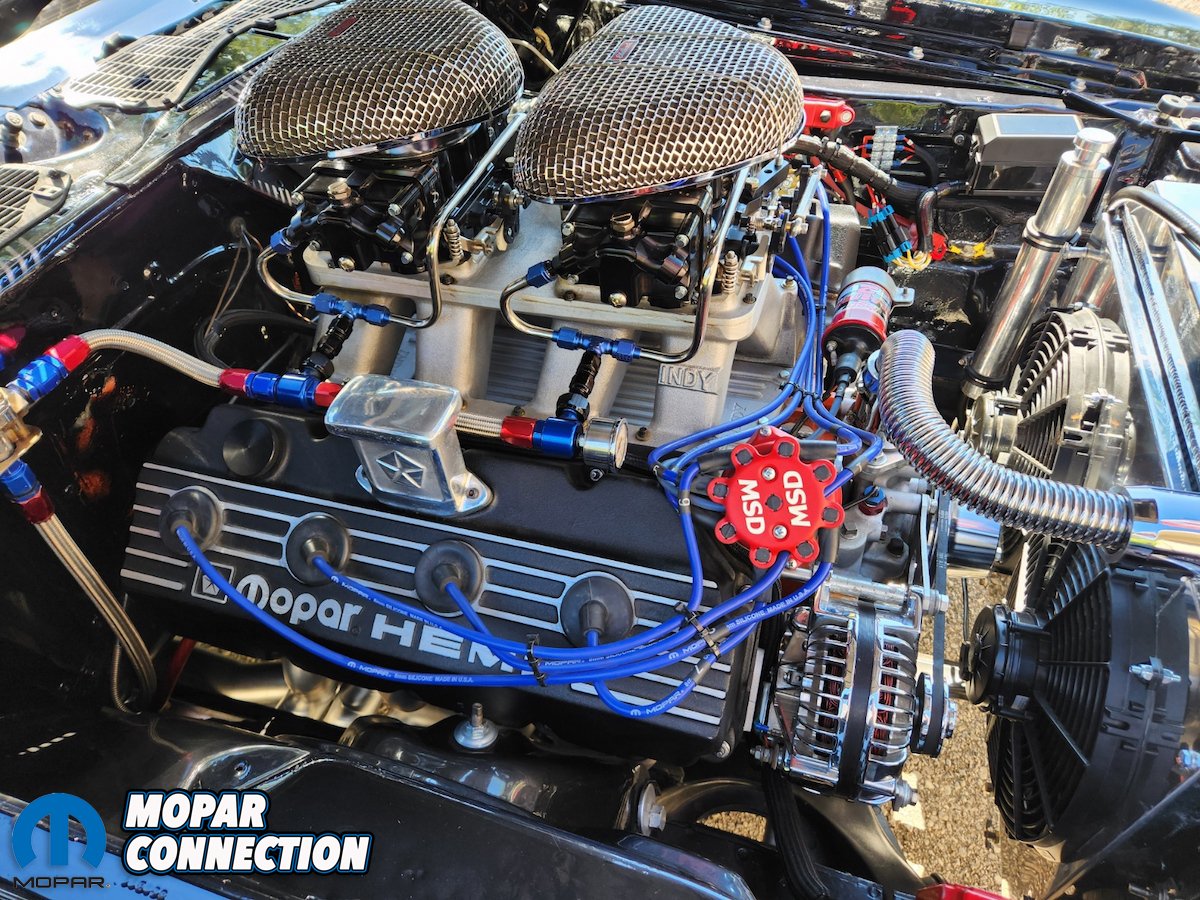
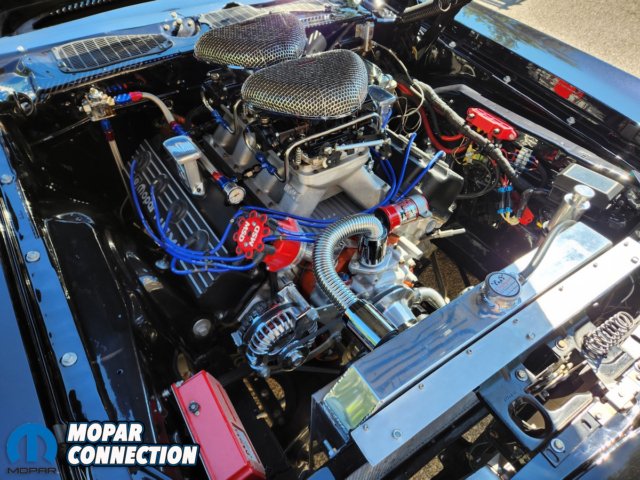
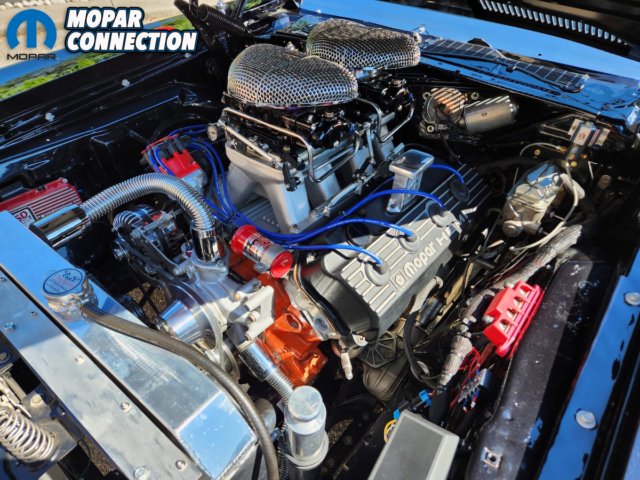
The engine was a 528 cu in Hemi beast built by Ray Barton Racing Engines. The original owner from Saskatoon was going to put this engine in his Dodge Charger but never did, so the engine has been sitting in the crate since 2006.
The cylinder heads feature Mopar Performance aluminum construction and are fitted with roller rockers, 2.25” intake valves, and 1.94” exhaust valves. To improve the geometry between the rockers and valve stems, valve caps have been added. The camshaft, chosen by Ray Barton, has a duration of 257 at 0.50 and a lift of 0.603, utilizing a hydraulic flat tappet design.
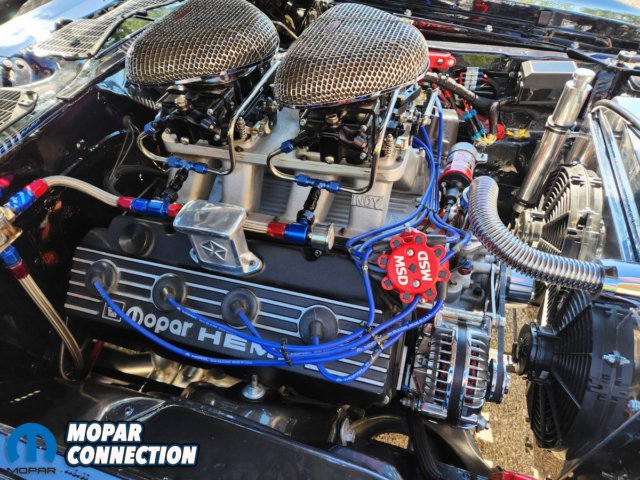
The Hemi boasts aluminum valve covers from Mopar Performance, crafted by Keith Black, along with an INDY Tunnel Ram intake manifold. Air flows through two 750 CFM double-pumper carburetors from ADP via Edelbrock Pro-Flo twin air cleaners. To enhance its visual appeal, the engine is also fitted with V-belt March aluminum pulleys. MSD 6AL multi-spark ignition and an MSD Pro Billet distributor are used to keep the spark going.
TTI headers feature 2 ¼” primary pipes and 4” collectors, which channel into a 3” Magnaflow exhaust system that is so powerful it vibrates your core and leaves no doubt that this elephant engine is ready to dominate anything in its path.
Terry is a big fan of the tunnel ram setup, calling it old school, “just like me!” he says. “It’s something I’ve always wished for. It takes me back to the days of watching Sox and Martin cars.”
To ensure optimal cooling, the setup includes a high-volume aluminum water pump, an aftermarket aluminum 26” radiator along with a shroud from Barefoot Racing, and twin Spal electric fans to enhance airflow.
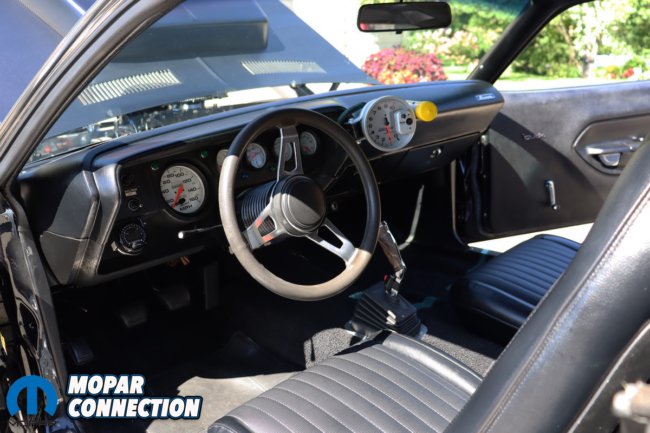
This vehicle features a Chrysler A833 18-spline, 4-speed transmission paired with a Hurst pistol grip shifter, equipped with a Quicktime scatter shield and a CenterForce clutch. Power is efficiently delivered to a Dana 60 rear axle fitted with 4.10 gears and a SureGrip positraction system. The Bear axles utilize a durable 35-spline configuration, enhanced by Bear ring and pinion gearing.
Terry has Hemi leaf springs with a Calvert CalTracs traction system to keep the rear wheels in place when hitting the go pedal. QA1 adjustable shocks were used to complement the rear suspension setup. Terry welded Hotchkis frame connectors into the unibody to add strength.
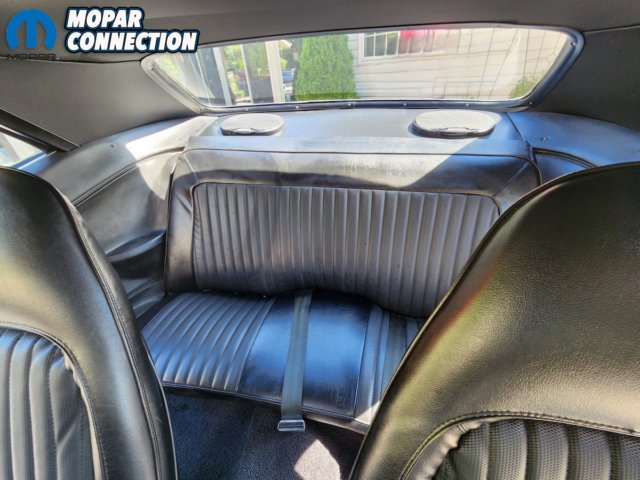
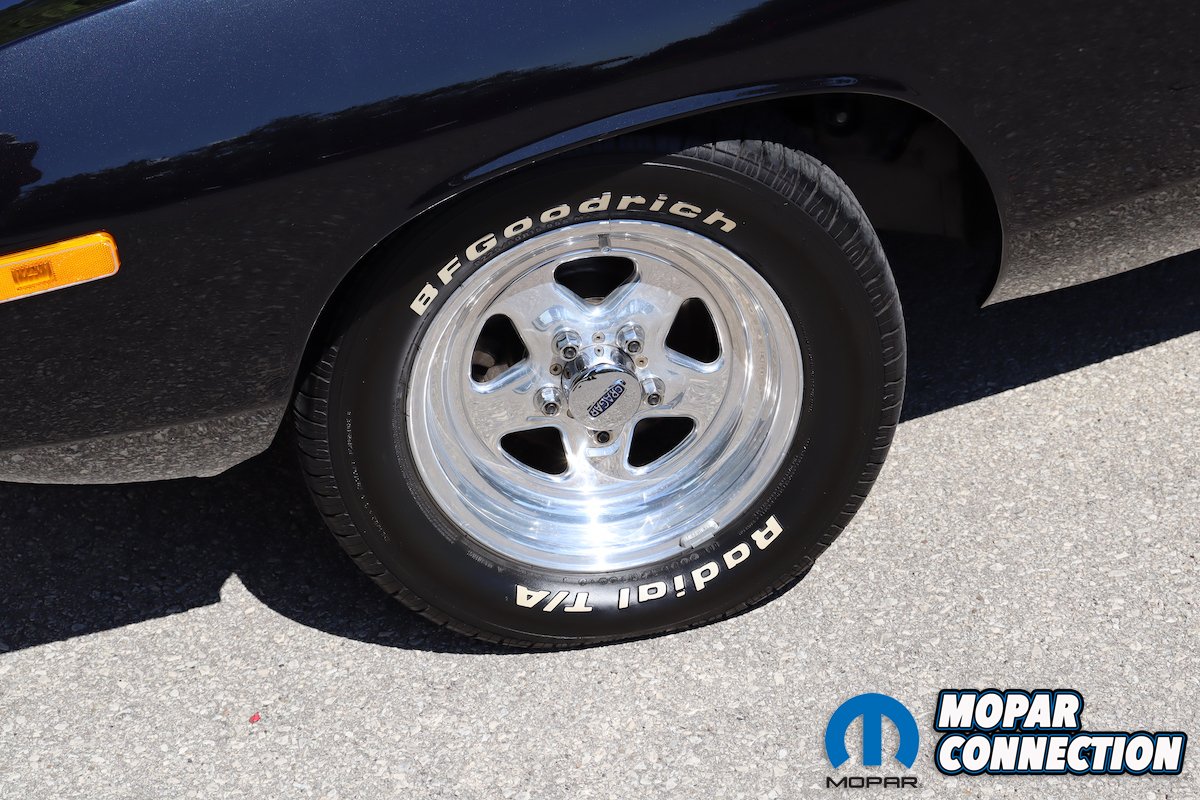
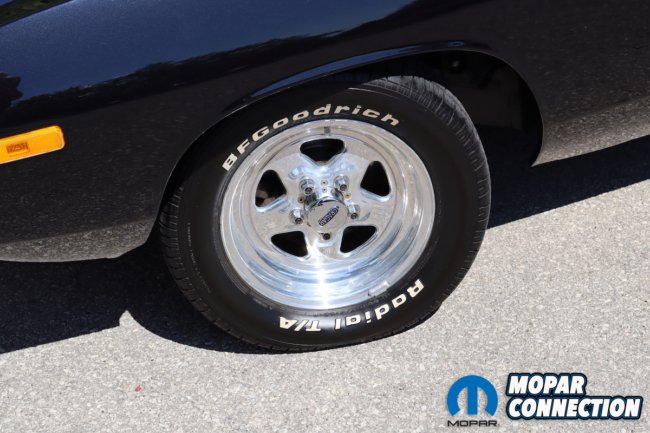
The ‘Cuda is equipped with Weld rims, featuring 6”x15” wheels in the front paired with 225/60R15 B.F. Goodrich tires, and 10”x15” wheels in the rear fitted with 275/60R15 Nitto drag radials. The final touch was the installation of new seat covers sourced from Legendary Auto Interiors. Terry revitalized the foam and seats with these original style covers. The panels and dashboard remain original to the car and are in excellent condition.
Terry has owned the car for ten years, and things came together for him in 2017. He looks forward to driving it whenever he can and sometimes swaps it with his other vehicle. Although he encountered difficulties and stress during the process, everything worked out, and now he genuinely enjoys every moment with his car. His lifelong wish was to own a Hemi car, and now that dream has come true.