If you spend enough time around old Mopars, you start to witness something that does not show up in the brochures, service manuals, or magazine track tests. Two engines with matching factory specifications can behave like totally different machines. One starts clean, idles steadily, and responds crisply to throttle input.
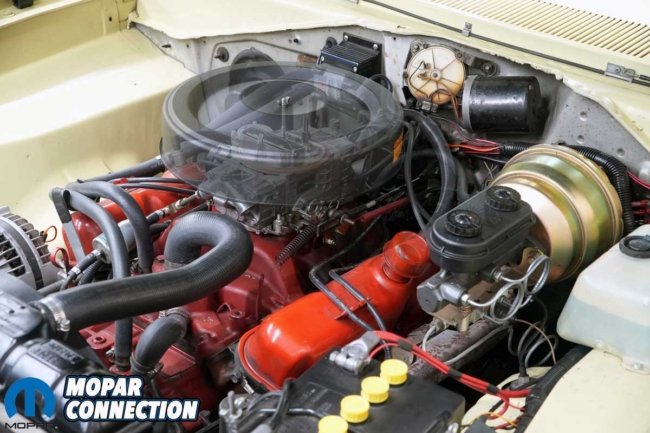
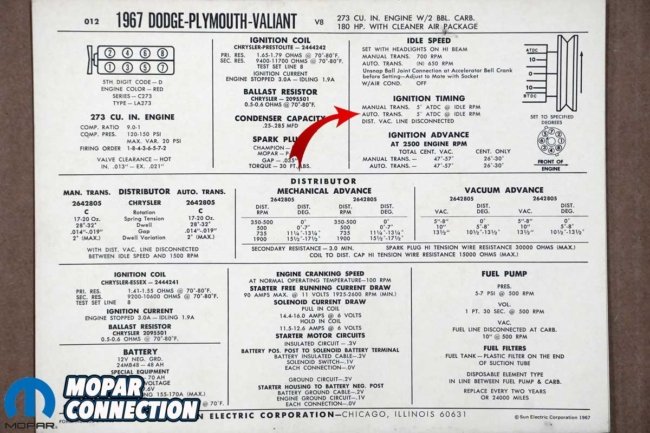
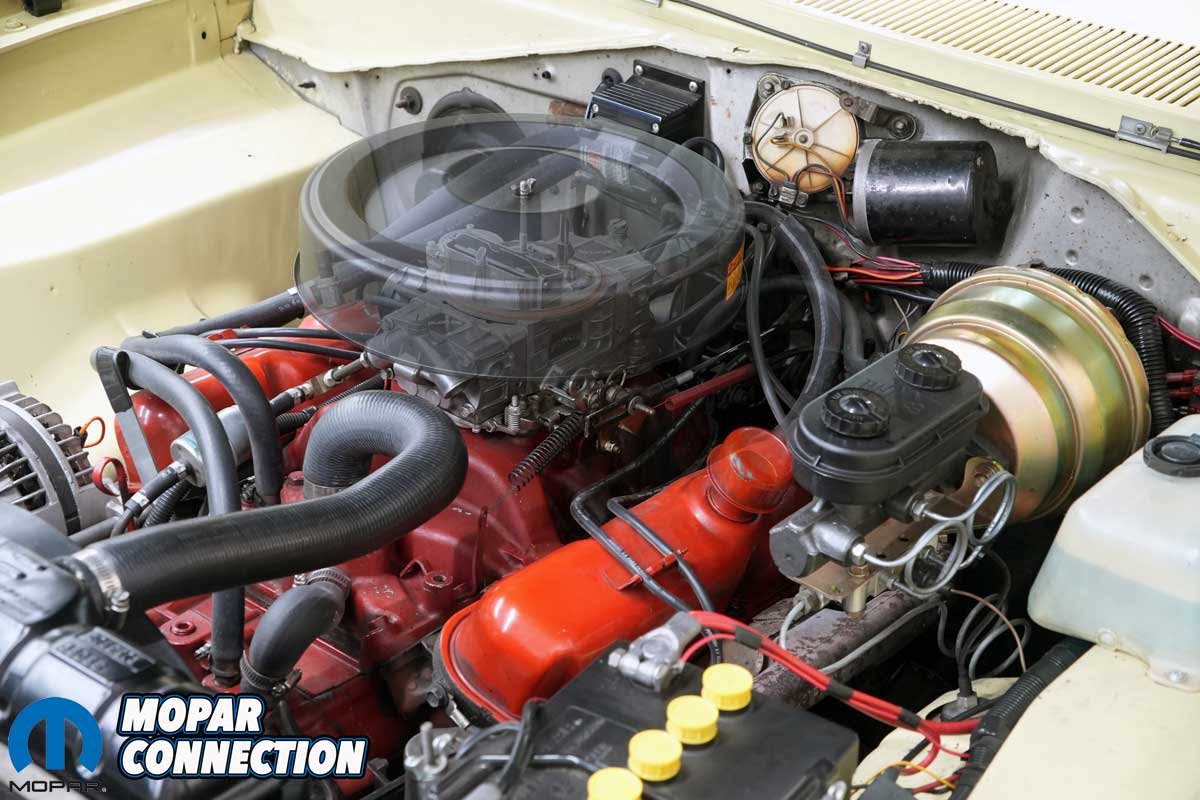
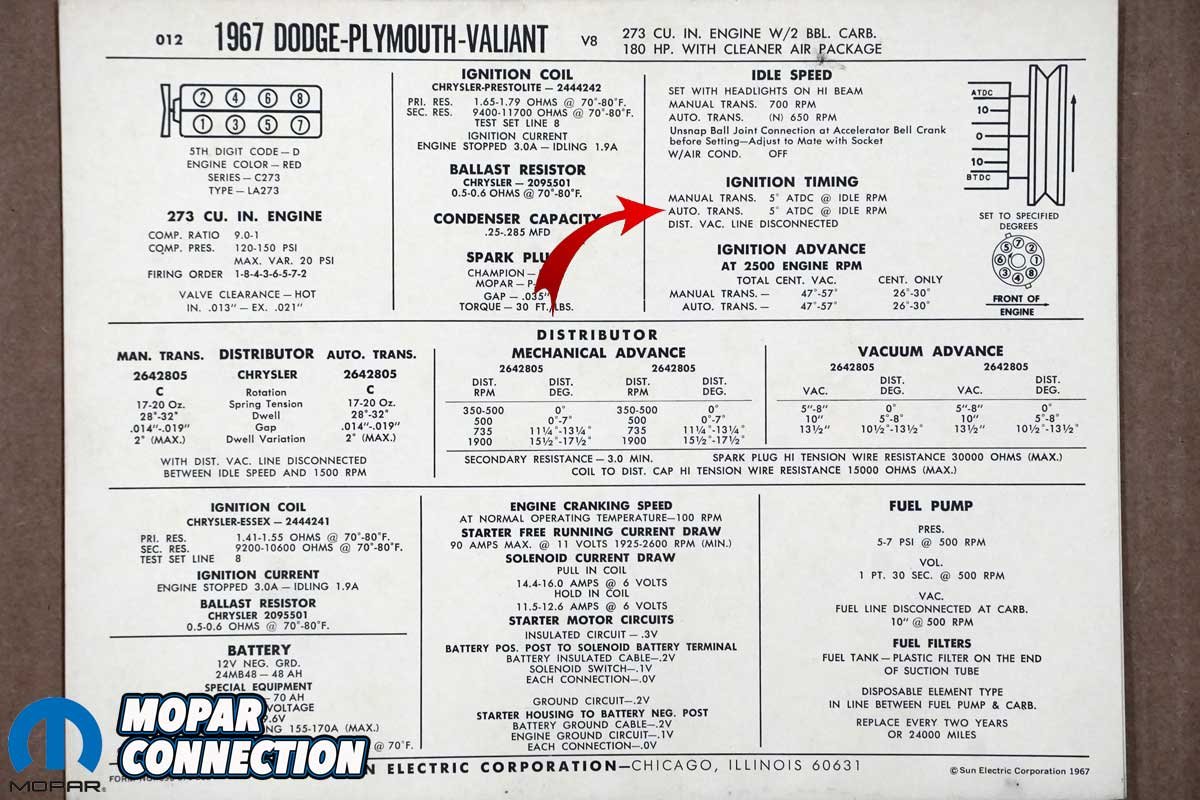
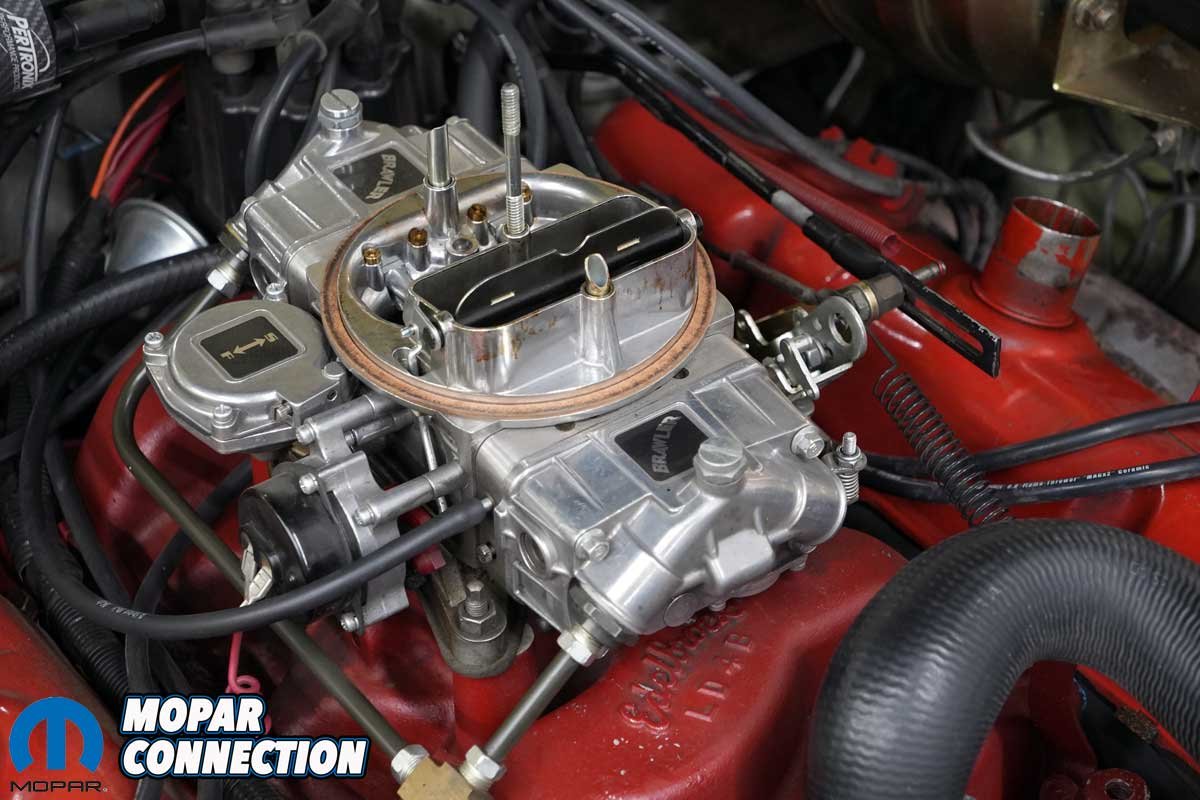
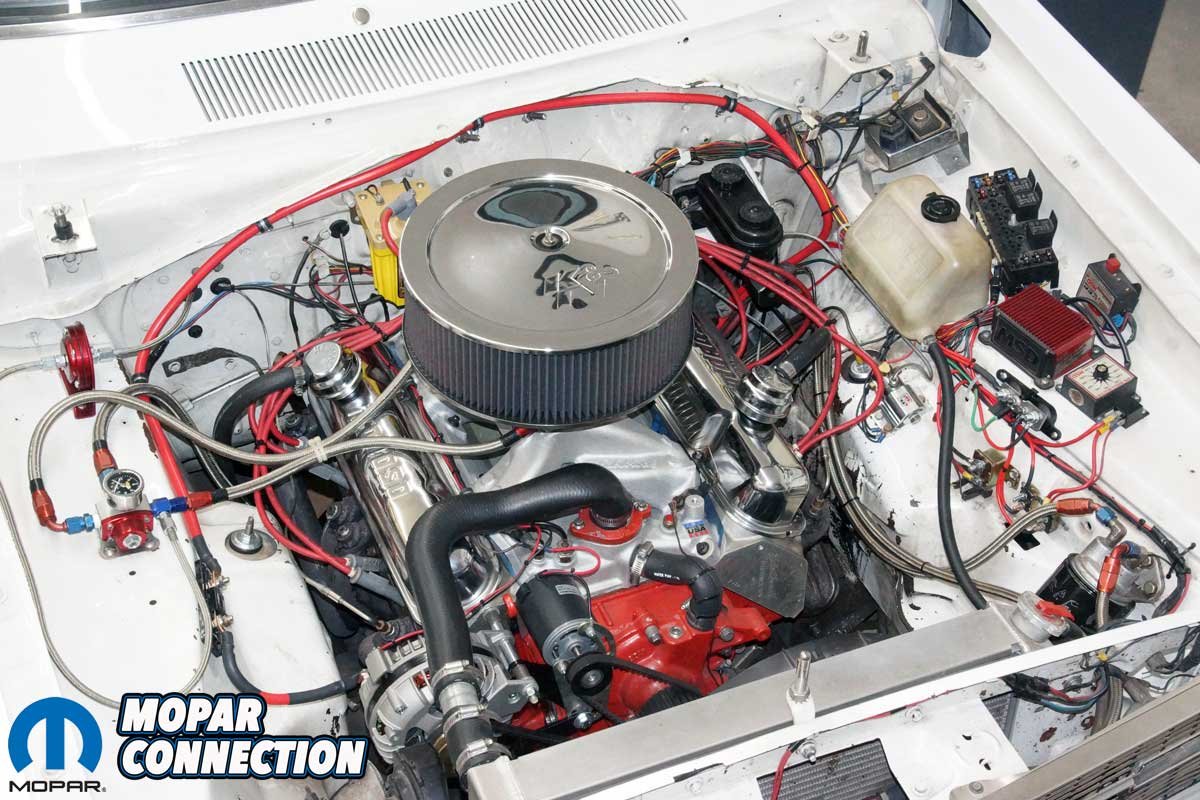
Above Left: One of the first things most enthusiasts do is modify their Mopar, and the moment they do, the factory specifications become a starting point instead of the finish line. Any change to the engine or induction system affects the tune-up, so we recalibrated the air/fuel mixture, fuel octane, ignition timing, centrifugal and vacuum advance curves, valve lash, and several other settings to find the best combination of performance, drivability, and efficiency. Above Right: This engine started life as an 180-horsepower (gross), 273-cubic-inch V8 with a two-barrel carburetor. Installing a Brawler four-barrel immediately changed the engine’s airflow demands. To make matters more interesting, the engine had been rebuilt before the current owner bought the car, and there was no documentation identifying the camshaft or compression ratio. Even with those unknowns and the modifications, we began by setting the ignition timing to the factory specification of 5 degrees ATDC, then determined what the engine wanted.
The other fights with its owner to start and then feels flat, inconsistent, or slightly off even though every setting checks out “by the book.” Same timing specs, same factory parts, and even the same advertised compression ratio, but a different outcome.
That contradiction leads to a simple but uncomfortable truth: factory specifications were rarely intended to represent the absolute peak performance of an engine. They were intended to guarantee survival under the widest possible range of real-world conditions.
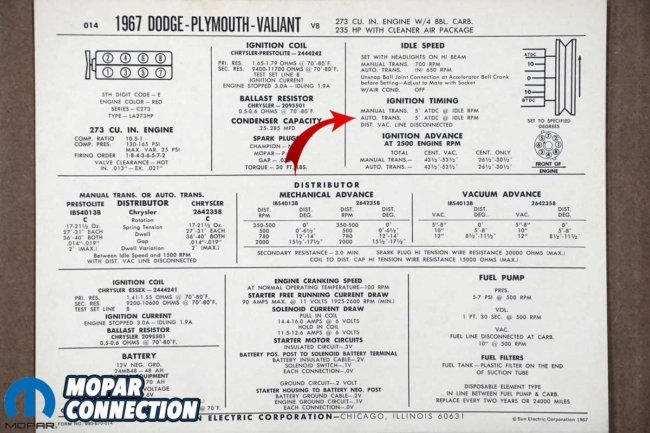
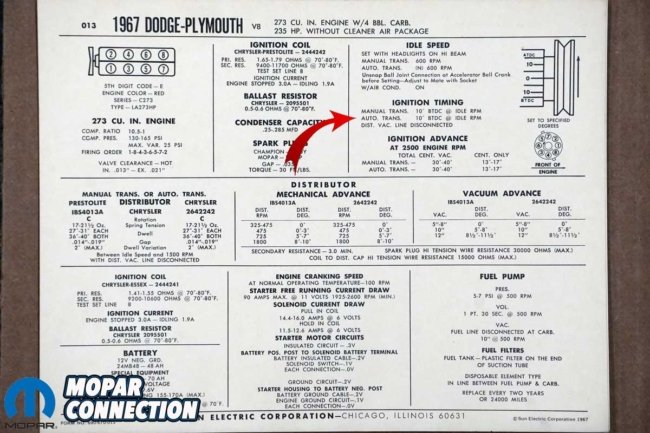
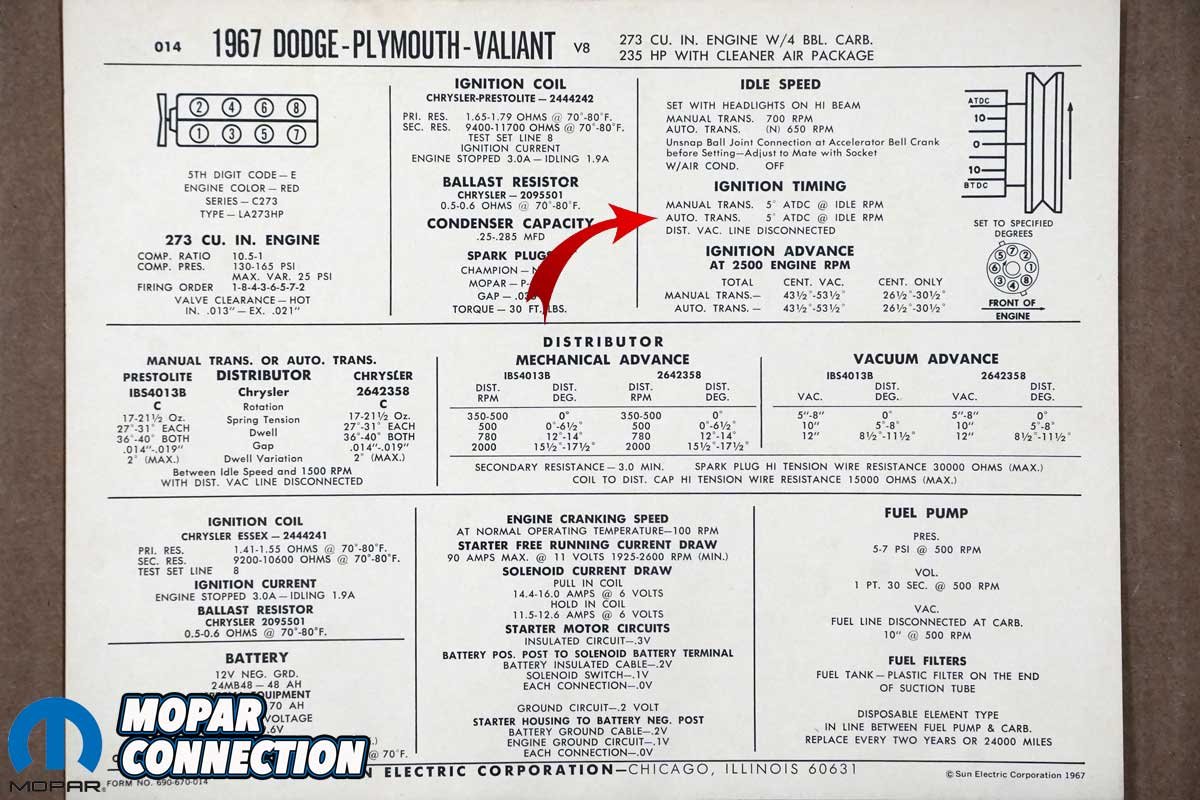
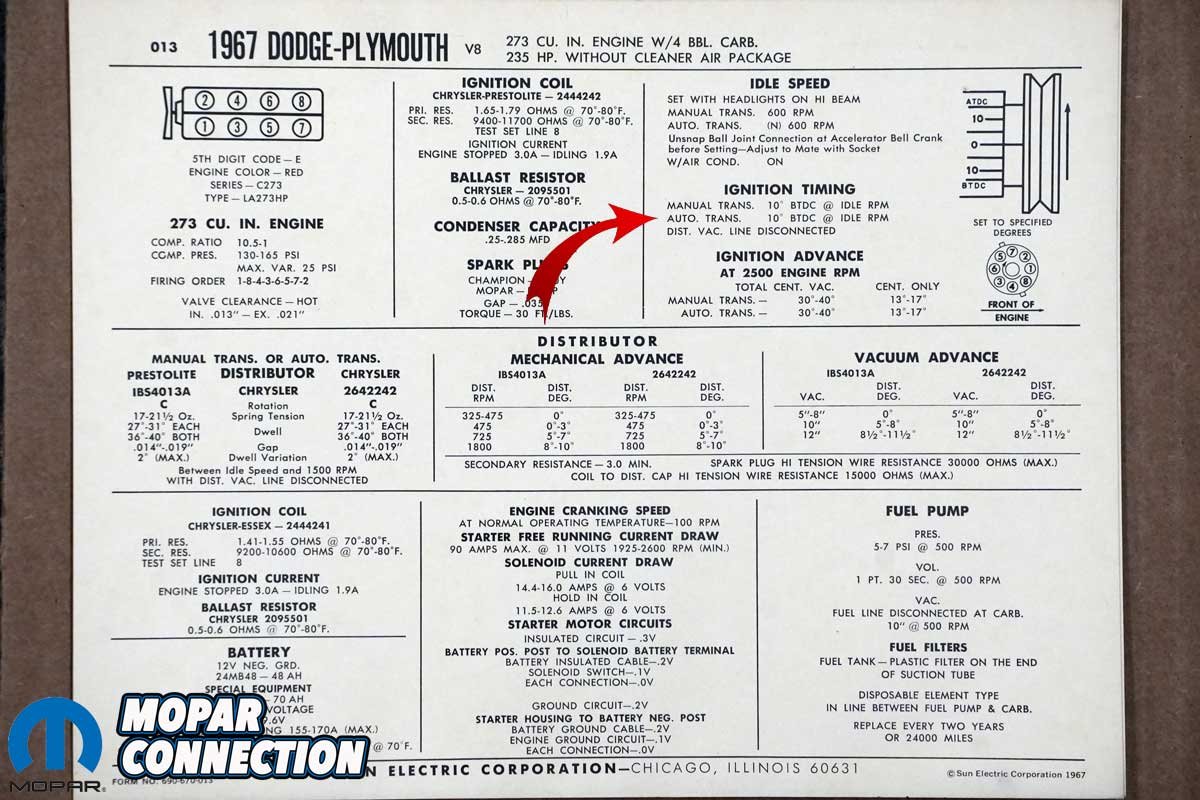
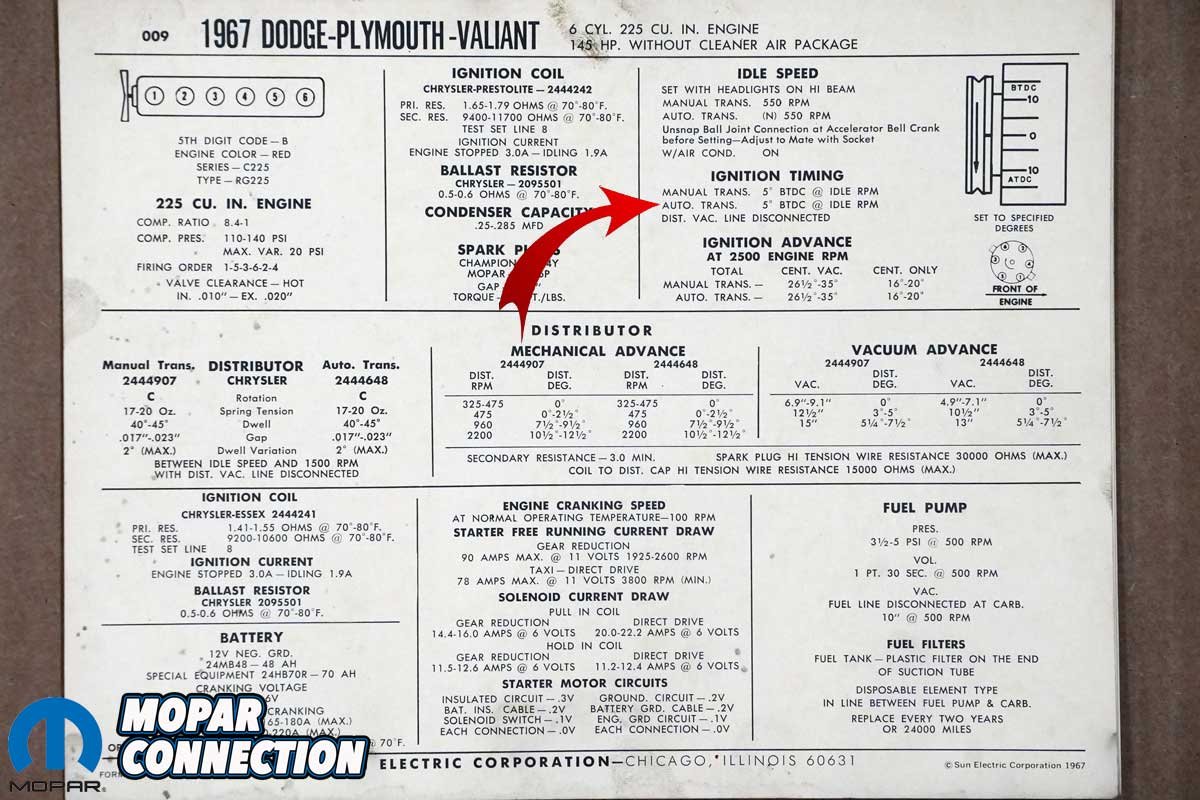
Above Left: Since we installed a four-barrel carburetor, should we use the factory specifications for the 235-horsepower (gross) 273 with the Cleaner Air Package? Not necessarily. Chrysler developed those specifications for an engine with a 10.5:1 compression ratio. Even so, the factory still called for an initial timing setting of just 5 degrees ATDC. Above Center: The 273 without the Cleaner Air Package tells a different story. Factory specifications increased the initial timing to 10 degrees BTDC, yet the total ignition advance, including vacuum advance, was substantially lower than the Cleaner Air Package version. The differences illustrate that ignition timing was engineered as a complete system, not just a single initial timing number. Above Right: Rather than relying on factory specifications or guesswork, we spent hours testing on a Mustang chassis dyno to determine the engine’s ideal initial timing, centrifugal advance curve, and vacuum advance calibration. We also re-jetted the slightly oversized carburetor, improving throttle response, drivability, and overall engine performance.
Every published number on a muscle car spec sheet sits inside a much larger operating window that most factory documentation never fully describes. Understanding that window changes how you diagnose, tune, and interpret what these engines are telling you.
Factory specifications are often treated like precise targets. Set the initial timing to a given value before, at, or after top dead center, install specific jet sizes, verify cranking compression, and assume you have replicated the factory intent. That approach supposes the factory delivered the engine at its optimal setting. In reality, the factory delivered a safe compromise that would work across a wide range of tolerances, fuel qualities, climates, and usage patterns.
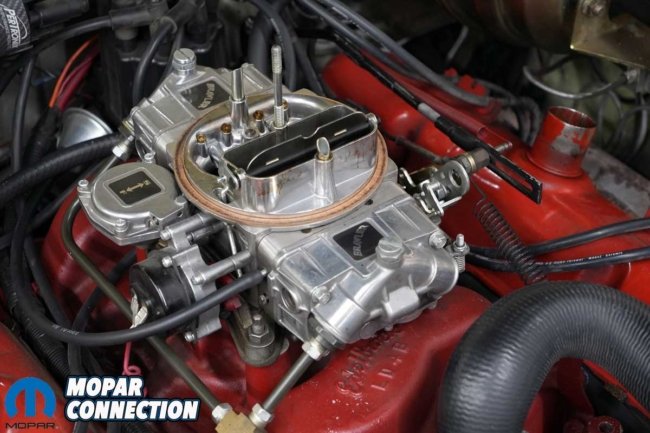
Above: Getting the best combination of performance, drivability, fuel economy, and efficiency required more than simply changing the ignition timing. We increased the primary jets from the factory 66s to 72s, then installed larger screw-in air bleeds (73 to 76 in the primaries and 73 to 77 in the secondaries) to lean out idle and fine-tune the fuel curve. We also increased the accelerator pump discharge nozzle from 0.026 inch to 0.030 inch to sharpen throttle response. After comprehensive testing, the engine settled in at 12 degrees initial timing, 36 degrees total timing with the centrifugal advance, and 49 degrees with the vacuum advance connected. Valve lash remained within the factory specification range. The final tune produced a lambda value of approximately 0.89 at idle and 1.07 during steady-state cruising. On the Mustang chassis dyno, the 273 made 182 lb-ft of torque at 3,600 rpm and 144 horsepower at 4,900 rpm (rear wheel numbers), while consistently returning 17-18 mpg in around-town driving. Those numbers indicate that careful tuning, not mindlessly following factory specifications, can produce an engine that is both more enjoyable to drive and remarkably efficient.
Engineers in the muscle car era were not primarily optimizing for maximum output. They were managing variability. Production tolerances meant no two distributors were identical. Carburetors varied slightly from unit to unit. Vacuum advance cans had real-world differences that were never reflected in printed specifications. Even identical engines rolling off the same line could have small but meaningful differences in how they actually ran.
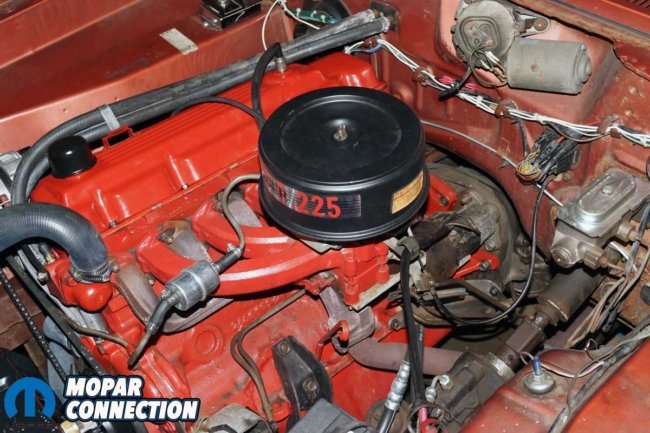
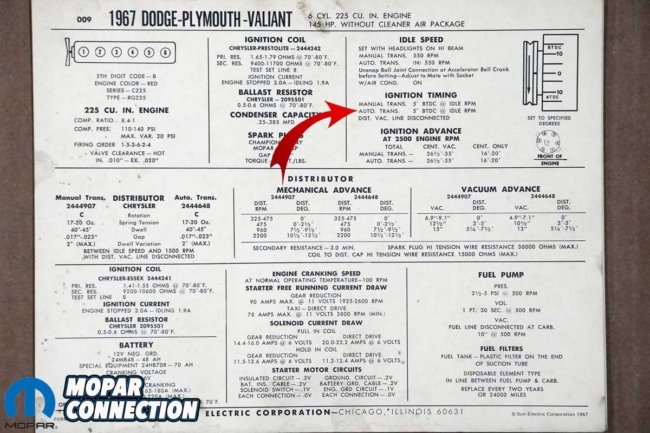
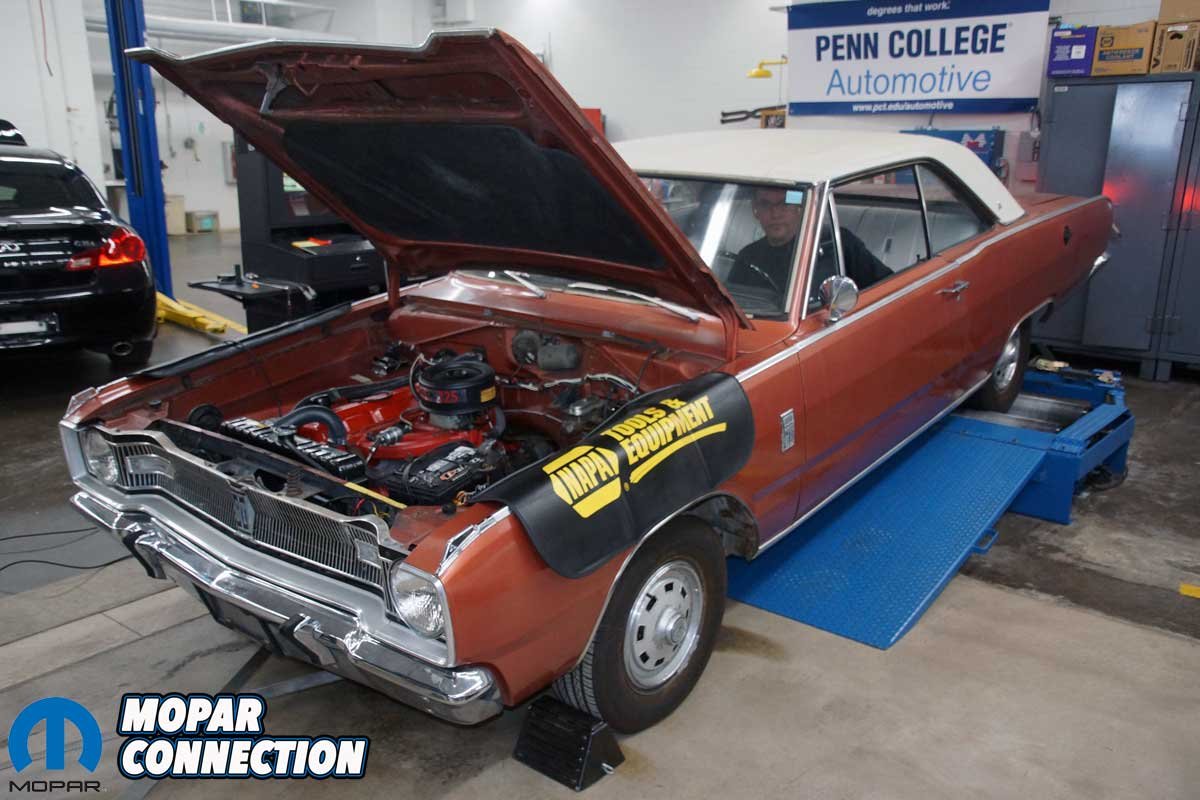
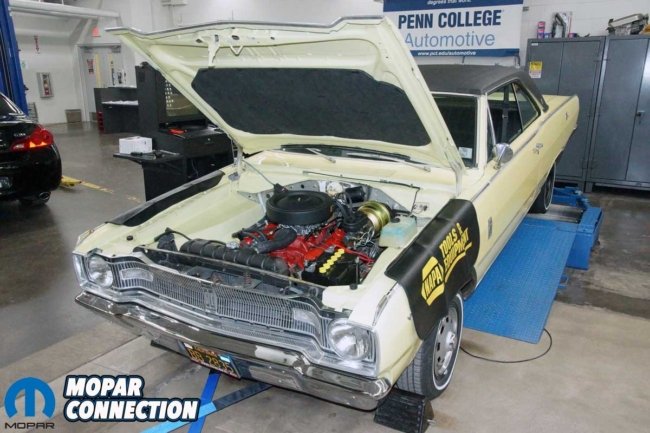
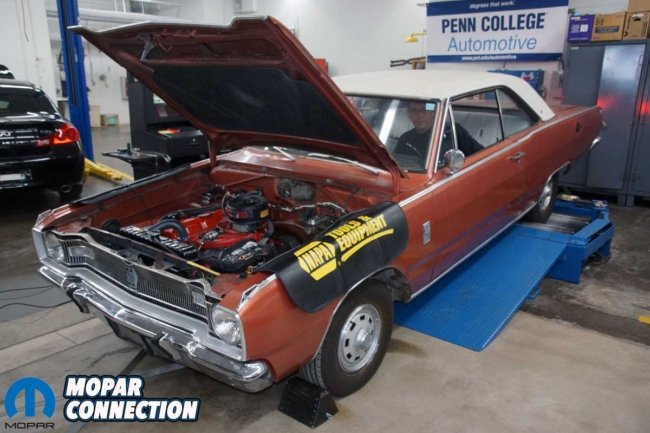
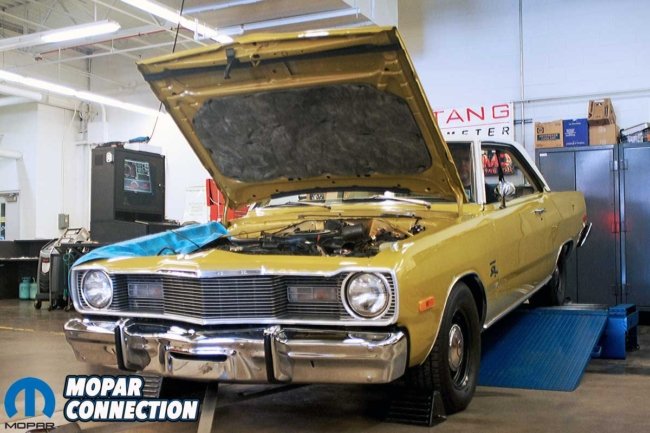
Above Left: Pennsylvania College of Technology‘s “Dyno Dart” has accumulated more than 4,000 miles on the chassis dyno in our engine performance class. Aside from an electronic ignition conversion and a modest increase in compression ratio to 9.3:1, the drivetrain remains essentially stock. It still uses the factory Holley 1920 one-barrel carburetor with its original jetting, the stock distributor, and an otherwise unmodified driveline, making it an ideal platform for controlled tuning and testing. Above Right: We began our testing with the factory valve lash settings of 0.010 inch on the intake valves and 0.020 inch on the exhaust valves. Initial ignition timing was also set to the factory specification of 5 degrees BTDC, giving us a true baseline before making any tuning changes.
Then layer in fuel quality. These engines were expected to operate on a broad range of gasoline quality that varied by region, season, and supply conditions. Detonation risk was not a hypothetical concern. It was a daily engineering limitation. The calibration strategy had to account for the worst fuel the engine might experience, not the best fuel obtainable at test time.
Above: Simple tuning changes produced impressive results. By re-jetting the carburetor, optimizing the ignition timing, and experimenting with the factory valve lash settings, we greatly increased both torque and horsepower over the baseline. The final combination used a 64 jet, 15 degrees initial timing BTDC, and 30 degrees total mechanical timing. Although we tested a looser valve lash, the engine ultimately performed best with the factory specifications, so that is where we left it. Vacuum advance was not evaluated during this phase of testing. The result was 143 lb-ft of rear-wheel torque at 2,900 rpm and 89 rear-wheel horsepower at 3,600 rpm. The complete testing procedure and results were documented in More Power for Your Leaning Tower: Add 14 Horsepower to Your Slant 6.
Ignition timing is where this becomes most obvious. A factory specification might list a conservative initial setting and a mechanical advance curve that appears fixed on paper. But in practice, the total system manners vary from engine to engine. One distributor may reach full advance early and smoothly. Another may be slower or unpredictable due to tolerance stack-up or wear. Vacuum advance units add another layer of variation that is rarely respected until they are tested directly.
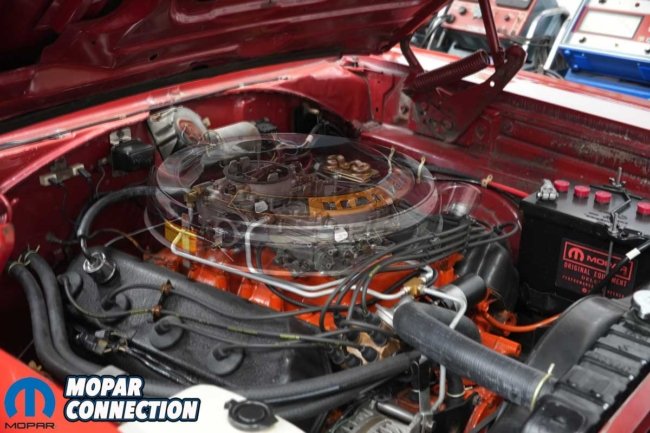
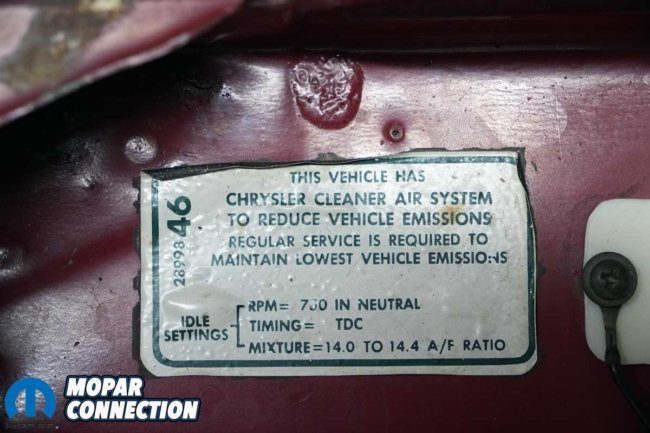
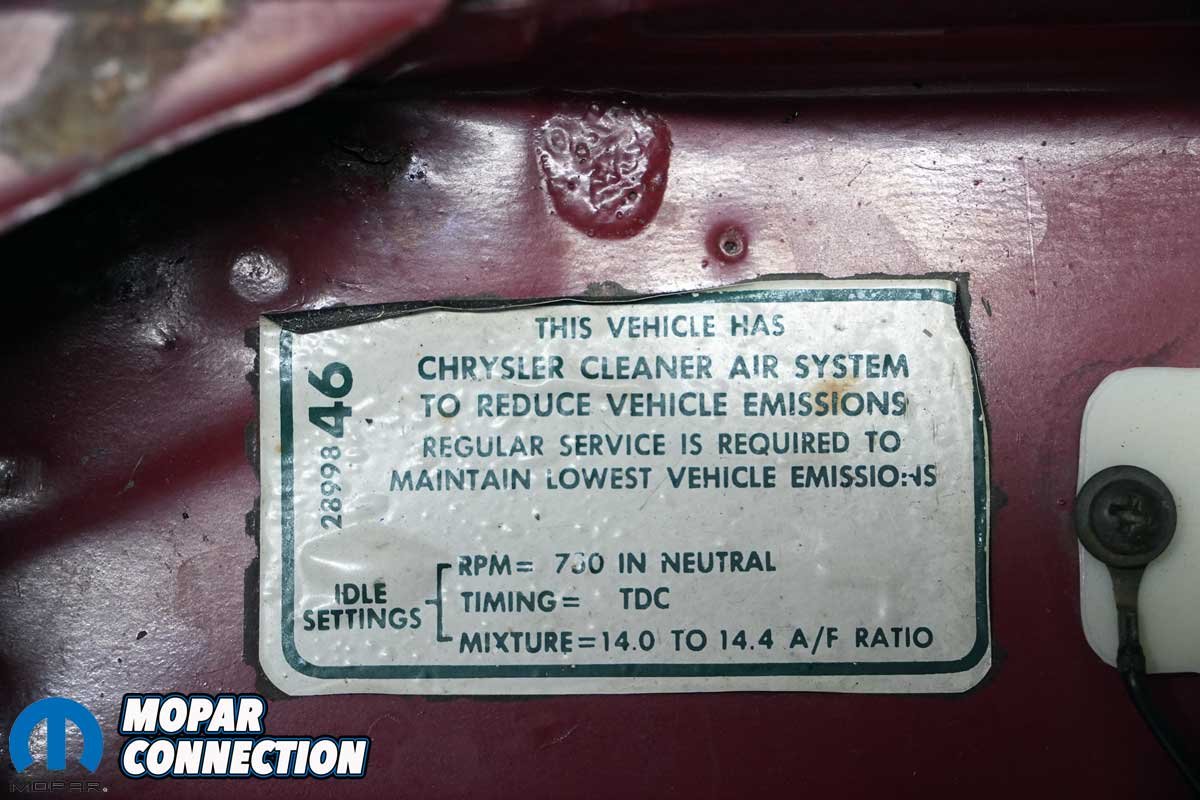
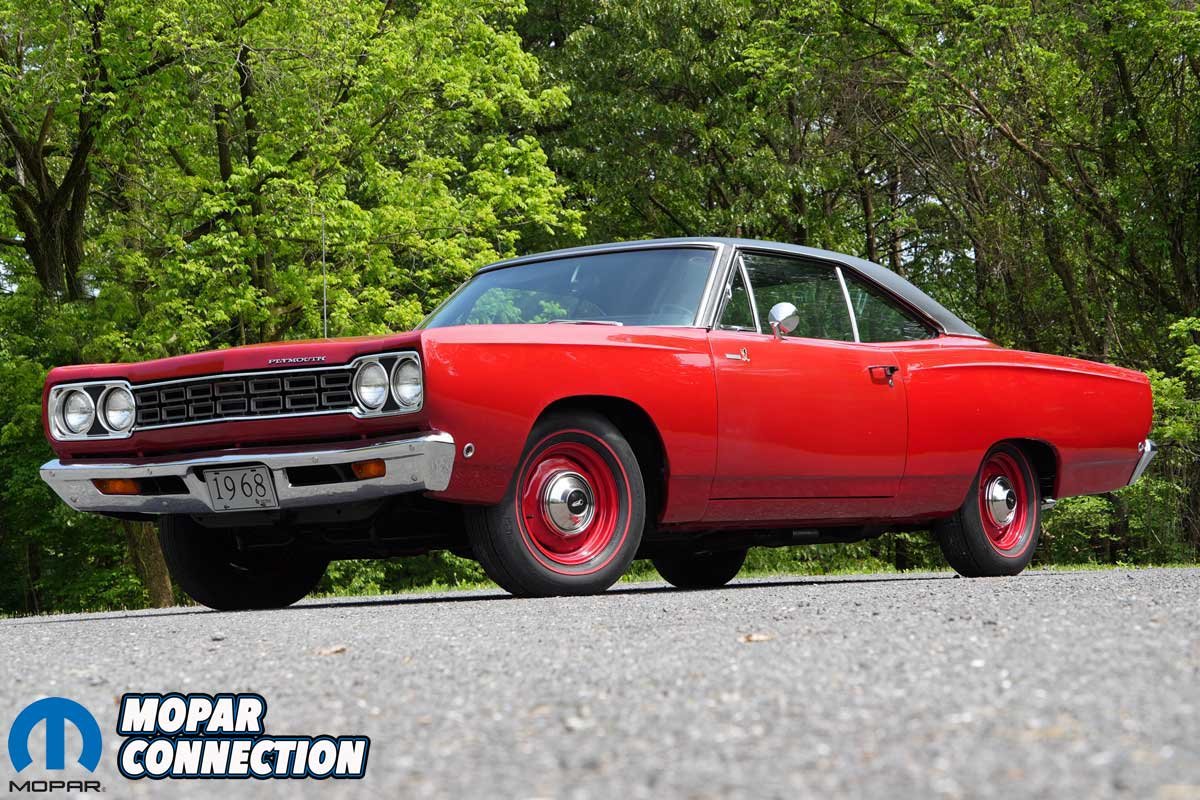
Above Left: Project Rara Hemious Birdicus has undergone a considerable transformation in drivability during our sixteen months of ownership. Every part of the engine’s performance has been evaluated, including the ignition system, carburetion, valve lash, and overall mechanical condition. Rather than assuming the factory specifications were still appropriate, we scrutinized the engine to determine what it needed to perform at its best. Above Right: The ’68 Road Runner still retains its original emissions sticker on the passenger-side inner fender apron. Unlike our ’67 Darts, where the specifications had to be looked up, this label provides the technician with the basic service information required, including engine speed, ignition timing, and air/fuel ratio targets. It serves as a reminder of how little information was provided directly under the hood for proper diagnosis and tuning compared to today’s vehicles.
The result is that the published timing specification is not a single ideal point. It is a calibration target located within a range of acceptable combustion behavior. It is a safe midpoint within a range of acceptable combustion behavior. The factory did not know where each engine would land inside that range, and more importantly, they did not need to. They only needed to ensure that none of them crossed into failure under worst-case conditions.
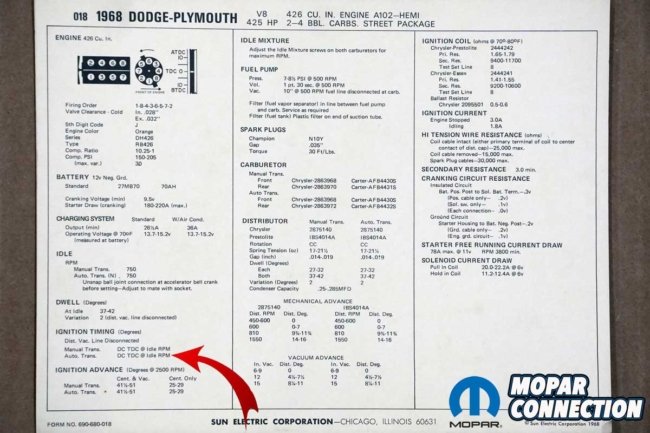
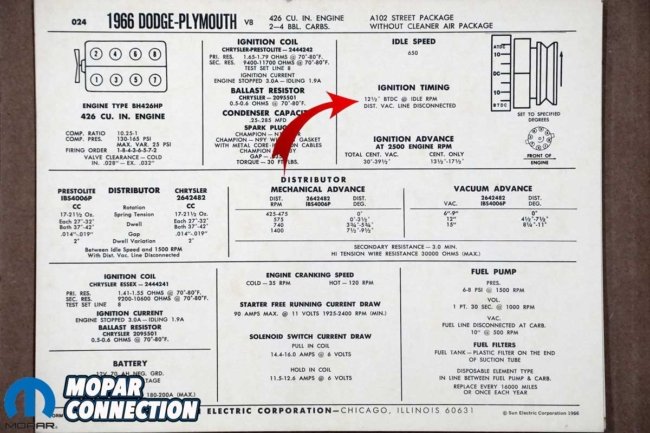
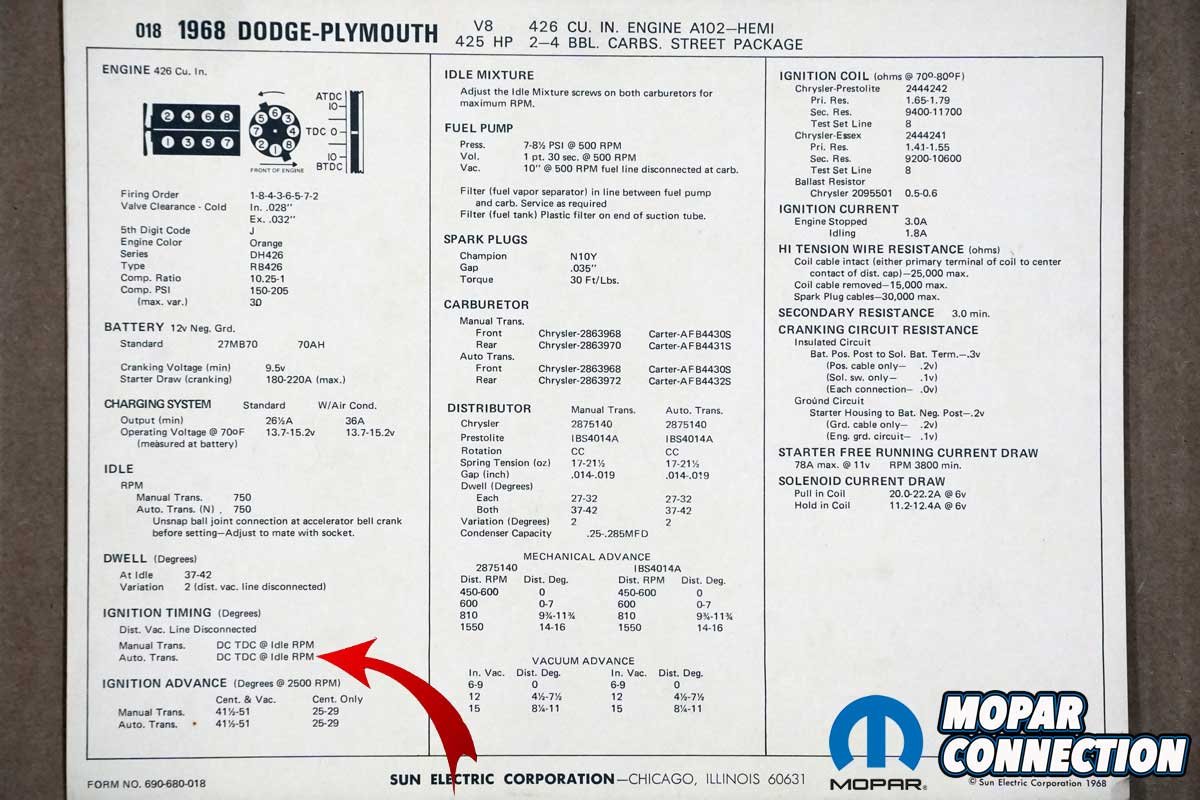
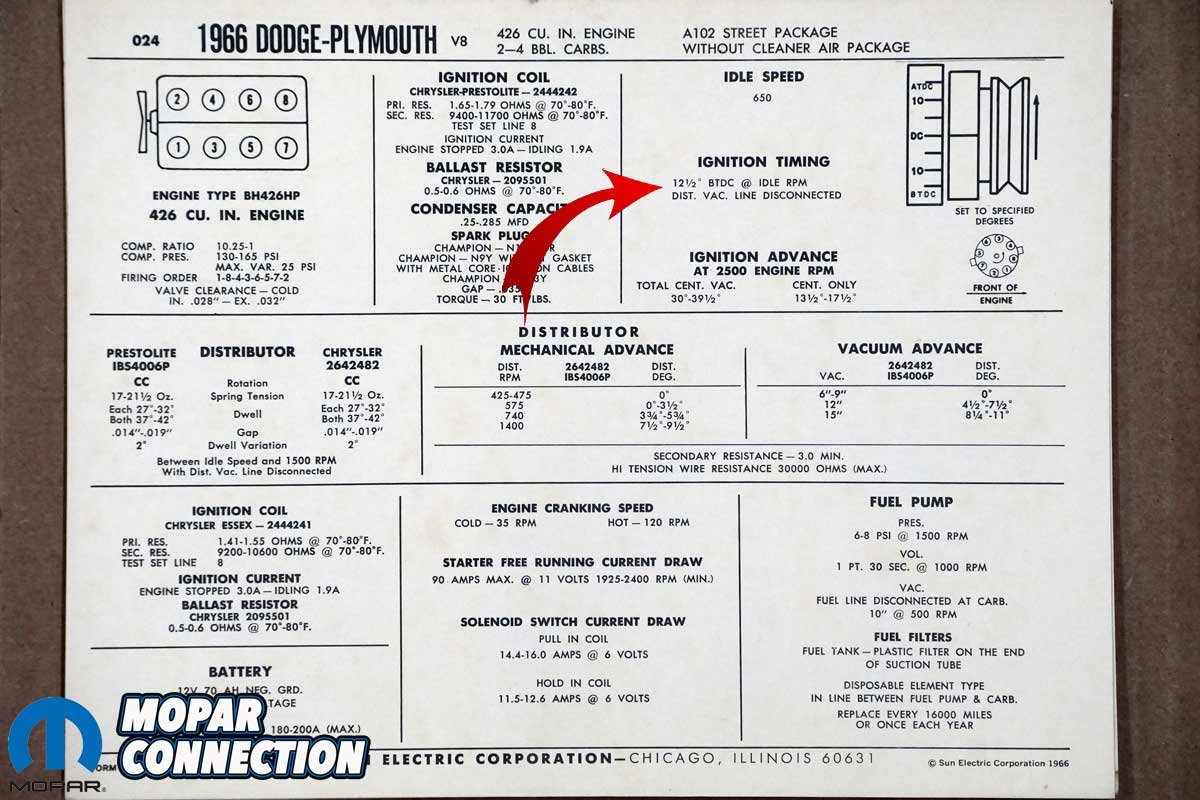
Above Left: The ’68 Hemi’s factory ignition specifications were surprisingly conservative. Initial timing was set at top dead center (TDC), with only 29 degrees of total mechanical advance. When vacuum advance was added, the timing could increase to a maximum of 51 degrees BTDC. Based on our experience and testing, we knew there was likely more performance and efficiency to be gained. Above Right: Specs from just two years prior (1966) had the Hemi operating with 12.5 degrees of initial timing, 30 degrees of total mechanical timing, and only an additional 9 degrees from the vacuum advance.
Carburetor calibration follows the same pattern. Jetting, metering rods, and transition circuits were developed to provide drivability across a wide range of conditions, not maximum response under controlled conditions. Cold-start requirements, hot-restart behavior, emissions compliance, altitude variation, and fuel quality all affected the final calibration. The result is that factory carb (or carbs) settings often represent a blended compromise rather than a performance optimum.
The compromise is why many engines respond so noticeably to careful recalibration today. It is not that the original engineers got it wrong. It is that they were solving a different problem. The aftermarket often says: “The factory left power on the table.” The more accurate statement: “The factory left margin on the table.” That margin became horsepower when enthusiasts removed the variables the factory had to protect against.
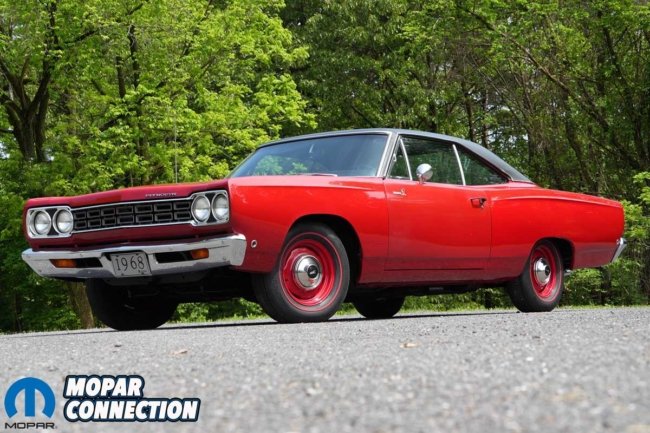
Above: After extensive testing and tuning, we found the engine responded best with 14 degrees of initial timing, 34 degrees of total mechanical advance, and approximately 50 degrees of total timing with the vacuum advance connected. We retained the factory valve lash specifications and adjusted the carburetors to achieve maximum engine vacuum. The result was a more responsive combination with improved performance, drivability, and efficiency.
When modern tuning stabilizes variables such as fuel quality and ignition consistency, the engine often reveals performance that was always present but not fully accessible within the original safety margins.
Compression ratio is another area where the published number can be deceptive. A 10.0:1 engine on paper did not necessarily measure 10.0:1 when assembled with production pistons, production chambers, and production tolerances. Small variations in machining, chamber volume, gasket thickness, and long-term carbon accumulation can all shift the effective ratio. Over time, the engine’s actual operating behavior can drift greatly from its original published specification.
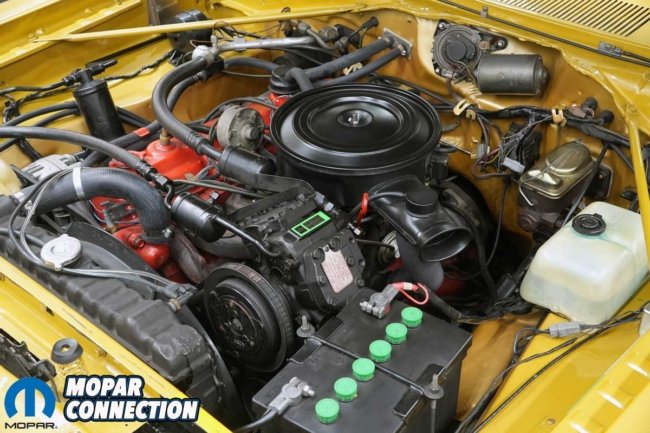
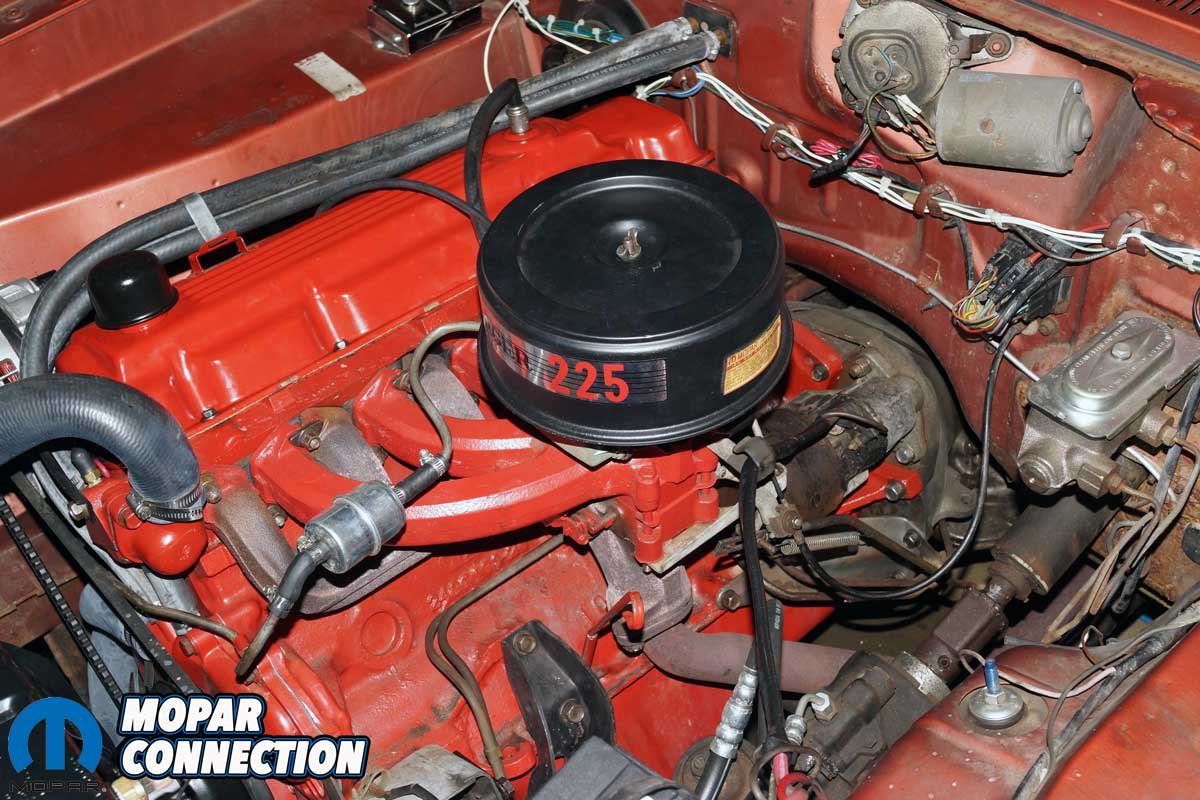
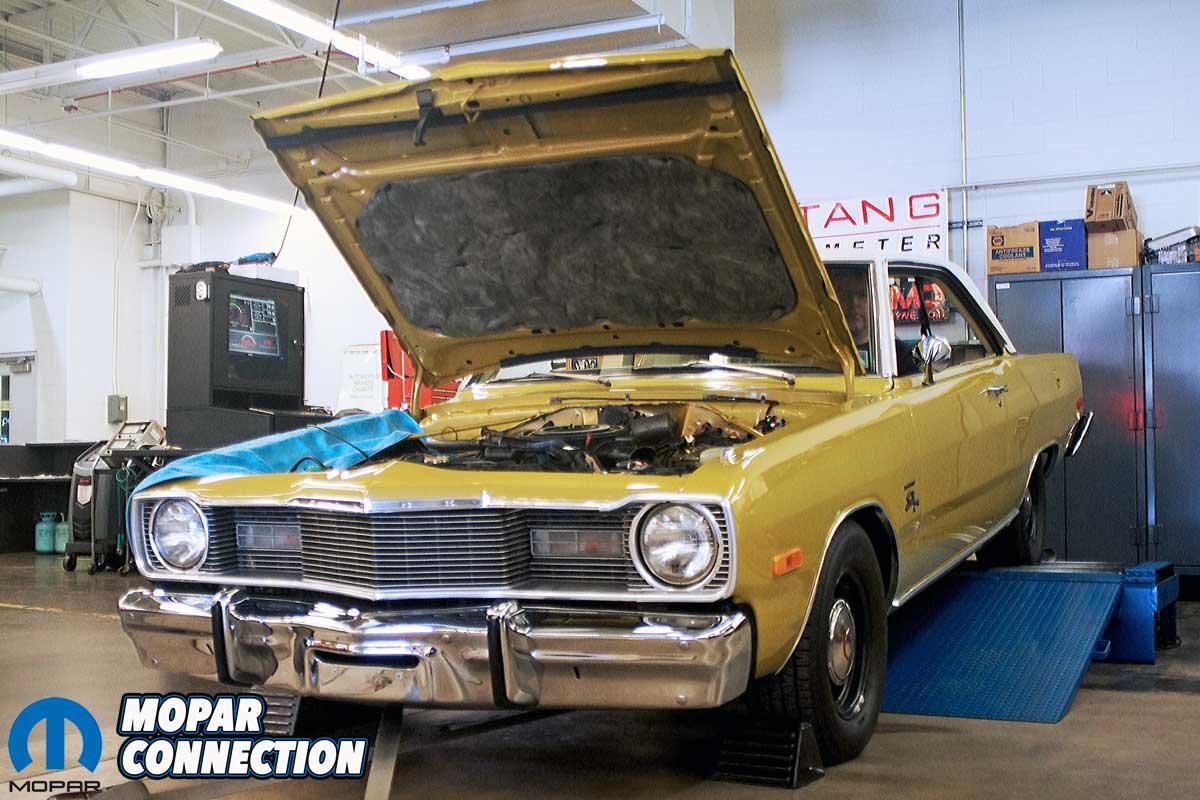
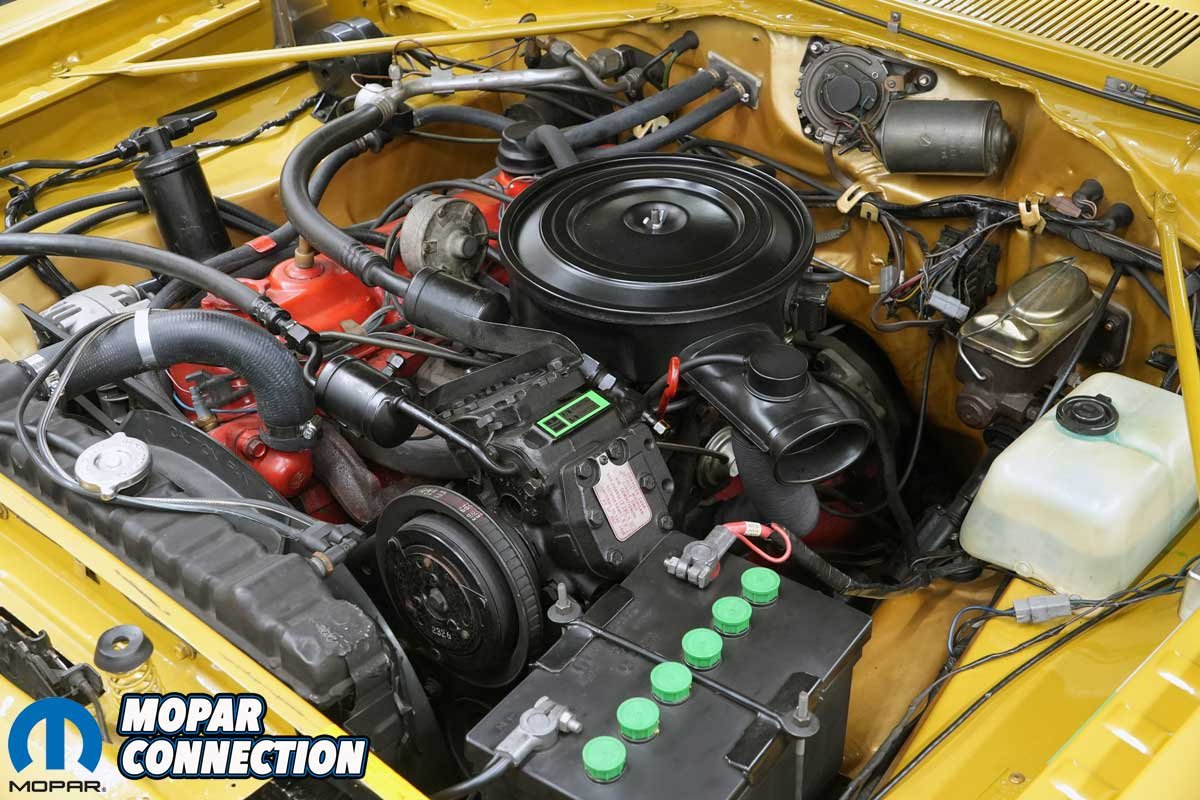
Above: The 1975 Slant Six had the lowest net horsepower output of its production run, at only 95 horsepower. The 8.4:1 compression ratio engine was choked by the era’s emissions requirements. This engine remains remarkably original, retaining all its factory components, including the original-style emissions equipment and an aftermarket catalytic converter. The exhaust system is the only modification made to this otherwise untouched powerplant.
Even more important is how compression was managed in relation to ignition timing and fuel expectations. The factory calibration assumed worst-case combinations. That meant conservative timing curves and rich mixture strategies were often used to ensure reliability, even if they cost a small amount of efficiency or response.

The overarching engineering philosophy was simple. Avoid comebacks at all costs. A negligibly softer engine that never fails in the field is far more valuable to a manufacturer than a flawlessly optimized engine that occasionally detonates, runs hot, or generates warranty claims. Warranty cost and reputation risk compelled calibration decisions as much as performance targets did, if not more.
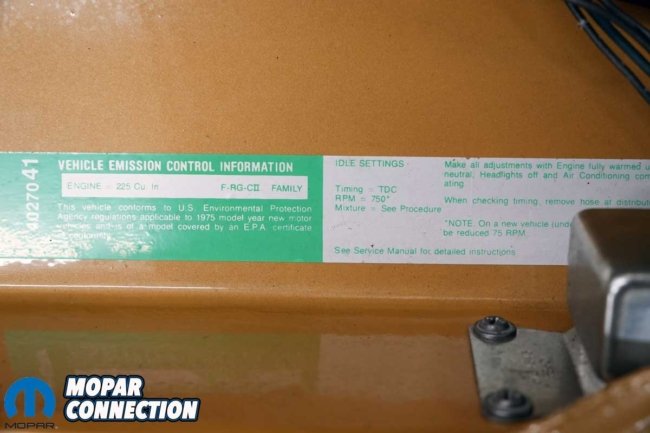
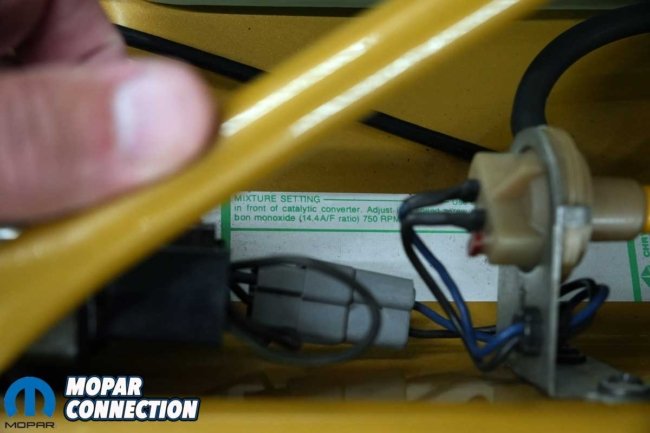
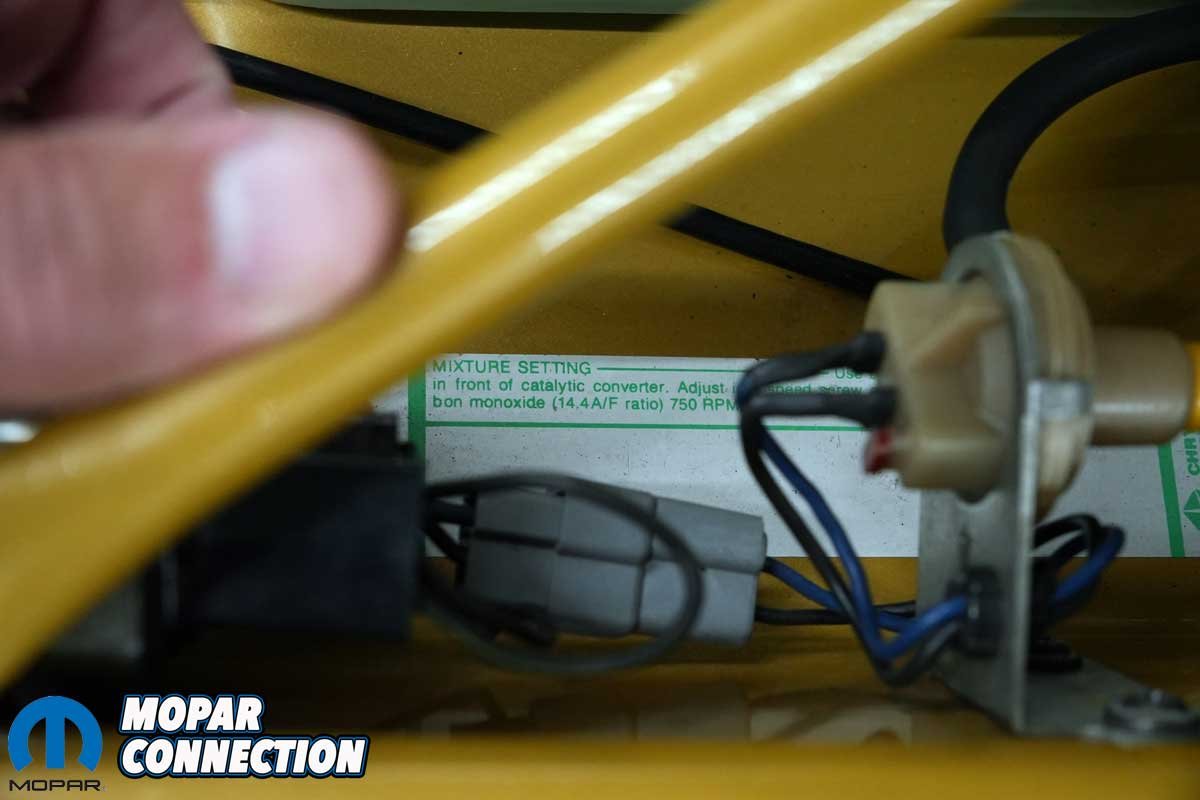
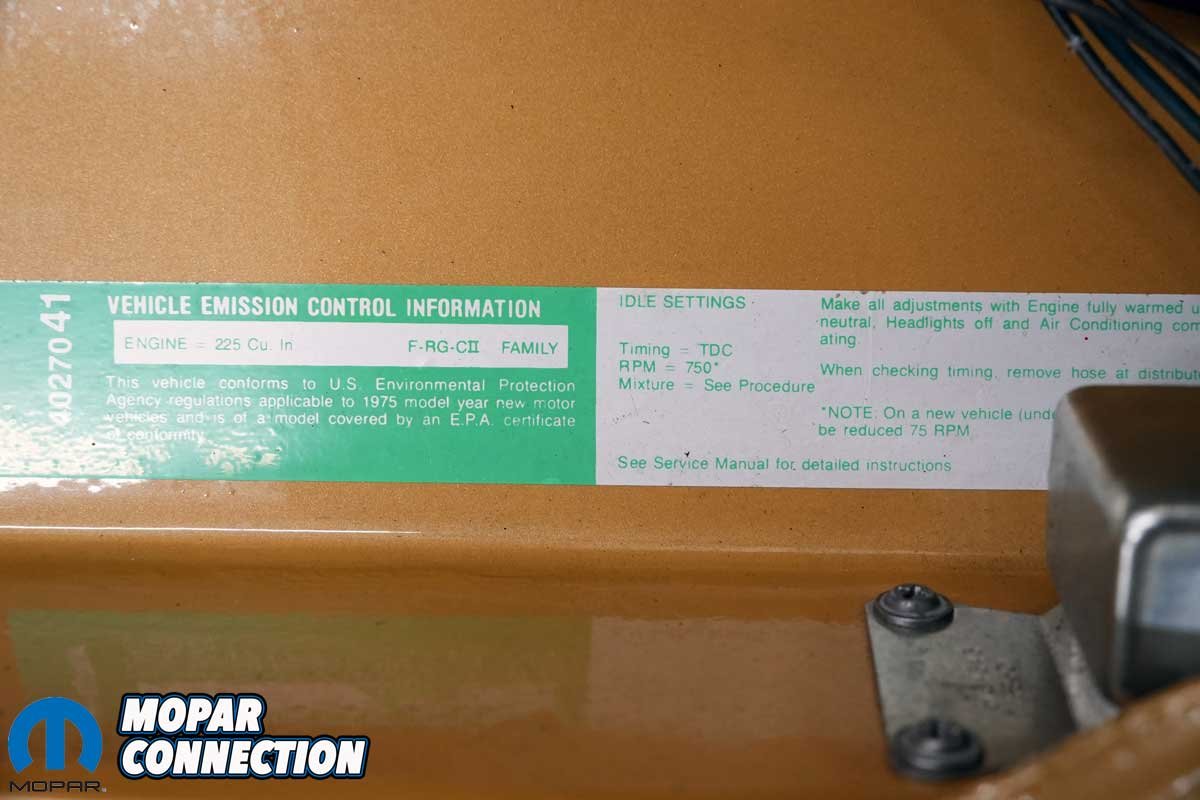
Above: By 1975, the under-hood emissions label had evolved into a much more valuable tuning reference for technicians. Instead of simply listing a few basic specifications, it provided specific operating targets, including the required ignition timing and idle air/fuel ratio. For this Slant Six, the recommendation of the factory was TDC and an idle air-to-fuel ratio of 14.4:1. These numbers reflected the era’s emphasis on emissions. Still, they also provided a baseline for assessing how the engine would respond to thorough tuning.
Modern diagnostic tools make this margin visible in a way that was not practical decades ago. Distributor machines reveal how much variation exists in advance curves even among “correct” units. Wideband oxygen sensors show how air-fuel ratios behave under real load rather than theoretical assumptions.
Above: Through careful tuning, this Slant Six proved that even a heavily emissions-controlled engine still had untapped potential. We increased the carburetor jet size, adjusted the initial timing to 15 degrees BTDC, and set the total timing to 33 degrees, reaching 51 degrees BTDC with the vacuum advance connected. The engine responded with 141 lb-ft of rear-wheel torque at 2,700 rpm and 89 rear-wheel horsepower at 3,600 rpm. We tested with both tighter and looser valve lash settings, but the factory specification provided the best results. The final tune not only improved performance but also increased fuel economy to more than 21 mpg, nearly 6 mpg better than the original factory specification. The testing and tuning were covered in Distributor Recurving for Improved Fuel Economy.
Heat soak testing exposes behavior that never appears in short-duration shop conditions. Coils, ballast resistors, and ignition boxes that appear fine cold can behave differently when heat-soaked, changing real-world performance in ways that were never fully accounted for in factory specs.
When all of these factors are considered together, a consistent picture emerges. Factory specifications are not wrong, but they are incomplete. They describe a safe operating state, not the engine’s full capability.
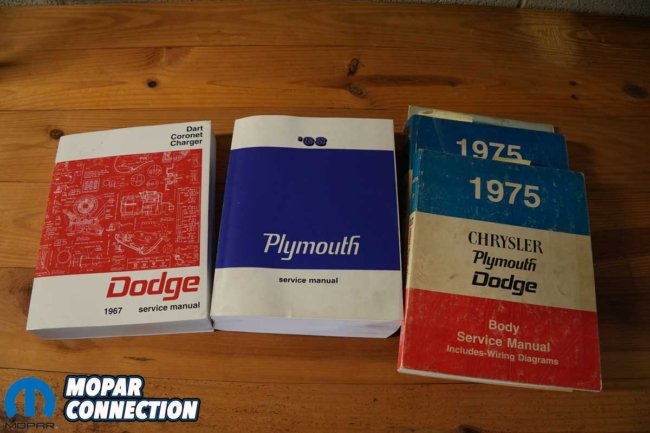
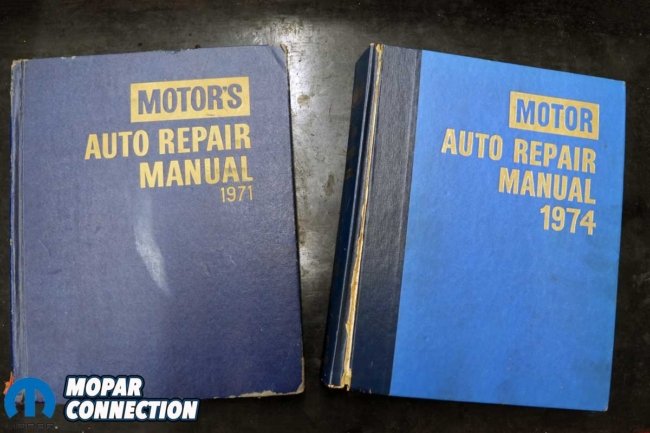
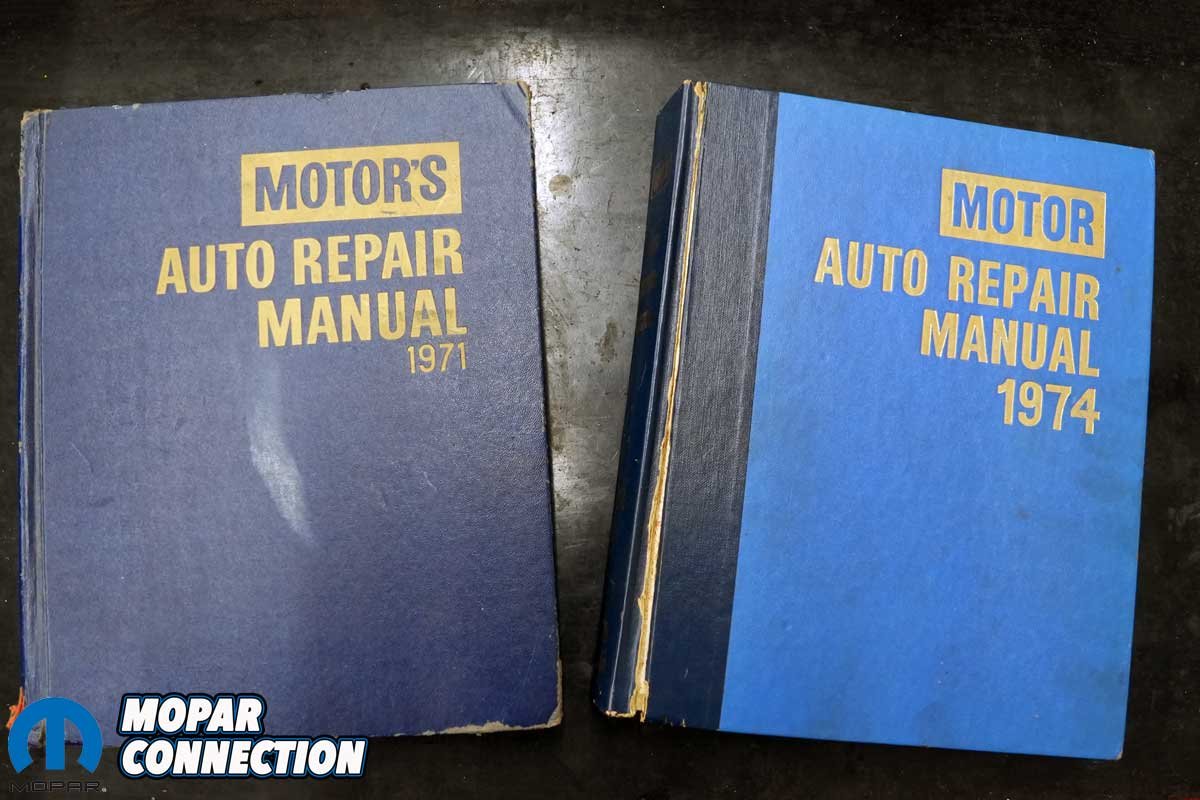
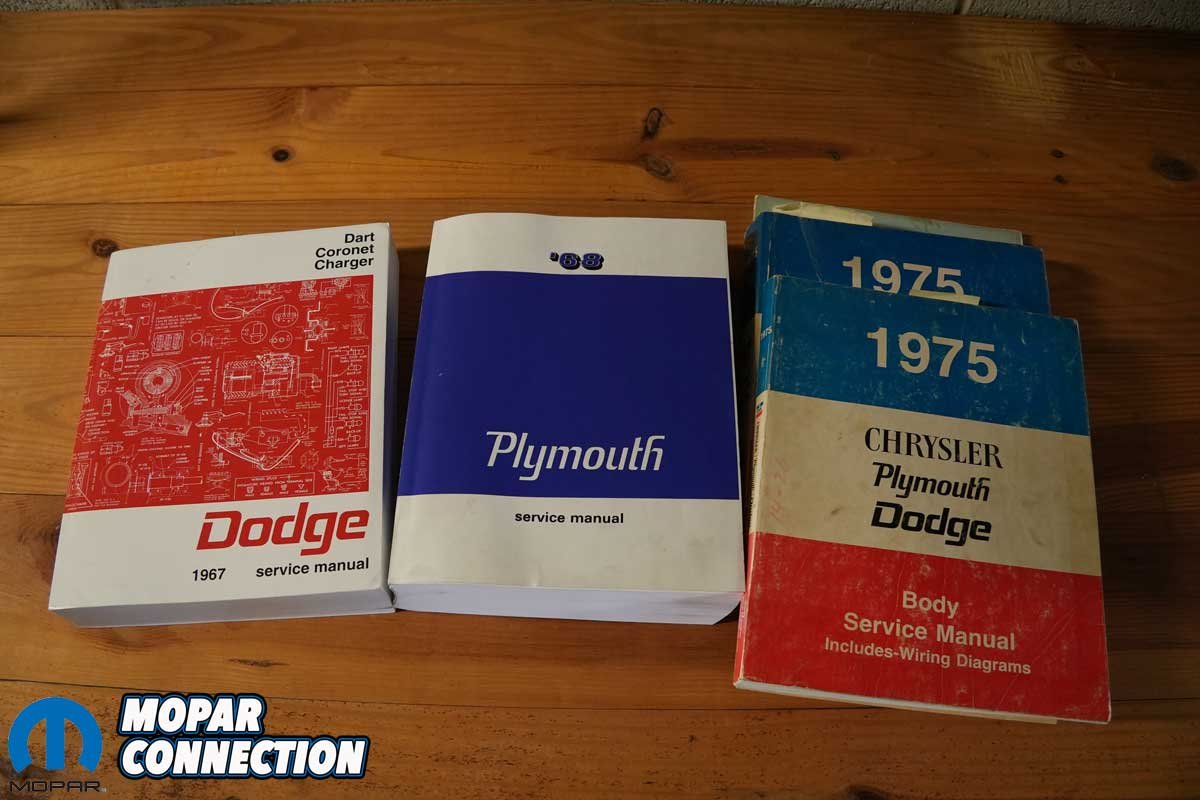
Above: For reference material, nothing beats a factory service manual. However, two of the five cars tested came with Motor Auto Repair Manuals as part of the purchase.
The hidden margin is where the real story lives. Not in modification or over-tuning, but in understanding how much of the engine’s original behavior was deliberately buffered for survival. A few degrees of timing that were never entirely realized in practice. Fuel calibration that erred on the side of richness. Advance curves that prioritized detonation resistance under adverse conditions rather than maximum throttle response.
Individually, these margins are small. Collectively, they explain why two identical engines can feel so diverse and why careful, educated tuning often displays improvements that feel surprising only if you believe the factory spec was already the limit.
The takeaway is straightforward. Factory specifications were never meant to define performance ceilings. They were designed to guarantee durability across an unpredictable world of fuel, drivers, climates, and manufacturing variation.
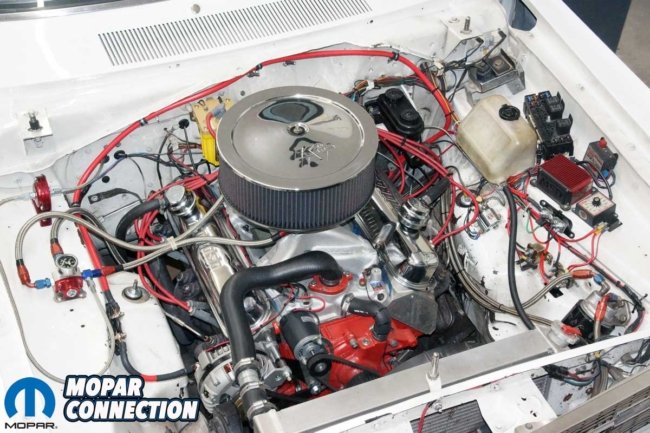
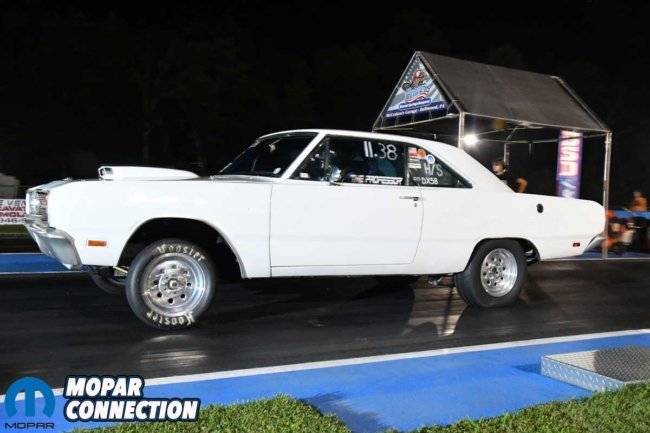
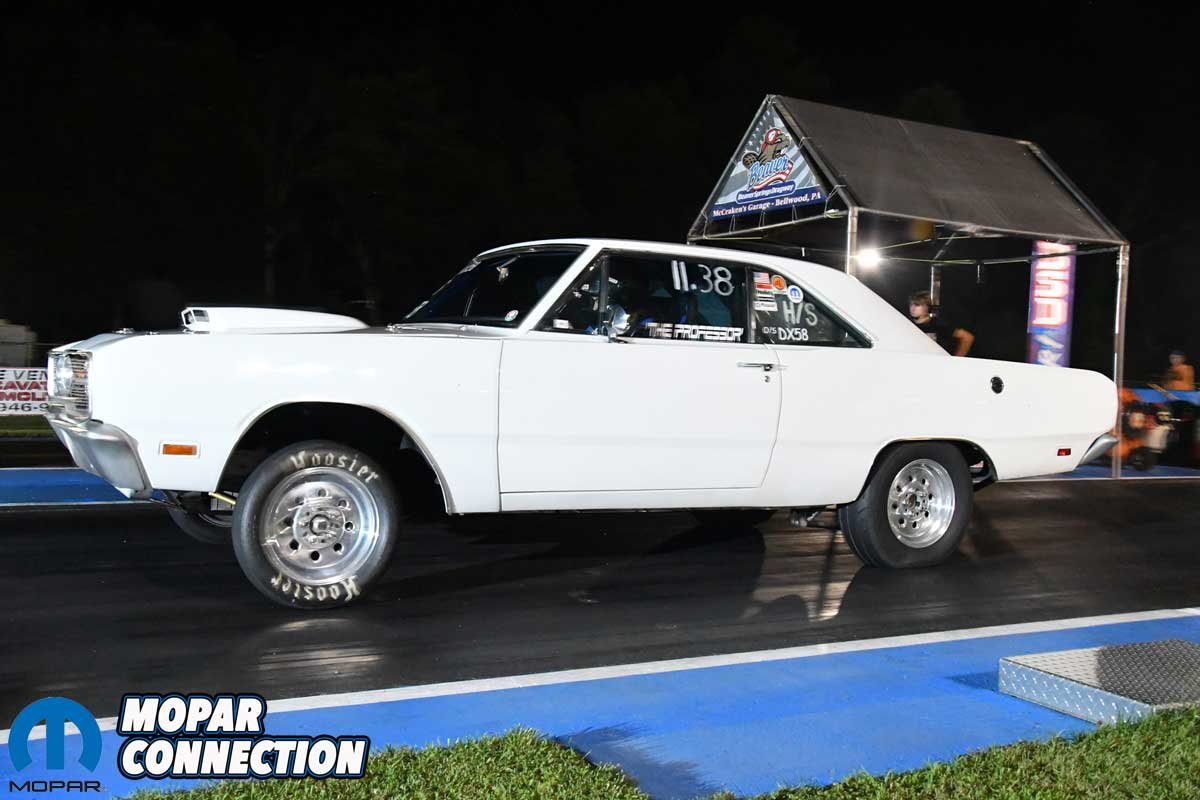
Above: The 1969 Dart is a completely different animal. There is very little remaining that could be considered factory stock on the 340. The original block and crankshaft are still in place, but nearly every other component has been modified or replaced with aftermarket parts. A Mopar Performance Chrome ignition box controls the MSD distributor, and the engine combination, featuring a Direct Connection camshaft with .557-inch lift and 296 degrees of advertised duration, requires a much different approach to ignition tuning. On this engine, total timing is the key value, with the final setting adjusted between 36 and 42 degrees BTDC, depending on operating conditions and performance requirements. Initial timing is not even a primary concern. As long as the engine starts easily without excessive cranking effort or hesitation, the combination is delivering exactly what it was designed to do.
The factory specification is not the finish line. It is the starting point. Engineers gave every engine enough cushion to survive decades of unknown drivers, unknown fuel, and unknown conditions. The enthusiast’s job is not to ignore those specifications, but to understand why they existed. Once you do, you stop tuning numbers on a page and start tuning the engine sitting in front of you.