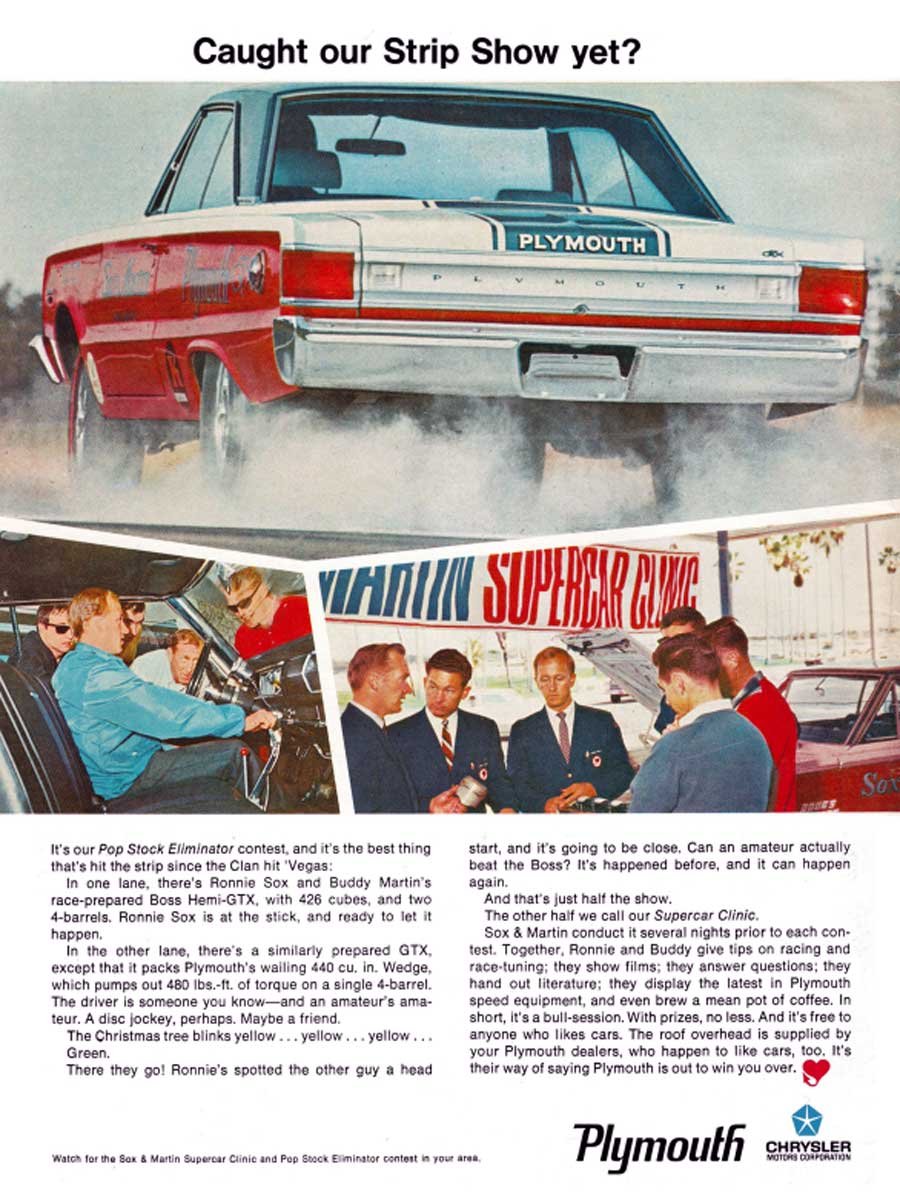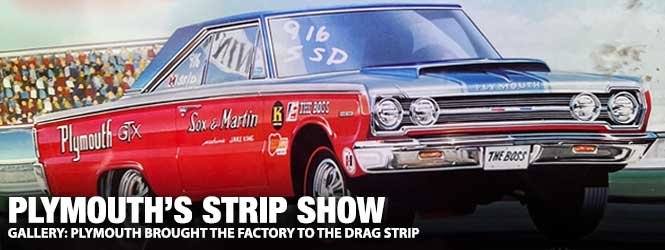
“Caught our Strip Show yet?” The question splashed across a vintage Plymouth advertisement seems quaint today. In the late 1960s, however, Plymouth was not simply telling customers its cars were fast. It was inviting them to the drag strip and bringing the factory along.
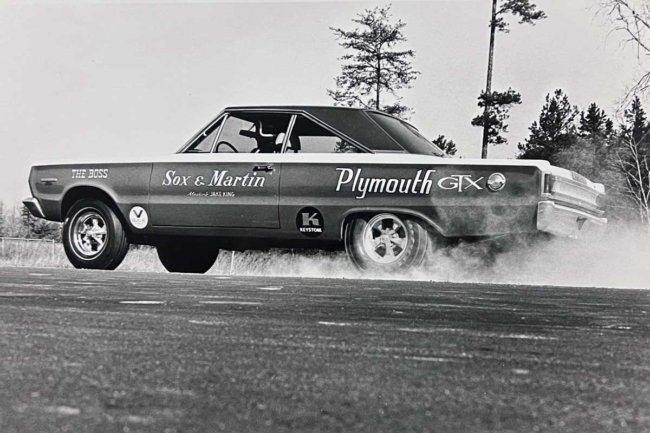
Above: Ronnie Sox puts the power down, hazing the rear tires through a cloud of rosin during a 1967 photoshoot. (Photographer unknown.)
At the center of the advertisement is a ’67 Plymouth GTX, its rear tires hazing the starting line. Below it, Plymouth promotes two parts of its performance strategy: the Pop Stock Eliminator contest and the Sox & Martin Supercar Clinic.
Together, they reveal an important part of Chrysler’s performance philosophy. The company was not content to build powerful cars and leave enthusiasts to figure out the rest. Chrysler was racing, developing performance parts, sharing technical information and, increasingly, taking that knowledge directly to its customers.
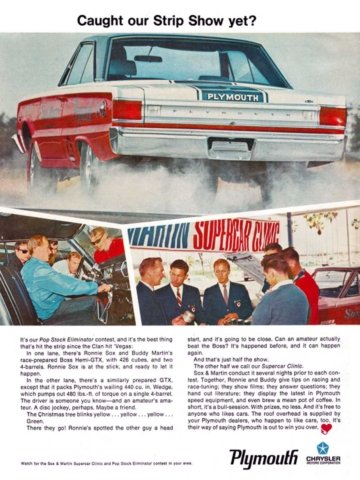
The Pop Stock Eliminator was clever marketing. In one lane was Ronnie Sox behind the wheel of a race-prepared Hemi GTX, while Plymouth’s 440 Wedge powered the other GTX. But the real hook was not the hardware. It was the driver.
“The driver is someone you know, an amateur’s amateur. A disc jockey, perhaps. Maybe a friend.” You did not have to be Ronnie Sox to participate. The driver in the other lane could be somebody you knew, or maybe even you.
Plymouth was bringing the excitement of professional drag racing down to the level of the average enthusiast. Your Plymouth could be part of the show, too.
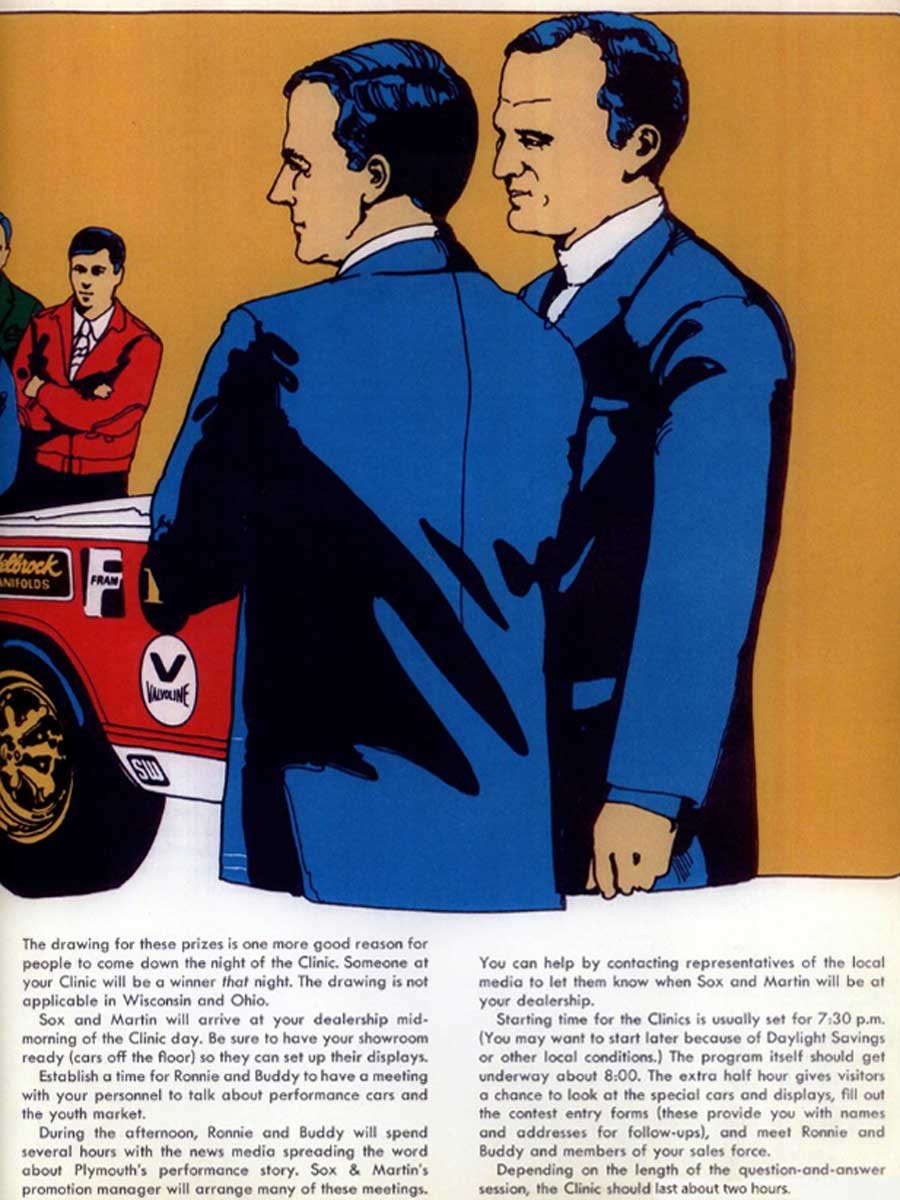
The other half of the “Strip Show” was the Sox & Martin Supercar Clinic. Ronnie Sox and Buddy Martin appeared at Plymouth dealerships, demonstrating tuning techniques, answering questions, showing films, distributing technical literature, and displaying the latest speed equipment. Plymouth was not simply selling cars. It was teaching people how to make them perform.
That distinction mattered. Chrysler understood that enthusiasts who bought high-performance cars did not necessarily want to leave them stock. They wanted to understand them, tune them, and make them faster. The factory could provide more than horsepower. It could provide knowledge.
By the late 1960s, Chrysler’s involvement in drag racing had created a performance-development cycle. Racers assessed cars and components on the track. Engineers discovered what worked, specialized parts were designed, and that learning found its way back to racers and enthusiasts.
The basic philosophy was already in place: Build it. Race it. Learn from it. Share what works. The name would come later.
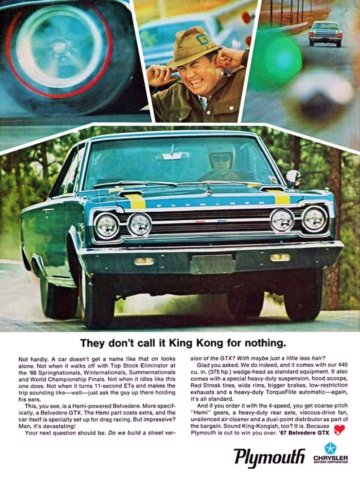
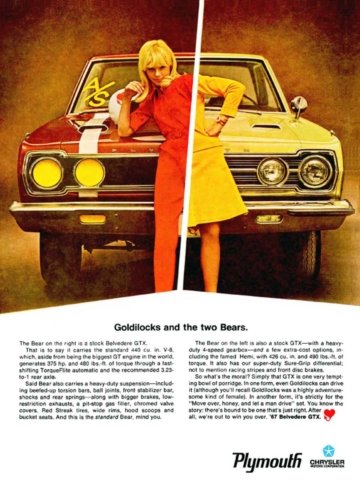
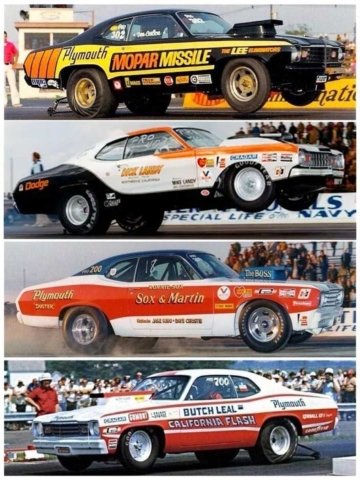
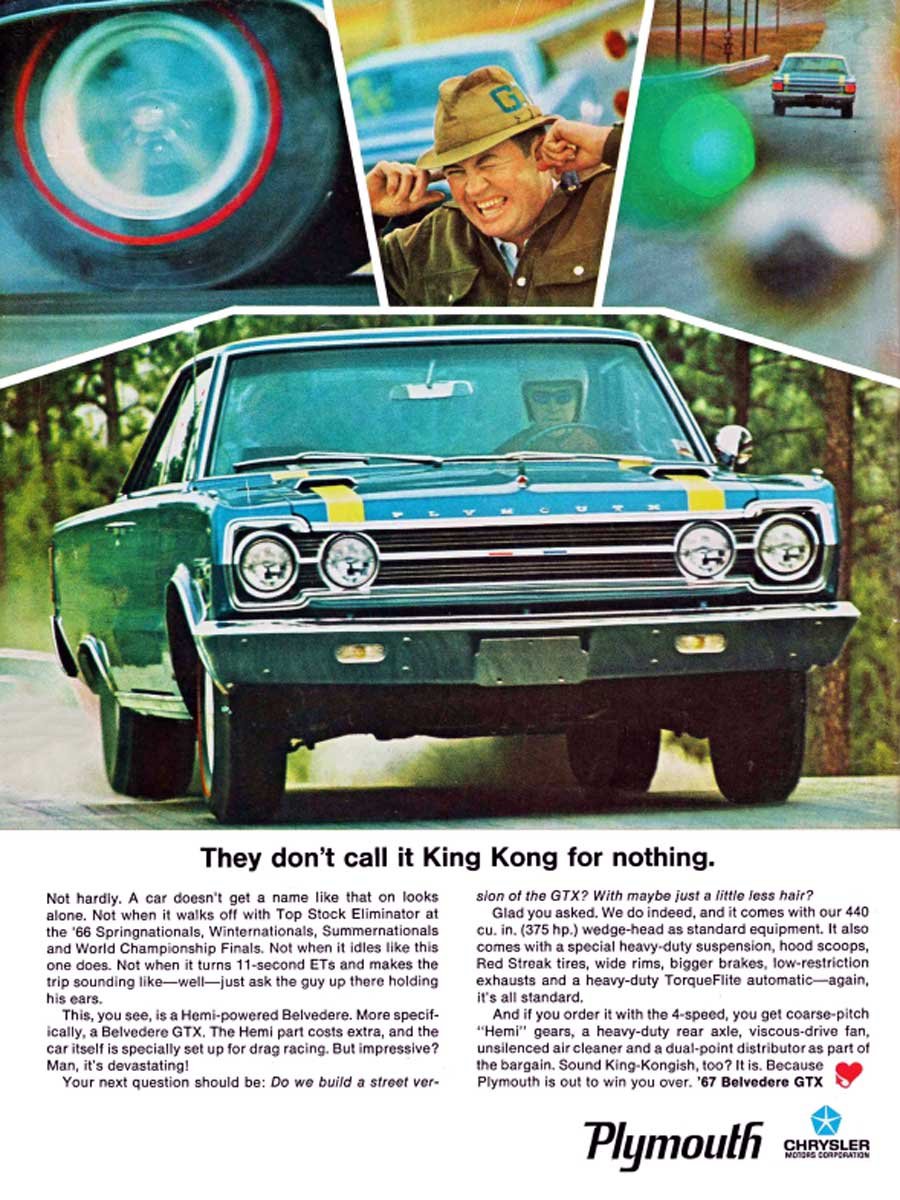
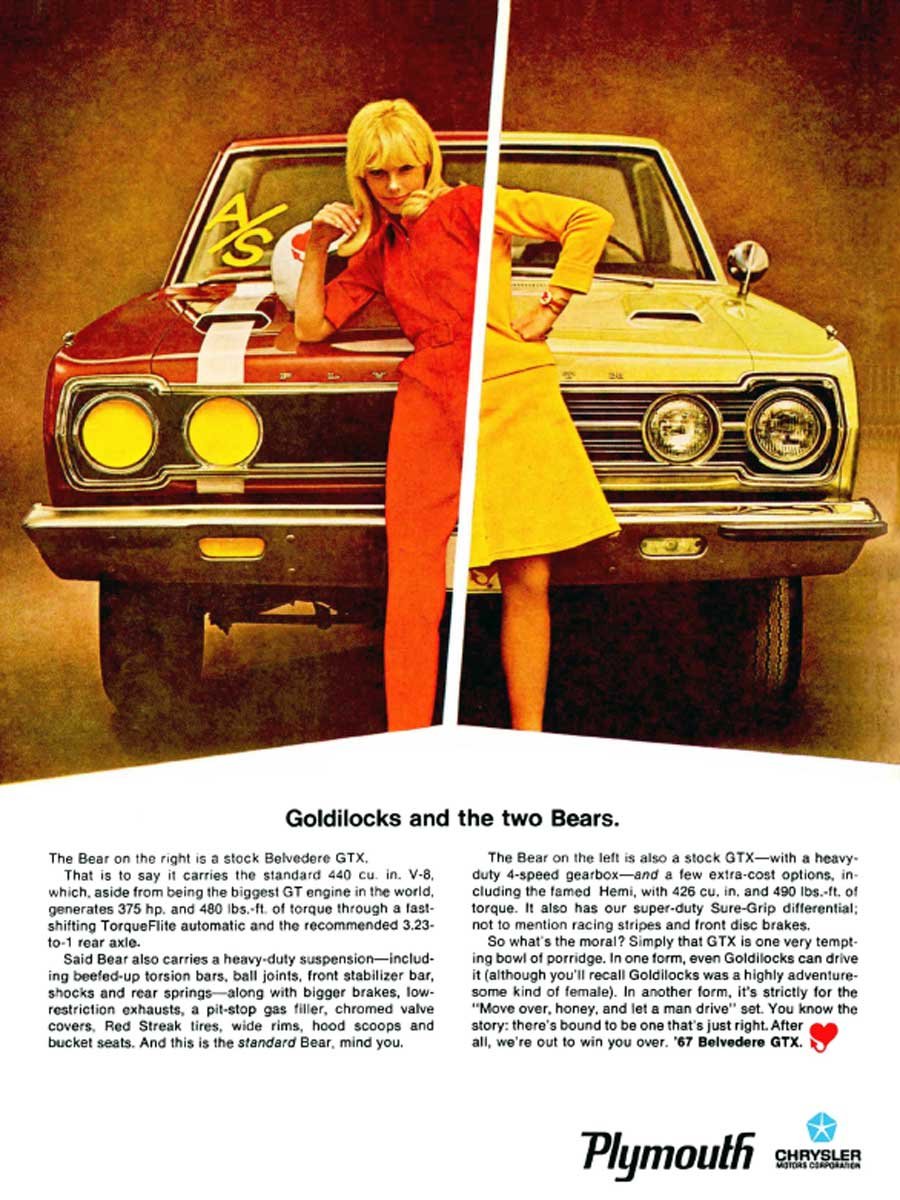
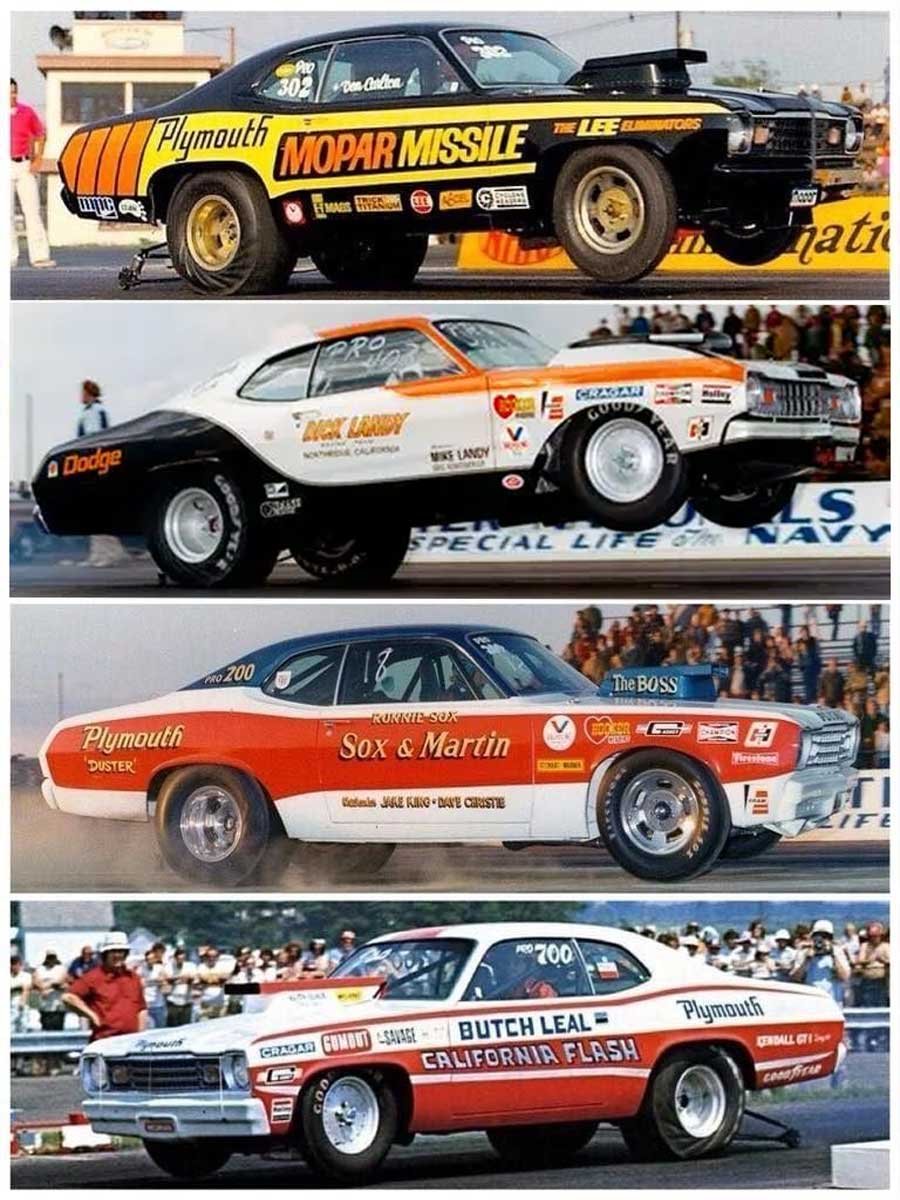
Above Left: Plymouth kept the hard-hitting advertisements coming in 1967, and the company was not afraid to wear out a few tires in the process. Its photoshoots were every bit as aggressive as the cars they highlighted. Above Center: Although the advertisement featured a playful “Goldilocks and the Two Bears” theme, the ’67 B-bodies’ ad campaign could have been a wolf in sheep’s clothing. They were docile enough for the street but could turn downright vicious at the strip. Above Right: Four drivers and teams played influential roles in testing Chrysler’s performance parts and getting the word out about its go-fast goodies: Don Carlton, Dick Landy, Sox & Martin, and Butch Leal.
In 1974, Chrysler formalized that factory-to-racer relationship under the name Direct Connection. The concept was not new. Its roots had been established through factory racing programs, performance-parts operations, and technical clinics like the Sox & Martin Supercar Clinic.
Direct Connection provided racers and enthusiasts with a factory-backed source of competition parts and technical information. The connection between the factory and the racer could now arrive at your door in the form of a catalog and a box of parts.
Factory-supported racers such as Ronnie Sox, Dick Landy, Butch Leal, and Don Carlton became highly visible representatives of Chrysler’s performance effort. Their race cars were more than advertisements. They were development platforms.
The drag strip was the ultimate laboratory, and what survived the abuse of competition had a good chance of working in the garage of the next Mopar enthusiast.
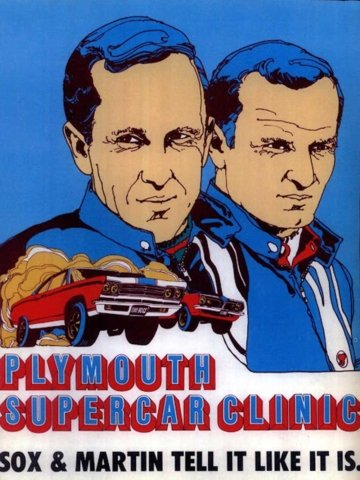
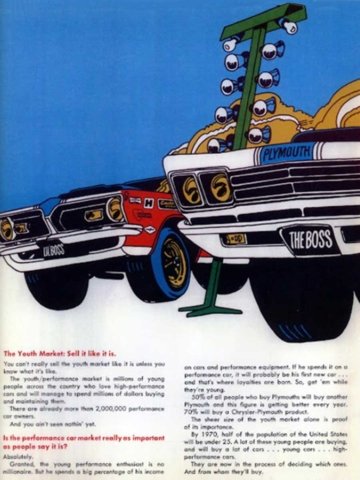
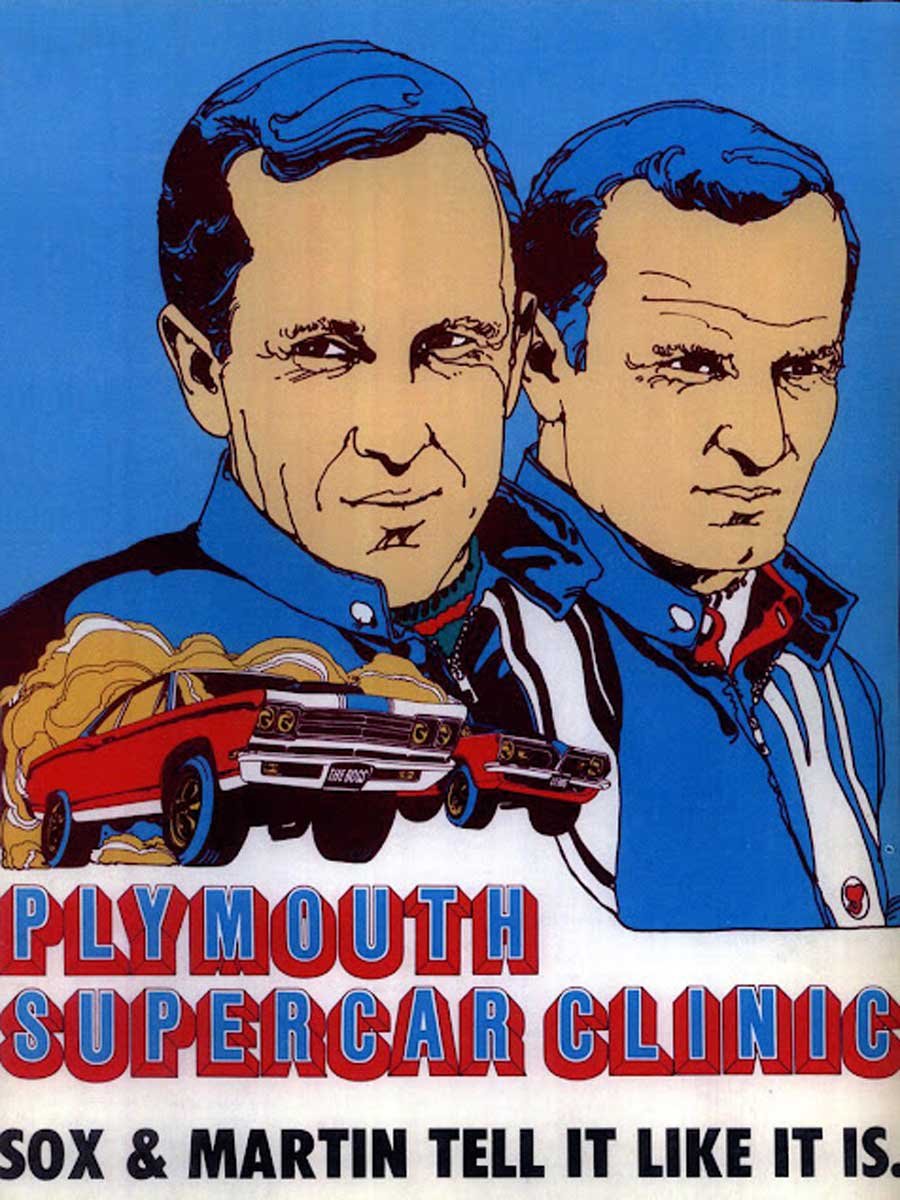
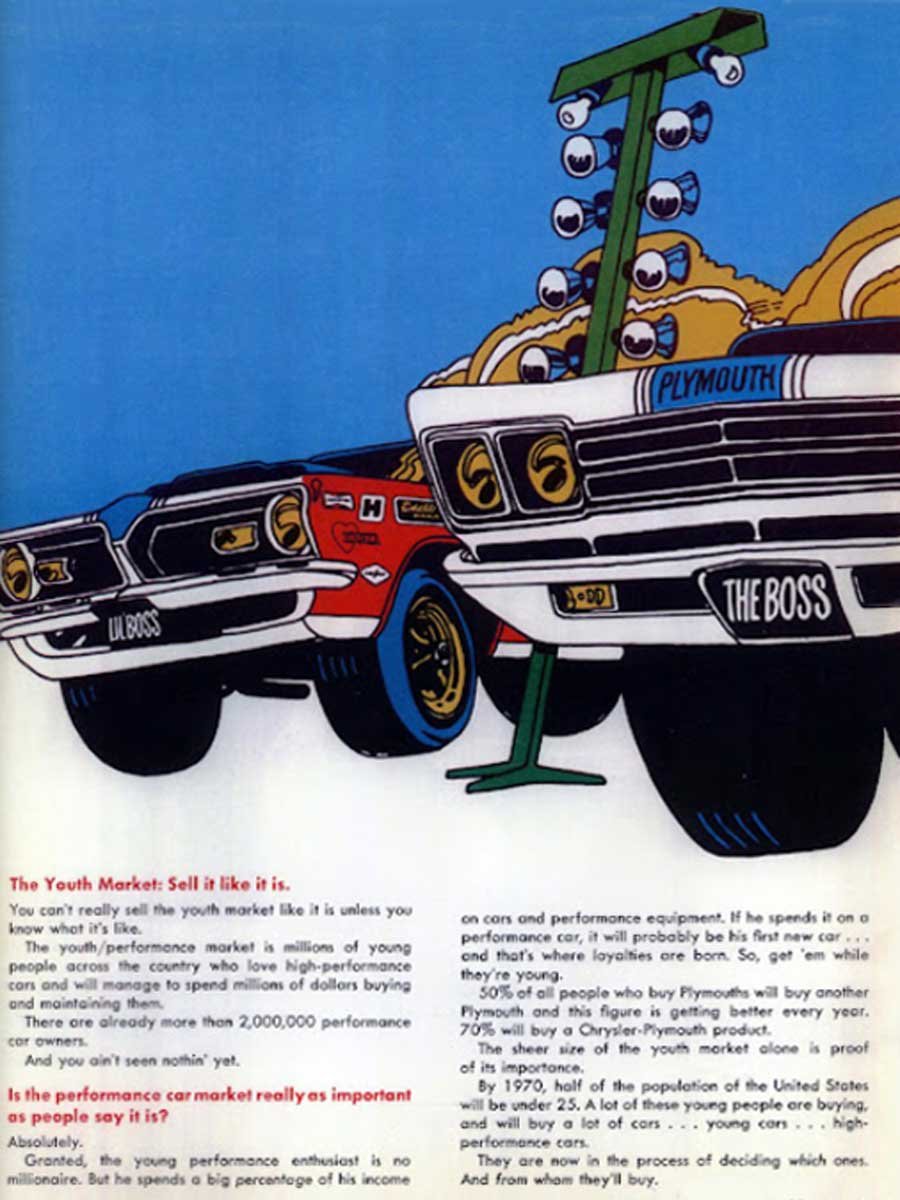
Above: The early Sox & Martin Plymouth Supercar Clinics brochures were heavily influenced by Joe Schulte and Jim Ramsey, two men who helped shape Plymouth’s advertising campaigns throughout the late 1960s and early 1970s. Their seemingly endless stream of ideas and sharp copywriting helped transform Plymouth from a somewhat lackluster brand into a major player in the muscle car era. Plymouth’s advertisements of the ’60s were colorful, irreverent, and impossible to ignore, often filled with tire smoke, header flames, and plenty of attitude. A Christmas tree frequently appeared in the imagery, too, reinforcing that the action took place at a sanctioned drag-racing event rather than on the street.
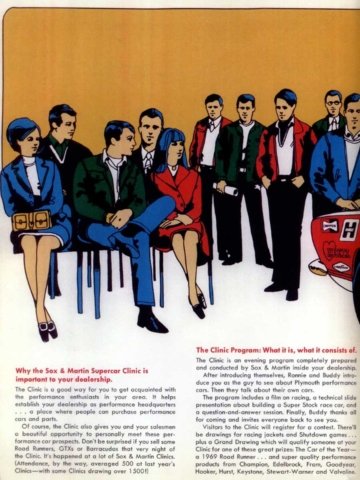
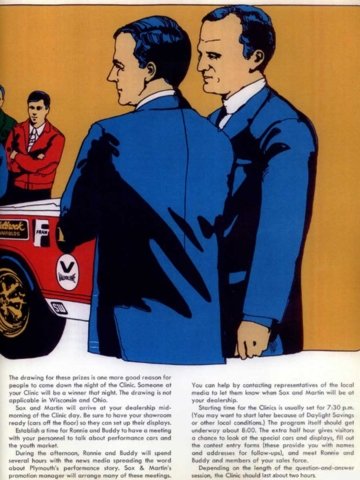
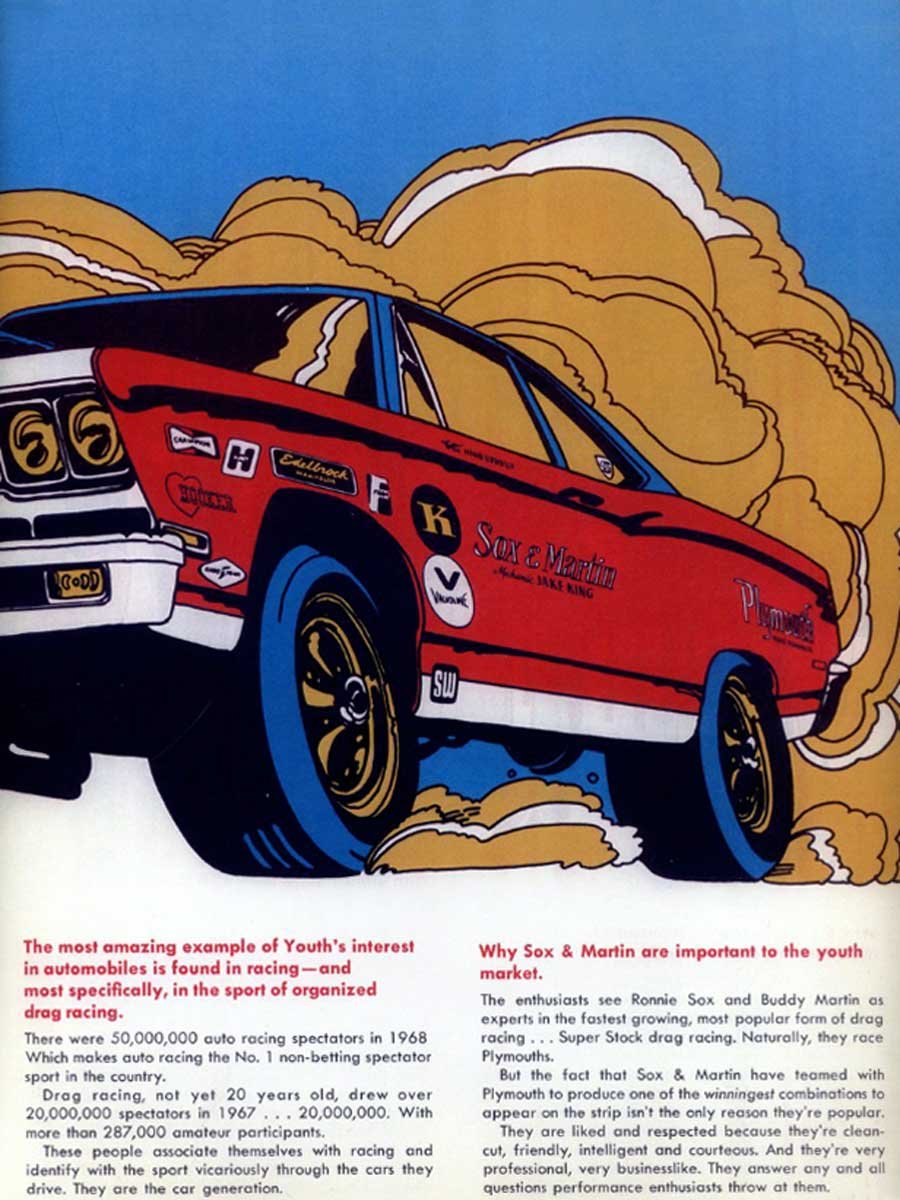
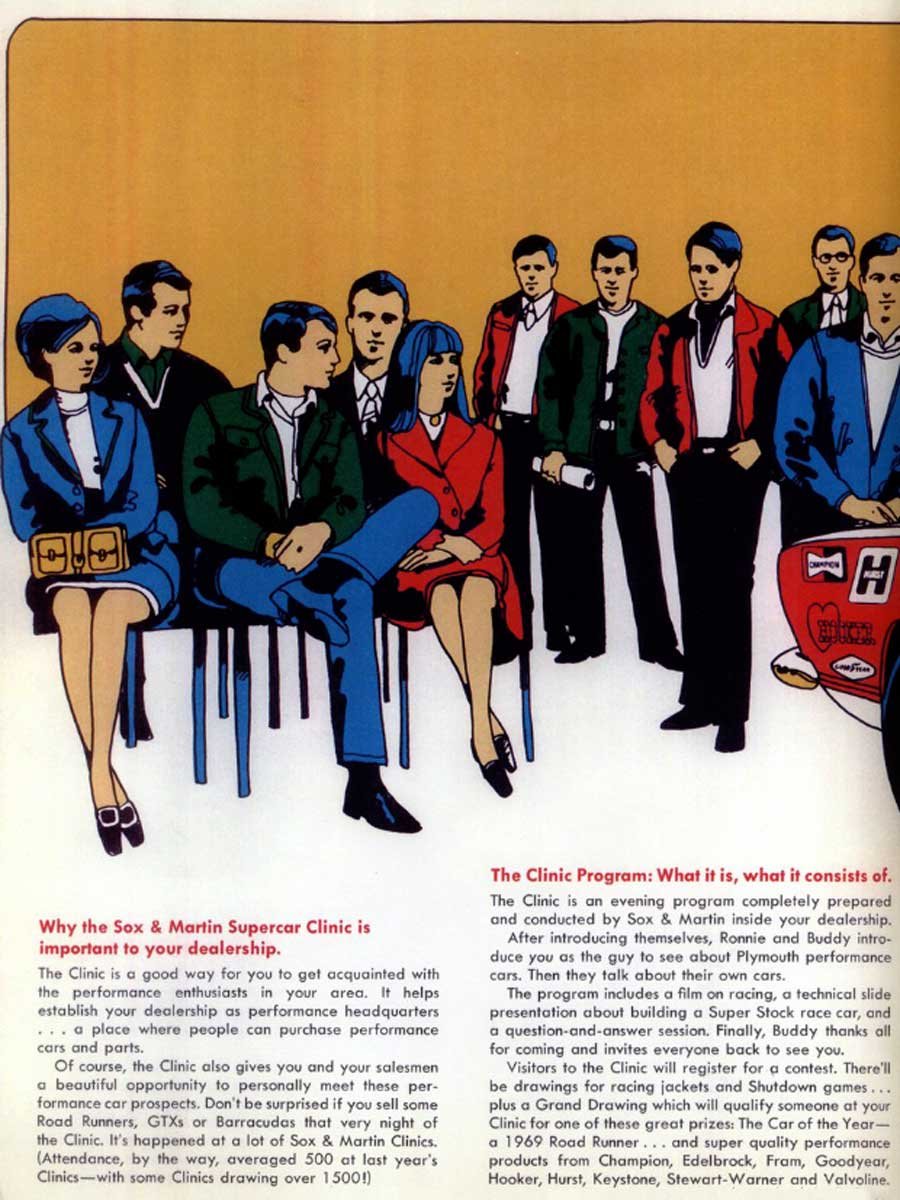
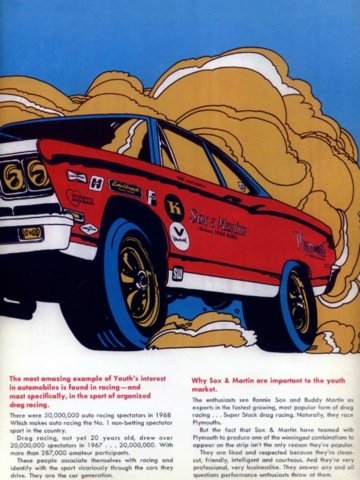
Above: A continuation of the brochure reveals how enthusiasts were treated to firsthand insight from Ronnie Sox and Buddy Martin. Sox & Martin’s lead mechanic, Jake King, also participated in select events. However, his time was often better spent back at the shop, searching for those last few horsepower increases to keep the team’s Hemis at the front of the pack.

For the racer, a fast production car was only the beginning. Camshafts, cylinder heads, intake manifolds, valve springs, ignition components, oiling upgrades, suspension parts, and gears could transform a production Mopar into a legitimate competition car. Chrysler was effectively commercializing the lessons learned at the track and putting them within reach of enthusiasts.
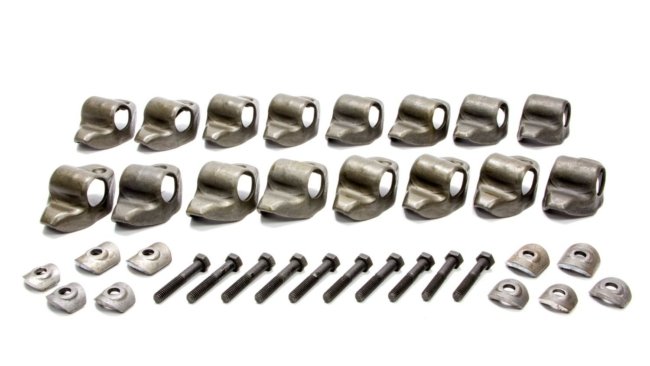
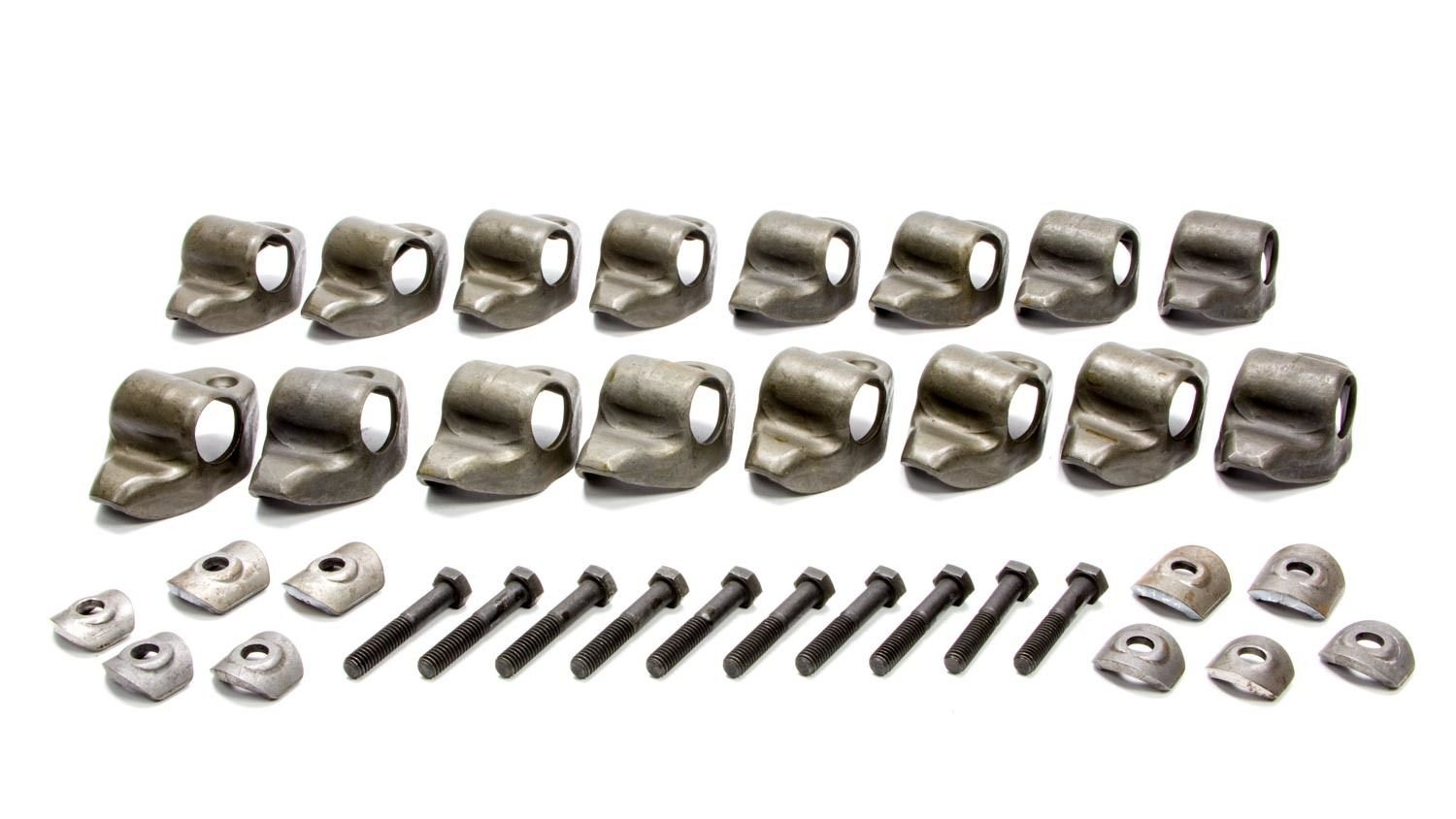
Above: Mancini Racing currently has a selection of “warehouse finds” available for sale, offering enthusiasts a chance to score some hard-to-find parts at great prices. Whether you are looking for rocker arms, timing covers, pistons, distributor hold-downs, or any of the many other pieces in the inventory, it is worth checking out Mancini’s warehouse finds; you might just uncover the part you have been searching for at a substantial discount.
Perhaps the most tangible connection to that history is Mancini Racing. Mancini became the first Direct Connection warehouse distributor when Chrysler launched the program in 1974. More than five decades later, it is a surviving link to the era represented in the advertisement and continues to supply Mopar performance and restoration parts to racers and enthusiasts.
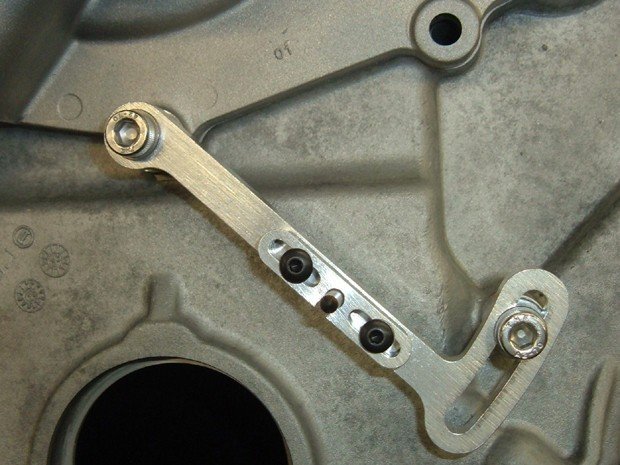
Above: The selection of new products available from Mancini Racing is substantial. From blocks and camshafts to valve covers and GEN III Hemi swap components, the inventory covers just about every corner of the Mopar hobby. Whatever you are looking for, there is a good chance Mancini has it in stock and ready to ship.
The name changed over the years. Direct Connection evolved into Mopar Performance, and eventually the Direct Connection name returned. The underlying philosophy, however, remained remarkably familiar.
Build it. Race it. Learn what works. Then put that knowledge in the hands of the person building a car in his garage. That is why this old advertisement is more than a cool picture of a GTX doing a burnout. It is a snapshot of where the modern Mopar performance-parts business came from.
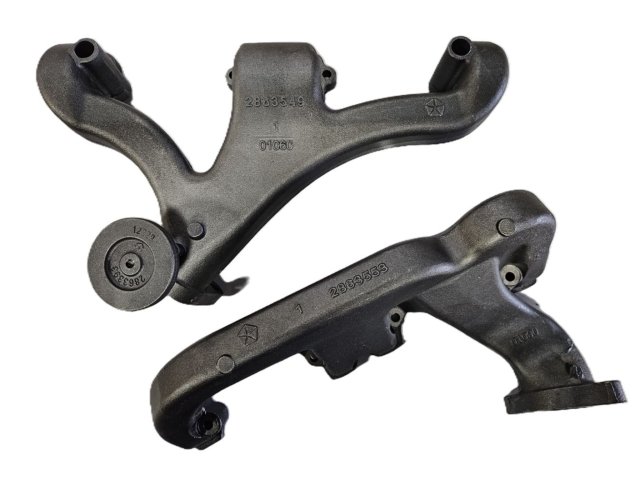
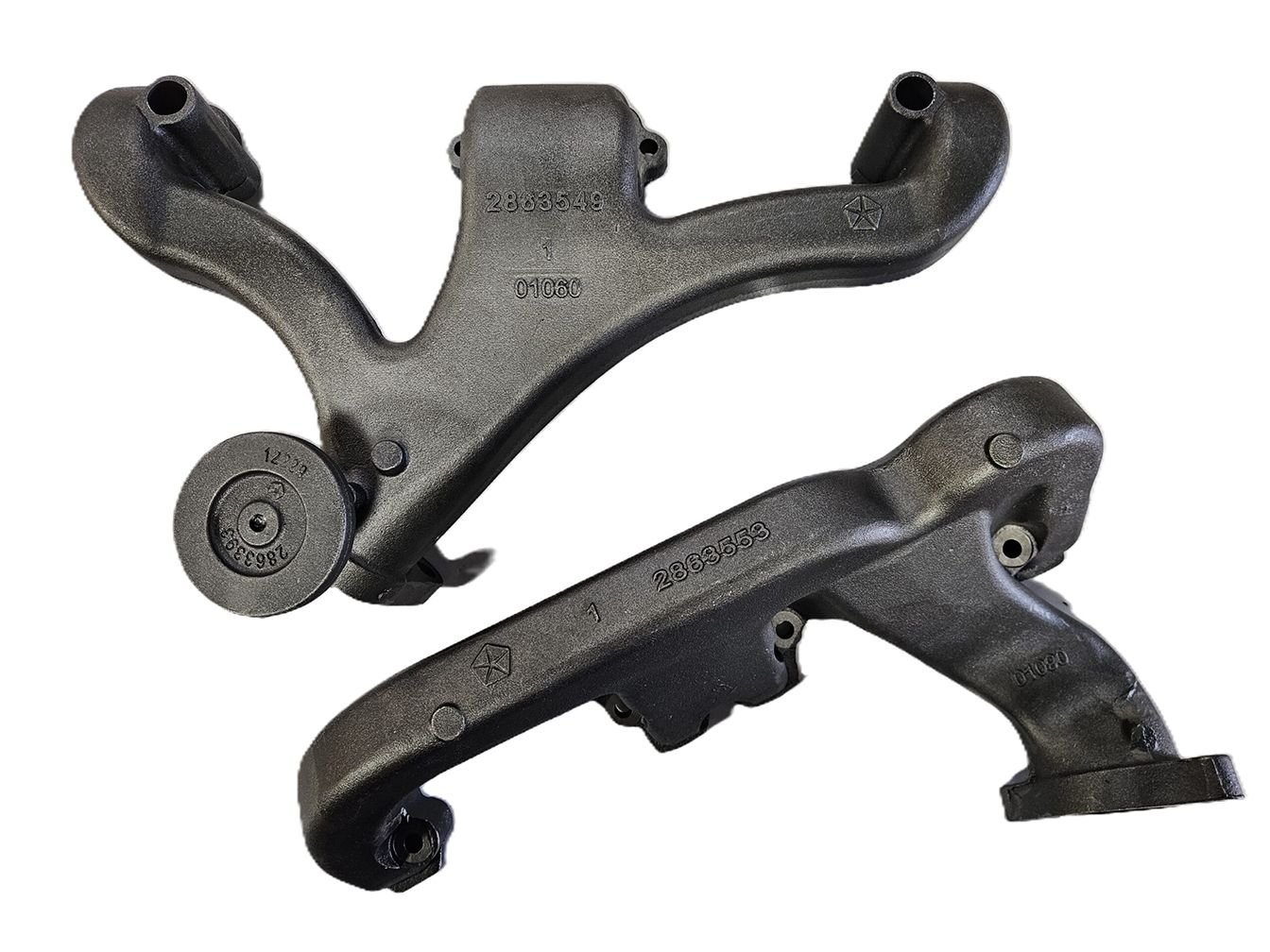
Above: One of the Mancini products Mopar Connection magazine will be featuring is these brand-new 340 exhaust manifold castings. Our plan is to install them on our ’67 Dart and pair them with a set of precisely bent pipes from Classic Exhaust Systems, designed specifically to work with the manifolds and follow the contours of the Dart’s floor pan.
Plymouth was racing. It was developing parts. It was sharing technical knowledge. And it was putting factory expertise into the hands of the people who were going to the drag strip.
“Caught our Strip Show yet?” More than half a century later, the show is still going on.