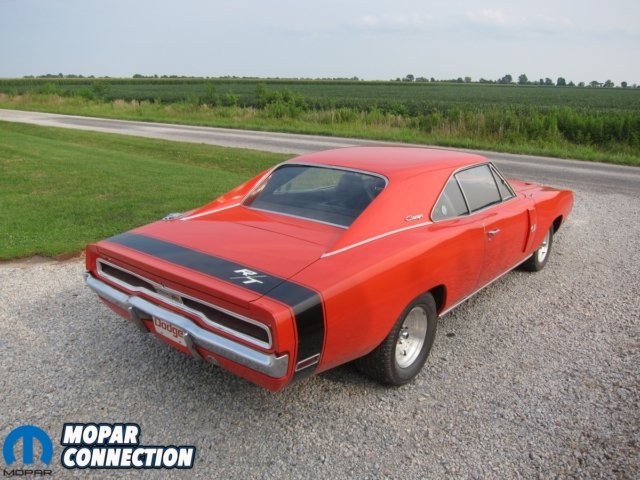
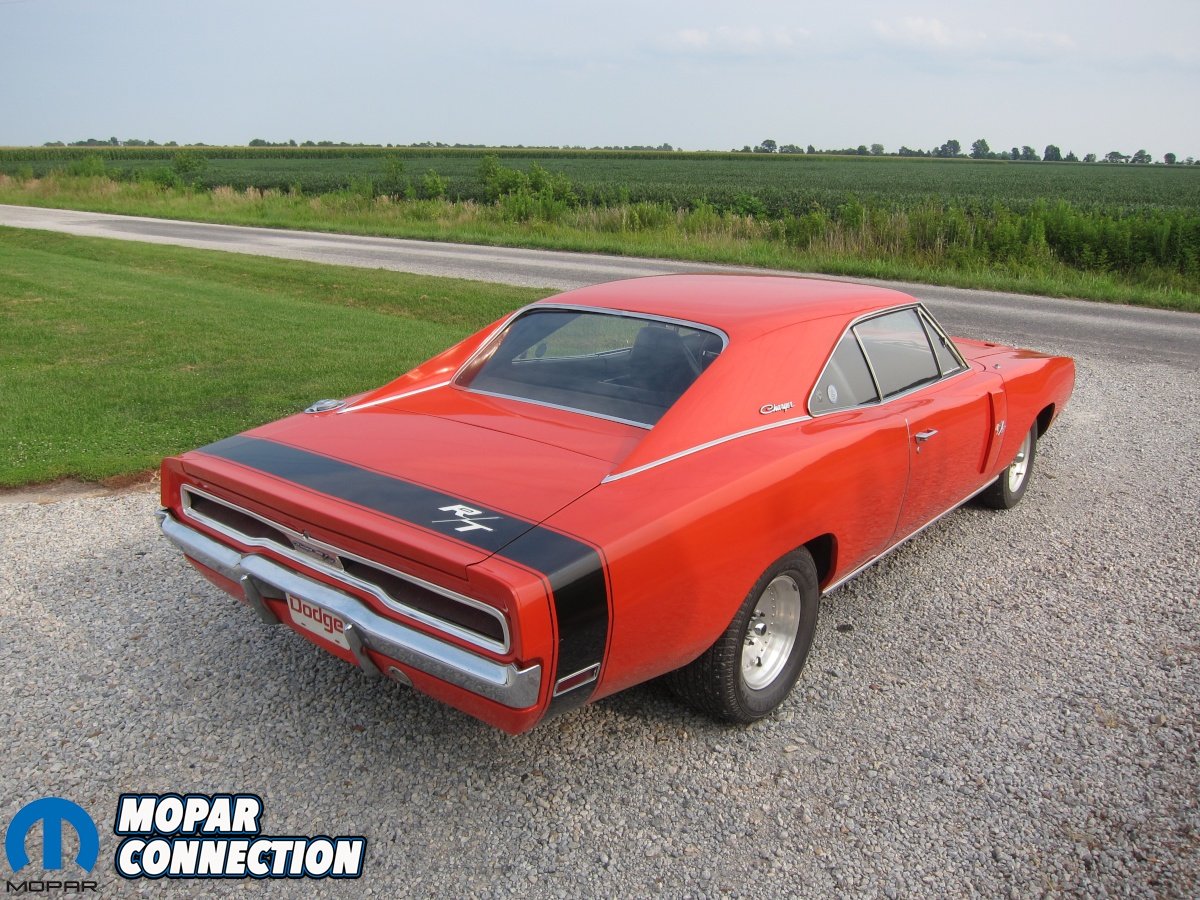
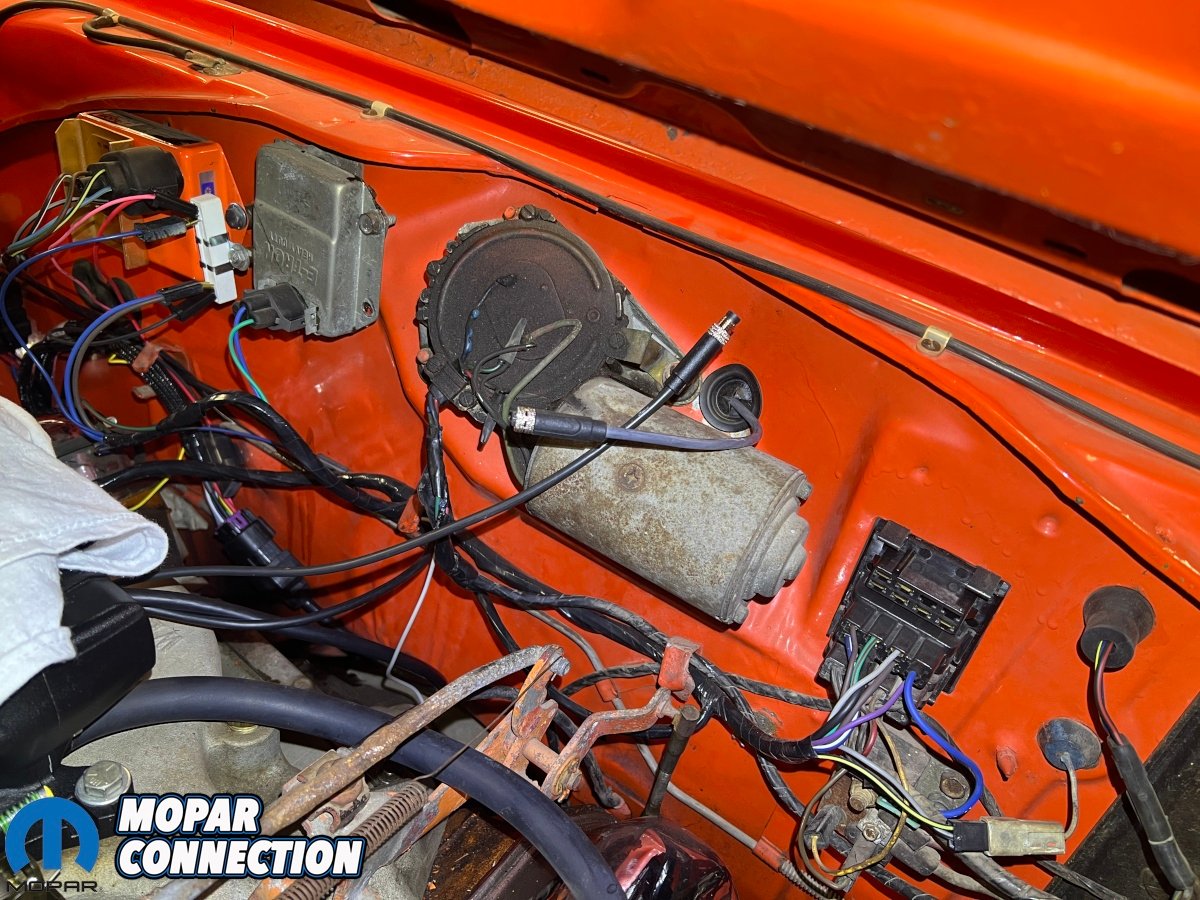
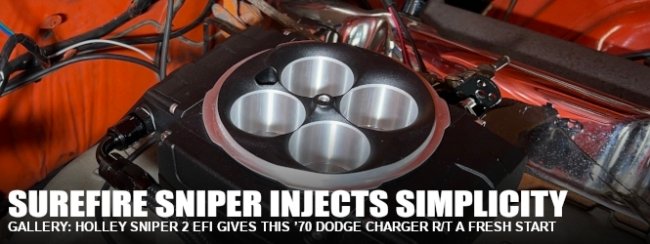
 Lately, the 440 Magnum in this 1970 Dodge Charger R/T had been wearing out our patience more than its rear tires. Even though its original Carter AVS carburetor had already gone by the wayside several years earlier, replaced by aftermarket throttle body EFI, extended cranking had suddenly become routine. Now the starter was getting more exercise than the steering wheel.
The hardware beneath the air cleaner was only part of the story, as its supporting cast had become suspect. In that setup, the original block-mounted mechanical pump fed an underhood surge tank, whose electric pump supplied high-pressure fuel to the throttle body. A return line led back to the main tank. Two pumps, a regulator, two filters, and many feet of plumbing stood between the 93-octane juice and eight hungry cylinders.
Some fuel was getting through, but lately the surge tank gauge pointed at zero. The mechanical pump could have been falling down on the job, or its electric accomplice could have been calling in sick. The regulator and return plumbing were questionable, too. We had a pressure gauge pointing at zero, a car that didn’t want to start, and a befuddled finger pointing in four different directions.
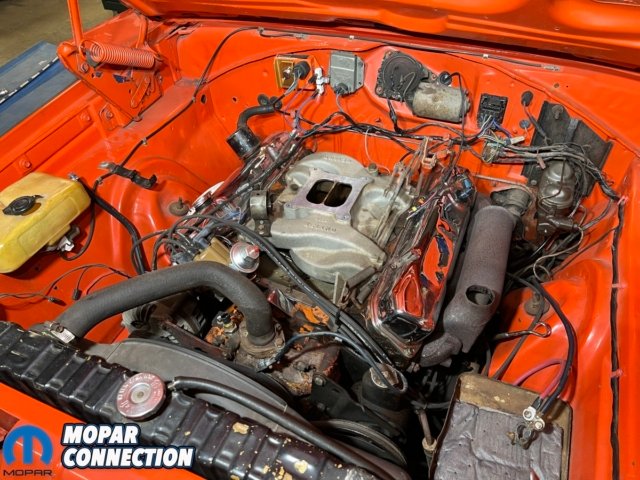
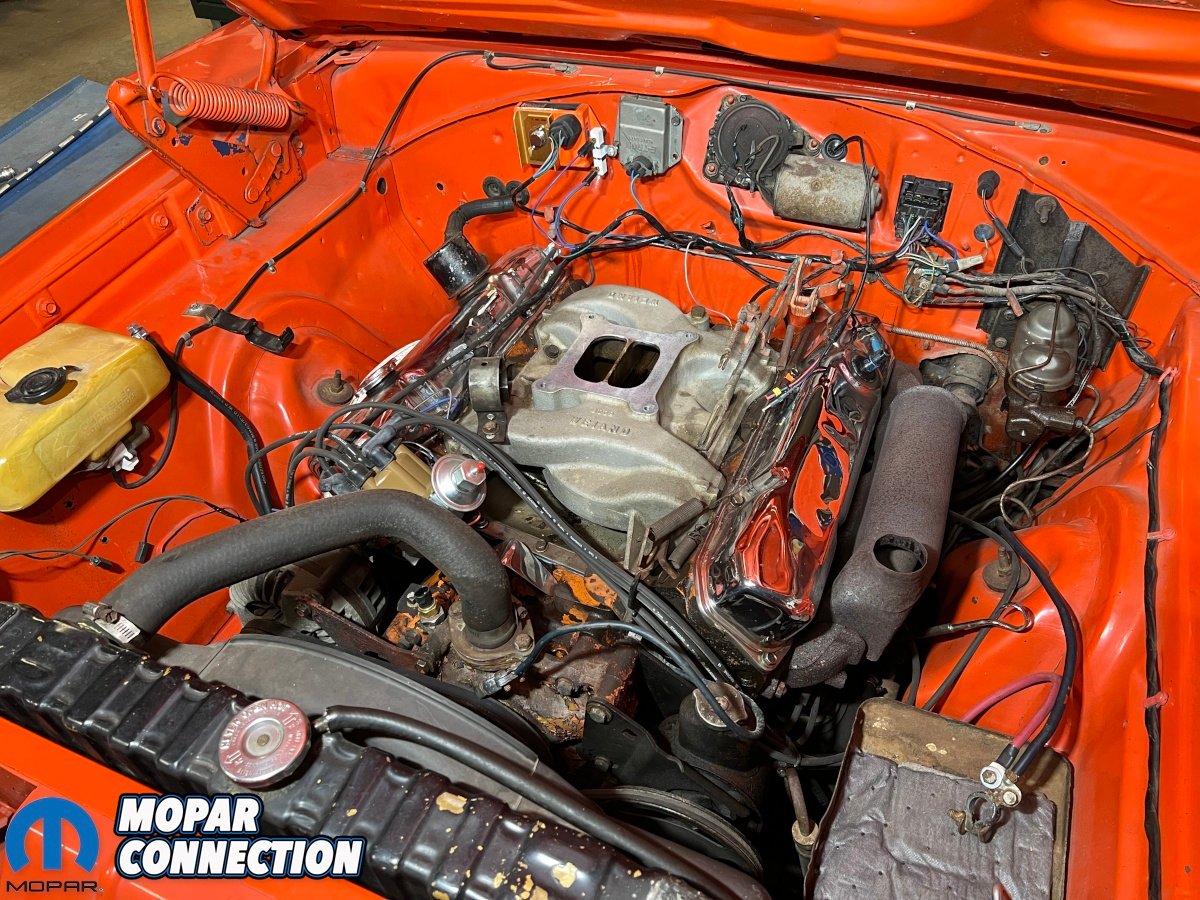
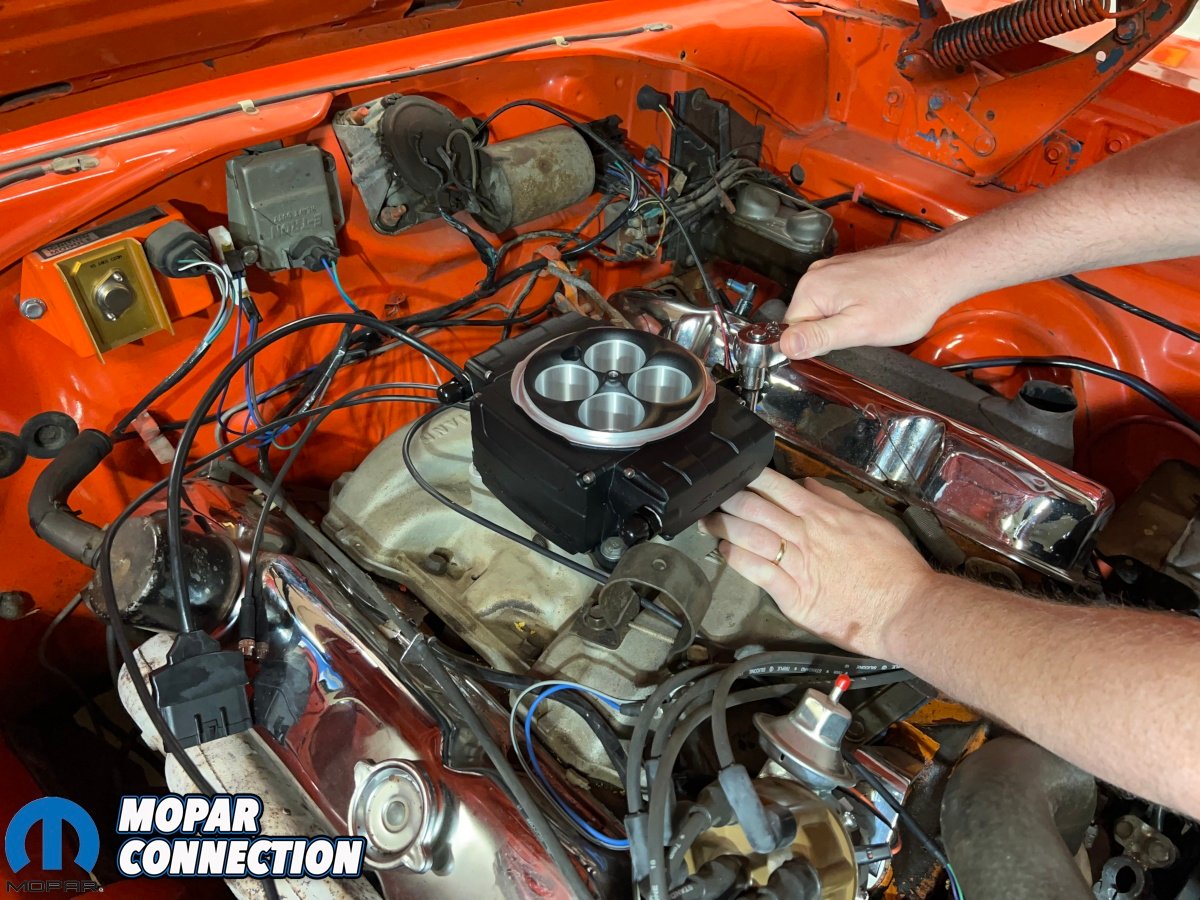
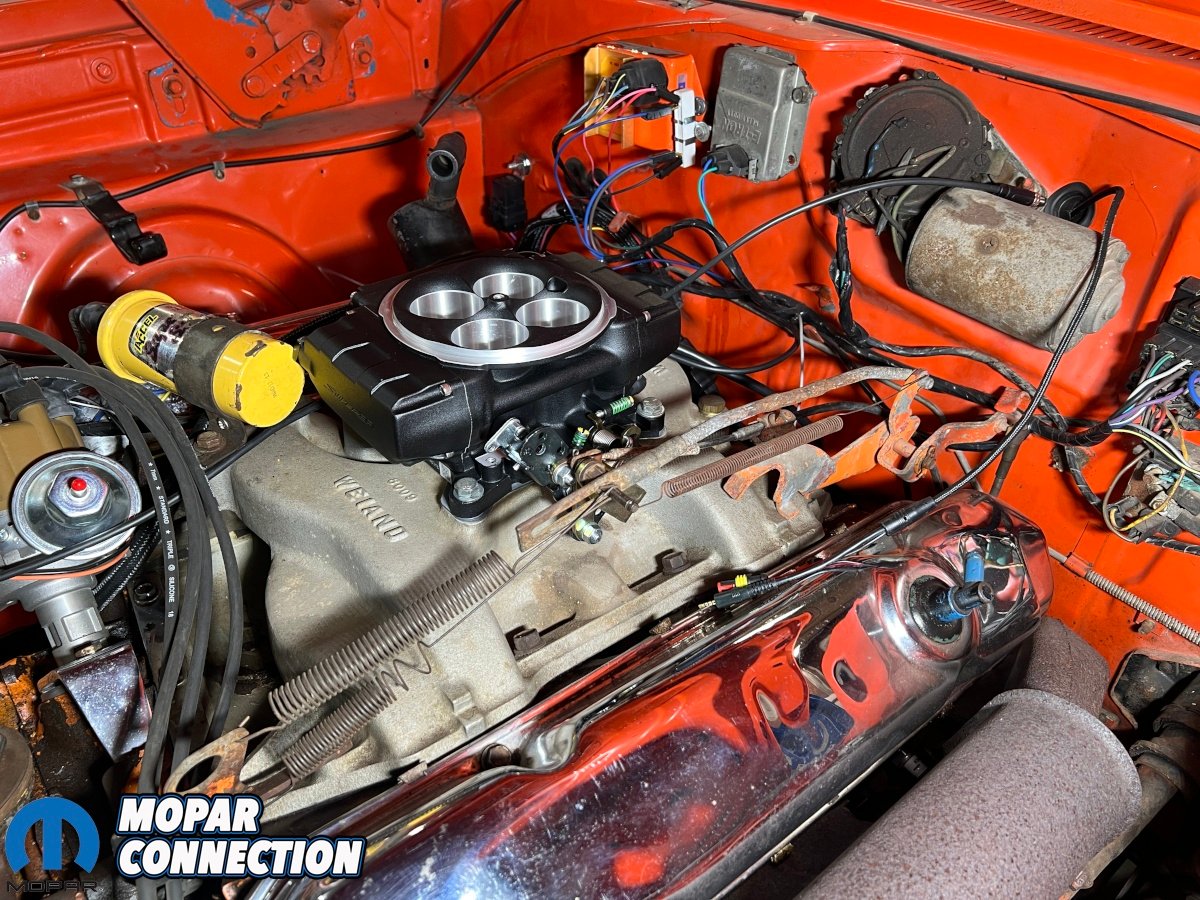
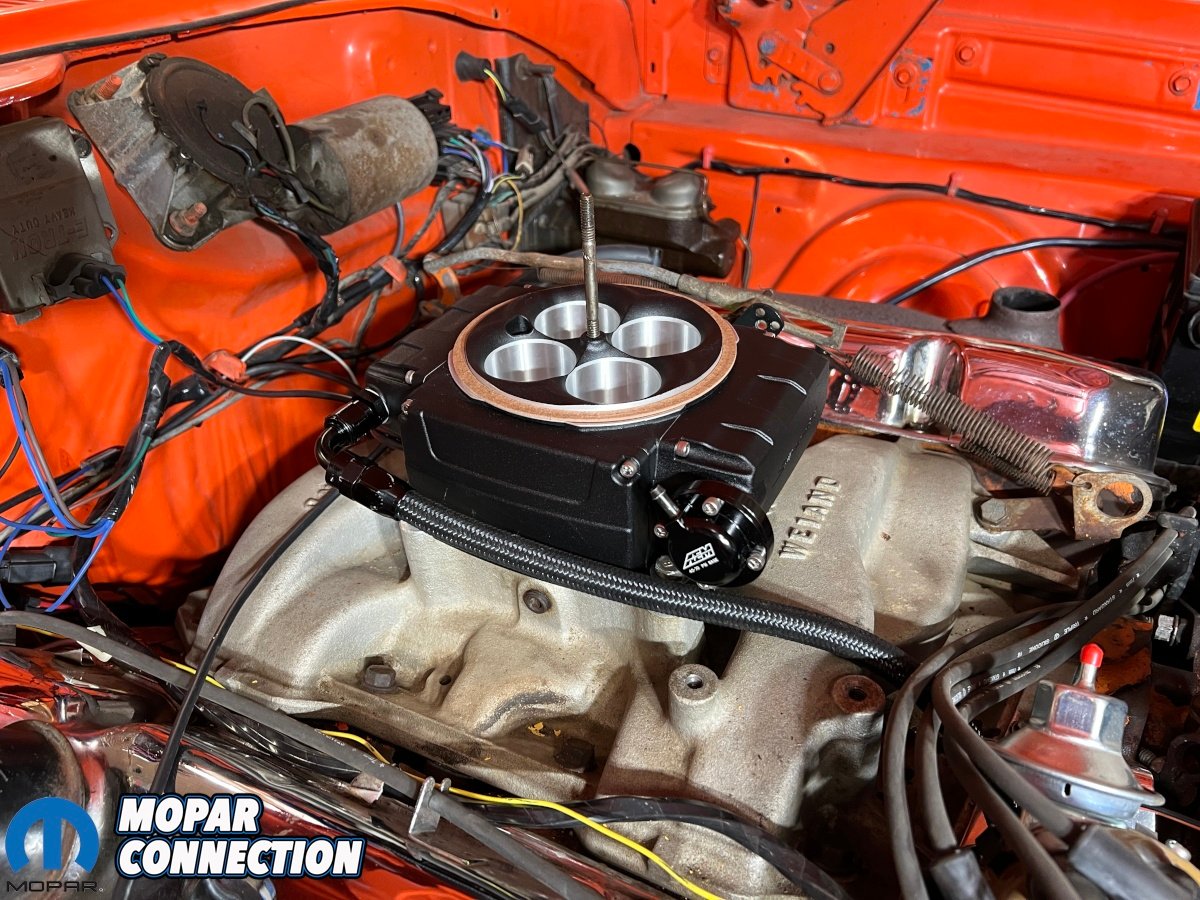
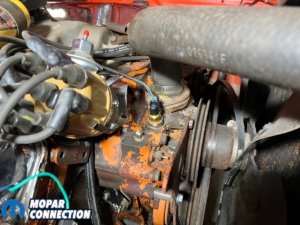
Above: The bare top end of a fuel-less old 440 was the starting point.
That guessing game brought the arrangement itself into question and the goal became getting as close to carburetor-simple as EFI reasonably allowed: dependable fuel delivery, straightforward wiring, and only enough electronics to mind the mixture. The Charger needed a steady diet of its petrol-based protein shake, not a complicated science project.
Holley’s Sniper 2 EFI (P/N 550-511-BXX) fit that assignment. Its carburetor-style 4150 mounting pattern accommodated the existing intake without modification, while the integrated ECU avoided another control box to mount. Improved resistance to electrical interference compared to its predecessor, the Sniper 1, was another attraction around vintage charging and ignition hardware.
In an effort to keep this a special kind of straightforward, we went through Holley’s dropdown list with a big set of scissors. Add on a fuel system? No, not here, we’ll simplify that separately. Throw in a HyperSpark ignition kit? No, our distributor is just fine. What about Holley’s power distribution module (PDM)? Nope, it’s cool, but we’re going basic. User interface? Just give us the Bluetooth module and we’ll download an app on some device we already have.
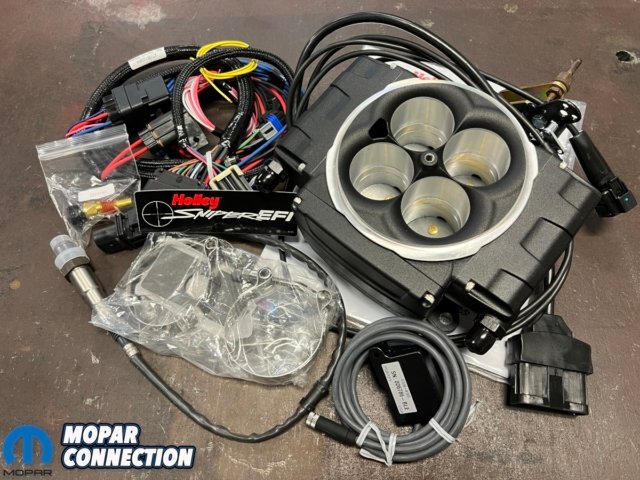
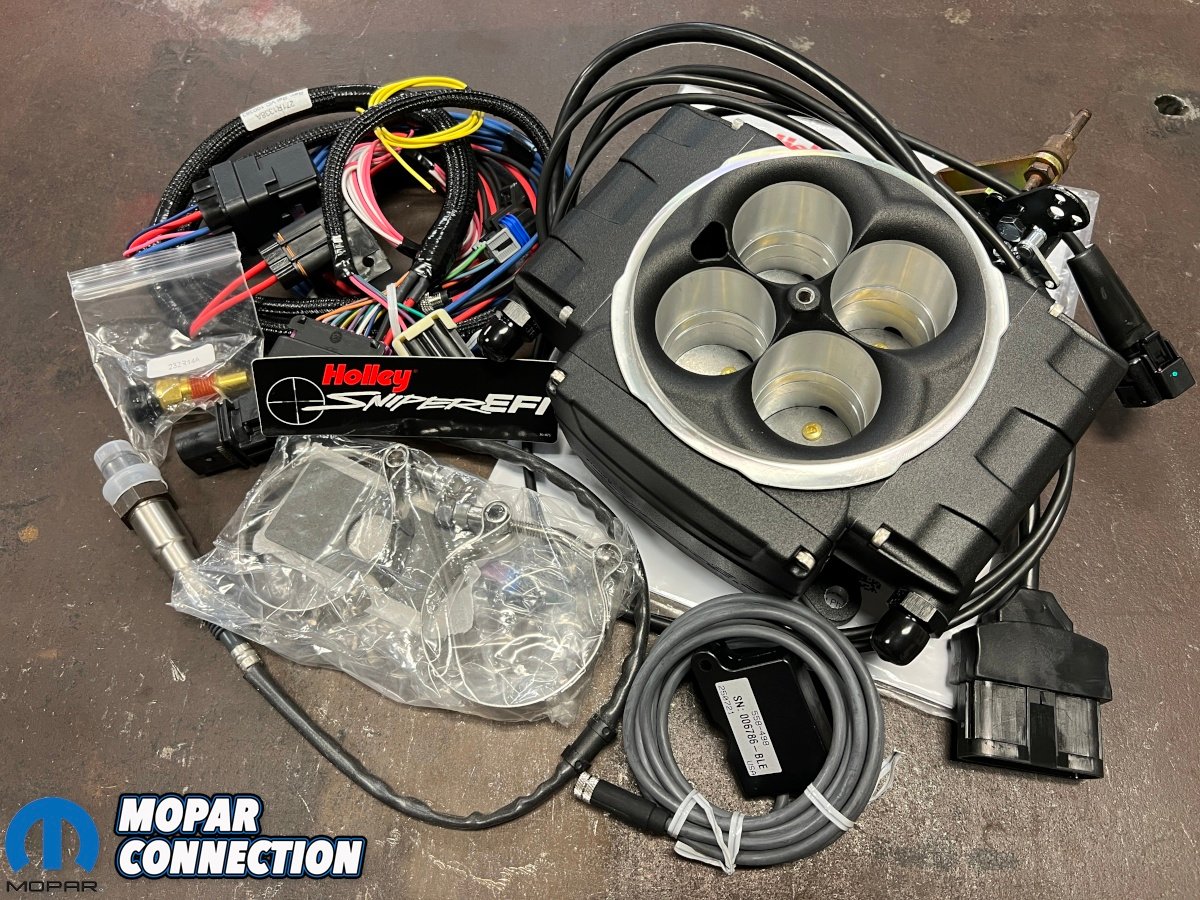
Above: EFI packages keep getting easier and more compact, as evidenced by the Holley Sniper’s small pile of supplied parts.
That kept this installation close to the unadorned arrangement envisioned. Holley’s fuel delivery history, technical resources, and EFI forum also offered somewhere to turn if a question outgrew the instruction sheet which wasn’t going to be likely with a setup so uncomplicated.
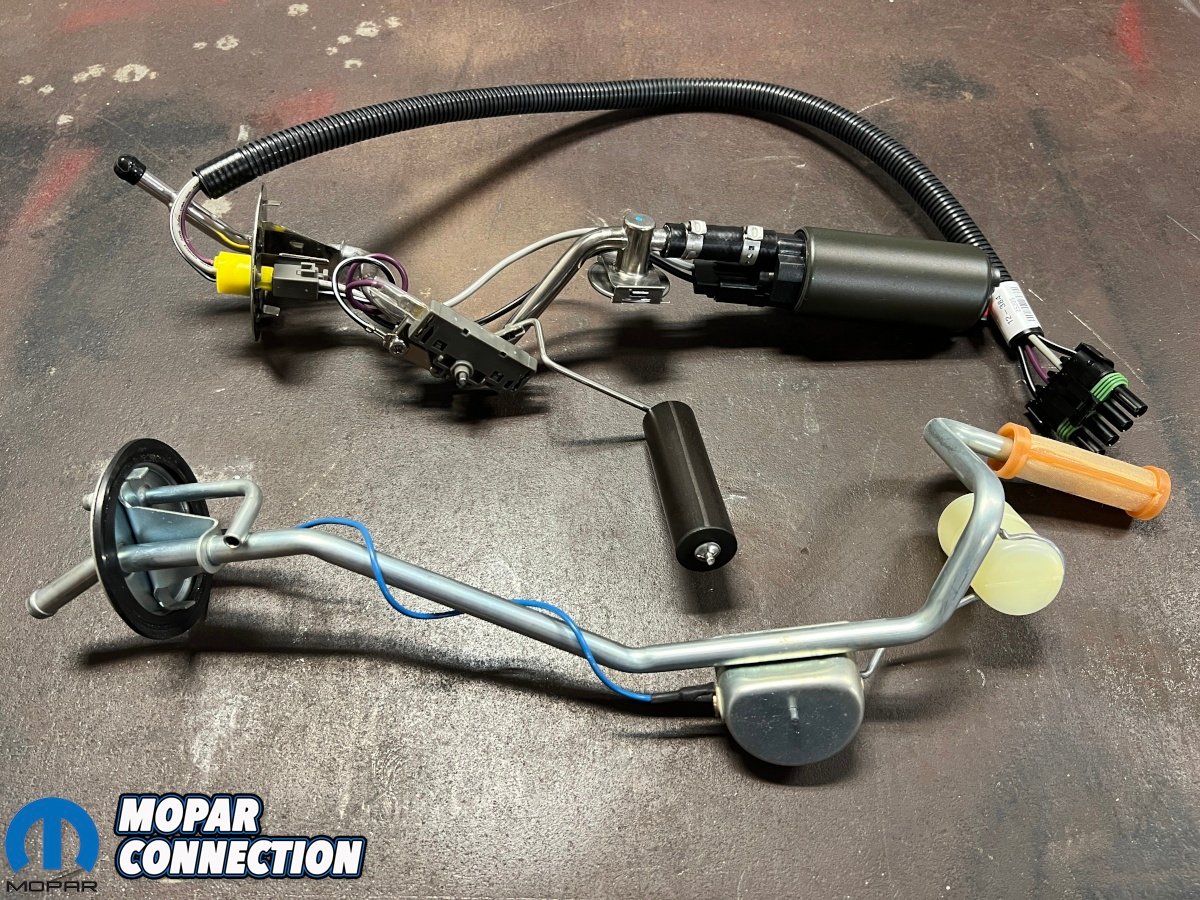
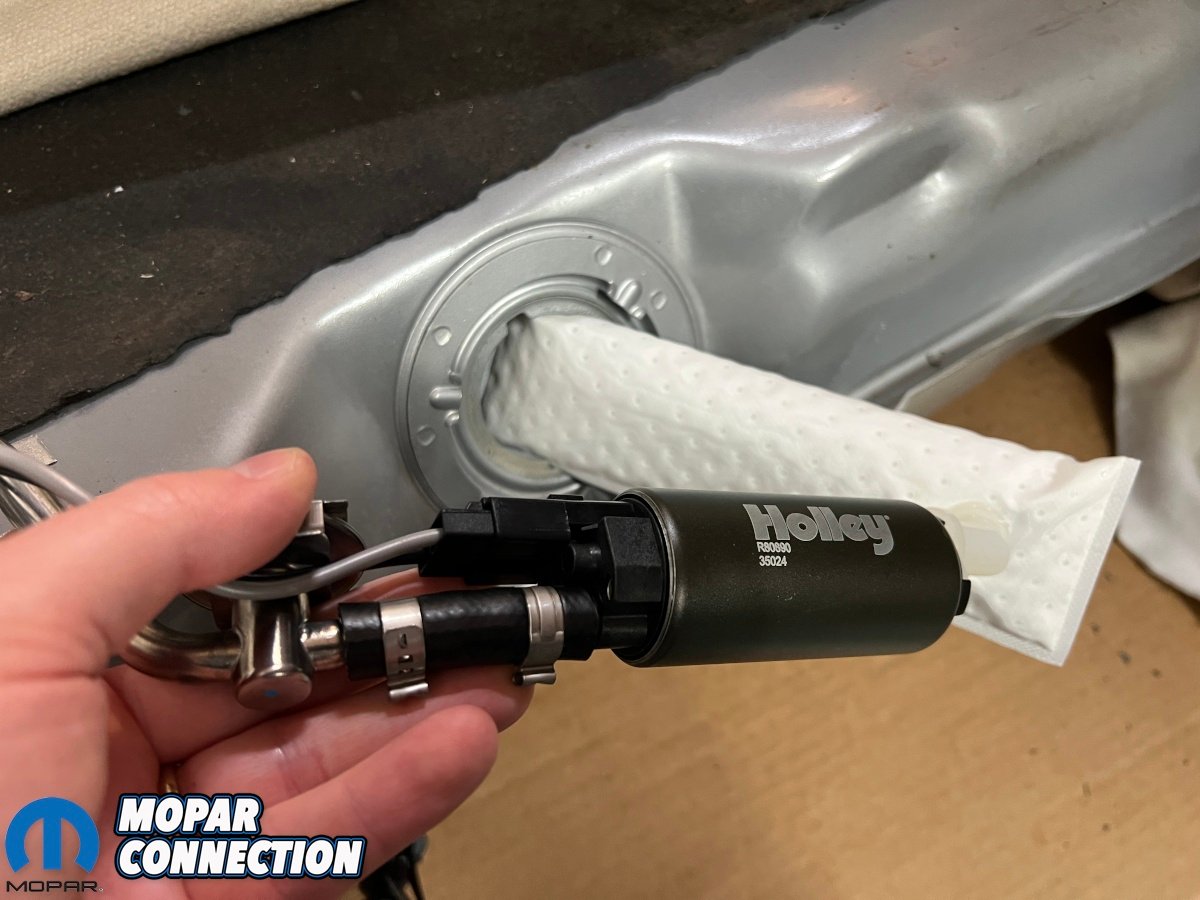
Fuel supply deserved the same consideration with an eye to easy. Holley’s muscle-car in-tank module (P/N 12-384) put a 350-lph pump and internal 58-psi regulation in the existing tank. Its 1968–1970 B-body fitment avoided buying a dedicated EFI tank, and the included sender matched the factory gauge’s ohm range requirements. No external regulator. No return line. No mechanical pump. No surge tank. Did we mention simplicity?
Putting the pump inside mattered, too. By comparison, a frame-mounted inline pump is accessible for service, but its whine can travel through the chassis. Fuel surrounding an in-tank pump helps cool it and muffle that racket. External pumps also need careful placement low and close to the tank to help priming; this pump would live right at its fuel supply with the HydraMat pickup adding protection against fuel starvation as gasoline sloshes during braking, cornering, or acceleration. EFI needs a steady drink, even when the tank’s contents are doing the mambo.
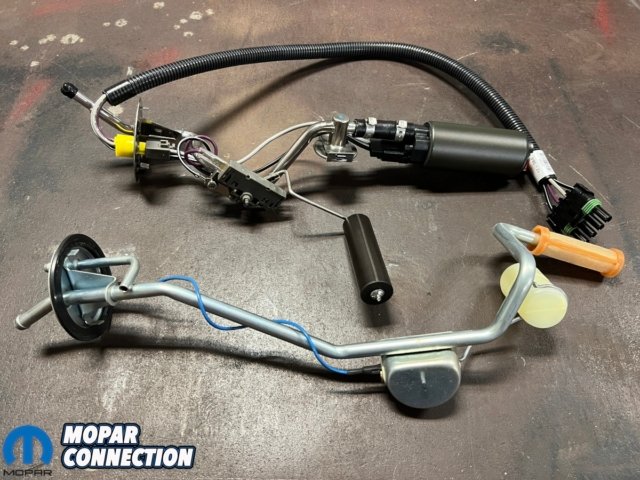
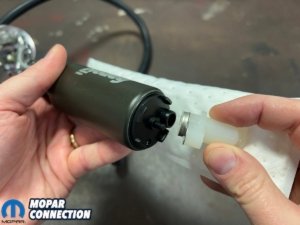
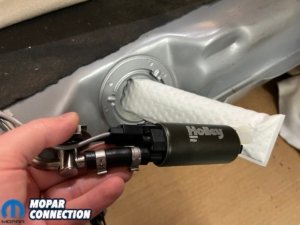
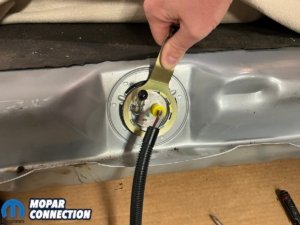
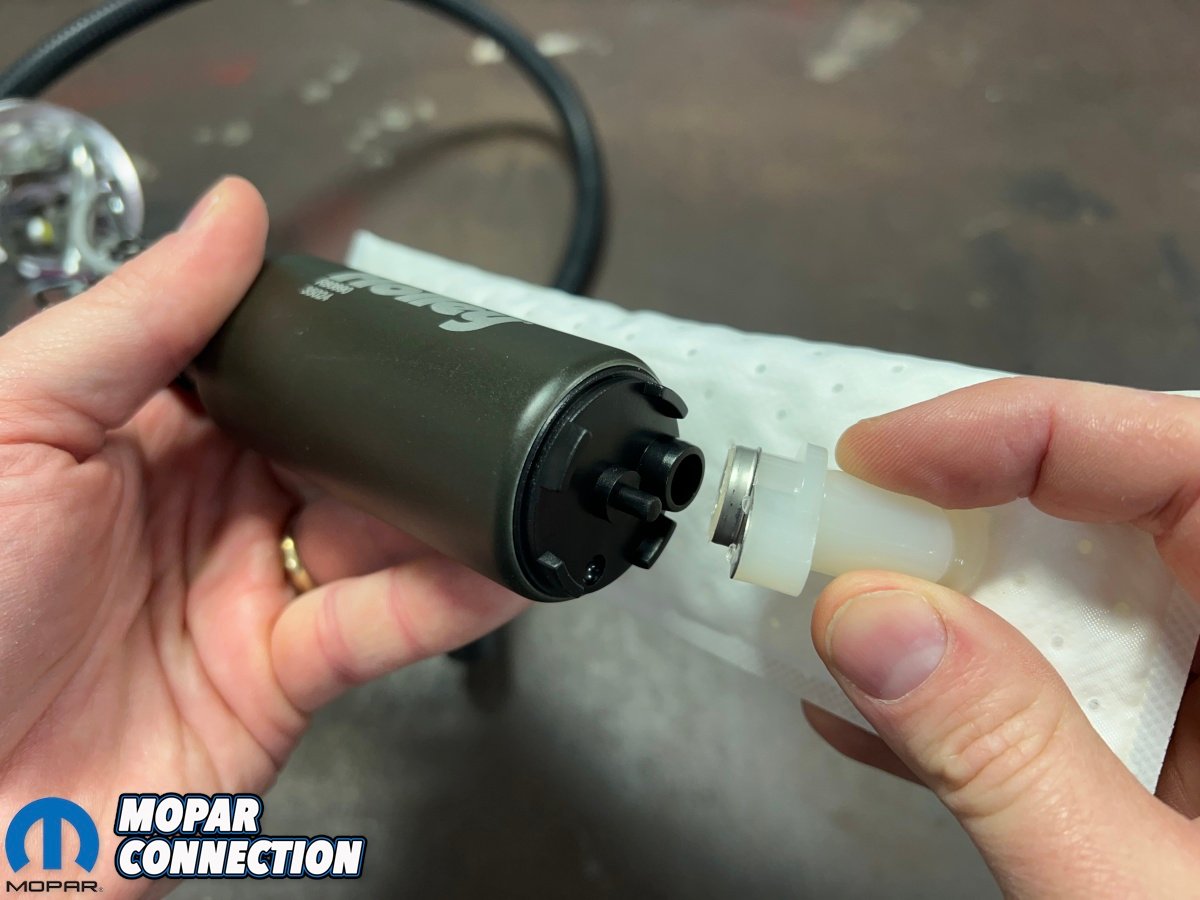
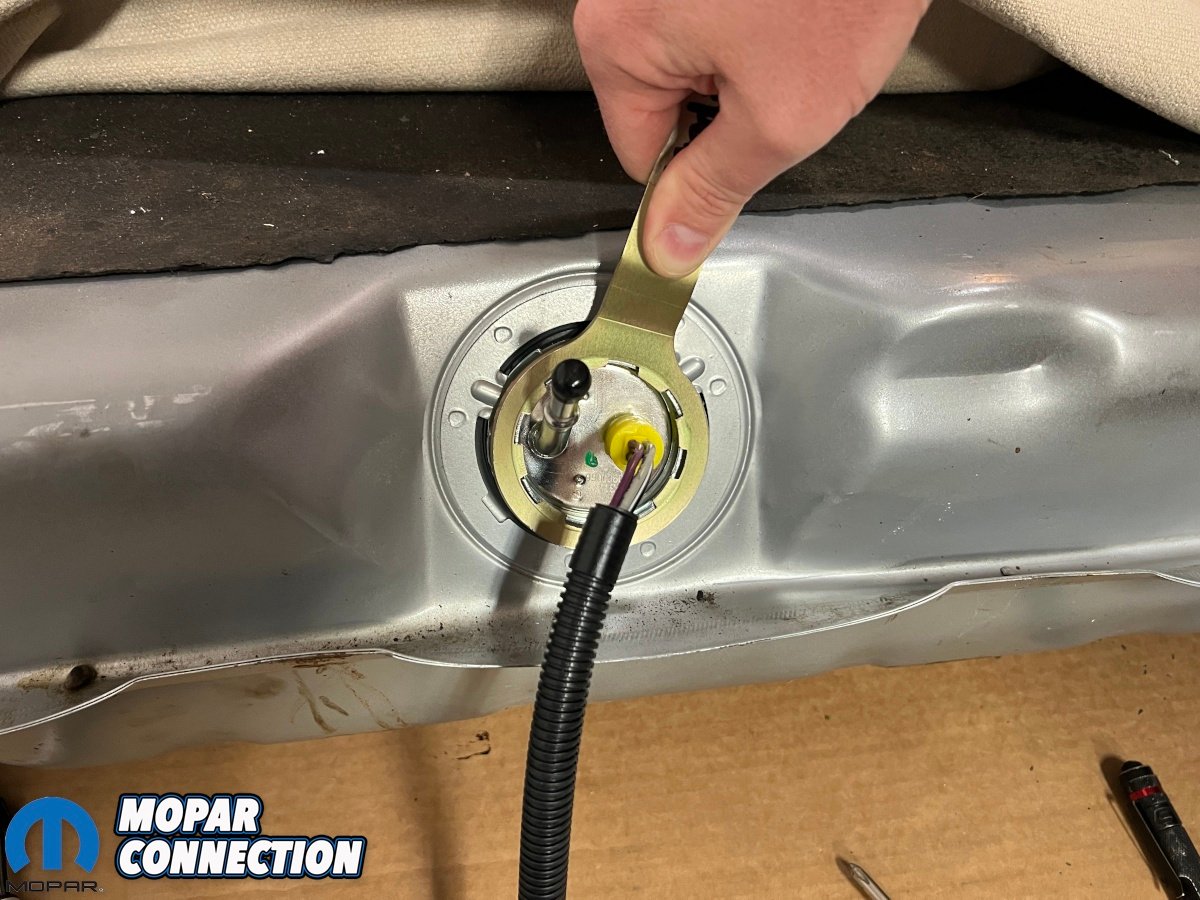
Above: Holley’s in-tank module (top) offers a drop-in replacement for the stock sending unit (bottom). Above left: The HydraMat popped into place with a push. Above center: It was inserted first and clocked to the bottom of the tank. Above right: A quick snugging with Mancini’s lock ring wrench cinched it down.
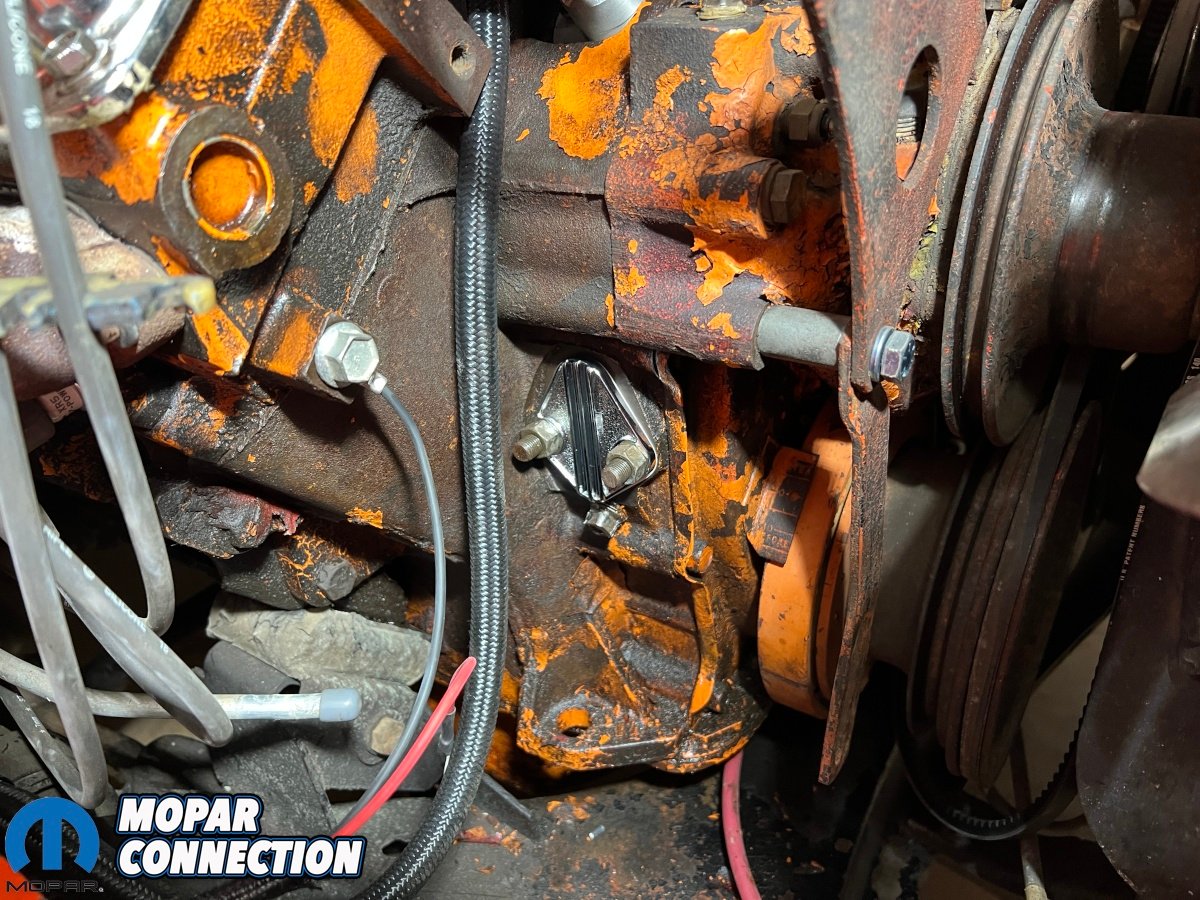
With the combination settled, the surge tank, bracket, hoses, old throttle body, wiring, and oxygen sensor were expelled while the alternator came off for access to the mechanical pump. With that pump out, the threaded access plug beneath it was removed so the pushrod could slide out. The plug went back and a Holley block-off plate (P/N 12-813) covered the former pump’s now-vacant opening in the block.
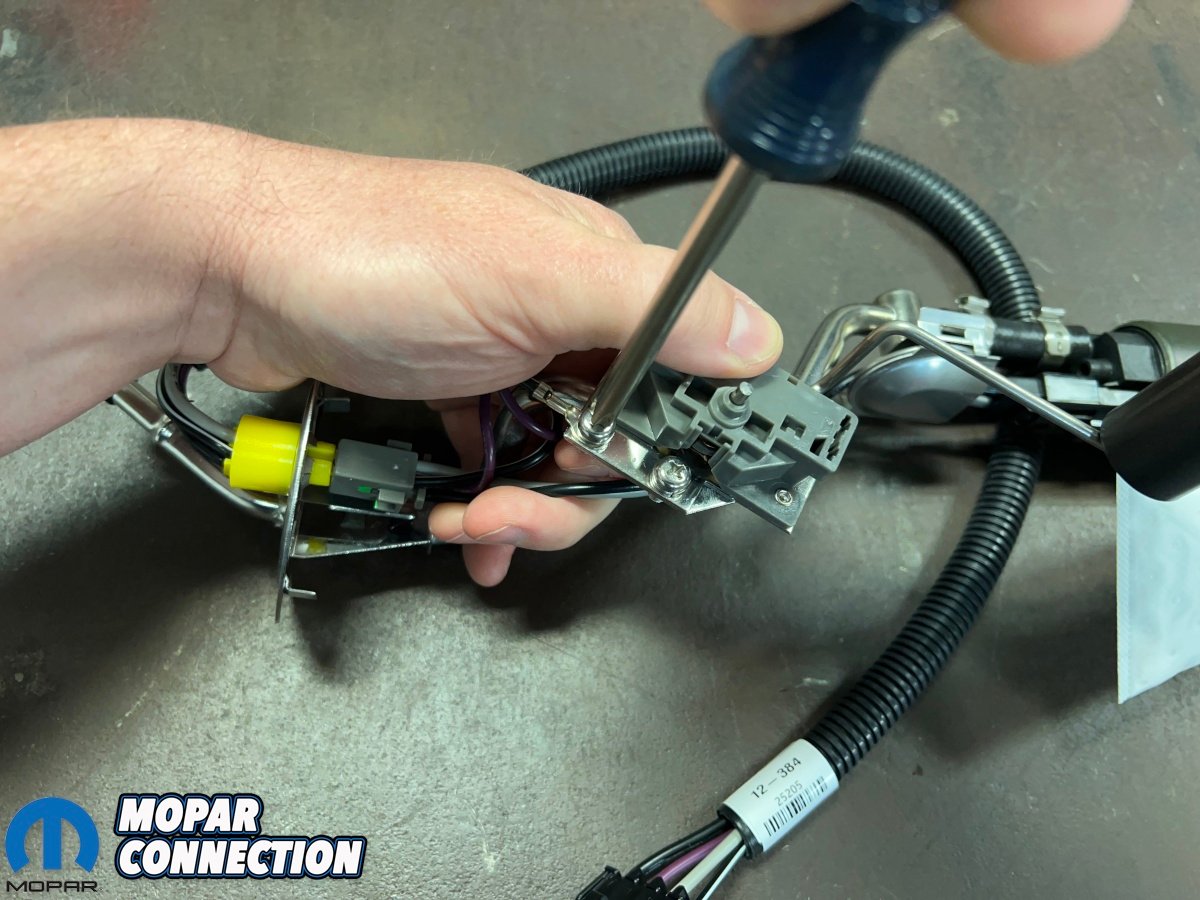
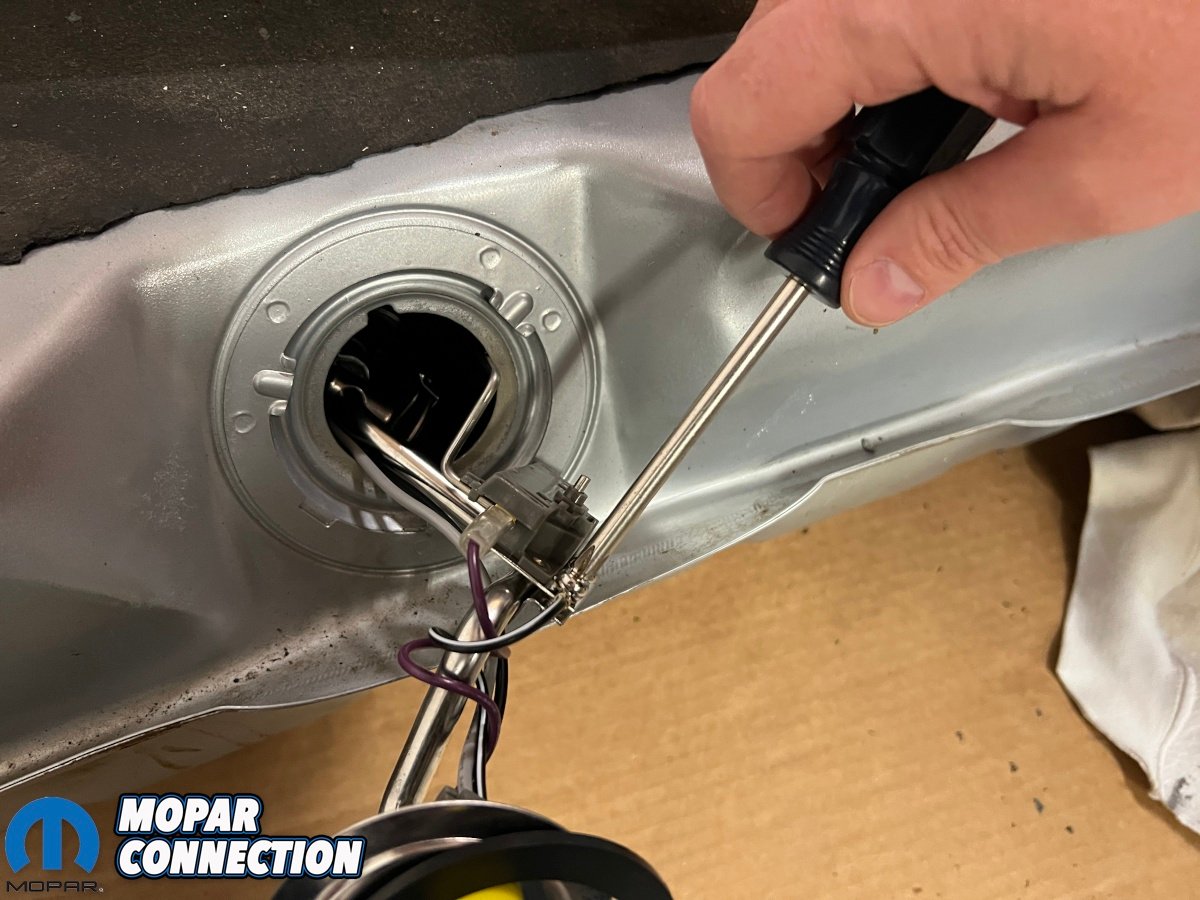
A transmission jack supported the existing tank out back while its connections, straps, and J-bolts were released. Once lowered, a Mancini Racing lock-ring wrench (P/N MREQELRW) freed the old sender. The new assembly required some choreography: the HydraMat snapped onto the pump using its alignment dowel, then the fuel-level sender’s two mounting screws were removed so the sender could be laid aside temporarily. The mat’s long end entered first, then the sender followed float-first and was reattached with the pump partly inserted.
The gasket passed over the supply tube and wiring and seated around the module flange. With the HydraMat flat against the tank floor, a new lock ring secured the assembly. The tank, filler-neck connection, and straps were reinstalled without cutting, drilling, or welding. What resulted was a substantial upgrade in EFI-ready fuel delivery without turning the bottom of the Charger into a sheetmetal project.
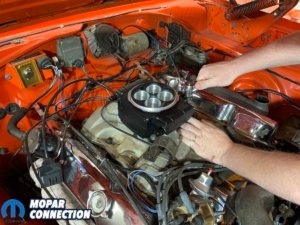
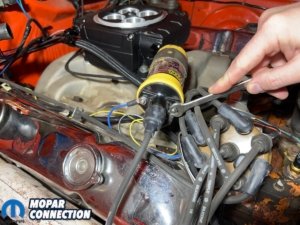
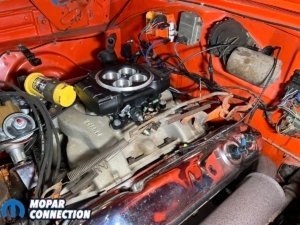
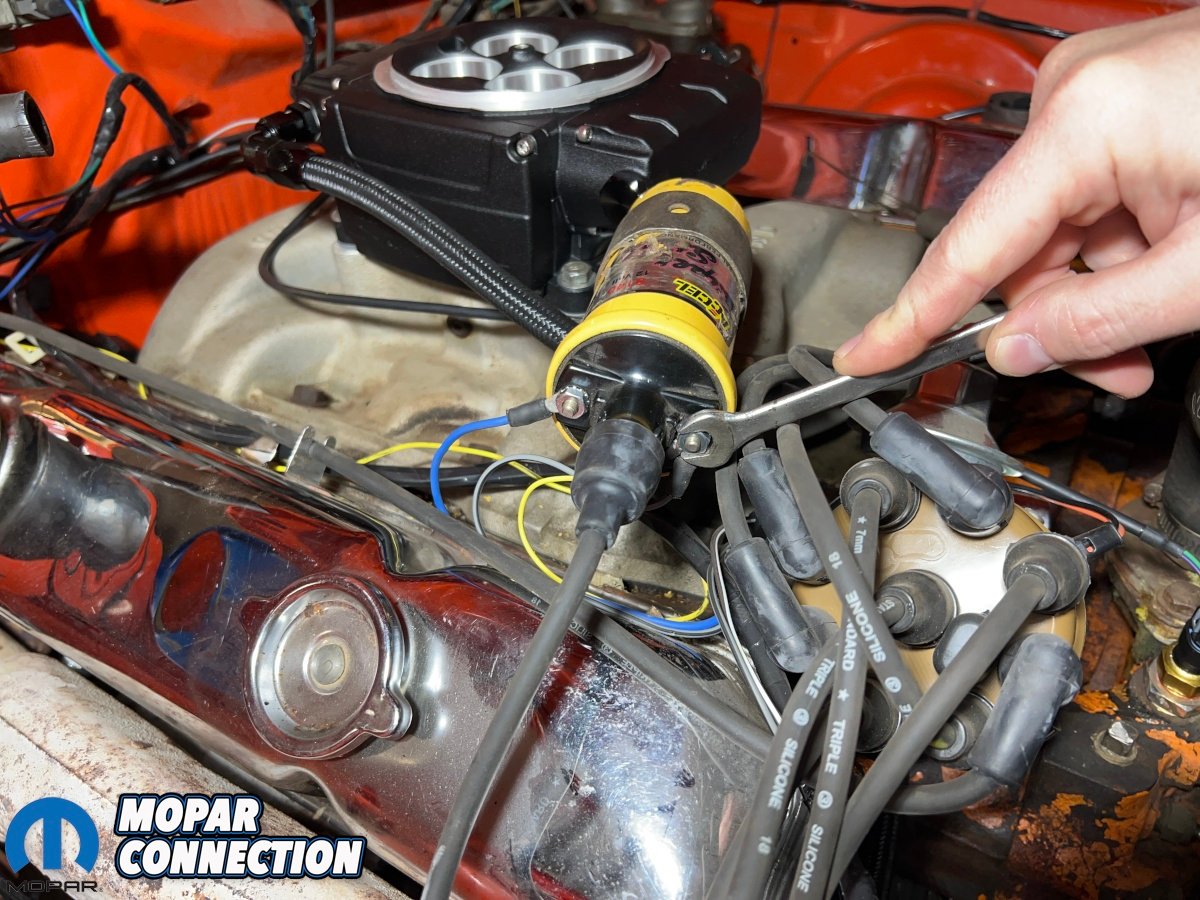
Above left: The Sniper throttle body fit like factory on the 4150-flanged intake. Above center: Just one wire (yellow) needed added to coil negative for RPM signal. Above right: Kickdown linkage and the throttle cable went unmodified.
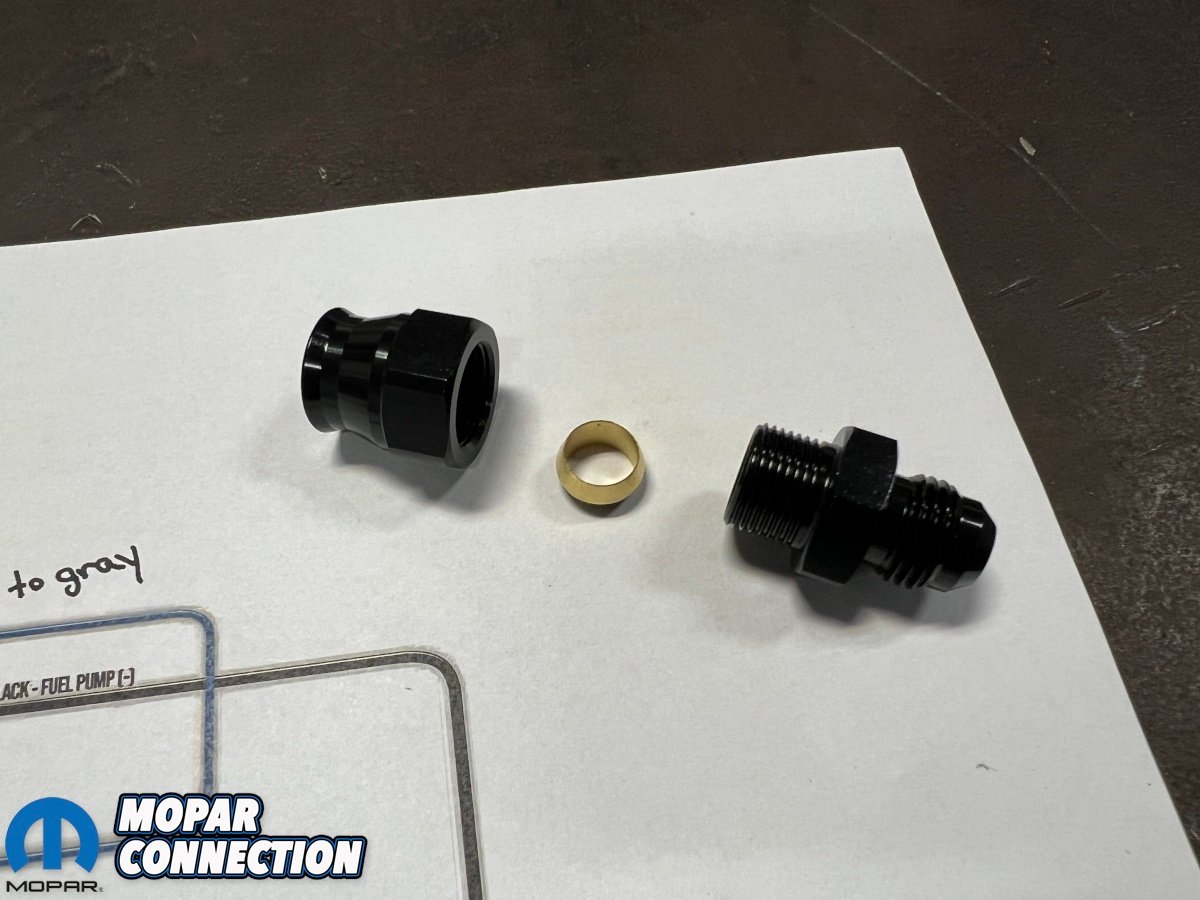
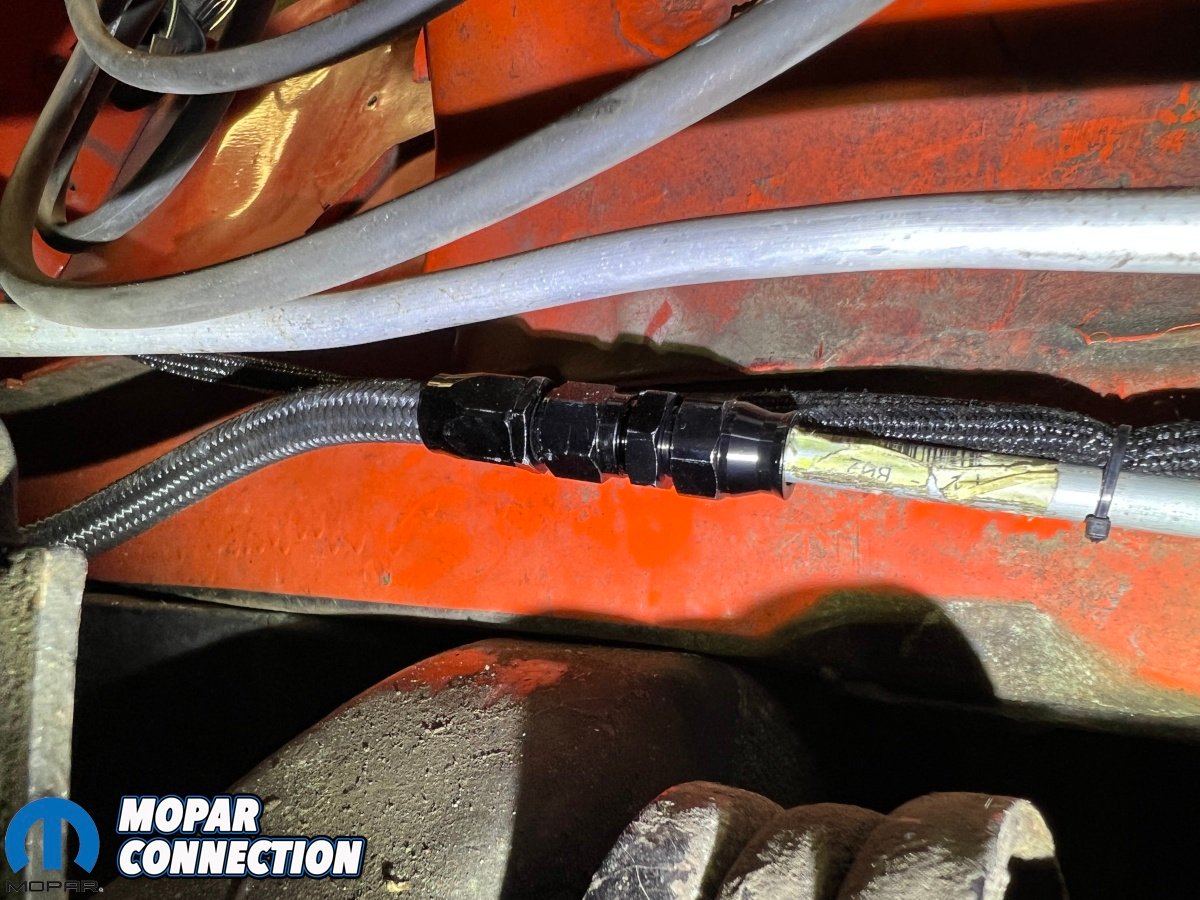
The existing 3/8-inch steel supply line also stayed. Its barbs were trimmed and Earl’s compression adapters (P/N AT165006ERL) supplied male -6 AN connections front and rear. Keeping the factory routing of the original steel line avoided a car-length run of flexible hose.
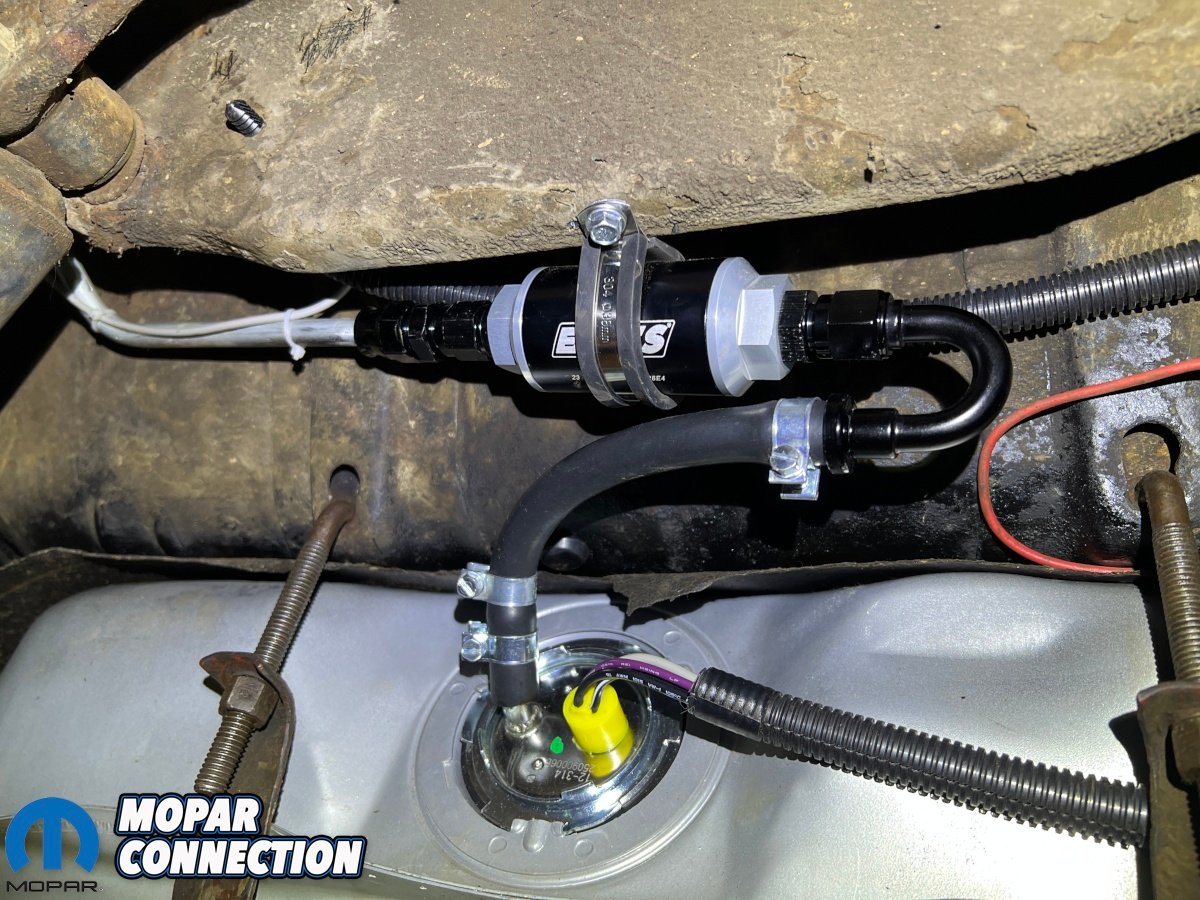
For EFI, clean fuel is just as important as pressure. An Earl’s 10-micron post-pump filter (P/N 230606ERL) supplied the fine filtration needed to keep debris out of the injectors. Mounted near the rear shock crossmember in a rubber-lined clamp, it was fed with 3/8-inch EFI hose and a 180-degree hose-barb fitting. An Earl’s adapter (P/N AT985006ERL) joined that fitting to the filter’s O-ring boss (ORB) inlet. At the outlet, another port adapter and a female swivel coupling (P/N AT915106ERL) provided an all-Earl’s connection to the hard line.
Up front, Mr. Gasket black braided -6 AN hose (P/N 842006) supplied the flexible connection to the throttle body. Its fuel-resistant FKM liner meets SAE 30R9, and its 350-psi working rating comfortably exceeds this system’s nominal pressure. The nylon braid also weighs less than traditional stainless braid. There was more behind the choice than looking sharp against orange paint.
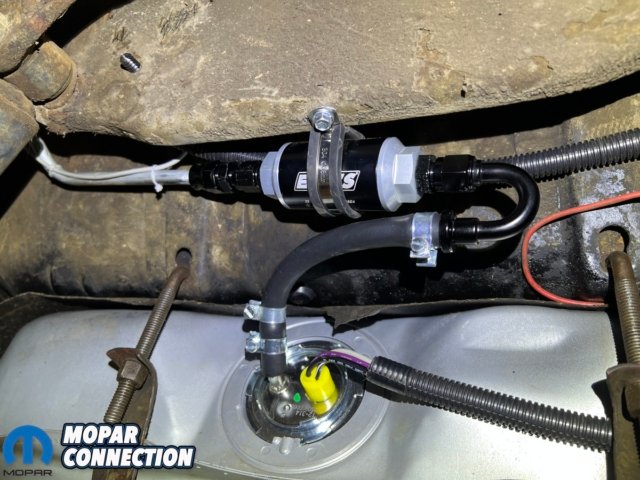
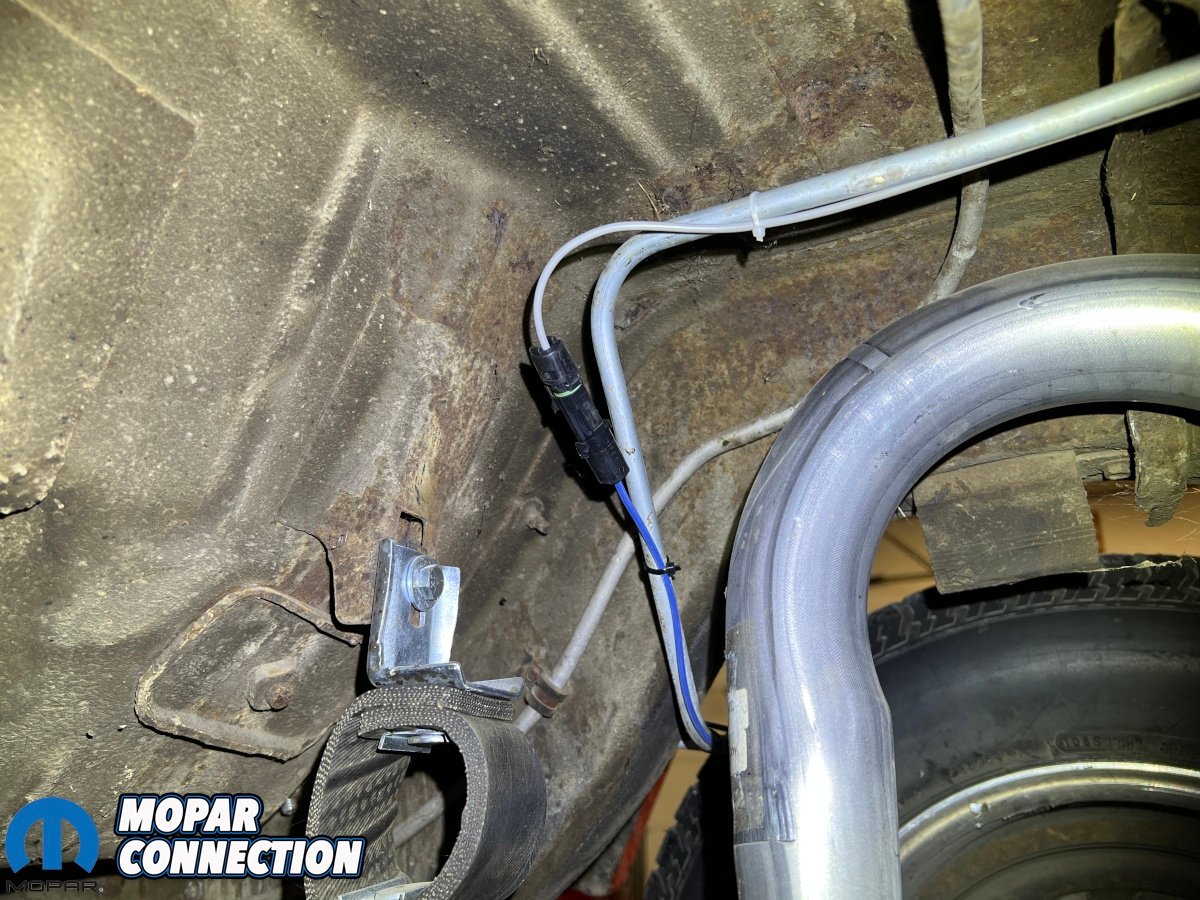
Above: Earl’s was employed to make the fuel line connections from in-tank module to factory steel fuel line.
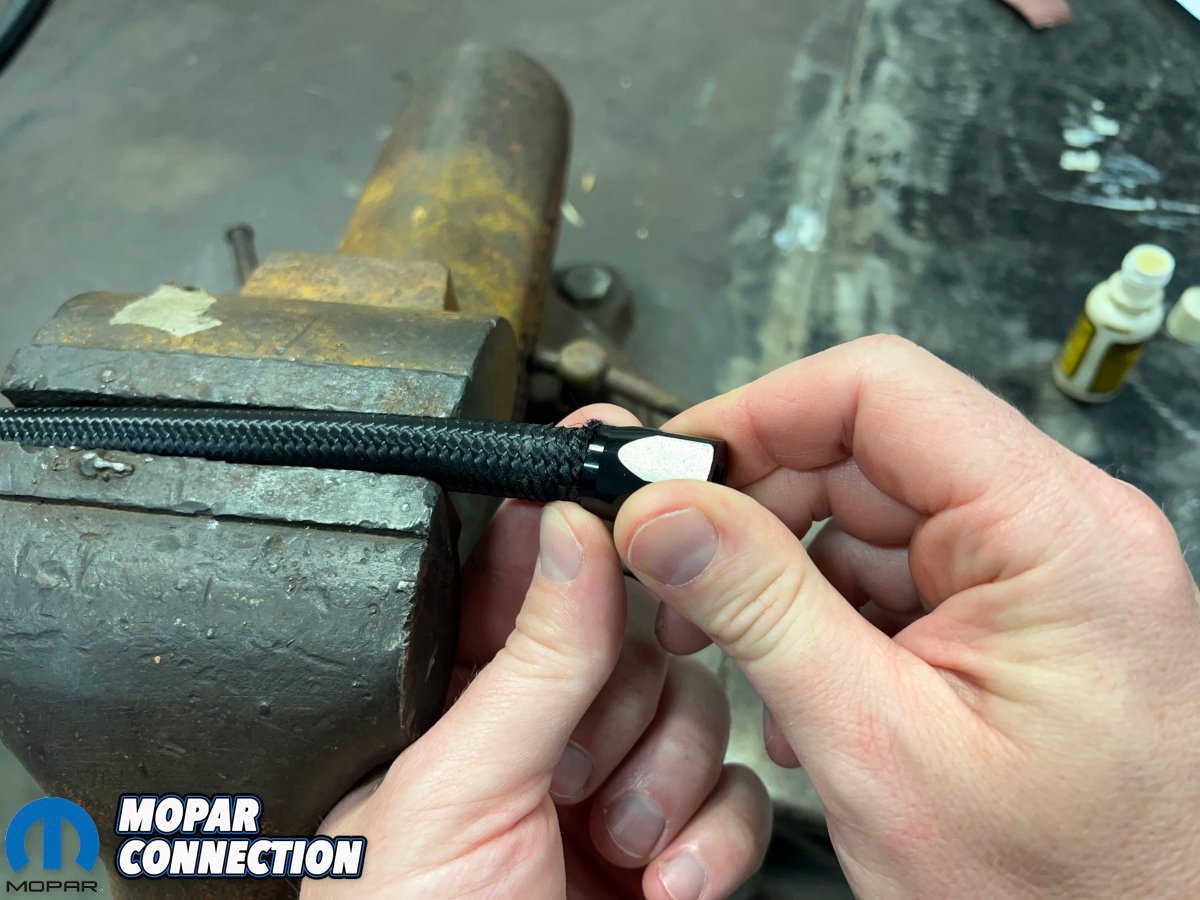
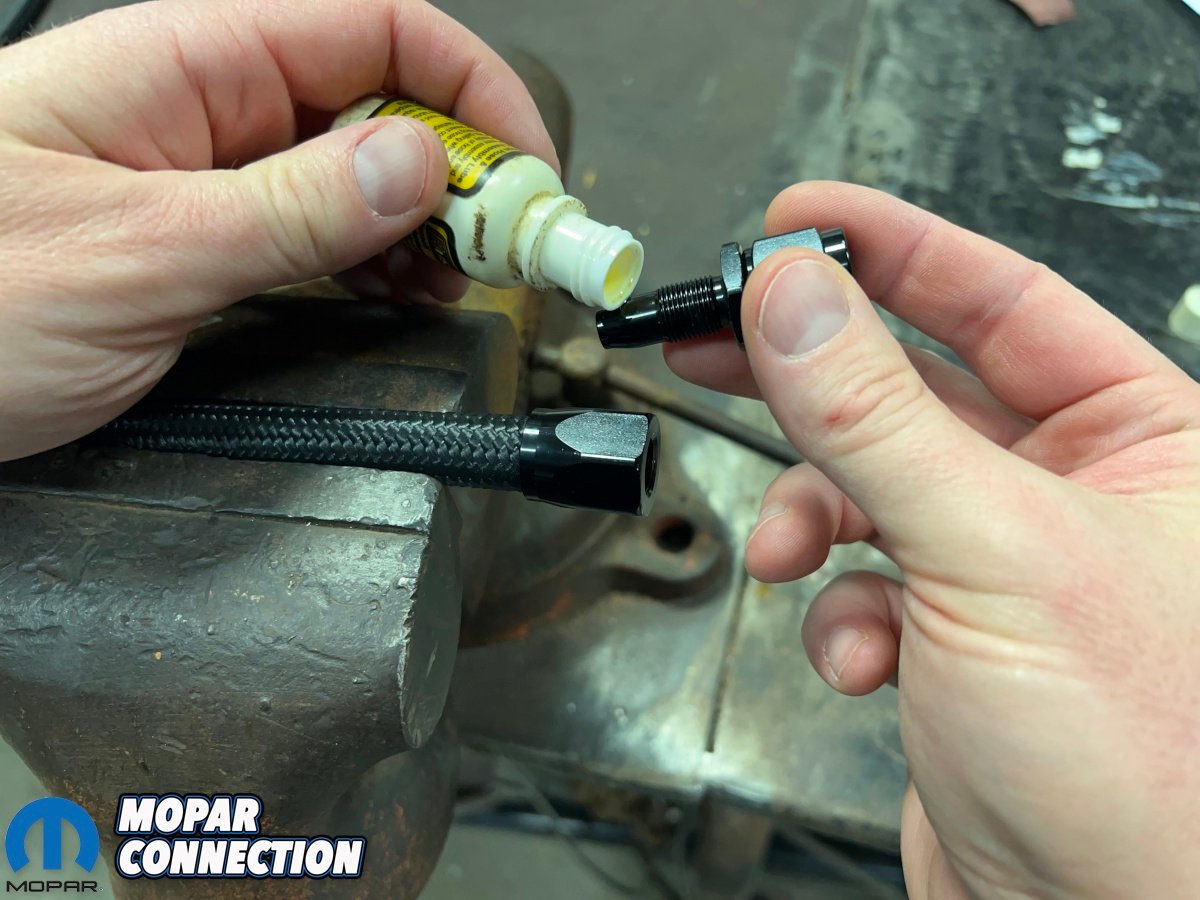
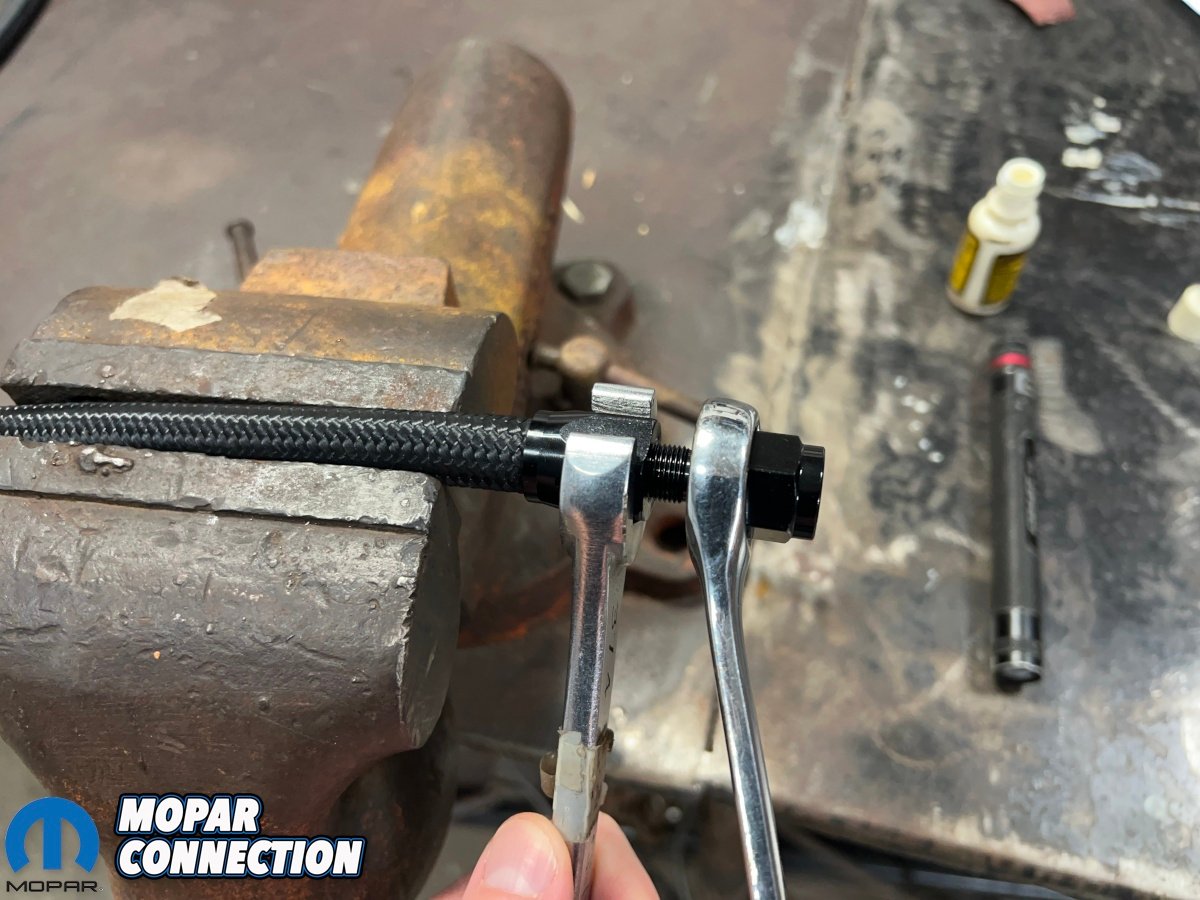
A straight end (P/N 220106-BL) joined the hard line, and a 90-degree end (P/N 229006-BL) met the Sniper throttle body. Each reusable end was put together with the hose seated in its socket and the nipple lubricated before tightening. After assembly, it was snaked under the alternator, by the water pump, under the distributor, alongside the coil, and to the Sniper’s rear inlet port.
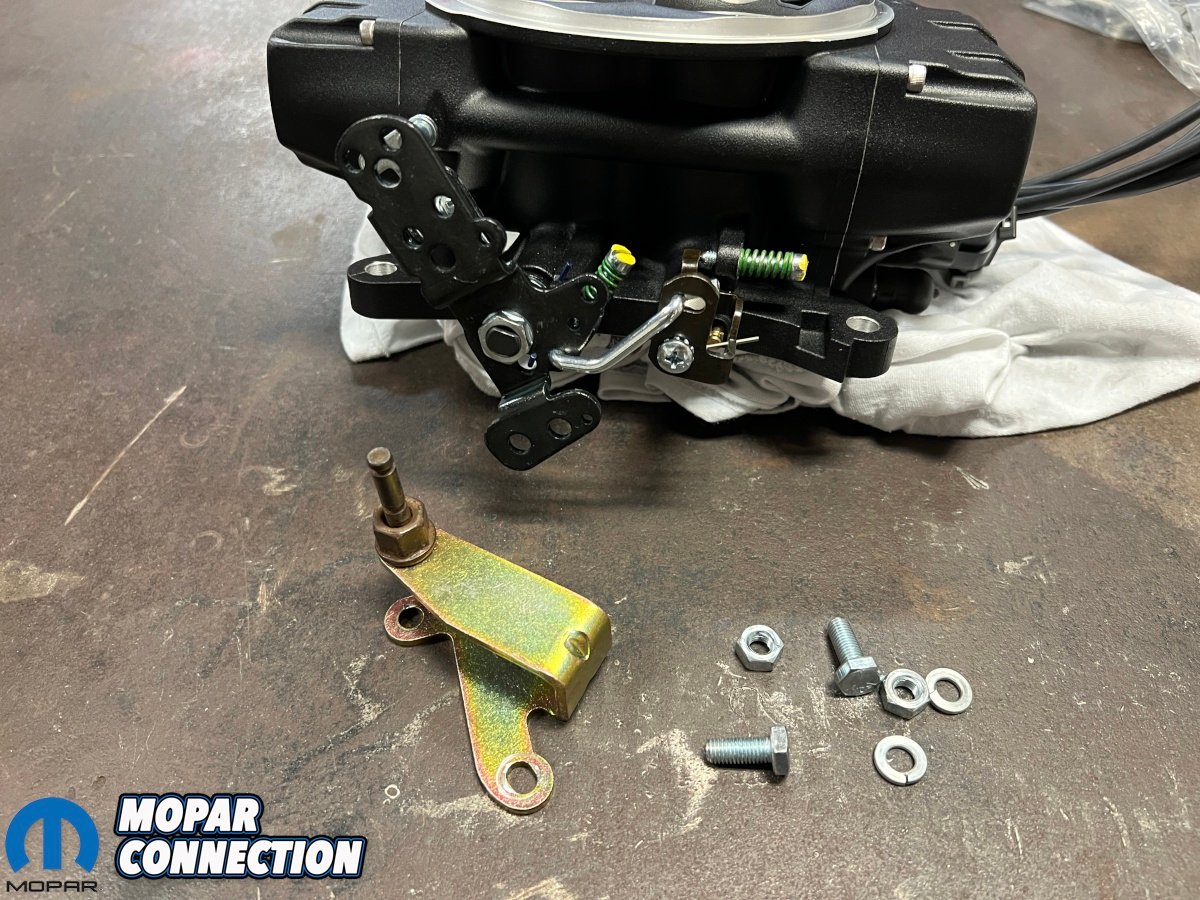
Before the throttle body was mounted, a Holley Chrysler lever adapter (P/N 20-7) had been employed to preserve the OEM throttle cable, kickdown linkage, and return springs. All went back on without modification.
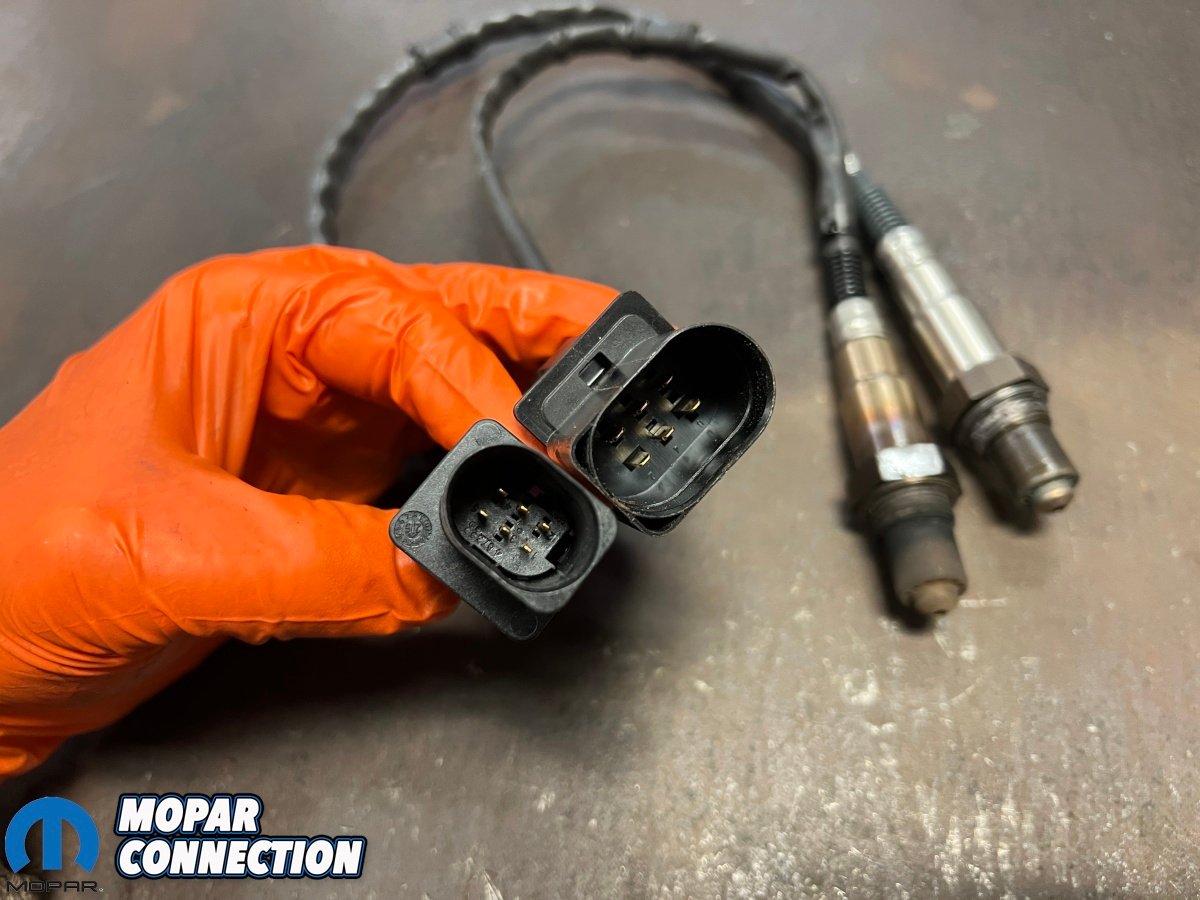
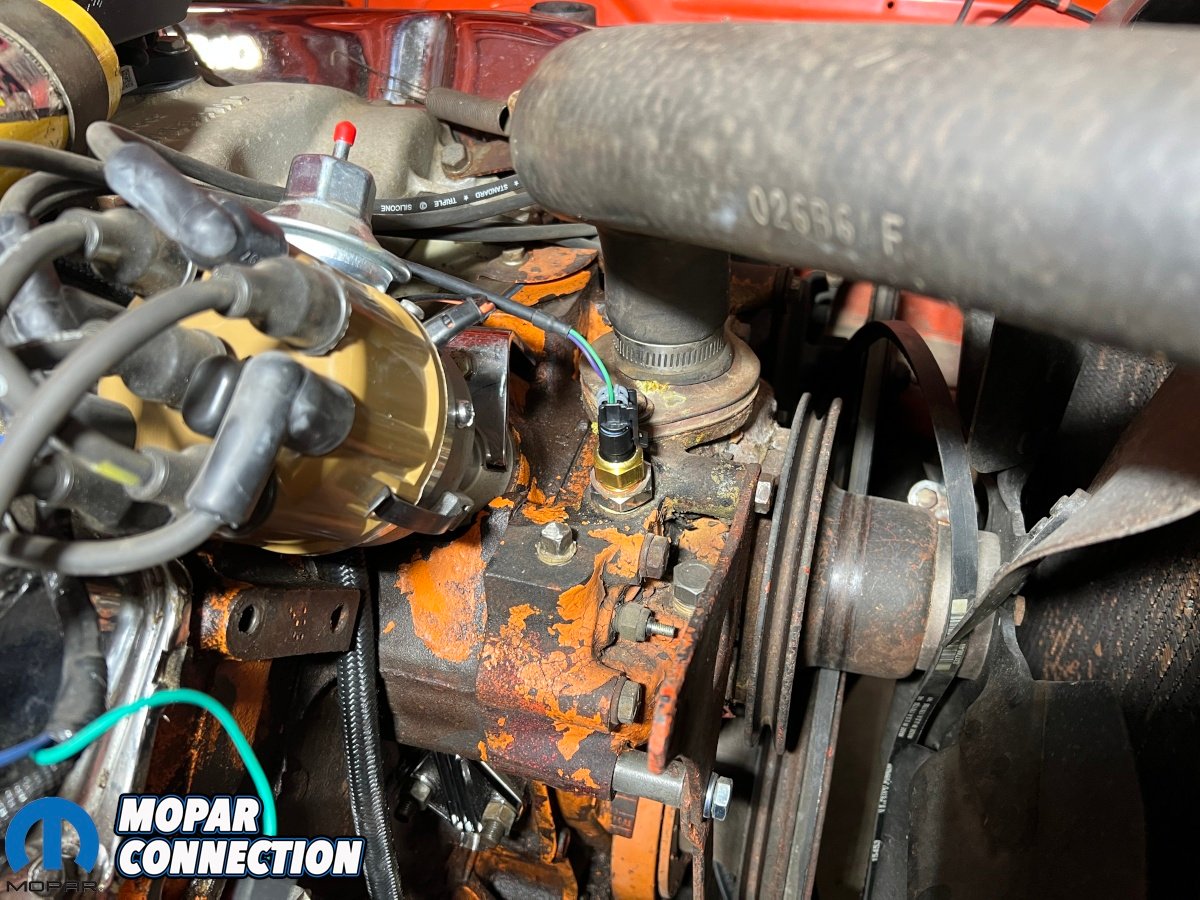
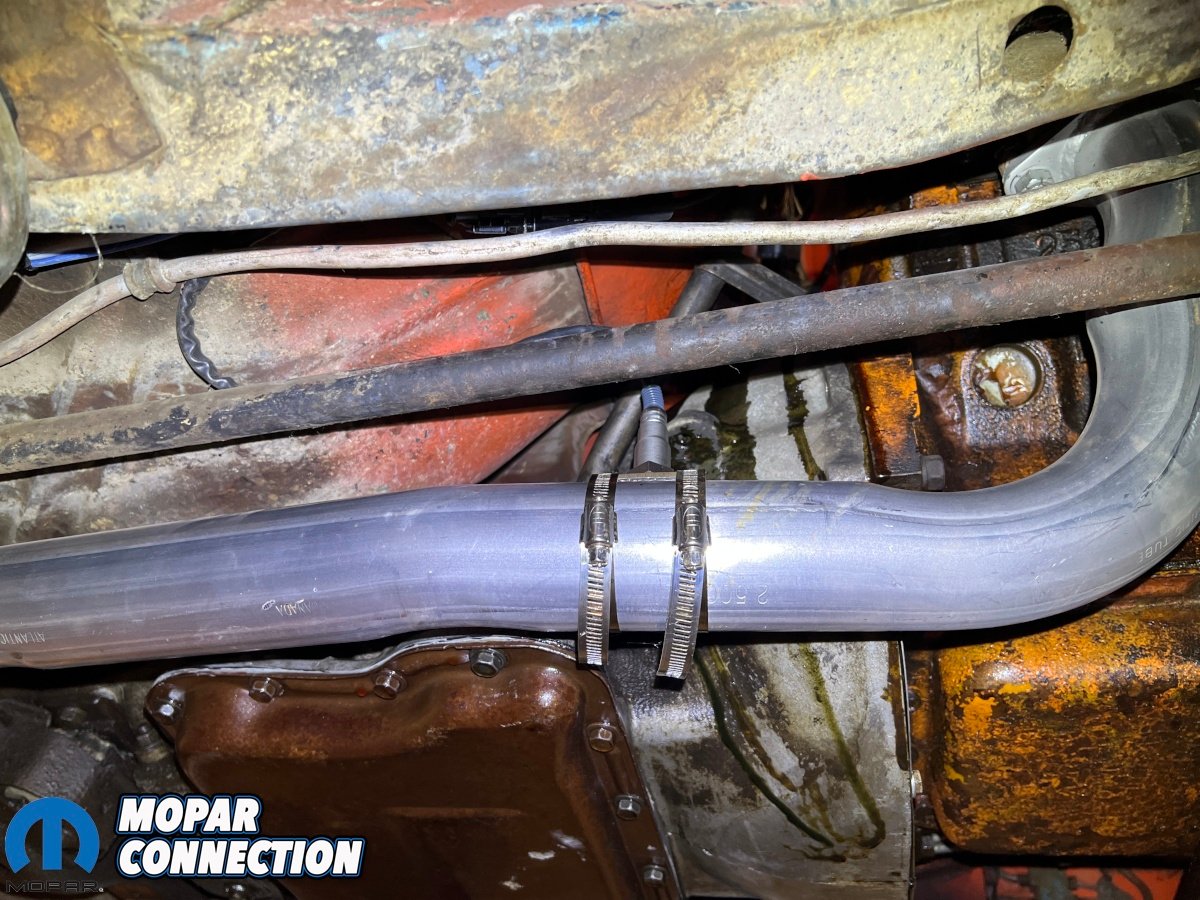
The supplied coolant sensor threaded into the water pump housing to report engine temperature for Fahrenheit-based fueling. The wideband oxygen sensor, responsible for mixture feedback, used the existing clamp-on bung on the passenger headpipe. That bung was a holdover from the previous system even though the Sniper came with its own new clamp-on bung. Different connectors ruled out retaining the previous O2 sensor, but at least the exhaust didn’t need a new hole.
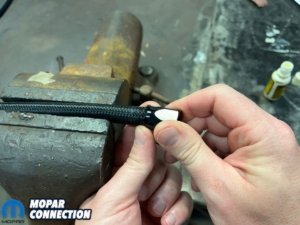
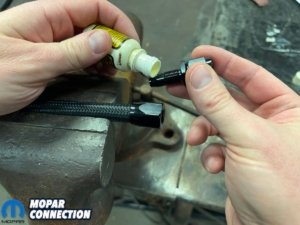
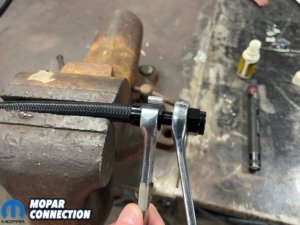
Above: AN hose assembly ain’t rocket science, but results in hoses and connections that are near bulletproof.
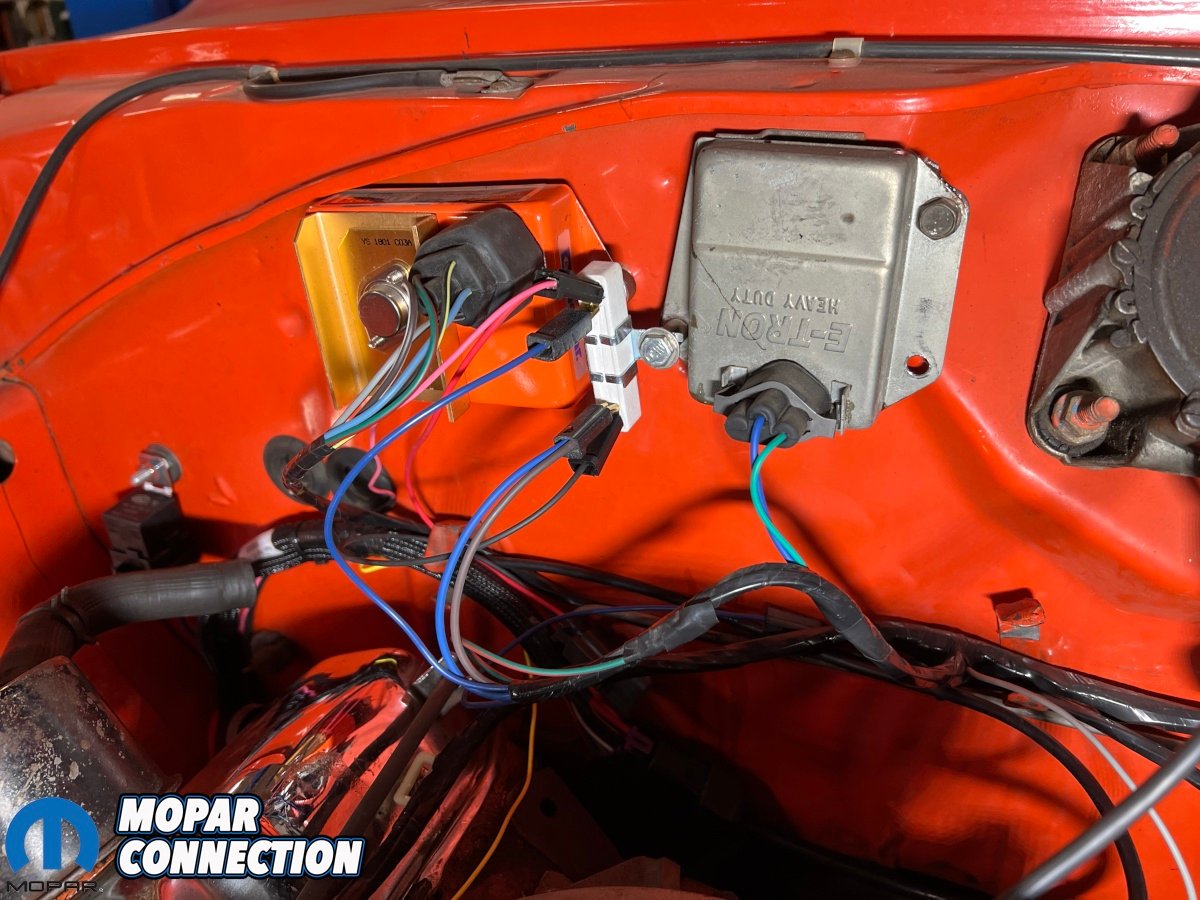
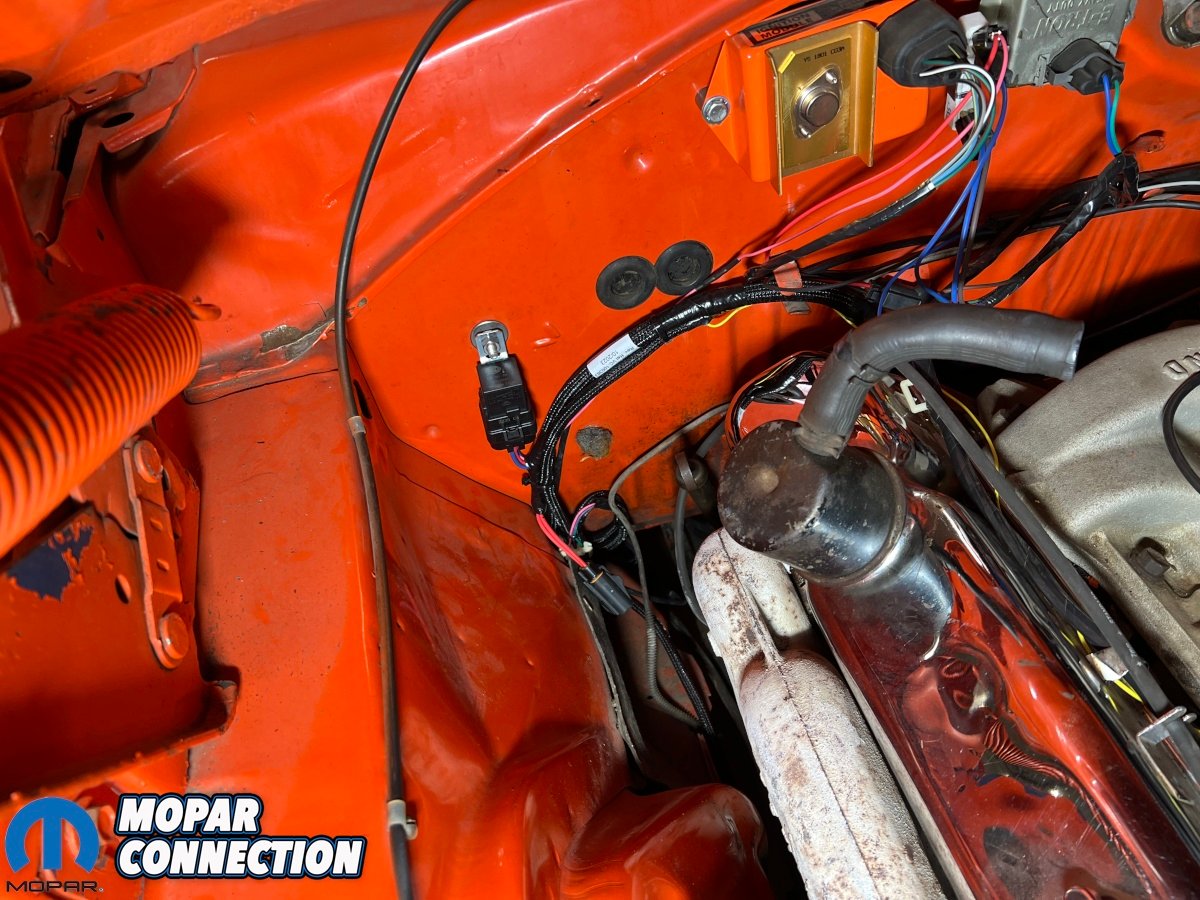
The pump relay, included in the Sniper’s PDM-less harness, mounted on the firewall via an existing heater box hole. Its blue power lead was plenty long to follow the steel fuel line rearward and meet the pump module’s gray wire through a Weather Pack connector. CustomConnectorKits supplied the terminals and connectors since we had the tools for crimping, but they also had premade pigtails available (P/Ns 12010996-PT and 12015791-PT).

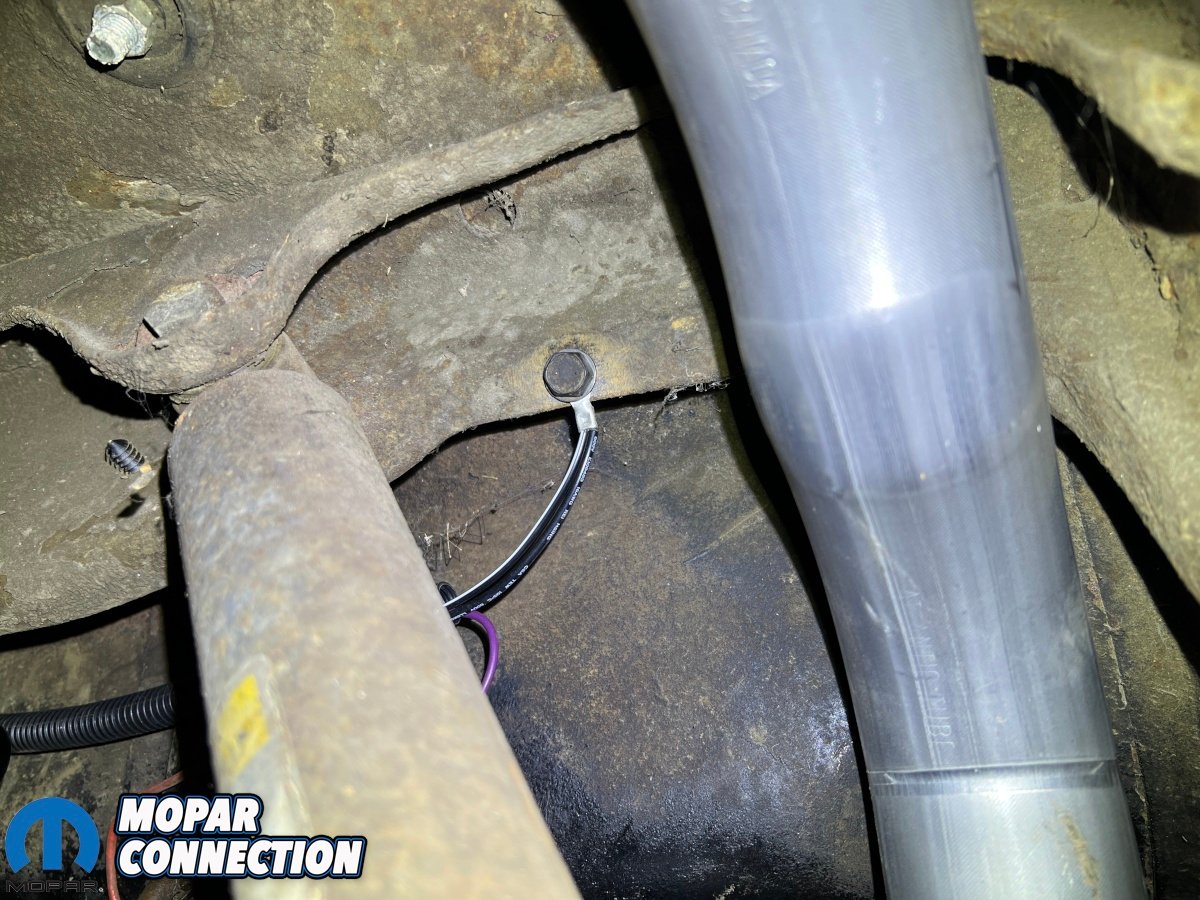
The rest of the wiring for the pump module was just as simple. Purple united with the fuel gauge’s single factory wire. Both module grounds were secured to the rear frame, one for the sending unit’s reference and one for the pump.
Back underhood, the Sniper’s positive lead connected to the alternator output stud, which already had an added charging cable to battery positive that we’d installed years ago to carry current around the in-dash ammeter. Sniper ground was routed behind the alternator and to an empty bolt hole in the passenger-side cylinder head. Those locations departed from Holley’s specified direct-to-battery-post connections. We were willing to risk the deviation with a known good block ground and the aforementioned parallel charging cable, but generally recommend following Holley’s instructions to a tee.
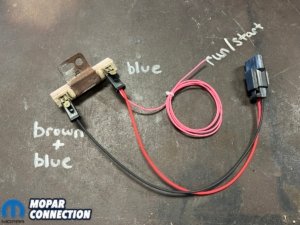
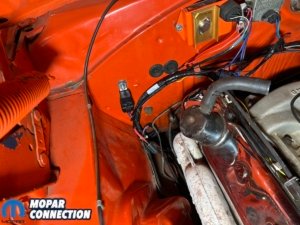
Above left: This harness from a FABO forum member provided a RUN/START signal. Above center: All Sniper wiring tucked neatly down low on the passenger side of the firewall. Above right: A thread-in coolant temperature sensor completed electrical necessities.
With spark timing staying independent, the yellow wire simply connected to coil negative for an RPM signal. No magic there, but the pink switched-power wire needed more attention. Mopars of this vintage used separate RUN and START feeds, leaving no single ignition-switch feed hot in both positions. Luckily, we found a ForABodiesOnly forum member selling a no-cut, plug-in harness that solves it.
With its built-in reverse-polarity protection, that harness allowed us to keep the original ballast resistor, preserve all of our factory wiring totally uncut, and supply the EFI with a signal that was hot in RUN and START. We simply plugged it in per the instructions and tucked its wiring into the firewall holders where it became basically invisible.
The final connection was the Bluetooth module, which would put setup and live engine readings on any app-compatible device, avoiding a permanently mounted display. Its cable joined the throttle body’s M8 lead and passed through an existing firewall plug near the three-speed wiper motor. The module and excess cable were secured beneath the dash with zip ties, leaving the dashboard’s OEM manners intact.
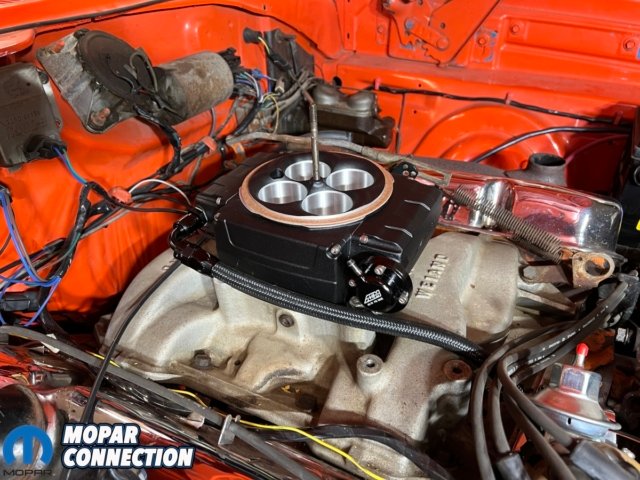
Above: AEM’s pulse damper took residence in the throttle body’s unused front port with room to spare.
After an update and pairing, the app’s wizard received Sniper 2 EFI 4BBL, eight cylinders, 440 cubic inches, and Stock/Mild camshaft selections for the Magnum, which was almost totally factory stock aside from a Weiand 8009 intake. Target idle was pinned at 750 RPM with the understanding that cold idle would be a bit higher until coolant temperature reached 160F. Coil (-), All Motor, and Create Base Tune completed the introductions without us even having to get out our big-boy brain cells.
Following calibration, the in-tank pump primed for about three seconds. The sound of dripping gasoline revealed one leak at the 180-degree rubber-hose fitting. That was stopped with a few more turns of the clamp screw; every other connection stayed dry.
After a secondary leak check, the 440 got a full turn of the key and lit instantly while settling into a healthy high idle. However, once it warmed up, alarm arose as the 440 refused to hold a steady 750. Above 160F, the tach seesawed rapidly between 600 and 1,400 RPM. The app revealed a suspicious 0% idle air control (IAC) reading. Clearly, the IAC was being commanded closed, pointing toward too much air getting past the throttle blades.
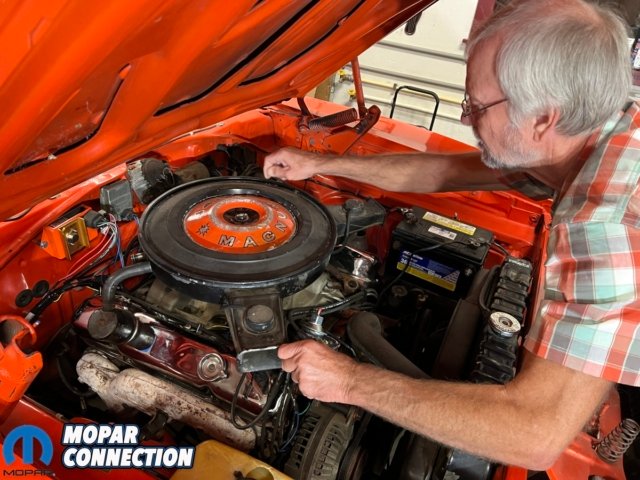
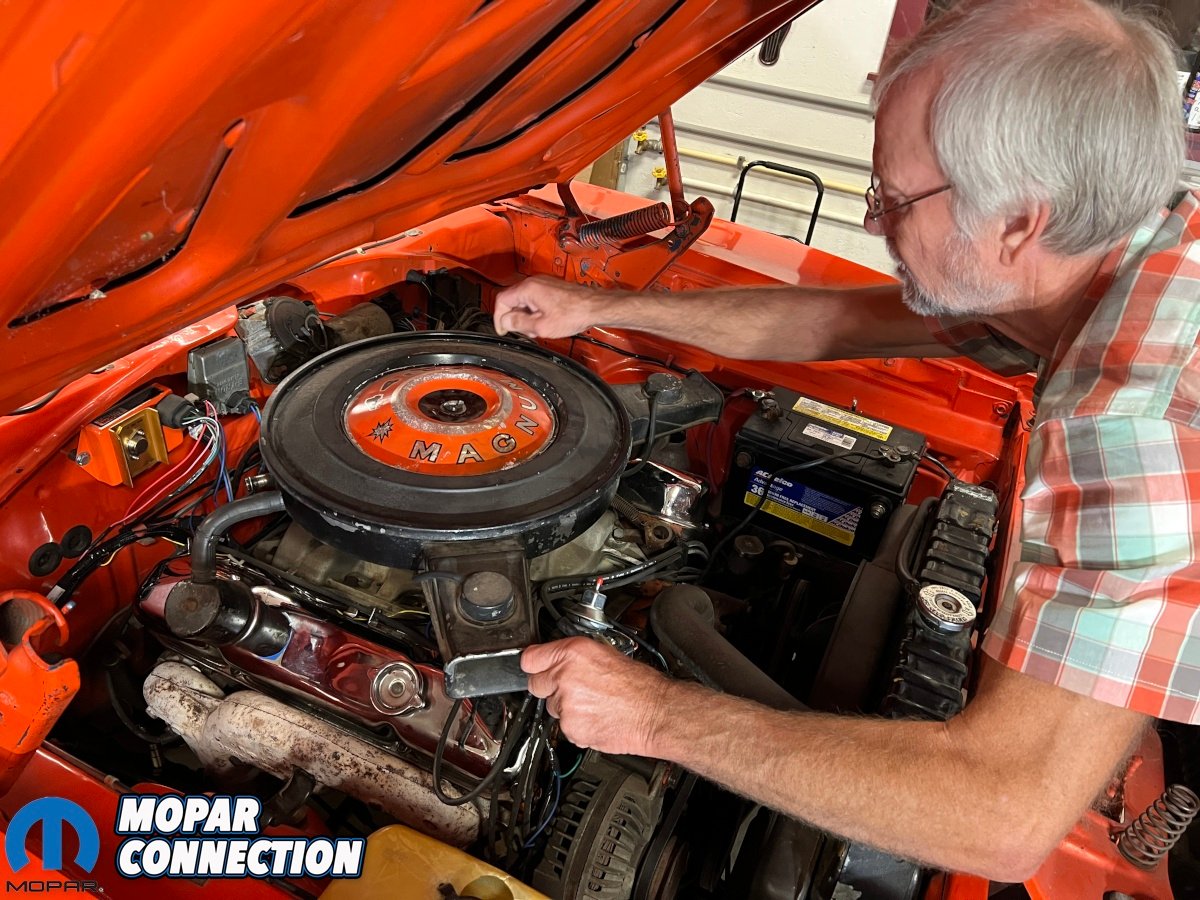
Above: The original dual-snorkel air cleaner fit without issue.
Backing out the throttle-stop screw 1-1/2 turns reduced airflow past the blades so the IAC could do its job. After cycling power and restarting, IAC was at a healthy 6%, well within Holley’s recommended 2–10% range at warm idle, and the surge had disappeared completely.
Pulling out for the first drive, another cause for pause appeared in the form of a rattle from underfoot. A peek under the passenger side revealed steel fuel lines vibrating against the frame rails, but not because of some big lope from the 440. Instead, the hammering pointed to fuel-pressure pulses pumping the long steel line in this returnless setup.
Admittedly, we had seen the fuel pulse damper in the Sniper manual’s list of recommended parts, yet decided to start up without one. And, for what it’s worth, the car ran just fine in spite of the fuel lines’ machine-gun mantra. Regardless, those pressure pulses needed taming, and the frame rails had no business doubling as a percussion section.
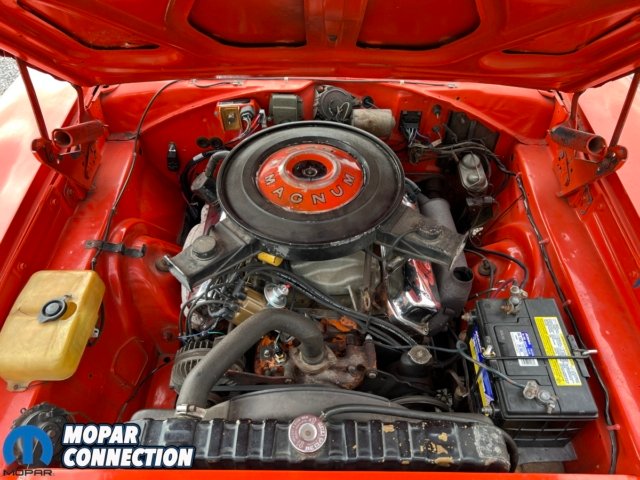
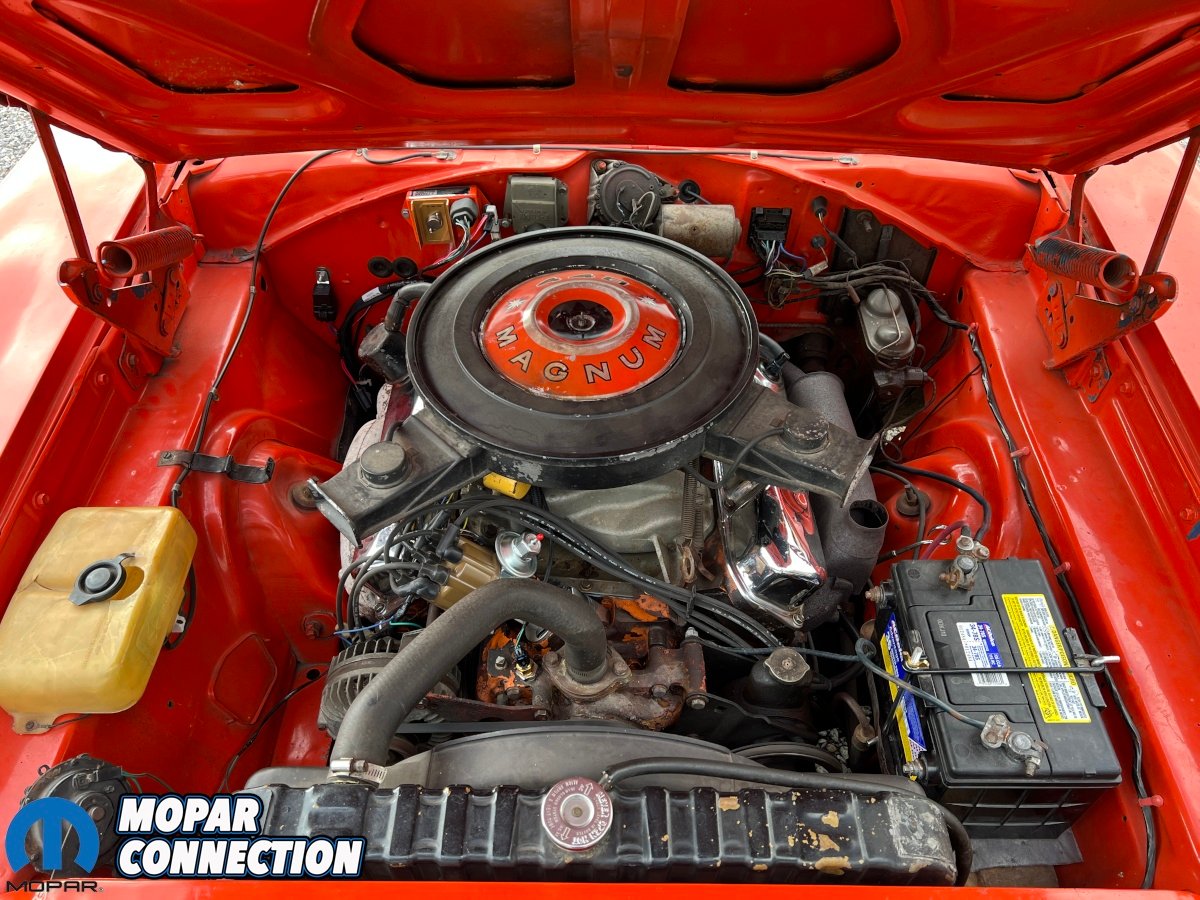
Above: With the unnecessary bits of the previous EFI system removed, the 440 was back to looking stealthily stock.
Back in the Holley catalog, an AEM pulse damper (P/N 25-4002) got the pick for its 40–70-psi operating range and -6 ORB connection. Designed to cushion rapid pressure changes from injector operation, it took up residence in the spare front -6 ORB port on the throttle body. Pulsations repressed, we took to flogging the 440 after a few gentle laps around the block. What greeted a heavy right foot was a healthy dose of burnt rubber, a dead-steady idle, and nothing but the sweet sound of big-block Mopar exhaust.
Looking back, the best part of this EFI swap might have been the pile of parts that didn’t go back on. The mechanical pump, underhood surge tank, and extra plumbing got their eviction notices as Holley’s in-tank module and Sniper 2 took over feeding the fat wedge. Heck, the Charger actually got un-hacked.
Its existing tank and steel line stayed put, the engine still looks stealthily stock, and the original wiring escaped the cutters. Modern fuel control came with less clutter and an arrangement about as close to carburetor-simple as EFI gets. At long last, it’s done just exercising the starter. This thing has rear tires to wear out.