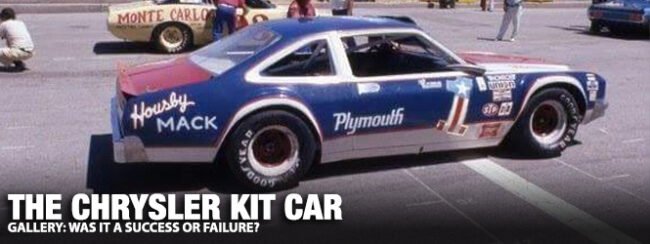
The Chrysler Kit Car was introduced in 1974 as the end product of more than a decade of successful competition on the Grand National (Cup) circuit. It was designed to permit the serious short track competitor to build and campaign a winning car with less time, money and experience than ever before. It proved that point, as it proved itself tough to beat as it was easy to build, and it was affordable.
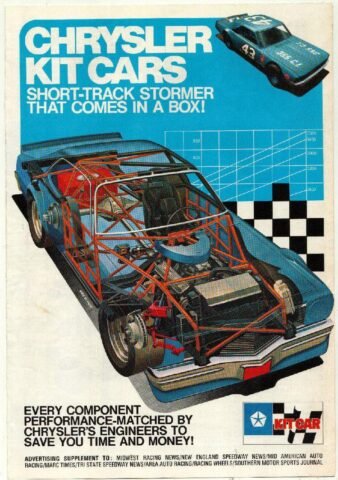 The concept was born out of Mopar’s involvement in NASCAR and really gained momentum when the Chrysler Corporation excited the sanctioning body in the early 70’s. One of the leaders of the program was Larry Rathgeb, who previously had been Chrysler’s Director of Race Programs. Rathgeb partnered with the legendary NASCAR team of Petty Enterprises with Chrysler’s aim to keep its presence in competitive-level racing alive.
The program gained traction thanks to both Rathgeb’s efforts and support from NASCAR legend Richard Petty. Both saw the potential for an essentially off-the-shelf racecar and in 1972, Chrysler and Petty Enterprises worked together to develop the kit. The core idea of the kit program was to provide an affordable yet proficient platform, allowing practically anyone to build and race their own factory stock racecar.
For $8,800, aspiring racers could build a circle-track racer capable of turning competitive lap times right out of the box, and Chrysler even bragged that its package had “taken the mystery out of building a stock car.
The chassis, of course, was a primary focus during development. The kit used a widened E-body front chassis and A-Body rear section, tied together with frame X-ing that gave the car stiffness. Thus, the kit could be bodied as an A- or E- model and could be fitted with the sheet metal of a Dart, Valiant or Duster.
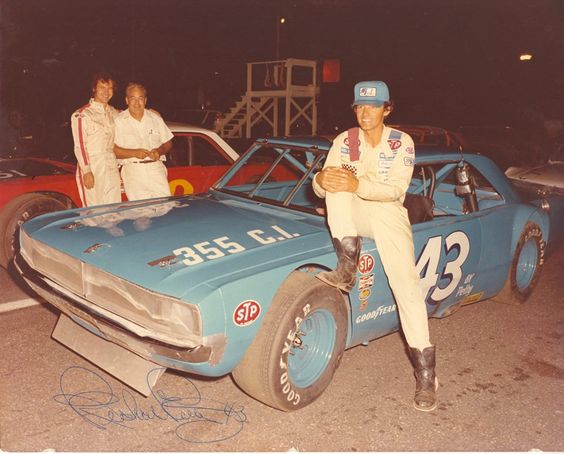
For testing the car on pavement, they used Petty driver Pete Hamilton, but Hamilton was not experienced on dirt and they were going to test at the Concord Speedway near Charlotte and they needed a dirt track driver that was familiar with the track.
Rathgeb approached K & K Dodge Crew Chief Harry Hyde with the problem. Hyde said, “why don’t you call this young man. He’ll do a good job for you.” The young man was a then unknown named Dale Earnhardt. Earnhardt was paid $800 for two days of testing and Rathgeb was so impressed by Earnhardt he encouraged him to stay in racing and the rest as they say is history.
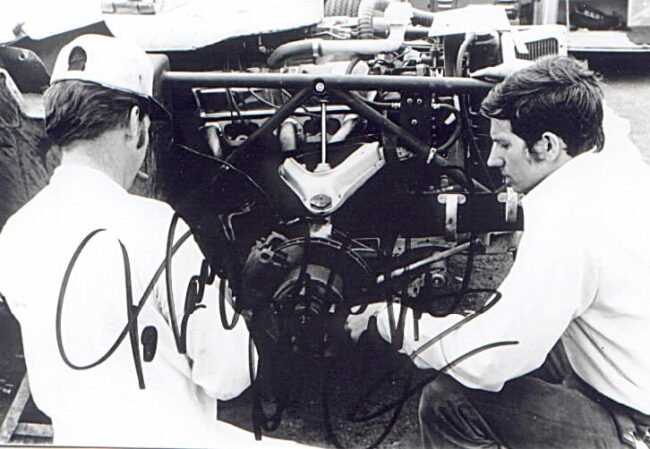
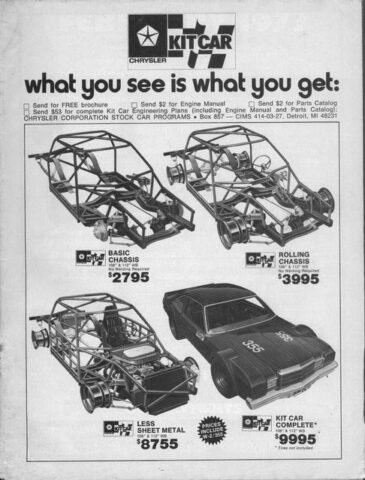
Chrysler offered a variety of ways to get involved with the Kit Car program. There were several options which could provide racers at all levels and at all levels of budget. You could buy the Chrysler Kit Car complete with dual wheelbase frame that permitted 108” to 112” wheelbase and used Aspen or Volare sheet metal.
Or you could get a Kit Car without sheet metal or a complete rolling chassis or a basic chassis for under $3,000, all with the revolutionary dual wheelbase frame. The Kit Car – complete or minus sheet metal. The new high-horsepower free-breathing W-2 heads and proven plus-power crank setups are standard equipment at no extra cost. So, let’s take a look at the four Kit Car options that were available.
Basic Chassis. For the driver who wants the advantages of the Kit Car at the lowest possible cost, the Basic Chassis package was the answer. It contained those chassis pieces that built the foundation for Kit Car success in all kinds of competition – frame with partial roll cage, front suspension, steering gear and linkage, front brakes, torsion bar, sway bar, rear springs and all shocks. It was priced under $3,200. The Kit Car Basic Chassis was the low-buck way to put the proven principles of Kit Car suspension to work on your next racer.
Rolling Chassis. The next step was the Rolling Chassis. It was an affordable Kit Car package for the racer/builder who already had a race car and wanted to move up to a Kit Car. By purchasing the Rolling Chassis package, you could use such pieces as engine and driveline, seat and fuel cell from an existing race car and add them to the Kit Car. Included in the Rolling Chassis package were frame, with partial roll cage, front suspension, steering, front and rear brakes, rear springs, quick change rear axle, and road wheels. This option was available at less than half the cost of the Kit Car complete.
Kit Car less Sheet Metal. You could also order your Kit Car minus sheet metal at a very special price. This bodyless package permitted you to utilize your existing body, pick up sheet metal from a junk yard for use as a modified, older late model, etc., or make whatever body arrangements that best suited your racetrack. Except for the sheet metal itself, these new kits contained every piece that’s part of the complete Kit Car package – including a small-block engine with W-2 heads – so you know they’re factory engineered to fit and to win!
Kit Car Complete. This included everything you needed to race and win on any short track whether dirt or asphalt, quarter mile on up. All that was missing was rubber, paint and gas. The rest came in the box from Chrysler. It came with easy-to-follow plans and instructions for everything from suspension to seat belts and complete engineering drawings that established zero points for building, repairing, or fine tuning at the racetrack. Two body styles were available, the Dodge Aspen or the Plymouth Volare.

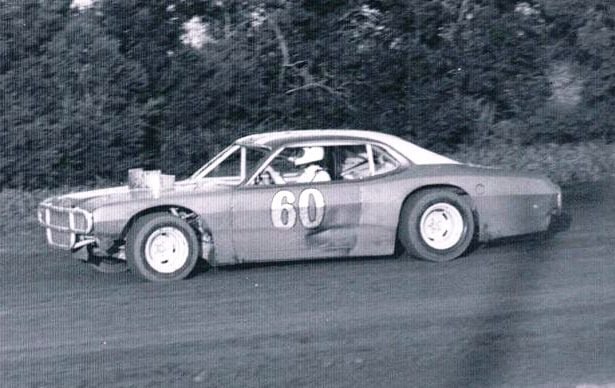
Kit Cars were developed and raced successfully through the early 1980’s. Many Kit Car chassis saw duty in the USAC stock car series. Drivers of Chrysler kit cars had a range of experiences, from praising their performance to noting their braking issues.
Performance. Powerful. V8 kit cars had a good power-to-weight ratio, which led to excellent performance. Good for Racing. The Chrysler Kit Car was designed for racing and was successful in USAC stock car, ARCA and NASCAR Late Model Sportsman races.
Braking. Firm pedal feel. The pedal feel of the brakes was firm, which may make it seem like the brakes were good. Longer stopping distance. Cars from this era could take longer to stop than modern cars. Braking issues. Some say that the Chrysler Kit Cr had braking issues.
Other experiences. Vague Power Steering. The power steering could be vague and not give much road feel. Not for beginners. The Chrysler Kit Car was designed for experience circle-track racers. Some parts were not strong enough. Some parts were not strong enough (see comments below).
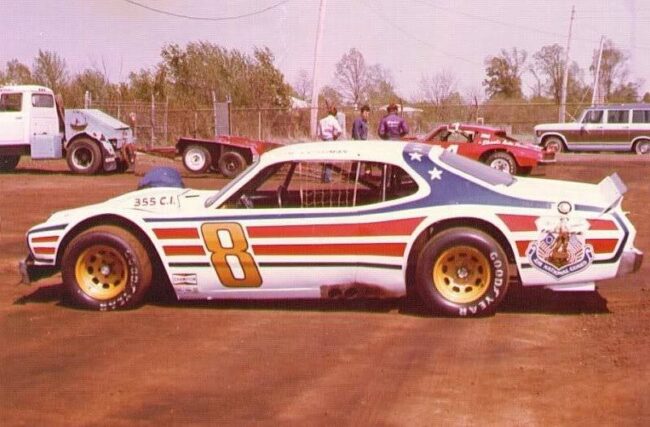
It’s been 50 years since the Chrysler Kit Car experience, but we wanted to find someone who purchased one and raced it. We found someone close to home in Phillips, Nebraska’s Randy McDonald.
“I was like 20 years old at the time (mid-1974) and me and my brother went to Petty Enterprises in Randleman, North Carolina and picked up a lot of pieces (sounds like the basic package) and two engines.” Recalls McDonald.
 “Since it was just me and my brother, and we were young and inexperienced it took us a good part of the summer to get everything put together and ready to race. We were struggling with it but after talking to Larry Rathgeb (Manager of Stock Car Programs at Chrysler) we got it to be pretty competitive.”
“We had the car for two and half years and in 1975 we won the late model track championship at Mid-Continent Raceway near home. We were running three times a week and trying to work the farm as well so we just kind of burnt out on racing and I sold the car.”
“Some of the problems we encountered was they wanted us to run it real low to the ground but on rough dirt tracks you couldn’t do that, so we made some adjustments with the sway bar and other adjustments and obviously we had some pretty good success,” continues McDonald.
“The other problems we encountered was some of the Chrysler parts including the frame were not strong enough, so they bent to easily. Overall, it was a good experience we just burnt out on racing.”
In the Columbus, Ohio area Jim Cushman tore up the ovals in the Jerry Lawrence owned Plymouth Duster Chrysler Kit Car purchased from Petty Enterprises. However, when he took it to the World Series at New Smyrna in Florida in 1975 or 76, it ran OK but was no match for the greats like Junior Hanley, Dick Trickle, Joe Shear and Gary Balough.
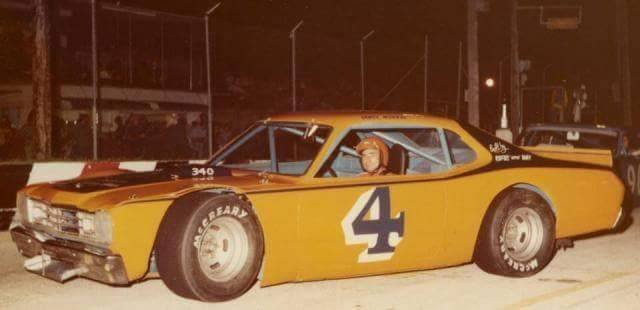
A third driver, who raced at the national level and had some good success with the kit car. According to Corrie Stott, his dad Ramo Stott ran about 25 races in the original kit car they built to run in USAC. Starting with a runner-up finish at I-70 Speedway in Odessa, Missouri on June 13, 1976, in a race Ramo was leading until he cut a tire, he ran the car through September of 1978.
Ramo won four times out of the 25 races and had twelve top fives. He also ran a separate kit car in a few local races around Southeast Iowa and Northeast Missouri.
So, the question is, was the 70’s Chrysler Kit Car program a success? The general opinion was that it was a qualified success in racing, but a commercial failure. The 78-79 Kit Cars allowed racers to purchase chassis kits, but were a niche business, confusing to the public and ended in financial woes. However you view it, there is no doubt it was an interesting part of Mopar and racing history.