The Dodge Scat Pack campaign of the late 1960s and early 1970s comprised not a single model line but a factory performance identity that unified Dodge’s boldest street and strip machines under one undeniable banner. Born during the peak of the muscle car wars, it symbolized Chrysler Corporation’s answer to the escalating market for horsepower, quarter-mile domination, and bold visual attitude.
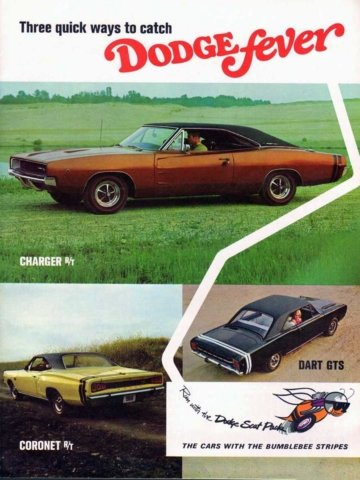
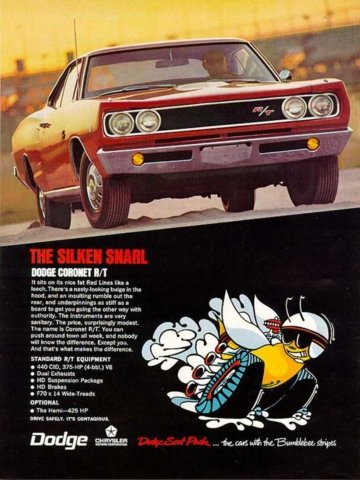
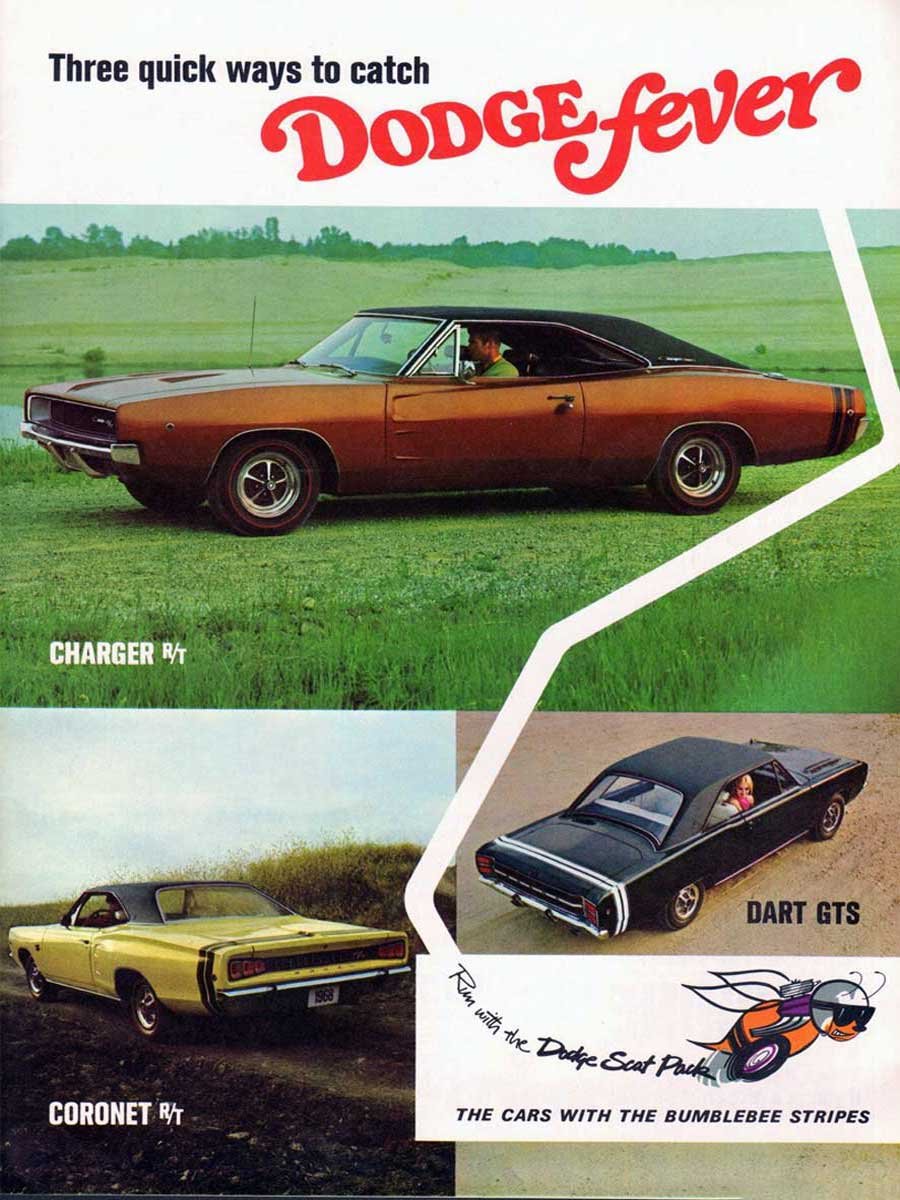
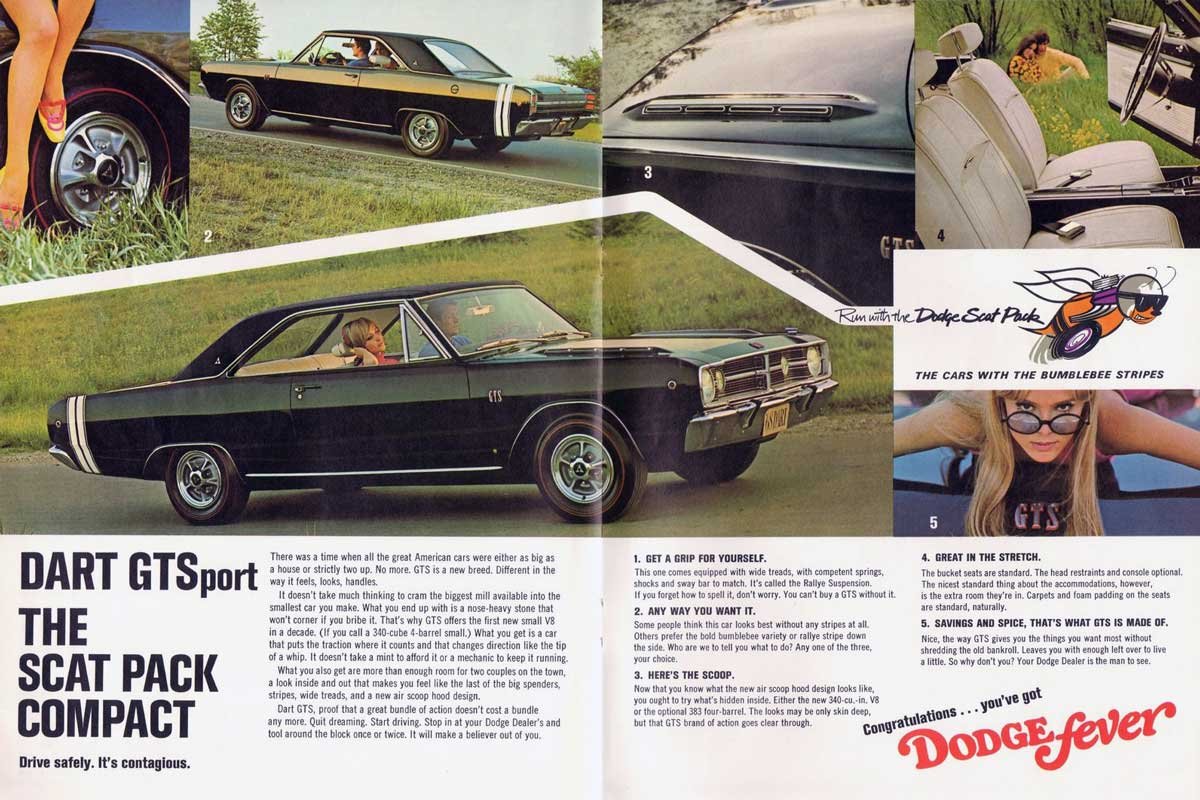
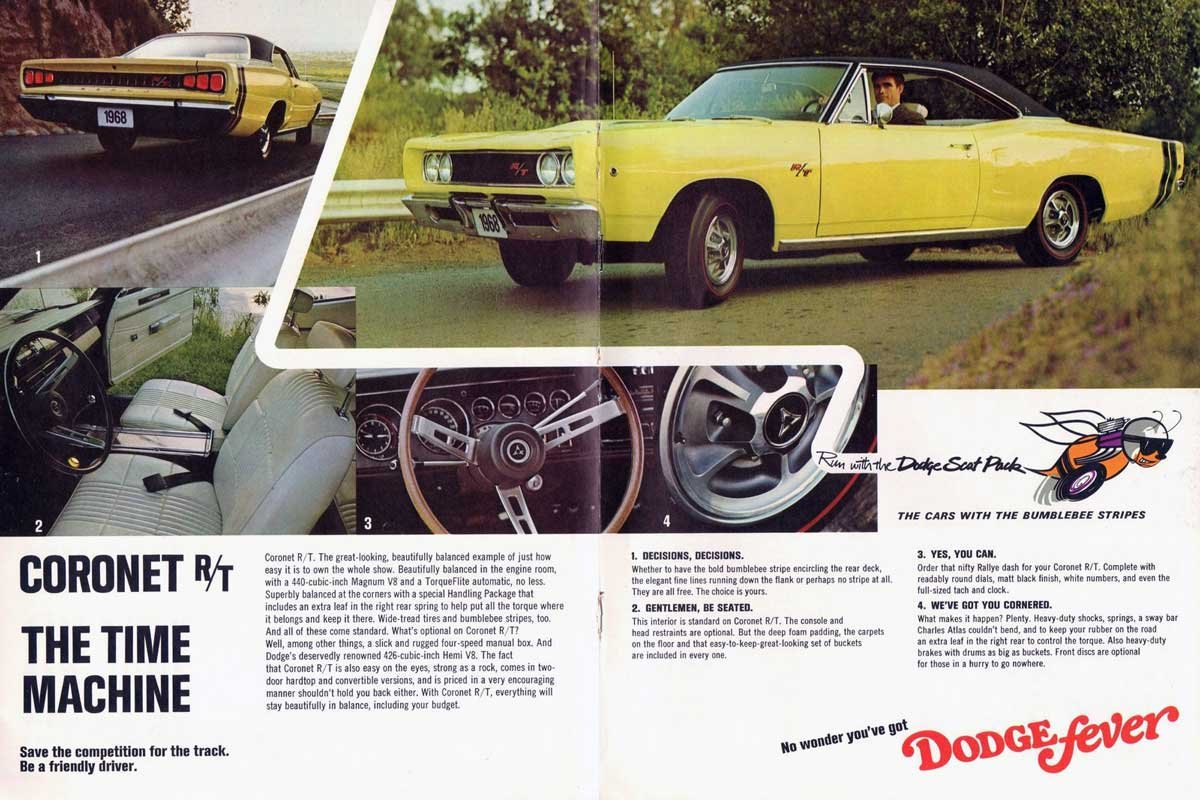
Above Left: To run with the Dodge Scat Pack, enthusiasts needed to step into one of three machines: the 1968 Charger R/T, Coronet R/T, or Dart GTS. These were the original standard-bearers, the first to wear the now-iconic bumblebee stripe; a bold visual signature that signaled serious performance intent. Above Right: Often living in the shadow of the Charger, the Coronet R/T delivered a more refined take on muscle. It combined formidable big-block power with an added measure of comfort and trim, striking a balance between raw performance and everyday drivability.
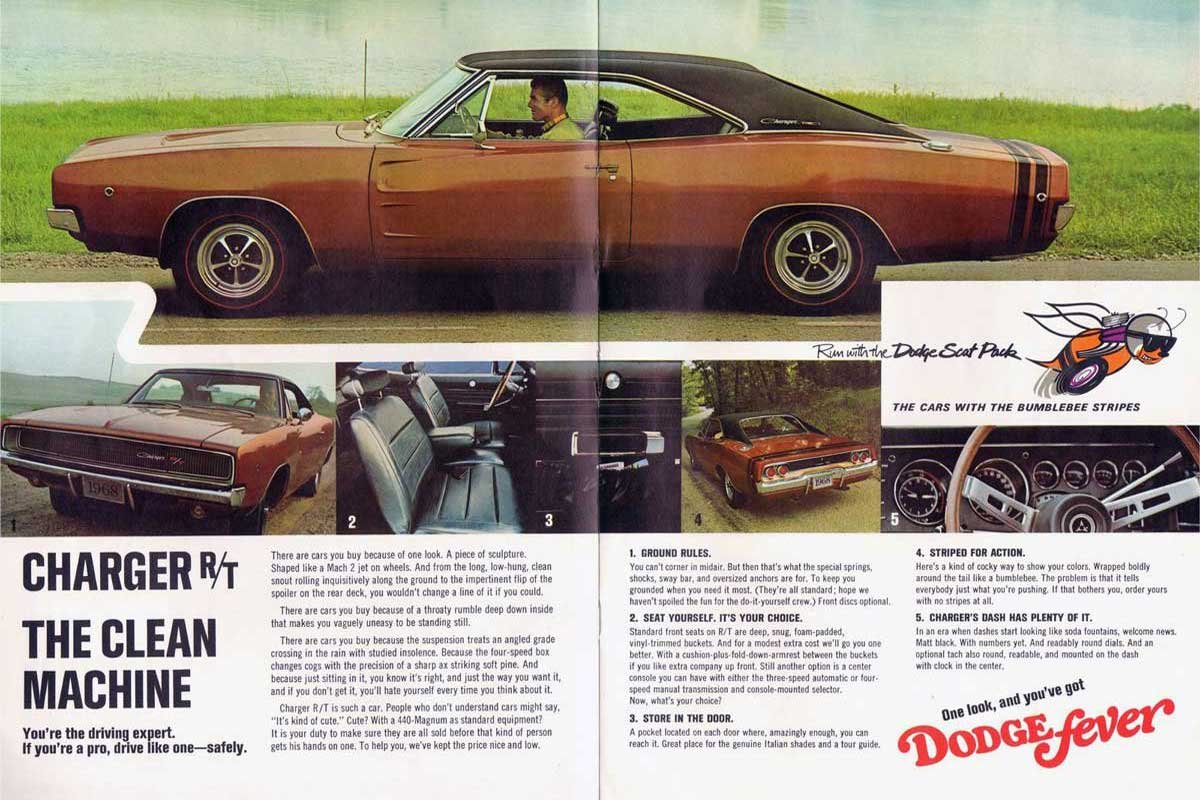
At its core, the Scat Pack was built around a group of production cars that could be ordered with serious performance intent. The most recognizable of these was the Dodge Charger R/T. The Charger R/T carried the weight of Dodge performance marketing with its long-hood proportions, bold styling, and big-block engine options, such as the 383 Magnum, 440 Magnum, and the legendary 426 Hemi. It was the flagship expression of Scat Pack power, created to dominate both the street and the strip.
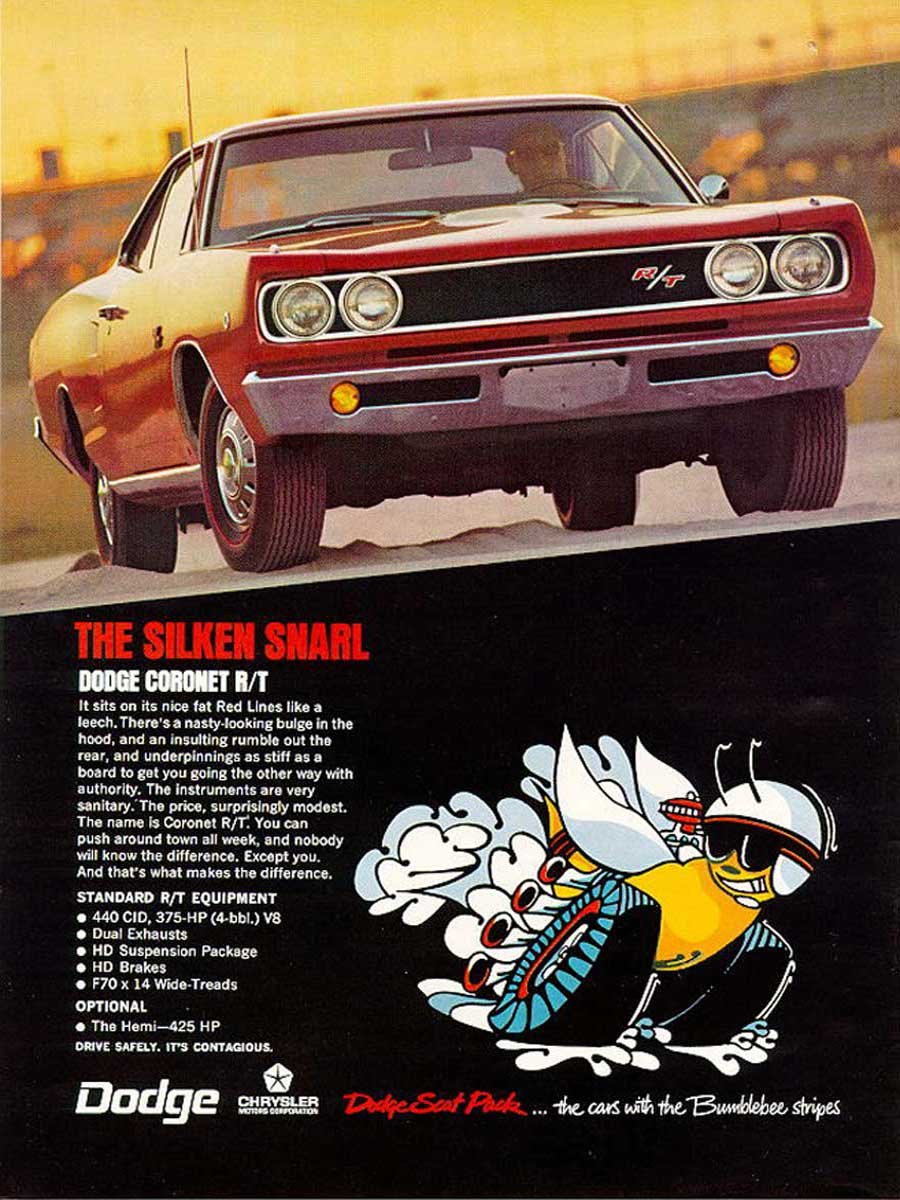
Closely aligned with the Charger was the Dodge Coronet R/T, a car that mixed intermediate-size practicality with serious big-block power. Unlike the stripped-down Super Bee, the Coronet R/T inhabited a more refined space within the Scat Pack hierarchy, offering both performance and a measure of comfort.
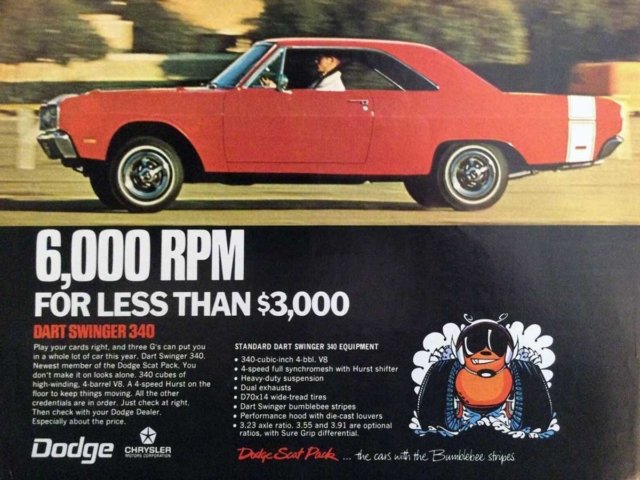
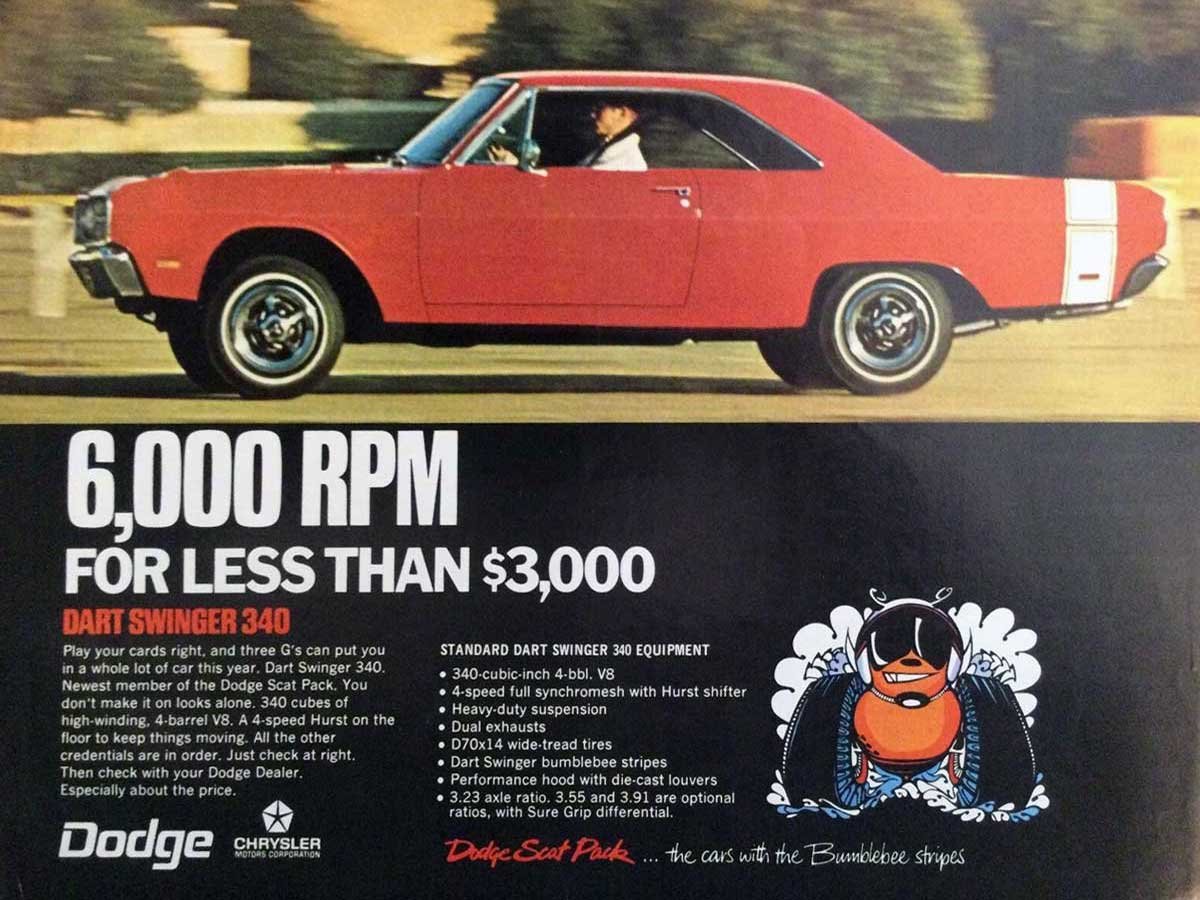
Above: With the Dodge Dart GTS bowing out after 1968, the mantle of compact performance passed to the Dodge Dart Swinger 340. Powered by the high-revving 340 small-block, and available with either a four-speed manual or Torqueflite automatic, the Swinger offered a wide range of rear axle ratios to suit any driving style. The result was a lightweight, hard-charging package that resonated with enthusiasts, and proved just as appealing to their wallets.
Standard power came from the formidable 440 Magnum V8, delivering effortless torque and strong mid-range acceleration, while the legendary 426 Hemi remained an available option for those seeking maximum performance. The Coronet R/T was not merely about straight-line speed; it also featured upgraded suspension components, heavy-duty brakes, and performance-oriented trim that distinguished it from lesser Coronet models.
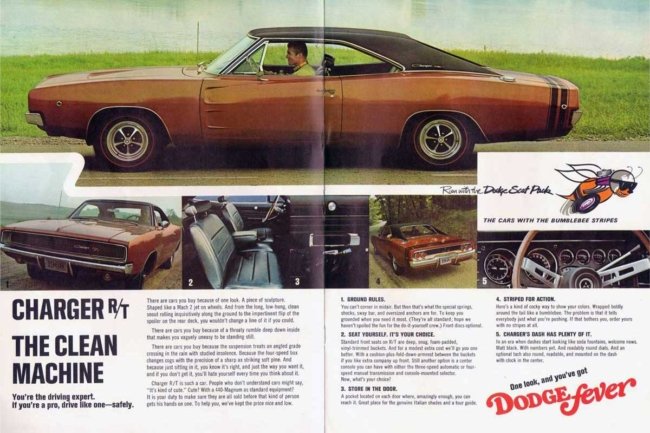
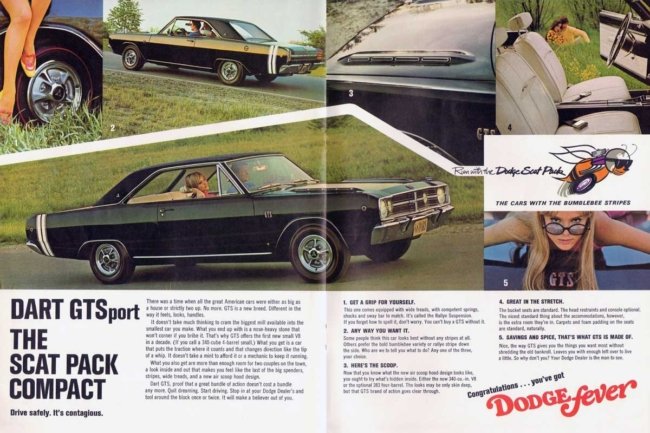
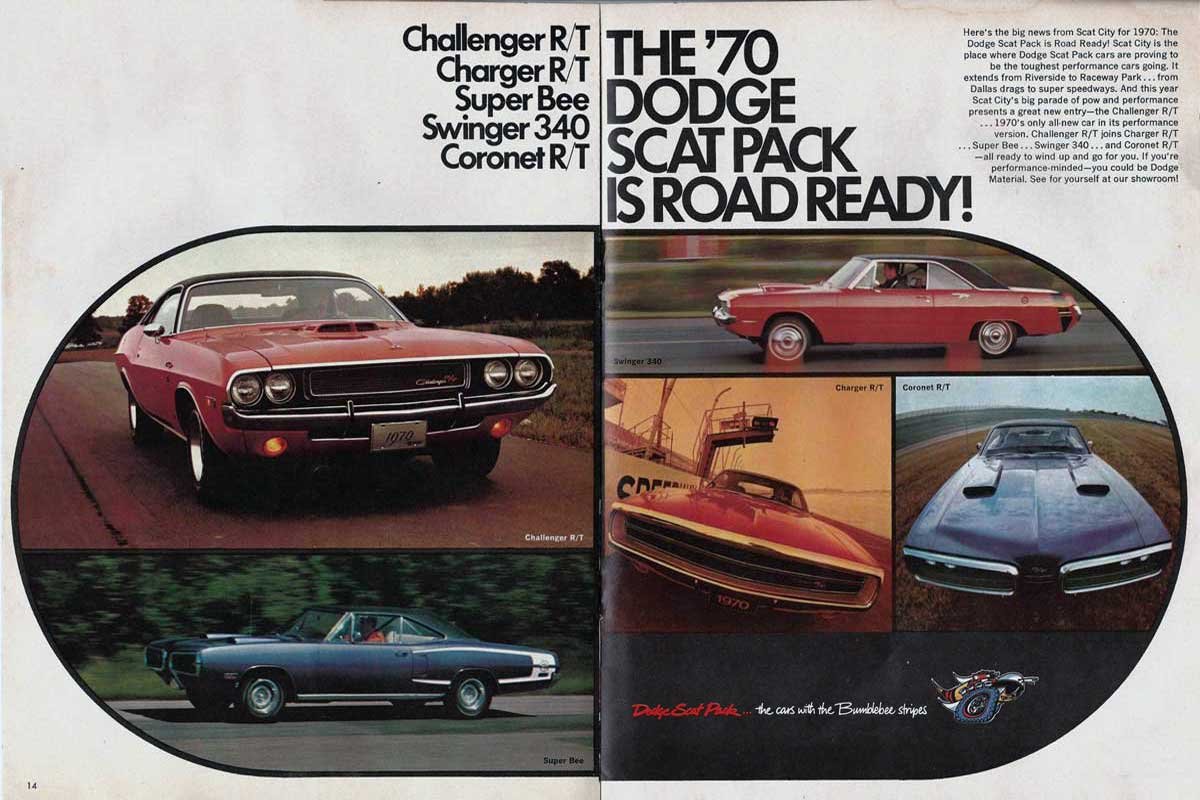
Above: The Scat Pack brochures did more than advertise; they celebrated the cars. Each page highlighted the bold styling, distinctive graphics, and performance-driven options that set these machines apart, capturing both their visual appeal and the engineering that made them true street contenders.
Visually, the Coronet R/T carried a more understated aggression compared to some of its stablemates. Clean body lines were complemented by modest badging, bumblebee stripes, and a calculated stance that hinted at its capabilities without excessive flash. Inside, the R/T offered a more complete driving environment, with bucket seats, a center console, and available premium touches that made it equally suited to street duty and long-distance cruising.
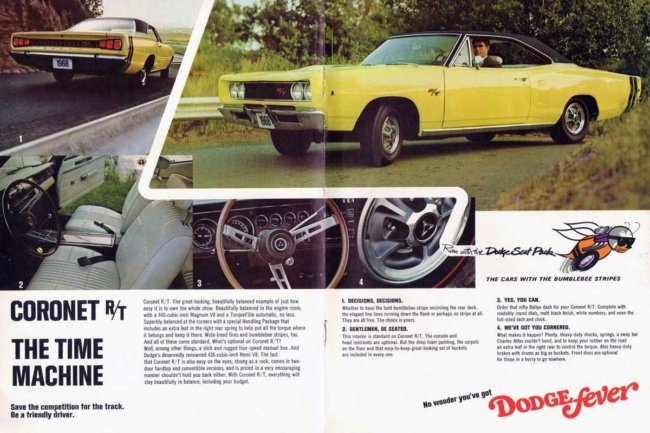
Above: Visually, the Coronet R/T carried a more restrained presence than some of its stablemates, but it was far from subtle. Distinctive bumblebee tail stripes, R/T badging, and a purposeful stance hinted at the performance beneath the sheet metal. Inside, the car offered a higher level of trim and comfort than many stripped-down muscle cars, making it equally capable as a highway cruiser or a stoplight contender.
However, it was the Dodge Coronet Super Bee that stood as one of the most unadulterated interpretations of the Scat Pack perspective. Stripped of excess luxury and built with performance as its primary focus, it featured heavy-duty components, bold striping, and high-output V8 engines. The Super Bee became an icon of no-nonsense muscle, representing Dodge’s dedication to raw acceleration over refinement.

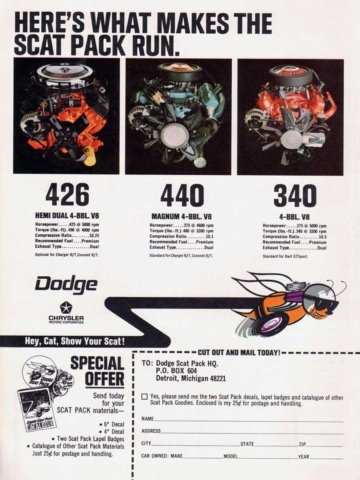
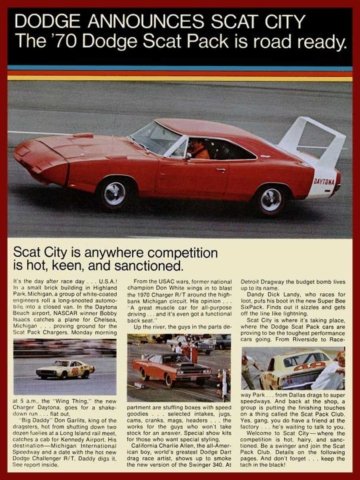
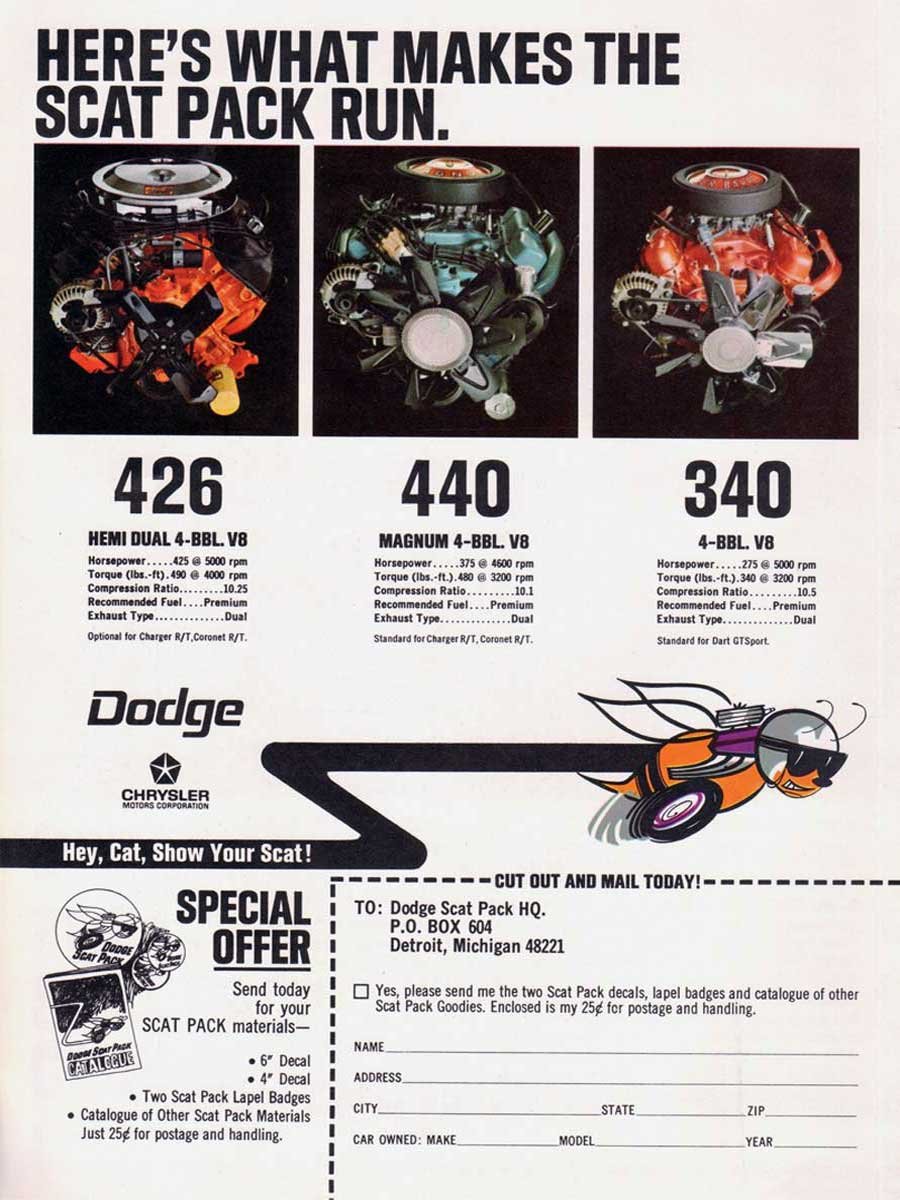
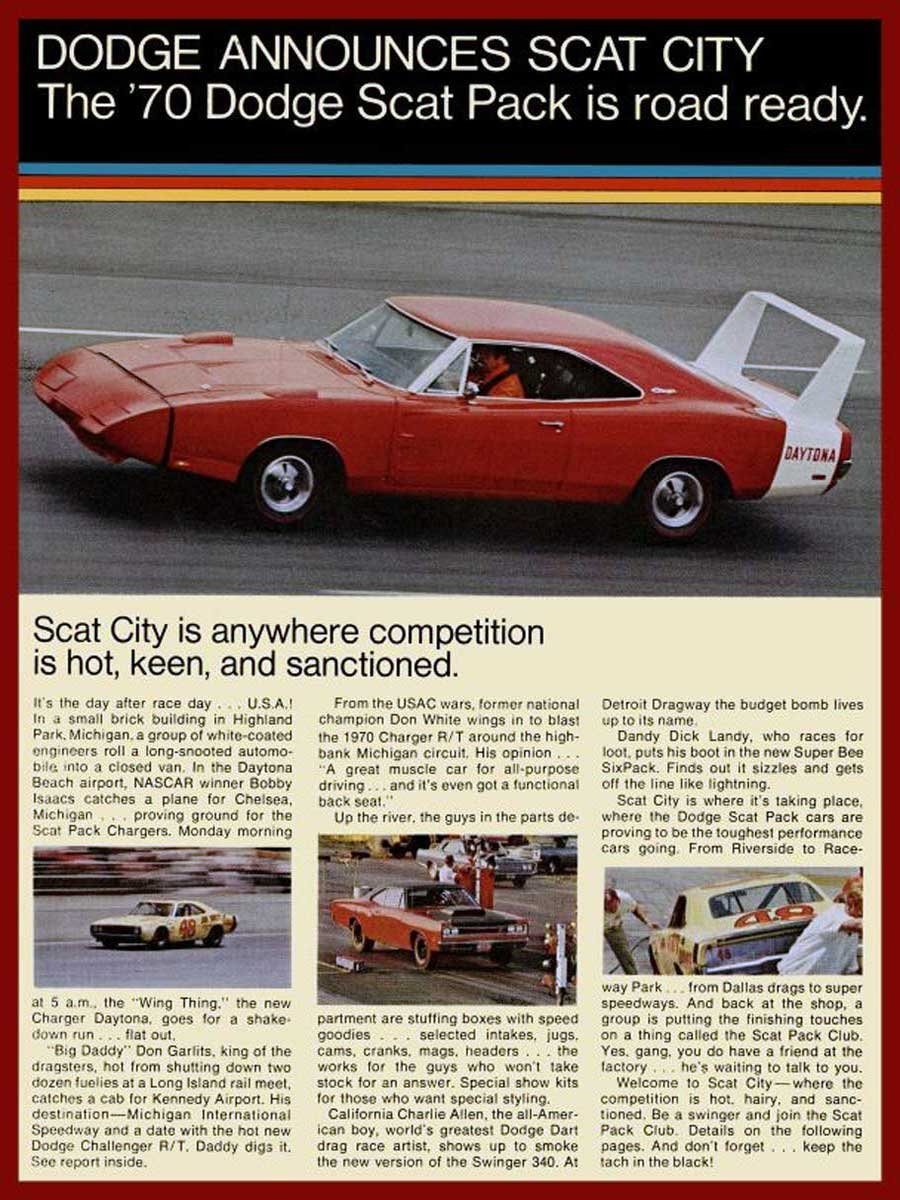
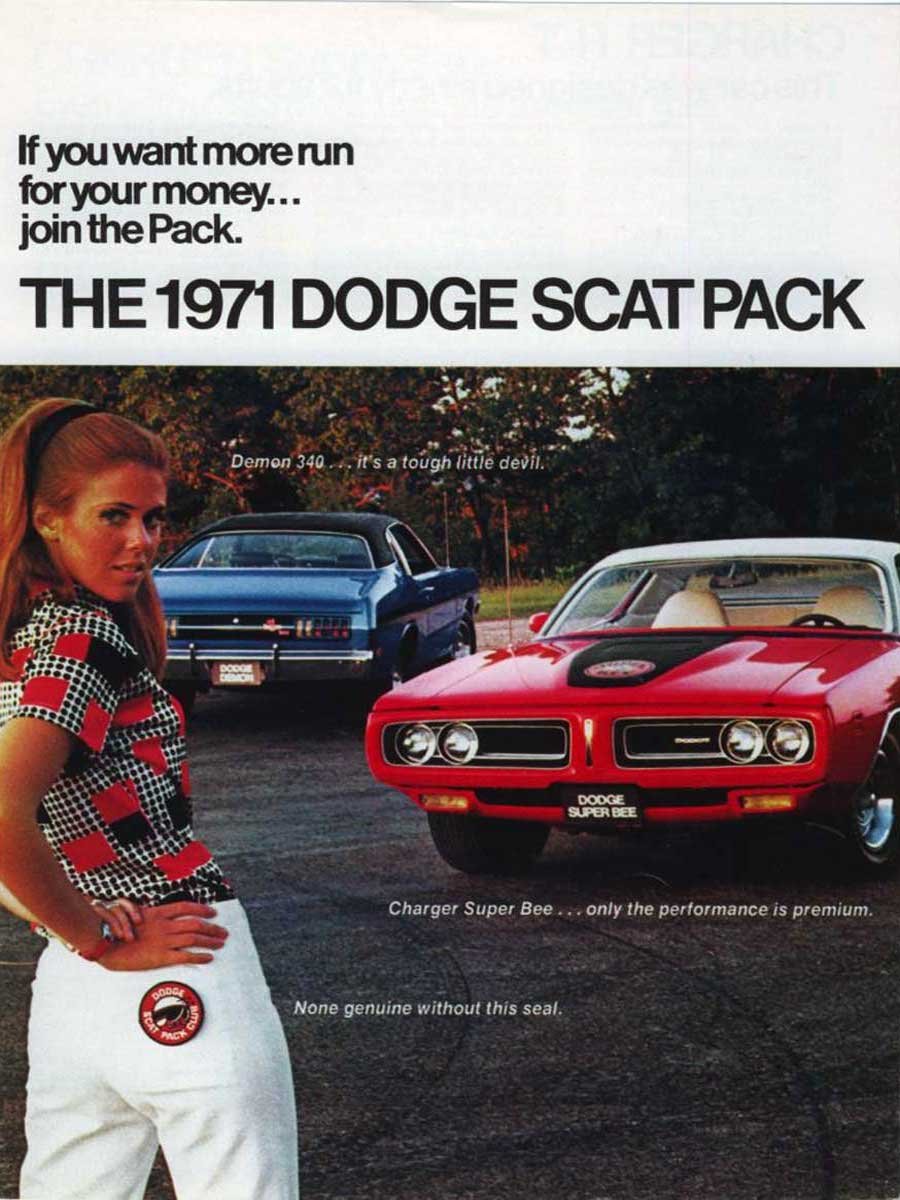
Above Left: To truly run with the Scat Pack, enthusiasts were welcomed with more than just horsepower. Chrysler offered exclusive merchandise that reinforced the club-like identity of the movement. Under the hood, three engines defined its dominance: the high-revving 340 in the compact models, and the formidable 440 Magnum and legendary 426 Hemi in the intermediates. Together, they formed an unmatched trio that embodied the full spectrum of Mopar performance. Above Right: The arrival of the Dodge Daytona added a bold new dimension to the Scat Pack. Instantly recognizable, its signature tail stripe was uniquely adapted to incorporate the towering rear wing, blending high-speed aerodynamics with unmistakable Scat Pack identity.
On the compact performance side, Dodge introduced the Dart in several high-output versions. Dart GTS offered big block power in a lighter, more compact package, making it a serious competitor in both street racing and NHRA classes. Its smaller size and aggressive engine options gave it a different kind of edge within the Scat Pack hierarchy, while still delivering full-scale muscle car performance.
Even more focused on stripped-down performance was the 1969 and 1970 Dodge Dart Swinger. While not always as heavily promoted as the previous GTS, the Swinger served as a lighter entry point into Dodge performance culture. Equipped with a 340 V8, it bridged the gap between everyday driving and full Scat Pack attitude, offering a more accessible but still aggressive expression of Dodge muscle.
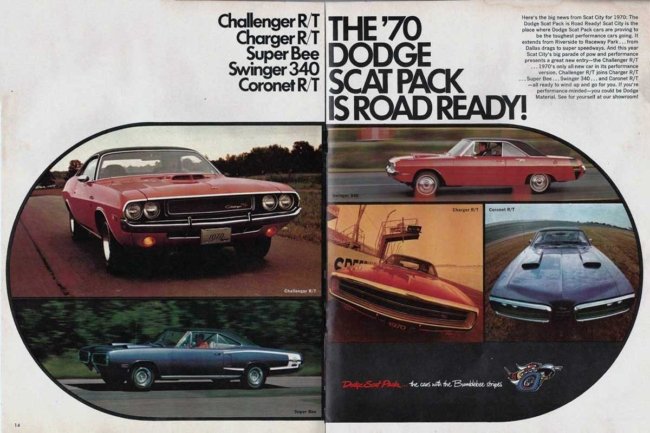
Above: By 1970, the Scat Pack had grown into a formidable “five from the hive” list of Mopars. Joining the ranks was the all-new Dodge Challenger R/T, which complemented an already potent lineup that included the Dodge Charger R/T, Dodge Coronet R/T, Dodge Super Bee, and the Dodge Dart Swinger 340. Together, these five machines represented the full spectrum of Dodge performance, ranging from compact agility to big-block muscle, solidifying the Scat Pack’s place at the heart of the muscle car era.
The final year of Dart Scat Pack performance was the Demon. Introduced in 1971, the Demon became the flagship of compact performance. Pairing lightweight construction with a high-output 340 engine, its name and aggressive styling made it one of the more controversial but impressive entries in the Scat Pack era. It was later renamed Dart Sport due to shifting cultural pressures of the time.
As the muscle car era evolved into 1970, Dodge introduced the Dodge Challenger, a model that aimed directly at the heart of the performance battleground. The Challenger R/T, with its available 383, 440, and 426 Hemi engines, stood shoulder to shoulder with the Charger in terms of raw ability.
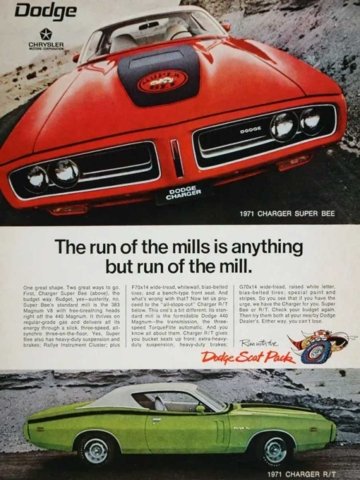
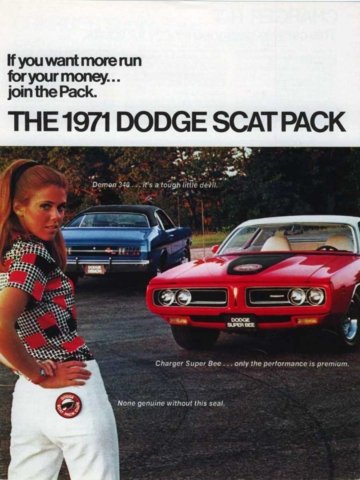
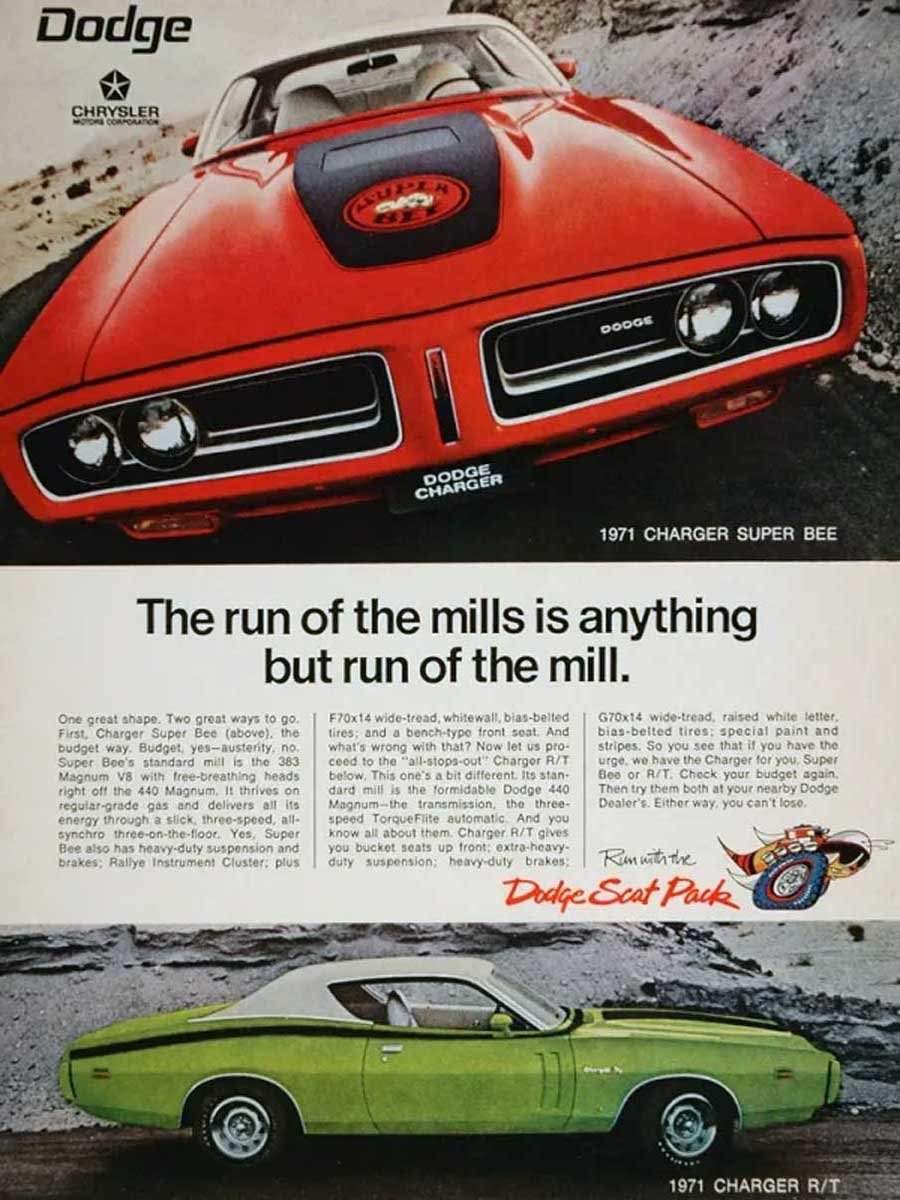
Above Left: For 1971, the Dodge Super Bee migrated to the Dodge Charger platform, marking a significant shift in identity. While the sheet metal and proportions changed, the essence of Scat Pack performance remained intact; bold styling backed by serious big-block power. Above Right: The Dodge Coronet quietly exited the Scat Pack lineup, leaving the Charger to carry the Super Bee banner. At the same time, the Dodge Dart Swinger transitioned toward a more utilitarian role, while the spotlight in the compact performance segment shifted to the all-new Dodge Demon, armed with a potent 340 V8 and a more aggressive attitude.
The Challenger T/A, developed for Trans Am racing homologation, added a more specialized performance focus with its 340 Six Pack configuration and competition-inspired chassis tuning. While not always explicitly branded under the Scat Pack umbrella, the Challenger clearly belonged to the same performance philosophy that defined it.
The Scat Pack identity was more than a collection of cars. It was a marketing exercise that included bold “bumblebee” stripe packages, Scat Pack club imagery, and an emphasis on factory-backed street racing culture. Buyers were not just purchasing vehicles; they were being invited into a performance community that celebrated acceleration, quarter-mile times, and visual aggression.
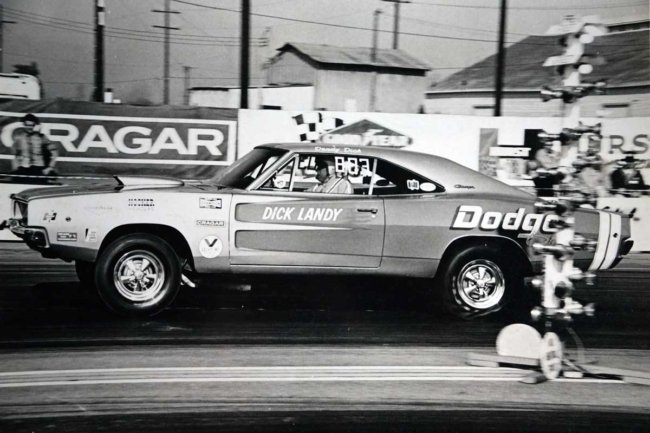
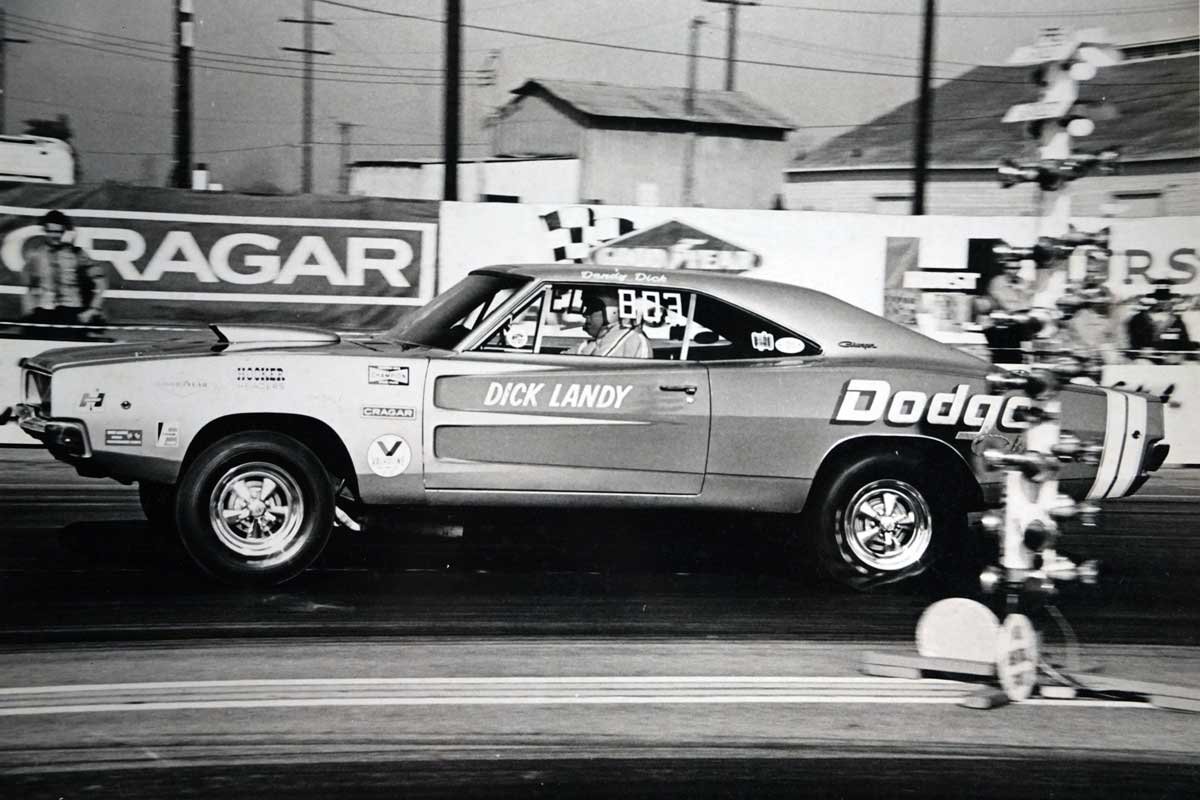
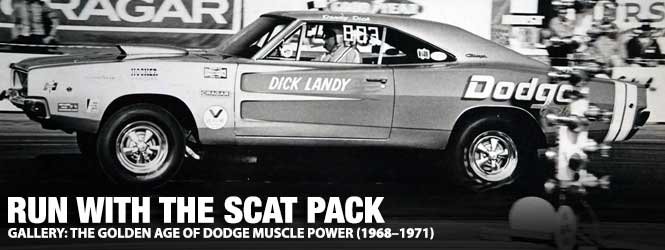
Above: Legendary drag racer Dick Landy campaigned a Dodge Charger R/T during the years leading up to Pro Stock. In an era when factory-backed horsepower and privateer ingenuity were closely intertwined, Landy’s efforts helped highlight the raw potential of the Scat Pack cars on the drag strip, bridging the gap between showroom muscle and the emerging professional racing classes that would soon define the sport.
By the early 1970s, however, the Scat Pack era began to fade. Rising insurance costs on high-horsepower vehicles, tightening emissions laws, and shifting buyer preferences following the oil crisis all contributed to the decline of the traditional muscle car. The branding that once unified Charger, Coronet, Dart, and Challenger performance variants gradually dissolved.
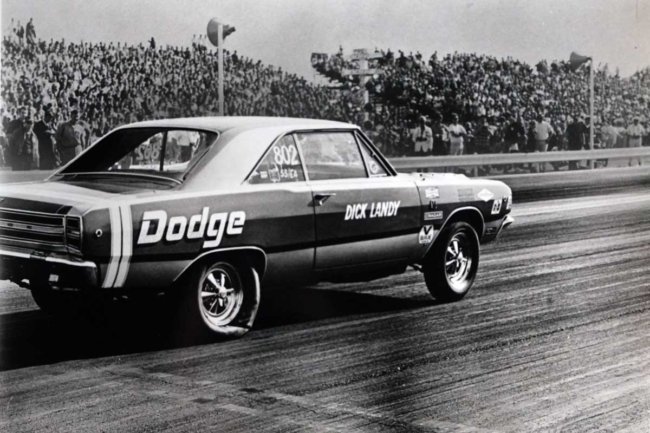
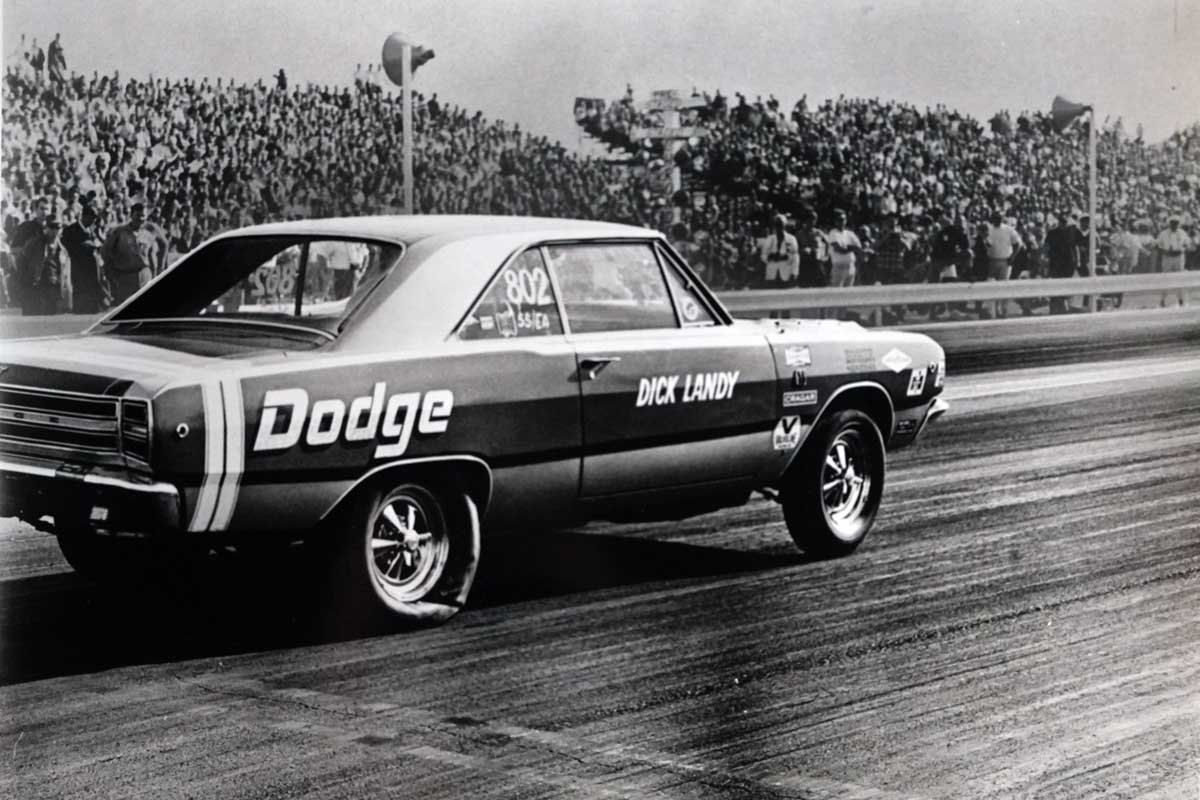
Above: Dick Landy fielded another machine from the Dodge “hive” in the form of a Dodge Dart GTS, perfectly suited for Super Stock E/Automatic competition. Landy-prepped cars were known for their consistency and sharp execution on the strip, but they carried just as much presence standing still; finished in striking silver and red, accented by bold white bumblebee stripes that made them instantly recognizable as serious factory-backed performance entries.
What remained was a legacy defined by some of the most iconic performance machines ever produced by Dodge. The Charger R/T, Coronet R/T, Coronet Super Bee, Charger Super Bee, Dart GTS, Dart Swinger, Daytona, Demon, and Challenger R/T collectively represented the Scat Pack era. It was a time when factory engineering openly embraced speed, attitude, and competition, and when Dodge built cars not just for transportation, but for dominance.