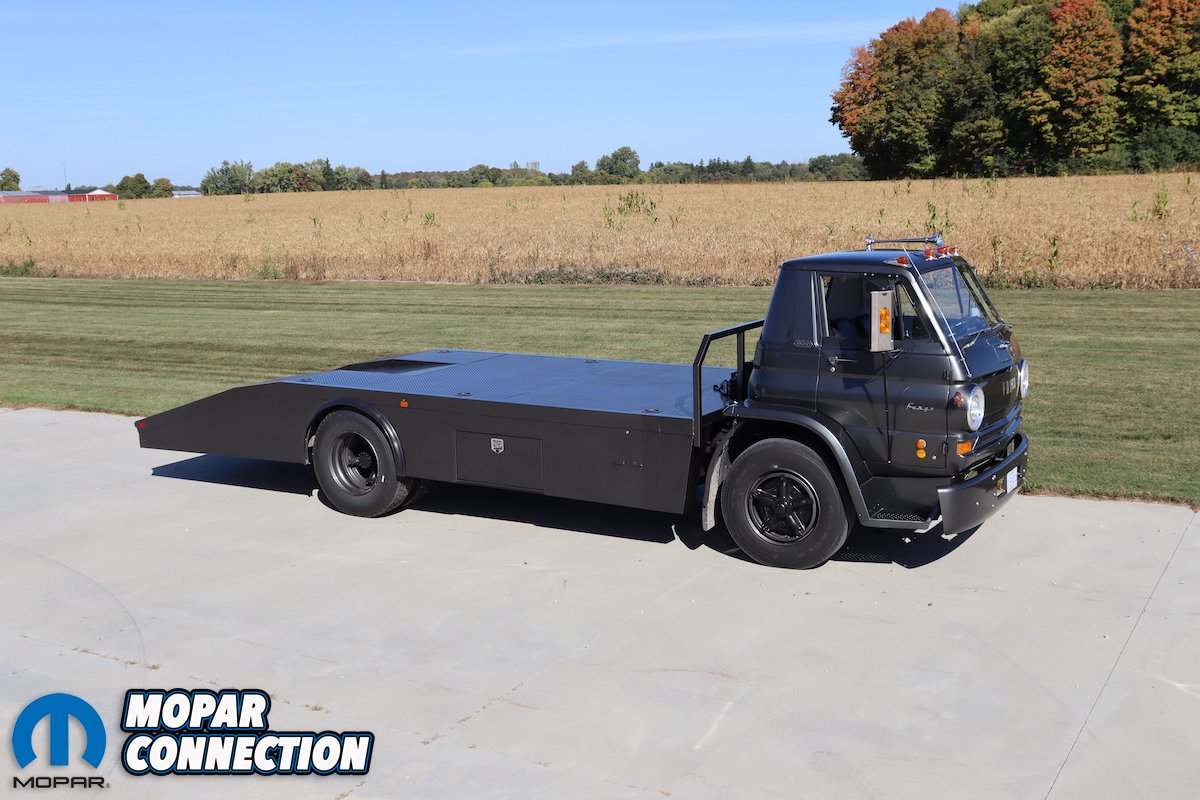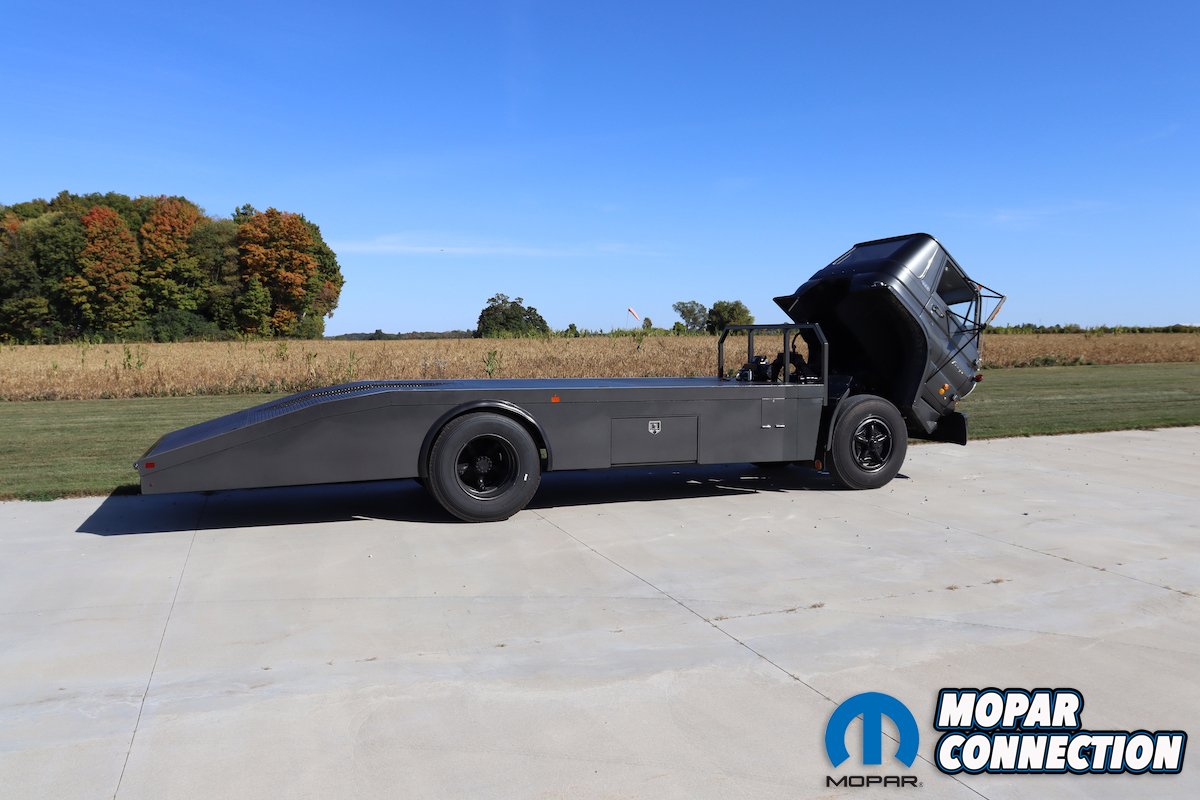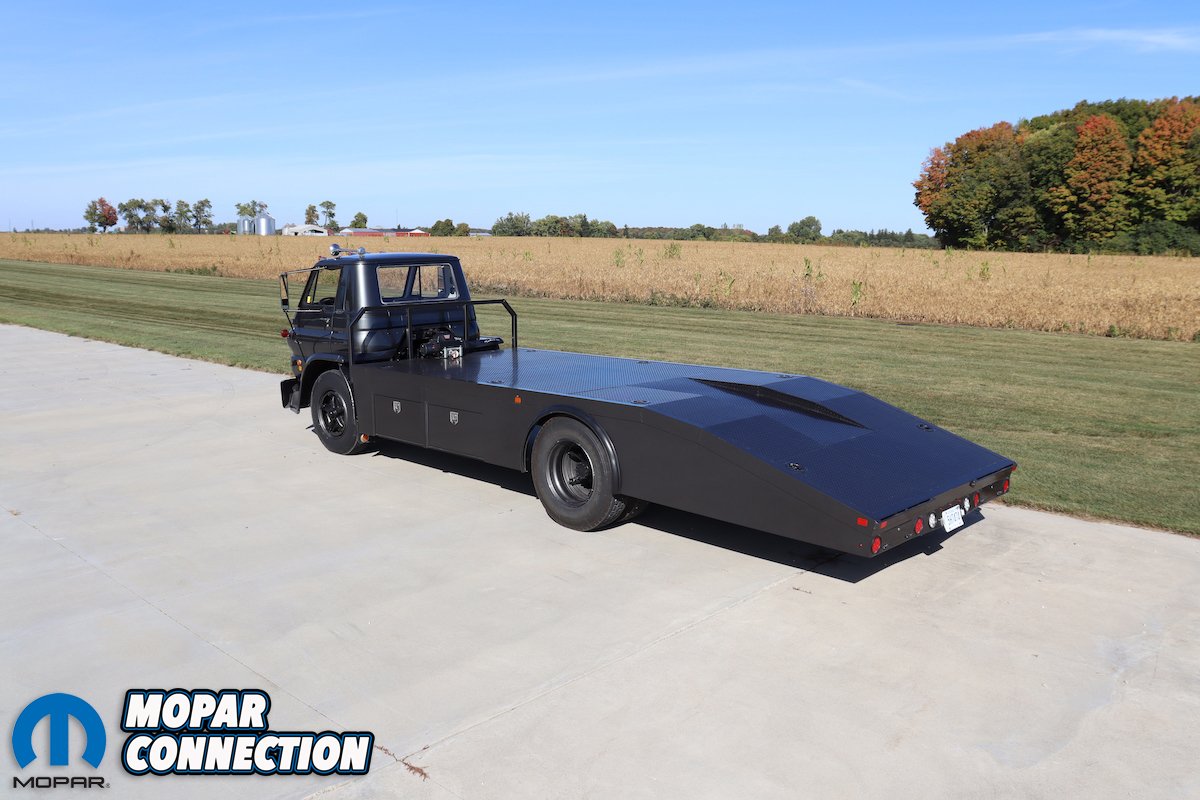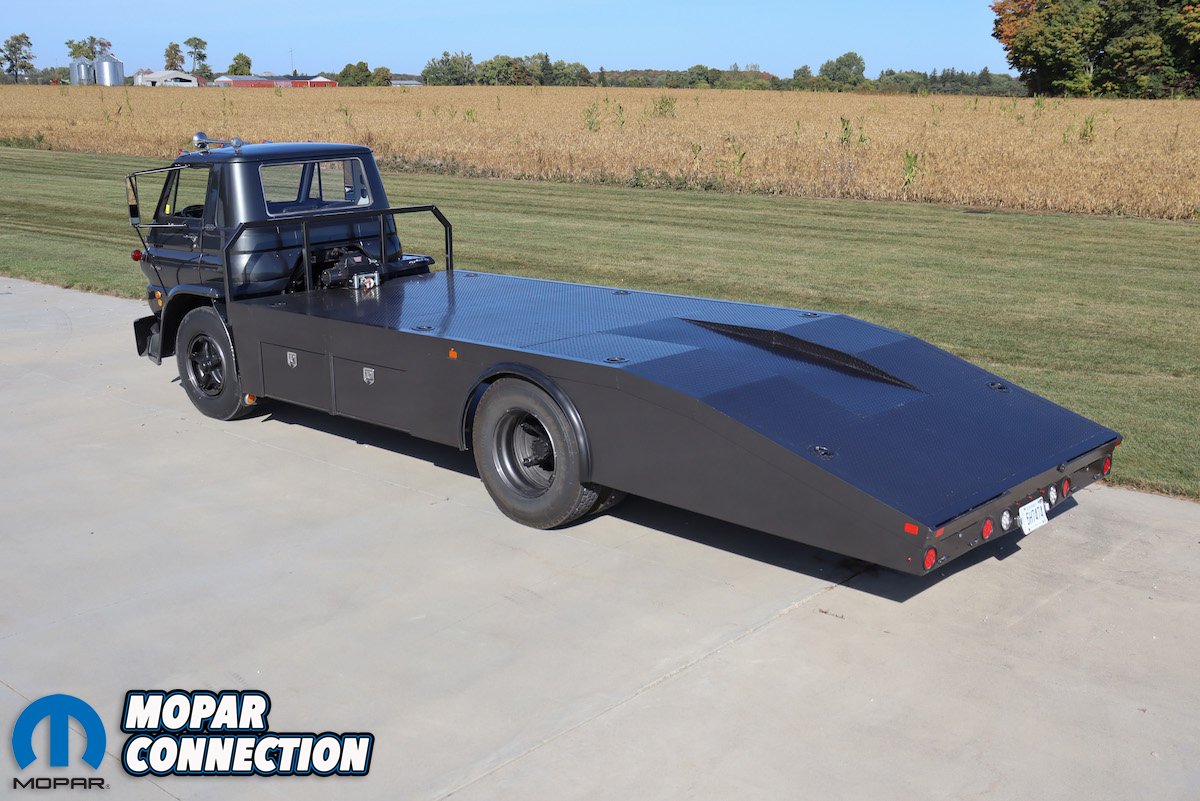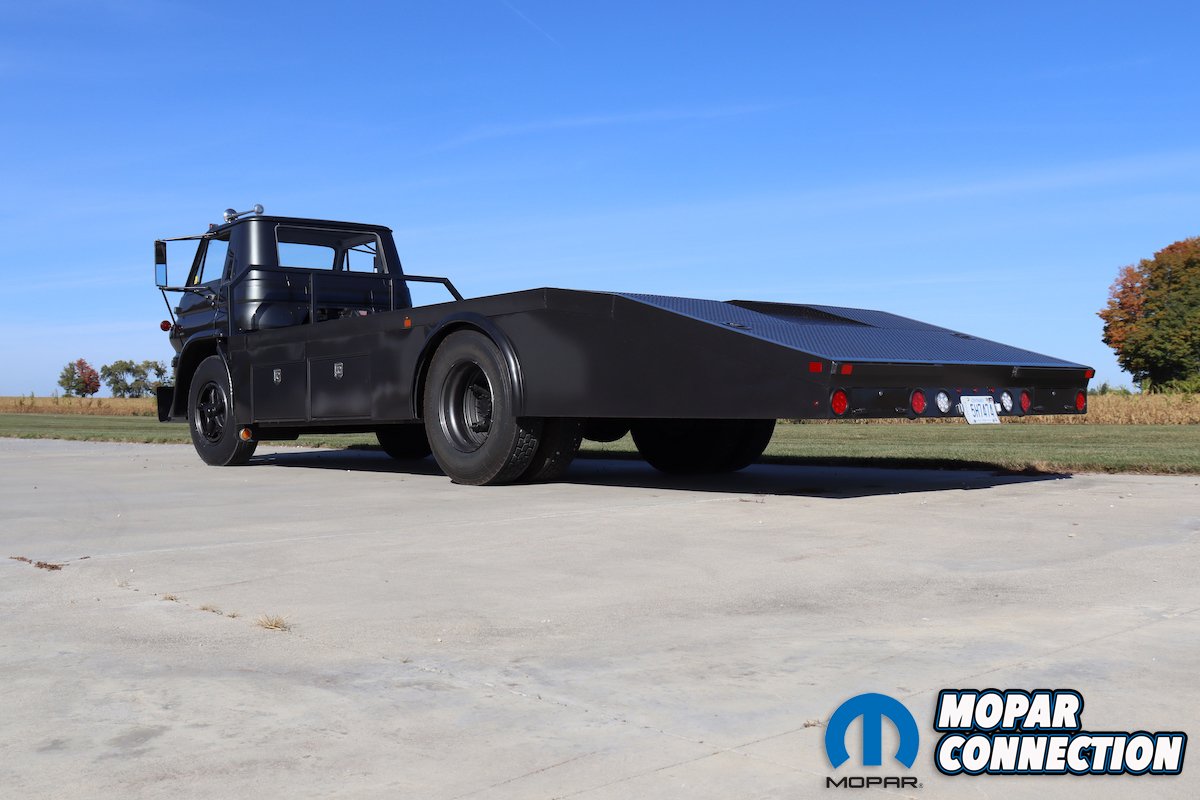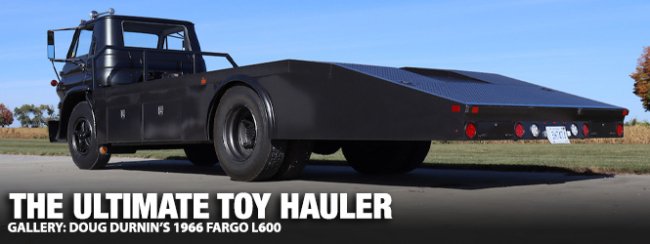
What do you do when you have more than one car that you want to take to a show, but only one driver? Sure, you could ask a friend to pilot one of your prized machines—or you could take a page from Doug Durnin’s book and get yourself a truck to haul one of your prize muscle machines. As a Mopar enthusiast, it had to be either a Dodge or Fargo to make this work.
Doug, always thinking a step ahead, realized that owning the right truck would let him take two vehicles to car shows on his own. It was a practical plan with a spark of ingenuity—perfect for his hands-on style. Once he tracked down the right rig, the idea moved quickly from concept to reality, setting the stage for a remarkable transformation.
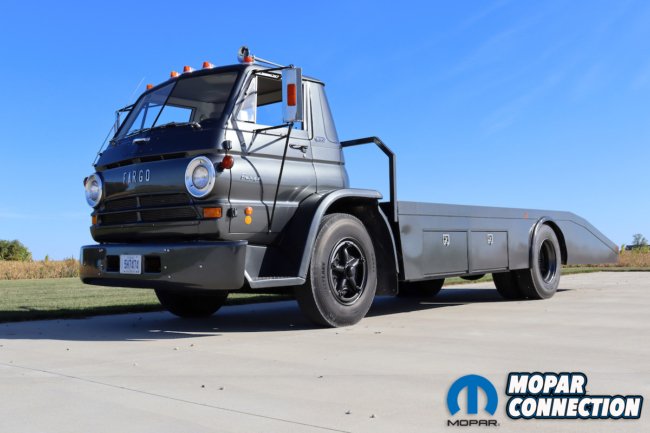
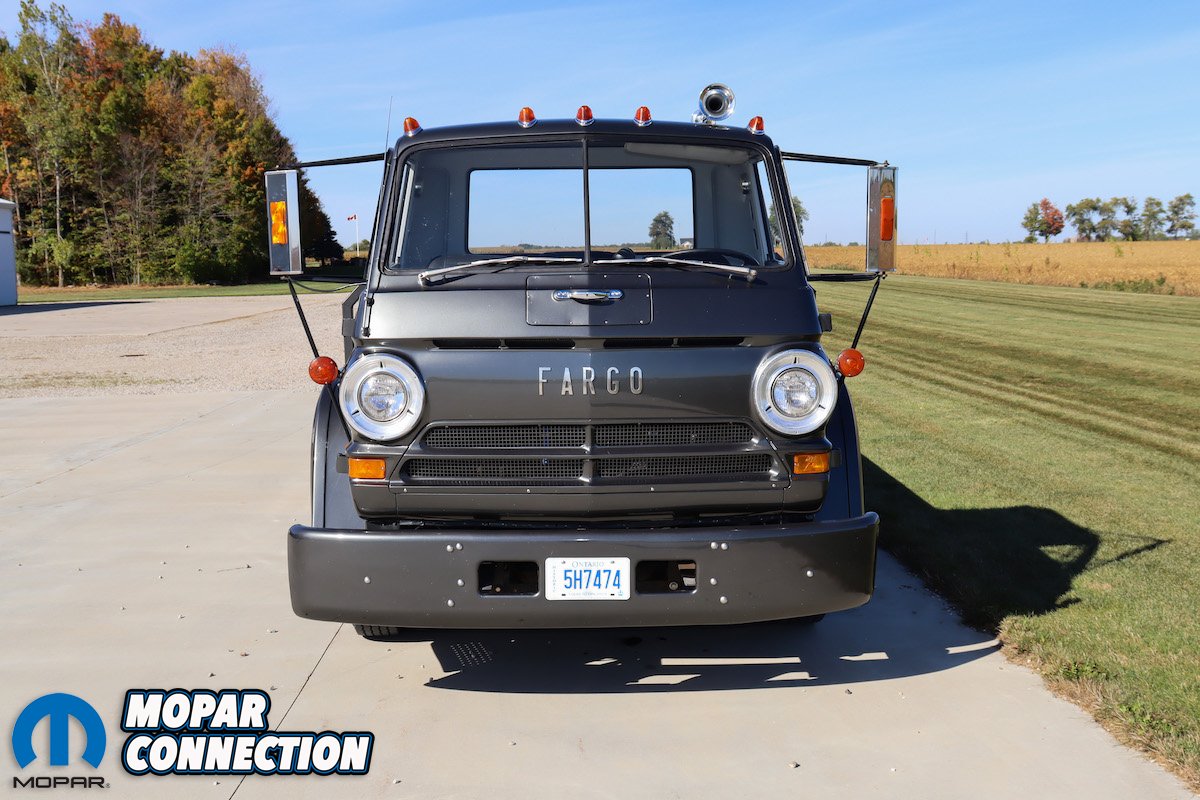
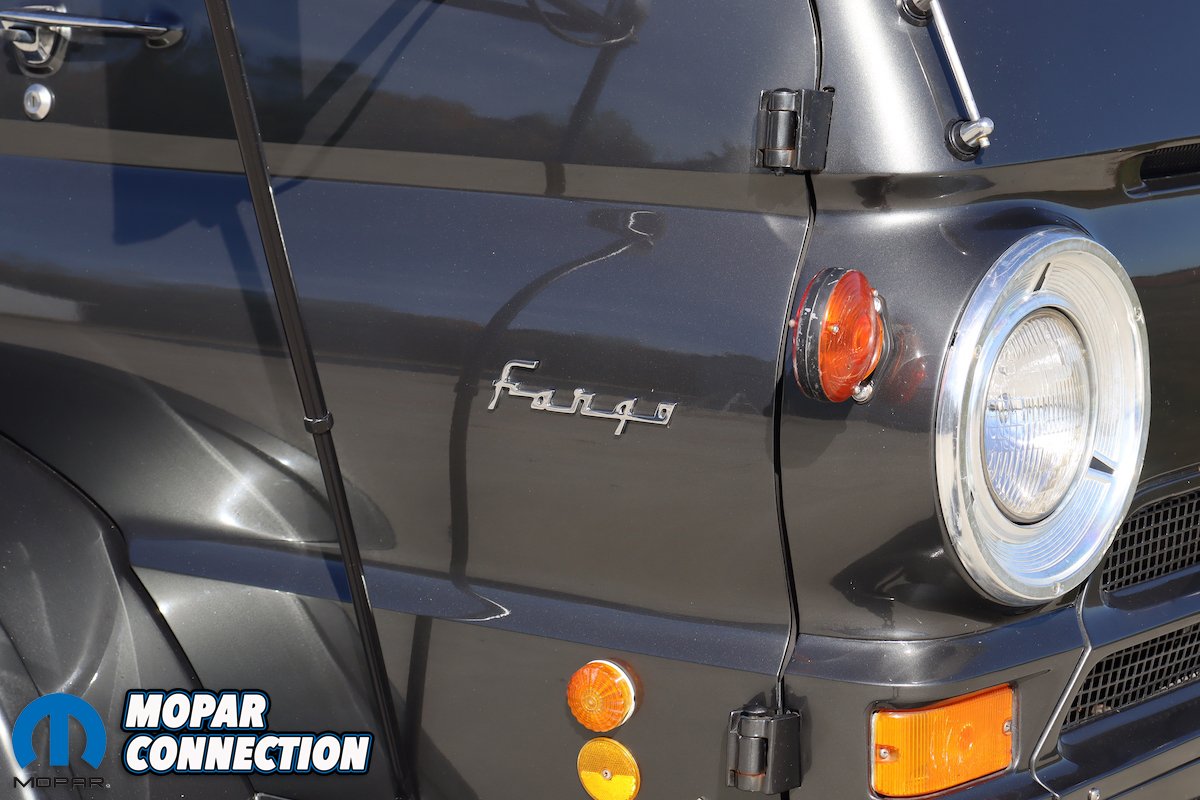
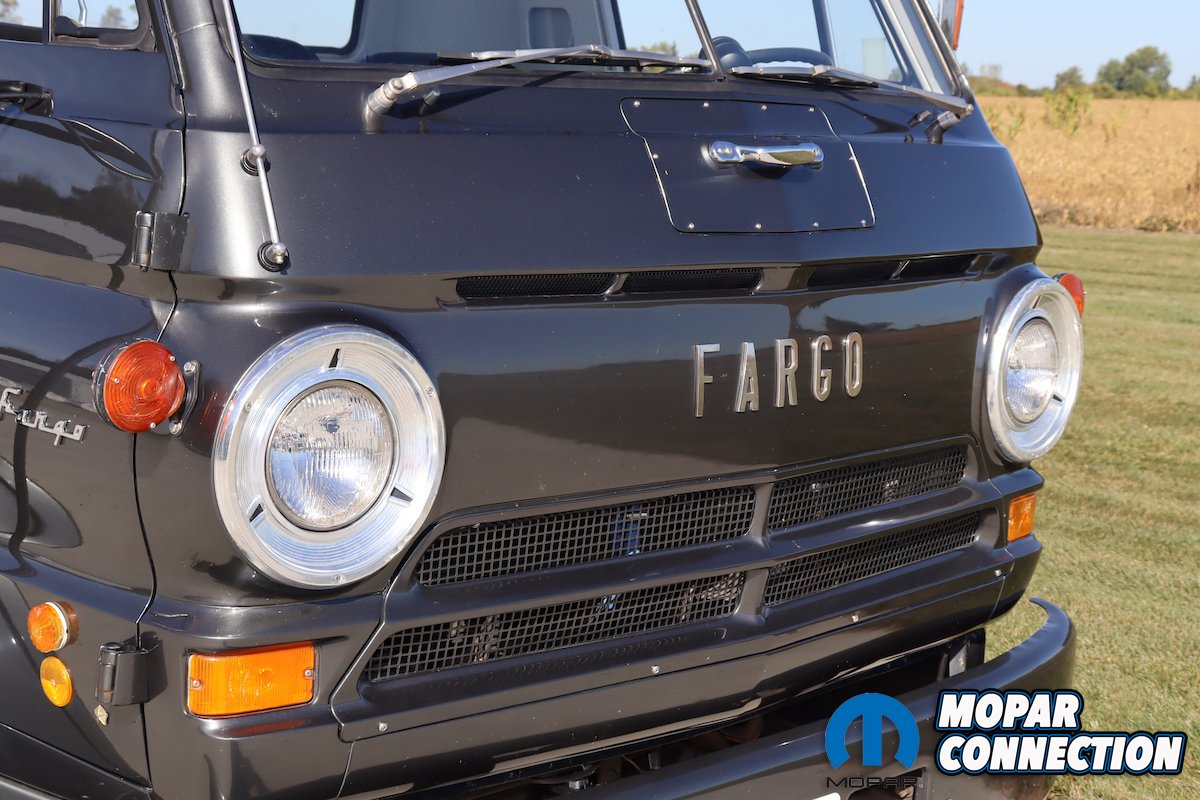
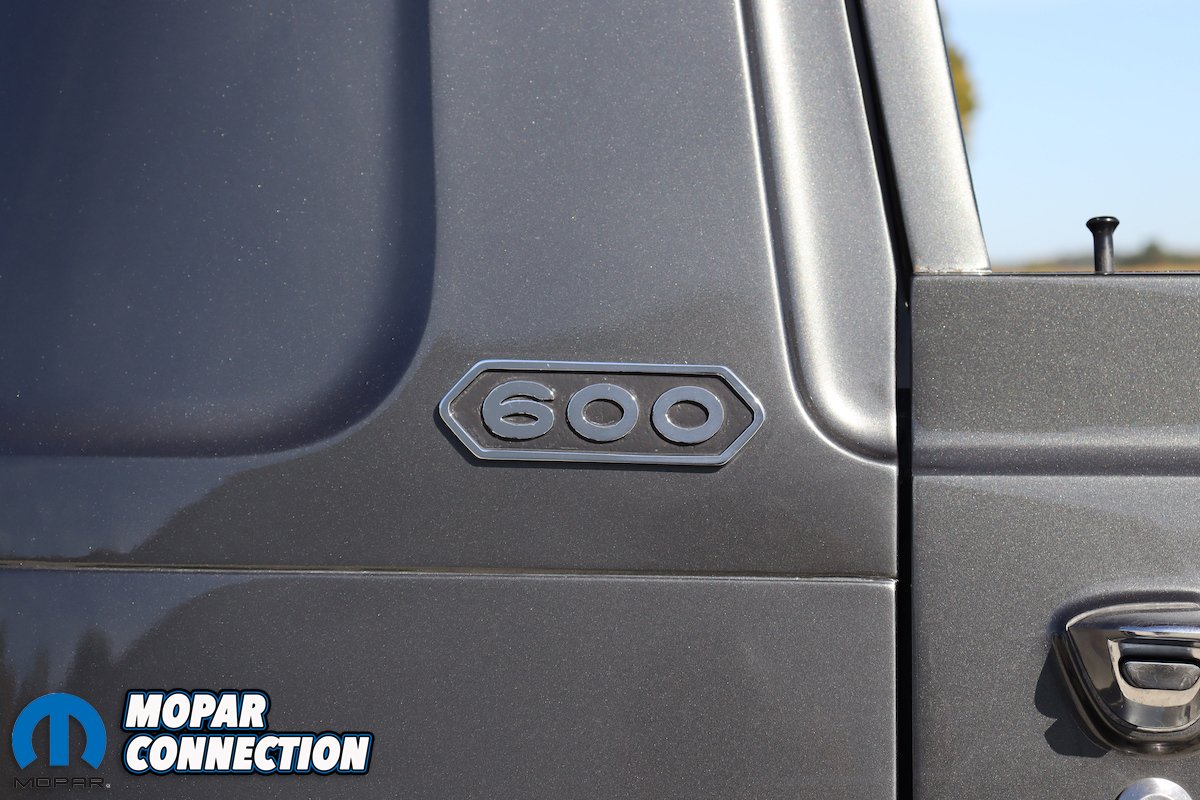
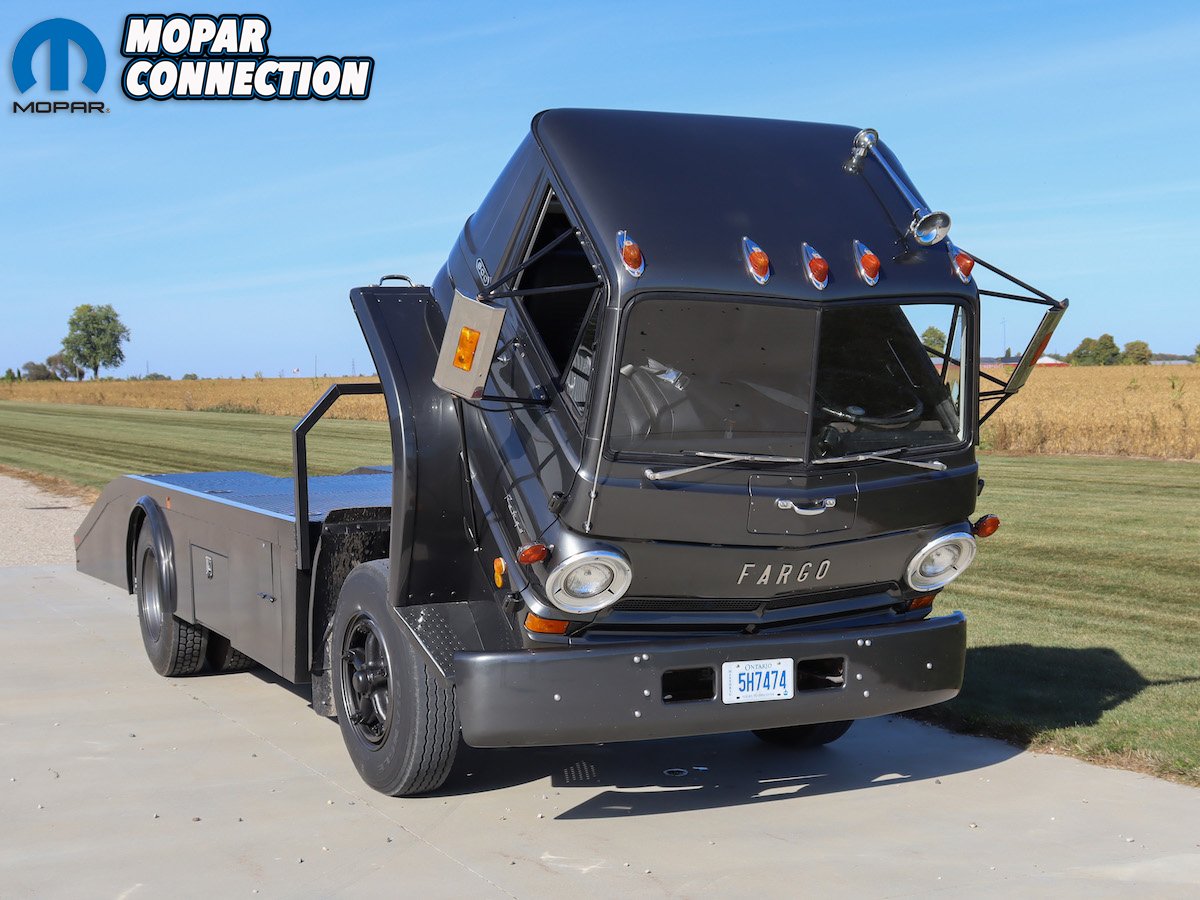
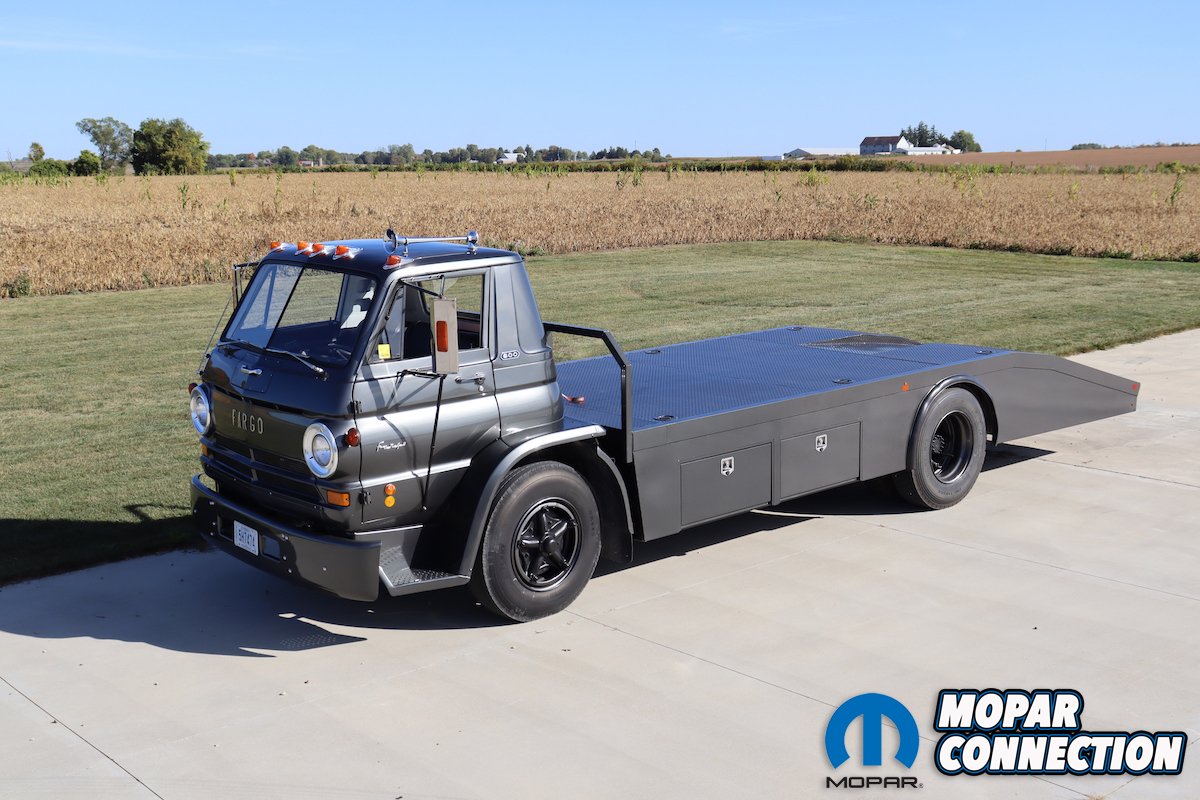
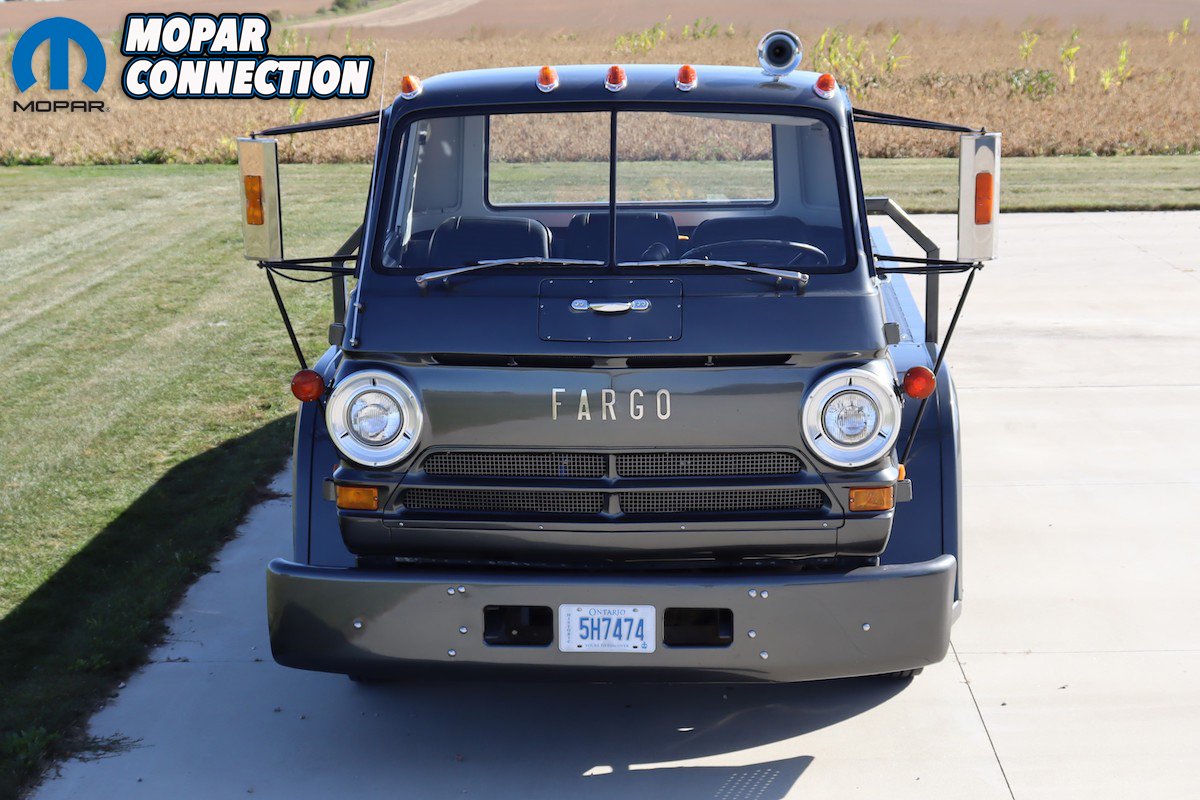
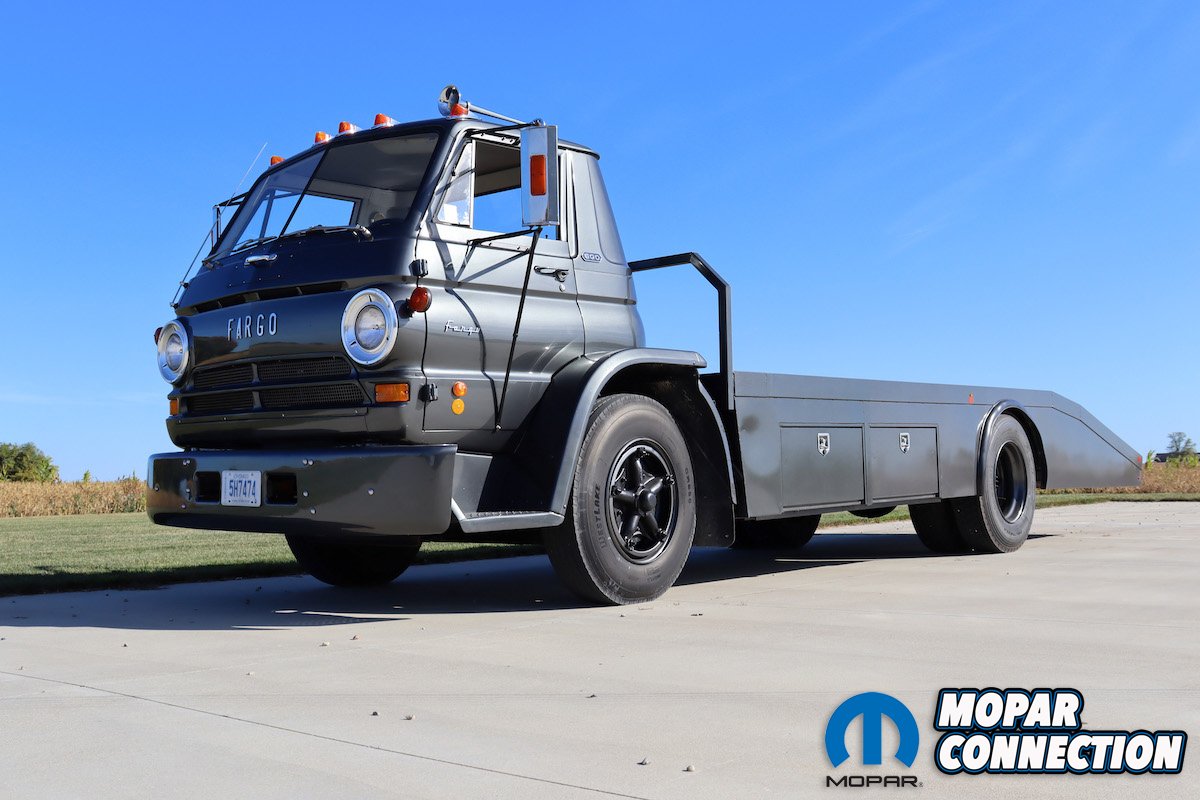
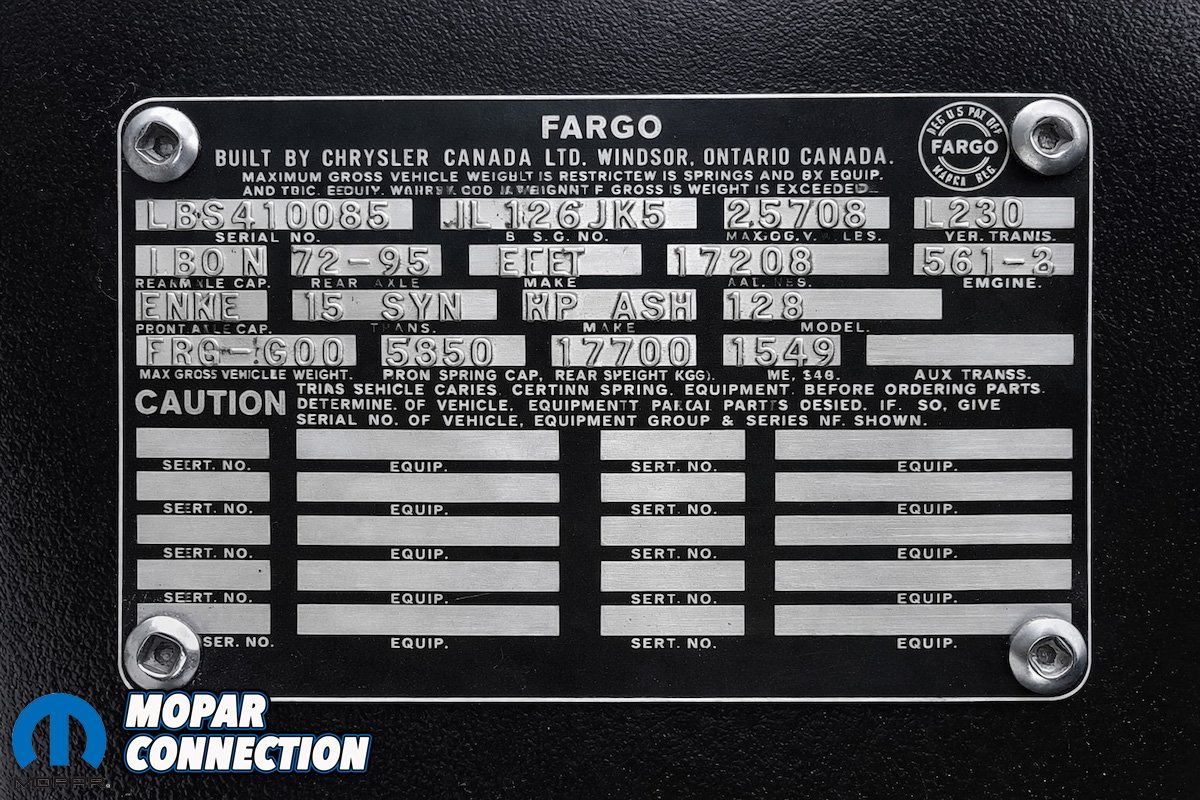
For Doug, that truck ended up being a 1966 Fargo L600, the ideal solution to his hauling challenge. For those not familiar with the Fargo L600, it is the Canadian counterpart to the Dodge L600, which were medium-duty cabover-engine trucks built by Chrysler from 1966 to 1971.
These trucks were designed for maneuverability and durability in industrial and farm use. Sharing styling cues with the smaller Dodge A100 vans but riding on a heavier chassis, the L600 stood out as a distinctive “cab forward” workhorse of the late 1960s, rugged, practical, and perfectly suited to Doug’s needs.
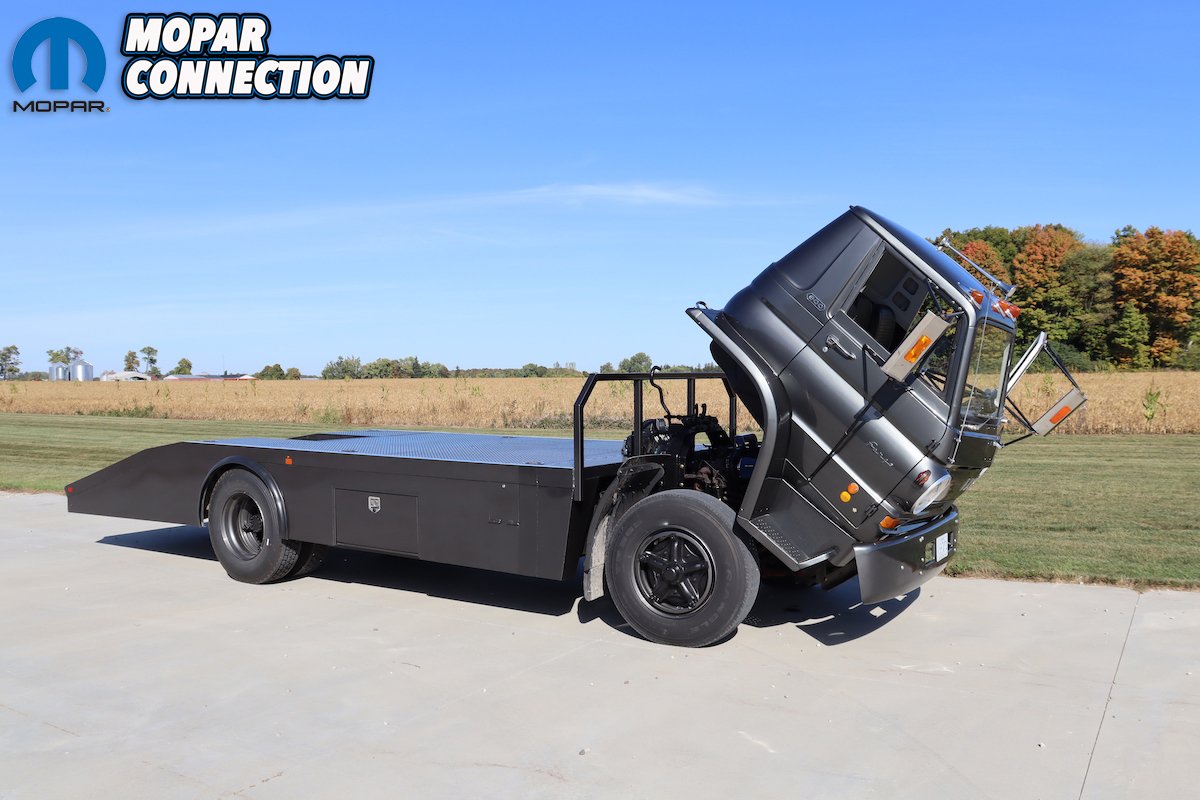
The L600 series debuted in 1966 as part of Dodge’s push into the medium-tonnage tilt-cab market. Chrysler engineers worked closely with truck owners and mechanics to design a cab that was easy to service and highly maneuverable, featuring a 45°–55° hydraulic tilt for full engine access and a 50° wheel turn angle for tight spaces.
In Canada, Fargo-badged versions were sold through Chrysler Plymouth dealers, while Dodge-badged trucks went through Dodge dealers—a strategy similar to GM’s Chevrolet/GMC dual branding, known today as badge engineering. This approach helped boost sales across Canada, where fewer dealerships meant broader accessibility for buyers.
The L600 was built for versatility and strength, offering a Gross Vehicle Weight (GVW) of up to 24,000 lb for the L600 and 27,500 lb for the L700, with Gross Combination Weights (GCW) reaching 42,000 lb and 50,000 lb, respectively. Wheelbases ranged from 89 to 192 inches, allowing multiple cab-to-axle configurations to suit different hauling needs. Power came from a lineup of dependable engines, beginning with the 225 cu in Slant Six—nicknamed the “Leaning Tower of Power”—and optional gas V8s, including 318, 361, and 413 cu in units.
The heavier L700 could also be equipped with Perkins or Cummins diesel inline-six engines. Transmission choices included manual or automatic setups, with an optional two-speed rear axle favored for farm and grain hauling. Hydraulic brakes with vacuum boost assist were standard, while air brakes were available on heavier variants—rounding out a design that balanced durability, serviceability, and performance for mid-1960s working trucks.
The Dodge L600 was a true workhorse of its era, built to handle a wide range of demanding jobs. These trucks were commonly outfitted for hauling livestock, flatbeds, stake beds, and box‑truck bodies, making them ideal for farm and delivery operations.
Many were also adapted for specialized industrial roles, serving as crane carriers, tank trucks, and dump trucks in construction and municipal fleets. In heavier configurations, the L600 was often equipped as a fifth-wheel tractor, pulling semi‑trailers loaded with freight, grain, or even cars.
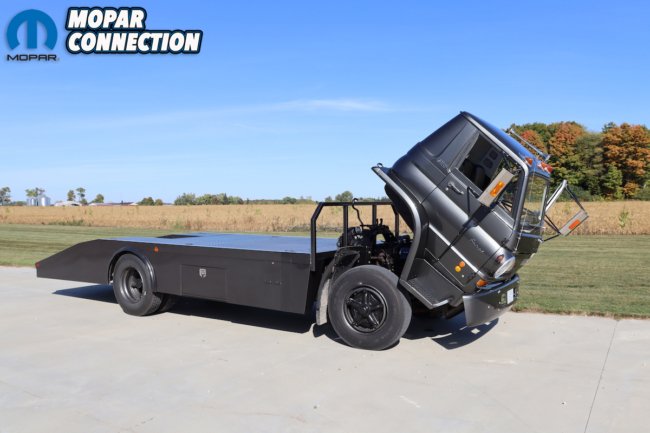
Doug Durnin’s 1966 Fargo L600 began life as a fifth wheel tractor on a Saskatchewan farm, where it was likely used to haul wheat trailers from the fields to nearby grain elevators. Powered by a 361 cubic inch V8, the Fargo was built for steady, reliable work. Thanks to its years out west, the truck avoided the salt-covered roads of the eastern provinces, which helped preserve its chassis and cab in remarkably good condition—a solid foundation for Doug’s restoration project.

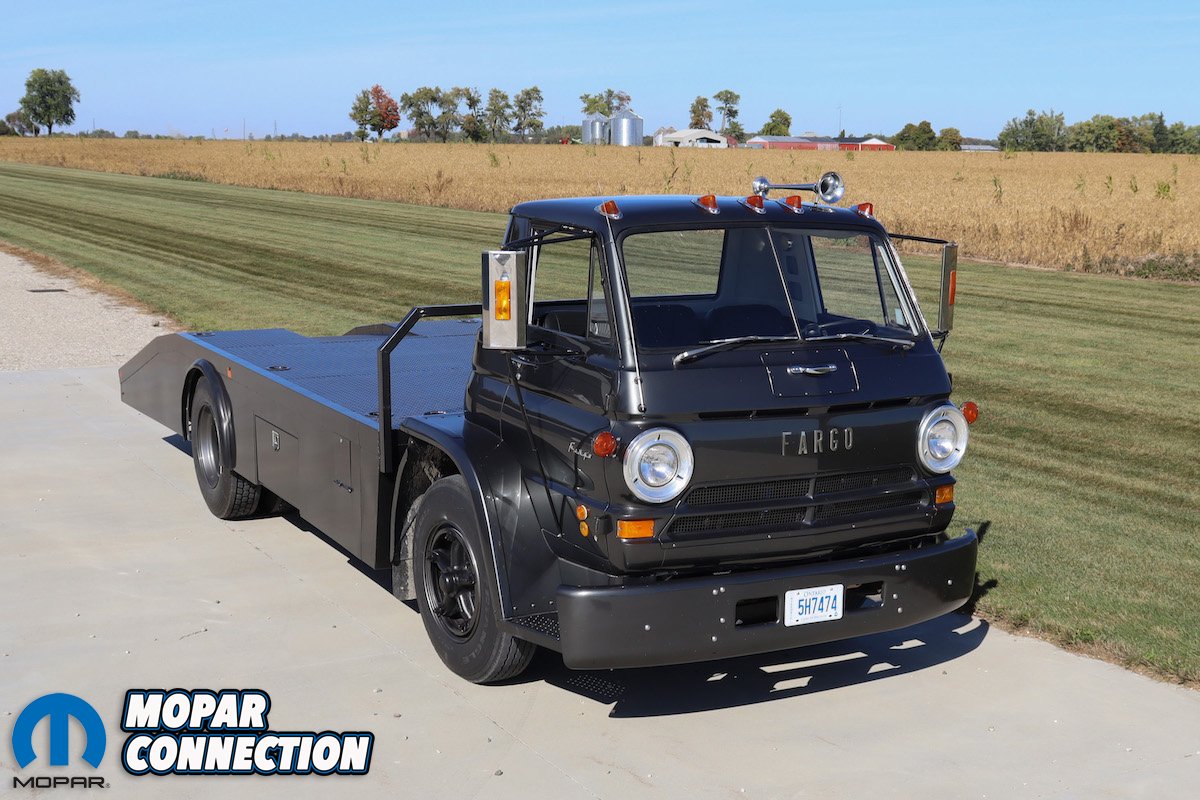
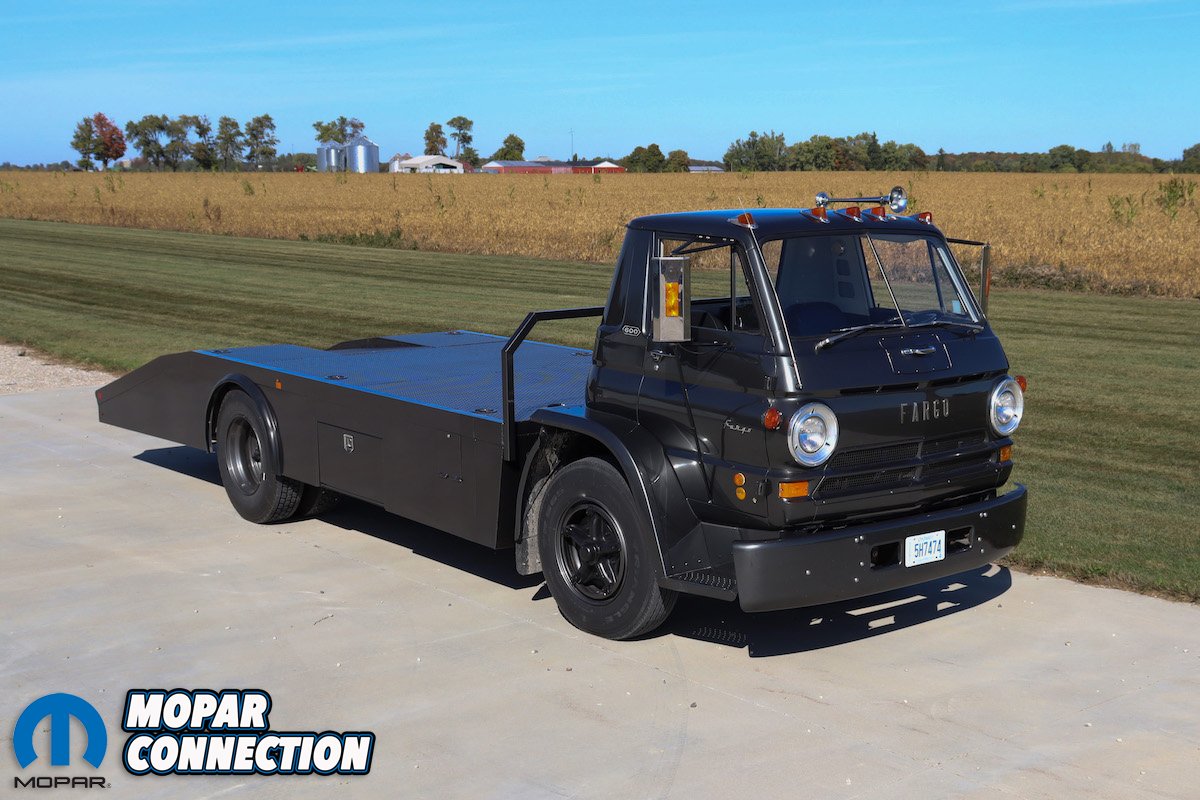
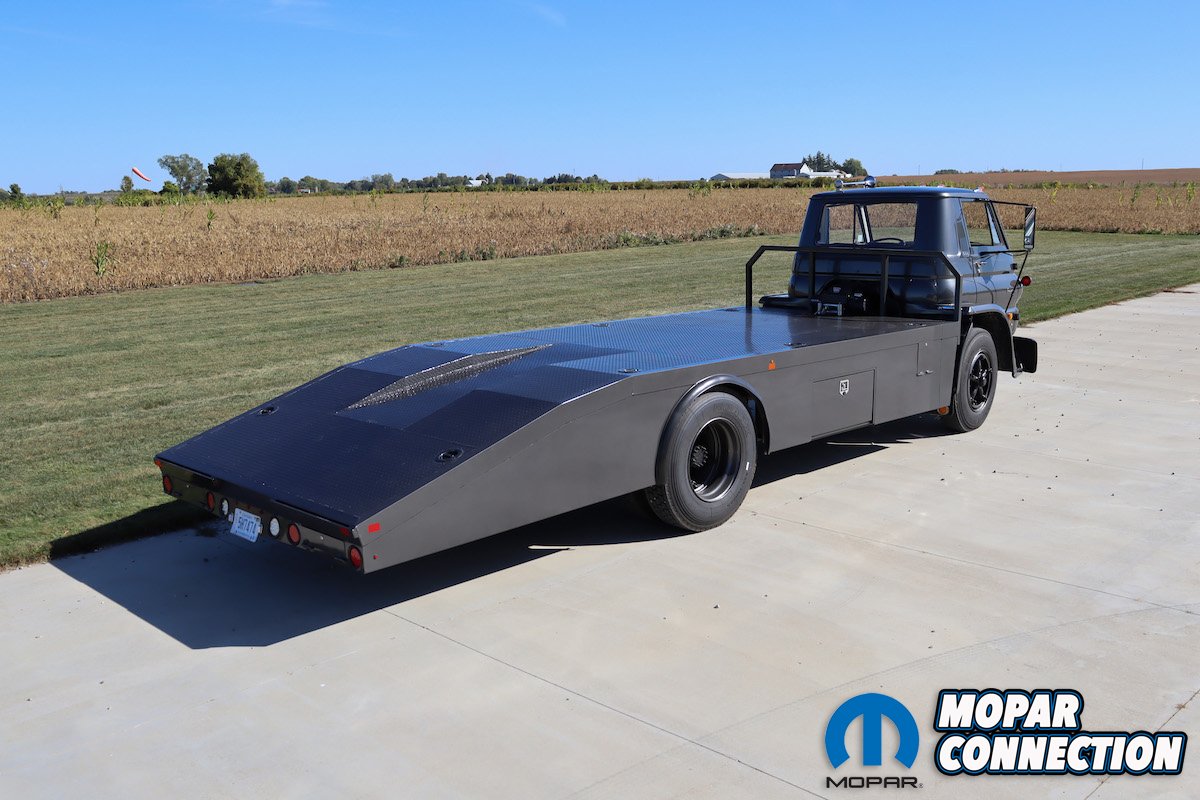
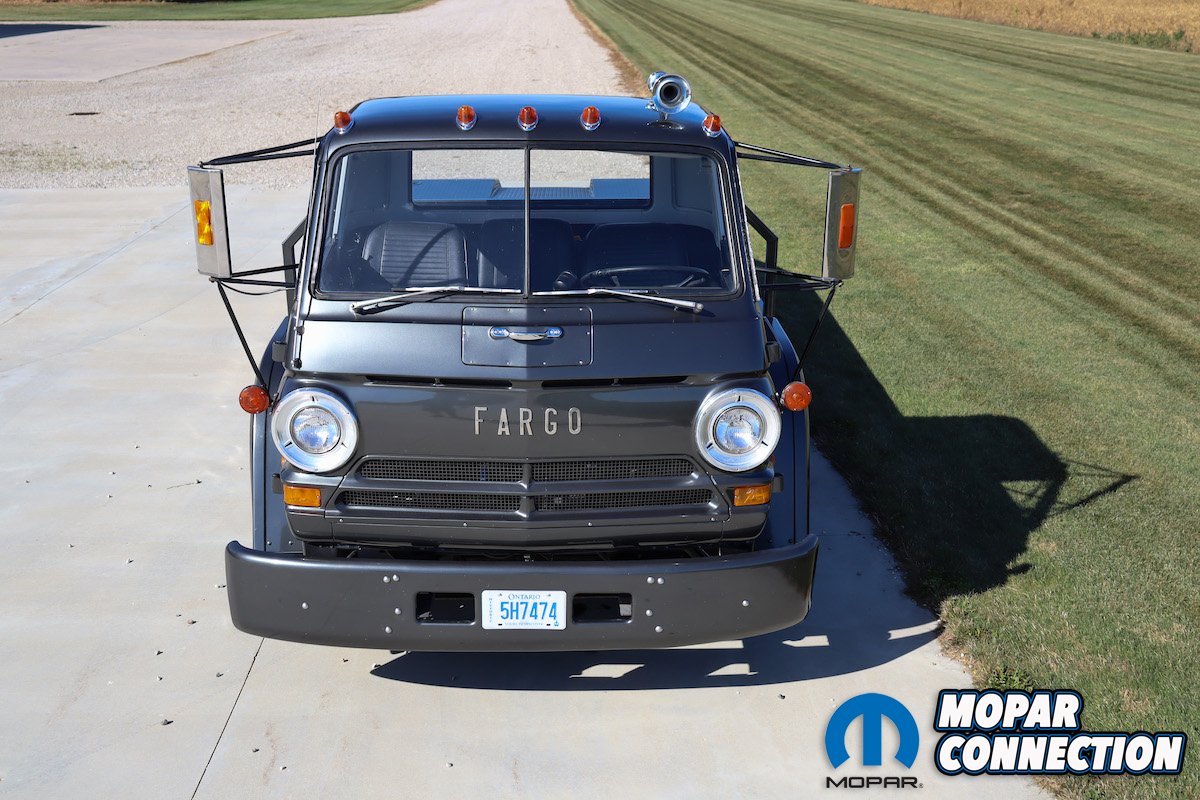
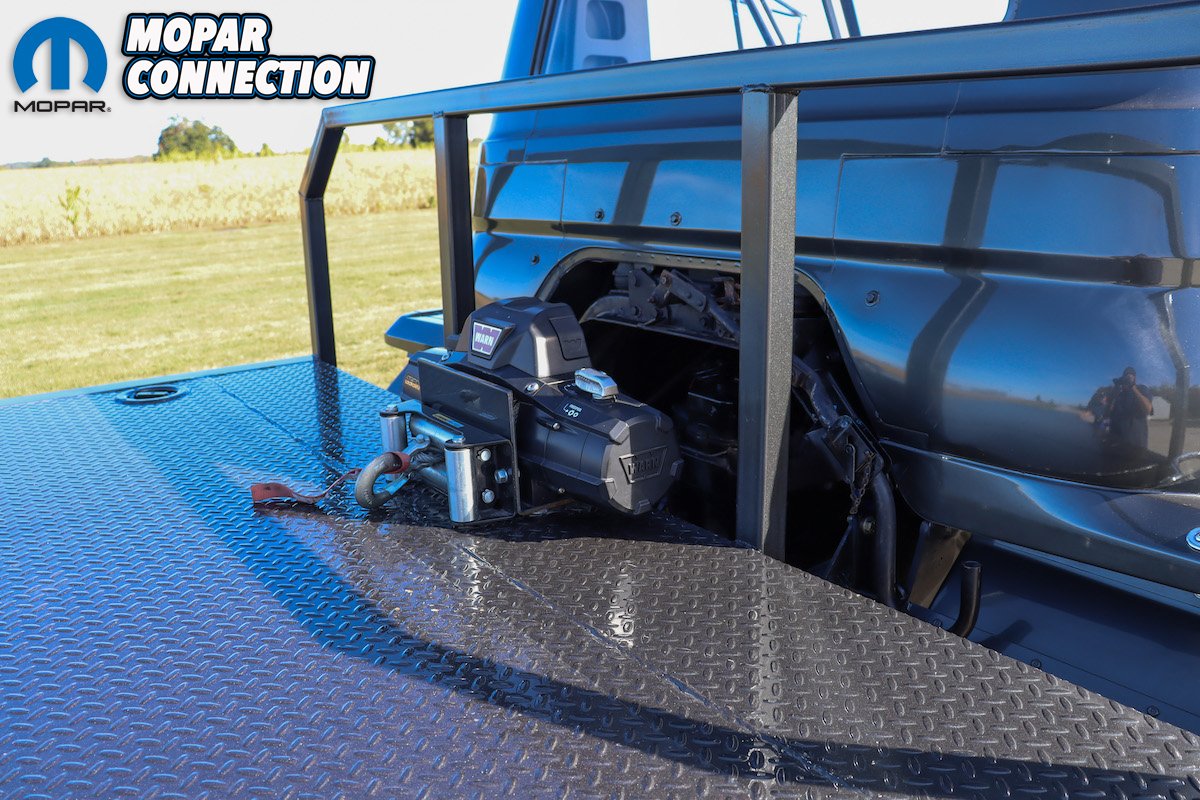
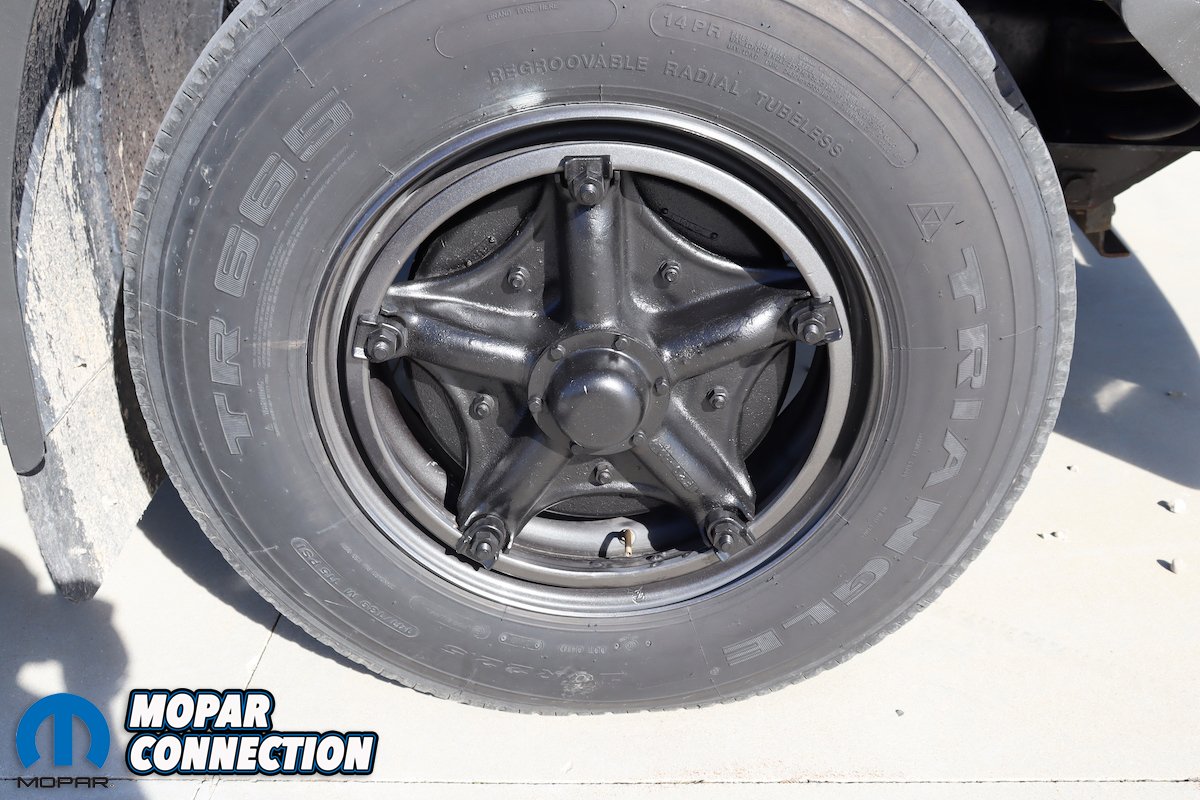
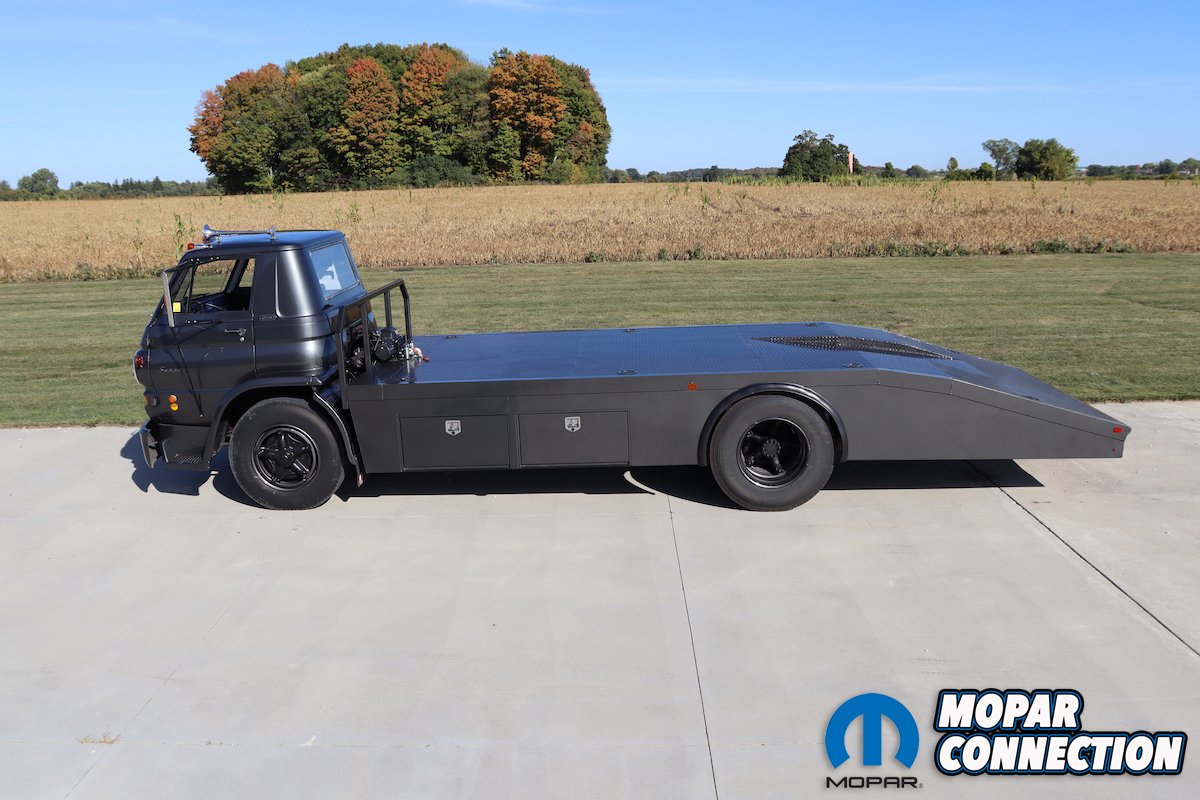
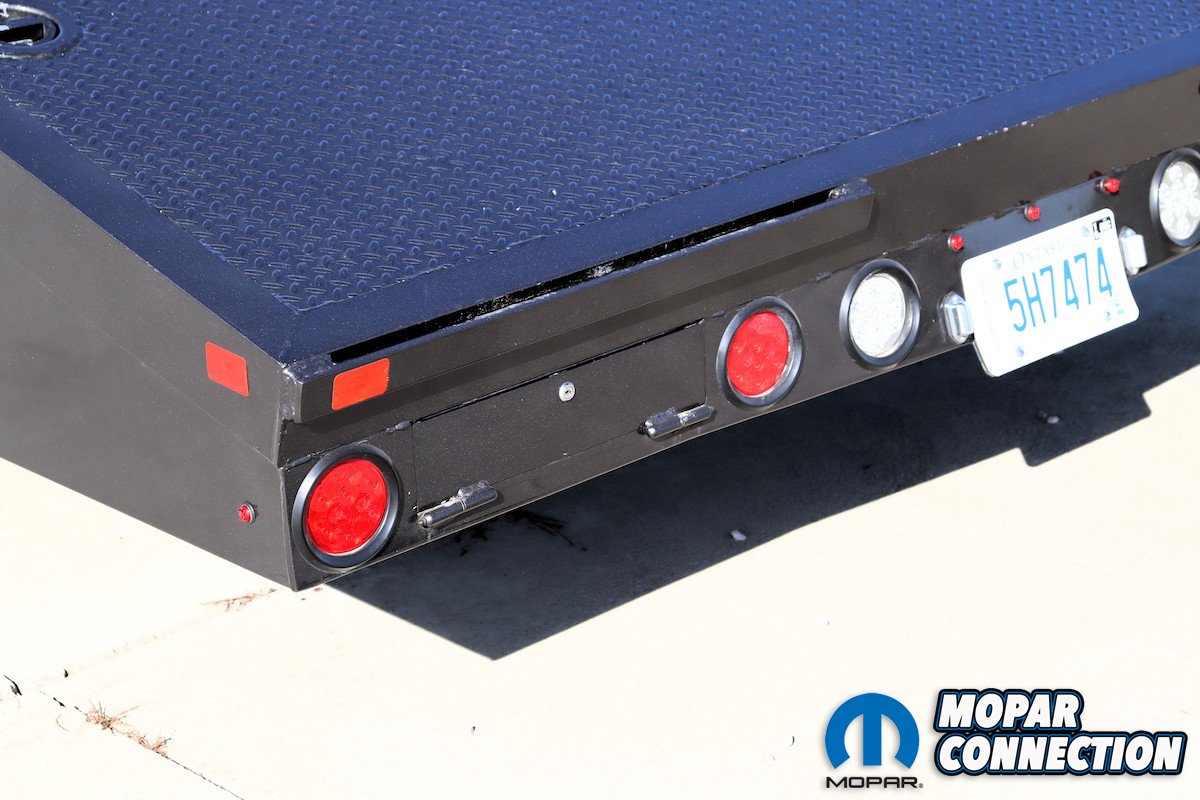
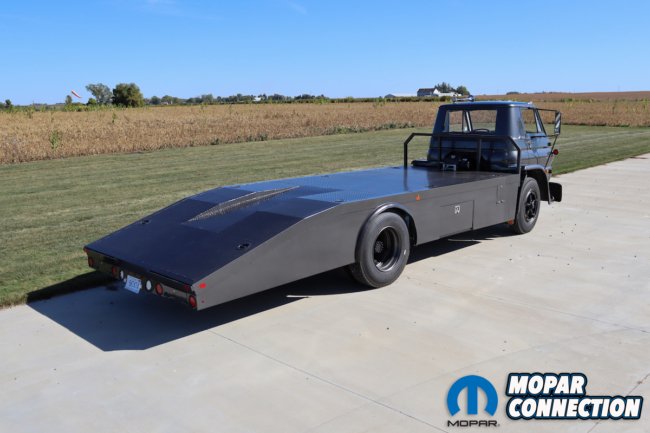
Before the L600 could become the capable hauler it is today, it needed a few key modifications. The bed and chassis were extended to accommodate the ramp end, with the work and painting handled by Wiltsey’s truck bodies, the original bed manufacturer, now long out of business.
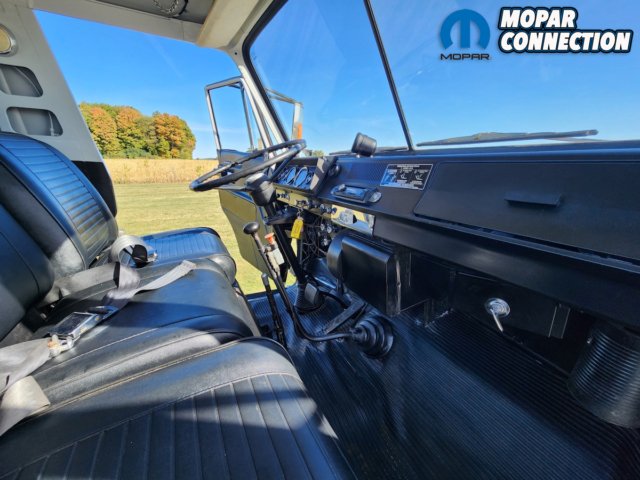
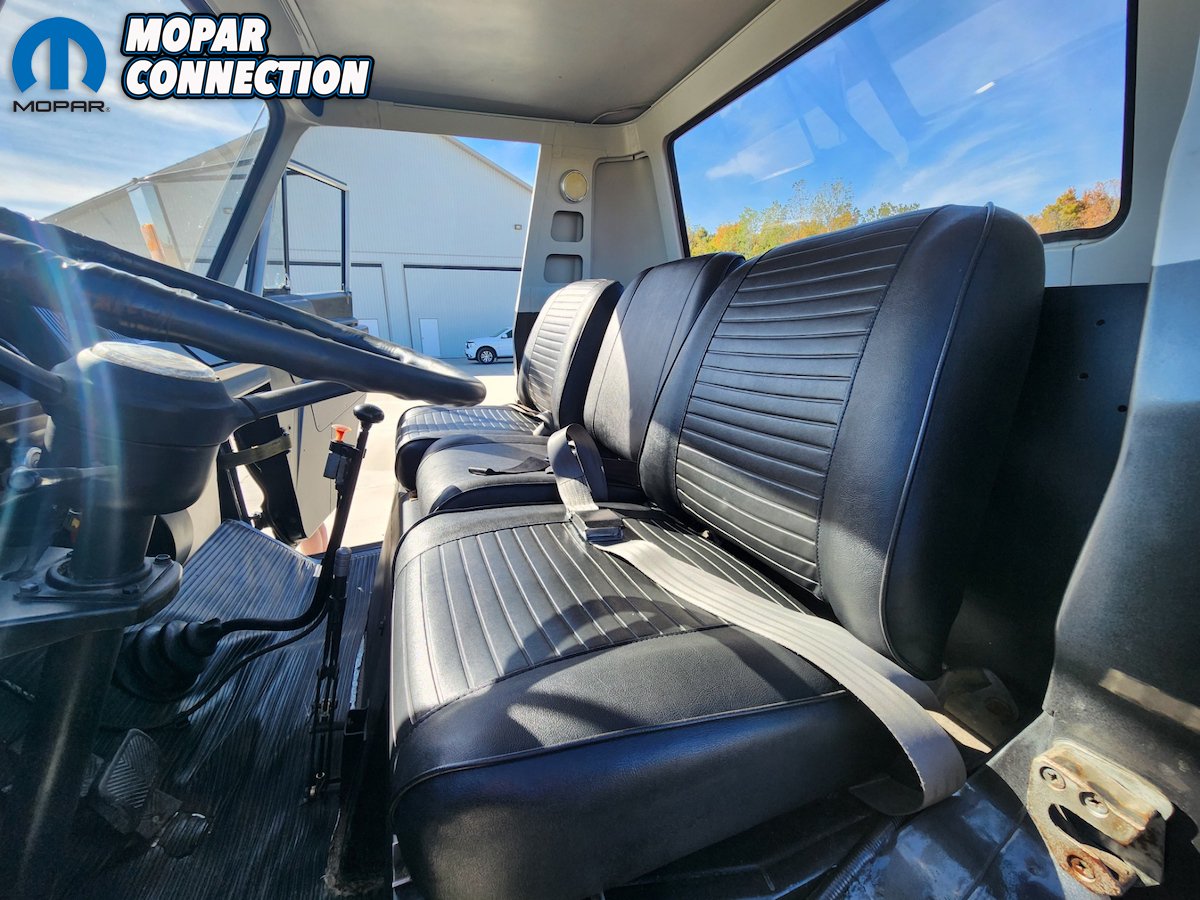
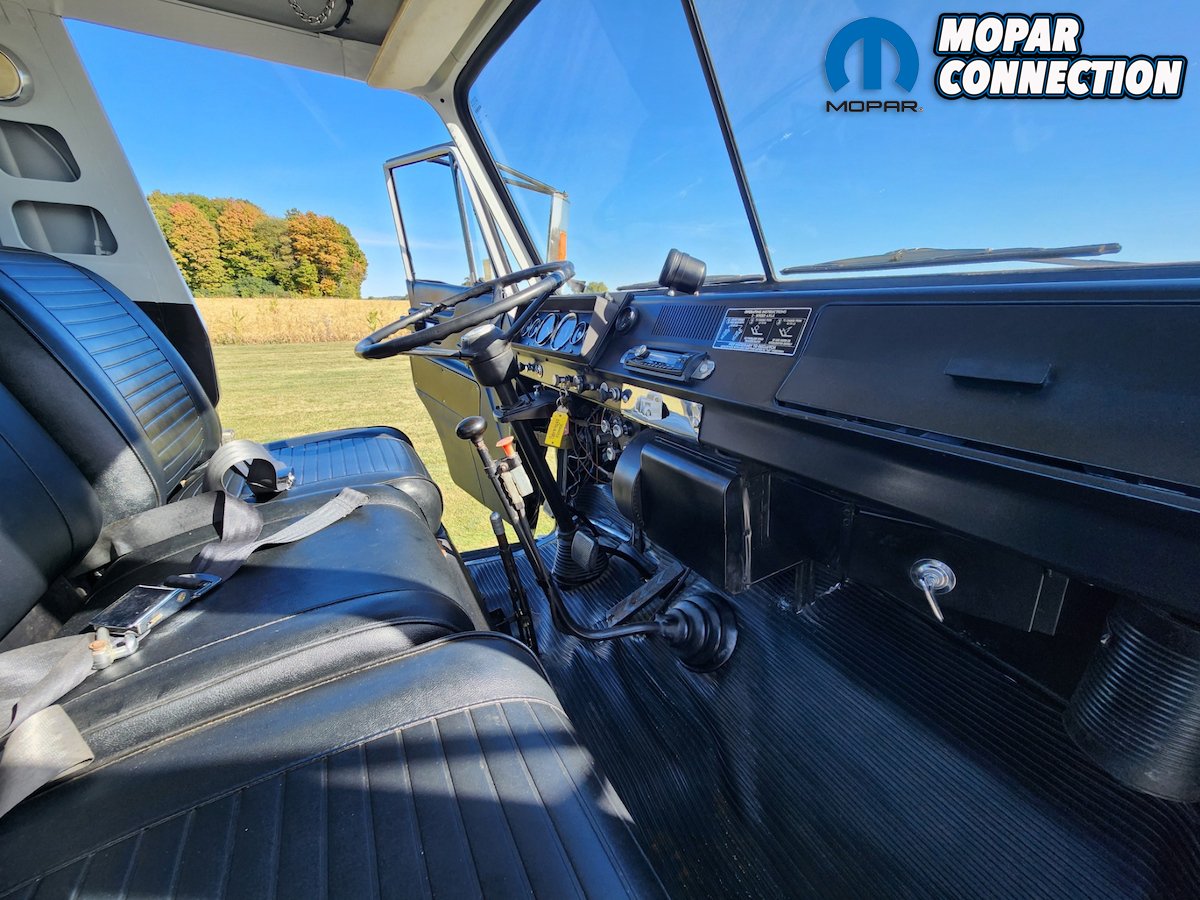
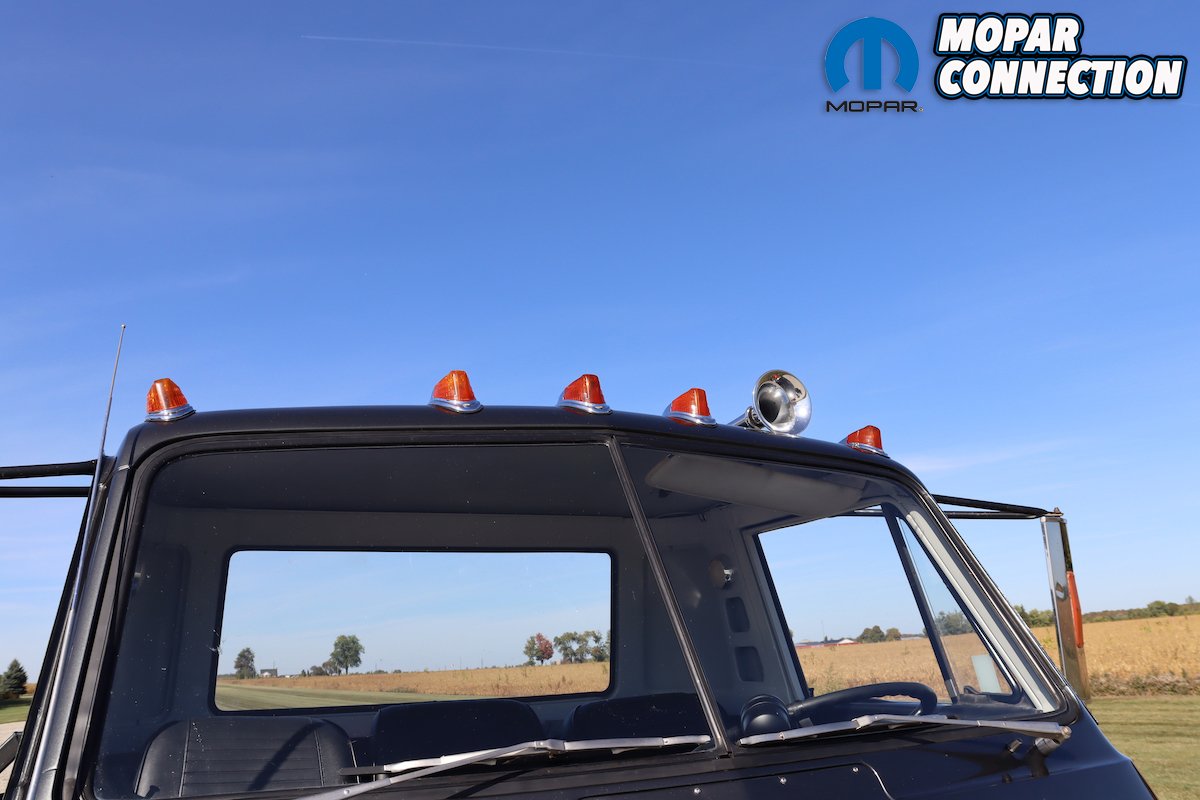
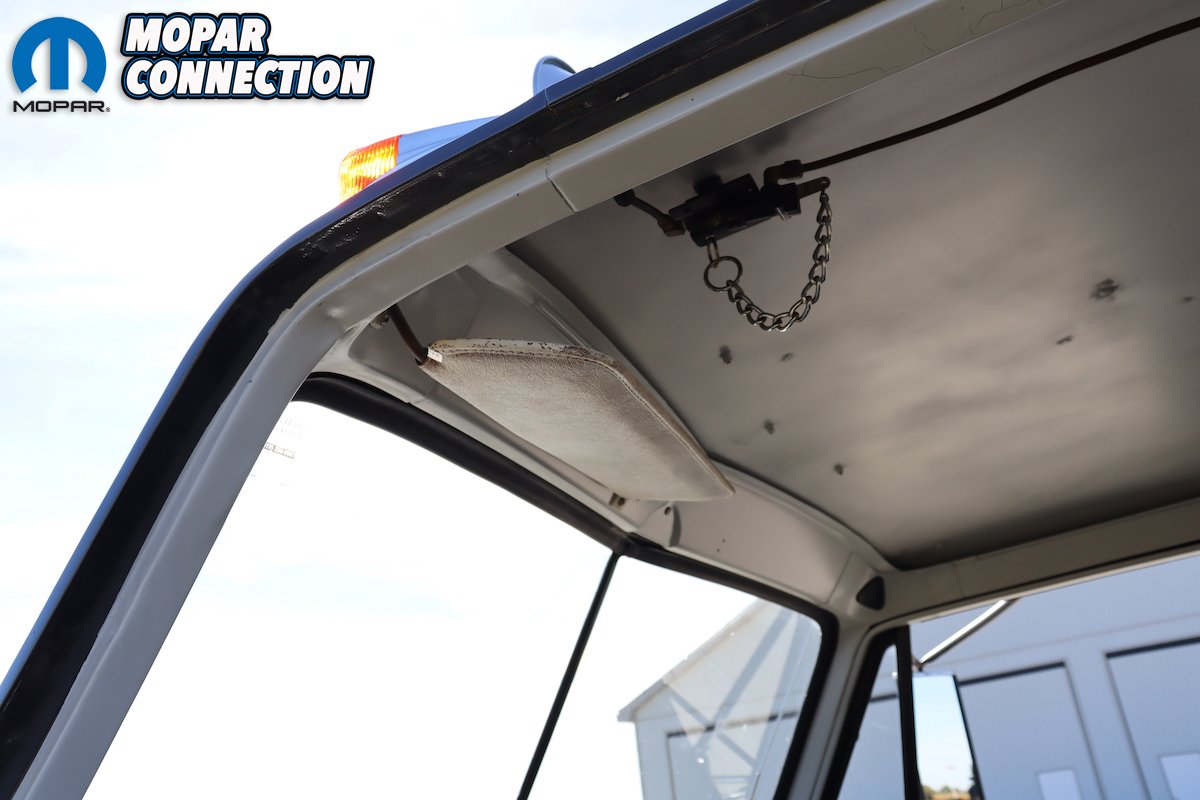
The cab body and paintwork were completed by Paul Ridley, who refinished both the exterior and interior. The truck received a striking Silverstone Grigio exterior color, complemented by a cream-tone interior, giving the Fargo a refined yet functional look worthy of its new role as Doug’s show car transporter.
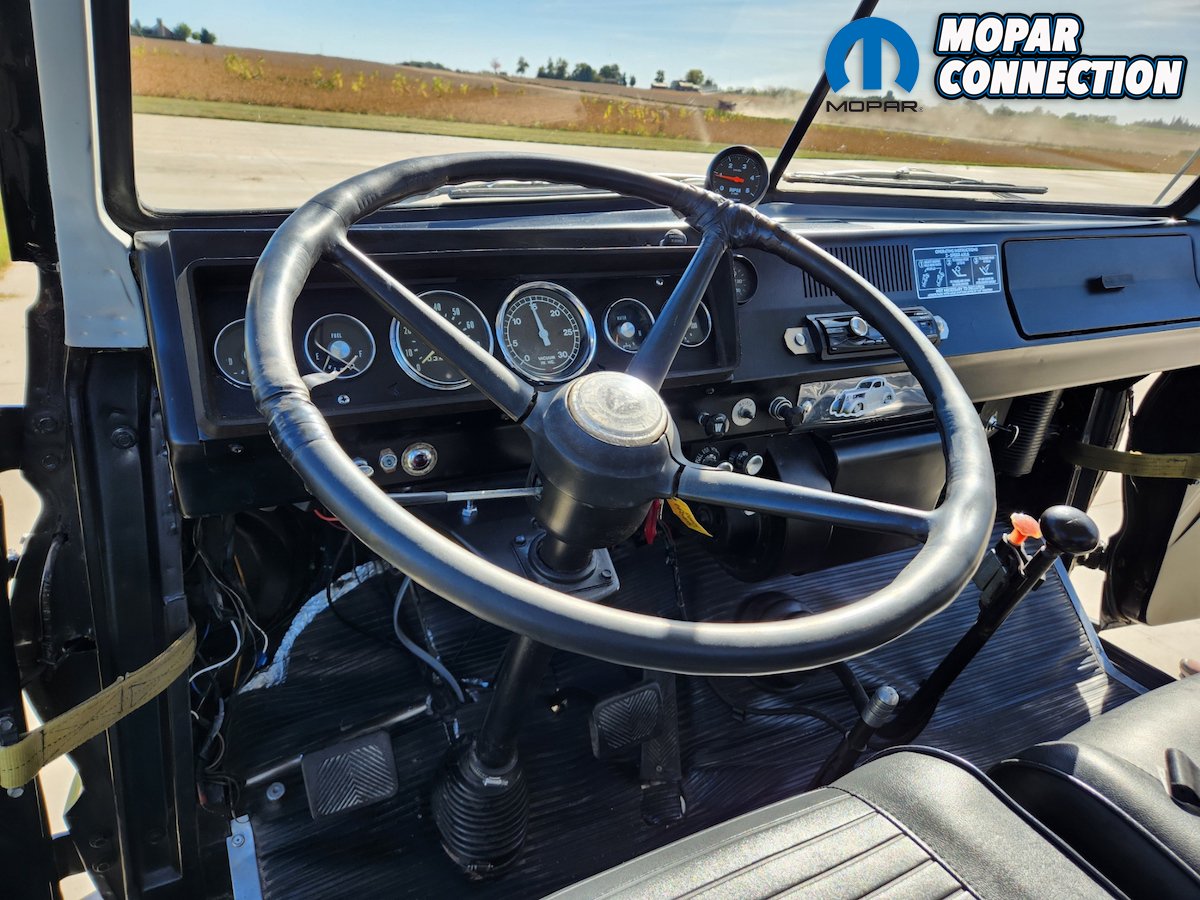
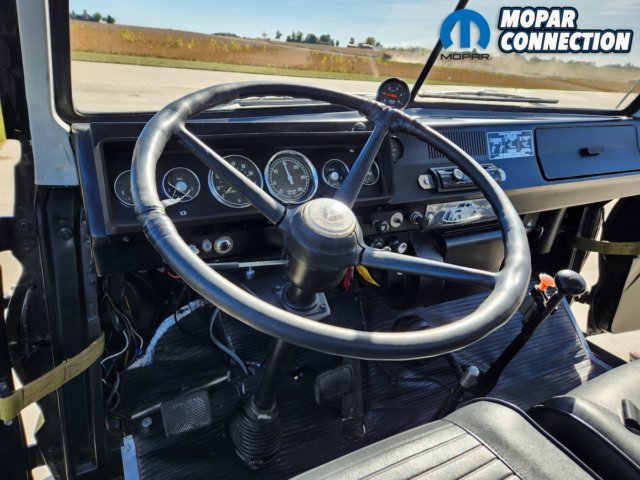
The interior seats were refurbished with vinyl upholstery, just as they would have been in the 1960s. The new seat covers came from Legendary Interiors, and the installation was handled by Chad Noakes. Nothing fancy—after all, this was a working truck, built for function over comfort, with no creature comforts to distract from its purpose.
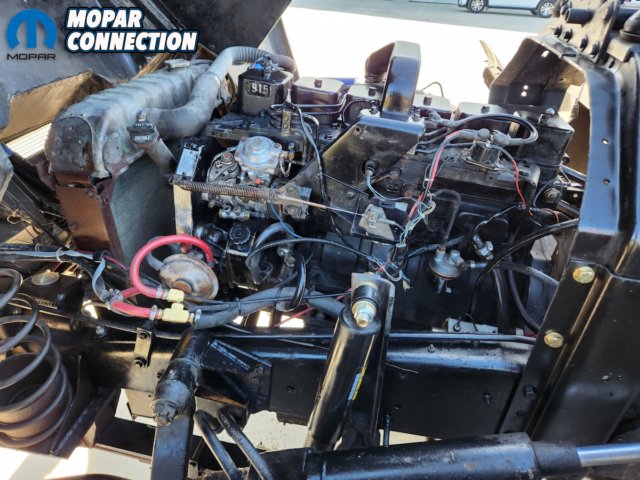
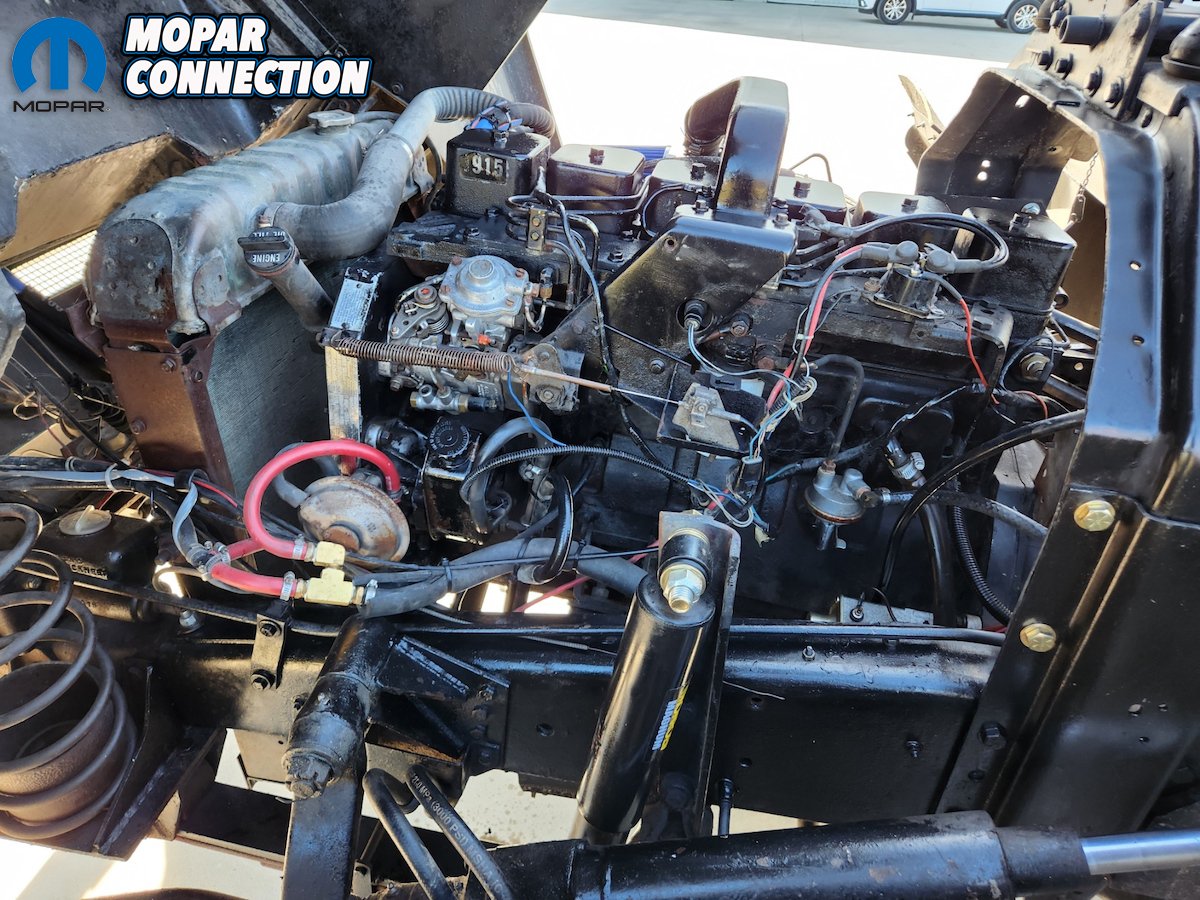
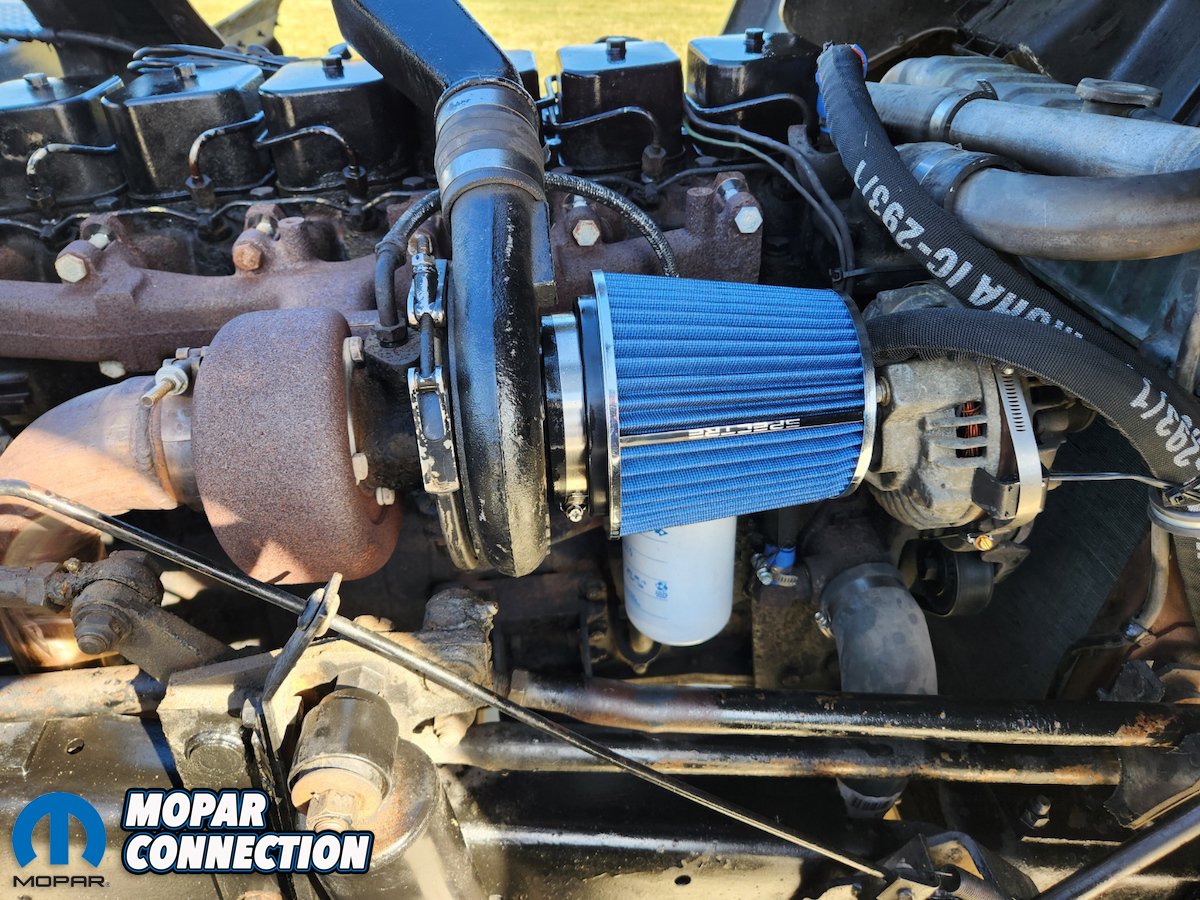
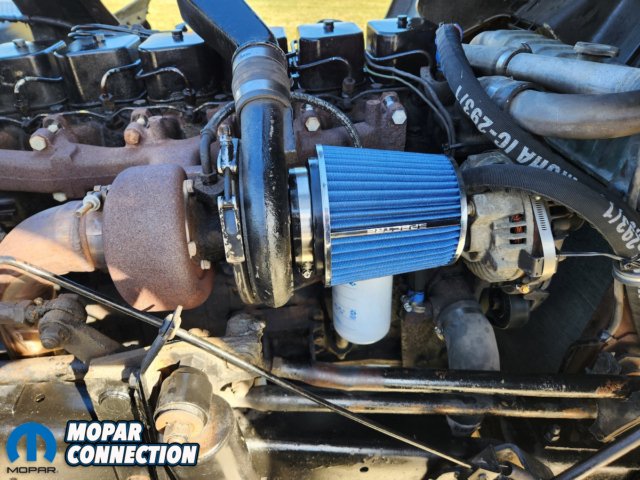
The original 361 cubic inch V8 was replaced with a 5.9 liter Cummins Turbo diesel engine, delivering greater torque and horsepower along with improved fuel economy under load. The Cummins also featured direct fuel injection, eliminating the need for a carburetor and providing smoother, more efficient performance—an ideal upgrade for a truck built to haul heavy show vehicles.
The Cummins 5.9-liter diesel engine remains stock, with no modifications. The drivetrain retains its original setup, a five-speed manual transmission paired with a two-speed rear axle, just as the L600 was originally equipped. When I photographed the truck, I couldn’t help but feel a wave of nostalgia, flashbacks of riding with my dad in his truck as a kid. The familiar smell of diesel and the sight of the tall shifter with a 2-speed switch brought back those summer memories in vivid detail, a reminder of how deeply these machines connect us to our past.
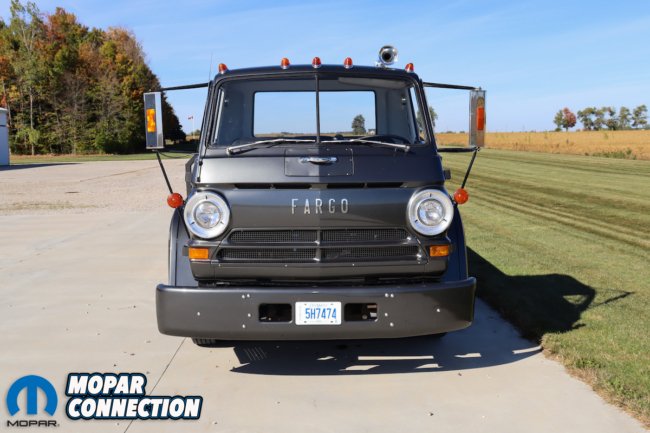
Restored with purpose, Doug brought the L600 back to life not just as a showpiece but as a working car hauler, a dependable rig to transport other vehicles from his collection. The result is a truck that blends nostalgia with utility, embodying the spirit of mid-’60s Canadian craftsmanship and the enduring passion of a collector who keeps his classics moving.
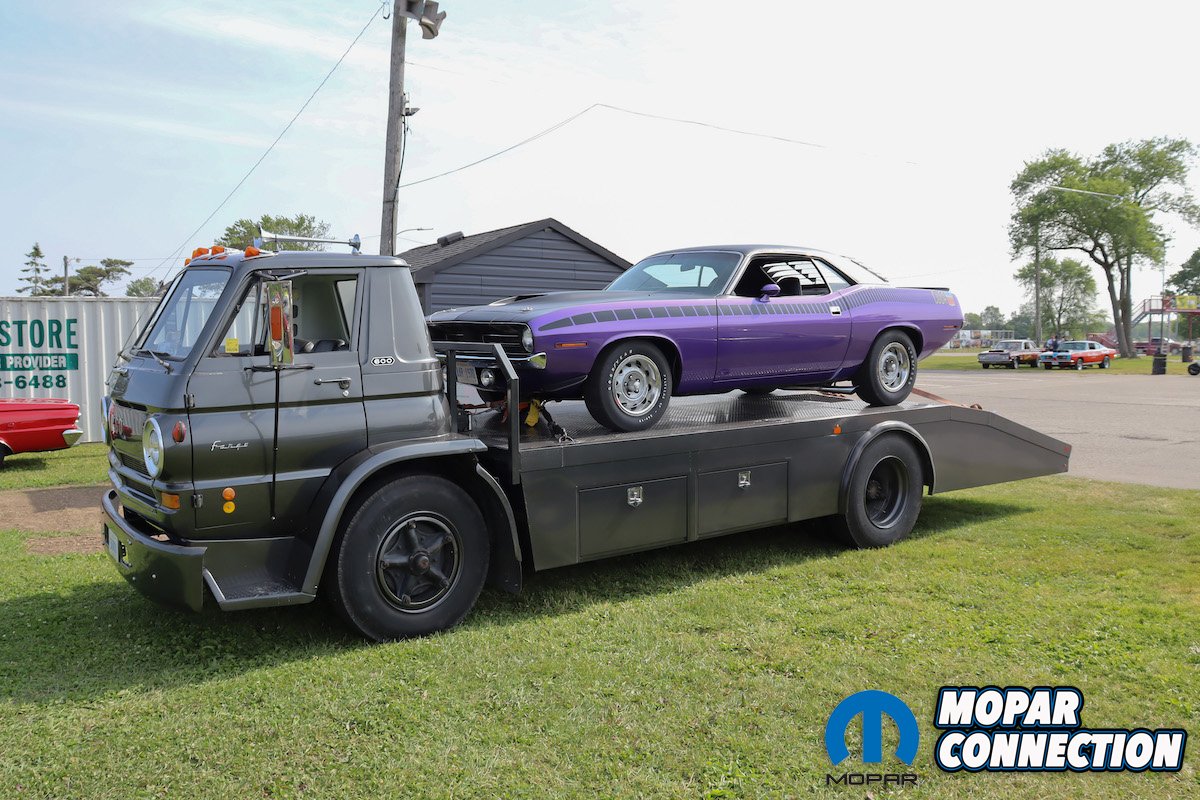
The vehicle attracted considerable attention at shows due to its unique design and purpose, demonstrating that even a utilitarian truck can stand out when restored with care and history. Doug shares, “Over the past couple of seasons showing it, I’ve received all sorts of feedback—ranging from ‘that’s the coolest truck ever’ to ‘what is that thing?’ No matter what, I always get plenty of thumbs up driving to shows, whether or not there’s a car on the bed.”
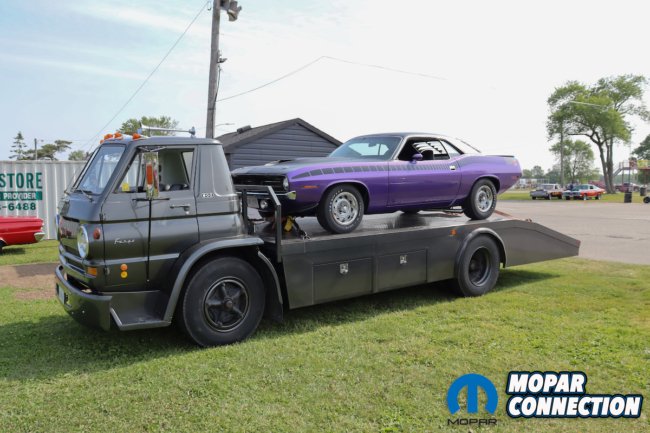
Doug has proudly displayed his Fargo L600 at numerous shows, often with one of his classic cars secured on the bed, and his efforts have earned multiple awards over the years. It’s a striking sight: a vintage hauler carrying another piece of automotive history, both restored with care and purpose.
Many trucks of this type lived hard-working lives—hauling freight, livestock, or machinery until they were either run into the ground, scrapped when their usefulness ended, or left to decay in a field. Fortunately, enthusiasts like Doug step in to save these machines, ensuring future generations can see firsthand how things once were. His Fargo L600 stands as a tangible link to the past, evoking nostalgia and admiration for the craftsmanship and durability that defined mid‑century Chrysler Corporation trucking.