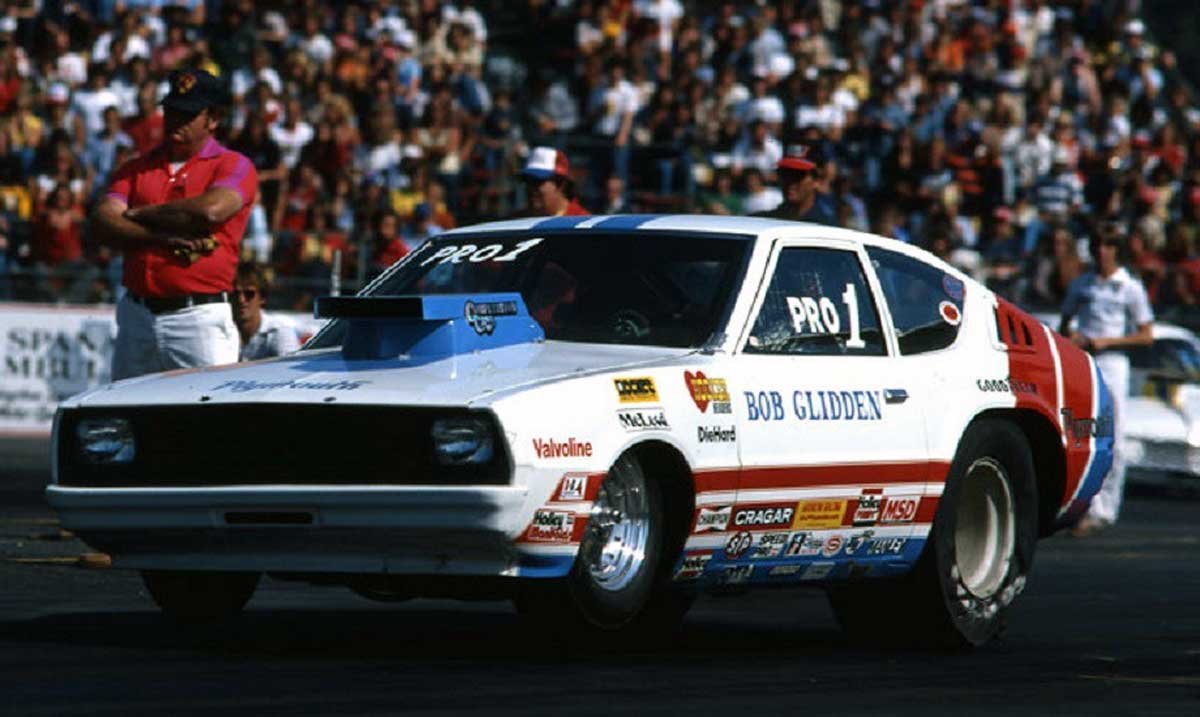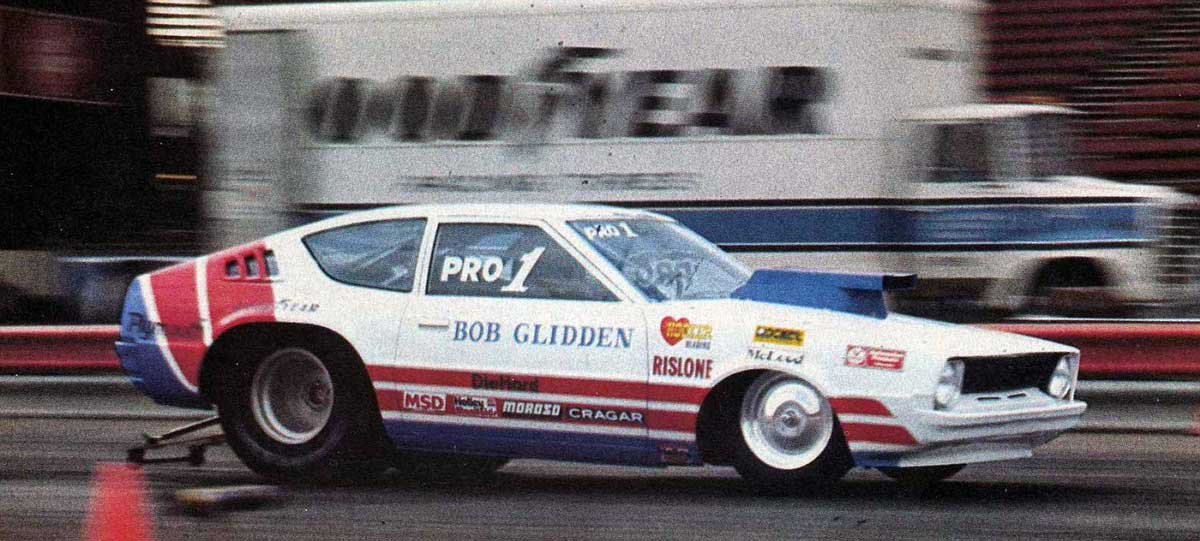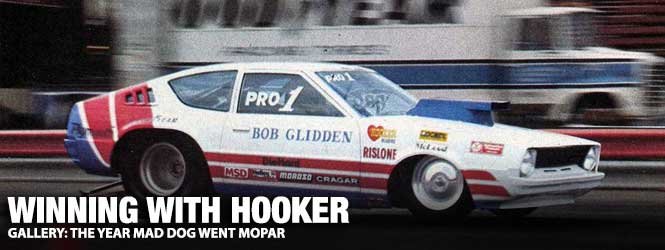
Bob Glidden’s 1979 Plymouth Arrow Pro Stocker is one of the great “what if?” cars in NHRA history; not because Glidden had a long Mopar career, but because he jumped from Ford to Plymouth for one season and immediately made the Arrow a championship-winning car.
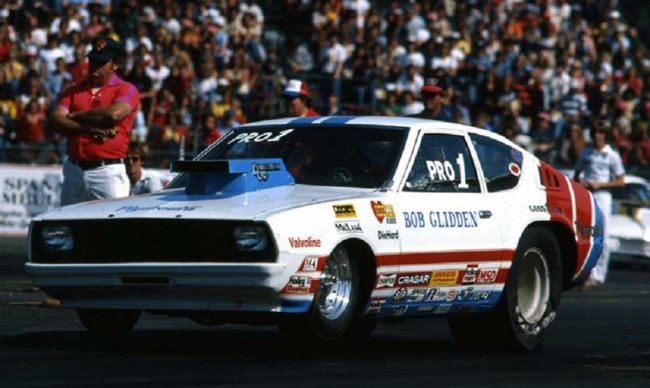
Above: Bob Glidden launches his 1979 Plymouth Arrow in Pro Stock competition. After years of Ford domination, Glidden made the switch to Mopar, and the Arrow quickly became one of the most formidable Pro Stock cars in NHRA history. (Photographer unknown)
Glidden had just come off an extraordinary 1978 season with his Ford Pinto and Fairmont. The Fairmont was unbeatable, finishing the season undefeated in national-event competition and earning Glidden the 1978 Pro Stock championship. But Ford was not providing the sponsorship support Glidden wanted, while Plymouth approached him with a 1979 deal.
The result was a Plymouth Arrow, developed around Chrysler’s relatively small-displacement LA-series small-block. The combination ranged from 314 to 355 cubic inches and used Mopar W-2 cylinder heads. The NHRA’s displacement/weight formula made a smaller, high-rpm engine particularly attractive at the time.
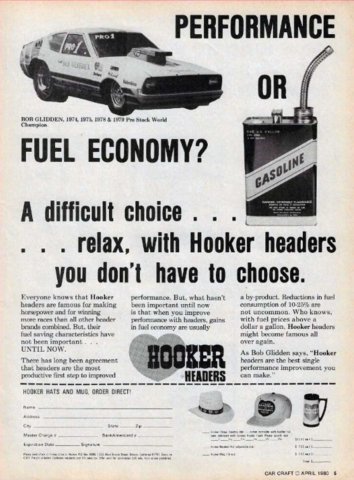
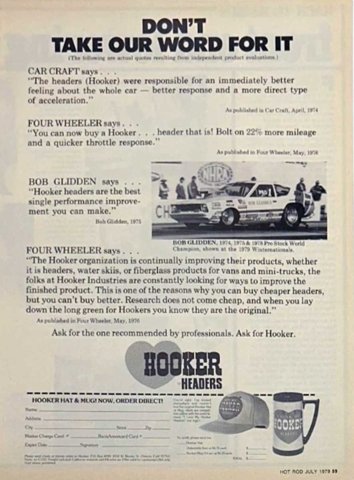
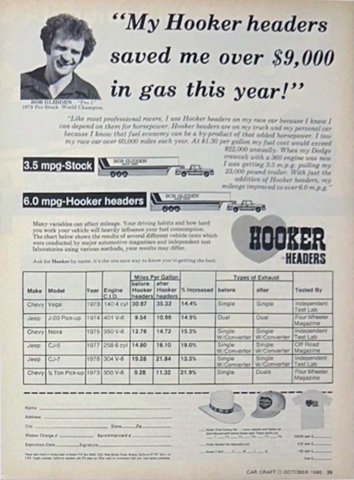
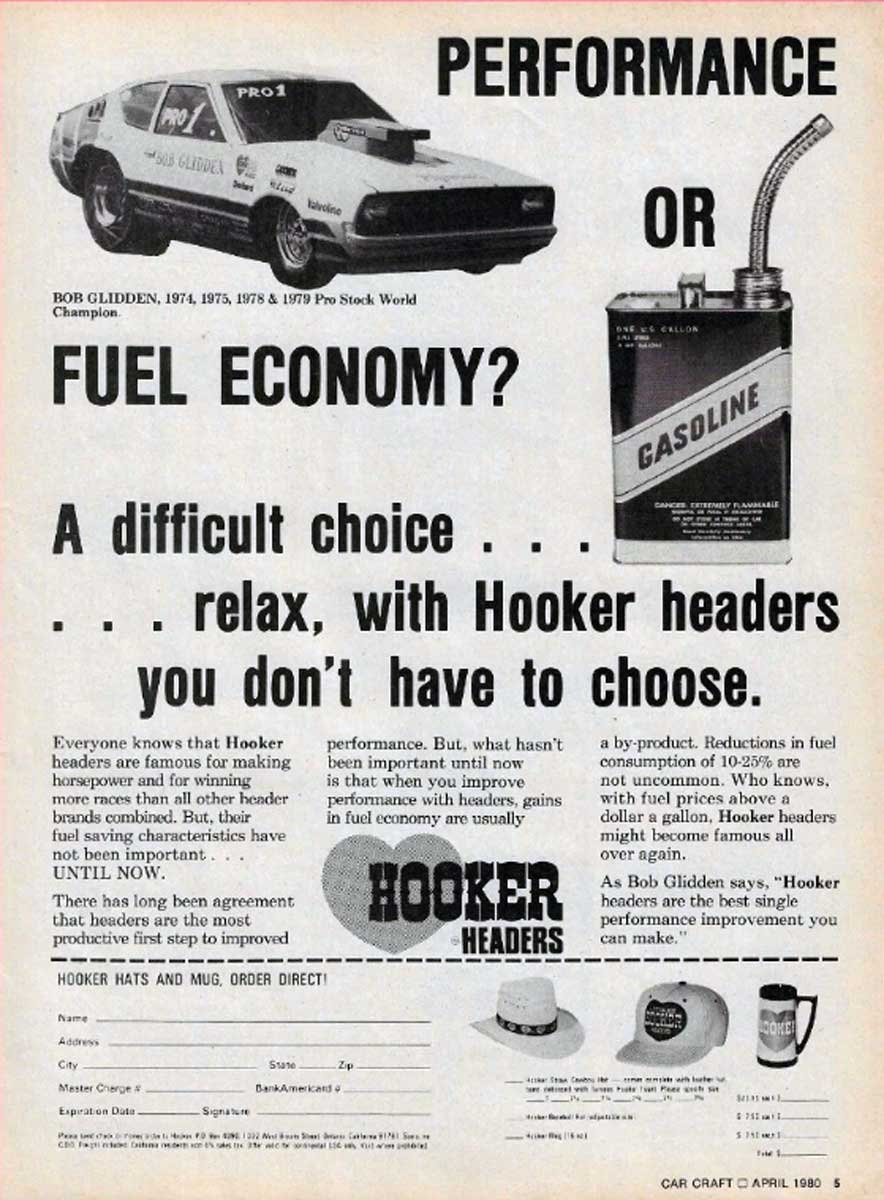
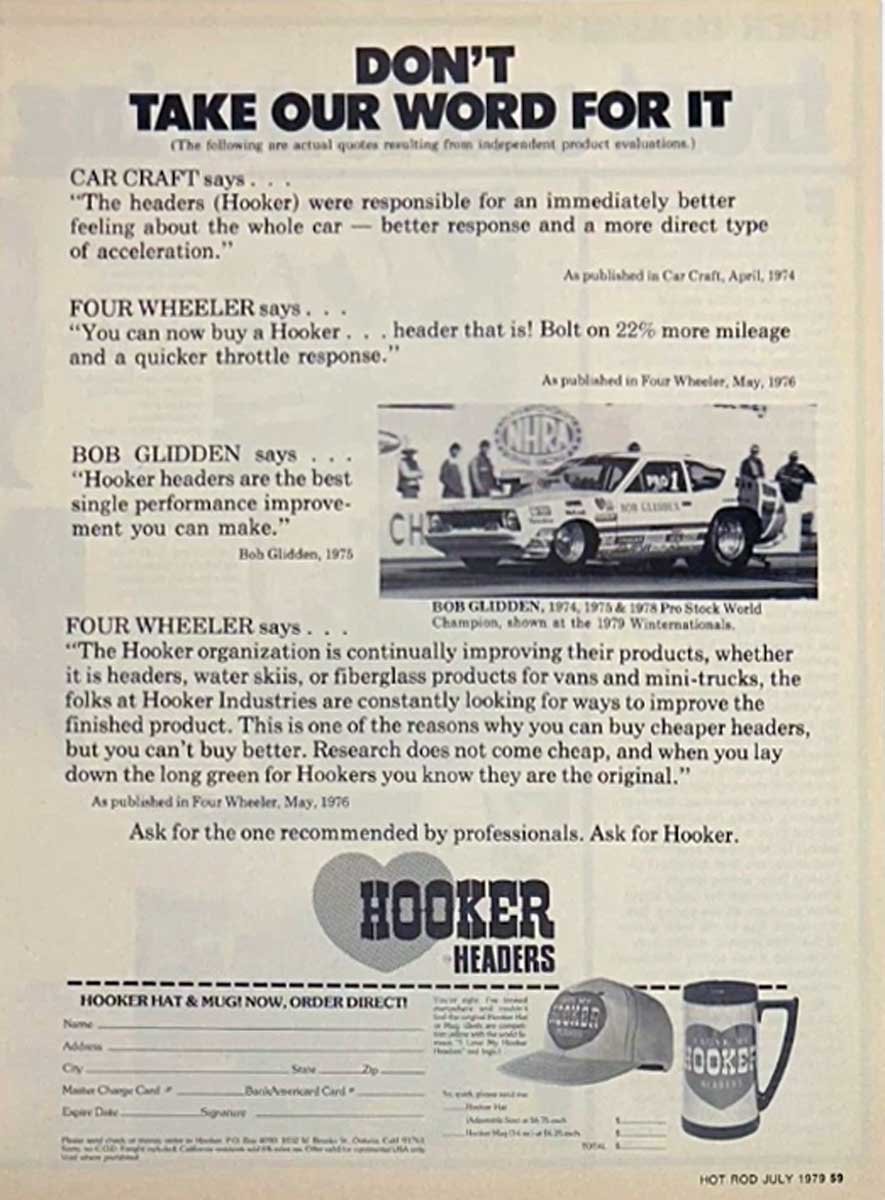
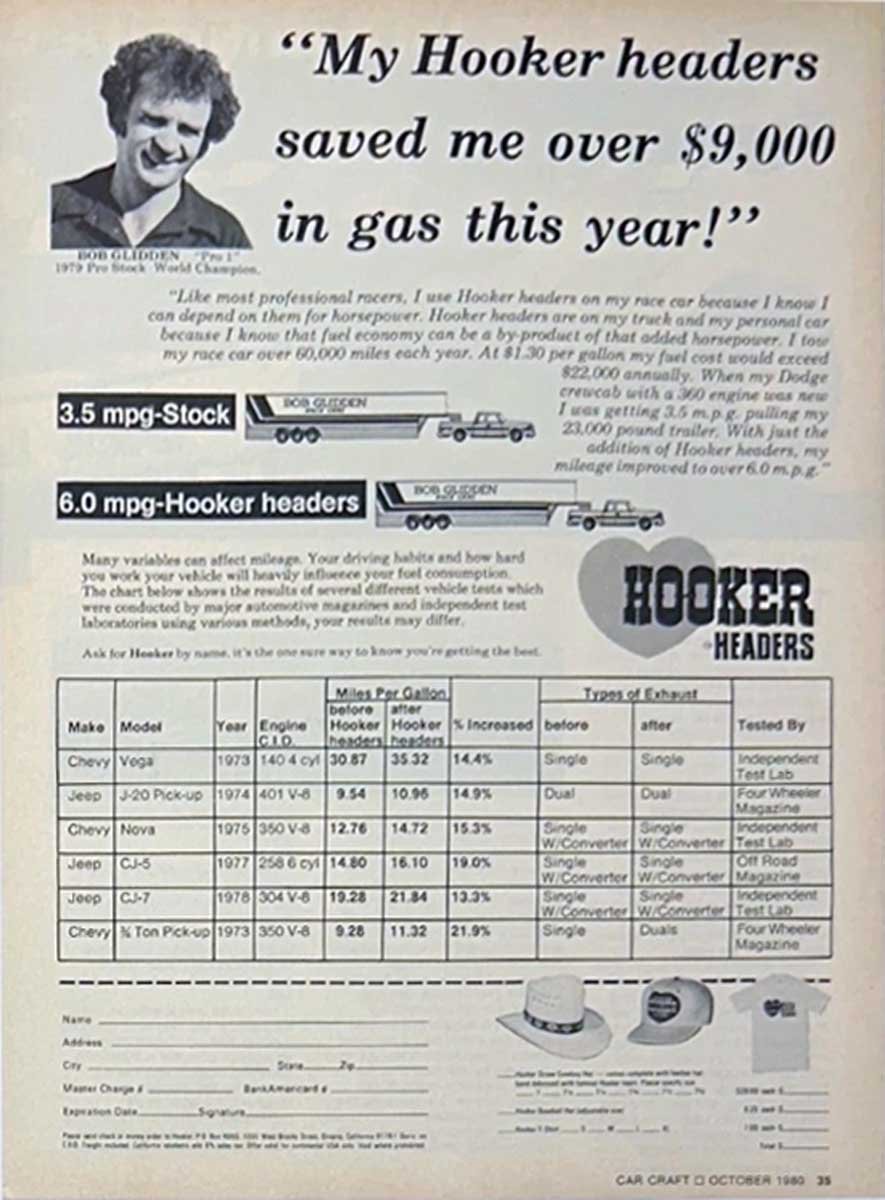
Above: Glidden had a longstanding association with Hooker Headers, and that association continued during the year he raced the Arrow. Hooker was proud to advertise its products and Glidden’s feats in all the magazines including Car Craft and Hot Rod magazines.
And Glidden did not need a long shake-down period. According to contemporary accounts, he tested the Arrow only about a week before the 1979 Winternationals. At the season opener, he promptly put it on the pole and won the event, tying the Pro Stock elapsed-time record in the process.
The season became spectacular:
• 7 NHRA national-event victories
• 1979 NHRA Pro Stock championship
• Wins at the Winternationals, Gatornationals, Cajun Nationals, Springnationals, Grandnationals, U.S. Nationals, and World Finals
• Only three national-event losses all year
• A remarkable 50-round total winning streak (combination of Fairmont and Arrow over ’78 and ’79) at the divisional and national level before a red-light ended it at the Mile-High Nationals. NHRA’s historical tally gives Glidden seven Plymouth victories; all seven in the Arrow, making 1979 Mopar’s last major Pro Stock championship season for over a decade.
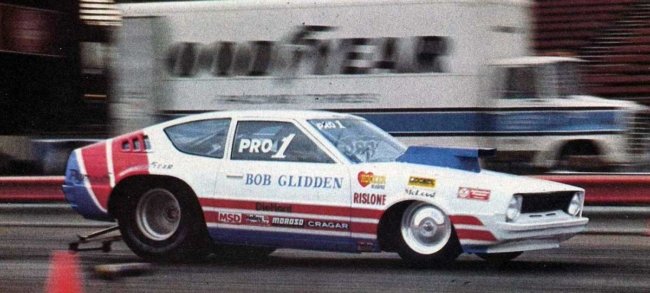
Above: Hooker Headers was a longtime technical and promotional partner of Glidden. Its relationship with Glidden carried over from his Ford Pro Stock program into the Plymouth Arrow era, with Hooker prominently represented on the Arrow and in Glidden’s advertising. (Photographer unknown)

Hooker Headers was already deeply intertwined with Glidden’s career. Hooker was not simply selling off-the-shelf headers to racers; during the Pro Stock boom of the 1970s, the company used leading race cars as development platforms. Hooker’s engineers concentrated on primary-tube dimensions, collector design, and exhaust-pressure-wave tuning, sometimes spending enormous amounts of development time to extract relatively small, but crucial, power gains.
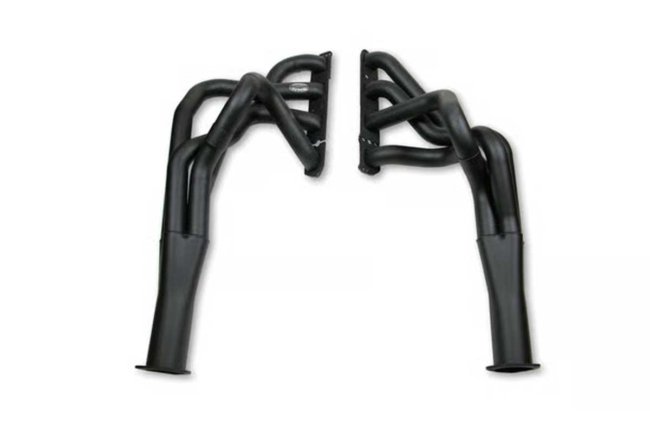
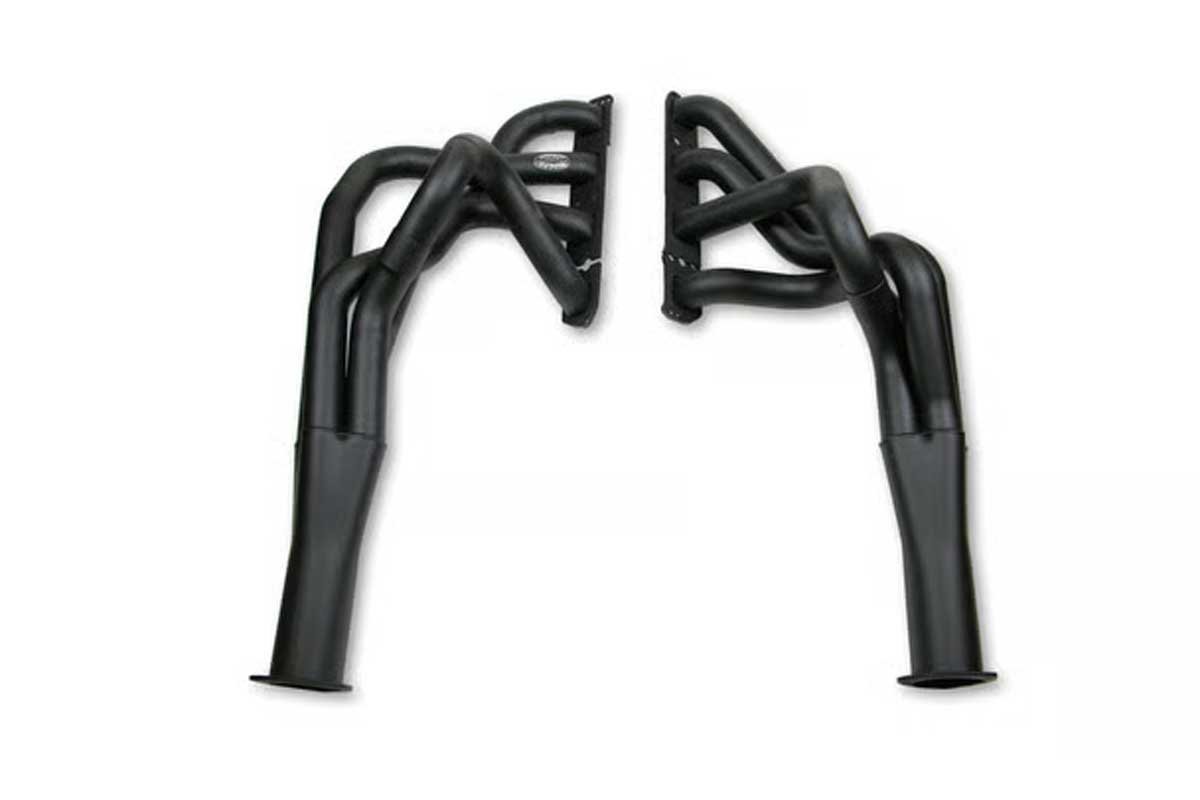
Above: Hooker still sells 426 Hemi headers that fit 1967–1971 Challenger/Charger/Coronet/Belvedere/GTX/Road Runner/Satellite/Sebring and wagons (B- and E-bodies), plus 1970–1971 Barracuda: 426 Hemi; 2.125-inch O.D. × 30-inch primary tubes; 3.5-inch O.D. collectors; 10-inch collector length; port shape matches cylinder-head port (Part No. 5210HKR).
Glidden’s earlier Ford Pinto is a particularly well-documented example. Mecum notes that the Pinto carried Hooker Headers, and, importantly, that Hooker’s engineers were given access to the car as a test mule for their Pro Stock header-development program.
That relationship helped make Glidden an ideal Hooker showcase driver. Hooker’s own history specifically lists Bob Glidden, Bill “Grumpy” Jenkins, and Ronnie Sox of Sox & Martin among the famous racers who appeared in its publicity and helped establish the brand’s Pro Stock credentials.
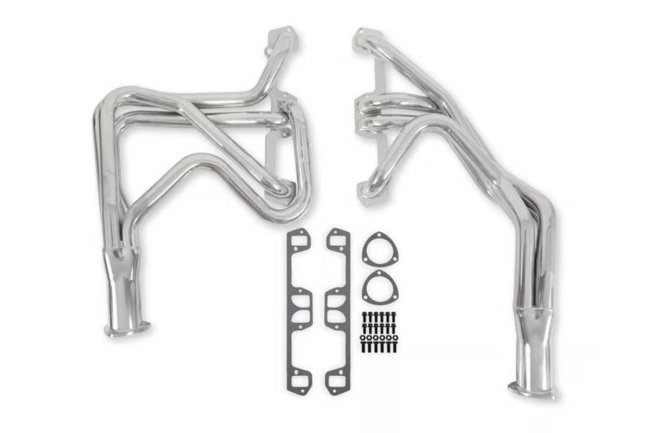
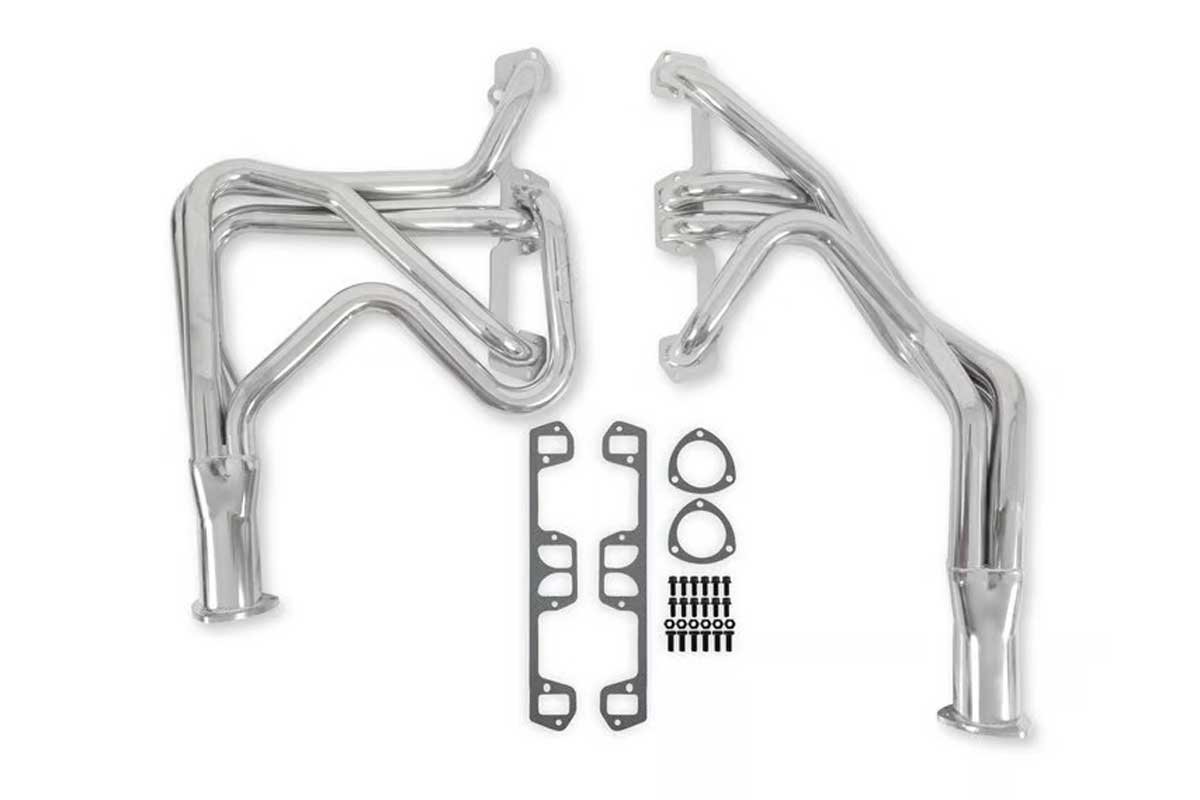
Above: The small-block Chryslers are popular, and Hooker has them covered in multiple body styles. The headers fit 1967-1974 Mopar A-, B-, E-, and F-Bodies: 273-360, tube size 1.625″ O.D. x 34″, collector size 3″ O.D., collector length 8″, port shape: matches port on head (Part No. 5901HKR).
The Arrow was a fascinating demonstration of how much performance could be extracted from a relatively small engine.
The W-2 head, high-rpm small-block, and carefully developed exhaust system were all about moving air efficiently. At Pro Stock’s level, a header was not just intertwined pipes; it was part of the engine’s tuning. Primary length, diameter, and collector dimensions affected the pressure waves leaving the cylinders and, therefore, the engine’s ability to fill them on the next cycle. That is precisely the area Hooker had been researching.
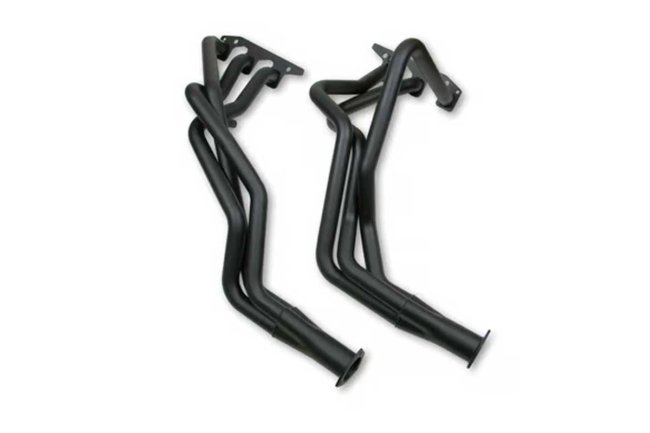
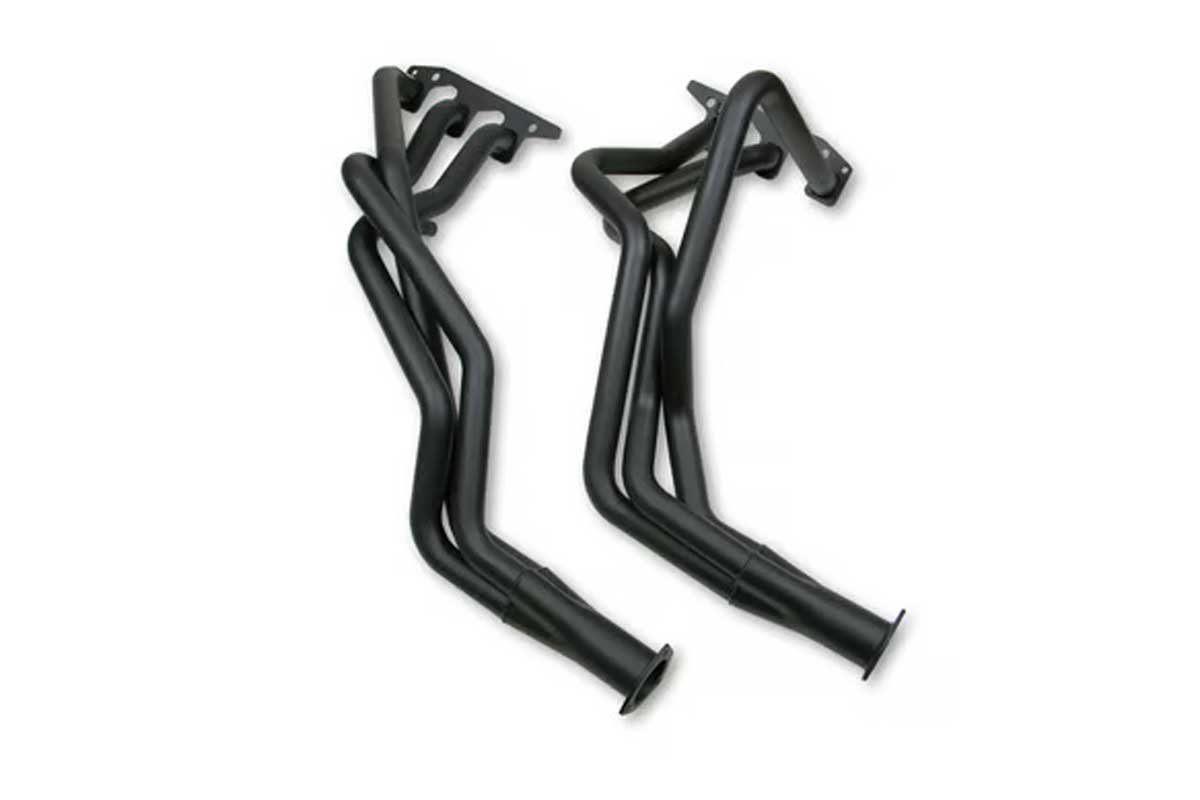
Above: Got a 1962-1972 Challenger/Charger/Coronet/Belvedere/ Satellite/Sebring/Wagons, or a 1970-1974 Barracuda with a 198-225 6-cylinder? Hooker has pipes with tube dimensions of 1.625″ O.D. x 40″, collector size 2.5″ O.D., collector length 8″, port shape: matches port on head (Part No. 5602HKR).
Glidden was famous for exploiting details like that. His success was not simply the result of having a powerful engine or a good sponsor; he was effectively an engine-development engineer who happened to drive the car, continually refining the combination. The Motorsports Hall of Fame describes him as having essentially developed into the equivalent of a Ph.D. in racing engine powerplants.
That is why the 1979 Arrow is such an important chapter in the Hooker story too. It demonstrated the philosophy that had made Hooker so prominent in Pro Stock: incremental gains in airflow and exhaust tuning could become enormous advantages when integrated into a complete race-engine package.
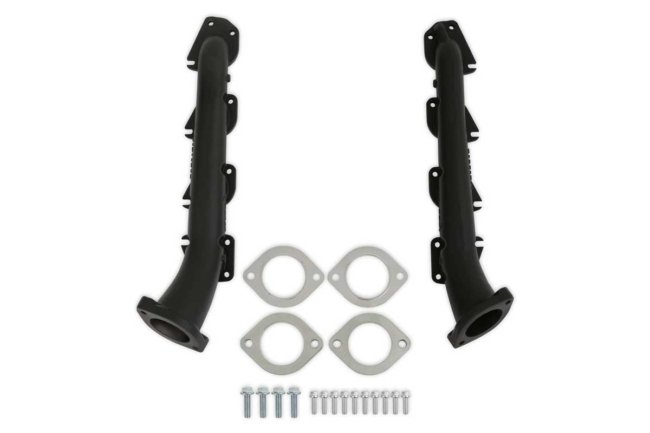
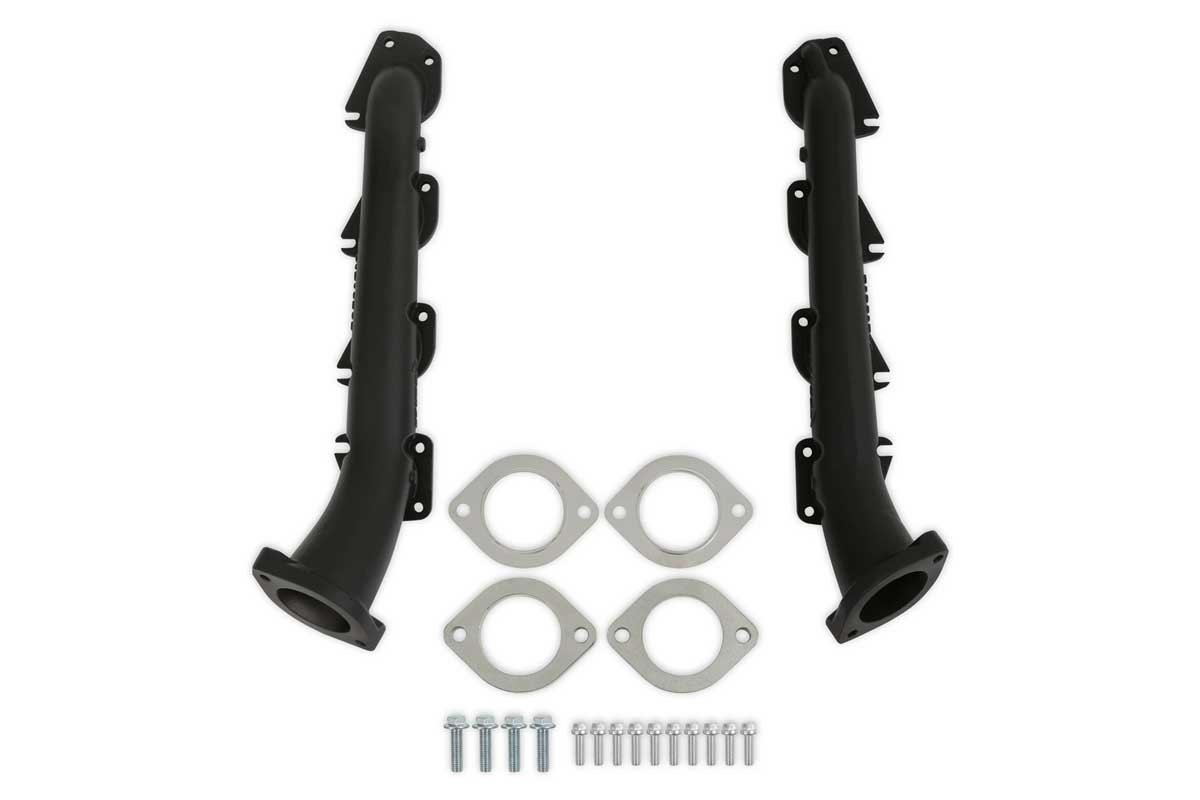
Above: GEN III Hemi swaps are extremely popular, and Hooker Headers is fully involved. Technically, these are Hooker Blackheart exhaust manifolds. Hooker calls them a low-profile design (Part No. BHS584).
And the irony is terrific: Bob Glidden proved he was not merely a Ford genius. He jumped into an unfamiliar Plymouth, with an unfamiliar Chrysler engine, and immediately won another championship. Then, after 1979, he went right back to Ford and won the 1980 championship with another Fairmont.
So, when you are looking at a period photo from Hot Rod magazine from July 1979 of the Glidden Arrow with Hooker branding, you are looking at more than advertising. You are looking at the intersection of three major forces in late-’70s Pro Stock: Glidden’s obsessive engineering, Chrysler’s W-2 small-block program, and Hooker’s race-oriented exhaust development. To find exhaust components for your Mopar, check out Hooker Headers, part of the Holley Performance Brands umbrella.