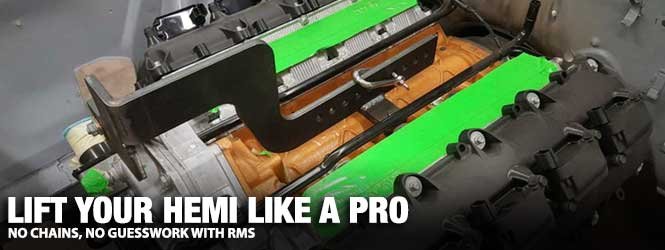
If you have ever tried to remove a Gen III Hemi using chains and guesswork, you already know how quickly things can go sideways, literally. The modern Hemi is not as well-balanced as an old-school big block, and with accessories, front cover differences, and transmission still attached, getting a stable lift point matters more than most people expect.
That is where an RMS Advanced Suspension Systems’ purpose-built lifting bracket earns its keep. And RMS has it on sale for $100, 71% off normal list price.
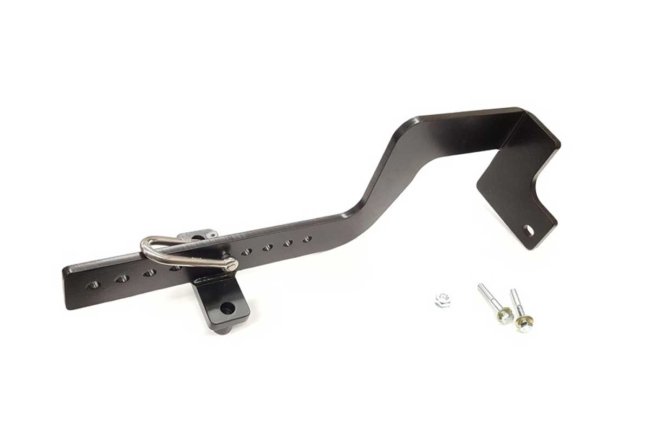
Above: The RMS lifting bracket features heavy-duty steel construction with precision-formed bends and professionally finished welds for exceptional strength and durability. Designed with properly rated hardware and an adjustable clevis mounting system, it provides balanced, secure lifting for a wide range of Gen III Hemi applications. Built for confidence in the shop or garage, the RMS bracket is a trusted tool for professional technicians and serious enthusiasts alike.
The bracket is designed specifically for Gen III Hemi engines (5.7L, 6.1L, 6.4L) equipped with the car/Grand Cherokee-style front cover, which is a key distinction. That front cover design supplies the correct mounting geometry for the bracket to sit securely and spread the load properly during lifting.
Trucks and some Jeep variants use a different front cover configuration, which changes bolt locations and angles, and are not compatible with the lift bracket. Likewise, high-performance variants like the Dodge Challenger SRT Hellcat use distinctive accessory drives and supercharger packaging that interfere with this setup.
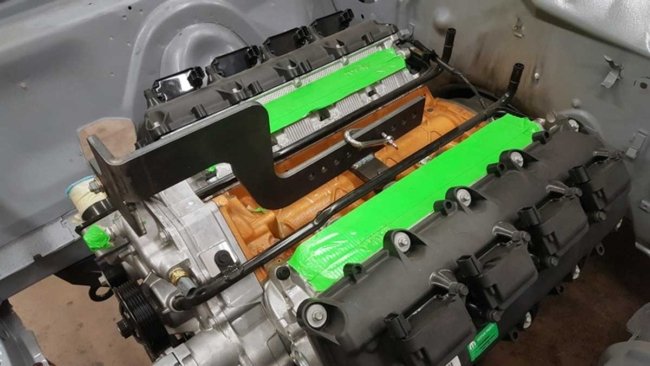
Above: The RMS lifting bracket is compatible with many Gen III Hemi engines. For proper installation and secure lifting points, the intake manifold must be removed prior to mounting the bracket. Removing the manifold allows the bracket to attach directly and securely to the engine, providing the strength and stability needed for safe engine removal and installation.
One of the standout features is the extended slotted holes, which allow you to fine-tune the engine’s balance point. Proper balance is critical when you are dealing with different configurations, long block vs. fully dressed, or an engine paired with a transmission.
Instead of fighting a nose-heavy or tail-heavy lift, you can shift the bracket position slightly to get the engine to hang level. That translates directly into safer, more regulated removal and installation, especially when working independently or in packed engine bays.
The inclusion of a clevis and correct-grade hardware is not just a convenience; it is a safety feature. Too often, improvised lifting setups rely on mismatched bolts or hardware-store substitutes that are not rated for the load. This bracket eliminates that uncertainty by giving you properly sized and rated fasteners designed to handle the weight and stress of a Hemi during lifting.
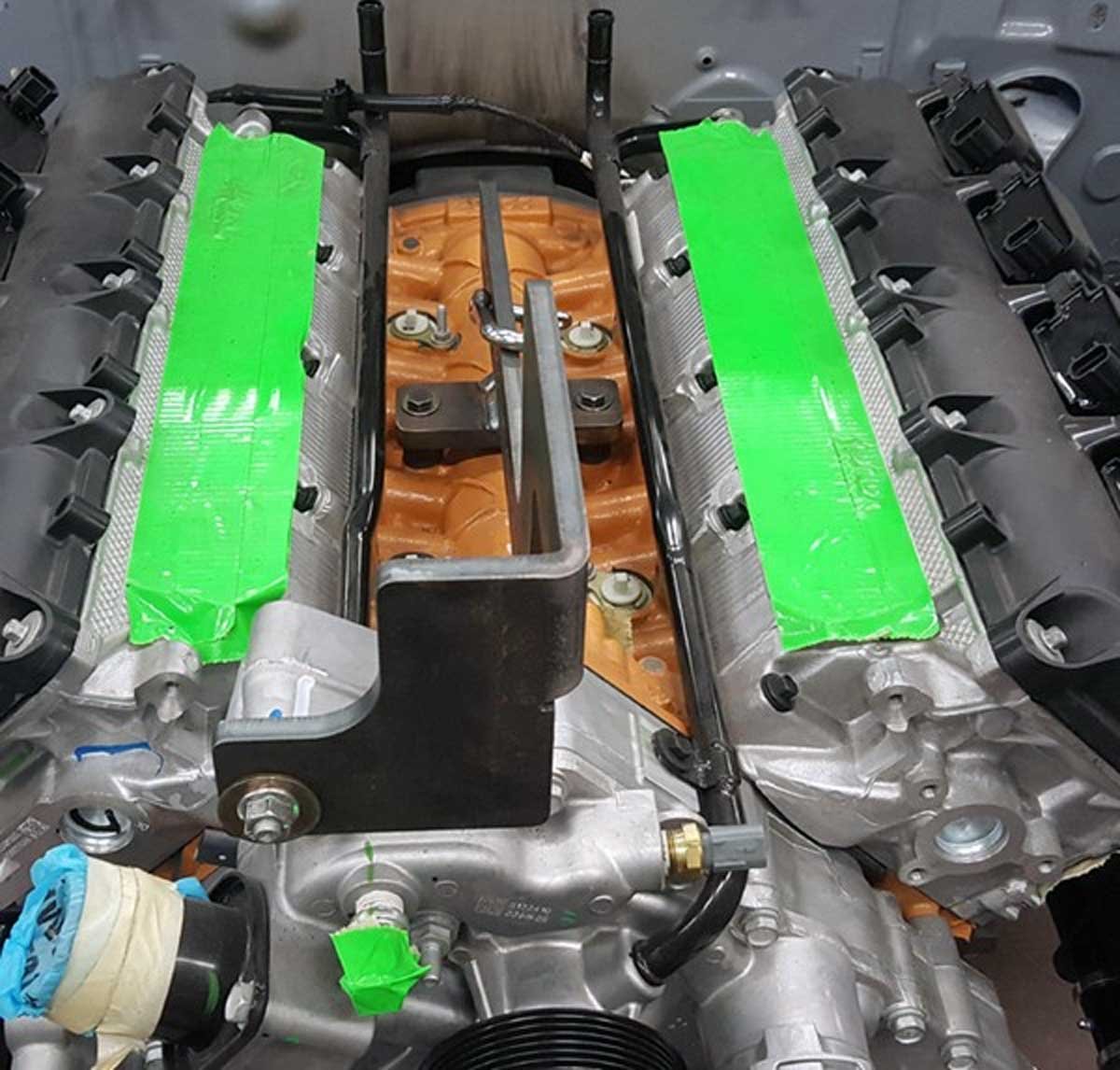
Above: From this angle, it is easier to see how the RMS bracket mounts directly to the engine block for maximum strength and stability during lifting operations. Because Gen III Hemi engines were produced with several different front cover configurations, including supercharged applications, the bracket is not compatible with every Hemi variant.
There is one important requirement: the intake manifold must be removed before installation. That is because the bracket mounts to precise points on the engine where the intake would otherwise be in the way. While that adds a step, it ensures a solid, direct connection to the engine structure rather than relying on accessory mounting points that were not designed for lifting loads.
In practical terms, this tool is about control and repeatability. Whether you are pulling a 5.7L out of a daily driver, nestling a 6.4L into a project car, or doing drivetrain work, having a stable, balanced lift point decreases risk to the engine, the vehicle, and the technician.
For someone working with multiple Hemi platforms, the RMS lifting bracket is the difference between “making it work” and doing it the right way, every time.