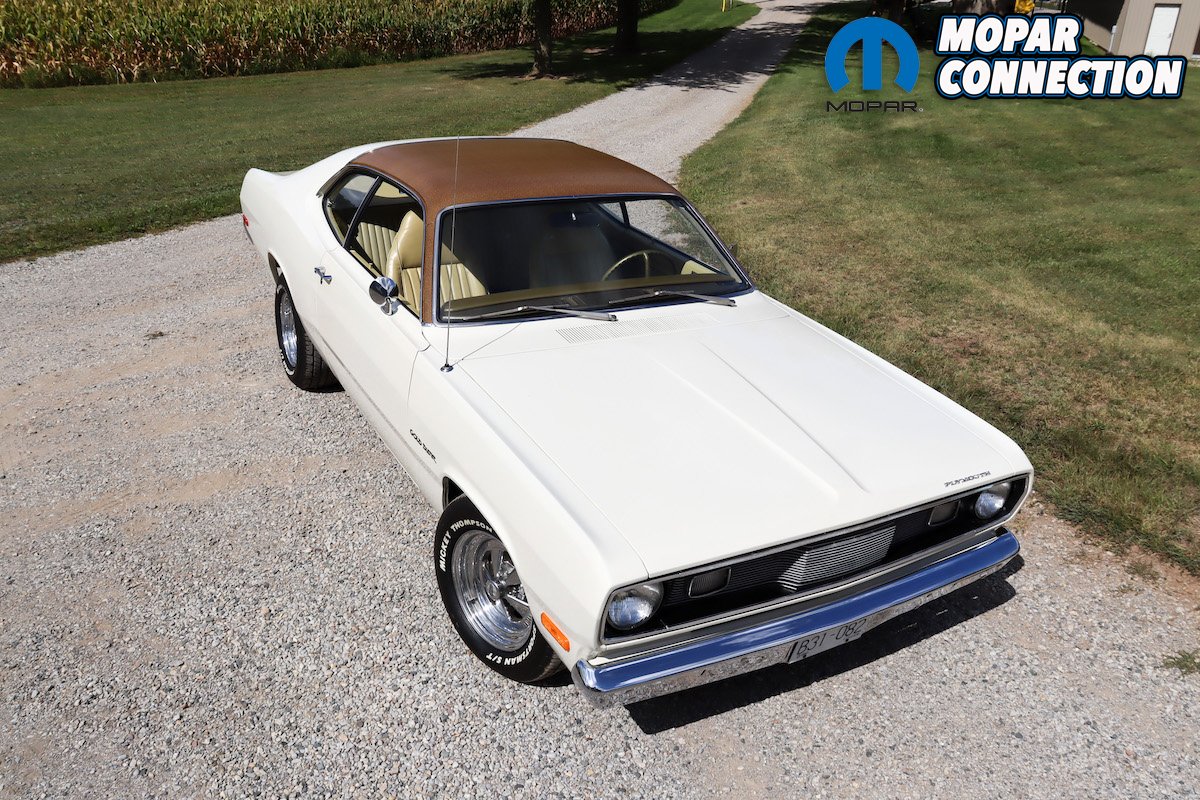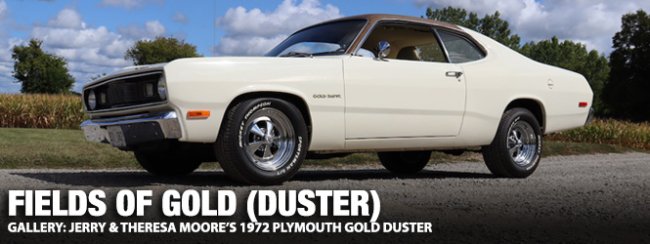
Plymouth rolled out the Duster in 1970 as a sporty, fastback‑styled addition to its A‑body lineup. Designer Neil Walling is credited with shaping its distinctive look, giving the car a sloped rear roofline, broad rear fenders, curved side glass, and a compact, purposeful roof profile. This body style was used from 1970 until 1976.
Early in development, Plymouth hoped to tie the new car to the Warner Bros. Tasmanian Devil, complete with the character’s famous spinning tornado graphic. When the licensing deal fell through, the design team didn’t scrap the idea; they reinvented it. Plymouth’s stylists created their own swirling dust‑cloud emblem, a playful, energetic icon that became the Duster’s signature badge and one of the most recognizable graphics of the era.
The Duster name itself carried the same swagger. It tapped into dragstrip bravado: if you lost a race, you were left in the dust. Plymouth leaned into that attitude, framing the Duster as the car that would leave competitors “dusted.” Short, punchy, and visually evocative, the name perfectly matched the car’s mission—lightweight, lively, and aimed squarely at younger drivers who wanted affordable performance with personality.
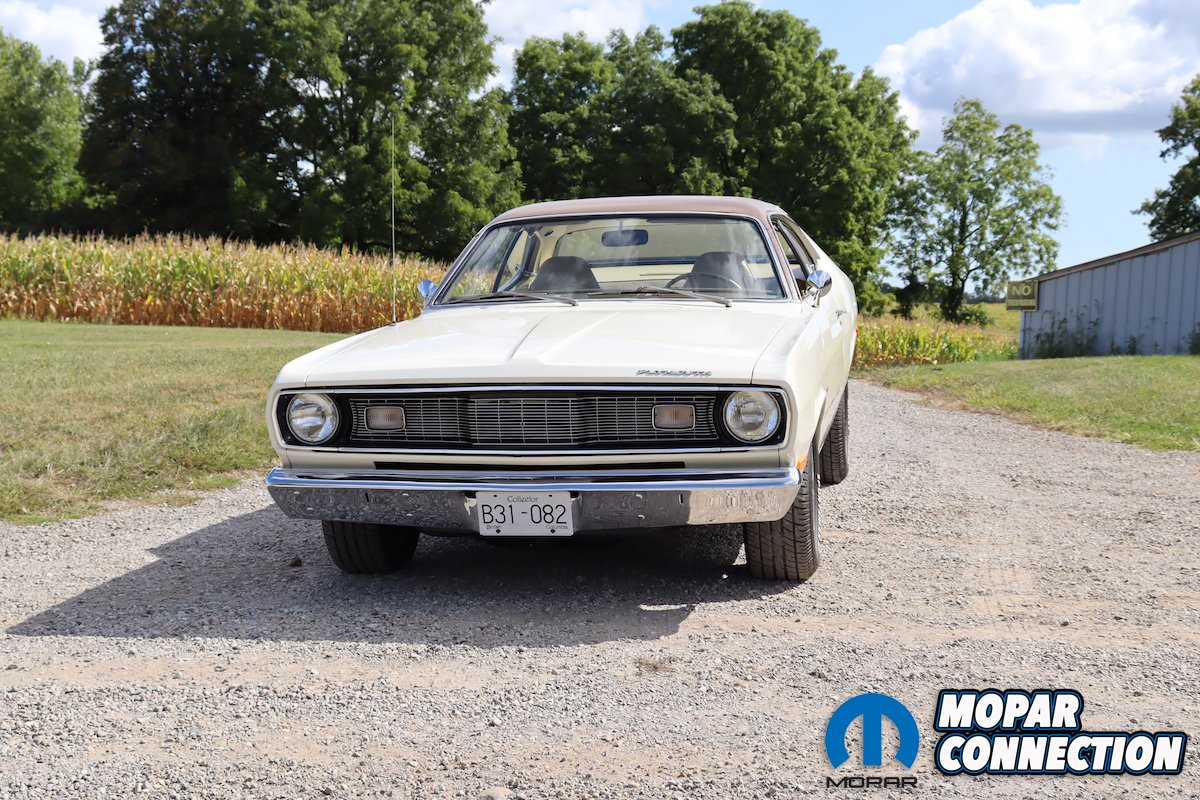
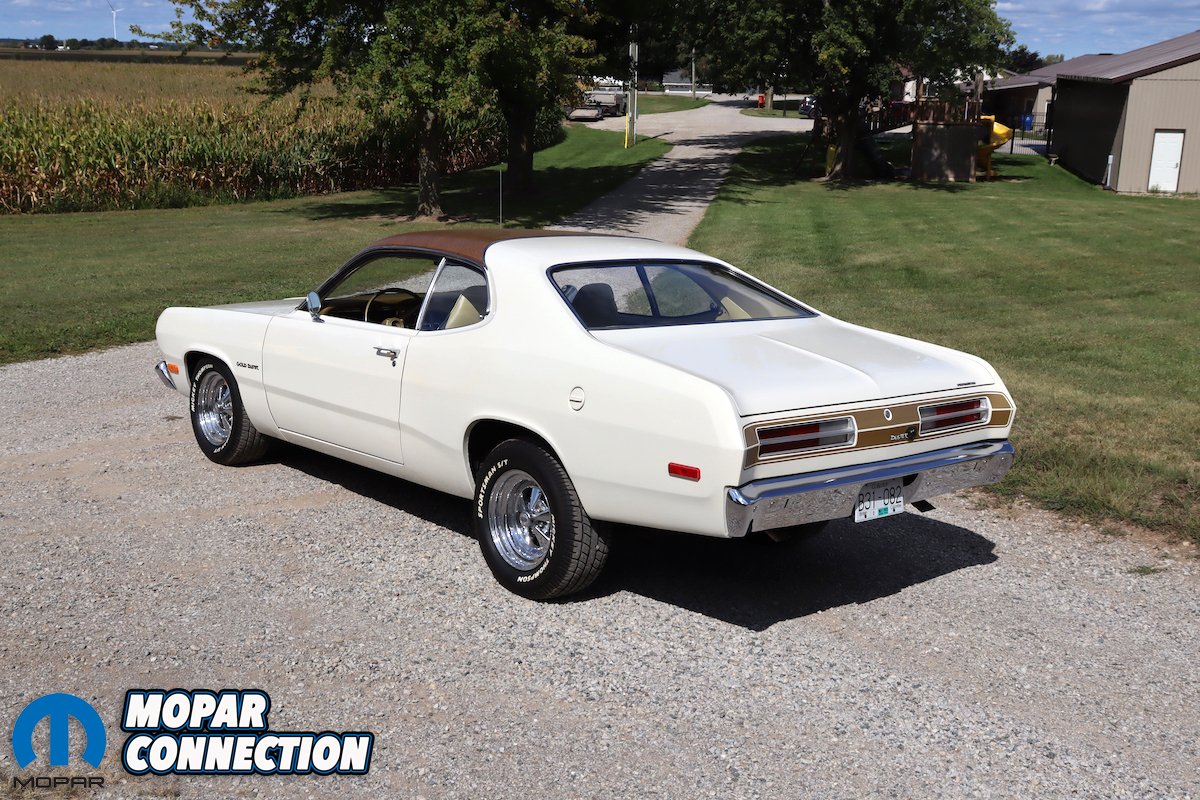
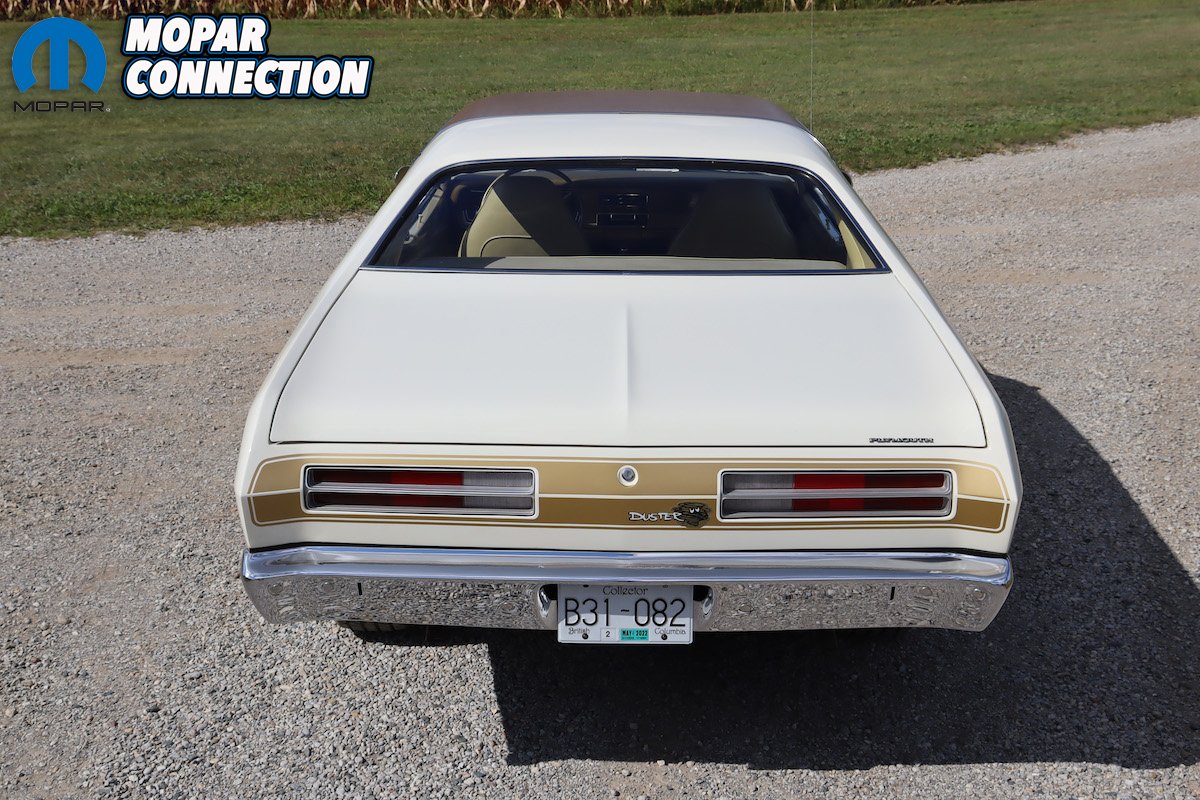
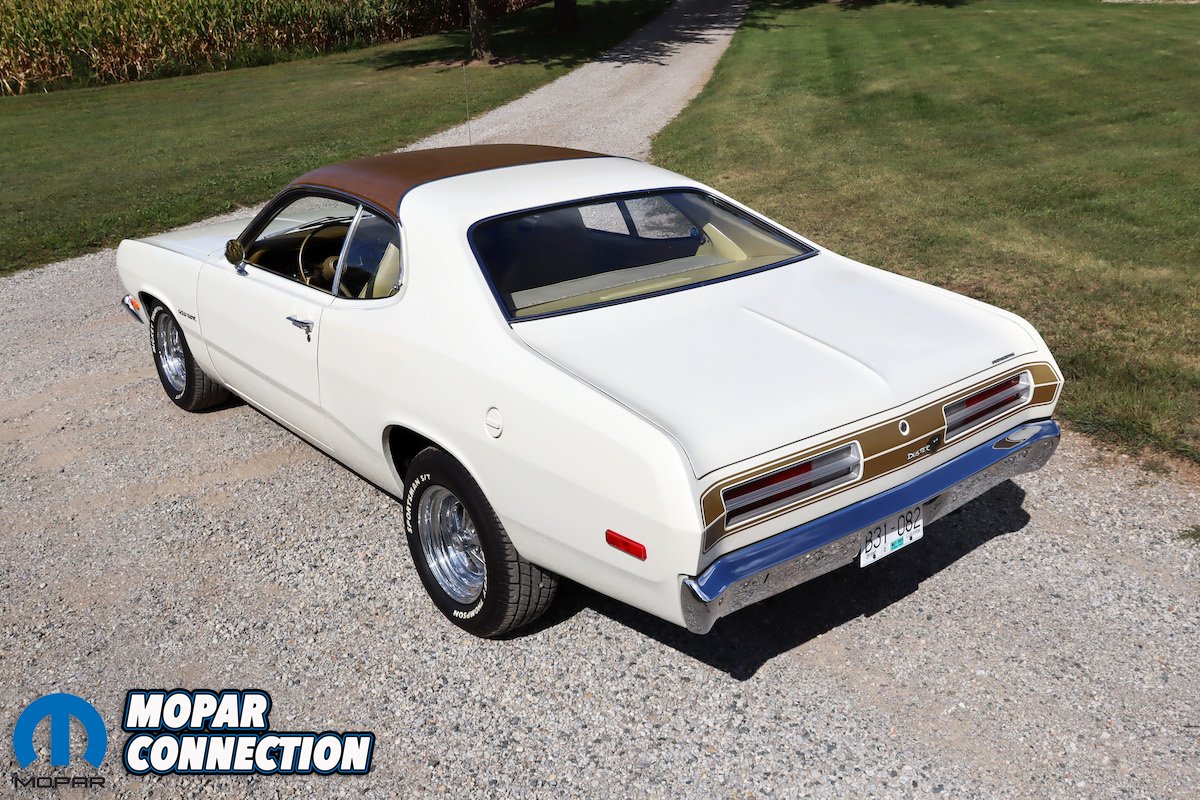
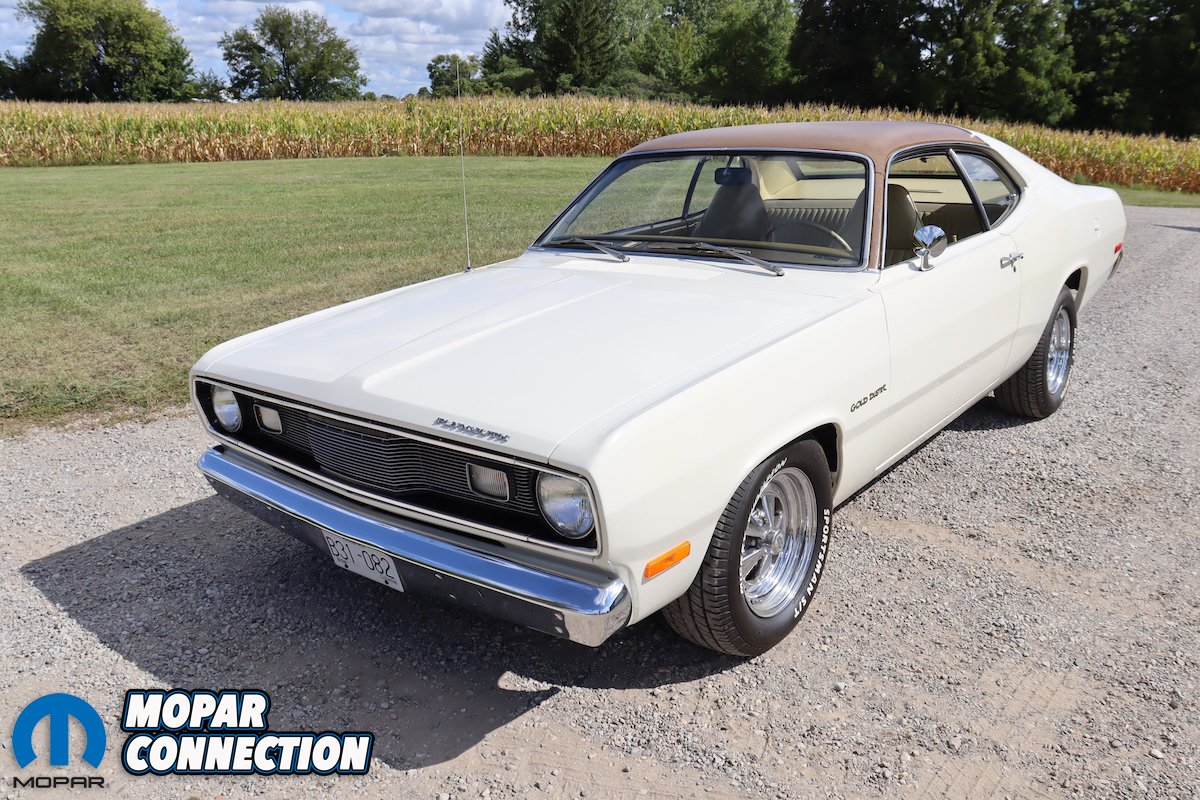
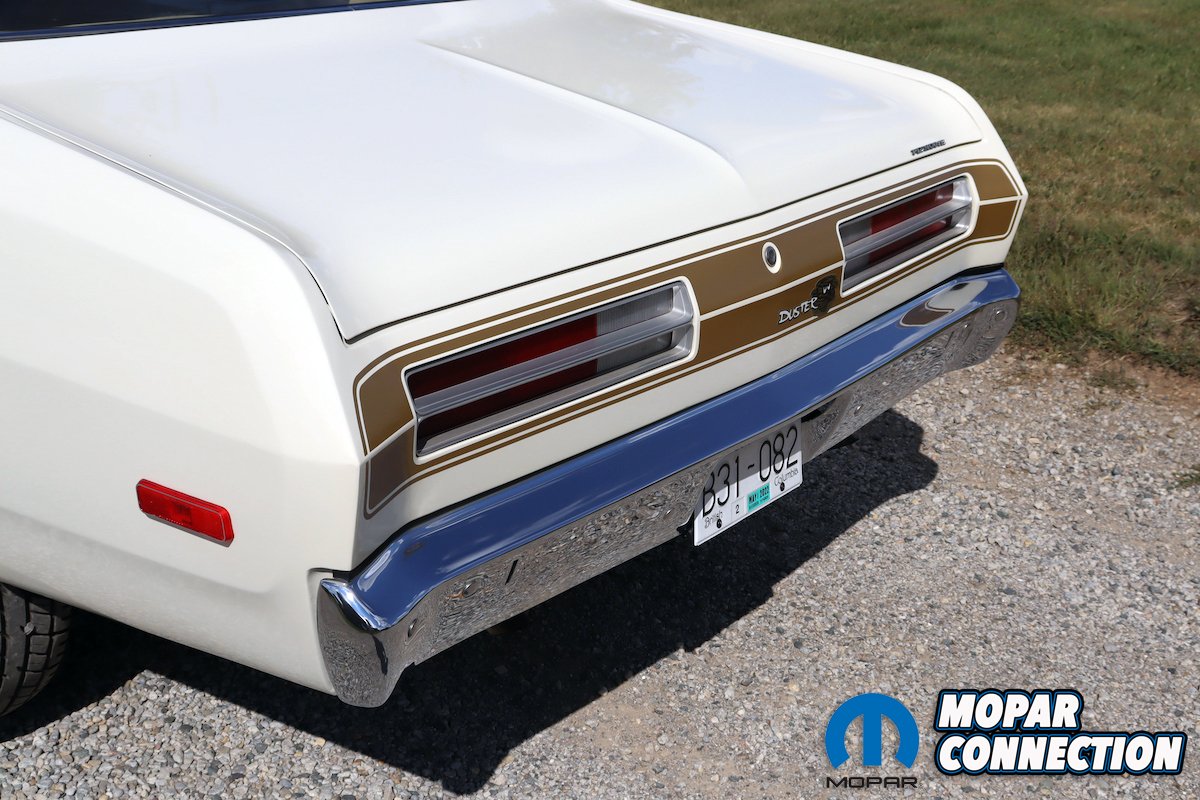
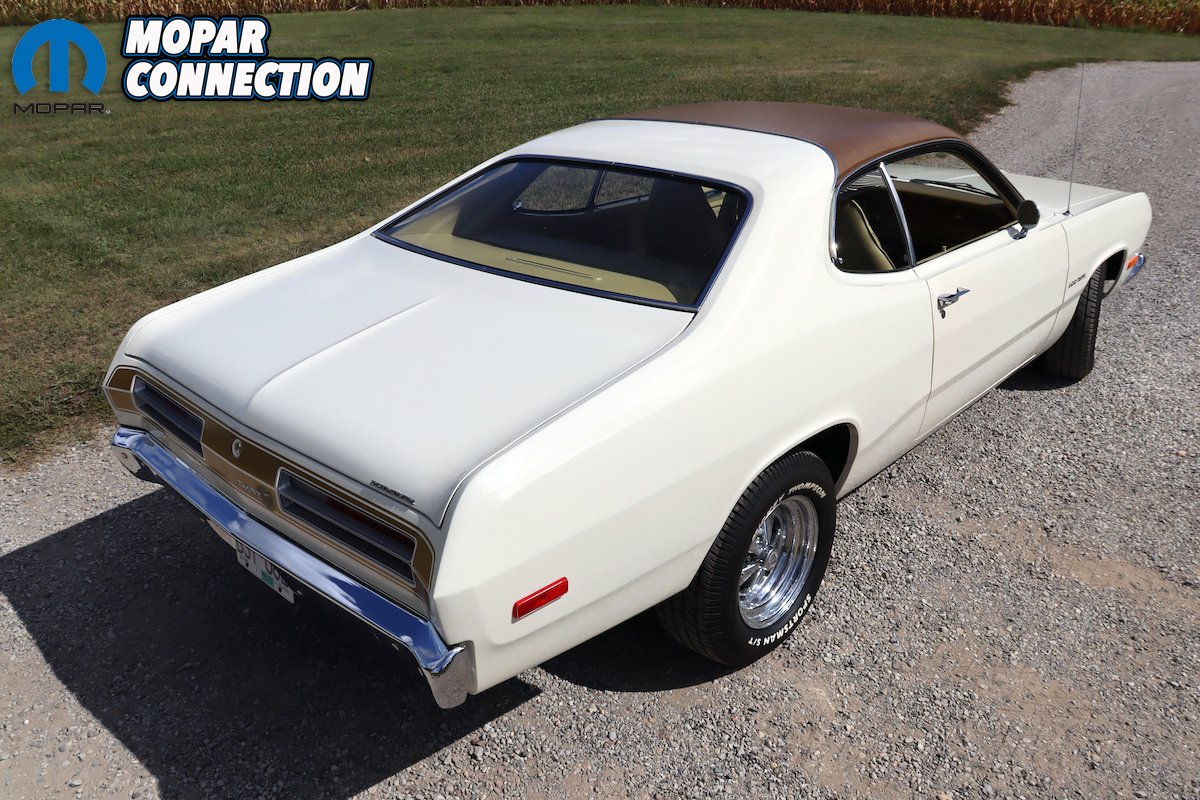
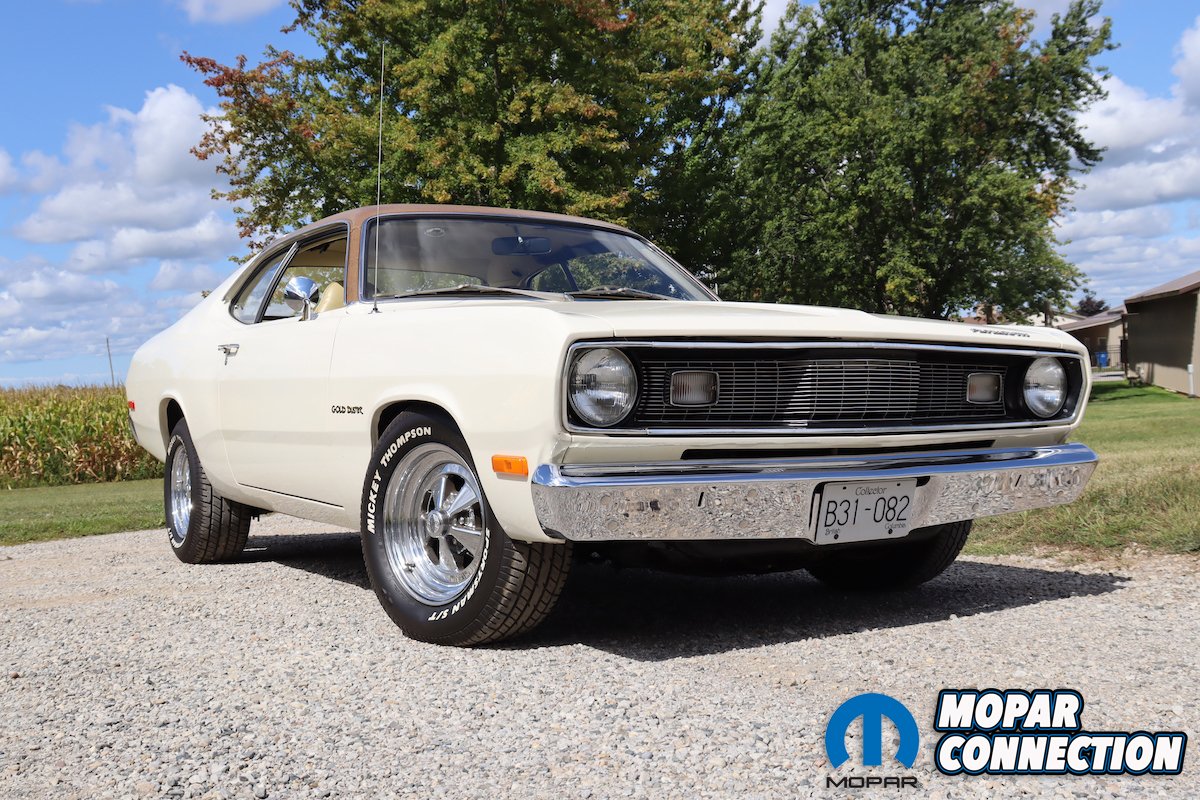
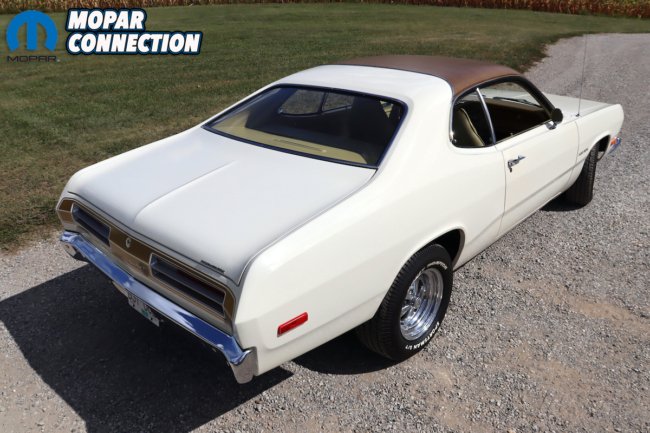
In 1972, the Plymouth Duster received a series of subtle but noticeable updates. The grille was redesigned, the taillights were revised, and the sidemarker arrangement also changed, which affects the rear quarter panel.
For 1972, Plymouth’s lineup included the standard Duster model, with the addition of the standout appearance option, the Twister package. The Twister added bold side stripes and special lettering, along with a unique hood paint treatment. The package also bundled several brightwork and convenience touches, including dual racing mirrors, drip rail moldings, wheel lip moldings, bodyside tape stripes, and a lower deck tape stripe.
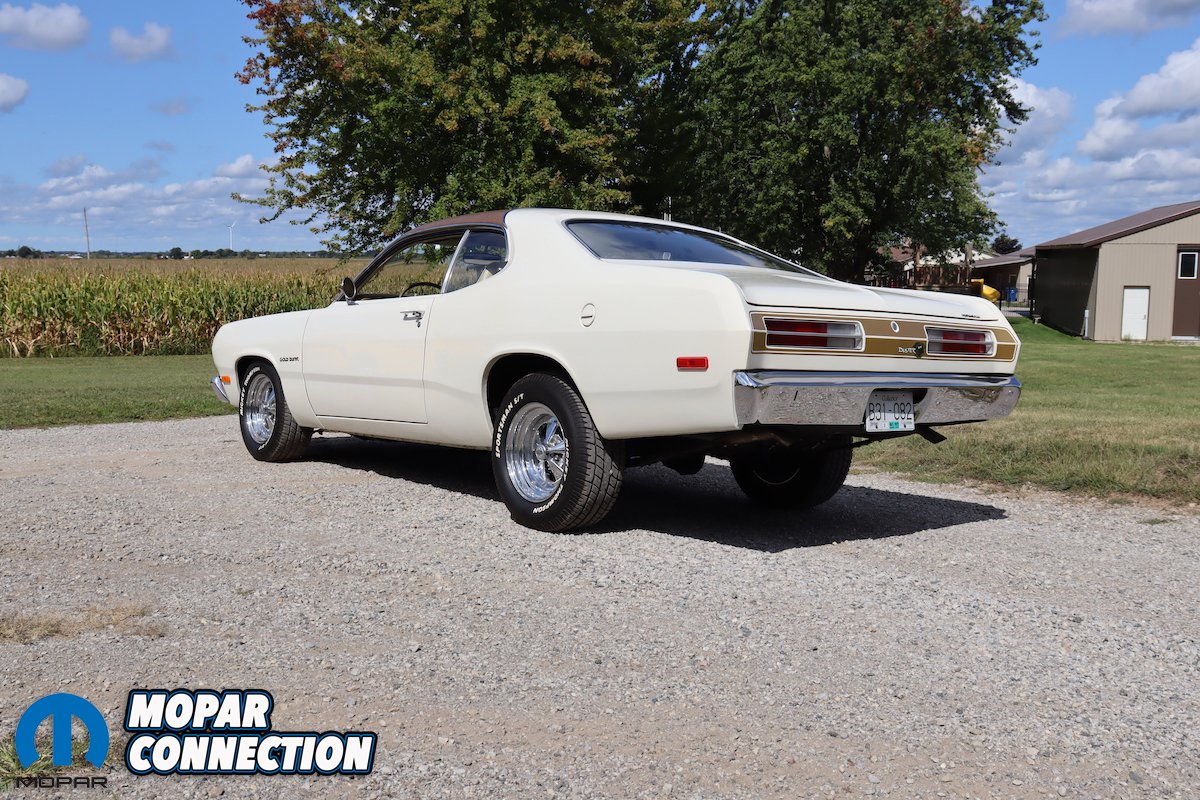
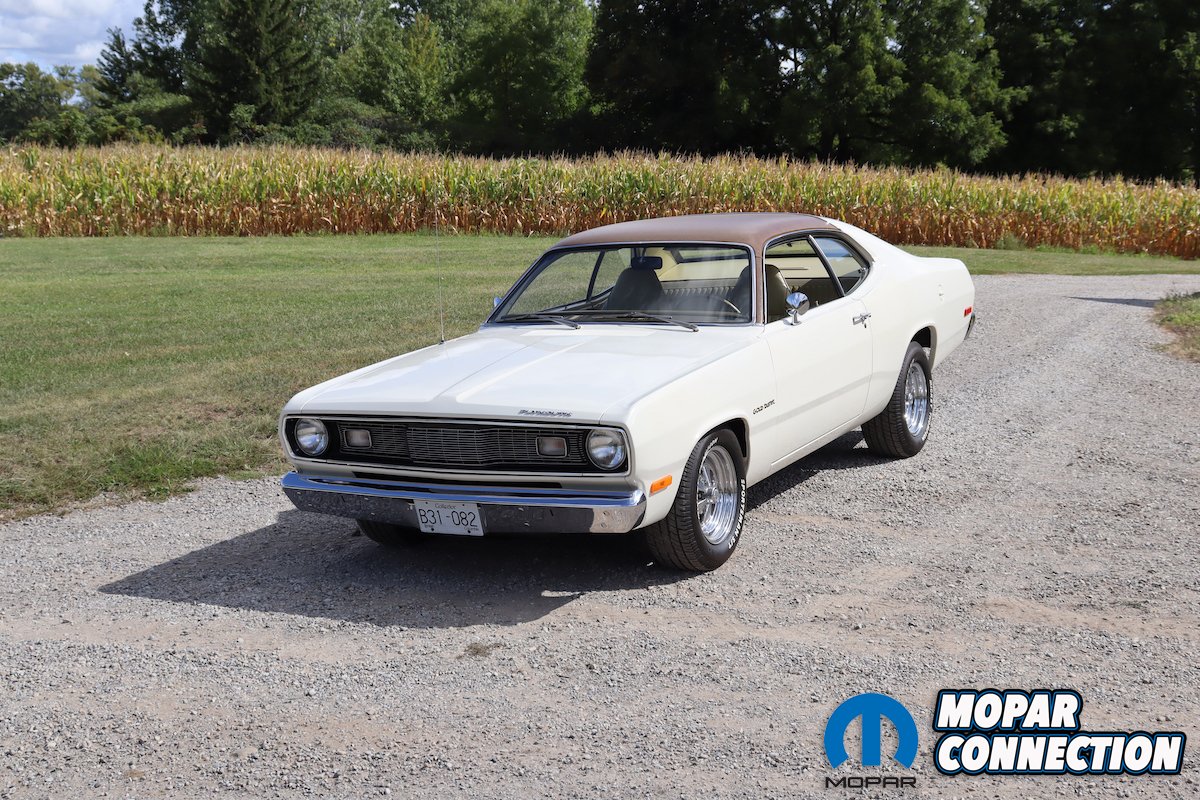
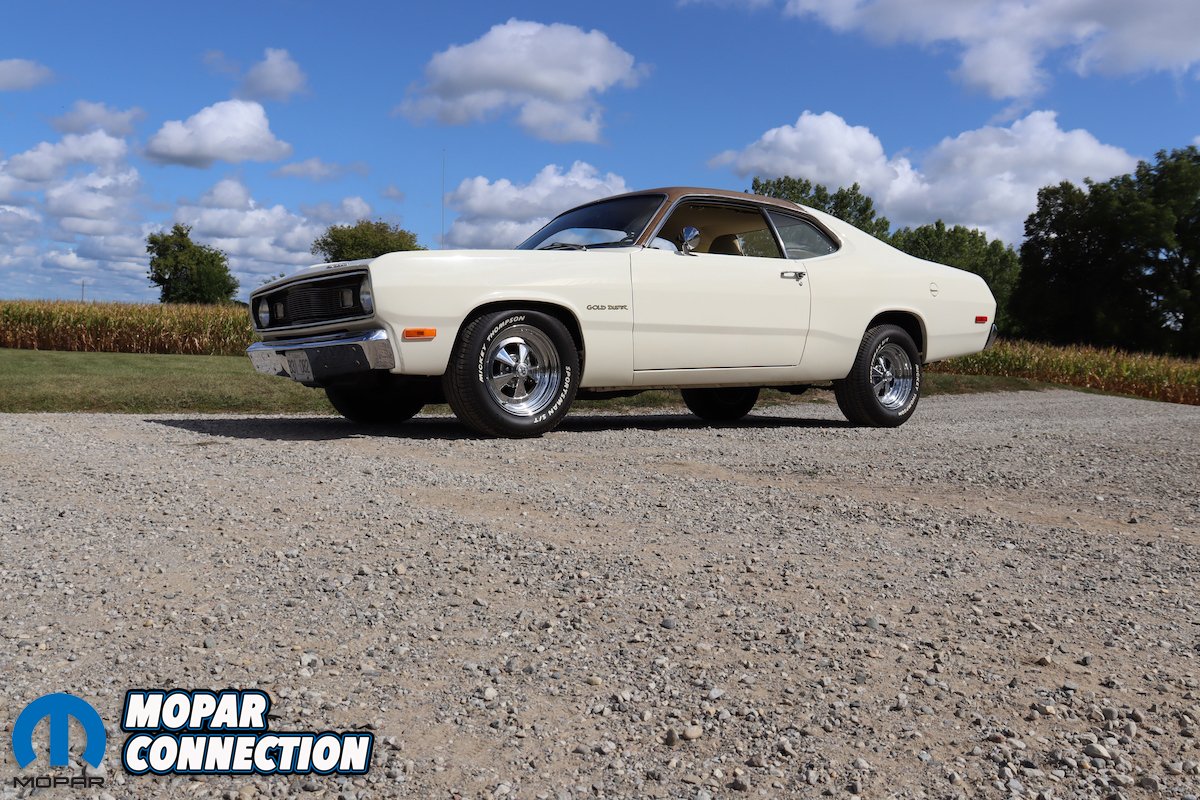
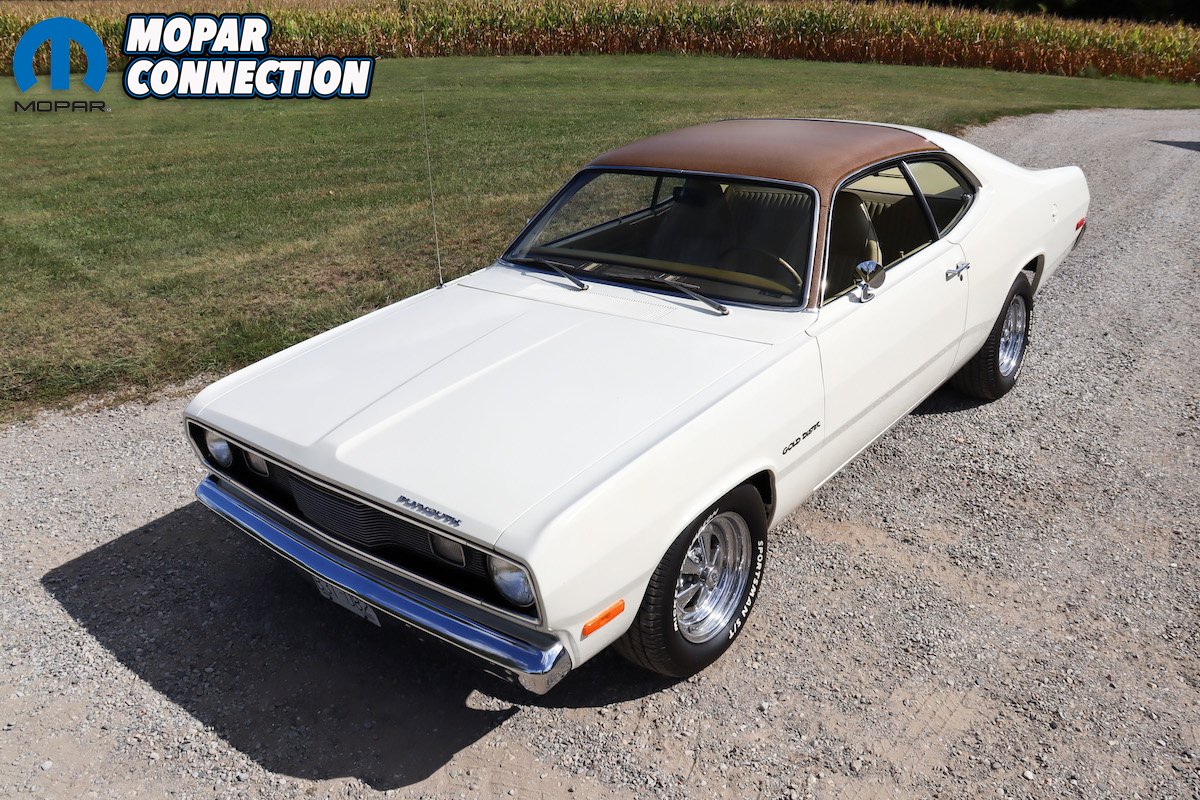
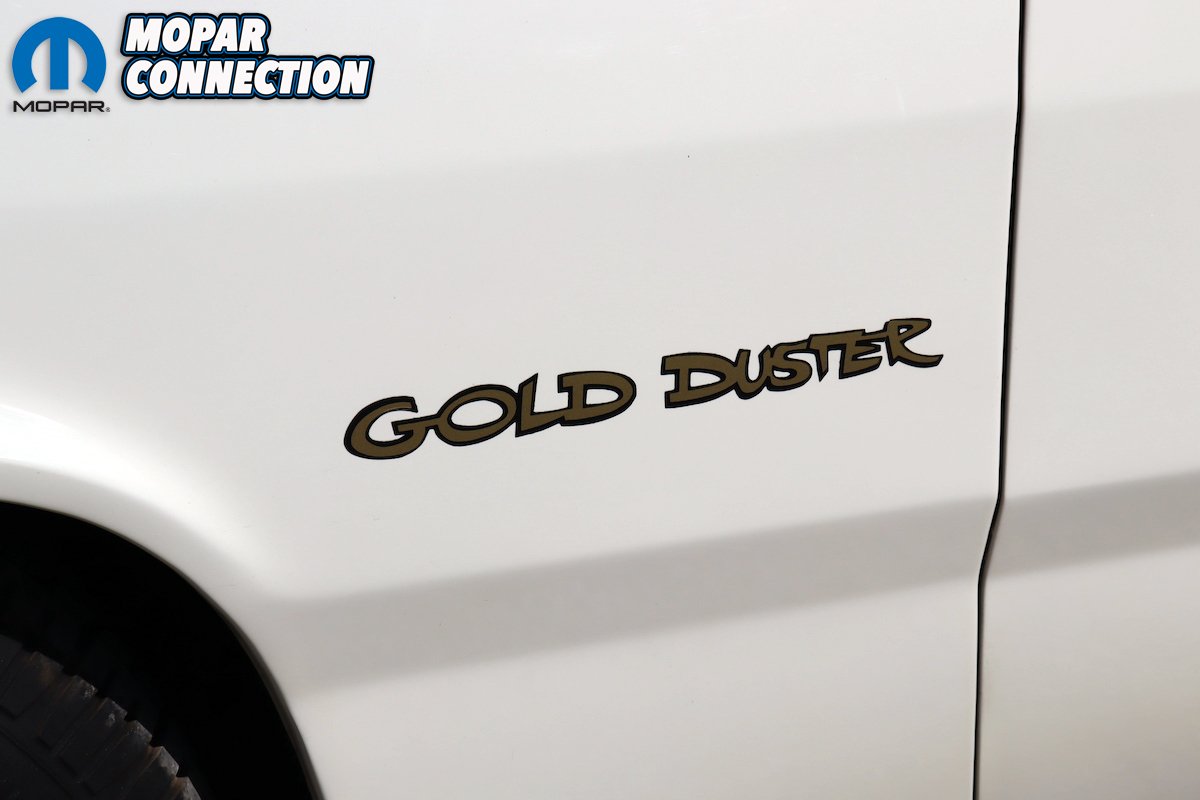
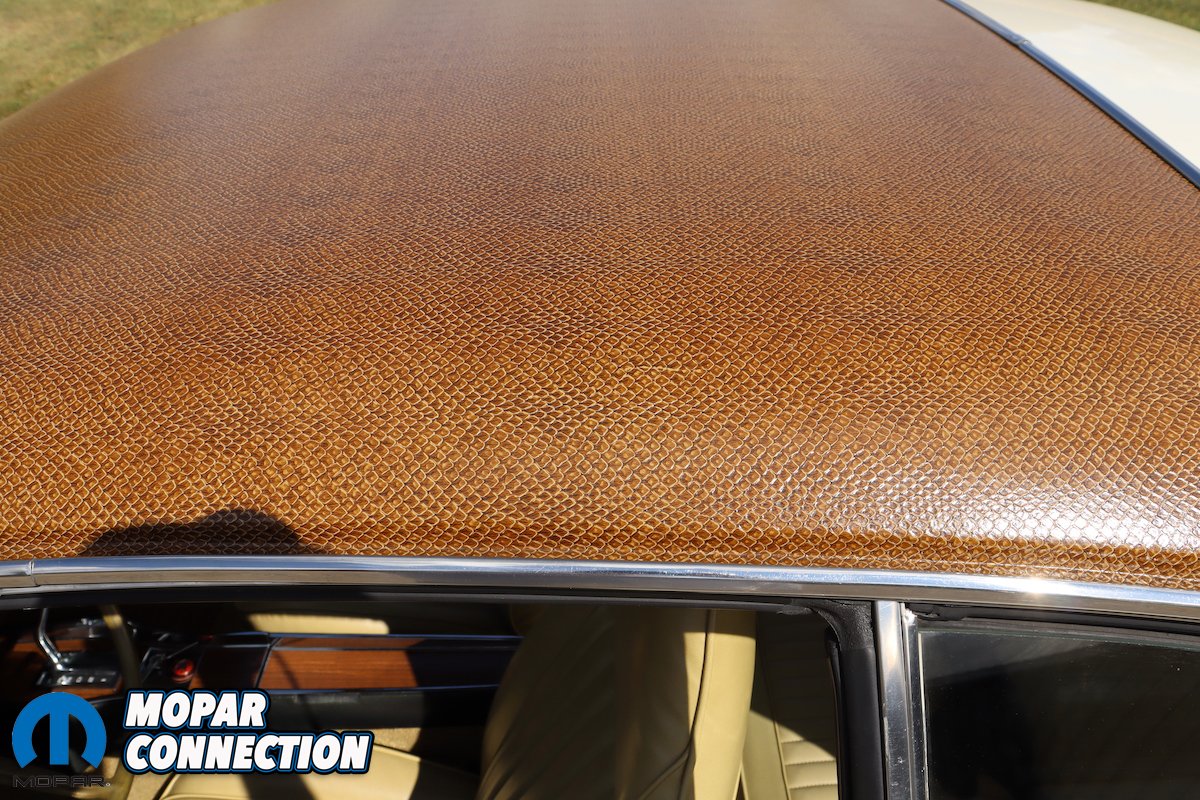
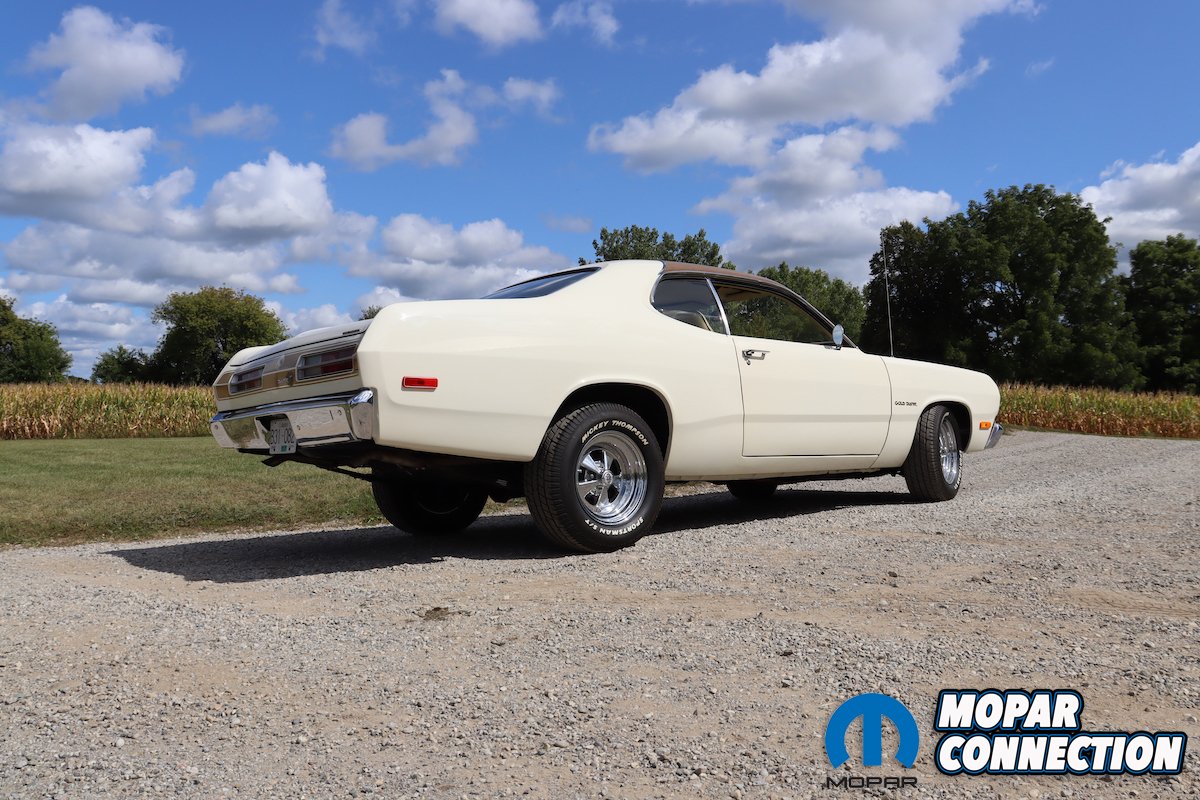
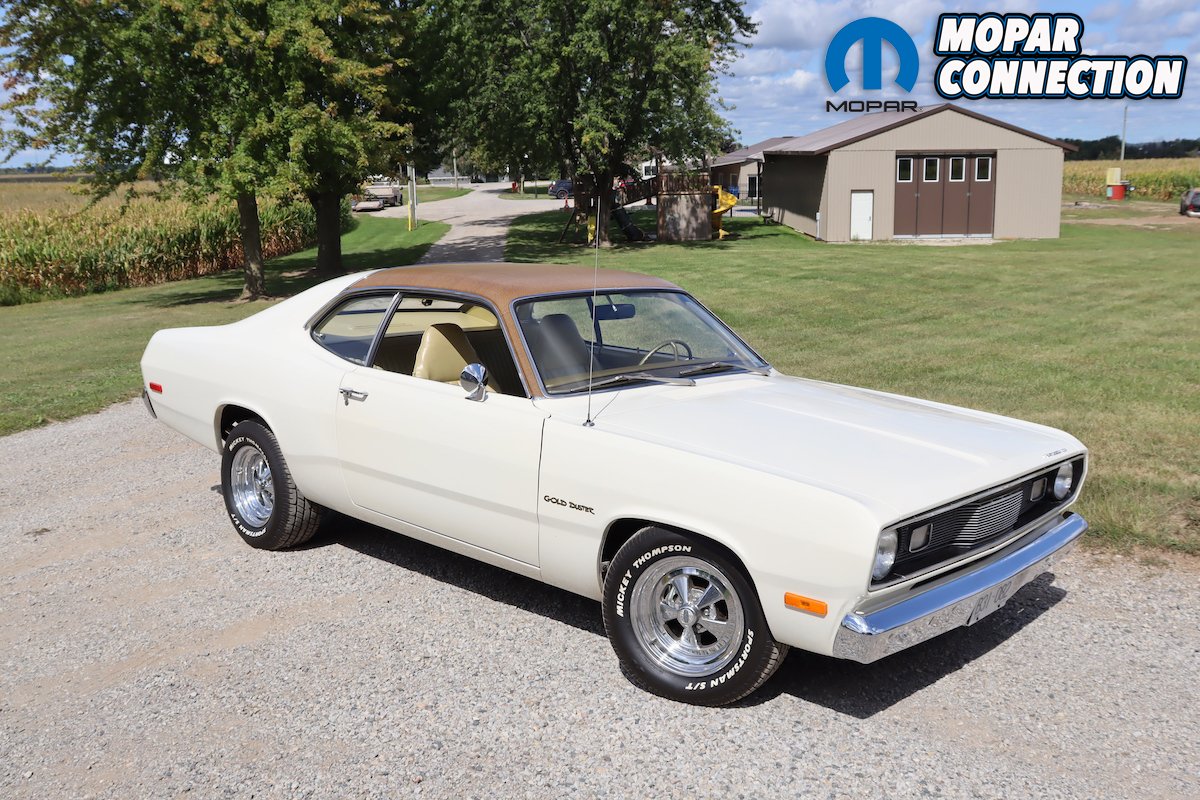
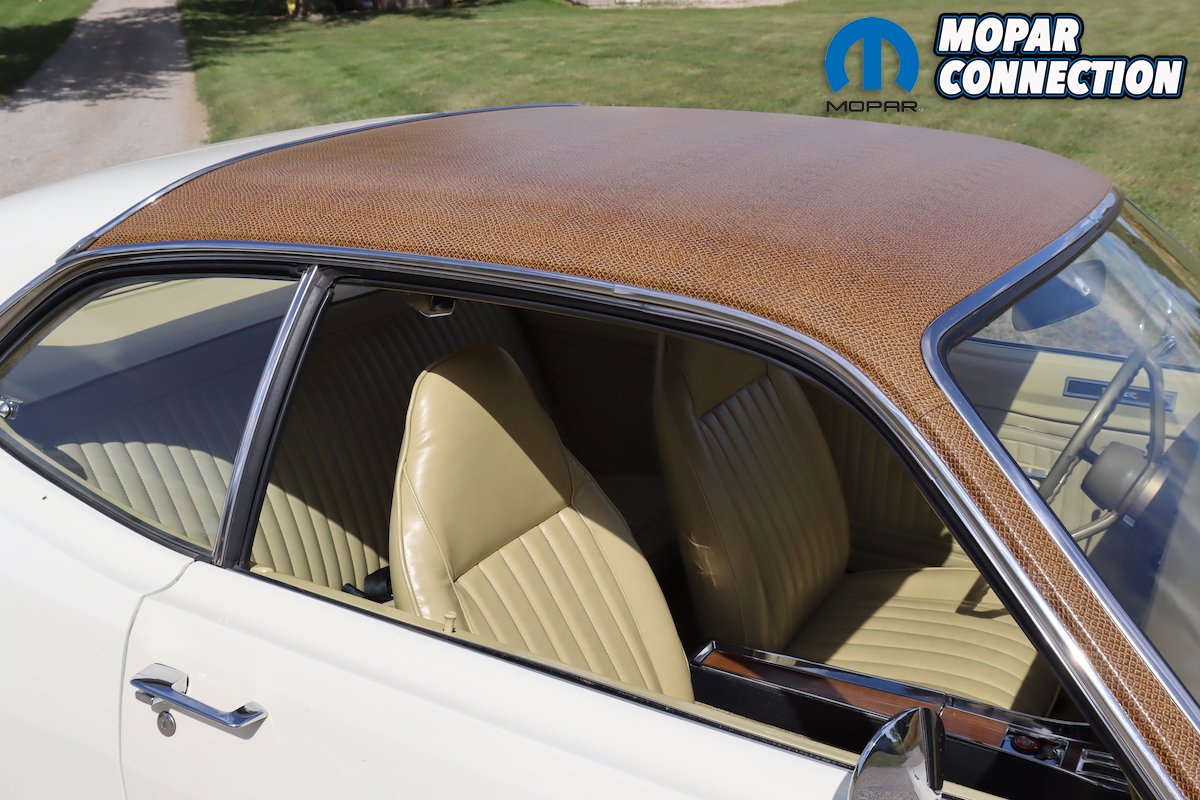
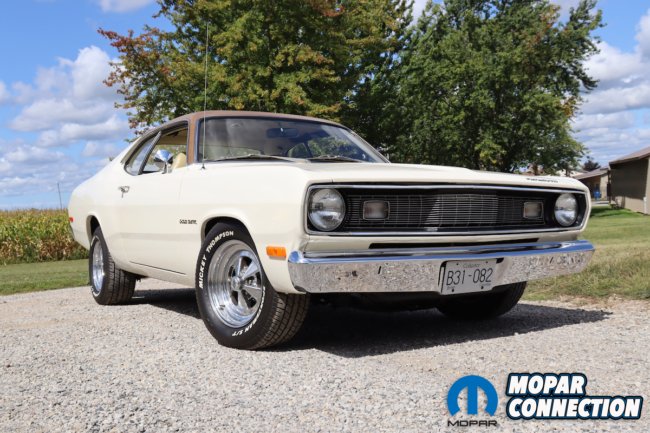
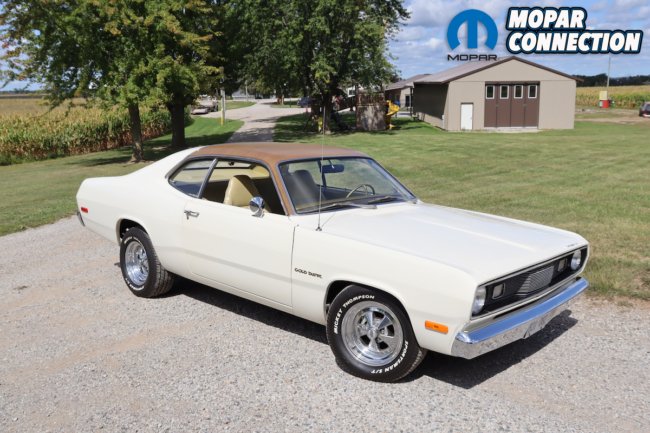
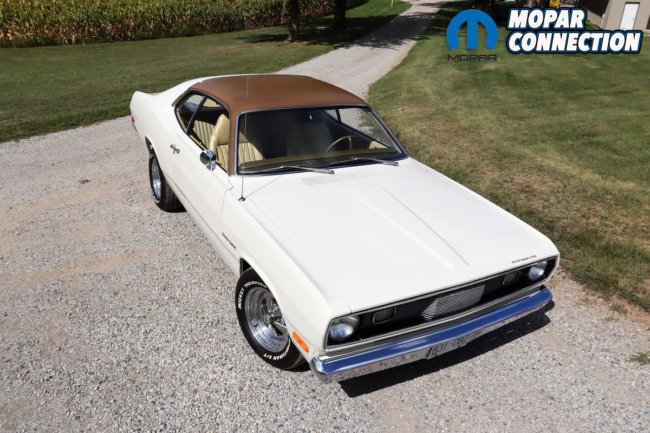
The Gold Duster package added a distinctive touch to the Duster lineup, starting with its gold reptile‑grain vinyl roof and special fender‑side decals. The look was carried through with coordinated exterior colors, gold bodyside stripes, gold deck tape, whitewall tires, wider wheels with unique wheel covers, and bright drip moldings. Inside, the package featured upgraded trim to match the exterior theme. Introduced as a mid-year option, the Gold Duster offered buyers a stylish step-up without moving into performance territory.
The final offering in the lineup was the Duster 340, the performance‑oriented package that featured its own bold striping and decal treatment, backed by a substantial bump in horsepower for drivers who wanted real muscle.
For 1972, the 340 V8 adopted an 8.5:1 compression ratio to meet new emissions rules, and under the new SAE net rating system, it was listed at 240 horsepower. The rest of the Duster lineup ranged from the 198 Slant‑Six at 100 horsepower to the 225 at 110, with the 318 V8 providing 150 horsepower and the 340 remaining as the top performer.
Chrysler moved more than 228,000 Dusters in 1972, a clear sign the market was shifting. Buyers were stepping away from high‑performance machines and gravitating toward creature comforts and budget‑friendly cars, and the Duster hit that sweet spot.
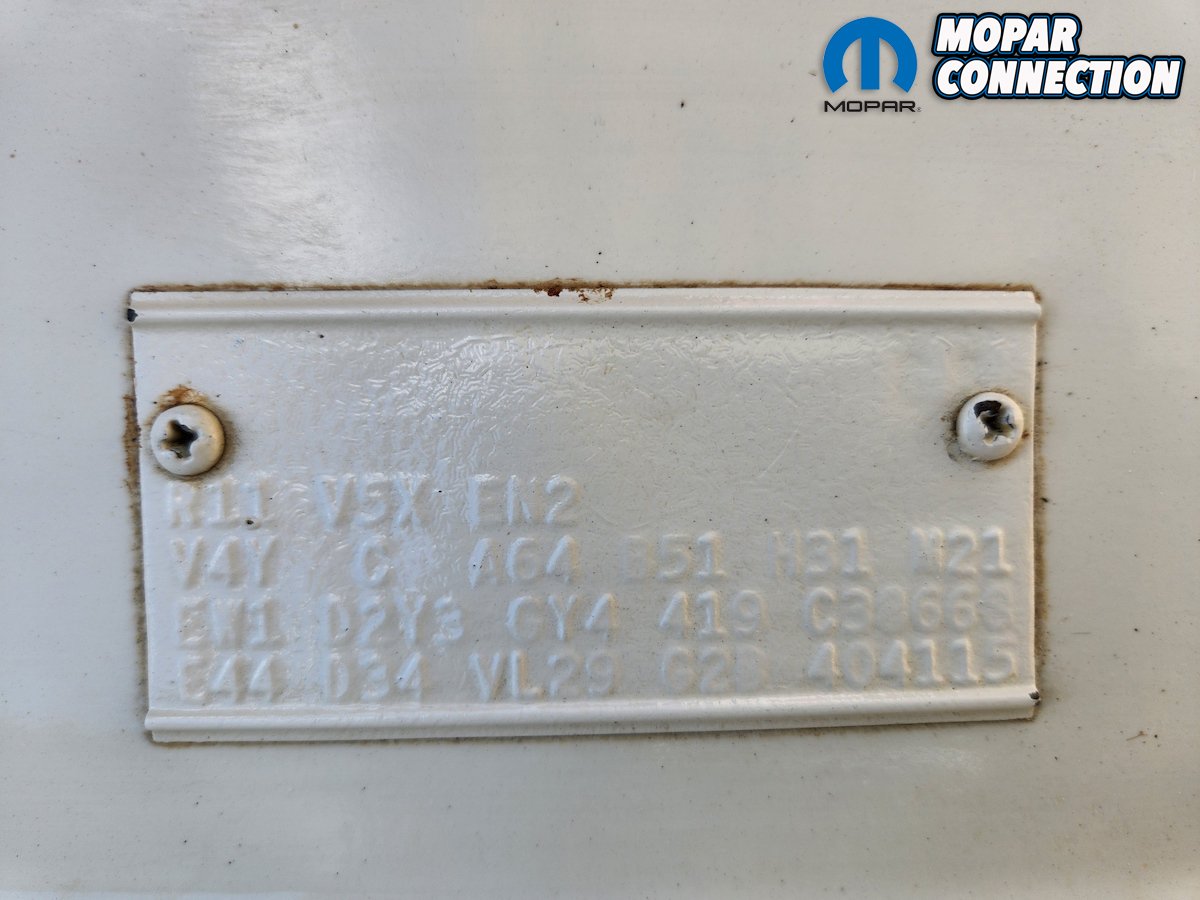
This Plymouth Gold Duster was built on May 19, 1972, at the Hamtramck, Detroit, plant in Michigan. It rolled off the line with the 318 cubic inch engine with an A-904 TorqueFlite automatic transmission and an 8 1/4-inch rear axle. The Duster was built to Canadian specifications. This car, of course, was ordered with Gold package. Its destination was the west coast of Canada, where it ended up at Ensign Pacific Chrysler in Victoria, British Columbia, Canada.
It all started when Dave Fortier purchased a Dodge Demon 340. His parents, Louis and Marion, were so impressed that they decided to visit their local dealership to see what was available. While there, they discovered the Plymouth Gold Duster, which truly captured their attention.
Louis and Marion Fortier bought the car, and Marion drove it for about 15 years. After years of faithful service, the car was finally parked from 1987 to 1998. Marion’s son, Dave, brought it back to life in 1998 with some assistance from his daughter Theresa.

Theresa honed her driving skills in this Duster, navigating back and forth between school and work as she gained confidence on the road. Those initial lessons were certainly challenging. The engine frequently misbehaved, and it wasn’t uncommon for the car to stall. One notable moment she recalls is the day the vehicle abruptly lost power, leaving her gliding silently toward a pristine, million-dollar lawn.
At just sixteen, she didn’t yet know that even without power steering or power brakes, she could still guide the car. Her father certainly knew as he was shouting instructions, urging her to turn the wheel as the Duster rolled closer to the pristine grass. In a burst of panic, he even reached across to help steer, desperate to keep the car from leaving its mark on the immaculate property. For anyone wondering, the lawn survived the encounter just fine.
There were times when the car had multiple flat tires, and Theresa would master the skill of using a jack in the trunk and changing tires, as well as Dad having to get a trailer to rescue her. The car would stay in Theresa’s possession, and she resisted the temptation to sell the car. In 2002 her father-in-law, Jon Hines, had adopted the car and begun to restore it.
Jon played a key role in bringing the Duster back to life, funding the restoration and working closely with Dave Fortier to keep the project on track. Together, they went to great lengths to ensure the car stayed in the family, even securing storage whenever it was needed. Jon then had the Duster meticulously restored, starting with a fresh coat of paint and minor bodywork to straighten out any imperfections while preserving the car’s original lines.
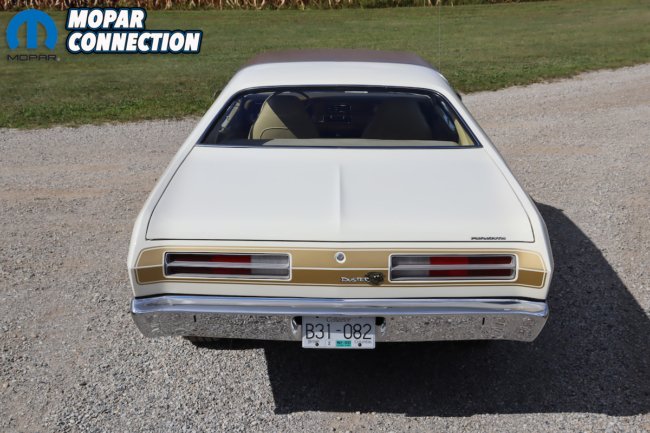
Once the paintwork was complete, the correct vinyl roof material was sourced and installed, followed by a new rear gold stripe and the Gold Duster fender decal. Fortunately, the car had spent most of its life protected from harsh East Coast winters, sparing it from salt damage and preventing it from becoming yet another rusted relic.
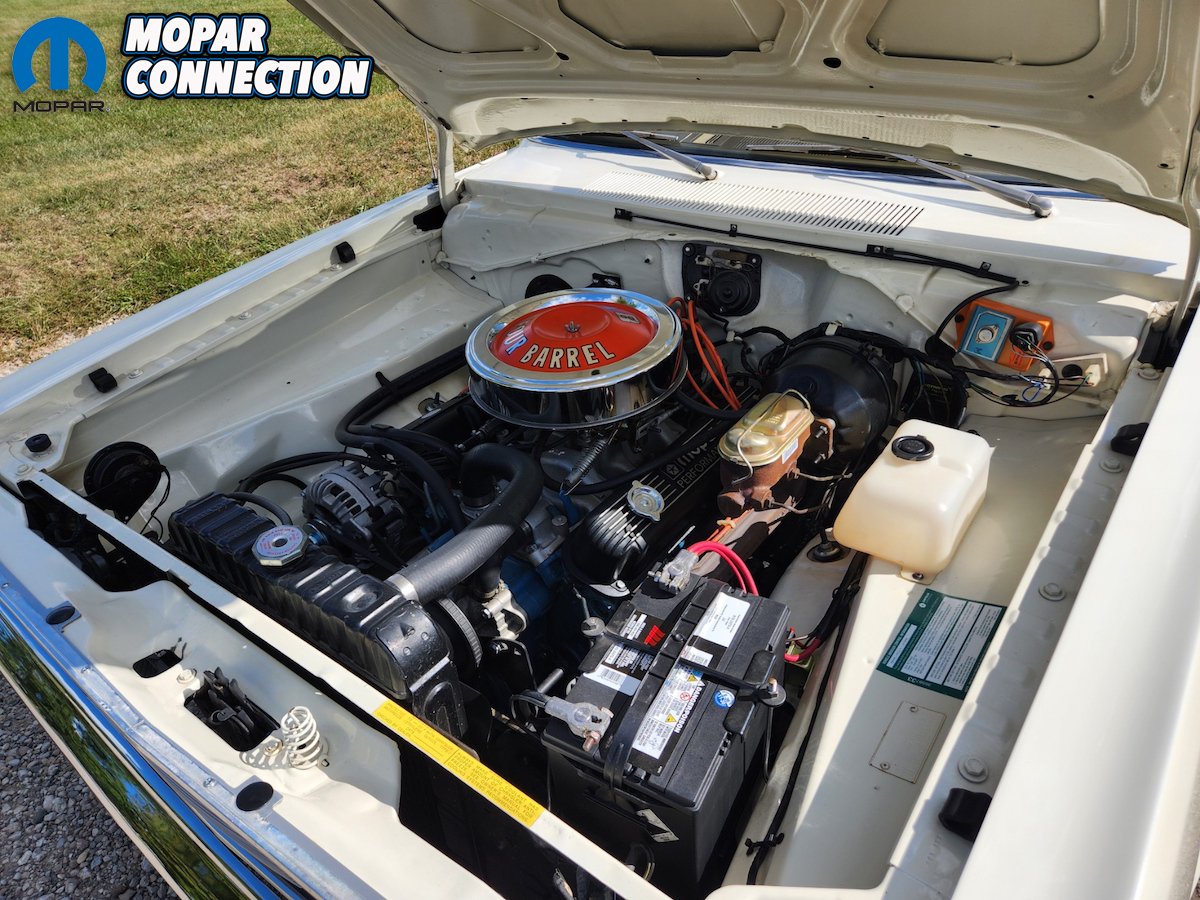
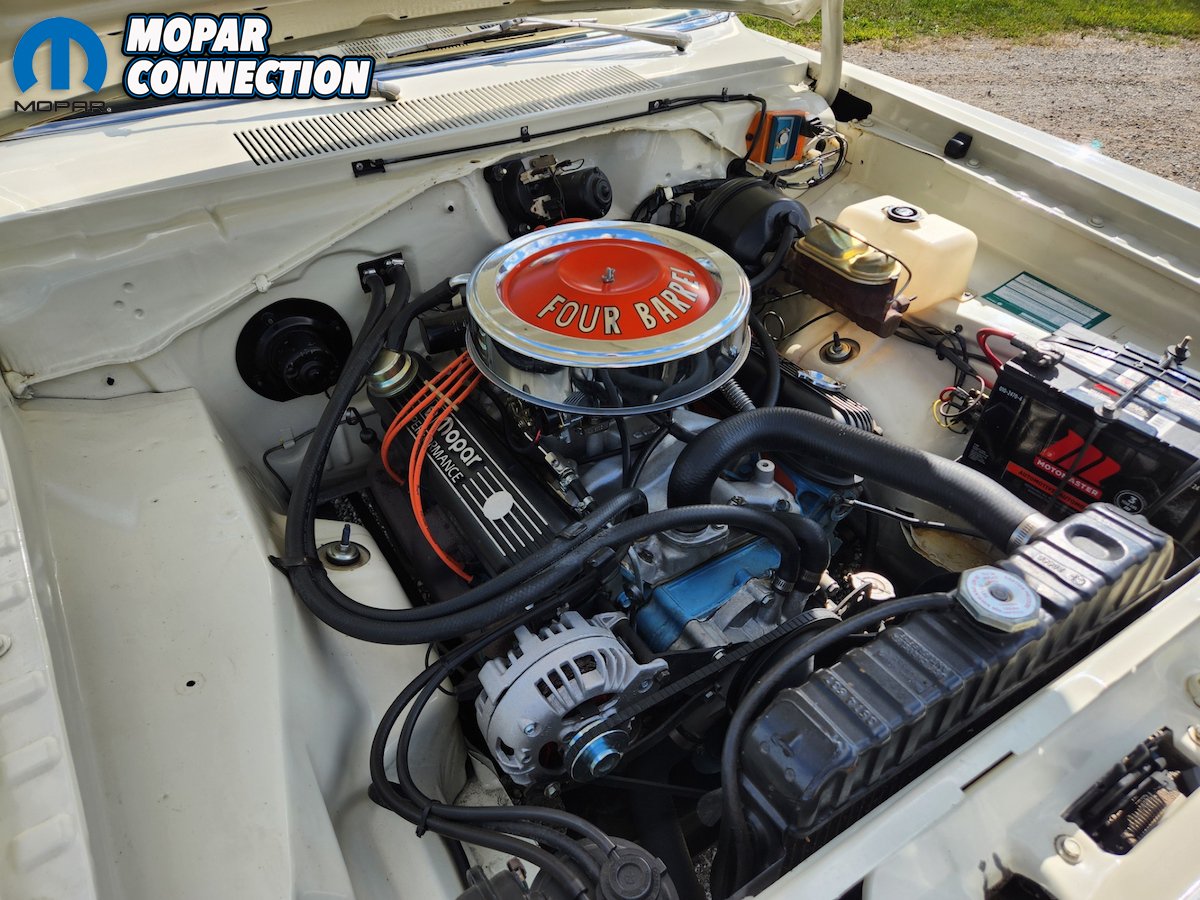
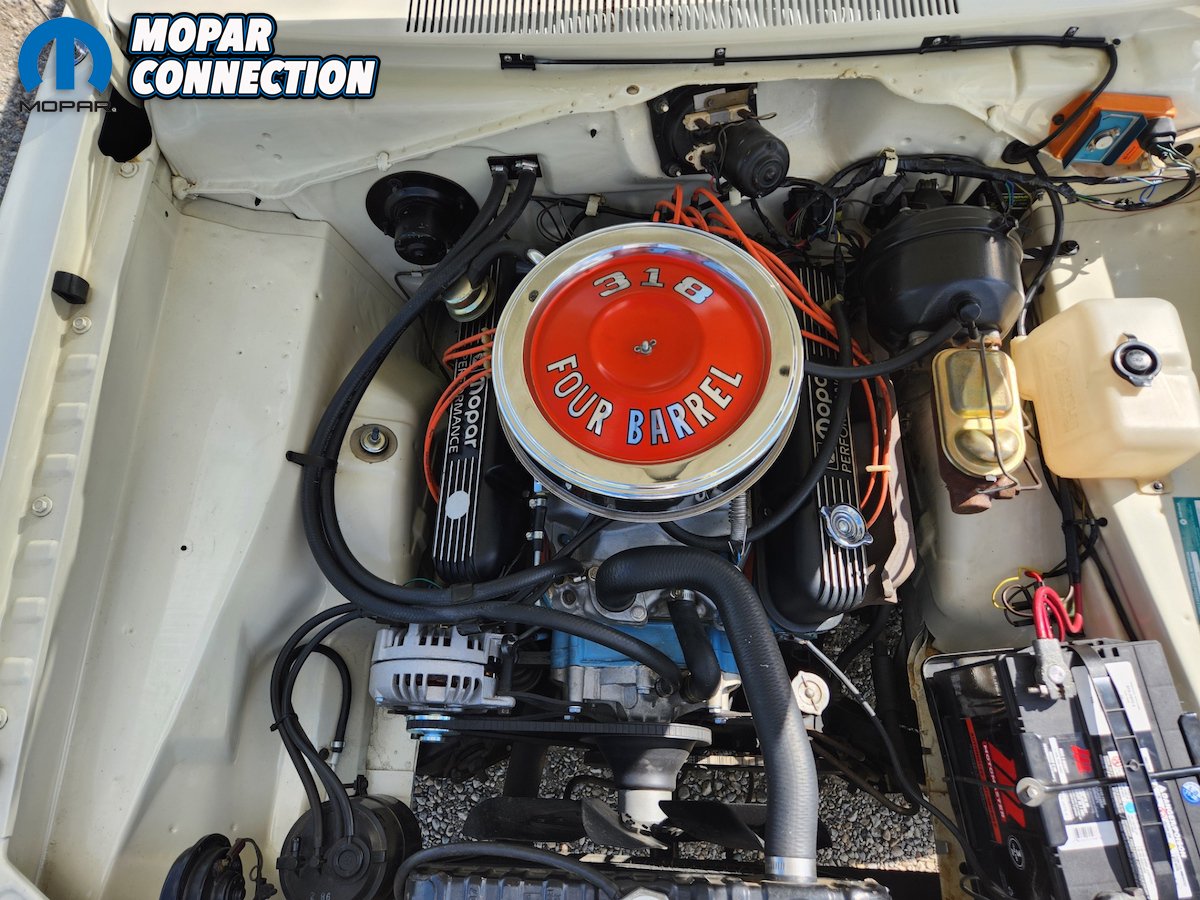
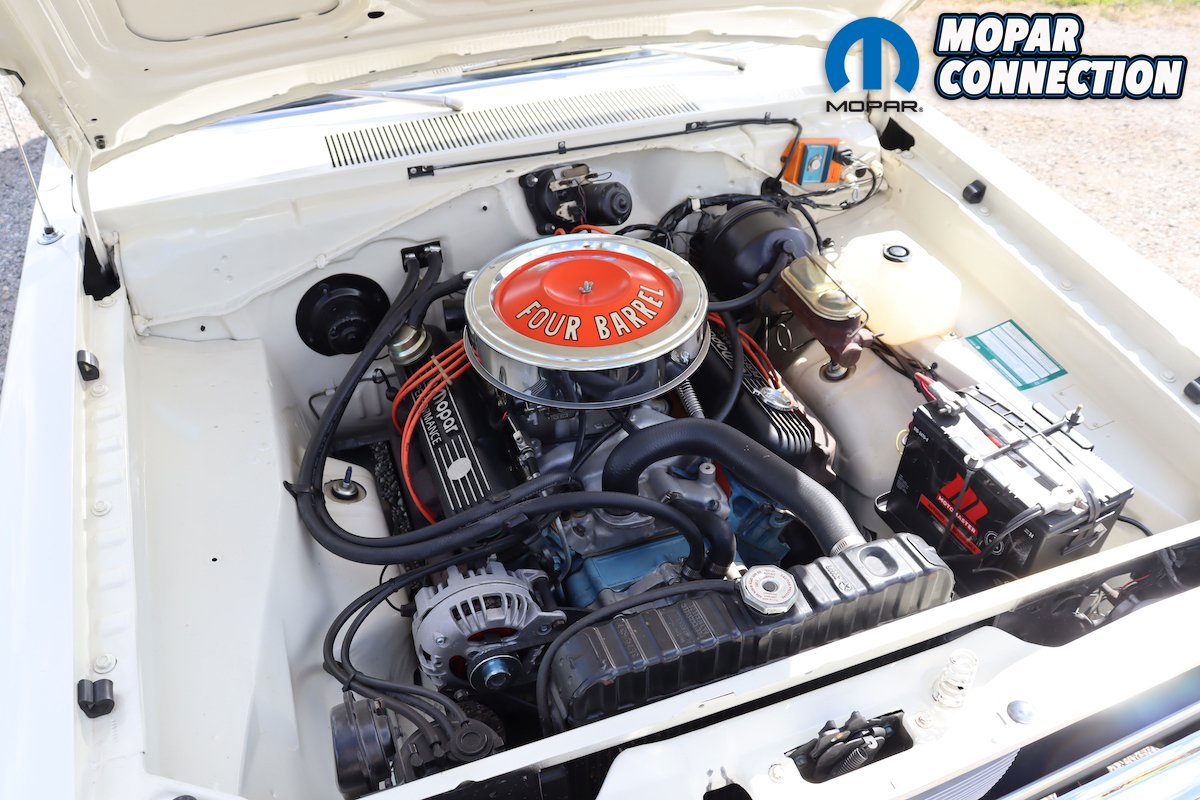
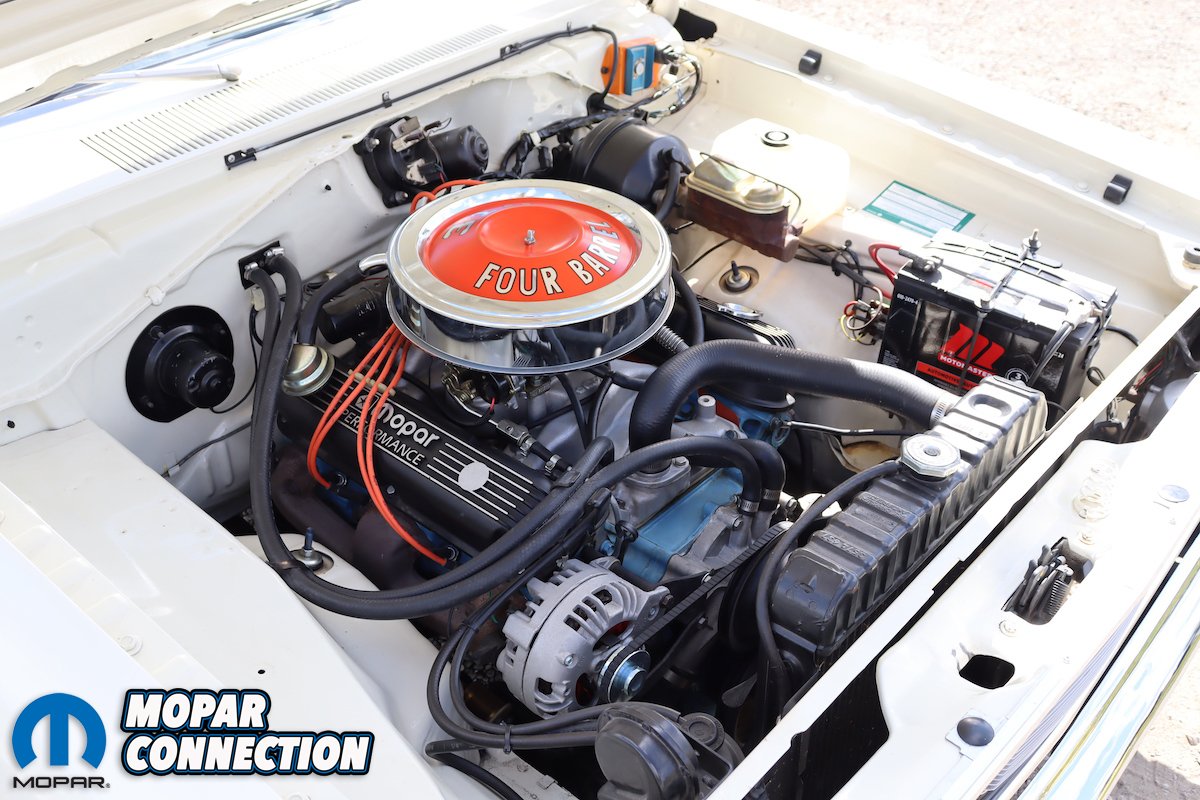
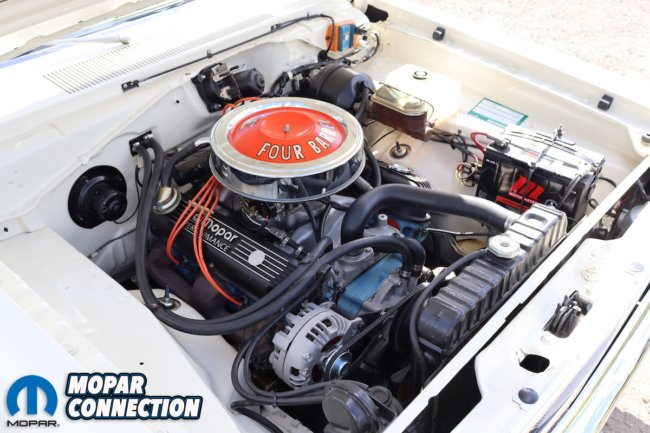
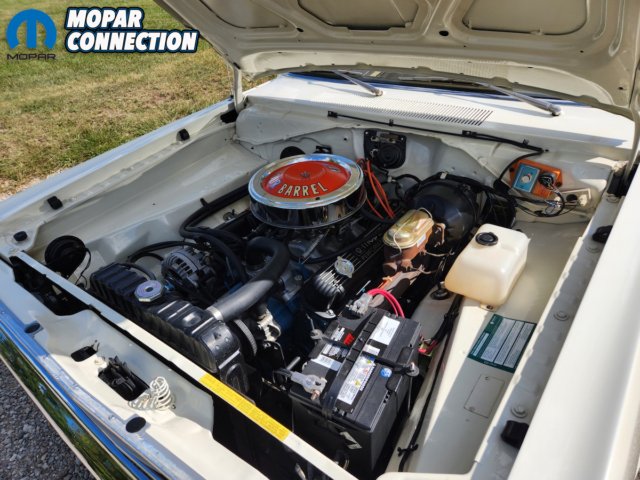
The engine only received minor upgrades, such as an Edelbrock 4-barrel carburetor instead of the original 2-barrel the 318 was equipped with from the factory. To add more bling to the engine compartment, Mopar Performance valve covers were added, giving it a more polished look. The rest of the engine compartment was all stock, including the radiator.
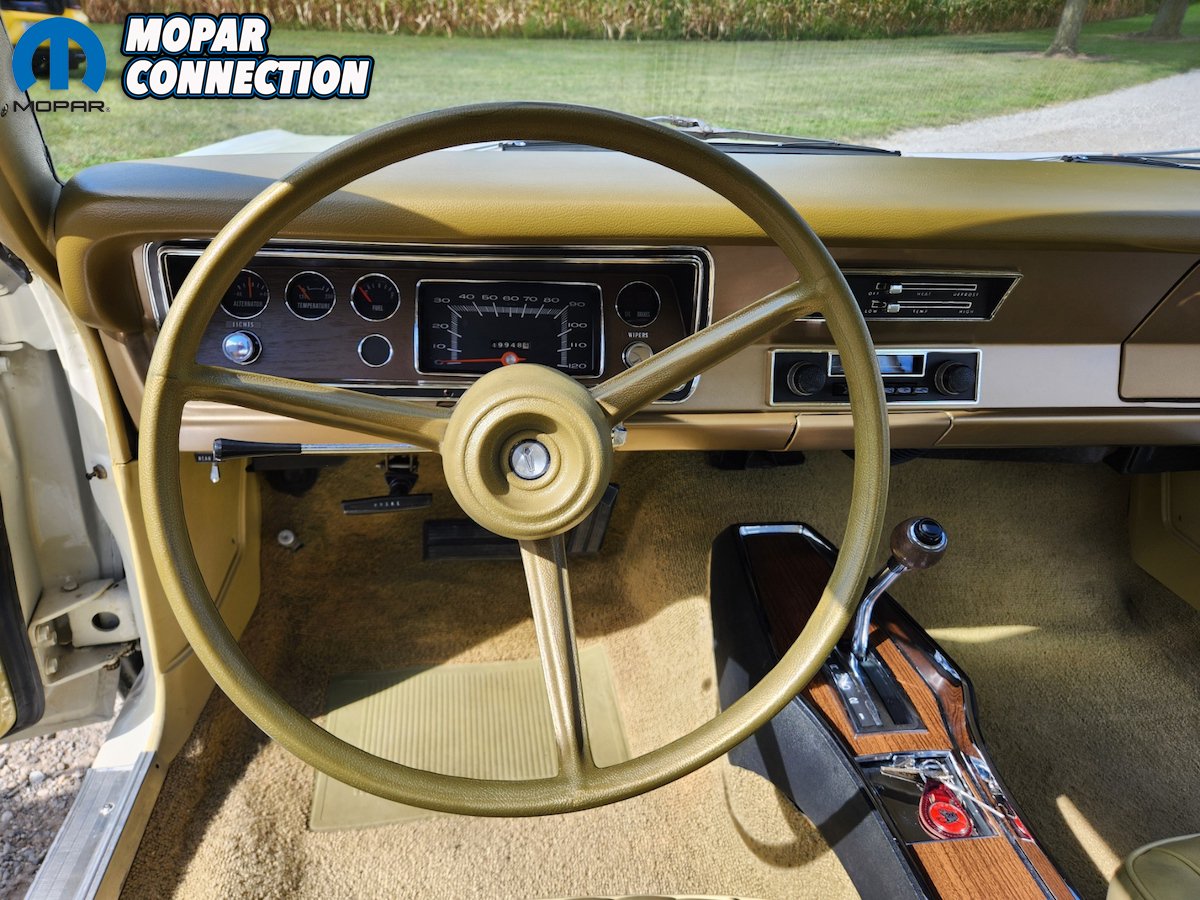
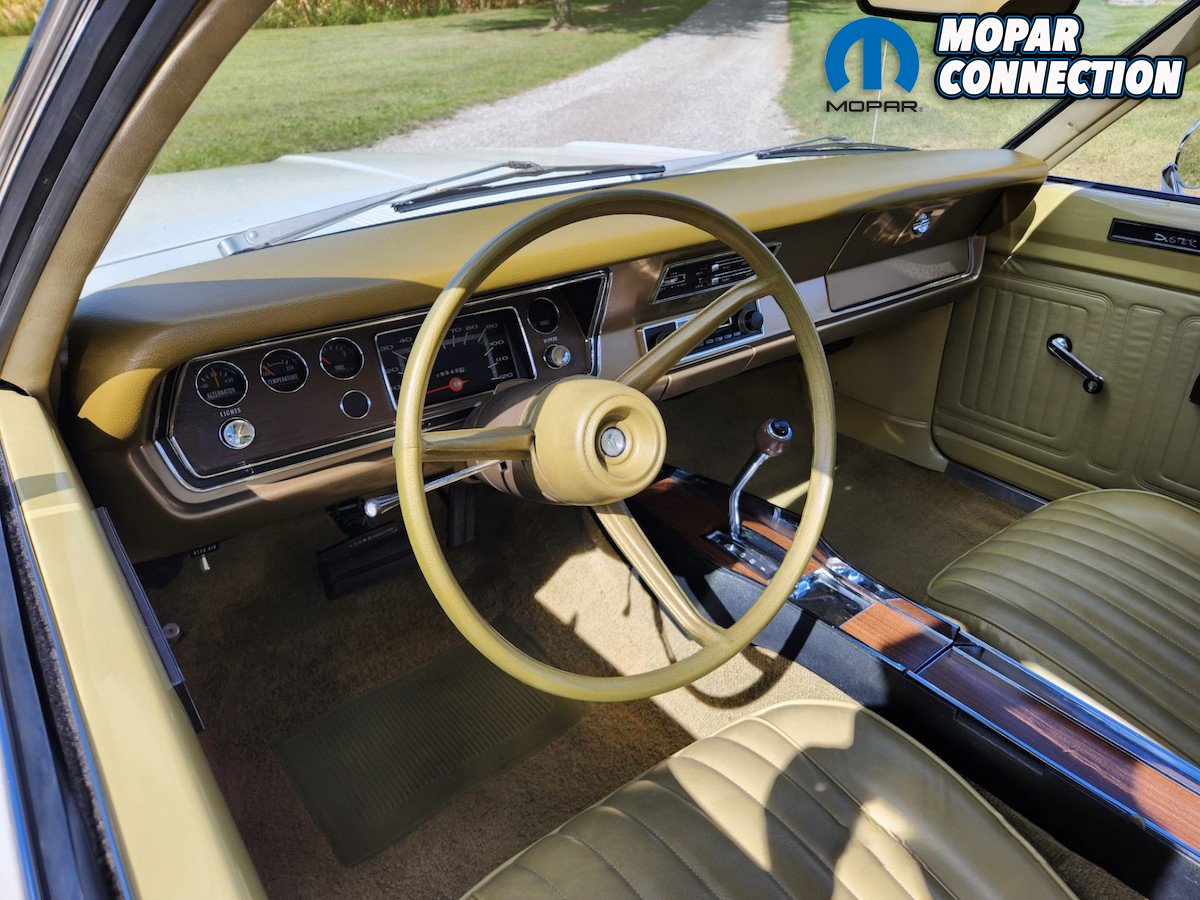
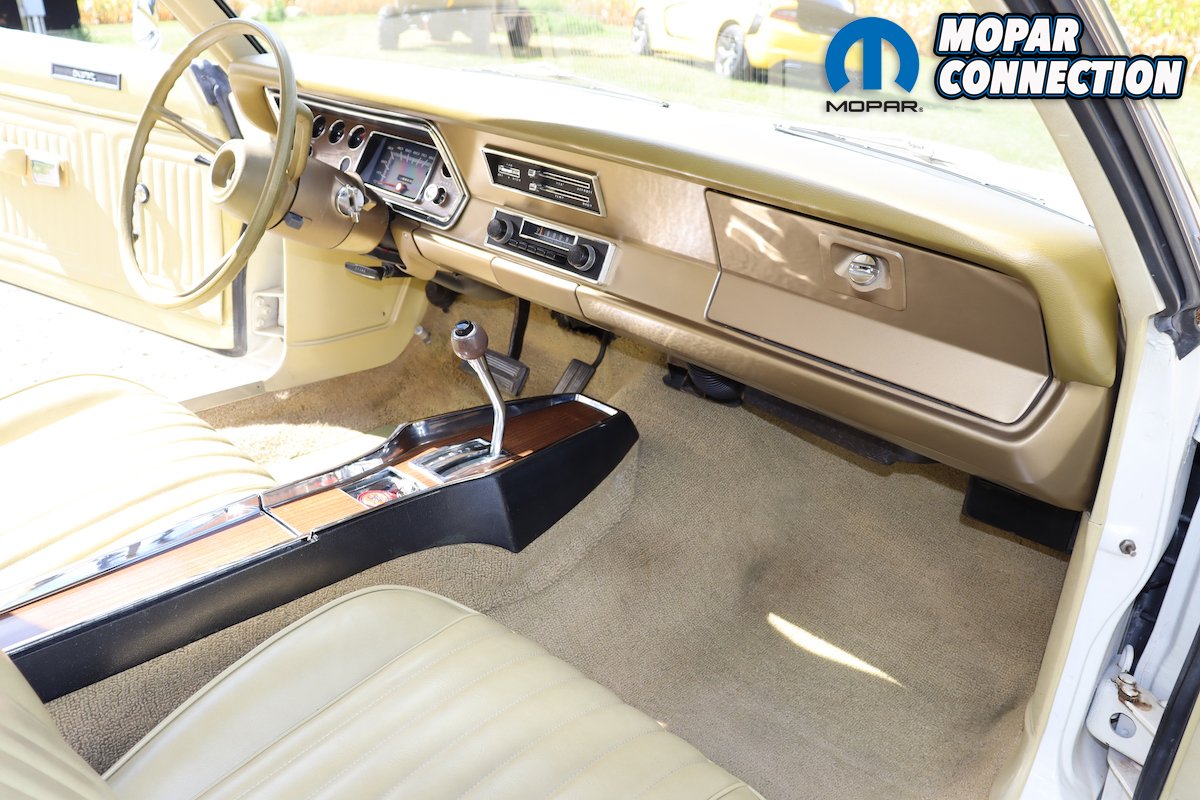
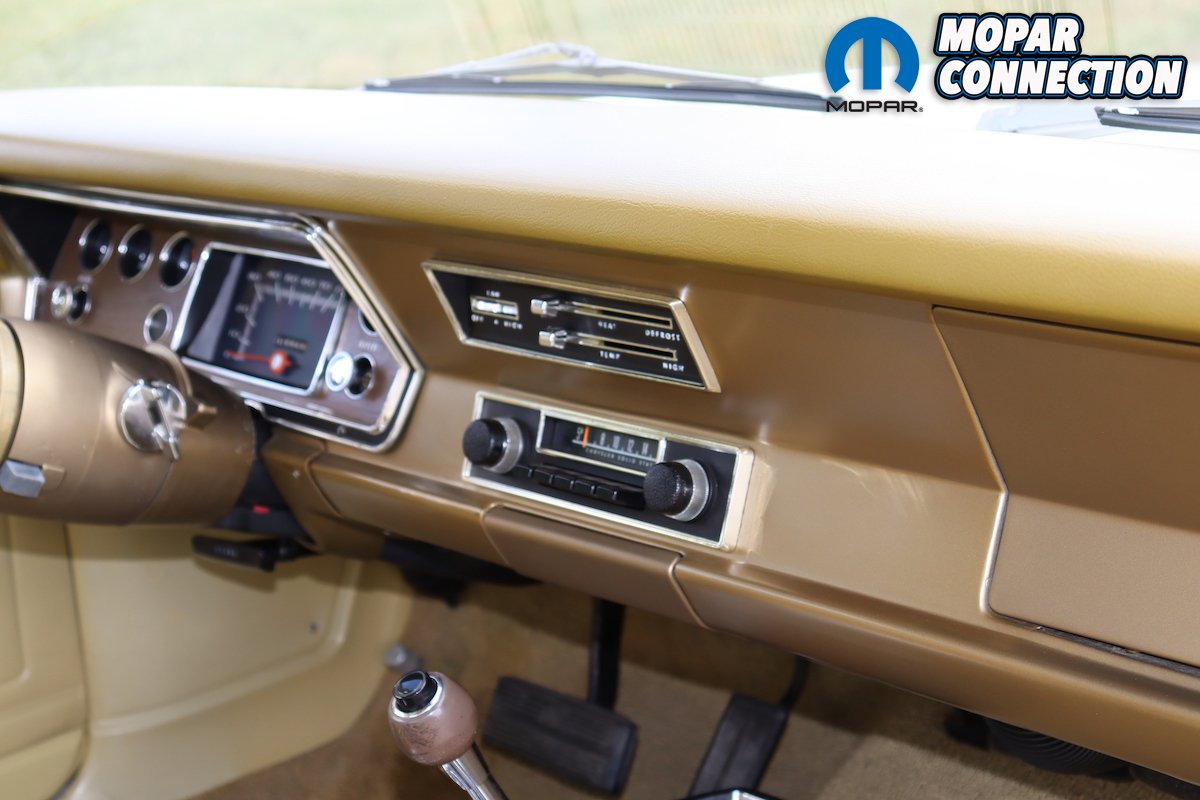
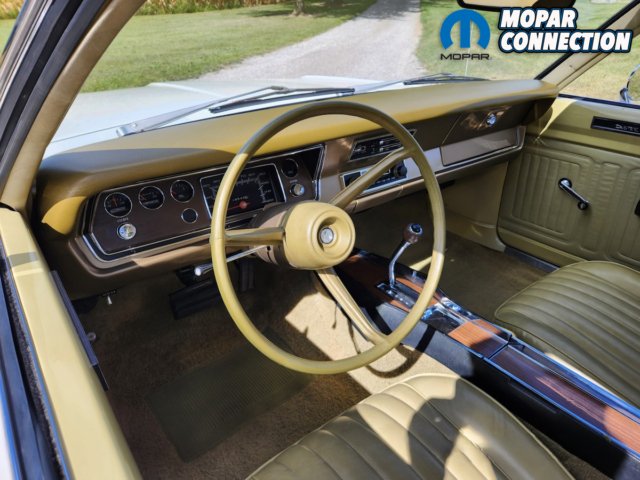
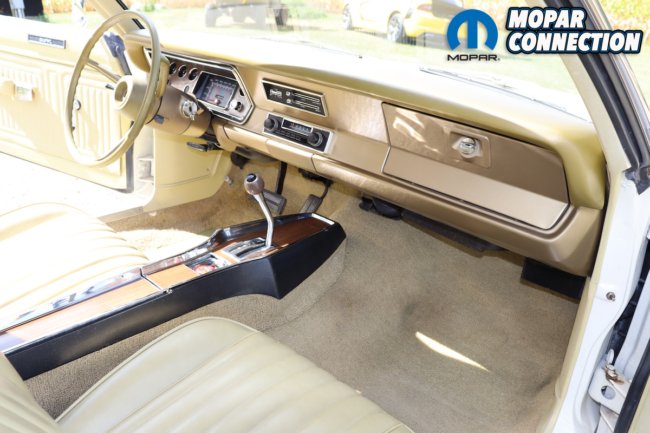
Inside, the most noticeable change was the move from the original full‑width bench to a pair of well‑bolstered bucket seats, separated by a newly added center console, which was more to Jon’s liking. With the console in place, the traditional column‑mounted gear selector was deleted, and the shifter was relocated to the floor, giving the cabin a sportier, more driver‑focused feel.
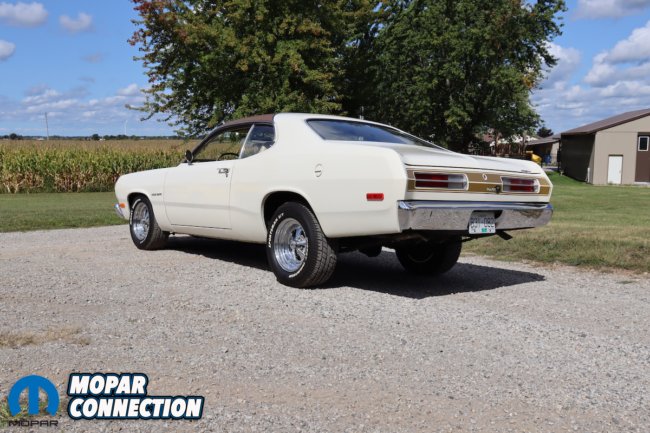
Other upgrades included fitting a set of iconic Cragar mag wheels wrapped in Mickey Thompson rubber. To dial in the proper stance, the front was equipped with 235/60R15 tires while the rear stepped up to wider 255/60R15s, giving the car a confident, slightly aggressive rake.
By then, the Duster had made its way to Ontario, but in 2014 it suddenly lost its parking spot and had to be shipped back to British Columbia, where Theresa’s dad, Dave, stepped in as the car’s caretaker. Eventually, the Duster returned to Ontario once more—this time with Theresa finally having a proper place for it, allowing the car to settle in and be loved again.
Since 2023, Jerry and Theresa Moore have been enjoying the Duster. They love taking it to local car shows, where the car always draws attention. I came across it myself among roughly 900 vehicles on an extremely hot August day—and it immediately stood out. Gold Dusters are a rare sight, and this one practically demanded a closer look.
For Theresa, the Duster carries a deep sentimental weight, tied to decades of family memories. “I think of my grandmother taking her son, Dave, on coastal cruises,” she shared.
“For my dad and me, it was about bringing the car back to life after it sat for so many years and him teaching me how to drive it and take care of it. Then came the full restoration Jon completed, and finally, being reunited with the Duster after all that time.” It’s a legacy she hopes to pass down through her family, keeping those memories alive for the next generation.